Research4Life: reducing the scientific knowledge gap Dakar, September 2019 Research4Life: Hinari, OARE, ARDI, AGORA and GOALI Who can access Research4Life? ACE centre access and use IP-based access Retrieving a full-text article Related
"Research4Life: reducing the scientific knowledge" is the property of its rightful owner. Permission is granted to
download and print the materials on this website for personal, non-commercial use only, and to display it
on your personal computer provided you do not modify the materials and that you retain all copyright
notices contained in the materials. By downloading content from our website, you accept the terms of this
agreement.
Presentation Transcript
01
Research4Life:
reducing the scientific
knowledge gap Dakar, September 2019<br>
02
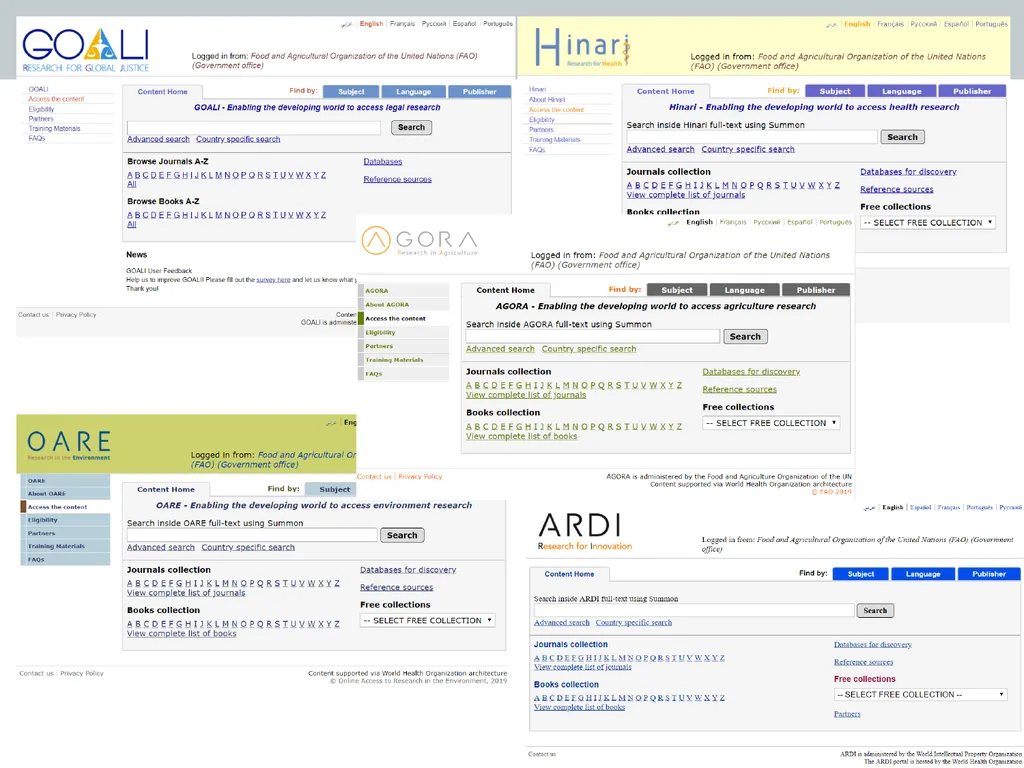
Research4Life: Hinari, OARE, ARDI, AGORA and GOALI
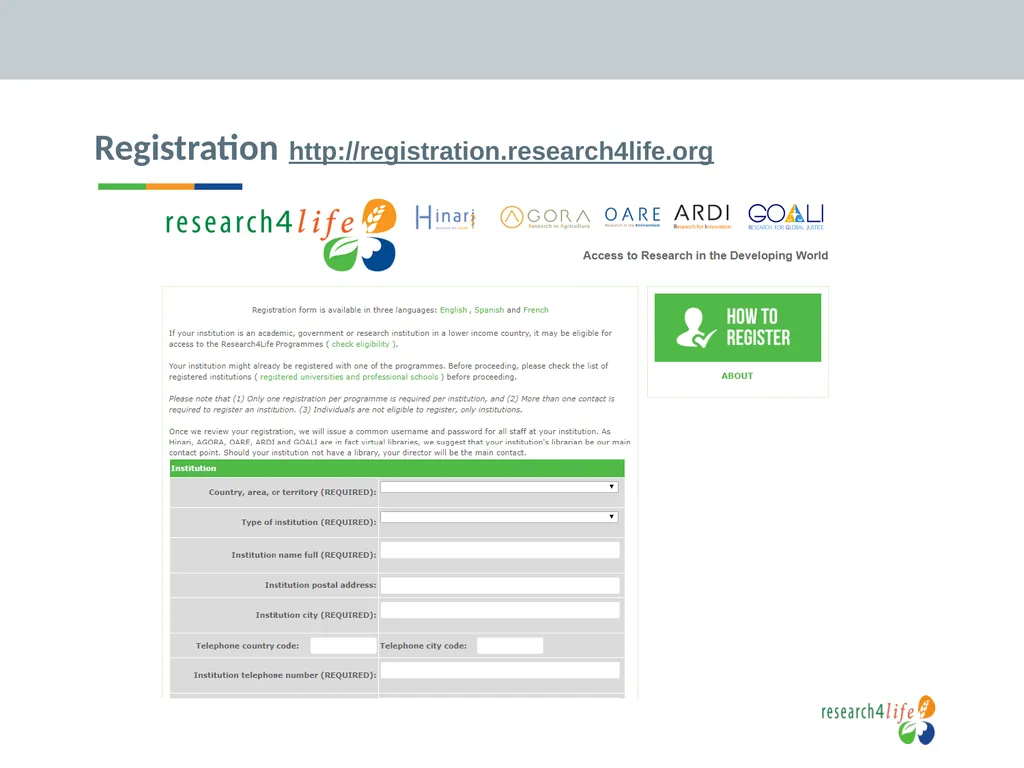
Who can access Research4Life?
ACE centre access and use
IP-based access
Retrieving a full-text article
Related initiatives<br>
03
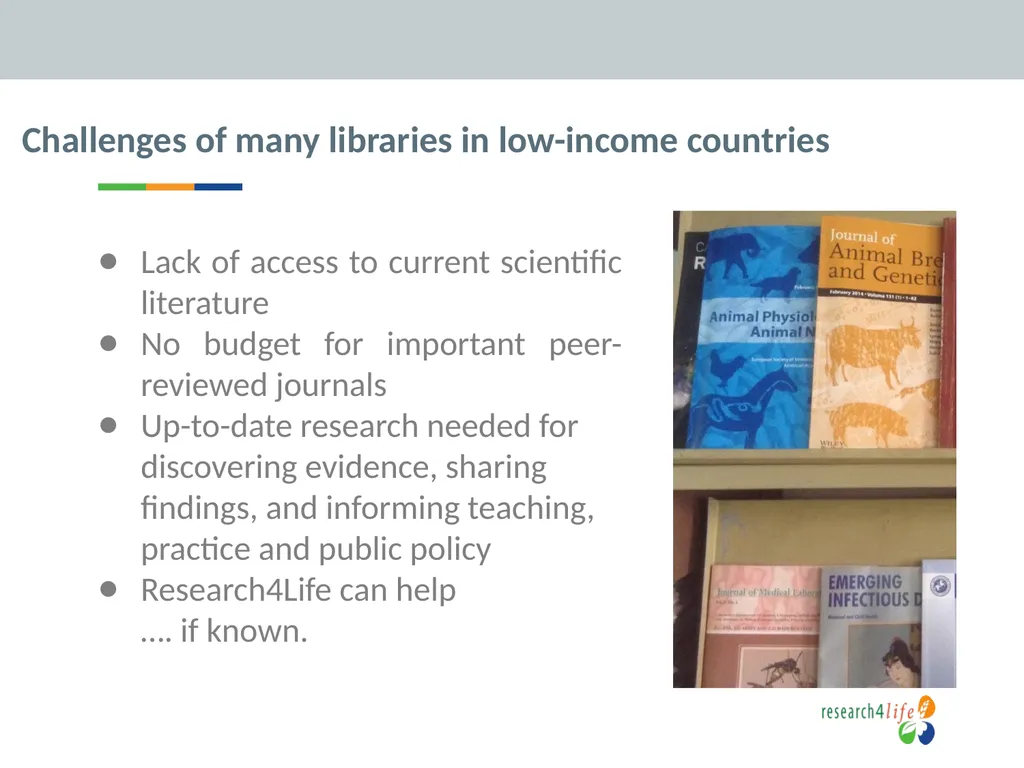
Challenges of many libraries in low-income countries Lack of access to current scientific literature
No budget for important peer-reviewed journals
Up-to-date research needed for discovering evidence, sharing findings, and informing teaching, practice and public policy
Research4Life can help
…. if known.<br>
04
What is Research4Life? Collective name for five programmes – Hinari, AGORA, OARE, ARDI and GOALI – that provide developing countries with free or low-cost access to academic and professional peer-reviewed content online.
A public-private partnership of WHO, FAO, UNEP, WIPO, ILO, Cornell and Yale Universities, the International Association of Scientific, Technical & Medical Publishers and up to 155 international publishers.<br>
05
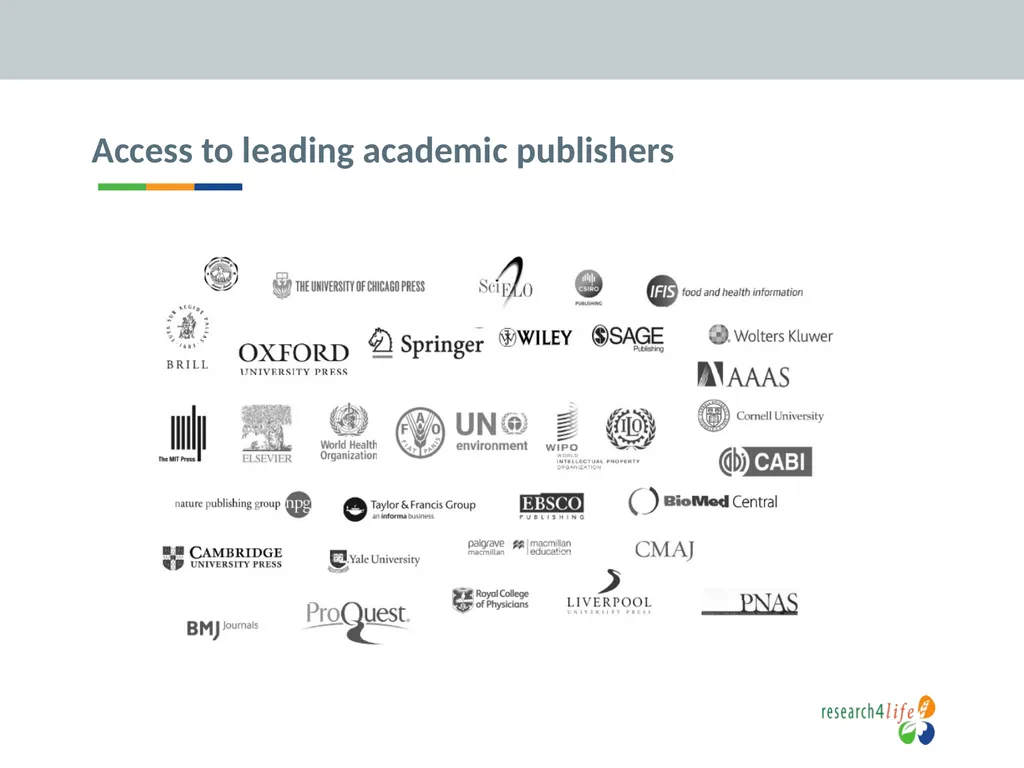
Access to leading academic publishers<br>
06
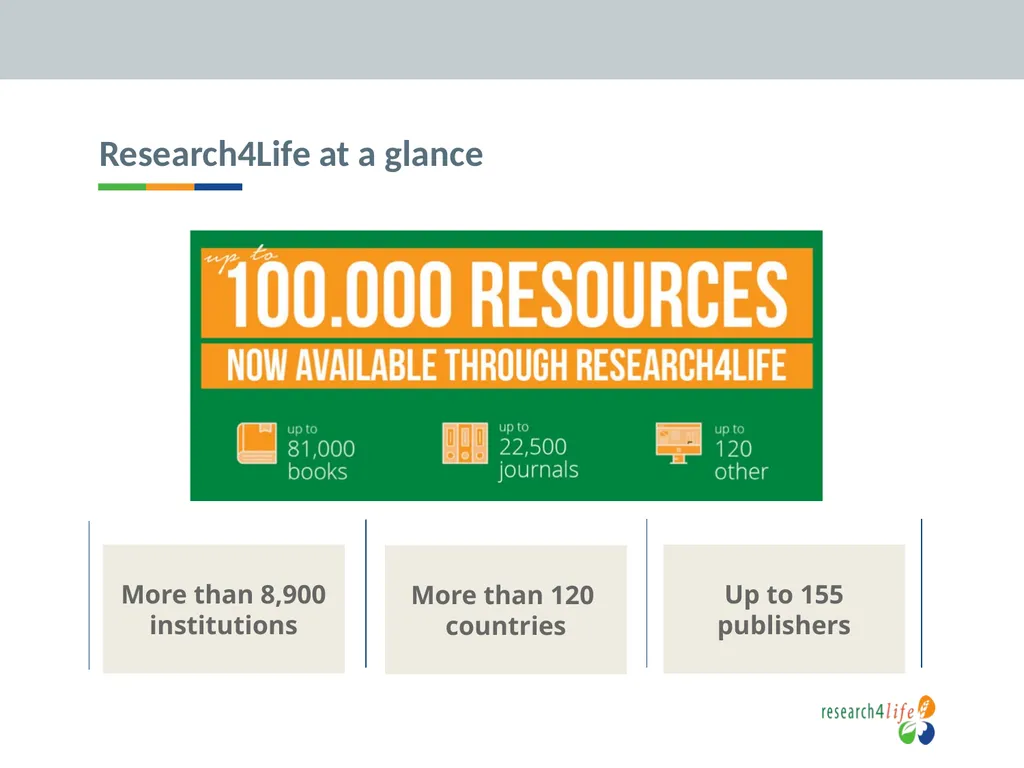
More than 120
countries Up to 155 publishers More than 8,900 institutions Research4Life at a glance<br>
07
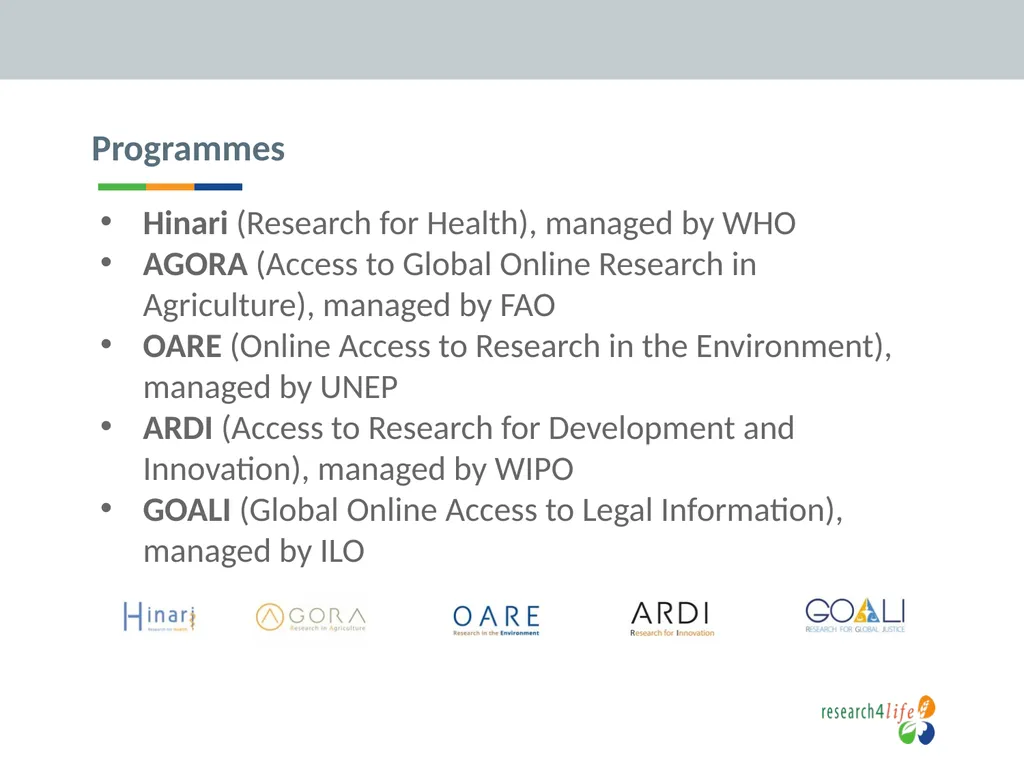
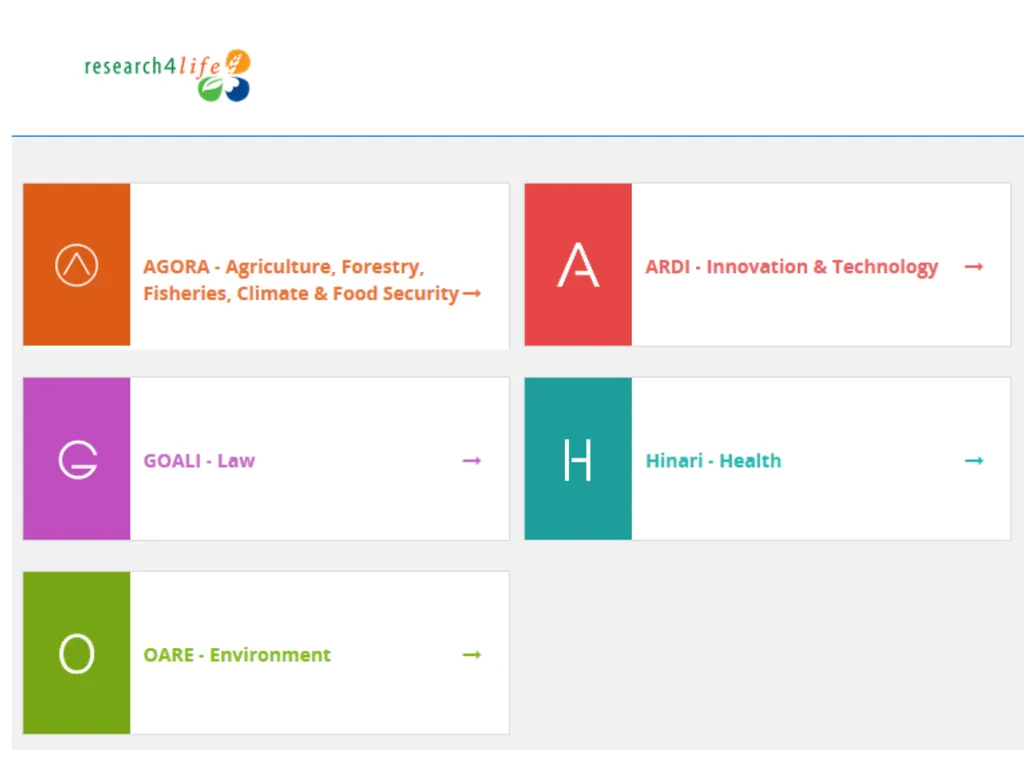
Programmes Hinari (Research for Health), managed by WHO
AGORA (Access to Global Online Research in Agriculture), managed by FAO
OARE (Online Access to Research in the Environment), managed by UNEP
ARDI (Access to Research for Development and Innovation), managed by WIPO
GOALI (Global Online Access to Legal Information), managed by ILO<br>
08
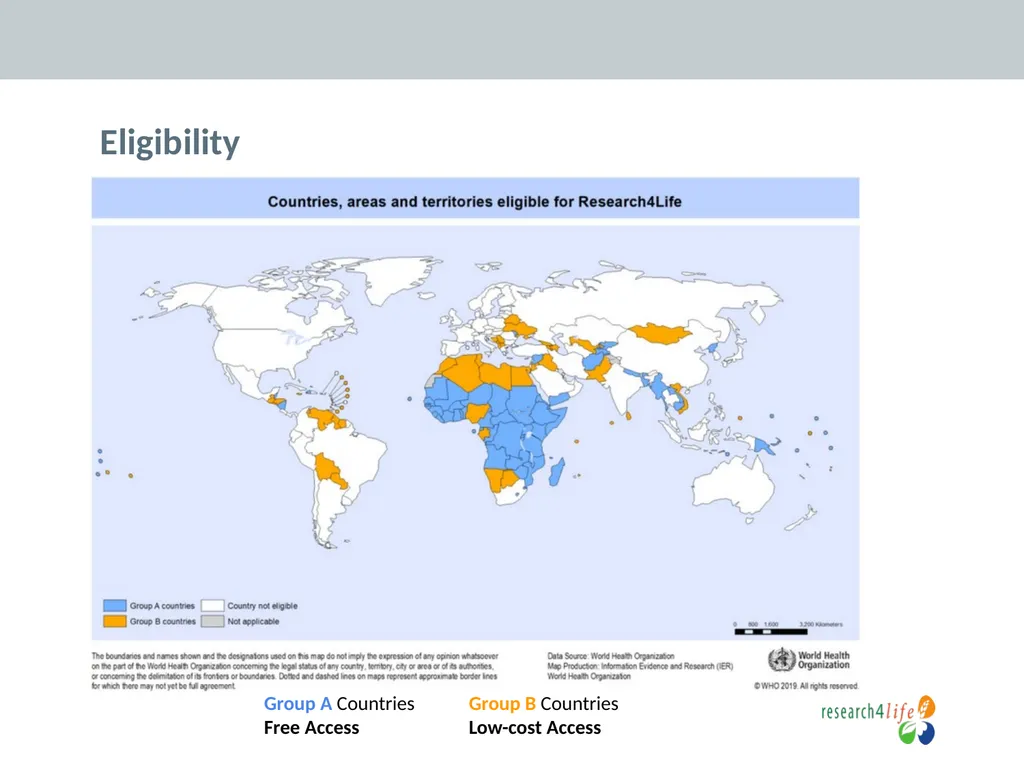
Eligibility Group A Countries Group B Countries Free Access Low-cost Access<br>
09
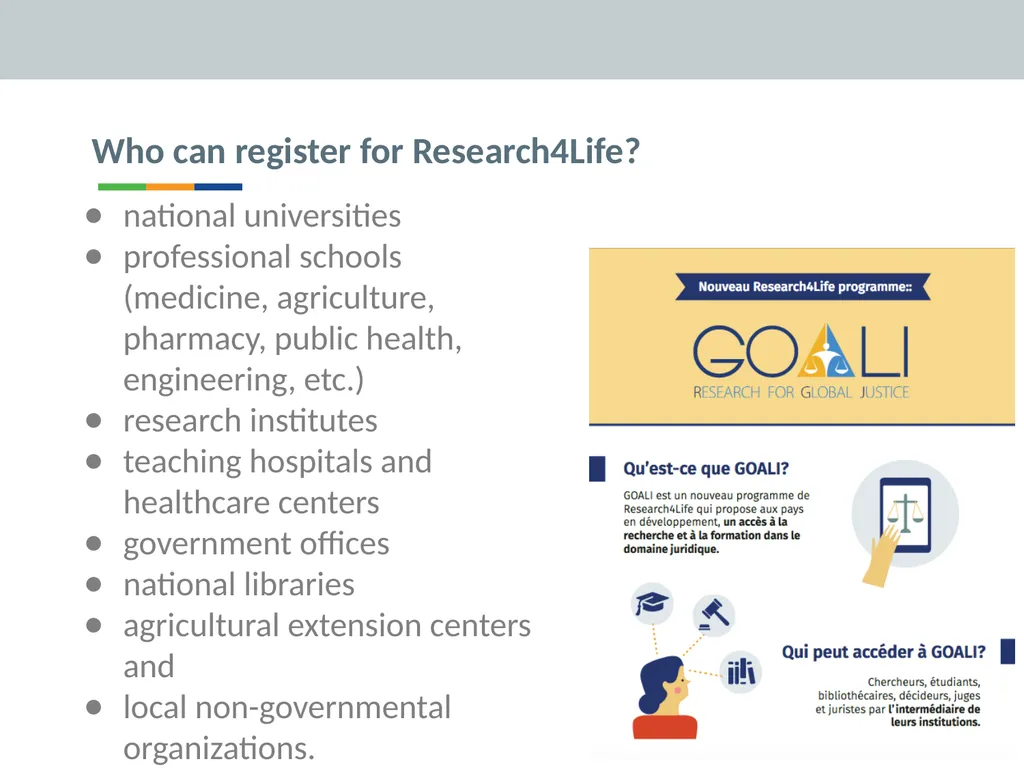
Who can register for Research4Life? national universities
professional schools (medicine, agriculture, pharmacy, public health, engineering, etc.)
research institutes
teaching hospitals and healthcare centers
government offices
national libraries
agricultural extension centers and
local non-governmental organizations.<br>
10
The value of Research4Life An average journal subscription costs approx*: US$ 1,731
Research4Life provides access up to: 20,000 journals**
Total monetary value provided to each institution: up to US$ 34,620,000 * Based on LJ Periodicals Price Survey 2017 https://www.libraryjournal.com/?detailStory=new-world-same-model-periodicals-price-survey-2017
**Publishers have the option to choose whether provide access or not to specific content in specific countries<br>
11
Most ACE centre institutions registered for Research4Life Most universities are registered
Most ACE centre countries have free access (except Nigeria)
HOWEVER
Not all universities share credentials across faculties
Some ACE centres do not know they have access
Usage statistics could be higher
Librarians often gatekeepers: ask them! Or us!
It is OK to share the Research4Life credentials with colleagues, students, professors or other members of the institution (not outside your institution)<br>
12
IP-based access Improves access to R4L
No login with password needed on campus
Register the IP address in the IPRegistry (theipregistry.org)
Registration at IPRegistry is free for all libraries.
Once registered in the IPRegistry, send your request for IP registration to r4l@research4life.org
Several ACE centres have implemented this<br>
13
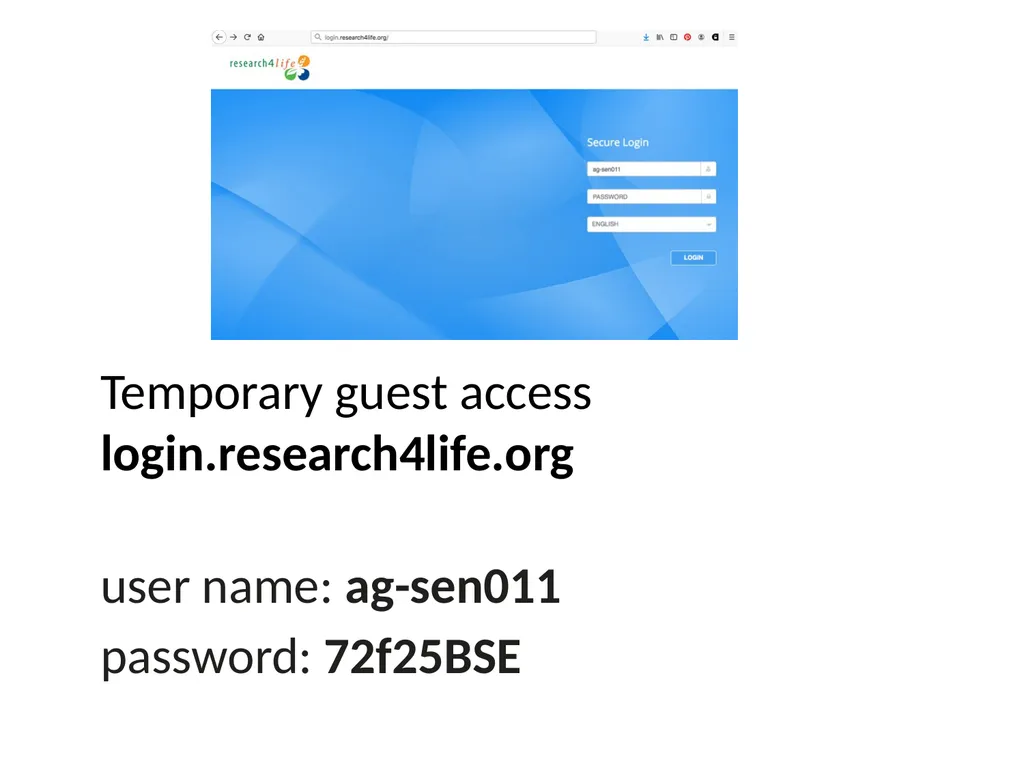
Temporary guest access
login.research4life.org
user name: ag-sen011
password: 72f25BSE<br>
14
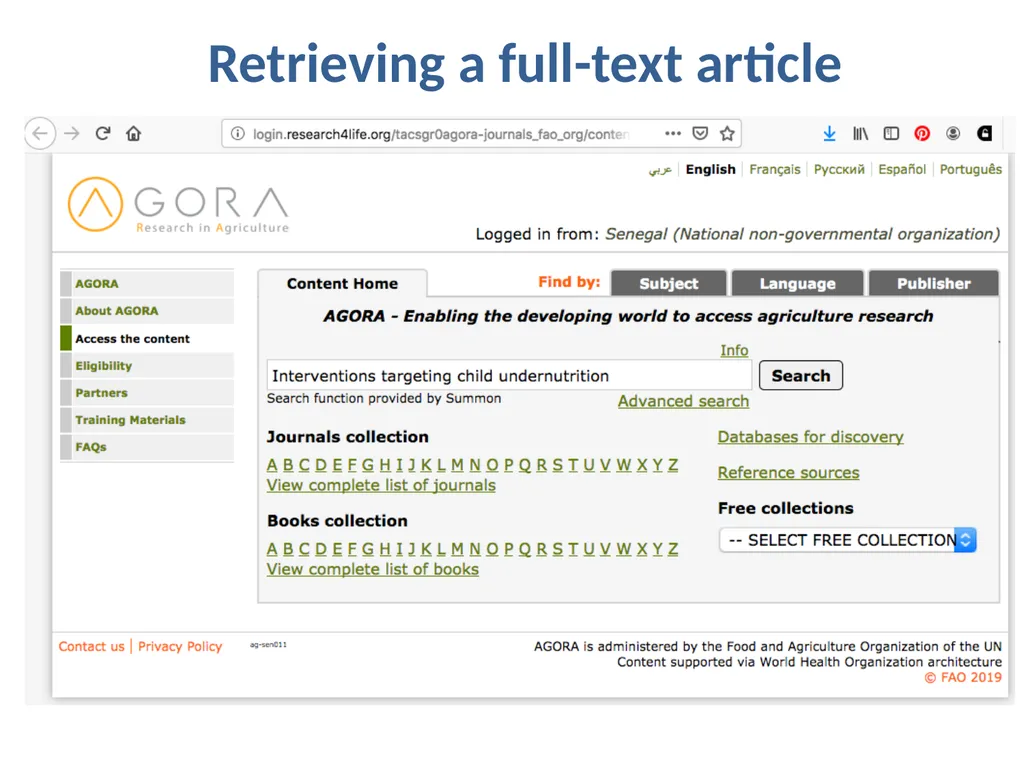
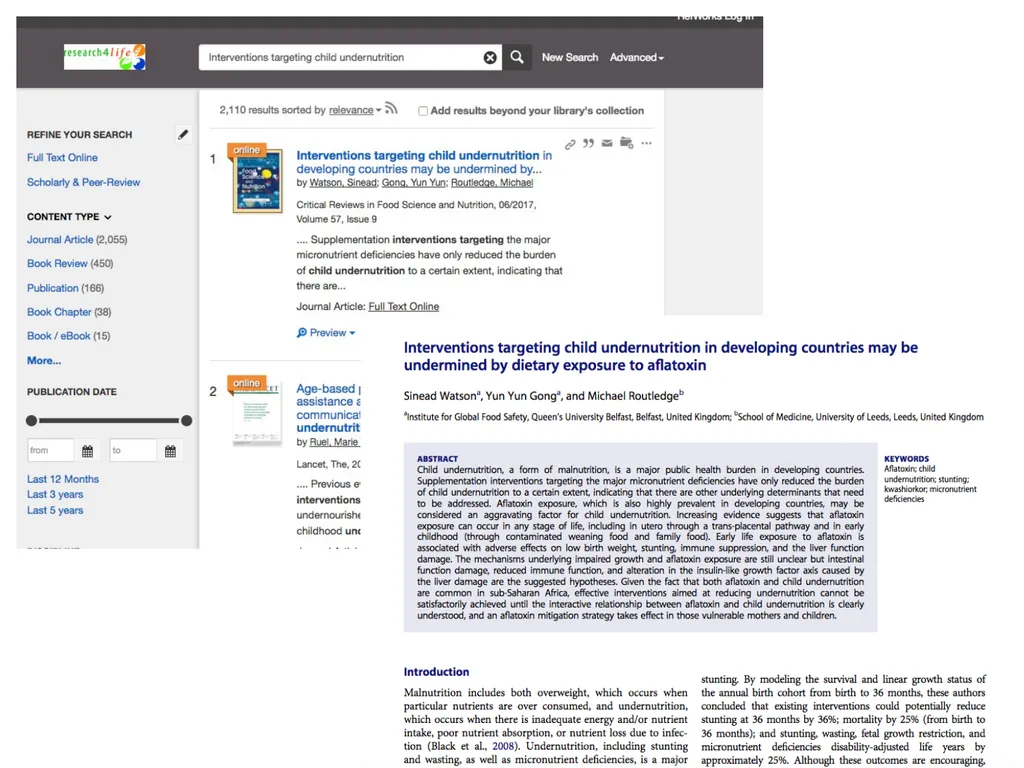
Retrieving a full-text article<br>
15
Article opens up in PDF. Yu can save it or print it.<br>
16
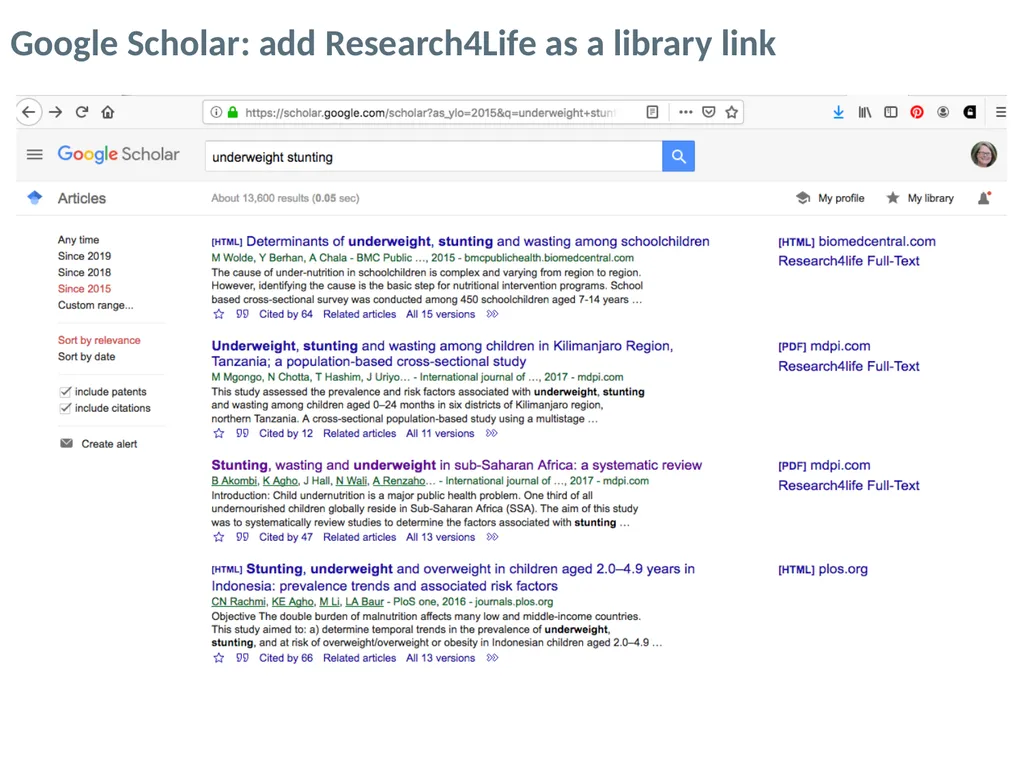
Google Scholar: add Research4Life as a library link<br>
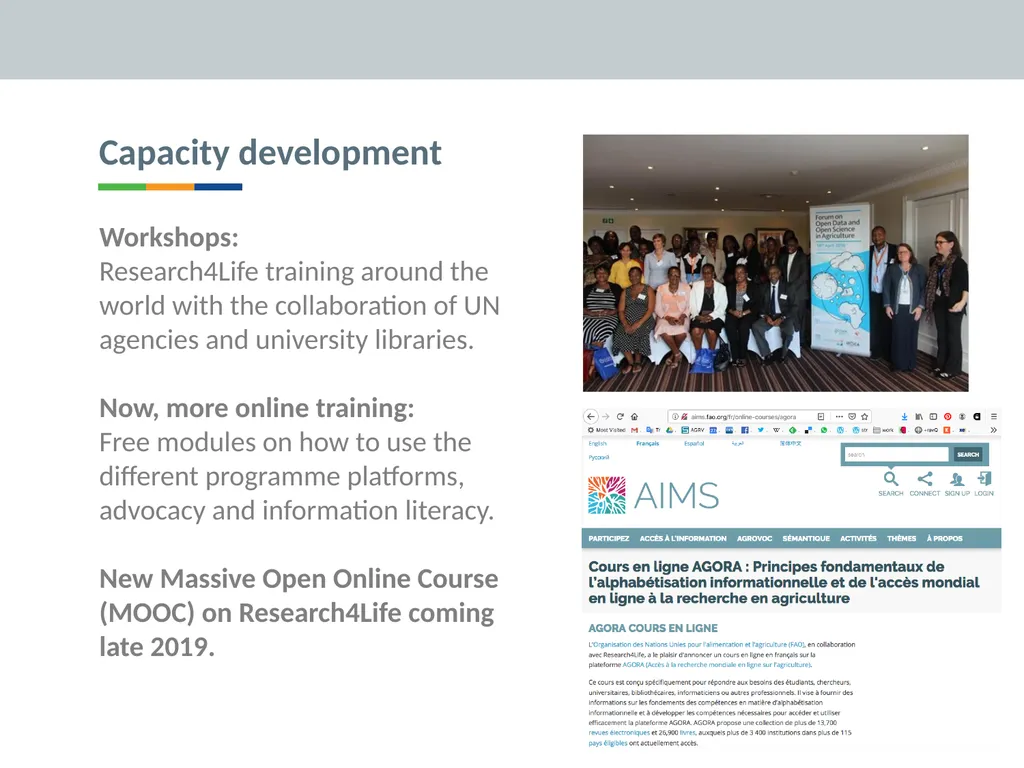
Workshops:
Research4Life training around the world with the collaboration of UN agencies and university libraries.
Now, more online training:
Free modules on how to use the different programme platforms, advocacy and information literacy.
New Massive Open Online Course (MOOC) on Research4Life coming late 2019. Capacity development<br>
19
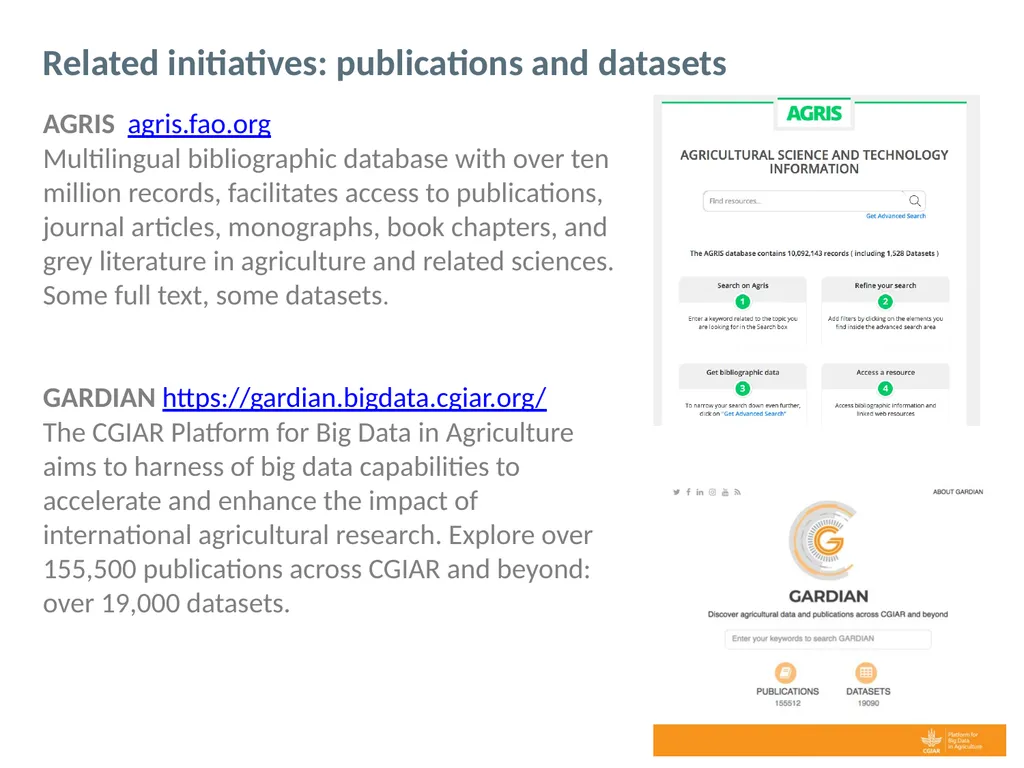
AGRIS agris.fao.org
Multilingual bibliographic database with over ten million records, facilitates access to publications, journal articles, monographs, book chapters, and grey literature in agriculture and related sciences. Some full text, some datasets.
GARDIAN https://gardian.bigdata.cgiar.org/
The CGIAR Platform for Big Data in Agriculture aims to harness of big data capabilities to accelerate and enhance the impact of international agricultural research. Explore over 155,500 publications across CGIAR and beyond: over 19,000 datasets. Related initiatives: publications and datasets<br>
20
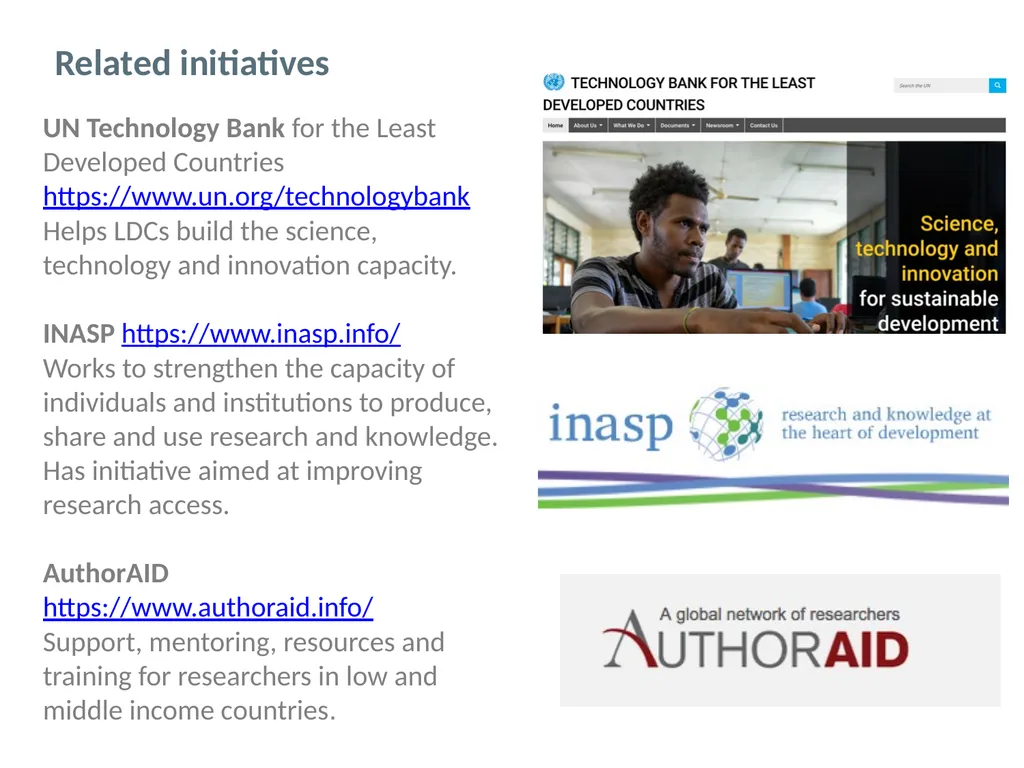
UN Technology Bank for the Least Developed Countries
https://www.un.org/technologybank
Helps LDCs build the science, technology and innovation capacity.
INASP https://www.inasp.info/
Works to strengthen the capacity of individuals and institutions to produce, share and use research and knowledge. Has initiative aimed at improving research access.
AuthorAID https://www.authoraid.info/
Support, mentoring, resources and training for researchers in low and middle income countries. Related initiatives<br>