Richard P. Chaykowski and Robert S. Hickey Reform of the Conduct and Structure of Labour Relations in the Ontario Broader Public Service Report to the Commission on the Reform of Ontarios Public Services Section 2: Collective Bargaining
Related Topics
Share
Embed code
Download this presentation From Below
"Richard P. Chaykowski and Robert S. Hickey Reform" is the property of its rightful owner. Permission is granted to
download and print the materials on this website for personal, non-commercial use only, and to display it
on your personal computer provided you do not modify the materials and that you retain all copyright
notices contained in the materials. By downloading content from our website, you accept the terms of this
agreement.
Presentation Transcript
01
Richard P. Chaykowski and Robert S. Hickey Reform of the Conduct and Structure
of Labour Relations
in the Ontario Broader Public Service
Report to the Commission on the Reform
of Ontario’s Public Services<br>
02
Section 2:
Collective Bargaining and Wage Determination in the BPS
Section 3
Labour Relations and Interest Arbitration in the BPS
Section 4:
Collective Bargaining Structures in the Ontario BPS
Section 5:
Government Reform of the BPS, Labour Policy, and the Law
Section 6:
Successor Rights in the Unionized Sector of the BPS
Section 7:
Organizational Effectiveness and Productivity in the BPS<br>
03
Section 2:
Collective Bargaining and Wage Determination in the BPS
Section 3
Labour Relations and Interest Arbitration in the BPS
Section 4:
Collective Bargaining Structures in the Ontario BPS
Section 5:
Government Reform of the BPS, Labour Policy, and the Law
Section 6:
Successor Rights in the Unionized Sector of the BPS
Section 7:
Organizational Effectiveness and Productivity in the BPS<br>
04
Section 2:
Collective Bargaining and Wage Determination in the BPS
Section 3
Labour Relations and Interest Arbitration in the BPS
Section 4:
Collective Bargaining Structures in the Ontario BPS
Section 5:
Government Reform of the BPS, Labour Policy, and the Law
Section 6:
Successor Rights in the Unionized Sector of the BPS
Section 7:
Organizational Effectiveness and Productivity in the BPS<br>
05
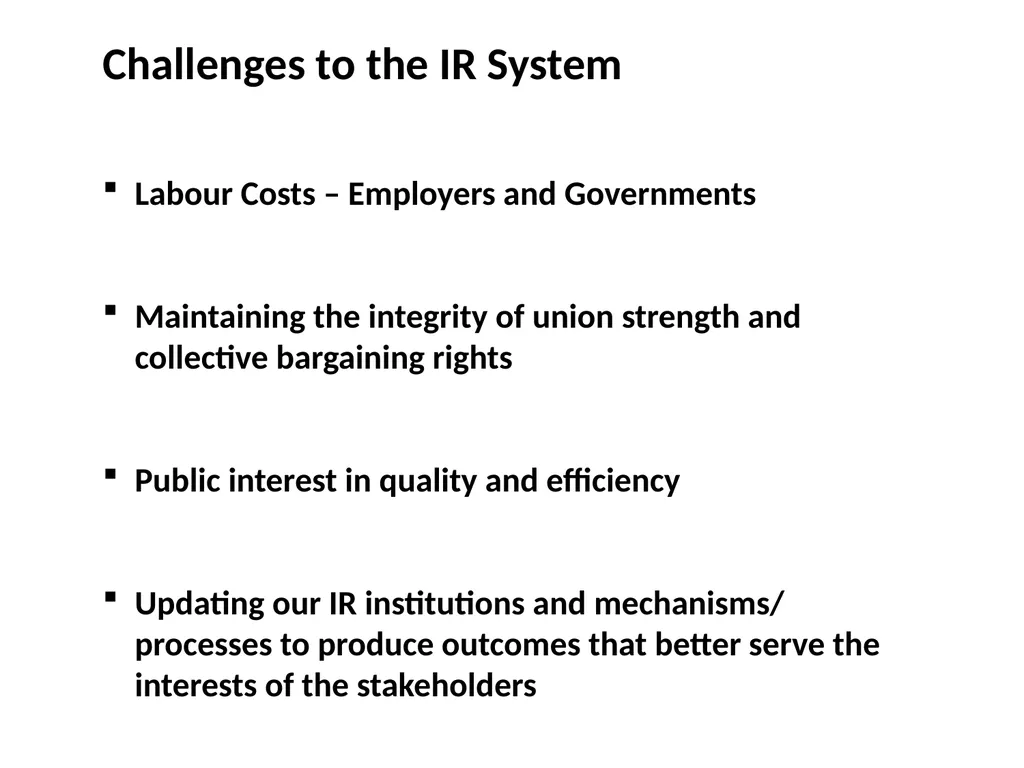
Challenges to the IR System
Labour Costs – Employers and Governments
Maintaining the integrity of union strength and collective bargaining rights
Public interest in quality and efficiency
Updating our IR institutions and mechanisms/ processes to produce outcomes that better serve the interests of the stakeholders<br>
06
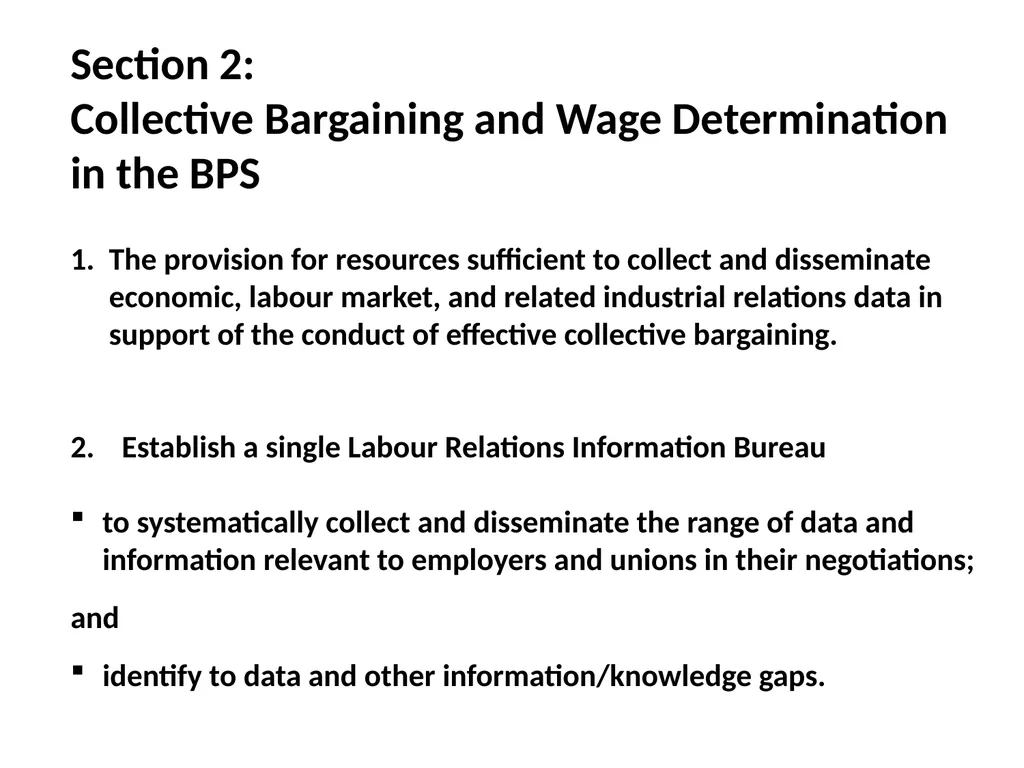
Section 2:
Collective Bargaining and Wage Determination in the BPS
The provision for resources sufficient to collect and disseminate economic, labour market, and related industrial relations data in support of the conduct of effective collective bargaining.
Establish a single Labour Relations Information Bureau
to systematically collect and disseminate the range of data and information relevant to employers and unions in their negotiations;
and
identify to data and other information/knowledge gaps.<br>
07
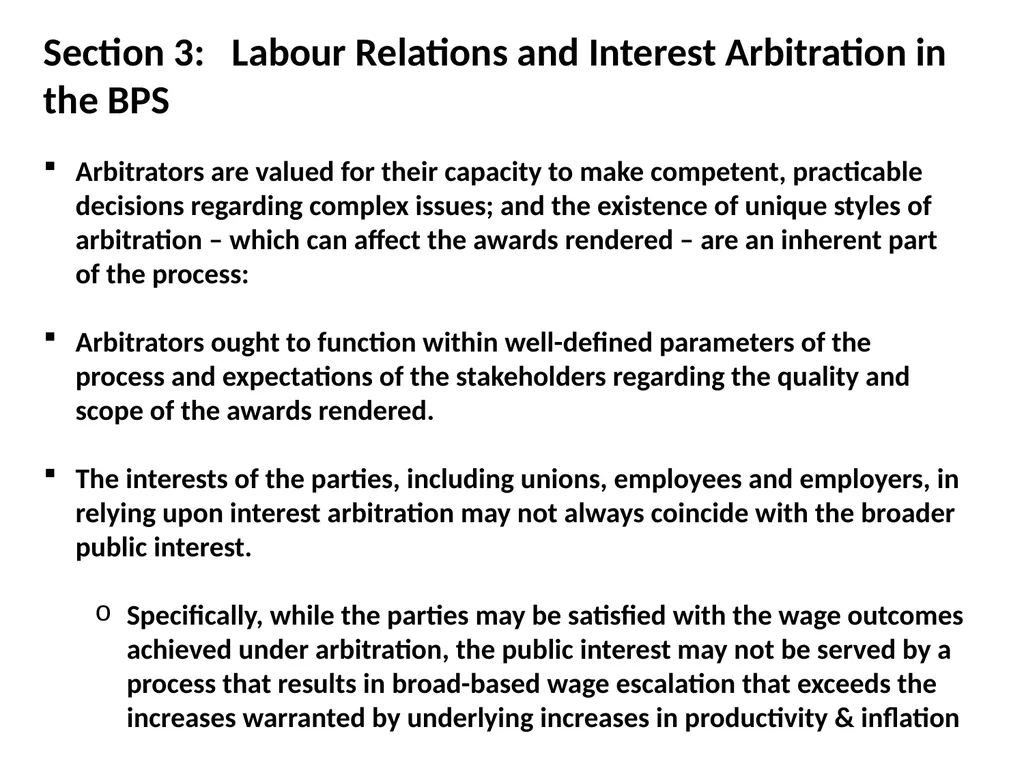
Section 3: Labour Relations and Interest Arbitration in the BPS
Arbitrators are valued for their capacity to make competent, practicable decisions regarding complex issues; and the existence of unique styles of arbitration – which can affect the awards rendered – are an inherent part of the process:
Arbitrators ought to function within well-defined parameters of the process and expectations of the stakeholders regarding the quality and scope of the awards rendered.
The interests of the parties, including unions, employees and employers, in relying upon interest arbitration may not always coincide with the broader public interest.
Specifically, while the parties may be satisfied with the wage outcomes achieved under arbitration, the public interest may not be served by a process that results in broad-based wage escalation that exceeds the increases warranted by underlying increases in productivity & inflation<br>
08
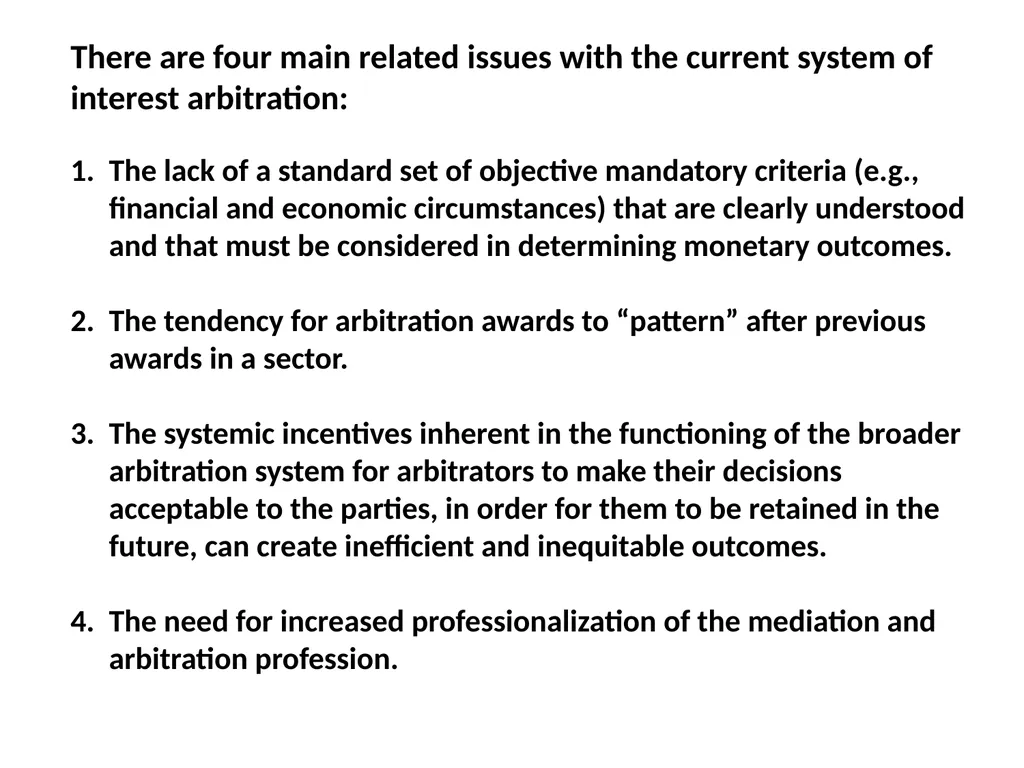
There are four main related issues with the current system of interest arbitration:
The lack of a standard set of objective mandatory criteria (e.g., financial and economic circumstances) that are clearly understood and that must be considered in determining monetary outcomes.
The tendency for arbitration awards to “pattern” after previous awards in a sector.
The systemic incentives inherent in the functioning of the broader arbitration system for arbitrators to make their decisions acceptable to the parties, in order for them to be retained in the future, can create inefficient and inequitable outcomes.
The need for increased professionalization of the mediation and arbitration profession.<br>
09
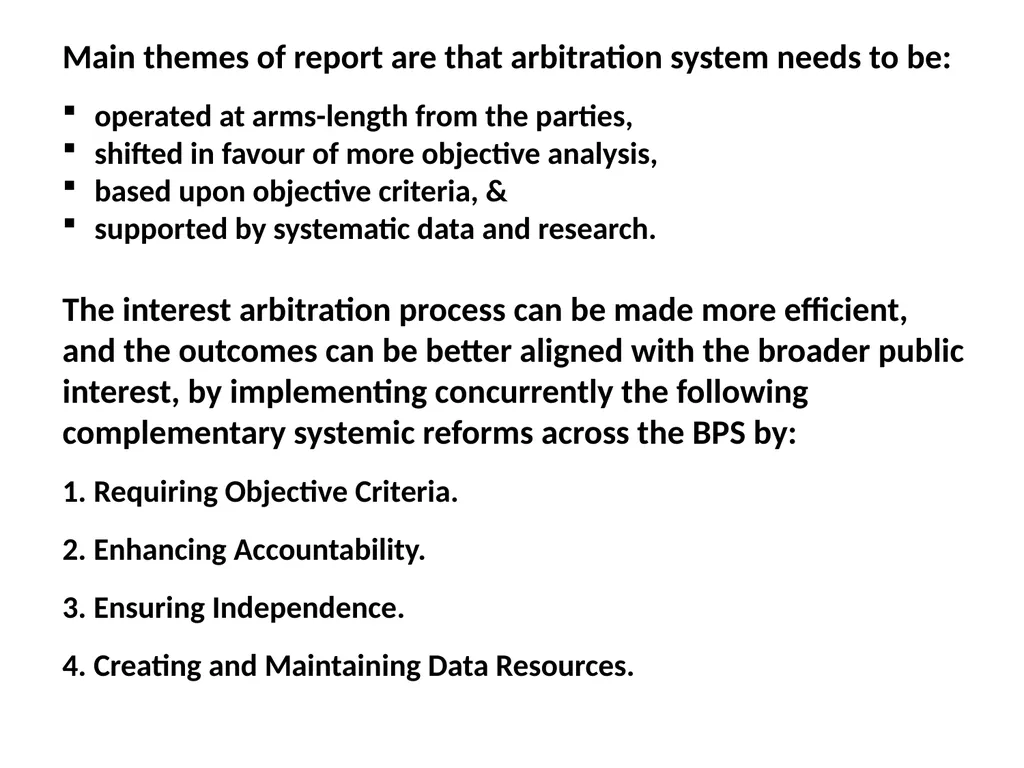
Main themes of report are that arbitration system needs to be:
operated at arms-length from the parties,
shifted in favour of more objective analysis,
based upon objective criteria, &
supported by systematic data and research.
The interest arbitration process can be made more efficient,
and the outcomes can be better aligned with the broader public interest, by implementing concurrently the following complementary systemic reforms across the BPS by:
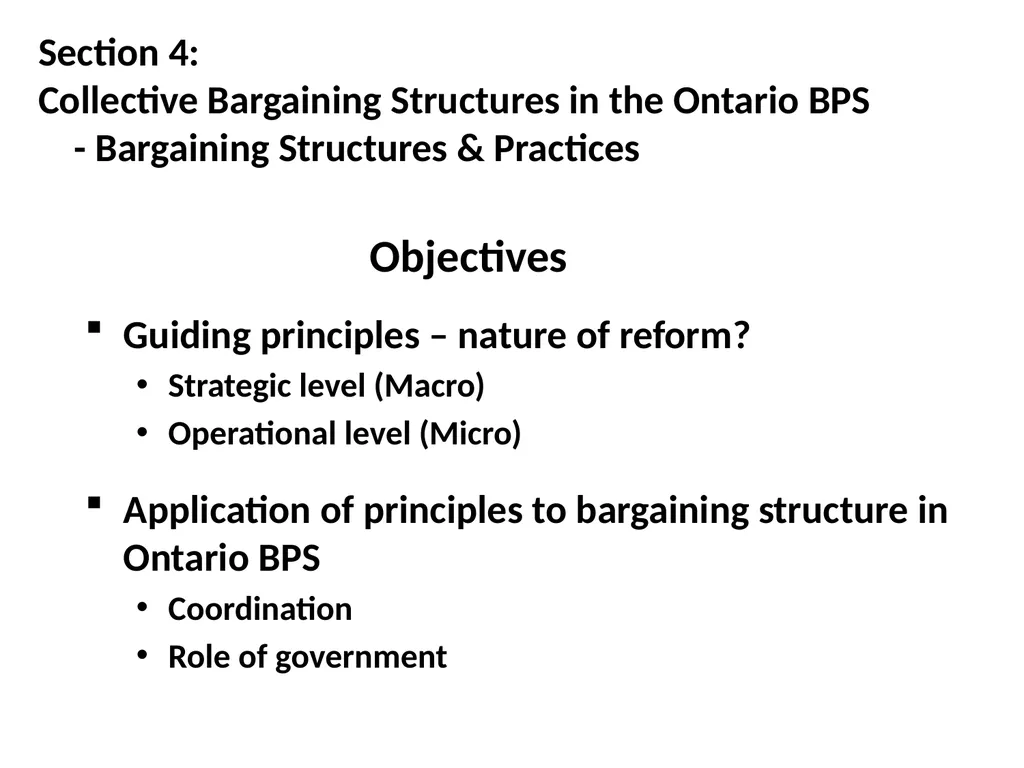
Application of principles to bargaining structure in Ontario BPS
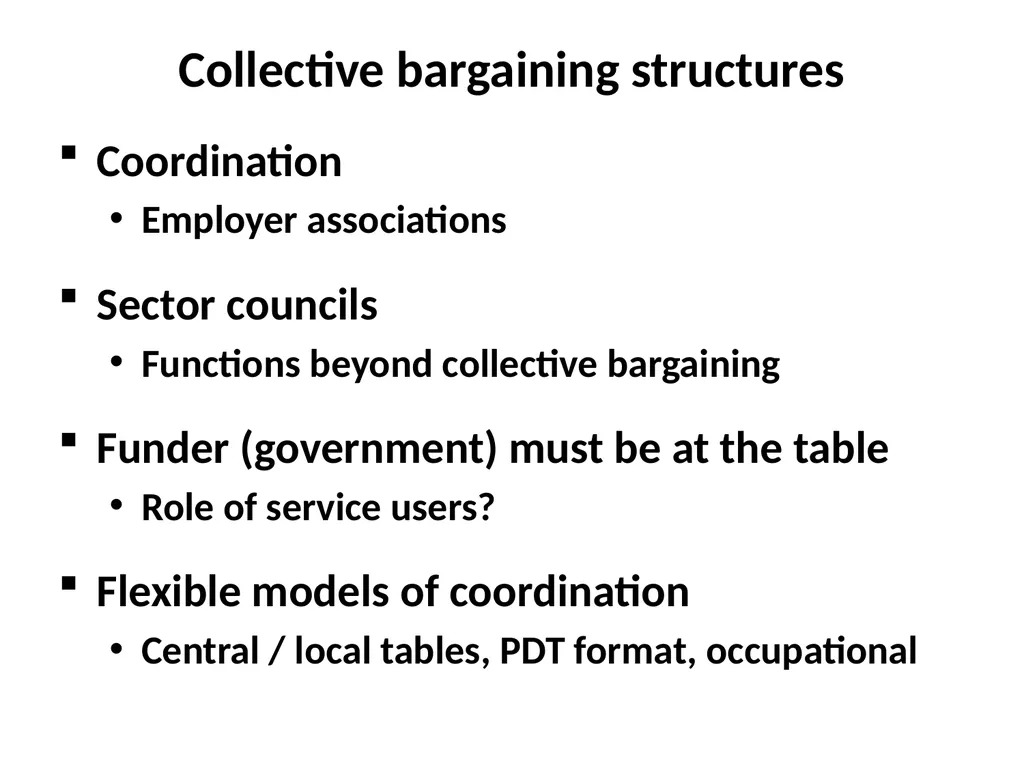
Coordination
Role of government Objectives Section 4:
Collective Bargaining Structures in the Ontario BPS
- Bargaining Structures & Practices<br>
11
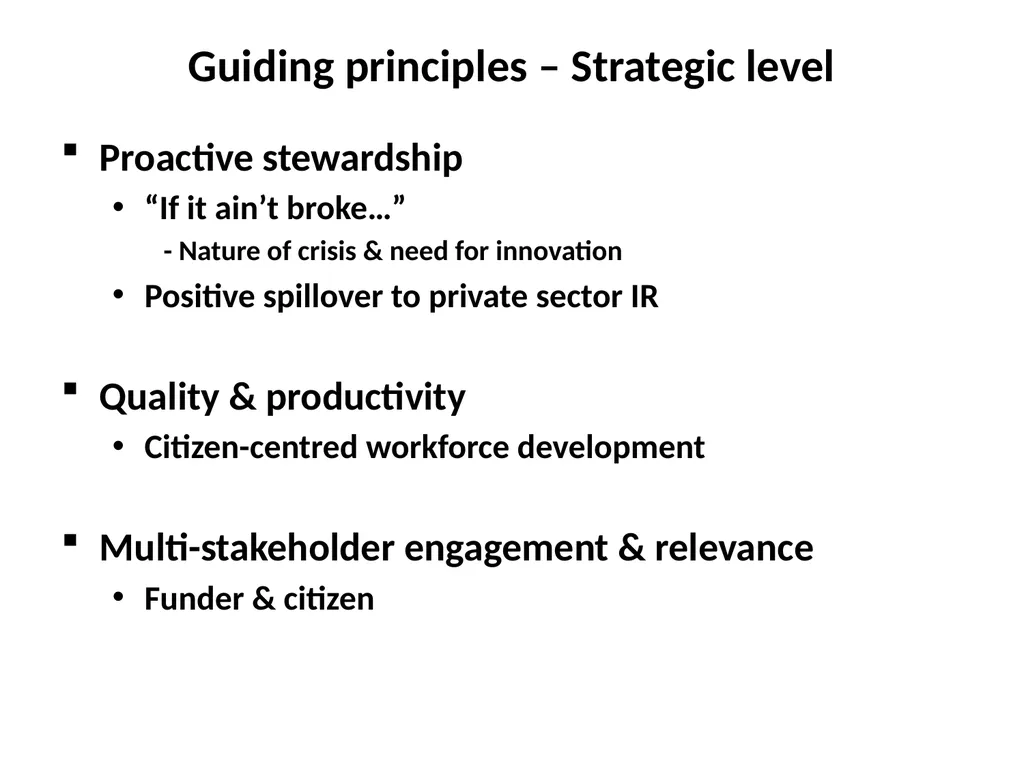
Guiding principles – Strategic level Proactive stewardship
“If it ain’t broke…”
- Nature of crisis & need for innovation
Positive spillover to private sector IR
Quality & productivity
Citizen-centred workforce development
Funder (government) must be at the table
Role of service users?
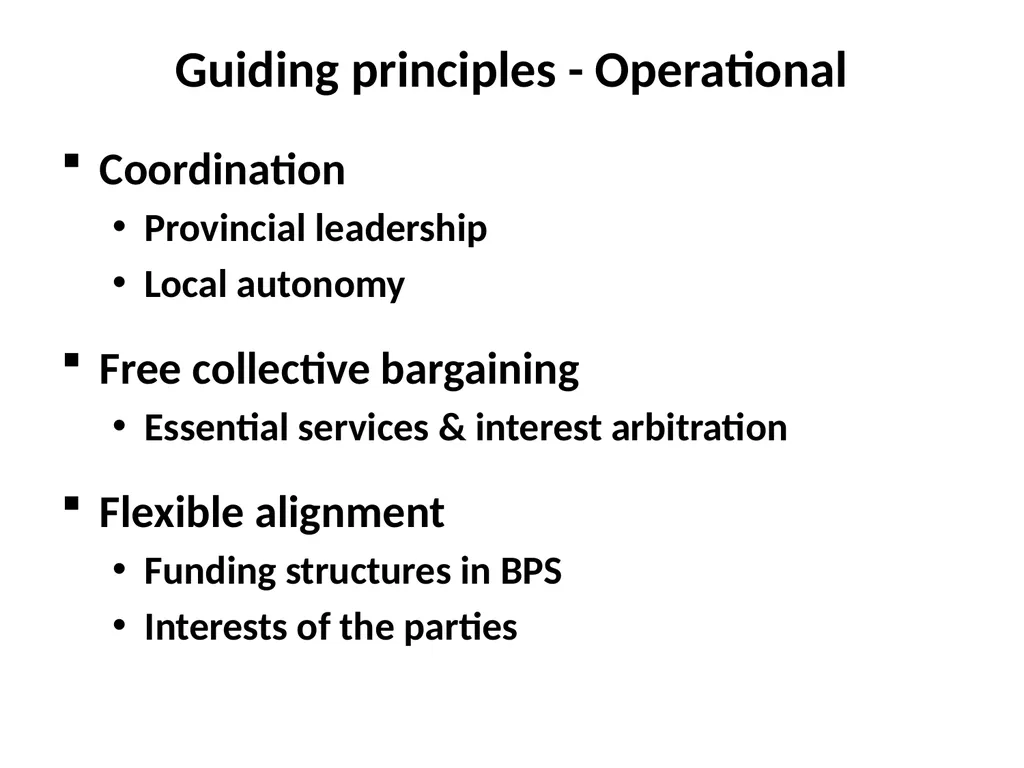
Flexible models of coordination
Central / local tables, PDT format, occupational<br>
14
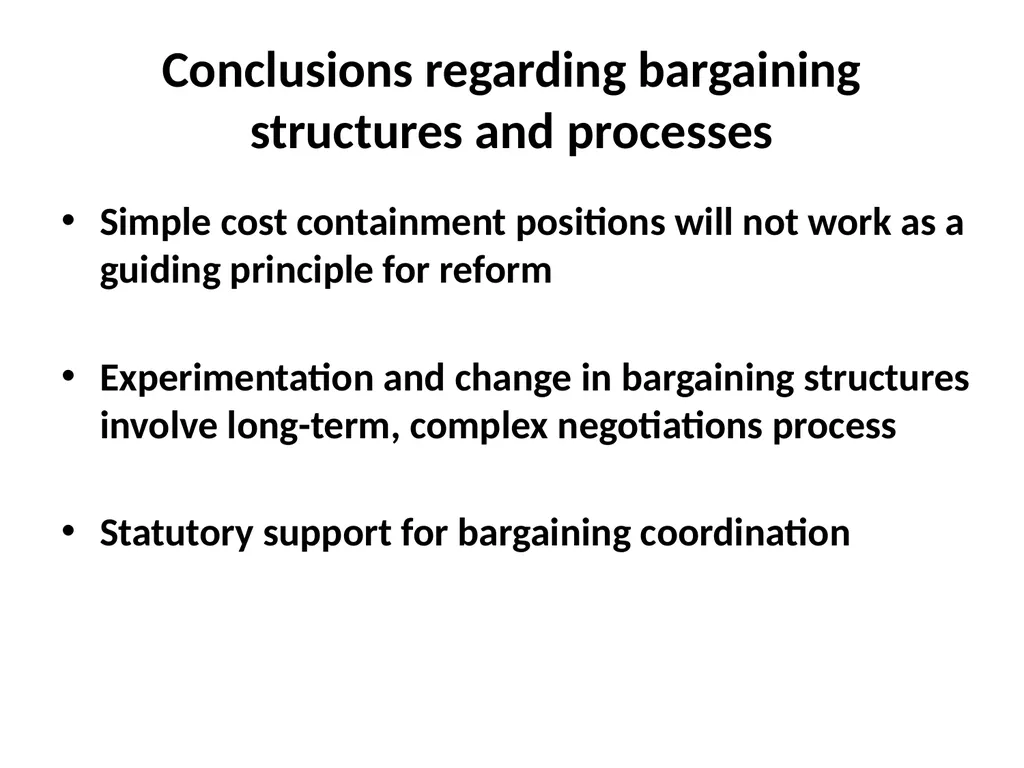
Conclusions regarding bargaining structures and processes Simple cost containment positions will not work as a guiding principle for reform
Experimentation and change in bargaining structures involve long-term, complex negotiations process
Statutory support for bargaining coordination<br>