Rip Current Basics and Safety Information Know Your Options! Building a Weather-Ready Nation 1 What are rip currents? Why are they dangerous? What are clues that a rip current may be present? How do I know if I am caught in rip? What can I
"Rip Current Basics and Safety Information Know" is the property of its rightful owner. Permission is granted to
download and print the materials on this website for personal, non-commercial use only, and to display it
on your personal computer provided you do not modify the materials and that you retain all copyright
notices contained in the materials. By downloading content from our website, you accept the terms of this
agreement.
Presentation Transcript
01
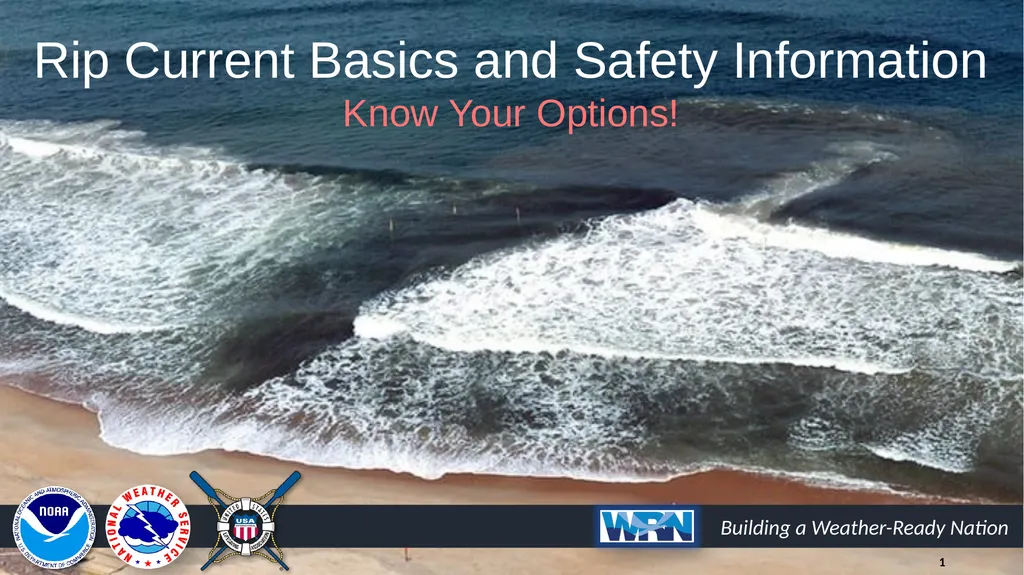
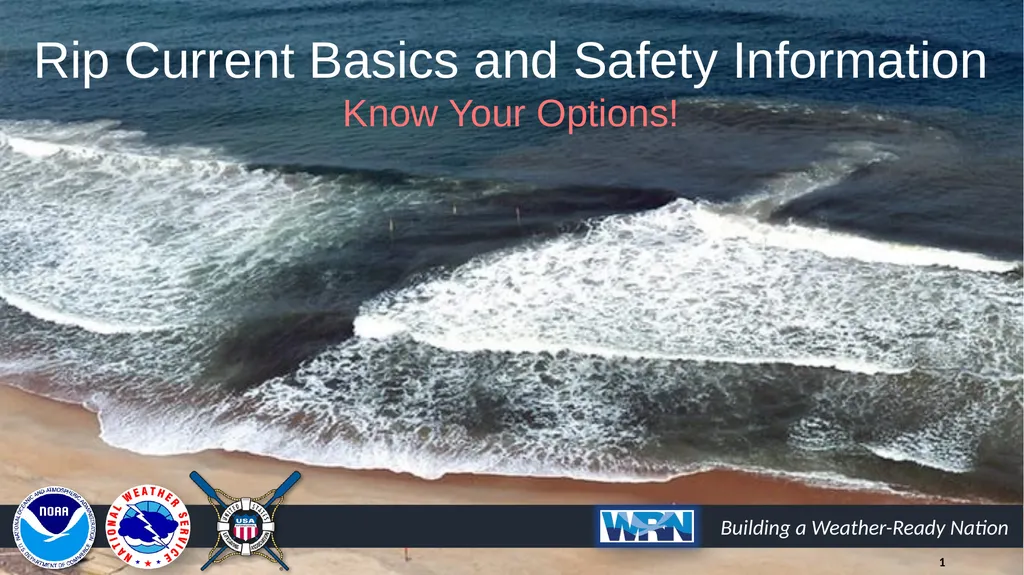
Rip Current Basics and Safety Information
Know Your Options! Building a Weather-Ready Nation 1<br>
02
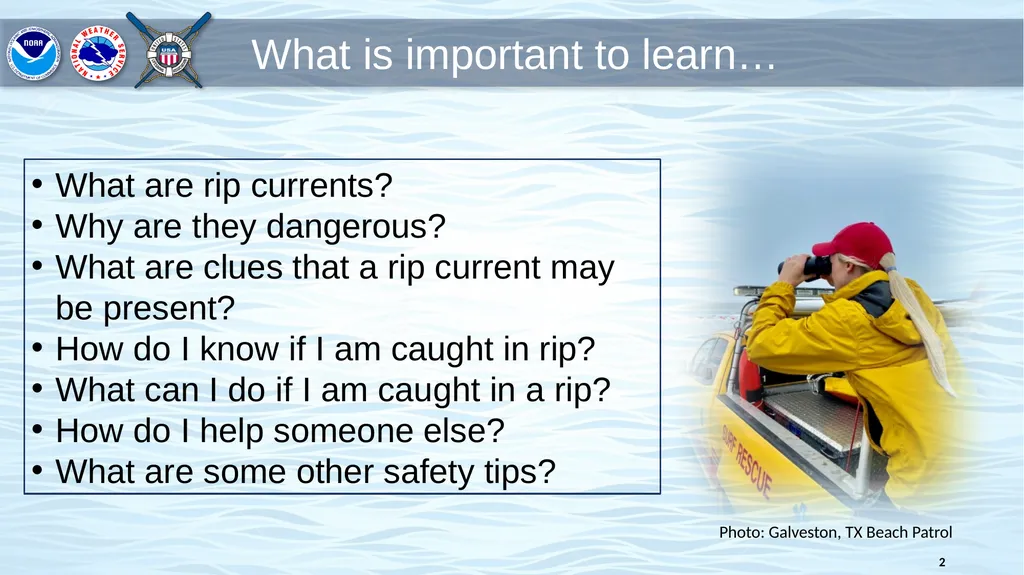
What are rip currents?
Why are they dangerous?
What are clues that a rip current may be present?
How do I know if I am caught in rip?
What can I do if I am caught in a rip?
How do I help someone else?
What are some other safety tips? What is important to learn… Photo: Galveston, TX Beach Patrol 2<br>
03
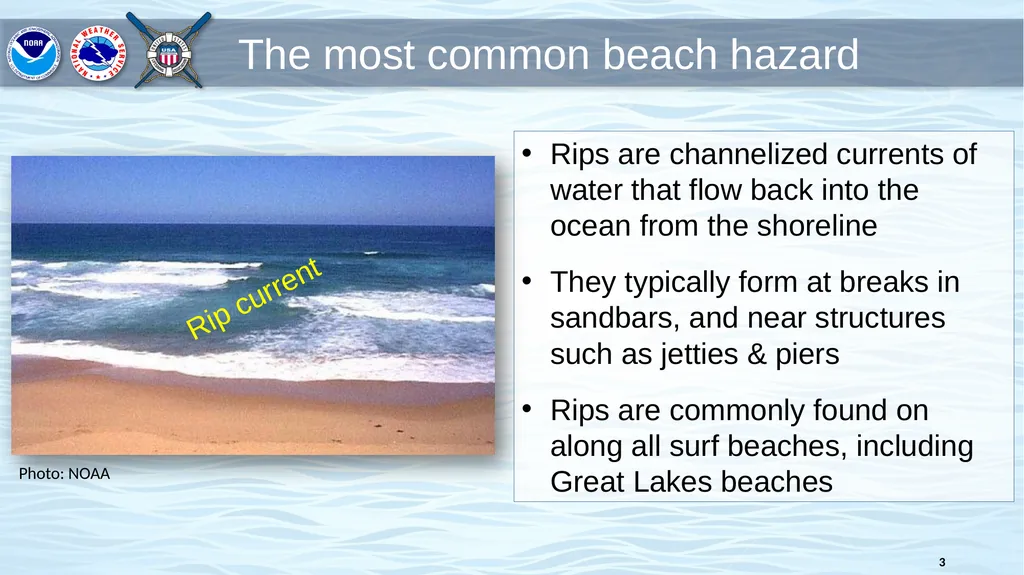
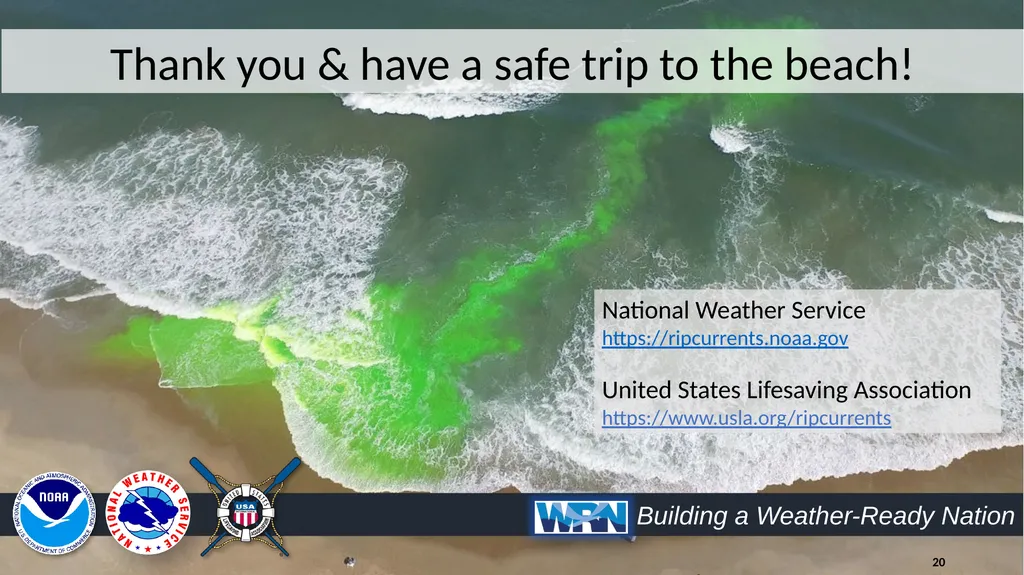
The most common beach hazard Rip current Rips are channelized currents of water that flow back into the ocean from the shoreline
They typically form at breaks in sandbars, and near structures such as jetties & piers
Rips are commonly found on along all surf beaches, including Great Lakes beaches Photo: NOAA 3<br>
04
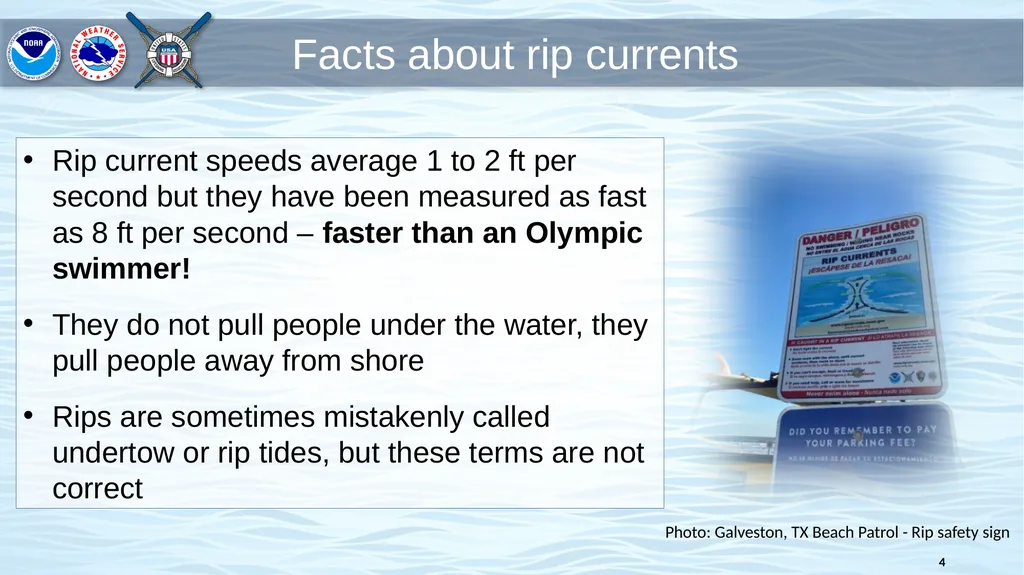
Facts about rip currents Rip current speeds average 1 to 2 ft per second but they have been measured as fast as 8 ft per second – faster than an Olympic swimmer!
They do not pull people under the water, they pull people away from shore
Rips are sometimes mistakenly called undertow or rip tides, but these terms are not correct Photo: Galveston, TX Beach Patrol - Rip safety sign 4<br>
05
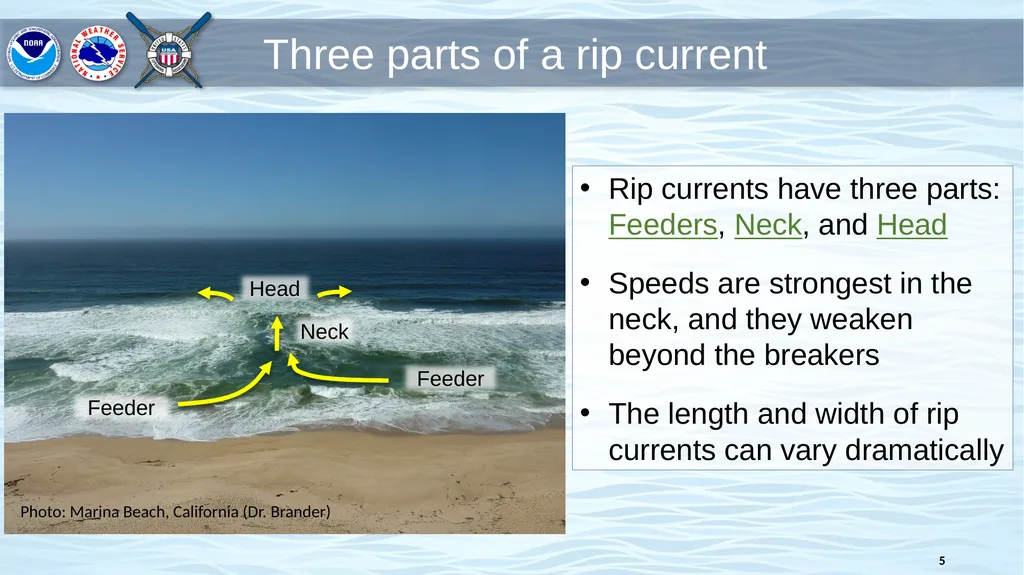
Three parts of a rip current Feeder Feeder Neck Head Rip currents have three parts: Feeders, Neck, and Head
Speeds are strongest in the neck, and they weaken beyond the breakers
The length and width of rip currents can vary dramatically Photo: Marina Beach, California (Dr. Brander) 5<br>
06
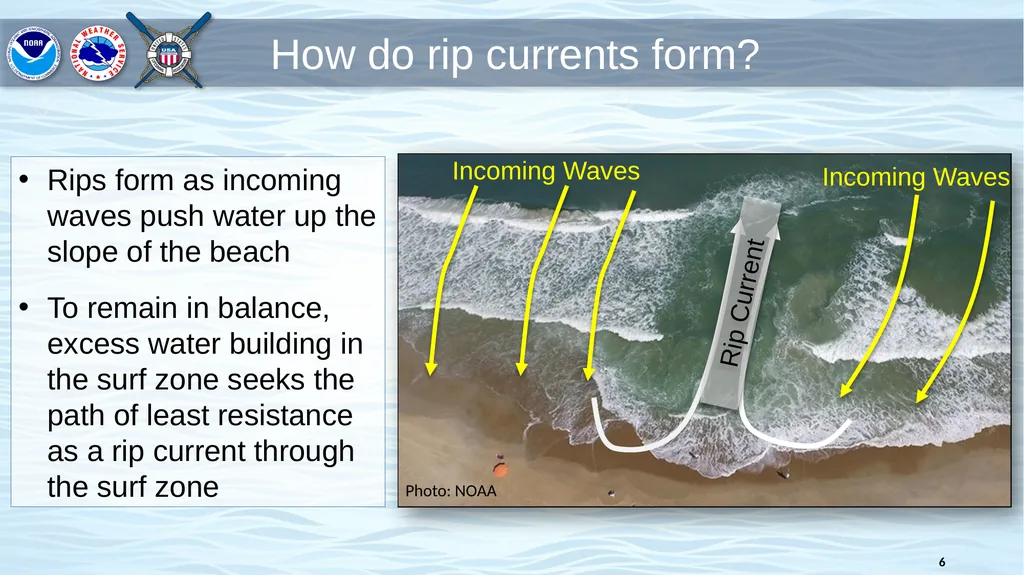
How do rip currents form? Incoming Waves Incoming Waves Rips form as incoming waves push water up the slope of the beach
To remain in balance, excess water building in the surf zone seeks the path of least resistance as a rip current through the surf zone Photo: NOAA 6<br>
07
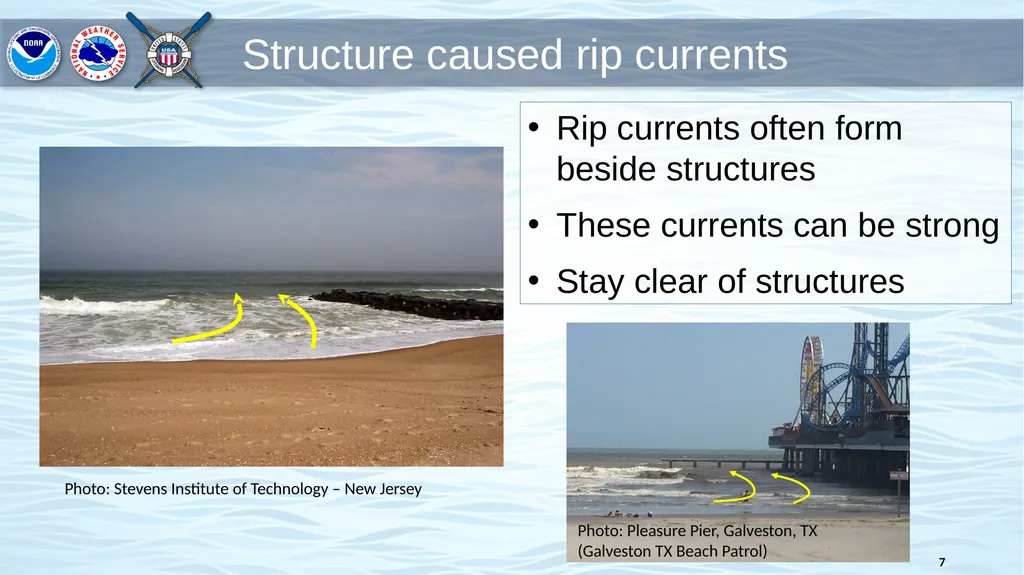
Structure caused rip currents Rip currents often form beside structures
These currents can be strong
Stay clear of structures Photo: Stevens Institute of Technology – New Jersey 7 Photo: Pleasure Pier, Galveston, TX (Galveston TX Beach Patrol)<br>
08
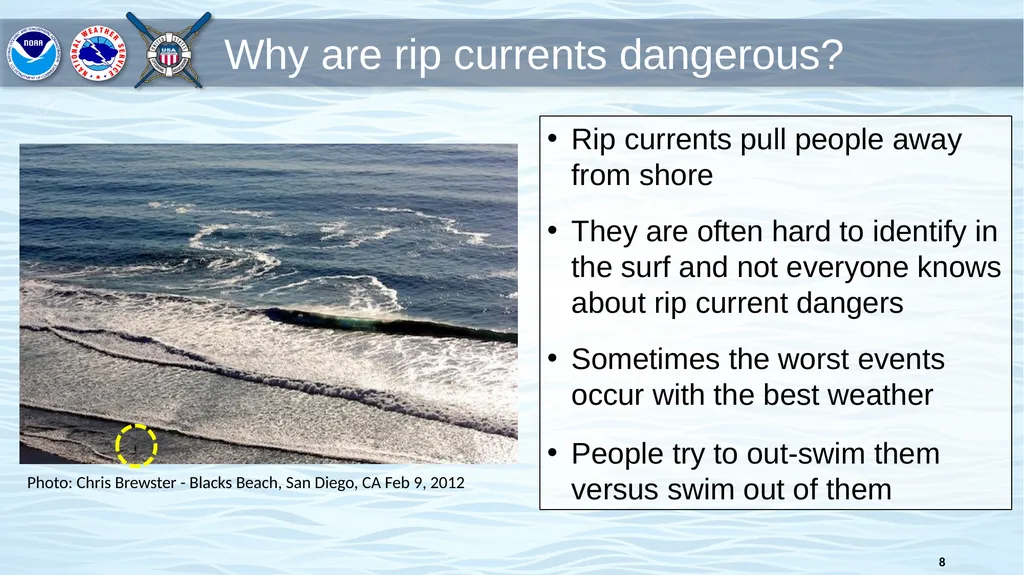
Why are rip currents dangerous? Photo: Chris Brewster - Blacks Beach, San Diego, CA Feb 9, 2012 Rip currents pull people away from shore
They are often hard to identify in the surf and not everyone knows about rip current dangers
Sometimes the worst events occur with the best weather
People try to out-swim them versus swim out of them 8<br>
09
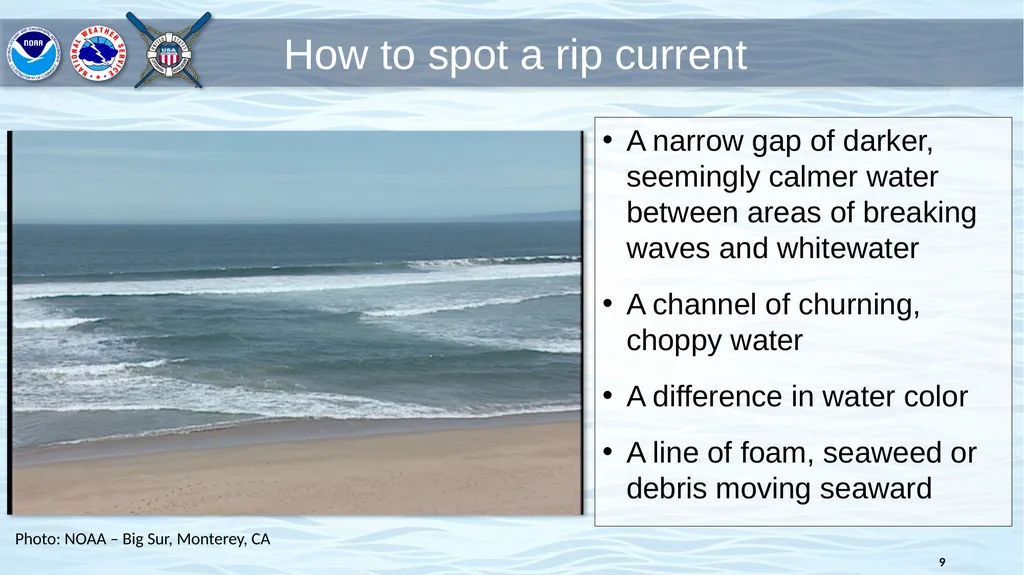
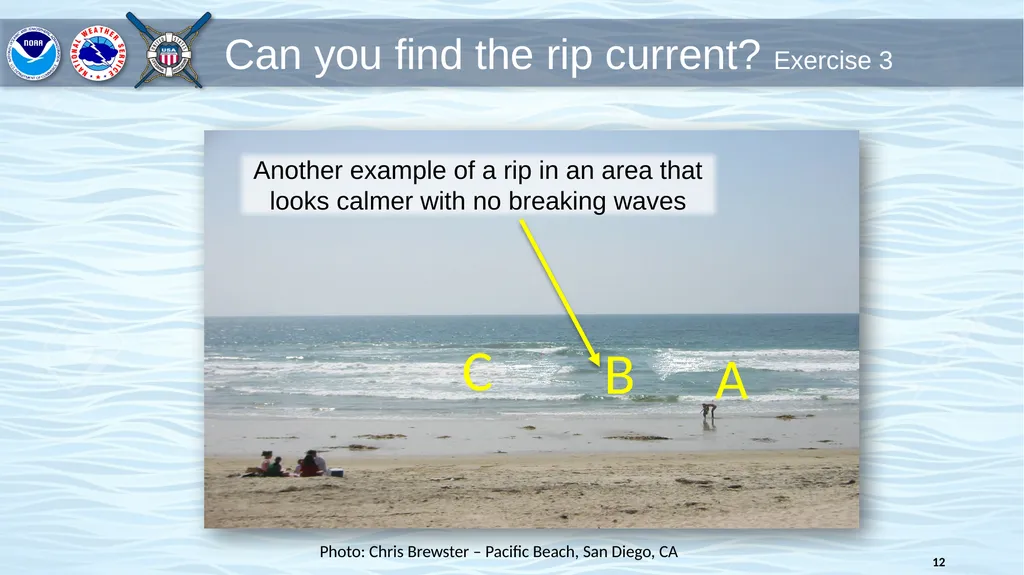
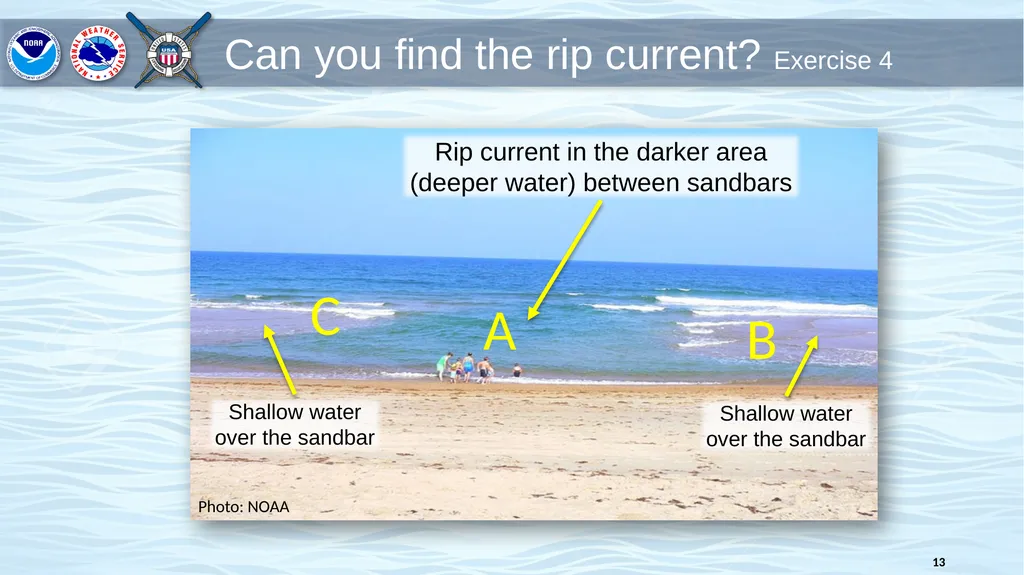
How to spot a rip current A narrow gap of darker, seemingly calmer water between areas of breaking waves and whitewater
A channel of churning, choppy water
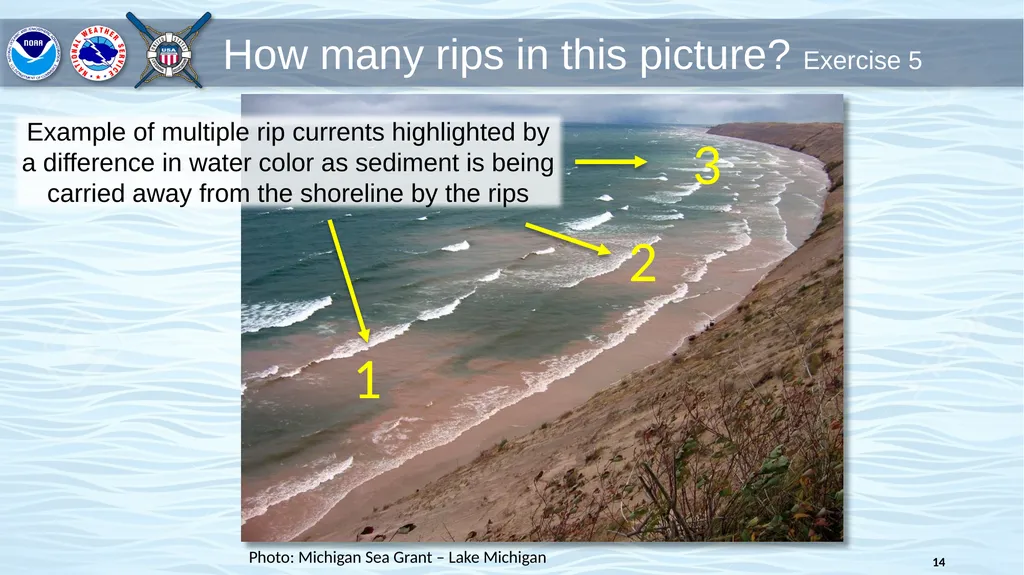
A difference in water color
A line of foam, seaweed or debris moving seaward 9 Photo: NOAA – Big Sur, Monterey, CA<br>
10
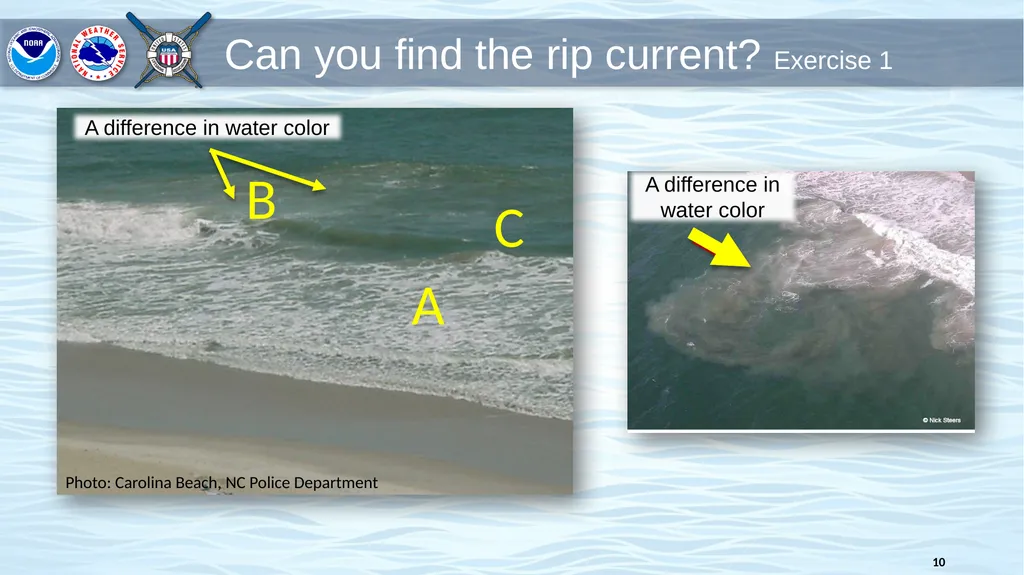
Can you find the rip current? Exercise 1 A difference in water color Photo: Carolina Beach, NC Police Department A B C 10<br>
11
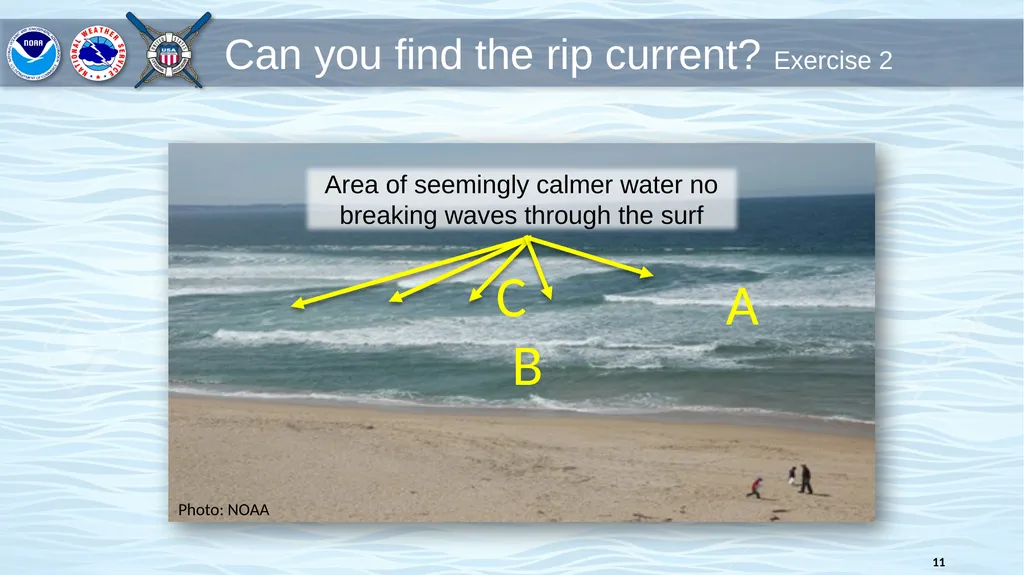
Can you find the rip current? Exercise 2 Photo: NOAA A B C 11<br>
12
Photo: Chris Brewster – Pacific Beach, San Diego, CA A B C 12 Can you find the rip current? Exercise 3<br>
13
Can you find the rip current? Exercise 4 Photo: NOAA A B C 13<br>
14
How many rips in this picture? Exercise 5 Photo: Michigan Sea Grant – Lake Michigan 14<br>
15
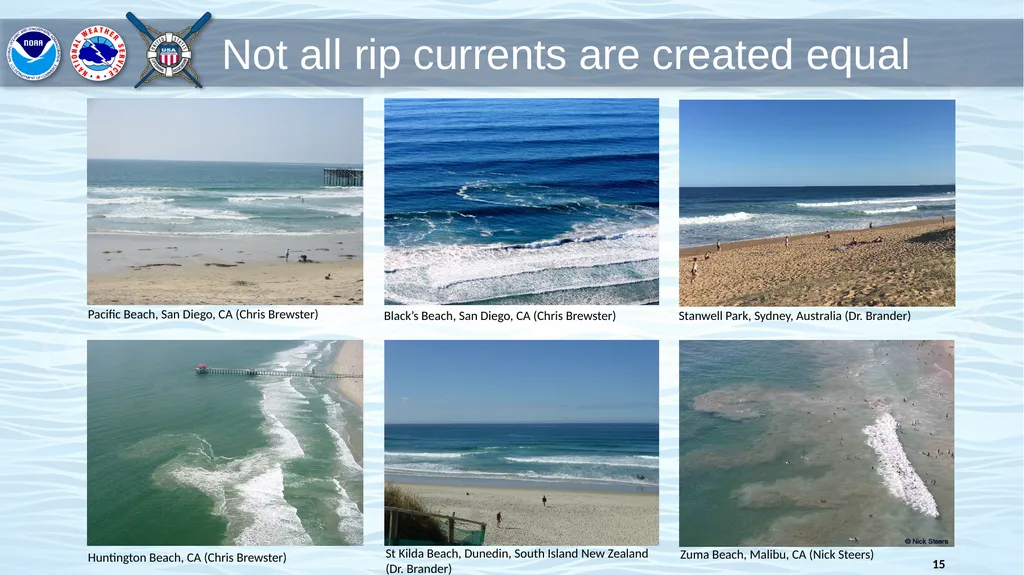
Not all rip currents are created equal 15 Stanwell Park, Sydney, Australia (Dr. Brander) Zuma Beach, Malibu, CA (Nick Steers) St Kilda Beach, Dunedin, South Island New Zealand
(Dr. Brander) Black’s Beach, San Diego, CA (Chris Brewster) Pacific Beach, San Diego, CA (Chris Brewster) Huntington Beach, CA (Chris Brewster)<br>
16
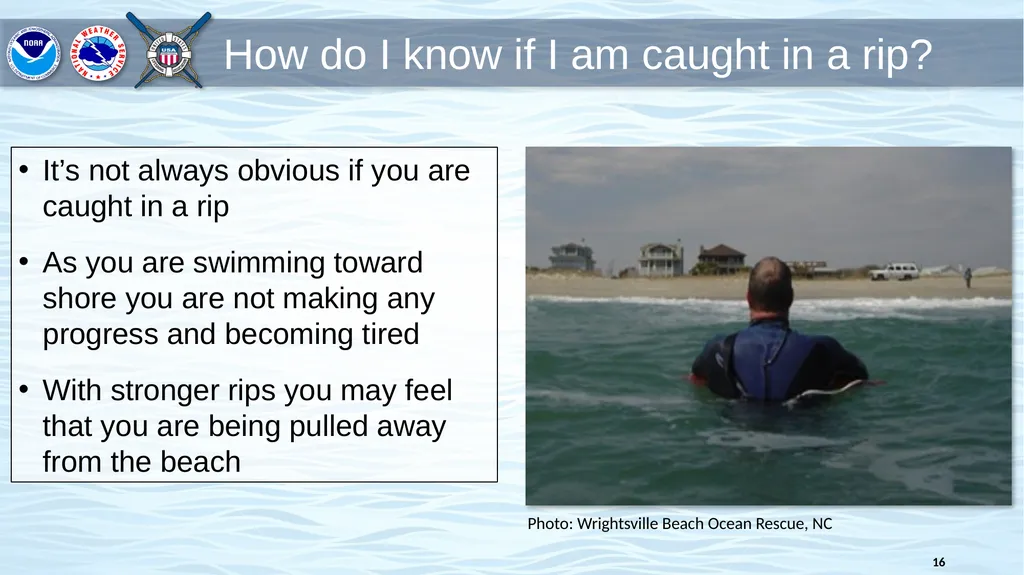
How do I know if I am caught in a rip? It’s not always obvious if you are caught in a rip
As you are swimming toward shore you are not making any progress and becoming tired
With stronger rips you may feel that you are being pulled away from the beach Photo: Wrightsville Beach Ocean Rescue, NC 16<br>
17
What can I do if I am caught in a rip? Image: USLA/Sea Grant/NOAA 17<br>
18
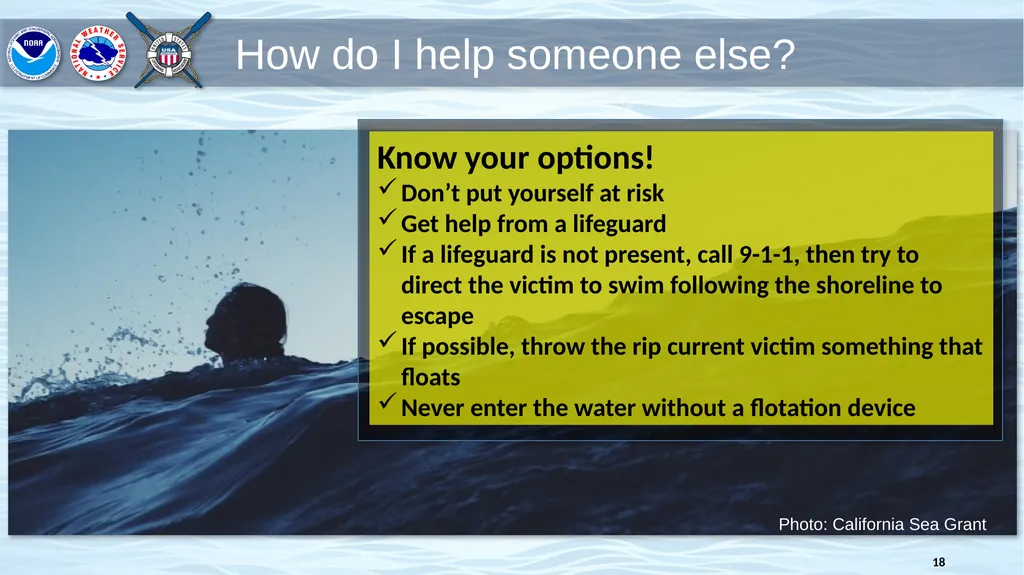
How do I help someone else? Photo: California Sea Grant 18<br>
19
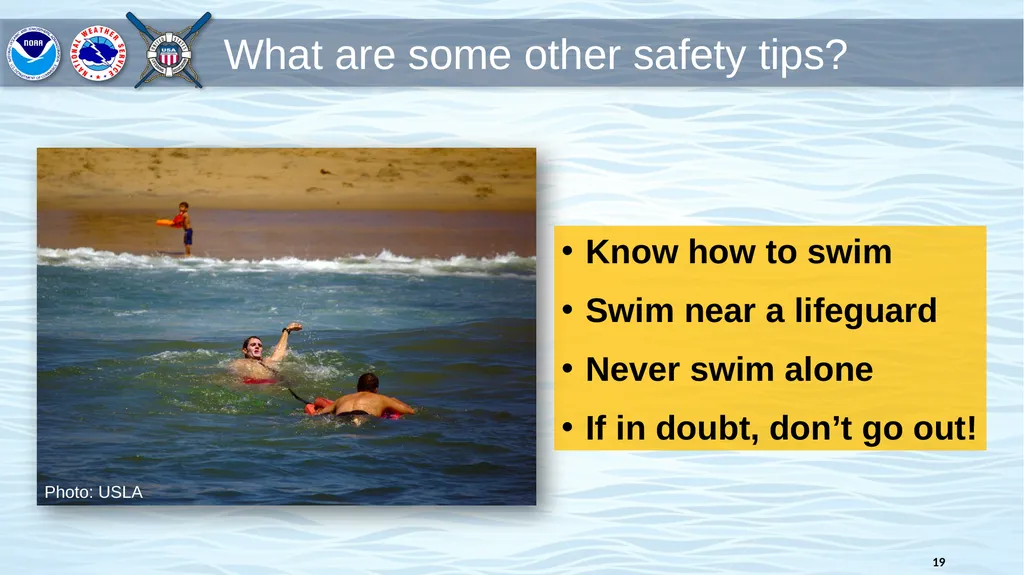
What are some other safety tips? Know how to swim
Swim near a lifeguard
Never swim alone
If in doubt, don’t go out! Photo: USLA 19<br>
20
Building a Weather-Ready Nation Thank you & have a safe trip to the beach! 20 National Weather Service
https://ripcurrents.noaa.gov
United States Lifesaving Association
https://www.usla.org/ripcurrents<br>