
Riparian Forest Buffer Outcome: Proposed Workplan

Description: Riparian Forest Buffer Outcome: Proposed Workplan updates Katie Brownson, USFS January 2023 FWG Strategic planning documents Management Strategy- Longer-term (10 year) narrative document identifying factors influencing success, current
Related Topics
Download Presentation
"Riparian Forest Buffer Outcome: Proposed Workplan" is the property of its rightful owner. Permission is granted to download and print the materials on this website for personal, non-commercial use only, and to display it on your personal computer provided you do not modify the materials and that you retain all copyright notices contained in the materials. By downloading content from our website, you accept the terms of this agreement.
Presentation Transcript
slide1. Riparian Forest Buffer Outcome:
Proposed Workplan updates Katie Brownson, USFS
January 2023 FWG<br>
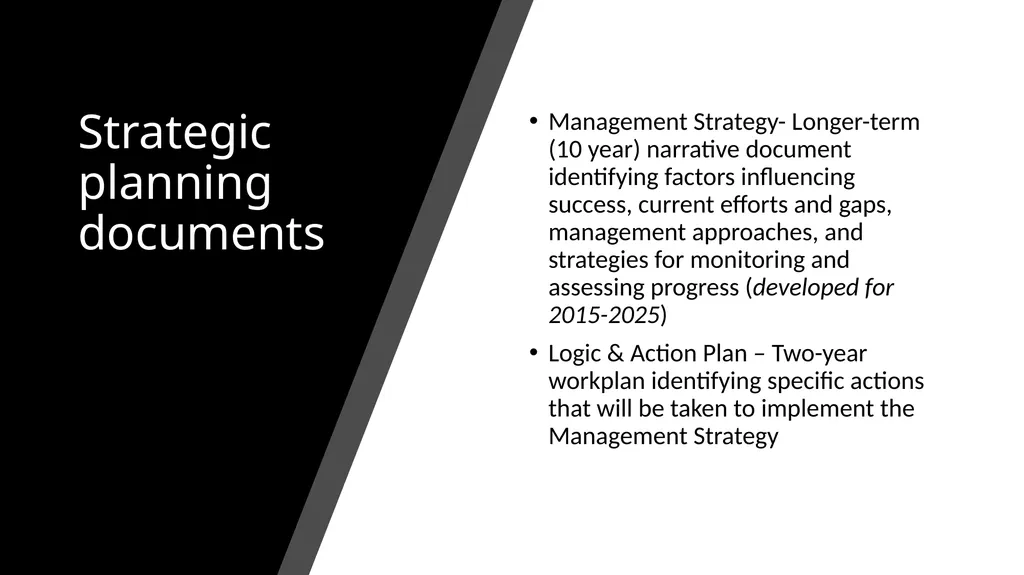
slide2. Strategic planning documents Management Strategy- Longer-term (10 year) narrative document identifying factors influencing success, current efforts and gaps, management approaches, and strategies for monitoring and assessing progress (developed for 2015-2025)
Logic & Action Plan – Two-year workplan identifying specific actions that will be taken to implement the Management Strategy<br>
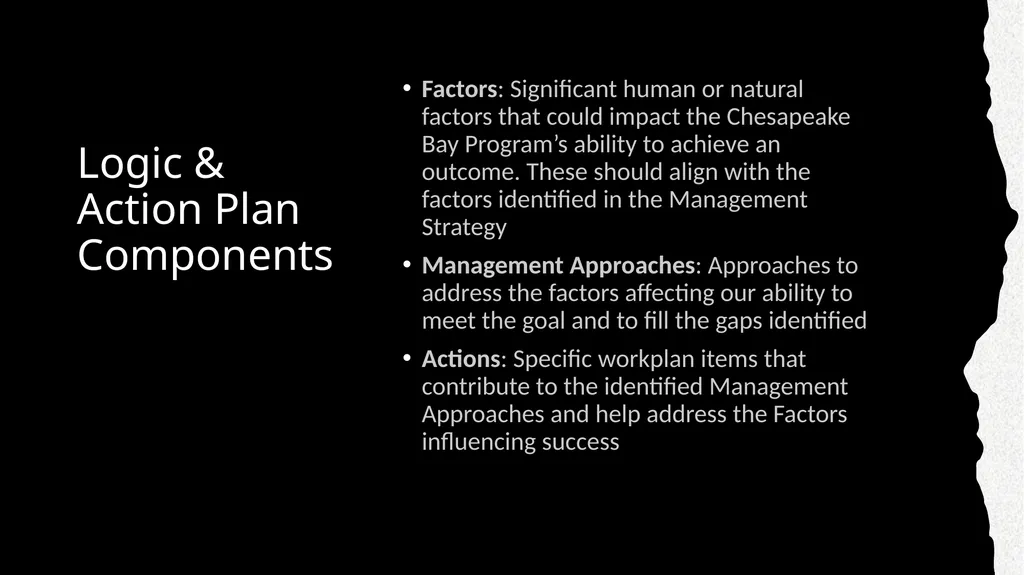
slide3. Logic & Action Plan Components Factors: Significant human or natural factors that could impact the Chesapeake Bay Program’s ability to achieve an outcome. These should align with the factors identified in the Management Strategy
Management Approaches: Approaches to address the factors affecting our ability to meet the goal and to fill the gaps identified
Actions: Specific workplan items that contribute to the identified Management Approaches and help address the Factors influencing success<br>
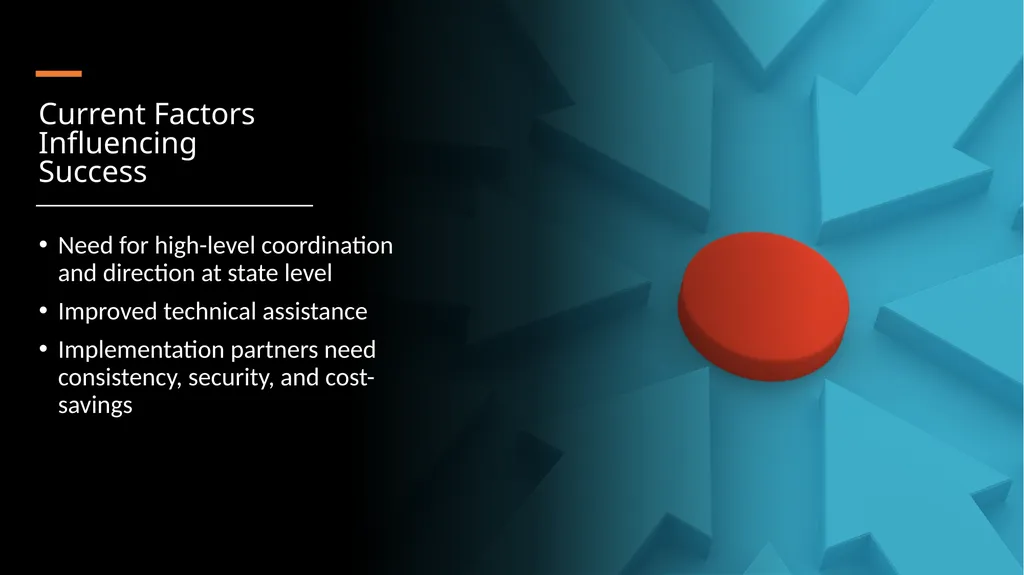
slide4. Current Factors Influencing Success Need for high-level coordination and direction at state level
Improved technical assistance
Implementation partners need consistency, security, and cost-savings<br>
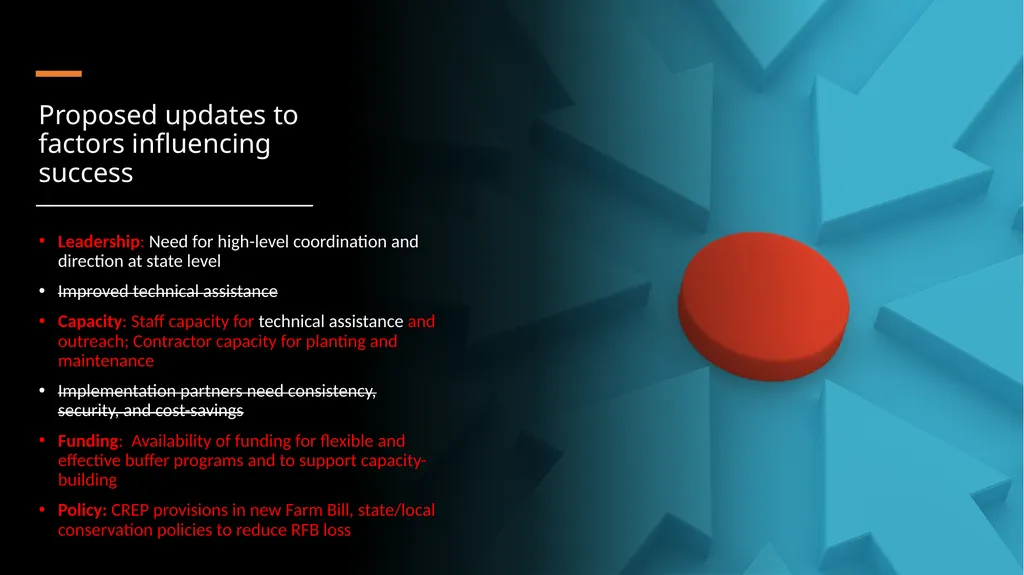
slide5. Proposed updates to factors influencing success Leadership: Need for high-level coordination and direction at state level
Improved technical assistance
Capacity: Staff capacity for technical assistance and outreach; Contractor capacity for planting and maintenance
Implementation partners need consistency, security, and cost-savings
Funding: Availability of funding for flexible and effective buffer programs and to support capacity-building
Policy: CREP provisions in new Farm Bill, state/local conservation policies to reduce RFB loss<br>
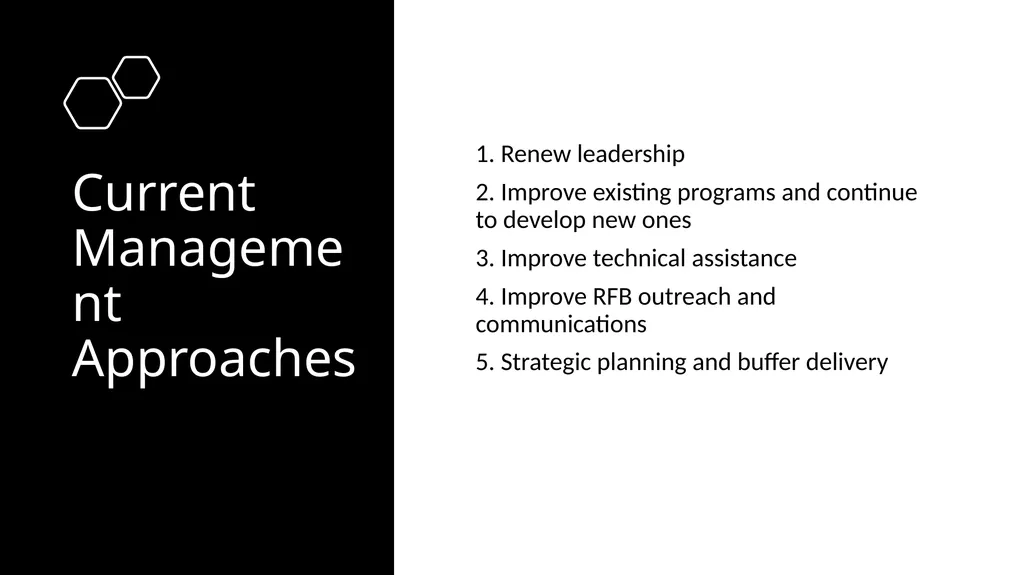
slide6. Current Management Approaches 1. Renew leadership
2. Improve existing programs and continue to develop new ones
3. Improve technical assistance
4. Improve RFB outreach and communications
5. Strategic planning and buffer delivery<br>
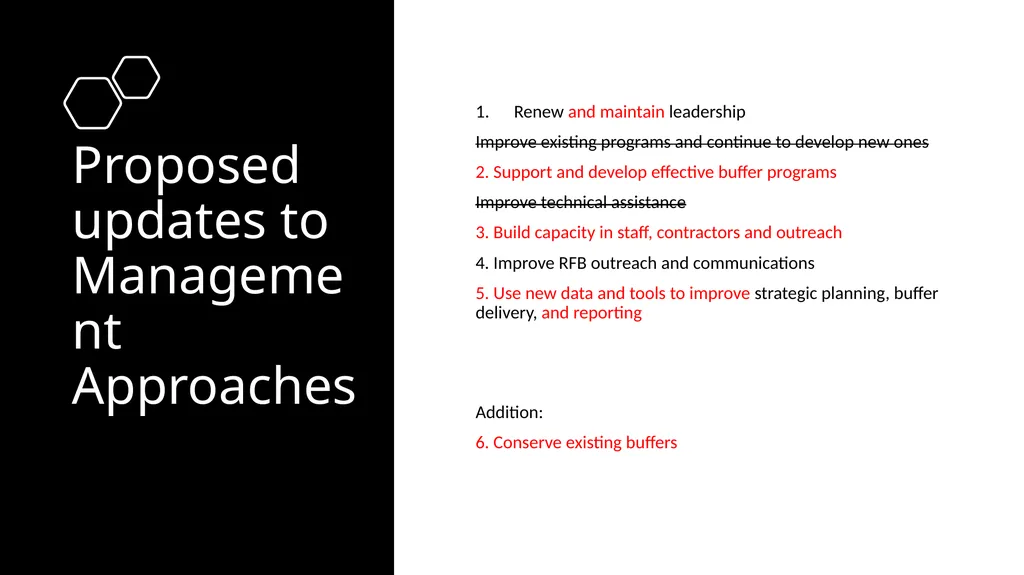
slide7. Proposed updates to Management Approaches Renew and maintain leadership
Improve existing programs and continue to develop new ones
2. Support and develop effective buffer programs
Improve technical assistance
3. Build capacity in staff, contractors and outreach
4. Improve RFB outreach and communications
5. Use new data and tools to improve strategic planning, buffer delivery, and reporting
Addition:
6. Conserve existing buffers<br>
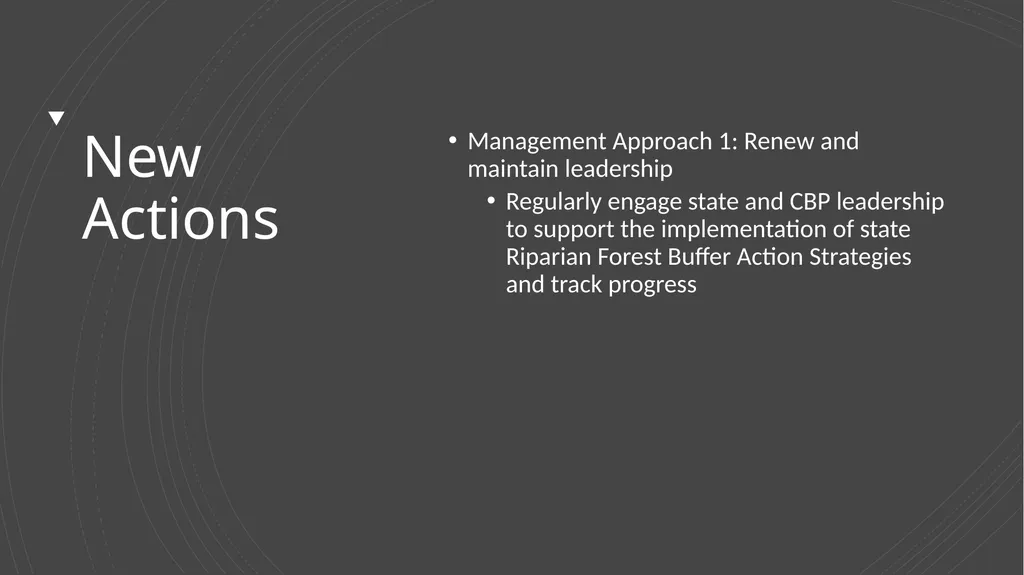
slide8. New Actions Management Approach 1: Renew and maintain leadership
Regularly engage state and CBP leadership to support the implementation of state Riparian Forest Buffer Action Strategies and track progress<br>
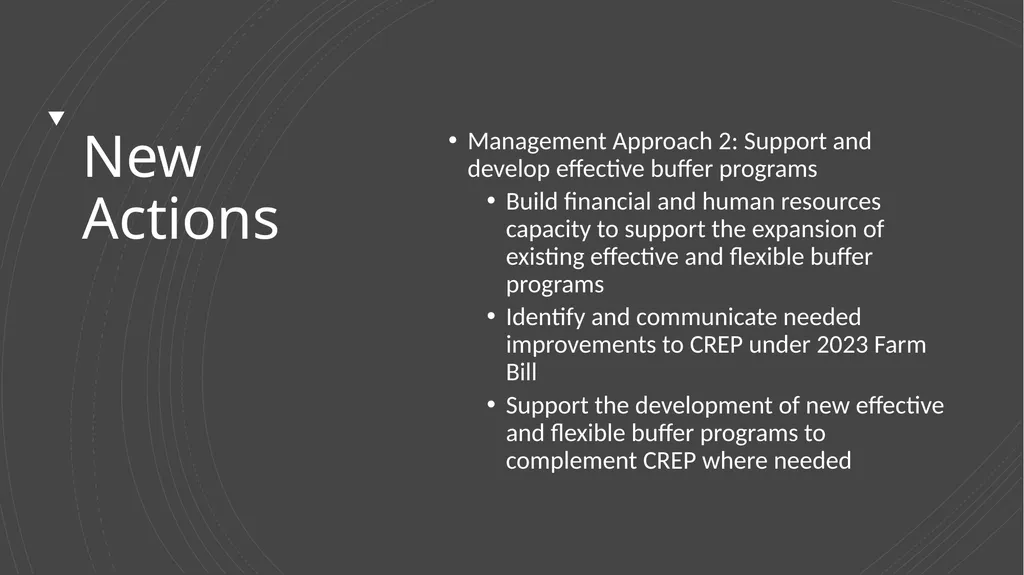
slide9. New Actions Management Approach 2: Support and develop effective buffer programs
Build financial and human resources capacity to support the expansion of existing effective and flexible buffer programs
Identify and communicate needed improvements to CREP under 2023 Farm Bill
Support the development of new effective and flexible buffer programs to complement CREP where needed<br>
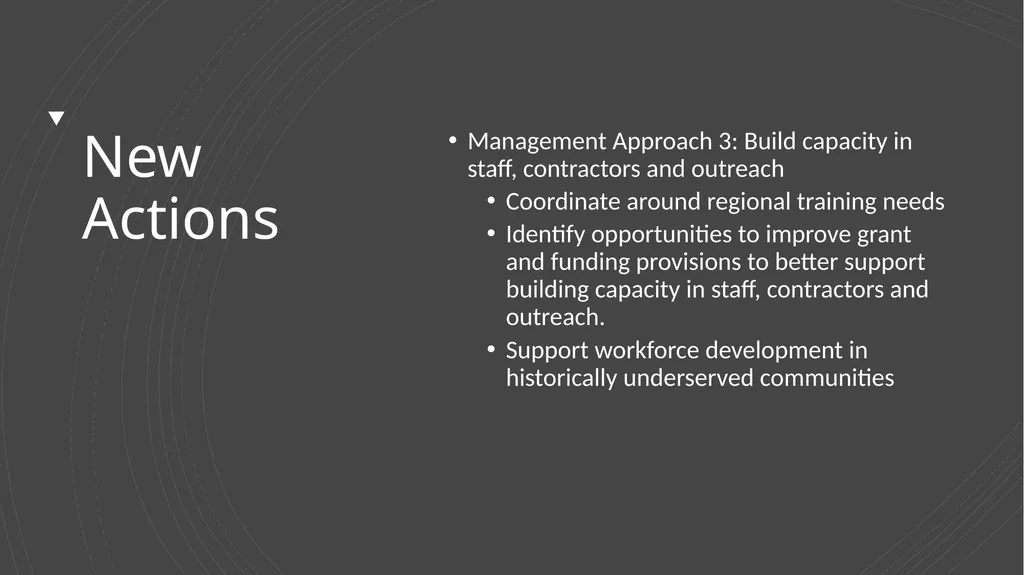
slide10. New Actions Management Approach 3: Build capacity in staff, contractors and outreach
Coordinate around regional training needs
Identify opportunities to improve grant and funding provisions to better support building capacity in staff, contractors and outreach.
Support workforce development in historically underserved communities<br>
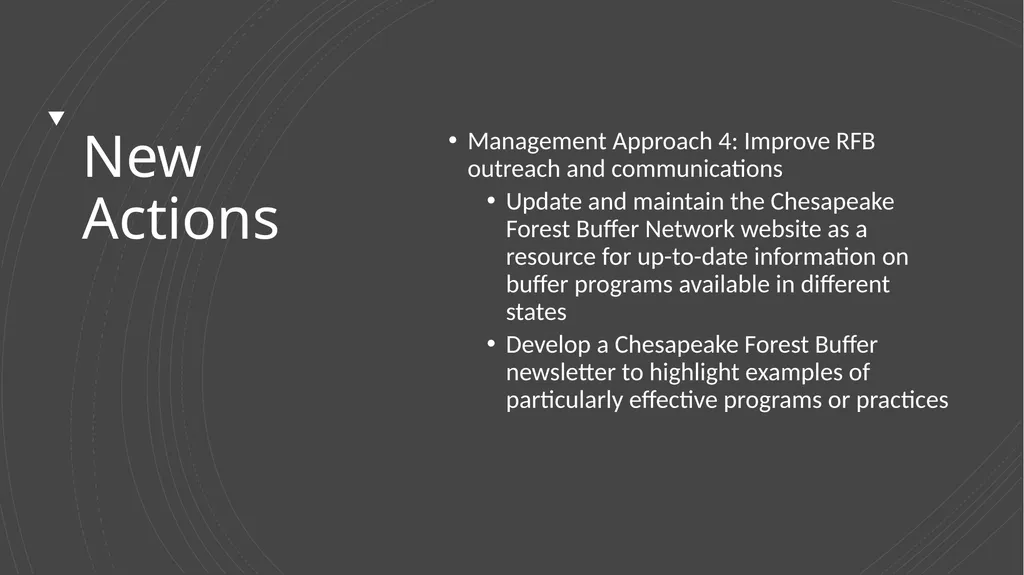
slide11. New Actions Management Approach 4: Improve RFB outreach and communications
Update and maintain the Chesapeake Forest Buffer Network website as a resource for up-to-date information on buffer programs available in different states
Develop a Chesapeake Forest Buffer newsletter to highlight examples of particularly effective programs or practices<br>
slide12. New Actions Management Approach 5. Use new data and tools to improve strategic planning, buffer delivery, and reporting
Evaluate opportunities to optimize RFB implementation for climate adaptation, resilience and equity
Improve reporting and verification of forest buffers to ensure new buffers are getting full credit<br>
slide13. New Actions Management Approach 6: Conserve existing buffers
Identify policies or incentives that can be used to prioritize conservation and retention of existing forest buffers<br>
slide14. Questions or suggestions?<br>
January 2023 FWG<br>
slide2. Strategic planning documents Management Strategy- Longer-term (10 year) narrative document identifying factors influencing success, current efforts and gaps, management approaches, and strategies for monitoring and assessing progress (developed for 2015-2025)
Logic & Action Plan – Two-year workplan identifying specific actions that will be taken to implement the Management Strategy<br>
slide3. Logic & Action Plan Components Factors: Significant human or natural factors that could impact the Chesapeake Bay Program’s ability to achieve an outcome. These should align with the factors identified in the Management Strategy
Management Approaches: Approaches to address the factors affecting our ability to meet the goal and to fill the gaps identified
Actions: Specific workplan items that contribute to the identified Management Approaches and help address the Factors influencing success<br>
slide4. Current Factors Influencing Success Need for high-level coordination and direction at state level
Improved technical assistance
Implementation partners need consistency, security, and cost-savings<br>
slide5. Proposed updates to factors influencing success Leadership: Need for high-level coordination and direction at state level
Improved technical assistance
Capacity: Staff capacity for technical assistance and outreach; Contractor capacity for planting and maintenance
Implementation partners need consistency, security, and cost-savings
Funding: Availability of funding for flexible and effective buffer programs and to support capacity-building
Policy: CREP provisions in new Farm Bill, state/local conservation policies to reduce RFB loss<br>
slide6. Current Management Approaches 1. Renew leadership
2. Improve existing programs and continue to develop new ones
3. Improve technical assistance
4. Improve RFB outreach and communications
5. Strategic planning and buffer delivery<br>
slide7. Proposed updates to Management Approaches Renew and maintain leadership
Improve existing programs and continue to develop new ones
2. Support and develop effective buffer programs
Improve technical assistance
3. Build capacity in staff, contractors and outreach
4. Improve RFB outreach and communications
5. Use new data and tools to improve strategic planning, buffer delivery, and reporting
Addition:
6. Conserve existing buffers<br>
slide8. New Actions Management Approach 1: Renew and maintain leadership
Regularly engage state and CBP leadership to support the implementation of state Riparian Forest Buffer Action Strategies and track progress<br>
slide9. New Actions Management Approach 2: Support and develop effective buffer programs
Build financial and human resources capacity to support the expansion of existing effective and flexible buffer programs
Identify and communicate needed improvements to CREP under 2023 Farm Bill
Support the development of new effective and flexible buffer programs to complement CREP where needed<br>
slide10. New Actions Management Approach 3: Build capacity in staff, contractors and outreach
Coordinate around regional training needs
Identify opportunities to improve grant and funding provisions to better support building capacity in staff, contractors and outreach.
Support workforce development in historically underserved communities<br>
slide11. New Actions Management Approach 4: Improve RFB outreach and communications
Update and maintain the Chesapeake Forest Buffer Network website as a resource for up-to-date information on buffer programs available in different states
Develop a Chesapeake Forest Buffer newsletter to highlight examples of particularly effective programs or practices<br>
slide12. New Actions Management Approach 5. Use new data and tools to improve strategic planning, buffer delivery, and reporting
Evaluate opportunities to optimize RFB implementation for climate adaptation, resilience and equity
Improve reporting and verification of forest buffers to ensure new buffers are getting full credit<br>
slide13. New Actions Management Approach 6: Conserve existing buffers
Identify policies or incentives that can be used to prioritize conservation and retention of existing forest buffers<br>
slide14. Questions or suggestions?<br>