
RO-DBT Radically OpeN- Dialectical Behavior
Description: RO-DBT Radically OpeN- Dialectical Behavior Therapy Allison Donovan, Psyd, LP Sarah Mcclaren, Ma, LMFT January 23, 2019 What Is RO-DBT? Created by Dr. Thomas Lynch For DBT patients not improving Theory: some patients were already
Related Topics
Download Presentation
"RO-DBT Radically OpeN- Dialectical Behavior" is the property of its rightful owner. Permission is granted to download and print the materials on this website for personal, non-commercial use only, and to display it on your personal computer provided you do not modify the materials and that you retain all copyright notices contained in the materials. By downloading content from our website, you accept the terms of this agreement.
Presentation Transcript
slide1. RO-DBT
Radically OpeN-
Dialectical
Behavior Therapy Allison Donovan, Psyd, LP
Sarah Mcclaren, Ma, LMFT January 23, 2019<br>
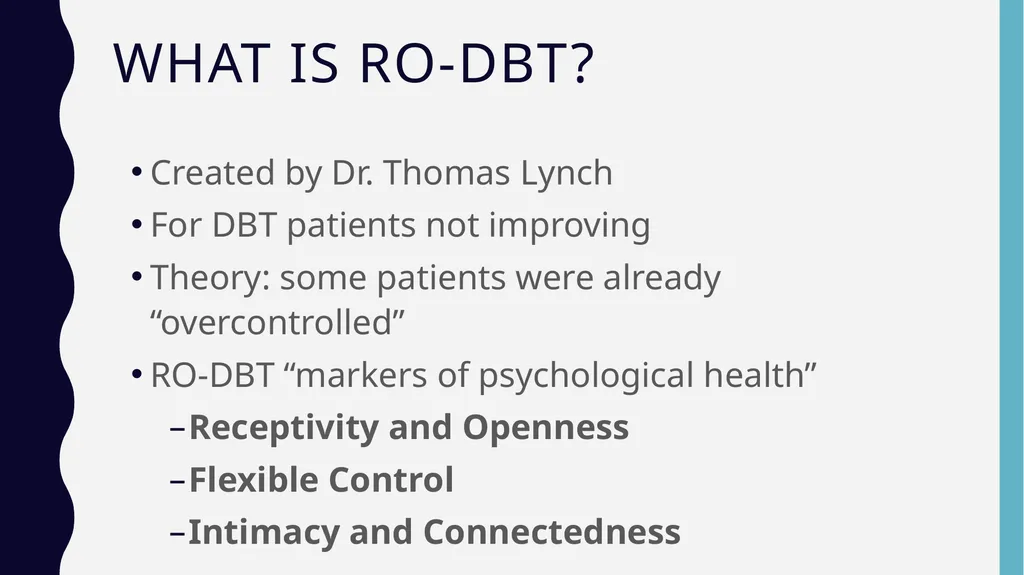
slide2. What Is RO-DBT? Created by Dr. Thomas Lynch
For DBT patients not improving
Theory: some patients were already “overcontrolled”
RO-DBT “markers of psychological health”
Receptivity and Openness
Flexible Control
Intimacy and Connectedness<br>
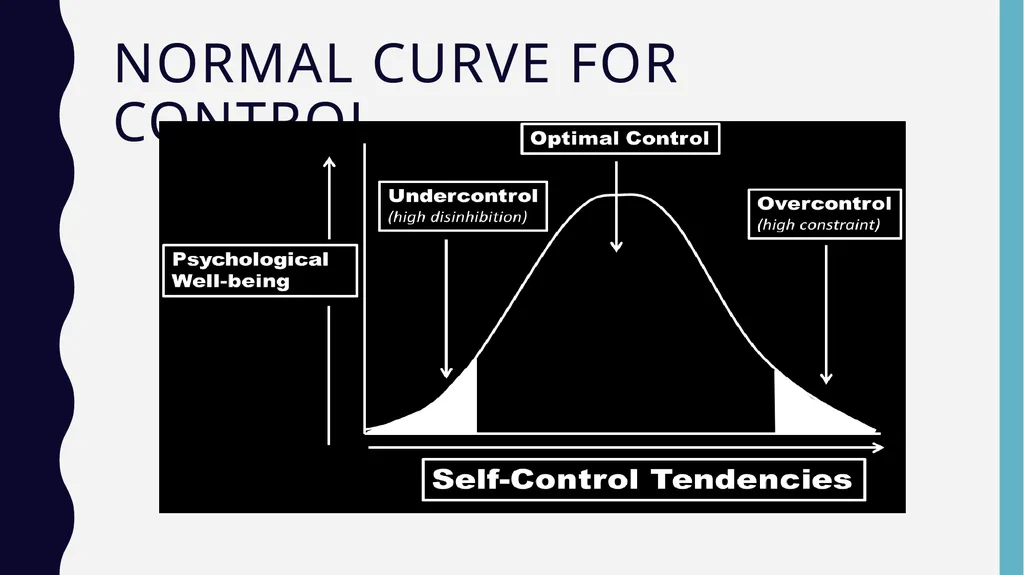
slide3. Normal Curve for control<br>
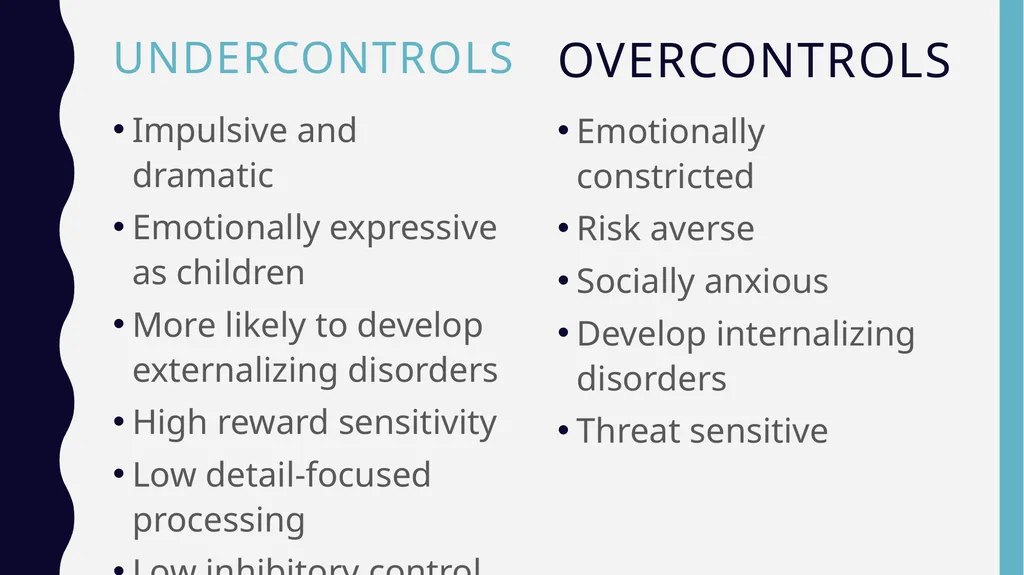
slide4. UnderControls Impulsive and dramatic
Emotionally expressive as children
More likely to develop externalizing disorders
High reward sensitivity
Low detail-focused processing
Low inhibitory control Emotionally constricted
Risk averse
Socially anxious
Develop internalizing disorders
Threat sensitive OverControls<br>
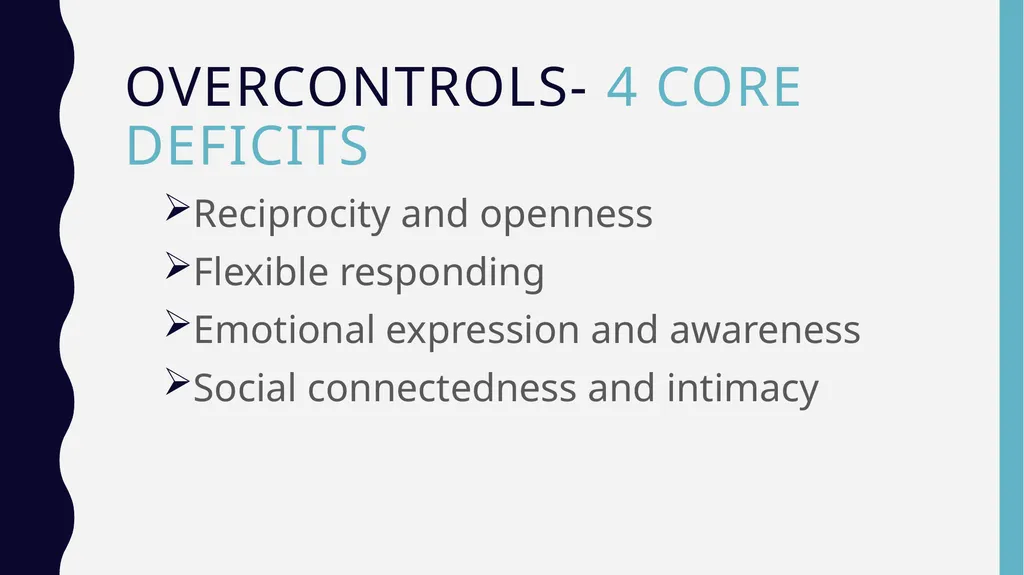
slide5. OverControls- 4 Core Deficits Reciprocity and openness
Flexible responding
Emotional expression and awareness
Social connectedness and intimacy<br>
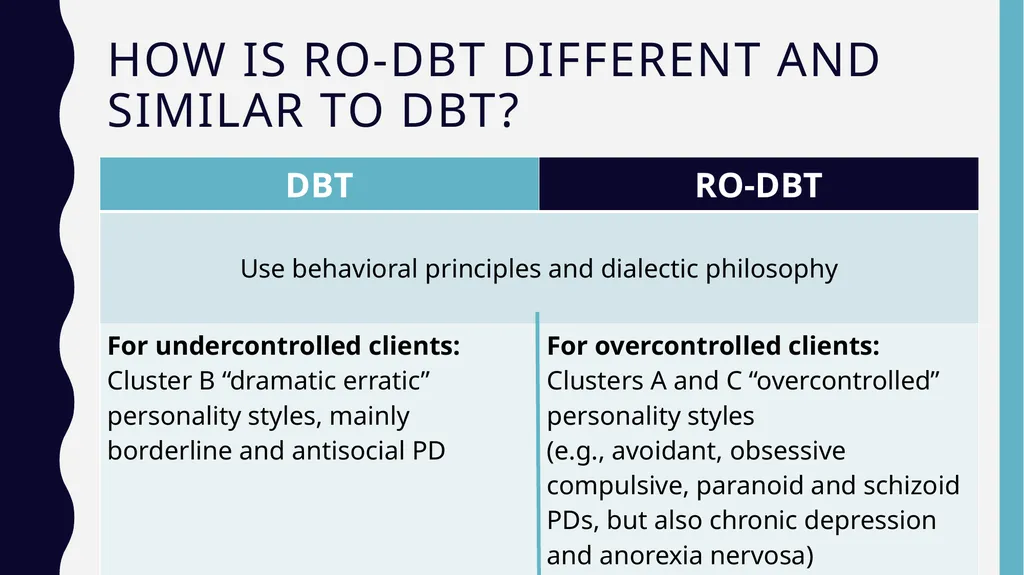
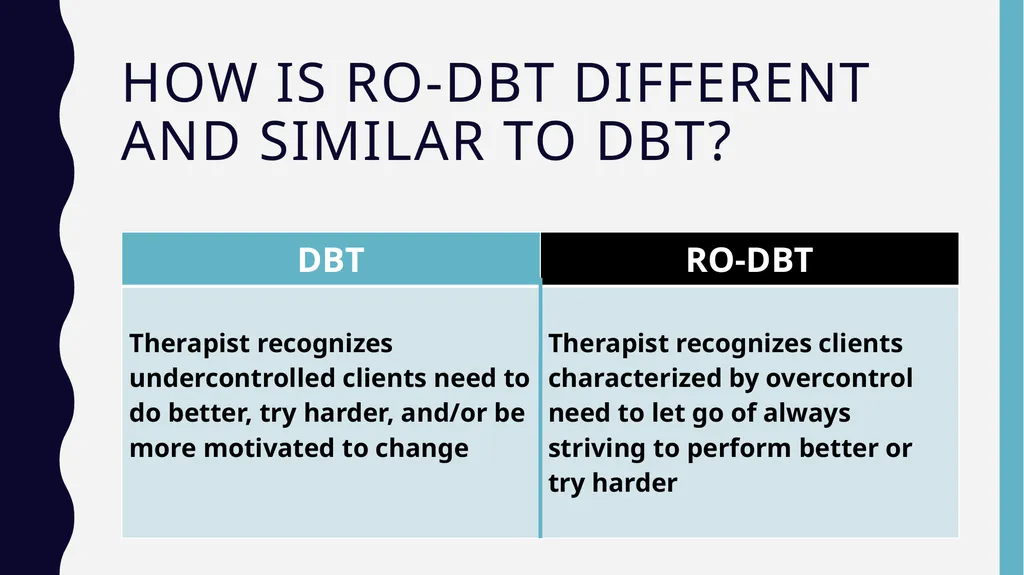
slide6. How is RO-DBT Different and Similar to DBT?<br>
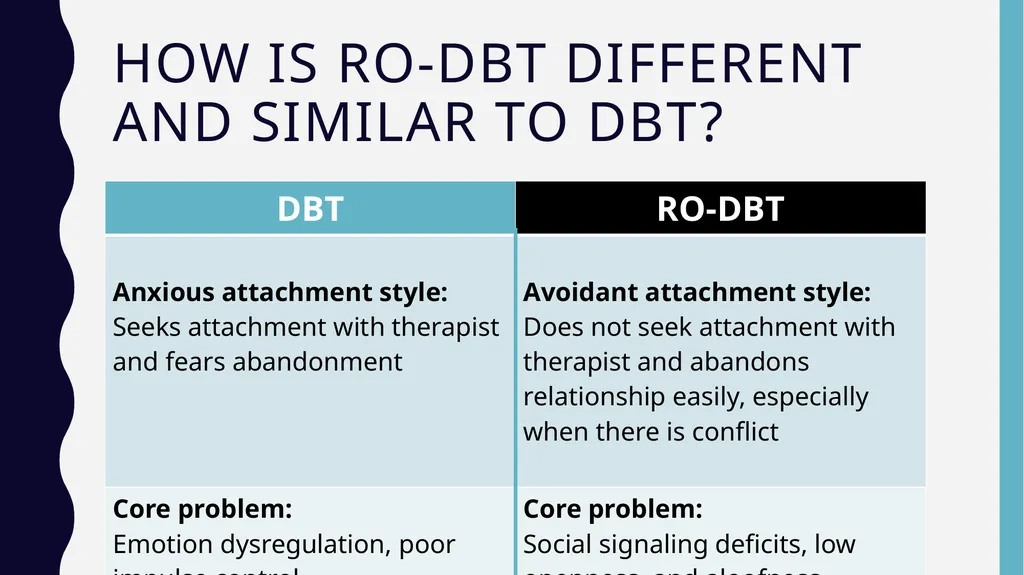
slide7. How is RO-DBT Different and Similar to DBT?<br>
slide8. How is RO-DBT Different and Similar to DBT?<br>
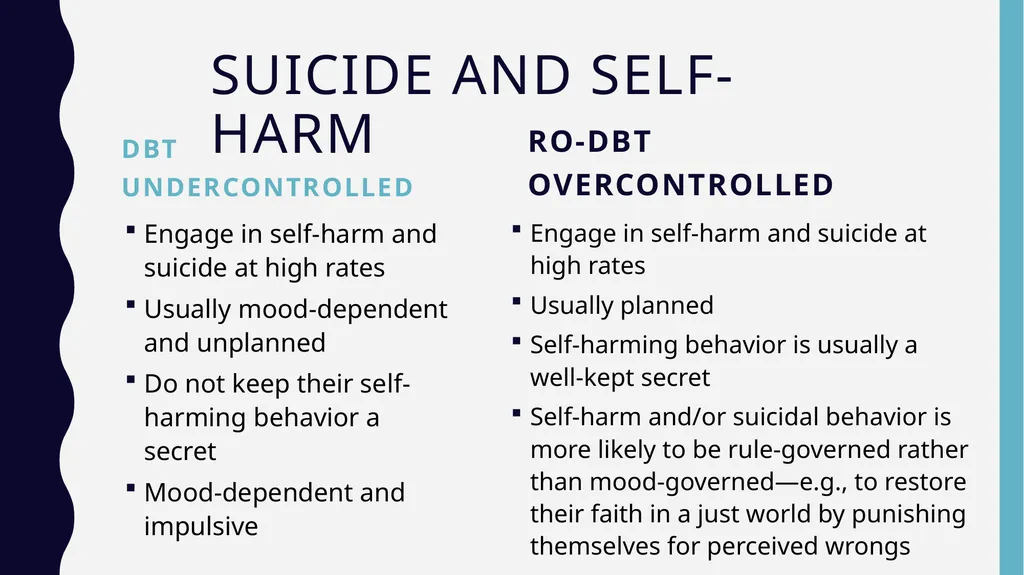
slide9. SUICIDE AND SELF-Harm DBT
UnderControlled Engage in self-harm and suicide at high rates
Usually mood-dependent and unplanned
Do not keep their self-harming behavior a secret
Mood-dependent and impulsive RO-DBT
OverControlled Engage in self-harm and suicide at high rates
Usually planned
Self-harming behavior is usually a well-kept secret
Self-harm and/or suicidal behavior is more likely to be rule-governed rather than mood-governed—e.g., to restore their faith in a just world by punishing themselves for perceived wrongs<br>
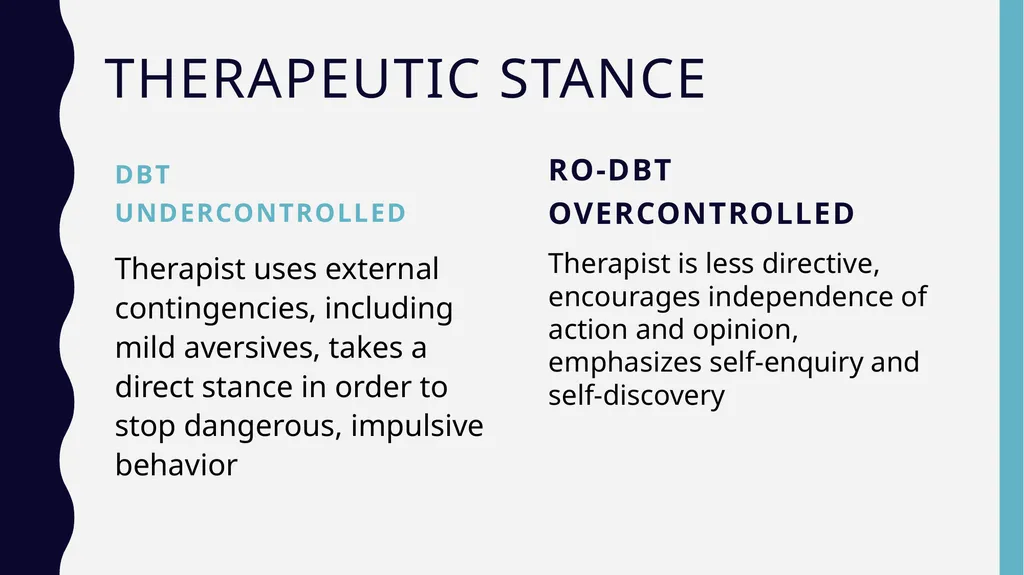
slide10. Therapeutic Stance Therapist uses external contingencies, including mild aversives, takes a direct stance in order to stop dangerous, impulsive behavior Therapist is less directive, encourages independence of action and opinion, emphasizes self-enquiry and self-discovery DBT
UnderControlled RO-DBT
OverControlled<br>
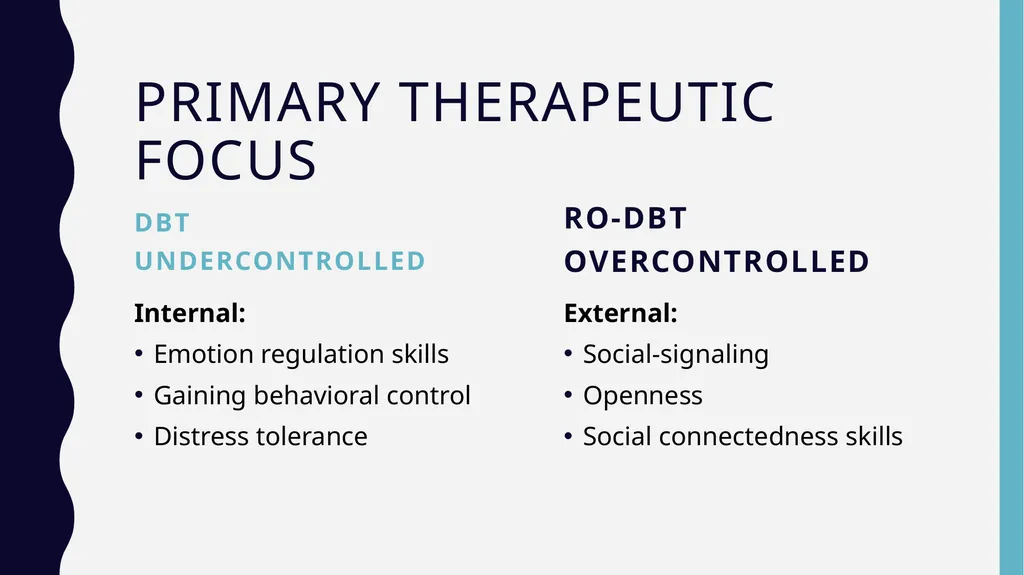
slide11. Primary Therapeutic Focus Internal:
Emotion regulation skills
Gaining behavioral control
Distress tolerance External:
Social-signaling
Openness
Social connectedness skills DBT
UnderControlled RO-DBT
OverControlled<br>
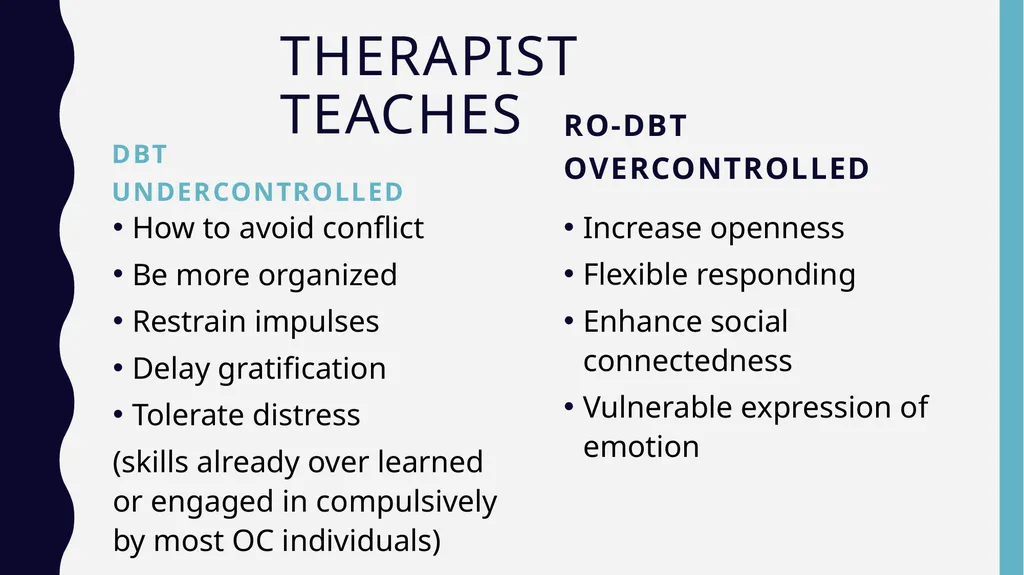
slide12. Therapist teaches How to avoid conflict
Be more organized
Restrain impulses
Delay gratification
Tolerate distress
(skills already over learned or engaged in compulsively by most OC individuals) Increase openness
Flexible responding
Enhance social connectedness
Vulnerable expression of emotion DBT
UnderControlled RO-DBT
OverControlled<br>
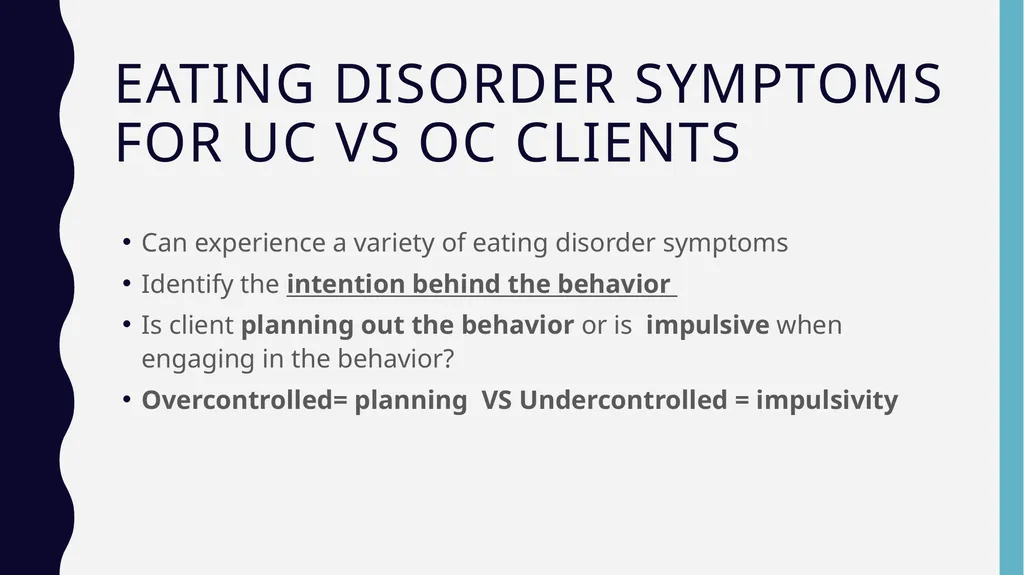
slide13. Eating Disorder Symptoms for Uc vS Oc Clients Can experience a variety of eating disorder symptoms
Identify the intention behind the behavior
Is client planning out the behavior or is impulsive when engaging in the behavior?
Overcontrolled= planning VS Undercontrolled = impulsivity<br>
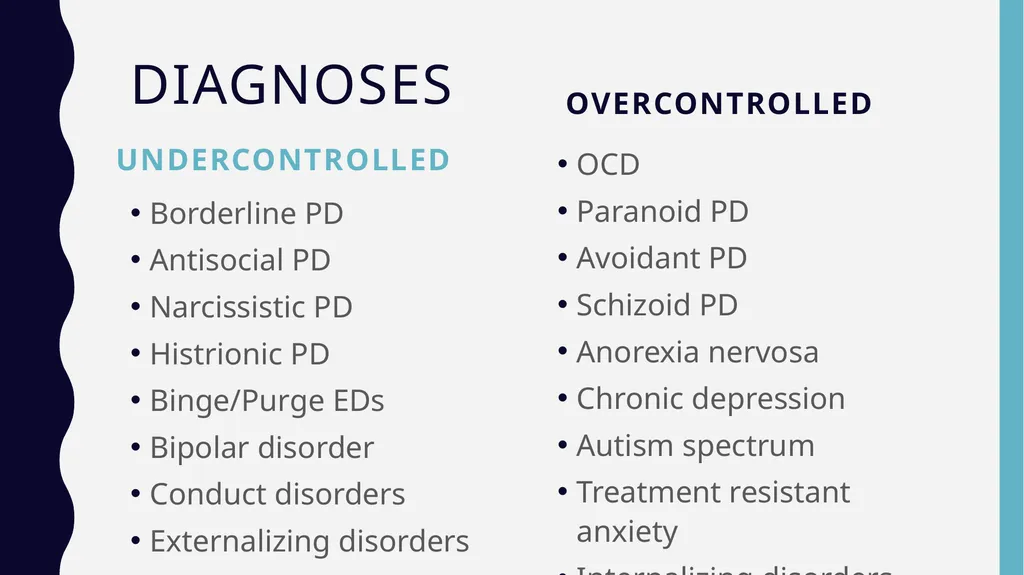
slide14. Diagnoses UnderControlled Borderline PD
Antisocial PD
Narcissistic PD
Histrionic PD
Binge/Purge EDs
Bipolar disorder
Conduct disorders
Externalizing disorders OverControlled OCD
Paranoid PD
Avoidant PD
Schizoid PD
Anorexia nervosa
Chronic depression
Autism spectrum
Treatment resistant anxiety
Internalizing disorders<br>
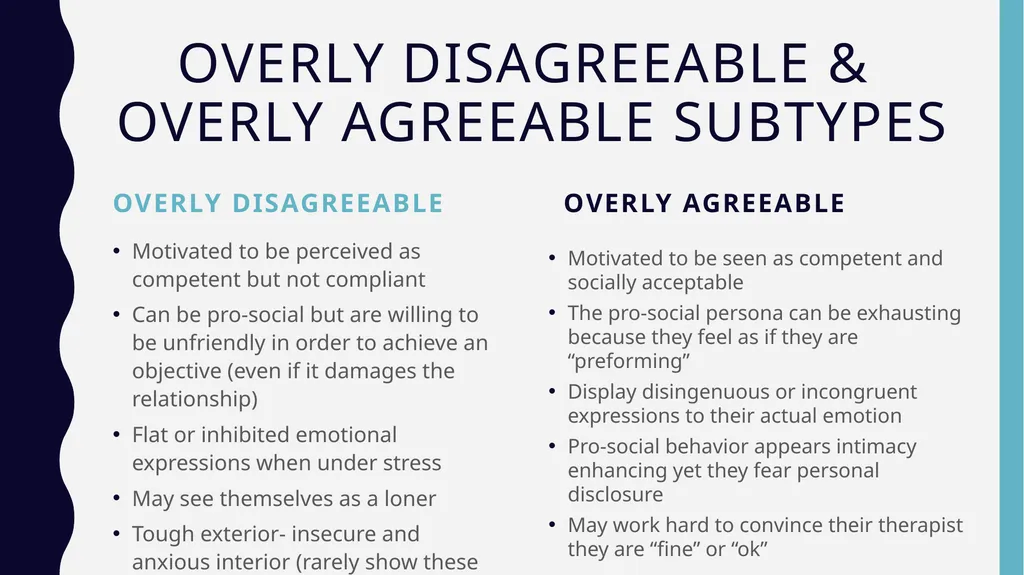
slide15. Overly Disagreeable & Overly Agreeable Subtypes Overly Disagreeable Motivated to be perceived as competent but not compliant
Can be pro-social but are willing to be unfriendly in order to achieve an objective (even if it damages the relationship)
Flat or inhibited emotional expressions when under stress
May see themselves as a loner
Tough exterior- insecure and anxious interior (rarely show these emotions) Overly Agreeable Motivated to be seen as competent and socially acceptable
The pro-social persona can be exhausting because they feel as if they are “preforming”
Display disingenuous or incongruent expressions to their actual emotion
Pro-social behavior appears intimacy enhancing yet they fear personal disclosure
May work hard to convince their therapist they are “fine” or “ok”<br>
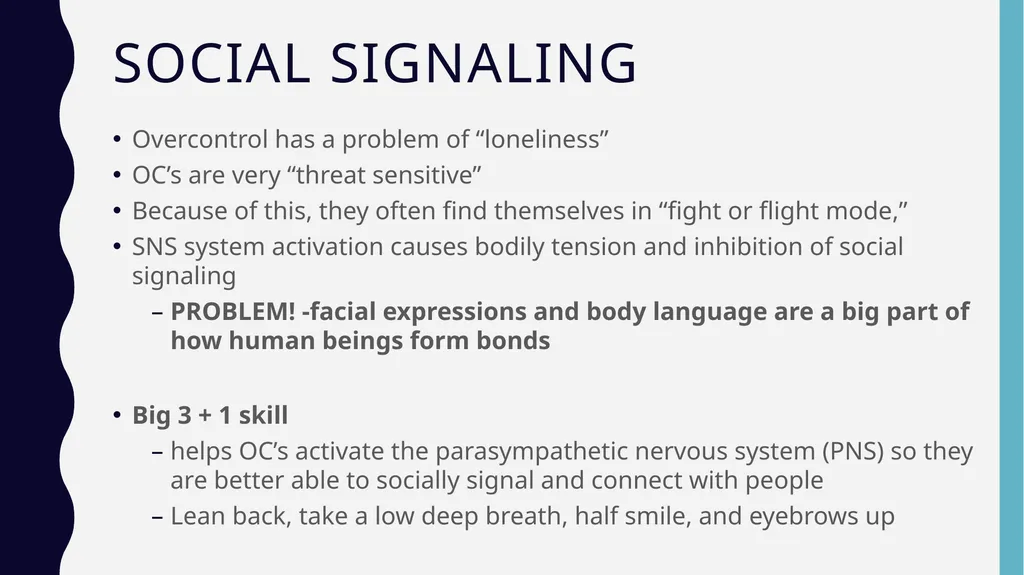
slide16. Social Signaling Overcontrol has a problem of “loneliness”
OC’s are very “threat sensitive”
Because of this, they often find themselves in “fight or flight mode,”
SNS system activation causes bodily tension and inhibition of social signaling
PROBLEM! -facial expressions and body language are a big part of how human beings form bonds
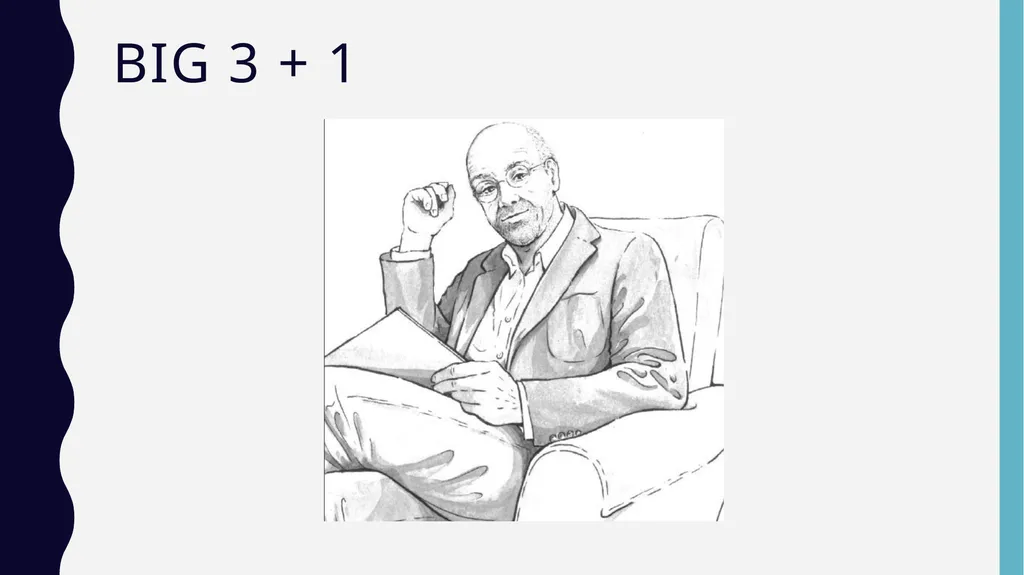
Big 3 + 1 skill
helps OC’s activate the parasympathetic nervous system (PNS) so they are better able to socially signal and connect with people
Lean back, take a low deep breath, half smile, and eyebrows up<br>
slide17. Big 3 + 1<br>
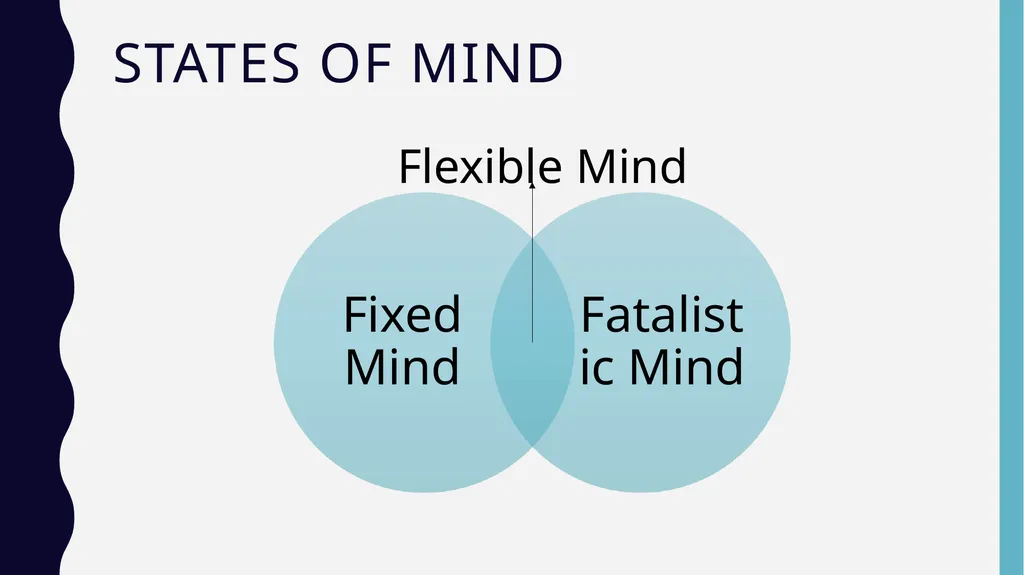
slide18. States of MInd Flexible Mind<br>
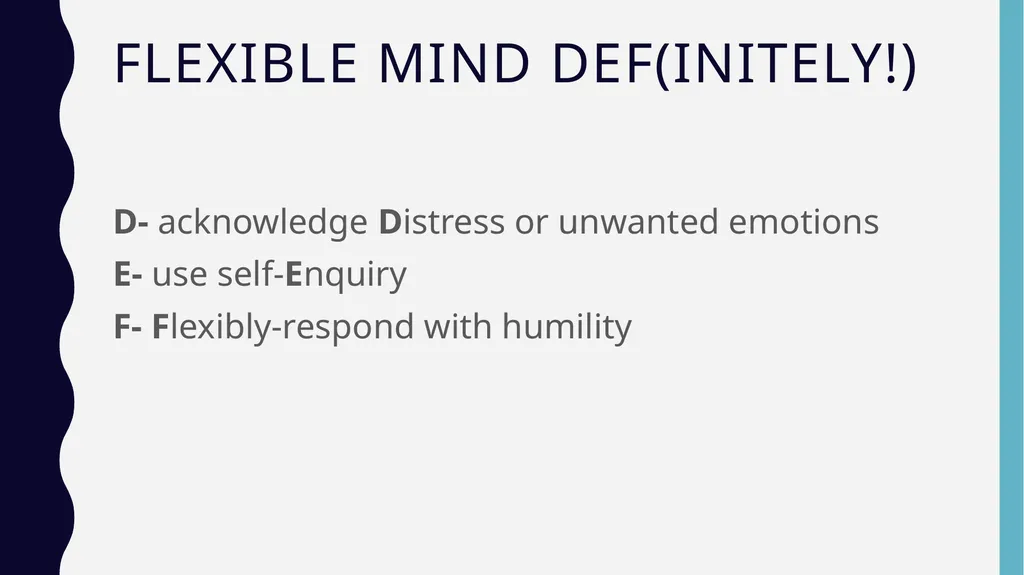
slide19. Flexible Mind DEF(initely!) D- acknowledge Distress or unwanted emotions
E- use self-Enquiry
F- Flexibly-respond with humility<br>
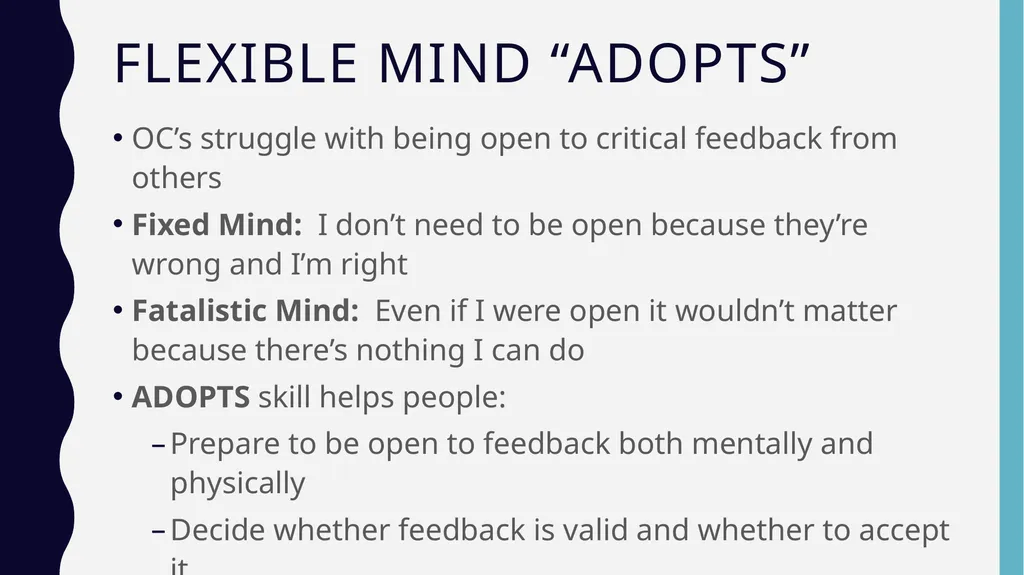
slide20. Flexible mind “adopts” OC’s struggle with being open to critical feedback from others
Fixed Mind: I don’t need to be open because they’re wrong and I’m right
Fatalistic Mind: Even if I were open it wouldn’t matter because there’s nothing I can do
ADOPTS skill helps people:
Prepare to be open to feedback both mentally and physically
Decide whether feedback is valid and whether to accept it<br>
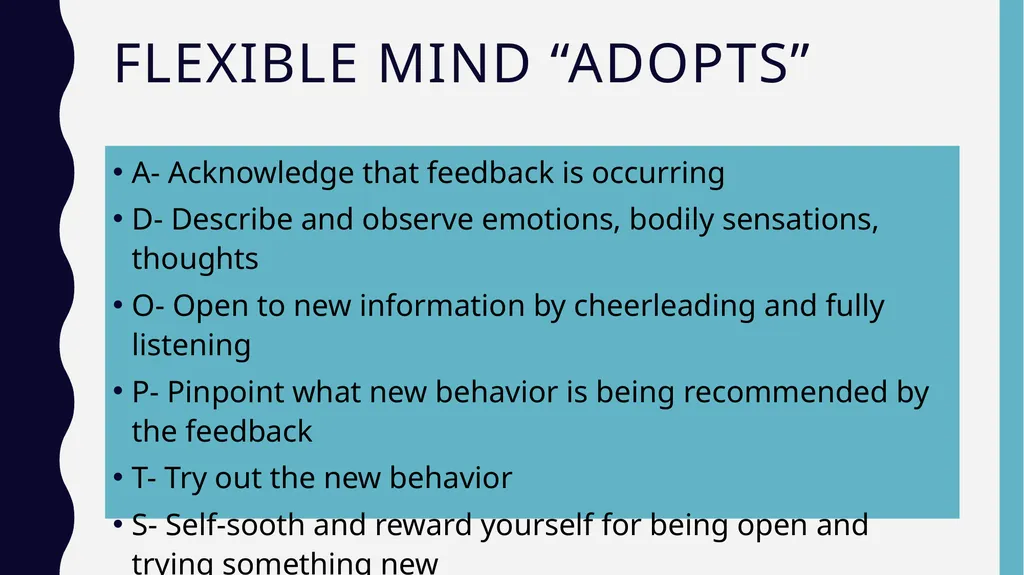
slide21. Flexible Mind “ADOPTS” A- Acknowledge that feedback is occurring
D- Describe and observe emotions, bodily sensations, thoughts
O- Open to new information by cheerleading and fully listening
P- Pinpoint what new behavior is being recommended by the feedback
T- Try out the new behavior
S- Self-sooth and reward yourself for being open and trying something new<br>
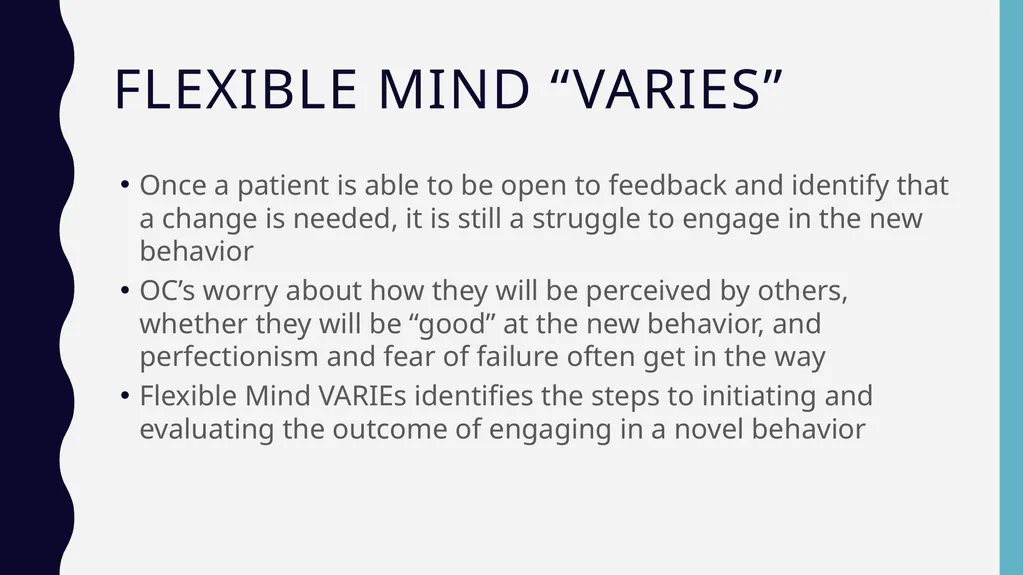
slide22. Flexible mind “varies” Once a patient is able to be open to feedback and identify that a change is needed, it is still a struggle to engage in the new behavior
OC’s worry about how they will be perceived by others, whether they will be “good” at the new behavior, and perfectionism and fear of failure often get in the way
Flexible Mind VARIEs identifies the steps to initiating and evaluating the outcome of engaging in a novel behavior<br>
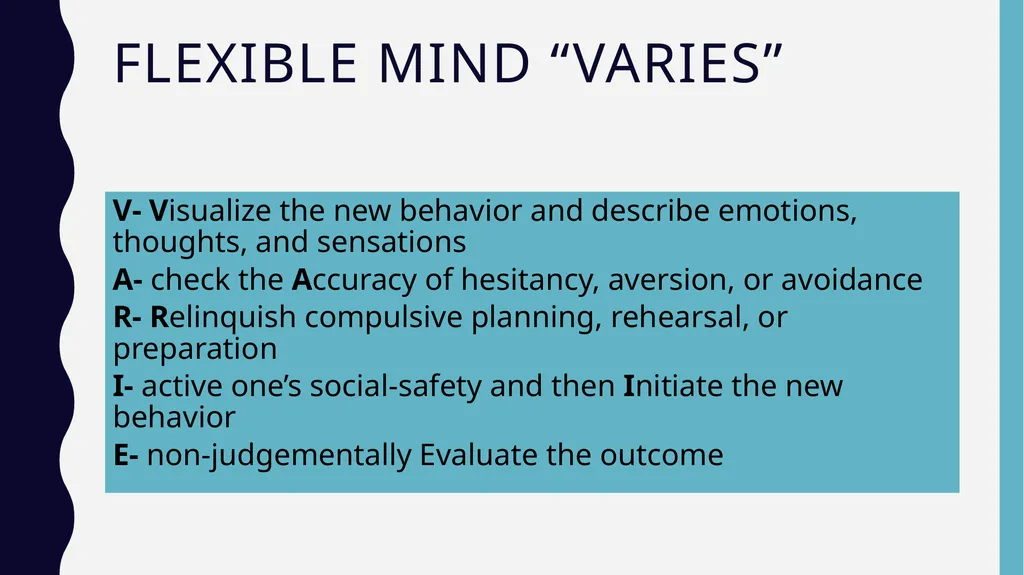
slide23. Flexible Mind “Varies” V- Visualize the new behavior and describe emotions, thoughts, and sensations
A- check the Accuracy of hesitancy, aversion, or avoidance
R- Relinquish compulsive planning, rehearsal, or preparation
I- active one’s social-safety and then Initiate the new behavior
E- non-judgementally Evaluate the outcome<br>
slide24. Resources RO-DBT Website
http://www.radicallyopen.net/
Manual (February 2018)
Radically Open Dialectal Behavior Therapy: Theory and Practice for Treating Disorders of Overcontrol by Thomas R. Lynch, PhD
The Skills Training Manual for Radically Open Dialectical Behavior Therapy: A Clinician's Guide for Treating Disorders of Overcontrol by Thomas R. Lynch, PhD melroseheals.com<br>
Sarah Mcclaren, Ma, LMFT January 23, 2019<br>
slide2. What Is RO-DBT? Created by Dr. Thomas Lynch
For DBT patients not improving
Theory: some patients were already “overcontrolled”
RO-DBT “markers of psychological health”
Receptivity and Openness
Flexible Control
Intimacy and Connectedness<br>
slide3. Normal Curve for control<br>
slide4. UnderControls Impulsive and dramatic
Emotionally expressive as children
More likely to develop externalizing disorders
High reward sensitivity
Low detail-focused processing
Low inhibitory control Emotionally constricted
Risk averse
Socially anxious
Develop internalizing disorders
Threat sensitive OverControls<br>
slide5. OverControls- 4 Core Deficits Reciprocity and openness
Flexible responding
Emotional expression and awareness
Social connectedness and intimacy<br>
slide6. How is RO-DBT Different and Similar to DBT?<br>
slide7. How is RO-DBT Different and Similar to DBT?<br>
slide8. How is RO-DBT Different and Similar to DBT?<br>
slide9. SUICIDE AND SELF-Harm DBT
UnderControlled Engage in self-harm and suicide at high rates
Usually mood-dependent and unplanned
Do not keep their self-harming behavior a secret
Mood-dependent and impulsive RO-DBT
OverControlled Engage in self-harm and suicide at high rates
Usually planned
Self-harming behavior is usually a well-kept secret
Self-harm and/or suicidal behavior is more likely to be rule-governed rather than mood-governed—e.g., to restore their faith in a just world by punishing themselves for perceived wrongs<br>
slide10. Therapeutic Stance Therapist uses external contingencies, including mild aversives, takes a direct stance in order to stop dangerous, impulsive behavior Therapist is less directive, encourages independence of action and opinion, emphasizes self-enquiry and self-discovery DBT
UnderControlled RO-DBT
OverControlled<br>
slide11. Primary Therapeutic Focus Internal:
Emotion regulation skills
Gaining behavioral control
Distress tolerance External:
Social-signaling
Openness
Social connectedness skills DBT
UnderControlled RO-DBT
OverControlled<br>
slide12. Therapist teaches How to avoid conflict
Be more organized
Restrain impulses
Delay gratification
Tolerate distress
(skills already over learned or engaged in compulsively by most OC individuals) Increase openness
Flexible responding
Enhance social connectedness
Vulnerable expression of emotion DBT
UnderControlled RO-DBT
OverControlled<br>
slide13. Eating Disorder Symptoms for Uc vS Oc Clients Can experience a variety of eating disorder symptoms
Identify the intention behind the behavior
Is client planning out the behavior or is impulsive when engaging in the behavior?
Overcontrolled= planning VS Undercontrolled = impulsivity<br>
slide14. Diagnoses UnderControlled Borderline PD
Antisocial PD
Narcissistic PD
Histrionic PD
Binge/Purge EDs
Bipolar disorder
Conduct disorders
Externalizing disorders OverControlled OCD
Paranoid PD
Avoidant PD
Schizoid PD
Anorexia nervosa
Chronic depression
Autism spectrum
Treatment resistant anxiety
Internalizing disorders<br>
slide15. Overly Disagreeable & Overly Agreeable Subtypes Overly Disagreeable Motivated to be perceived as competent but not compliant
Can be pro-social but are willing to be unfriendly in order to achieve an objective (even if it damages the relationship)
Flat or inhibited emotional expressions when under stress
May see themselves as a loner
Tough exterior- insecure and anxious interior (rarely show these emotions) Overly Agreeable Motivated to be seen as competent and socially acceptable
The pro-social persona can be exhausting because they feel as if they are “preforming”
Display disingenuous or incongruent expressions to their actual emotion
Pro-social behavior appears intimacy enhancing yet they fear personal disclosure
May work hard to convince their therapist they are “fine” or “ok”<br>
slide16. Social Signaling Overcontrol has a problem of “loneliness”
OC’s are very “threat sensitive”
Because of this, they often find themselves in “fight or flight mode,”
SNS system activation causes bodily tension and inhibition of social signaling
PROBLEM! -facial expressions and body language are a big part of how human beings form bonds
Big 3 + 1 skill
helps OC’s activate the parasympathetic nervous system (PNS) so they are better able to socially signal and connect with people
Lean back, take a low deep breath, half smile, and eyebrows up<br>
slide17. Big 3 + 1<br>
slide18. States of MInd Flexible Mind<br>
slide19. Flexible Mind DEF(initely!) D- acknowledge Distress or unwanted emotions
E- use self-Enquiry
F- Flexibly-respond with humility<br>
slide20. Flexible mind “adopts” OC’s struggle with being open to critical feedback from others
Fixed Mind: I don’t need to be open because they’re wrong and I’m right
Fatalistic Mind: Even if I were open it wouldn’t matter because there’s nothing I can do
ADOPTS skill helps people:
Prepare to be open to feedback both mentally and physically
Decide whether feedback is valid and whether to accept it<br>
slide21. Flexible Mind “ADOPTS” A- Acknowledge that feedback is occurring
D- Describe and observe emotions, bodily sensations, thoughts
O- Open to new information by cheerleading and fully listening
P- Pinpoint what new behavior is being recommended by the feedback
T- Try out the new behavior
S- Self-sooth and reward yourself for being open and trying something new<br>
slide22. Flexible mind “varies” Once a patient is able to be open to feedback and identify that a change is needed, it is still a struggle to engage in the new behavior
OC’s worry about how they will be perceived by others, whether they will be “good” at the new behavior, and perfectionism and fear of failure often get in the way
Flexible Mind VARIEs identifies the steps to initiating and evaluating the outcome of engaging in a novel behavior<br>
slide23. Flexible Mind “Varies” V- Visualize the new behavior and describe emotions, thoughts, and sensations
A- check the Accuracy of hesitancy, aversion, or avoidance
R- Relinquish compulsive planning, rehearsal, or preparation
I- active one’s social-safety and then Initiate the new behavior
E- non-judgementally Evaluate the outcome<br>
slide24. Resources RO-DBT Website
http://www.radicallyopen.net/
Manual (February 2018)
Radically Open Dialectal Behavior Therapy: Theory and Practice for Treating Disorders of Overcontrol by Thomas R. Lynch, PhD
The Skills Training Manual for Radically Open Dialectical Behavior Therapy: A Clinician's Guide for Treating Disorders of Overcontrol by Thomas R. Lynch, PhD melroseheals.com<br>