
Safe Abortion Saving Lives Respecting Rights A
JO
Published · 108 slides · 0 views

1 / 1



Description
Safe Abortion Saving Lives Respecting Rights A Dissemination Packet for WHO Safe abortion: technical and policy guidance for health systems, Second edition, 2012 Safe Abortion Global Introduction A Dissemination Packet for WHO Safe
Related Topics
Share
Embed code
Download this presentation From Below
"Safe Abortion Saving Lives Respecting Rights A" is the property of its rightful owner. Permission is granted to download and print the materials on this website for personal, non-commercial use only, and to display it on your personal computer provided you do not modify the materials and that you retain all copyright notices contained in the materials. By downloading content from our website, you accept the terms of this agreement.
Presentation Transcript
01
Safe Abortion Saving Lives
Respecting Rights A Dissemination Packet for
WHO Safe abortion: technical and policy guidance for health systems, Second edition, 2012<br>
Respecting Rights A Dissemination Packet for
WHO Safe abortion: technical and policy guidance for health systems, Second edition, 2012<br>
02
Safe Abortion Global
Introduction
A Dissemination Packet for
WHO Safe abortion: technical and policy guidance for health systems, Second edition, 2012 Saving Lives
Respecting Rights<br>
Introduction
A Dissemination Packet for
WHO Safe abortion: technical and policy guidance for health systems, Second edition, 2012 Saving Lives
Respecting Rights<br>
03
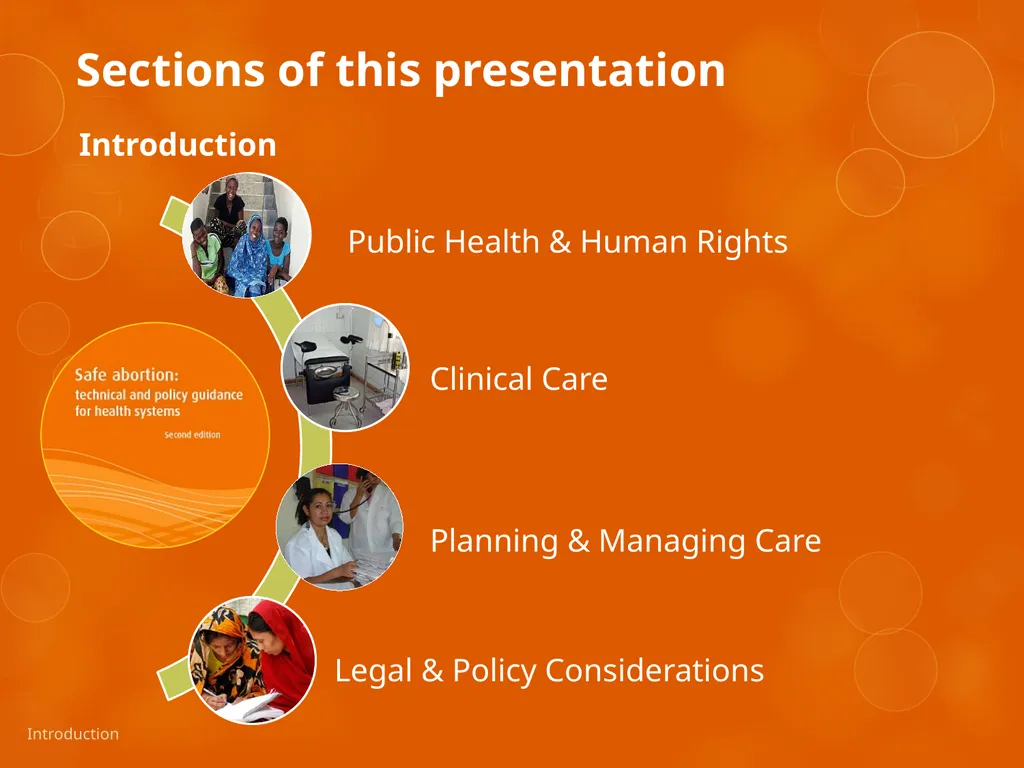
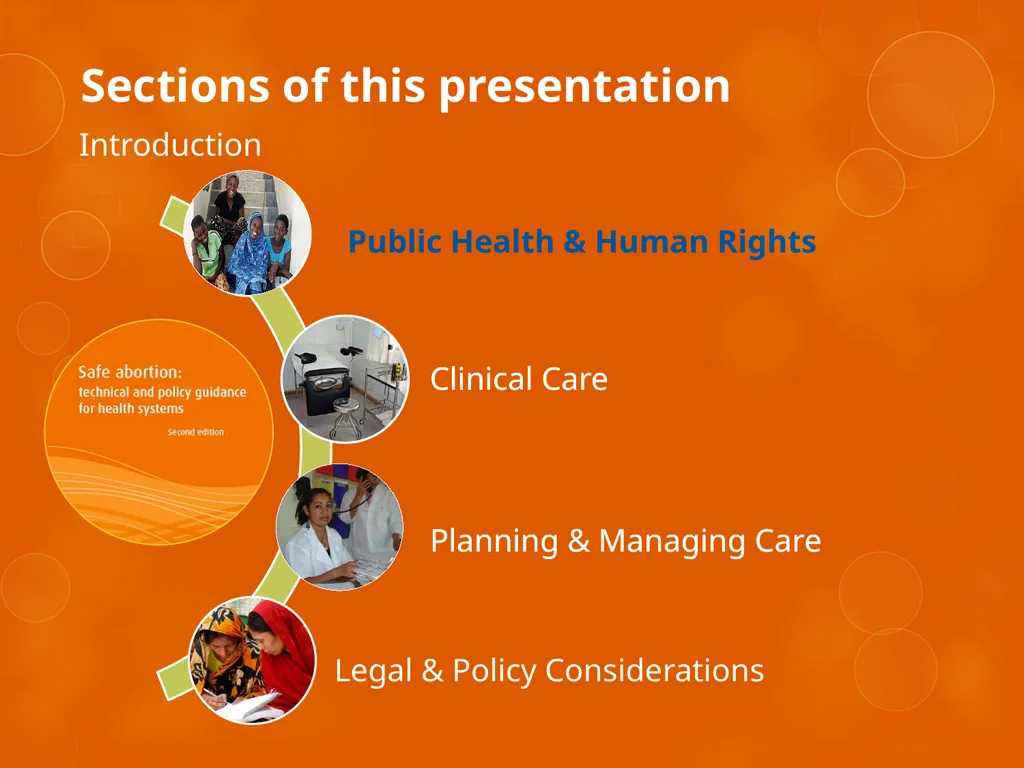
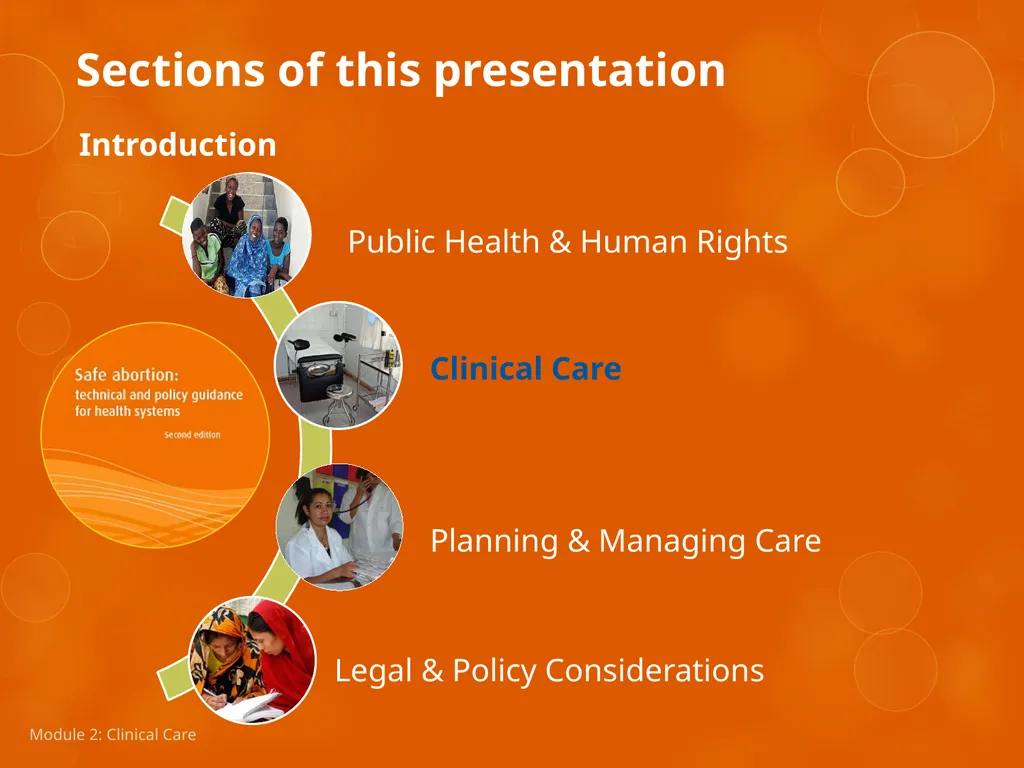
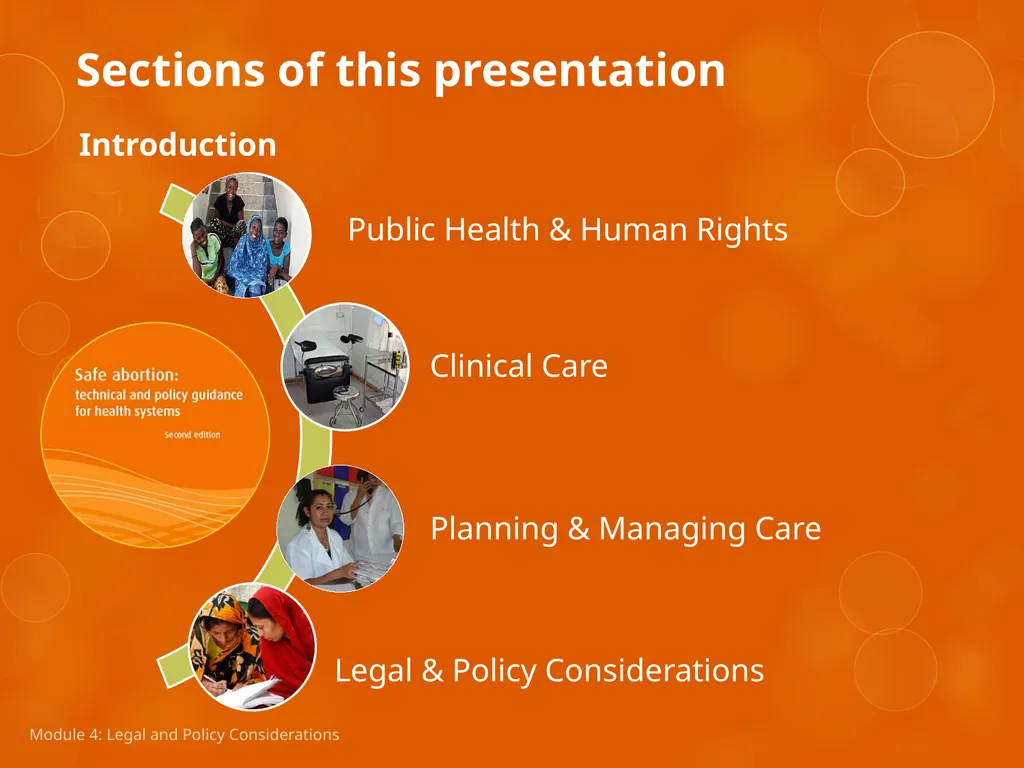
Sections of this presentation Public Health & Human Rights Clinical Care Planning & Managing Care Legal & Policy Considerations Introduction Introduction<br>
04
Audiences
Method of development
Highlights of new information Introduction Introduction<br>
Method of development
Highlights of new information Introduction Introduction<br>
05
Audiences
Policymakers
Program managers
Service providers
Advocates Introduction<br>
Policymakers
Program managers
Service providers
Advocates Introduction<br>
06
WHO standards & requirements Introduction Priority questions & outcomes
Evidence retrieval
Assessment & synthesis
Formulation of recommendations
Dissemination, implementation, impact evaluation & updating<br>
Evidence retrieval
Assessment & synthesis
Formulation of recommendations
Dissemination, implementation, impact evaluation & updating<br>
07
Method of development Introduction Literature review
Cochrane and other systematic reviews
GRADE system<br>
Cochrane and other systematic reviews
GRADE system<br>
08
Method of development Global panel of stakeholders
Companion document:
Clinical practice handbook for safe abortion care Introduction<br>
Companion document:
Clinical practice handbook for safe abortion care Introduction<br>
09
Latest unsafe abortion estimates Highlights of
new information Introduction Recommendations for:
Clinical care
Service delivery & scaling-up
Human rights framework for policy & legislation<br>
new information Introduction Recommendations for:
Clinical care
Service delivery & scaling-up
Human rights framework for policy & legislation<br>
10
Safe Abortion Global
Module 1: The public health & human rights rationale for safe abortion A Packet to Disseminate
WHO Safe abortion: technical and policy guidance for health systems, Second edition, 2012 Saving Lives
Respecting Rights<br>
Module 1: The public health & human rights rationale for safe abortion A Packet to Disseminate
WHO Safe abortion: technical and policy guidance for health systems, Second edition, 2012 Saving Lives
Respecting Rights<br>
11
Sections of this presentation Legal & Policy Considerations Introduction<br>
12
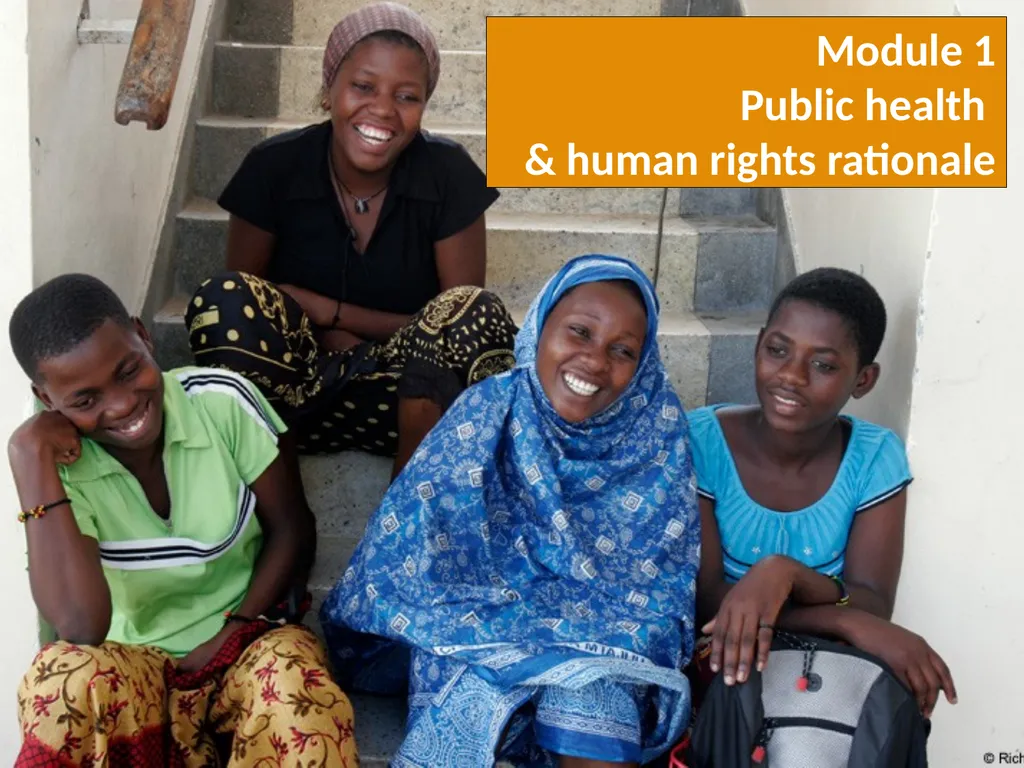
Module 1
Public health
& human rights rationale<br>
13
Abortion in Context All countries & women of all ages
Married and unmarried women
Women with and without children Module 1: Public Health & Human Rights<br>
Married and unmarried women
Women with and without children Module 1: Public Health & Human Rights<br>
14
A woman may want to have a child, but:
Pregnancy may threaten the woman’s health or survival
Fetal abnormality
Partner, family or community pressure Planned Pregnancy Module 1: Public Health & Human Rights<br>
Pregnancy may threaten the woman’s health or survival
Fetal abnormality
Partner, family or community pressure Planned Pregnancy Module 1: Public Health & Human Rights<br>
15
Unintended Pregnancy Health considerations
Socioeconomic concerns
Cultural reasons
End childbearing or space births
Rape, incest
Other personal reasons Module 1: Public Health & Human Rights<br>
Socioeconomic concerns
Cultural reasons
End childbearing or space births
Rape, incest
Other personal reasons Module 1: Public Health & Human Rights<br>
16
Unintended Pregnancy 222 million
women who do not want to become pregnant but are using no contraceptive method or a traditional method
33 million
accidental pregnancies among contraceptive users Module 1: Public Health & Human Rights<br>
women who do not want to become pregnant but are using no contraceptive method or a traditional method
33 million
accidental pregnancies among contraceptive users Module 1: Public Health & Human Rights<br>
17
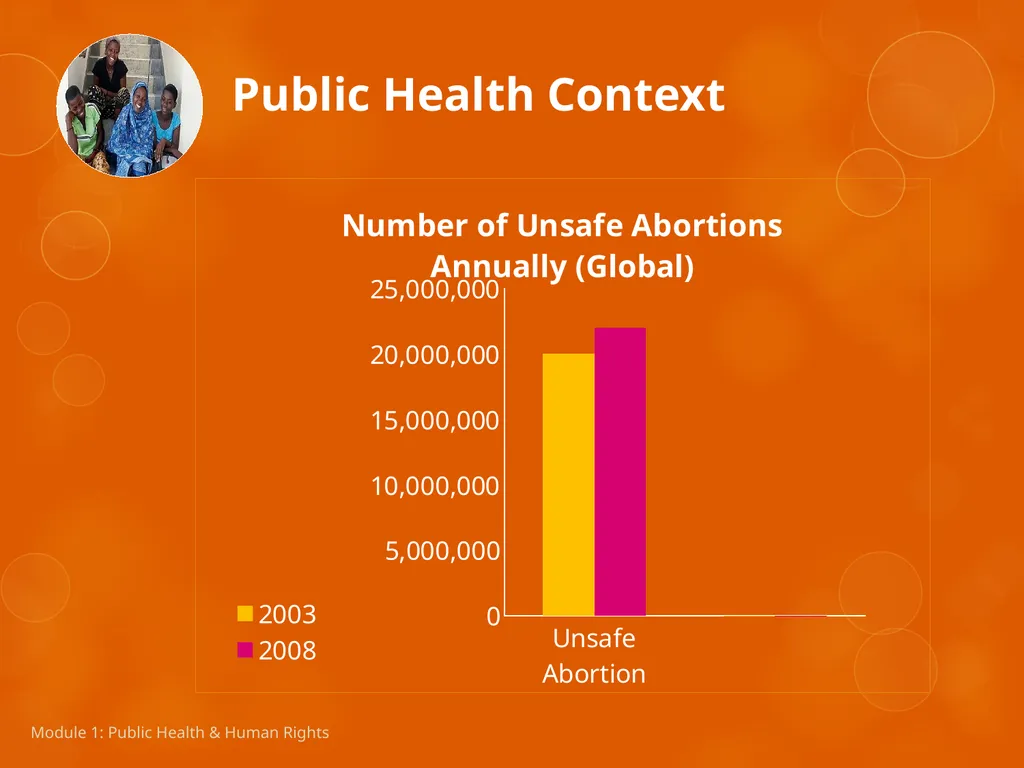
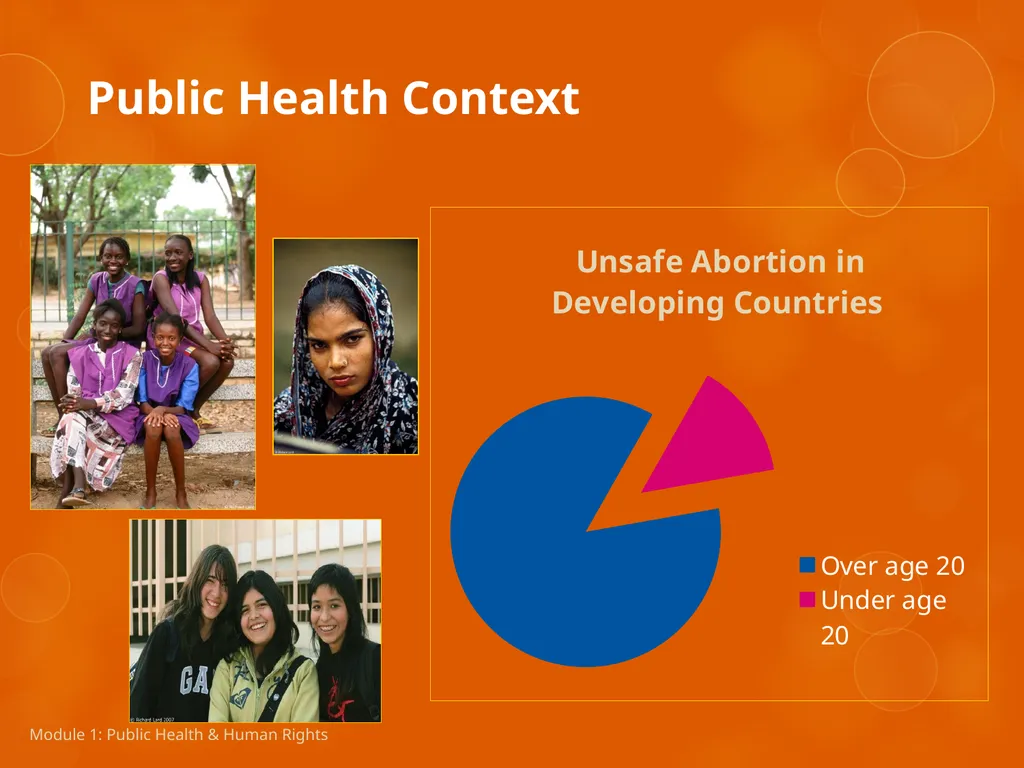
Public Health Context Module 1: Public Health & Human Rights 85 million
unintended pregnancies annually in the developing world
40 million
end in abortion<br>
unintended pregnancies annually in the developing world
40 million
end in abortion<br>
18
Public Health Context Module 1: Public Health & Human Rights<br>
19
Public Health Context Module 1: Public Health & Human Rights<br>
20
Public Health Context Module 1: Public Health & Human Rights<br>
21
Public Health Context Module 1: Public Health & Human Rights<br>
22
Public Health Context Module 1: Public Health & Human Rights<br>
23
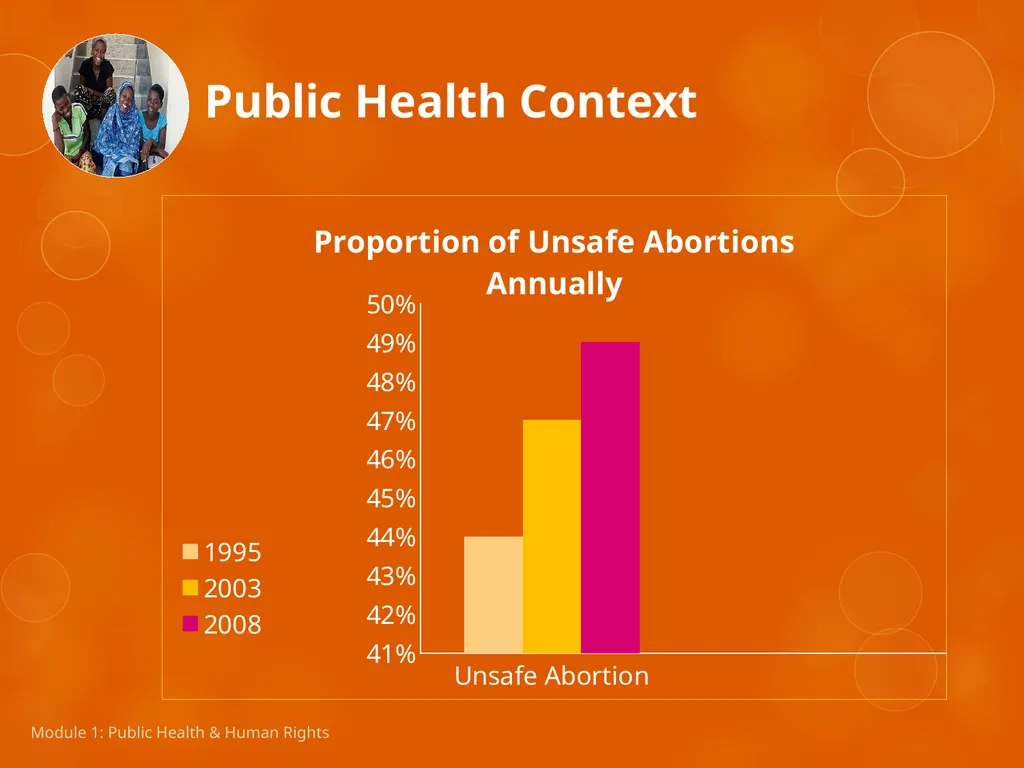
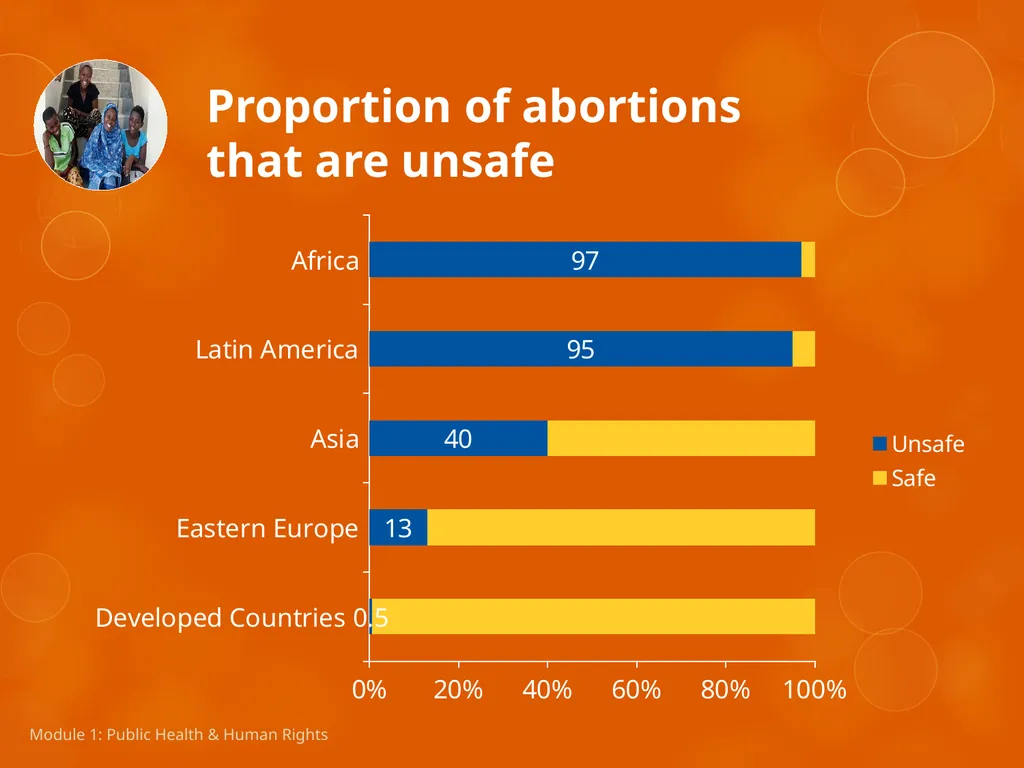
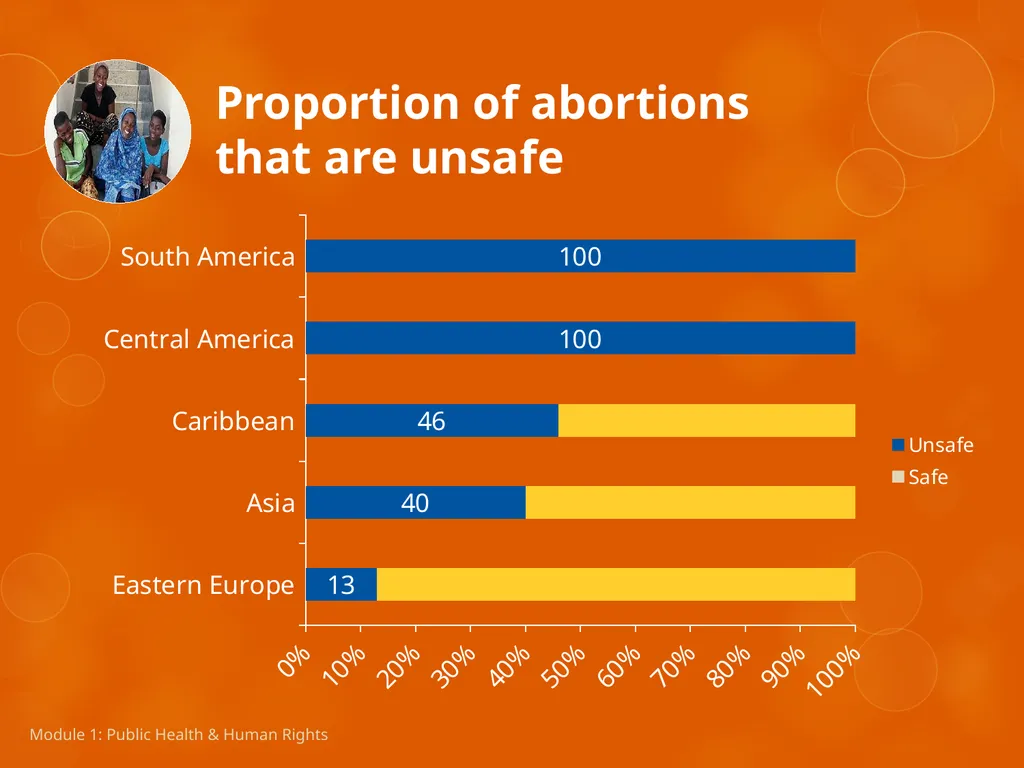
Proportion of abortions
that are unsafe Module 1: Public Health & Human Rights<br>
24
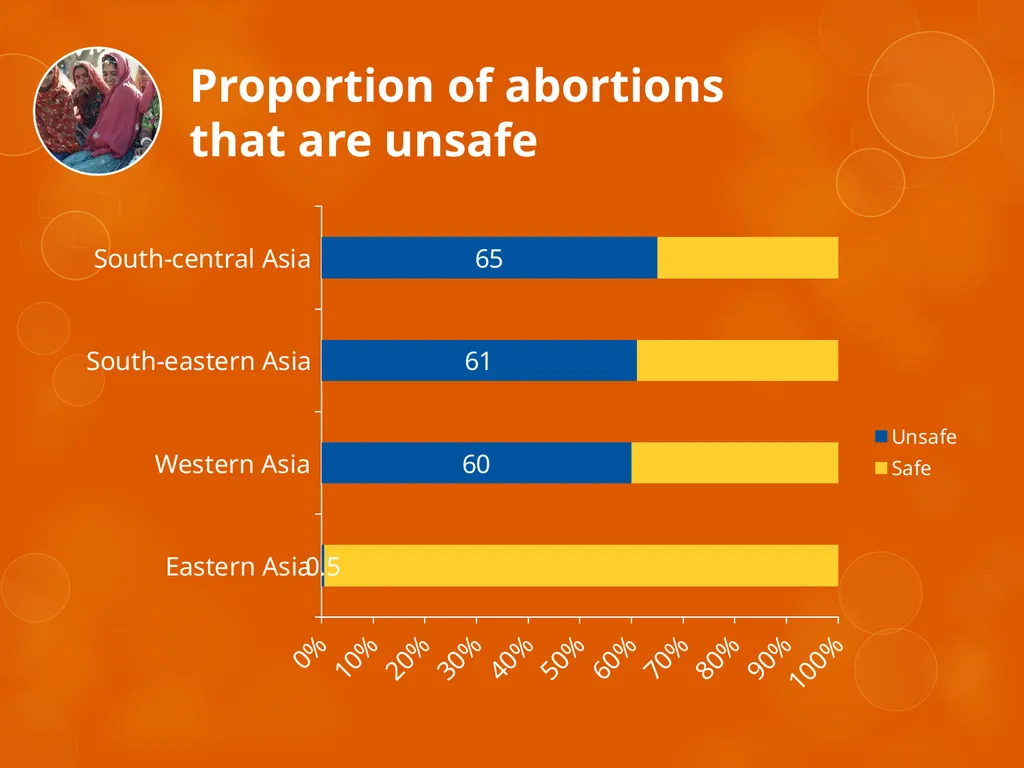
Proportion of abortions
that are unsafe<br>
25
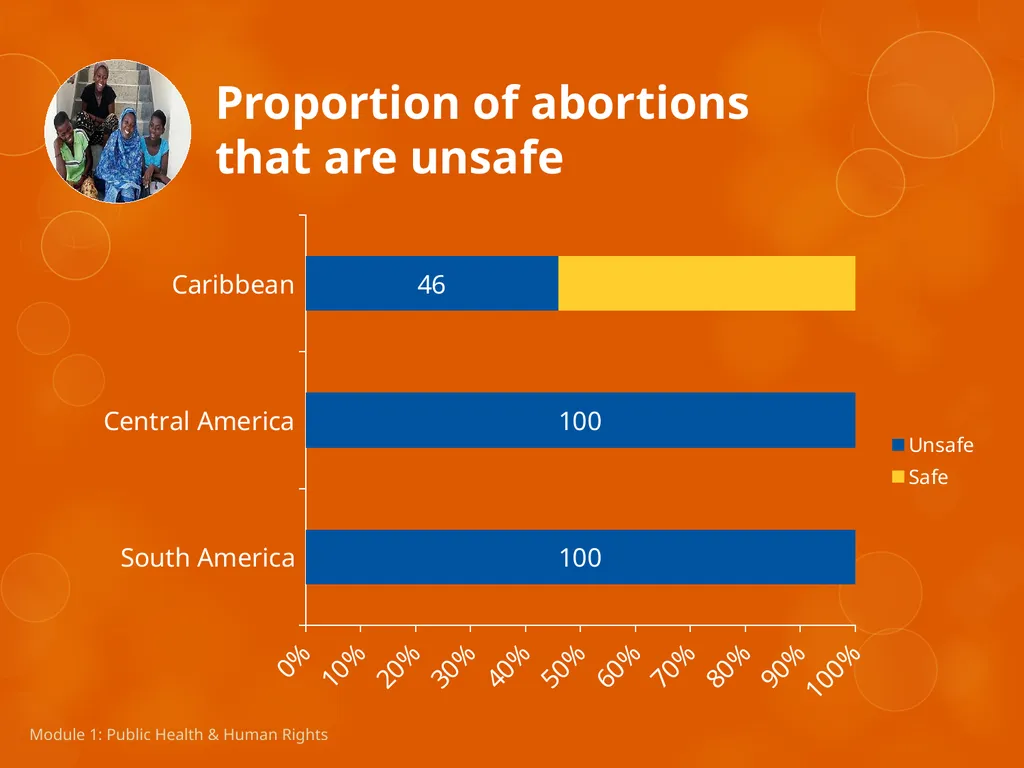
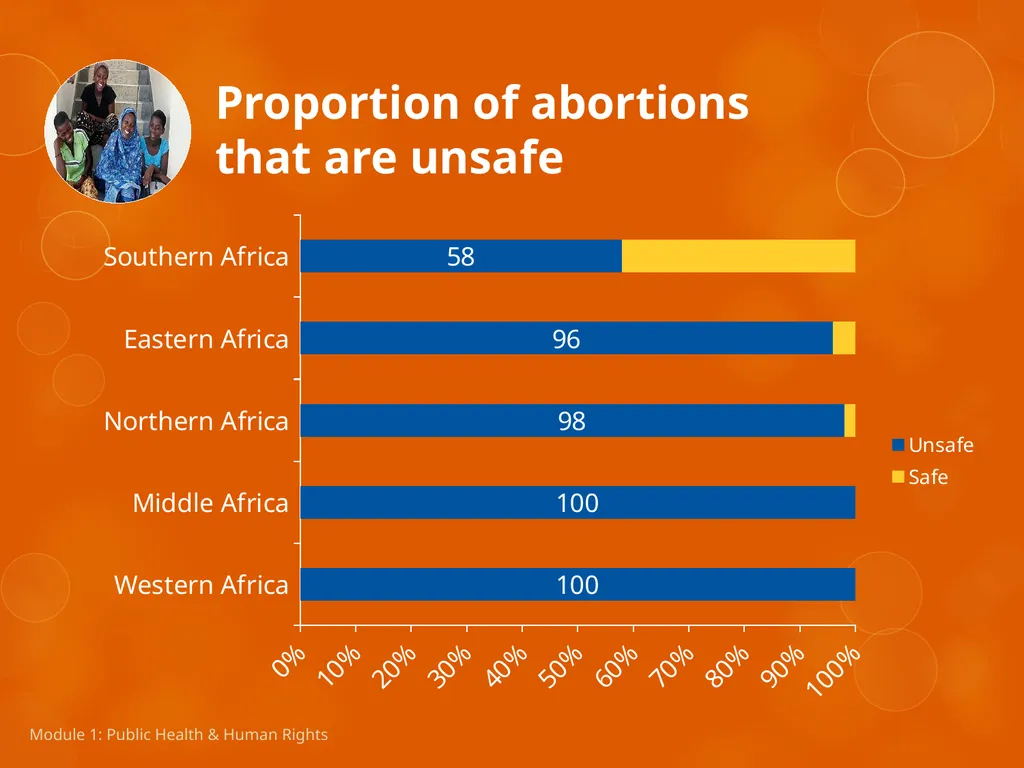
Proportion of abortions
that are unsafe Module 1: Public Health & Human Rights<br>
26
Proportion of abortions
that are unsafe Module 1: Public Health & Human Rights<br>
27
Proportion of abortions
that are unsafe Module 1: Public Health & Human Rights<br>
28
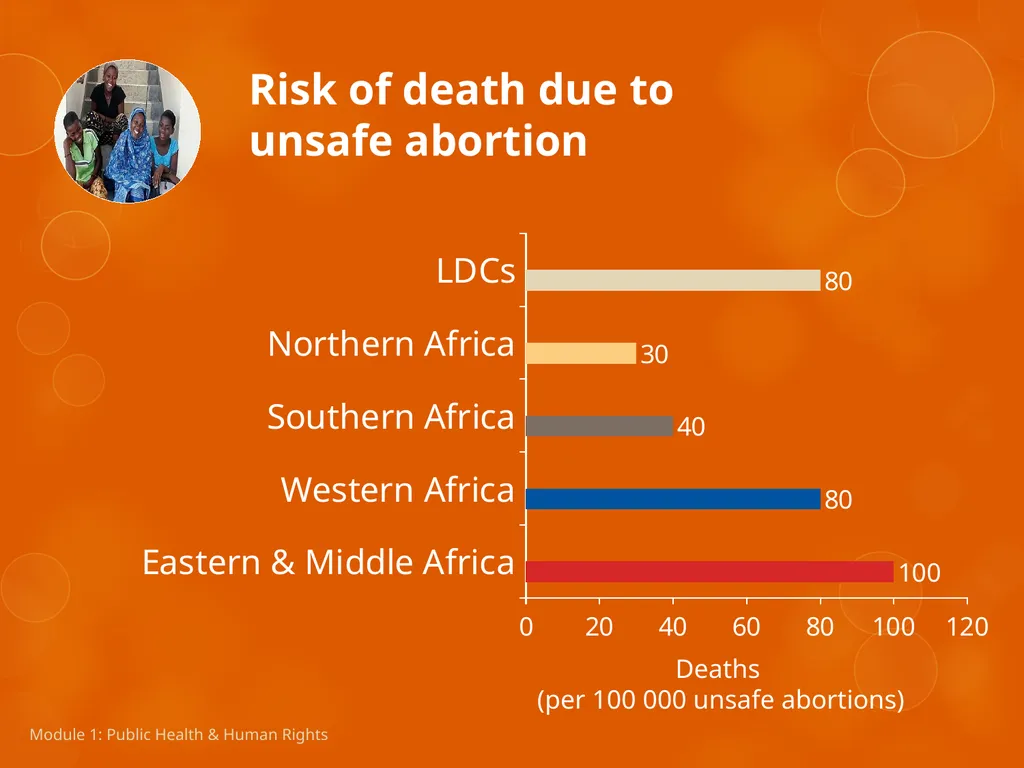
Risk of death due to
unsafe abortion Deaths
(per 100 000 unsafe abortions) Module 1: Public Health & Human Rights<br>
(per 100 000 unsafe abortions) Module 1: Public Health & Human Rights<br>
29
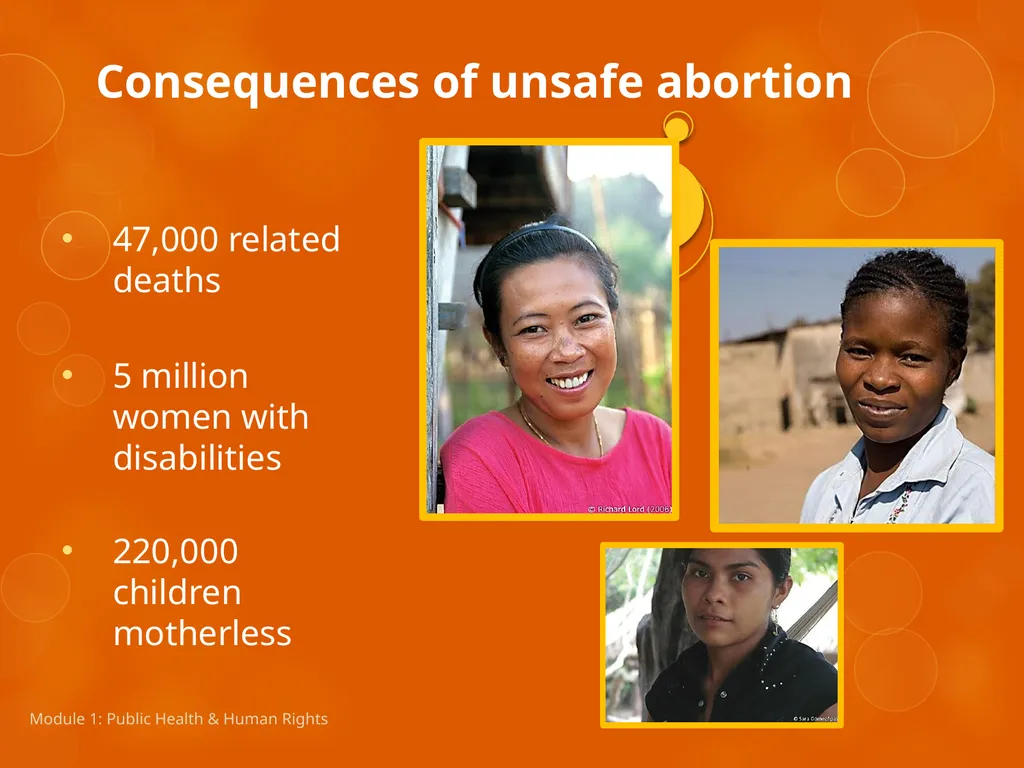
Consequences of unsafe abortion 47,000 related deaths
5 million women with disabilities
220,000 children motherless Module 1: Public Health & Human Rights<br>
5 million women with disabilities
220,000 children motherless Module 1: Public Health & Human Rights<br>
30
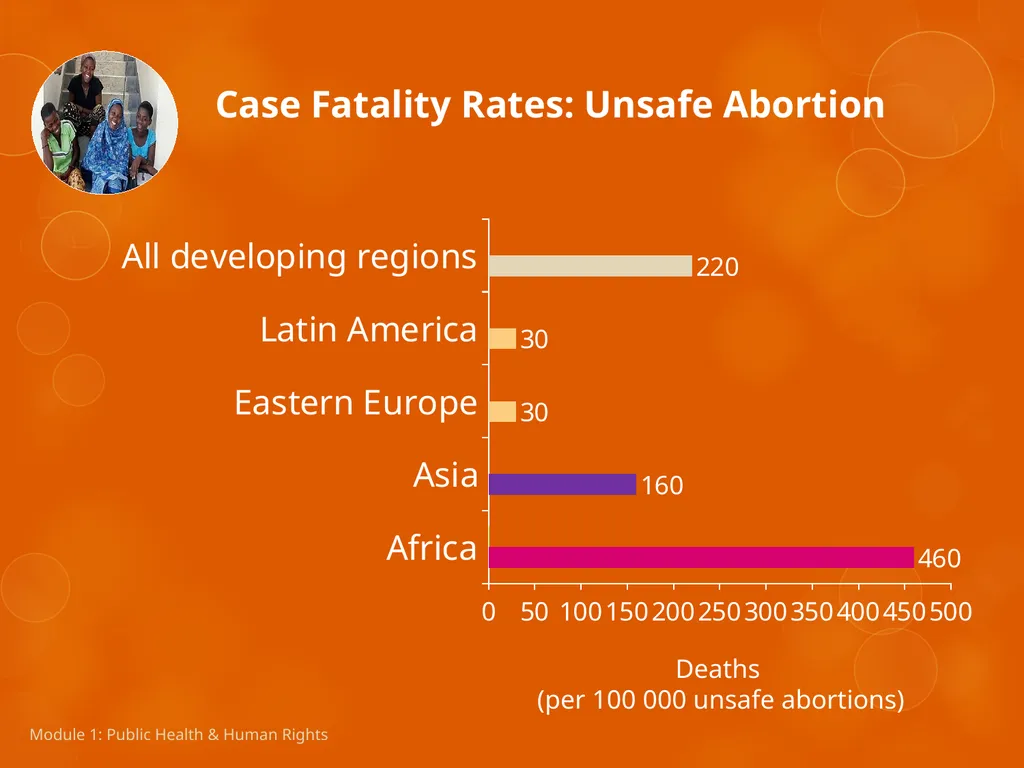
Case Fatality Rates: Unsafe Abortion Deaths
(per 100 000 unsafe abortions) Module 1: Public Health & Human Rights<br>
(per 100 000 unsafe abortions) Module 1: Public Health & Human Rights<br>
31
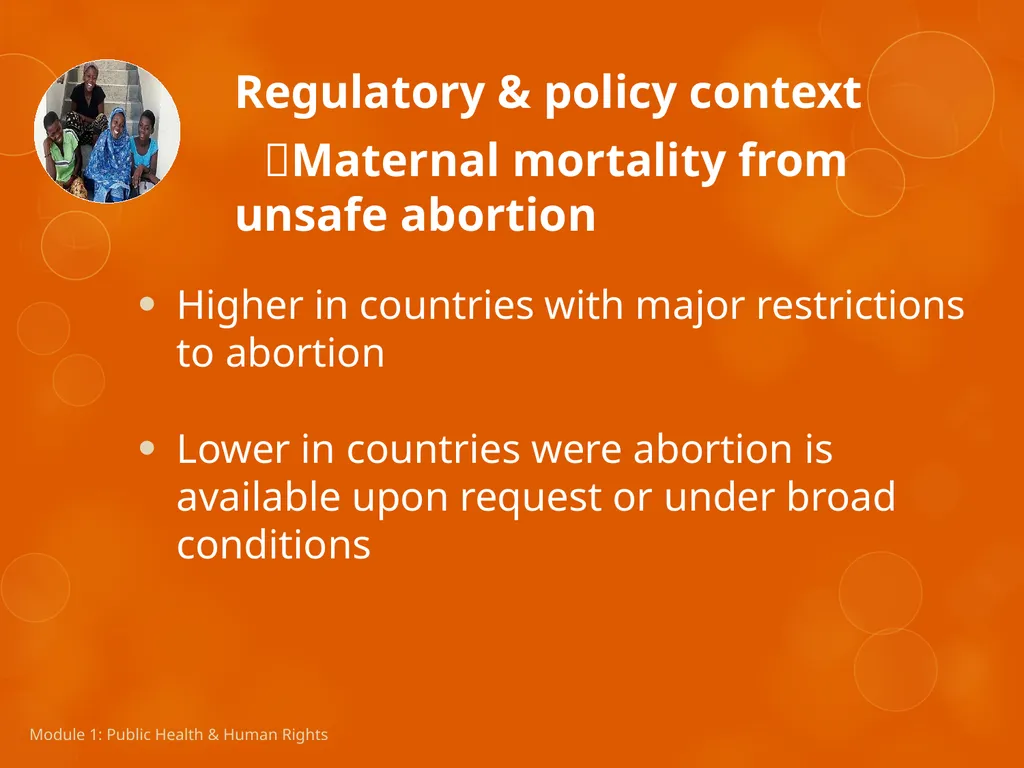
Regulatory & policy context
Maternal mortality from unsafe abortion Higher in countries with major restrictions to abortion
Lower in countries were abortion is available upon request or under broad conditions Module 1: Public Health & Human Rights<br>
Lower in countries were abortion is available upon request or under broad conditions Module 1: Public Health & Human Rights<br>
32
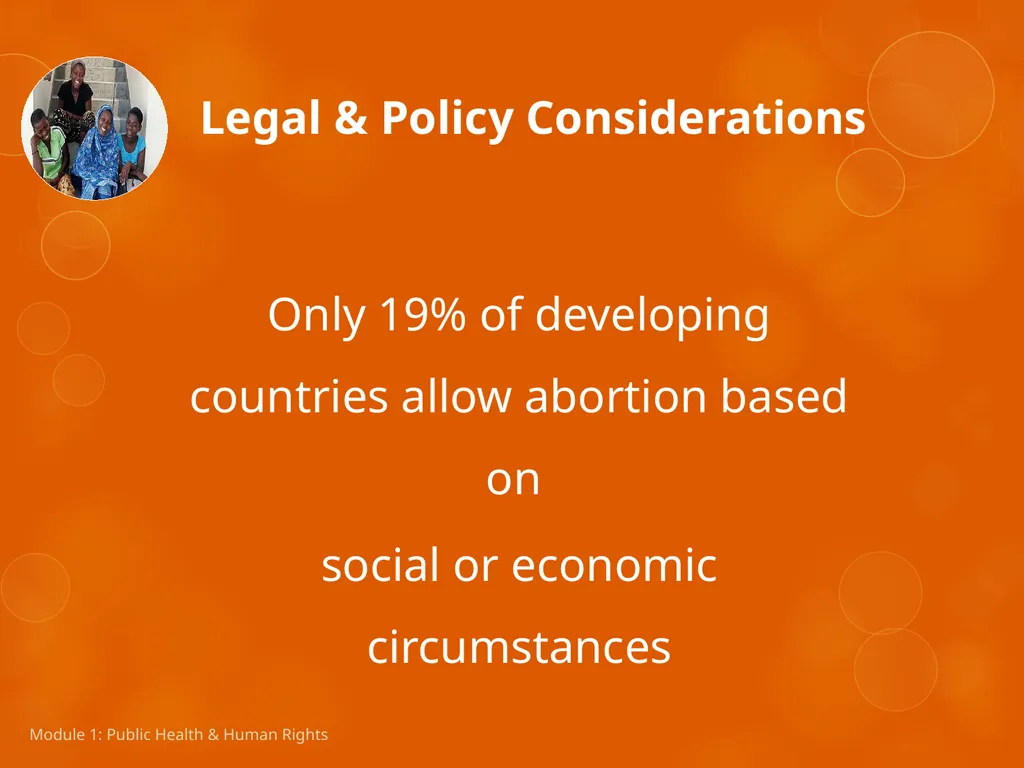
Legal & Policy Considerations Only 19% of developing countries allow abortion based on
social or economic circumstances Module 1: Public Health & Human Rights<br>
social or economic circumstances Module 1: Public Health & Human Rights<br>
33
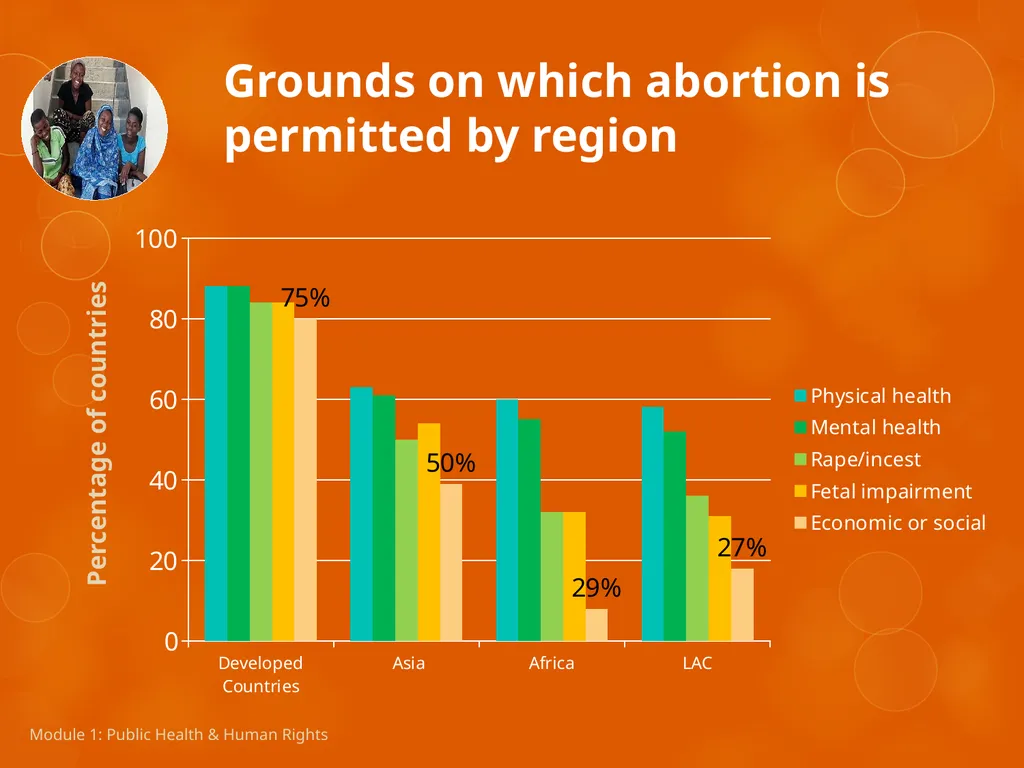
Grounds on which abortion is permitted by region Percentage of countries Module 1: Public Health & Human Rights<br>
34
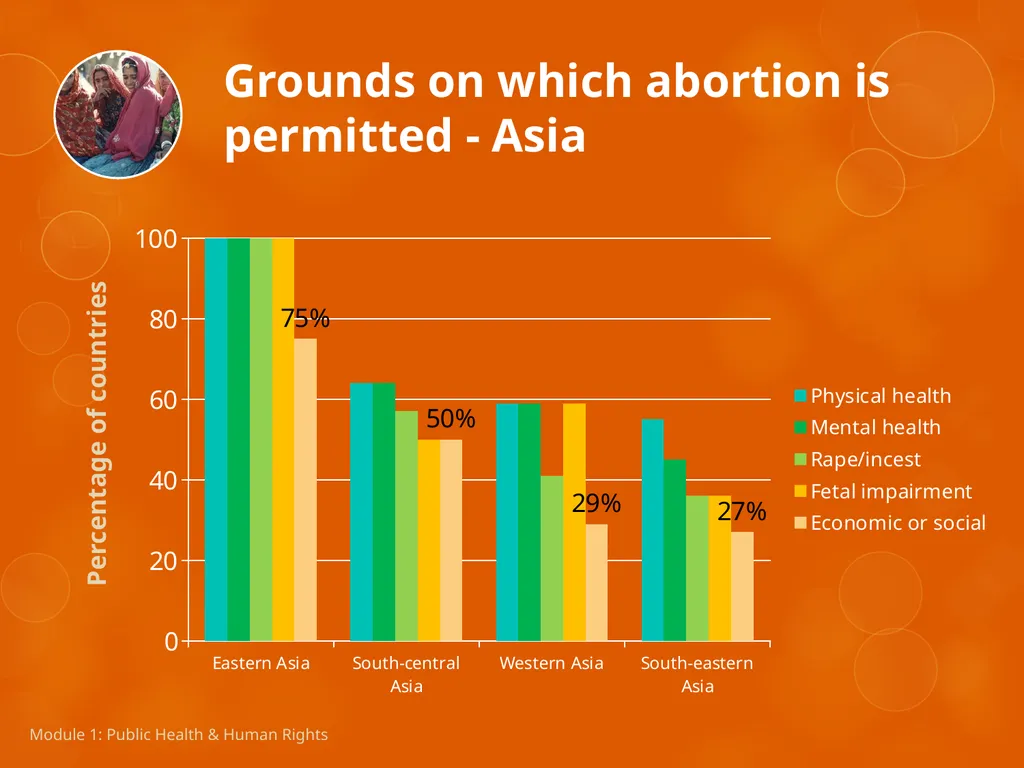
Grounds on which abortion is permitted - Asia Percentage of countries Module 1: Public Health & Human Rights<br>
35
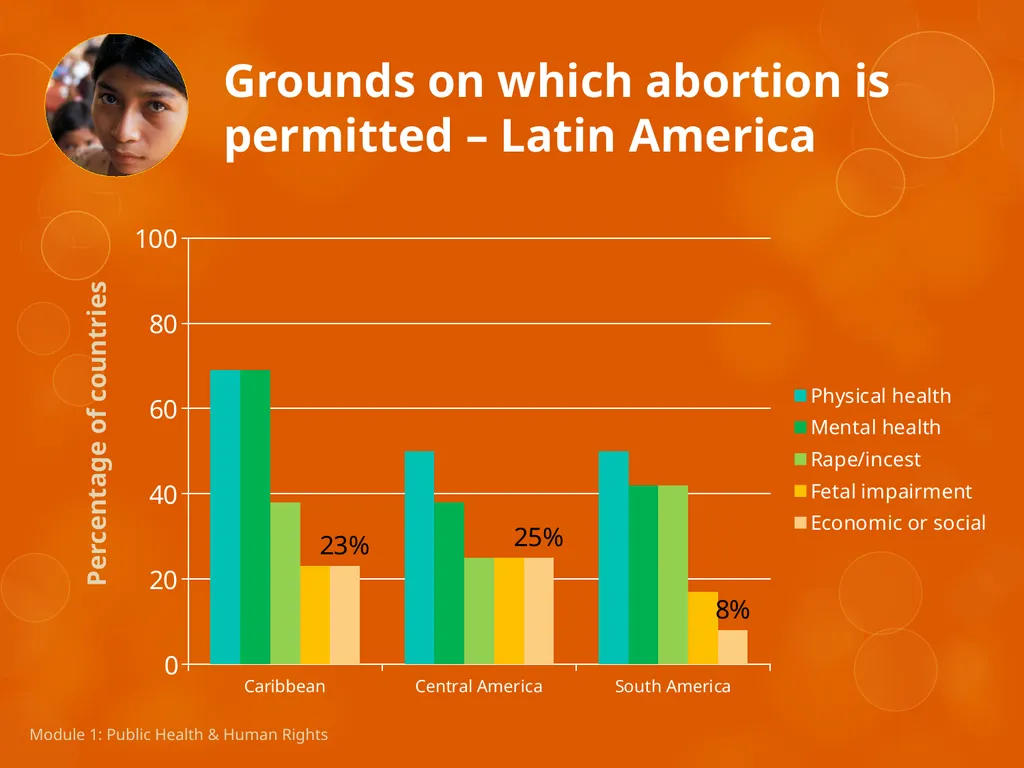
Grounds on which abortion is permitted – Latin America Percentage of countries Module 1: Public Health & Human Rights<br>
36
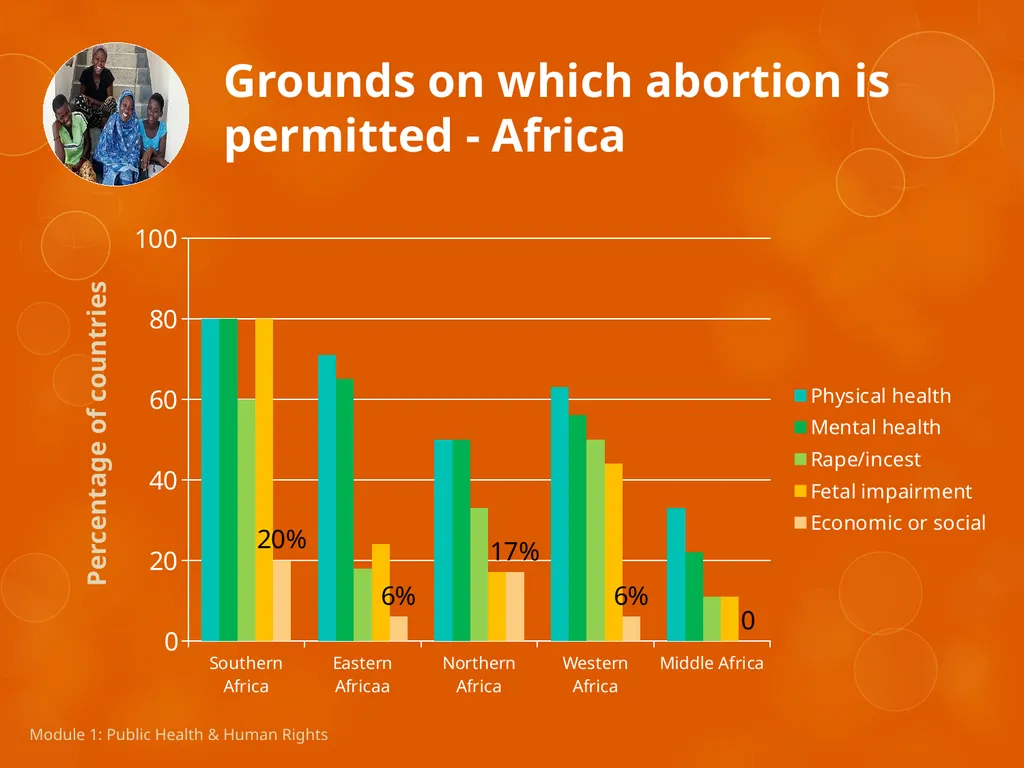
Grounds on which abortion is permitted - Africa Percentage of countries Module 1: Public Health & Human Rights<br>
37
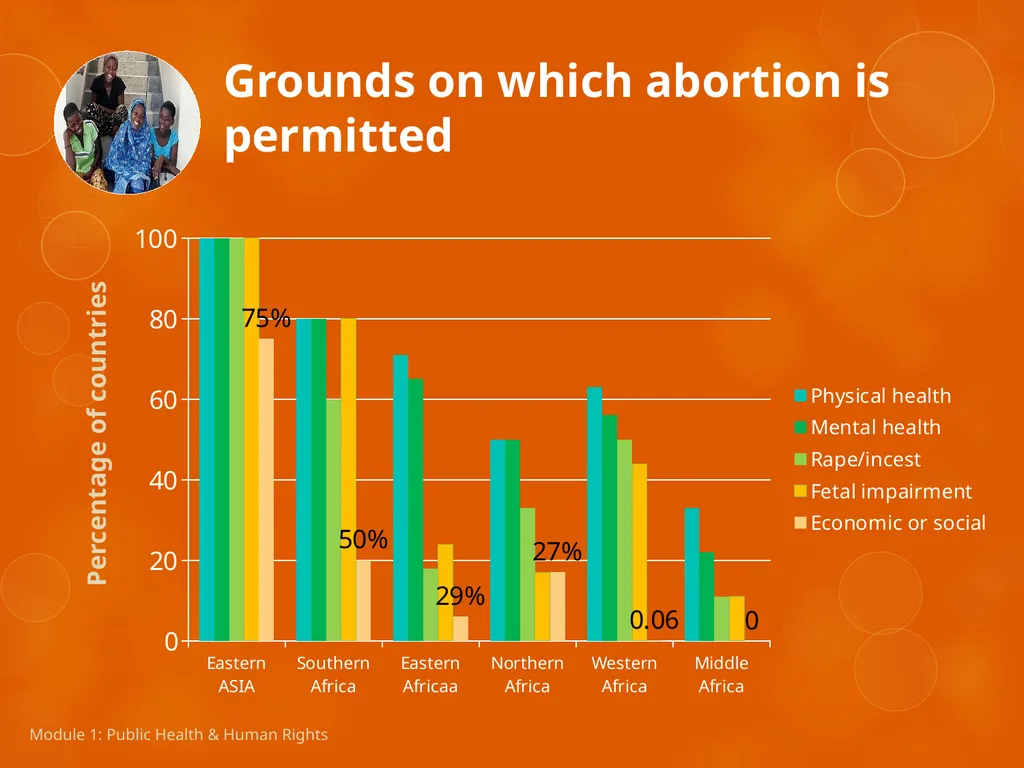
Grounds on which abortion is permitted Percentage of countries Module 1: Public Health & Human Rights<br>
38
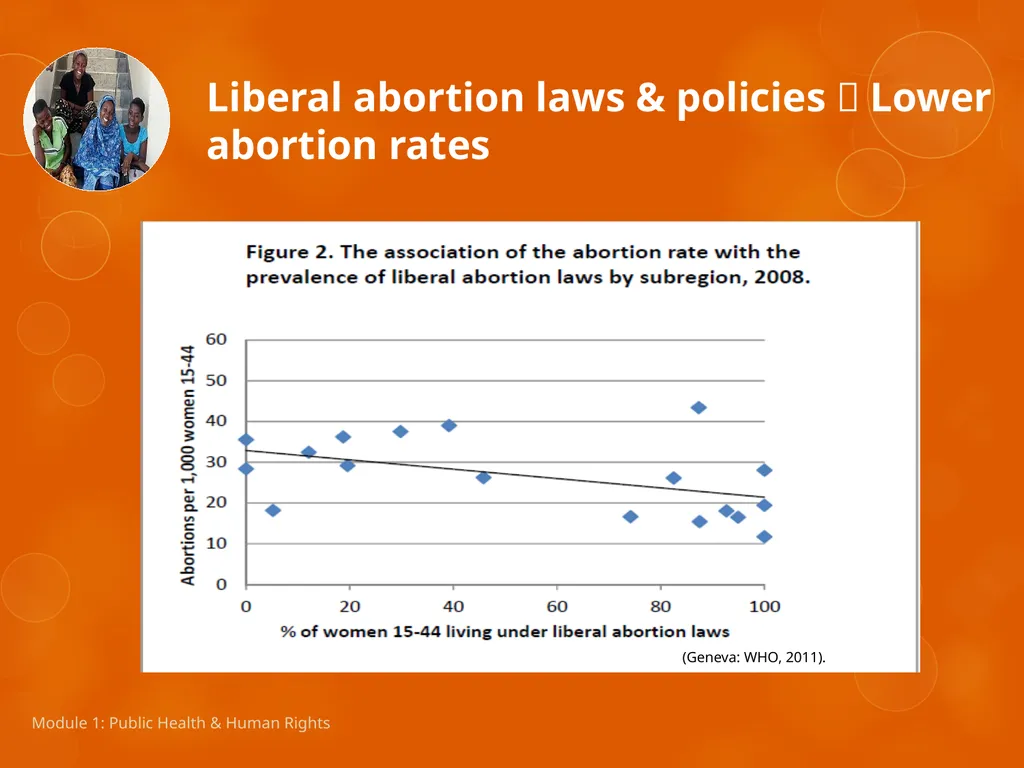
Liberal abortion laws & policies Lower abortion rates Module 1: Public Health & Human Rights (Geneva: WHO, 2011).<br>
39
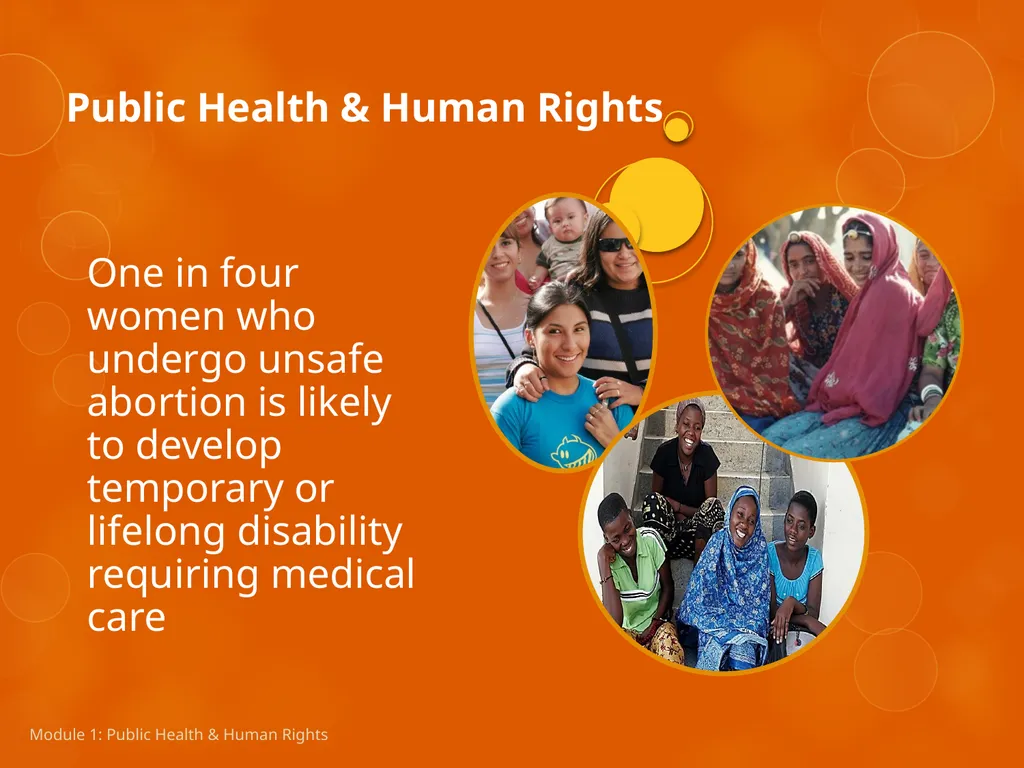
Public Health & Human Rights One in four women who undergo unsafe abortion is likely to develop temporary or lifelong disability requiring medical care Module 1: Public Health & Human Rights<br>
40
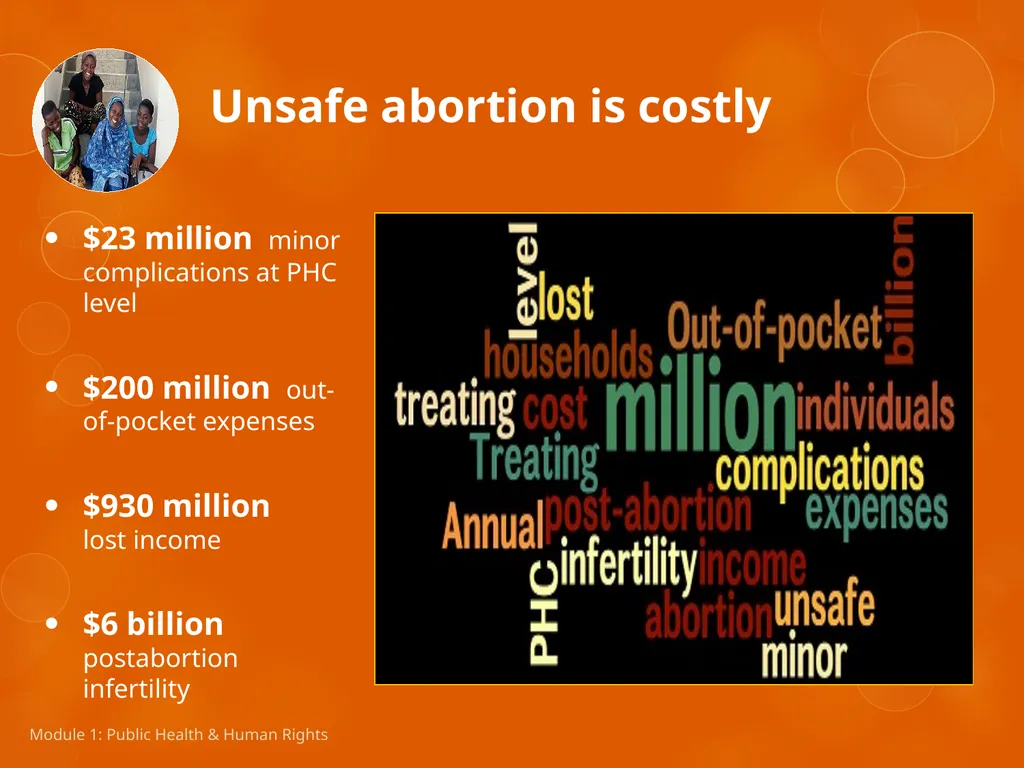
$23 million minor complications at PHC level
$200 million out-of-pocket expenses
$930 million lost income
$6 billion postabortion infertility Unsafe abortion is costly Module 1: Public Health & Human Rights<br>
$200 million out-of-pocket expenses
$930 million lost income
$6 billion postabortion infertility Unsafe abortion is costly Module 1: Public Health & Human Rights<br>
41
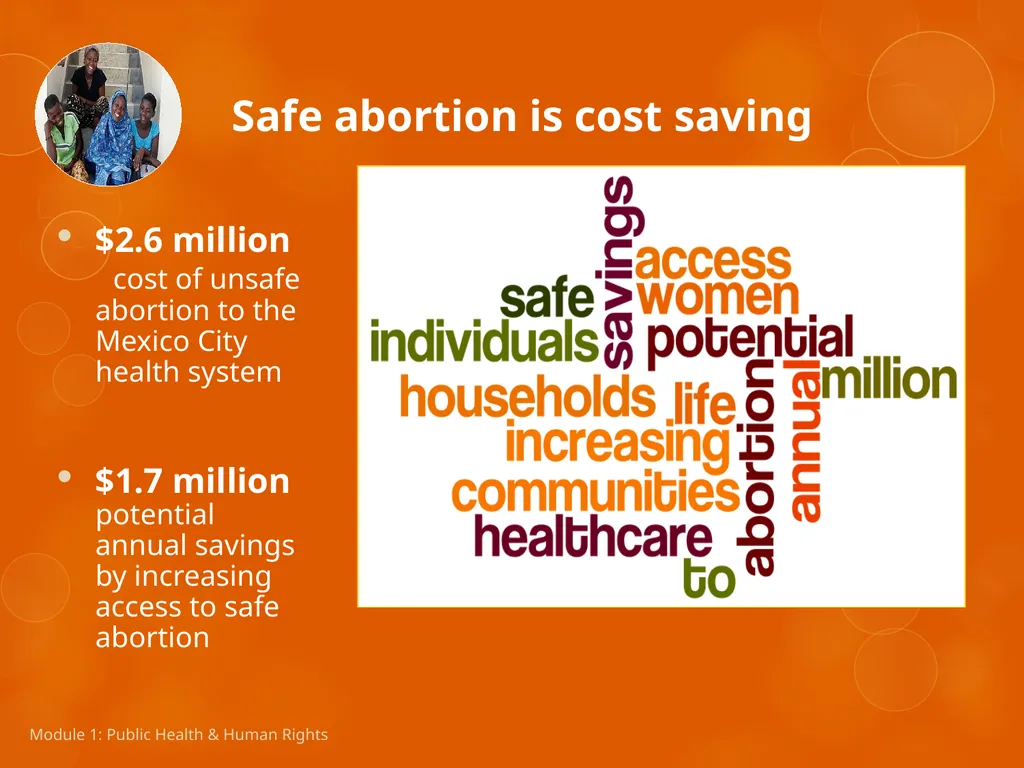
$2.6 million cost of unsafe abortion to the Mexico City health system
$1.7 million potential annual savings by increasing access to safe abortion Safe abortion is cost saving Module 1: Public Health & Human Rights<br>
$1.7 million potential annual savings by increasing access to safe abortion Safe abortion is cost saving Module 1: Public Health & Human Rights<br>
42
Clear and Unambiguous “As a preventable cause of maternal mortality and morbidity
unsafe abortion must be dealt with as part of the MDG on improving maternal health and other international development goals.” Module 1: Public Health & Human Rights<br>
unsafe abortion must be dealt with as part of the MDG on improving maternal health and other international development goals.” Module 1: Public Health & Human Rights<br>
43
“The fulfillment of human rights requires that women can access safe abortion when it is indicated to protect her health.” Module 1: Public Health & Human Rights Public Health & Human Rights<br>
44
Human Rights Free and responsible decision making on sexuality and reproductive health including the number, spacing and timing of children
Life
Equality and non-discrimination
Privacy
(WHO, 2004) Module 1: Public Health & Human Rights<br>
Life
Equality and non-discrimination
Privacy
(WHO, 2004) Module 1: Public Health & Human Rights<br>
45
Human Rights Freely choose a spouse and enter into marriage only with free and full consent
Enjoy the benefits of scientific progress
Access relevant health information
(WHO, 2004) Module 1: Public Health & Human Rights<br>
Enjoy the benefits of scientific progress
Access relevant health information
(WHO, 2004) Module 1: Public Health & Human Rights<br>
46
The new emphasis on human rights can bolster arguments that governments must ensure safe abortion access as part of their commitment to fulfilling international human rights obligations. Human Rights Rationale Module 1: Public Health & Human Rights<br>
47
Safe Abortion Global
Module 2: Providing Clinical Care to Women Undergoing Abortion A Packet to Disseminate
WHO Safe abortion: technical and policy guidance for health systems, Second edition, 2012 Saving Lives
Respecting Rights<br>
Module 2: Providing Clinical Care to Women Undergoing Abortion A Packet to Disseminate
WHO Safe abortion: technical and policy guidance for health systems, Second edition, 2012 Saving Lives
Respecting Rights<br>
48
Sections of this presentation Legal & Policy Considerations Introduction Module 2: Clinical Care<br>
49
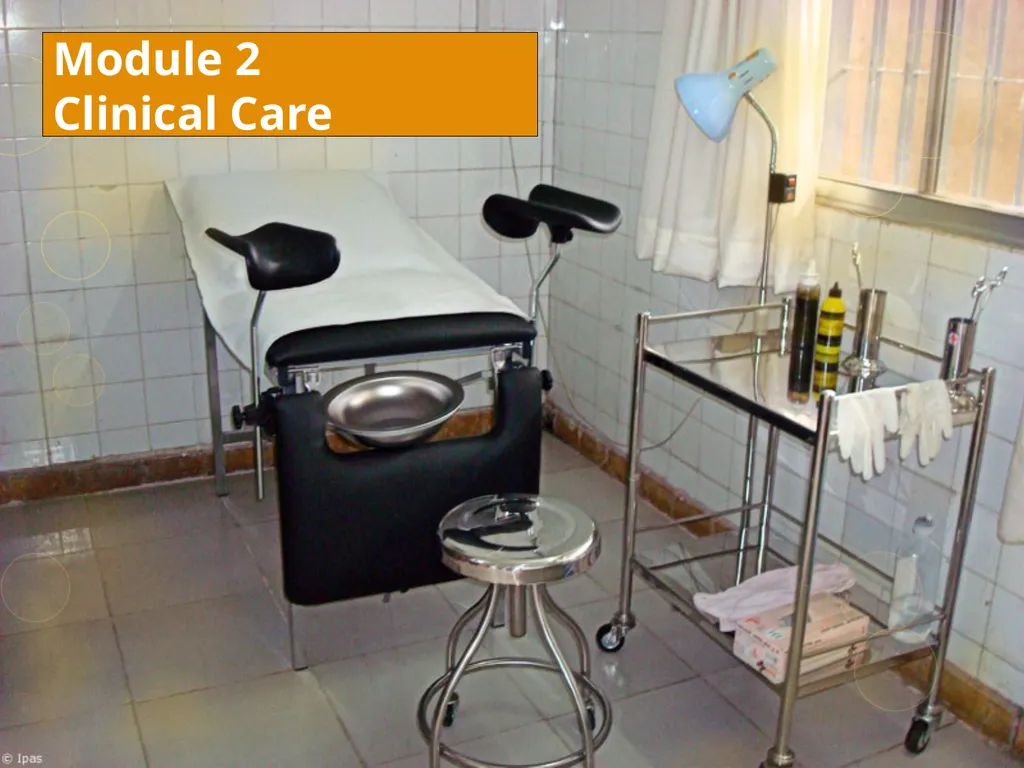
Module 2
Clinical Care<br>
50
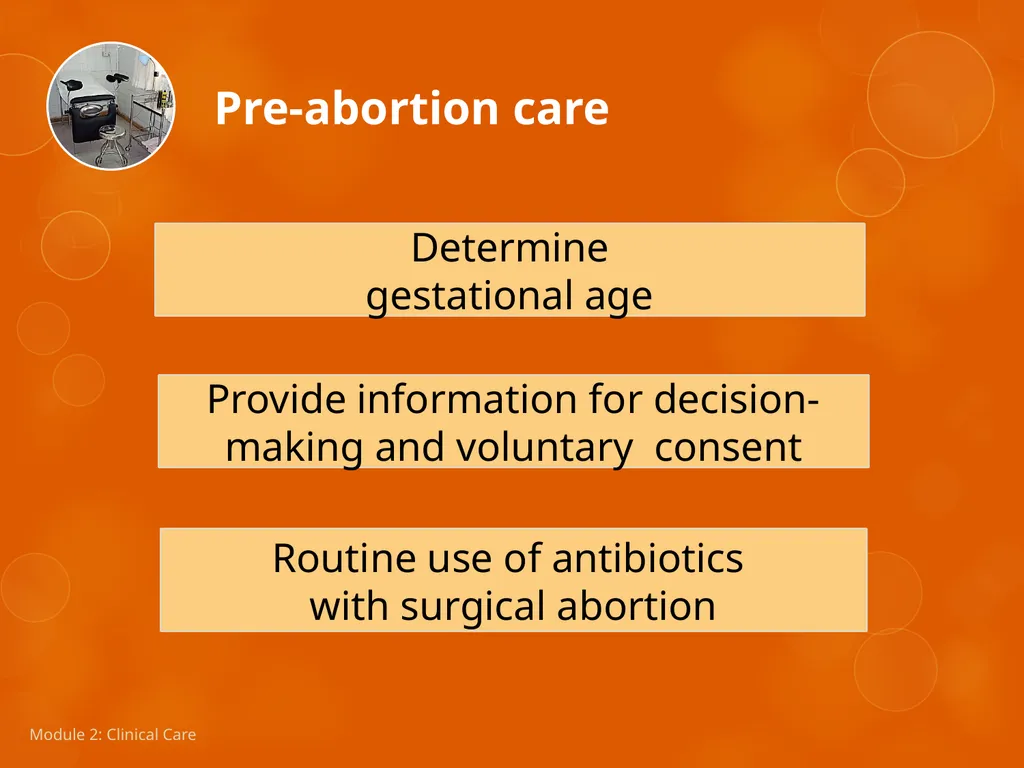
Pre-abortion care Module 2: Clinical Care Determine
gestational age Routine use of antibiotics
with surgical abortion Provide information for decision-making and voluntary consent<br>
gestational age Routine use of antibiotics
with surgical abortion Provide information for decision-making and voluntary consent<br>
51
Routine laboratory tests
Pre-abortion ultrasound scanning
Options counseling, if not desired
Routine follow-up visit Not necessary Module 2: Clinical Care<br>
Pre-abortion ultrasound scanning
Options counseling, if not desired
Routine follow-up visit Not necessary Module 2: Clinical Care<br>
52
Recognition of pregnancy symptoms
Bimanual pelvic examination
Abdominal examination Determine
Gestational Age Module 2: Clinical Care<br>
Bimanual pelvic examination
Abdominal examination Determine
Gestational Age Module 2: Clinical Care<br>
53
Essential for quality abortion services
Clear, accurate, easily understood, easy to recall
May help the individual woman to decide:
whether to have an abortion
which method of abortion Module 2: Clinical Care Provide Information<br>
Clear, accurate, easily understood, easy to recall
May help the individual woman to decide:
whether to have an abortion
which method of abortion Module 2: Clinical Care Provide Information<br>
54
Abortion methods available
What will be done & length of procedure
What woman will likely experience
Pain management
Risks and complications
When normal activity can resume
Any follow-up care Module 2: Clinical Care Provide Information<br>
What will be done & length of procedure
What woman will likely experience
Pain management
Risks and complications
When normal activity can resume
Any follow-up care Module 2: Clinical Care Provide Information<br>
55
Options Counseling Not mandatory for women who have already decided
Can be important for women considering their options
Should be:
timely, voluntary, confidential, non- directive
provided by a trained person Module 2: Clinical Care<br>
Can be important for women considering their options
Should be:
timely, voluntary, confidential, non- directive
provided by a trained person Module 2: Clinical Care<br>
56
Contraceptive information, counseling & services, including
Hormonal contraception
IUDs
Voluntary surgical methods An essential part of abortion care Module 2: Clinical Care<br>
Hormonal contraception
IUDs
Voluntary surgical methods An essential part of abortion care Module 2: Clinical Care<br>
57
Oral mifepristone
Misoprostol administered sublingually
Misoprostol administered vaginally
Laminaria placed intracervically Methods: Cervical preparation
12-14 weeks Module 2: Clinical Care<br>
Misoprostol administered sublingually
Misoprostol administered vaginally
Laminaria placed intracervically Methods: Cervical preparation
12-14 weeks Module 2: Clinical Care<br>
58
Medication for pain management should always be offered for both medical and surgical methods of abortion
Provide without delay upon request
Analgesics (not paracetamol), local anesthesia
General anesthesia not routinely recommended Pain management Module 2: Clinical Care<br>
Provide without delay upon request
Analgesics (not paracetamol), local anesthesia
General anesthesia not routinely recommended Pain management Module 2: Clinical Care<br>
59
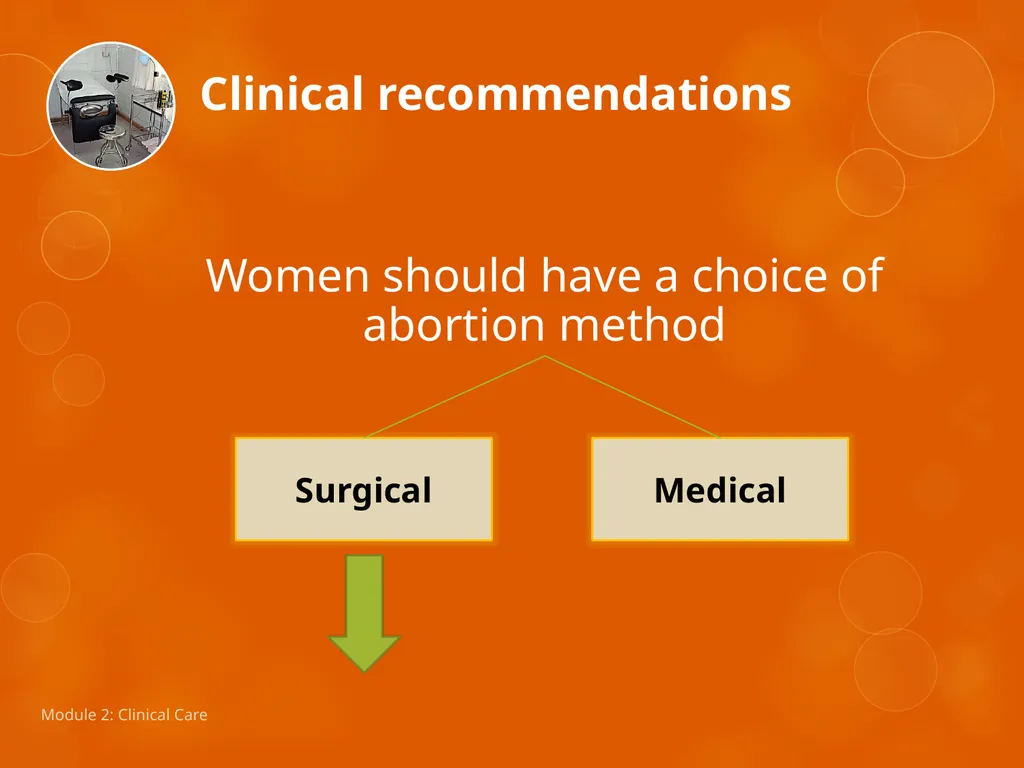
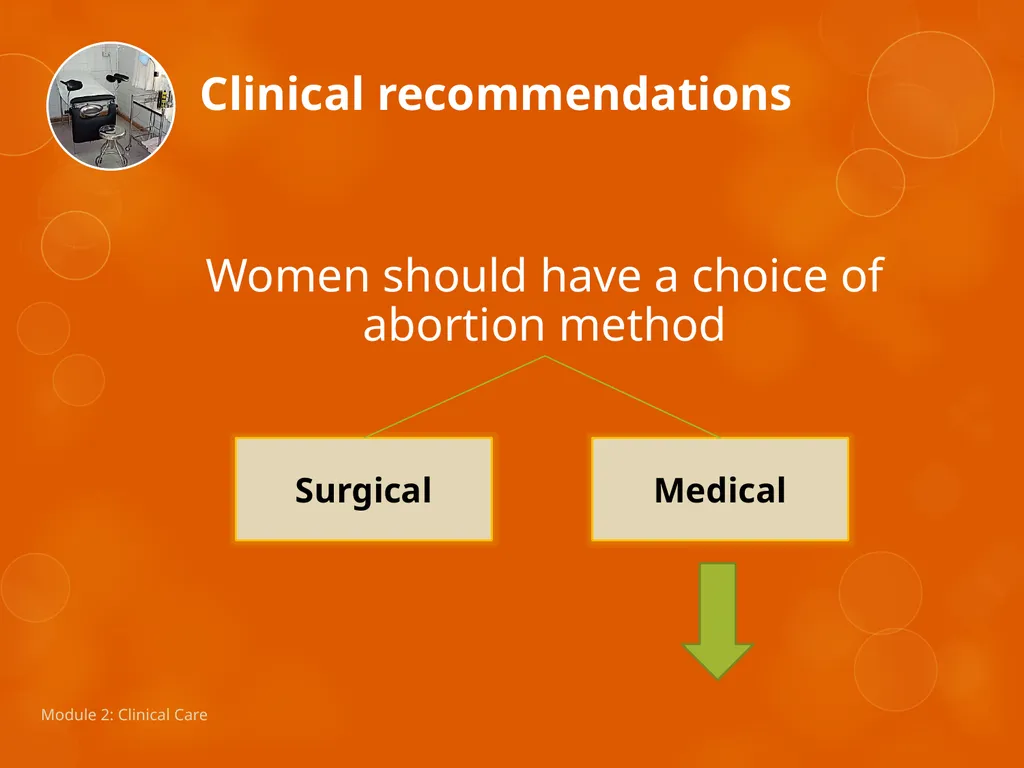
Clinical recommendations Women should have a choice of abortion method Medical Surgical Module 2: Clinical Care<br>
60
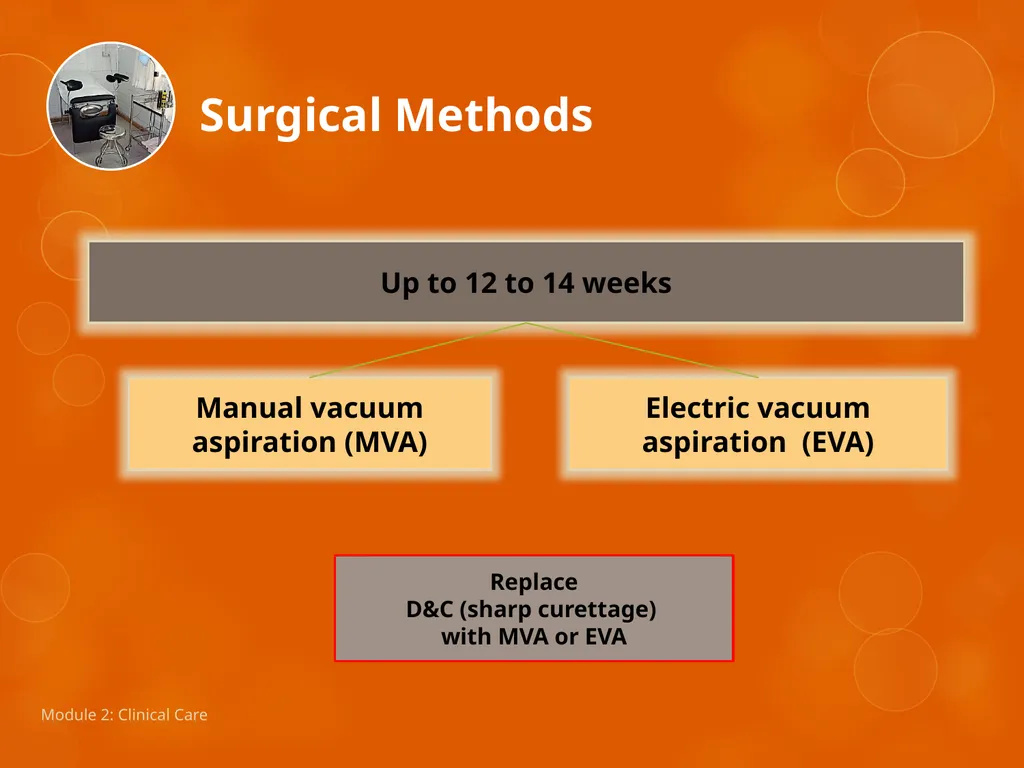
Surgical Methods Up to 12 to 14 weeks Manual vacuum aspiration (MVA) Replace
D&C (sharp curettage)
with MVA or EVA Electric vacuum aspiration (EVA) Module 2: Clinical Care<br>
D&C (sharp curettage)
with MVA or EVA Electric vacuum aspiration (EVA) Module 2: Clinical Care<br>
61
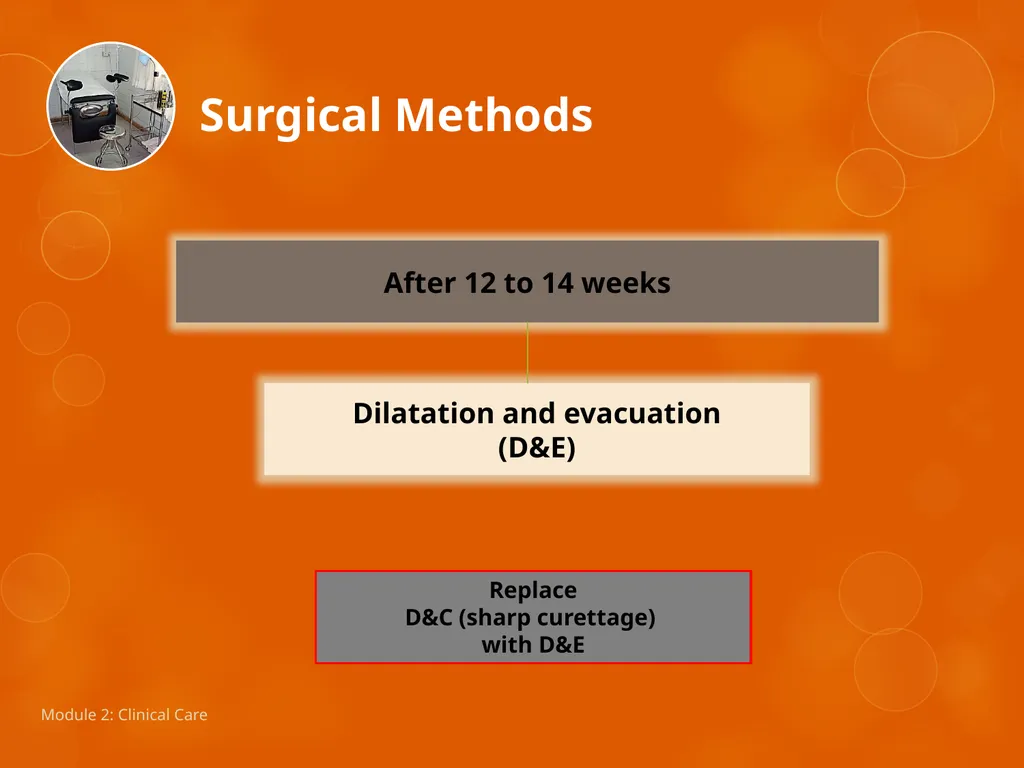
Surgical Methods After 12 to 14 weeks Dilatation and evacuation
(D&E) Replace
D&C (sharp curettage)
with D&E Module 2: Clinical Care<br>
(D&E) Replace
D&C (sharp curettage)
with D&E Module 2: Clinical Care<br>
62
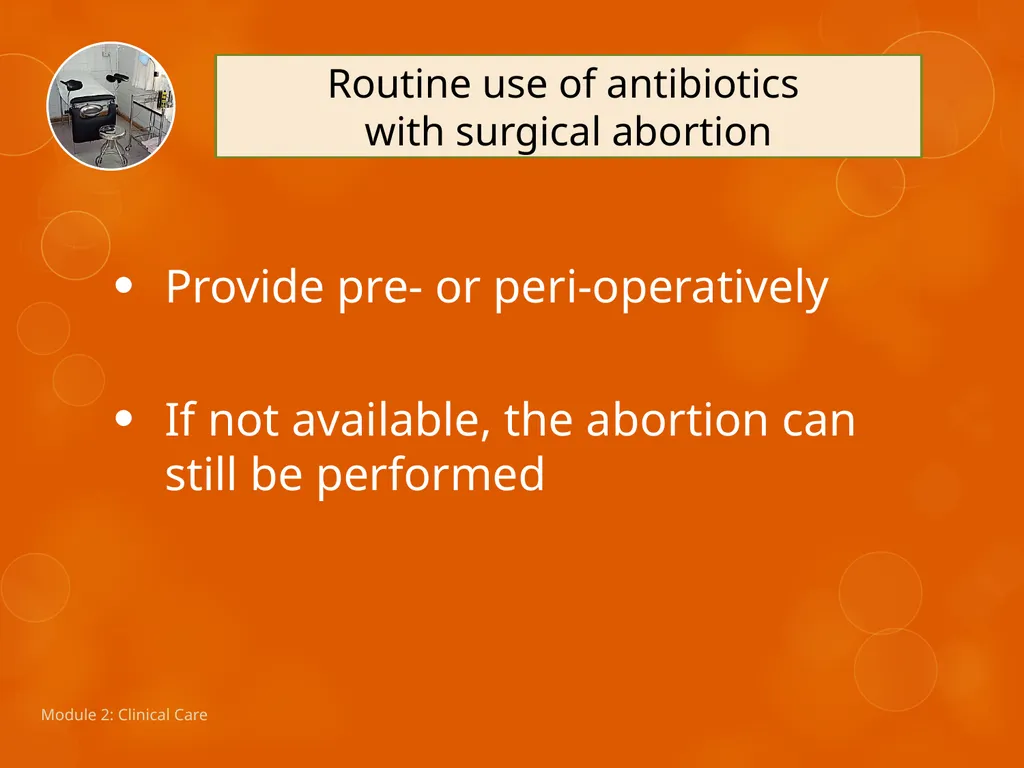
Provide pre- or peri-operatively
If not available, the abortion can still be performed Module 2: Clinical Care Routine use of antibiotics
with surgical abortion<br>
If not available, the abortion can still be performed Module 2: Clinical Care Routine use of antibiotics
with surgical abortion<br>
63
Clinical recommendations Women should have a choice of abortion method Medical Surgical Module 2: Clinical Care<br>
64
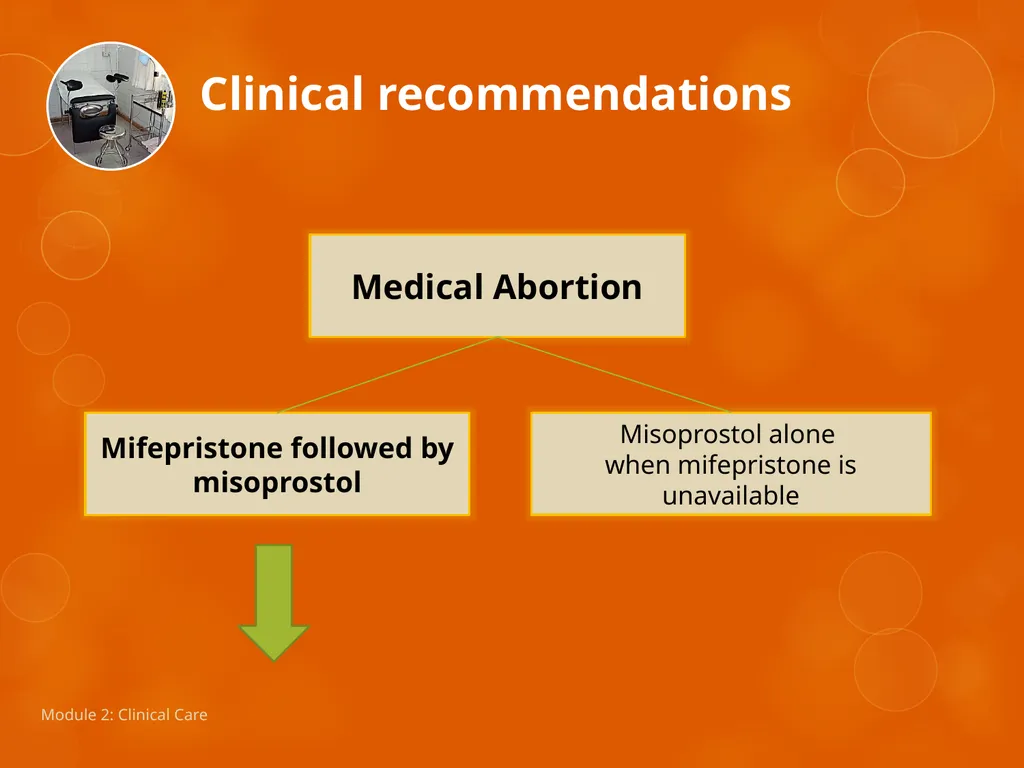
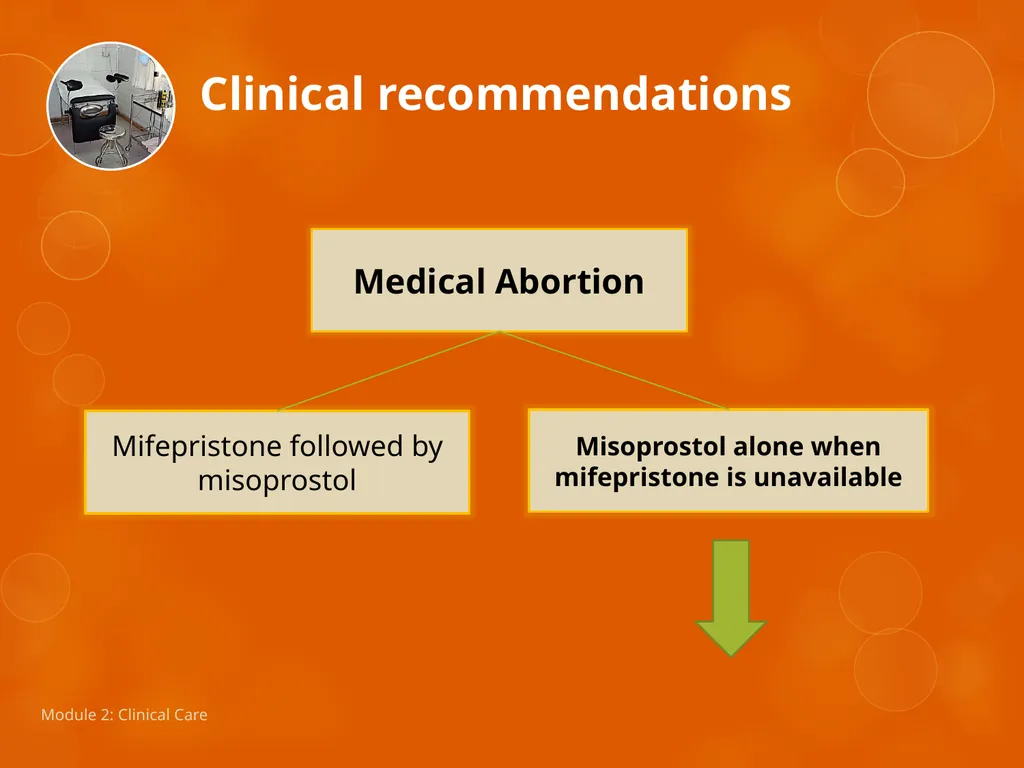
Clinical recommendations Medical Abortion Mifepristone followed by misoprostol Misoprostol alone
when mifepristone is unavailable Module 2: Clinical Care<br>
when mifepristone is unavailable Module 2: Clinical Care<br>
65
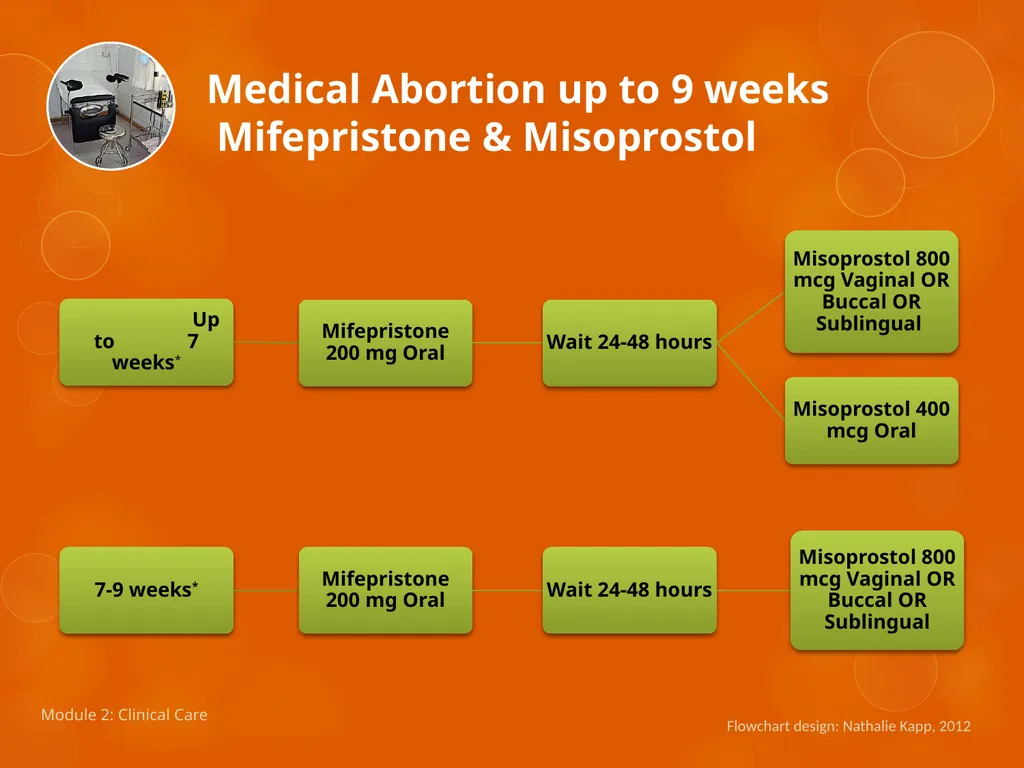
Medical Abortion up to 9 weeks
Mifepristone & Misoprostol Flowchart design: Nathalie Kapp, 2012 Module 2: Clinical Care<br>
66
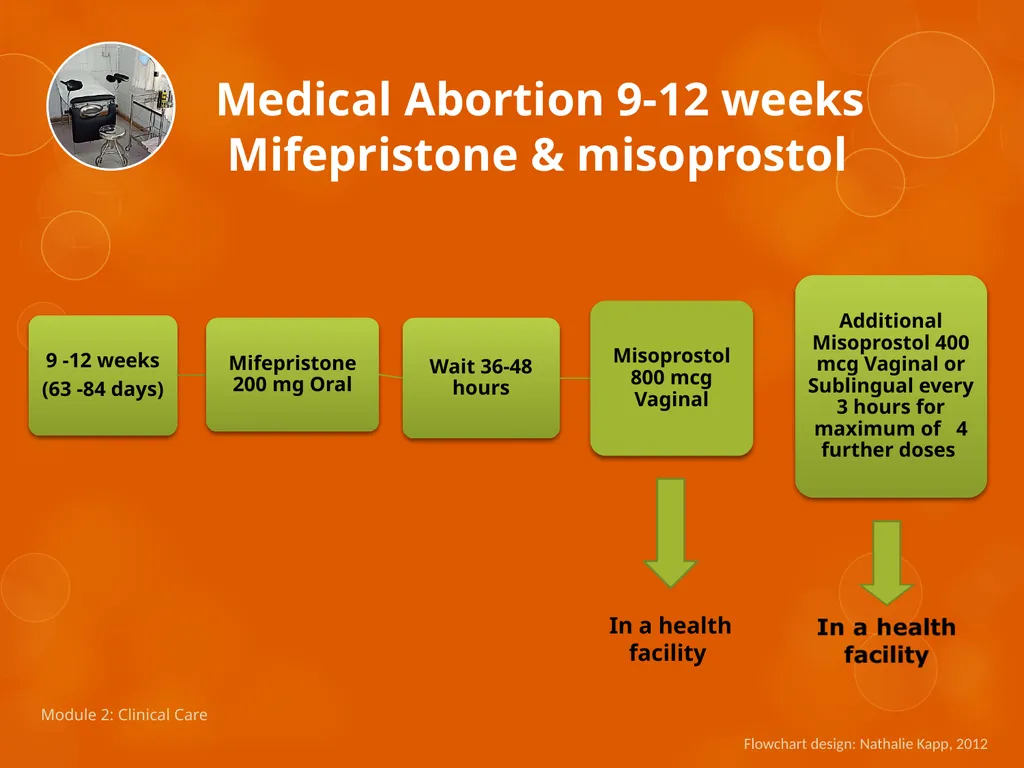
Medical Abortion 9-12 weeks
Mifepristone & misoprostol Flowchart design: Nathalie Kapp, 2012 Module 2: Clinical Care In a health facility<br>
67
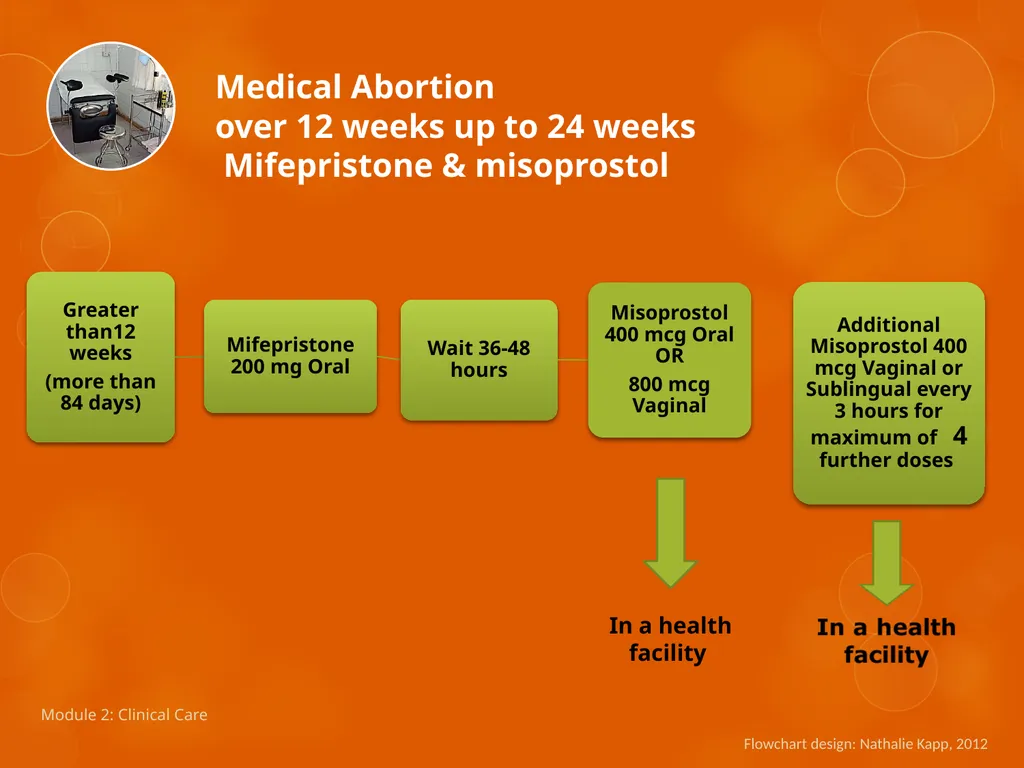
Medical Abortion
over 12 weeks up to 24 weeks
Mifepristone & misoprostol Flowchart design: Nathalie Kapp, 2012 Module 2: Clinical Care In a health facility<br>
68
Clinical recommendations Medical Abortion Mifepristone followed by misoprostol Misoprostol alone when mifepristone is unavailable Module 2: Clinical Care<br>
69
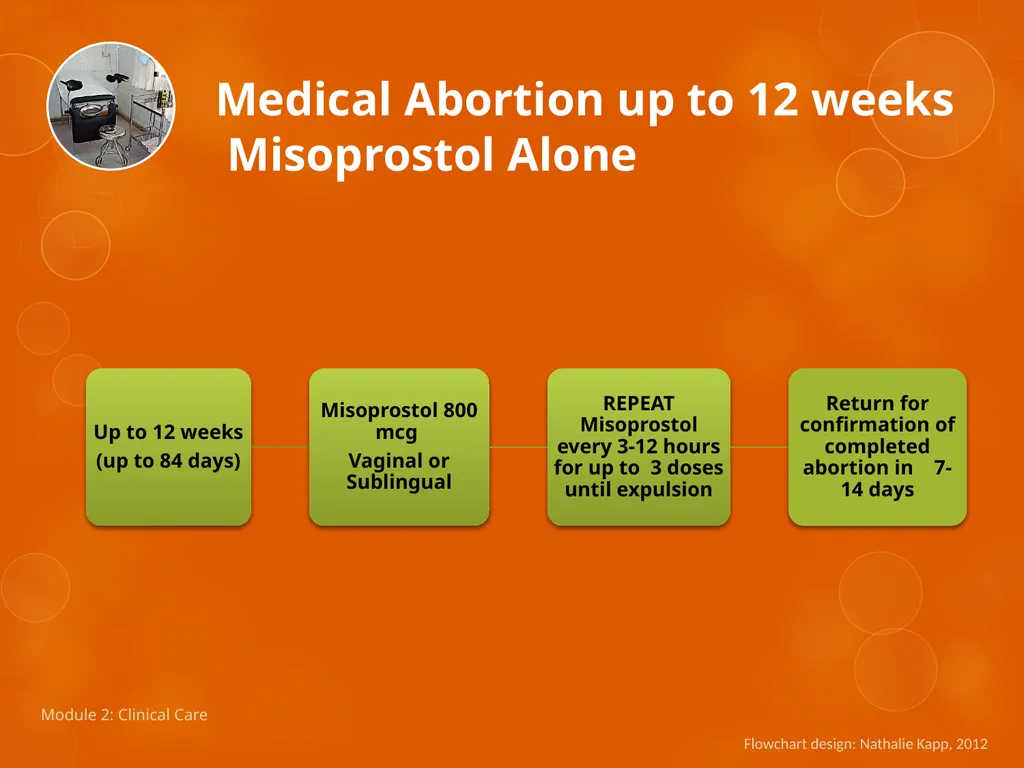
Medical Abortion up to 12 weeks
Misoprostol Alone Flowchart design: Nathalie Kapp, 2012 Module 2: Clinical Care<br>
70
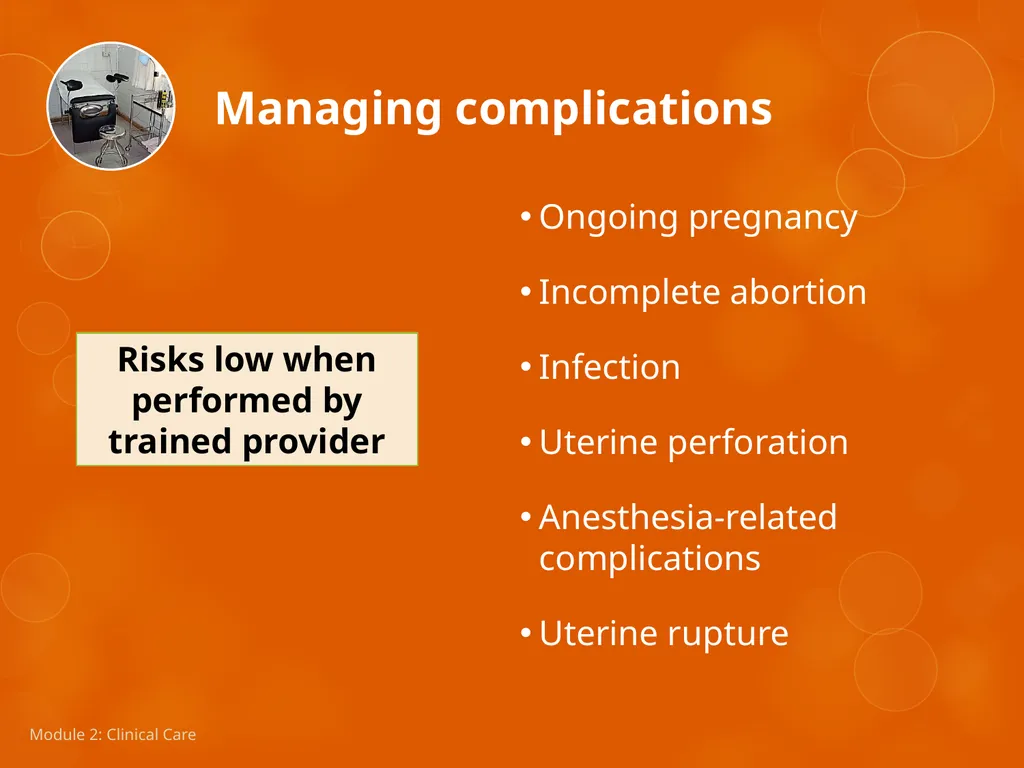
Managing complications Ongoing pregnancy
Incomplete abortion
Infection
Uterine perforation
Anesthesia-related complications
Uterine rupture Module 2: Clinical Care Risks low when performed by trained provider<br>
Incomplete abortion
Infection
Uterine perforation
Anesthesia-related complications
Uterine rupture Module 2: Clinical Care Risks low when performed by trained provider<br>
71
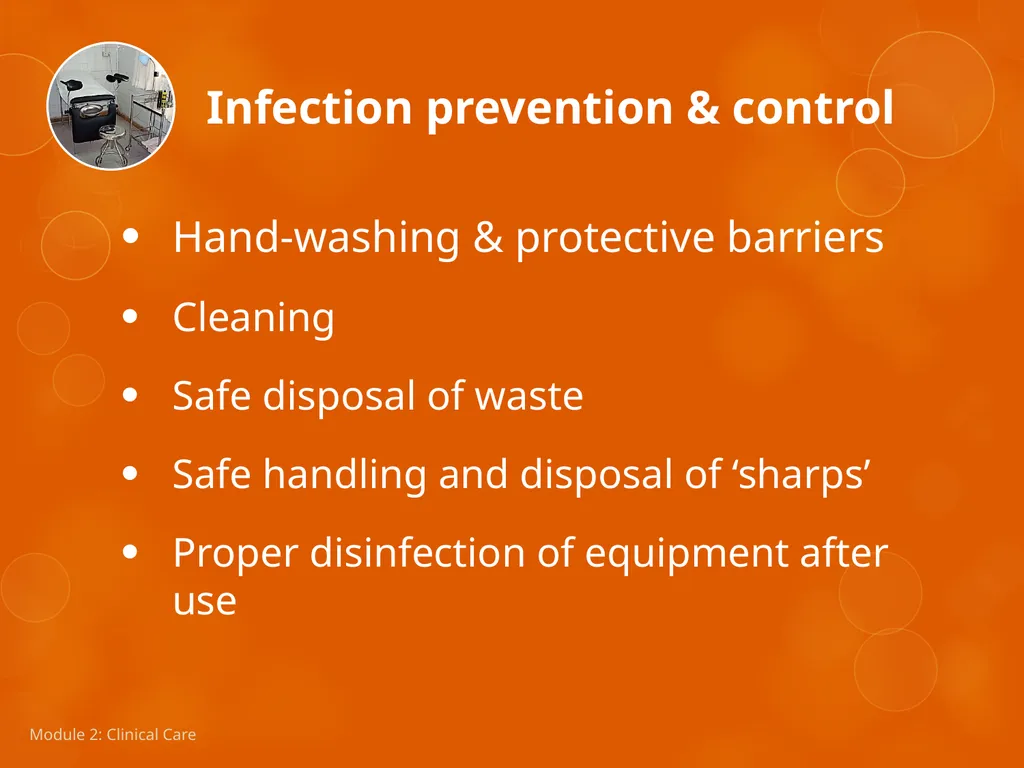
Infection prevention & control Hand-washing & protective barriers
Cleaning
Safe disposal of waste
Safe handling and disposal of ‘sharps’
Proper disinfection of equipment after use Module 2: Clinical Care<br>
Cleaning
Safe disposal of waste
Safe handling and disposal of ‘sharps’
Proper disinfection of equipment after use Module 2: Clinical Care<br>
72
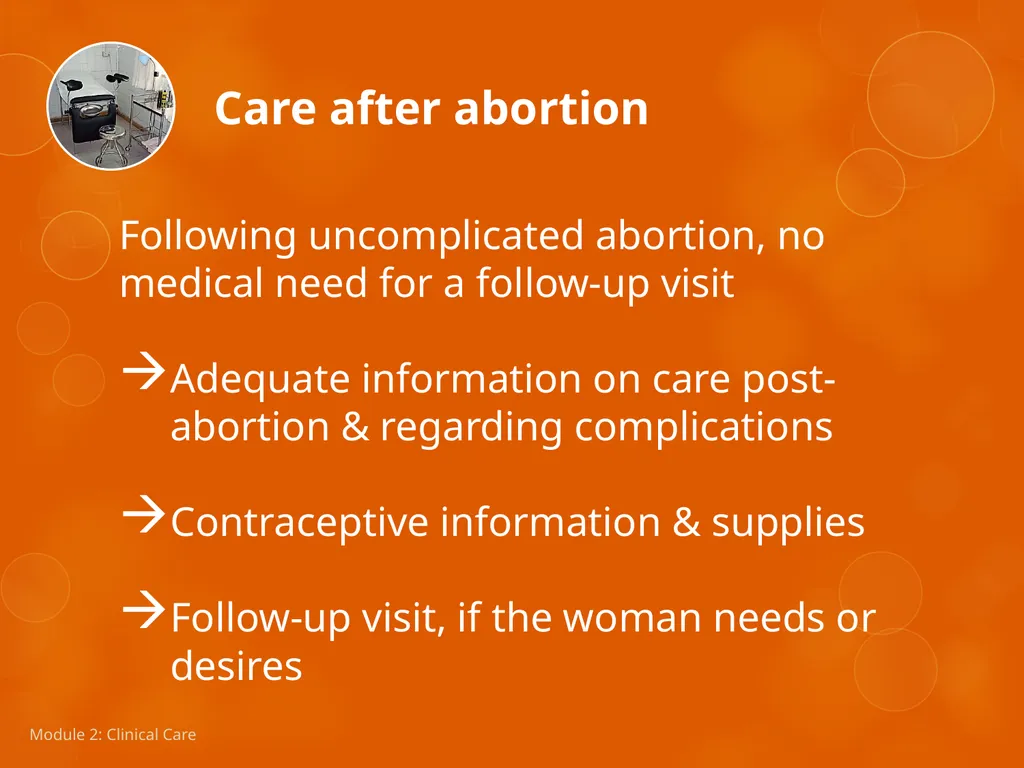
Care after abortion Following uncomplicated abortion, no medical need for a follow-up visit
Adequate information on care post-abortion & regarding complications
Contraceptive information & supplies
Follow-up visit, if the woman needs or desires Module 2: Clinical Care<br>
Adequate information on care post-abortion & regarding complications
Contraceptive information & supplies
Follow-up visit, if the woman needs or desires Module 2: Clinical Care<br>
73
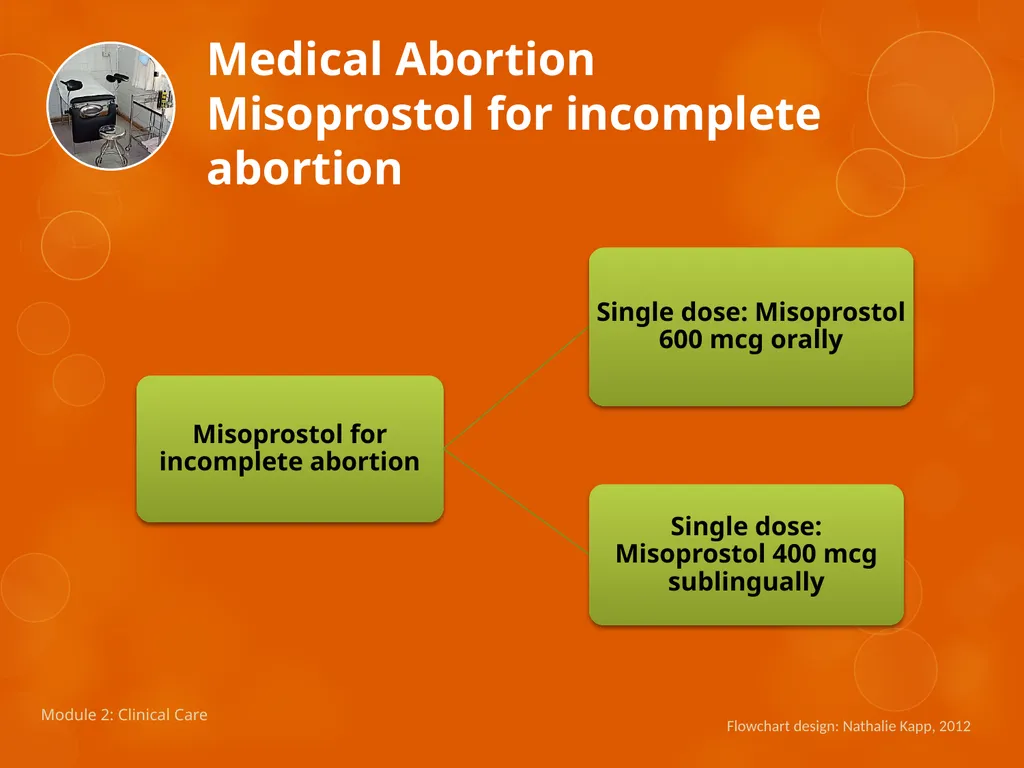
Medical Abortion
Misoprostol for incomplete abortion Flowchart design: Nathalie Kapp, 2012 Module 2: Clinical Care<br>
74
Safe Abortion Global
Module 3: Planning and Managing Care A Packet to Disseminate
WHO Safe abortion: technical and policy guidance for health systems, Second edition, 2012 Saving Lives
Respecting Rights<br>
Module 3: Planning and Managing Care A Packet to Disseminate
WHO Safe abortion: technical and policy guidance for health systems, Second edition, 2012 Saving Lives
Respecting Rights<br>
75
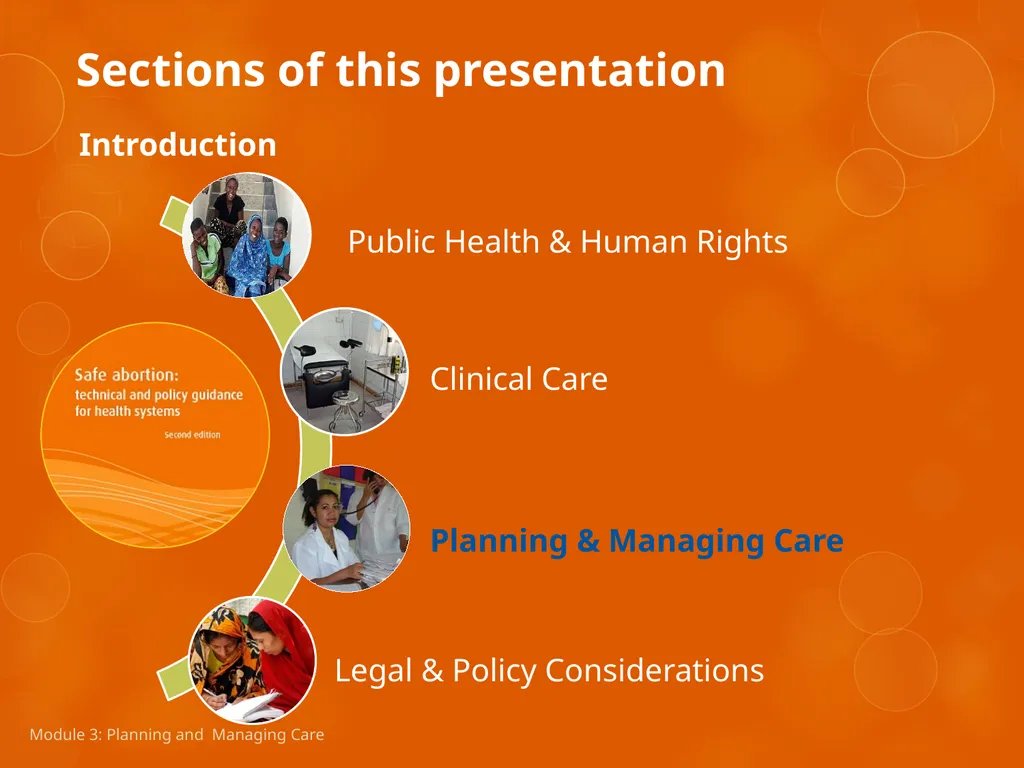
Sections of this presentation Public Health & Human Rights Clinical Care Planning & Managing Care Legal & Policy Considerations Introduction Module 3: Planning and Managing Care<br>
76
Module 3
Planning and Managing Care<br>
77
Health systems planning for safe abortion services National standards and guidelines
Capacity building of health personnel, including midlevel providers
Financing
Policy and programme development Module 3: Planning and Managing Care<br>
Capacity building of health personnel, including midlevel providers
Financing
Policy and programme development Module 3: Planning and Managing Care<br>
78
Constellation of services Integrated
Medically accurate information
Non-directive counseling
Timely service delivered without delay
Contraceptive information and services Module 3: Planning and Managing Care<br>
Medically accurate information
Non-directive counseling
Timely service delivered without delay
Contraceptive information and services Module 3: Planning and Managing Care<br>
79
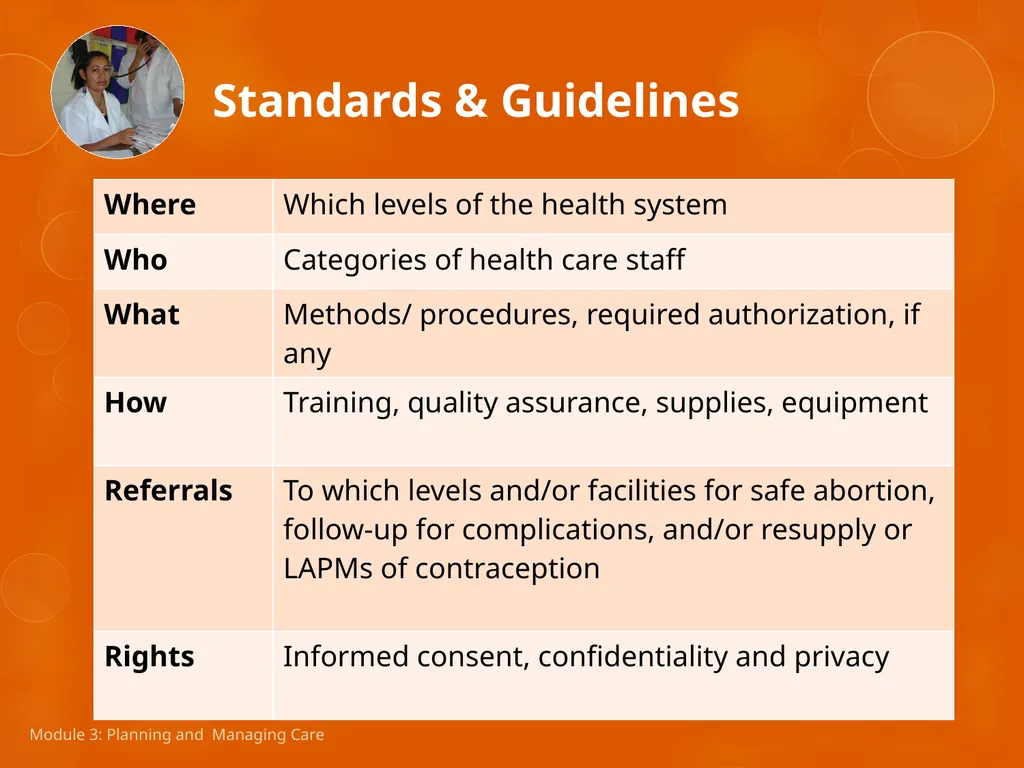
Standards & Guidelines Evidenced-based, up-to-date, operationalized
Types of abortion services available
Requirements for equitable access & adequate quality
Rights of clients and providers; providers’ obligations Module 3: Planning and Managing Care<br>
Types of abortion services available
Requirements for equitable access & adequate quality
Rights of clients and providers; providers’ obligations Module 3: Planning and Managing Care<br>
80
Standards & Guidelines Module 3: Planning and Managing Care<br>
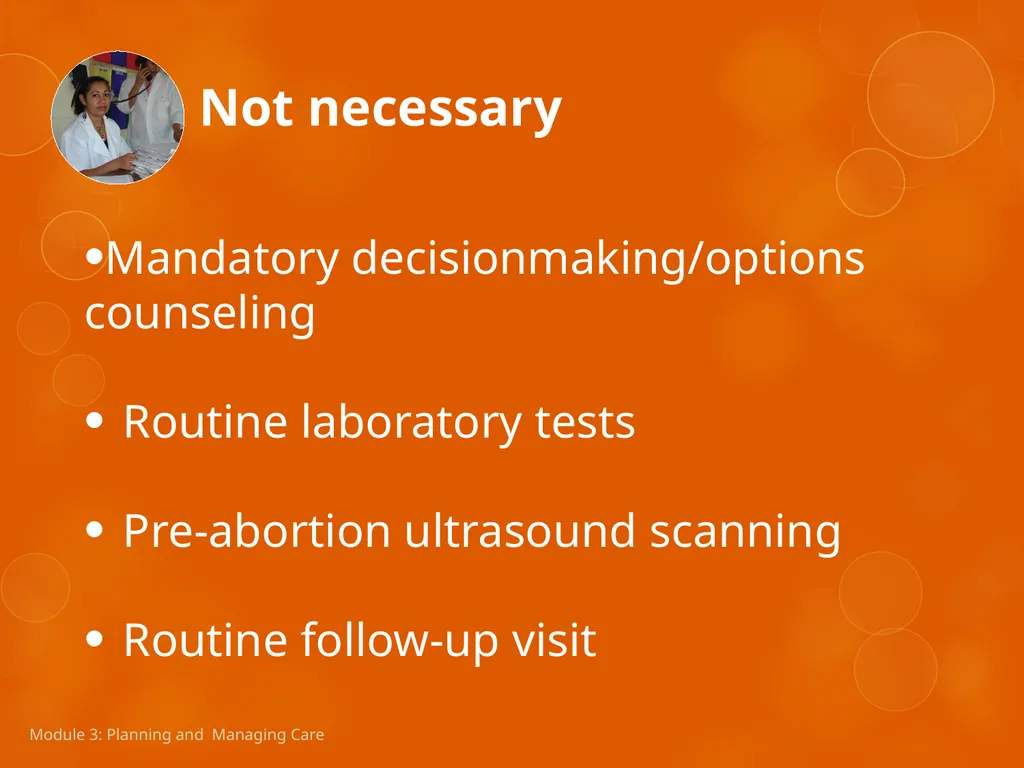
81
Mandatory decisionmaking/options counseling
Routine laboratory tests
Pre-abortion ultrasound scanning
Routine follow-up visit Not necessary Module 3: Planning and Managing Care<br>
Routine laboratory tests
Pre-abortion ultrasound scanning
Routine follow-up visit Not necessary Module 3: Planning and Managing Care<br>
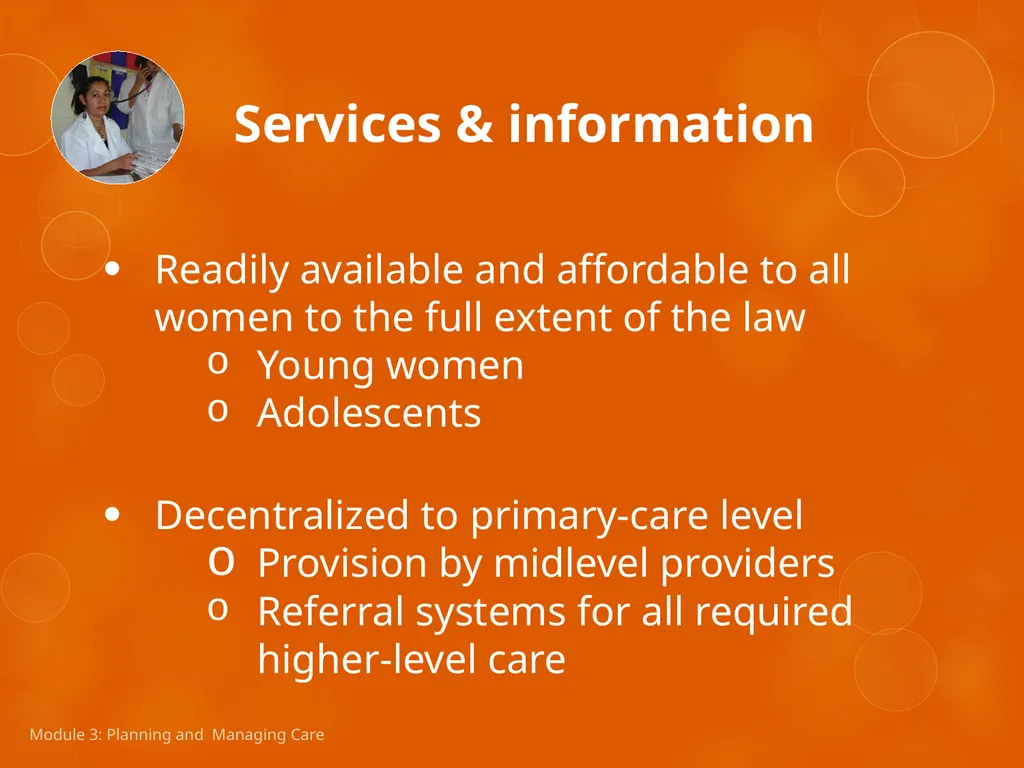
82
Readily available and affordable to all women to the full extent of the law
Young women
Adolescents
Decentralized to primary-care level
Provision by midlevel providers
Referral systems for all required higher-level care Services & information Module 3: Planning and Managing Care<br>
Young women
Adolescents
Decentralized to primary-care level
Provision by midlevel providers
Referral systems for all required higher-level care Services & information Module 3: Planning and Managing Care<br>
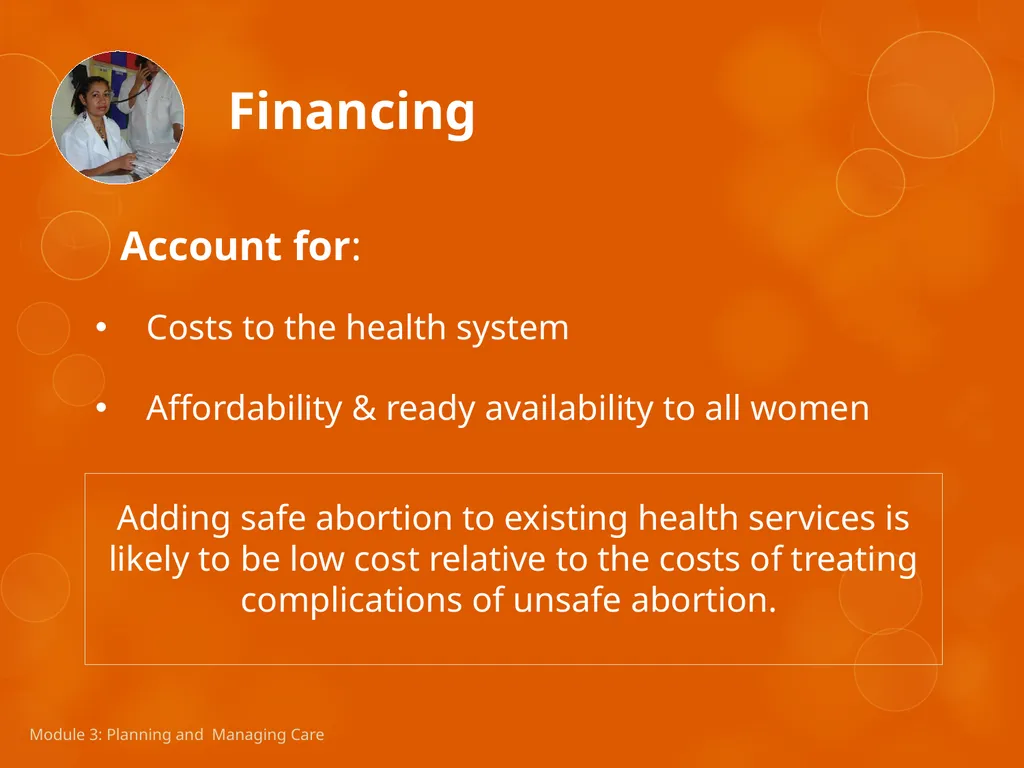
83
Financing Costs to the health system
Affordability & ready availability to all women Account for: Adding safe abortion to existing health services is likely to be low cost relative to the costs of treating complications of unsafe abortion. Module 3: Planning and Managing Care<br>
Affordability & ready availability to all women Account for: Adding safe abortion to existing health services is likely to be low cost relative to the costs of treating complications of unsafe abortion. Module 3: Planning and Managing Care<br>
84
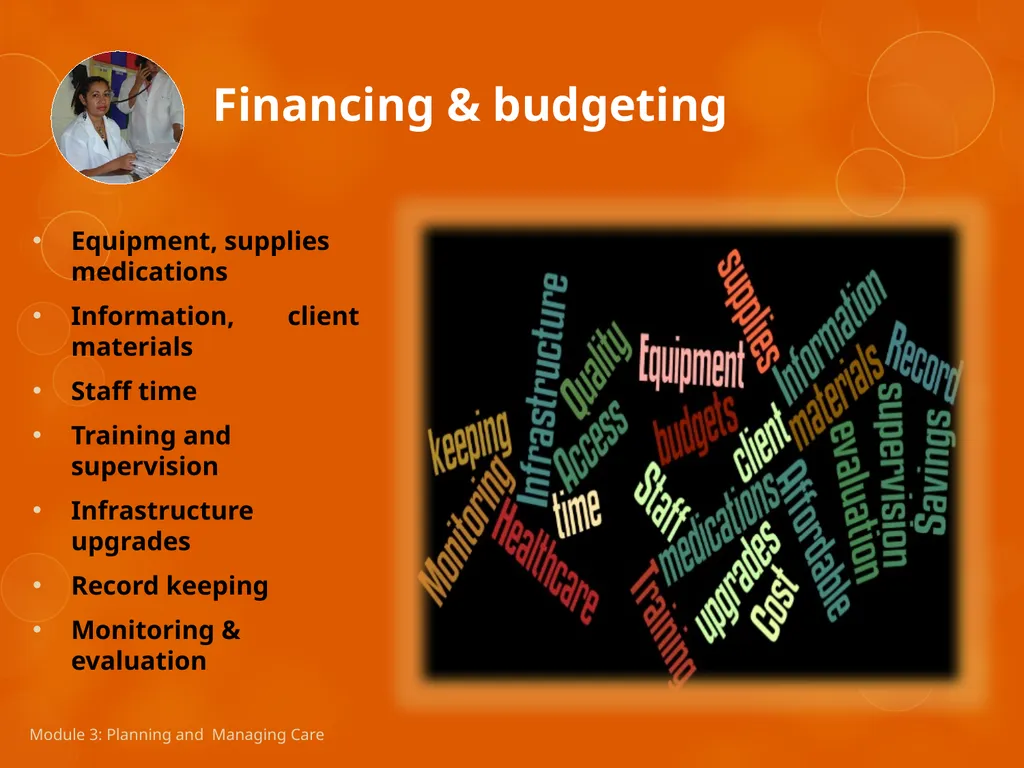
Financing & budgeting Equipment, supplies medications
Information, client materials
Staff time
Training and supervision
Infrastructure upgrades
Record keeping
Monitoring & evaluation Module 3: Planning and Managing Care<br>
Information, client materials
Staff time
Training and supervision
Infrastructure upgrades
Record keeping
Monitoring & evaluation Module 3: Planning and Managing Care<br>
85
Decisions provide quality
& reduce cost Switch dilatation and sharp curettage to vacuum aspiration or medical abortion
Provide information to come in early for abortion
Provide postabortion contraception Module 3: Planning and Managing Care<br>
Provide information to come in early for abortion
Provide postabortion contraception Module 3: Planning and Managing Care<br>
86
Affordability of services Ensure equitable access regardless of ability to pay
Fees should be based on ability to pay
Exempt poor and adolescents from paying
No denial, delay or informal charges Module 3: Planning and Managing Care<br>
Fees should be based on ability to pay
Exempt poor and adolescents from paying
No denial, delay or informal charges Module 3: Planning and Managing Care<br>
87
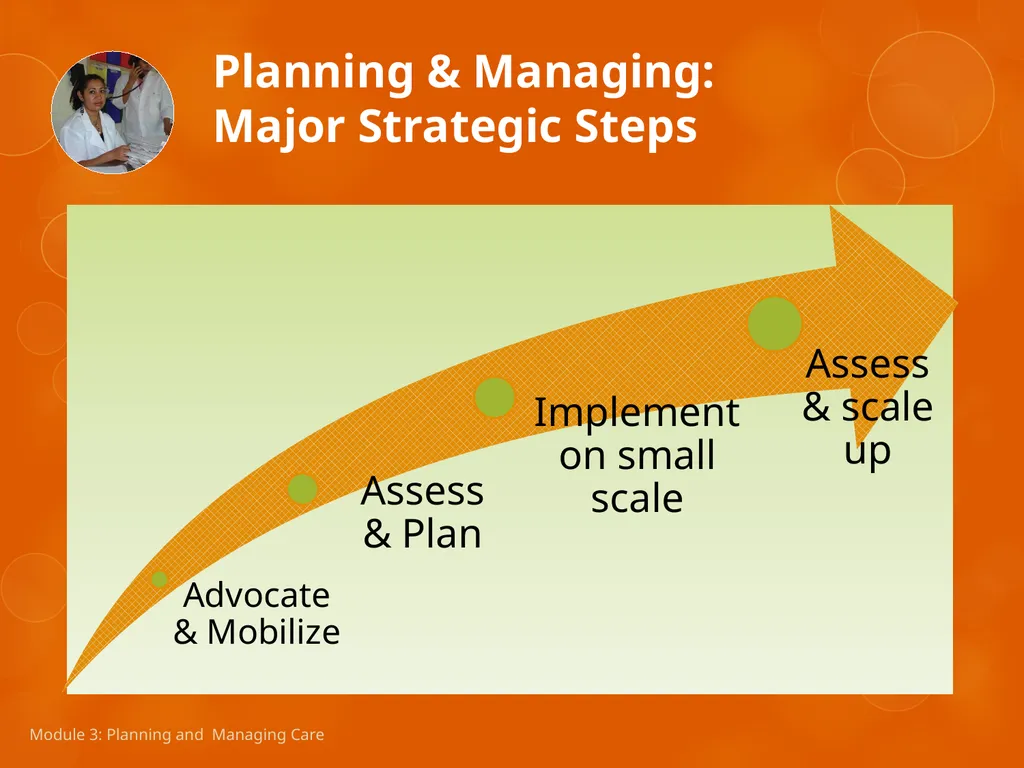
Planning & Managing:
Major Strategic Steps Module 3: Planning and Managing Care<br>
88
Scaling-up Systematic planning
Management
Guidance and support
Sufficient human and financial resources Module 3: Planning and Managing Care<br>
Management
Guidance and support
Sufficient human and financial resources Module 3: Planning and Managing Care<br>
89
Safe Abortion Global
Module 4: Legal and Policy Considerations A Packet to Disseminate
WHO Safe abortion: technical and policy guidance for health systems, Second edition, 2012 Saving Lives
Respecting Rights<br>
Module 4: Legal and Policy Considerations A Packet to Disseminate
WHO Safe abortion: technical and policy guidance for health systems, Second edition, 2012 Saving Lives
Respecting Rights<br>
90
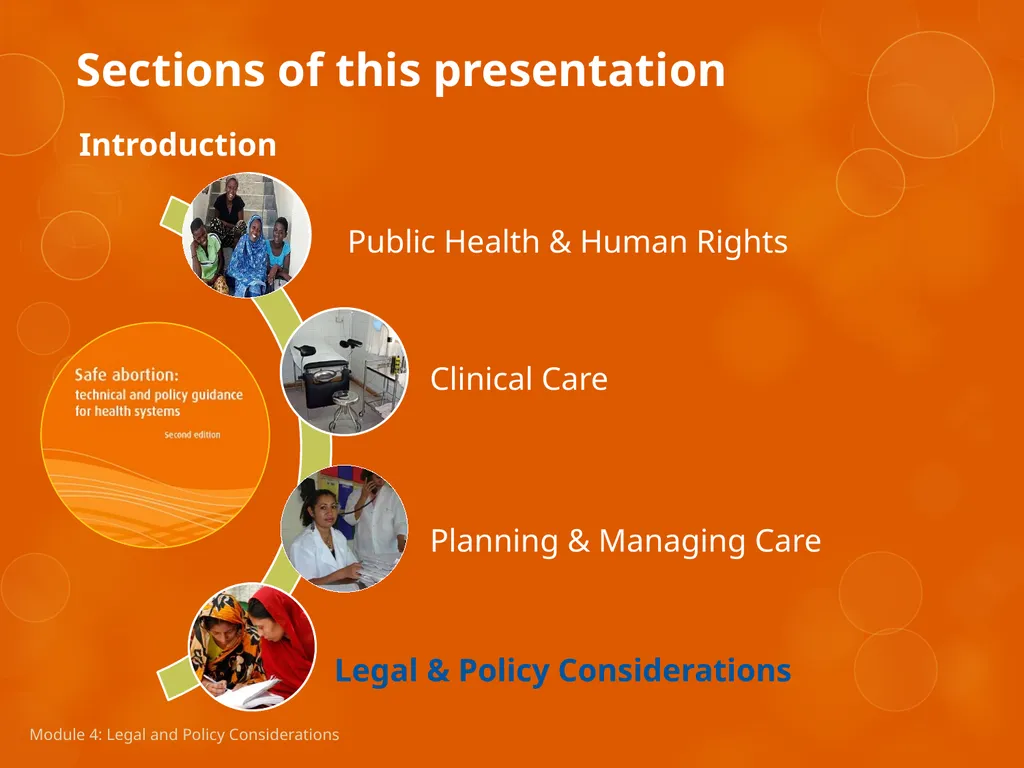
Sections of this presentation Public Health & Human Rights Clinical Care Planning & Managing Care Legal & Policy Considerations Introduction Module 4: Legal and Policy Considerations<br>
91
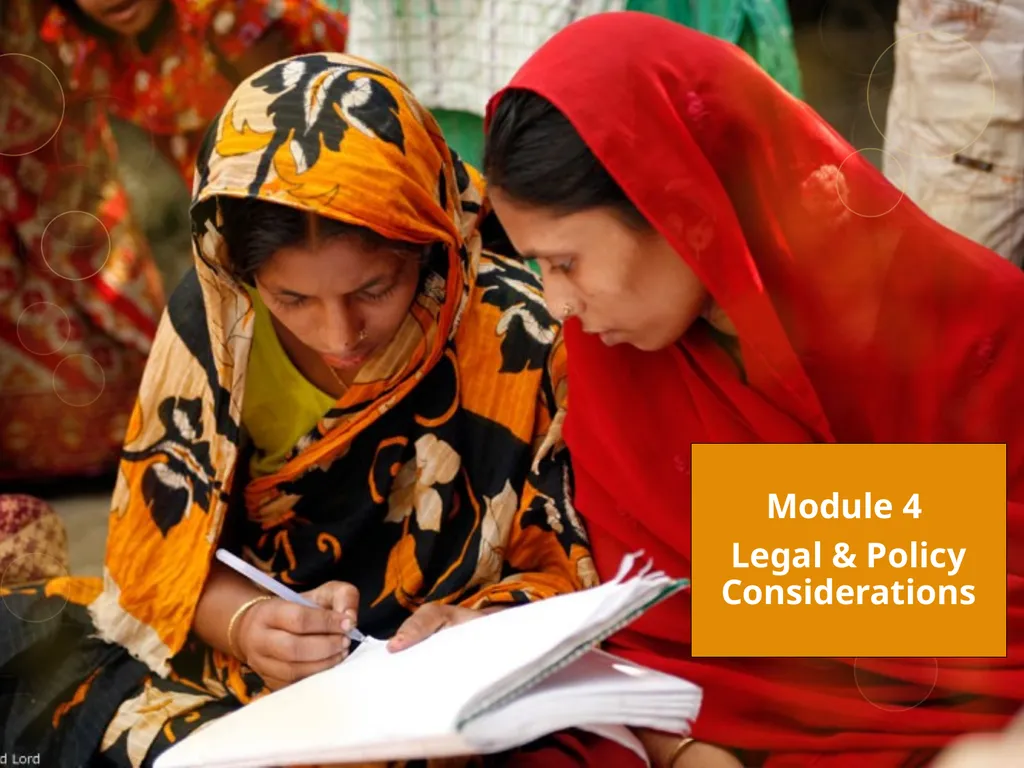
Module 4
Legal & Policy Considerations<br>
Legal & Policy Considerations<br>
92
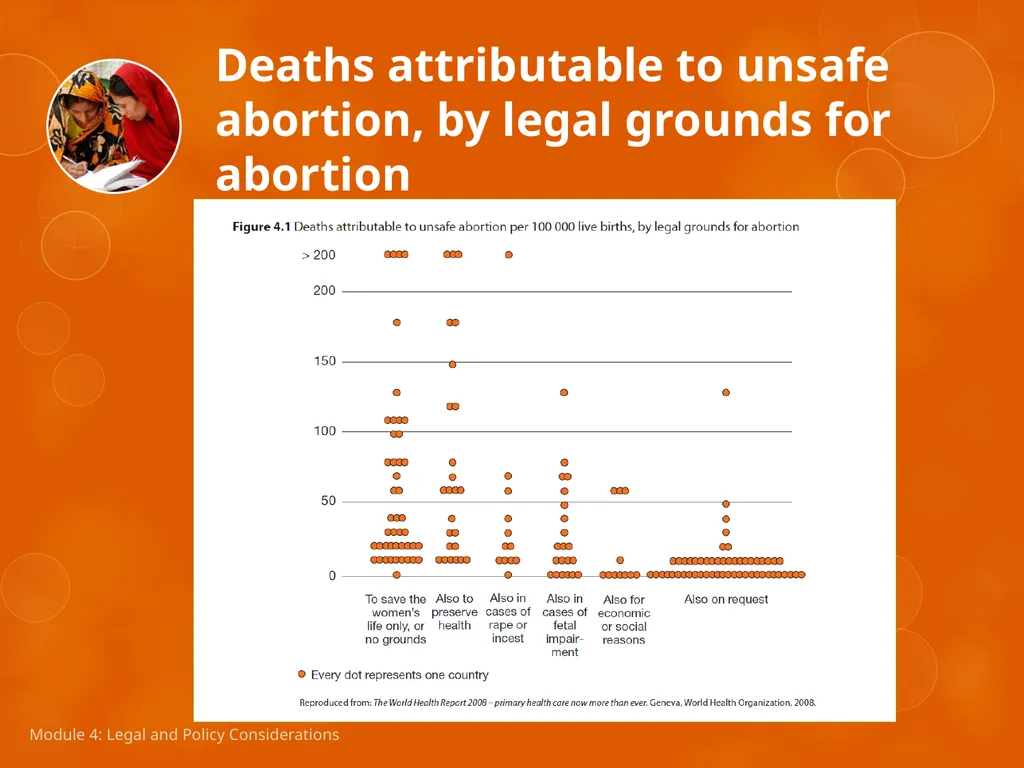
Deaths attributable to unsafe abortion, by legal grounds for abortion Module 4: Legal and Policy Considerations<br>
93
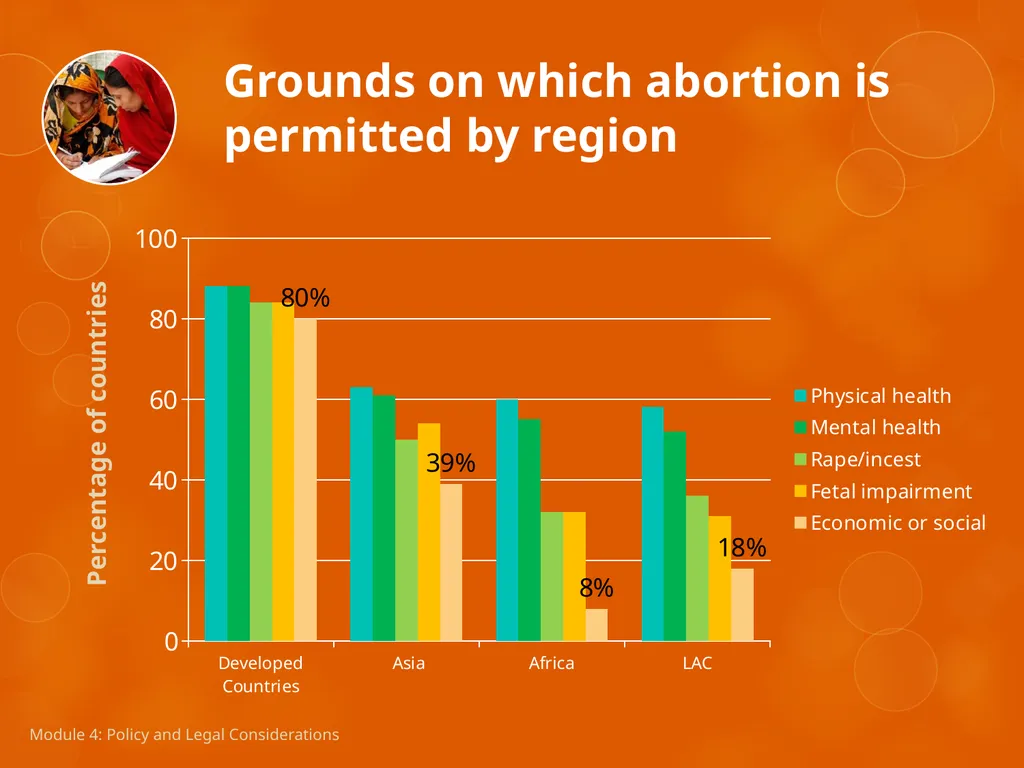
Grounds on which abortion is permitted by region Percentage of countries Module 4: Policy and Legal Considerations<br>
94
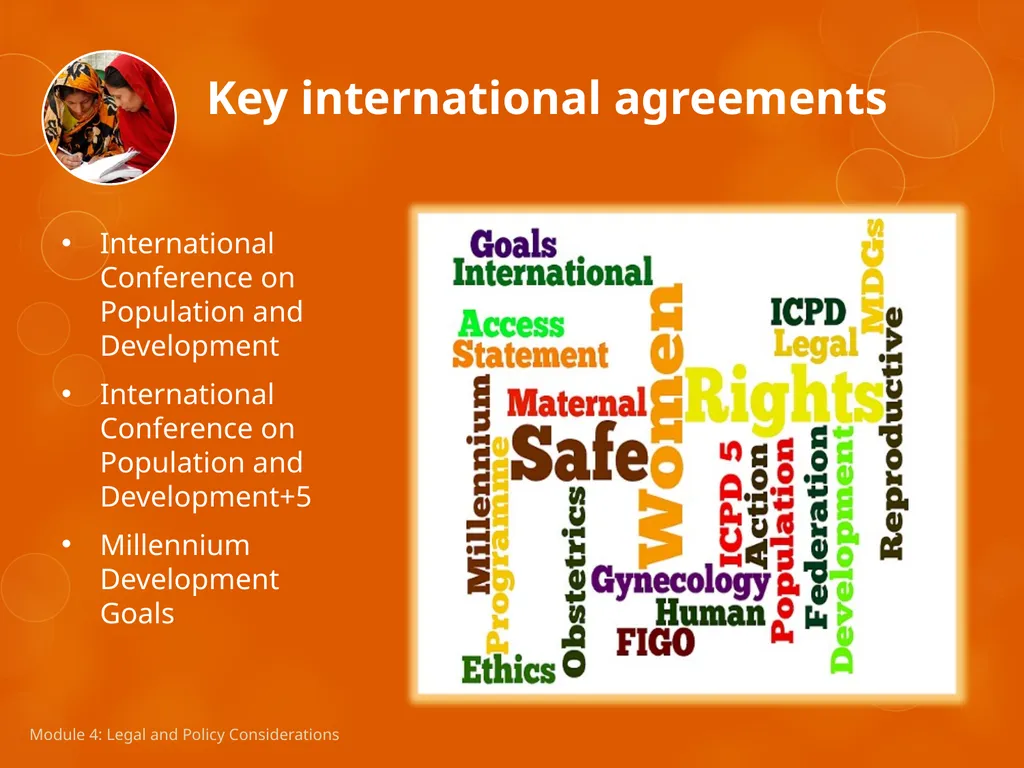
Key international agreements International Conference on Population and Development
International Conference on Population and Development+5
Millennium Development Goals Module 4: Legal and Policy Considerations<br>
International Conference on Population and Development+5
Millennium Development Goals Module 4: Legal and Policy Considerations<br>
95
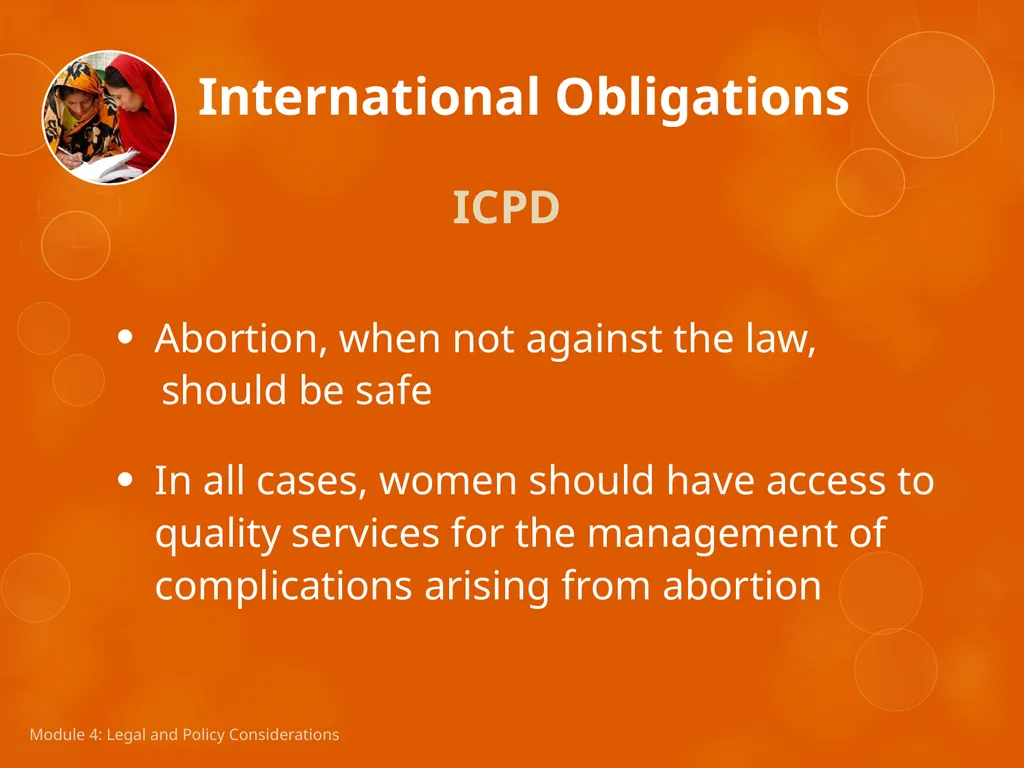
International Obligations Abortion, when not against the law,
should be safe
In all cases, women should have access to quality services for the management of complications arising from abortion ICPD Module 4: Legal and Policy Considerations<br>
should be safe
In all cases, women should have access to quality services for the management of complications arising from abortion ICPD Module 4: Legal and Policy Considerations<br>
96
Where abortion is not against the law, health systems should:
Train and equip
Take other measures to ensure that abortion is safe and accessible
Safeguard women’s health ICPD + 5 and +10 Module 4: Legal and Policy Considerations<br>
Train and equip
Take other measures to ensure that abortion is safe and accessible
Safeguard women’s health ICPD + 5 and +10 Module 4: Legal and Policy Considerations<br>
97
Millennium Development Goals Reducing unsafe abortion
one of the most direct ways to reduce maternal deaths as mandated by MDG 5
comprehensive sexual & reproductive health education, high quality contraceptive services, & safe abortion services Module 4: Legal and Policy Considerations<br>
one of the most direct ways to reduce maternal deaths as mandated by MDG 5
comprehensive sexual & reproductive health education, high quality contraceptive services, & safe abortion services Module 4: Legal and Policy Considerations<br>
98
Key International Human Rights Treaties International Covenant on Civil and Political Rights (ICCPR)
International Covenant on Economic, Social and Cultural Rights (ICESCR)
Convention on the Elimination of All forms of Discrimination Against Woman (CEDAW)
Convention on the Rights of the Child (CRC) Module 4: Legal and Policy Considerations<br>
International Covenant on Economic, Social and Cultural Rights (ICESCR)
Convention on the Elimination of All forms of Discrimination Against Woman (CEDAW)
Convention on the Rights of the Child (CRC) Module 4: Legal and Policy Considerations<br>
99
Examples of UN Treaty Body Recommendations to States Take action to prevent unsafe abortion, including by amending restrictive laws that threaten women’s, including adolescents’, lives.
Provide legal abortion in cases where the continued pregnancy endangers the health of women, including adolescents.
Provide legal abortion in cases of rape and incest.
Amend laws that criminalize medical procedures, including abortion, needed only by women and/or that punish women who undergo those procedures. Module 4: Legal and Policy Considerations<br>
100
Legal grounds for abortion When there is threat to a woman’s life
When there is threat to a woman’s health
When pregnancy is the result of rape or incest
Where there is fetal impairment
For economic and social reasons
On request Module 4: Legal and Policy Considerations<br>
When there is threat to a woman’s health
When pregnancy is the result of rape or incest
Where there is fetal impairment
For economic and social reasons
On request Module 4: Legal and Policy Considerations<br>
101
Legal, regulatory and administrative barriers Restrictive interpretation of legal grounds
3rd party authorization from additional medical professionals, courts, parents or partners
Conscientious objection without referral requirements Module 4: Legal and Policy Considerations<br>
3rd party authorization from additional medical professionals, courts, parents or partners
Conscientious objection without referral requirements Module 4: Legal and Policy Considerations<br>
102
Legal, regulatory and administrative barriers Restrictions on:
Available methods of abortion
Range of service providers
Mandatory waiting periods
Lack of confidentiality and privacy
Requiring names of service providers Module 4: Legal and Policy Considerations<br>
Available methods of abortion
Range of service providers
Mandatory waiting periods
Lack of confidentiality and privacy
Requiring names of service providers Module 4: Legal and Policy Considerations<br>
103
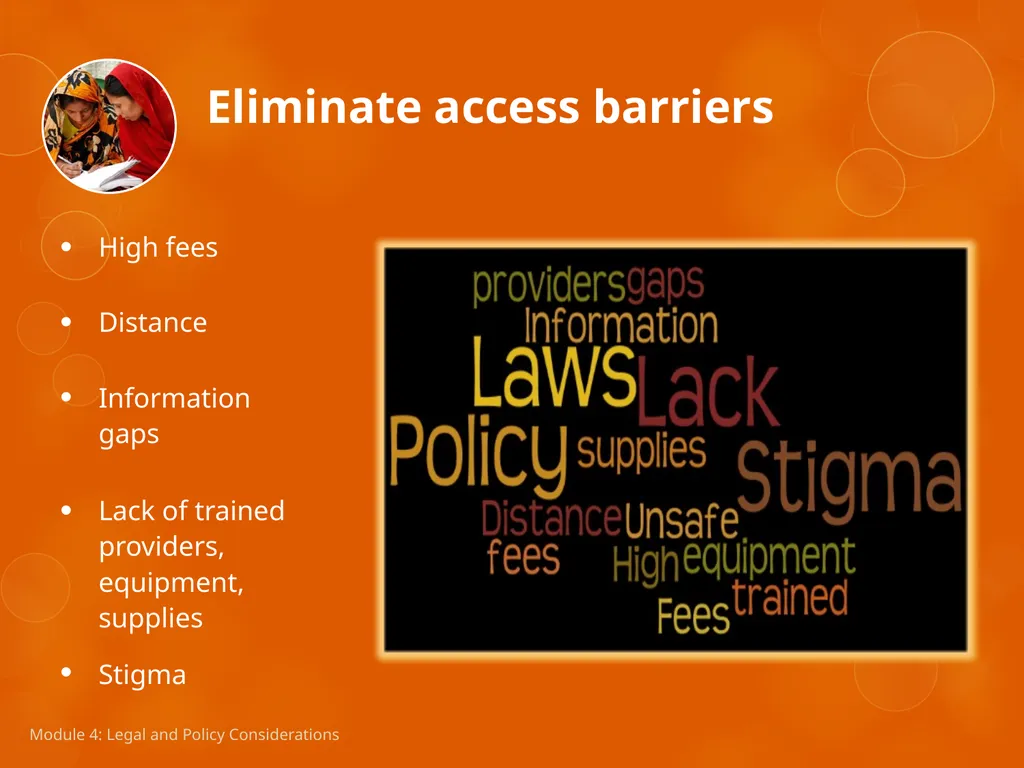
High fees
Distance
Information gaps
Lack of trained providers, equipment, supplies
Stigma Eliminate access barriers Module 4: Legal and Policy Considerations<br>
Distance
Information gaps
Lack of trained providers, equipment, supplies
Stigma Eliminate access barriers Module 4: Legal and Policy Considerations<br>
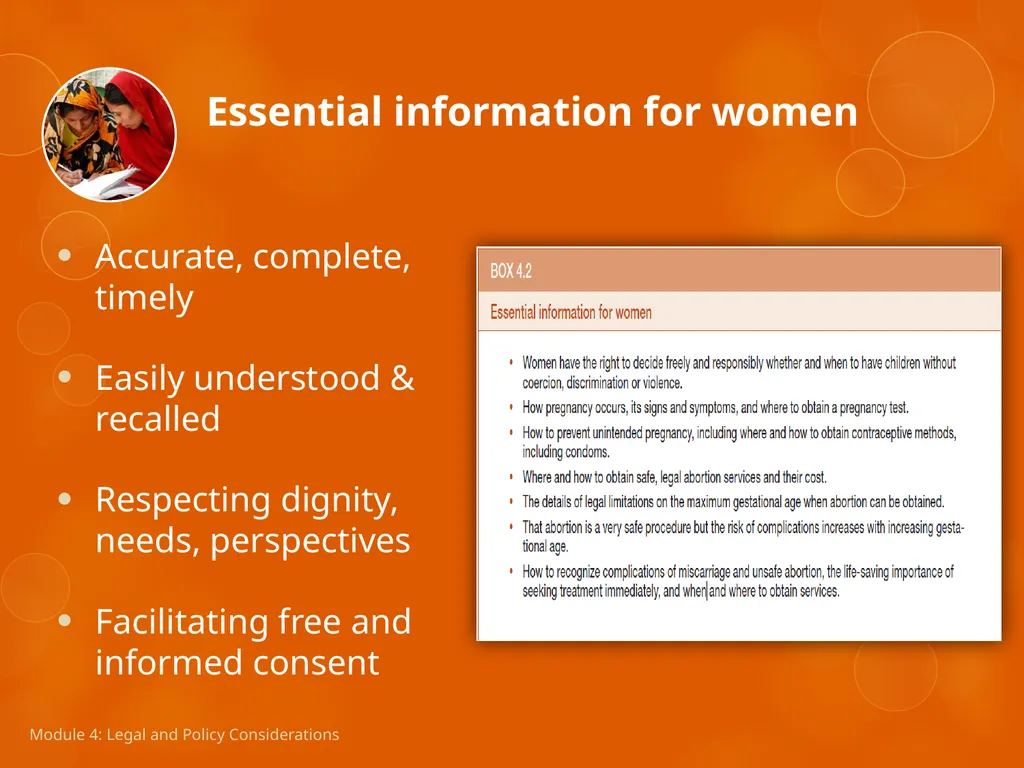
104
Essential information for women Accurate, complete, timely
Easily understood & recalled
Respecting dignity, needs, perspectives
Facilitating free and informed consent Module 4: Legal and Policy Considerations<br>
Easily understood & recalled
Respecting dignity, needs, perspectives
Facilitating free and informed consent Module 4: Legal and Policy Considerations<br>
105
Creating an enabling environment Review list of barriers & determine enabling factors and resources to ensure safe abortion
Examine existing policies to identify gaps and/or areas in need of improvement Module 4: Legal and Policy Considerations<br>
Examine existing policies to identify gaps and/or areas in need of improvement Module 4: Legal and Policy Considerations<br>
106
Policy considerations Human rights of women
Positive health outcomes for women
Legality of & access to safe abortion
Good-quality contraceptive information & services
Needs of the poor, adolescents, rape & incest survivors, & women living with HIV/AIDS Module 4: Legal and Policy Considerations<br>
Positive health outcomes for women
Legality of & access to safe abortion
Good-quality contraceptive information & services
Needs of the poor, adolescents, rape & incest survivors, & women living with HIV/AIDS Module 4: Legal and Policy Considerations<br>
107
Sections of this presentation Legal & Policy Considerations Introduction Module 4: Legal and Policy Considerations<br>
108
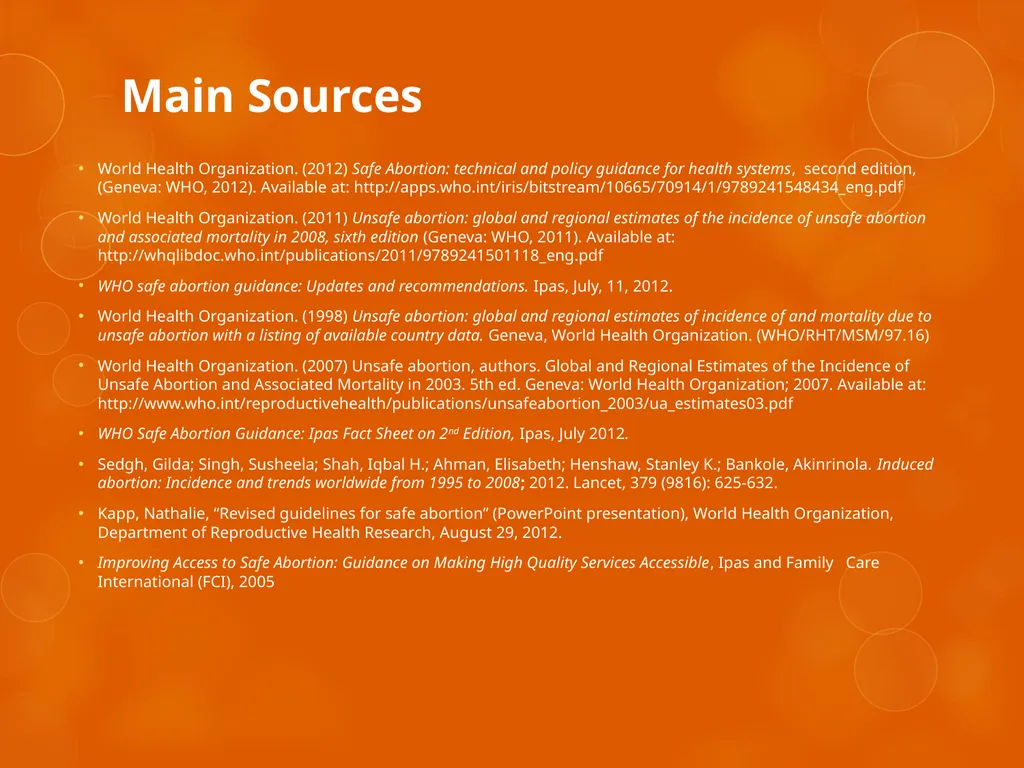
Main Sources World Health Organization. (2012) Safe Abortion: technical and policy guidance for health systems, second edition, (Geneva: WHO, 2012). Available at: http://apps.who.int/iris/bitstream/10665/70914/1/9789241548434_eng.pdf
World Health Organization. (2011) Unsafe abortion: global and regional estimates of the incidence of unsafe abortion and associated mortality in 2008, sixth edition (Geneva: WHO, 2011). Available at: http://whqlibdoc.who.int/publications/2011/9789241501118_eng.pdf
WHO safe abortion guidance: Updates and recommendations. Ipas, July, 11, 2012.
World Health Organization. (1998) Unsafe abortion: global and regional estimates of incidence of and mortality due to unsafe abortion with a listing of available country data. Geneva, World Health Organization. (WHO/RHT/MSM/97.16)
World Health Organization. (2007) Unsafe abortion, authors. Global and Regional Estimates of the Incidence of Unsafe Abortion and Associated Mortality in 2003. 5th ed. Geneva: World Health Organization; 2007. Available at: http://www.who.int/reproductivehealth/publications/unsafeabortion_2003/ua_estimates03.pdf
WHO Safe Abortion Guidance: Ipas Fact Sheet on 2nd Edition, Ipas, July 2012.
Sedgh, Gilda; Singh, Susheela; Shah, Iqbal H.; Ahman, Elisabeth; Henshaw, Stanley K.; Bankole, Akinrinola. Induced abortion: Incidence and trends worldwide from 1995 to 2008; 2012. Lancet, 379 (9816): 625-632.
Kapp, Nathalie, “Revised guidelines for safe abortion” (PowerPoint presentation), World Health Organization, Department of Reproductive Health Research, August 29, 2012.
Improving Access to Safe Abortion: Guidance on Making High Quality Services Accessible, Ipas and Family Care International (FCI), 2005<br>