
Screening, Brief Intervention & Referral to
SB
Published · 41 slides · 0 views
1 / 1
Description
Screening, Brief Intervention Referral to Treatment Tom Freese, PhD Sherry Larkins, PhD Clayton Chau, MD (Planner) - Medical Director Behavioral Services; L.A. Care Health Plan UCLA Integrated Substance Abuse Programs UCLA David Geffen
Related Topics
Share
Embed code
Download this presentation From Below
"Screening, Brief Intervention & Referral to" is the property of its rightful owner. Permission is granted to download and print the materials on this website for personal, non-commercial use only, and to display it on your personal computer provided you do not modify the materials and that you retain all copyright notices contained in the materials. By downloading content from our website, you accept the terms of this agreement.
Presentation Transcript
01
Screening, Brief Intervention & Referral to Treatment Tom Freese, PhD
Sherry Larkins, PhD
Clayton Chau, MD (Planner) - Medical Director Behavioral Services; L.A. Care Health Plan
UCLA Integrated Substance Abuse Programs
UCLA David Geffen School of Medicine, Dept. of Psychiatry
Pacific Southwest Addiction Technology Transfer Center
www.uclaisap.org
www.psattc.org<br>
Clayton Chau, MD (Planner) - Medical Director Behavioral Services; L.A. Care Health Plan
UCLA Integrated Substance Abuse Programs
UCLA David Geffen School of Medicine, Dept. of Psychiatry
Pacific Southwest Addiction Technology Transfer Center
www.uclaisap.org
www.psattc.org<br>
02
2 Disclosure:
Tom Freese, PhD
Sherry Larkins, PhD
Clayton Chau, MD
Do not have financial relationships to disclose
-and
will not discuss off label use and/or investigational use in the presentation<br>
03
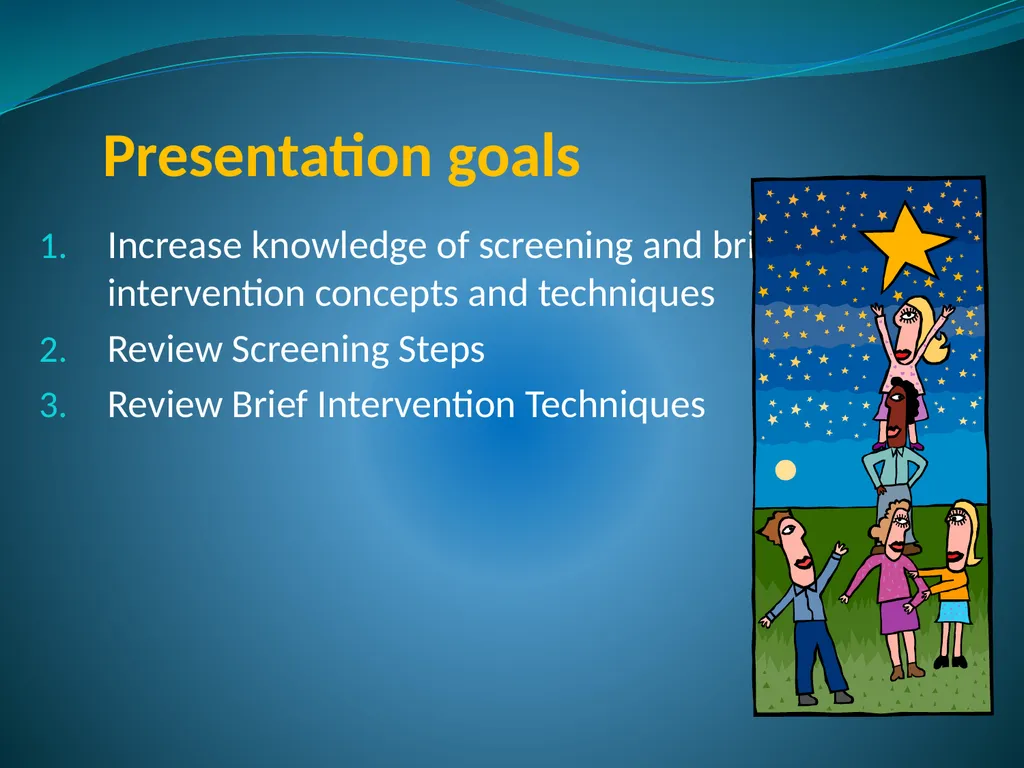
Presentation goals Increase knowledge of screening and brief intervention concepts and techniques
Review Screening Steps
Review Brief Intervention Techniques<br>
Review Screening Steps
Review Brief Intervention Techniques<br>
04
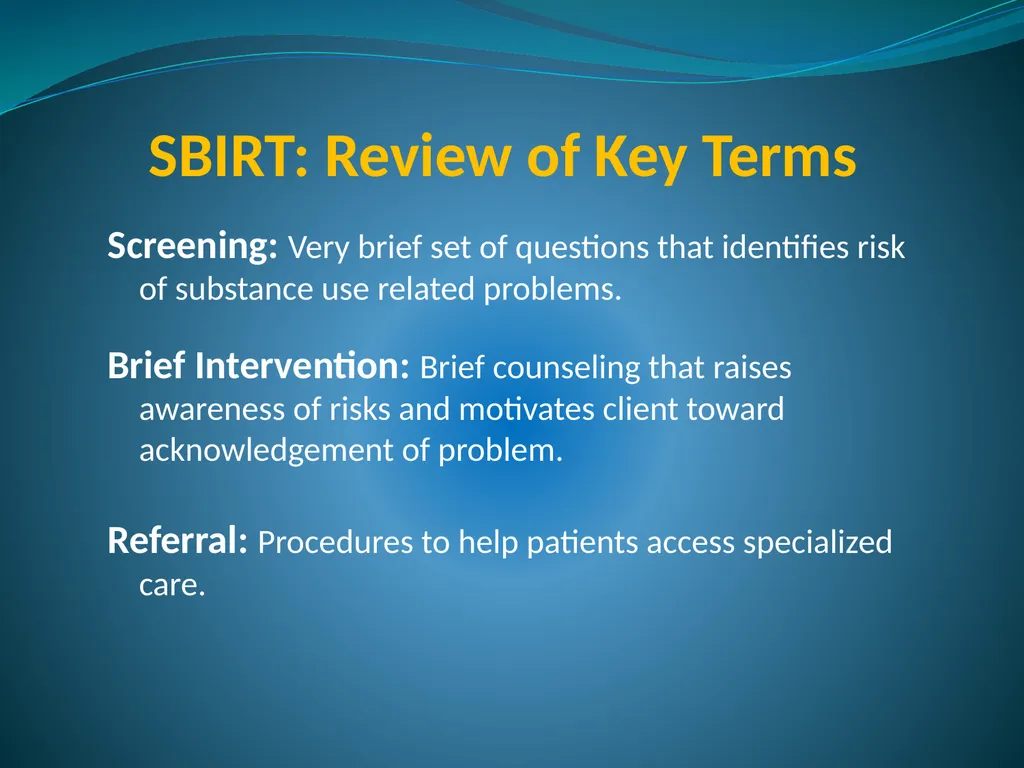
SBIRT: Review of Key Terms Screening: Very brief set of questions that identifies risk of substance use related problems.
Brief Intervention: Brief counseling that raises awareness of risks and motivates client toward acknowledgement of problem.
Referral: Procedures to help patients access specialized care.<br>
Brief Intervention: Brief counseling that raises awareness of risks and motivates client toward acknowledgement of problem.
Referral: Procedures to help patients access specialized care.<br>
05
Treatment GAP
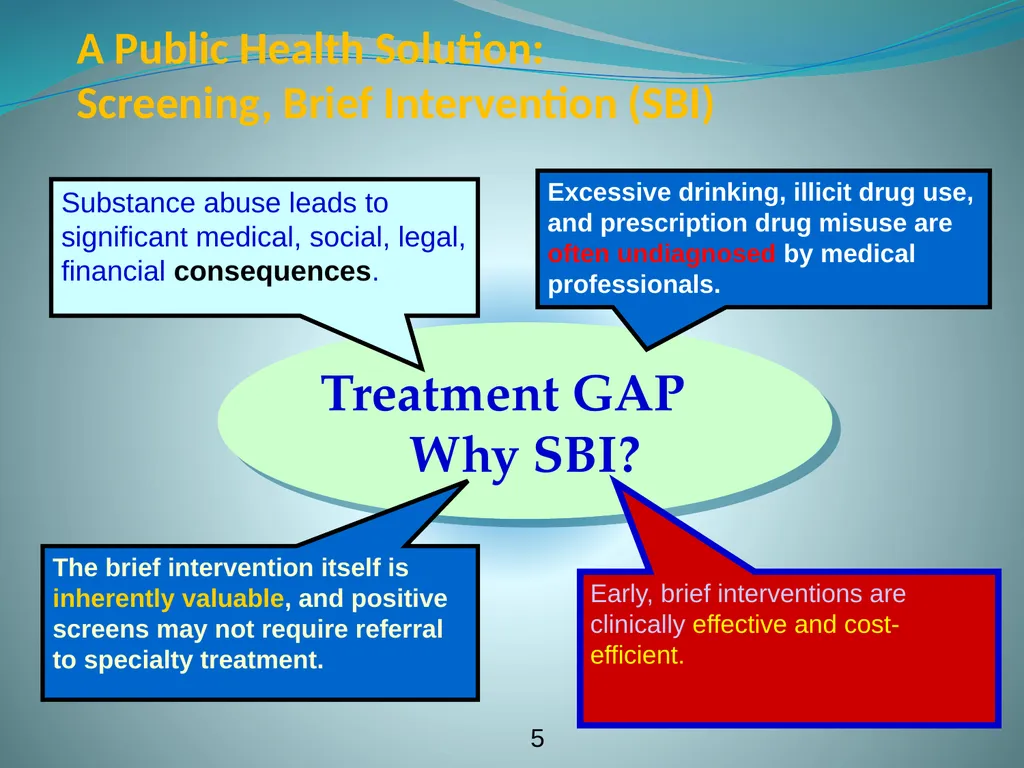
Why SBI? A Public Health Solution: Screening, Brief Intervention (SBI) Substance abuse leads to significant medical, social, legal, financial consequences. Early, brief interventions are clinically effective and cost-efficient. Excessive drinking, illicit drug use, and prescription drug misuse are often undiagnosed by medical professionals. The brief intervention itself is inherently valuable, and positive screens may not require referral to specialty treatment. 5<br>
Why SBI? A Public Health Solution: Screening, Brief Intervention (SBI) Substance abuse leads to significant medical, social, legal, financial consequences. Early, brief interventions are clinically effective and cost-efficient. Excessive drinking, illicit drug use, and prescription drug misuse are often undiagnosed by medical professionals. The brief intervention itself is inherently valuable, and positive screens may not require referral to specialty treatment. 5<br>
06
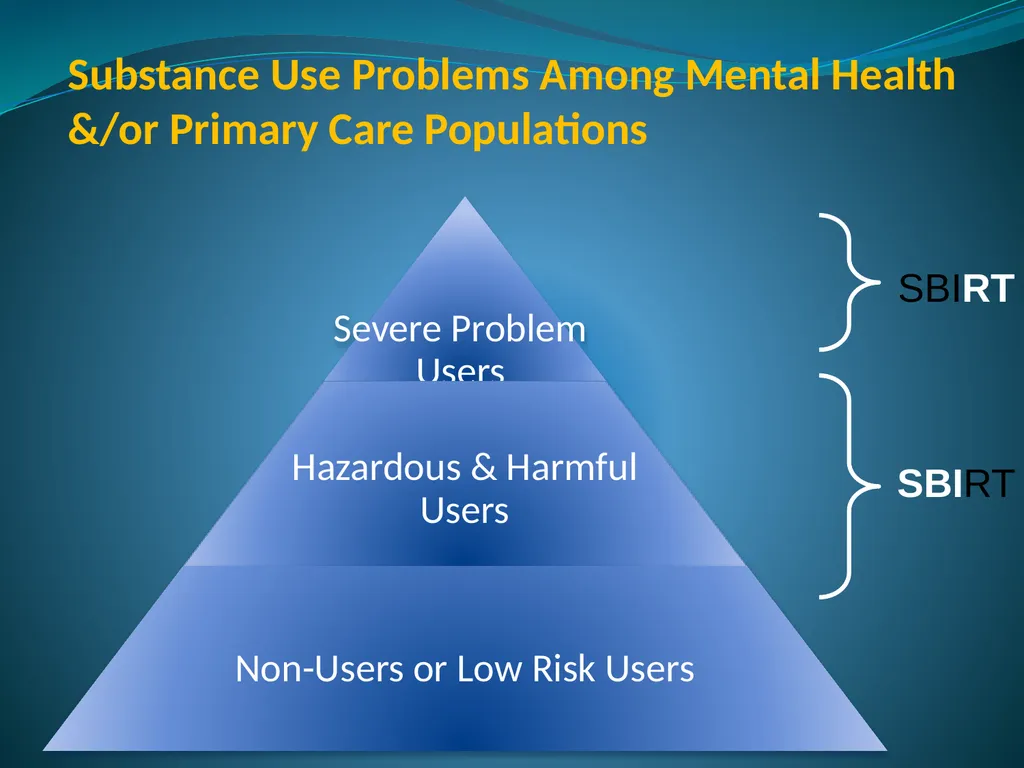
Substance Use Problems Among Mental Health &/or Primary Care Populations SBIRT SBIRT<br>
07
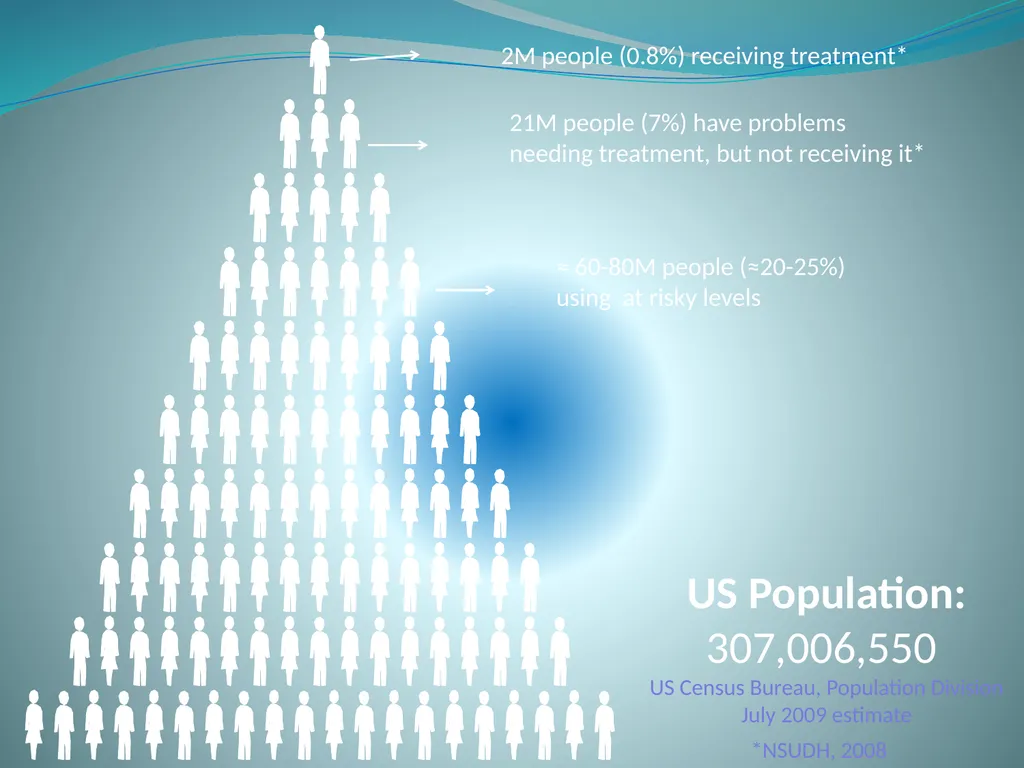
US Population:
307,006,550
US Census Bureau, Population Division
July 2009 estimate *NSUDH, 2008<br>
307,006,550
US Census Bureau, Population Division
July 2009 estimate *NSUDH, 2008<br>
08
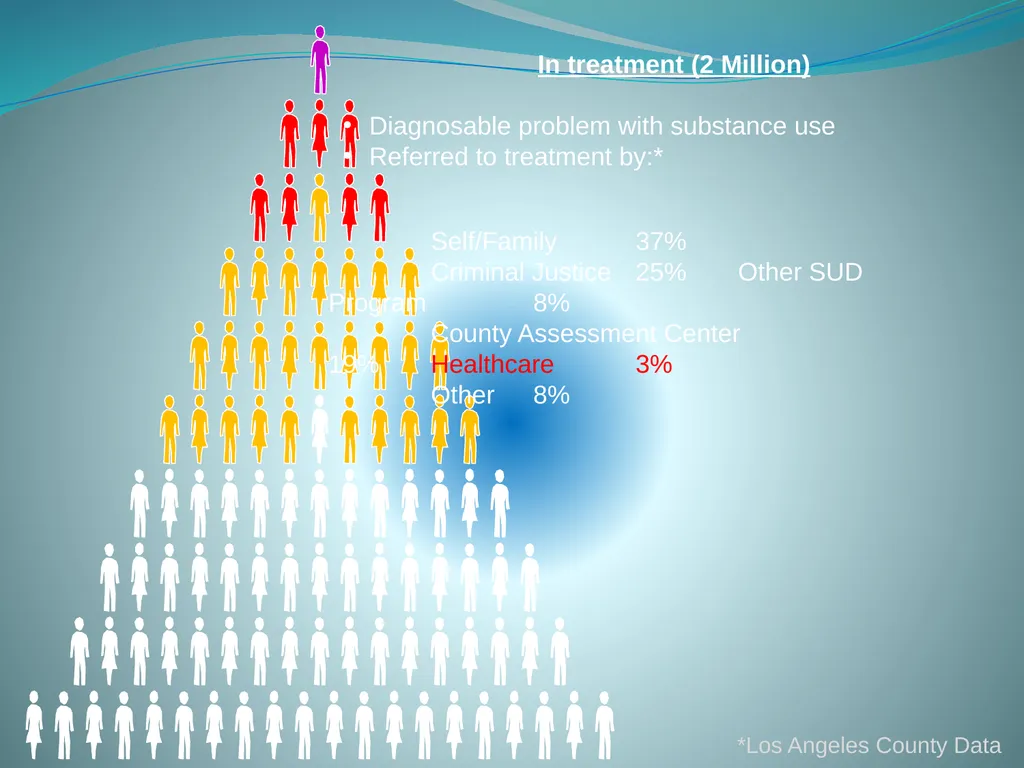
In treatment (2 Million)
Diagnosable problem with substance use
Referred to treatment by:* *Los Angeles County Data Self/Family 37%
Criminal Justice 25% Other SUD Program 8%
County Assessment Center 19% Healthcare 3%
Other 8%<br>
Diagnosable problem with substance use
Referred to treatment by:* *Los Angeles County Data Self/Family 37%
Criminal Justice 25% Other SUD Program 8%
County Assessment Center 19% Healthcare 3%
Other 8%<br>
09
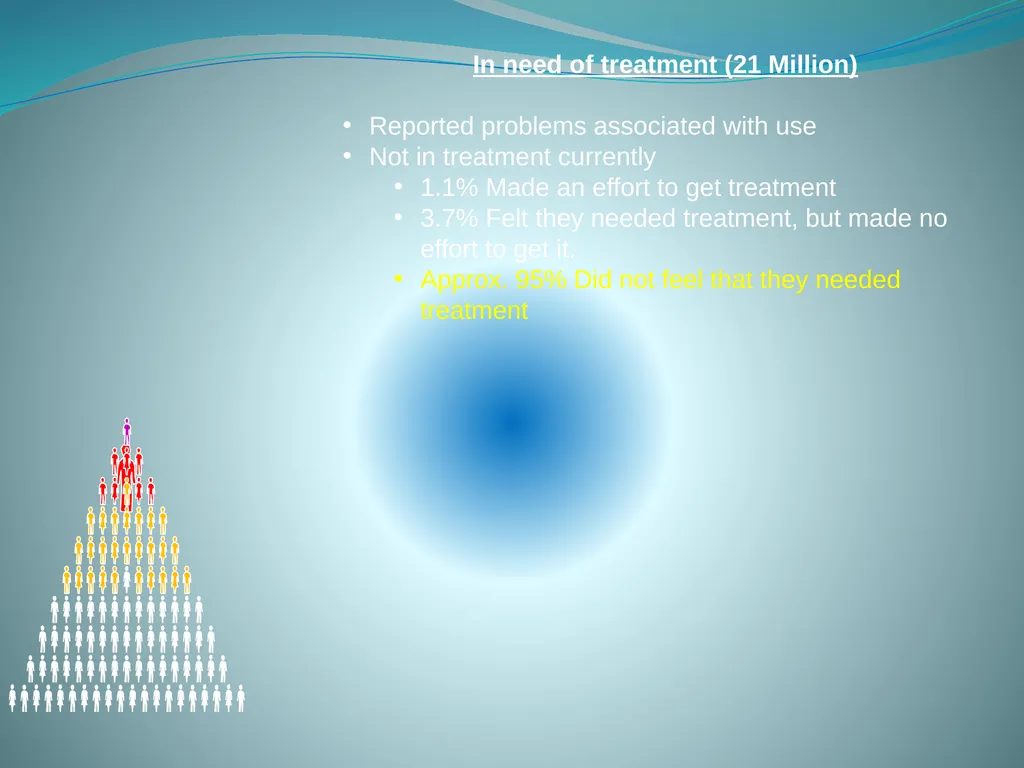
In need of treatment (21 Million)
Reported problems associated with use
Not in treatment currently
1.1% Made an effort to get treatment
3.7% Felt they needed treatment, but made no effort to get it.
Approx. 95% Did not feel that they needed treatment<br>
Reported problems associated with use
Not in treatment currently
1.1% Made an effort to get treatment
3.7% Felt they needed treatment, but made no effort to get it.
Approx. 95% Did not feel that they needed treatment<br>
10
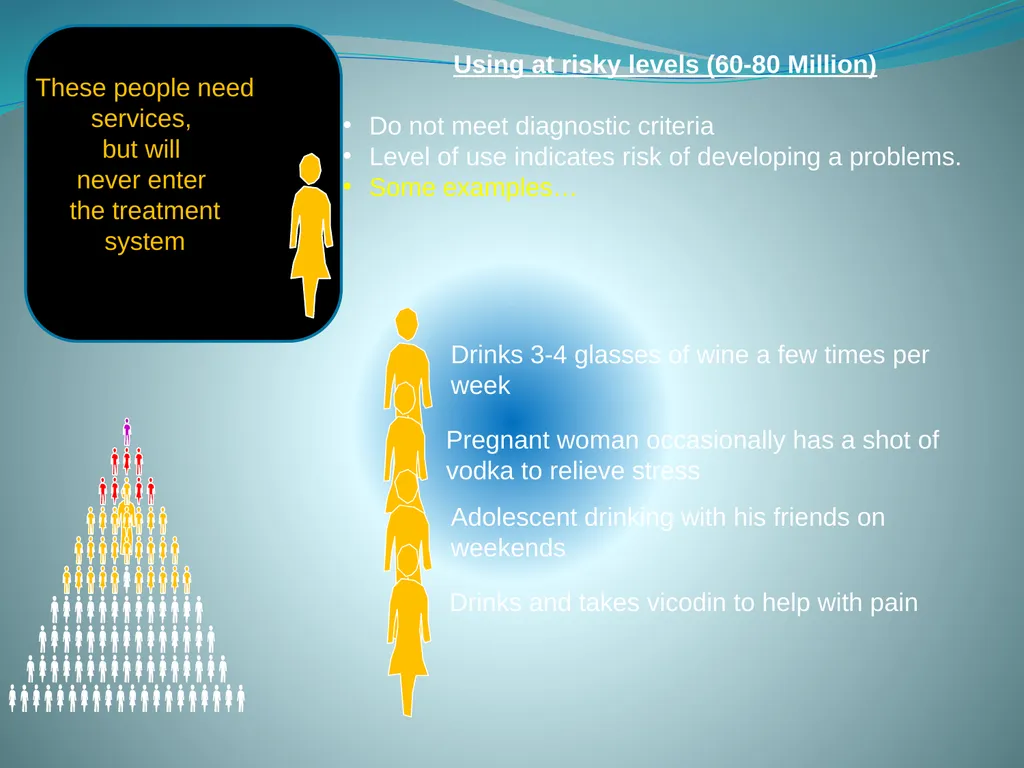
Using at risky levels (60-80 Million)
Do not meet diagnostic criteria
Level of use indicates risk of developing a problems.
Some examples… These people need services, but will never enter the treatment system<br>
Do not meet diagnostic criteria
Level of use indicates risk of developing a problems.
Some examples… These people need services, but will never enter the treatment system<br>
11
Brief Intervention Effect Brief interventions trigger change.
A little counseling can lead to significant change, e.g., 5 min. has same impact as 20 min.
SBI can reduce accidents, injuries, trauma, emergency department visits, depression, drug-related infections and infectious diseases
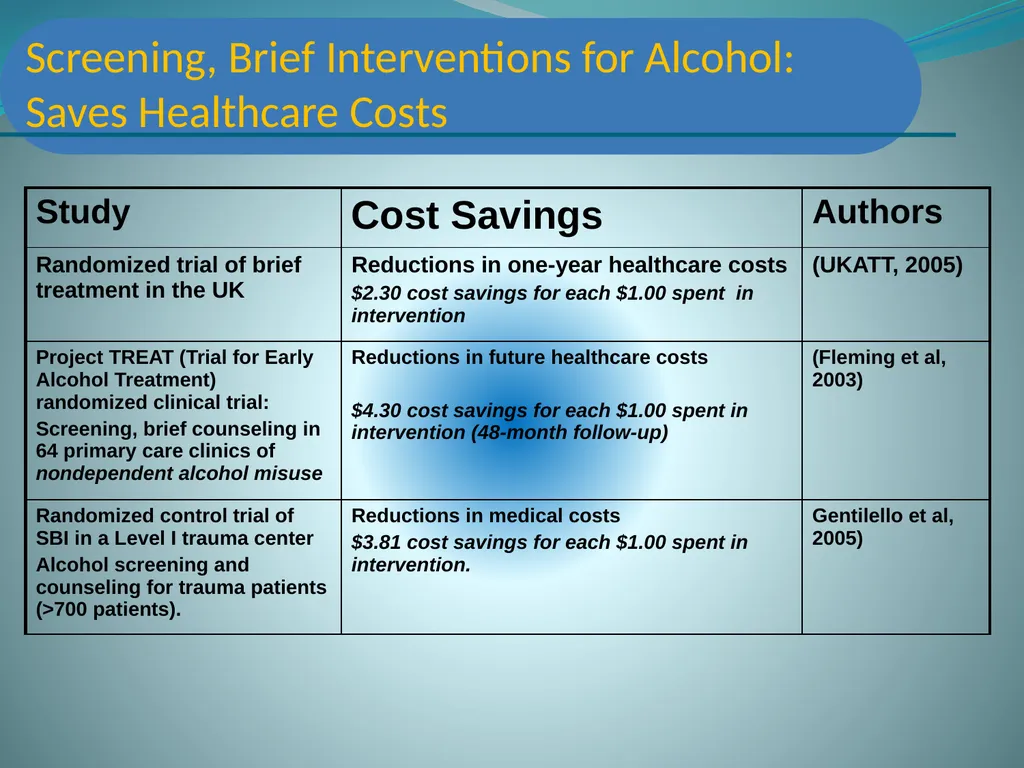
Can save $ - SBI for alcohol saves $2 - $4 for each $1.00 expended
Research is less extensive for illicit drugs, but promising. See reference list<br>
A little counseling can lead to significant change, e.g., 5 min. has same impact as 20 min.
SBI can reduce accidents, injuries, trauma, emergency department visits, depression, drug-related infections and infectious diseases
Can save $ - SBI for alcohol saves $2 - $4 for each $1.00 expended
Research is less extensive for illicit drugs, but promising. See reference list<br>
12
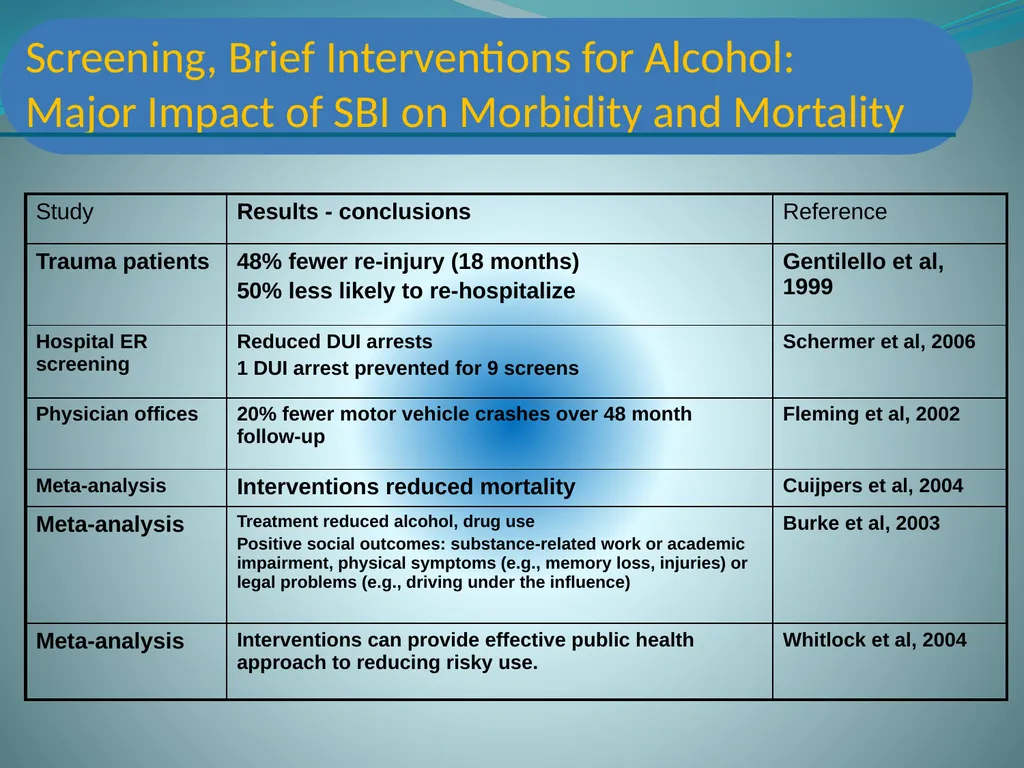
Screening, Brief Interventions for Alcohol:
Major Impact of SBI on Morbidity and Mortality<br>
13
Screening, Brief Interventions for Illicit Drugs:
Major Impact of SBI on Morbidity and Mortality<br>
14
Screening, Brief Interventions for Alcohol:
Saves Healthcare Costs<br>
15
Screening, Brief Interventions for Illicit Drugs:
Saves Healthcare Costs<br>
16
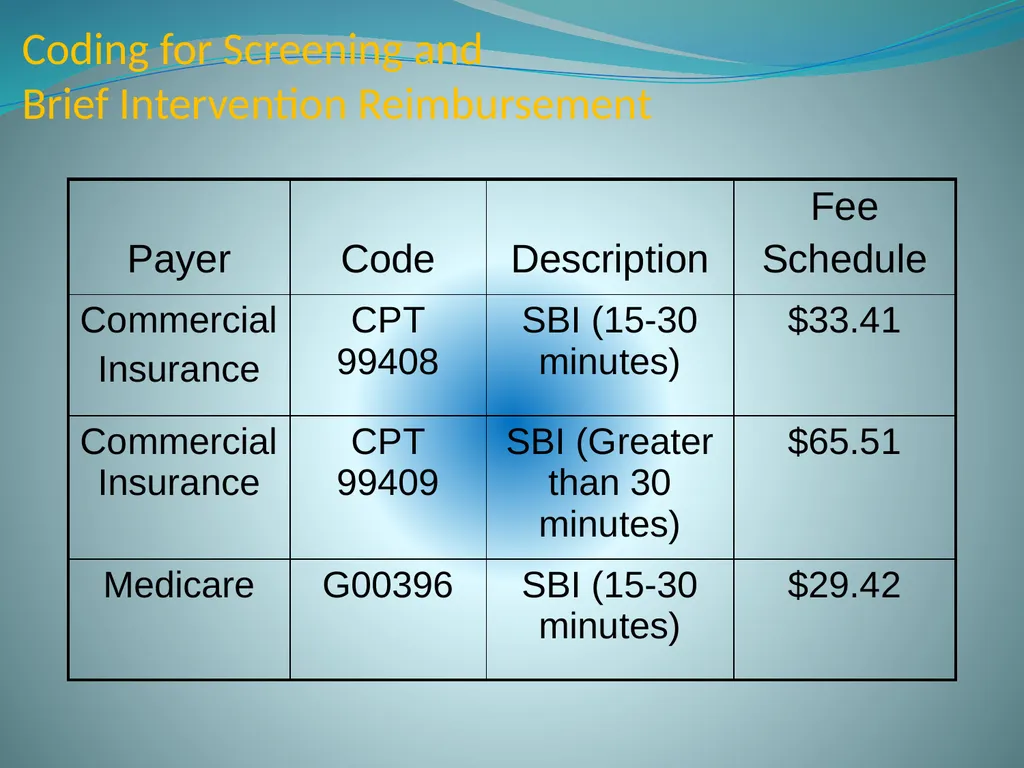
Coding for Screening and
Brief Intervention Reimbursement<br>
17
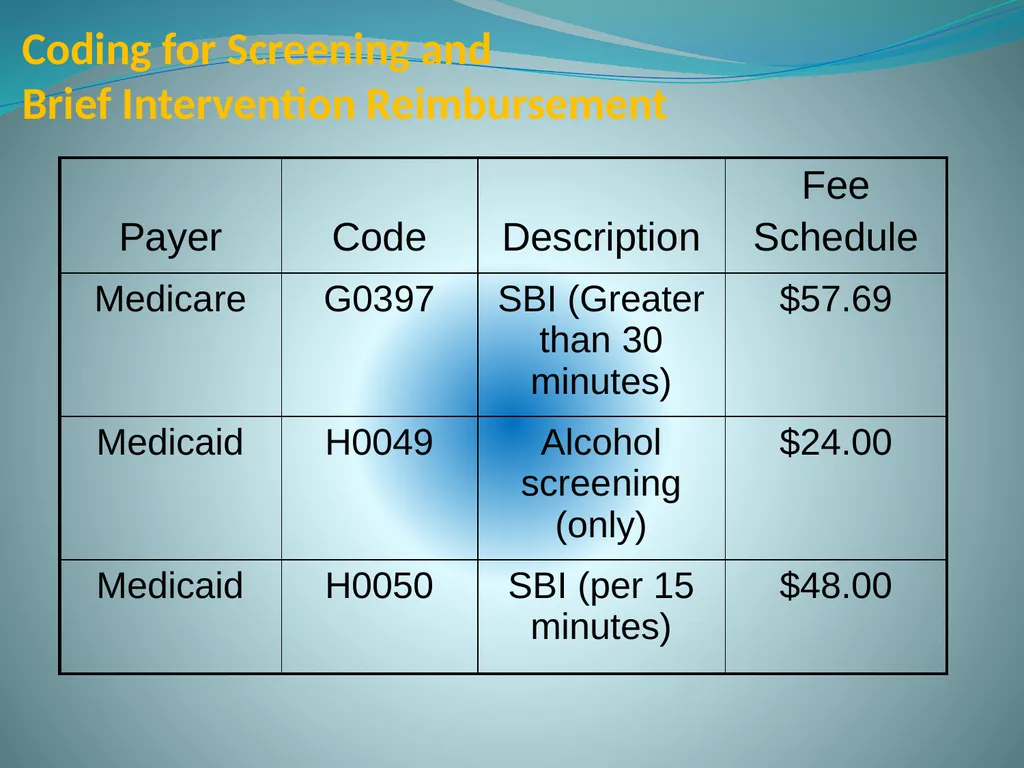
Coding for Screening and
Brief Intervention Reimbursement<br>
18
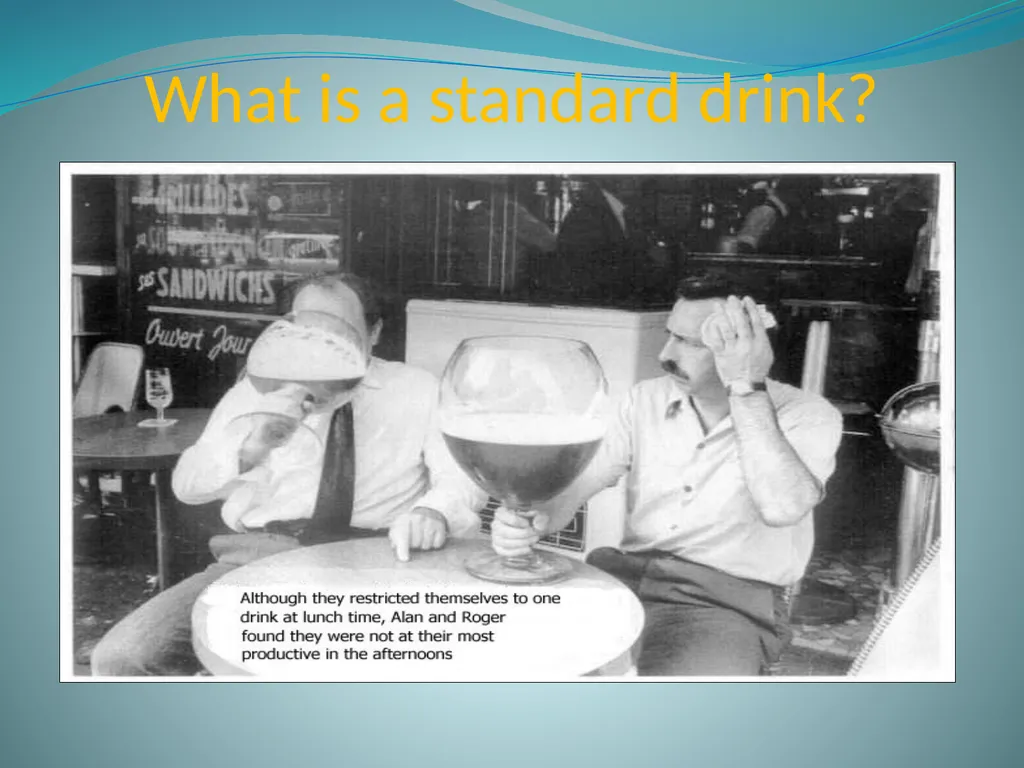
What is a standard drink?<br>
19
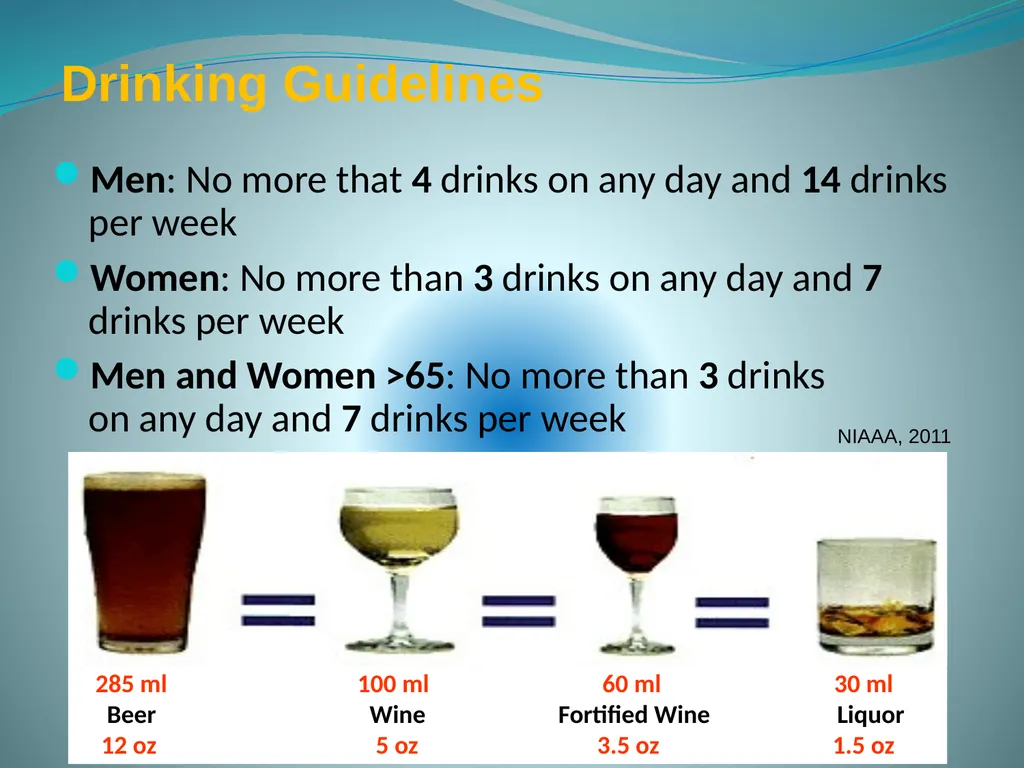
Men: No more that 4 drinks on any day and 14 drinks per week
Women: No more than 3 drinks on any day and 7 drinks per week
Men and Women >65: No more than 3 drinks on any day and 7 drinks per week NIAAA, 2011 Drinking Guidelines<br>
Women: No more than 3 drinks on any day and 7 drinks per week
Men and Women >65: No more than 3 drinks on any day and 7 drinks per week NIAAA, 2011 Drinking Guidelines<br>
20
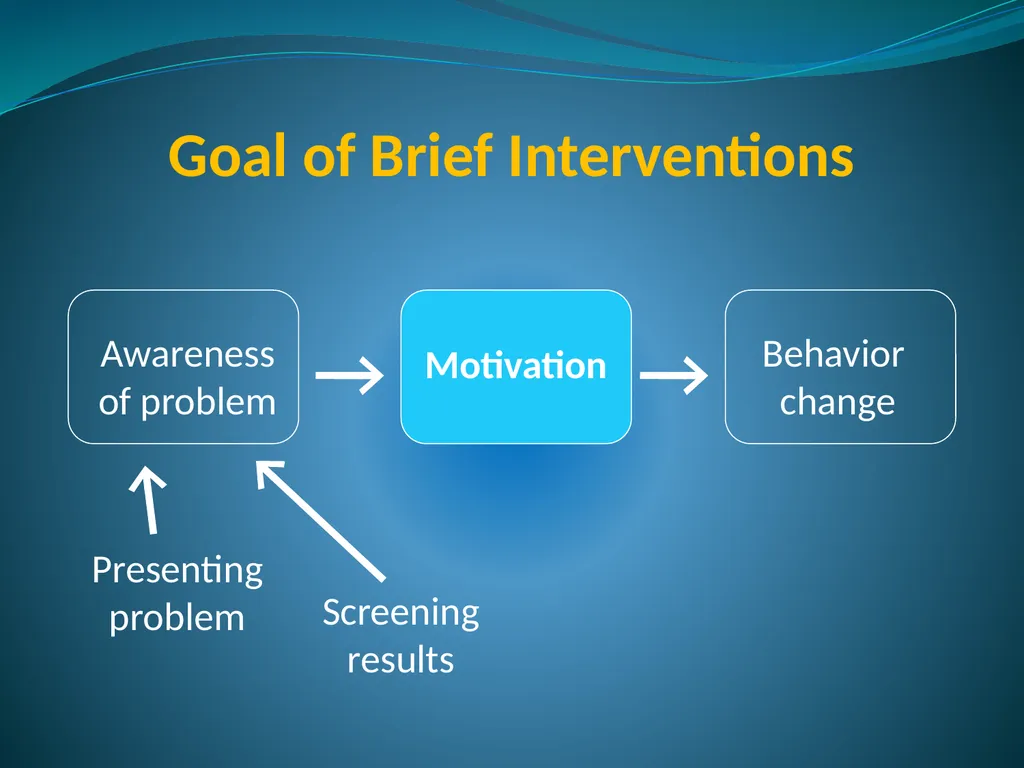
Goal of Brief Interventions Presenting problem Screening results<br>
21
Step 1:
Screening to Identify Patients At Risk for Substance Use Problems<br>
22
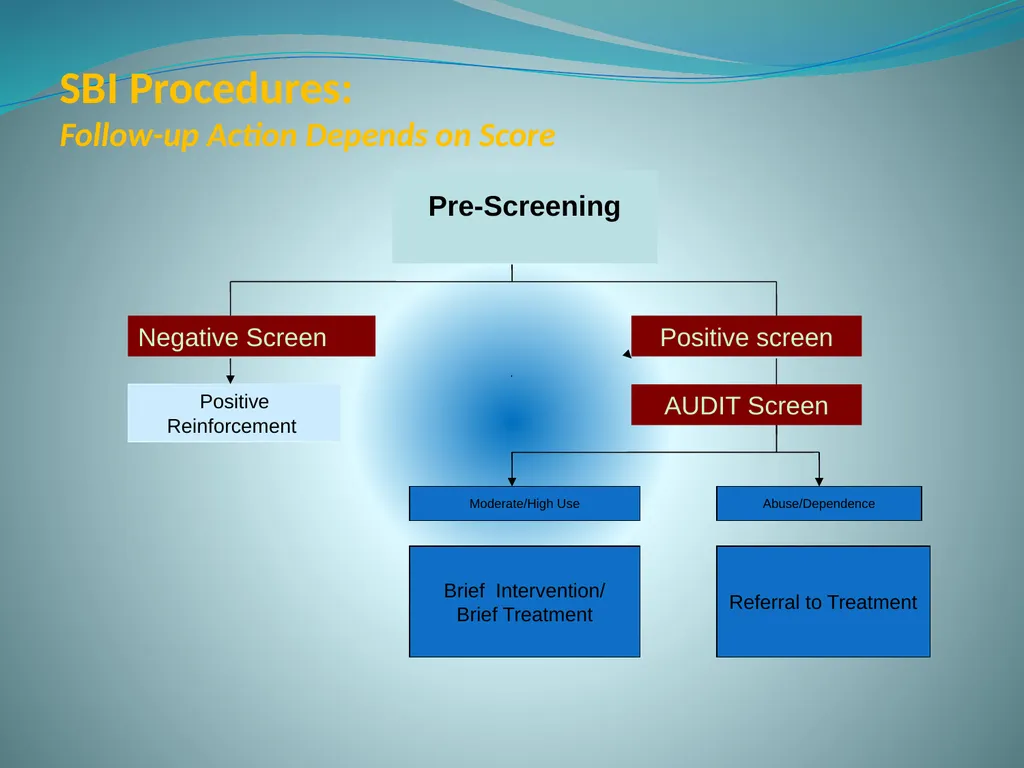
Pre-Screening SBI Procedures:
Follow-up Action Depends on Score Negative Screen Positive screen Positive Reinforcement Brief Intervention/
Brief Treatment Referral to Treatment Moderate/High Use Abuse/Dependence AUDIT Screen<br>
23
Step 2:
Conducting a Brief Intervention using MOTIVATIONAL INTERVIEWING Skills<br>
24
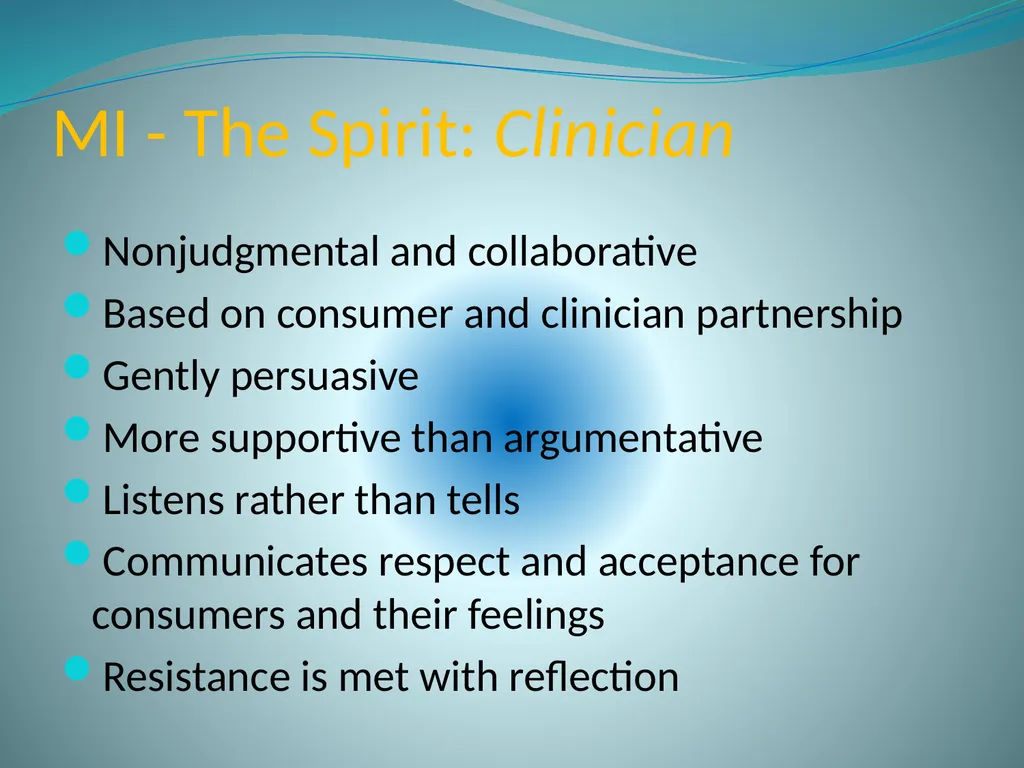
MI - The Spirit: Clinician Nonjudgmental and collaborative
Based on consumer and clinician partnership
Gently persuasive
More supportive than argumentative
Listens rather than tells
Communicates respect and acceptance for consumers and their feelings
Resistance is met with reflection<br>
Based on consumer and clinician partnership
Gently persuasive
More supportive than argumentative
Listens rather than tells
Communicates respect and acceptance for consumers and their feelings
Resistance is met with reflection<br>
25
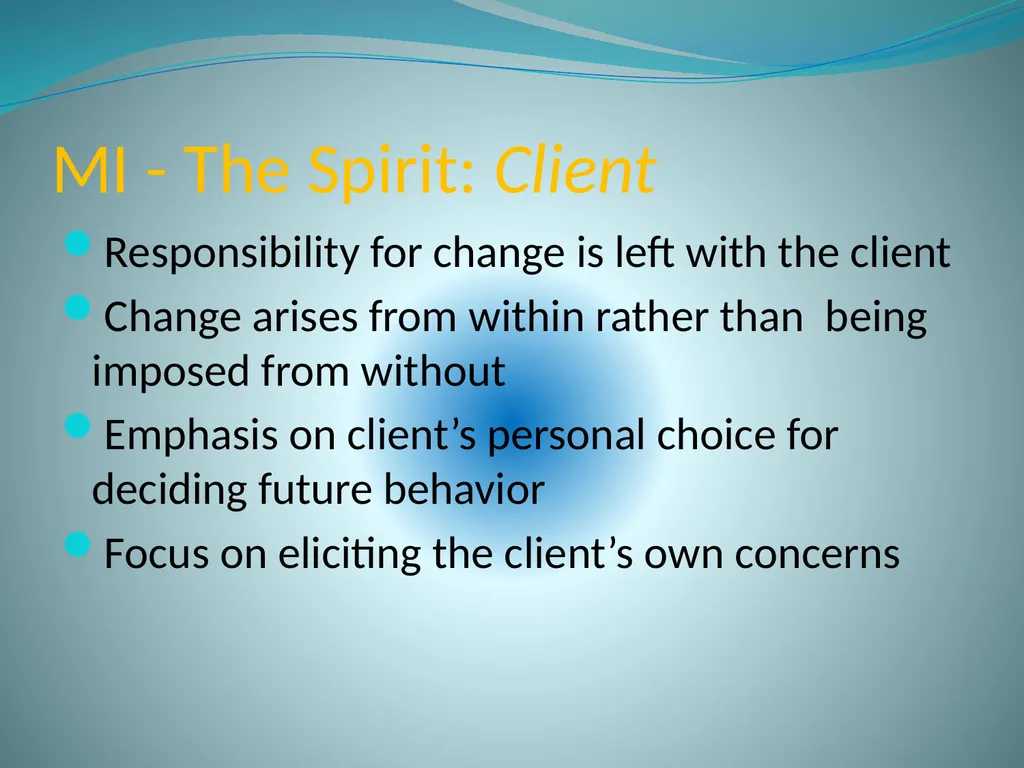
MI - The Spirit: Client Responsibility for change is left with the client
Change arises from within rather than being imposed from without
Emphasis on client’s personal choice for deciding future behavior
Focus on eliciting the client’s own concerns<br>
Change arises from within rather than being imposed from without
Emphasis on client’s personal choice for deciding future behavior
Focus on eliciting the client’s own concerns<br>
26
Where do I start? What you do depends on where the consumer is in the process of changing
The first step is to be able to identify where the consumer is coming from<br>
The first step is to be able to identify where the consumer is coming from<br>
27
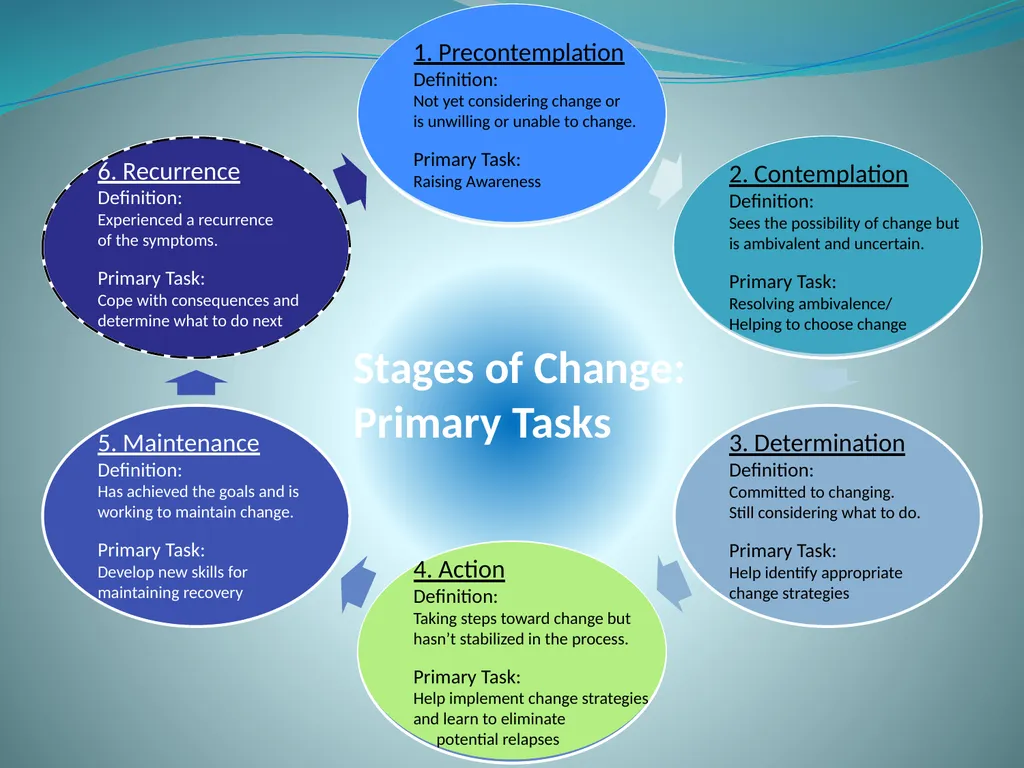
Stages of Change:
Primary Tasks 1. Precontemplation
Definition:
Not yet considering change or
is unwilling or unable to change.
Primary Task:
Raising Awareness 2. Contemplation
Definition:
Sees the possibility of change but
is ambivalent and uncertain.
Primary Task:
Resolving ambivalence/
Helping to choose change 3. Determination
Definition:
Committed to changing.
Still considering what to do.
Primary Task:
Help identify appropriate
change strategies 4. Action
Definition:
Taking steps toward change but
hasn’t stabilized in the process.
Primary Task:
Help implement change strategies
and learn to eliminate
potential relapses 5. Maintenance
Definition:
Has achieved the goals and is
working to maintain change.
Primary Task:
Develop new skills for
maintaining recovery 6. Recurrence
Definition:
Experienced a recurrence
of the symptoms.
Primary Task:
Cope with consequences and
determine what to do next<br>
Definition:
Not yet considering change or
is unwilling or unable to change.
Primary Task:
Raising Awareness 2. Contemplation
Definition:
Sees the possibility of change but
is ambivalent and uncertain.
Primary Task:
Resolving ambivalence/
Helping to choose change 3. Determination
Definition:
Committed to changing.
Still considering what to do.
Primary Task:
Help identify appropriate
change strategies 4. Action
Definition:
Taking steps toward change but
hasn’t stabilized in the process.
Primary Task:
Help implement change strategies
and learn to eliminate
potential relapses 5. Maintenance
Definition:
Has achieved the goals and is
working to maintain change.
Primary Task:
Develop new skills for
maintaining recovery 6. Recurrence
Definition:
Experienced a recurrence
of the symptoms.
Primary Task:
Cope with consequences and
determine what to do next<br>
28
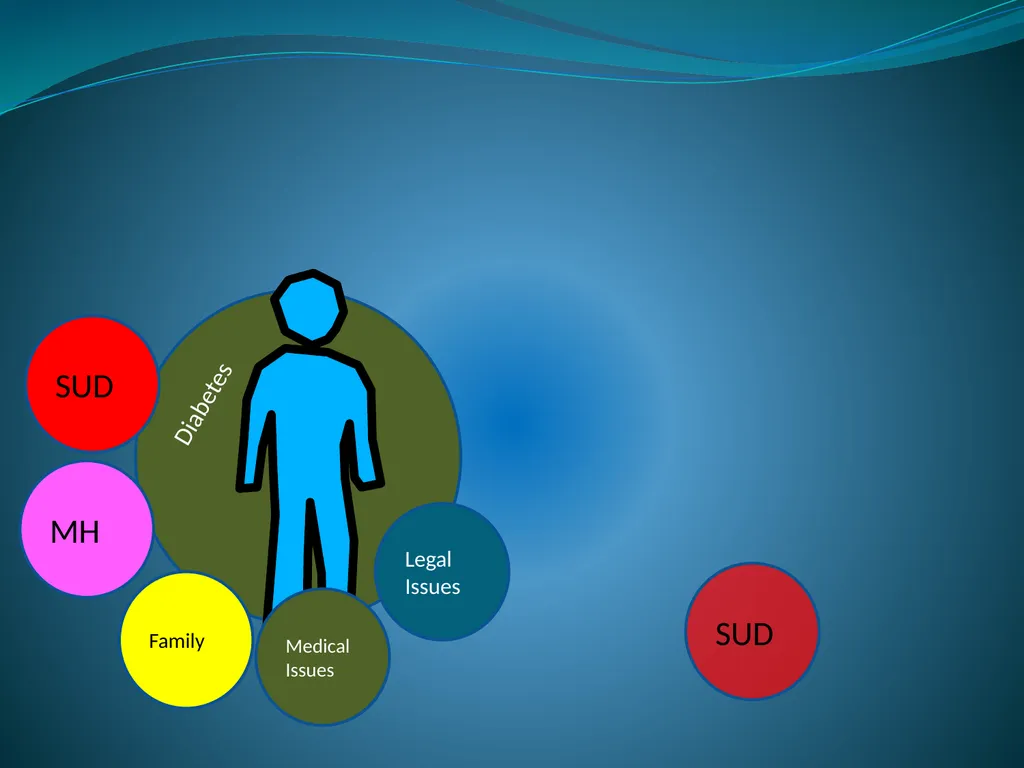
SUD Legal Issues Family Medical Issues MH SUD<br>
29
Conducting a Brief Intervention F L O<br>
30
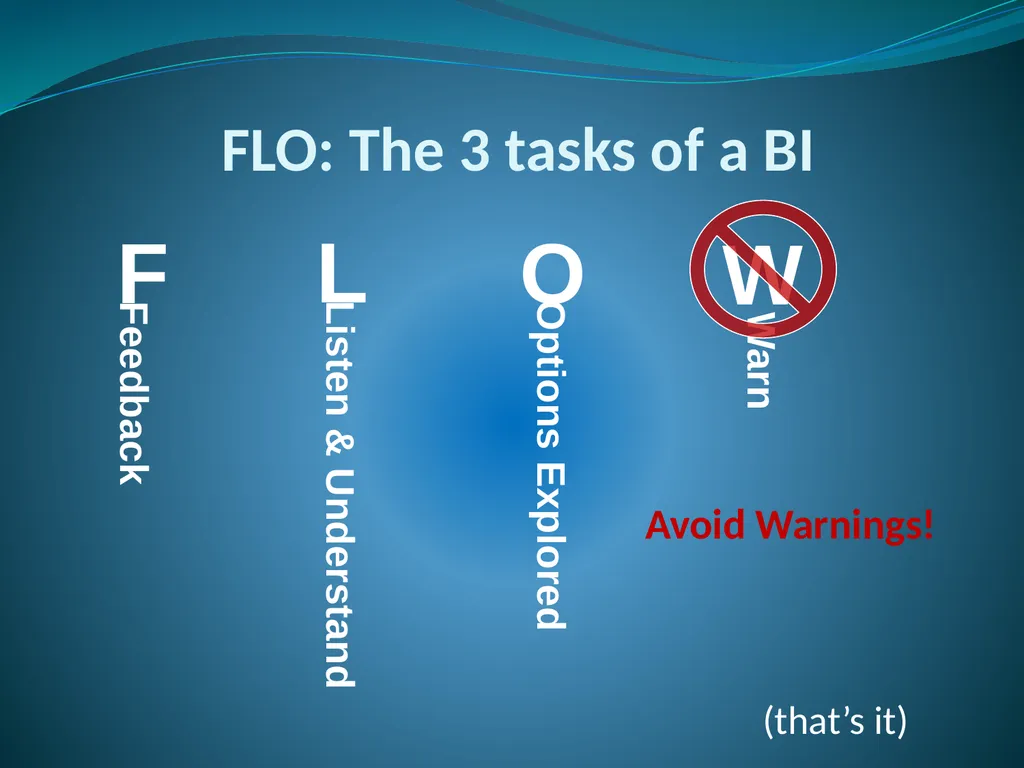
FLO: The 3 tasks of a BI Avoid Warnings! F L O W Feedback Listen & Understand Warn Options Explored (that’s it)<br>
31
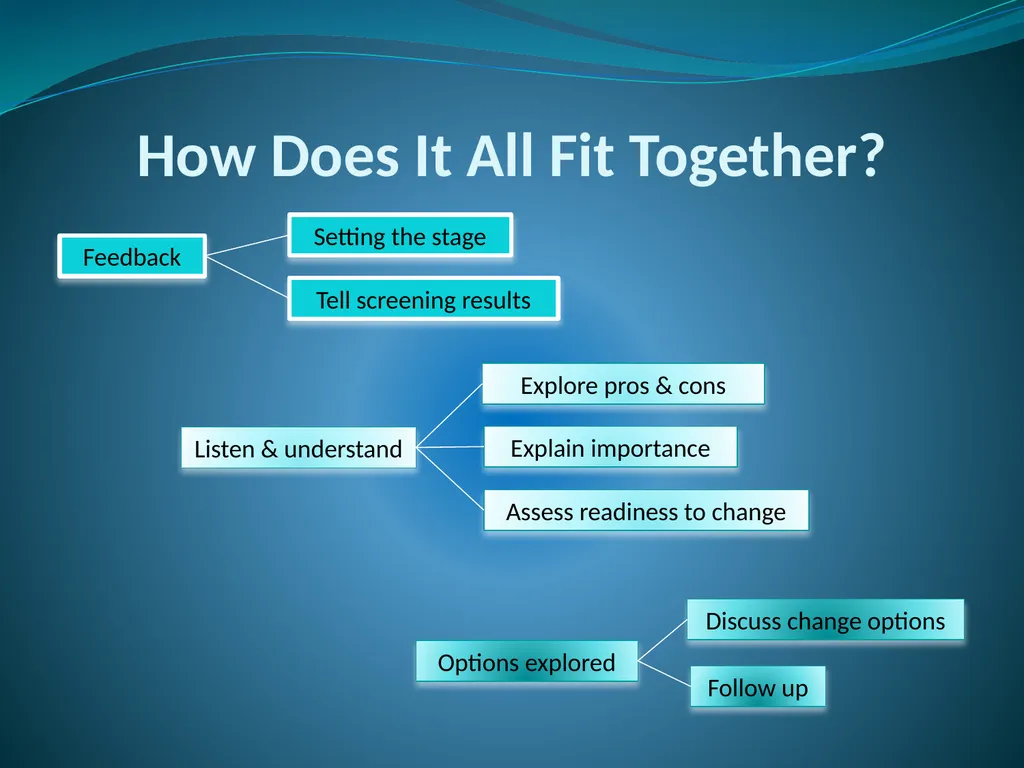
How Does It All Fit Together?<br>
32
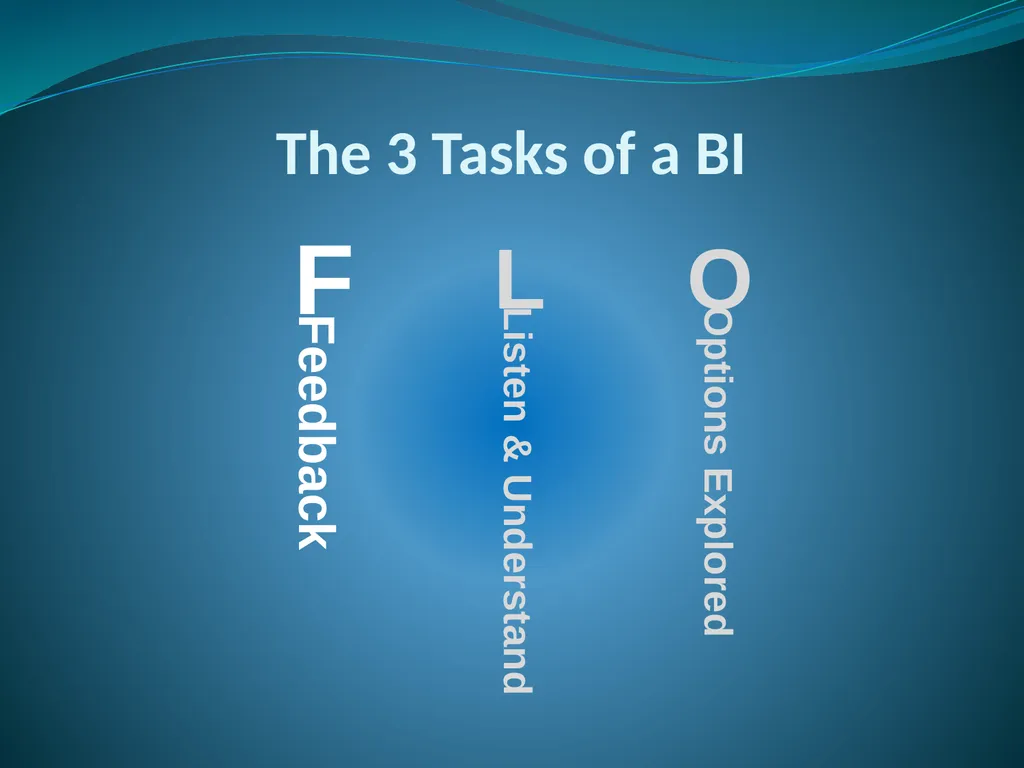
The 3 Tasks of a BI F L O Feedback Listen & Understand Options Explored<br>
33
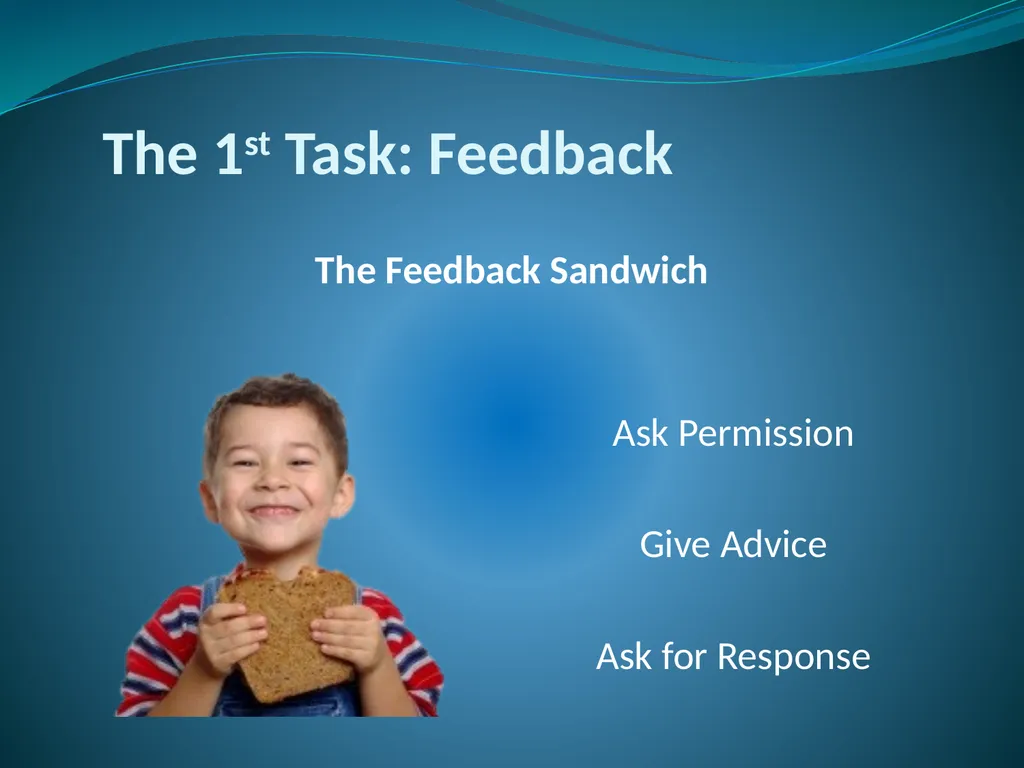
The 1st Task: Feedback The Feedback Sandwich Ask Permission
Give Advice
Ask for Response<br>
Give Advice
Ask for Response<br>
34
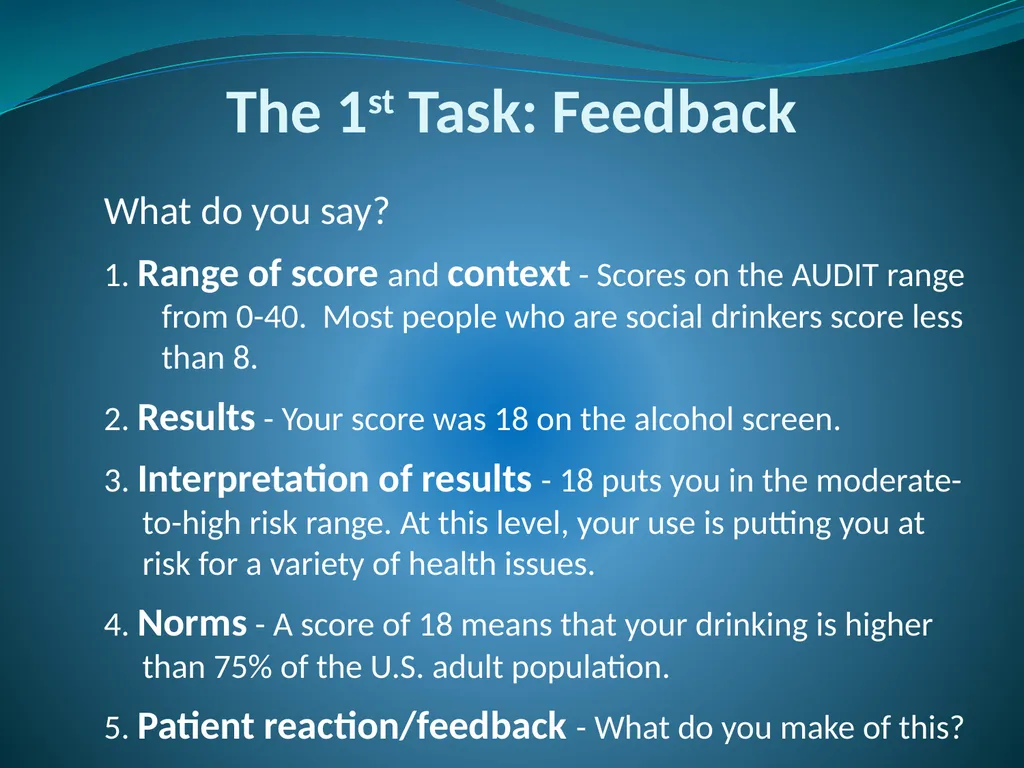
The 1st Task: Feedback What do you say?
1. Range of score and context - Scores on the AUDIT range from 0-40. Most people who are social drinkers score less than 8.
2. Results - Your score was 18 on the alcohol screen.
3. Interpretation of results - 18 puts you in the moderate-to-high risk range. At this level, your use is putting you at risk for a variety of health issues.
4. Norms - A score of 18 means that your drinking is higher than 75% of the U.S. adult population.
5. Patient reaction/feedback - What do you make of this?<br>
1. Range of score and context - Scores on the AUDIT range from 0-40. Most people who are social drinkers score less than 8.
2. Results - Your score was 18 on the alcohol screen.
3. Interpretation of results - 18 puts you in the moderate-to-high risk range. At this level, your use is putting you at risk for a variety of health issues.
4. Norms - A score of 18 means that your drinking is higher than 75% of the U.S. adult population.
5. Patient reaction/feedback - What do you make of this?<br>
35
The 2nd Task: Listen & Understand Listen for the Change Talk
Maybe drinking did play a role in what happened.
If I wasn’t drinking this would never have happened.
Using is not really much fun anymore.
I can’t afford to be in this mess again.
The last thing I want to do is hurt someone else.
I know I can quit because I’ve stopped before.
Summarize, so they hear it twice!<br>
Maybe drinking did play a role in what happened.
If I wasn’t drinking this would never have happened.
Using is not really much fun anymore.
I can’t afford to be in this mess again.
The last thing I want to do is hurt someone else.
I know I can quit because I’ve stopped before.
Summarize, so they hear it twice!<br>
36
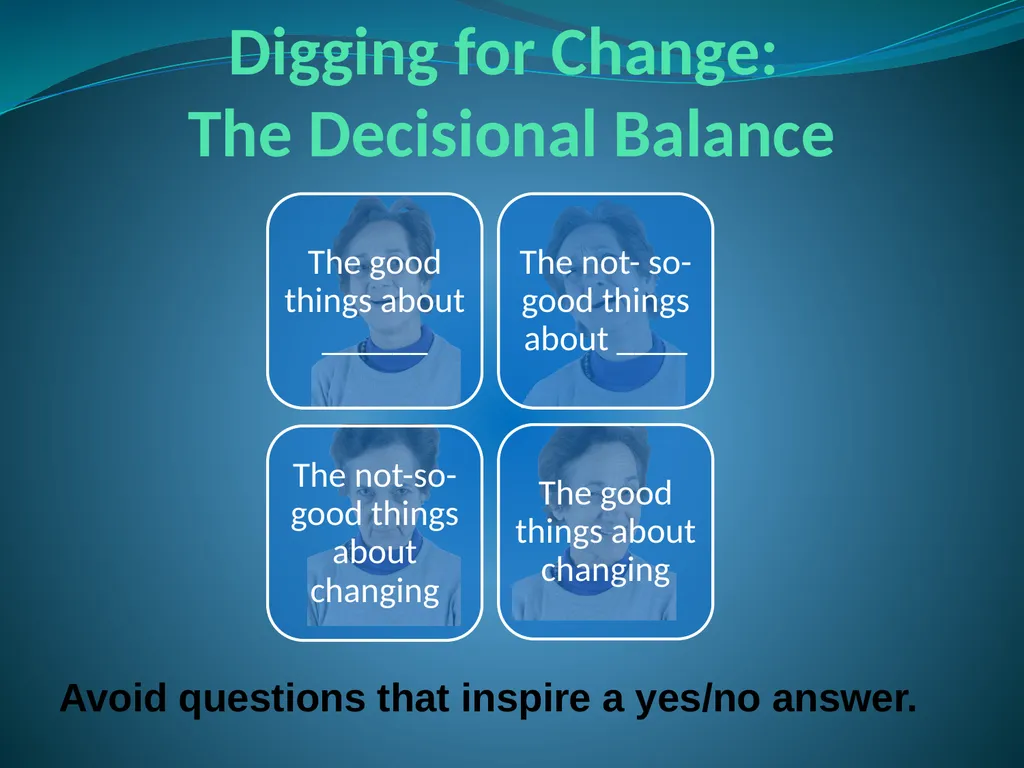
Digging for Change:
The Decisional Balance Avoid questions that inspire a yes/no answer.<br>
37
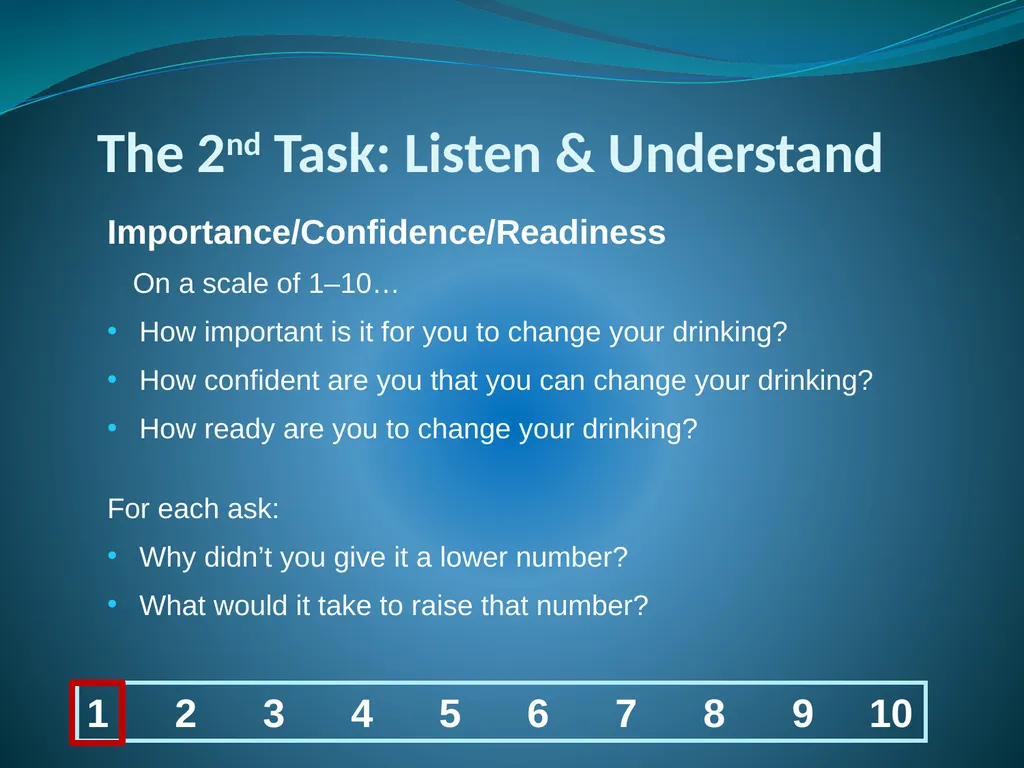
The 2nd Task: Listen & Understand Importance/Confidence/Readiness
On a scale of 1–10…
How important is it for you to change your drinking?
How confident are you that you can change your drinking?
How ready are you to change your drinking?
For each ask:
Why didn’t you give it a lower number?
What would it take to raise that number? 1 2 3 4 5 6 7 8 9 10<br>
On a scale of 1–10…
How important is it for you to change your drinking?
How confident are you that you can change your drinking?
How ready are you to change your drinking?
For each ask:
Why didn’t you give it a lower number?
What would it take to raise that number? 1 2 3 4 5 6 7 8 9 10<br>
38
What now?
What do you think you will do?
What changes are you thinking about making?
What do you see as your options?
Where do we go from here?
What happens next? The 3rd Task: Options for Change<br>
What do you think you will do?
What changes are you thinking about making?
What do you see as your options?
Where do we go from here?
What happens next? The 3rd Task: Options for Change<br>
39
Offer a Menu of Options
Manage drinking/use (cut down to low-risk limits)
Eliminate your drinking/drug use (quit)
Never drink and drive (reduce harm)
Utterly nothing (no change)
Seek help (refer to treatment) The 3rd Task: Options for Change<br>
Manage drinking/use (cut down to low-risk limits)
Eliminate your drinking/drug use (quit)
Never drink and drive (reduce harm)
Utterly nothing (no change)
Seek help (refer to treatment) The 3rd Task: Options for Change<br>
40
Encourage Follow-Up Visits At follow-up visit:
Inquire about use
Review goals and progress
Reinforce and motivate
Review tips for progress See reference list<br>
Inquire about use
Review goals and progress
Reinforce and motivate
Review tips for progress See reference list<br>
41
Referral to Treatment Approximately 5% of patients screened will require referral to substance use evaluation and treatment.
A patient may be appropriate for referral when:
Assessment of the patient’s responses to the screening reveals serious medical, social, legal, or interpersonal consequences associated with their substance use.
These high risk patients will receive a brief intervention followed by referral. See reference list<br>
A patient may be appropriate for referral when:
Assessment of the patient’s responses to the screening reveals serious medical, social, legal, or interpersonal consequences associated with their substance use.
These high risk patients will receive a brief intervention followed by referral. See reference list<br>
42
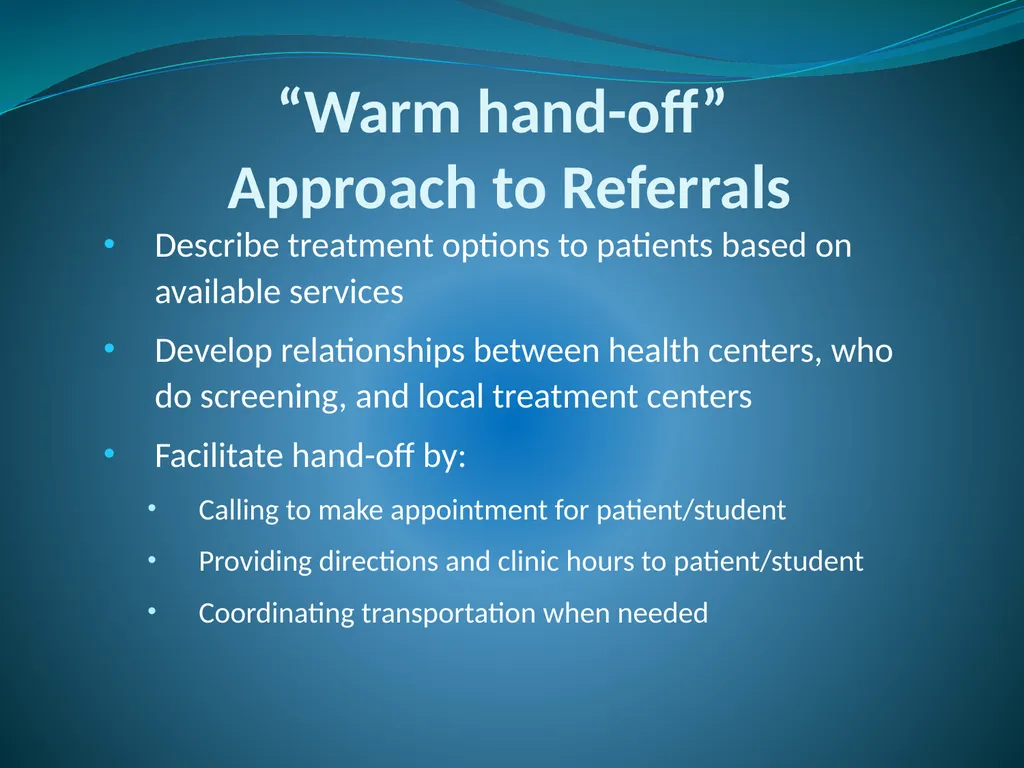
“Warm hand-off”
Approach to Referrals Describe treatment options to patients based on available services
Develop relationships between health centers, who do screening, and local treatment centers
Facilitate hand-off by:
Calling to make appointment for patient/student
Providing directions and clinic hours to patient/student
Coordinating transportation when needed<br>
Develop relationships between health centers, who do screening, and local treatment centers
Facilitate hand-off by:
Calling to make appointment for patient/student
Providing directions and clinic hours to patient/student
Coordinating transportation when needed<br>
43
Questions or Discussion Thank you for your participation!
Thomas E. Freese, Ph.D
tfreese@mednet.ucla.edu
Sherry Larkins, Ph.D.
larkins@ucla.edu<br>
Thomas E. Freese, Ph.D
tfreese@mednet.ucla.edu
Sherry Larkins, Ph.D.
larkins@ucla.edu<br>