Section 3 From Business Plan to Funding Venture Chapter 9 Funding 4Ps in market mix (Recalled) 1. Product Understand the product; define the product; the first in their category 2. Price Price is the amount that consumers will be willing to
"Section 3 From Business Plan to Funding Venture" is the property of its rightful owner. Permission is granted to
download and print the materials on this website for personal, non-commercial use only, and to display it
on your personal computer provided you do not modify the materials and that you retain all copyright
notices contained in the materials. By downloading content from our website, you accept the terms of this
agreement.
Presentation Transcript
01
Section 3 From Business Plan to Funding Venture Chapter 9
Funding<br>
02
4Ps in market mix (Recalled) 1. Product
Understand the product; define the product; the first in their category
2. Price
Price is the amount that consumers will be willing to pay for a product. Raise or discounting. E.g. UNIQLO
3. Place
Place is the consideration of where the product should be available; also refers to advertising.
4. Promotion
The goal of promotion is to communicate to consumers that they need this product and that it is priced appropriately.<br>
03
5 Cs in Bank Lending Decisons Character refers to borrower
Capacity refers to the ability of the business to generate revenues to pay back the loan.
Capital refers to the capital assets of the business.
Collateral is the cash and assets a business owner pledges to secure a loan.
Credit
Business and personal credit are two different things. Most new businesses have no business credit, so they must use the personal credit of their owners<br>
04
Types of financing available for the private firm For the entrepreneur, financing for the private firm should be considered from the perspective of debt versus equity and using internal versus external funds.
Debt financing and equity financing.
Internal and external funds
Personal funds
Family and friends
Commercial banks<br>
05
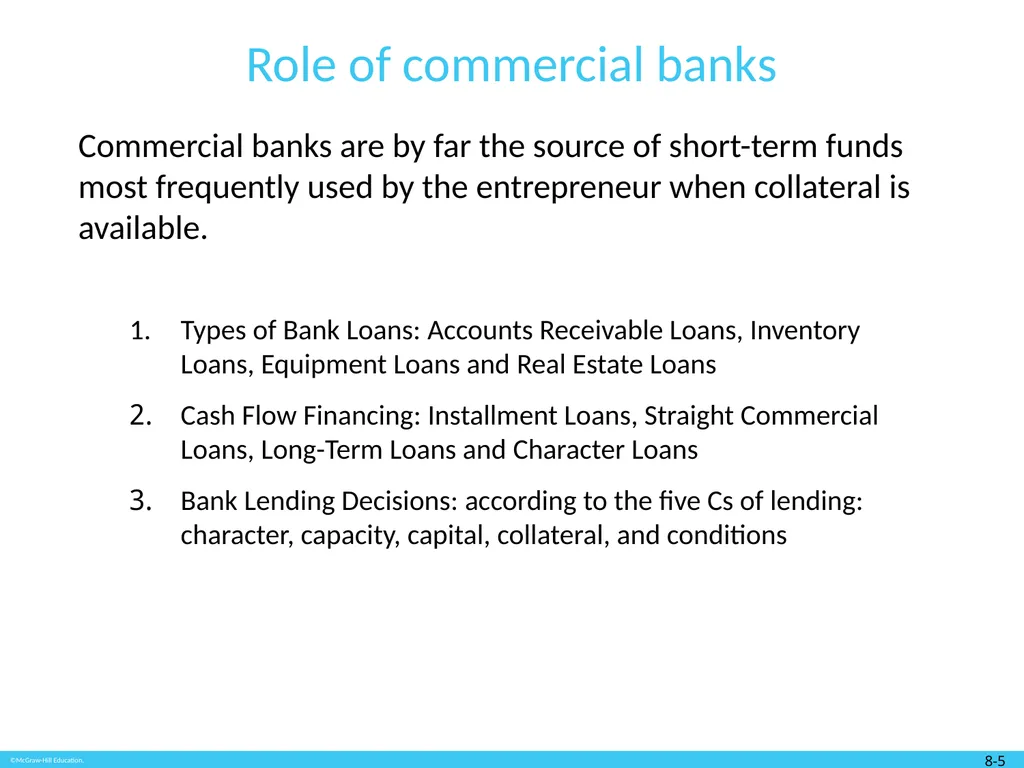
Role of commercial banks Commercial banks are by far the source of short-term funds most frequently used by the entrepreneur when collateral is available.
Types of Bank Loans: Accounts Receivable Loans, Inventory Loans, Equipment Loans and Real Estate Loans
Cash Flow Financing: Installment Loans, Straight Commercial Loans, Long-Term Loans and Character Loans
Bank Lending Decisions: according to the five Cs of lending: character, capacity, capital, collateral, and conditions<br>
06
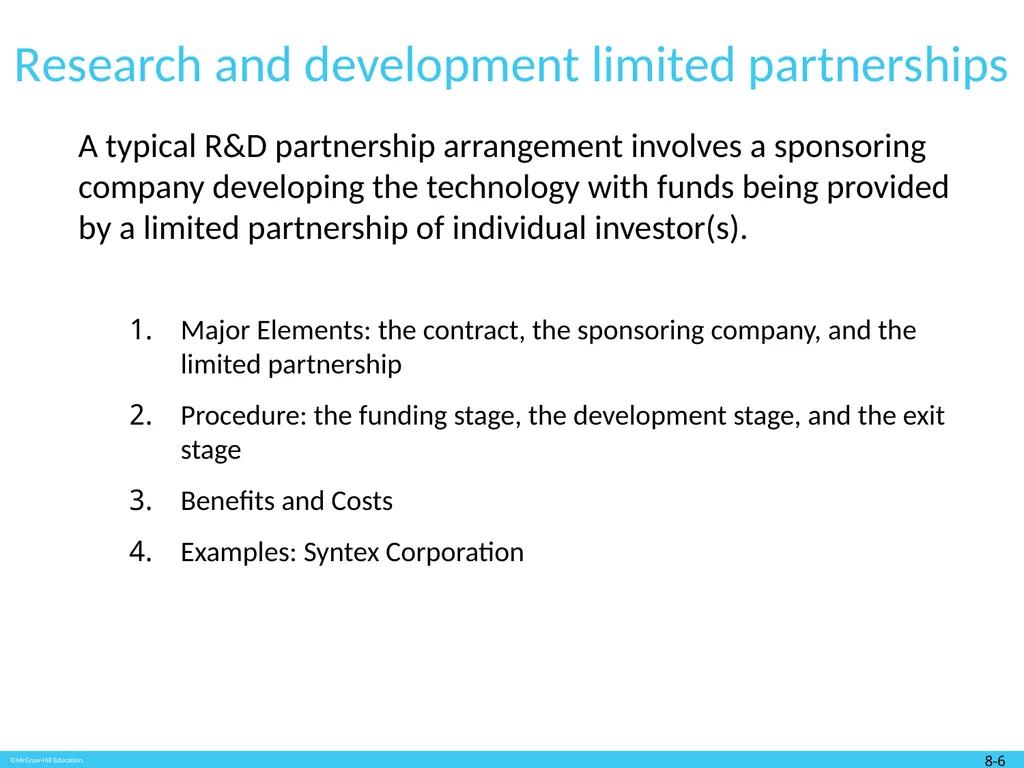
Research and development limited partnerships A typical R&D partnership arrangement involves a sponsoring company developing the technology with funds being provided by a limited partnership of individual investor(s).
Major Elements: the contract, the sponsoring company, and the limited partnership
Procedure: the funding stage, the development stage, and the exit stage
Benefits and Costs
Examples: Syntex Corporation<br>
07
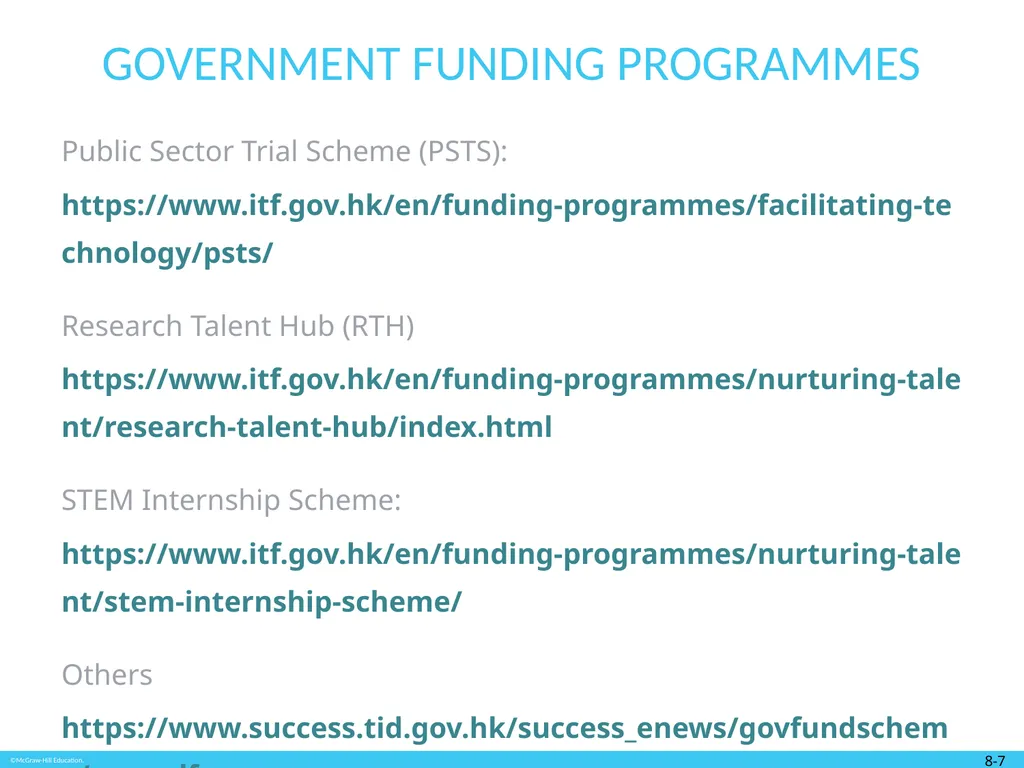
GOVERNMENT FUNDING PROGRAMMES Public Sector Trial Scheme (PSTS): https://www.itf.gov.hk/en/funding-programmes/facilitating-technology/psts/
Research Talent Hub (RTH) https://www.itf.gov.hk/en/funding-programmes/nurturing-talent/research-talent-hub/index.html
STEM Internship Scheme: https://www.itf.gov.hk/en/funding-programmes/nurturing-talent/stem-internship-scheme/
Others https://www.success.tid.gov.hk/success_enews/govfundscheme/eng.pdf<br>
08
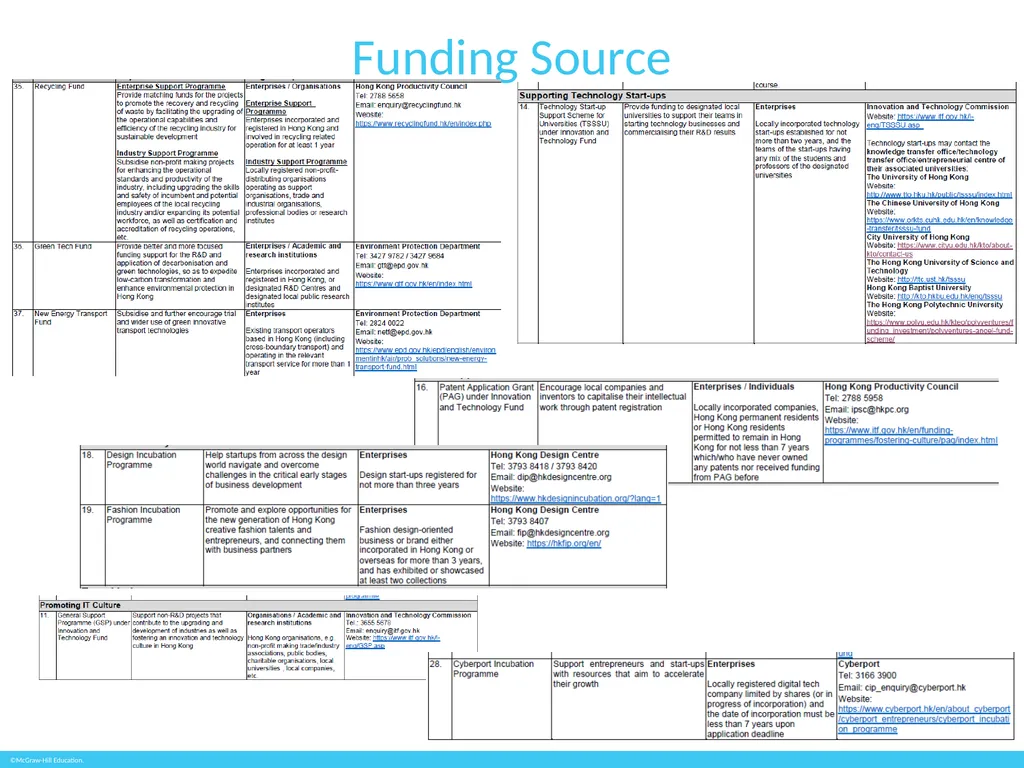
Funding Source<br>
09
Private Placement Another source of funds for the entrepreneur is private investors, also called angels, who may be family and friends or wealthy individuals.
A formalized approach for obtaining funds from private investors is through a private offering.
One alternative to obtaining the needed private capital that should be considered is bootstrap financing.
<br>
10
Venture Funding Stages of Business Development Funding:
Early-Stage Financing
Expansion or Development Financing (Venture capitalists favors)
Acquisition and Leveraged Buyout Financing There are three risk-capital markets that can be involved in financing a firm's growth:
The informal risk-capital market
The venture-capital market
The public-equity market.<br>
11
Business Angels A name for individuals in the informal risk-capital market.
They are well educated.
The investment record ranges from $100,000 - $500,000
Most financings in start-ups or ventures less than 5 years old
Expect median 5-year capital gain of 10 times for start-ups
Investment opportunities are rejected when there is an inadequate risk/return ratio, a subpar management team, a lack of interest in the business area, or insufficient commitment to the venture from the principals.<br>
12
Venture Capital Decision Process A venture capitalist expects a company to satisfy three general criteria before he or she will commit to the venture.
The company needs to have a strong management team
The product and/or market opportunity must be unique.
The business opportunity must have significant capital appreciation. The venture-capital process can be broken down into four primary stages:
Preliminary screening
Agreement on principal terms between the entrepreneur and the venture capitalist
Detailed review and due diligence
Final approval<br>
13
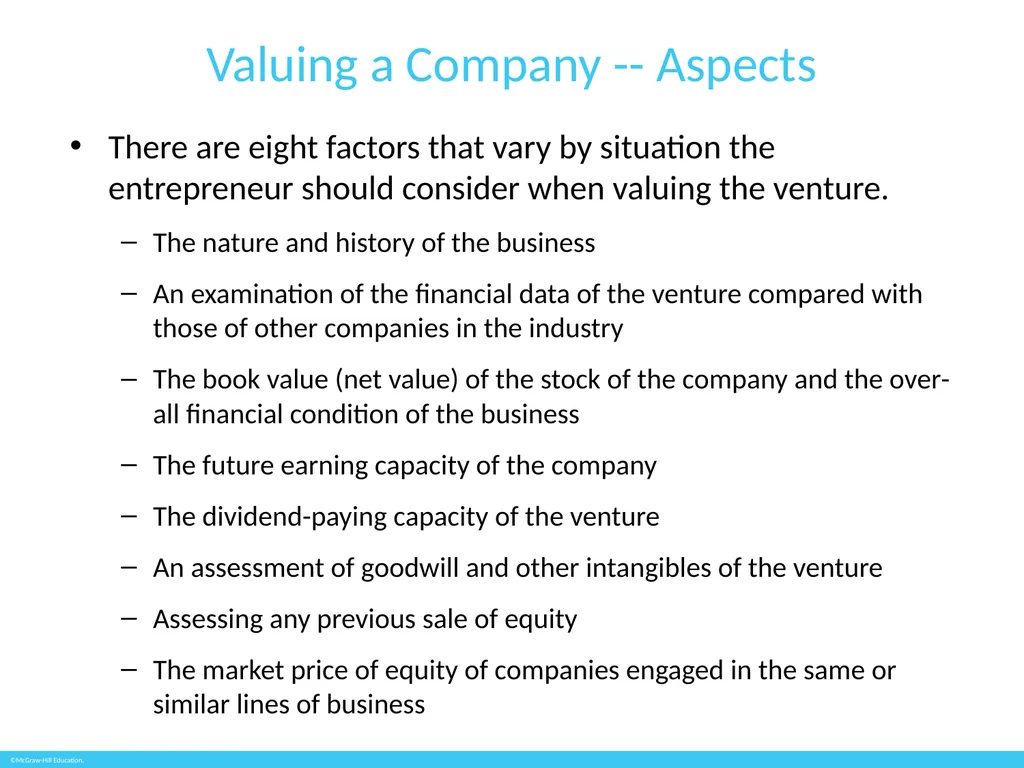
Valuing a Company -- Aspects There are eight factors that vary by situation the entrepreneur should consider when valuing the venture.
The nature and history of the business
An examination of the financial data of the venture compared with those of other companies in the industry
The book value (net value) of the stock of the company and the overall financial condition of the business
The future earning capacity of the company
The dividend-paying capacity of the venture
An assessment of goodwill and other intangibles of the venture
Assessing any previous sale of equity
The market price of equity of companies engaged in the same or similar lines of business<br>
14
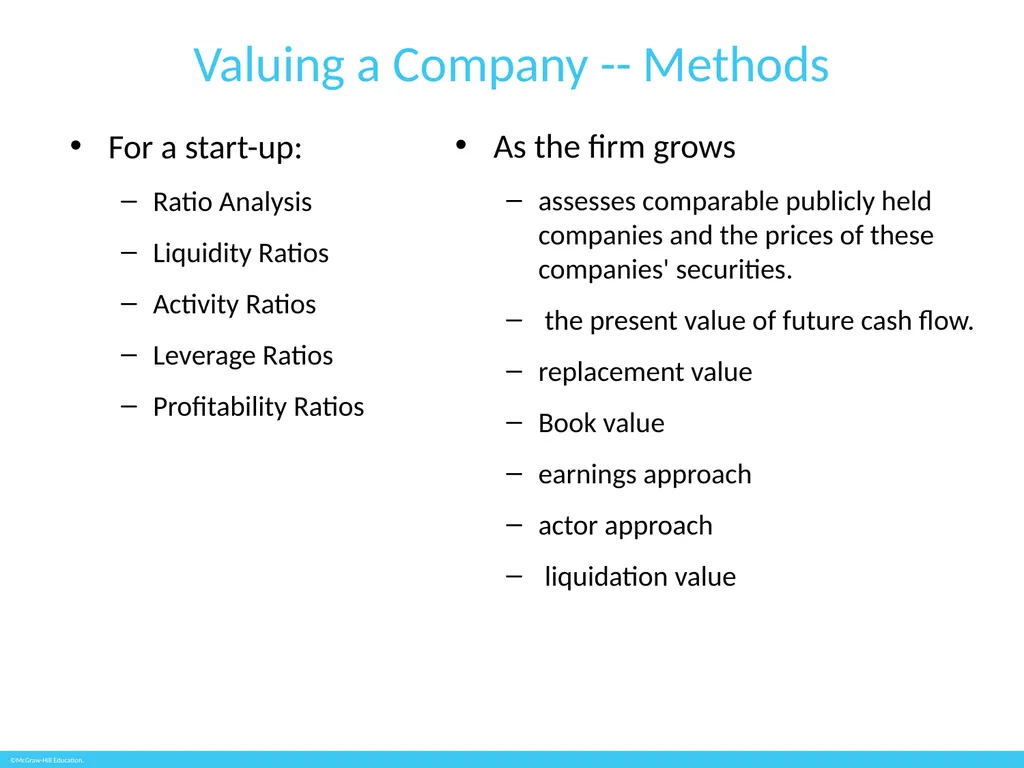
Valuing a Company -- Methods For a start-up:
Ratio Analysis
Liquidity Ratios
Activity Ratios
Leverage Ratios
Profitability Ratios As the firm grows
assesses comparable publicly held companies and the prices of these companies' securities.
the present value of future cash flow.
replacement value
Book value
earnings approach
actor approach
liquidation value<br>
15
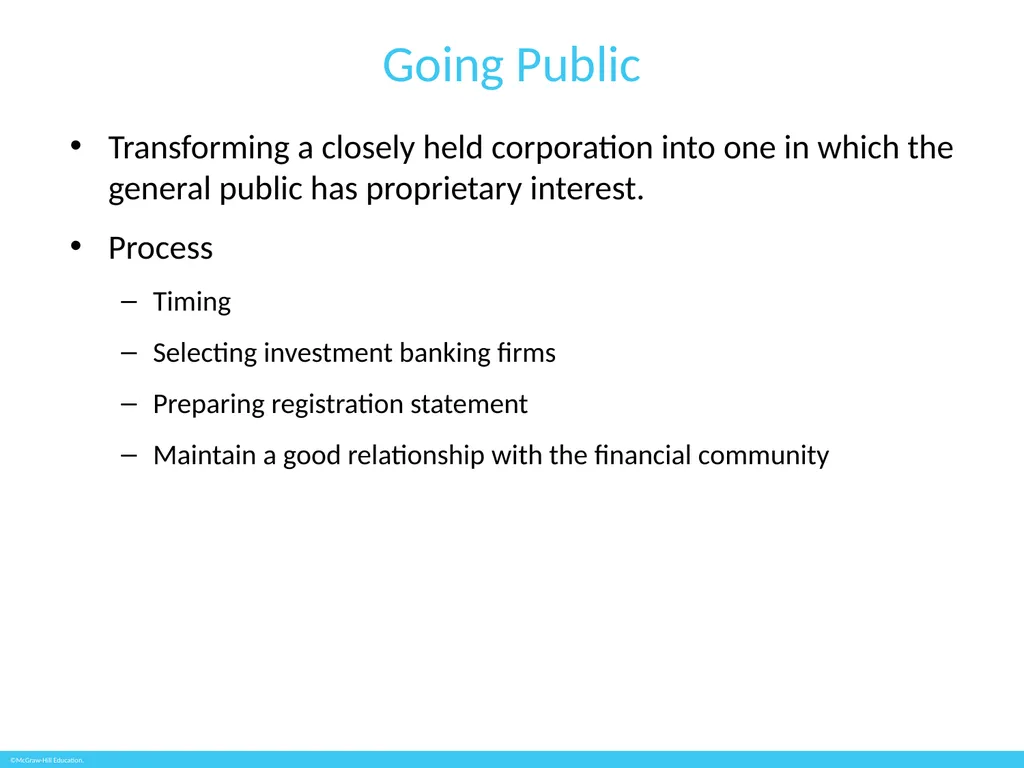
Going Public Transforming a closely held corporation into one in which the general public has proprietary interest.
Process
Timing
Selecting investment banking firms
Preparing registration statement
Maintain a good relationship with the financial community<br>