Seeking and Negotiating Employment 5 CFR section
Description: Seeking and Negotiating Employment 5 CFR section 2635.602 Subpart F2635.601(a) Disqualification requirement: When prospective employers financial interest can be affected by government matters employee works on Seeking Restrictions No
Related Topics
Download Presentation
"Seeking and Negotiating Employment 5 CFR section" is the property of its rightful owner. Permission is granted to download and print the materials on this website for personal, non-commercial use only, and to display it on your personal computer provided you do not modify the materials and that you retain all copyright notices contained in the materials. By downloading content from our website, you accept the terms of this agreement.
Presentation Transcript
slide1. Seeking and Negotiating Employment 5 CFR section 2635.602<br>
slide2. Subpart F—2635.601(a)<br>
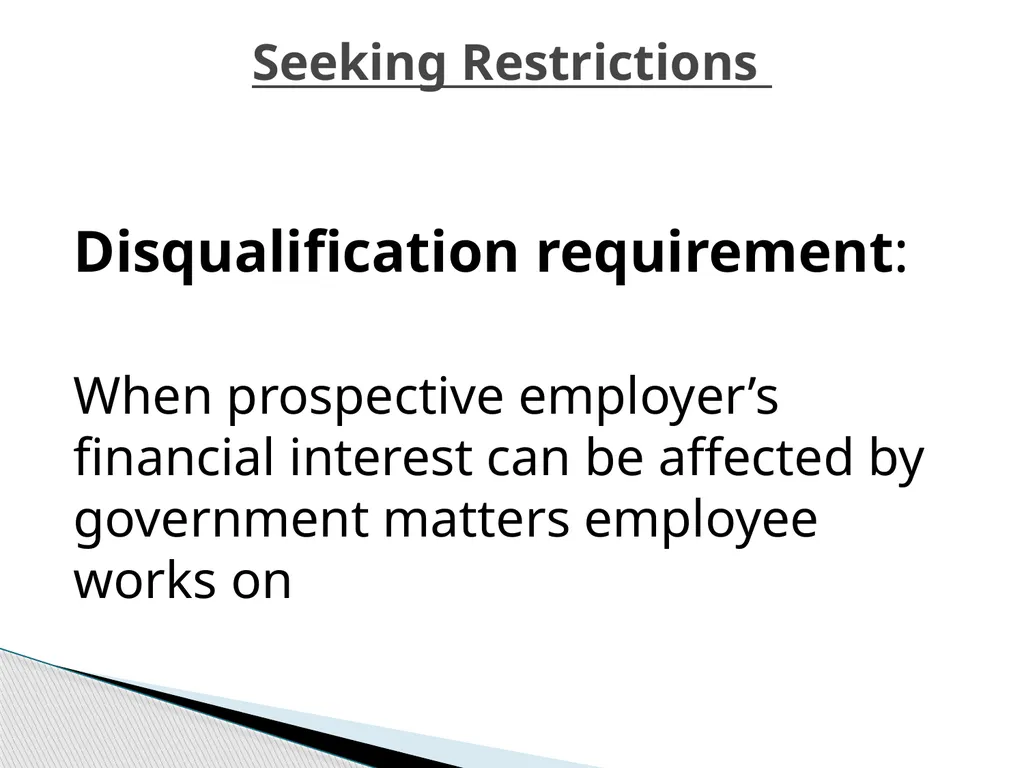
slide3. Disqualification requirement:
When prospective employer’s financial interest can be affected by government matters employee works on Seeking Restrictions<br>
slide4. No requirement to cease and desist job search activities Seeking Restrictions<br>
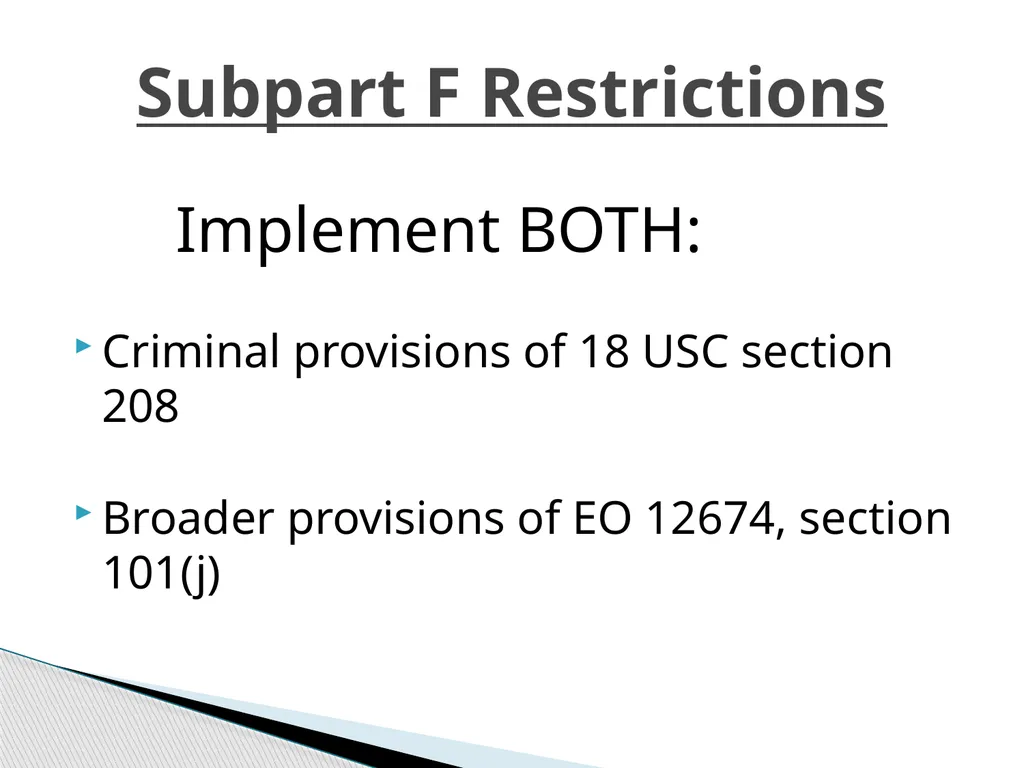
slide5. Implement BOTH:
Criminal provisions of 18 USC section 208
Broader provisions of EO 12674, section 101(j) Subpart F Restrictions<br>
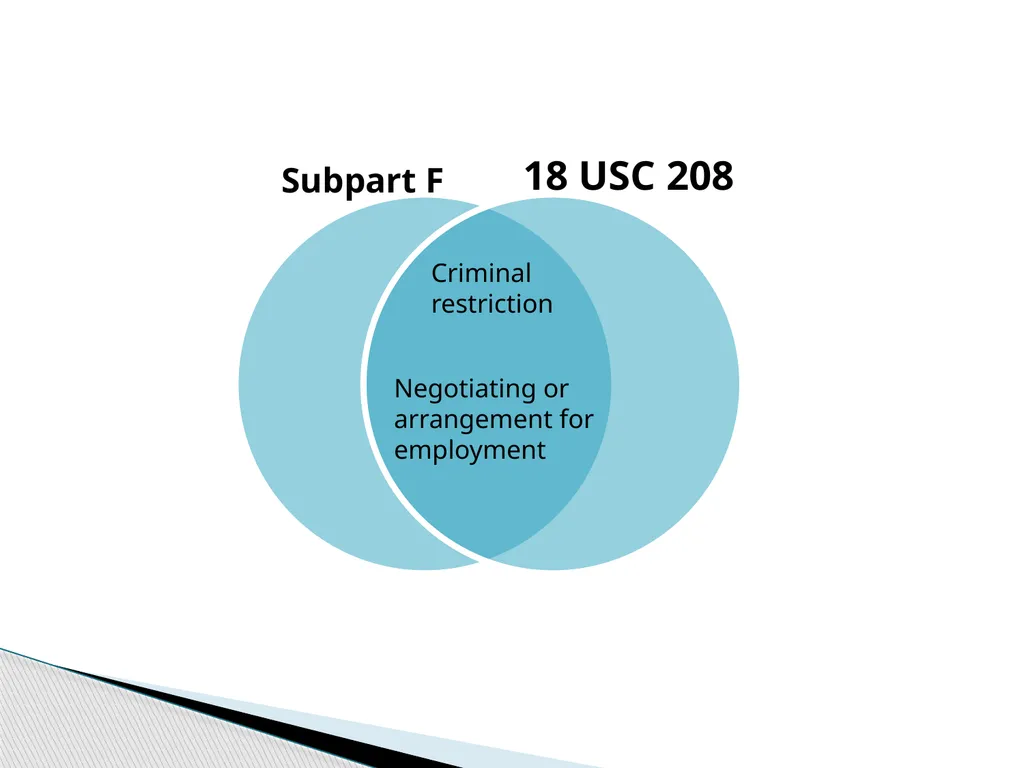
slide6. Negotiating or arrangement for employment Criminal
restriction Subpart F 18 USC 208<br>
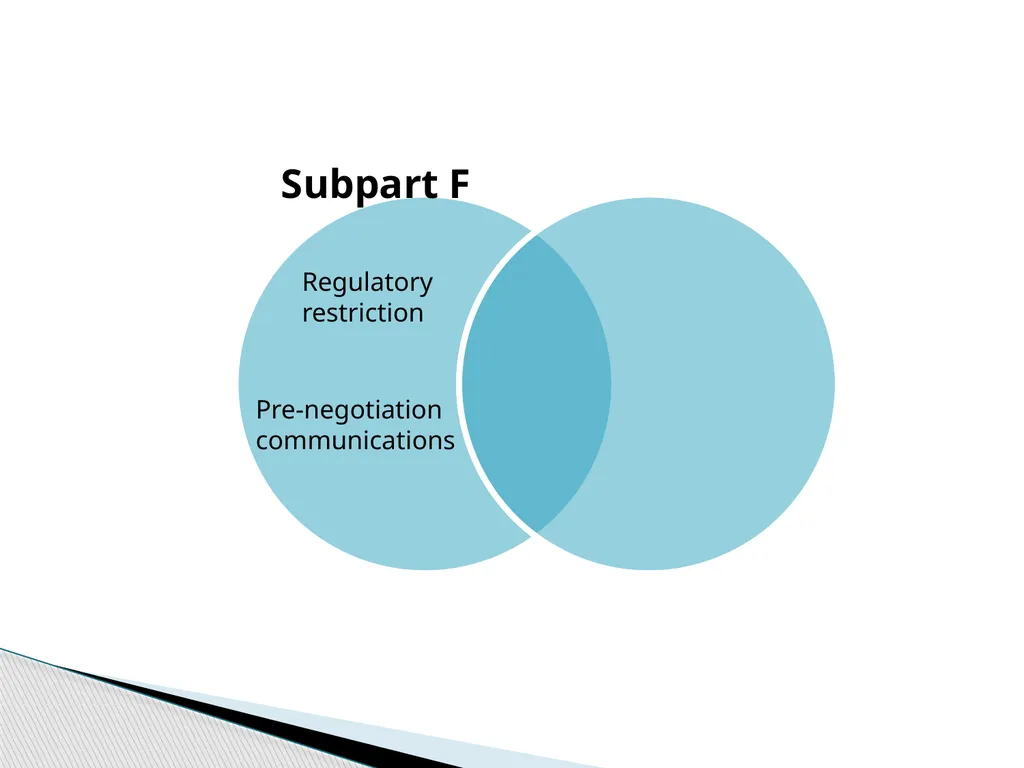
slide7. Pre-negotiation
communications Regulatory
restriction Subpart F<br>
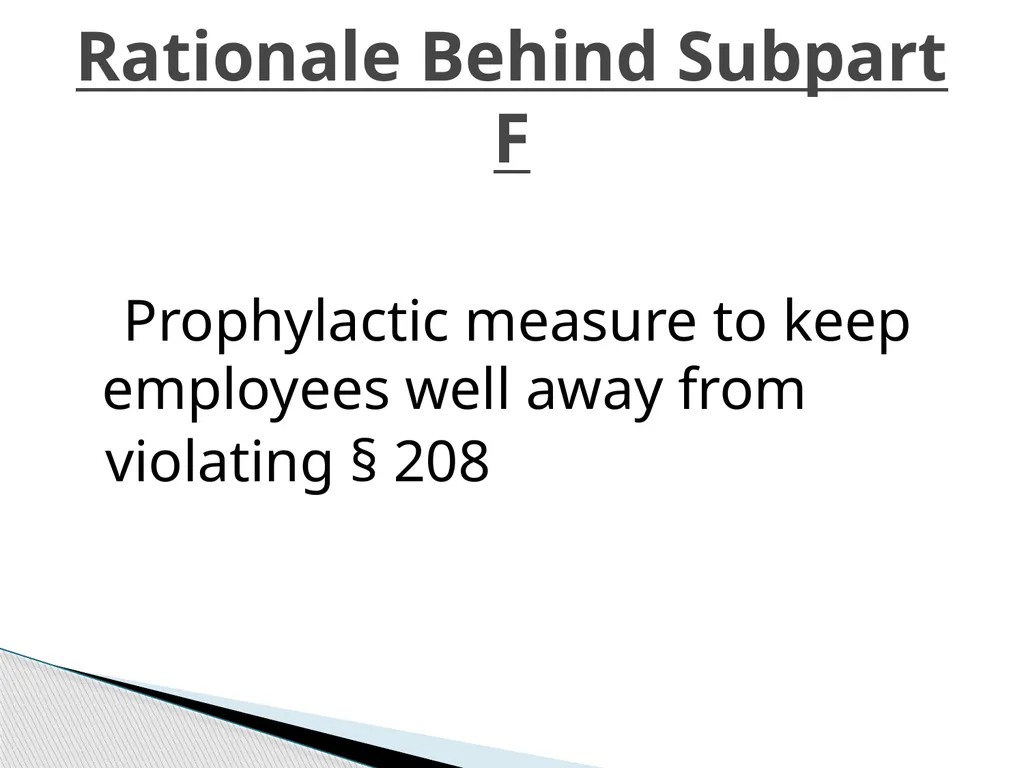
slide8. Rationale Behind Subpart F Prophylactic measure to keep employees well away from
violating § 208<br>
slide9. Can the employee’s official duties affect the prospective employer?
Is the employee seeking or negotiating employment? 9 Ethics Official—Job Search Analysis<br>
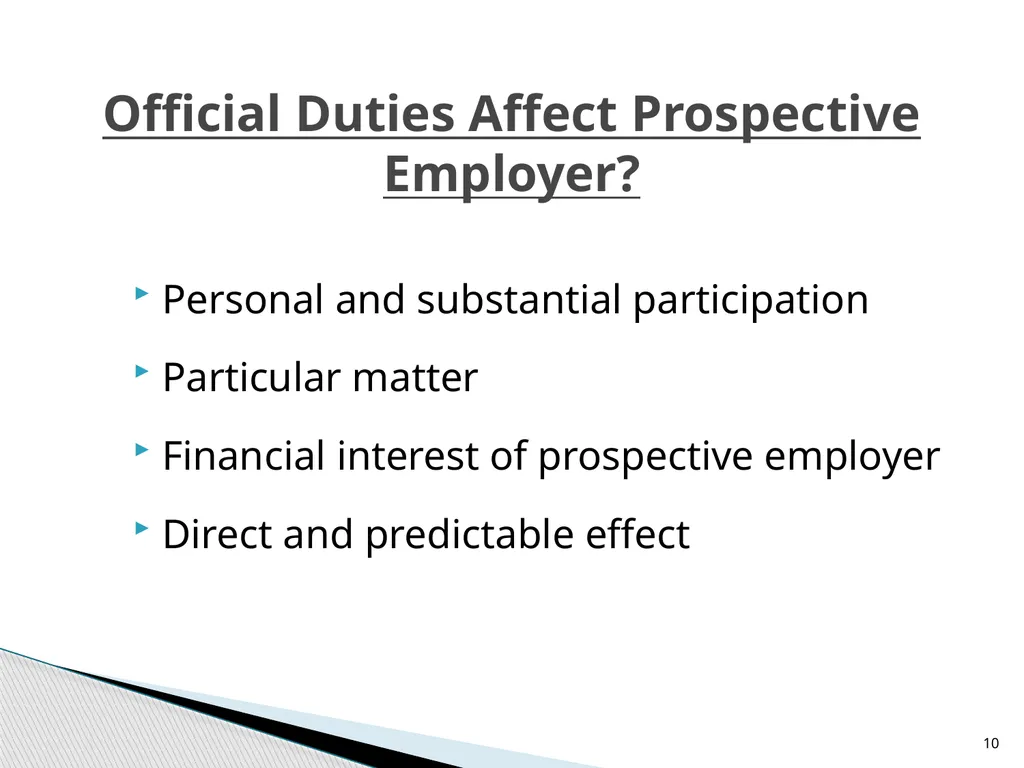
slide10. Personal and substantial participation
Particular matter
Financial interest of prospective employer
Direct and predictable effect 10 Official Duties Affect Prospective Employer?<br>
slide11. Is the employee seeking employment?
Can the employee’s official duties affect the prospective employer? 11 Employee—Analyzing Job Searches<br>
slide12. 2635.603(a)—Non-federal “employment” defined What is “Employment?”<br>
slide13. 2635.603(b)(1) What is “Seeking Employment?”<br>
slide14. 2635.603(b)(1)(ii)(A) and (B)
(A) Request an application
(B) Submit a resume to someone affected by employee’s duties as
part of an industry or discrete class 14 Not Seeking Employment<br>
slide15. John goes to Macy’s over his lunch hour and asks the store manager for a job application to fill out.
Unless or until John submits the application to Macy’s he is NOT yet seeking employment with Macy’s. Examples of NOT Seeking Employment<br>
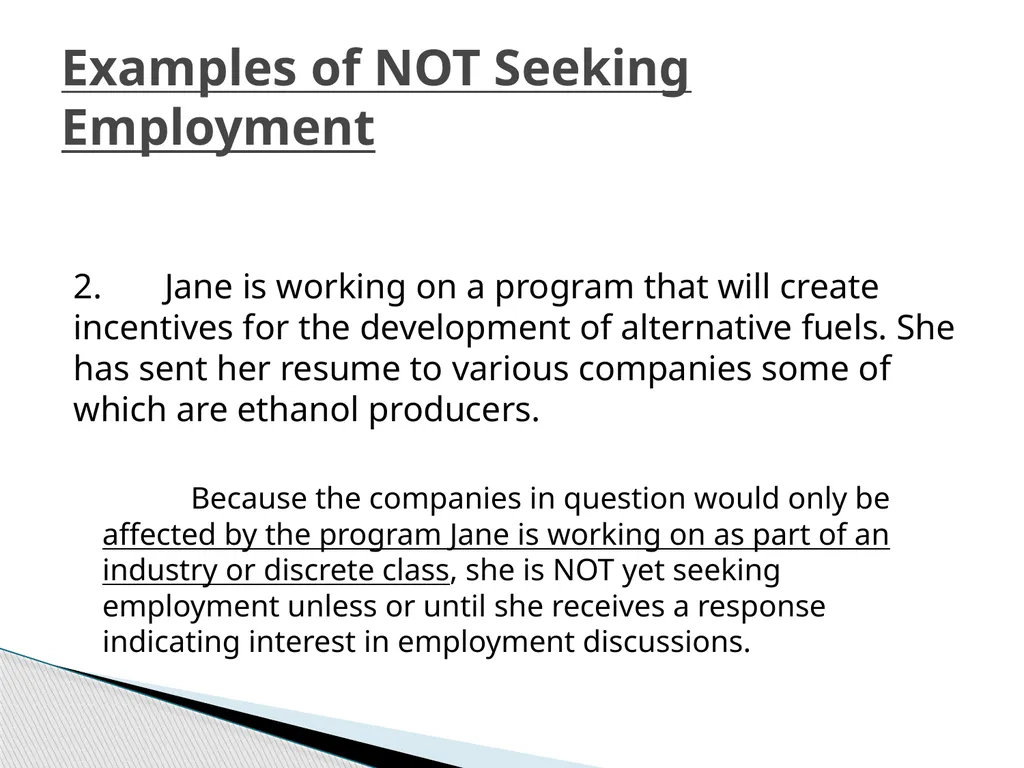
slide16. 2. Jane is working on a program that will create incentives for the development of alternative fuels. She has sent her resume to various companies some of which are ethanol producers.
Because the companies in question would only be affected by the program Jane is working on as part of an industry or discrete class, she is NOT yet seeking employment unless or until she receives a response indicating interest in employment discussions. Examples of NOT Seeking Employment<br>
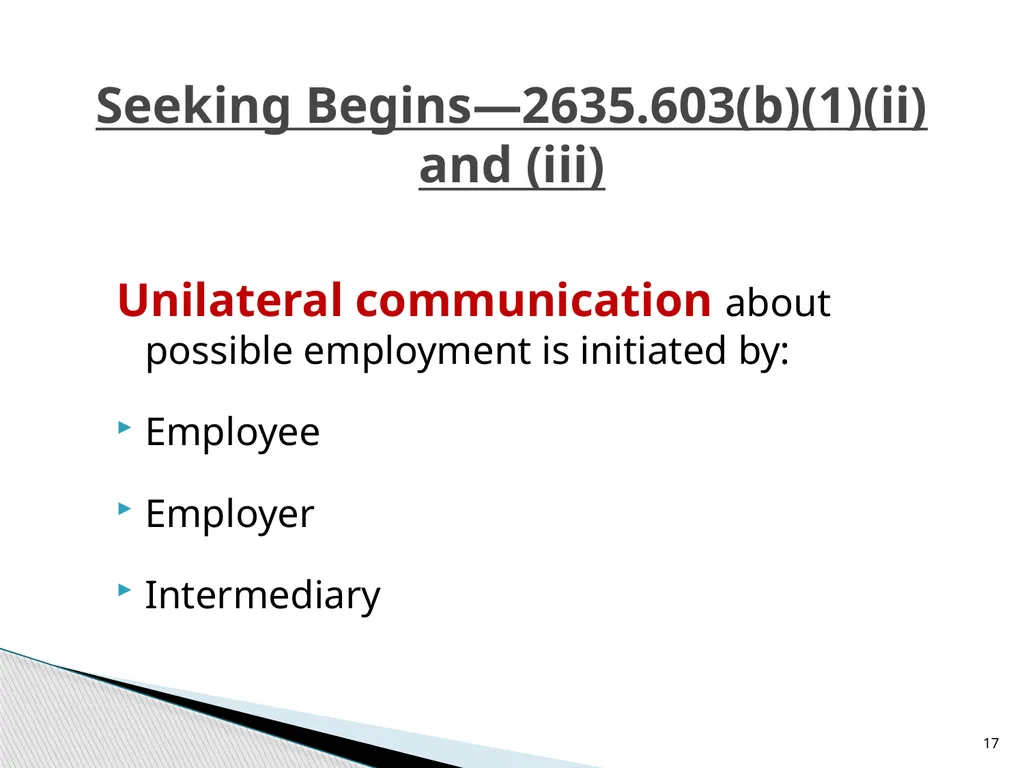
slide17. Unilateral communication about possible employment is initiated by:
Employee
Employer
Intermediary 17 Seeking Begins—2635.603(b)(1)(ii) and (iii)<br>
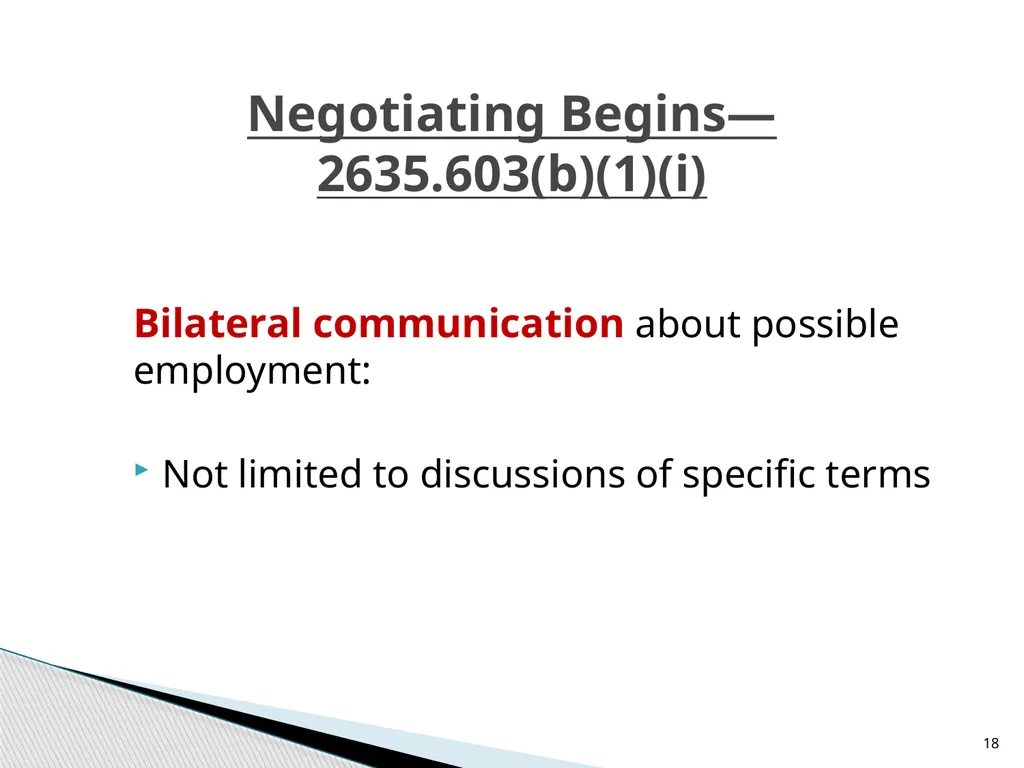
slide18. Bilateral communication about possible employment:
Not limited to discussions of specific terms 18 Negotiating Begins—2635.603(b)(1)(i)<br>
slide19. 1. I’ve just posted my resume on several on-line resume posting sites. Am I Seeking?<br>
slide20. 2. I’ve just received an email from someone indicating interest in my resume. I do not respond. Am I Seeking?<br>
slide21. 3. I’m using a headhunter and she just called to tell me 2 prospective employers are looking at my resume. Am I Seeking?<br>
slide22. 4. I just sent my resume to one of our agency’s grantees. Am I Seeking?<br>
slide23. 5. A friend of mine just called and asked me to send him my resume for a job opening at his office. Am I Seeking?<br>
slide24. 6. After our status update meeting with the private contractor, one of the contractor employees asked me if I’d like to come work for them on a similar project. Am I Seeking?<br>
slide25. (i) Employment rejected and all discussions ceased
(Deferment of discussions until a future date is NOT a rejection of employment.)
(ii) Employer expressed no interest within two months of dispatch of resume 25 Seeking Employment Ends2635.603(b)(2)(i) and (ii)<br>
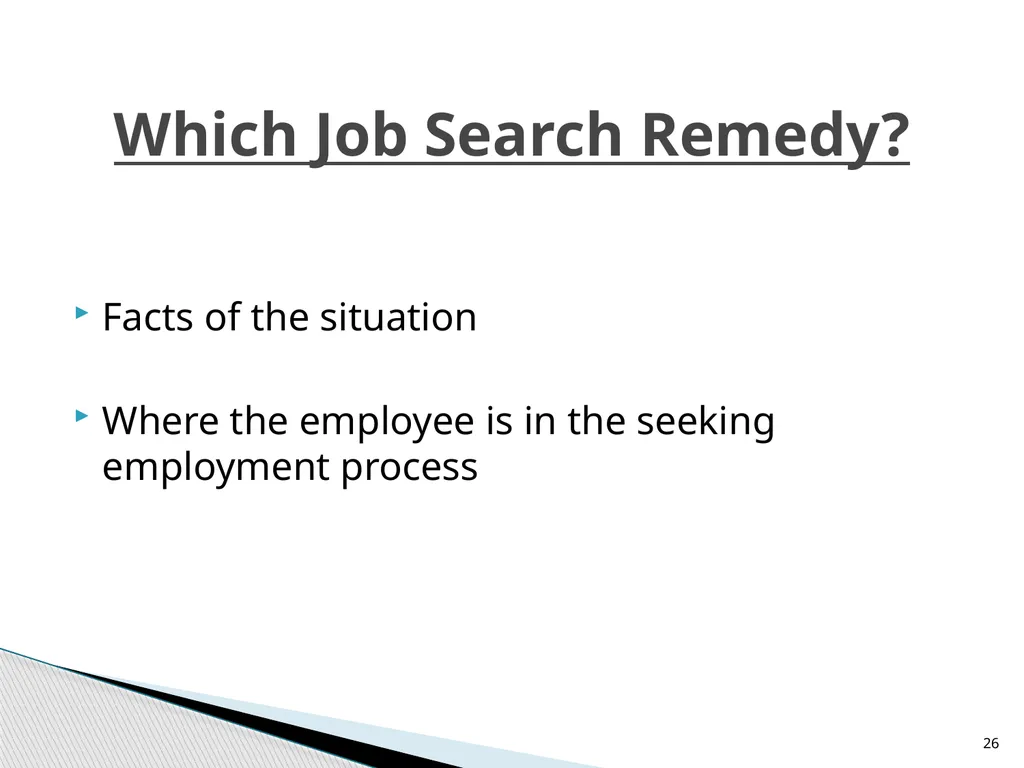
slide26. Facts of the situation
Where the employee is in the seeking employment process 26 Which Job Search Remedy?<br>
slide27. Waiver or Authorization—2635.605 208 Waiver Subpart F Authorization Rare for negotiations
Statutory remedy based on tests
Consult with OGE and Office of Counsel to President on PAS negotiation waivers Possible when employee makes:
An unsolicited communication about employment
A response other than rejection to employment overture
Impossible when
Negotiating<br>
slide28. Based on agency determination of substantial conflict
Annual leave
Leave without pay
Reassignment, etc. 28 Administrative Action—2635.604(d)<br>
slide29. Can recommend BUT CANNOT compel--
Defer search until after leaving the government
High-level officials responsible for
Entire agency
Major program 29 Defer Job Search<br>
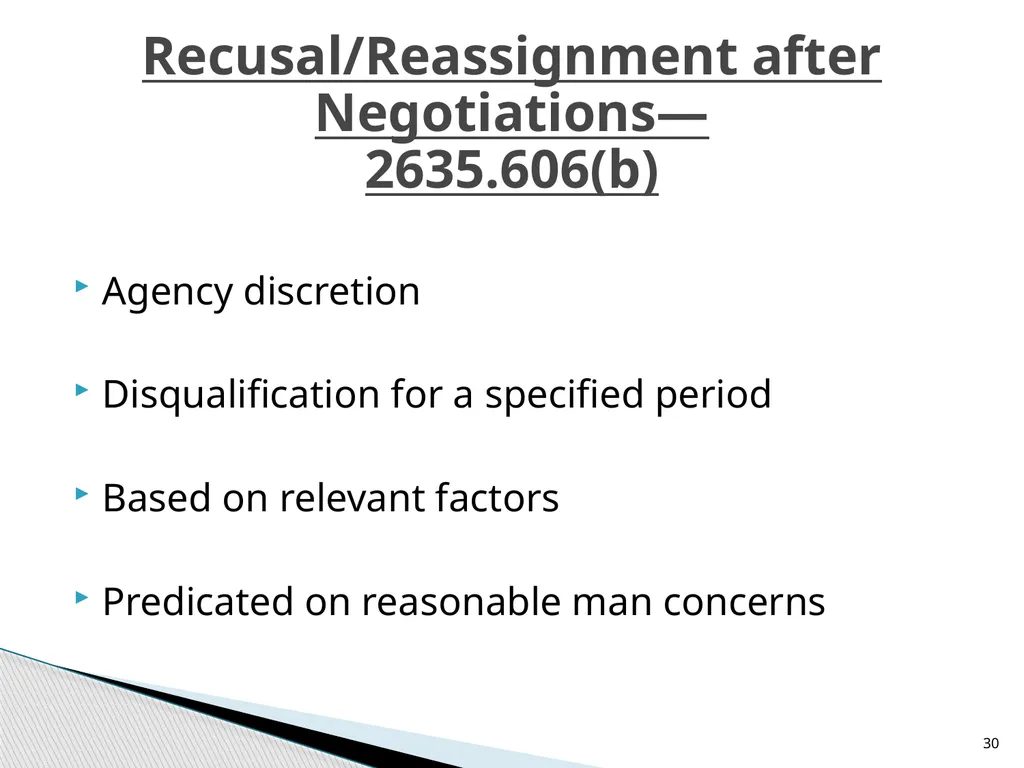
slide30. Agency discretion
Disqualification for a specified period
Based on relevant factors
Predicated on reasonable man concerns 30 Recusal/Reassignment after Negotiations—2635.606(b)<br>
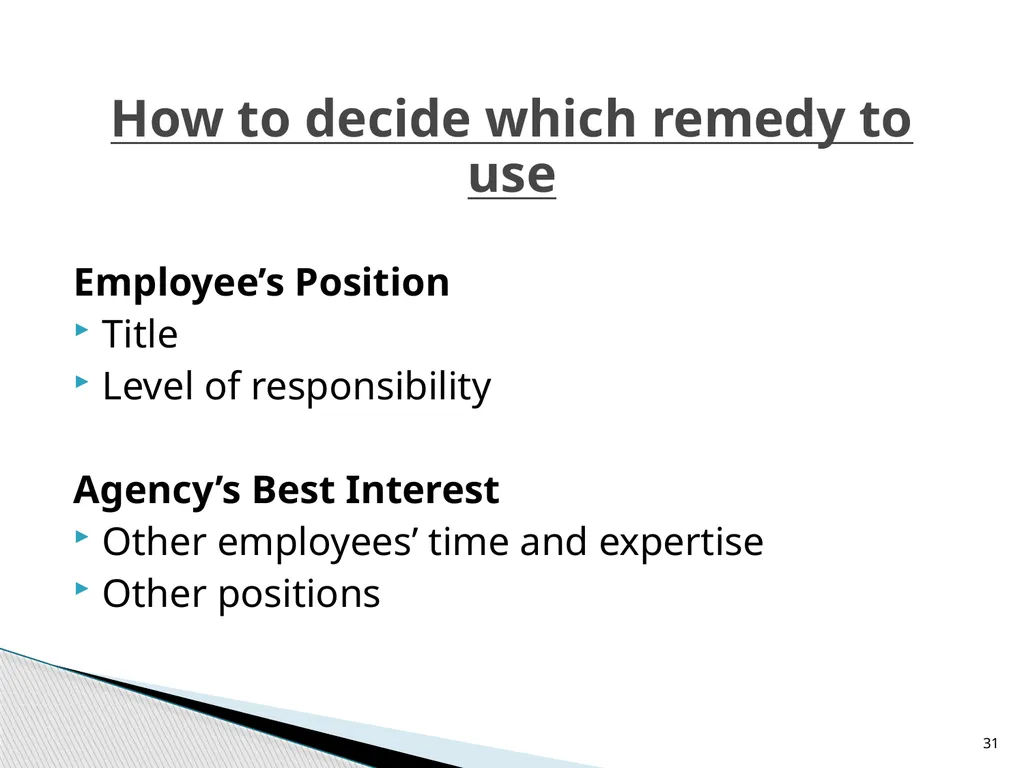
slide31. Employee’s Position
Title
Level of responsibility
Agency’s Best Interest
Other employees’ time and expertise
Other positions 31 How to decide which remedy to use<br>
slide32. STOCK Act Notifications<br>
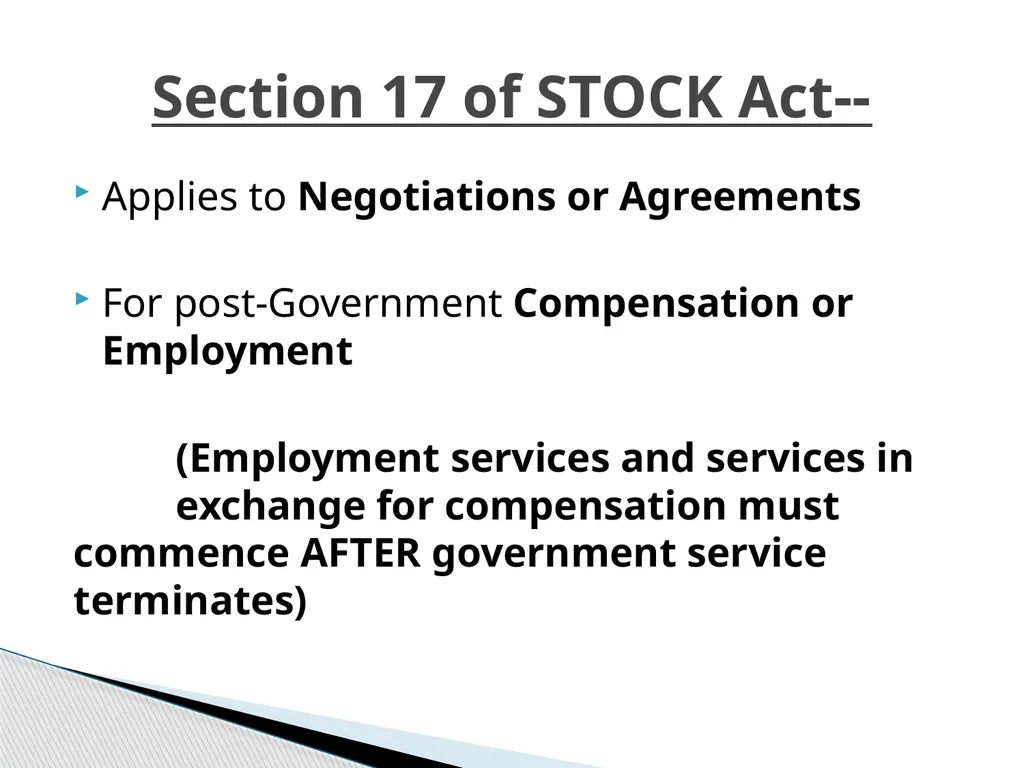
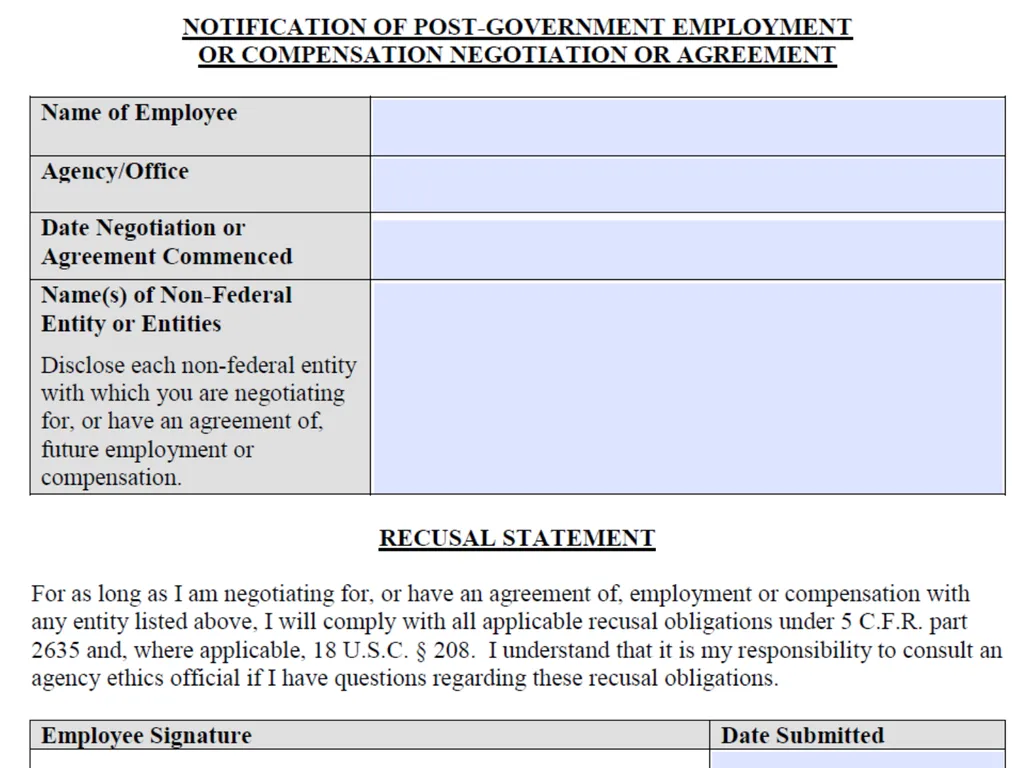
slide33. Applies to Negotiations or Agreements
For post-Government Compensation or Employment
(Employment services and services in exchange for compensation must commence AFTER government service terminates) Section 17 of STOCK Act--<br>
slide34. compensation must be in exchange for the provision of personal services
includes any form of consideration, remuneration, or income, as well as royalties
compensation in the form of transportation, lodgings, and meals can also trigger the notification requirement Compensation<br>
slide35. A “covered employee” is any individual who is required to file a public financial disclosure report under section 101 of the Ethics in Government Act of 1978 (EIGA). Who Must File?<br>
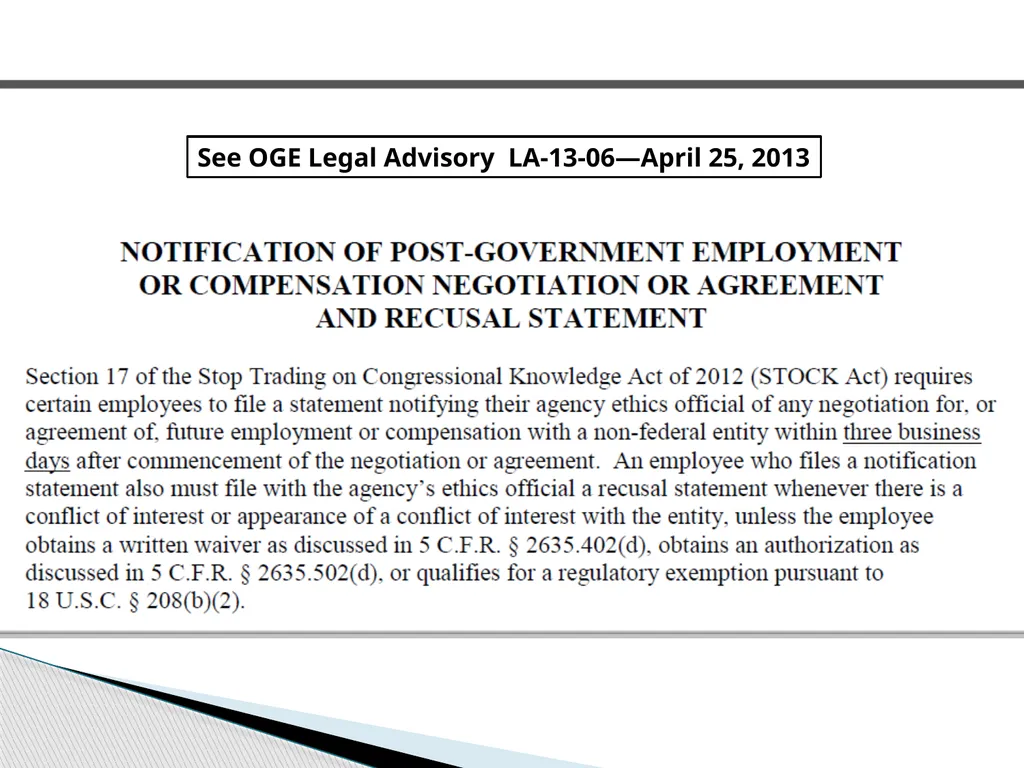
slide36. See OGE Legal Advisory LA-13-06—April 25, 2013<br>
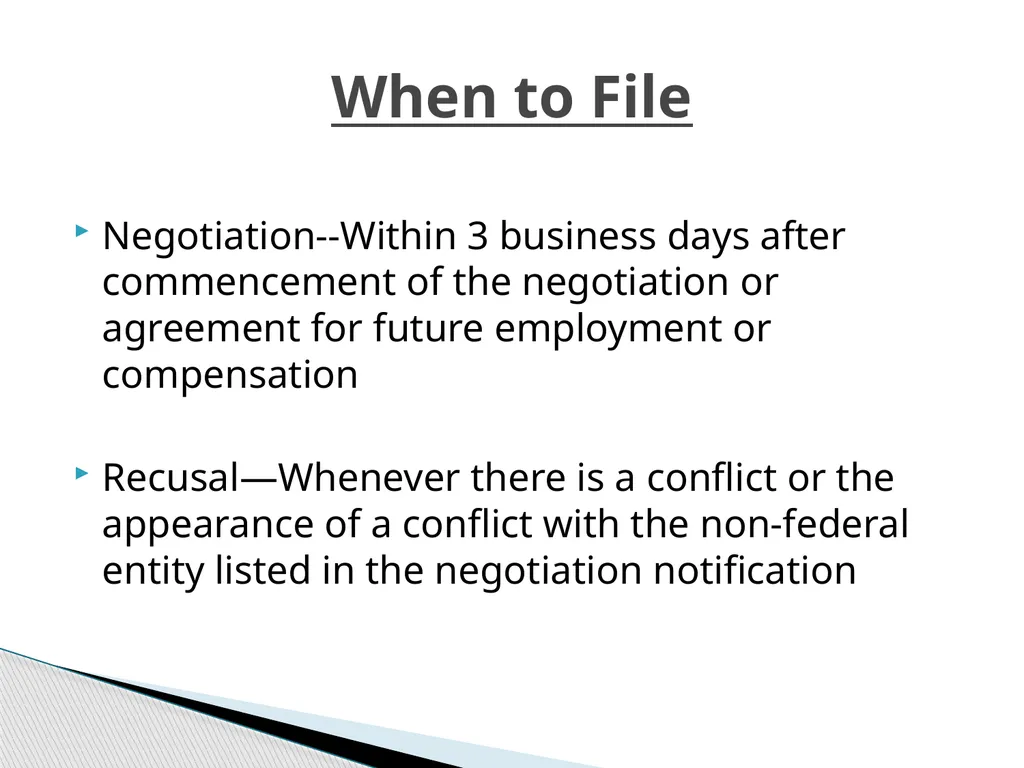
slide38. Negotiation--Within 3 business days after commencement of the negotiation or agreement for future employment or compensation
Recusal—Whenever there is a conflict or the appearance of a conflict with the non-federal entity listed in the negotiation notification When to File<br>
slide39. A public filer may elect to file the notification statement before negotiations have commenced and before an agreement of future employment or compensation is reached.
A public filer may also elect to file the recusal statement before the public filer has a conflict of interest or appearance of a conflict of interest with the non-Federal entity identified in the notification statement. When to File<br>
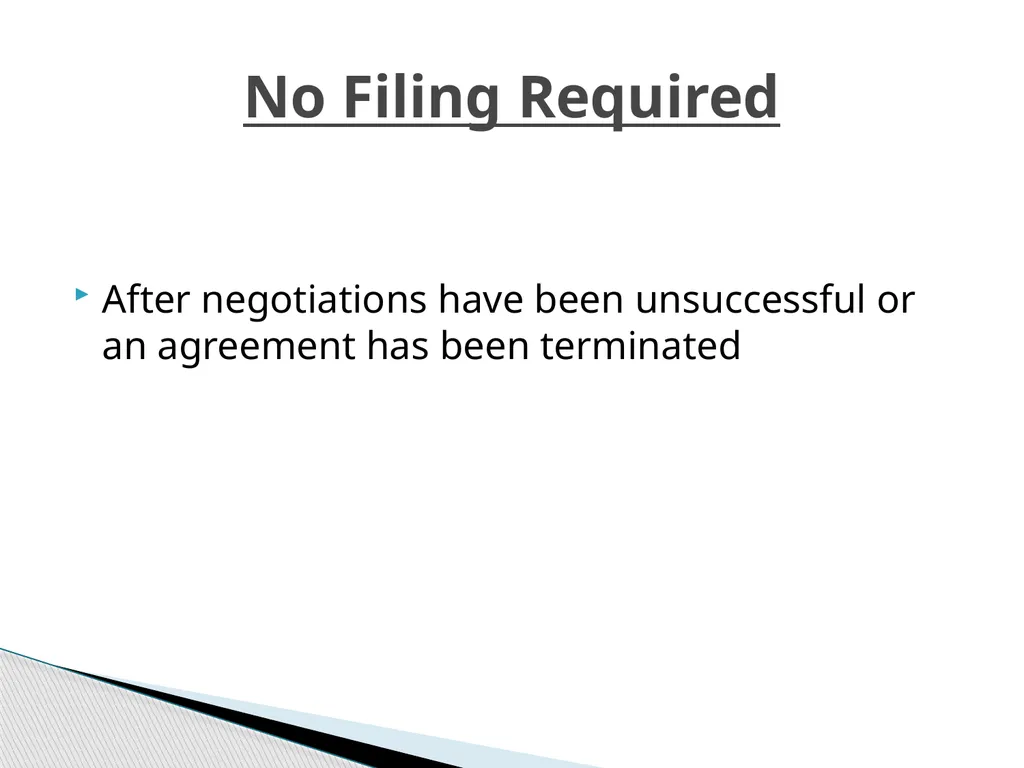
slide40. After negotiations have been unsuccessful or an agreement has been terminated No Filing Required<br>
slide41. An agency ethics official
Though not required, it may also be necessary to inform the employee’s supervisor With Whom to File<br>

slide2. Subpart F—2635.601(a)<br>
slide3. Disqualification requirement:
When prospective employer’s financial interest can be affected by government matters employee works on Seeking Restrictions<br>
slide4. No requirement to cease and desist job search activities Seeking Restrictions<br>
slide5. Implement BOTH:
Criminal provisions of 18 USC section 208
Broader provisions of EO 12674, section 101(j) Subpart F Restrictions<br>
slide6. Negotiating or arrangement for employment Criminal
restriction Subpart F 18 USC 208<br>
slide7. Pre-negotiation
communications Regulatory
restriction Subpart F<br>
slide8. Rationale Behind Subpart F Prophylactic measure to keep employees well away from
violating § 208<br>
slide9. Can the employee’s official duties affect the prospective employer?
Is the employee seeking or negotiating employment? 9 Ethics Official—Job Search Analysis<br>
slide10. Personal and substantial participation
Particular matter
Financial interest of prospective employer
Direct and predictable effect 10 Official Duties Affect Prospective Employer?<br>
slide11. Is the employee seeking employment?
Can the employee’s official duties affect the prospective employer? 11 Employee—Analyzing Job Searches<br>
slide12. 2635.603(a)—Non-federal “employment” defined What is “Employment?”<br>
slide13. 2635.603(b)(1) What is “Seeking Employment?”<br>
slide14. 2635.603(b)(1)(ii)(A) and (B)
(A) Request an application
(B) Submit a resume to someone affected by employee’s duties as
part of an industry or discrete class 14 Not Seeking Employment<br>
slide15. John goes to Macy’s over his lunch hour and asks the store manager for a job application to fill out.
Unless or until John submits the application to Macy’s he is NOT yet seeking employment with Macy’s. Examples of NOT Seeking Employment<br>
slide16. 2. Jane is working on a program that will create incentives for the development of alternative fuels. She has sent her resume to various companies some of which are ethanol producers.
Because the companies in question would only be affected by the program Jane is working on as part of an industry or discrete class, she is NOT yet seeking employment unless or until she receives a response indicating interest in employment discussions. Examples of NOT Seeking Employment<br>
slide17. Unilateral communication about possible employment is initiated by:
Employee
Employer
Intermediary 17 Seeking Begins—2635.603(b)(1)(ii) and (iii)<br>
slide18. Bilateral communication about possible employment:
Not limited to discussions of specific terms 18 Negotiating Begins—2635.603(b)(1)(i)<br>
slide19. 1. I’ve just posted my resume on several on-line resume posting sites. Am I Seeking?<br>
slide20. 2. I’ve just received an email from someone indicating interest in my resume. I do not respond. Am I Seeking?<br>
slide21. 3. I’m using a headhunter and she just called to tell me 2 prospective employers are looking at my resume. Am I Seeking?<br>
slide22. 4. I just sent my resume to one of our agency’s grantees. Am I Seeking?<br>
slide23. 5. A friend of mine just called and asked me to send him my resume for a job opening at his office. Am I Seeking?<br>
slide24. 6. After our status update meeting with the private contractor, one of the contractor employees asked me if I’d like to come work for them on a similar project. Am I Seeking?<br>
slide25. (i) Employment rejected and all discussions ceased
(Deferment of discussions until a future date is NOT a rejection of employment.)
(ii) Employer expressed no interest within two months of dispatch of resume 25 Seeking Employment Ends2635.603(b)(2)(i) and (ii)<br>
slide26. Facts of the situation
Where the employee is in the seeking employment process 26 Which Job Search Remedy?<br>
slide27. Waiver or Authorization—2635.605 208 Waiver Subpart F Authorization Rare for negotiations
Statutory remedy based on tests
Consult with OGE and Office of Counsel to President on PAS negotiation waivers Possible when employee makes:
An unsolicited communication about employment
A response other than rejection to employment overture
Impossible when
Negotiating<br>
slide28. Based on agency determination of substantial conflict
Annual leave
Leave without pay
Reassignment, etc. 28 Administrative Action—2635.604(d)<br>
slide29. Can recommend BUT CANNOT compel--
Defer search until after leaving the government
High-level officials responsible for
Entire agency
Major program 29 Defer Job Search<br>
slide30. Agency discretion
Disqualification for a specified period
Based on relevant factors
Predicated on reasonable man concerns 30 Recusal/Reassignment after Negotiations—2635.606(b)<br>
slide31. Employee’s Position
Title
Level of responsibility
Agency’s Best Interest
Other employees’ time and expertise
Other positions 31 How to decide which remedy to use<br>
slide32. STOCK Act Notifications<br>
slide33. Applies to Negotiations or Agreements
For post-Government Compensation or Employment
(Employment services and services in exchange for compensation must commence AFTER government service terminates) Section 17 of STOCK Act--<br>
slide34. compensation must be in exchange for the provision of personal services
includes any form of consideration, remuneration, or income, as well as royalties
compensation in the form of transportation, lodgings, and meals can also trigger the notification requirement Compensation<br>
slide35. A “covered employee” is any individual who is required to file a public financial disclosure report under section 101 of the Ethics in Government Act of 1978 (EIGA). Who Must File?<br>
slide36. See OGE Legal Advisory LA-13-06—April 25, 2013<br>
slide38. Negotiation--Within 3 business days after commencement of the negotiation or agreement for future employment or compensation
Recusal—Whenever there is a conflict or the appearance of a conflict with the non-federal entity listed in the negotiation notification When to File<br>
slide39. A public filer may elect to file the notification statement before negotiations have commenced and before an agreement of future employment or compensation is reached.
A public filer may also elect to file the recusal statement before the public filer has a conflict of interest or appearance of a conflict of interest with the non-Federal entity identified in the notification statement. When to File<br>
slide40. After negotiations have been unsuccessful or an agreement has been terminated No Filing Required<br>
slide41. An agency ethics official
Though not required, it may also be necessary to inform the employee’s supervisor With Whom to File<br>