Sequence Variant Literature Search Tips and Tricks Jessica Mester, MS, LCGC Disclosure I am an employee of GeneDx, Inc., a wholly-owned subsidiary of OPKO Health, Inc. Overview Effective use of variant nomenclature in your lit search Where
"Sequence Variant Literature Search Tips and Tricks" is the property of its rightful owner. Permission is granted to
download and print the materials on this website for personal, non-commercial use only, and to display it
on your personal computer provided you do not modify the materials and that you retain all copyright
notices contained in the materials. By downloading content from our website, you accept the terms of this
agreement.
Presentation Transcript
01
Sequence Variant Literature Search Tips and Tricks Jessica Mester, MS, LCGC<br>
02
Disclosure I am an employee of GeneDx, Inc., a wholly-owned subsidiary of OPKO Health, Inc.<br>
03
Overview Effective use of variant nomenclature in your lit search
Where to look?
Common lit search speed bumps and how to overcome them<br>
04
Purpose of the literature search Find articles that allow for application of ACMG criteria during variant curation
Functional studies
Case reports (de novo, segregation, phenotype, co-occurrence)
Molecular characterization
Case-control data
Evidence might be for or against pathogenicity
Better understand phenotypic spectrum
There is not one perfect literature search tool – combination of sources might be necessary!<br>
05
Starting your search HGMD (Human Gene Mutation Database, http://www.hgmd.cf.ac.uk/ac/index.php)
Professional ($$$) version
Public (free) version – 3 years behind, available to academic/non-profit users
Gene-specific databases
Several listed at https://grenada.lumc.nl/LSDB_list/lsdbs (Locus Specific Database List), maintained by LOVD
If you are focusing on one gene/disease, and it has a dedicated variant database, become best friends with that resource!
ClinVar: some submitters provide citations, not all specific to variant Make sure to review the article yourself to ensure your specific variant is actually present!<br>
06
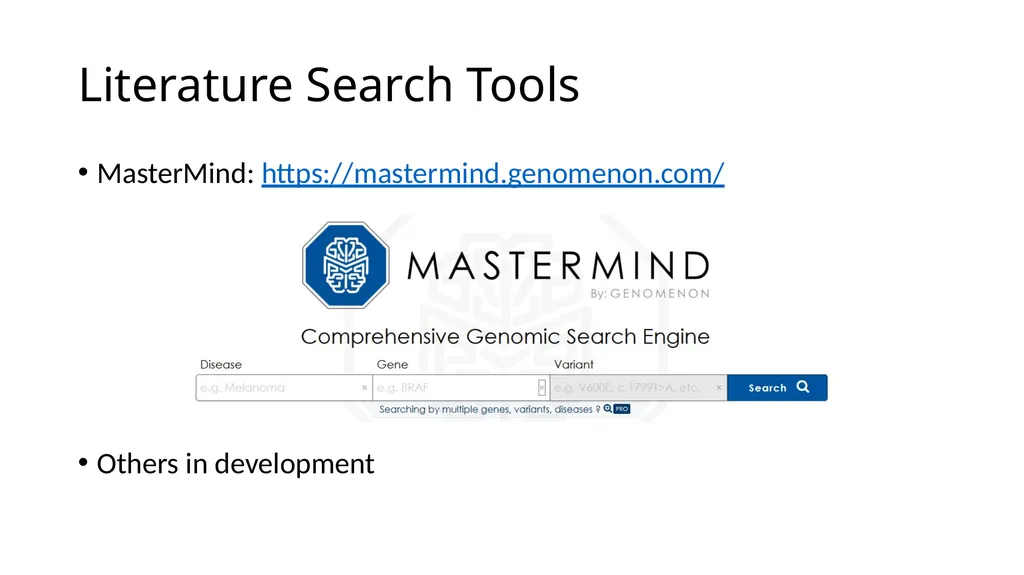
Literature Search Tools MasterMind: https://mastermind.genomenon.com/
Others in development<br>
07
Google/GoogleScholar > PubMed PubMed: may “hit” if variant in abstract or title, but that’s it!
Google
Helpful: locates variants in article text, supplemental tables
Not as helpful: also finds non-genetics related links (ATM variants: finds you ATM machines at an address resembling your variant nomenclature)
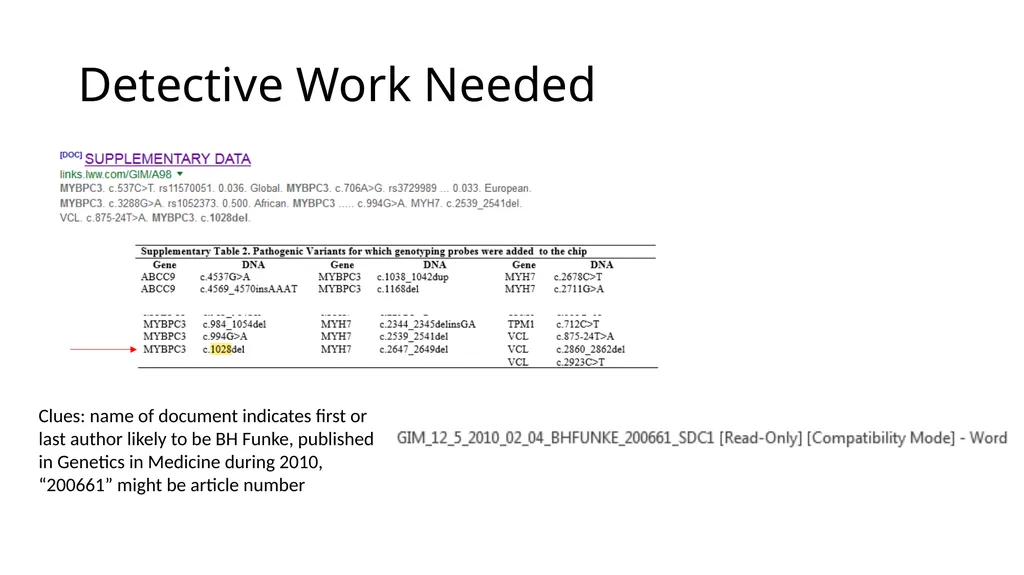
Detective work sometimes needed to figure out what article a table is from
GoogleScholar
Limited to published academic literature
Better than regular google at finding variants in tables within a paper<br>
08
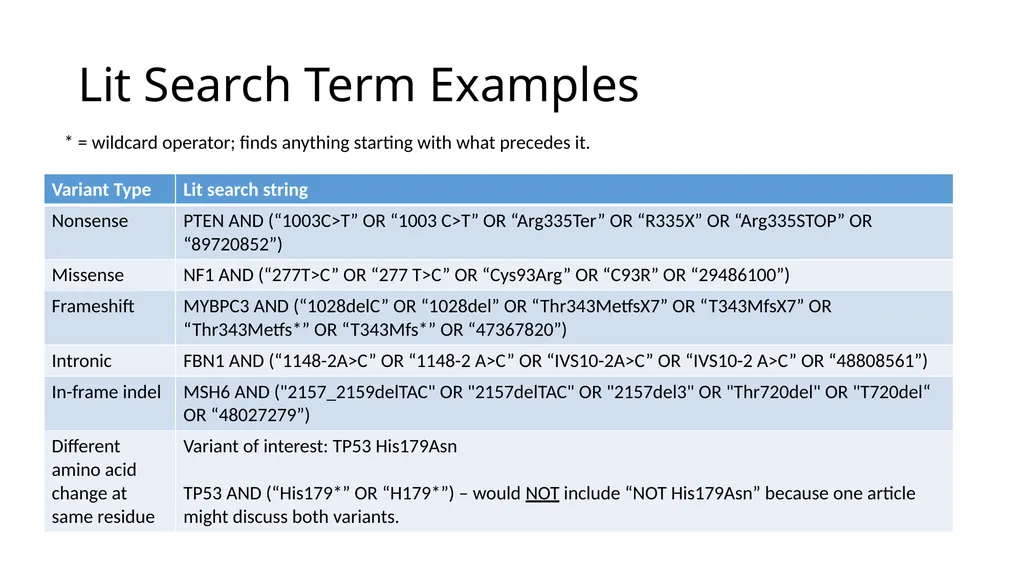
Building Google Search Terms GENE AND (“V1” OR “V2” OR “V3”….)
Take a “generous” approach to nomenclature – authors might not use strict HGVS format!
Include genomic position (GRCh37/hg19 still most used)
Remember alternate or “historic” gene names (STK11 = LKB1, NBN = NBS1…)
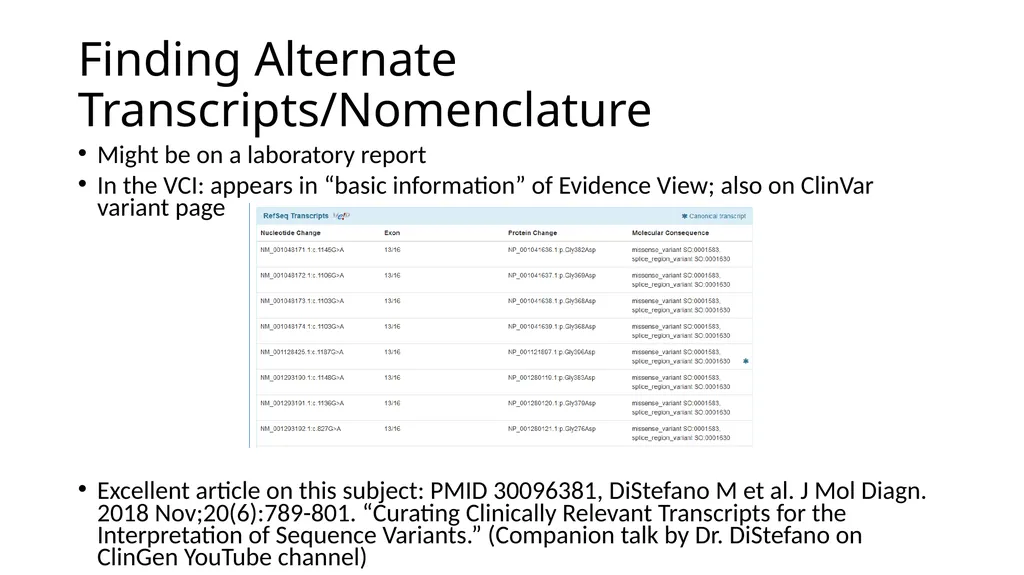
Know if alternate transcripts or nomenclature used in addition to HGVS (standard)
MUTYH: alternate transcripts (c.1187G>A/p.G396D = c.1145G>A/p.G382D)
BRCA1/2: BIC nomenclature; nucleotide numbering starts at the beginning of the cDNA clone.
Watch for “push to the right”<br>
09
Finding Alternate Transcripts/Nomenclature Might be on a laboratory report
In the VCI: appears in “basic information” of Evidence View; also on ClinVar variant page
Excellent article on this subject: PMID 30096381, DiStefano M et al. J Mol Diagn. 2018 Nov;20(6):789-801. “Curating Clinically Relevant Transcripts for the Interpretation of Sequence Variants.” (Companion talk by Dr. DiStefano on ClinGen YouTube channel)<br>
10
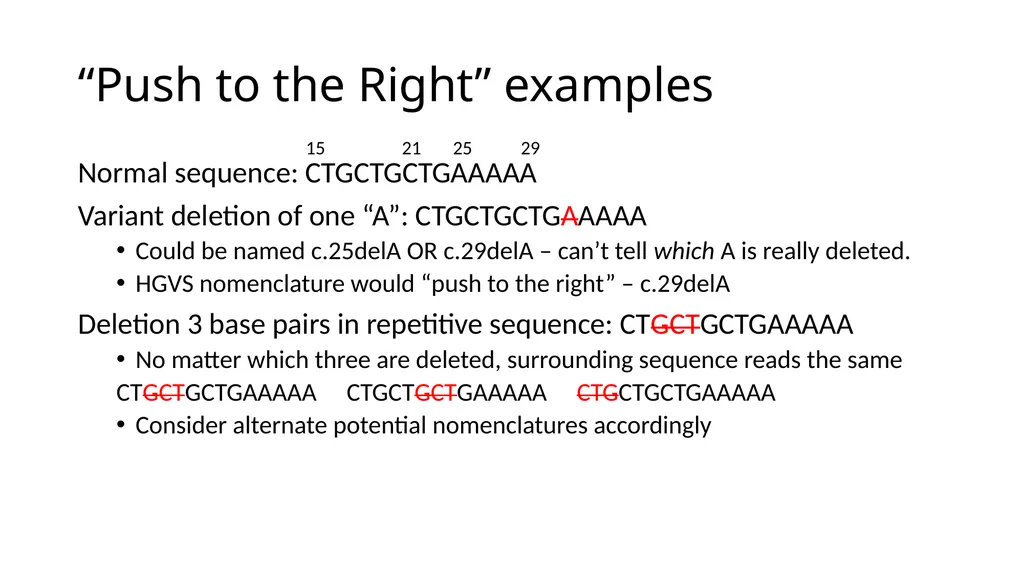
“Push to the Right” examples Normal sequence: CTGCTGCTGAAAAA
Variant deletion of one “A”: CTGCTGCTGAAAAA
Could be named c.25delA OR c.29delA – can’t tell which A is really deleted.
HGVS nomenclature would “push to the right” – c.29delA
Deletion 3 base pairs in repetitive sequence: CTGCTGCTGAAAAA
No matter which three are deleted, surrounding sequence reads the same
CTGCTGCTGAAAAA CTGCTGCTGAAAAA CTGCTGCTGAAAAA
Consider alternate potential nomenclatures accordingly 15 21 25 29<br>
11
Lit Search Term Examples * = wildcard operator; finds anything starting with what precedes it.<br>
12
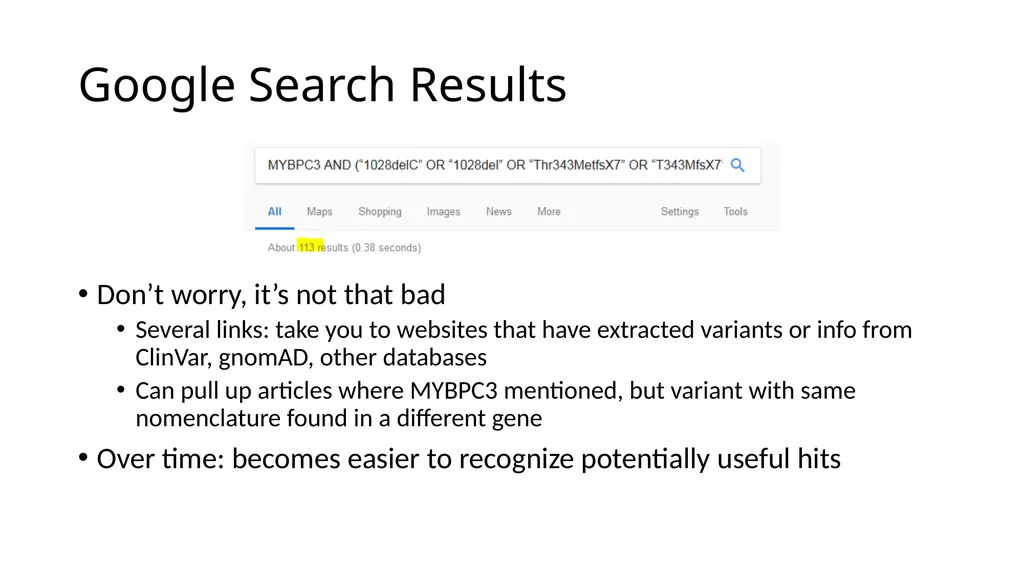
Google Search Results Don’t worry, it’s not that bad
Several links: take you to websites that have extracted variants or info from ClinVar, gnomAD, other databases
Can pull up articles where MYBPC3 mentioned, but variant with same nomenclature found in a different gene
Over time: becomes easier to recognize potentially useful hits<br>
13
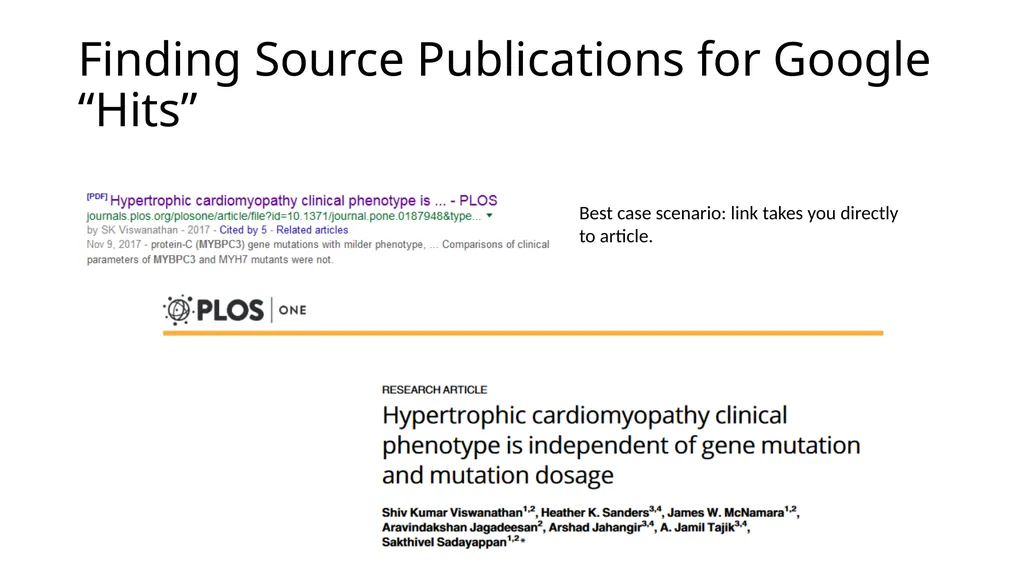
Finding Source Publications for Google “Hits” Best case scenario: link takes you directly to article.<br>
14
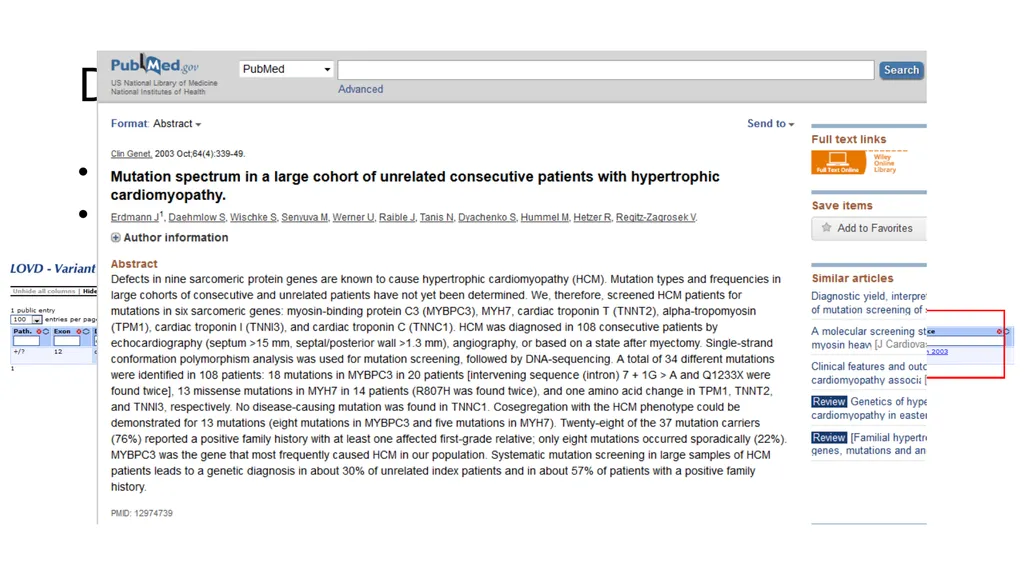
Database “Hits” ClinVar: typically top of search results
LOVD entry<br>
15
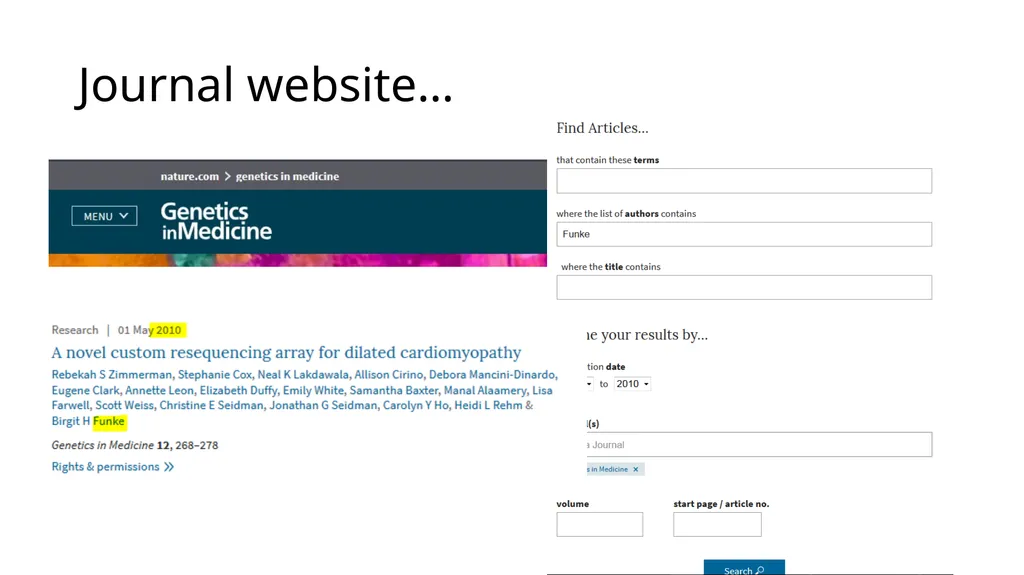
Detective Work Needed Clues: name of document indicates first or last author likely to be BH Funke, published in Genetics in Medicine during 2010, “200661” might be article number<br>
16
Journal website…<br>
17
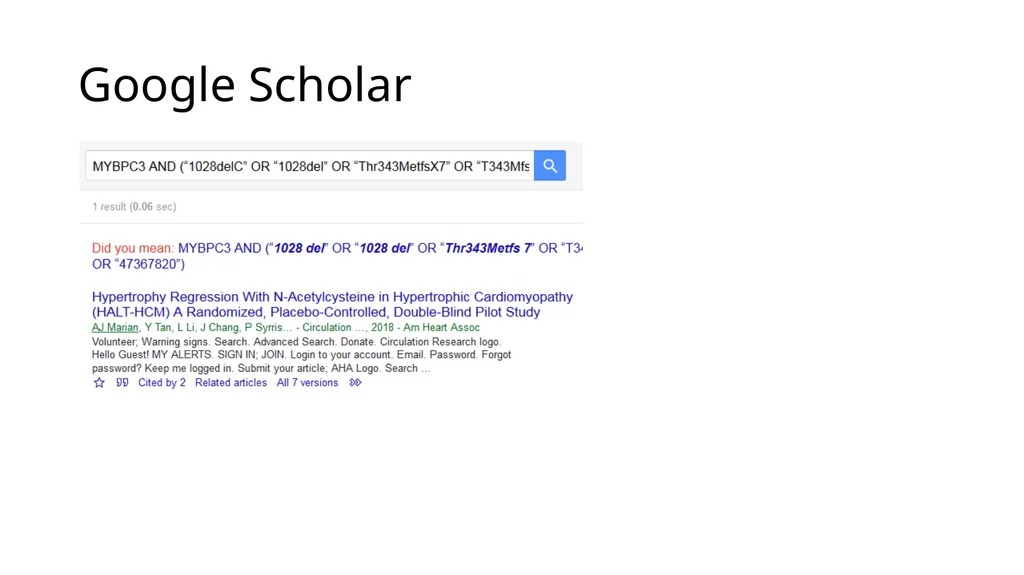
Google Scholar<br>
18
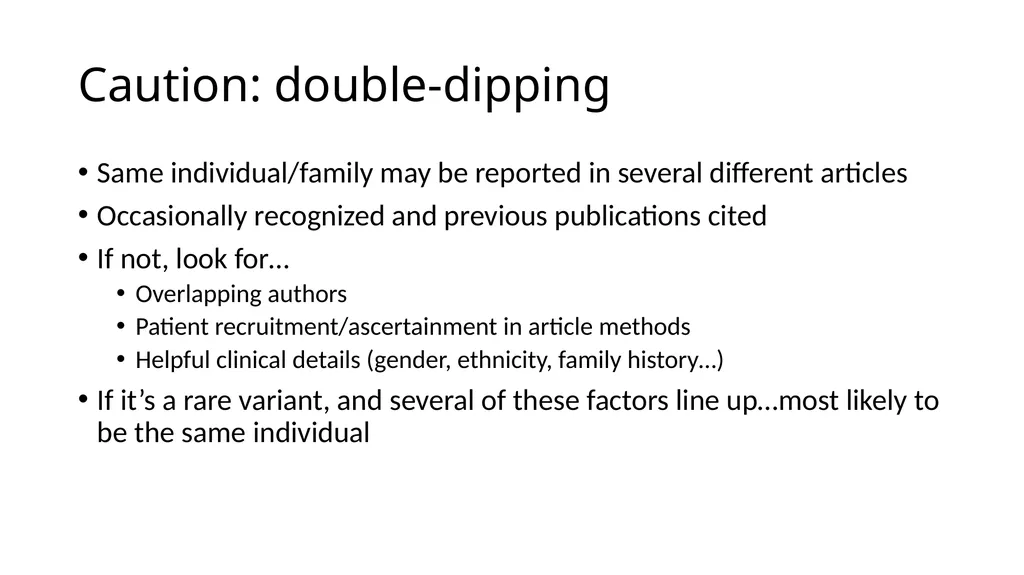
Caution: double-dipping Same individual/family may be reported in several different articles
Occasionally recognized and previous publications cited
If not, look for…
Overlapping authors
Patient recruitment/ascertainment in article methods
Helpful clinical details (gender, ethnicity, family history…)
If it’s a rare variant, and several of these factors line up…most likely to be the same individual<br>
19
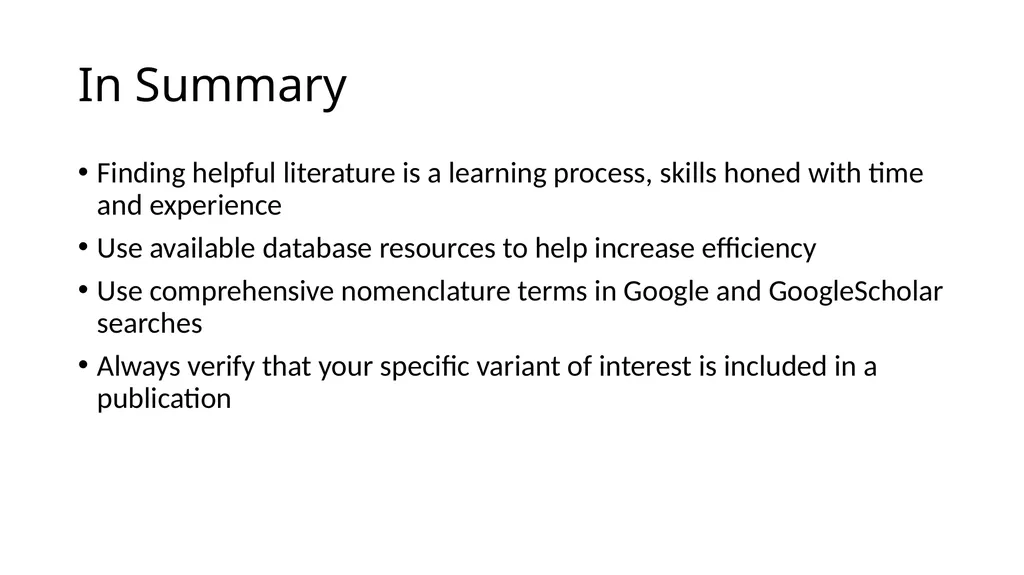
In Summary Finding helpful literature is a learning process, skills honed with time and experience
Use available database resources to help increase efficiency
Use comprehensive nomenclature terms in Google and GoogleScholar searches
Always verify that your specific variant of interest is included in a publication<br>
20
Thank You! ClinGen Education Working Group Karen Wain
Danielle Azzaritti
Sarah Barnett
Lisa Kurtz
Erin Riggs PTEN VCEP Biocurators Felicia Hernandez
Melody Perpich
Kaitlin Sesock
Other ClinGen/Broad folks
Jenny Goldstein
Steven Harrison
Becky Siegert<br>
21
www.clinicalgenome.org
clingen@clinicalgenome.org ClinGen is primarily funded through NHGRI through the following three grants:
U41HG006834, U41HG009649, U41HG009650.<br>