SESSION 3 Acceptance building the childs self -esteem The Secure Base model AVAILABILITY helping the child to trust FAMILY MEMBERSHIP helping the child to belong SENSITIVITY helping the child to manage feelings ACCEPTANCE building the
"SESSION 3 Acceptance –building the child’s self" is the property of its rightful owner. Permission is granted to
download and print the materials on this website for personal, non-commercial use only, and to display it
on your personal computer provided you do not modify the materials and that you retain all copyright
notices contained in the materials. By downloading content from our website, you accept the terms of this
agreement.
Presentation Transcript
01
SESSION 3 Acceptance –building the child’s self -esteem<br>
02
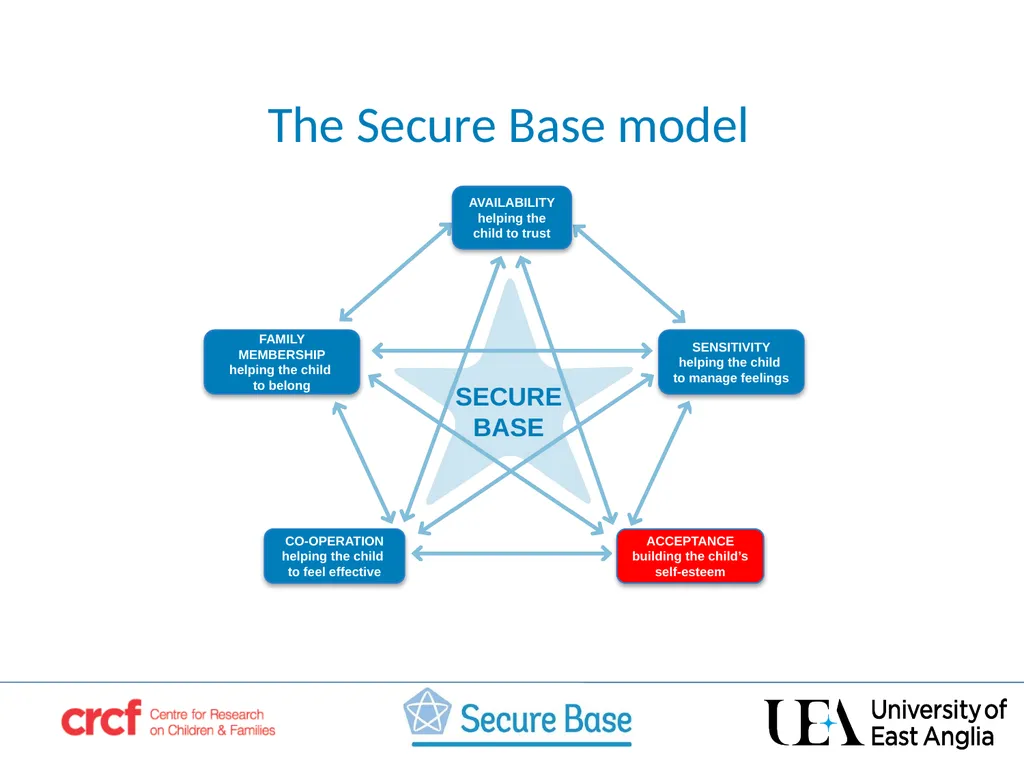
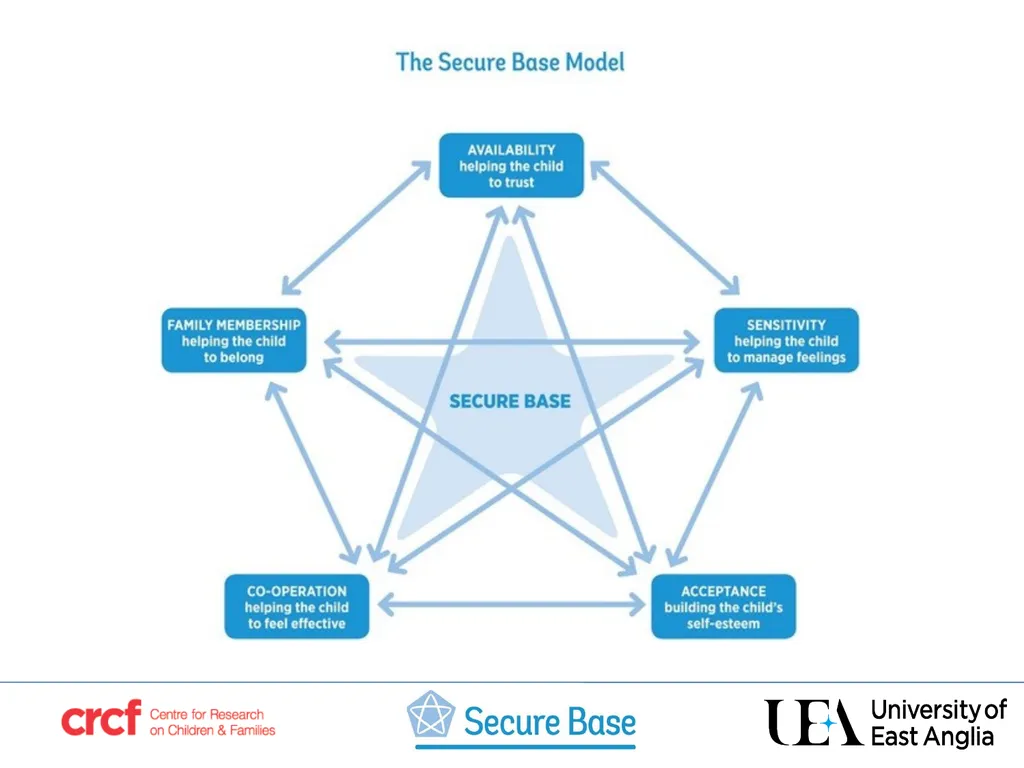
The Secure Base model AVAILABILITY
helping the child to trust FAMILY MEMBERSHIP
helping the child to belong SENSITIVITY
helping the child to manage feelings ACCEPTANCE
building the child’s self-esteem CO-OPERATION
helping the child to feel effective SECURE
BASE<br>
03
Sensitivity- helping the child to manage feelings: reflections task Think about the learning from the session and this dimension in relation to children in families you work with or children in your care.
Are there particular children who have become better able to express and manage their feelings because of the sensitive responsiveness of a caregiver?
Are there particular children who you think need help to express and manage their feelings and could benefit from some of the sensitivity caregiving strategies discussed e.g. naming feelings, story reading?
What are the benefits and challenges of offering sensitive, attuned care to children who struggle to manage their feelings? ?<br>
04
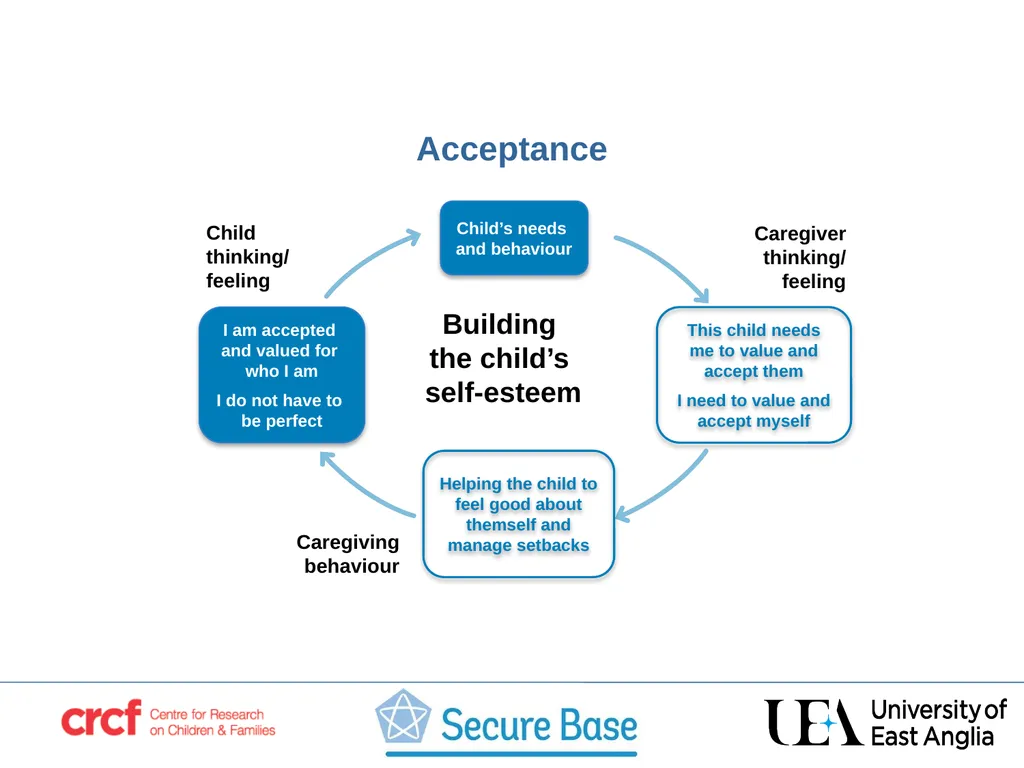
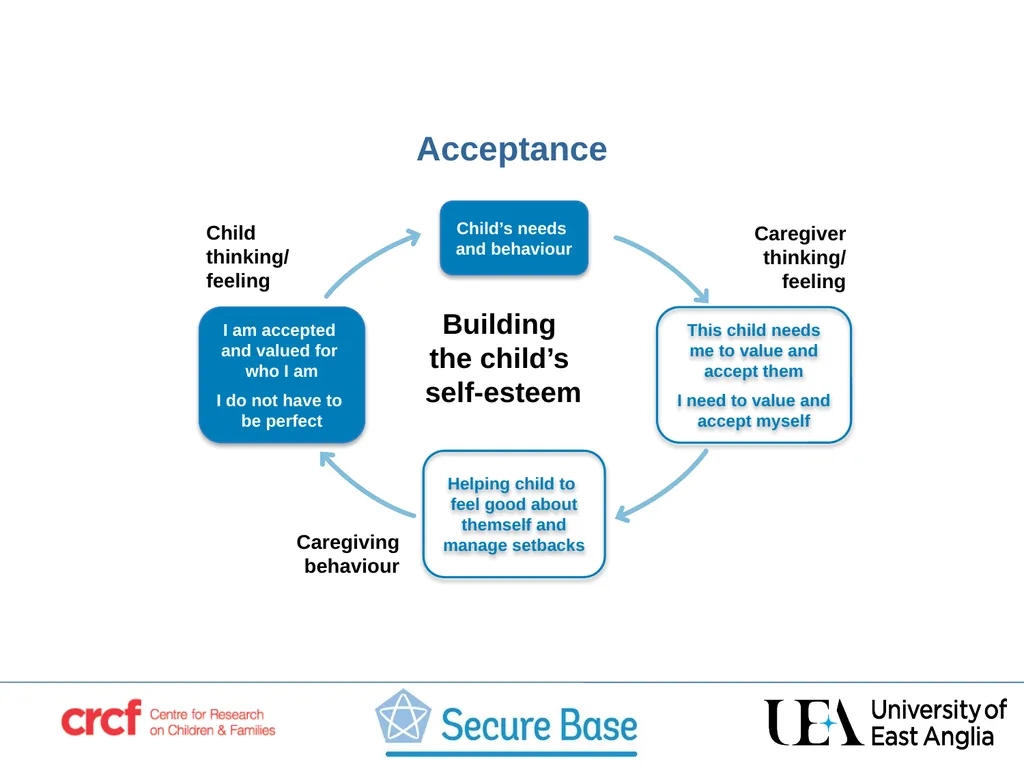
Acceptance Child’s needs and behaviour I am accepted and valued for who I am
I do not have to be perfect This child needs me to value and accept them
I need to value and accept myself Helping the child to feel good about themself and manage setbacks Building the child’s self-esteem Child
thinking/
feeling Caregiving behaviour Caregiver
thinking/
feeling<br>
05
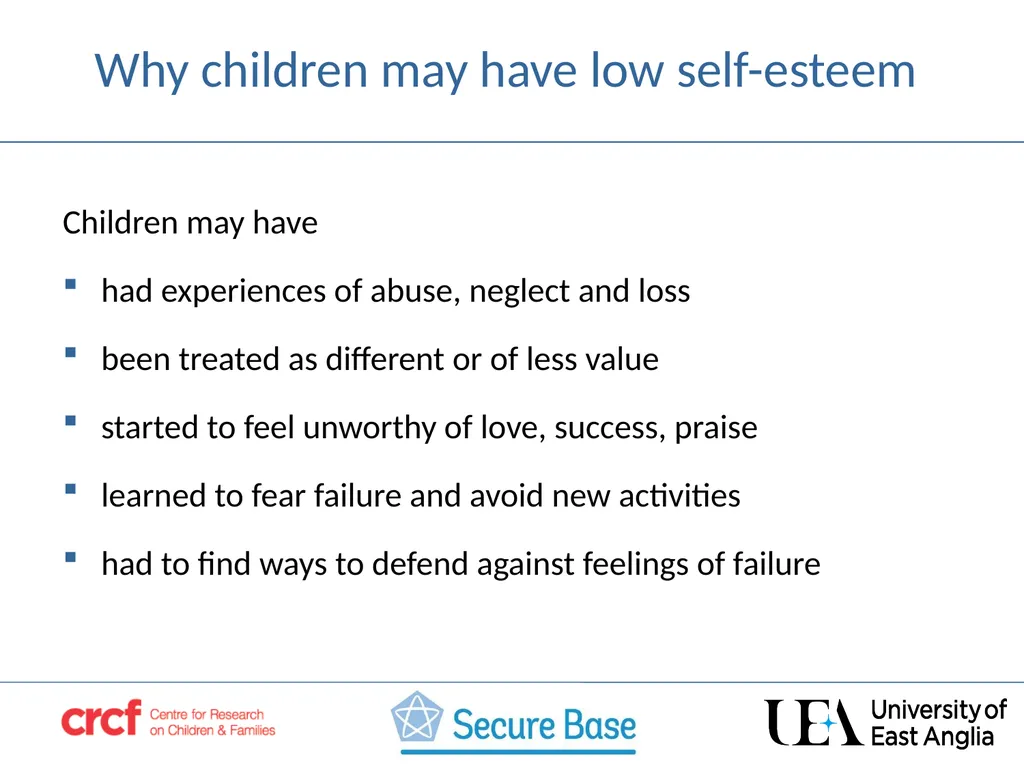
Why children may have low self-esteem Children may have
had experiences of abuse, neglect and loss
been treated as different or of less value
started to feel unworthy of love, success, praise
learned to fear failure and avoid new activities
had to find ways to defend against feelings of failure<br>
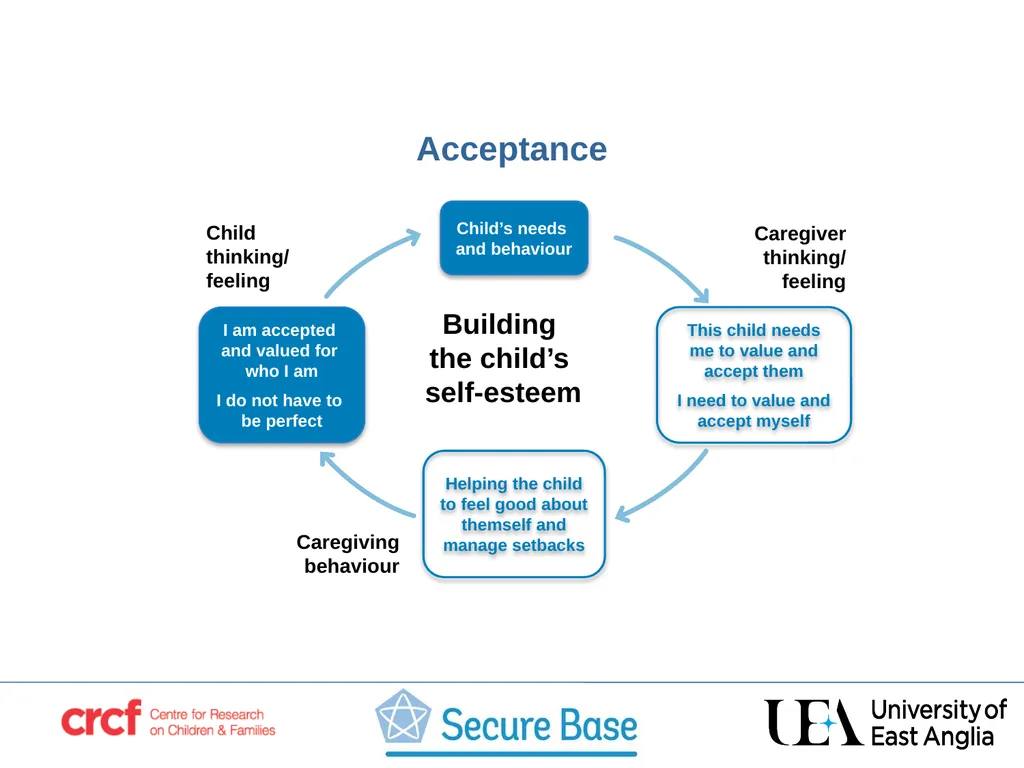
Acceptance Child’s needs and behaviour I am accepted and valued for who I am
I do not have to be perfect This child needs me to value and accept them
I need to value and accept myself Helping the child to feel good about themself and manage setbacks Building the child’s self-esteem Child
thinking/
feeling Caregiving behaviour Caregiver
thinking/
feeling<br>
08
Acceptance: caregiver thinking and feeling This child needs me to value and accept them
I need to value and accept myself<br>
09
EXERCISE 2 Valuing yourself Complete these statements
I am good at working with /caring for children because…
My best qualities are…
I am proud of the way I…
I have helped a child/children by…
Add two more positive statements about yourself.<br>
10
Refreshment break<br>
11
Acceptance Child’s needs and behaviour I am accepted and valued for who I am
I do not have to be perfect This child needs me to value and accept them
I need to value and accept myself Helping child to feel good about themself and manage setbacks Building the child’s self-esteem Child
thinking/
feeling Caregiving behaviour Caregiver
thinking/
feeling<br>
12
Acceptance -building the child’s self-esteem: caregiving behaviour Offering praise and positive attention
Encouraging activities and interests
Supporting the child with setbacks and disappointments
Accepting and supporting the child’s developing identity
Modelling and supporting the child to accept and celebrate difference e.g. ethnicity, abilities, appearance<br>
13
Offering and explaining praise ‘Kelly’s not used to being praised and she doesn’t always make the connection, so you have to spell it out to her. Instead of just saying ‘Well done’, we might say “You’ve done really well to get a good behaviour star. You must have tried hard. We’re really proud of you”.’ (Caregiver)<br>
14
Building self-esteem through activities ‘We encourage a lot of activities, because we want to build Gemma’s confidence and help her to be more sociable. So she goes to theatre school, and since she has done this we feel her confidence has grown more. This year she took the part of the main character in the school play and she was amazing – and she knew she was.’ (Caregiver)<br>
15
Showing pride - promoting self-esteem and resilience in a child with learning difficulties ‘Rob (11) loves his fishpond. Now he’s in charge of his own and he’s totally reliable in that department. We encourage him all we can. We say, “Rob’s the top pond man”. He gave his talk at school on goldfish and got top marks.’ (Caregiver)<br>
16
EXERCISE 3 Acceptance-building self-esteem: caregiving approaches Chloe (6m) is tiny for her age and is in foster care because she was failing to thrive. She is very quiet, easily startled and appears anxious and tense.
Scott (3) will not take the risk of trying anything new. He only eats very limited types of food and will not try new toys or wear new clothes.
When Jamilla (7) is praised or admired, she seems angry and says ‘Don’t say that’. Often she will then do something to invite a negative response.
Shayne (11) has dyslexia and is due to start high school soon. He is very anxious and says he doesn’t want to go because he won’t be able to do the work.<br>
17
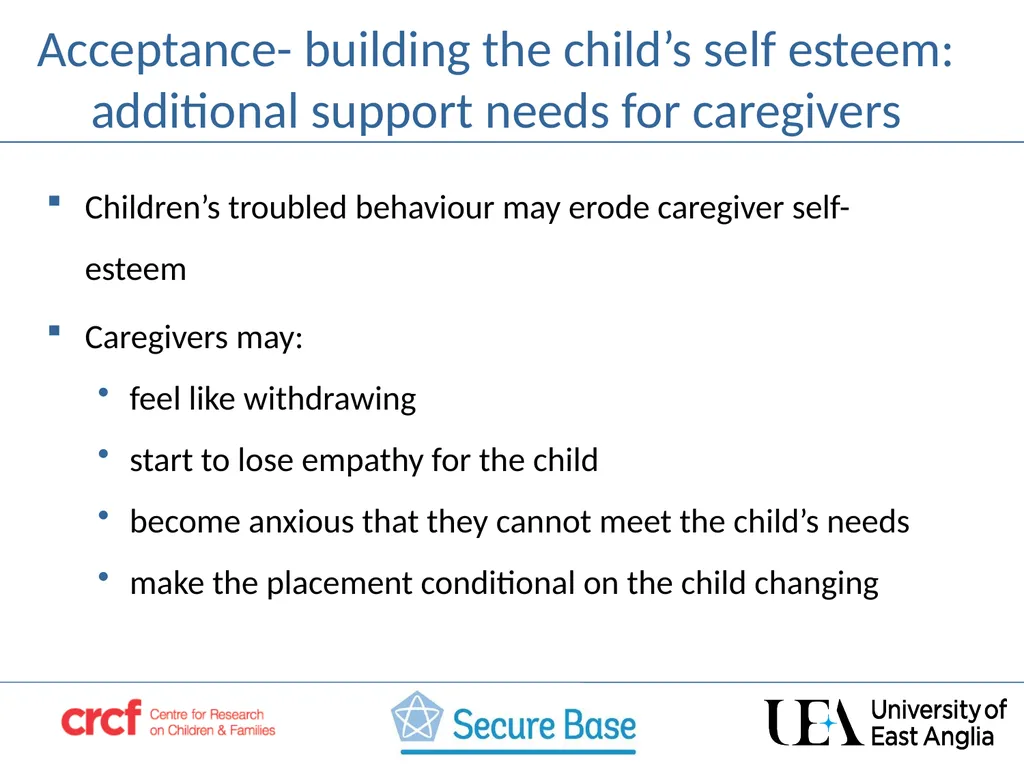
Acceptance- building the child’s self esteem: additional support needs for caregivers Children’s troubled behaviour may erode caregiver self-esteem
Caregivers may:
feel like withdrawing
start to lose empathy for the child
become anxious that they cannot meet the child’s needs
make the placement conditional on the child changing<br>
18
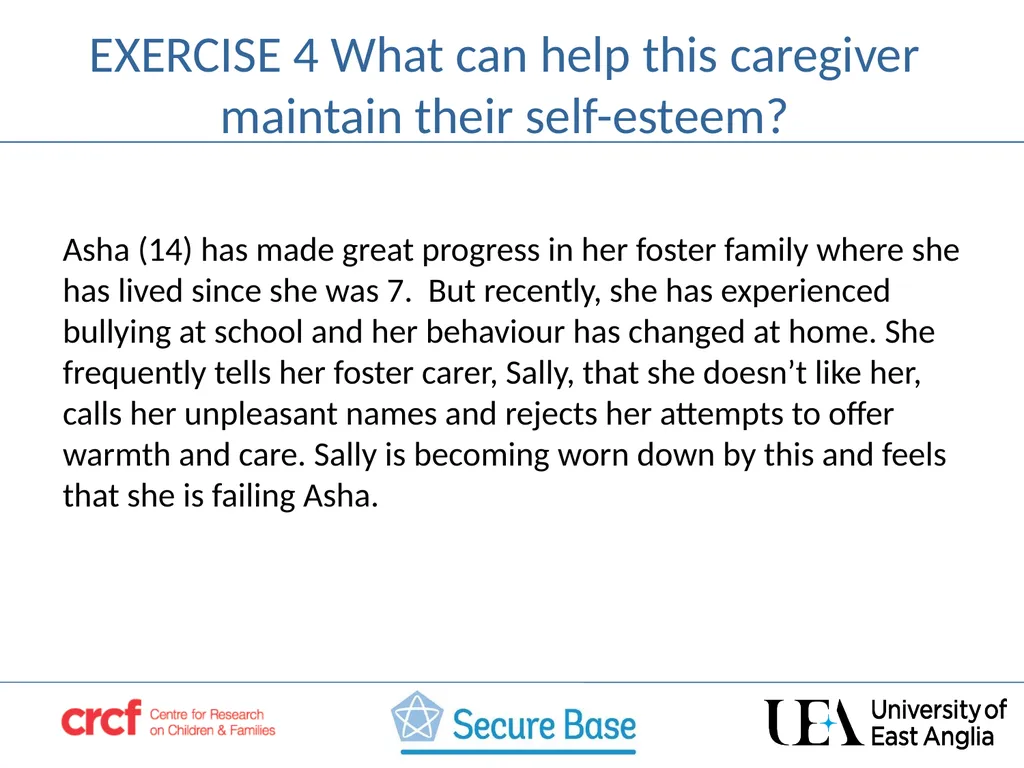
EXERCISE 4 What can help this caregiver maintain their self-esteem? Asha (14) has made great progress in her foster family where she has lived since she was 7. But recently, she has experienced bullying at school and her behaviour has changed at home. She frequently tells her foster carer, Sally, that she doesn’t like her, calls her unpleasant names and rejects her attempts to offer warmth and care. Sally is becoming worn down by this and feels that she is failing Asha.<br>
19
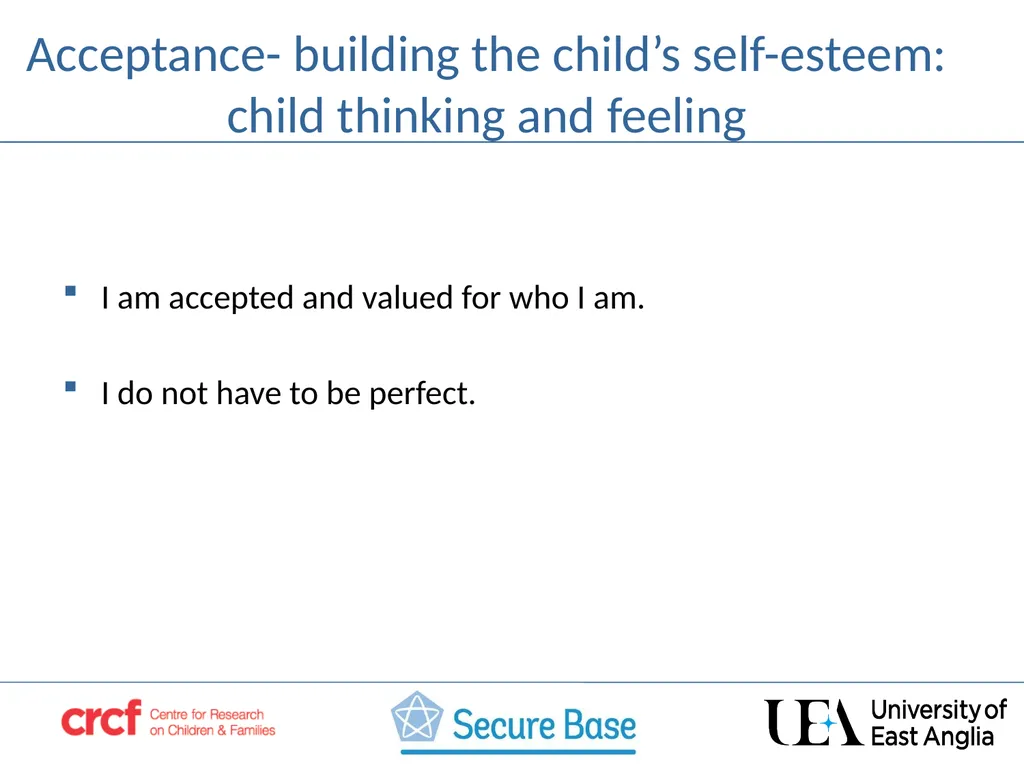
Acceptance- building the child’s self-esteem: child thinking and feeling I am accepted and valued for who I am.
I do not have to be perfect.<br>
20
Acceptance-building the child’s self-esteem: reflection task Before the next session, think about the learning from this session and this dimension in relation to children in families you work with or children in your care.
Are there particular children who had low self-esteem, but who started to value themselves once accepted and encouraged by caregivers?
Are there children who would benefit from some of the accepting caregiving strategies discussed today e.g. praise, help to enjoy activities?
What are the benefits and challenges of offering acceptance and support to children of different ages with low-self-esteem?<br>