
Session 4: Class and revolution “The remarks on
TF
Published · 14 slides · 0 views
1 / 1


Description
Session 4: Class and revolution The remarks on the relation of the Communists to the various opposition parties (Section IV), although, in principle still correct, yet in practice are antiquated, because the political situation has been
Related Topics
Share
Embed code
Download this presentation From Below
"Session 4: Class and revolution “The remarks on" is the property of its rightful owner. Permission is granted to download and print the materials on this website for personal, non-commercial use only, and to display it on your personal computer provided you do not modify the materials and that you retain all copyright notices contained in the materials. By downloading content from our website, you accept the terms of this agreement.
Presentation Transcript
01
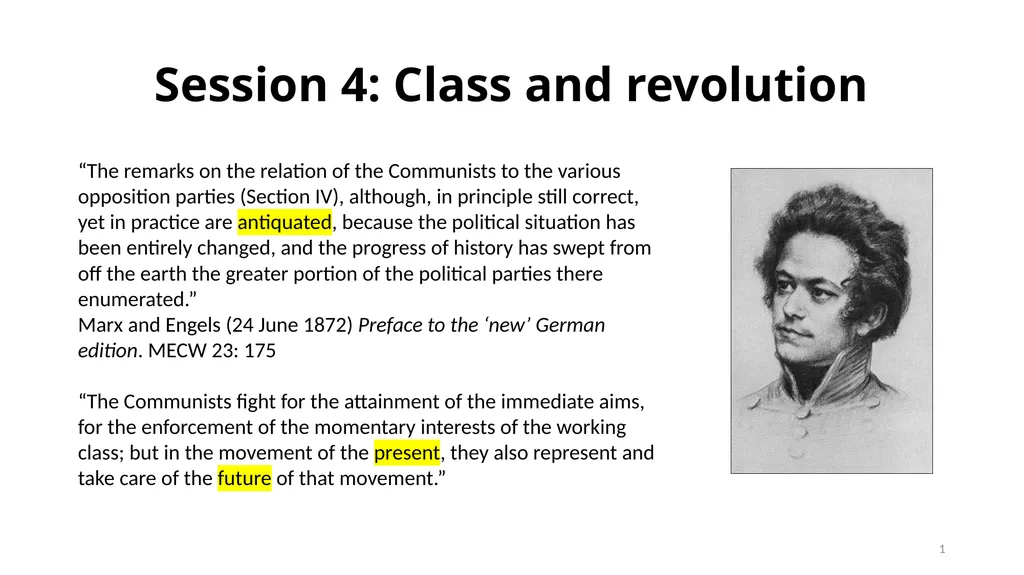
Session 4: Class and revolution “The remarks on the relation of the Communists to the various opposition parties (Section IV), although, in principle still correct, yet in practice are antiquated, because the political situation has been entirely changed, and the progress of history has swept from off the earth the greater portion of the political parties there enumerated.”
Marx and Engels (24 June 1872) Preface to the ‘new’ German edition. MECW 23: 175
“The Communists fight for the attainment of the immediate aims, for the enforcement of the momentary interests of the working class; but in the movement of the present, they also represent and take care of the future of that movement.” 1<br>
Marx and Engels (24 June 1872) Preface to the ‘new’ German edition. MECW 23: 175
“The Communists fight for the attainment of the immediate aims, for the enforcement of the momentary interests of the working class; but in the movement of the present, they also represent and take care of the future of that movement.” 1<br>
02
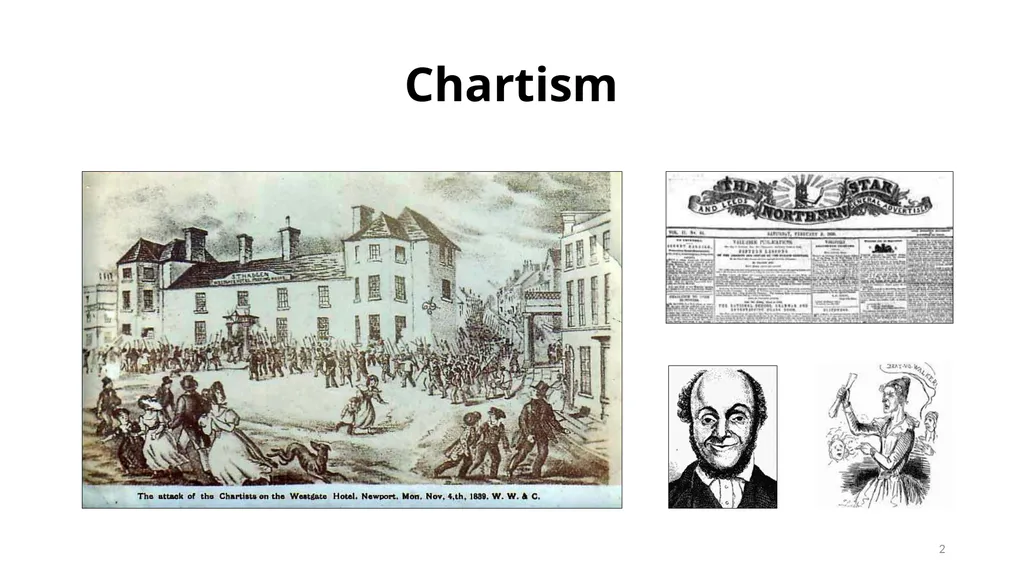
Chartism 2<br>
03
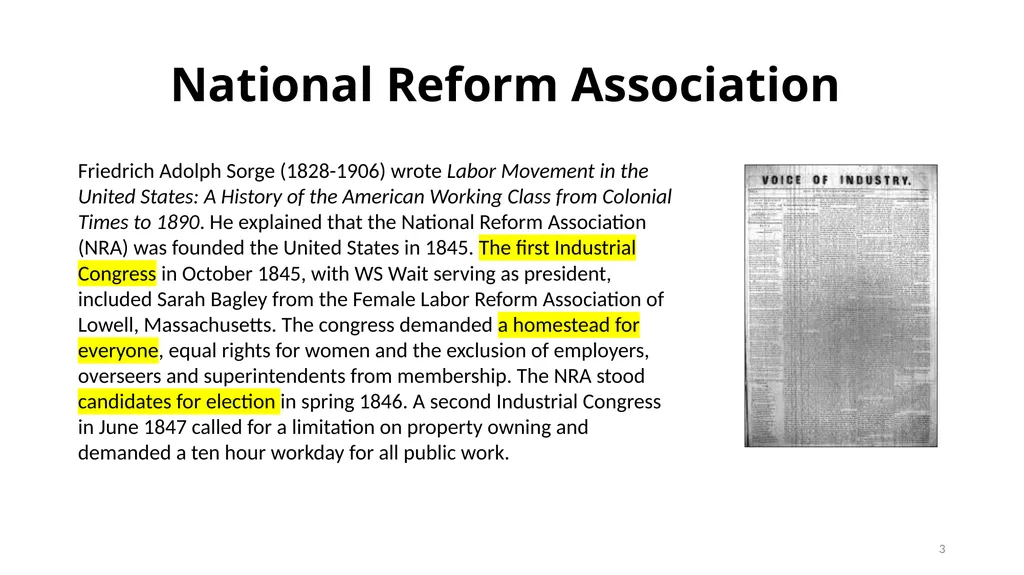
National Reform Association Friedrich Adolph Sorge (1828-1906) wrote Labor Movement in the United States: A History of the American Working Class from Colonial Times to 1890. He explained that the National Reform Association (NRA) was founded the United States in 1845. The first Industrial Congress in October 1845, with WS Wait serving as president, included Sarah Bagley from the Female Labor Reform Association of Lowell, Massachusetts. The congress demanded a homestead for everyone, equal rights for women and the exclusion of employers, overseers and superintendents from membership. The NRA stood candidates for election in spring 1846. A second Industrial Congress in June 1847 called for a limitation on property owning and demanded a ten hour workday for all public work. 3<br>
04
La Réforme in France “The socialist-democrats” were La Réforme tendency in France, led by Alexandre Ledru-Rollin and Louis Blanc.
“These democratic socialists are either proletarians who are not yet sufficiently clear about the conditions of the liberation of their class, or they are representatives of the petty bourgeoisie, a class which, prior to the achievement of democracy and the socialist measures to which it gives rise, has many interests in common with the proletariat.
“It follows that, in moments of action, the communists will have to come to an understanding with these democratic socialists, and in general to follow as far as possible a common policy with them – provided that these socialists do not enter into the service of the ruling bourgeoisie and attack the communists. It is clear that this form of co-operation in action does not exclude the discussion of differences.”
Engels (October 1847) Principles of Communism. MECW 6: 355 4<br>
“These democratic socialists are either proletarians who are not yet sufficiently clear about the conditions of the liberation of their class, or they are representatives of the petty bourgeoisie, a class which, prior to the achievement of democracy and the socialist measures to which it gives rise, has many interests in common with the proletariat.
“It follows that, in moments of action, the communists will have to come to an understanding with these democratic socialists, and in general to follow as far as possible a common policy with them – provided that these socialists do not enter into the service of the ruling bourgeoisie and attack the communists. It is clear that this form of co-operation in action does not exclude the discussion of differences.”
Engels (October 1847) Principles of Communism. MECW 6: 355 4<br>
05
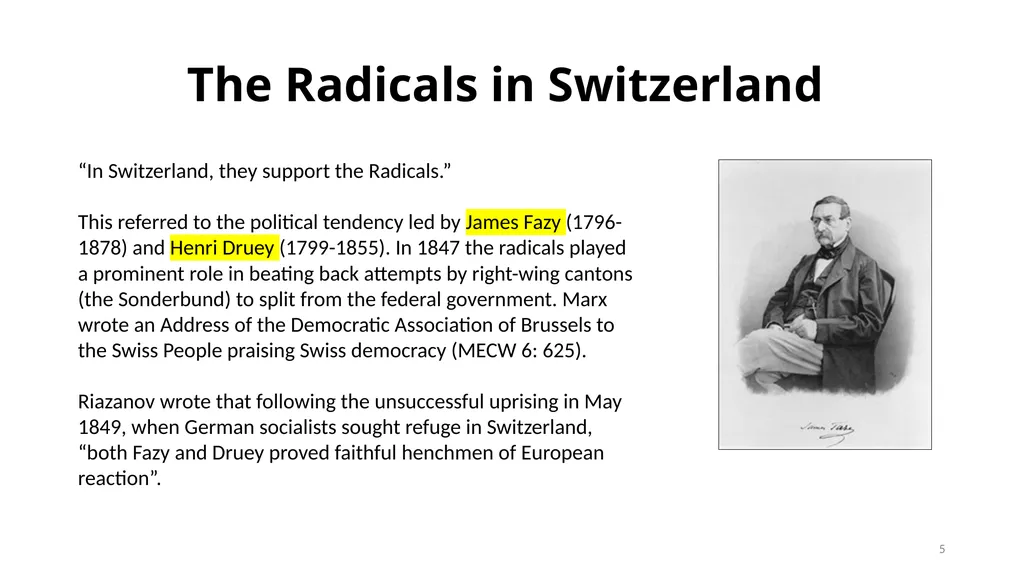
The Radicals in Switzerland “In Switzerland, they support the Radicals.”
This referred to the political tendency led by James Fazy (1796-1878) and Henri Druey (1799-1855). In 1847 the radicals played a prominent role in beating back attempts by right-wing cantons (the Sonderbund) to split from the federal government. Marx wrote an Address of the Democratic Association of Brussels to the Swiss People praising Swiss democracy (MECW 6: 625).
Riazanov wrote that following the unsuccessful uprising in May 1849, when German socialists sought refuge in Switzerland, “both Fazy and Druey proved faithful henchmen of European reaction”. 5<br>
This referred to the political tendency led by James Fazy (1796-1878) and Henri Druey (1799-1855). In 1847 the radicals played a prominent role in beating back attempts by right-wing cantons (the Sonderbund) to split from the federal government. Marx wrote an Address of the Democratic Association of Brussels to the Swiss People praising Swiss democracy (MECW 6: 625).
Riazanov wrote that following the unsuccessful uprising in May 1849, when German socialists sought refuge in Switzerland, “both Fazy and Druey proved faithful henchmen of European reaction”. 5<br>
06
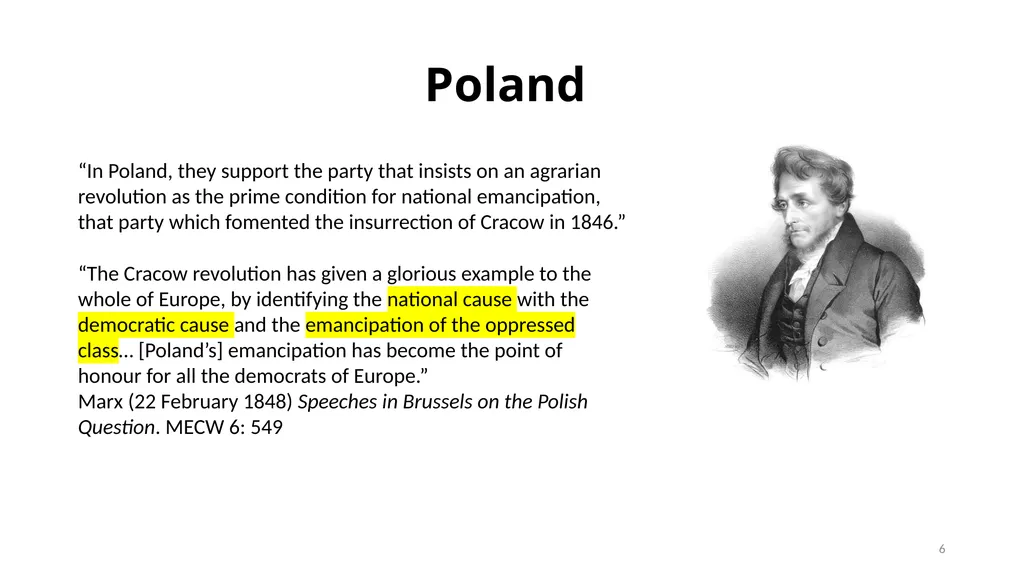
Poland “In Poland, they support the party that insists on an agrarian revolution as the prime condition for national emancipation, that party which fomented the insurrection of Cracow in 1846.”
“The Cracow revolution has given a glorious example to the whole of Europe, by identifying the national cause with the democratic cause and the emancipation of the oppressed class… [Poland’s] emancipation has become the point of honour for all the democrats of Europe.”
Marx (22 February 1848) Speeches in Brussels on the Polish Question. MECW 6: 549 6<br>
“The Cracow revolution has given a glorious example to the whole of Europe, by identifying the national cause with the democratic cause and the emancipation of the oppressed class… [Poland’s] emancipation has become the point of honour for all the democrats of Europe.”
Marx (22 February 1848) Speeches in Brussels on the Polish Question. MECW 6: 549 6<br>
07
Germany “In Germany, they fight with the bourgeoisie whenever it acts in a revolutionary way, against the absolute monarchy, the feudal squirearchy, and the petty bourgeoisie.
“But they never cease, for a single instant, to instil into the working class the clearest possible recognition of the hostile antagonism between bourgeoisie and proletariat, in order that the German workers may straightway use, as so many weapons against the bourgeoisie, the social and political conditions that the bourgeoisie must necessarily introduce along with its supremacy, and in order that, after the fall of the reactionary classes in Germany, the fight against the bourgeoisie itself may immediately begin…
“The Communists turn their attention chiefly to Germany, because that country is on the eve of a bourgeois revolution that is bound to be carried out under more advanced conditions of European civilisation and with a much more developed proletariat than that of England was in the seventeenth, and France in the eighteenth century, and because the bourgeois revolution in Germany will be but the prelude to an immediately following proletarian revolution.” 7<br>
“But they never cease, for a single instant, to instil into the working class the clearest possible recognition of the hostile antagonism between bourgeoisie and proletariat, in order that the German workers may straightway use, as so many weapons against the bourgeoisie, the social and political conditions that the bourgeoisie must necessarily introduce along with its supremacy, and in order that, after the fall of the reactionary classes in Germany, the fight against the bourgeoisie itself may immediately begin…
“The Communists turn their attention chiefly to Germany, because that country is on the eve of a bourgeois revolution that is bound to be carried out under more advanced conditions of European civilisation and with a much more developed proletariat than that of England was in the seventeenth, and France in the eighteenth century, and because the bourgeois revolution in Germany will be but the prelude to an immediately following proletarian revolution.” 7<br>
08
Capitalism and bourgeois revolution French revolution 1789 English countryside 8<br>
09
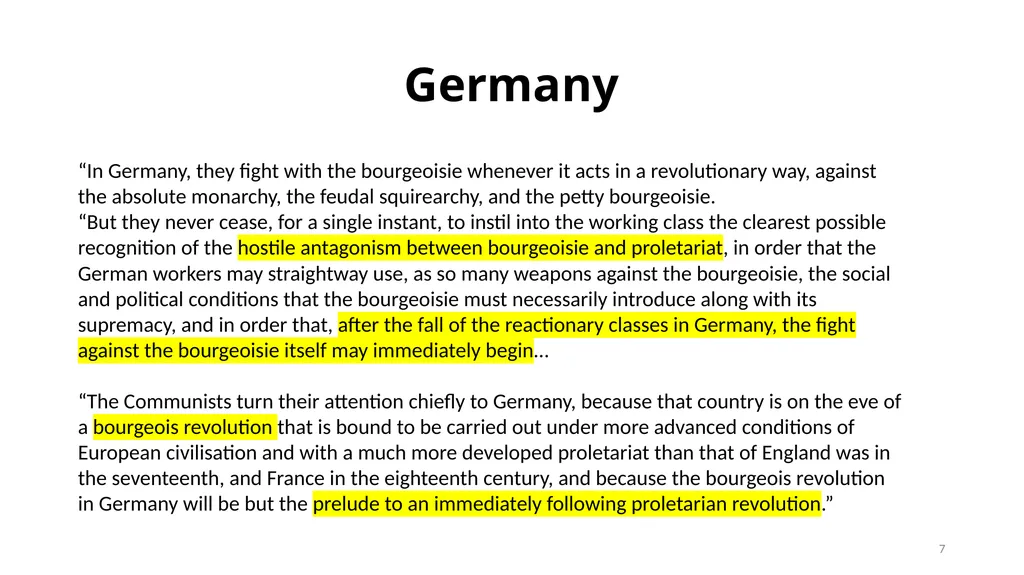
Lessons of 1848 “We told you as early as 1848 that the German liberal bourgeois would soon come to power and would immediately turn their newly acquired power against the workers…
“And the role which the German liberal bourgeois played in 1848 against the people, this so treacherous role will be taken over in the impending revolution by the democratic petty bourgeois, who at present take the same attitude in the opposition as the liberal bourgeois before 1848…
“The relation of the revolutionary workers’ party to the petty-bourgeois democrats is this: it marches together with them against the faction which it aims at overthrowing, it opposes them in everything by which they seek to consolidate their position in their own interests…
Marx and Engels (24 March 1850) Address of the Central Committee to the Communist League. MECW 10: 278-87 9<br>
“And the role which the German liberal bourgeois played in 1848 against the people, this so treacherous role will be taken over in the impending revolution by the democratic petty bourgeois, who at present take the same attitude in the opposition as the liberal bourgeois before 1848…
“The relation of the revolutionary workers’ party to the petty-bourgeois democrats is this: it marches together with them against the faction which it aims at overthrowing, it opposes them in everything by which they seek to consolidate their position in their own interests…
Marx and Engels (24 March 1850) Address of the Central Committee to the Communist League. MECW 10: 278-87 9<br>
10
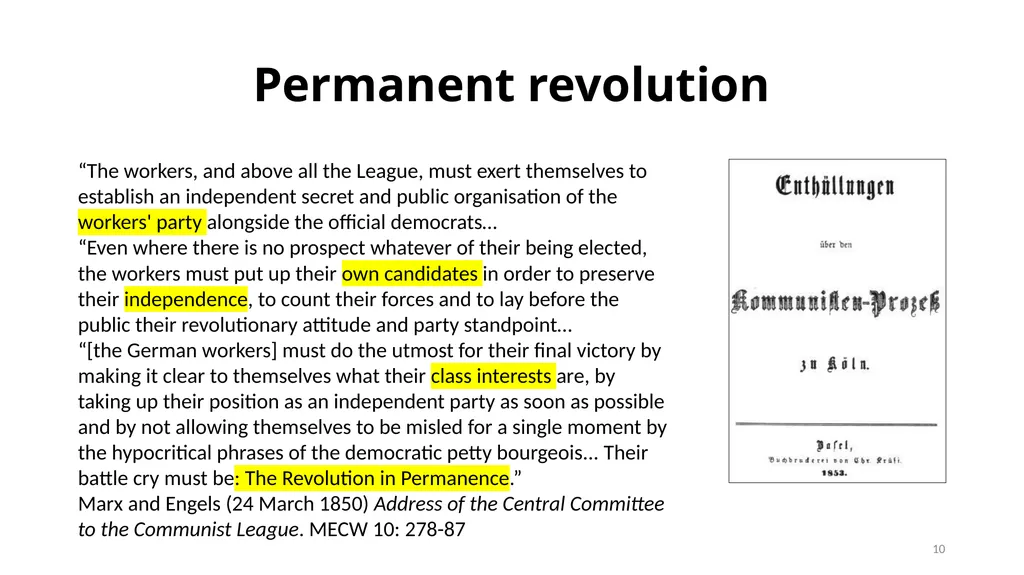
Permanent revolution “The workers, and above all the League, must exert themselves to establish an independent secret and public organisation of the workers' party alongside the official democrats…
“Even where there is no prospect whatever of their being elected, the workers must put up their own candidates in order to preserve their independence, to count their forces and to lay before the public their revolutionary attitude and party standpoint…
“[the German workers] must do the utmost for their final victory by making it clear to themselves what their class interests are, by taking up their position as an independent party as soon as possible and by not allowing themselves to be misled for a single moment by the hypocritical phrases of the democratic petty bourgeois... Their battle cry must be: The Revolution in Permanence.”
Marx and Engels (24 March 1850) Address of the Central Committee to the Communist League. MECW 10: 278-87 10<br>
“Even where there is no prospect whatever of their being elected, the workers must put up their own candidates in order to preserve their independence, to count their forces and to lay before the public their revolutionary attitude and party standpoint…
“[the German workers] must do the utmost for their final victory by making it clear to themselves what their class interests are, by taking up their position as an independent party as soon as possible and by not allowing themselves to be misled for a single moment by the hypocritical phrases of the democratic petty bourgeois... Their battle cry must be: The Revolution in Permanence.”
Marx and Engels (24 March 1850) Address of the Central Committee to the Communist League. MECW 10: 278-87 10<br>
11
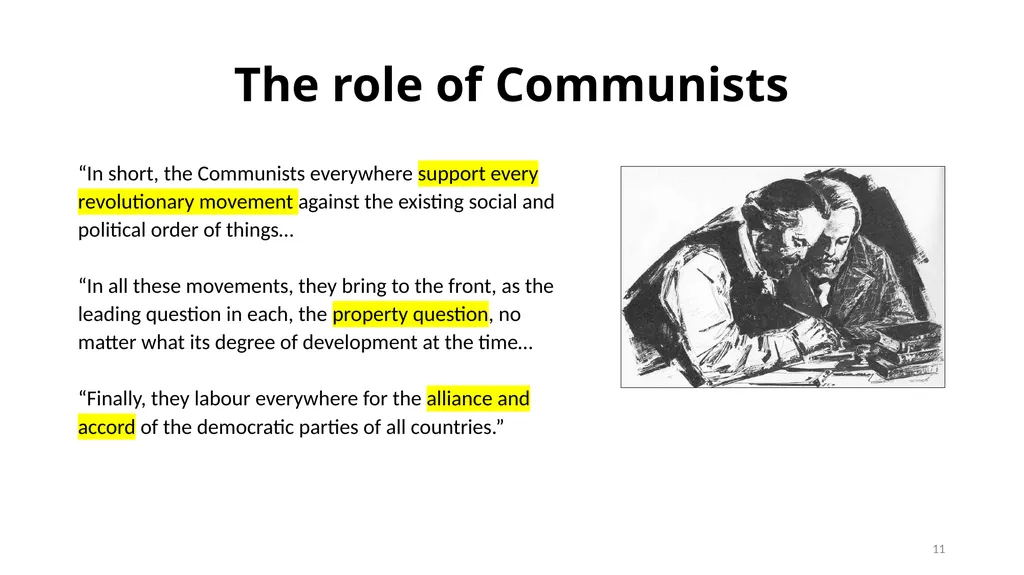
The role of Communists “In short, the Communists everywhere support every revolutionary movement against the existing social and political order of things…
“In all these movements, they bring to the front, as the leading question in each, the property question, no matter what its degree of development at the time…
“Finally, they labour everywhere for the alliance and accord of the democratic parties of all countries.” 11<br>
“In all these movements, they bring to the front, as the leading question in each, the property question, no matter what its degree of development at the time…
“Finally, they labour everywhere for the alliance and accord of the democratic parties of all countries.” 11<br>
12
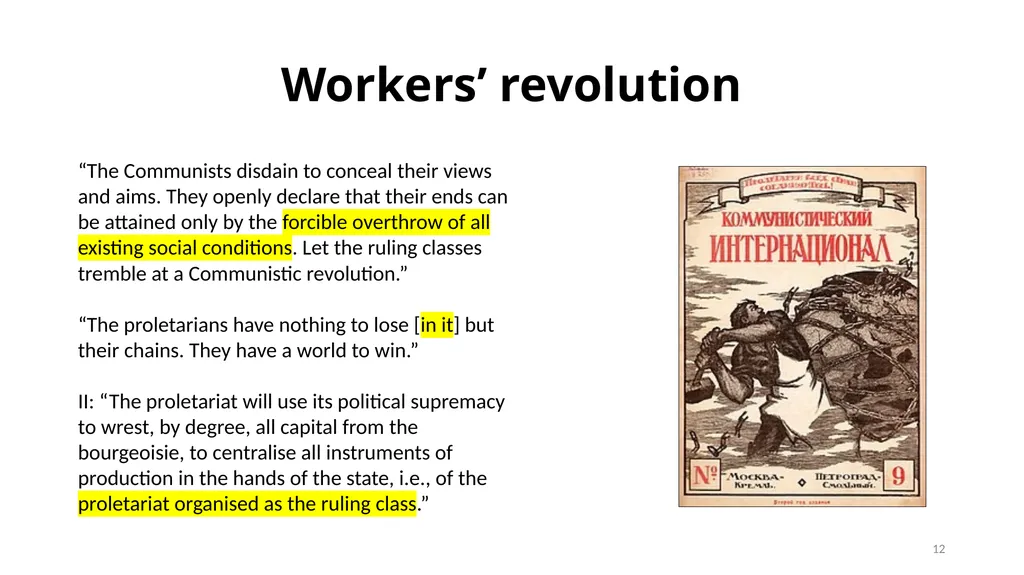
Workers’ revolution “The Communists disdain to conceal their views and aims. They openly declare that their ends can be attained only by the forcible overthrow of all existing social conditions. Let the ruling classes tremble at a Communistic revolution.”
“The proletarians have nothing to lose [in it] but their chains. They have a world to win.”
II: “The proletariat will use its political supremacy to wrest, by degree, all capital from the bourgeoisie, to centralise all instruments of production in the hands of the state, i.e., of the proletariat organised as the ruling class.” 12<br>
“The proletarians have nothing to lose [in it] but their chains. They have a world to win.”
II: “The proletariat will use its political supremacy to wrest, by degree, all capital from the bourgeoisie, to centralise all instruments of production in the hands of the state, i.e., of the proletariat organised as the ruling class.” 12<br>
13
Workers of all countries, unite! Rules of the newly formed Communist League, adopted at the 2-9 June 1847 congress.
The circular, The Central Authority to the League, 14 September 1847 in the names of Schapper, Moll and Bauer.
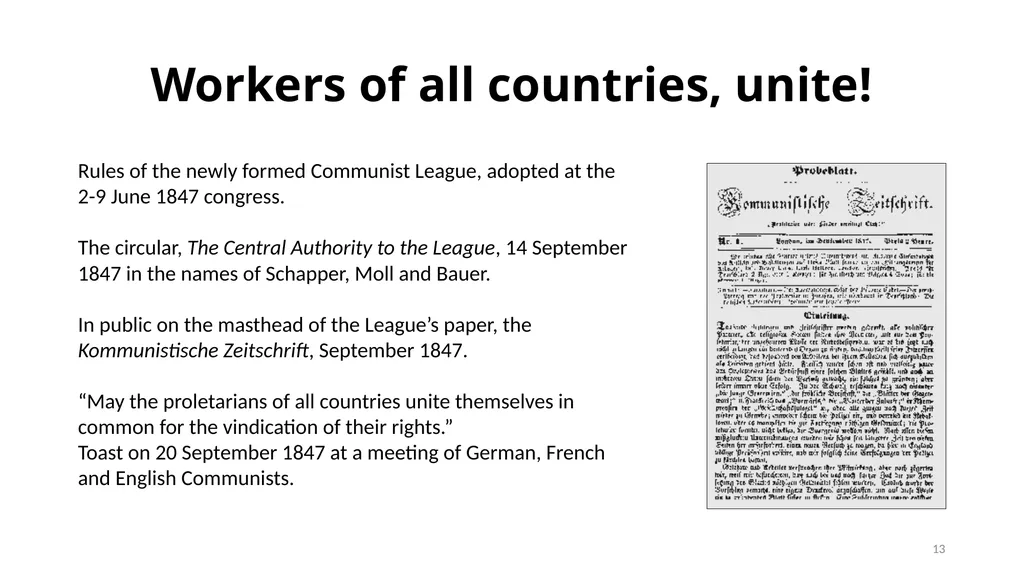
In public on the masthead of the League’s paper, the Kommunistische Zeitschrift, September 1847.
“May the proletarians of all countries unite themselves in common for the vindication of their rights.”
Toast on 20 September 1847 at a meeting of German, French and English Communists. 13<br>
The circular, The Central Authority to the League, 14 September 1847 in the names of Schapper, Moll and Bauer.
In public on the masthead of the League’s paper, the Kommunistische Zeitschrift, September 1847.
“May the proletarians of all countries unite themselves in common for the vindication of their rights.”
Toast on 20 September 1847 at a meeting of German, French and English Communists. 13<br>
14
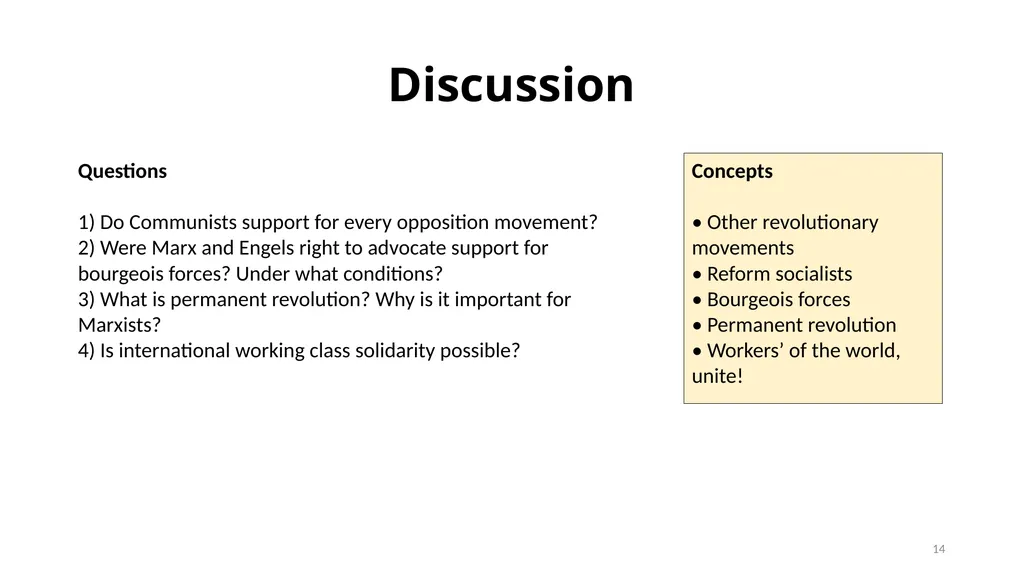
Discussion Questions
1) Do Communists support for every opposition movement?
2) Were Marx and Engels right to advocate support for bourgeois forces? Under what conditions?
3) What is permanent revolution? Why is it important for Marxists?
4) Is international working class solidarity possible? 14 Concepts
• Other revolutionary movements
• Reform socialists
• Bourgeois forces
• Permanent revolution
• Workers’ of the world, unite!<br>
1) Do Communists support for every opposition movement?
2) Were Marx and Engels right to advocate support for bourgeois forces? Under what conditions?
3) What is permanent revolution? Why is it important for Marxists?
4) Is international working class solidarity possible? 14 Concepts
• Other revolutionary movements
• Reform socialists
• Bourgeois forces
• Permanent revolution
• Workers’ of the world, unite!<br>