Session 4 Supply and Demand Disclaimer: The views expressed are those of the presenters and do not necessarily reflect those of the Federal Reserve Bank of Dallas or the Federal Reserve System. TEKS (2) Economics. The student understands
"Session 4 Supply and Demand Disclaimer: The views" is the property of its rightful owner. Permission is granted to
download and print the materials on this website for personal, non-commercial use only, and to display it
on your personal computer provided you do not modify the materials and that you retain all copyright
notices contained in the materials. By downloading content from our website, you accept the terms of this
agreement.
Presentation Transcript
01
Session 4 Supply and Demand Disclaimer: The views expressed are those of the presenters and do not necessarily reflect those of the Federal Reserve Bank of Dallas or the Federal Reserve System.<br>
02
TEKS (2) Economics. The student understands the interaction of supply, demand, and price. The student is expected to:
(A) understand the effect of changes in price on the quantity demanded and quantity supplied;
(B) identify the non-price determinants that create changes in supply and demand, which result in a new equilibrium price; and
(C) interpret a supply-and-demand graph using supply-and-demand schedules.<br>
03
Teaching the Terms Market
Demand
Supply
Determinants
Surplus
Shortage<br>
04
Markets A market facilitates the interaction of a buyer and a seller as they complete a transaction
Buyers, as a group, determine the demand
Sellers, as a group, determine the supply<br>
05
Characteristics of Competitive Markets Identical goods or services
Enough buyers and sellers so that no participant can influence the market price – everyone is a price taker<br>
06
Demand Law of demand
Quantity demanded
Demand schedule
Demand curve
Determinants of demand<br>
07
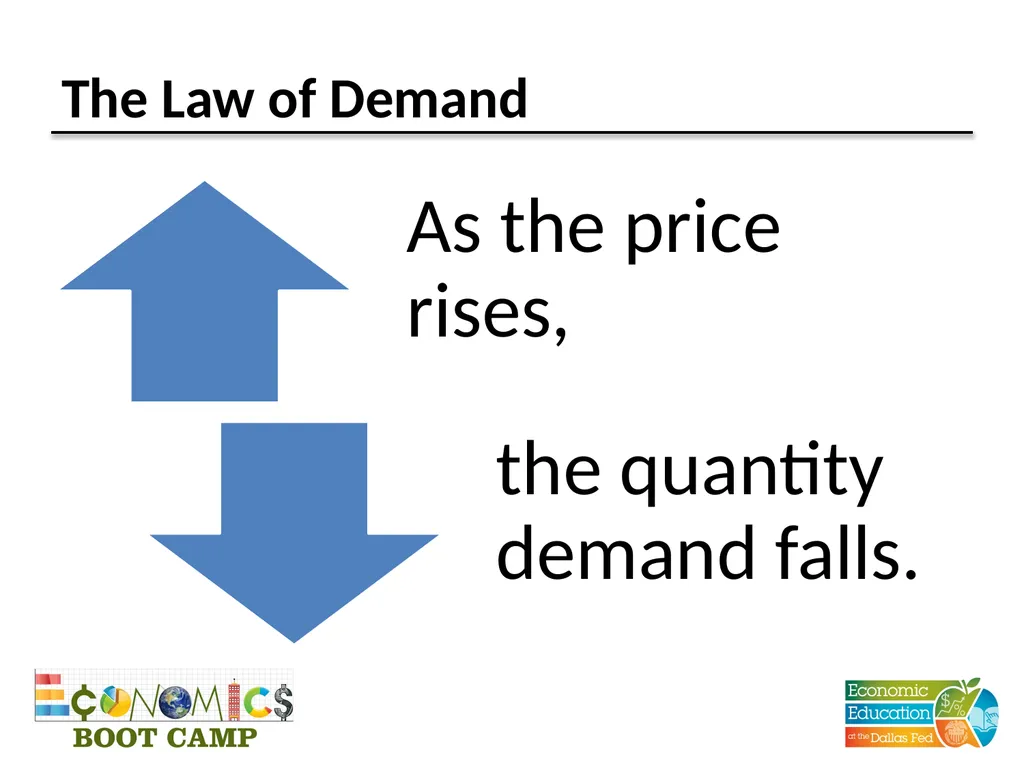
The Law of Demand<br>
08
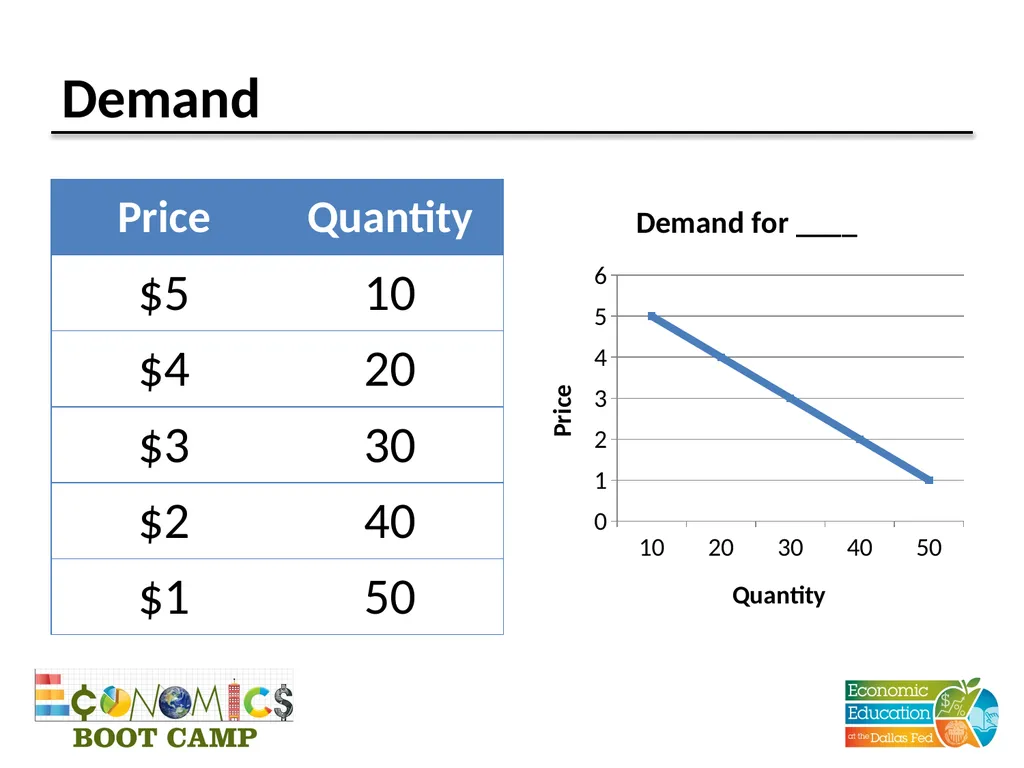
Demand<br>
09
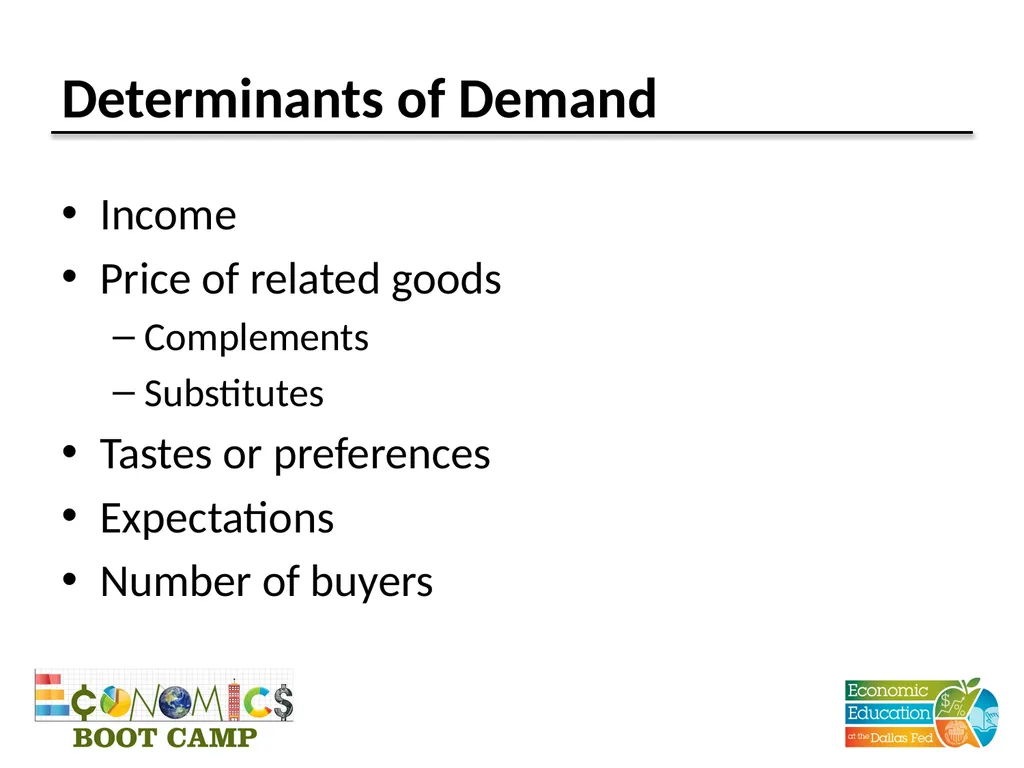
Determinants of Demand Income
Price of related goods
Complements
Substitutes
Tastes or preferences
Expectations
Number of buyers<br>
10
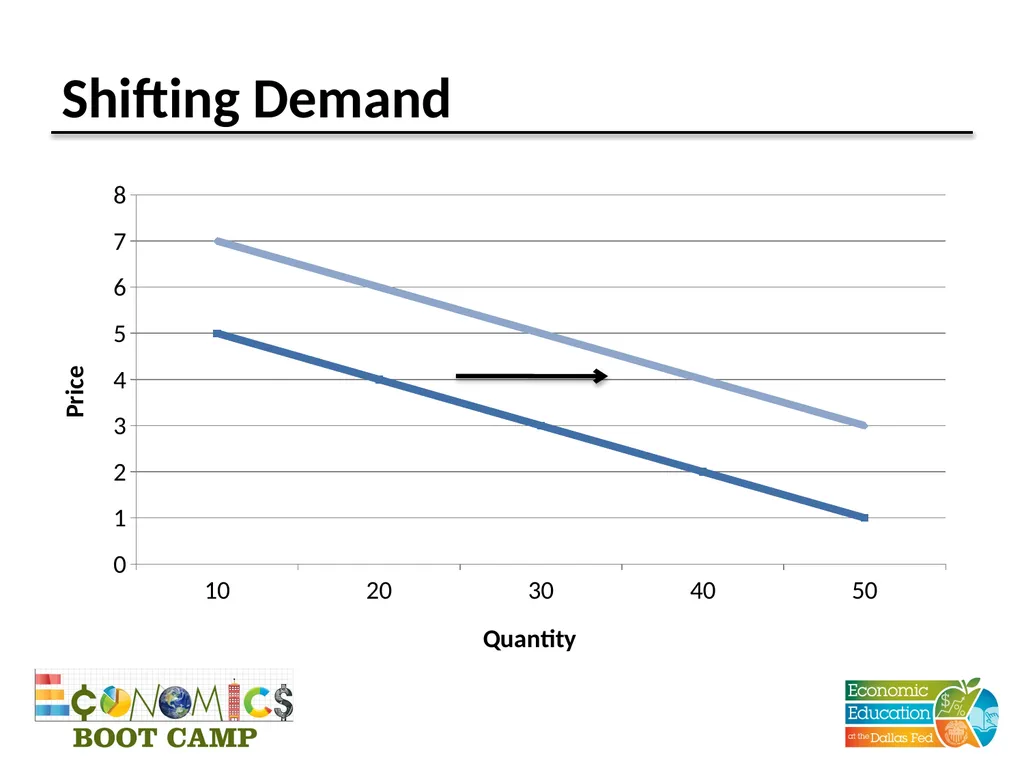
Shifting Demand<br>
11
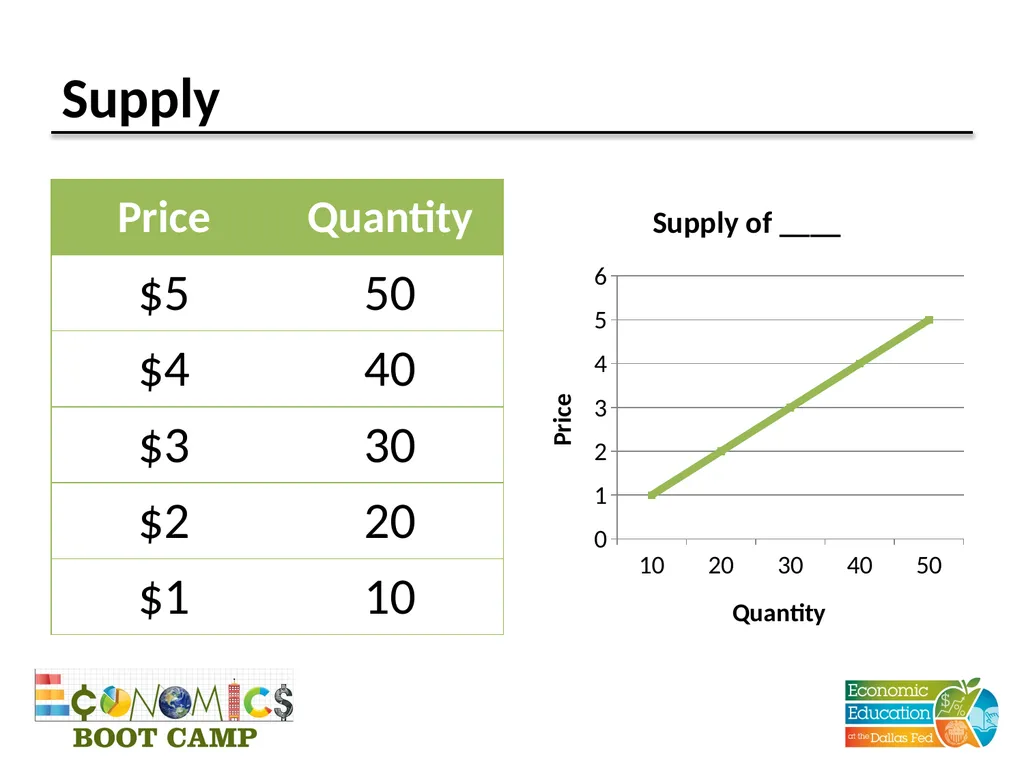
Supply Law of supply
Quantity supplied
Supply schedule
Supply curve
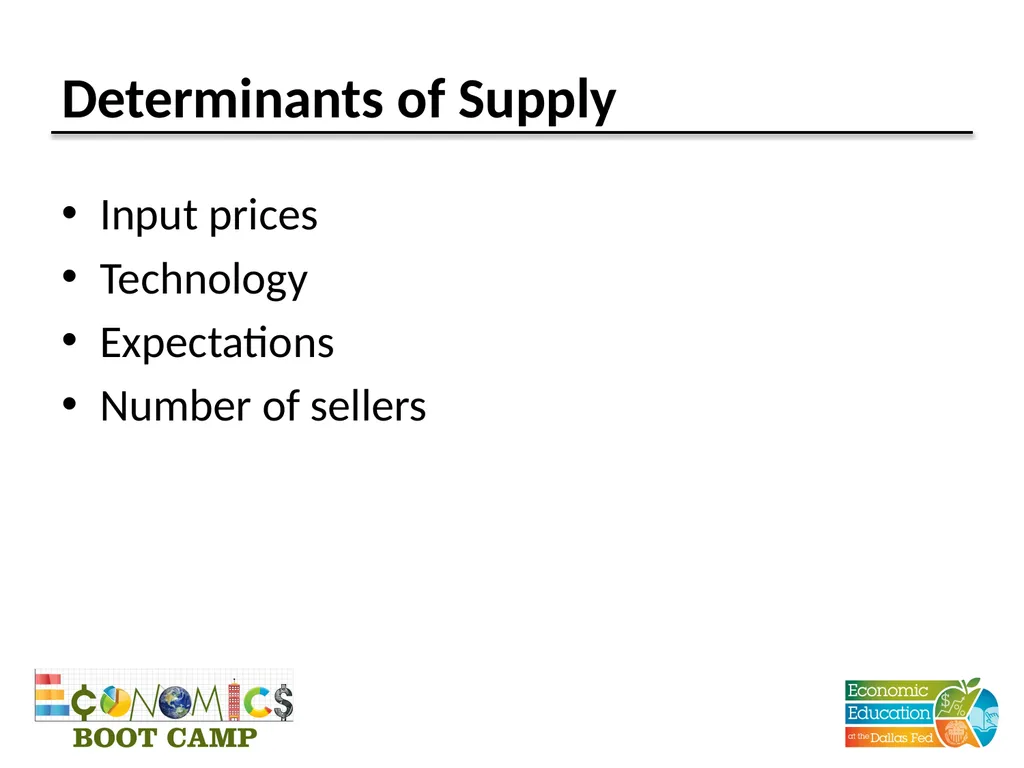
Determinants of supply<br>
12
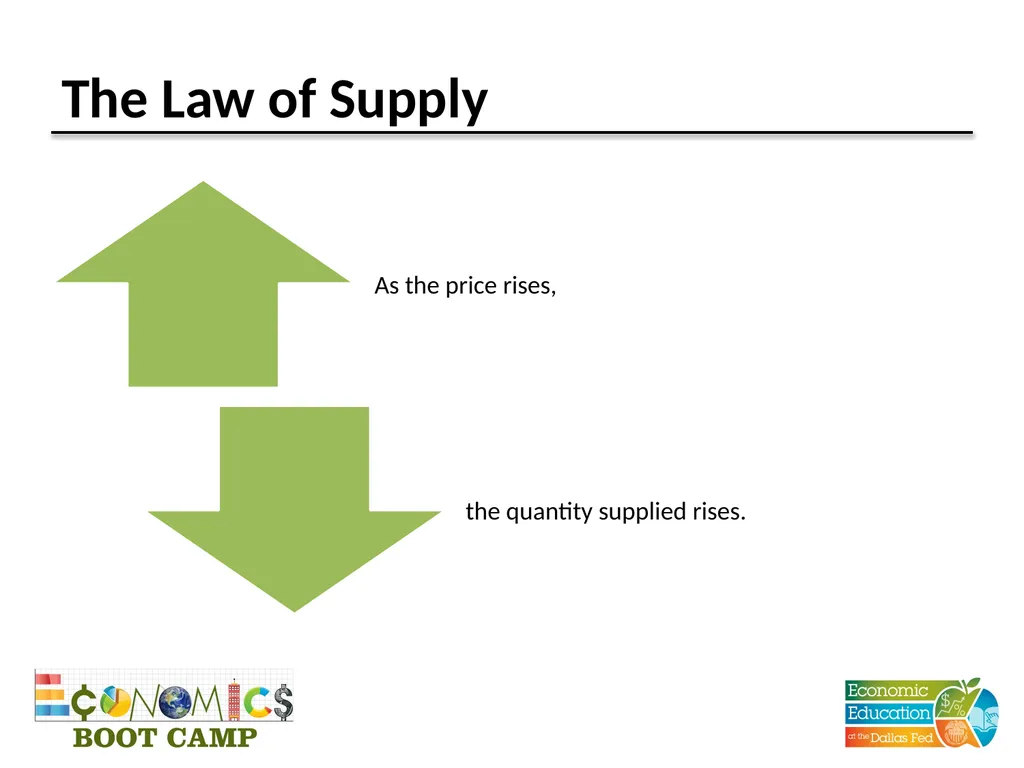
The Law of Supply<br>
13
Supply<br>
14
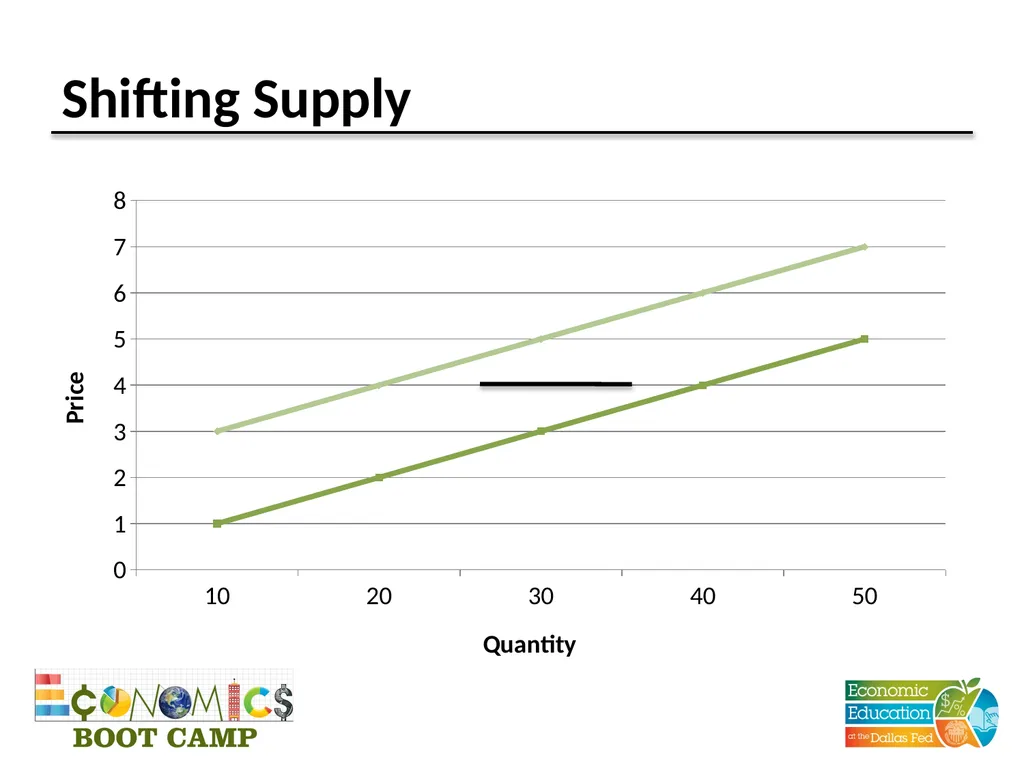
Determinants of Supply Input prices
Technology
Expectations
Number of sellers<br>
15
Shifting Supply<br>
16
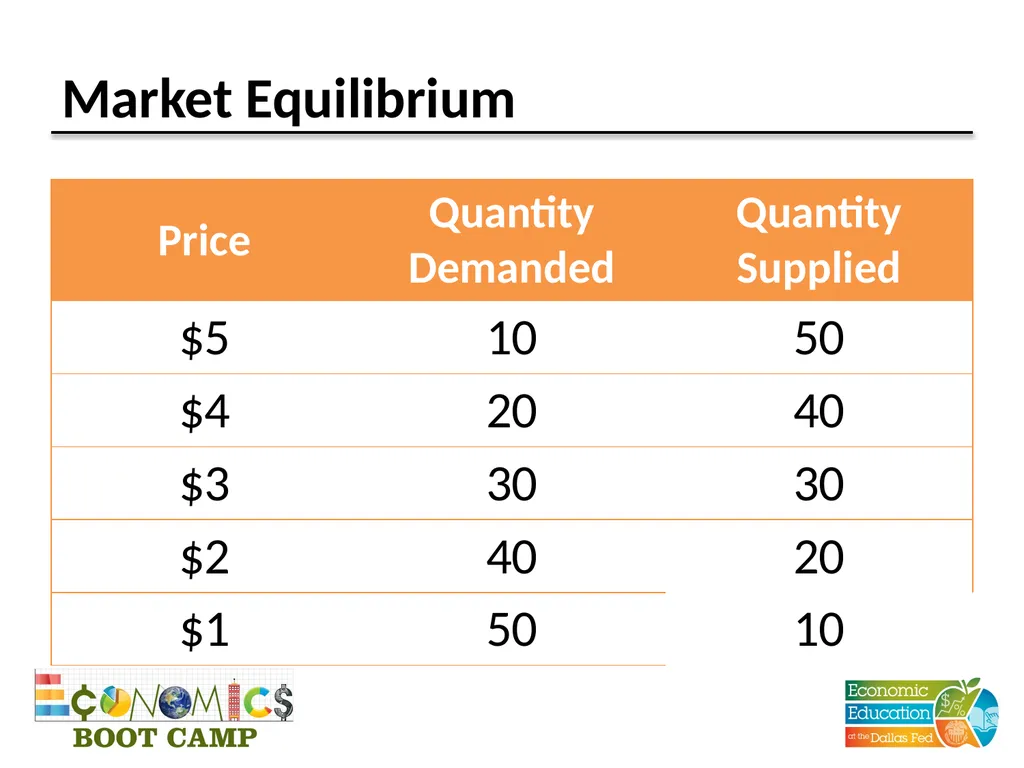
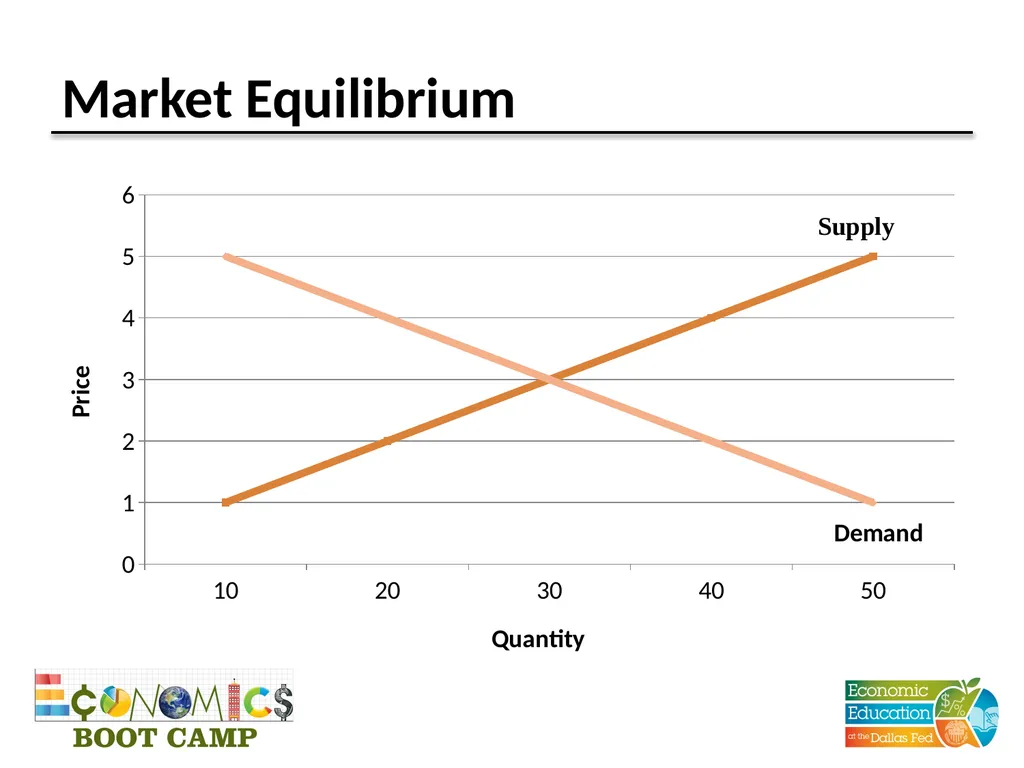
Market Equilibrium<br>
17
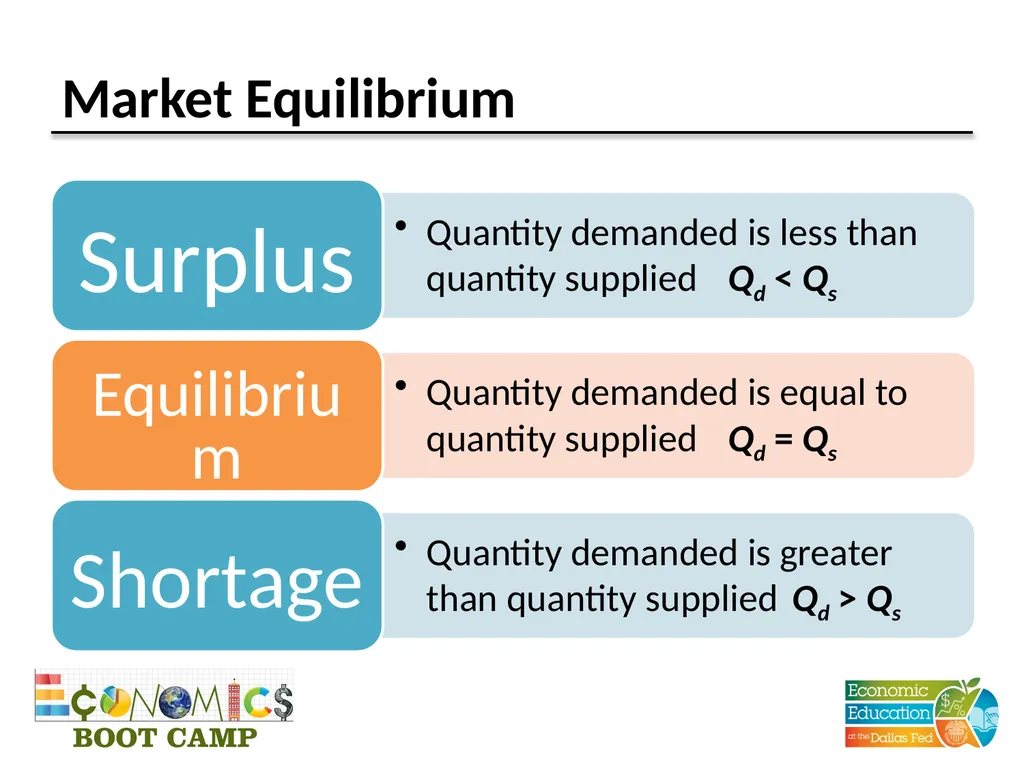
Market Equilibrium<br>
18
Market Equilibrium<br>
19
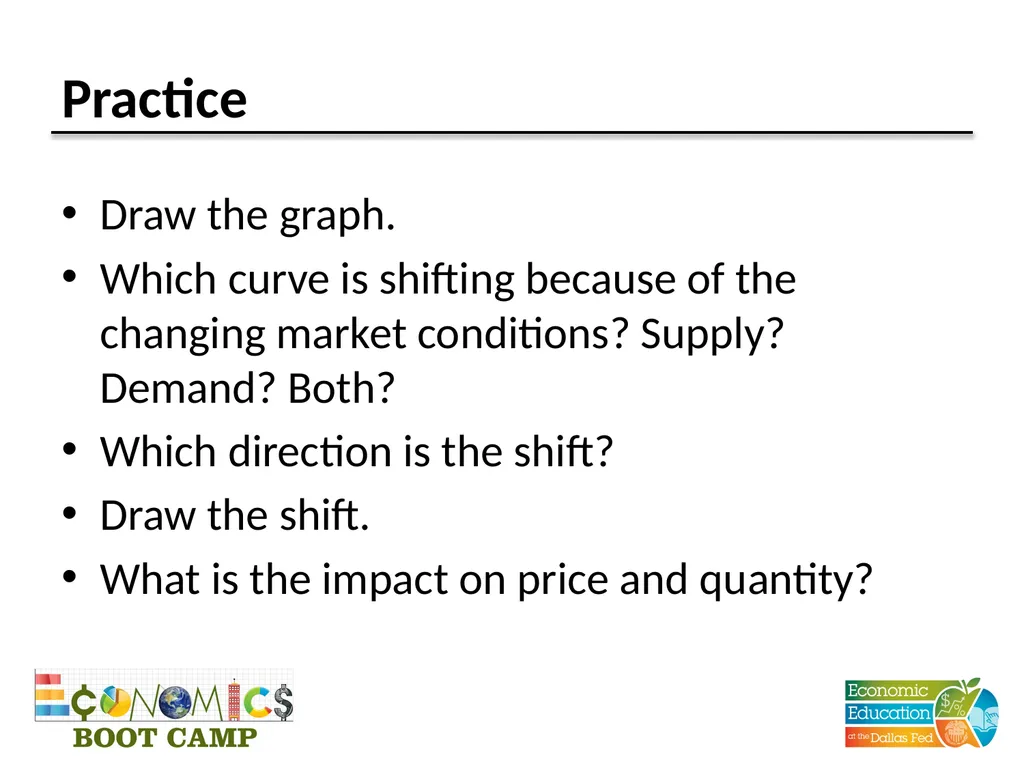
Practice Draw the graph.
Which curve is shifting because of the changing market conditions? Supply? Demand? Both?
Which direction is the shift?
Draw the shift.
What is the impact on price and quantity?<br>
20
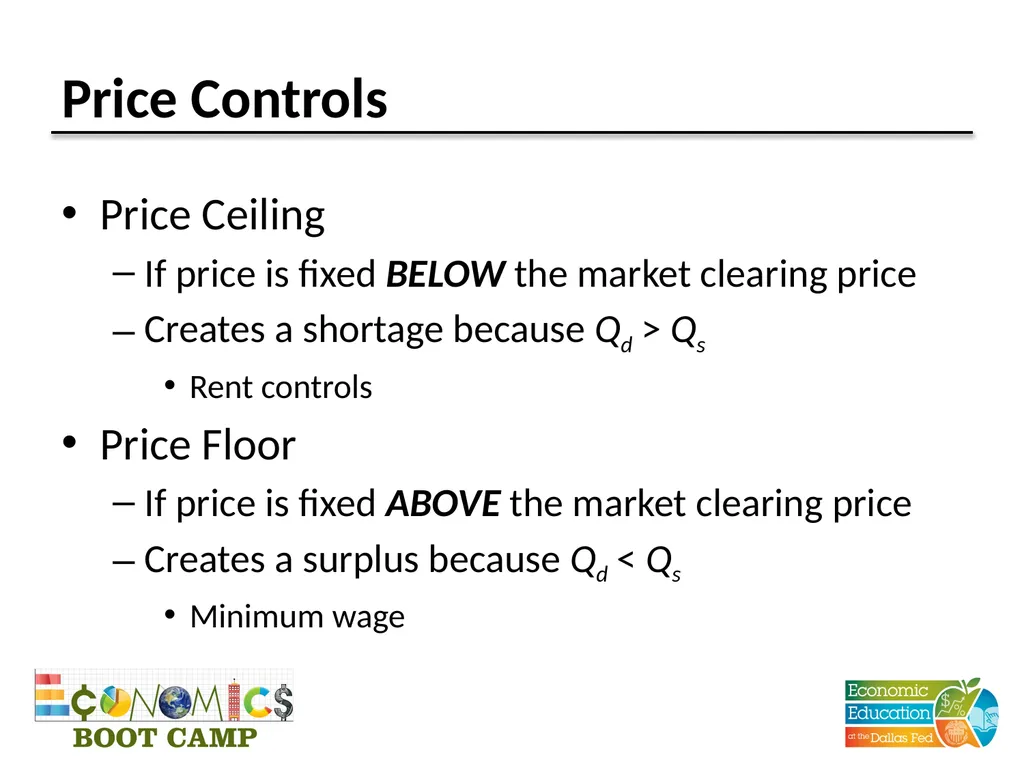
Price Controls Price Ceiling
If price is fixed BELOW the market clearing price
Creates a shortage because Qd > Qs
Rent controls
Price Floor
If price is fixed ABOVE the market clearing price
Creates a surplus because Qd < Qs
Minimum wage<br>
21
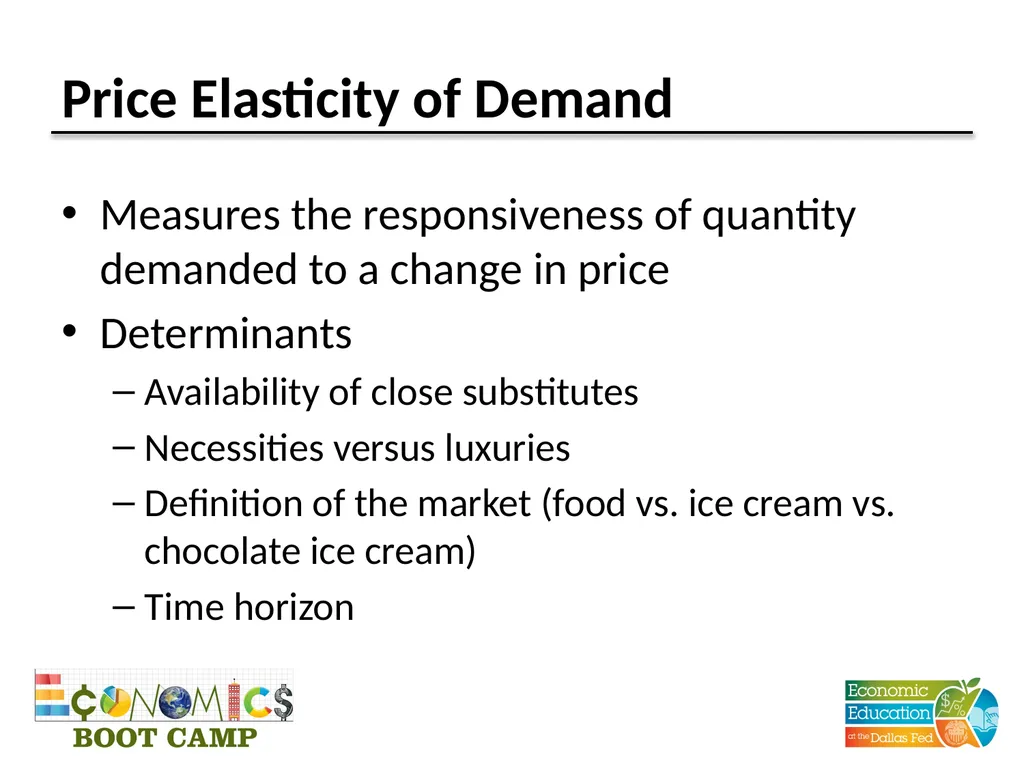
Price Elasticity of Demand Measures the responsiveness of quantity demanded to a change in price
Determinants
Availability of close substitutes
Necessities versus luxuries
Definition of the market (food vs. ice cream vs. chocolate ice cream)
Time horizon<br>
22
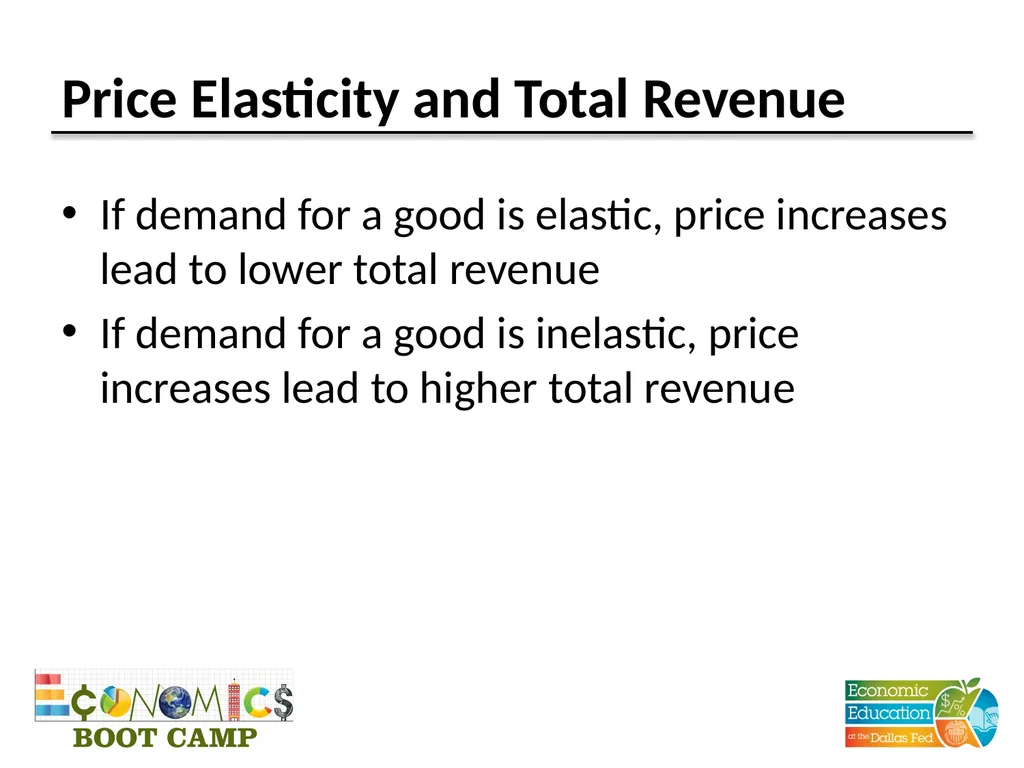
Price Elasticity and Total Revenue If demand for a good is elastic, price increases lead to lower total revenue
If demand for a good is inelastic, price increases lead to higher total revenue<br>
23
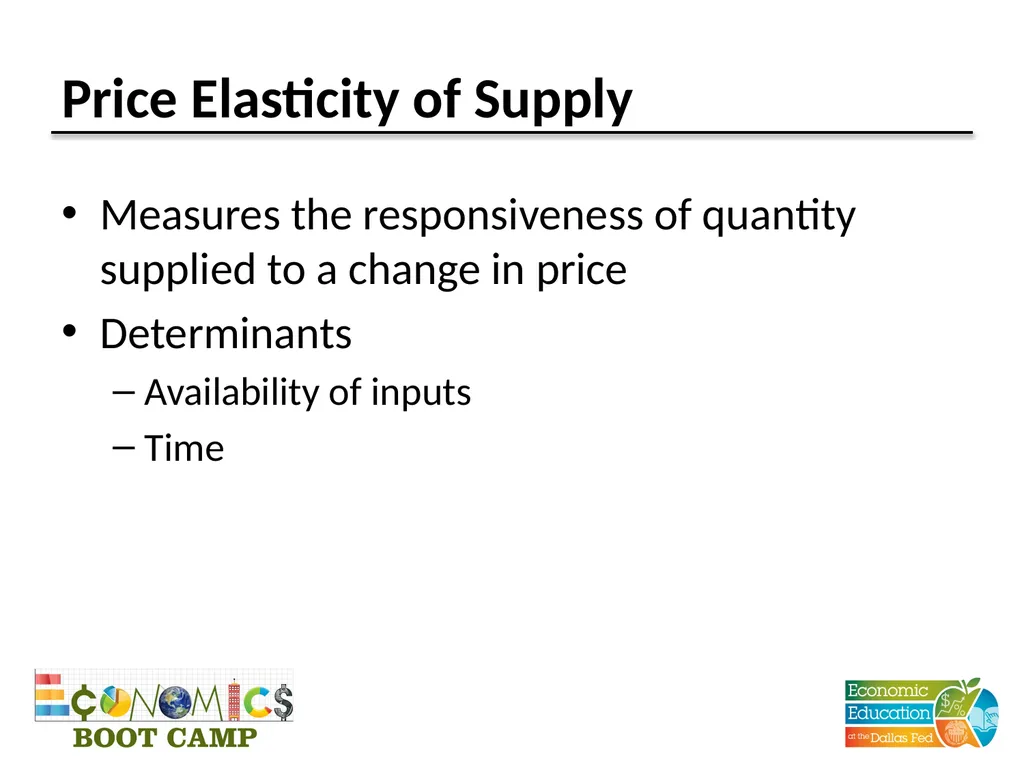
Price Elasticity of Supply Measures the responsiveness of quantity supplied to a change in price
Determinants
Availability of inputs
Time<br>