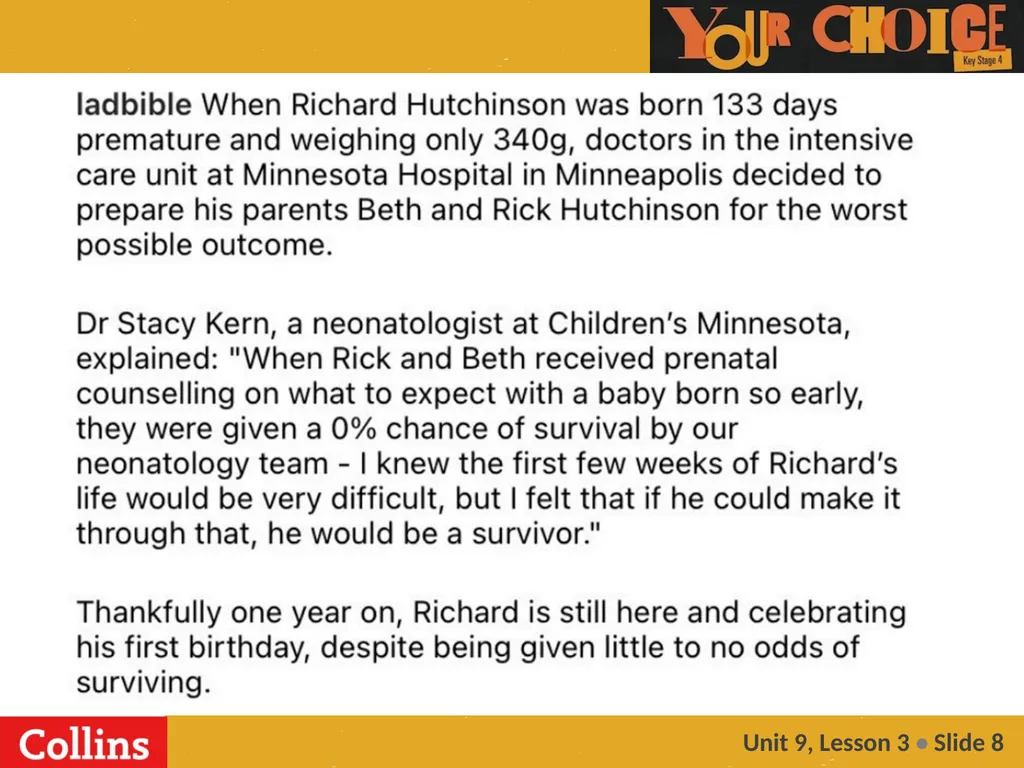
Session C Fertility, Infertility and miscarriage Starter question In Science you learned about the menstrual cycle. You will go in to detail about this in Biology in Year 11. Can you remember what the following terms mean? Ovulation.
"Session C – Fertility, Infertility and miscarriage" is the property of its rightful owner. Permission is granted to
download and print the materials on this website for personal, non-commercial use only, and to display it
on your personal computer provided you do not modify the materials and that you retain all copyright
notices contained in the materials. By downloading content from our website, you accept the terms of this
agreement.
Presentation Transcript
01
Session C – Fertility, Infertility and miscarriage Starter question
In Science you learned about the menstrual cycle. You will go in to detail about this in Biology in Year 11. Can you remember what the following terms mean?
Ovulation.
Menstruation.<br>
02
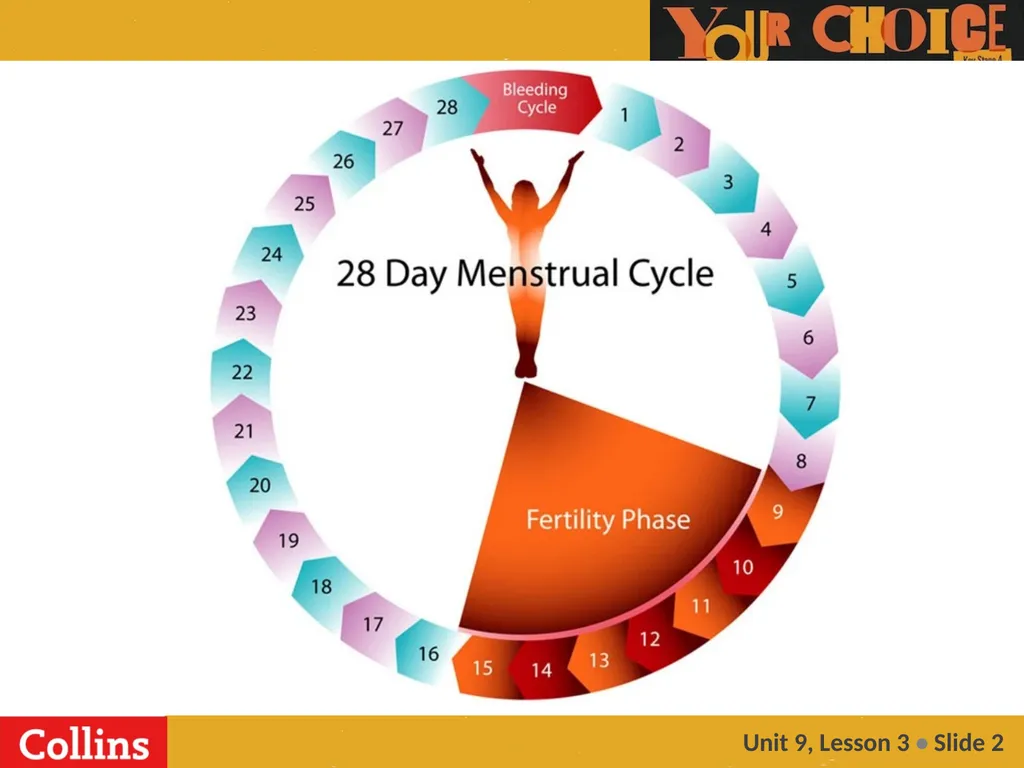
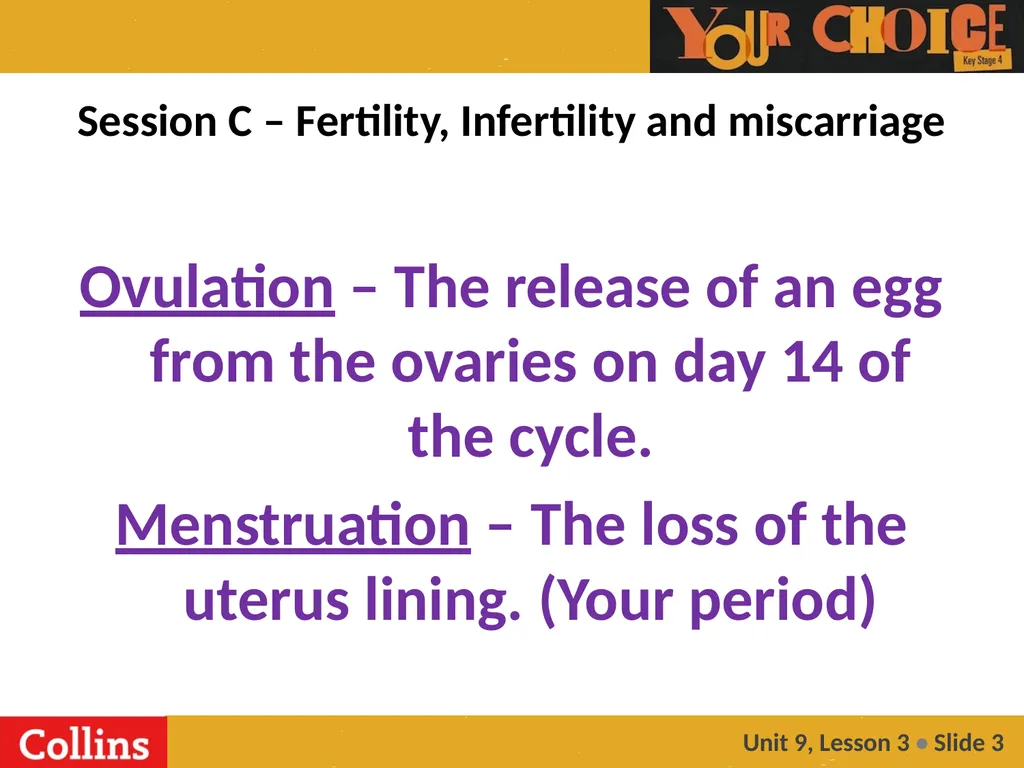
Session C – Fertility, Infertility and miscarriage Ovulation – The release of an egg from the ovaries on day 14 of the cycle.
Menstruation – The loss of the uterus lining. (Your period)<br>
03
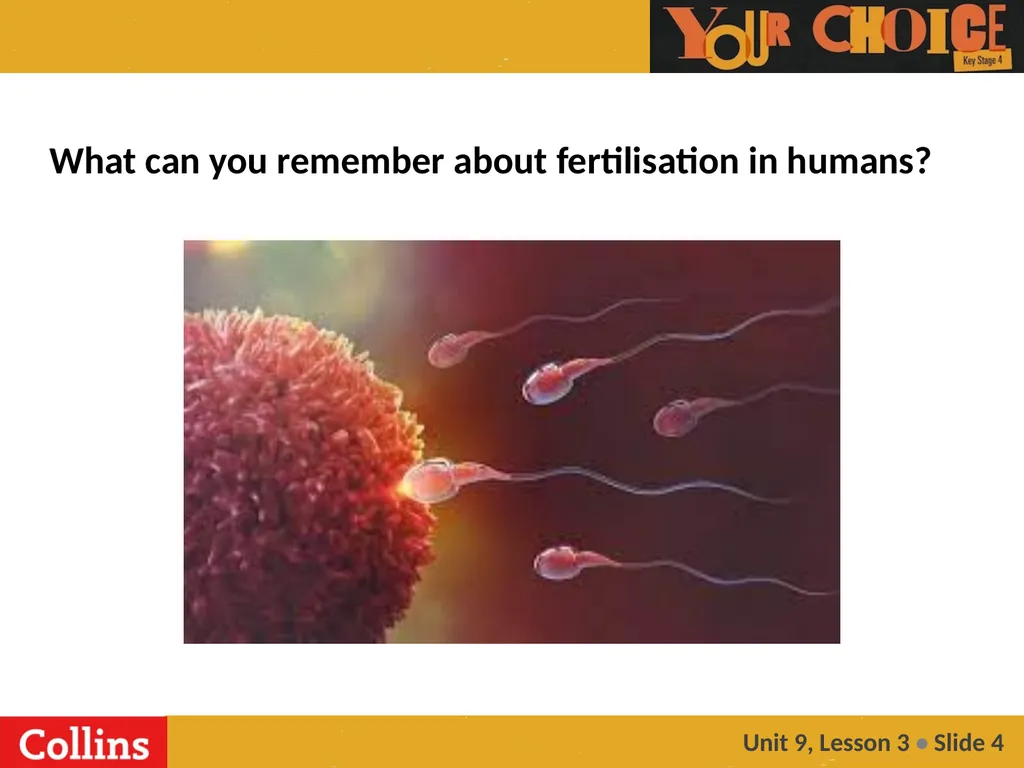
What can you remember about fertilisation in humans?<br>
04
A baby’s conception (creation) can begin with the ejaculation of semen during vaginal sex.
Within the semen, there are millions of sperm. They swim up into the uterus and into the fallopian tubes. If an egg is there or if ovulation happens in the next seven days, the sperm can enter the egg. This is called fertilisation. (Remember sperm can live for up to seven days inside the body.)
Once the egg is fertilised, it begins to grow and travels slowly down the fallopian tube and into the uterus.
It takes about eight days for the egg to reach the uterus. When it does, it attaches to the side.
Conception has occurred and a pregnancy has begun. A typical pregnancy takes 40 weeks from the date of the last period.<br>
05
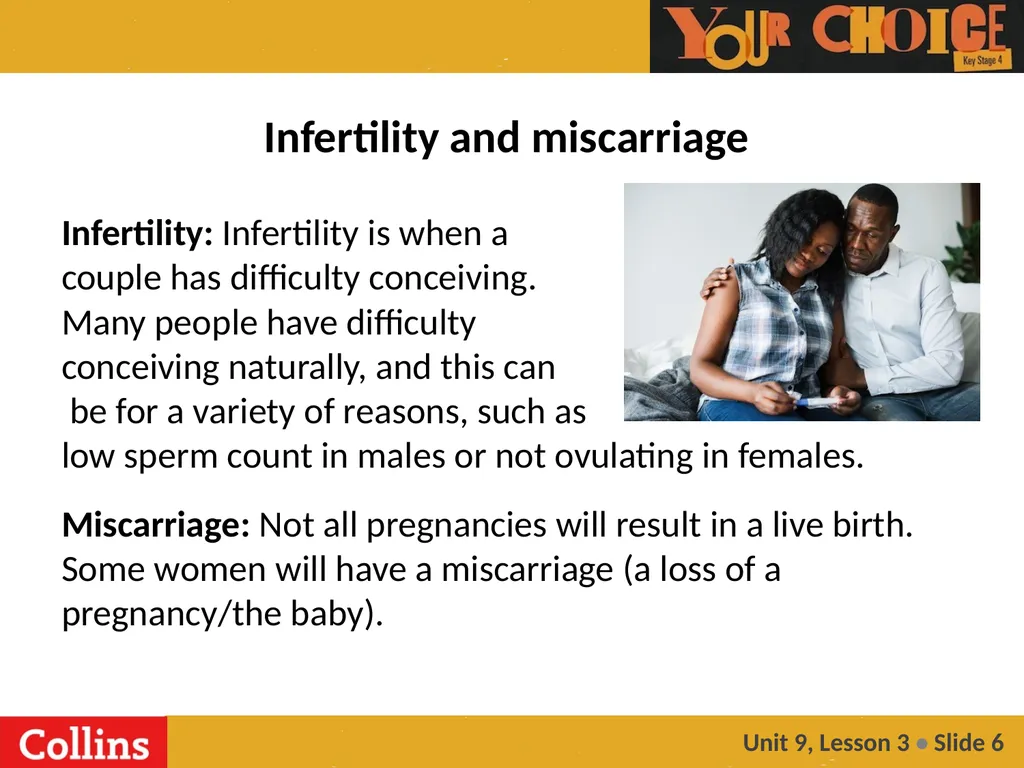
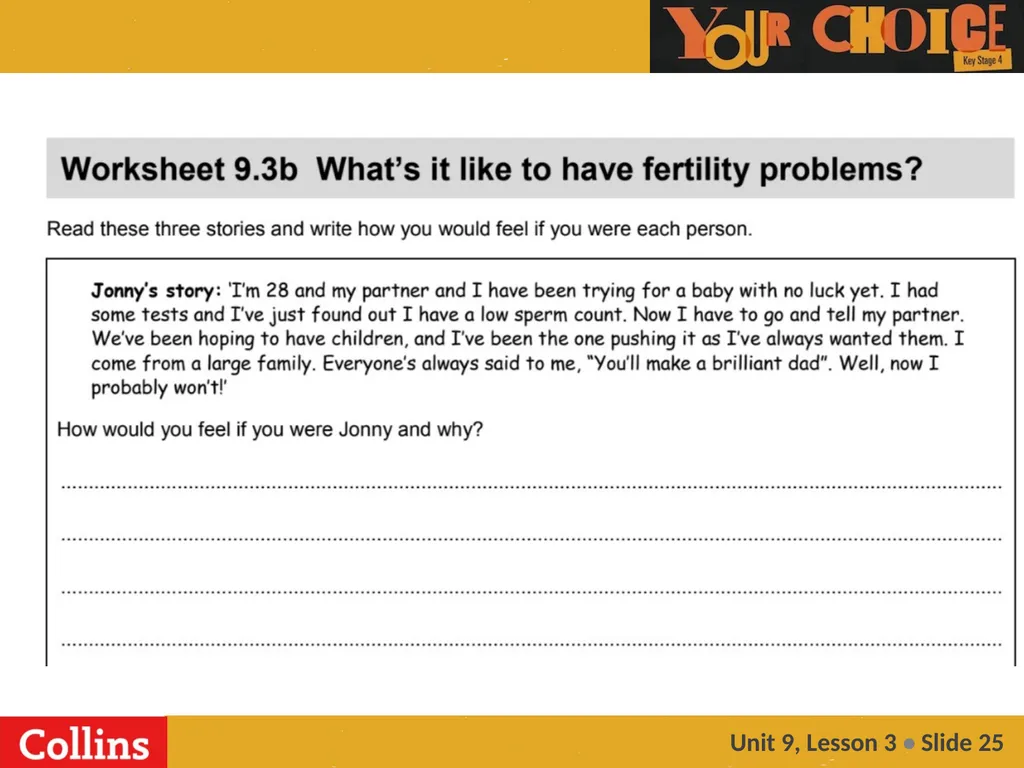
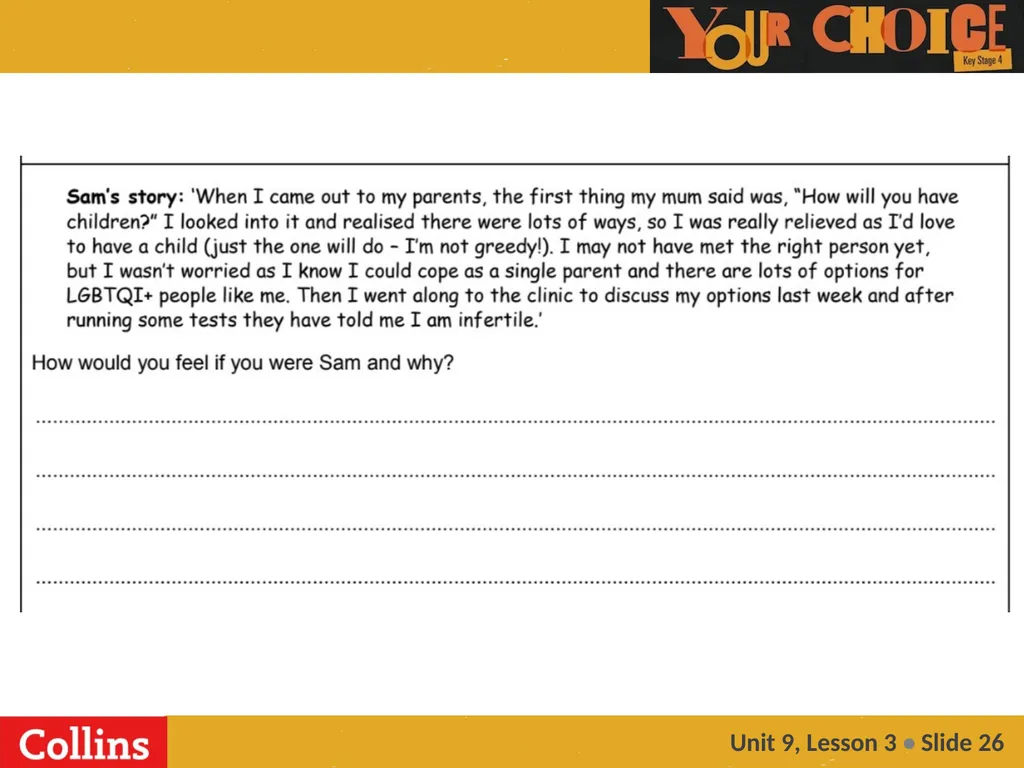
Infertility and miscarriage Infertility: Infertility is when a couple has difficulty conceiving. Many people have difficulty conceiving naturally, and this can be for a variety of reasons, such as low sperm count in males or not ovulating in females.
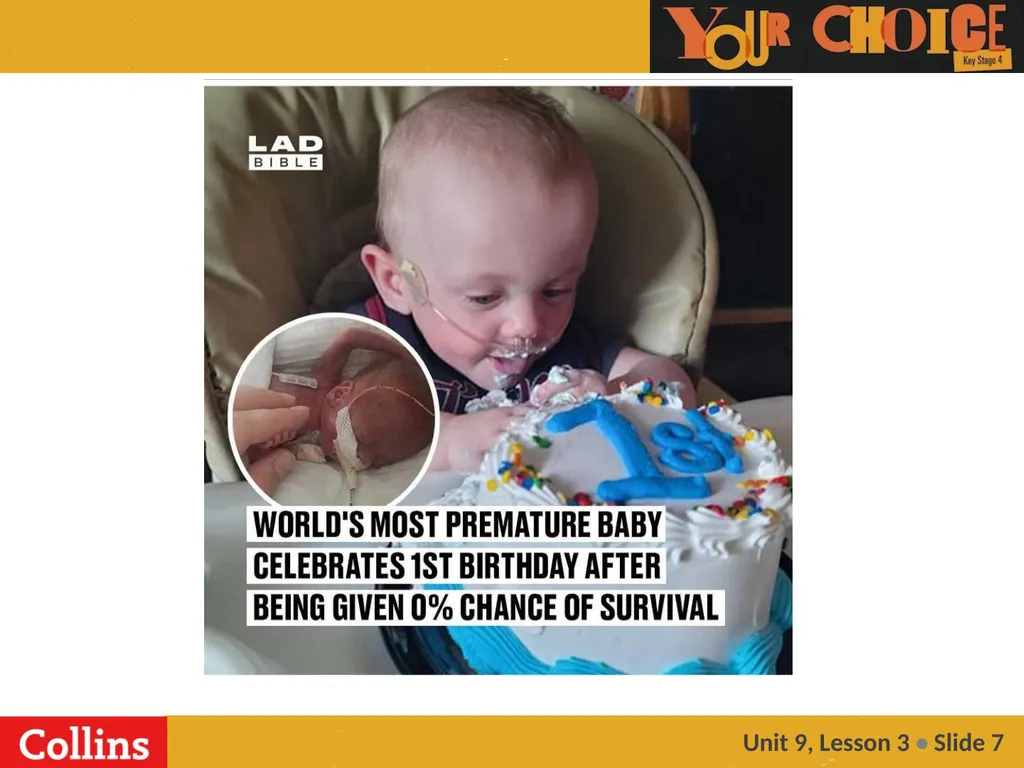
Miscarriage: Not all pregnancies will result in a live birth. Some women will have a miscarriage (a loss of a pregnancy/the baby).<br>
06
Different ways of treating infertility. There are 3 main types of treatment:
Medicines
Surgical procedures
Assisted conception – including intrauterine insemination (IUI) and in vitro fertilisation (IVF)<br>
07
Assisted conception Intrauterine insemination (IUI)
Intrauterine insemination (IUI), also known as artificial insemination, involves inserting sperm into the womb via a thin plastic tube passed through the cervix.
Sperm is first collected and washed in a fluid. The best quality specimens (the fastest moving) are selected.<br>
08
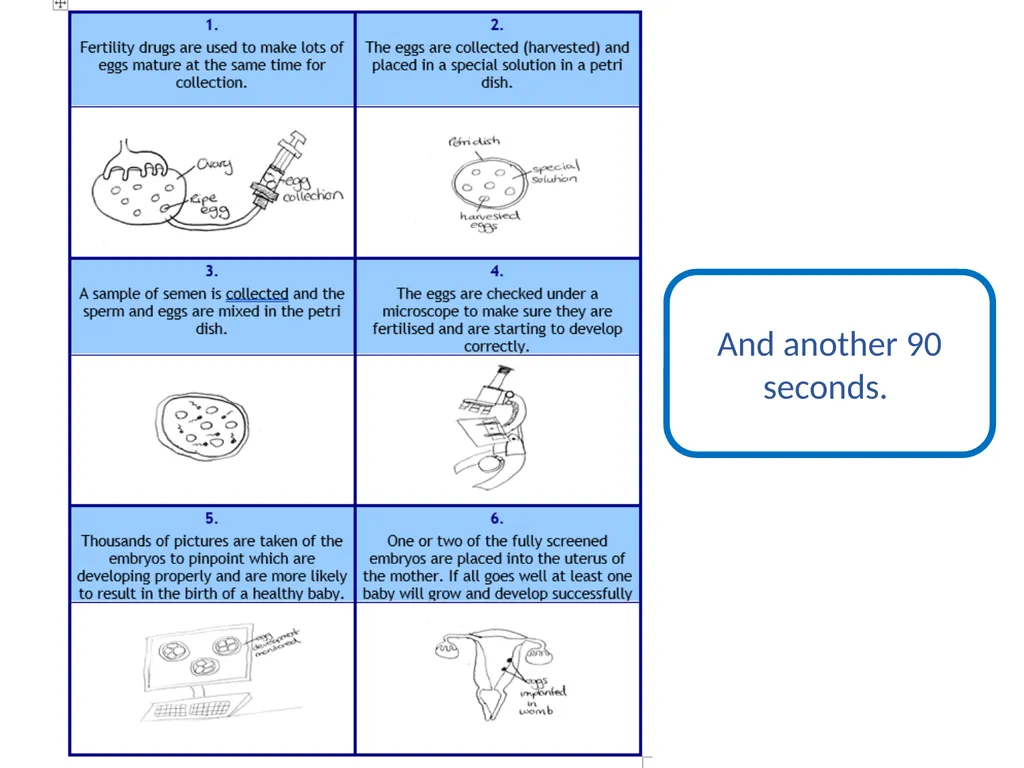
In vitro fertilisation (IVF)
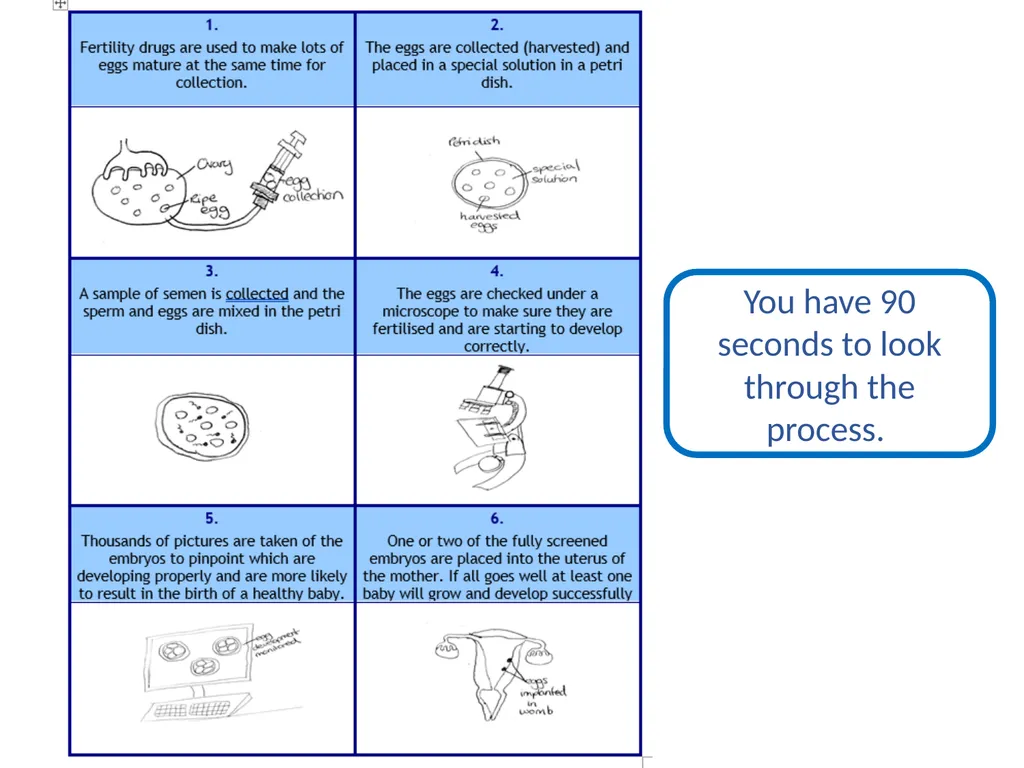
In vitro fertilisation (IVF), is when an egg is fertilised outside the body. Fertility medicine is taken to encourage the ovaries to produce more eggs than usual.
Eggs are removed from the ovaries and fertilised with sperm in a laboratory. A fertilised egg (embryo) is then returned to the womb to grow and develop.<br>
09
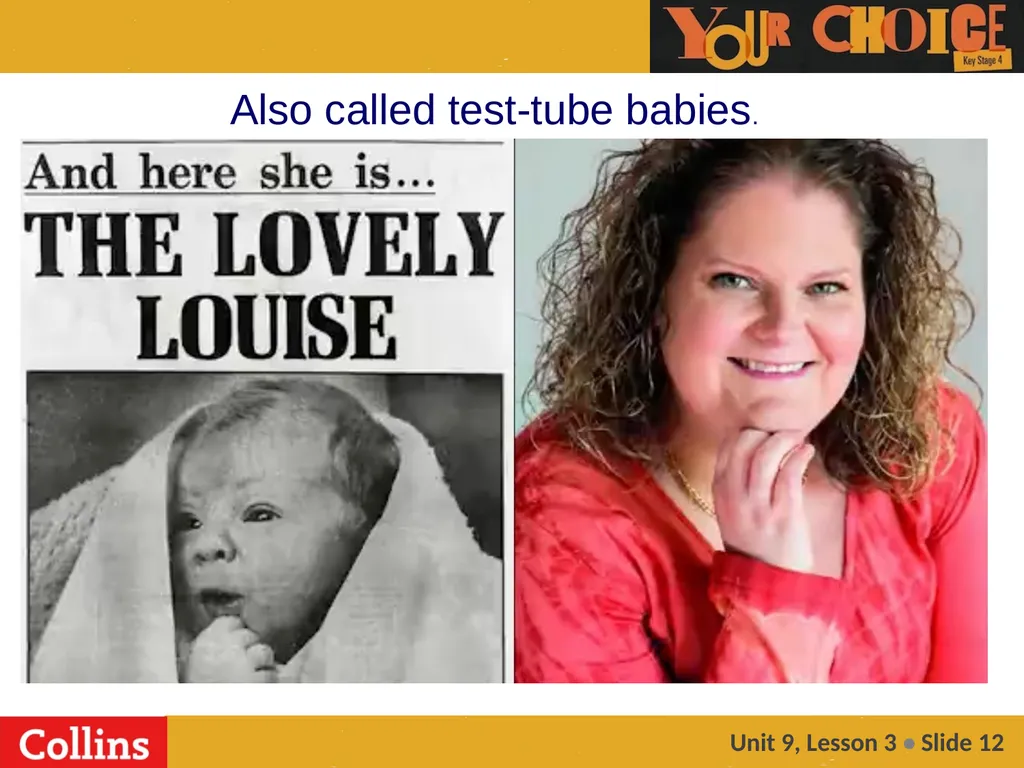
Also called test-tube babies.<br>
10
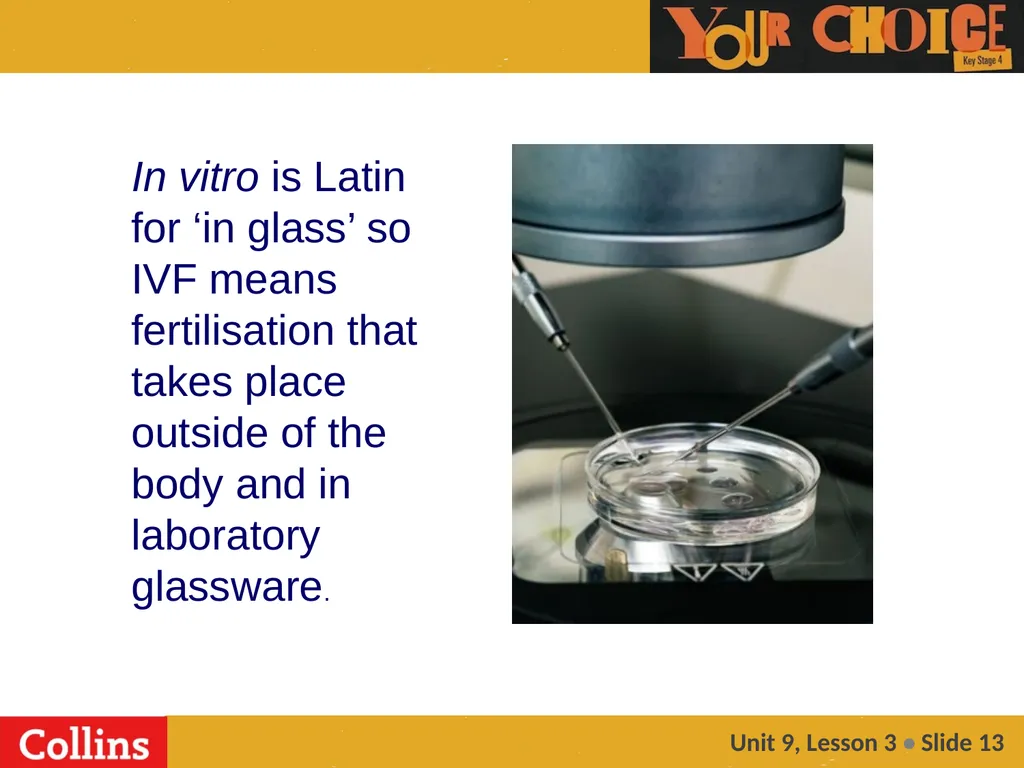
In vitro is Latin for ‘in glass’ so IVF means fertilisation that takes place outside of the body and in laboratory glassware.<br>
11
How does this work for IVF?<br>
12
You have 90 seconds to look through the process.<br>
13
How much can you remember?<br>
14
And another 90 seconds.<br>
15
How much can you remember this time?<br>
16
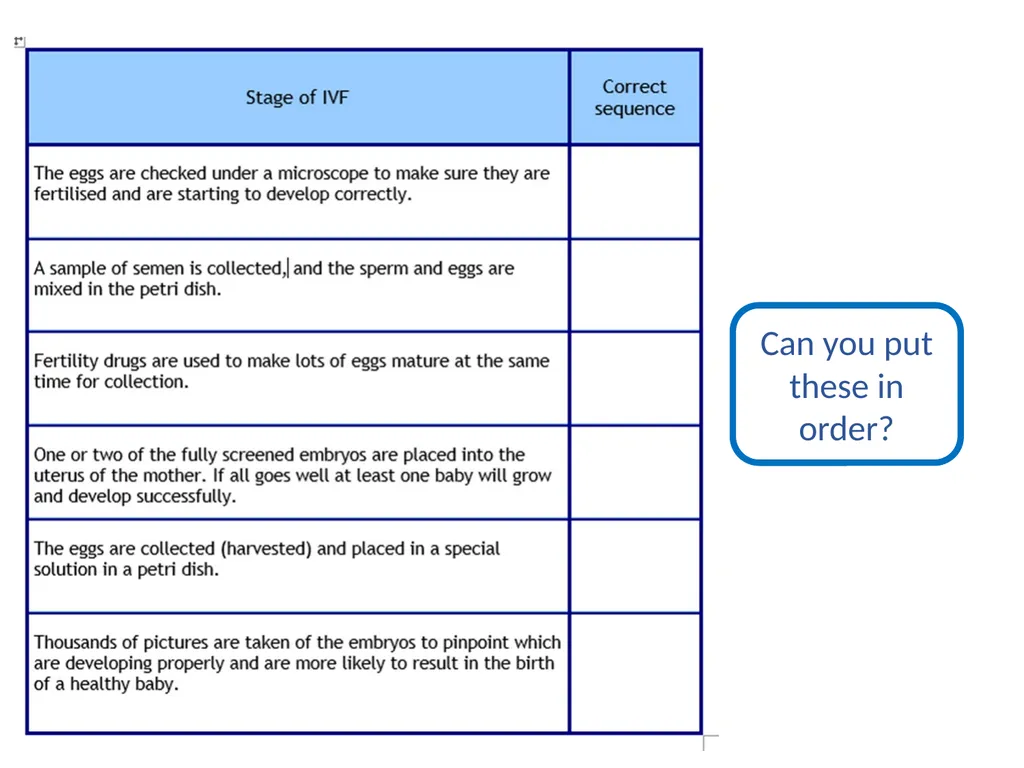
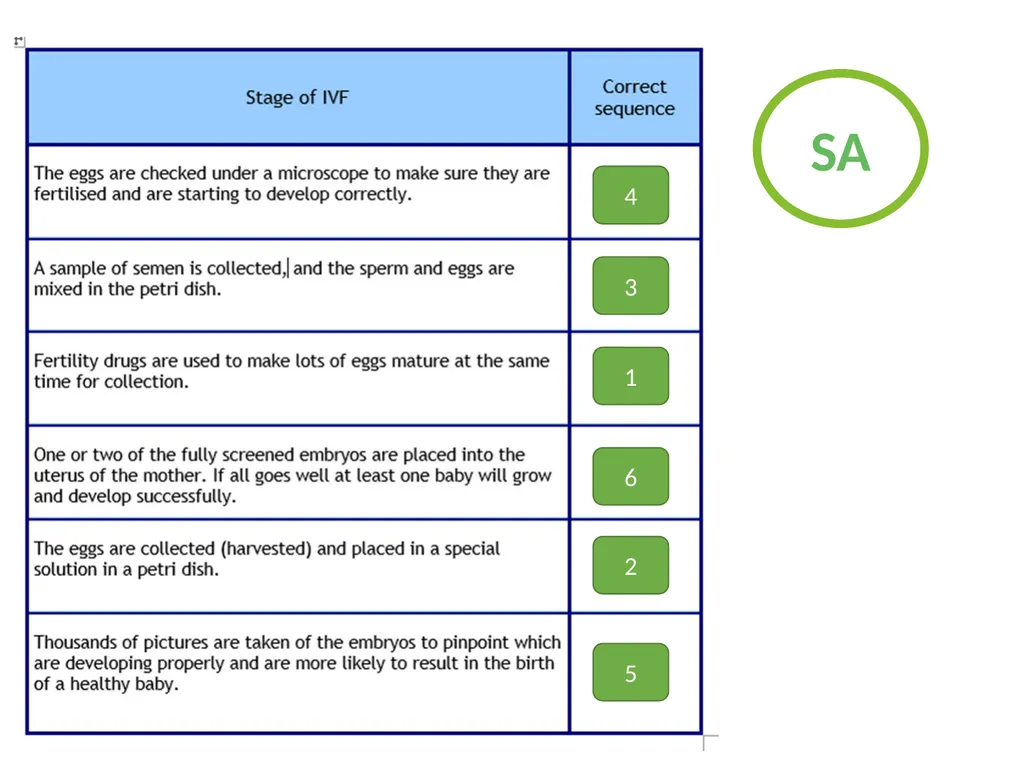
Can you put these in order?<br>
17
1 2 3 4 5 6 SA<br>
18
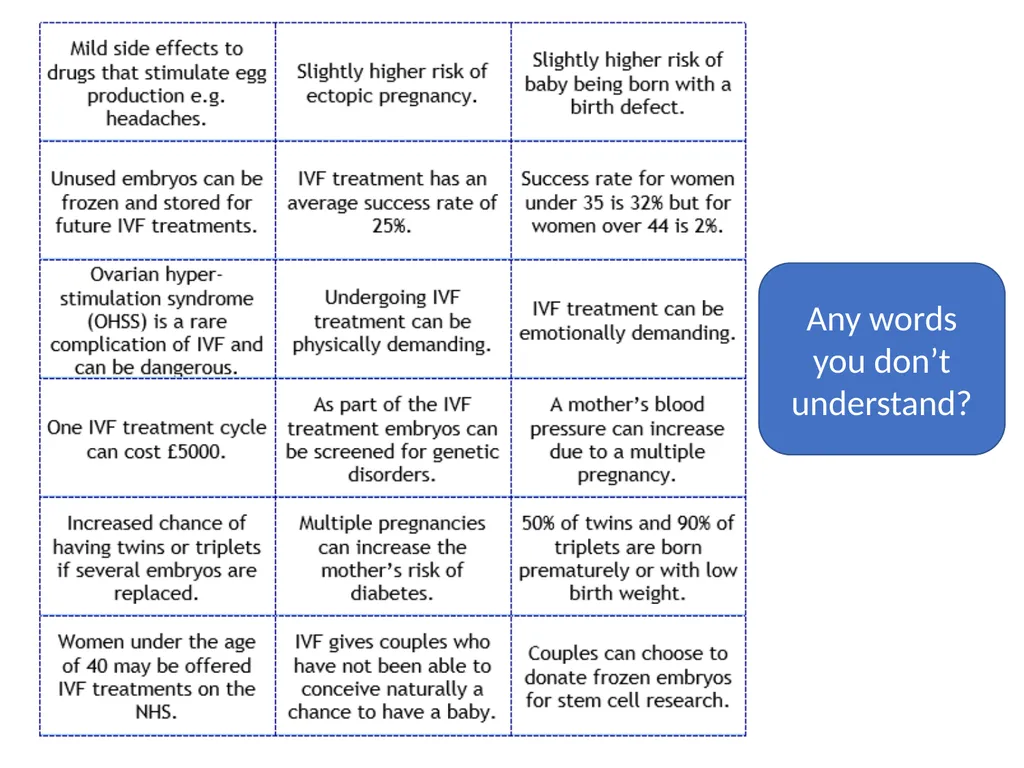
Any words you don’t understand?<br>
19
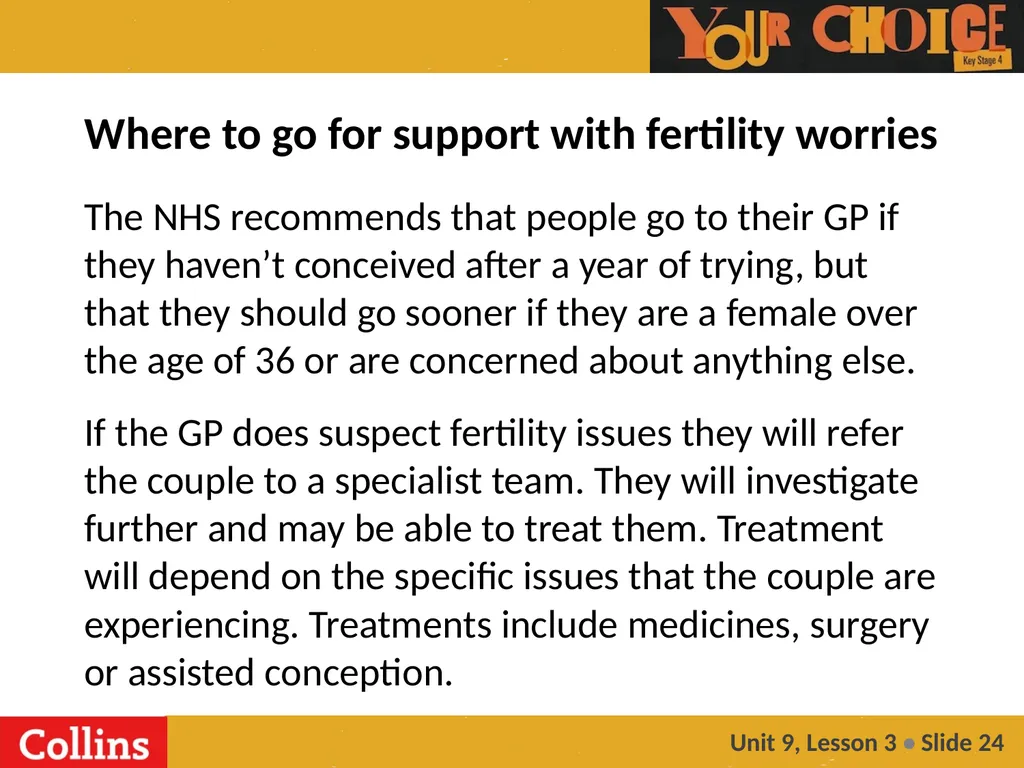
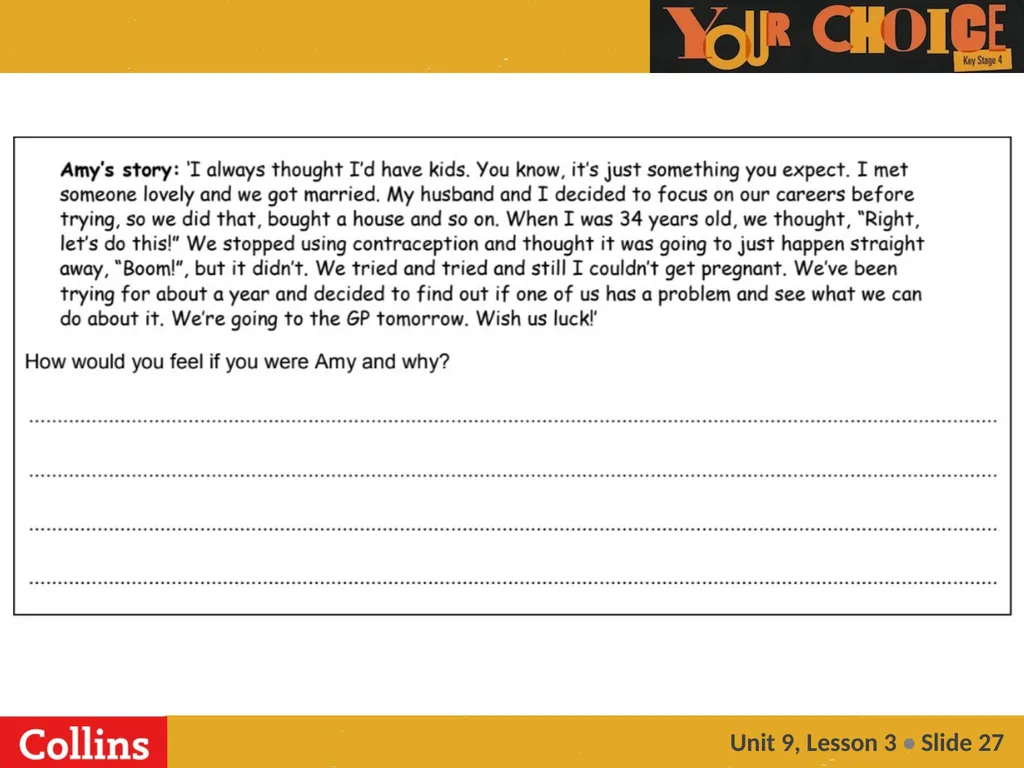
Where to go for support with fertility worries The NHS recommends that people go to their GP if they haven’t conceived after a year of trying, but that they should go sooner if they are a female over the age of 36 or are concerned about anything else.
If the GP does suspect fertility issues they will refer the couple to a specialist team. They will investigate further and may be able to treat them. Treatment will depend on the specific issues that the couple are experiencing. Treatments include medicines, surgery or assisted conception.<br>