SFD presented at the WASH RAG 16th Summit KATE HARAWA Director of Influence and Scale, Malawi Understanding the system environment and business opportunities for moving from basic to safely managed sanitation OUTLINE Global statistics
"SFD presented at the WASH RAG 16th Summit KATE" is the property of its rightful owner. Permission is granted to
download and print the materials on this website for personal, non-commercial use only, and to display it
on your personal computer provided you do not modify the materials and that you retain all copyright
notices contained in the materials. By downloading content from our website, you accept the terms of this
agreement.
Presentation Transcript
01
SFD presented at the WASH RAG 16th Summit KATE HARAWA
Director of Influence
and Scale, Malawi Understanding the “system” environment and business opportunities for moving from basic to safely managed sanitation<br>
02
OUTLINE Global statistics
Shit Flow Diagram-Introduction
Market based sanitation
Sanitation Value Chain
Financing Model
Call to ACTION SECTION / THEME<br>
03
GLOBAL SANITATION STATUS Achieving SDG WASH targets by 2030 will require a three- to six-fold increase in current rates of progress
More than half a billion people still share sanitation facilities with other households, compromising women's and girls' privacy, dignity, and safety.
E.g. recent surveys from 22 countries show that among households with shared toilets, women and girls are more likely than men and boys to feel unsafe walking alone at night and face sexual harassment and other safety risks.
3.5 billion people – or 2 in 5 – do not have safely managed sanitation.
Around 2 billion people – or 1 in 4 – cannot wash their hands with soap and water at home. 2 in 5 people do not have safely managed sanitation<br>
04
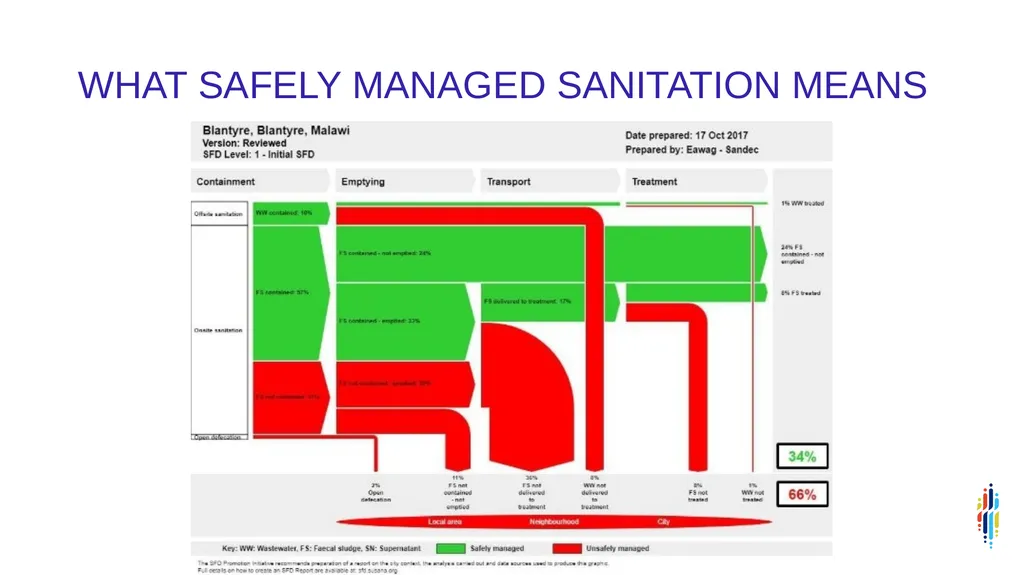
WHAT SAFELY MANAGED SANITATION MEANS<br>
05
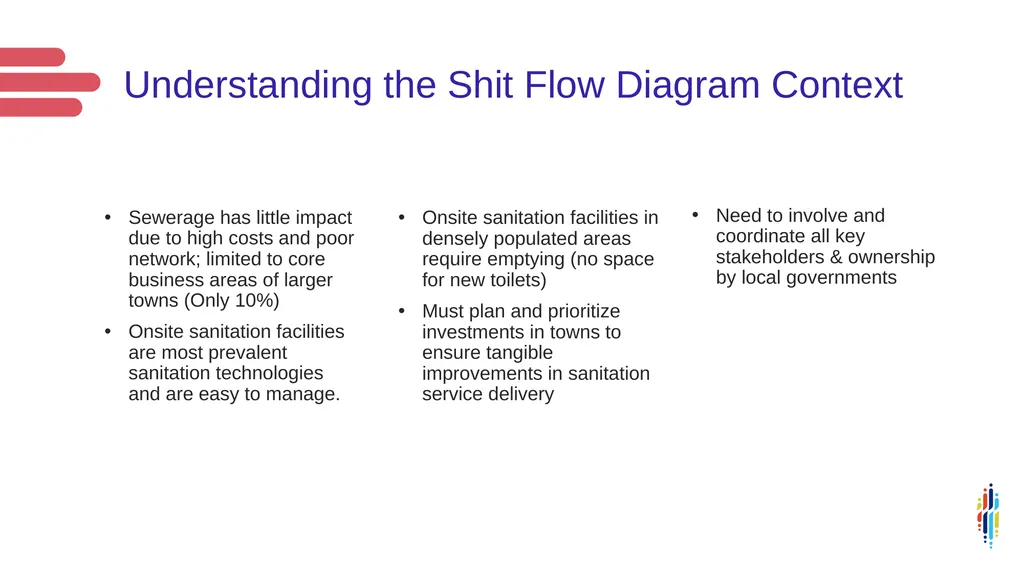
Understanding the Shit Flow Diagram Context Sewerage has little impact due to high costs and poor network; limited to core business areas of larger towns (Only 10%)
Onsite sanitation facilities are most prevalent sanitation technologies and are easy to manage. Need to involve and coordinate all key stakeholders & ownership by local governments Onsite sanitation facilities in densely populated areas require emptying (no space for new toilets)
Must plan and prioritize investments in towns to ensure tangible improvements in sanitation service delivery<br>
06
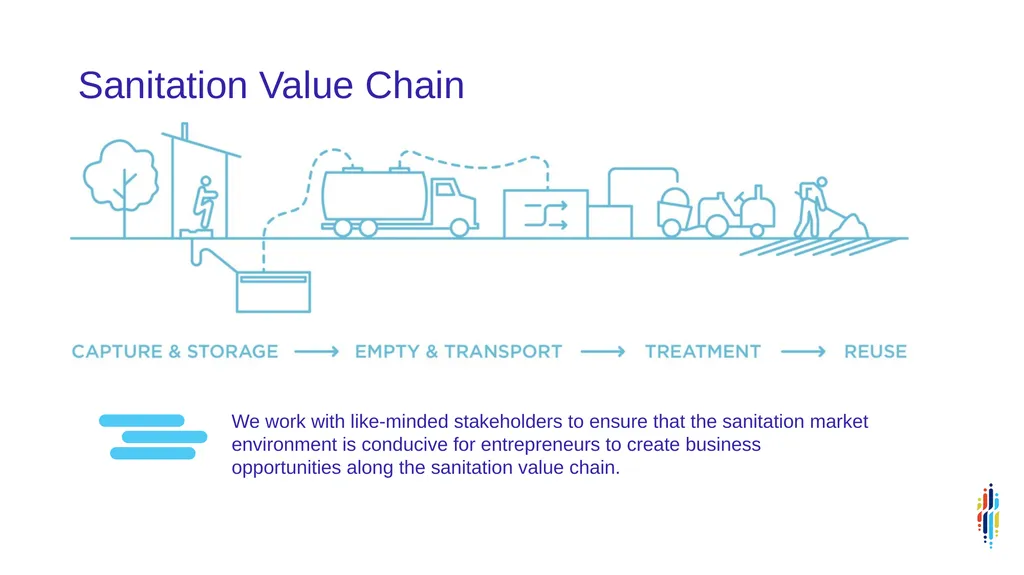
Sanitation Value Chain We work with like-minded stakeholders to ensure that the sanitation market environment is conducive for entrepreneurs to create business opportunities along the sanitation value chain.<br>
07
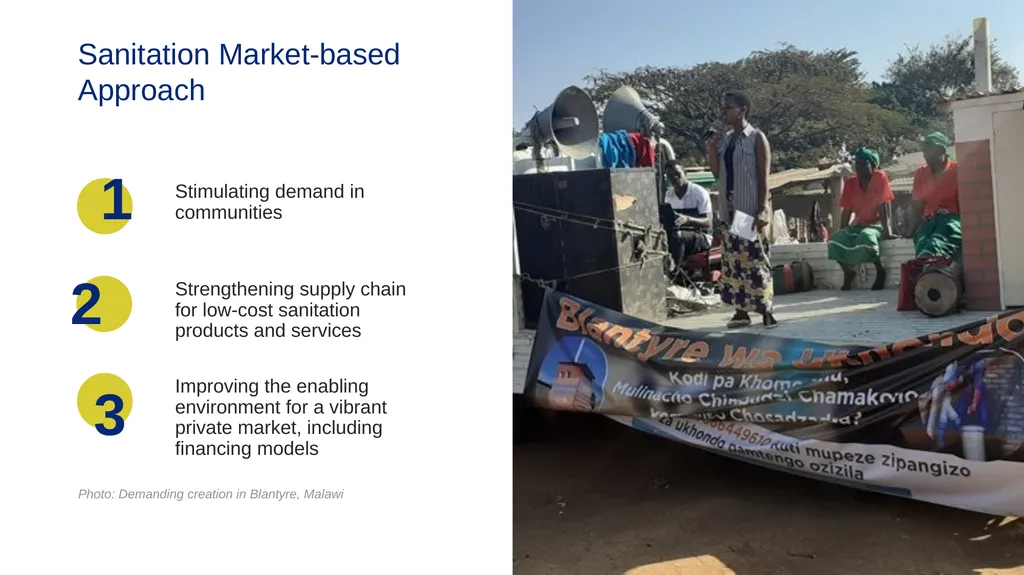
Stimulating demand in communities Photo: Demanding creation in Blantyre, Malawi Strengthening supply chain for low-cost sanitation products and services Improving the enabling environment for a vibrant private market, including financing models 1 2 3 Sanitation Market-based Approach<br>
08
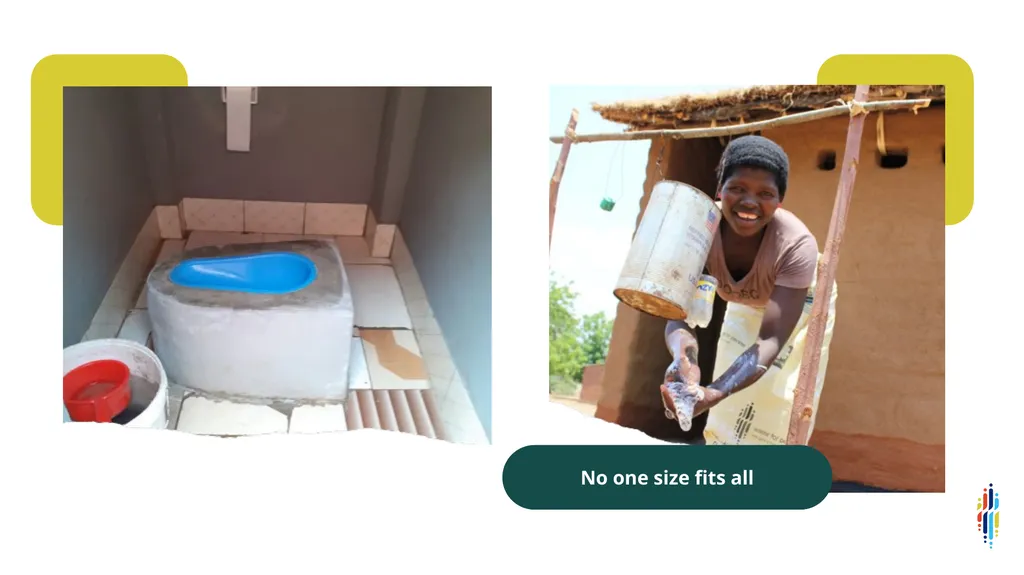
No one size fits all No one size fits all<br>
09
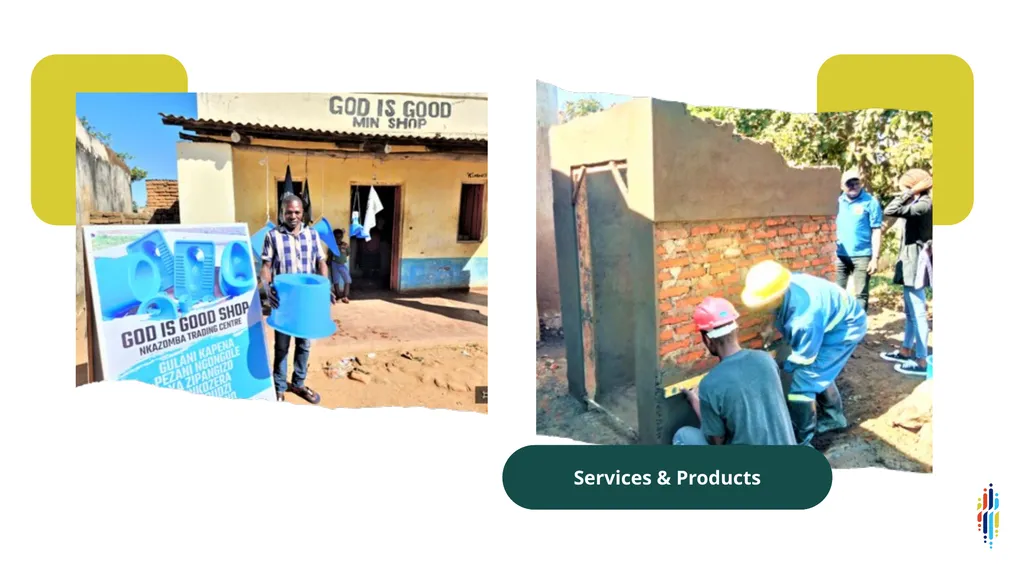
No one size fits all Services & Products<br>
10
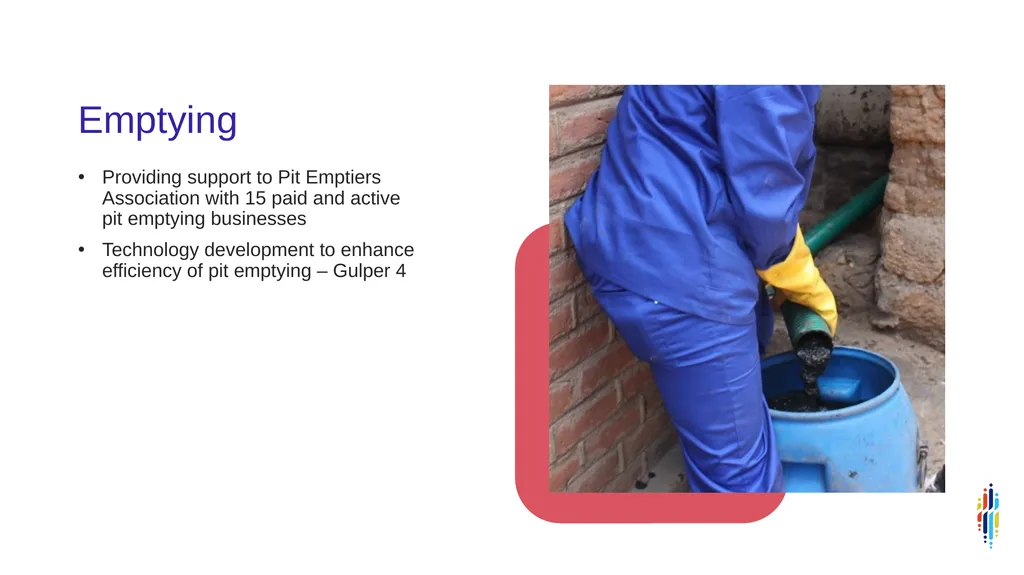
Emptying Providing support to Pit Emptiers Association with 15 paid and active pit emptying businesses
Technology development to enhance efficiency of pit emptying – Gulper 4<br>
11
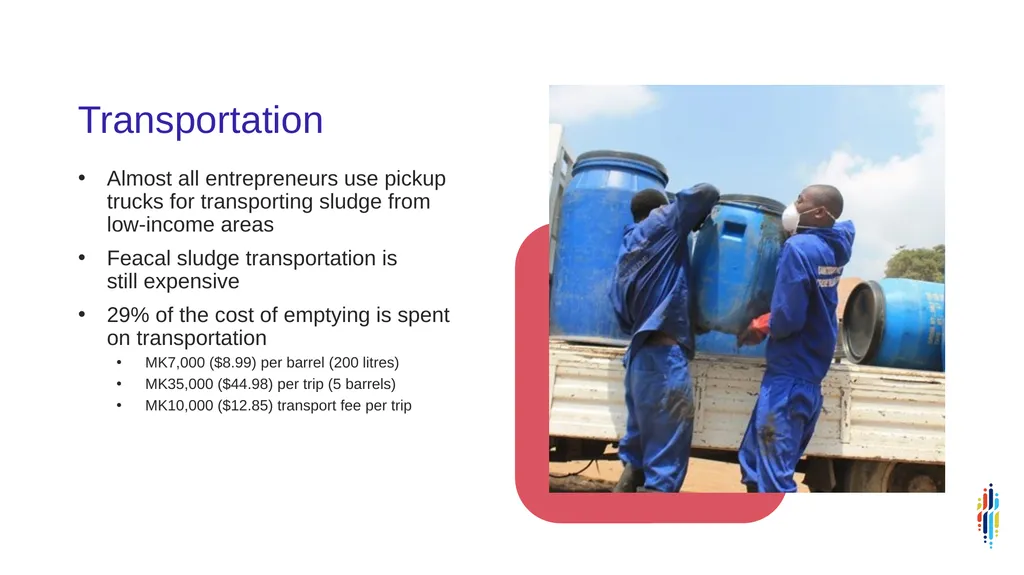
Transportation Almost all entrepreneurs use pickup trucks for transporting sludge from low-income areas
Feacal sludge transportation is still expensive
29% of the cost of emptying is spent on transportation
MK7,000 ($8.99) per barrel (200 litres)
MK35,000 ($44.98) per trip (5 barrels)
MK10,000 ($12.85) transport fee per trip<br>
12
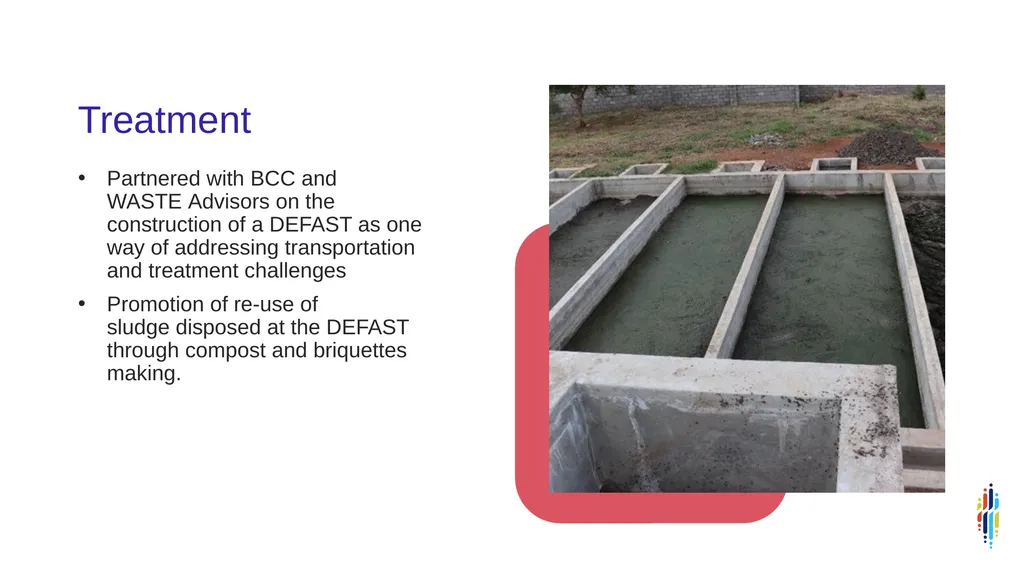
Treatment Partnered with BCC and WASTE Advisors on the construction of a DEFAST as one way of addressing transportation and treatment challenges
Promotion of re-use of sludge disposed at the DEFAST through compost and briquettes making.<br>
13
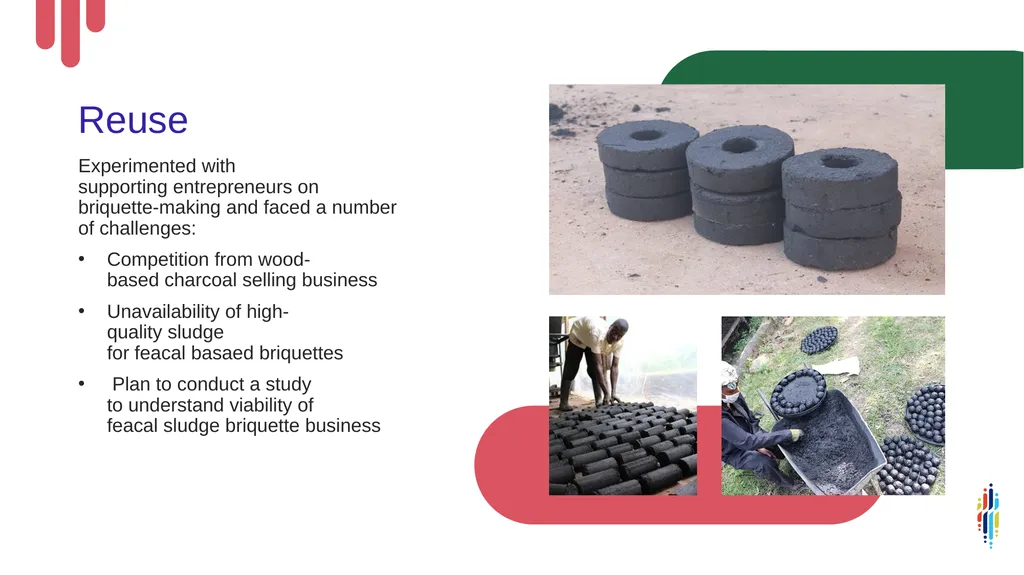
Experimented with supporting entrepreneurs on briquette-making and faced a number of challenges:
Competition from wood-based charcoal selling business
Unavailability of high-quality sludge for feacal basaed briquettes
Plan to conduct a study to understand viability of feacal sludge briquette business Reuse<br>
14
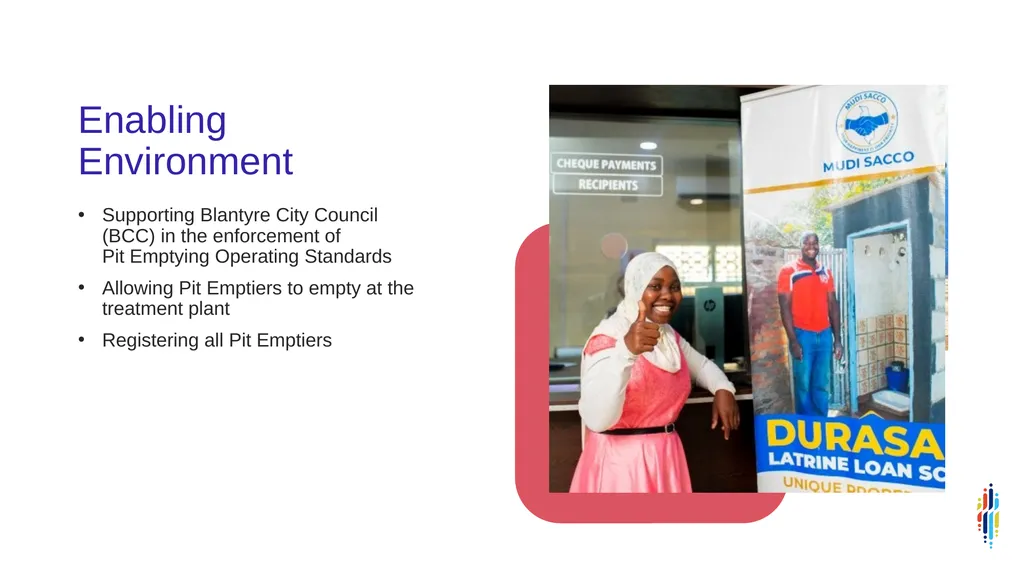
Enabling Environment Supporting Blantyre City Council (BCC) in the enforcement of Pit Emptying Operating Standards
Allowing Pit Emptiers to empty at the treatment plant
Registering all Pit Emptiers<br>
15
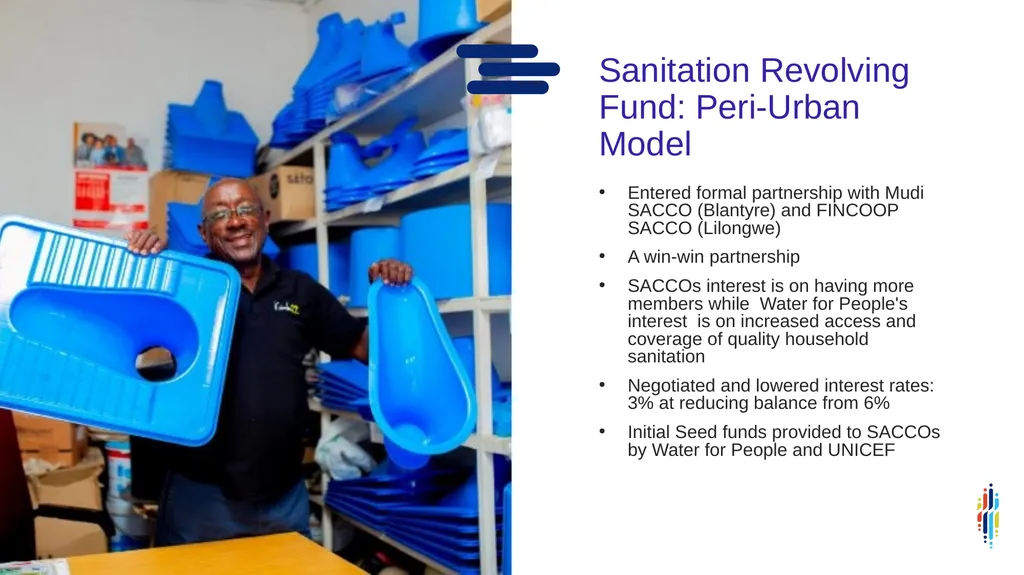
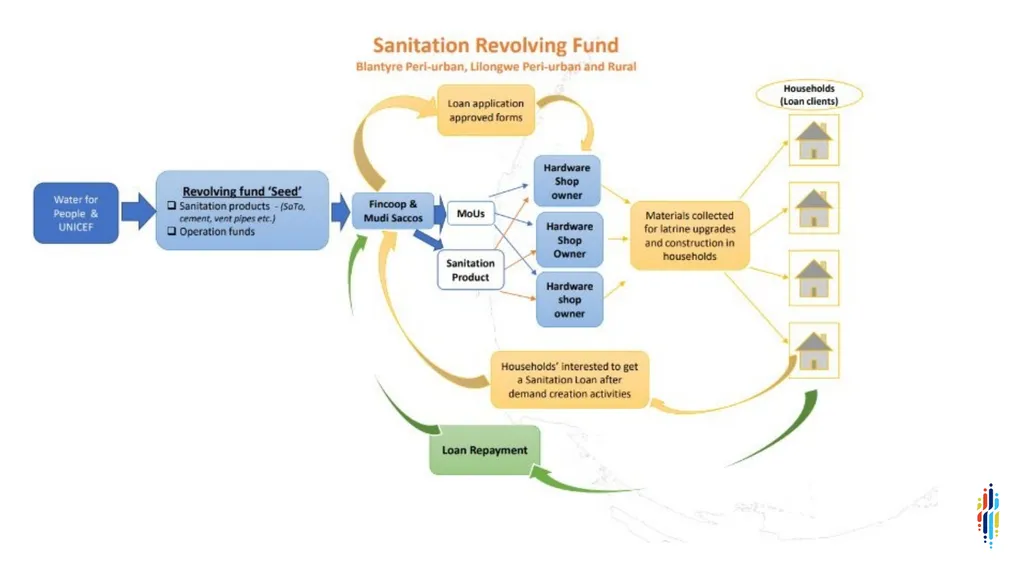
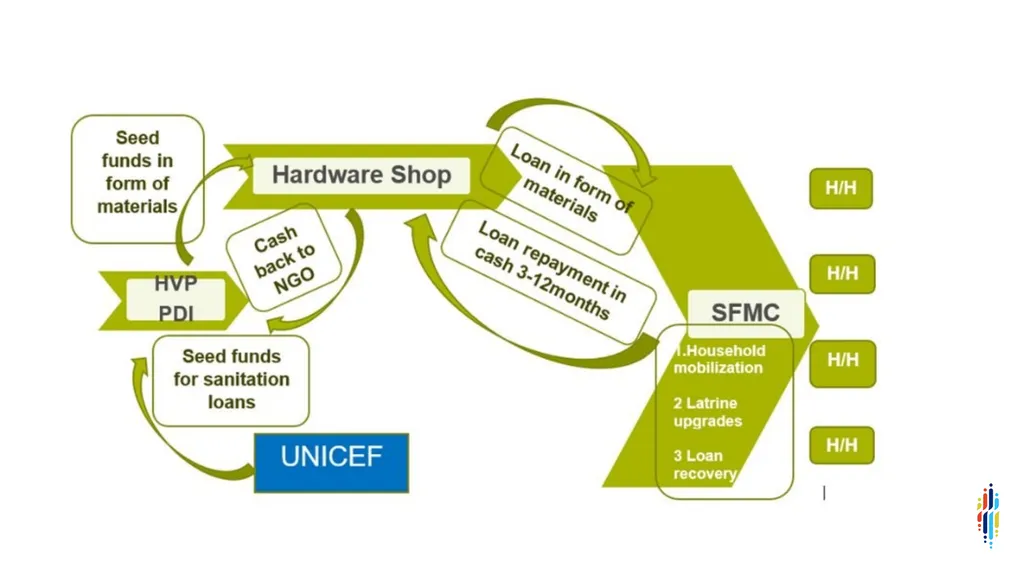
Sanitation Revolving Fund: Peri-Urban Model Entered formal partnership with Mudi SACCO (Blantyre) and FINCOOP SACCO (Lilongwe)
A win-win partnership
SACCOs interest is on having more members while Water for People's interest is on increased access and coverage of quality household sanitation
Negotiated and lowered interest rates: 3% at reducing balance from 6%
Initial Seed funds provided to SACCOs by Water for People and UNICEF<br>
16
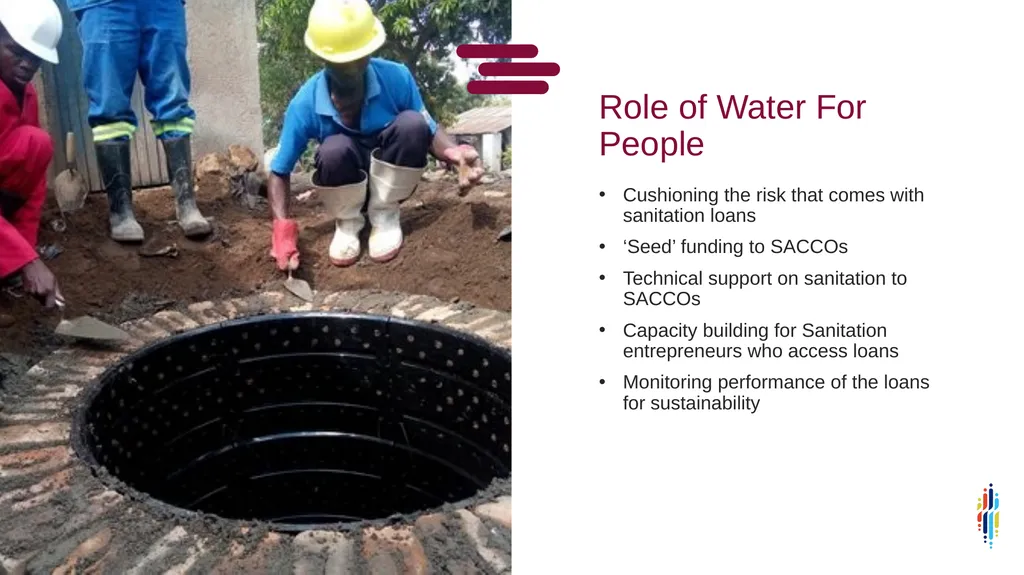
Role of Water For People Cushioning the risk that comes with sanitation loans
‘Seed’ funding to SACCOs
Technical support on sanitation to SACCOs
Capacity building for Sanitation entrepreneurs who access loans
Monitoring performance of the loans for sustainability<br>
17
Sustainability of sanitation financing: What’s next? The ultimate goal to attain sustainability: Make the sanitation loan market attractive enough for financing institutions to venture into, even at the proposed low interest rates.
Cushion the sanitation loans risk for increased uptake of sanitation loans by both households and businesses leading to profitability of the initiative and iincreased loan recovery rate Make the sanitation loan market attractive enough for financing institutions to venture into, even at the proposed low interest rates.<br>
18
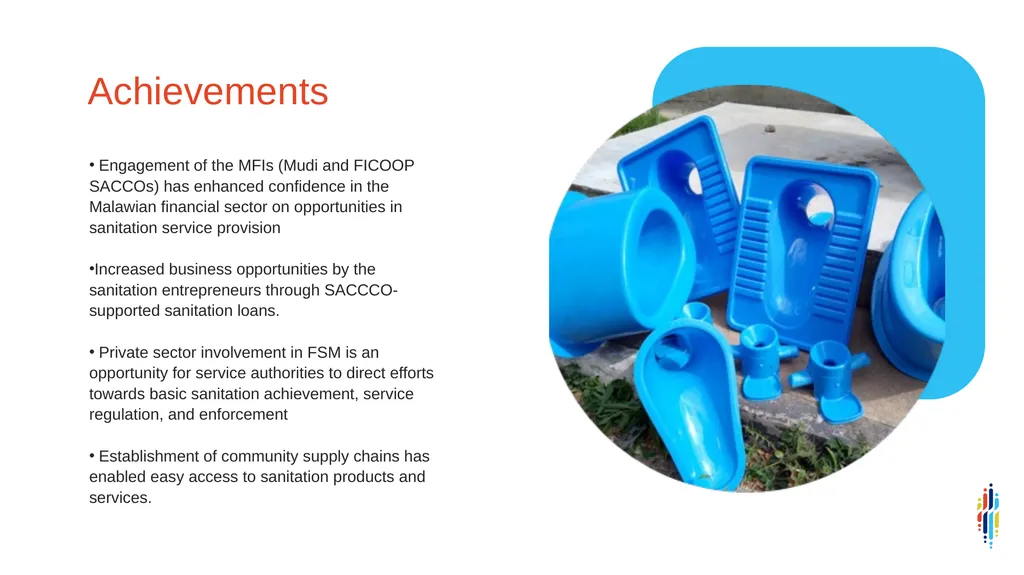
Engagement of the MFIs (Mudi and FICOOP SACCOs) has enhanced confidence in the Malawian financial sector on opportunities in sanitation service provision
Increased business opportunities by the sanitation entrepreneurs through SACCCO-supported sanitation loans.
Private sector involvement in FSM is an opportunity for service authorities to direct efforts towards basic sanitation achievement, service regulation, and enforcement
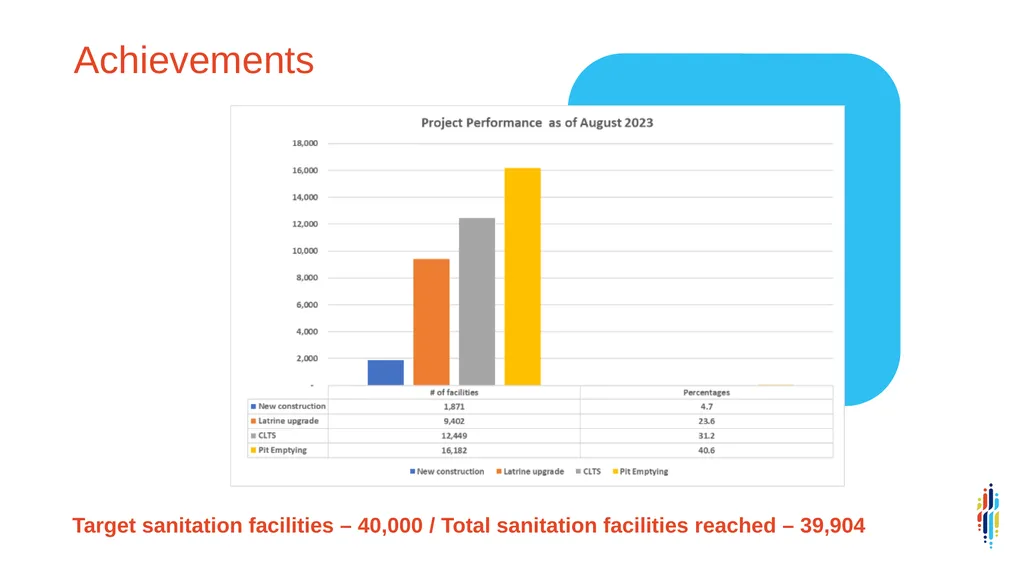
Establishment of community supply chains has enabled easy access to sanitation products and services. Achievements<br>
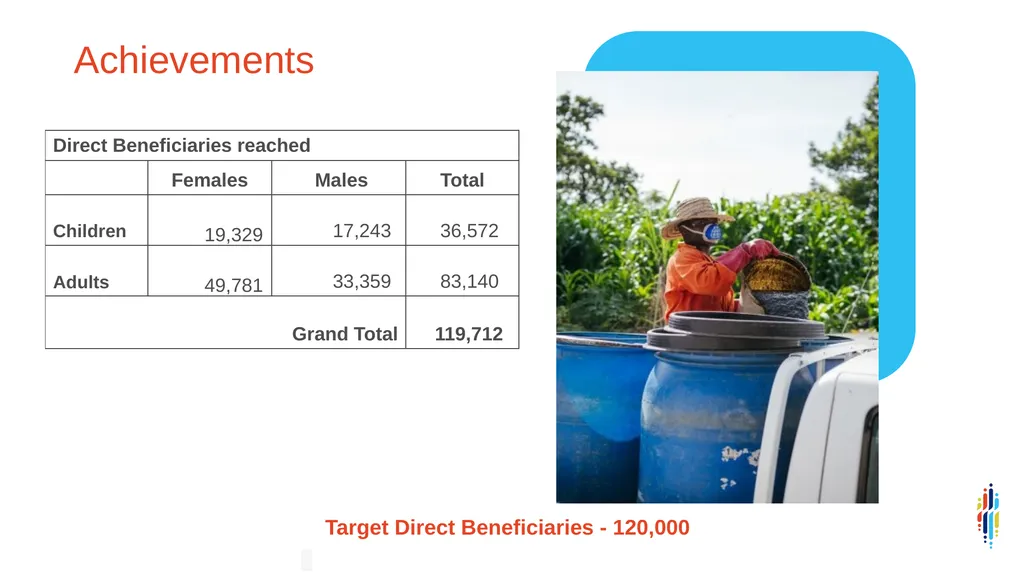
Achievements
Target Direct Beneficiaries - 120,000
<br>
21
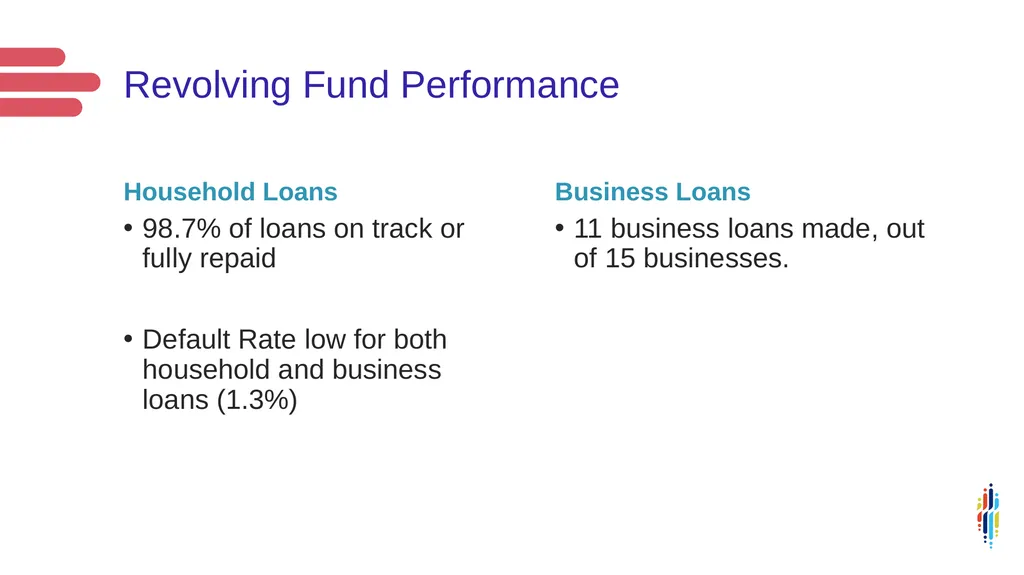
Revolving Fund Performance Household Loans 98.7% of loans on track or fully repaid
Default Rate low for both household and business loans (1.3%) Business Loans 11 business loans made, out of 15 businesses.<br>
22
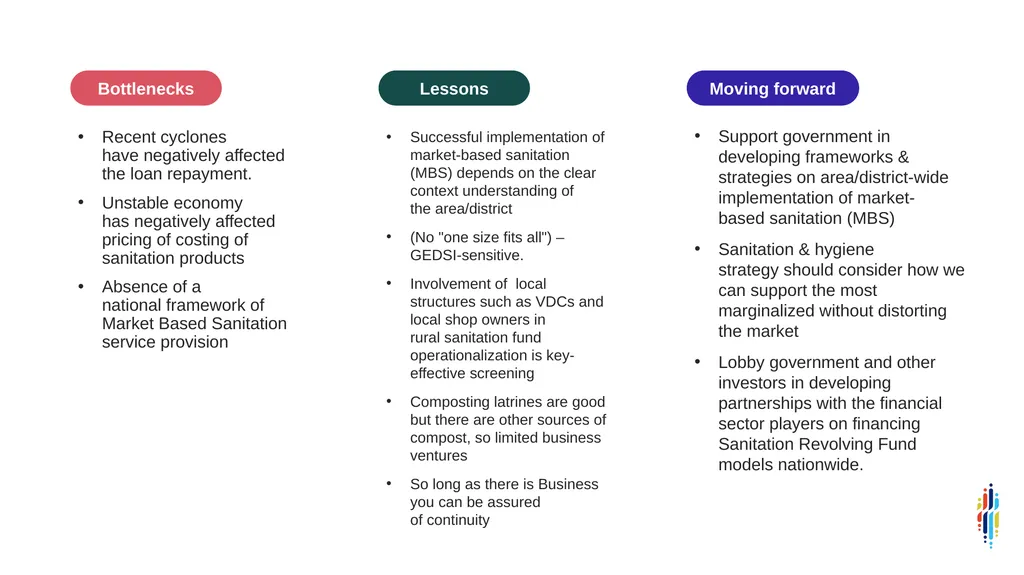
Bottlenecks Lessons Moving forward Recent cyclones have negatively affected the loan repayment.
Unstable economy has negatively affected pricing of costing of sanitation products
Absence of a national framework of Market Based Sanitation service provision Successful implementation of market-based sanitation (MBS) depends on the clear context understanding of the area/district
(No "one size fits all") – GEDSI-sensitive.
Involvement of local structures such as VDCs and local shop owners in rural sanitation fund operationalization is key-effective screening
Composting latrines are good but there are other sources of compost, so limited business ventures
So long as there is Business you can be assured of continuity Support government in developing frameworks & strategies on area/district-wide implementation of market-based sanitation (MBS)
Sanitation & hygiene strategy should consider how we can support the most marginalized without distorting the market
Lobby government and other investors in developing partnerships with the financial sector players on financing Sanitation Revolving Fund models nationwide.<br>
23
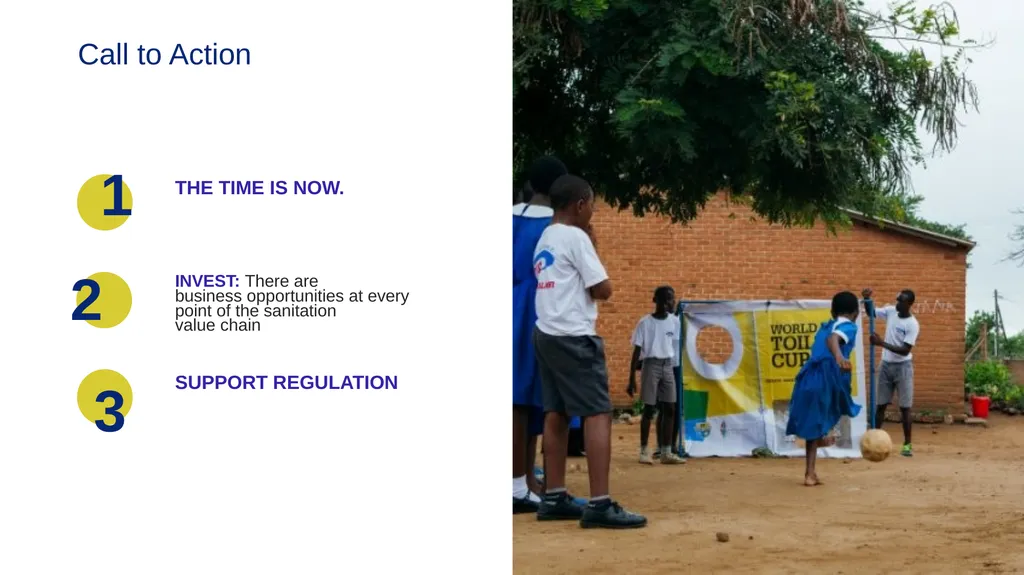
THE TIME IS NOW. INVEST: There are business opportunities at every point of the sanitation value chain SUPPORT REGULATION 1 2 3 Call to Action<br>
24
CONTACT INFORMATION Kate Harawa
Director of Influence & Scale
Water For People in Malawi
www.waterforpeople.org
kharawa@waterforpeople.org<br>