Shame Language Words and Phrases Which Can Trigger a Shame Cycle and How To Change Christopher Blakley, Psy.D. Shame Language I posit if we can identify our verbal shame triggers and replace them with healthier alternatives, we can reduce
"Shame Language Words and Phrases Which Can Trigger" is the property of its rightful owner. Permission is granted to
download and print the materials on this website for personal, non-commercial use only, and to display it
on your personal computer provided you do not modify the materials and that you retain all copyright
notices contained in the materials. By downloading content from our website, you accept the terms of this
agreement.
Presentation Transcript
01
Shame Language Words and Phrases Which Can Trigger a Shame Cycle and How To Change Christopher Blakley, Psy.D.<br>
02
Shame Language I posit if we can identify our verbal shame triggers and replace them with healthier alternatives, we can reduce the possibility of going into a shame cycle in ourselves and our clients.
Shame language robs one of autonomy and can trigger high levels of anxiety and dread, while promoting feelings of helplessness, hopelessness, and powerlessness.<br>
03
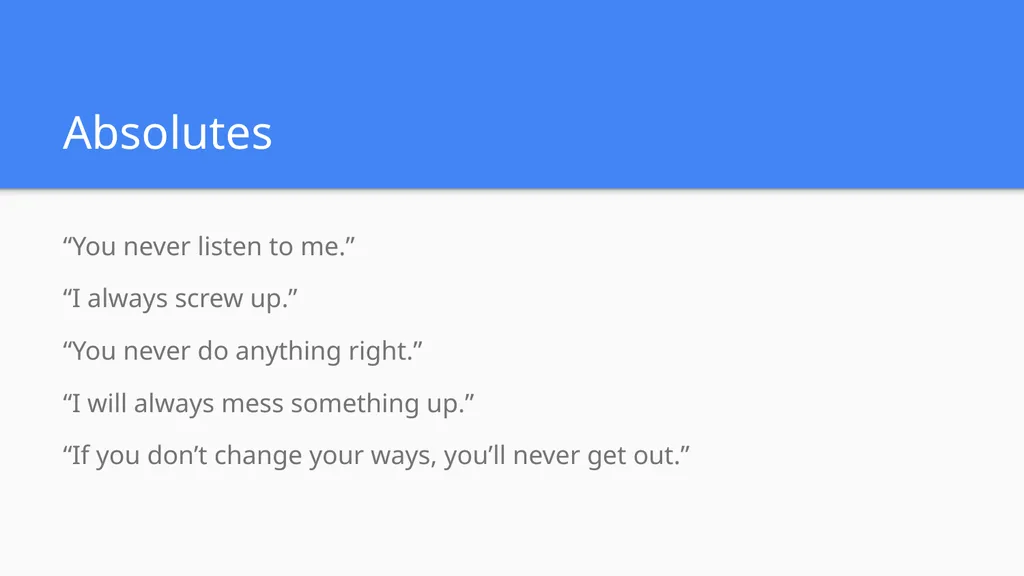
Absolutes “You never listen to me.”
“I always screw up.”
“You never do anything right.”
“I will always mess something up.”
“If you don’t change your ways, you’ll never get out.”<br>
04
Shame Language We often do not realize how our day to day language can be interpreted by others as the intent and the perception may not match up the way we intend. Worse, we do not always pay attention to the words we use to talk to ourselves. Shame language gives the perception there is no choice and robs us and our clients of autonomy.<br>
05
Which Words Trigger Shame? Which words do you hear in your day to day life and with your clients that trigger shame?<br>
06
Which Words Trigger Shame? Which words surprise, confuse, or do not make sense to you?<br>
07
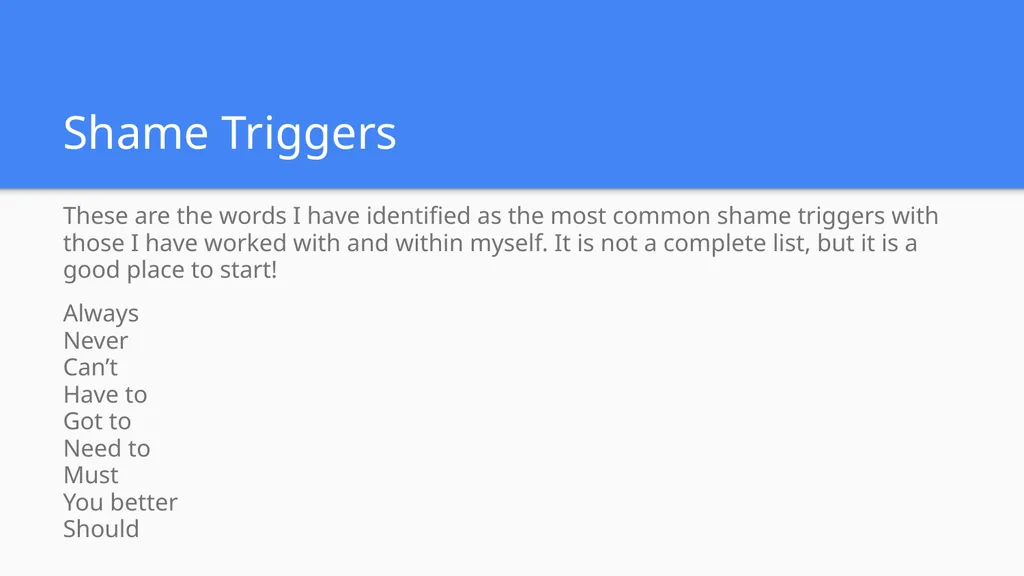
Shame Triggers These are the words I have identified as the most common shame triggers with those I have worked with and within myself. It is not a complete list, but it is a good place to start!
Always Never Can’t Have to Got to Need to Must You better Should<br>
08
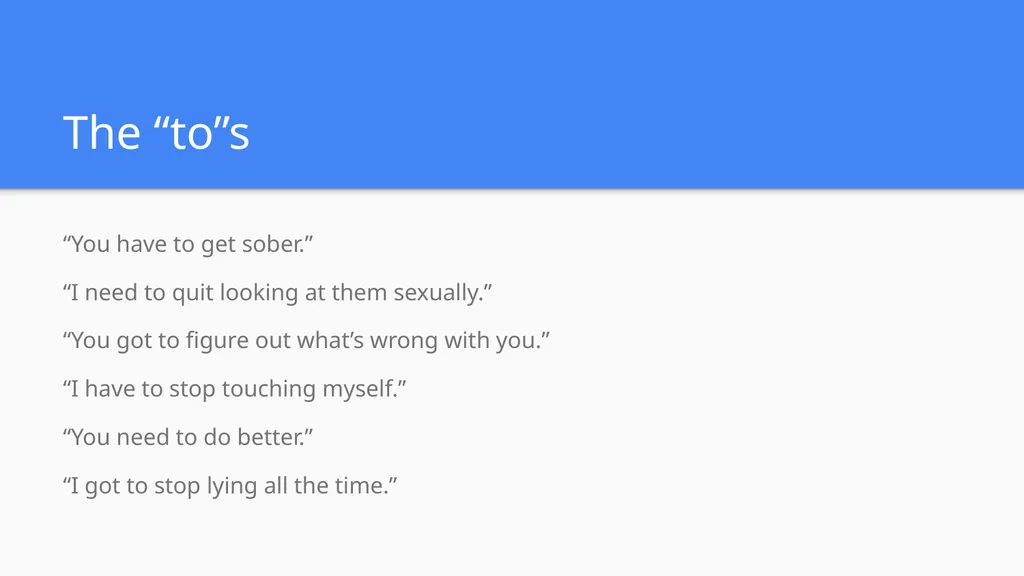
The “to”s “You have to get sober.”
“I need to quit looking at them sexually.”
“You got to figure out what’s wrong with you.”
“I have to stop touching myself.”
“You need to do better.”
“I got to stop lying all the time.”<br>
09
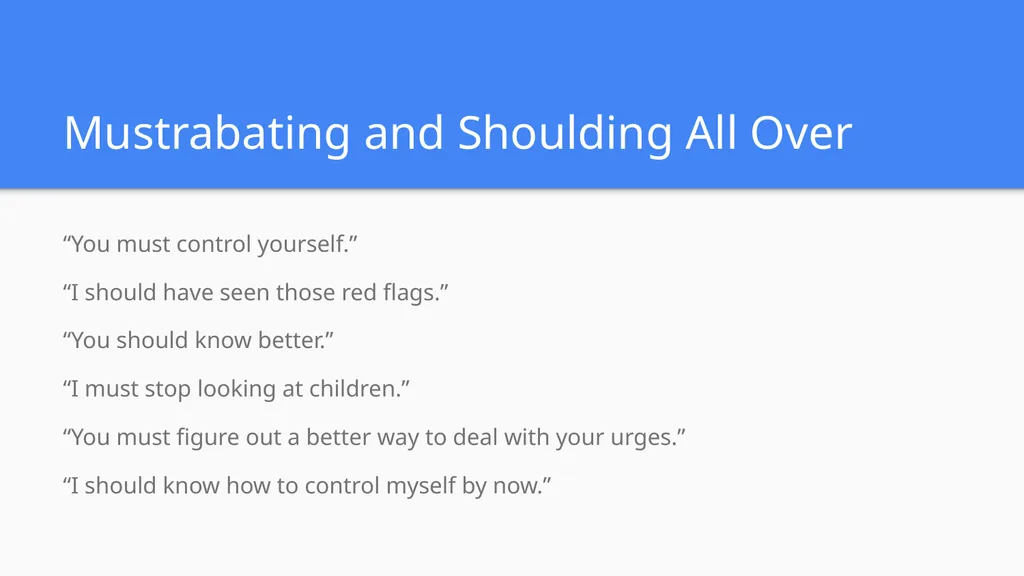
Mustrabating and Shoulding All Over “You must control yourself.”
“I should have seen those red flags.”
“You should know better.”
“I must stop looking at children.”
“You must figure out a better way to deal with your urges.”
“I should know how to control myself by now.”<br>
10
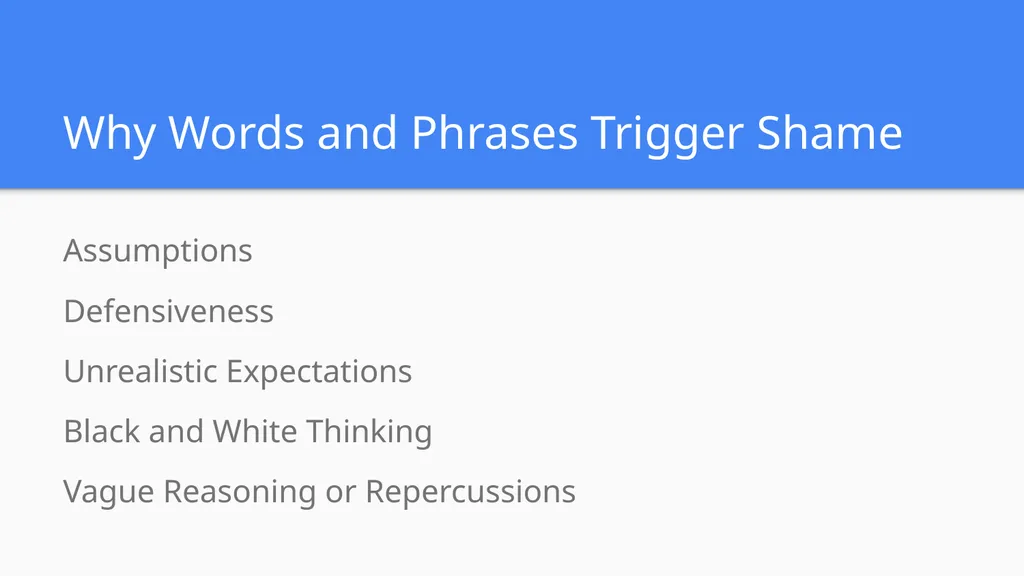
Why Words and Phrases Trigger Shame Assumptions
Defensiveness
Unrealistic Expectations
Black and White Thinking
Vague Reasoning or Repercussions<br>
11
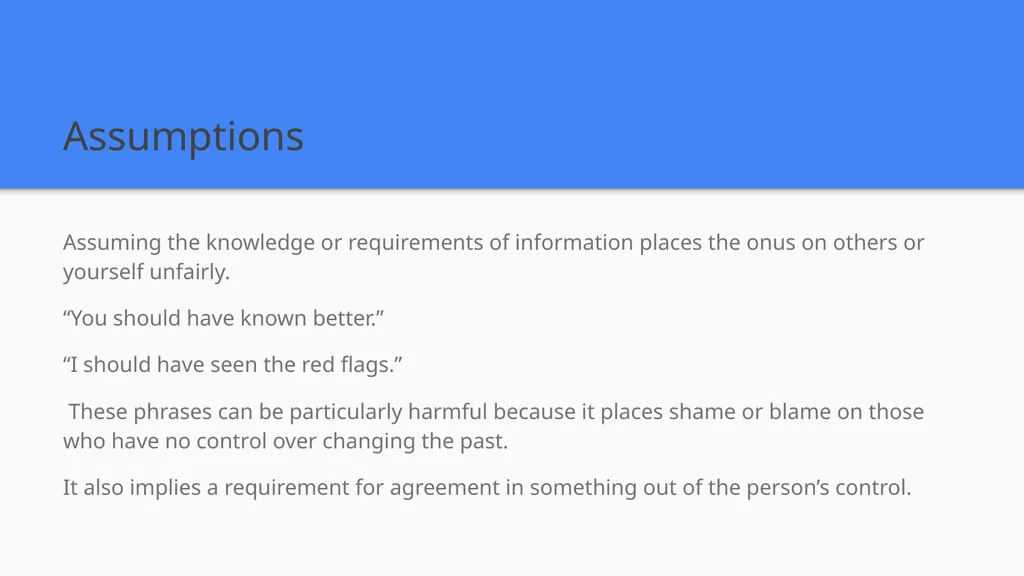
Assumptions Assuming the knowledge or requirements of information places the onus on others or yourself unfairly.
“You should have known better.”
“I should have seen the red flags.”
These phrases can be particularly harmful because it places shame or blame on those who have no control over changing the past.
It also implies a requirement for agreement in something out of the person’s control.<br>
12
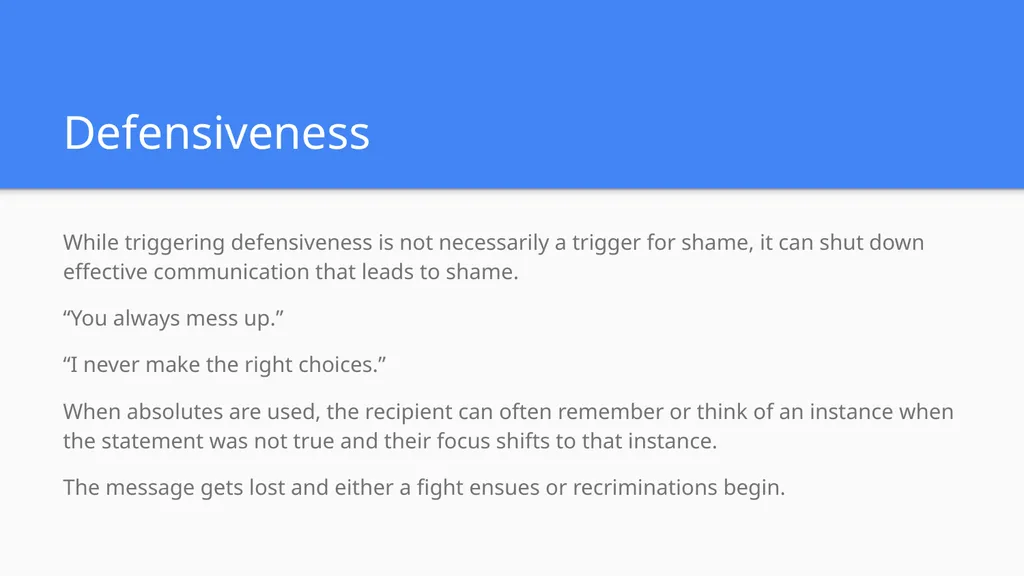
Defensiveness While triggering defensiveness is not necessarily a trigger for shame, it can shut down effective communication that leads to shame.
“You always mess up.”
“I never make the right choices.”
When absolutes are used, the recipient can often remember or think of an instance when the statement was not true and their focus shifts to that instance.
The message gets lost and either a fight ensues or recriminations begin.<br>
13
Unrealistic Expectations Please raise your hand if you’ve never made a mistake. How many times have you made a mistake and did not realize it until later?
Did you chastise yourself? Did someone else? “You can’t mess up again.”
“I should know how to control myself by now.” Unrealistic expectations create an atmosphere of impending failure because we make mistakes.<br>
14
Black and White Thinking If there is no grey area there is no room to learn from mistakes. “I’m always going to mess up.”
“You’re never going to do anything right.” All or nothing thinking does not allow yourself or others to make adjustments.
The lights are on or off. Turn left or right. Once you’re an offender you’ll always be an offender.<br>
15
Vague Reasoning and Repercussions While there are going to be outcomes to any choice we make, not being specific about what those outcomes are leaves it up to the listener’s imagination and catastrophizing will take over. Or worse, there is an implied “or else”. “If you don’t change your ways, you’ll never get out.”
“You must figure out a better way to deal with your urges.”<br>
16
Now What? How many of you can identify the words and phrases in your day to day to life? Or with your clients?<br>
17
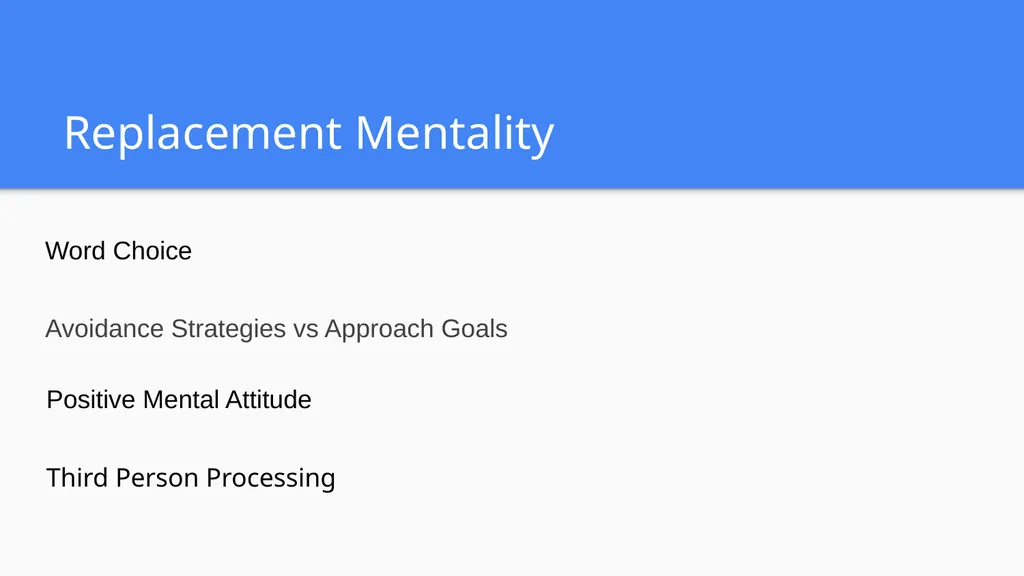
Replacement Mentality Avoidance Strategies vs Approach Goals Positive Mental Attitude Word Choice Third Person Processing<br>
18
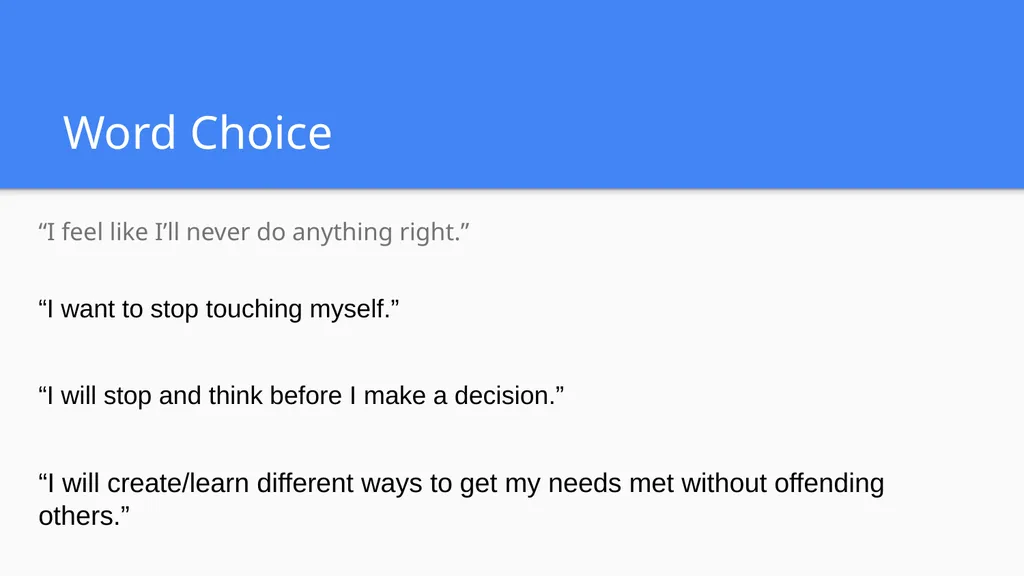
Word Choice “I feel like I’ll never do anything right.” “I want to stop touching myself.” “I will stop and think before I make a decision.” “I will create/learn different ways to get my needs met without offending others.”<br>
19
Avoidance Strategies vs Approach Goals Relapse Prevention Plan
Good Lives Model<br>
20
Positive Mental Attitude If you think you can’t, you’re right.
If you think you can, you’re right.
Which wolf will you feed?<br>
21
Third Person Processing Provides the ability to process shame and the associated triggers with emotional distance.
Allows in the moment processing of emotions with that emotional distance.
Also allows clarity and objectivity in a situation which normally is not possible when “in the moment”.<br>