Sharing the power to decide? How Canadian universities acquire private archives Alexandra Mills, Special Collections Archivist Concordia University Library, Montreal, Quebec April 17, 2023 survey title and duration Survey title: Archival
"Sharing the power to decide? How Canadian" is the property of its rightful owner. Permission is granted to
download and print the materials on this website for personal, non-commercial use only, and to display it
on your personal computer provided you do not modify the materials and that you retain all copyright
notices contained in the materials. By downloading content from our website, you accept the terms of this
agreement.
Presentation Transcript
01
Sharing the power to decide? How Canadian universities acquire private archives Alexandra Mills, Special Collections Archivist
Concordia University Library, Montreal, Quebec
April 17, 2023<br>
02
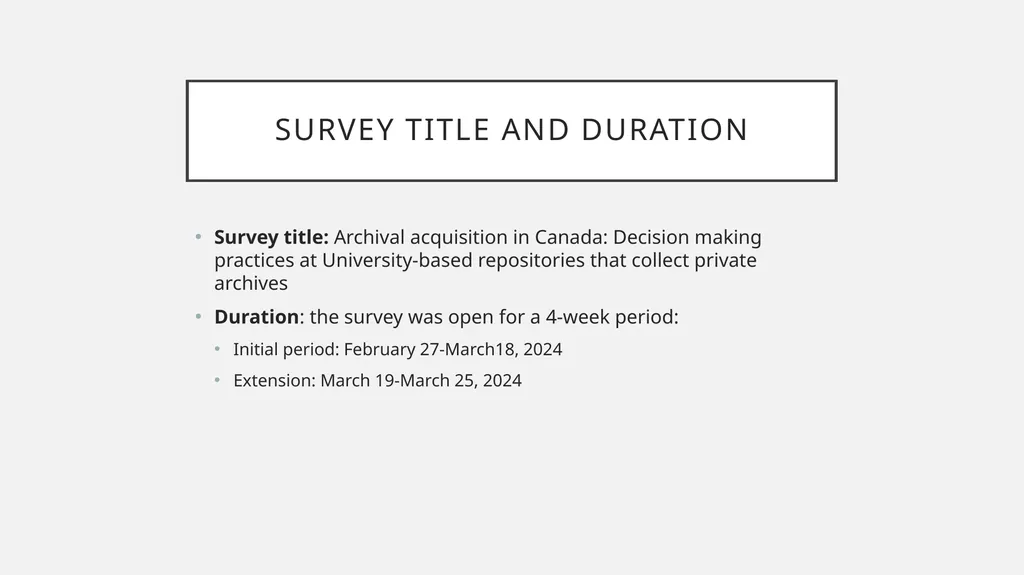
survey title and duration Survey title: Archival acquisition in Canada: Decision making practices at University-based repositories that collect private archives
Duration: the survey was open for a 4-week period:
Initial period: February 27-March18, 2024
Extension: March 19-March 25, 2024<br>
03
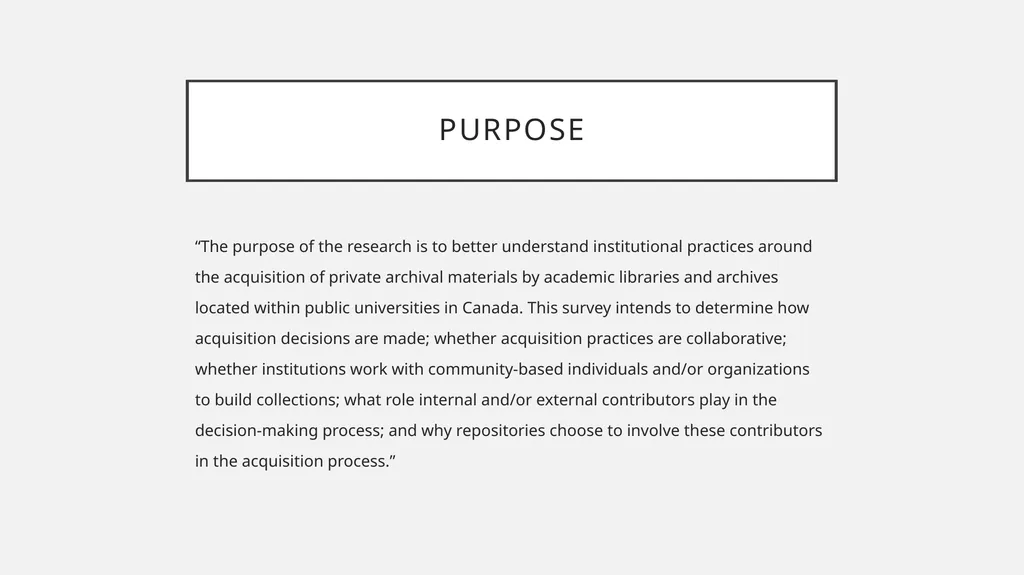
purpose “The purpose of the research is to better understand institutional practices around the acquisition of private archival materials by academic libraries and archives located within public universities in Canada. This survey intends to determine how acquisition decisions are made; whether acquisition practices are collaborative; whether institutions work with community-based individuals and/or organizations to build collections; what role internal and/or external contributors play in the decision-making process; and why repositories choose to involve these contributors in the acquisition process.”<br>
04
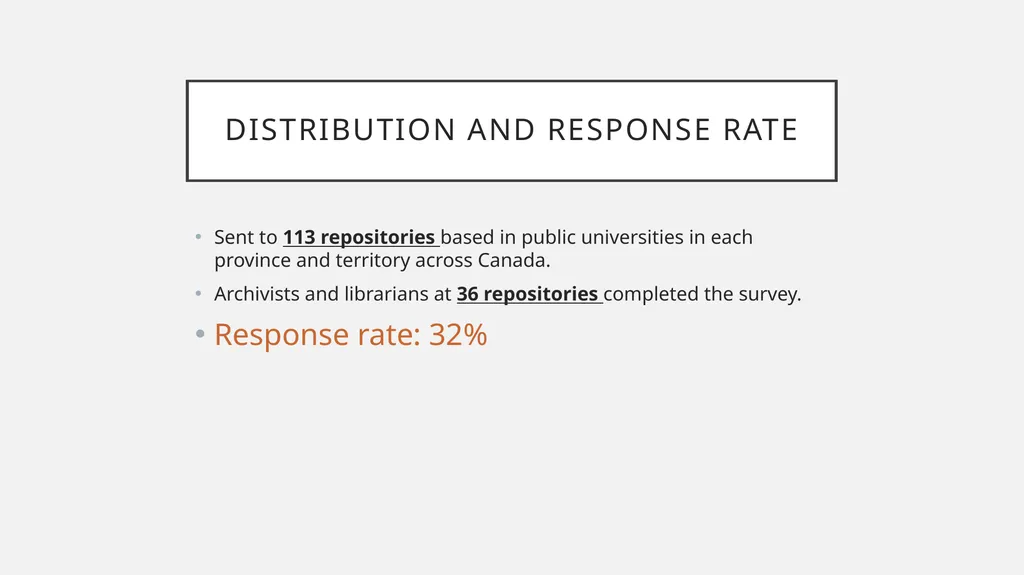
distribution and response rate Sent to 113 repositories based in public universities in each province and territory across Canada.
Archivists and librarians at 36 repositories completed the survey.
Response rate: 32%<br>
05
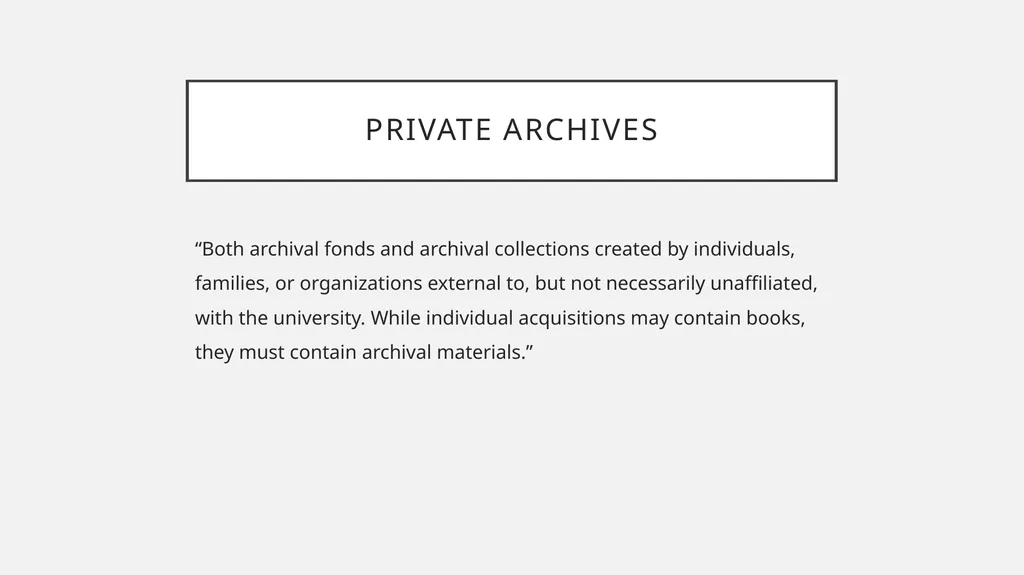
Private archives “Both archival fonds and archival collections created by individuals, families, or organizations external to, but not necessarily unaffiliated, with the university. While individual acquisitions may contain books, they must contain archival materials.”<br>
06
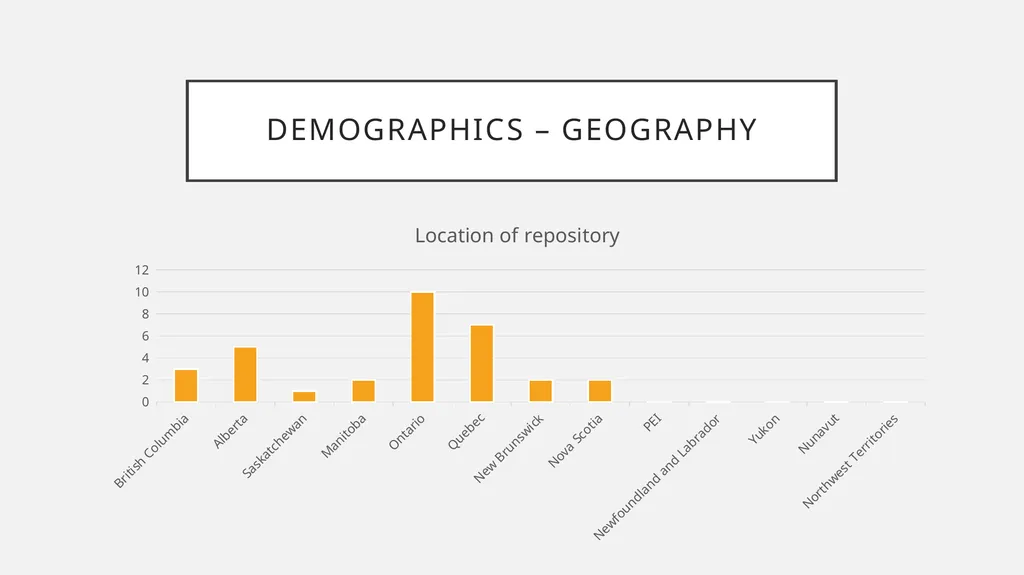
Demographics – geography<br>
07
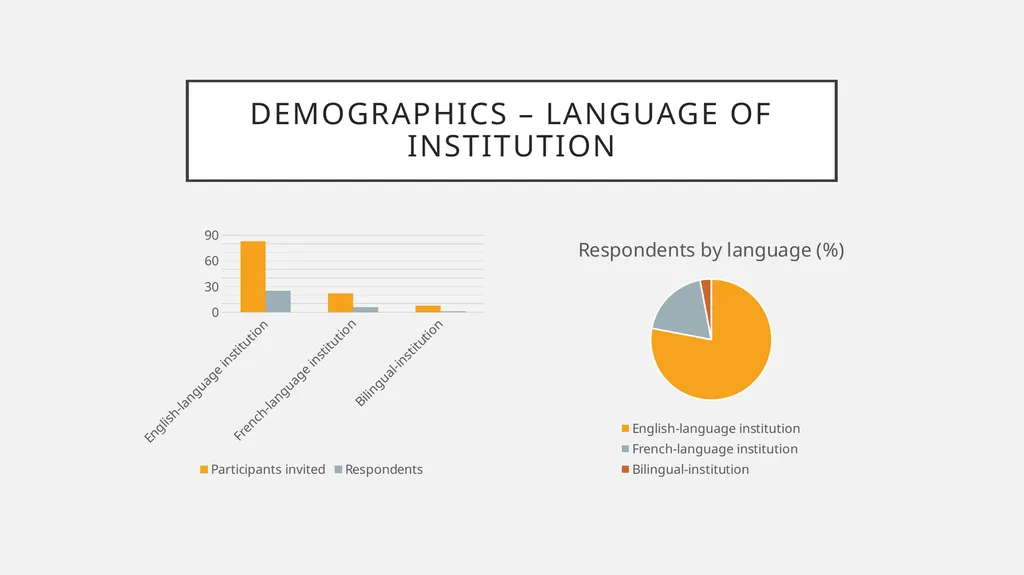
Demographics – language of institution<br>
08
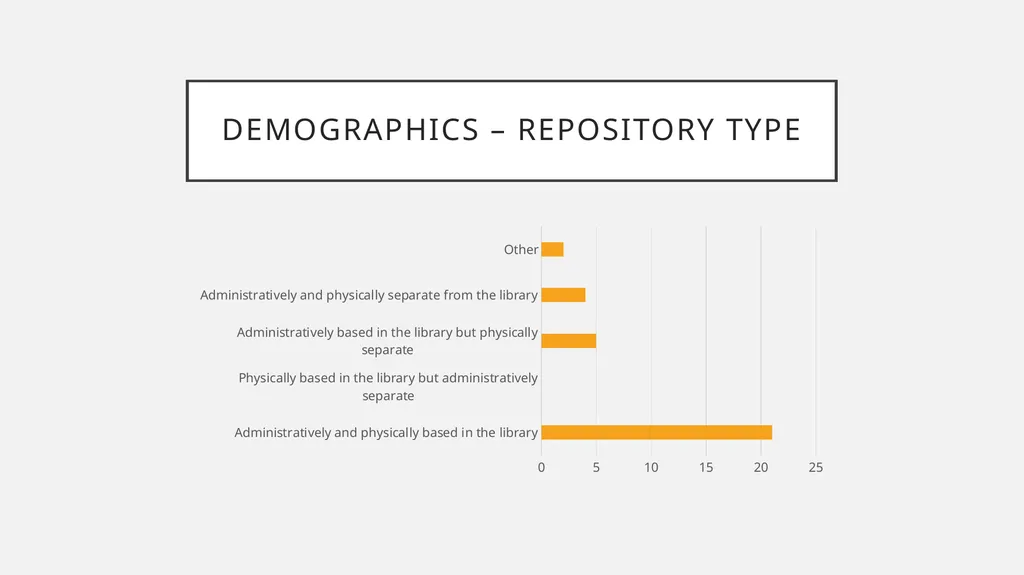
Demographics – repository type<br>
09
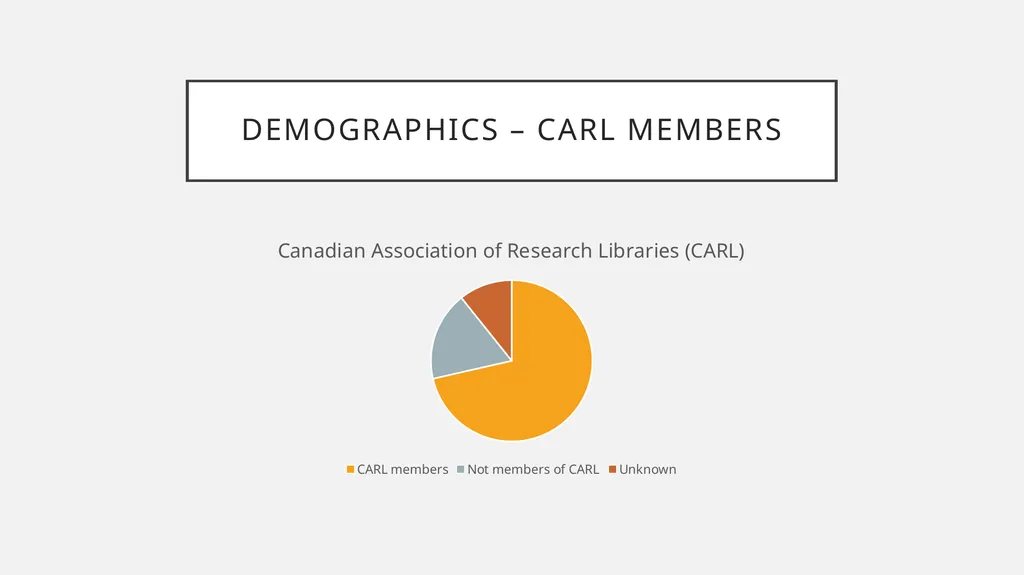
Demographics – carl members<br>
10
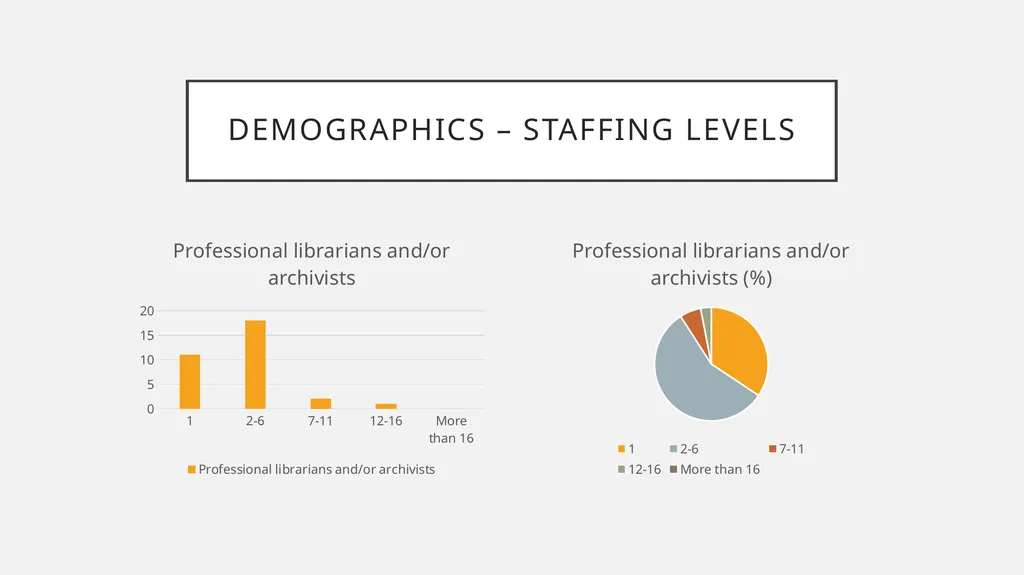
Demographics – Staffing levels<br>
11
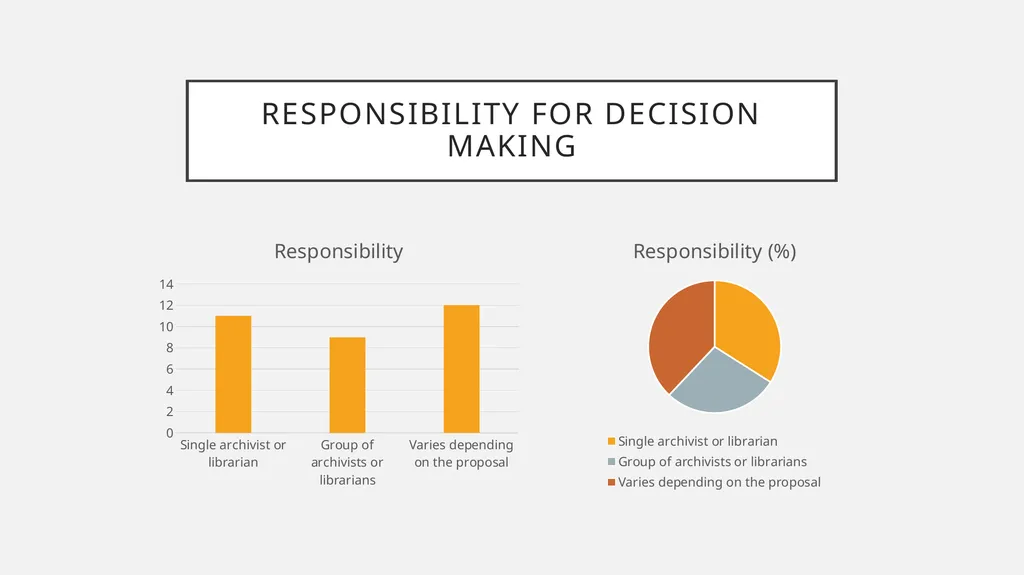
Responsibility for decision making<br>
12
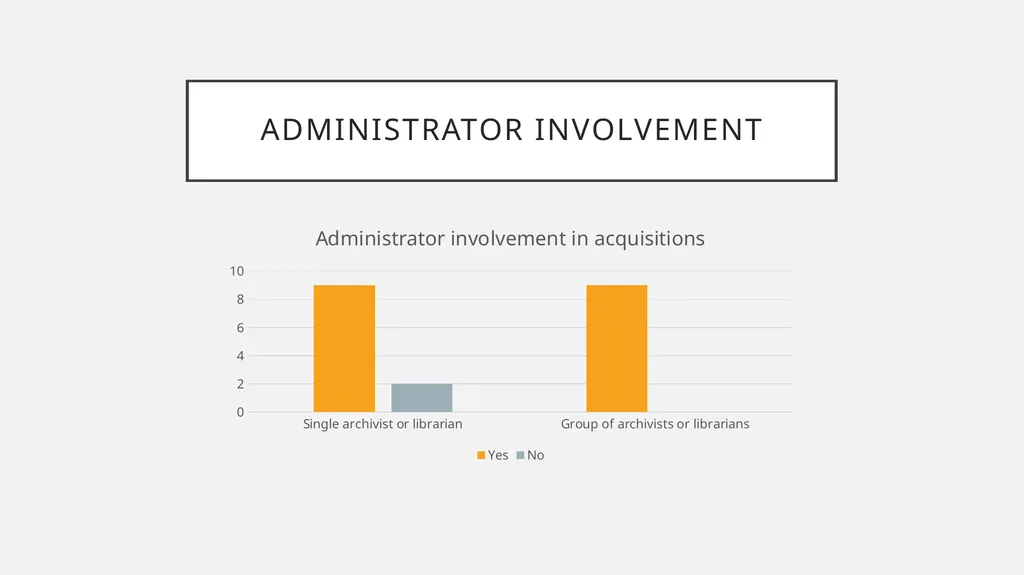
Administrator involvement<br>
13
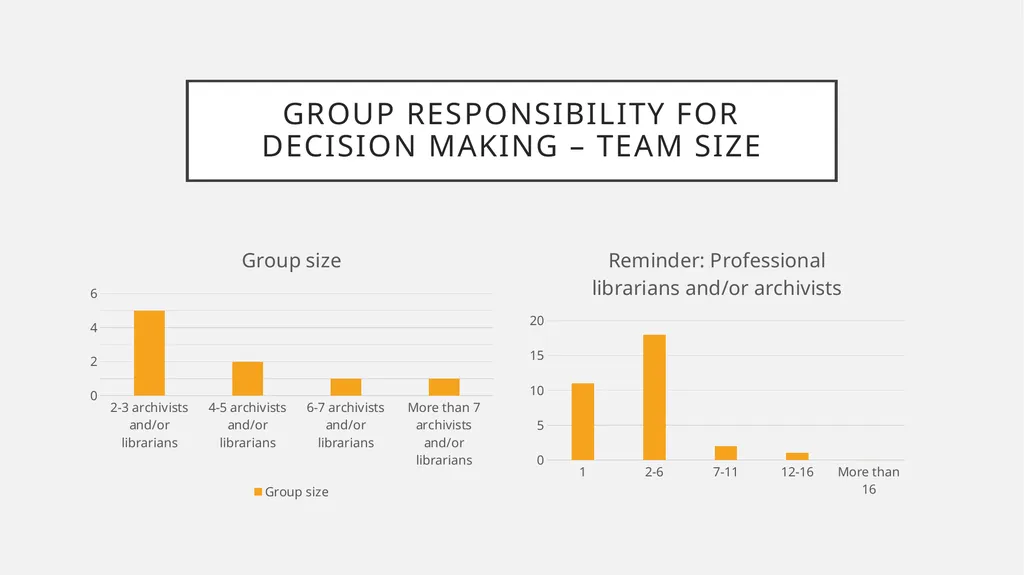
Group responsibility for decision making – team size<br>
14
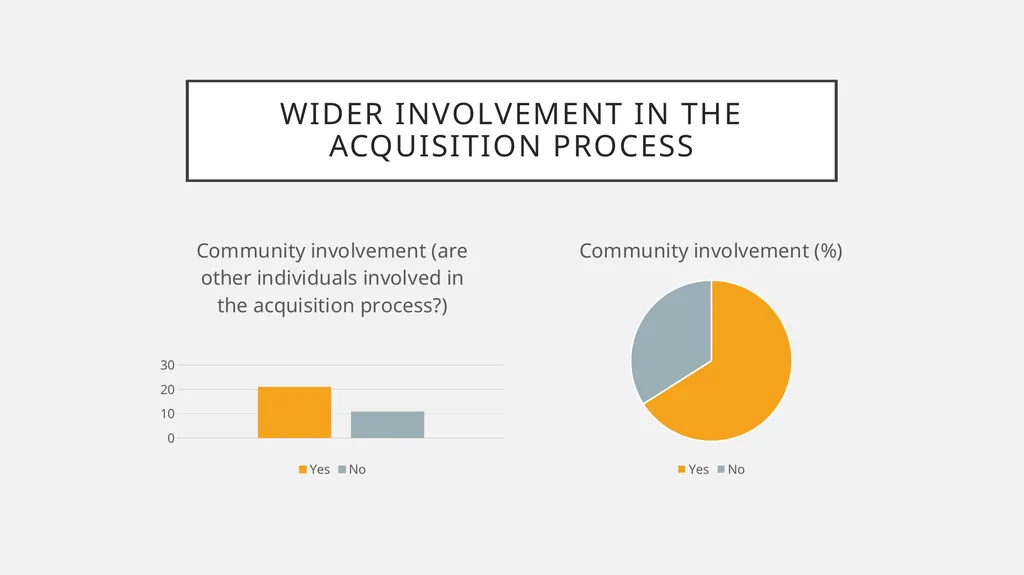
Wider Involvement in the acquisition process<br>
15
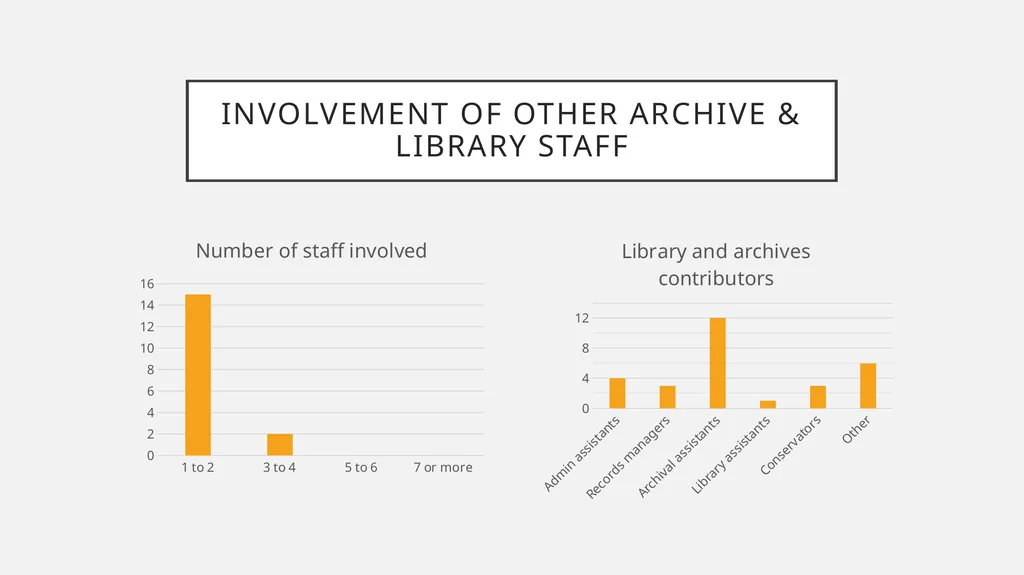
Involvement of other archive & library staff<br>
16
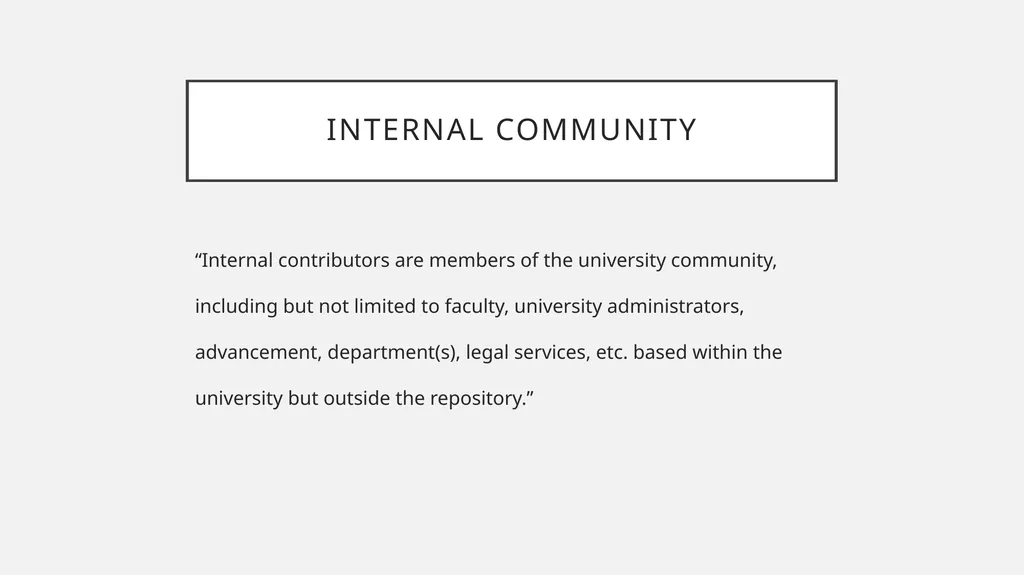
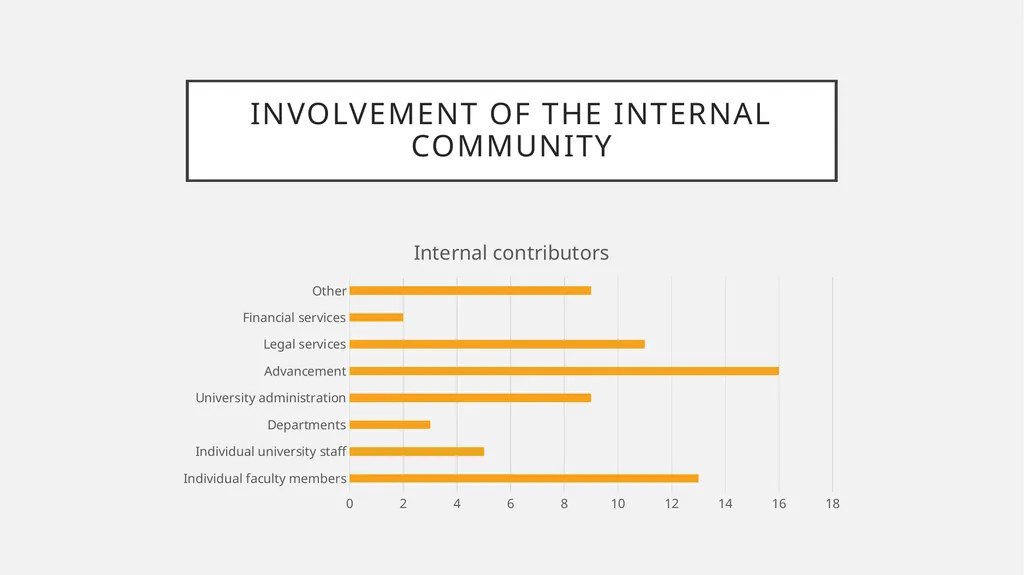
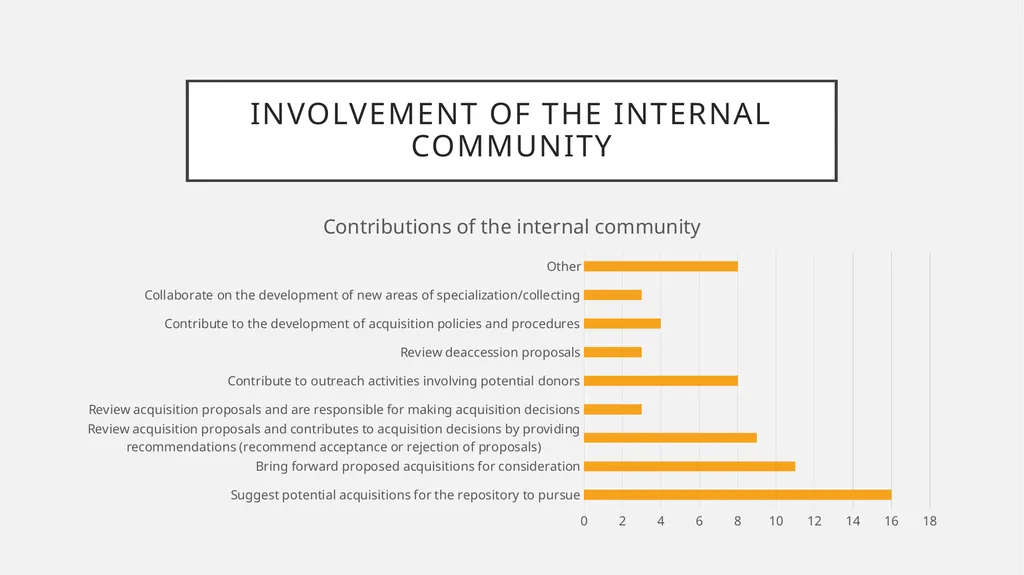
Internal community “Internal contributors are members of the university community, including but not limited to faculty, university administrators, advancement, department(s), legal services, etc. based within the university but outside the repository.”<br>
17
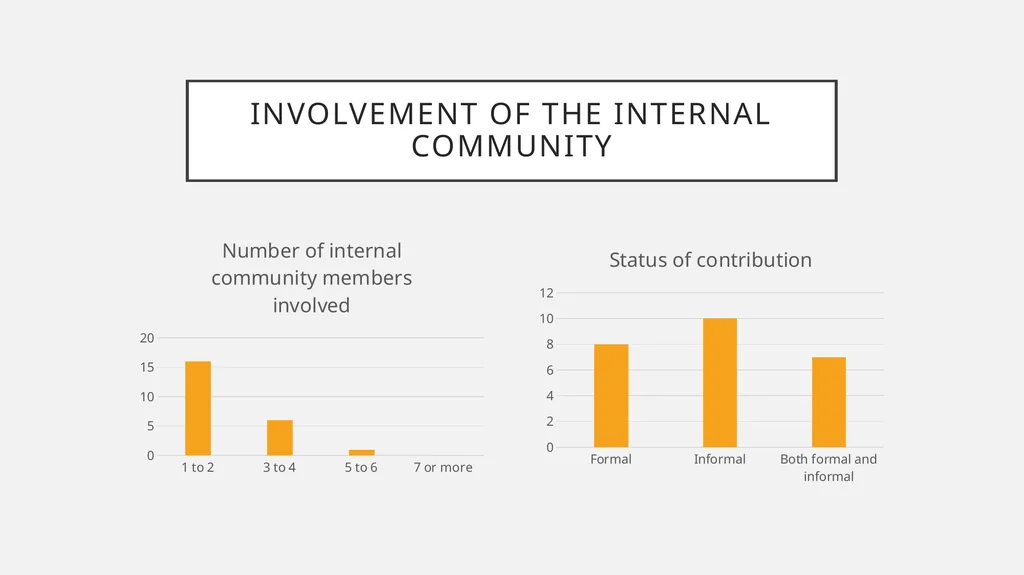
Involvement of the internal community<br>
18
Involvement of the internal community<br>
19
Involvement of the internal community<br>
20
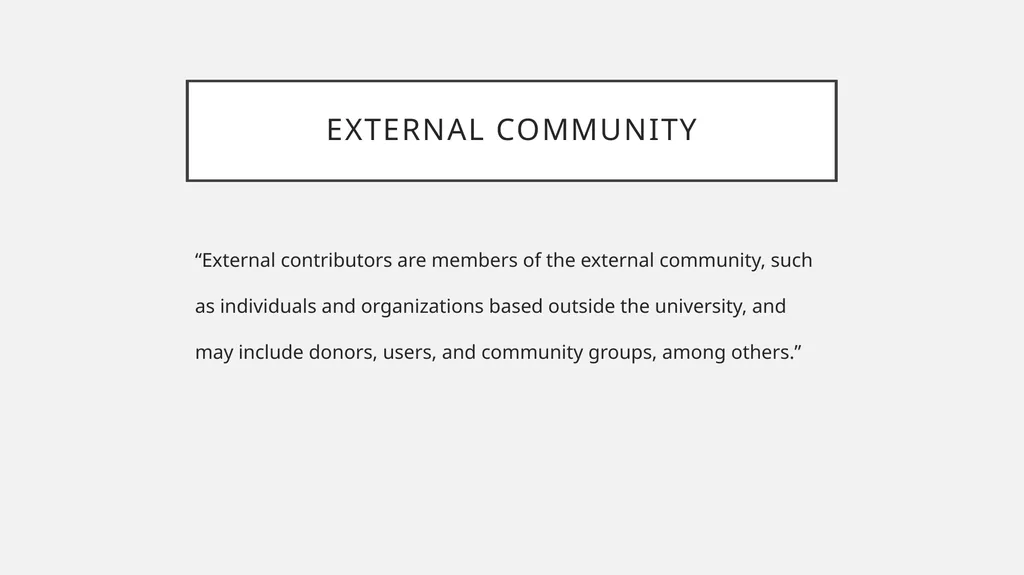
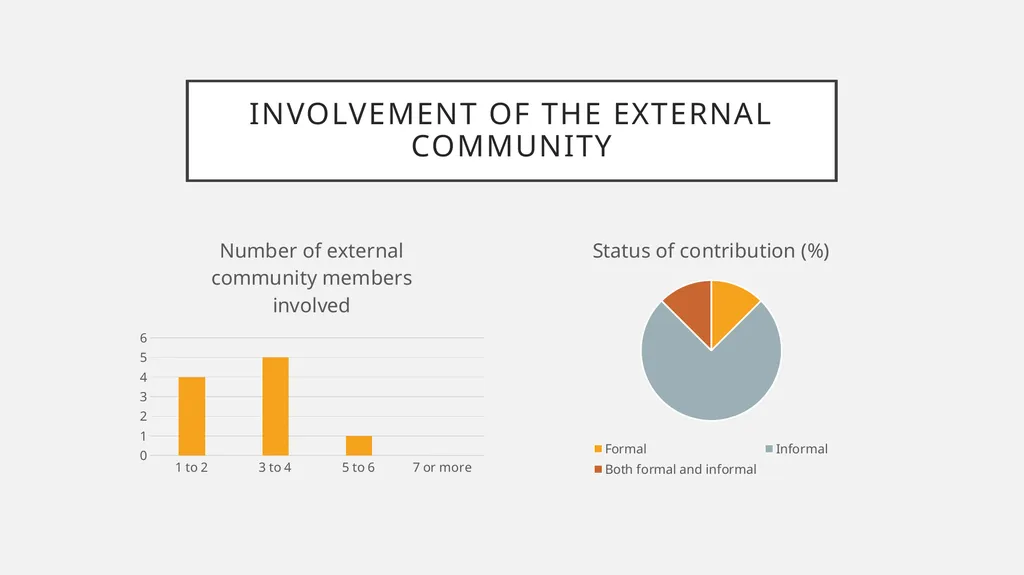
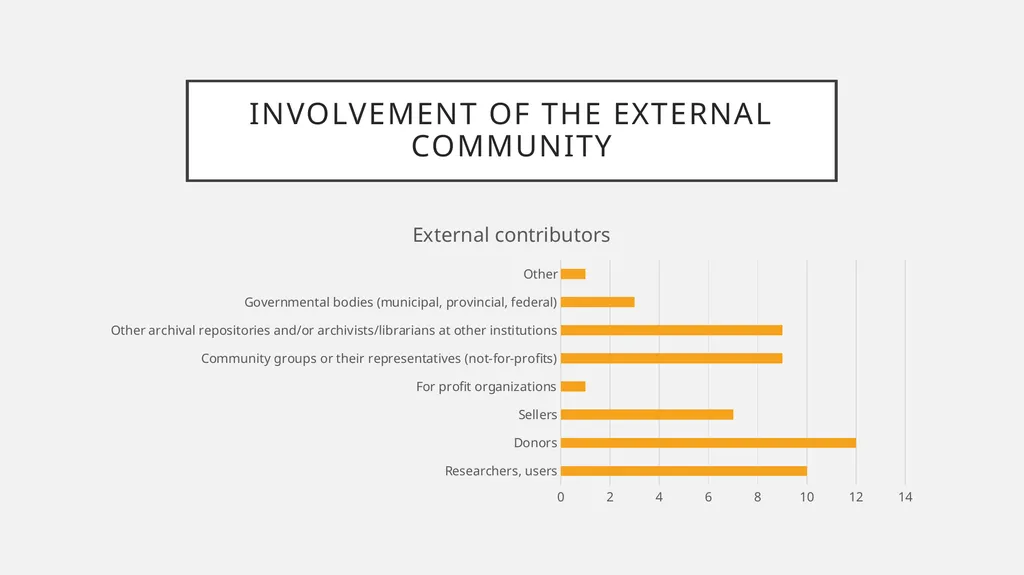
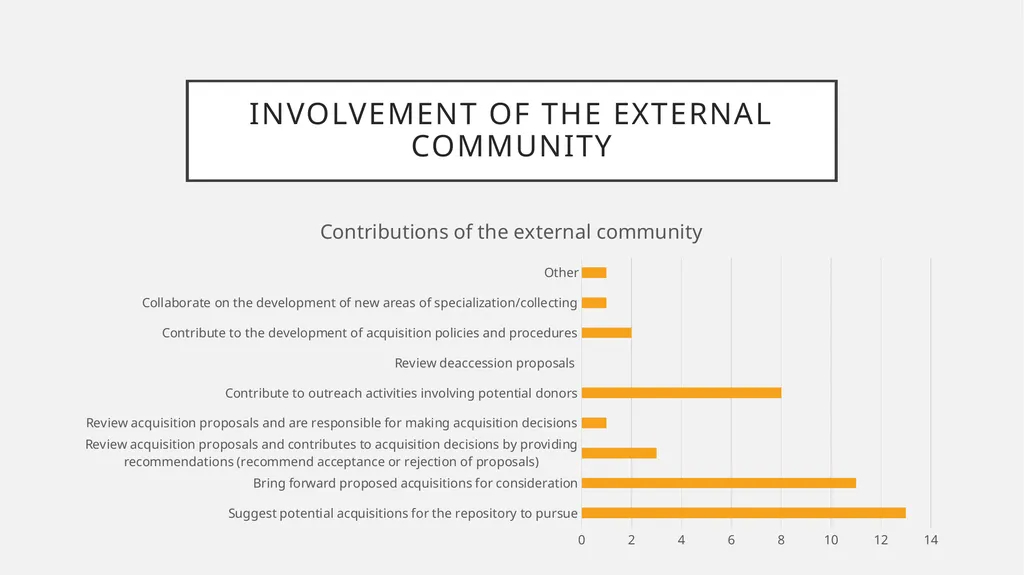
External community “External contributors are members of the external community, such as individuals and organizations based outside the university, and may include donors, users, and community groups, among others.”<br>
21
Involvement of the external community<br>
22
Involvement of the external community<br>
23
Involvement of the external community<br>
24
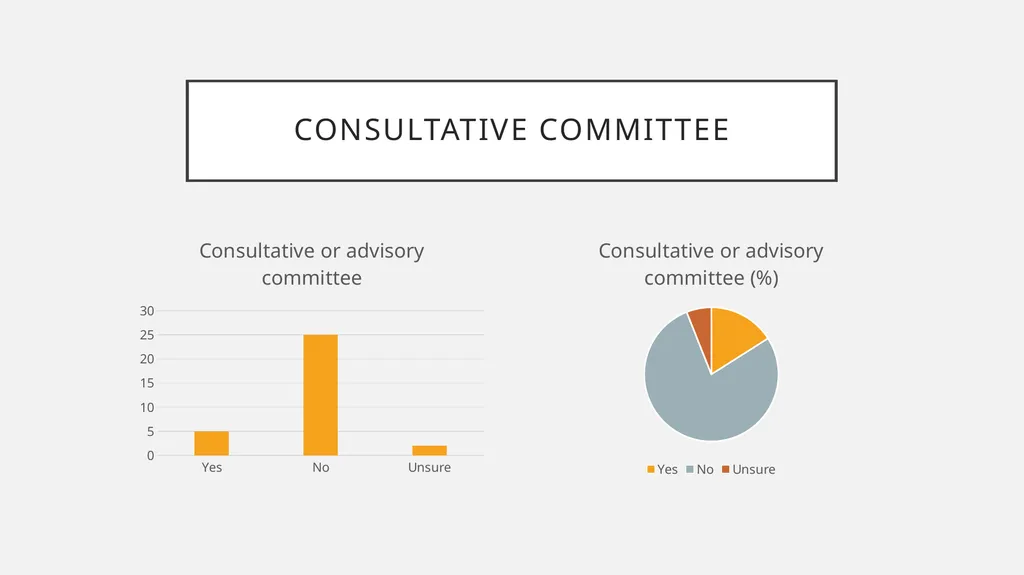
Consultative committee<br>
25
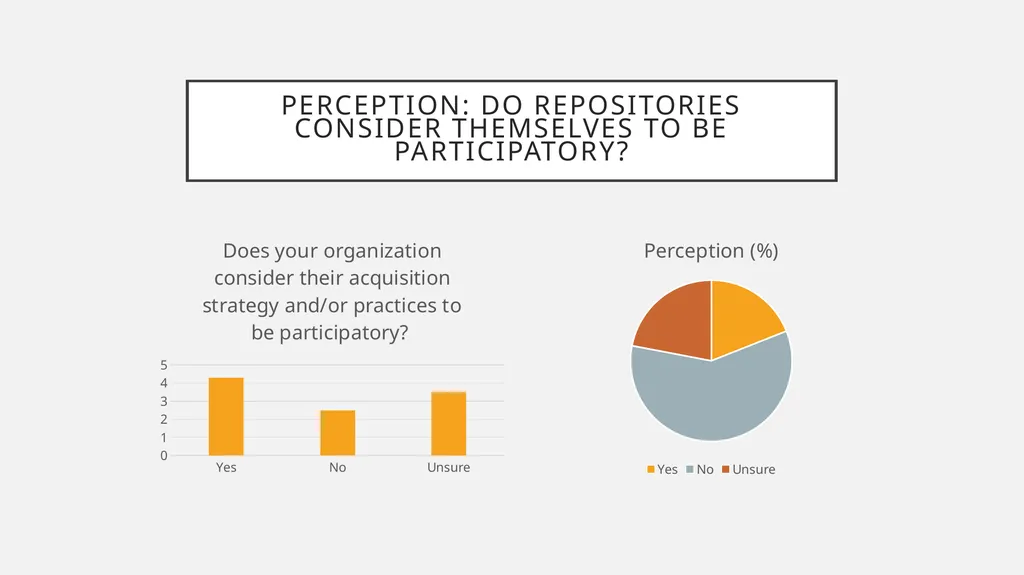
Perception: Do repositories consider themselves to be Participatory?<br>
26
Final thoughts<br>
27
Thank you! Questions? Want to learn more? Email: alexandra.mills@concordia.ca<br>