Sherlock Holmes Structure analysis To understand structural features and their impact on the reader. Noun: the arrangement of and relations between the parts or elements of something complex: a building or other object constructed from
"Sherlock Holmes Structure analysis To understand" is the property of its rightful owner. Permission is granted to
download and print the materials on this website for personal, non-commercial use only, and to display it
on your personal computer provided you do not modify the materials and that you retain all copyright
notices contained in the materials. By downloading content from our website, you accept the terms of this
agreement.
Presentation Transcript
01
Sherlock Holmes Structure analysis To understand structural features and their impact on the reader.<br>
02
Noun:
the arrangement of and relations between the parts or elements of something complex:
a building or other object constructed from several parts:
Verb:
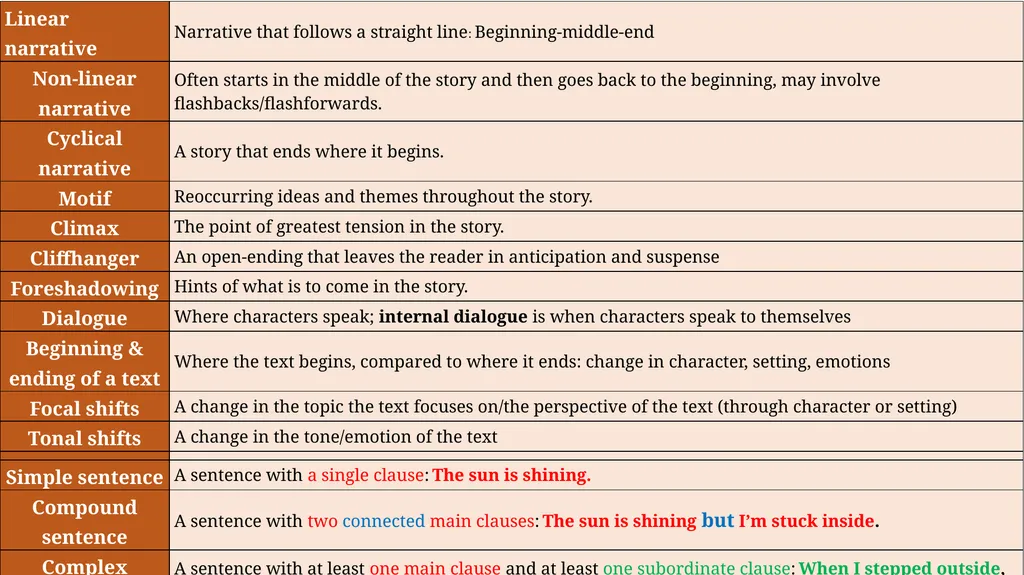
construct or arrange according to a plan; give a pattern or organisation to: Structure The structure of a text refers to the way in which the plot, emotions, and characters develop through the arrangement, organisation, and patterning of sentences, paragraphs, punctuation, and literary patterns (motifs, foreshadowing, extended metaphors, climax, etc.)
When analysing structure, the focus should be on why & where the structural feature was used, and its purpose within an entire extract<br>
03
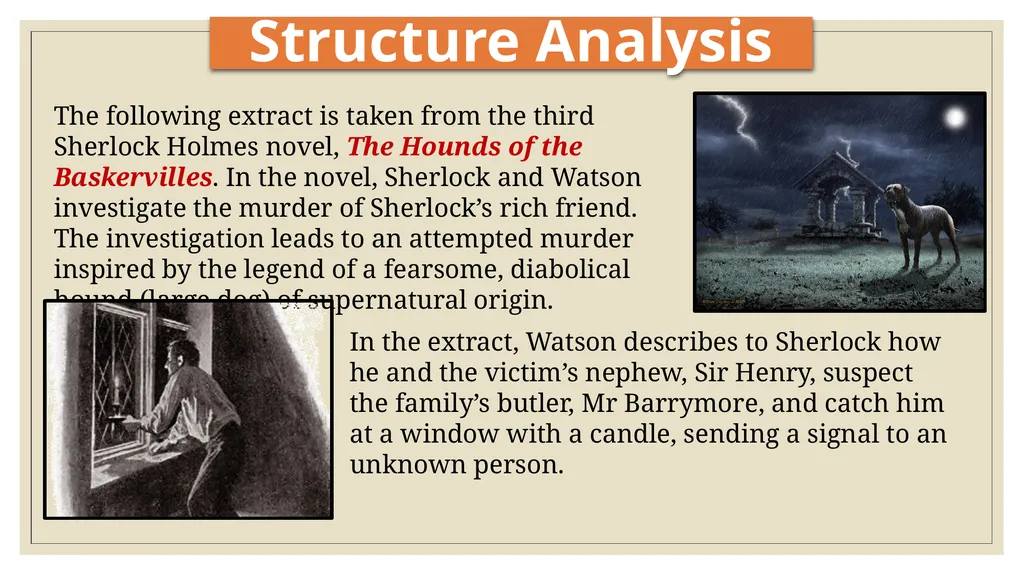
Structure Analysis The following extract is taken from the third Sherlock Holmes novel, The Hounds of the Baskervilles. In the novel, Sherlock and Watson investigate the murder of Sherlock’s rich friend. The investigation leads to an attempted murder inspired by the legend of a fearsome, diabolical hound (large dog) of supernatural origin. In the extract, Watson describes to Sherlock how he and the victim’s nephew, Sir Henry, suspect the family’s butler, Mr Barrymore, and catch him at a window with a candle, sending a signal to an unknown person.<br>
04
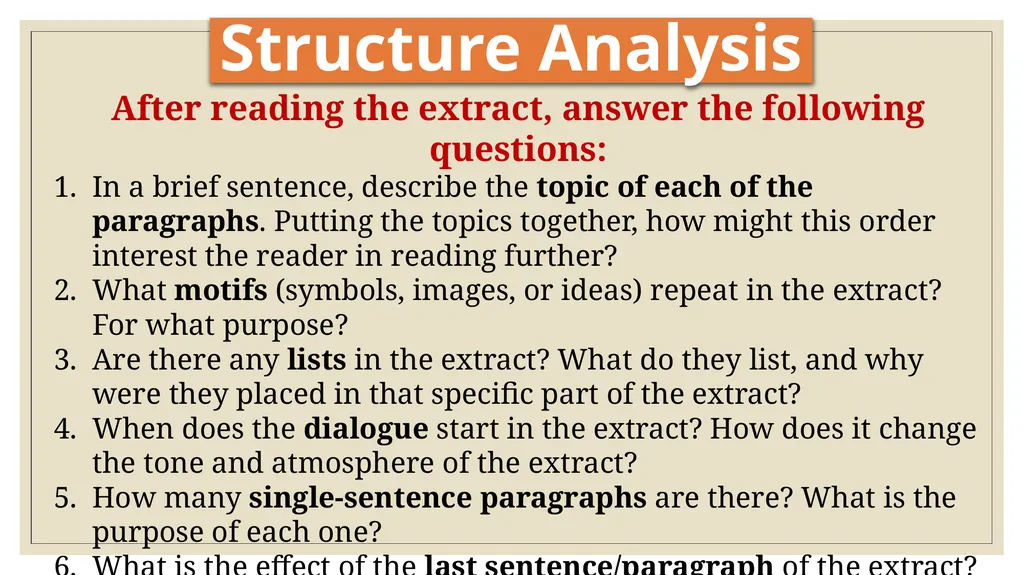
Structure Analysis After reading the extract, answer the following questions:
In a brief sentence, describe the topic of each of the paragraphs. Putting the topics together, how might this order interest the reader in reading further?
What motifs (symbols, images, or ideas) repeat in the extract? For what purpose?
Are there any lists in the extract? What do they list, and why were they placed in that specific part of the extract?
When does the dialogue start in the extract? How does it change the tone and atmosphere of the extract?
How many single-sentence paragraphs are there? What is the purpose of each one?
What is the effect of the last sentence/paragraph of the extract? What structural feature is it?<br>
05
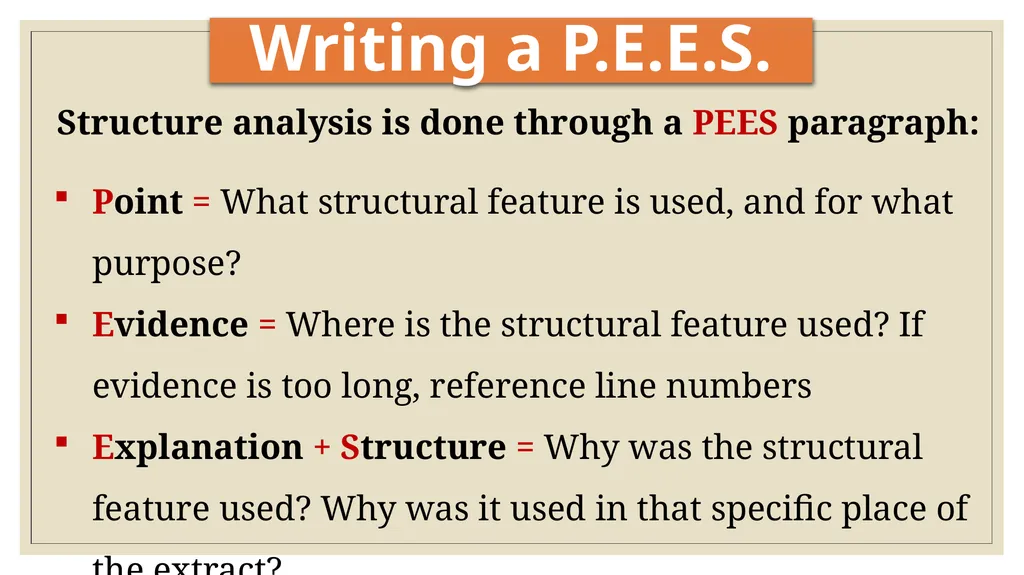
Writing a P.E.E.S. Structure analysis is done through a PEES paragraph:
Point = What structural feature is used, and for what purpose?
Evidence = Where is the structural feature used? If evidence is too long, reference line numbers
Explanation + Structure = Why was the structural feature used? Why was it used in that specific place of the extract?<br>
06
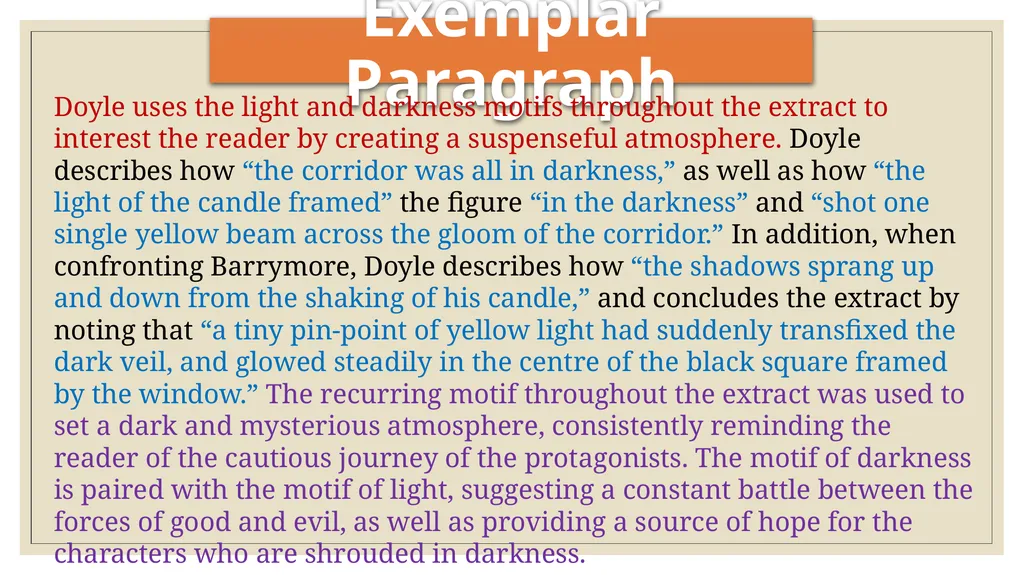
Exemplar Paragraph Doyle uses the light and darkness motifs throughout the extract to interest the reader by creating a suspenseful atmosphere. Doyle describes how “the corridor was all in darkness,” as well as how “the light of the candle framed” the figure “in the darkness” and “shot one single yellow beam across the gloom of the corridor.” In addition, when confronting Barrymore, Doyle describes how “the shadows sprang up and down from the shaking of his candle,” and concludes the extract by noting that “a tiny pin-point of yellow light had suddenly transfixed the dark veil, and glowed steadily in the centre of the black square framed by the window.” The recurring motif throughout the extract was used to set a dark and mysterious atmosphere, consistently reminding the reader of the cautious journey of the protagonists. The motif of darkness is paired with the motif of light, suggesting a constant battle between the forces of good and evil, as well as providing a source of hope for the characters who are shrouded in darkness.
P – E – E+S<br>
07
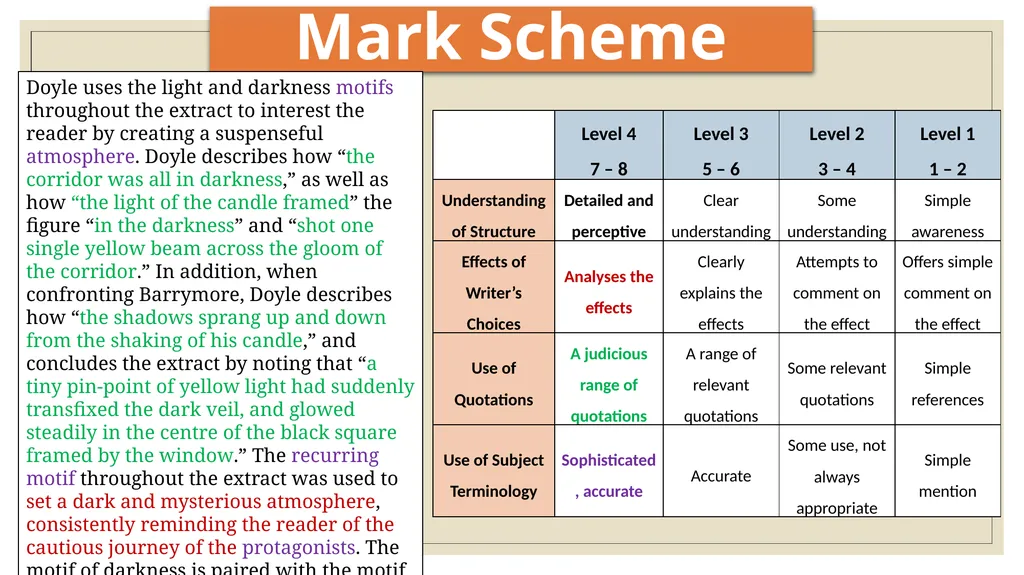
Mark Scheme Doyle uses the light and darkness motifs throughout the extract to interest the reader by creating a suspenseful atmosphere. Doyle describes how “the corridor was all in darkness,” as well as how “the light of the candle framed” the figure “in the darkness” and “shot one single yellow beam across the gloom of the corridor.” In addition, when confronting Barrymore, Doyle describes how “the shadows sprang up and down from the shaking of his candle,” and concludes the extract by noting that “a tiny pin-point of yellow light had suddenly transfixed the dark veil, and glowed steadily in the centre of the black square framed by the window.” The recurring motif throughout the extract was used to set a dark and mysterious atmosphere, consistently reminding the reader of the cautious journey of the protagonists. The motif of darkness is paired with the motif of light, suggesting a constant battle between the forces of good and evil, as well as providing a source of hope for the characters who are shrouded in darkness.<br>
08
Writing a P.E.E.S. Write a PEES paragraph answering the question:
How does Doyle use structure to interest the reader?<br>
09
Swap paragraphs with a partner.
Using three different highlighters, highlight the following:
Colour #1: The evidence they used
Colour #2: The analysis of structural feature
Colour #3: The subject terminology they used Peer Assessment<br>