
SHIFT FAILURE · A CLASSROOM RESOURCE GRADES 5–8
EM
Published · 99 slides · 0 views
1 / 1













Description
SHIFT FAILURE A CLASSROOM RESOURCE GRADES 58 Lesson Package Lessons 15 grounded in experiential and social-emotional learning. MIIGWECH MERCI THANK YOU BEFORE WE BEGIN We invite you to learn whose land your school is on. Find
Related Topics
Share
Embed code
Download this presentation From Below
"SHIFT FAILURE · A CLASSROOM RESOURCE GRADES 5–8" is the property of its rightful owner. Permission is granted to download and print the materials on this website for personal, non-commercial use only, and to display it on your personal computer provided you do not modify the materials and that you retain all copyright notices contained in the materials. By downloading content from our website, you accept the terms of this agreement.
Presentation Transcript
01
SHIFT FAILURE · A CLASSROOM RESOURCE GRADES 5–8 Lesson Package · Lessons 1–5 · grounded in experiential and social-emotional learning. MIIGWECH · MERCI · THANK YOU<br>
02
BEFORE WE BEGIN We invite you to learn whose land your school is on. Find your territory at native-land.ca . This resource honours Canada's Truth and Reconciliation journey and centres Indigenous voices, stories, and ways of knowing throughout. Miigwech. Merci. Thank you.<br>
03
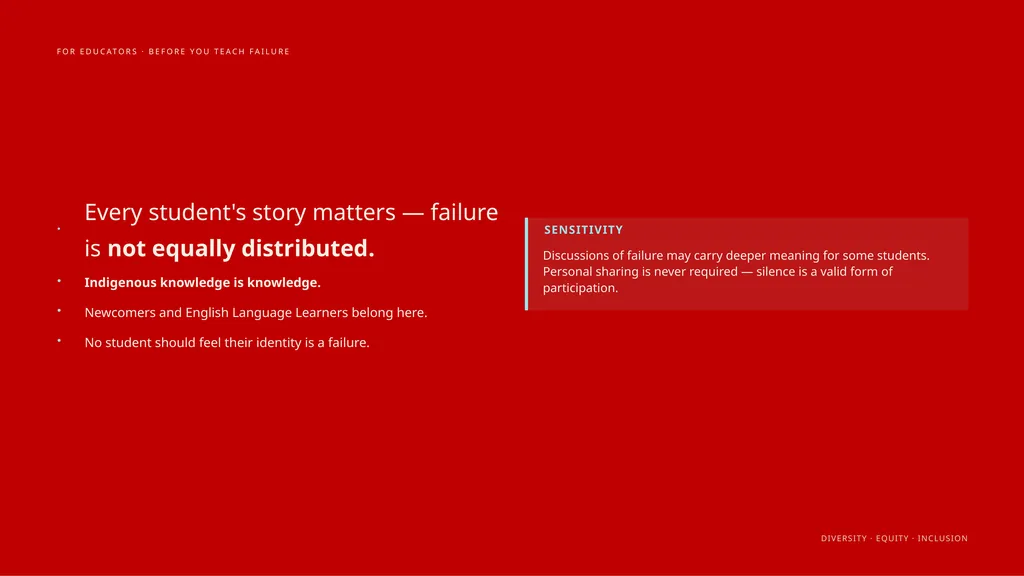
FOR EDUCATORS · BEFORE YOU TEACH FAILURE · Every student's story matters — failure is not equally distributed. · Indigenous knowledge is knowledge. · Newcomers and English Language Learners belong here. · No student should feel their identity is a failure. SENSITIVITY Discussions of failure may carry deeper meaning for some students. Personal sharing is never required — silence is a valid form of participation. DIVERSITY · EQUITY · INCLUSION<br>
04
LESSON ONE LESSON ONE<br>
05
LESSON 1 · GROWTH VS. FIXED MINDSET Learning Goals 1 Understand and articulate the differences between a “growth” and “fixed” mindset. 2 Reflect on how failing is an opportunity to grow and learn. 3 Identify times in your life where you failed and how this became an opportunity to learn. 4 Reflect on how personal challenges impact community and relationships, and how collective support aids growth. LESSON ONE<br>
06
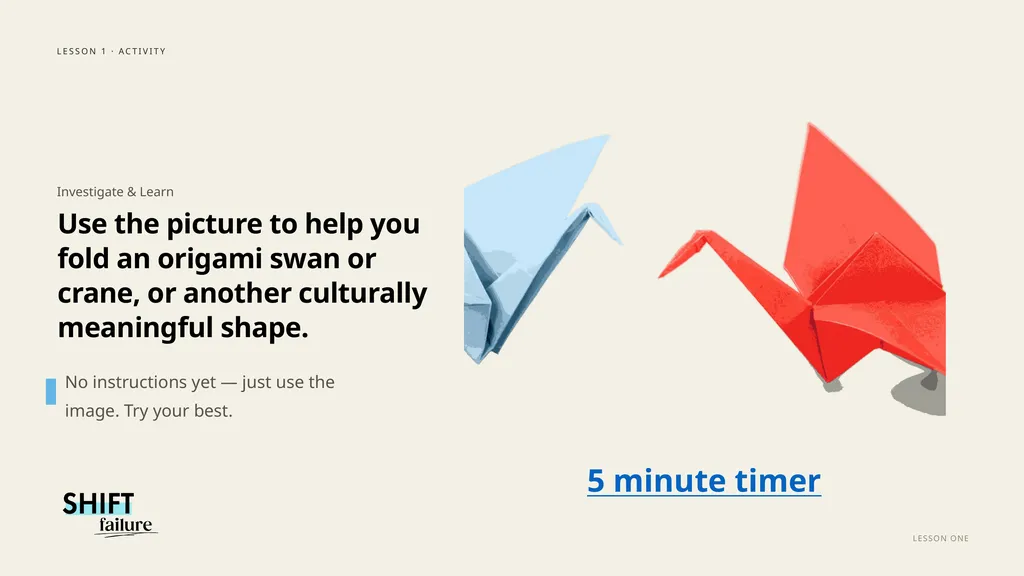
LESSON 1 · ACTIVITY Investigate & Learn Use the picture to help you fold an origami swan or crane, or another culturally meaningful shape. No instructions yet — just use the image. Try your best. LESSON ONE 5 minute timer<br>
07
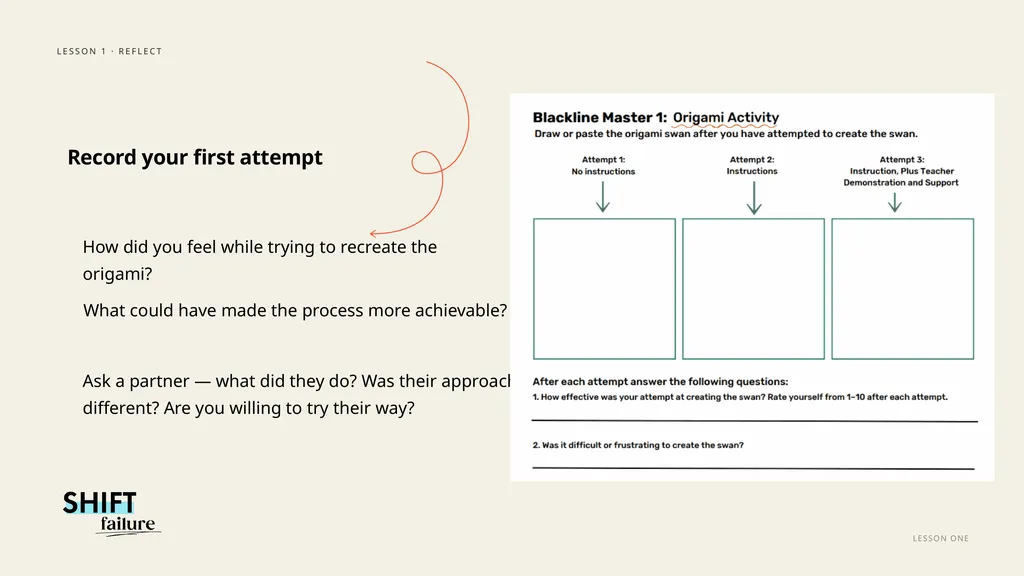
LESSON 1 · REFLECT Record your first attempt How did you feel while trying to recreate the origami? What could have made the process more achievable? Ask a partner — what did they do? Was their approach different? Are you willing to try their way? LESSON ONE<br>
08
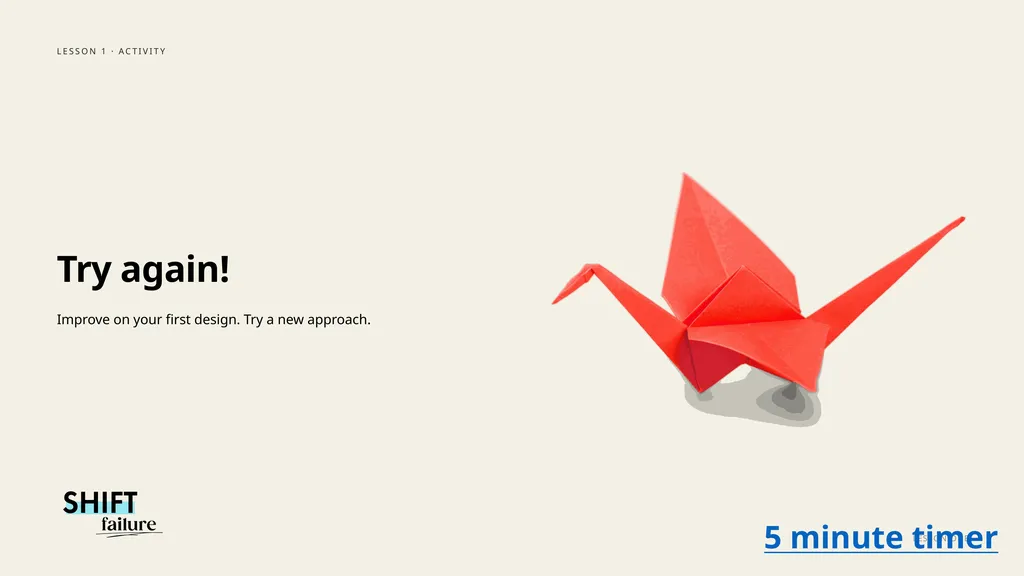
LESSON 1 · ACTIVITY Try again! Improve on your first design. Try a new approach. LESSON ONE 5 minute timer<br>
09
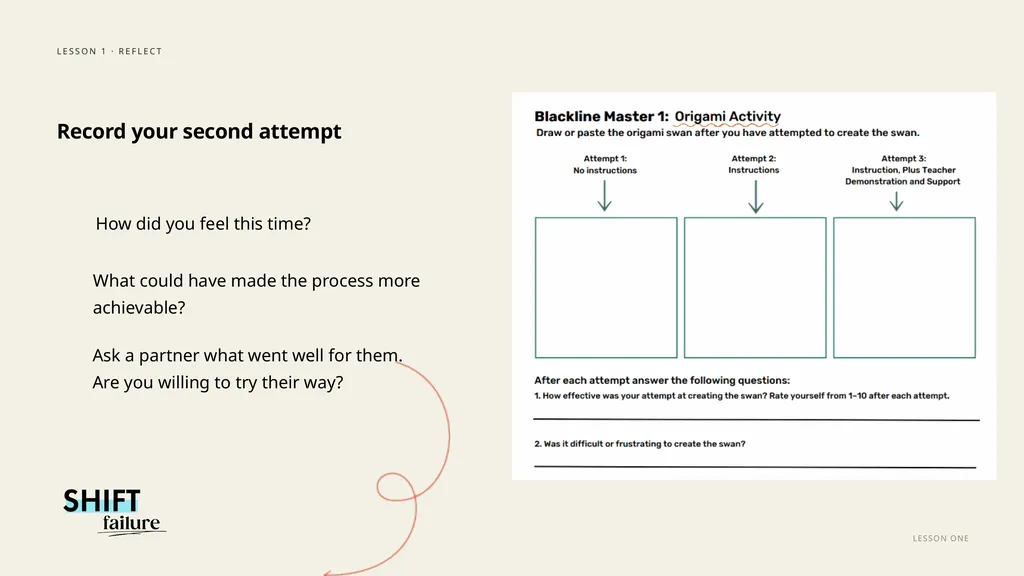
LESSON 1 · REFLECT Record your second attempt How did you feel this time? What could have made the process more achievable? Ask a partner what went well for them. Are you willing to try their way? LESSON ONE<br>
10
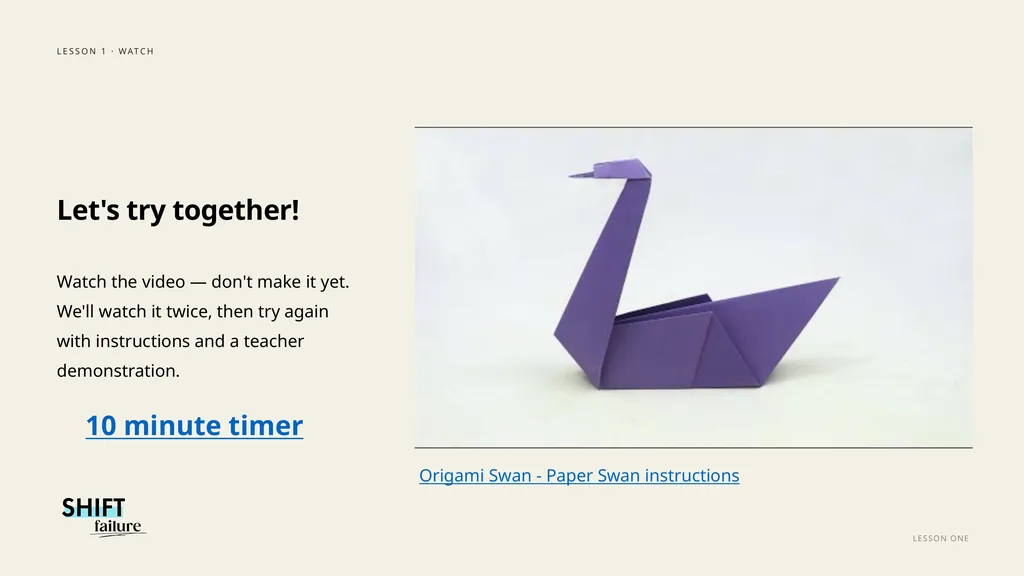
LESSON 1 · WATCH Let's try together! Watch the video — don't make it yet. We'll watch it twice, then try again with instructions and a teacher demonstration. LESSON ONE 10 minute timer Origami Swan - Paper Swan instructions<br>
11
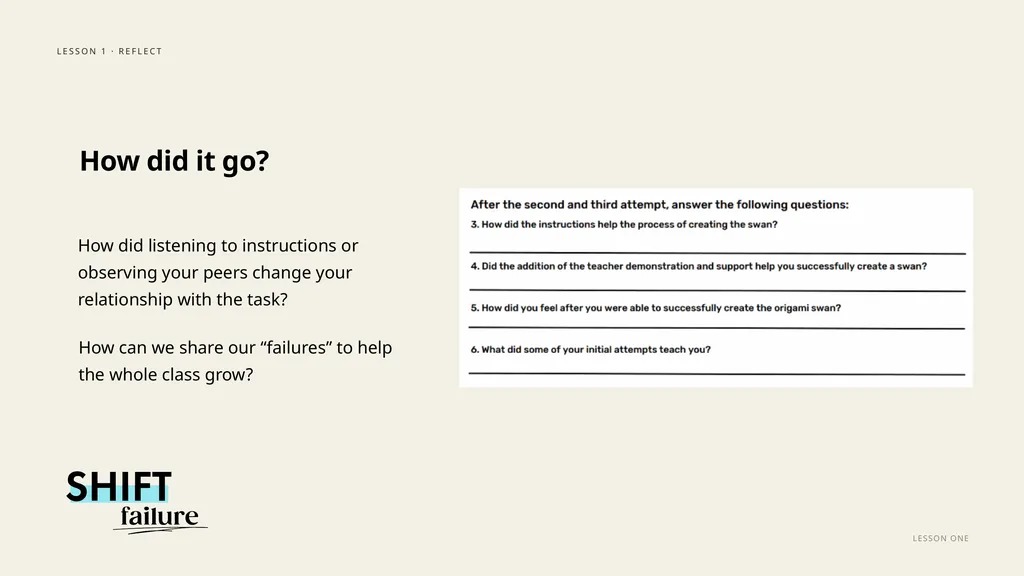
LESSON 1 · REFLECT How did it go? How did listening to instructions or observing your peers change your relationship with the task? How can we share our “failures” to help the whole class grow? LESSON ONE<br>
12
LESSON ONE Learning to do something is a process. You have to be open to trying — even if you fail. LESSON ONE<br>
13
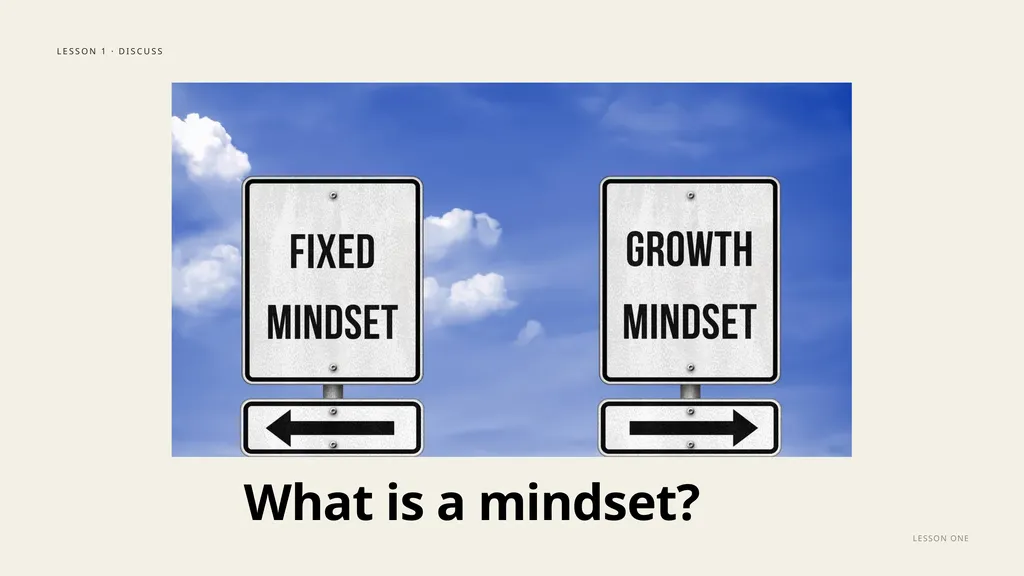
LESSON 1 · DISCUSS What is a mindset? LESSON ONE<br>
14
LESSON 1 · MINDSET Mindset A set of beliefs that shape how you make sense of the world and yourself. The mind
can change the way you look, move and think about the world around you.
It influences how you think, feel and behave.
How our growth contributes to the health of our community. LESSON ONE<br>
can change the way you look, move and think about the world around you.
It influences how you think, feel and behave.
How our growth contributes to the health of our community. LESSON ONE<br>
15
LESSON ONE What you believe about yourself impacts your success and failure. LESSON ONE<br>
16
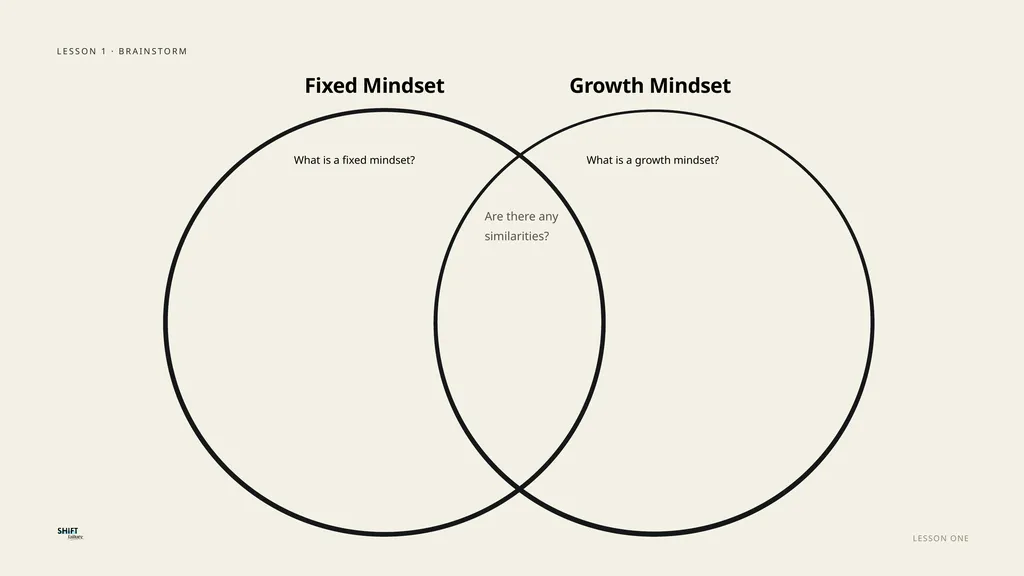
LESSON 1 · BRAINSTORM Fixed Mindset What is a fixed mindset? Growth Mindset What is a growth mindset? Are there any similarities? LESSON ONE<br>
17
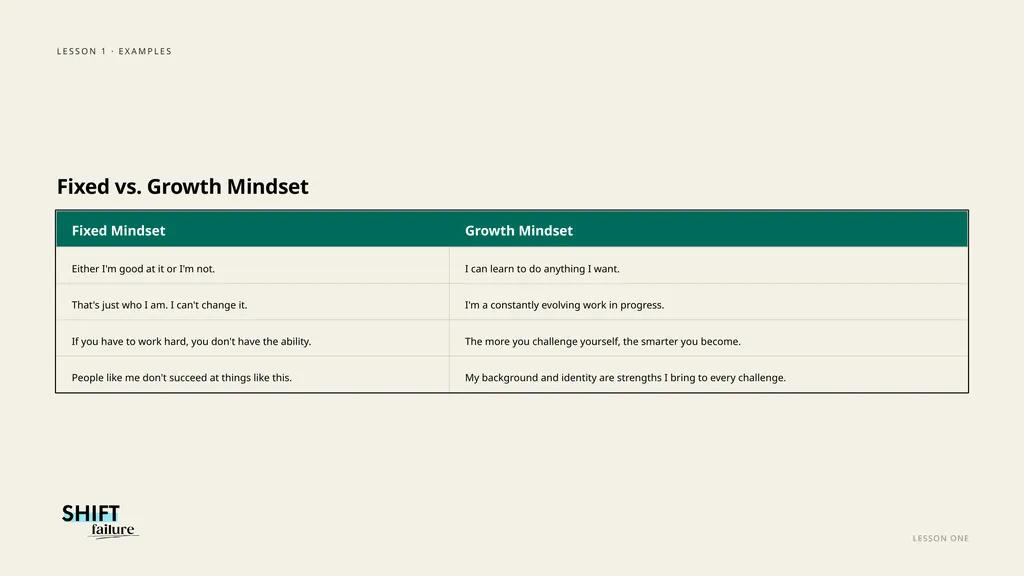
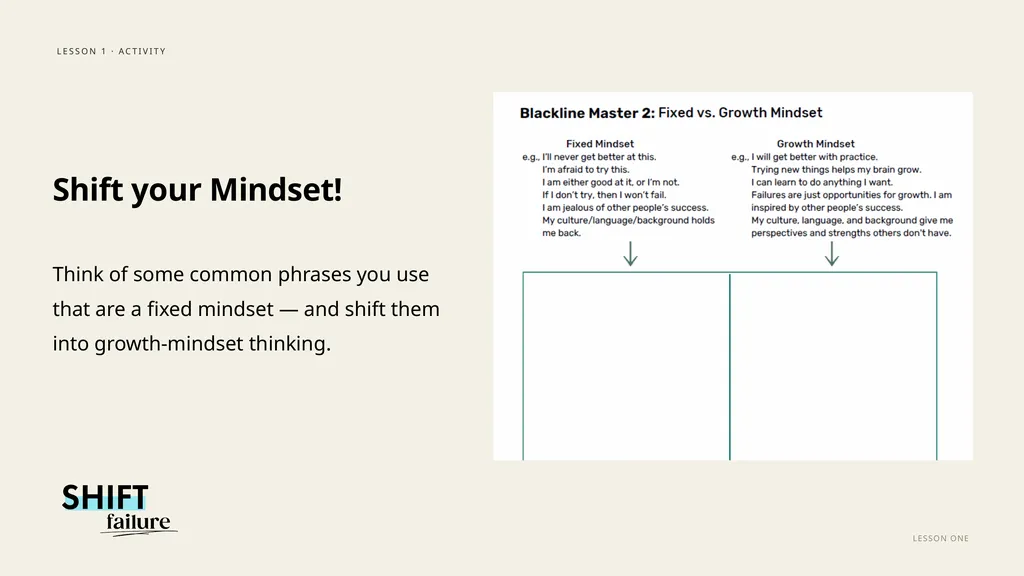
LESSON 1 · EXAMPLES Fixed vs. Growth Mindset Fixed Mindset Growth Mindset Either I'm good at it or I'm not. I can learn to do anything I want. That's just who I am. I can't change it. I'm a constantly evolving work in progress. If you have to work hard, you don't have the ability. The more you challenge yourself, the smarter you become. People like me don't succeed at things like this. My background and identity are strengths I bring to every challenge. LESSON ONE<br>
18
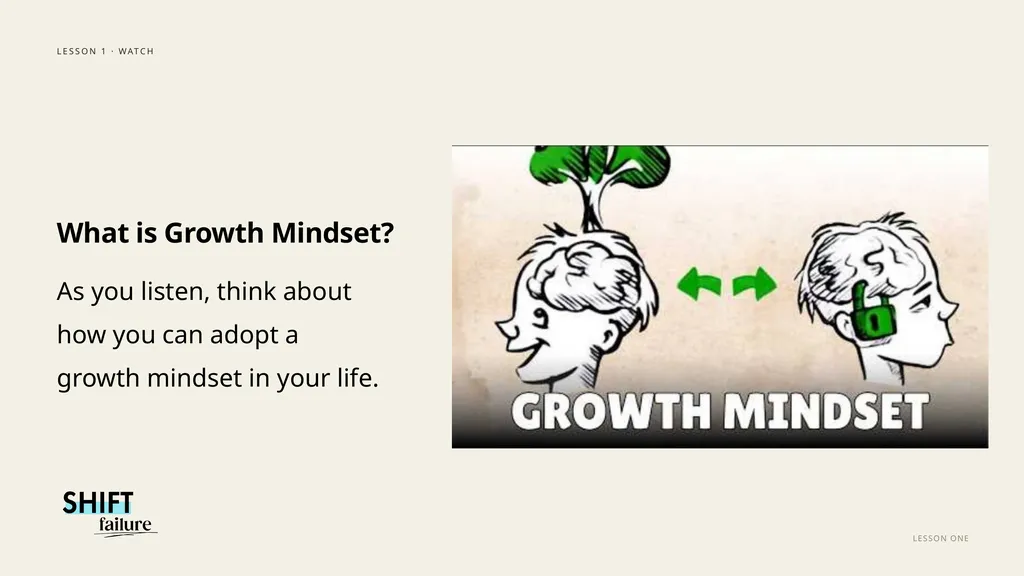
LESSON 1 · WATCH What is Growth Mindset? As you listen, think about how you can adopt a growth mindset in your life. LESSON ONE<br>
19
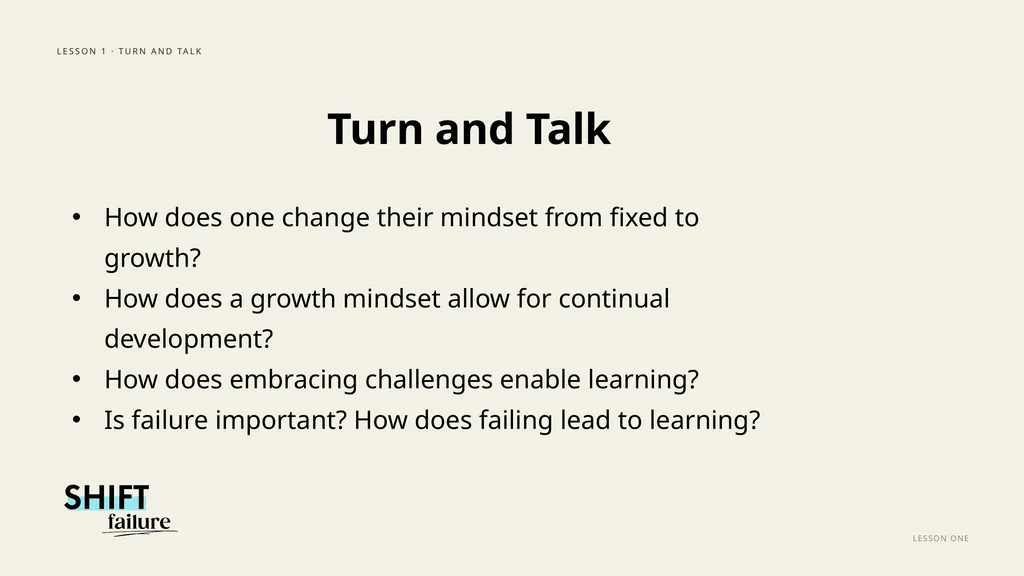
LESSON 1 · TURN AND TALK Turn and Talk How does one change their mindset from fixed to growth?
How does a growth mindset allow for continual development?
How does embracing challenges enable learning?
Is failure important? How does failing lead to learning? LESSON ONE<br>
How does a growth mindset allow for continual development?
How does embracing challenges enable learning?
Is failure important? How does failing lead to learning? LESSON ONE<br>
20
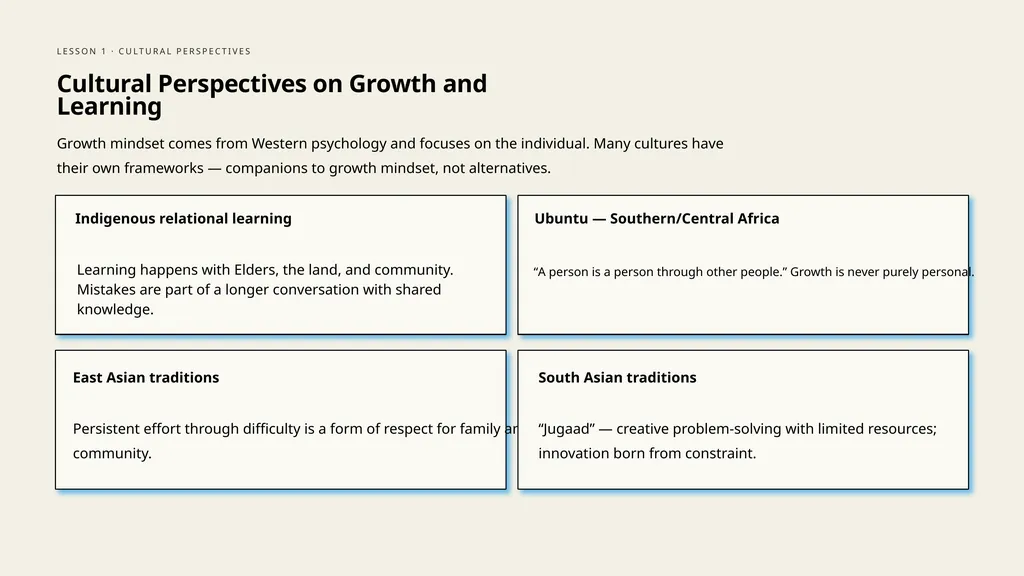
LESSON 1 · CULTURAL PERSPECTIVES Cultural Perspectives on Growth and Learning Growth mindset comes from Western psychology and focuses on the individual. Many cultures have their own frameworks — companions to growth mindset, not alternatives. Indigenous relational learning Learning happens with Elders, the land, and community. Mistakes are part of a longer conversation with shared knowledge. Ubuntu — Southern/Central Africa “A person is a person through other people.” Growth is never purely personal. East Asian traditions Persistent effort through difficulty is a form of respect for family and community. South Asian traditions “Jugaad” — creative problem-solving with limited resources; innovation born from constraint.<br>
21
LESSON 1 · DISCUSS Your turn Failure in your culture Does your family or cultural background have its own way of thinking about mistakes, learning, and trying again? Are there words, sayings, or stories in your home language or tradition that speak to this? LESSON ONE<br>
22
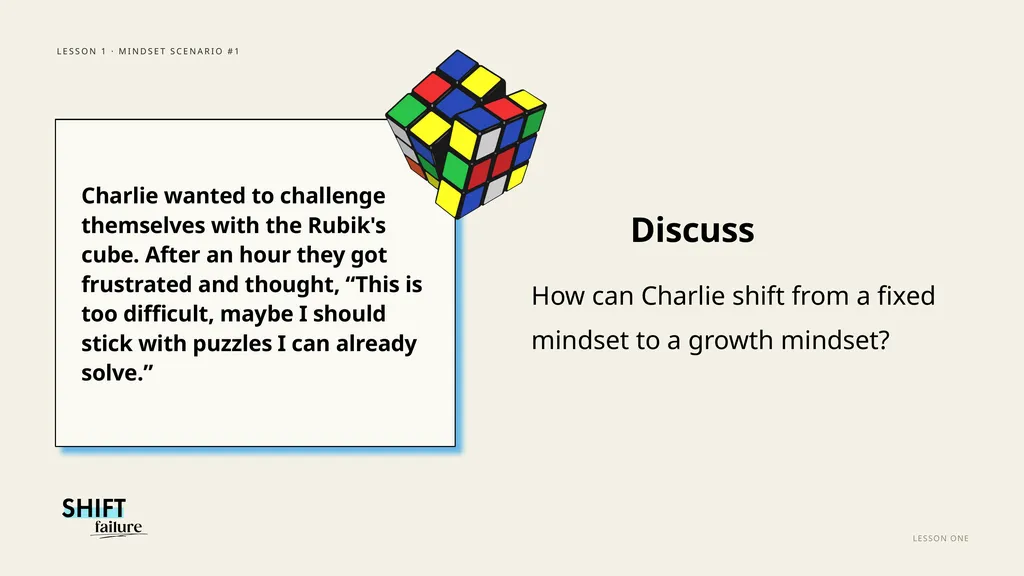
LESSON 1 · MINDSET SCENARIO #1 Charlie wanted to challenge themselves with the Rubik's cube. After an hour they got frustrated and thought, “This is too difficult, maybe I should stick with puzzles I can already solve.” Discuss How can Charlie shift from a fixed mindset to a growth mindset? LESSON ONE<br>
23
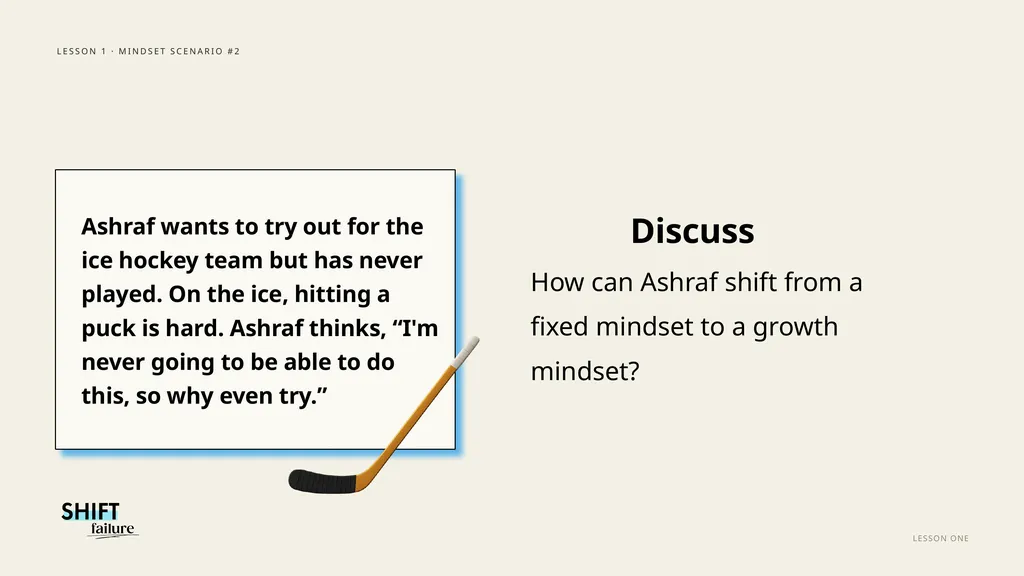
LESSON 1 · MINDSET SCENARIO #2 Ashraf wants to try out for the ice hockey team but has never played. On the ice, hitting a puck is hard. Ashraf thinks, “I'm never going to be able to do this, so why even try.” Discuss How can Ashraf shift from a fixed mindset to a growth mindset? LESSON ONE<br>
24
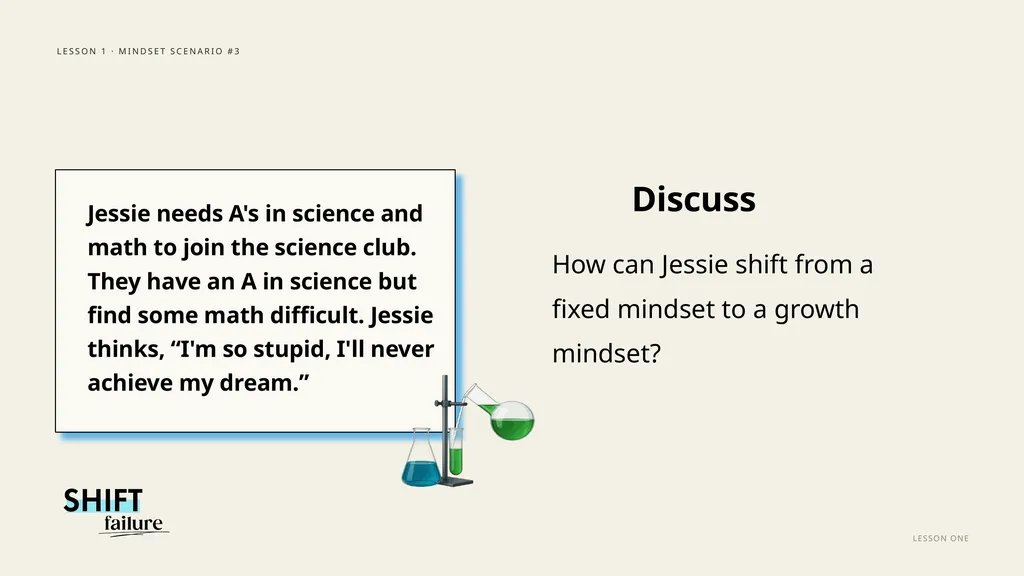
LESSON 1 · MINDSET SCENARIO #3 Jessie needs A's in science and math to join the science club. They have an A in science but find some math difficult. Jessie thinks, “I'm so stupid, I'll never achieve my dream.” Discuss How can Jessie shift from a fixed mindset to a growth mindset? LESSON ONE<br>
25
LESSON 1 · MINDSET SCENARIO #4 Maya is learning her grandmother's Cree language. She keeps making mistakes and feels embarrassed in front of her family. She thinks, “I'll never sound right — maybe this language just isn't for me anymore.” Discuss How can Maya shift her thinking? Why does it matter that she keeps trying? LESSON ONE<br>
26
LESSON 1 · REFLECTION Think of a time you failed or were unsuccessful at something. How big was the failure? Are you still pursuing the activity?
If so, why did you continue — and what was the outcome? If not, what feelings made you abandon it?
What did you learn about the process itself, even if you didn't reach a “successful” outcome? You are never required to share something personal aloud. You may write privately, or simply listen. LESSON ONE<br>
27
LESSON 1 · ACTIVITY Shift your Mindset! Think of some common phrases you use that are a fixed mindset — and shift them into growth-mindset thinking. LESSON ONE<br>
28
LESSON 1 · REFLECT Failure can help me by… Add your thoughts on a sticky note and put it up on the board. LESSON ONE<br>
29
LESSON 1 · CANADIAN CONNECTION Connor Bedard One of Canada's youngest hockey superstars, Connor Bedard faced enormous pressure and was told he was too small and not ready. He stayed focused, worked tirelessly, and turned every setback into motivation, showing that perseverance and self-belief matter as much as talent. “You learn more from a bad game than a perfect one.” LESSON ONE<br>
30
LESSON 1 · CANADIAN CONNECTION Waneek Horn-Miller A Mohawk woman from Akwesasne, Waneek Horn-Miller co-captained Canada's first Olympic water polo team in 2000. Seriously injured as a teenager during the 1990 Oka Crisis, she used sport as healing, showing that perseverance can be an act of cultural pride and survival. “Sport saved my life. It gave me purpose when everything felt broken.” LESSON ONE<br>
31
LESSON ONE “If you fail, it's not the end. It's just another step. You learn, and you get better.” — MrBeast LESSON ONE<br>
32
LESSON TWO LESSON TWO<br>
33
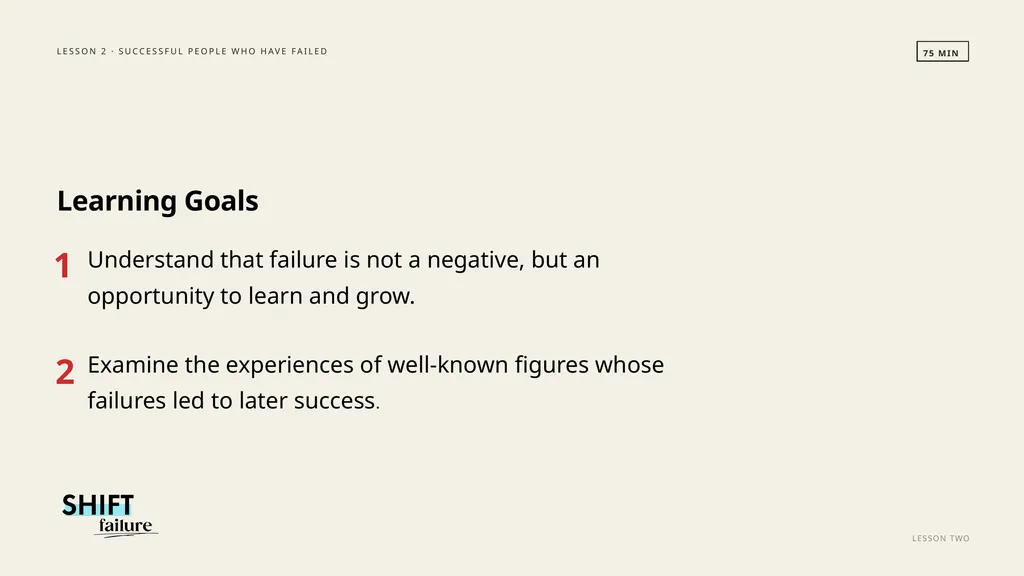
LESSON 2 · SUCCESSFUL PEOPLE WHO HAVE FAILED 75 MIN Learning Goals 1 Understand that failure is not a negative, but an opportunity to learn and grow. 2 Examine the experiences of well-known figures whose failures led to later success. LESSON TWO<br>
34
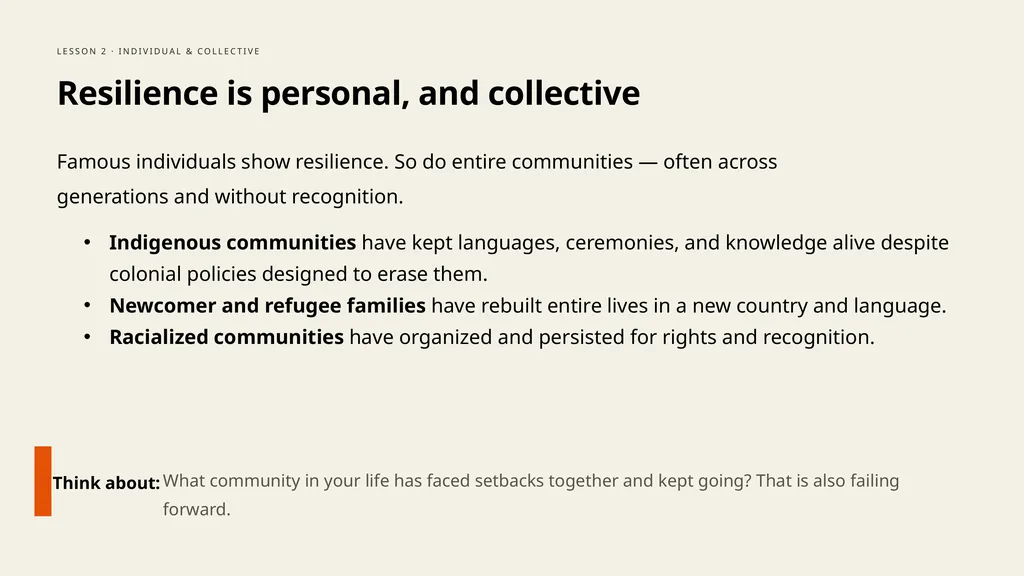
LESSON 2 · INDIVIDUAL & COLLECTIVE Resilience is personal, and collective Famous individuals show resilience. So do entire communities — often across generations and without recognition. Indigenous communities have kept languages, ceremonies, and knowledge alive despite colonial policies designed to erase them.
Newcomer and refugee families have rebuilt entire lives in a new country and language.
Racialized communities have organized and persisted for rights and recognition. Think about: What community in your life has faced setbacks together and kept going? That is also failing forward.<br>
Newcomer and refugee families have rebuilt entire lives in a new country and language.
Racialized communities have organized and persisted for rights and recognition. Think about: What community in your life has faced setbacks together and kept going? That is also failing forward.<br>
35
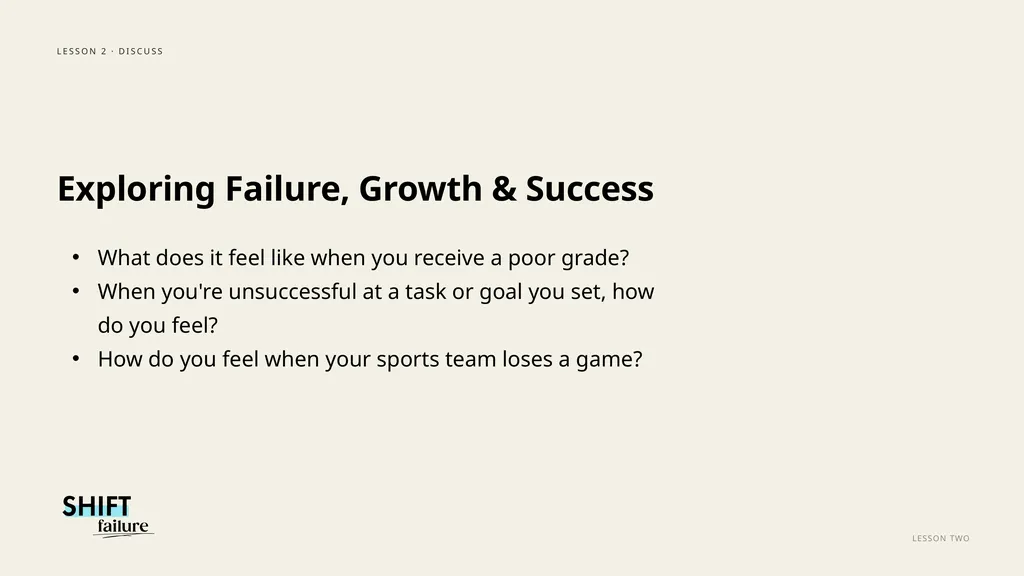
LESSON 2 · DISCUSS Exploring Failure, Growth & Success What does it feel like when you receive a poor grade?
When you're unsuccessful at a task or goal you set, how do you feel?
How do you feel when your sports team loses a game? LESSON TWO<br>
When you're unsuccessful at a task or goal you set, how do you feel?
How do you feel when your sports team loses a game? LESSON TWO<br>
36
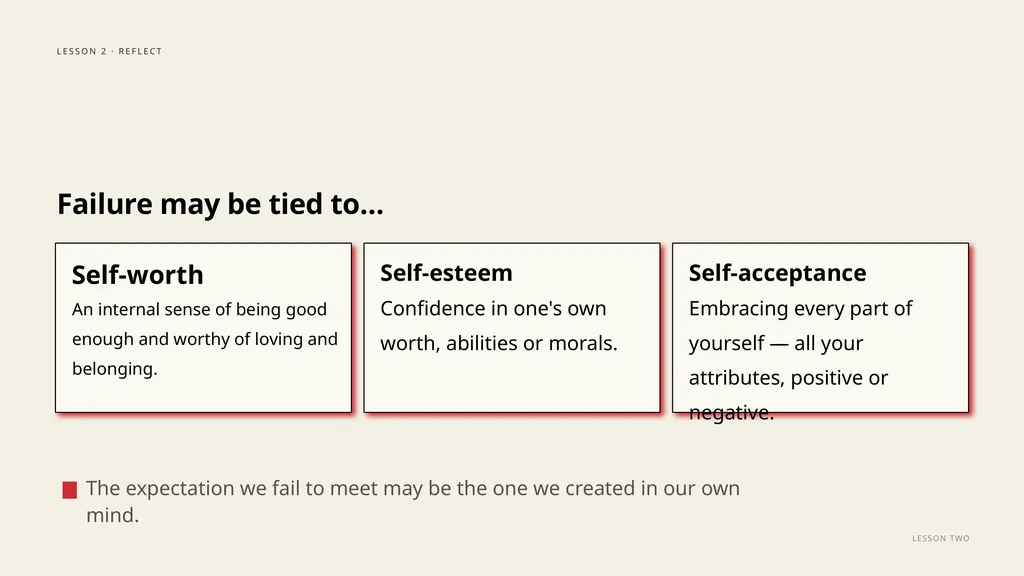
LESSON 2 · REFLECT Failure may be tied to… Self-worth An internal sense of being good enough and worthy of loving and belonging. Self-esteem Confidence in one's own worth, abilities or morals. Self-acceptance Embracing every part of yourself — all your attributes, positive or negative. The expectation we fail to meet may be the one we created in our own mind. LESSON TWO<br>
37
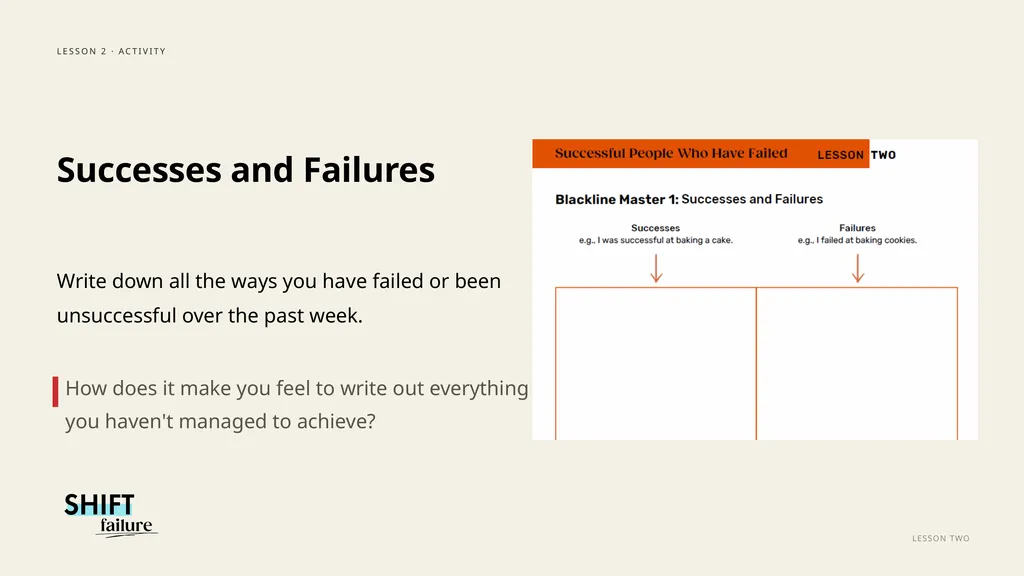
LESSON 2 · ACTIVITY Successes and Failures Write down all the ways you have failed or been unsuccessful over the past week. How does it make you feel to write out everything you haven't managed to achieve? LESSON TWO<br>
38
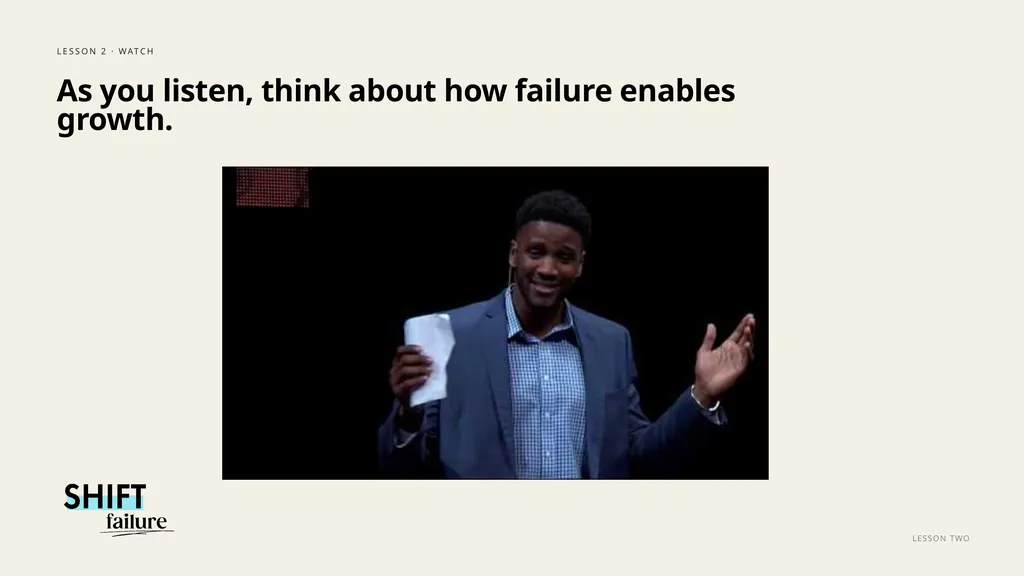
LESSON 2 · WATCH As you listen, think about how failure enables growth. LESSON TWO<br>
39
LESSON 2 · TURN AND TALK Turn and Talk · How did failure enable growth in the characters or person in the video? Why is failure a necessary component to growth? · How can failure enable success? LESSON TWO ·<br>
40
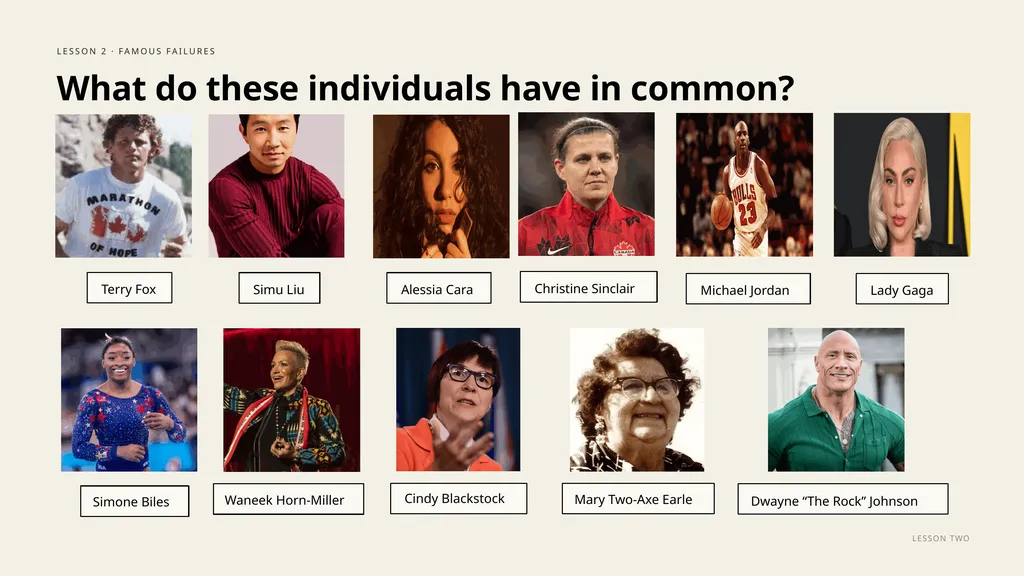
LESSON 2 · FAMOUS FAILURES What do these individuals have in common? Terry Fox Simu Liu Alessia Cara Christine Sinclair Michael Jordan Lady Gaga Dwayne “The Rock” Johnson Simone Biles Waneek Horn-Miller Cindy Blackstock Mary Two-Axe Earle LESSON TWO<br>
41
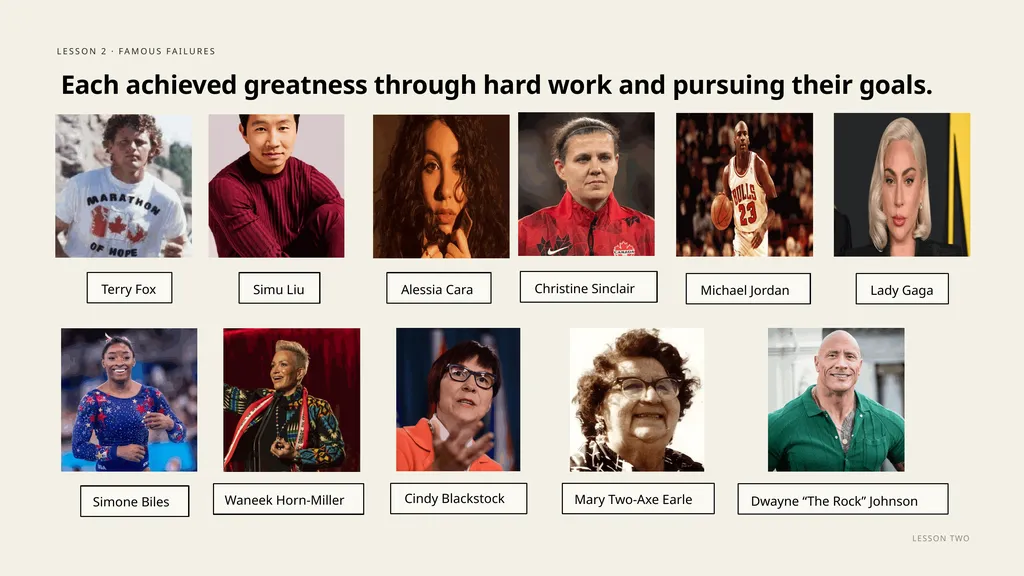
LESSON 2 · FAMOUS FAILURES Each achieved greatness through hard work and pursuing their goals. Terry Fox Simu Liu Alessia Cara Christine Sinclair Michael Jordan Lady Gaga Dwayne “The Rock” Johnson Simone Biles Waneek Horn-Miller Cindy Blackstock Mary Two-Axe Earle LESSON TWO<br>
42
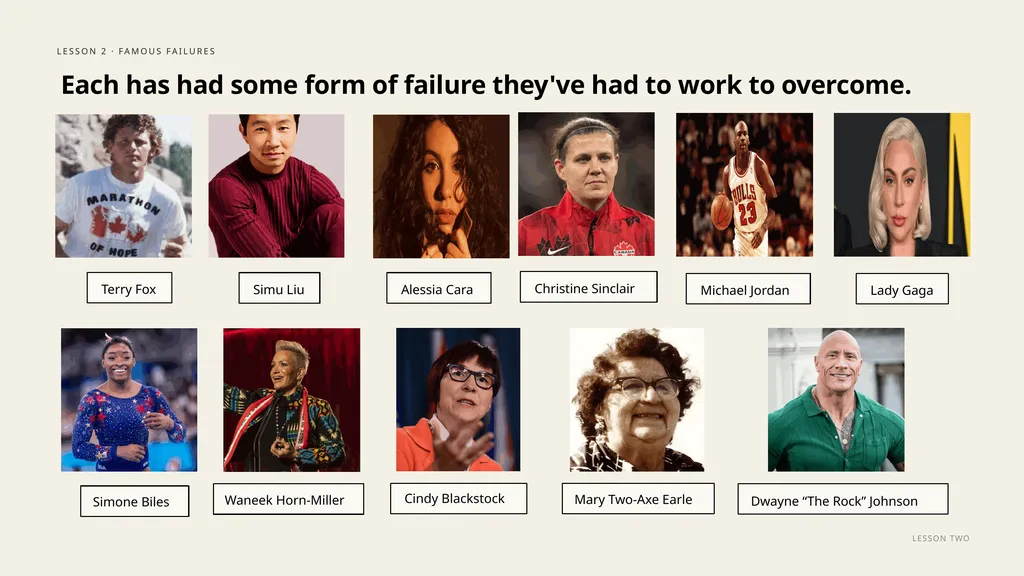
LESSON 2 · FAMOUS FAILURES Each has had some form of failure they've had to work to overcome. Terry Fox Simu Liu Alessia Cara Christine Sinclair Michael Jordan Lady Gaga Dwayne “The Rock” Johnson Simone Biles Waneek Horn-Miller Cindy Blackstock Mary Two-Axe Earle LESSON TWO<br>
43
LESSON 2 · GROUP WORK Time to create — a 3-minute presentation on the famous person you chose. What is this person famous for achieving? What is their story? What failures did they encounter — and how did they overcome them? Why do you think this failure led to their eventual success? What would you have done? What advice would you give them? How did their work create a positive collective impact, or support the wellbeing of their community and the land? LESSON TWO<br>
44
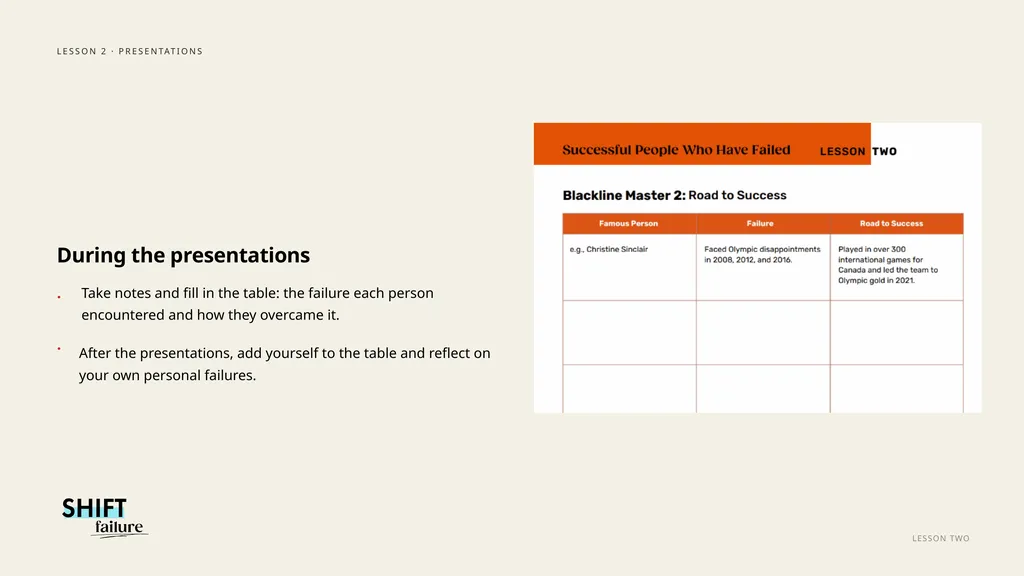
LESSON 2 · PRESENTATIONS During the presentations · Take notes and fill in the table: the failure each person encountered and how they overcame it. · After the presentations, add yourself to the table and reflect on your own personal failures. LESSON TWO<br>
45
LESSON 2 · SELF REFLECTION How can you grow your failures into success stories? No failure is too big to grow from. LESSON TWO<br>
46
LESSON 2 · CANADIAN CONNECTION Autumn Peltier An Indigenous water-rights advocate from Wiikwemkoong First Nation, now Chief Water Commissioner of the Anishinabek Nation. She has spoken many times at the United Nations and been nominated three times for the International Children's Peace Prize. SYSTEMIC NOTE Many First Nations communities in Canada still don't have safe drinking water. Some failures are not hers — they belong to others. “Keep going, don't look back, and if you have an idea, just do it.” LESSON TWO<br>
47
LESSON TWO “I failed a lot. I've made a lot of mistakes. But that's how I learn.” — Billie Eilish LESSON TWO<br>
48
LESSON THREE LESSON THREE<br>
49
LESSON 3 · FROM FAILURE TO INNOVATION Learning Goals 1 Understand the concept of innovative thinking. 2 Reflect on how failure can lead to innovation. 3 Demonstrate critical thinking in the design-thinking process. LESSON THREE<br>
50
LESSON 3 · INVESTIGATE & LEARN Great ideas are sometimes created from bad or weird ones. Innovation is about trying new things and taking risks — which inevitably involves mistakes. Many people fear the consequences of failure. Indigenous peoples have been innovating for thousands of years — developing medicines, agricultural systems, navigation tools, and governance structures. Innovation is not new, and it doesn't belong to any one culture. LESSON THREE<br>
51
LESSON 3 · BRAINSTORM Bad Ideas Usually we search for good ideas. Let's flip it — what makes a really bad idea for a product, a food, a game, or a household item? Then go further: what's a bold, imperfect first idea for solving a real problem in your community? What would a first messy attempt look like? LESSON THREE<br>
52
LESSON 3 · GROUP WORK Come up with one really bad idea Why is this product so bad? · Is there a group of people who might actually like this idea? “It's fine to celebrate success, but it's more important to heed the lessons of failure.” — Bill Gates LESSON THREE ·<br>
53
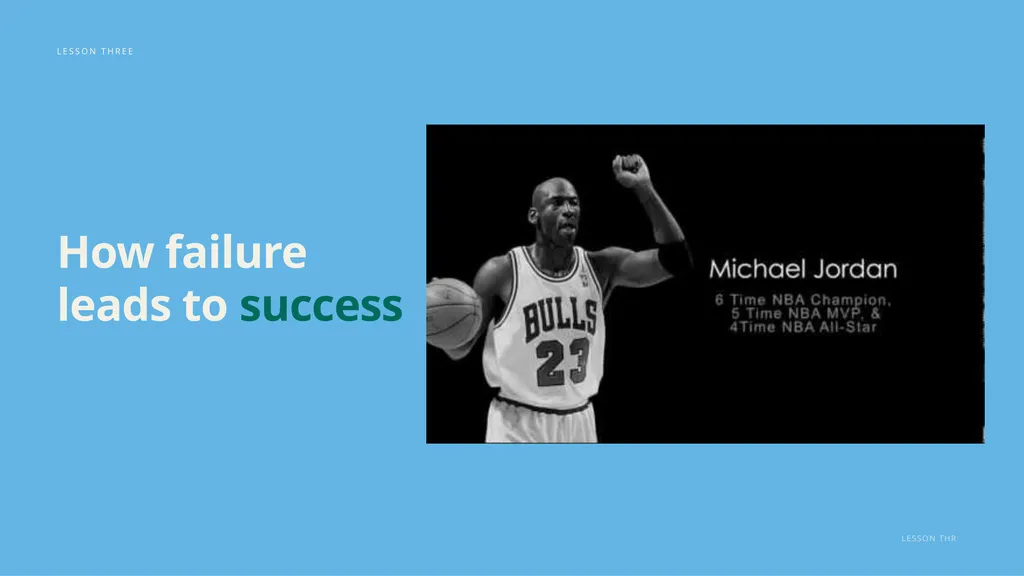
LESSON THREE How failure leads to success LESSON THREE<br>
54
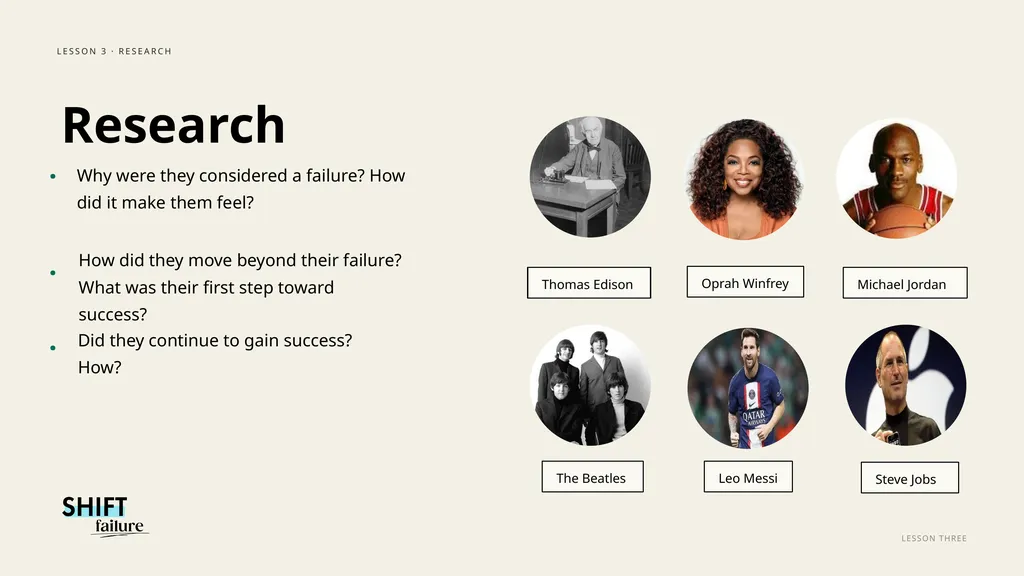
LESSON 3 · RESEARCH Thomas Edison Oprah Winfrey Michael Jordan The Beatles Steve Jobs Leo Messi · Why were they considered a failure? How did it make them feel? · How did they move beyond their failure? What was their first step toward success? · Did they continue to gain success? How? LESSON THREE Research<br>
55
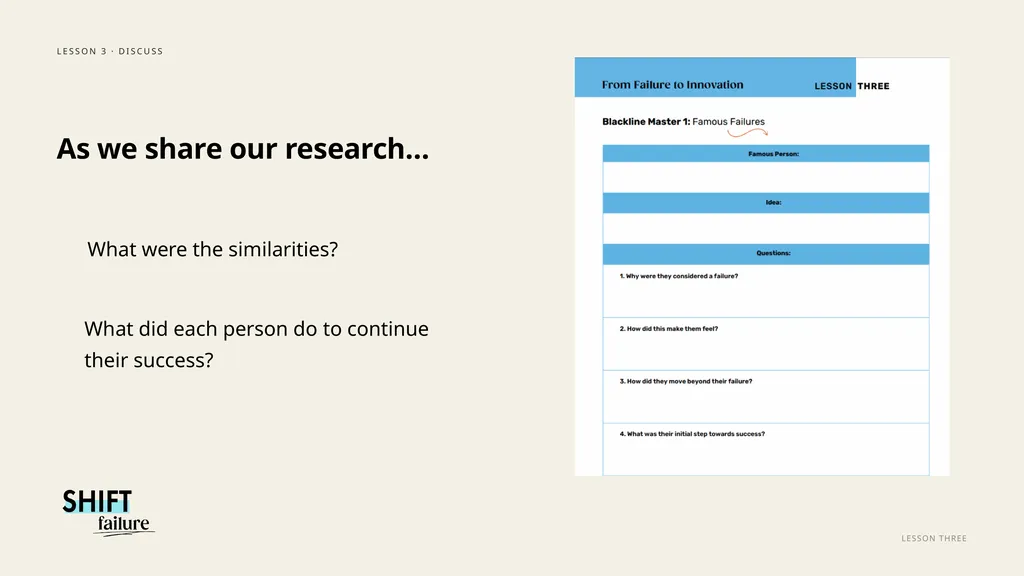
LESSON 3 · DISCUSS As we share our research… What were the similarities? What did each person do to continue their success? LESSON THREE<br>
56
LESSON 3 · REFLECT Each person kept creating even though they encountered failure. They made many bad ideas before one great idea emerged. Each had an innovative mindset. LESSON THREE<br>
57
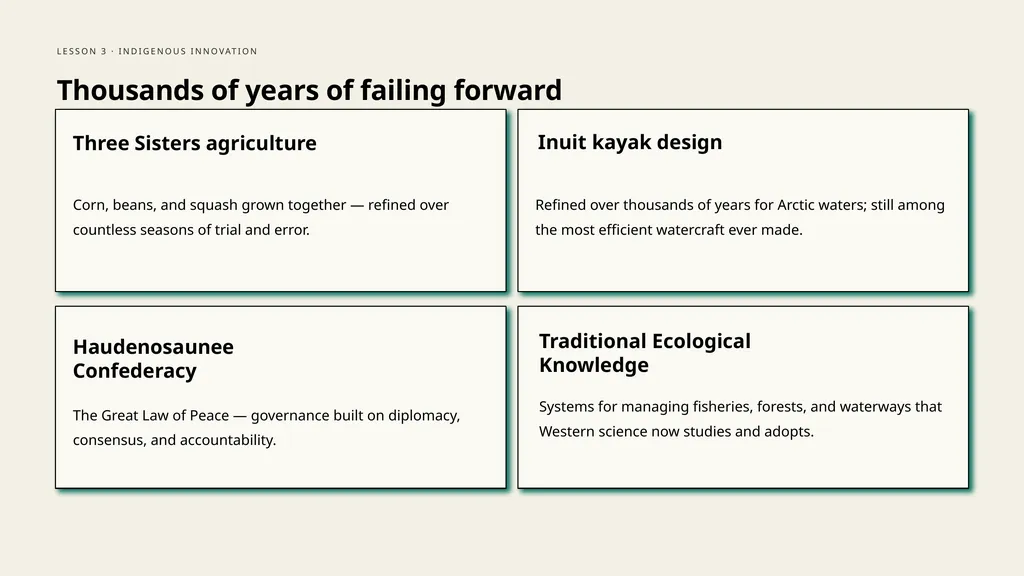
LESSON 3 · INDIGENOUS INNOVATION Thousands of years of failing forward Three Sisters agriculture Corn, beans, and squash grown together — refined over countless seasons of trial and error. Inuit kayak design Refined over thousands of years for Arctic waters; still among the most efficient watercraft ever made. Haudenosaunee Confederacy The Great Law of Peace — governance built on diplomacy, consensus, and accountability. Traditional Ecological Knowledge Systems for managing fisheries, forests, and waterways that Western science now studies and adopts.<br>
58
LESSON 3 · DISCUSSION Whose innovation gets celebrated? · What innovations from your own cultural background can you identify — food, medicine, building, navigation, language, governance? · Who in your family or community has solved problems creatively without being recognized publicly? · If innovation has happened across all cultures for thousands of years, why do we celebrate only certain kinds? What does that tell us about whose knowledge gets valued? LESSON THREE<br>
59
LESSON 3 · INNOVATIVE MINDSET Innovative thinking… Approaches problems and opportunities with an open mind. Seeks out new and better ways of doing things. Uses experimentation and trial and error — observing, trying, reflecting, and adapting in relationship with community and environment. LESSON THREE<br>
60
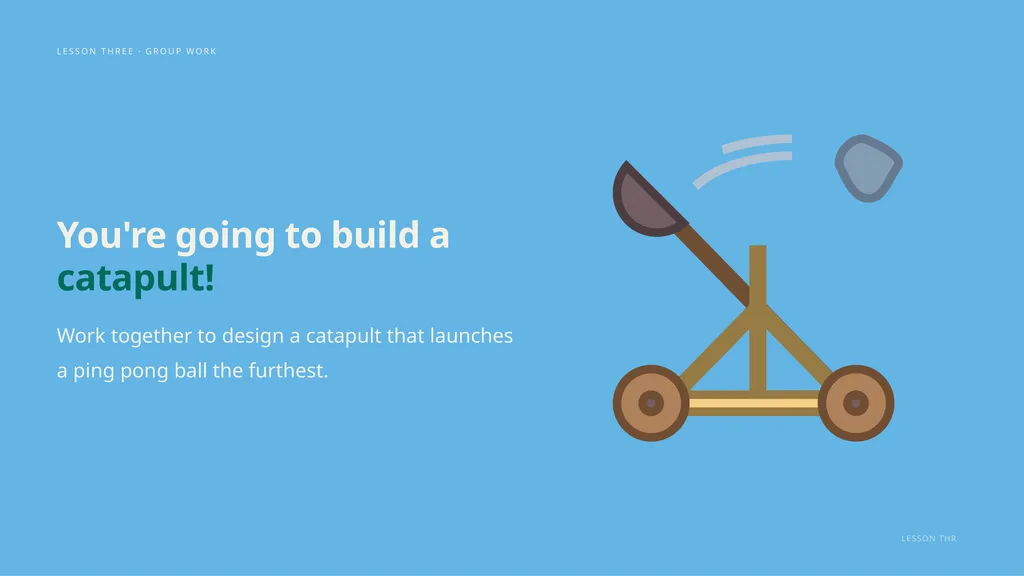
LESSON THREE · GROUP WORK You're going to build a catapult! Work together to design a catapult that launches a ping pong ball the furthest. LESSON THREE<br>
61
LESSON 3 · STEM Kinetic and Potential Energy The science behind the launch — potential energy, kinetic energy, gravity, force and elasticity. LESSON THREE<br>
62
LESSON 3 · DESIGN PROCESS Design Process 1 Create your design on paper. LESSON THREE 2 Decide how the catapult will hold the ping pong ball. 3 Consider the distance required to launch the ball. 4 Think about how effectively it will launch the ball.<br>
63
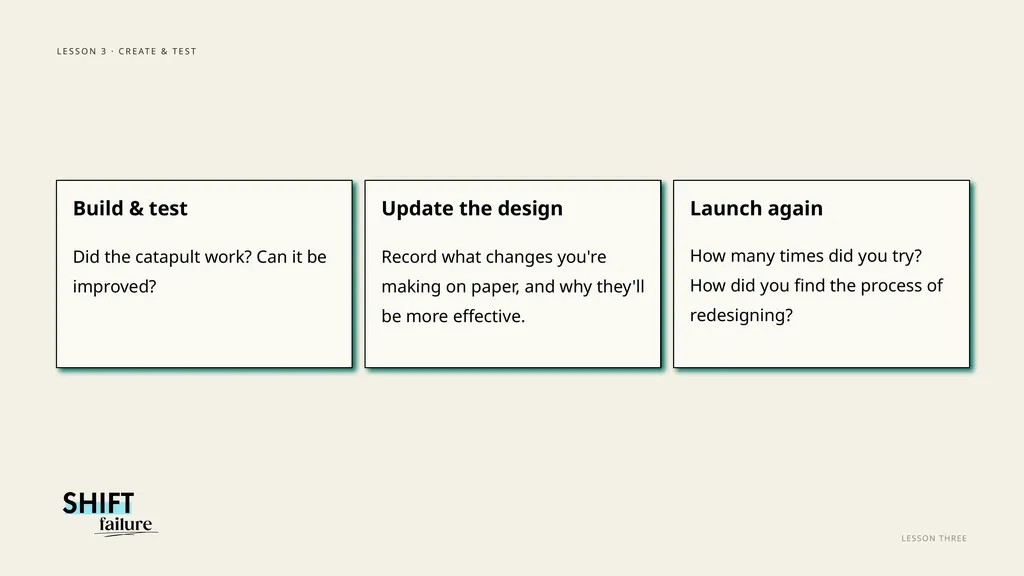
LESSON 3 · CREATE & TEST Build & test Did the catapult work? Can it be improved? Update the design Record what changes you're making on paper, and why they'll be more effective. Launch again How many times did you try? How did you find the process of redesigning? LESSON THREE<br>
64
LESSON THREE Why is it important to keep designing, reflecting, testing and upgrading? LESSON THREE<br>
65
LESSON 3 · REFLECT Each time you redesigned, you reflected on a potential failure and changed your design to make it better. Trying, failing and creating new ideas — that's innovation! LESSON THREE<br>
66
LESSON 3 · SHOWCASE Design Fair Demo your catapult. Vote on categories like “Most Creative Fix” and “Best Lesson Learned.” Quick Poll: How many redesigns did it take before it worked? LESSON THREE<br>
67
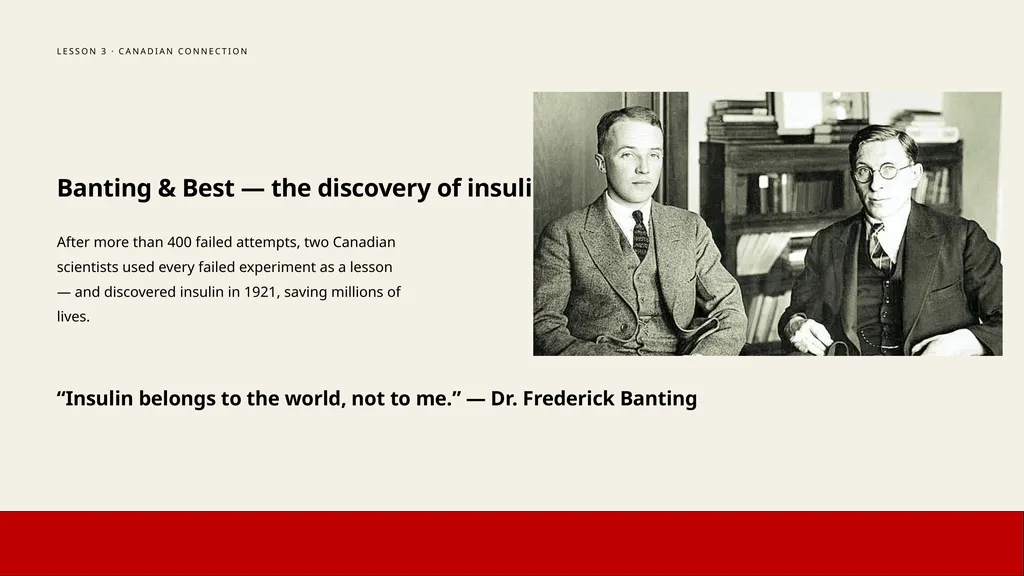
LESSON 3 · CANADIAN CONNECTION Banting & Best — the discovery of insulin After more than 400 failed attempts, two Canadian scientists used every failed experiment as a lesson — and discovered insulin in 1921, saving millions of lives. “Insulin belongs to the world, not to me.” — Dr. Frederick Banting LESSON THREE<br>
68
LESSON THREE “Every mistake is just part of getting better. You learn, you adjust, and you keep going.” — Connor McDavid LESSON THREE<br>
69
LESSON FOUR LESSON FOUR<br>
70
LESSON 4 · FAIL FORWARD CHALLENGE ~13 HOURS Learning Goals 1 Listen to and understand a current challenge within the school community. Co-create a collaborative approach with community members. Implement and adapt the approach through ongoing relationship-building. Reflect on how relational feedback guides the cycle of learning. LESSON FOUR 2 3 4<br>
71
LESSON 4 · INVESTIGATE & LEARN What challenges does our school face? Can everyone learn in a way that works for them? Does everyone feel safe and free to express their opinions? Are classrooms the right temperature, with seating that supports learning? How can we make our school welcoming for students and families who are newcomers to Canada or learning English? How can we respect the Indigenous history of the land our school is built on,
and help Indigenous students feel they truly belong? LESSON FOUR<br>
and help Indigenous students feel they truly belong? LESSON FOUR<br>
72
LESSON 4 · THE CHALLENGE Choose one challenge in your school and do your best to solve it. It may be hard, and you may be unsuccessful the first few times — but you'll learn from each failure. LESSON FOUR<br>
73
LESSON 4 · EXAMPLE PROJECT Example: The Clean Air Challenge Students notice classrooms get hot and stuffy, making focus hard. In teams they research how temperature affects learning, interview classmates and teachers, and test small prototypes using sustainable ideas — plants, recycled fans, window coverings. They record what didn't work, reflect on how failure improved their design, and present solutions to school leaders. LESSON FOUR<br>
74
LESSON 4 · RESEARCH PROCESS Need-to-know questions What do you need to know to understand the issue in depth? What research do you need to conduct to learn more? Try to come up with at least 5 questions. LESSON FOUR<br>
75
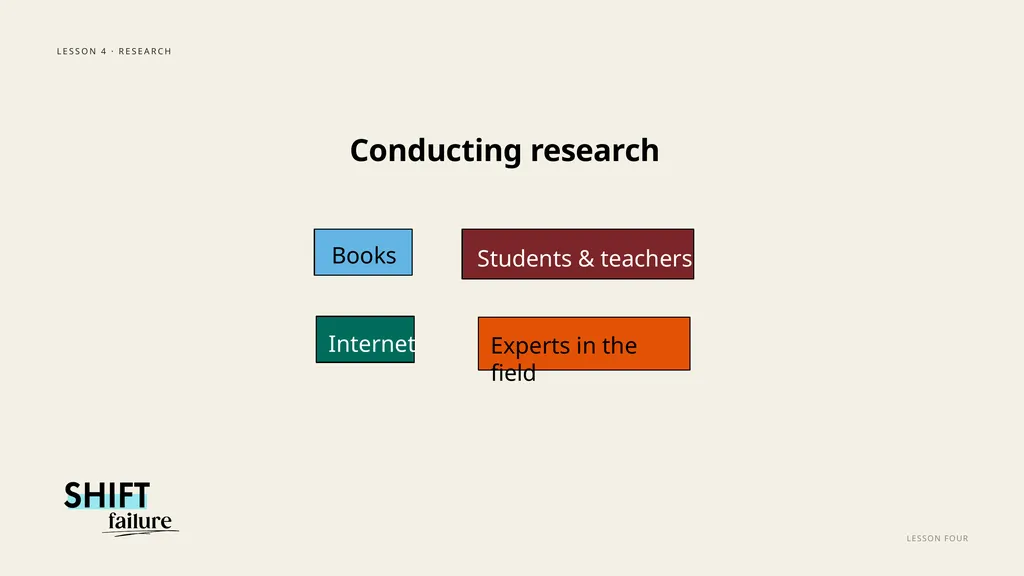
LESSON 4 · RESEARCH Conducting research Books Students & teachers Experts in the field LESSON FOUR Internet<br>
76
LESSON 4 · RESEARCH PROCESS Creating an outline Outline a step-by-step process for how you'll solve the challenge. What obstacles do you think you might encounter? You may fail the first few times — reflect and adapt based on what you learned. LESSON FOUR<br>
77
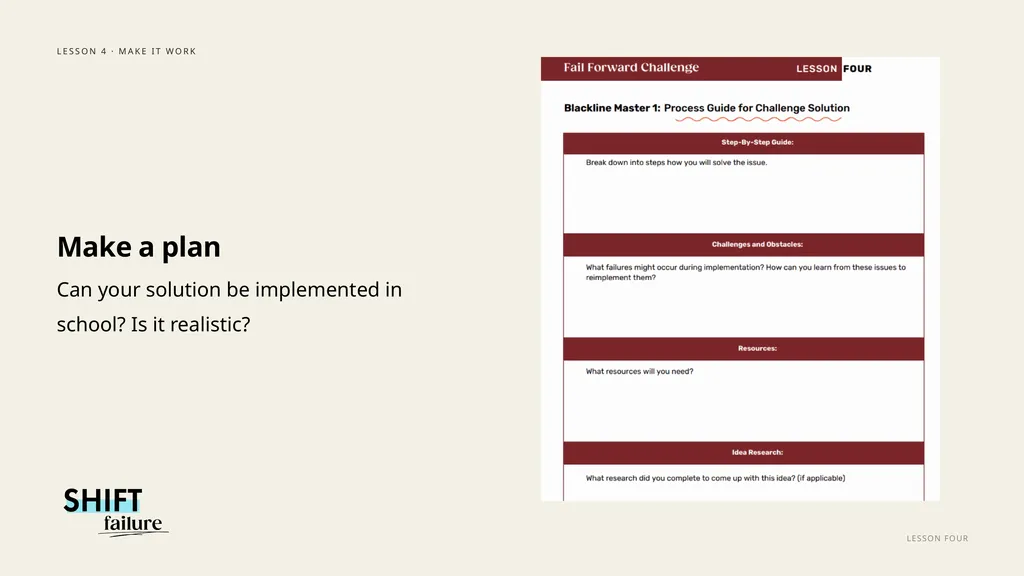
LESSON 4 · MAKE IT WORK Make a plan Can your solution be implemented in school? Is it realistic? LESSON FOUR<br>
78
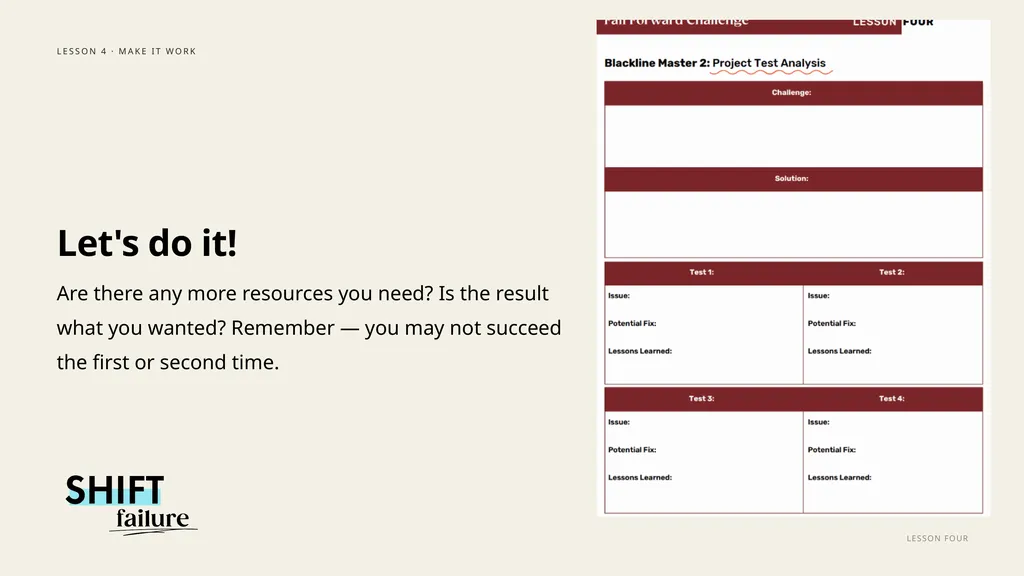
LESSON 4 · MAKE IT WORK Let's do it! Are there any more resources you need? Is the result what you wanted? Remember — you may not succeed the first or second time. LESSON FOUR<br>
79
LESSON 4 · PRESENT Presenting your research Create a 5-minute presentation using any method your group agrees on: PowerPoint / Sway Prezi Poster TikTok video Blog post Play / Mock Debate LESSON FOUR<br>
80
LESSON 4 · PRESENT What to include What challenge did you choose? What solution did you create? What issues came up? Were they in line with what you expected? Did the solution work the first time? What did you learn each attempt? Did you update your idea after learning from each attempt? How does failing create an opportunity to learn and grow? LESSON FOUR<br>
81
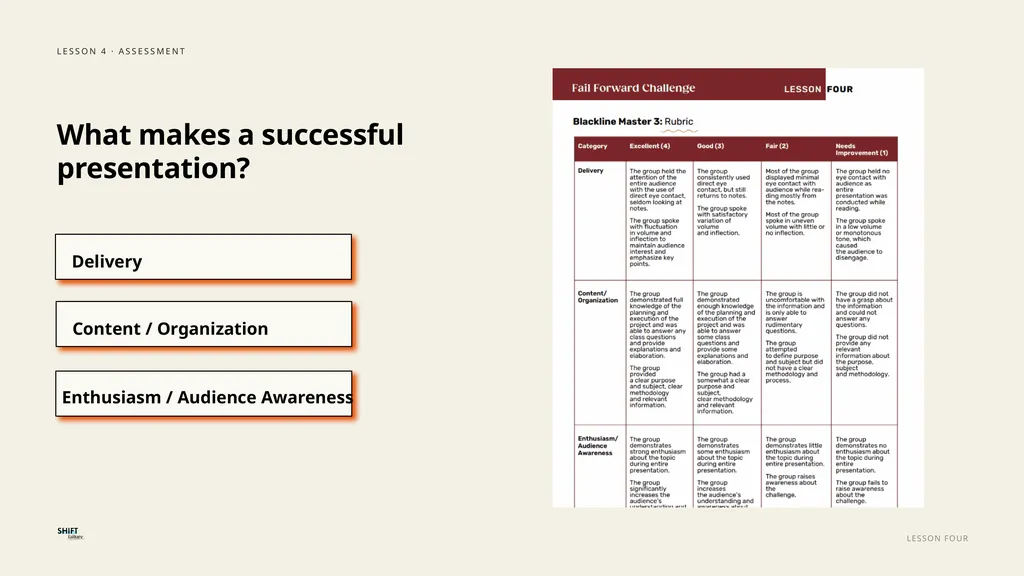
LESSON 4 · ASSESSMENT What makes a successful presentation? Delivery Content / Organization Enthusiasm / Audience Awareness LESSON FOUR<br>
82
LESSON 4 · REFLECT Learning from others As you listen to other groups present: what did each group learn from the failure of their initial attempt? LESSON FOUR<br>
83
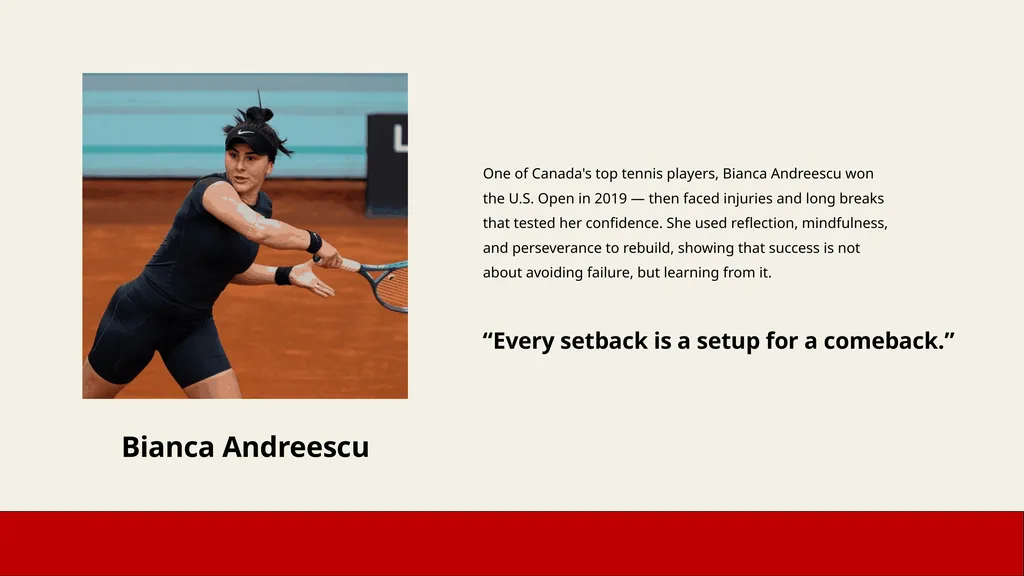
LESSON 4 · CANADIAN CONNECTION Bianca Andreescu One of Canada's top tennis players, Bianca Andreescu won the U.S. Open in 2019 — then faced injuries and long breaks that tested her confidence. She used reflection, mindfulness, and perseverance to rebuild, showing that success is not about avoiding failure, but learning from it. “Every setback is a setup for a comeback.” LESSON FOUR<br>
84
LESSON FOUR “You grow the most in the uncomfortable places — the moments when things don't go as planned.” — Sandra Oh LESSON FOUR<br>
85
LESSON FIVE LESSON FIVE<br>
86
LESSON 5 · THE POWER OF REFLECTION 60 MIN Learning Goals 1 Understand that failure is not always negative. Reflect on how your own failures can become successes. Consider how experiences impact learning outcomes. LESSON FIVE 2 3<br>
87
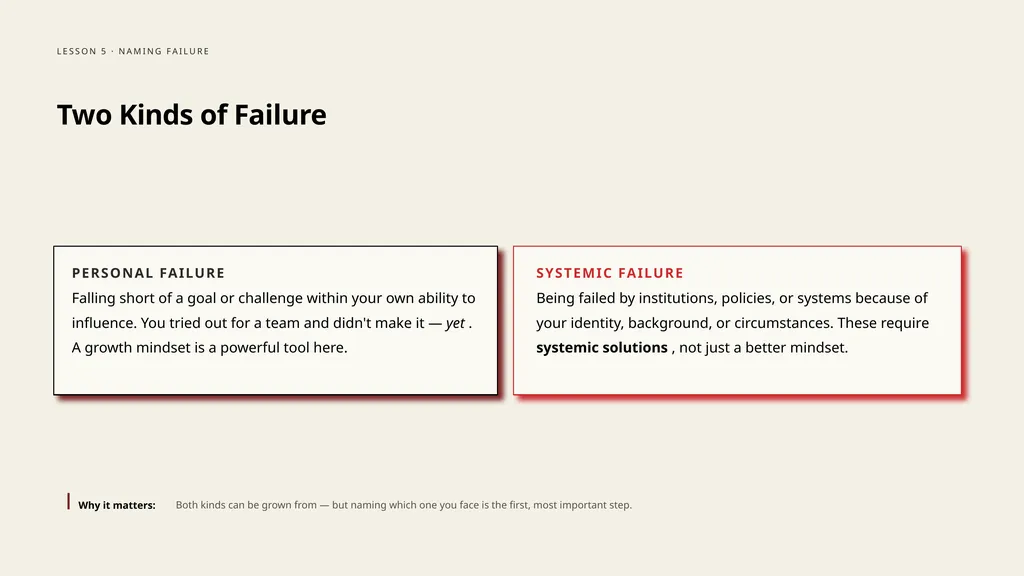
LESSON 5 · NAMING FAILURE Two Kinds of Failure PERSONAL FAILURE Falling short of a goal or challenge within your own ability to influence. You tried out for a team and didn't make it — yet . A growth mindset is a powerful tool here. SYSTEMIC FAILURE Being failed by institutions, policies, or systems because of your identity, background, or circumstances. These require systemic solutions , not just a better mindset. Why it matters: Both kinds can be grown from — but naming which one you face is the first, most important step.<br>
88
LESSON 5 · DISCUSSION Name the failure Think about a setback you've experienced. Was it personal (within your control) — or was part of it systemic , connected to something outside of you? How does naming that difference change how you feel? What would “failing forward” look like in each case? LESSON FIVE<br>
89
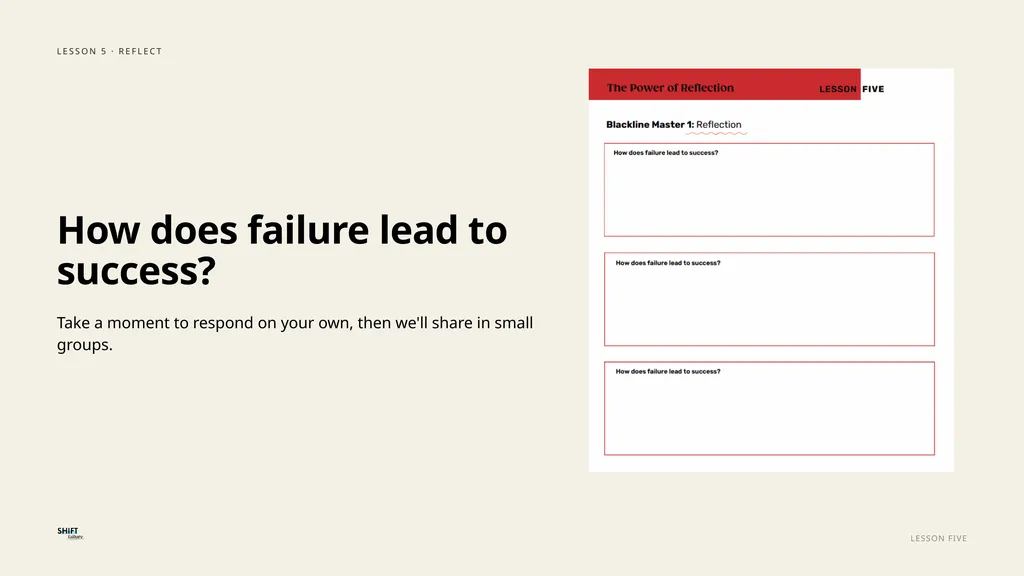
LESSON 5 · REFLECT How does failure lead to success? Take a moment to respond on your own, then we'll share in small groups. LESSON FIVE<br>
90
LESSON 5 · SHARE Share with your group Read your reflection exactly as you wrote it. As a group: what is the process to move from failure to success? What steps do you need to take? LESSON FIVE<br>
91
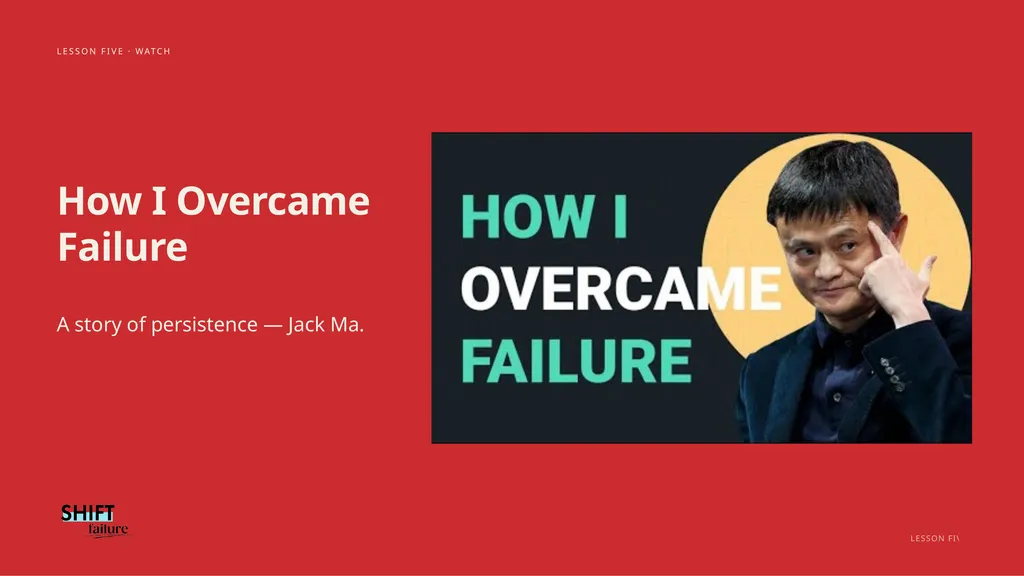
LESSON FIVE · WATCH How I Overcame Failure A story of persistence — Jack Ma. LESSON FIVE<br>
92
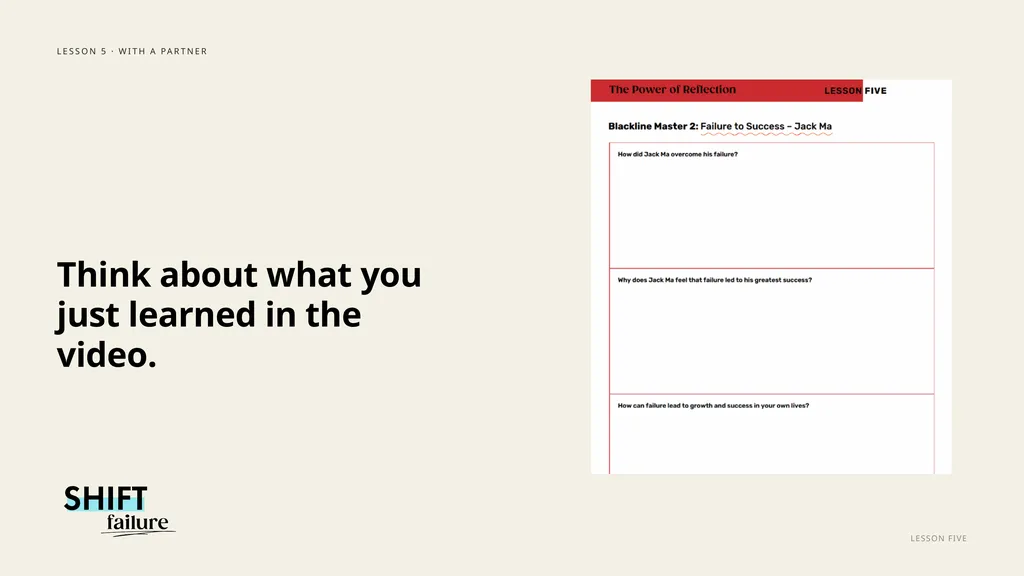
LESSON 5 · DISCUSS Discuss How did Jack Ma overcome his failures? Why does he feel that failure led to his greatest success? How can failure lead to growth and success in your own life? LESSON FIVE<br>
93
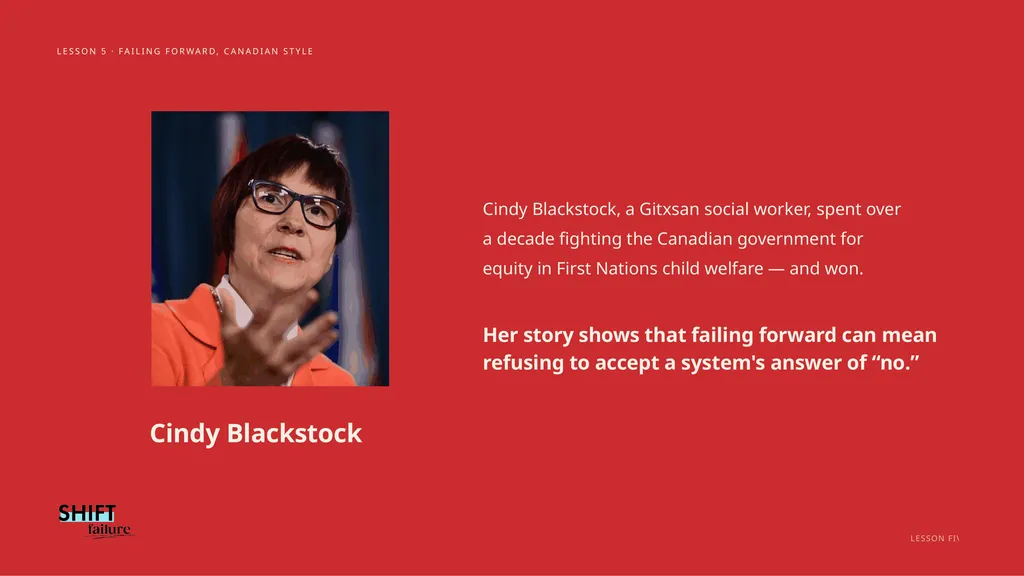
LESSON 5 · FAILING FORWARD, CANADIAN STYLE Cindy Blackstock Cindy Blackstock, a Gitxsan social worker, spent over a decade fighting the Canadian government for equity in First Nations child welfare — and won. Her story shows that failing forward can mean refusing to accept a system's answer of “no.” LESSON FIVE<br>
94
LESSON 5 · WITH A PARTNER Think about what you just learned in the video. LESSON FIVE<br>
95
LESSON FIVE 15 Steps to Failing Forward by John C. Maxwell — let's see how these steps can help you change failure to success. LESSON FIVE<br>
96
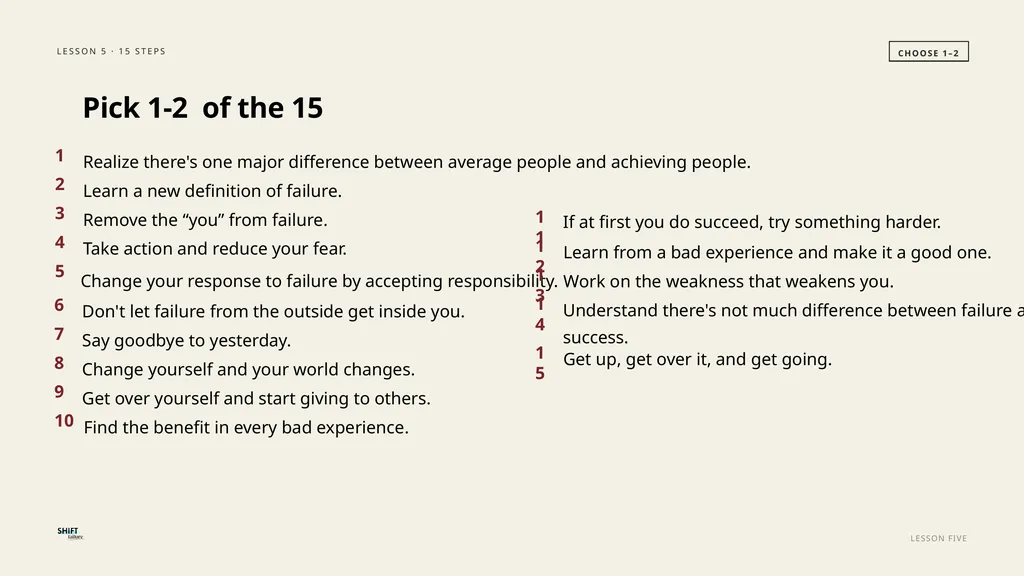
LESSON 5 · 15 STEPS CHOOSE 1–2 1 Realize there's one major difference between average people and achieving people. 2 Learn a new definition of failure. 3 Remove the “you” from failure. 4 Take action and reduce your fear. 5 Change your response to failure by accepting responsibility. LESSON FIVE 6 Don't let failure from the outside get inside you. 7 Say goodbye to yesterday. 8 Change yourself and your world changes. 9 Get over yourself and start giving to others. 10 Find the benefit in every bad experience. 11 If at first you do succeed, try something harder. 12 Learn from a bad experience and make it a good one. 13 Work on the weakness that weakens you. 14 Understand there's not much difference between failure and success. 15 Get up, get over it, and get going. Pick 1-2 of the 15<br>
97
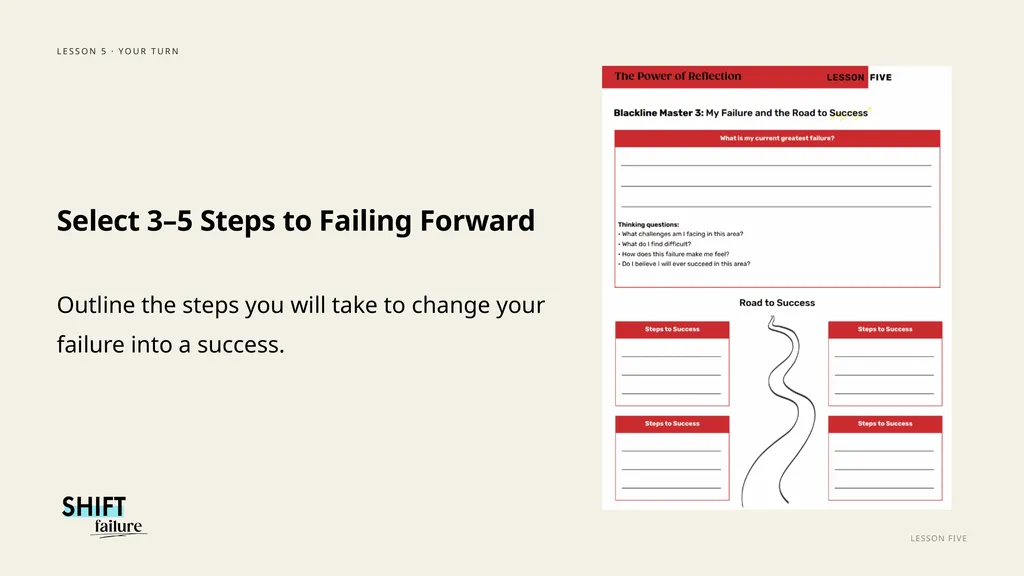
LESSON 5 · YOUR TURN Select 3–5 Steps to Failing Forward Outline the steps you will take to change your failure into a success. LESSON FIVE<br>
98
LESSON 5 · APPLY Apply How can you apply the step to your own way of thinking? How can your failure move to a success? What will you need to do to grow and learn from this challenge? LESSON FIVE<br>
99
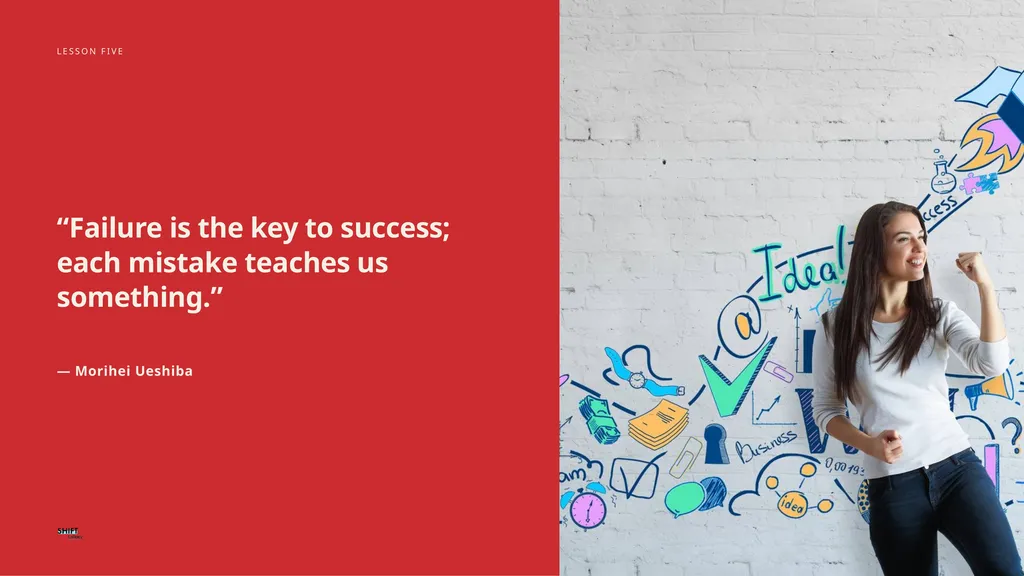
LESSON FIVE “Failure is the key to success; each mistake teaches us something.” — Morihei Ueshiba LESSON FIVE<br>