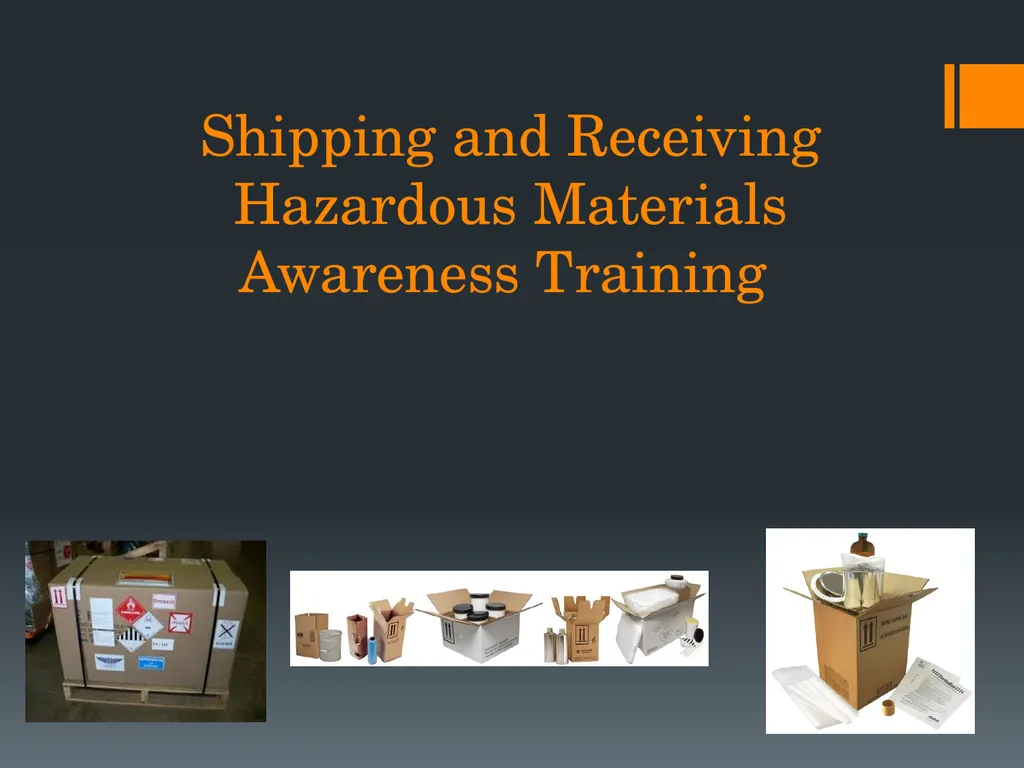
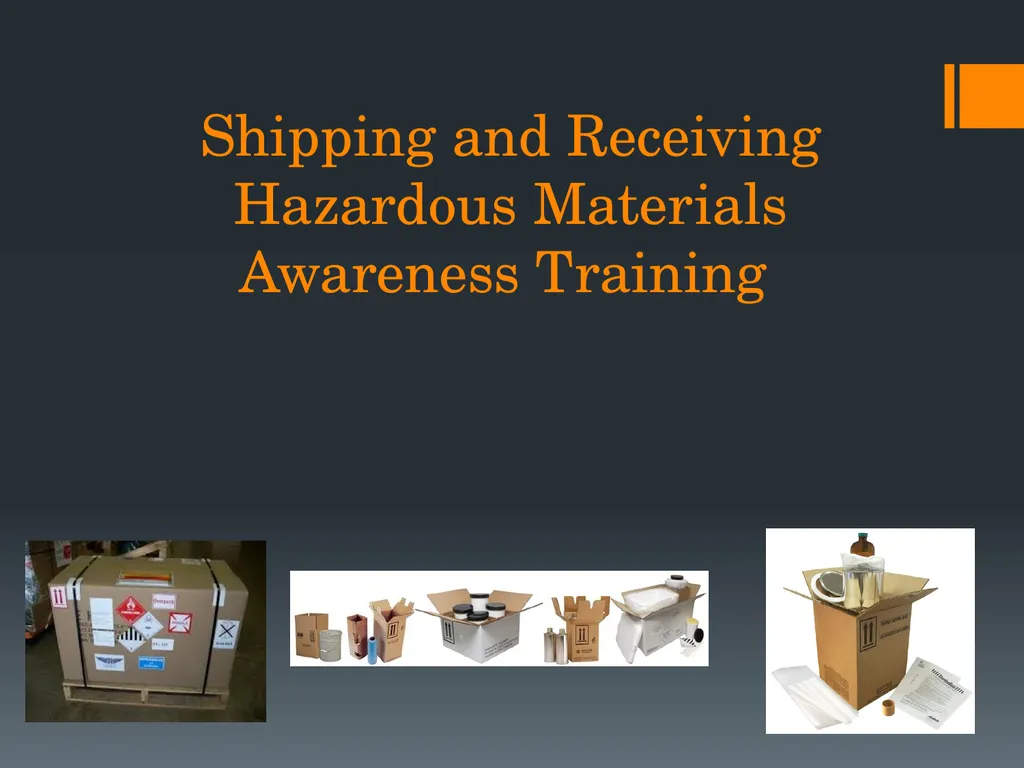
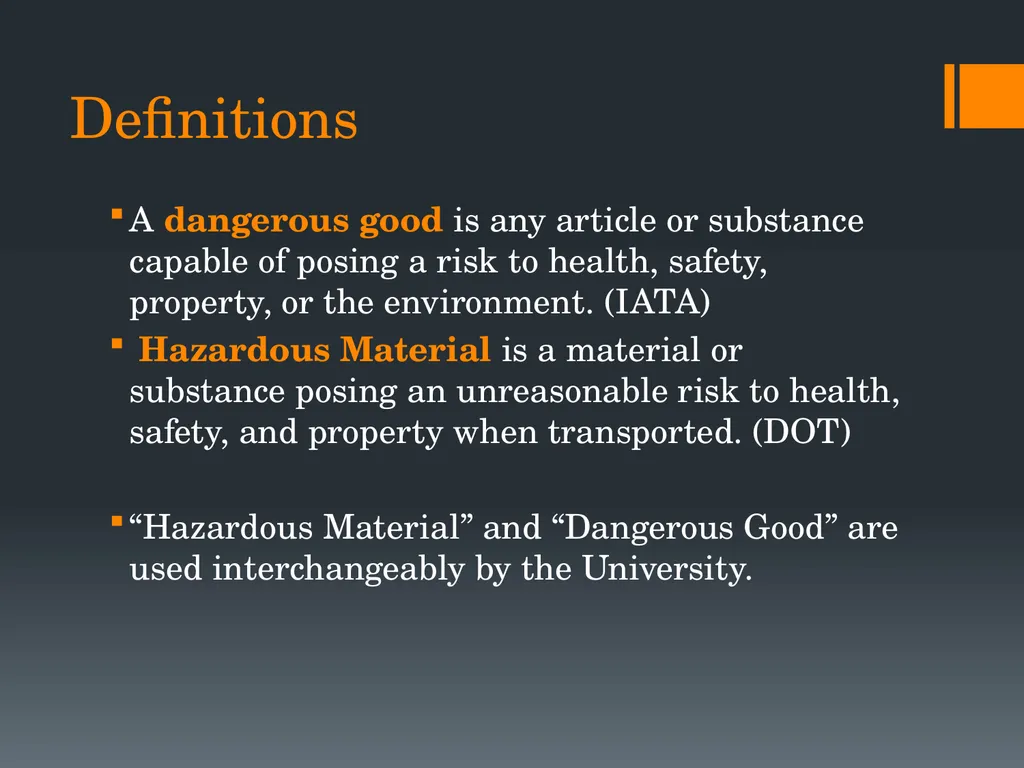
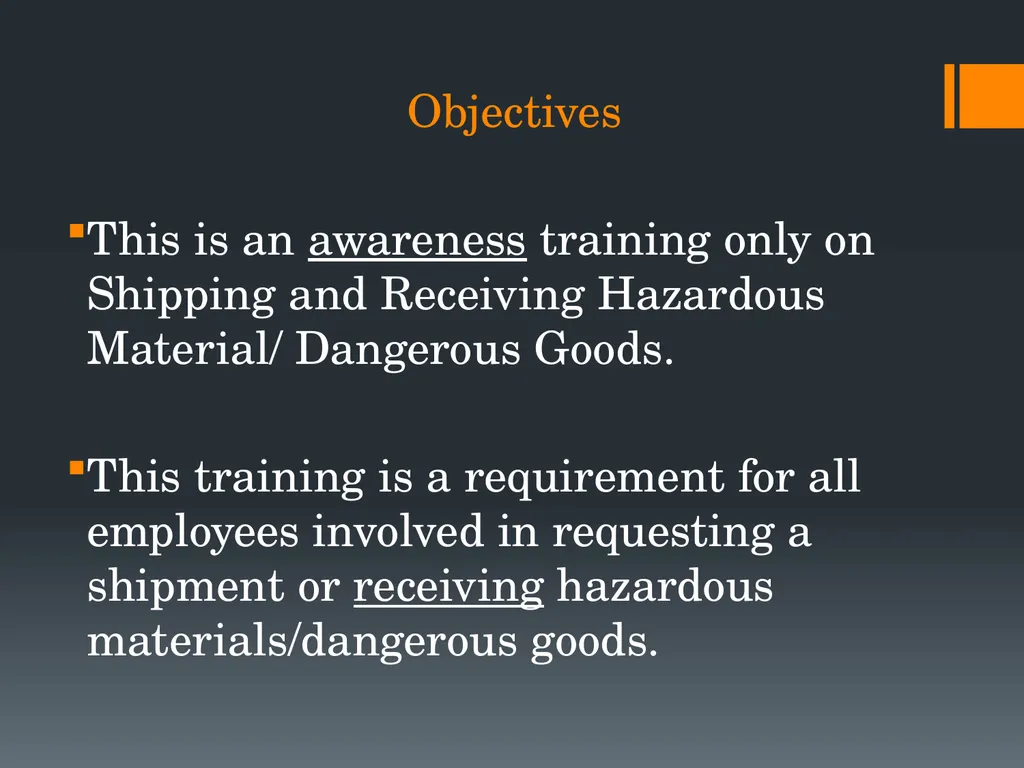
Shipping and Receiving Hazardous Materials Awareness Training Definitions A dangerous good is any article or substance capable of posing a risk to health, safety, property, or the environment. (IATA) Hazardous Material is a material or
"Shipping and Receiving Hazardous Materials" is the property of its rightful owner. Permission is granted to
download and print the materials on this website for personal, non-commercial use only, and to display it
on your personal computer provided you do not modify the materials and that you retain all copyright
notices contained in the materials. By downloading content from our website, you accept the terms of this
agreement.
Presentation Transcript
01
Shipping and Receiving Hazardous Materials
Awareness Training<br>
02
Definitions A dangerous good is any article or substance capable of posing a risk to health, safety, property, or the environment. (IATA)
Hazardous Material is a material or substance posing an unreasonable risk to health, safety, and property when transported. (DOT)
“Hazardous Material” and “Dangerous Good” are used interchangeably by the University.<br>
03
Objectives
This is an awareness training only on Shipping and Receiving Hazardous Material/ Dangerous Goods.
This training is a requirement for all employees involved in requesting a shipment or receiving hazardous materials/dangerous goods.<br>
04
Why is this training necessary? The Federal government requires training prior to all aspects of shipping, receiving or transporting hazardous materials.
Agencies providing applicable regulations and guidelines include
IATA – International Air Transport Association
DOT – U.S. Department of Transportation<br>
05
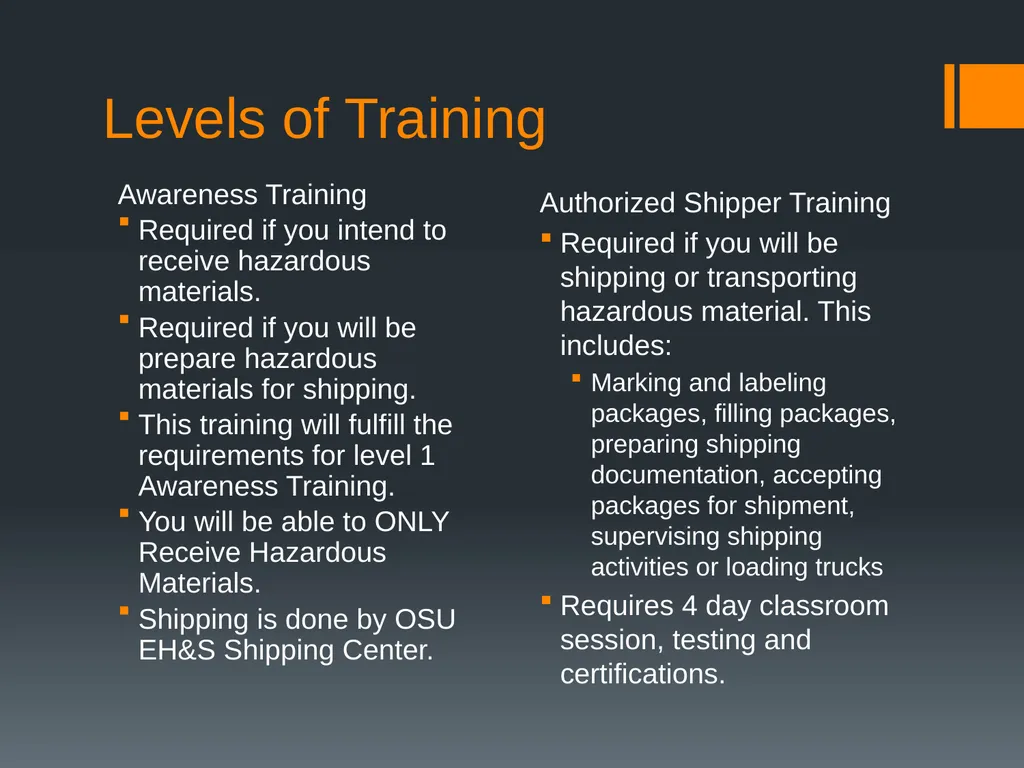
Levels of Training Awareness Training
Required if you intend to receive hazardous materials.
Required if you will be prepare hazardous materials for shipping.
This training will fulfill the requirements for level 1 Awareness Training.
You will be able to ONLY Receive Hazardous Materials.
Shipping is done by OSU EH&S Shipping Center. Authorized Shipper Training
Required if you will be shipping or transporting hazardous material. This includes:
Marking and labeling packages, filling packages, preparing shipping documentation, accepting packages for shipment, supervising shipping activities or loading trucks
Requires 4 day classroom session, testing and certifications.<br>
06
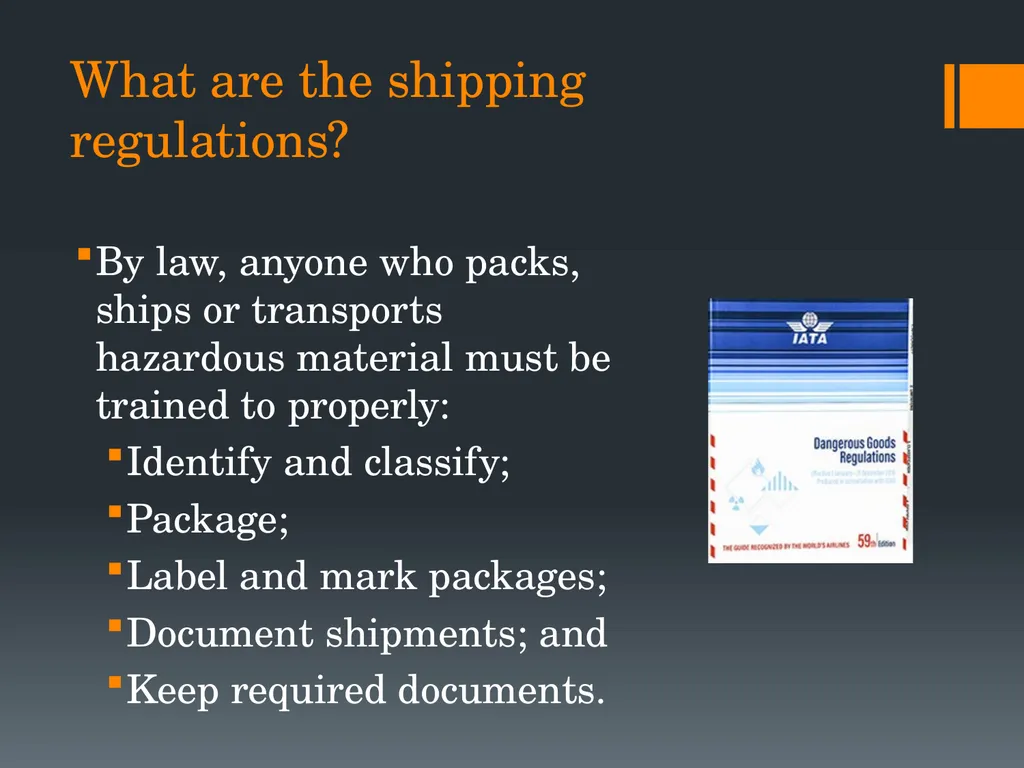
What are the shipping regulations? By law, anyone who packs, ships or transports hazardous material must be trained to properly:
Identify and classify;
Package;
Label and mark packages;
Document shipments; and
Keep required documents.<br>
07
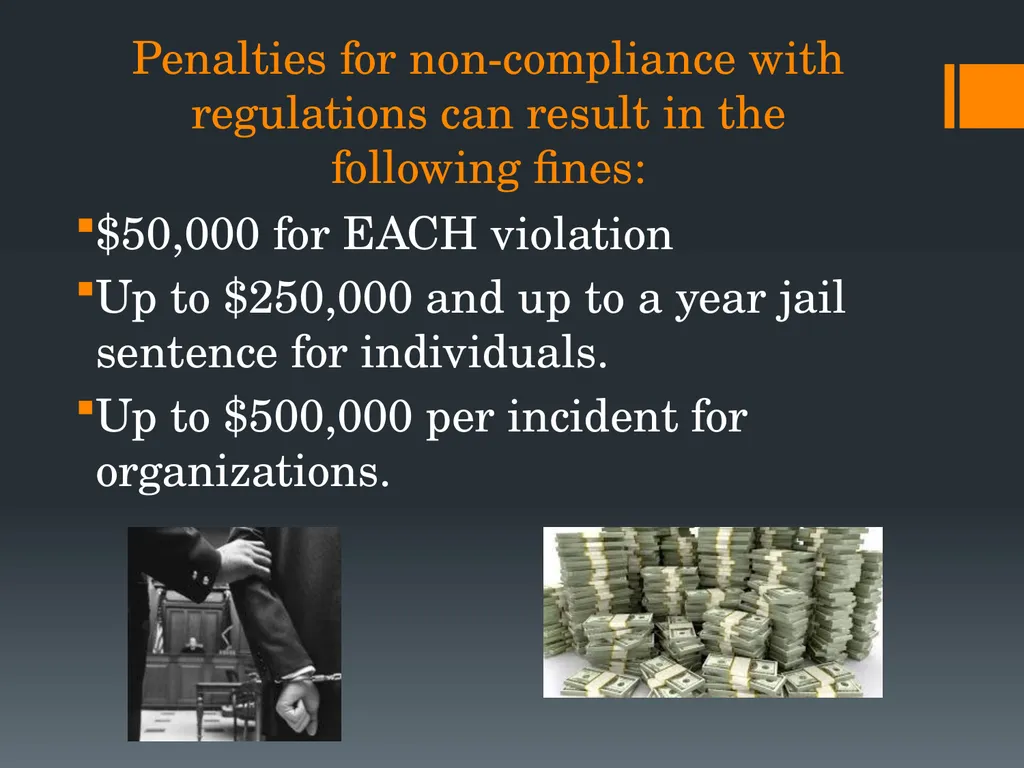
Penalties for non-compliance with regulations can result in the following fines: $50,000 for EACH violation
Up to $250,000 and up to a year jail sentence for individuals.
Up to $500,000 per incident for organizations.<br>
08
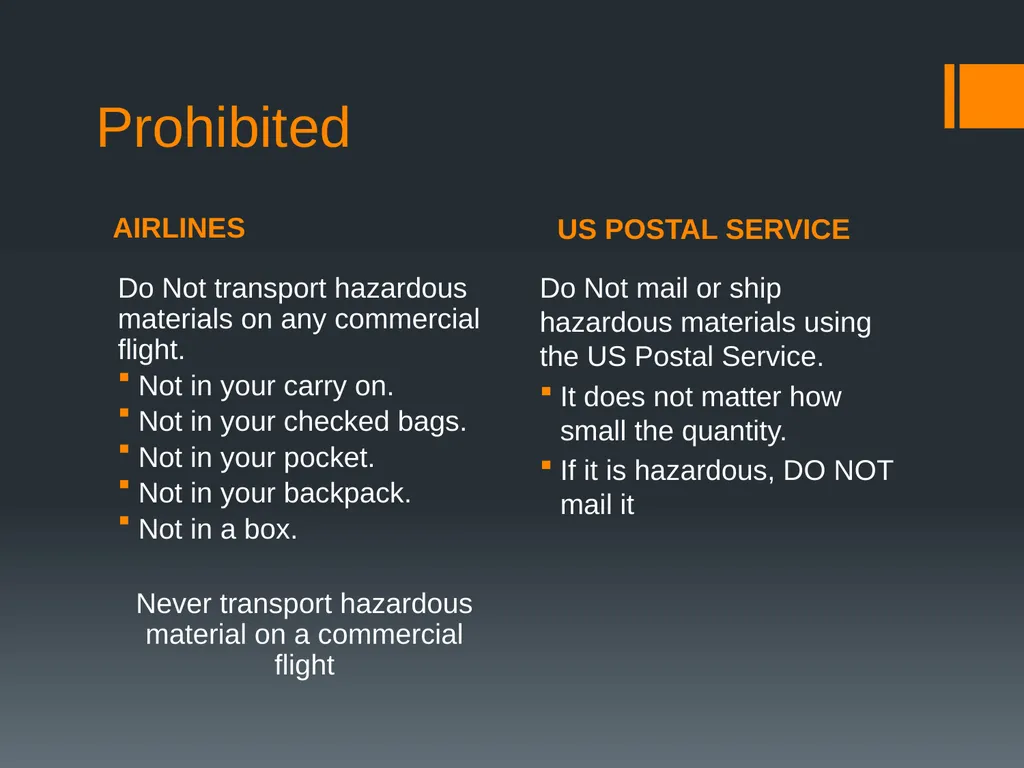
AIRLINES US POSTAL SERVICE Prohibited Do Not transport hazardous materials on any commercial flight.
Not in your carry on.
Not in your checked bags.
Not in your pocket.
Not in your backpack.
Not in a box.
Never transport hazardous material on a commercial flight Do Not mail or ship hazardous materials using the US Postal Service.
It does not matter how small the quantity.
If it is hazardous, DO NOT mail it<br>
09
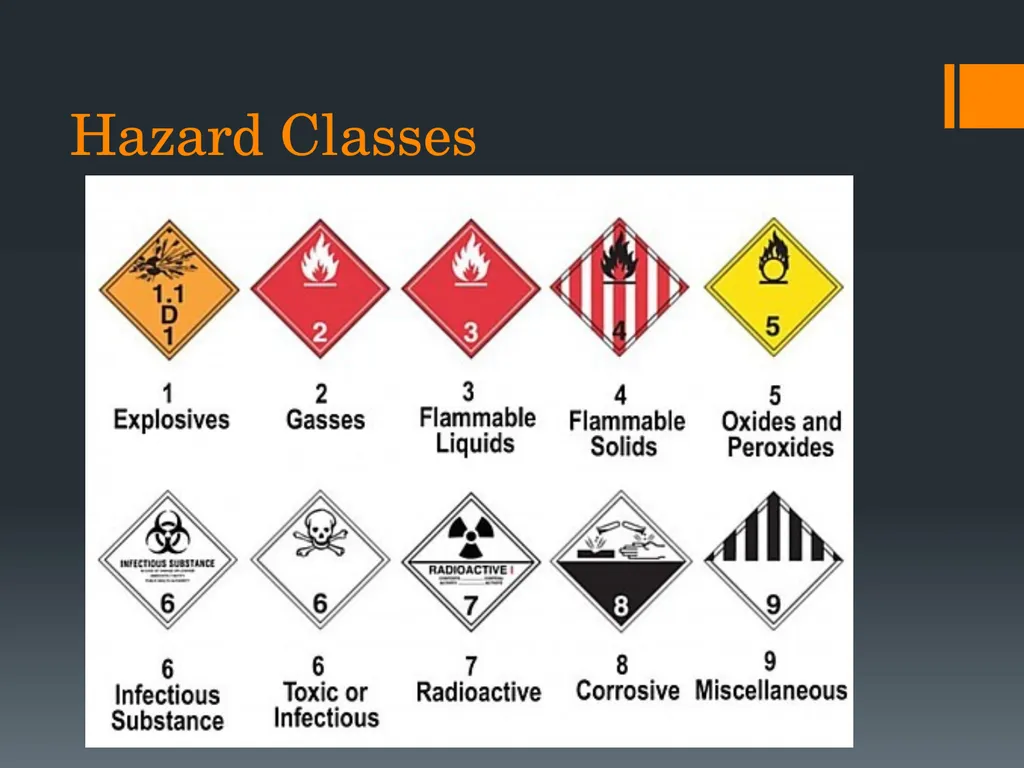
Hazard Classes<br>
10
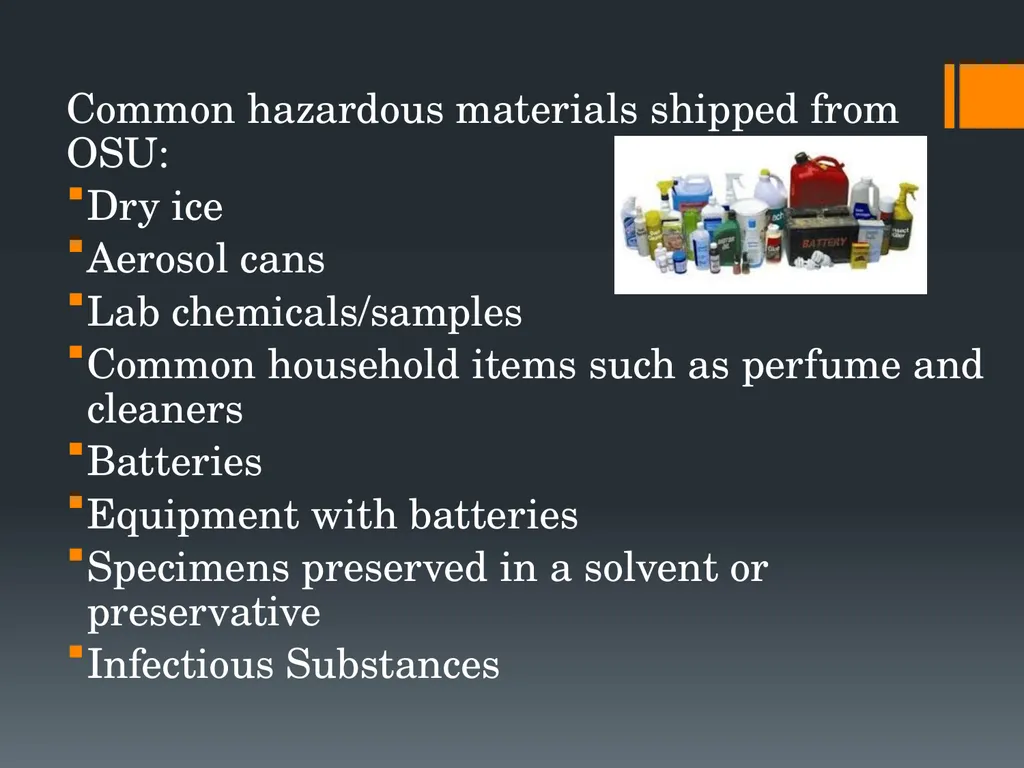
Common hazardous materials shipped from OSU:
Dry ice
Aerosol cans
Lab chemicals/samples
Common household items such as perfume and cleaners
Batteries
Equipment with batteries
Specimens preserved in a solvent or preservative
Infectious Substances<br>
11
Proper Packaging Federal regulation state that packaging used to ship hazardous materials must be tested and certified as capable of performing up to regulatory standards for ability to withstand:
Vibrations, Drops, Pressure, Stacking, Rainfall, Puncture, and Leaks.
Most hazardous material/dangerous goods packaging cannot be reused.<br>
12
General Security Guidelines Report damaged or sticky latches and locks on doors or other security devices to your supervisor.
Report suspicious individuals, behavior, stolen or missing dangerous goods/hazardous materials, and known or suspected unauthorized entry into secured areas to your supervisor and to Public Safety 541-737-7000.
Be aware of your surroundings; look for out-of-place vehicles and abandoned or out-of-place backpacks, bags, or other containers.
Limit information concerning hazardous materials/dangerous goods shipments to individuals who need to know, such as other authorized employees, carrier personnel, and supervisors. Be familiar with emergency procedures in place at OSU and know what to do if a package is leaking or damaged.<br>
13
Receiving Hazardous Materials/Dangerous Goods Before accepting any package
Identify what you are handling.
Inspect the package.
DO Not accept the package if it is damaged, wet or leaking.<br>
14
Receiving Hazardous Materials/Dangerous Goods After Accepting a Hazardous Materials Package:
Handle package with care.
Always use appropriate personal protective equipment (PPE).
Store package appropriately. Store all dangerous goods upright with label facing outwards, away from pedestrian paths until it is delivered or picked up by the intended recipient.<br>
15
So how do I ship hazardous materials? Step 1: First you need to determine whether the material you want to ship is considered hazardous material/dangerous good or not.
Obtain a Safety Data Sheet (SDS) and review the shipping section (section 14) for shipping info.
A material SDS that says Not Regulated, N/A, or Not Dangerous Goods in this section is safe to ship as a normal material.
If there is information with a UN number, then the material is a hazardous material.
If no SDS exists for the material, contact EH&S for help. (see last slide)<br>
16
So how do I ship hazardous materials? Step 2: If you know for sure that the material you want to ship is not regulated, you may ship without assistance.
If you are uncertain, suspect, or know for sure that the material you want to ship is regulated, you must have assistance from EH&S (contact information on last slide).<br>
17
So how do I ship hazardous materials? Step 3: You must bring the UNSEALED box to the EH&S Shipping Center along with the SDS.<br>
18
In Review
When Shipping hazardous materials/dangerous goods, there are several IMPORTANT steps that will help your shipment go smoothly.
Know whether or not the material is hazardous ahead of time. When in doubt, contact the EH&S Shipping Center.<br>
19
IMPORTANT STEPS CONTINUED.
If you believe or suspect the material may be hazardous, you must do the following:
1. Locate and provide an SDS for the material.
2. Bring your open package to the EH&S Shipping Center.<br>
20
Summary For Shipping Hazardous Materials
Most hazardous material/dangerous goods packaging cannot be reused.
Many common items that you can buy at a grocery store or hardware store are considered regulated when being shipped.
This training does not qualify you to ship hazardous material or dangerous goods without the assistance of an OSU EH&S authorized Dangerous Good shipper.
This training is Awareness Training only.
Contact the EH&S Shipping Center if you have any questions (contact information is on the last slide).<br>