Significant FiguresDigits Significant Figures When a scientist makes a measurement, he or she is allowed to estimate one digit. Consequently, the last digit of any measurement is always considered to be uncertain since it has been
"Significant Figures/Digits Significant Figures" is the property of its rightful owner. Permission is granted to
download and print the materials on this website for personal, non-commercial use only, and to display it
on your personal computer provided you do not modify the materials and that you retain all copyright
notices contained in the materials. By downloading content from our website, you accept the terms of this
agreement.
Presentation Transcript
01
Significant Figures/Digits<br>
02
Significant Figures When a scientist makes a measurement, he or she is allowed to estimate one digit.
Consequently, the last digit of any measurement is always considered to be uncertain since it has been estimated.<br>
03
Significant Figures Significant digits (figures) include all
measured (certain) digits plus one estimated (uncertain) digit.<br>
04
Significant Figures The precision of measurement is an important part of experimentation. Precision refers to the degree of exactness with which a measurement is made and stated. This precision is indicated by the number of significant digits in the measurement.<br>
05
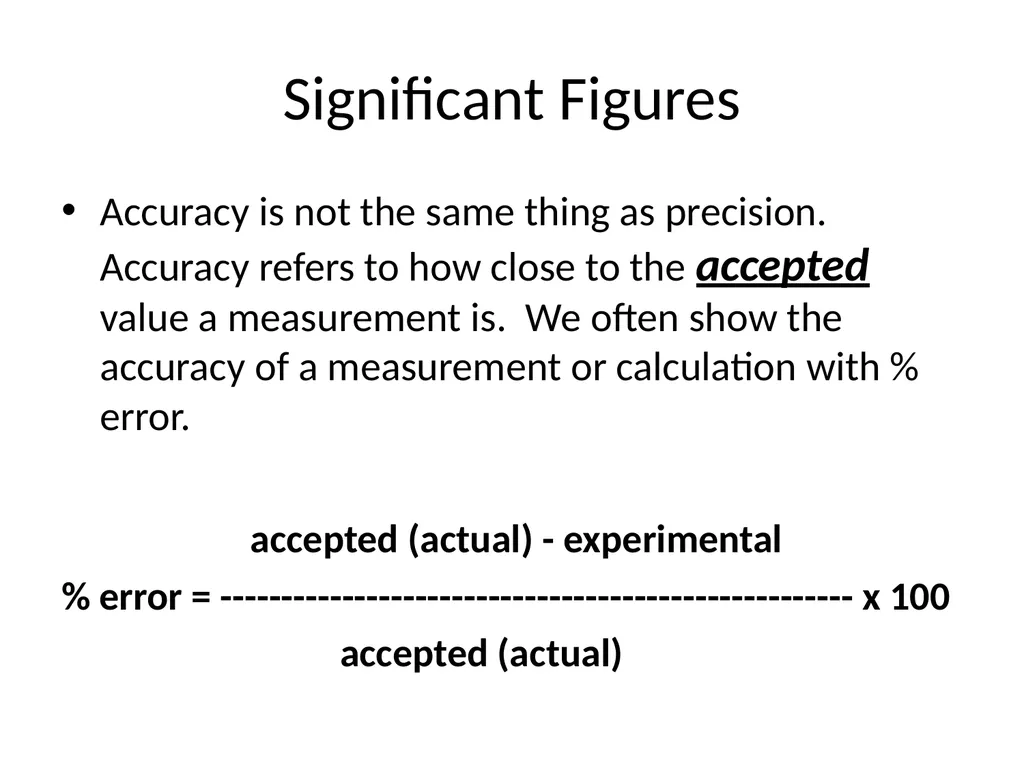
Significant Figures Accuracy is not the same thing as precision. Accuracy refers to how close to the accepted value a measurement is. We often show the accuracy of a measurement or calculation with % error.
Significant Figures How do you determine the number of significant digits in a measurement???
All nonzero digits are significant.<br>
07
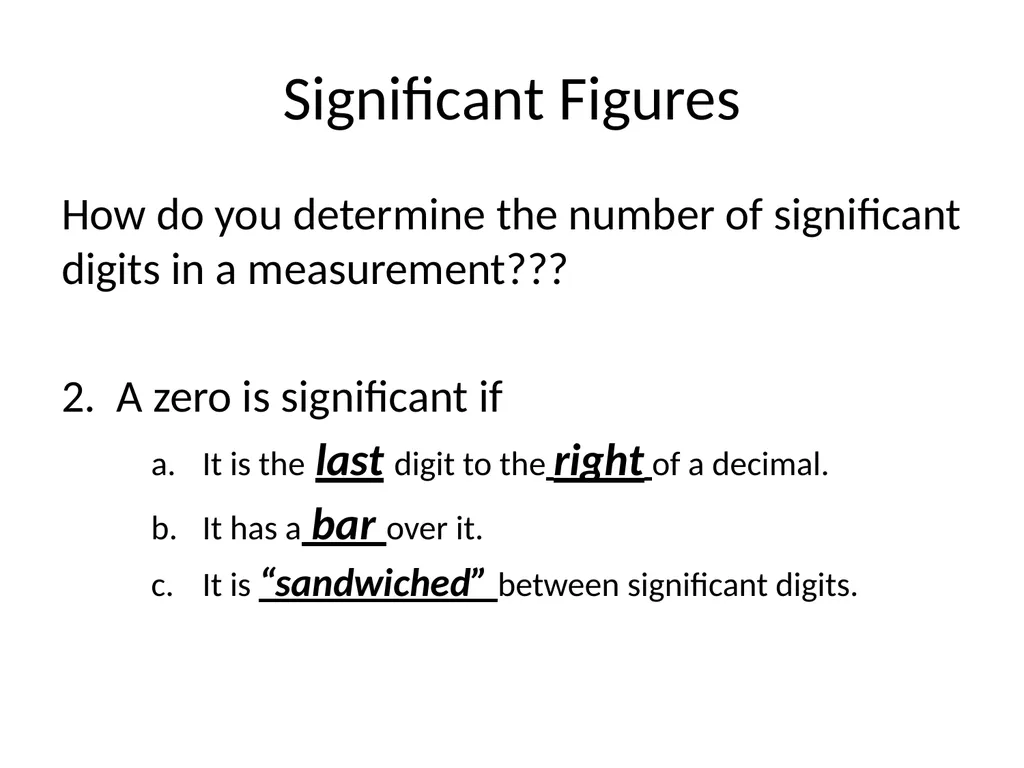
Significant Figures How do you determine the number of significant digits in a measurement???
2. A zero is significant if
It is the last digit to the right of a decimal.
It has a bar over it.
It is “sandwiched” between significant digits.<br>
08
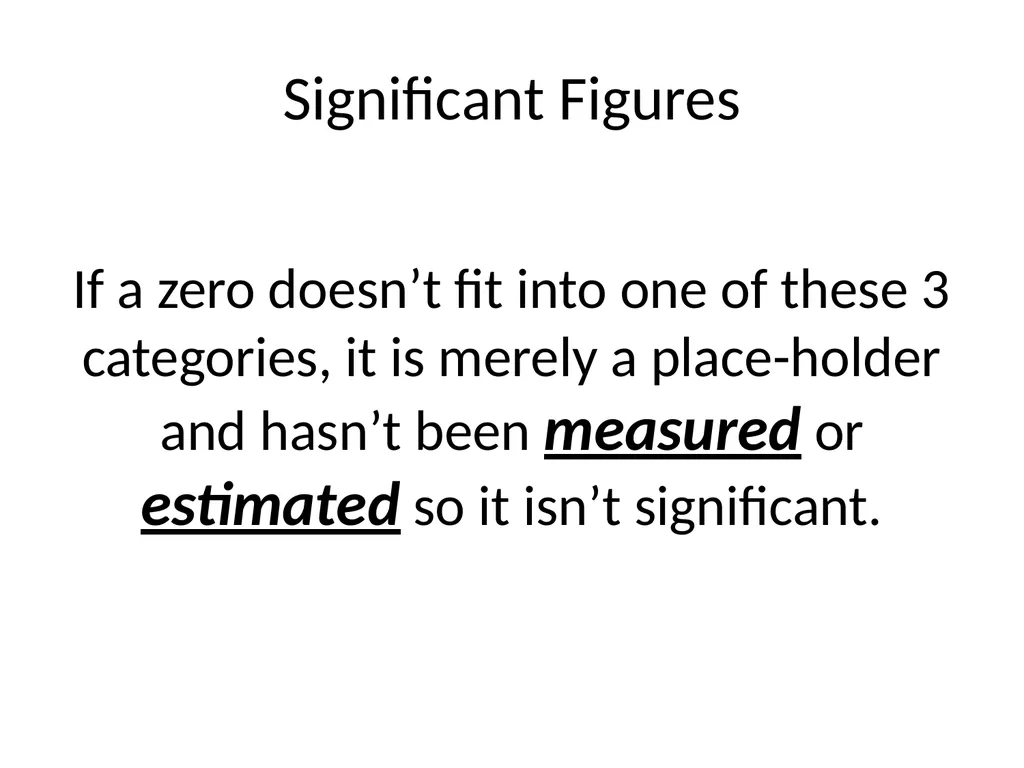
Significant Figures If a zero doesn’t fit into one of these 3 categories, it is merely a place-holder and hasn’t been measured or estimated so it isn’t significant.<br>
09
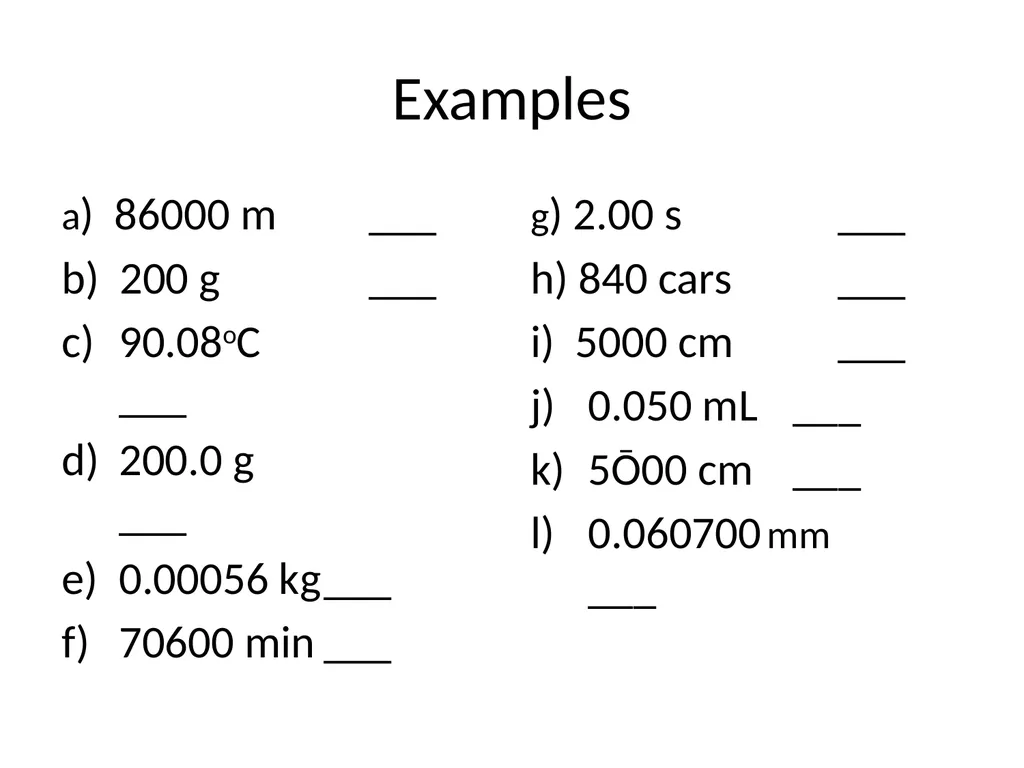
Examples a) 86000 m ___
b) 200 g ___
90.08oC ___
200.0 g ___
0.00056 kg ___
70600 min ___ g) 2.00 s ___
h) 840 cars ___
i) 5000 cm ___
0.050 mL ___
5Ō00 cm ___
0.060700 mm ___<br>
10
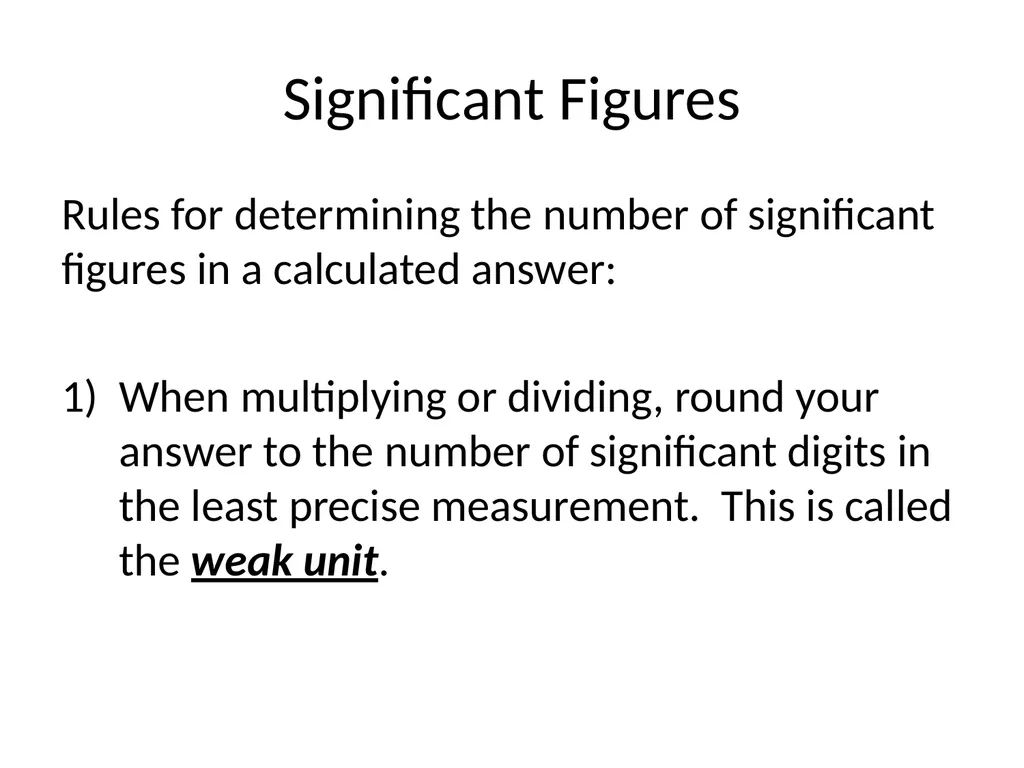
Significant Figures Rules for determining the number of significant figures in a calculated answer:
When multiplying or dividing, round your answer to the number of significant digits in the least precise measurement. This is called the weak unit.<br>
11
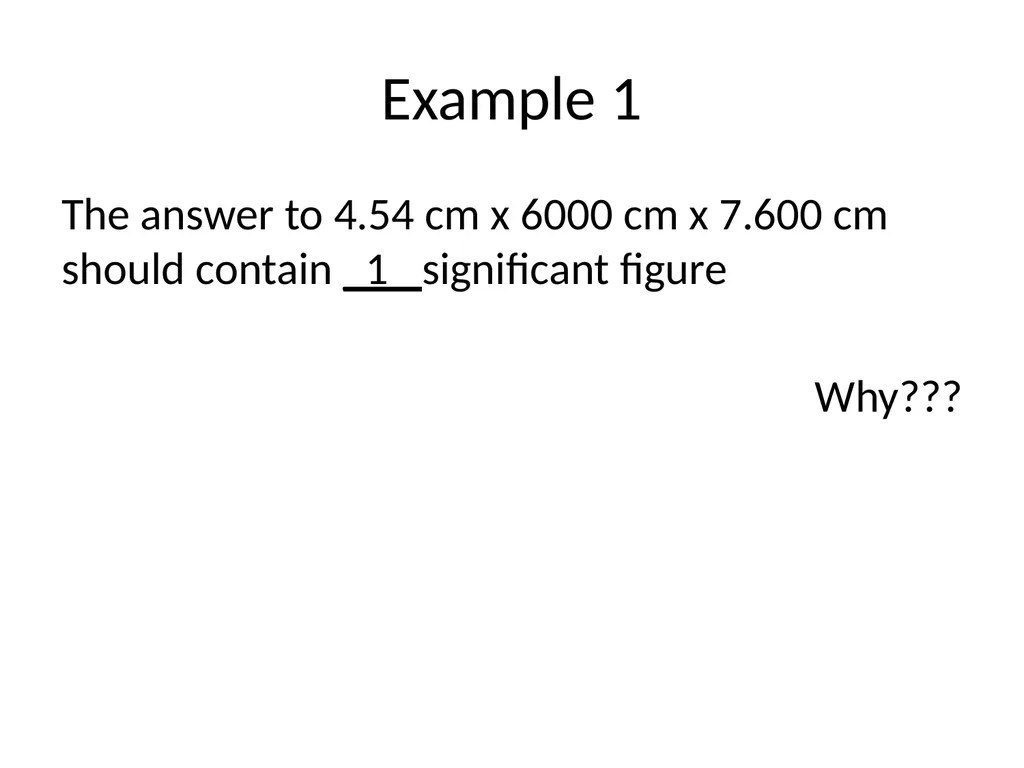
Example 1 The answer to 4.54 cm x 6000 cm x 7.600 cm should contain _1_ significant figure
Why???<br>
12
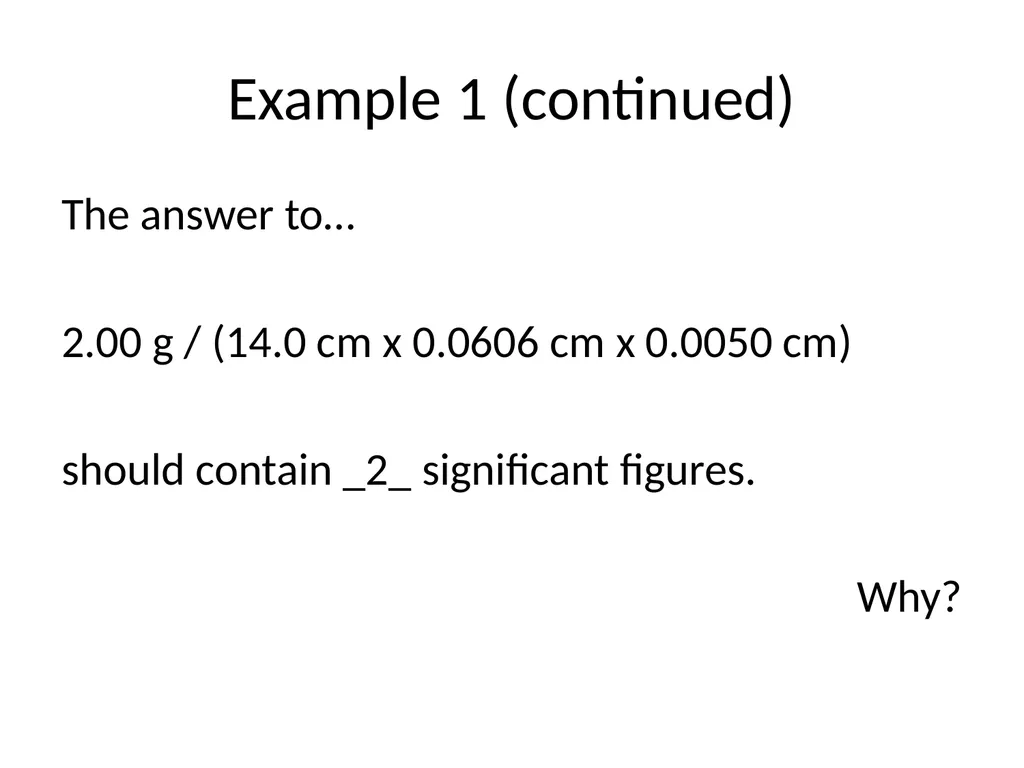
Example 1 (continued) The answer to…
2.00 g / (14.0 cm x 0.0606 cm x 0.0050 cm)
should contain _2_ significant figures.
Why?<br>
13
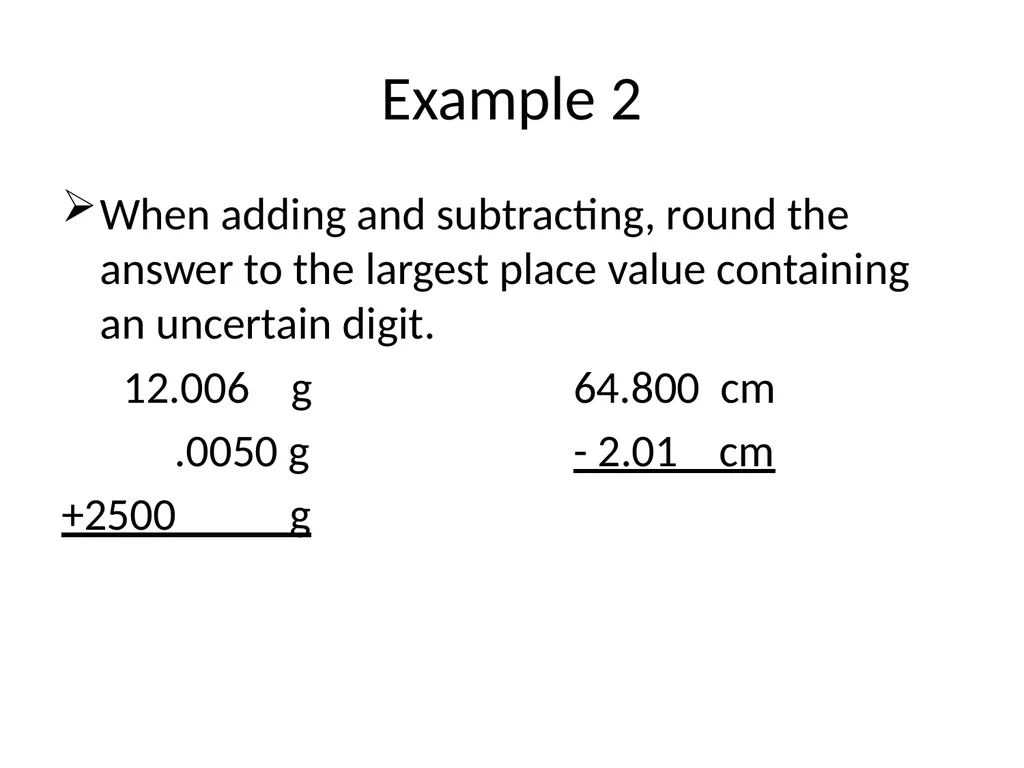
Example 2 When adding and subtracting, round the answer to the largest place value containing an uncertain digit.
12.006 g 64.800 cm
.0050 g - 2.01 cm
+2500 g<br>
14
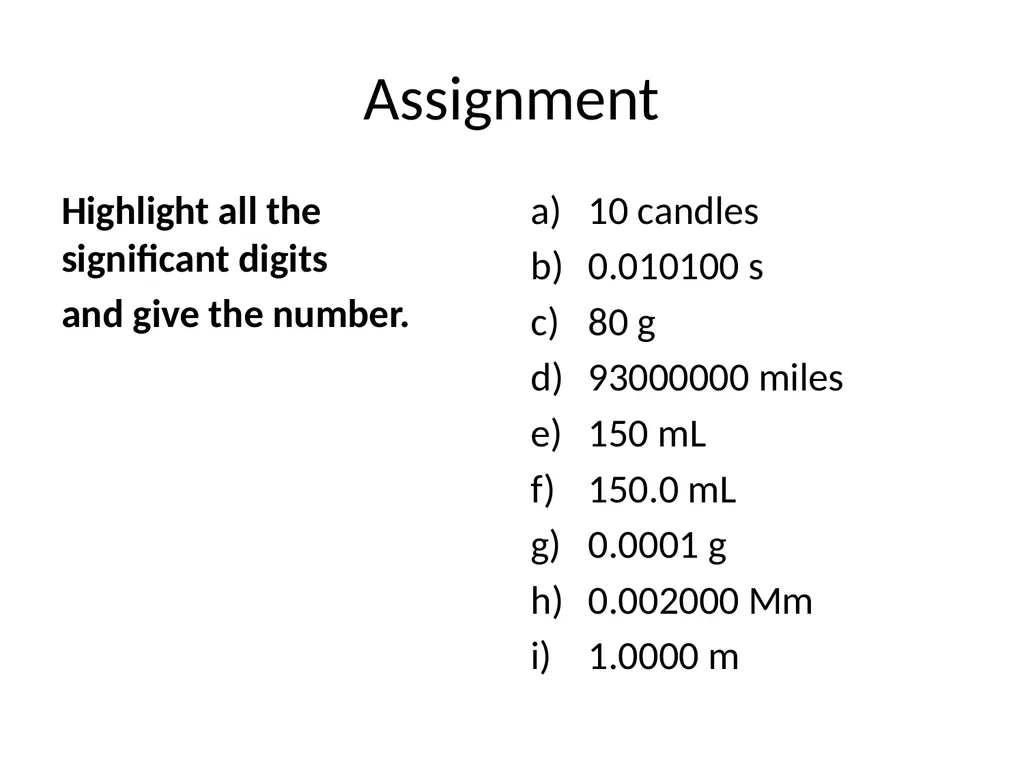
Assignment Highlight all the significant digits
and give the number. 10 candles
0.010100 s
80 g
93000000 miles
150 mL
150.0 mL
0.0001 g
0.002000 Mm
1.0000 m<br>
15
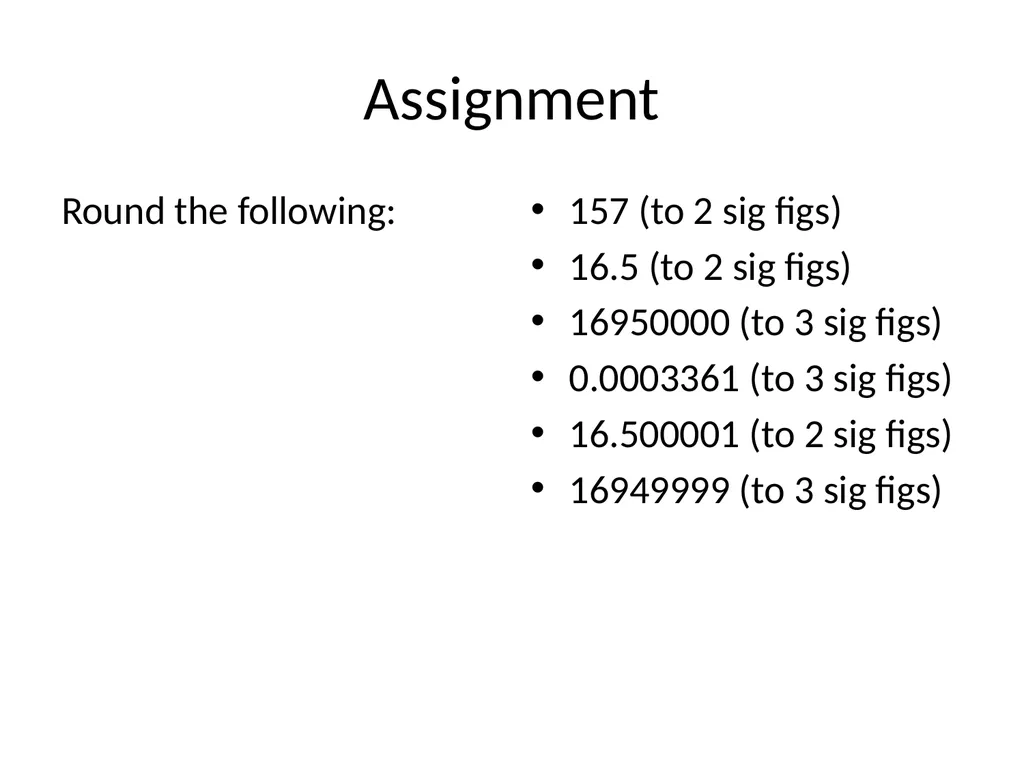
Assignment Round the following: 157 (to 2 sig figs)
16.5 (to 2 sig figs)
16950000 (to 3 sig figs)
0.0003361 (to 3 sig figs)
16.500001 (to 2 sig figs)
16949999 (to 3 sig figs)<br>
16
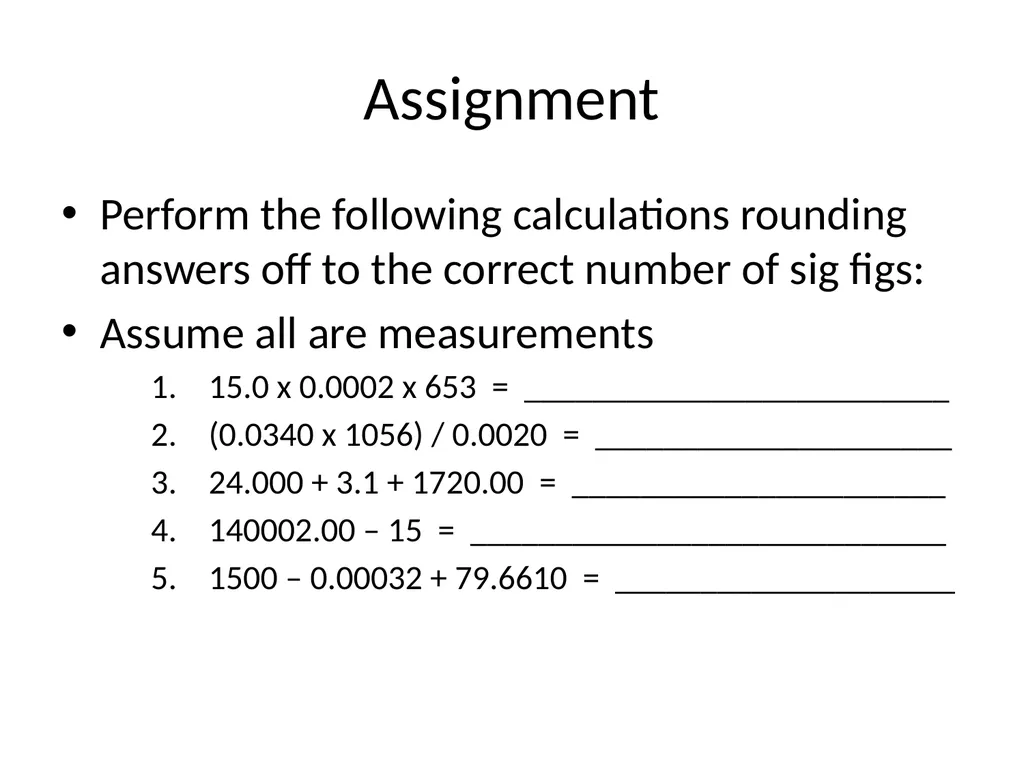
Assignment Perform the following calculations rounding answers off to the correct number of sig figs:
Assume all are measurements
15.0 x 0.0002 x 653 = _________________________
(0.0340 x 1056) / 0.0020 = _____________________
24.000 + 3.1 + 1720.00 = ______________________
140002.00 – 15 = ____________________________
1500 – 0.00032 + 79.6610 = ____________________<br>