
Simulations for Clinical Excellence in Nursing



Description: Simulations for Clinical Excellence in Nursing Services SCENS Diabetes: Outpatient or Inpatient SCENS Learning Objectives Perform a focused assessment for the patient experiencing a reaction to hyperhypoglycemia (LPN collects data)
Related Topics
Download Presentation
"Simulations for Clinical Excellence in Nursing" is the property of its rightful owner. Permission is granted to download and print the materials on this website for personal, non-commercial use only, and to display it on your personal computer provided you do not modify the materials and that you retain all copyright notices contained in the materials. By downloading content from our website, you accept the terms of this agreement.
Presentation Transcript
slide1. Simulations for Clinical Excellence
in Nursing Services SCENS<br>
slide2. Diabetes:
Outpatient or Inpatient SCENS<br>
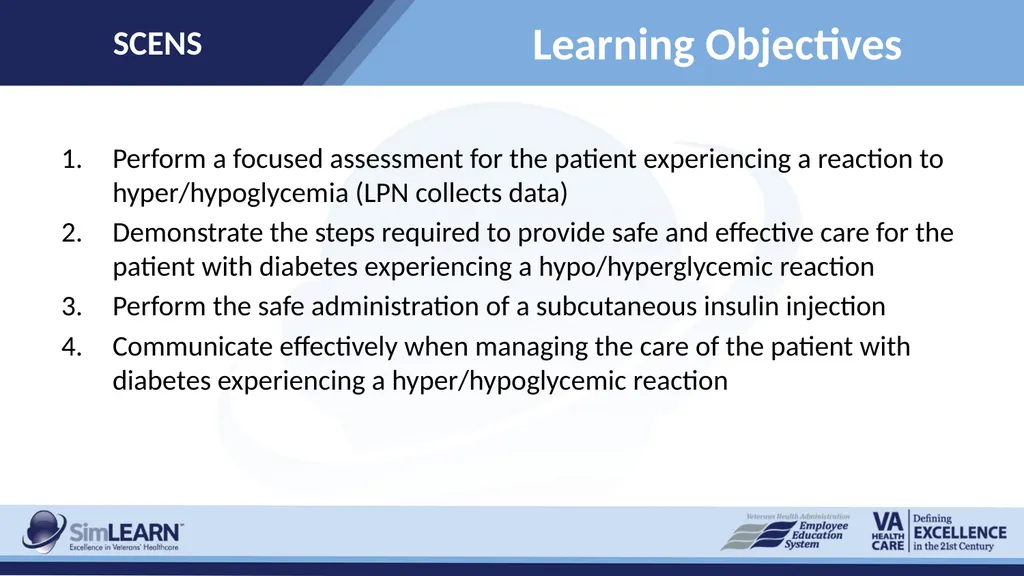
slide3. Learning Objectives Perform a focused assessment for the patient experiencing a reaction to hyper/hypoglycemia (LPN collects data)
Demonstrate the steps required to provide safe and effective care for the patient with diabetes experiencing a hypo/hyperglycemic reaction
Perform the safe administration of a subcutaneous insulin injection
Communicate effectively when managing the care of the patient with diabetes experiencing a hyper/hypoglycemic reaction SCENS<br>
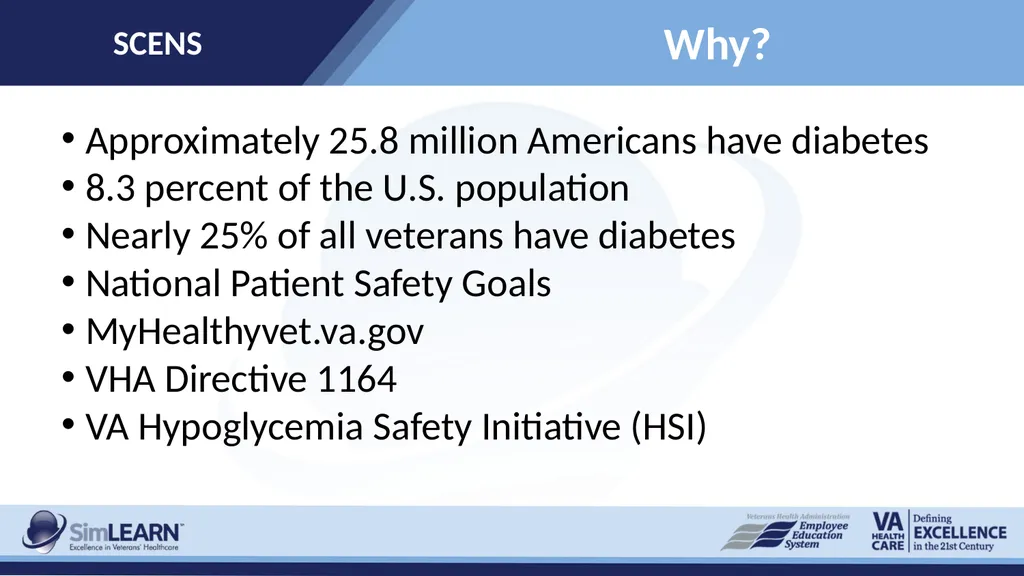
slide4. Why? Approximately 25.8 million Americans have diabetes
8.3 percent of the U.S. population
Nearly 25% of all veterans have diabetes
National Patient Safety Goals
MyHealthyvet.va.gov
VHA Directive 1164
VA Hypoglycemia Safety Initiative (HSI) SCENS<br>
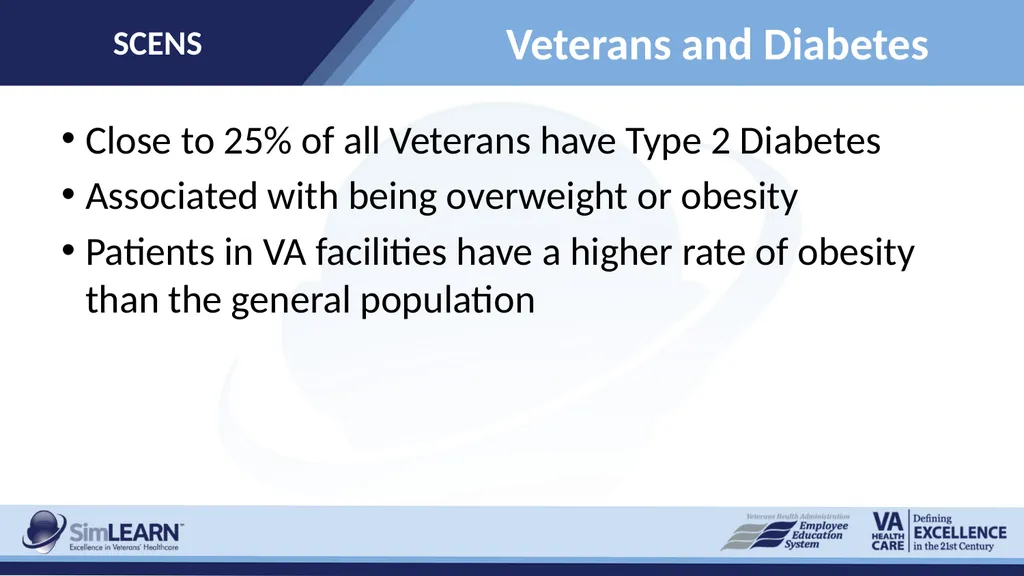
slide5. Veterans and Diabetes Close to 25% of all Veterans have Type 2 Diabetes
Associated with being overweight or obesity
Patients in VA facilities have a higher rate of obesity than the general population SCENS<br>
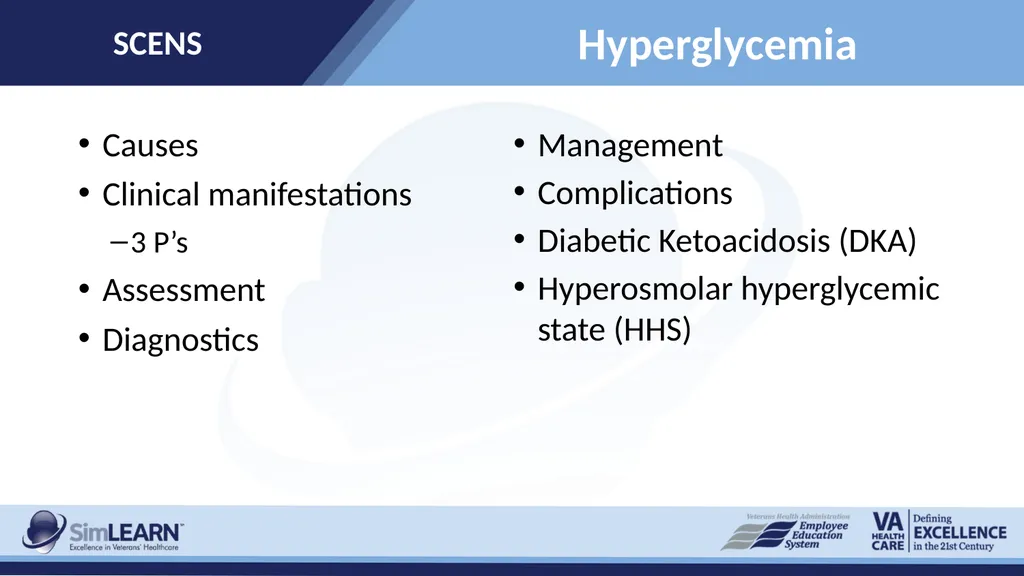
slide6. Hyperglycemia Management
Complications
Diabetic Ketoacidosis (DKA)
Hyperosmolar hyperglycemic state (HHS) SCENS Causes
Clinical manifestations
3 P’s
Assessment
Diagnostics<br>
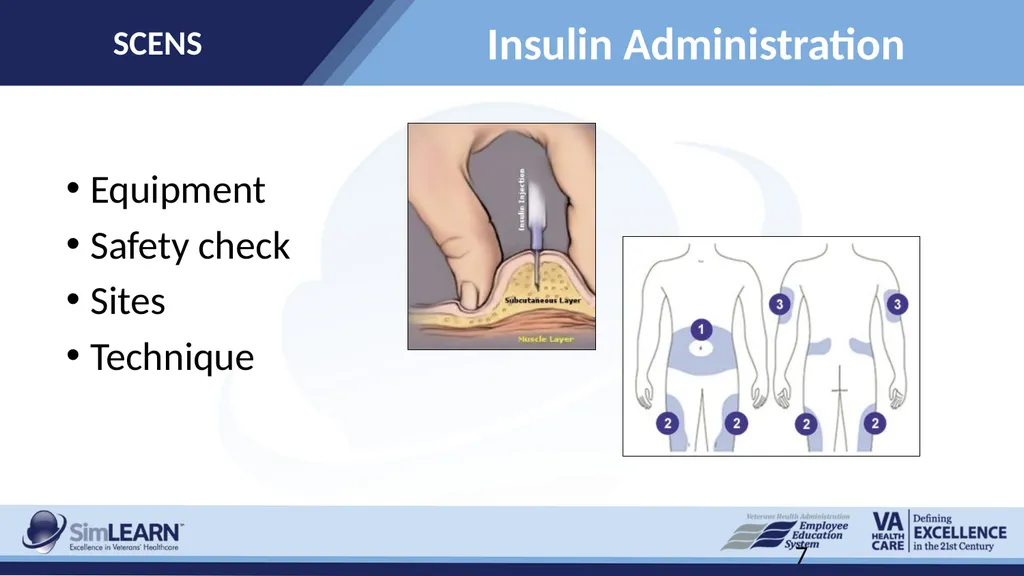
slide7. Insulin Administration Equipment
Safety check
Sites
Technique 7 SCENS<br>
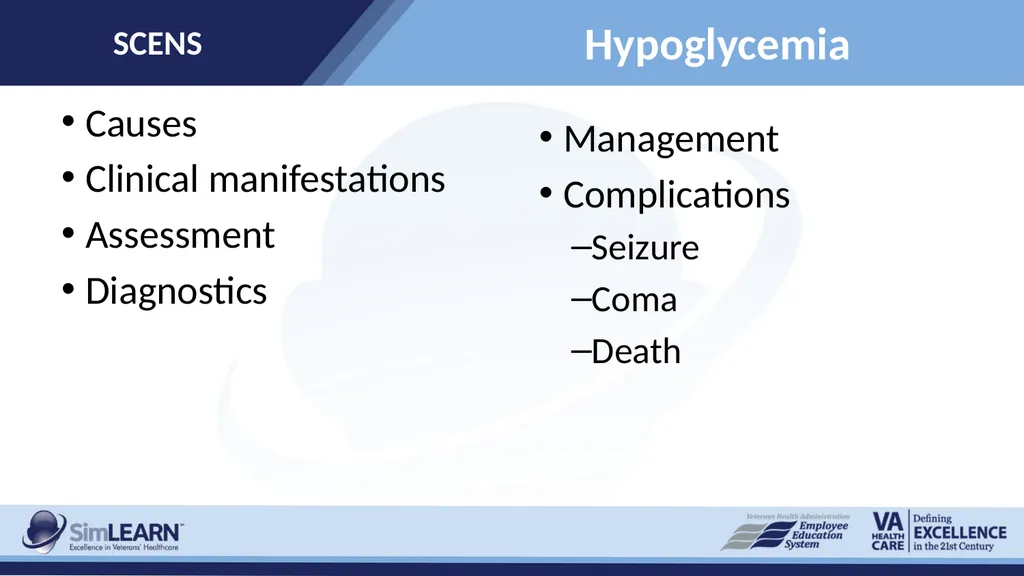
slide8. Hypoglycemia Causes
Clinical manifestations
Assessment
Diagnostics SCENS Management
Complications
Seizure
Coma
Death<br>
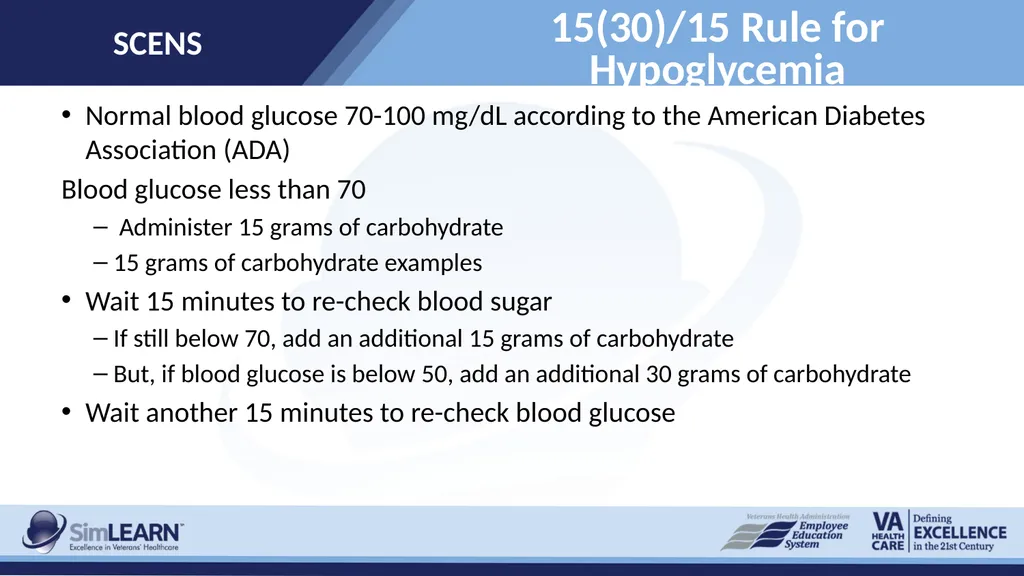
slide9. 15(30)/15 Rule for Hypoglycemia Normal blood glucose 70-100 mg/dL according to the American Diabetes Association (ADA)
Blood glucose less than 70
Administer 15 grams of carbohydrate
15 grams of carbohydrate examples
Wait 15 minutes to re-check blood sugar
If still below 70, add an additional 15 grams of carbohydrate
But, if blood glucose is below 50, add an additional 30 grams of carbohydrate
Wait another 15 minutes to re-check blood glucose SCENS<br>
slide10. Focused Assessment Role of RN, LPN, UAP
Targeted history
Last time the patient ate or drank anything
Medications
List of medications and when they were last taken SCENS Role of RN, LPN, and UAP
Predisposing factors and considerations
Anticipate the need for equipment, supplies, and medications
Delegate where possible<br>
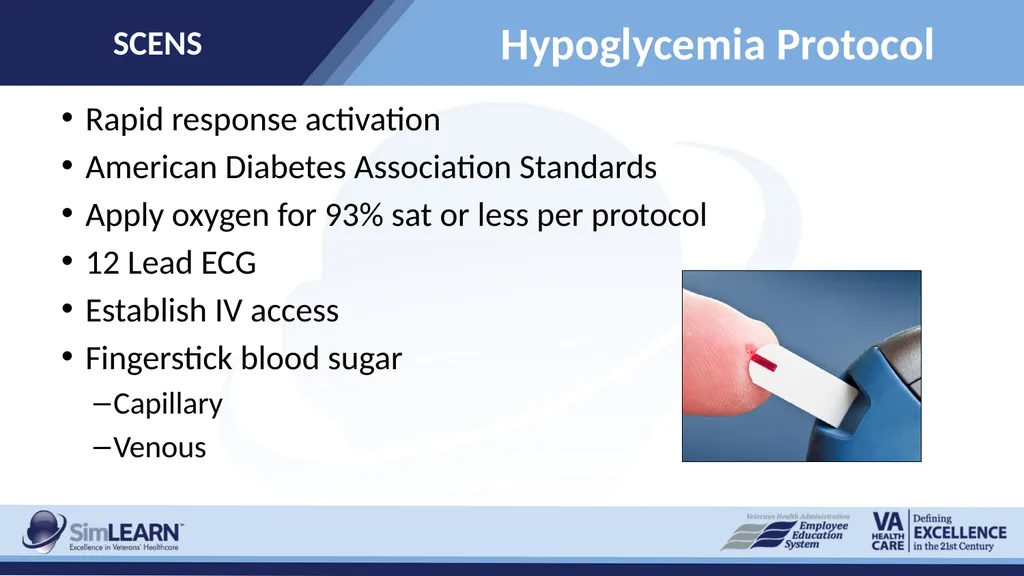
slide11. Hypoglycemia Protocol Rapid response activation
American Diabetes Association Standards
Apply oxygen for 93% sat or less per protocol
12 Lead ECG
Establish IV access
Fingerstick blood sugar
Capillary
Venous SCENS<br>
slide12. Facility Specific Protocols
Equipment
State licensure
Scope of practice
Certifications
Job descriptions SCENS Documentation
Communication
Know who to call
Communicating with the patient/family
Pertinent information to communicate
ISBAR<br>
slide13. Safety Labs and diagnostics
Safety check for insulin
Insulin administration
Sites
Technique
Rights of medication administration SCENS Rights of medication administration
Nursing process: ADPIE
Assess; Diagnosis (Nursing); Plan; Implement; Evaluate
Re-assess after interventions
Recognize changes in the patient status<br>
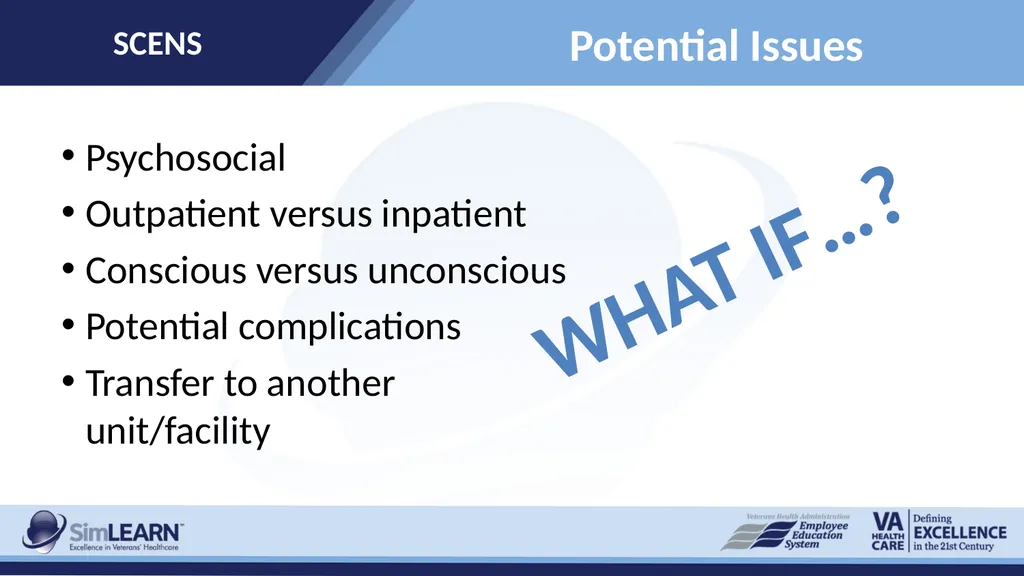
slide14. Potential Issues Psychosocial
Outpatient versus inpatient
Conscious versus unconscious
Potential complications
Transfer to another unit/facility SCENS What if…?<br>
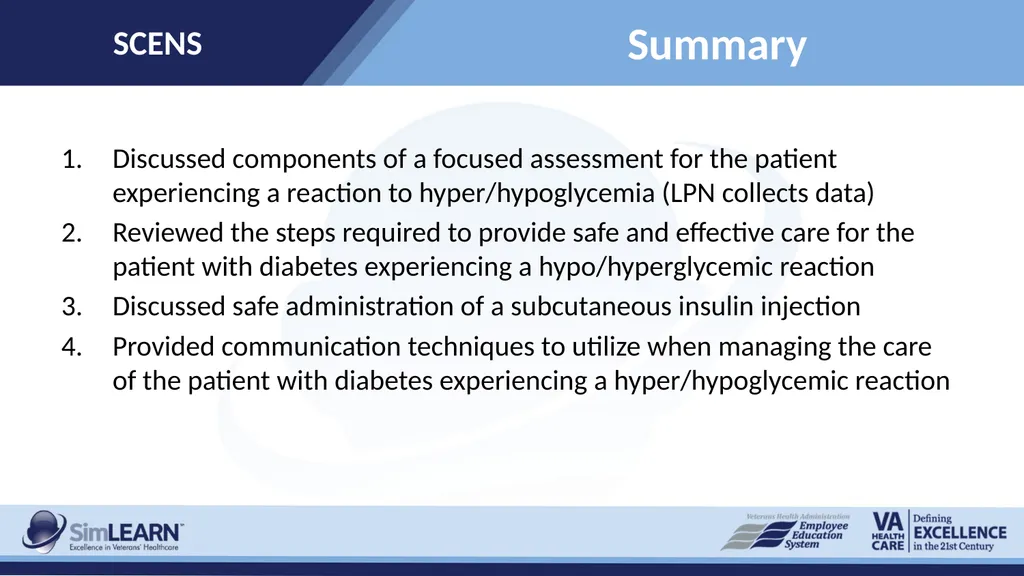
slide15. Discussed components of a focused assessment for the patient experiencing a reaction to hyper/hypoglycemia (LPN collects data)
Reviewed the steps required to provide safe and effective care for the patient with diabetes experiencing a hypo/hyperglycemic reaction
Discussed safe administration of a subcutaneous insulin injection
Provided communication techniques to utilize when managing the care of the patient with diabetes experiencing a hyper/hypoglycemic reaction Summary SCENS<br>
slide16. SCENS<br>
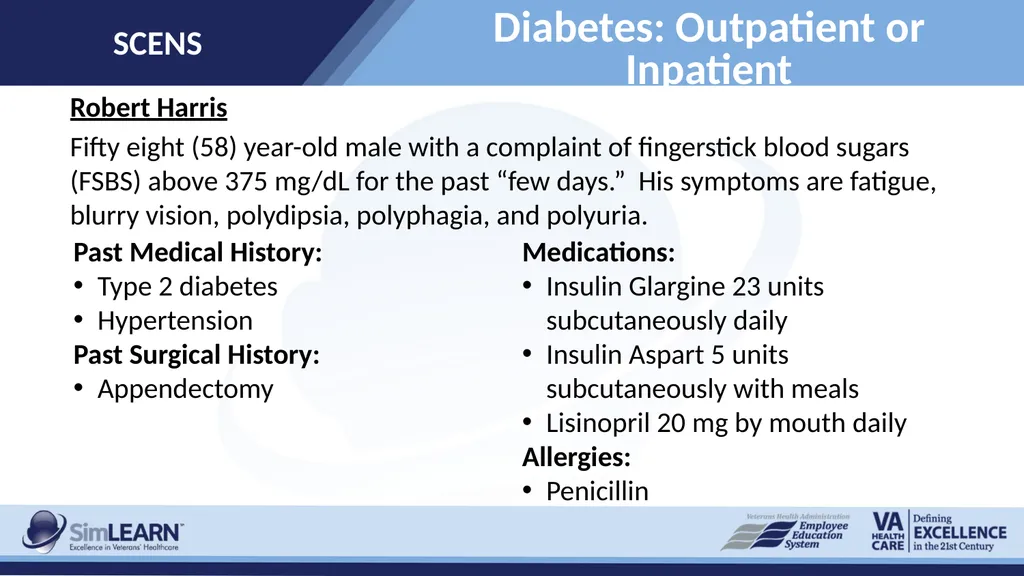
slide17. Diabetes: Outpatient or Inpatient Past Medical History:
Type 2 diabetes
Hypertension
Past Surgical History:
Appendectomy Medications:
Insulin Glargine 23 units subcutaneously daily
Insulin Aspart 5 units subcutaneously with meals
Lisinopril 20 mg by mouth daily
Allergies:
Penicillin Robert Harris
Fifty eight (58) year-old male with a complaint of fingerstick blood sugars (FSBS) above 375 mg/dL for the past “few days.” His symptoms are fatigue, blurry vision, polydipsia, polyphagia, and polyuria. SCENS<br>
slide2. Diabetes:
Outpatient or Inpatient SCENS<br>
slide3. Learning Objectives Perform a focused assessment for the patient experiencing a reaction to hyper/hypoglycemia (LPN collects data)
Demonstrate the steps required to provide safe and effective care for the patient with diabetes experiencing a hypo/hyperglycemic reaction
Perform the safe administration of a subcutaneous insulin injection
Communicate effectively when managing the care of the patient with diabetes experiencing a hyper/hypoglycemic reaction SCENS<br>
slide4. Why? Approximately 25.8 million Americans have diabetes
8.3 percent of the U.S. population
Nearly 25% of all veterans have diabetes
National Patient Safety Goals
MyHealthyvet.va.gov
VHA Directive 1164
VA Hypoglycemia Safety Initiative (HSI) SCENS<br>
slide5. Veterans and Diabetes Close to 25% of all Veterans have Type 2 Diabetes
Associated with being overweight or obesity
Patients in VA facilities have a higher rate of obesity than the general population SCENS<br>
slide6. Hyperglycemia Management
Complications
Diabetic Ketoacidosis (DKA)
Hyperosmolar hyperglycemic state (HHS) SCENS Causes
Clinical manifestations
3 P’s
Assessment
Diagnostics<br>
slide7. Insulin Administration Equipment
Safety check
Sites
Technique 7 SCENS<br>
slide8. Hypoglycemia Causes
Clinical manifestations
Assessment
Diagnostics SCENS Management
Complications
Seizure
Coma
Death<br>
slide9. 15(30)/15 Rule for Hypoglycemia Normal blood glucose 70-100 mg/dL according to the American Diabetes Association (ADA)
Blood glucose less than 70
Administer 15 grams of carbohydrate
15 grams of carbohydrate examples
Wait 15 minutes to re-check blood sugar
If still below 70, add an additional 15 grams of carbohydrate
But, if blood glucose is below 50, add an additional 30 grams of carbohydrate
Wait another 15 minutes to re-check blood glucose SCENS<br>
slide10. Focused Assessment Role of RN, LPN, UAP
Targeted history
Last time the patient ate or drank anything
Medications
List of medications and when they were last taken SCENS Role of RN, LPN, and UAP
Predisposing factors and considerations
Anticipate the need for equipment, supplies, and medications
Delegate where possible<br>
slide11. Hypoglycemia Protocol Rapid response activation
American Diabetes Association Standards
Apply oxygen for 93% sat or less per protocol
12 Lead ECG
Establish IV access
Fingerstick blood sugar
Capillary
Venous SCENS<br>
slide12. Facility Specific Protocols
Equipment
State licensure
Scope of practice
Certifications
Job descriptions SCENS Documentation
Communication
Know who to call
Communicating with the patient/family
Pertinent information to communicate
ISBAR<br>
slide13. Safety Labs and diagnostics
Safety check for insulin
Insulin administration
Sites
Technique
Rights of medication administration SCENS Rights of medication administration
Nursing process: ADPIE
Assess; Diagnosis (Nursing); Plan; Implement; Evaluate
Re-assess after interventions
Recognize changes in the patient status<br>
slide14. Potential Issues Psychosocial
Outpatient versus inpatient
Conscious versus unconscious
Potential complications
Transfer to another unit/facility SCENS What if…?<br>
slide15. Discussed components of a focused assessment for the patient experiencing a reaction to hyper/hypoglycemia (LPN collects data)
Reviewed the steps required to provide safe and effective care for the patient with diabetes experiencing a hypo/hyperglycemic reaction
Discussed safe administration of a subcutaneous insulin injection
Provided communication techniques to utilize when managing the care of the patient with diabetes experiencing a hyper/hypoglycemic reaction Summary SCENS<br>
slide16. SCENS<br>
slide17. Diabetes: Outpatient or Inpatient Past Medical History:
Type 2 diabetes
Hypertension
Past Surgical History:
Appendectomy Medications:
Insulin Glargine 23 units subcutaneously daily
Insulin Aspart 5 units subcutaneously with meals
Lisinopril 20 mg by mouth daily
Allergies:
Penicillin Robert Harris
Fifty eight (58) year-old male with a complaint of fingerstick blood sugars (FSBS) above 375 mg/dL for the past “few days.” His symptoms are fatigue, blurry vision, polydipsia, polyphagia, and polyuria. SCENS<br>