Sleep (Nidra) By Dr. Richa Rai Associate Professor Department of Kriya sharir Himalayiya ayurvedic Medical college and Hospital, Dehradun Sleep Sleep is a naturally ocurring state characterized by reduced or absent consciousness, relatively
"Sleep (Nidra) By Dr. Richa Rai Associate Professor" is the property of its rightful owner. Permission is granted to
download and print the materials on this website for personal, non-commercial use only, and to display it
on your personal computer provided you do not modify the materials and that you retain all copyright
notices contained in the materials. By downloading content from our website, you accept the terms of this
agreement.
Presentation Transcript
01
Sleep (Nidra) By
Dr. Richa Rai
Associate Professor
Department of Kriya sharir
Himalayiya ayurvedic Medical college and Hospital, Dehradun<br>
02
Sleep Sleep is a naturally ocurring state characterized by reduced or absent consciousness, relatively suspended sensory activity, and inactivity of nearly all voluntary muscles.
It is distinguished from quiet wakefulness by a decreased ability to react to stimuli, but it is more easily reversible than hibernation or coma.
Sleep is a heightened anabolic state, accentuating the growth and rejuvenation of the immune, nervous, skeletal and muscular systems.
It is observed in all mammals, all birds, and many reptiles, amphibians, and fish.<br>
03
Types of Sleep In mammals and birds, sleep is divided into two broad types:
Rapid eye movement (REM) and
Non-rapid eye movement (NREM or non-REM) sleep.
Each type has a distinct set of associated physiological, neurological, and psychological features.
The American Academy of Sleep Medicine (AASM) further divides NREM into three stages: N1, N2, and N3, the last of which is also called delta sleep or slow-wave sleep (SWS).<br>
04
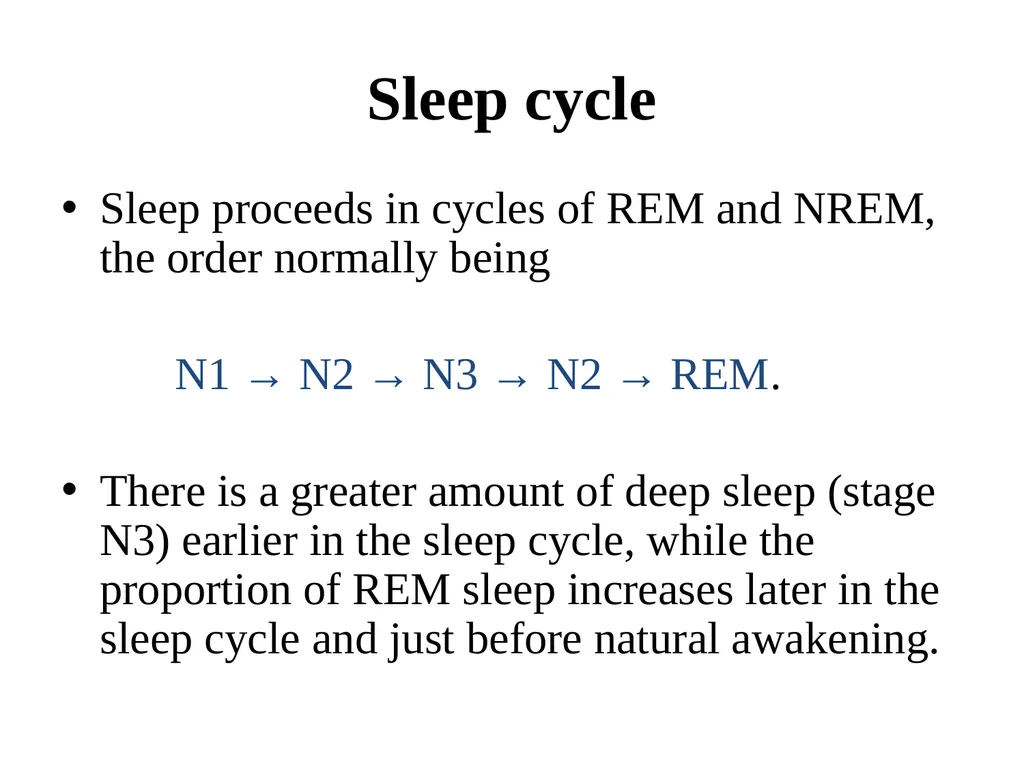
Sleep cycle Sleep proceeds in cycles of REM and NREM, the order normally being
N1 → N2 → N3 → N2 → REM.
There is a greater amount of deep sleep (stage N3) earlier in the sleep cycle, while the proportion of REM sleep increases later in the sleep cycle and just before natural awakening.<br>
05
NREM Sleep According to the 2007 AASM standards, NREM consists of three stages. There is relatively little dreaming in NREM.
Stage N1 refers to the transition of the brain from alpha waves having a frequency of 8–13 Hz (common in the awake state) to theta waves having a frequency of 4–7 Hz.
This stage is sometimes referred to as somnolence or drowsy sleep.
Sudden twitches and hypnic jerks, also known as positive myoclonus, may be associated with the onset of sleep during N1. During N1, the subject loses some muscle tone and most conscious awareness of the external environment.<br>
06
Stage N2 is characterized by sleep spindles ranging from 11–16 Hz (most commonly 12–14 Hz) and K-complexes. During this stage, muscular activity as measured by EMG decreases, and conscious awareness of the external environment disappears. This stage occupies 45–55% of total sleep in adults.
Stage N3 (deep or slow-wave sleep) is characterized by the presence of a minimum of 20% delta waves ranging from 0.5–2 Hz and having a peak-to-peak amplitude >75 μV. This is the stage in which parasomnias such as night terrors, nocturnal enuresis, sleepwalking, and somniloquy occur.<br>
07
REM Sleep Rapid eye movement sleep, or REM sleep, accounts for 20–25% of total sleep time in most human adults. The criteria for REM sleep include rapid eye movements as well as a rapid low-voltage EEG.
Most memorable dreaming occurs in this stage. At least in mammals, a descending muscular atonia is seen. Such paralysis may be necessary to protect organisms from self-damage through physically acting out scenes from the often-vivid dreams that occur during this stage.<br>
08
Physiological changes during sleep Pulse rate, cardiac output, vasomotor tone and blood pressure reduced.
May be costal and periodic, tidal volume lower.
Reduced BMR.
Salivary and lacrimal secretion reduces.
Muscles relaxed.
Eye lid closure, pupil contracted.<br>
09
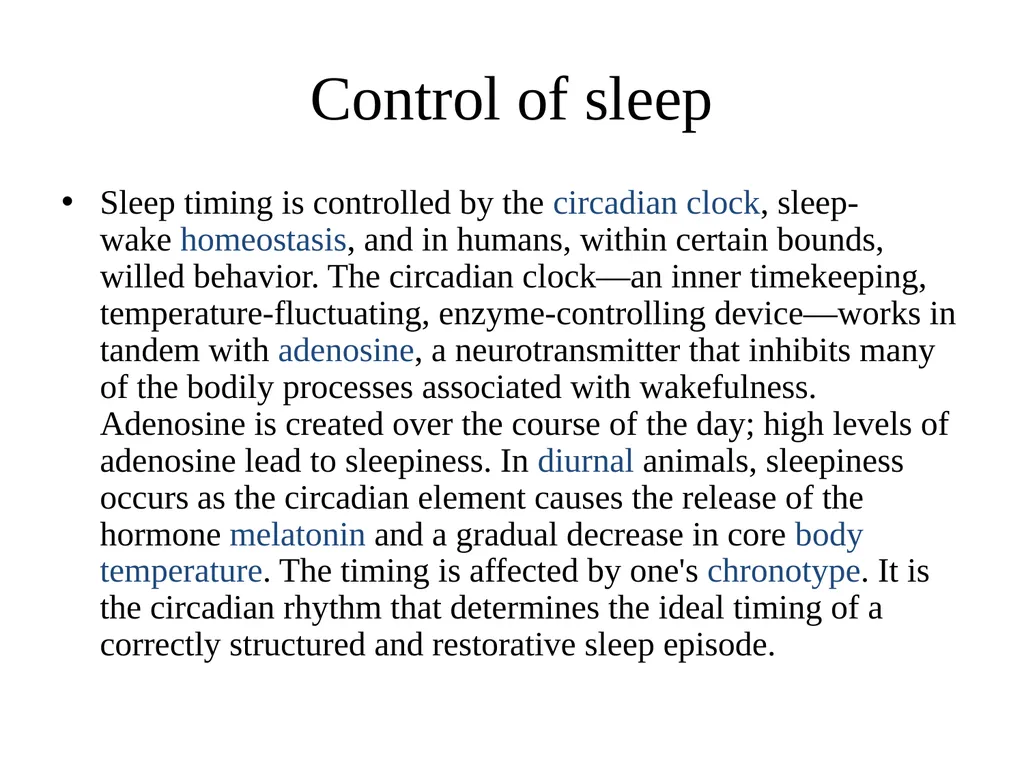
Control of sleep Sleep timing is controlled by the circadian clock, sleep-wake homeostasis, and in humans, within certain bounds, willed behavior. The circadian clock—an inner timekeeping, temperature-fluctuating, enzyme-controlling device—works in tandem with adenosine, a neurotransmitter that inhibits many of the bodily processes associated with wakefulness. Adenosine is created over the course of the day; high levels of adenosine lead to sleepiness. In diurnal animals, sleepiness occurs as the circadian element causes the release of the hormone melatonin and a gradual decrease in core body temperature. The timing is affected by one's chronotype. It is the circadian rhythm that determines the ideal timing of a correctly structured and restorative sleep episode.<br>
10
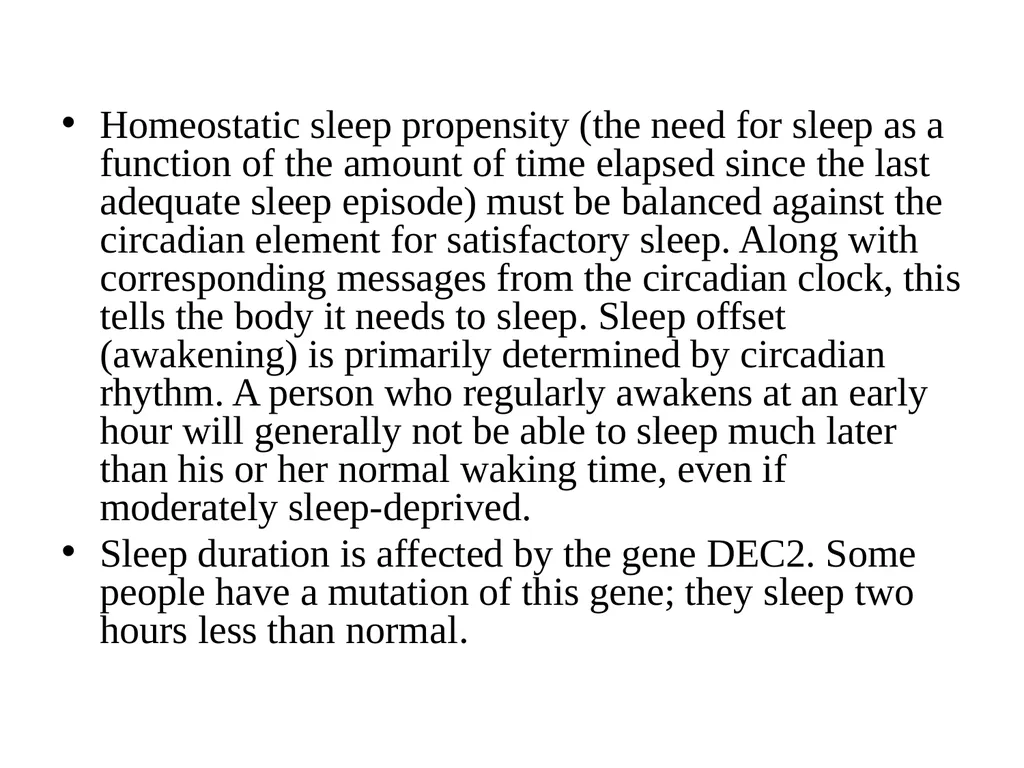
Homeostatic sleep propensity (the need for sleep as a function of the amount of time elapsed since the last adequate sleep episode) must be balanced against the circadian element for satisfactory sleep. Along with corresponding messages from the circadian clock, this tells the body it needs to sleep. Sleep offset (awakening) is primarily determined by circadian rhythm. A person who regularly awakens at an early hour will generally not be able to sleep much later than his or her normal waking time, even if moderately sleep-deprived.
Sleep duration is affected by the gene DEC2. Some people have a mutation of this gene; they sleep two hours less than normal.<br>
11
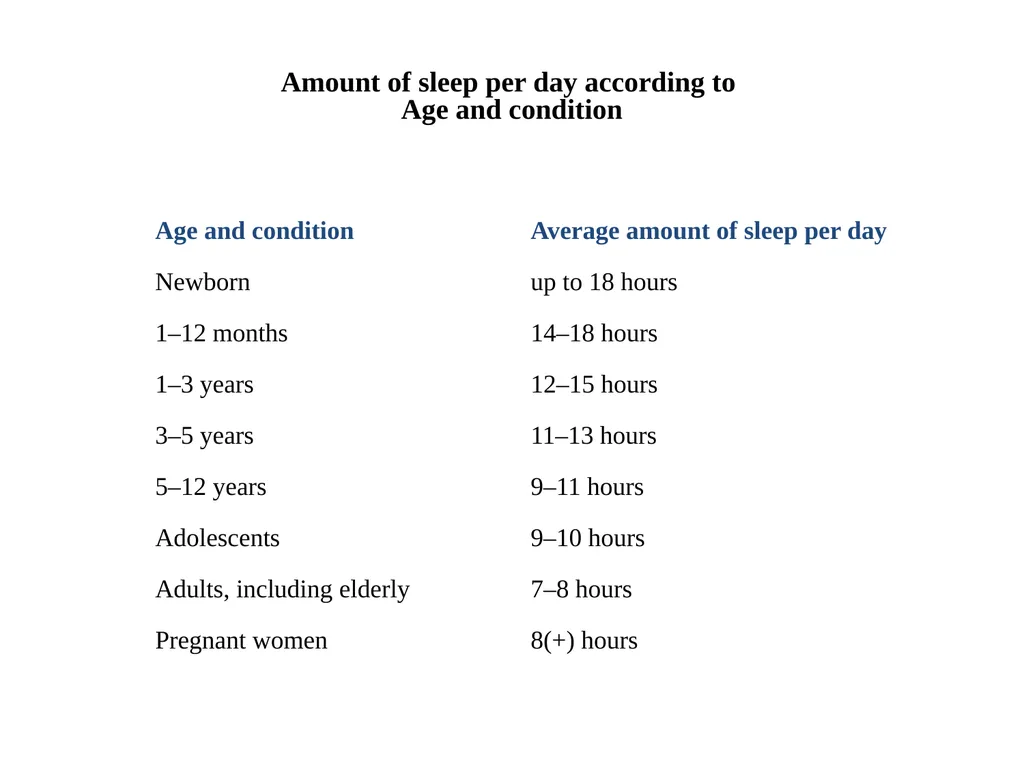
Amount of sleep per day according to Age and condition<br>
12
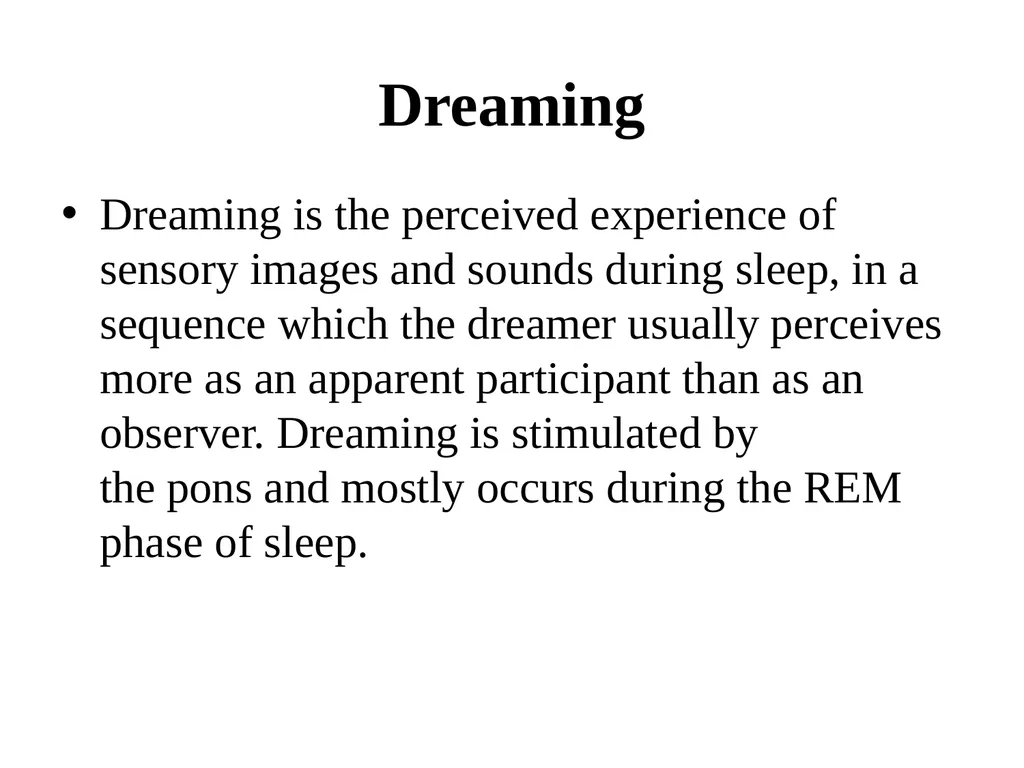
Dreaming Dreaming is the perceived experience of sensory images and sounds during sleep, in a sequence which the dreamer usually perceives more as an apparent participant than as an observer. Dreaming is stimulated by the pons and mostly occurs during the REM phase of sleep.<br>