Smallpox Eradication Word Bank endemic eradicate poxvirus reservoir bioterrorism epidemiology Understanding Smallpox Smallpox is an infectious disease Caused by variola virus Skin rash beginning on tongue or mouth Fever Passed from person
"Smallpox Eradication Word Bank endemic eradicate" is the property of its rightful owner. Permission is granted to
download and print the materials on this website for personal, non-commercial use only, and to display it
on your personal computer provided you do not modify the materials and that you retain all copyright
notices contained in the materials. By downloading content from our website, you accept the terms of this
agreement.
Presentation Transcript
01
Smallpox Eradication<br>
02
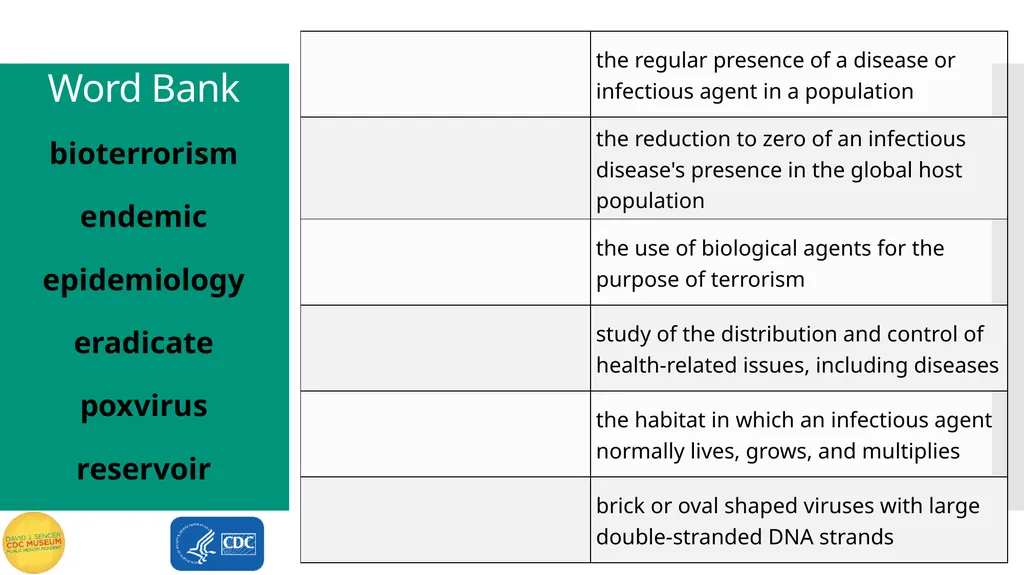
Word Bank endemic eradicate poxvirus reservoir bioterrorism epidemiology<br>
03
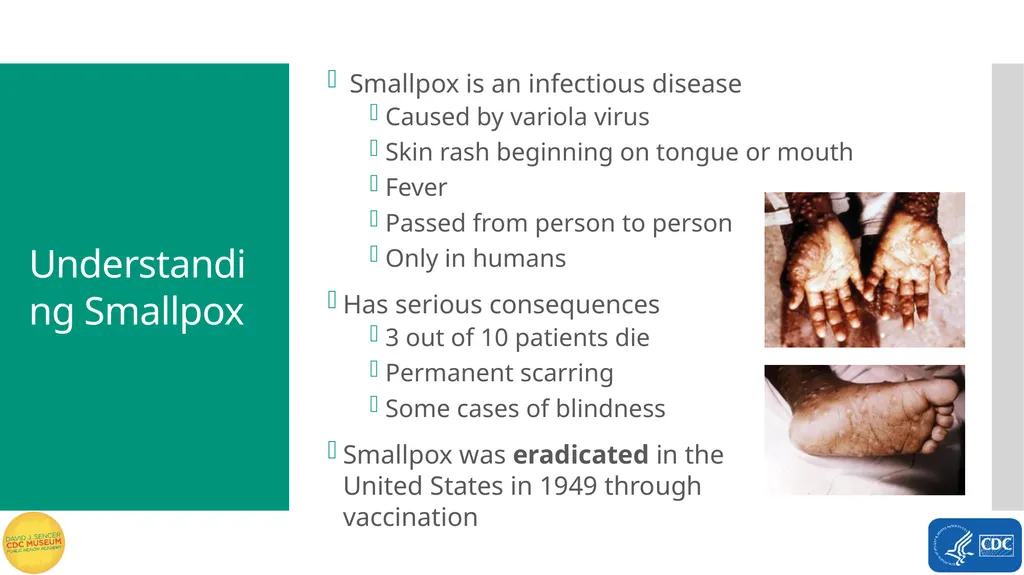
Understanding Smallpox Smallpox is an infectious disease
Caused by variola virus
Skin rash beginning on tongue or mouth
Fever
Passed from person to person
Only in humans
Has serious consequences
3 out of 10 patients die
Permanent scarring
Some cases of blindness
Smallpox was eradicated in the United States in 1949 through vaccination<br>
04
Think About It What resources do you think were required to eradicate smallpox from the world?
The first smallpox vaccine was introduced in 1796. Why was it almost 200 years before smallpox was eradicated from the planet?
Why is smallpox considered to be a serious bioterrorism threat?<br>
05
Smallpox and CDC Global smallpox eradication efforts began in 1966
Smallpox was still endemic in Brazil, West and Central Africa, eastern and southern Africa, much of southern Asia, and Indonesia
Ring vaccination strategy employed due to limited number of vaccine doses
Identify smallpox cases
Vaccinate all contacts surrounding those cases
Last naturally occurring case occurred in 1977
Smallpox declared globally eradicated by the World Health Organization in 1980<br>
06
Smallpox and CDC Smallpox Vaccinations
Vaccine uses live vaccinia virus to stimulate an immune response
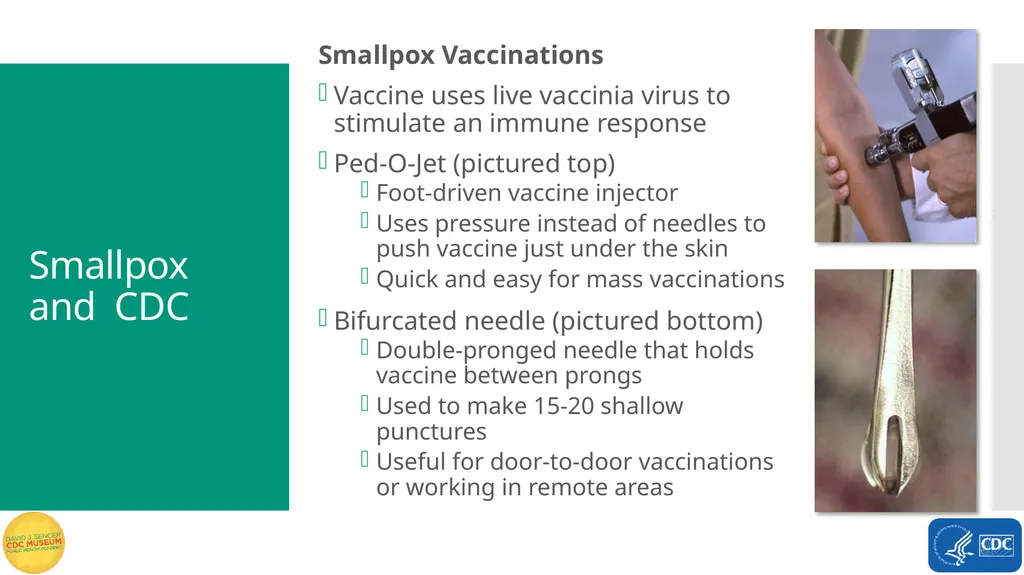
Ped-O-Jet (pictured top)
Foot-driven vaccine injector
Uses pressure instead of needles to push vaccine just under the skin
Quick and easy for mass vaccinations
Bifurcated needle (pictured bottom)
Double-pronged needle that holds vaccine between prongs
Used to make 15-20 shallow punctures
Useful for door-to-door vaccinations or working in remote areas<br>
07
Smallpox and CDC Understanding culture and religion is an important part of solving outbreaks
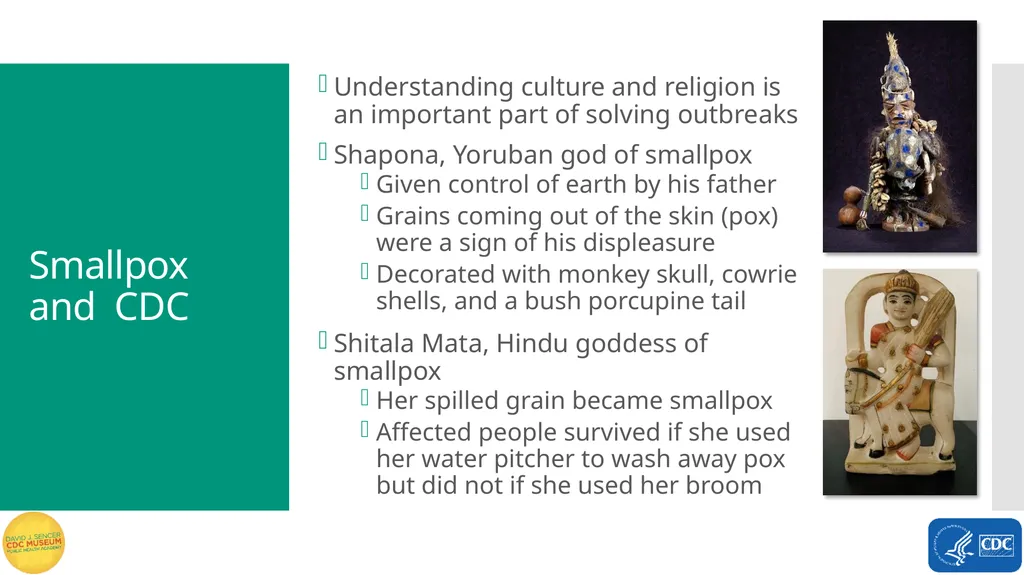
Shapona, Yoruban god of smallpox
Given control of earth by his father
Grains coming out of the skin (pox) were a sign of his displeasure
Decorated with monkey skull, cowrie shells, and a bush porcupine tail
Shitala Mata, Hindu goddess of smallpox
Her spilled grain became smallpox
Affected people survived if she used her water pitcher to wash away pox but did not if she used her broom<br>
08
Think About It What role does communication play in eradicating a global disease?
Why did the tools used for vaccinations change over time?
Why must epidemiologists always consider cultural and religious factors when developing plans to stop an outbreak of disease?<br>
09
From the Expert https://youtu.be/FZY3aHKigDU<br>
10
Think About It Why are vaccines so important in stopping a disease epidemic/pandemic?
In the video, Dr. Tedros issued a rallying cry for nations to come together to defeat COVID-19 just as we did to beat smallpox. How do you think we are doing?
What training would you suggest for public officials learning to stop outbreaks?<br>
11
Solve the Outbreak
Write a Field Handbook or Case Study
Share Your Findings
Why do you think participation is important? Give it a Try Call to Action!<br>
12
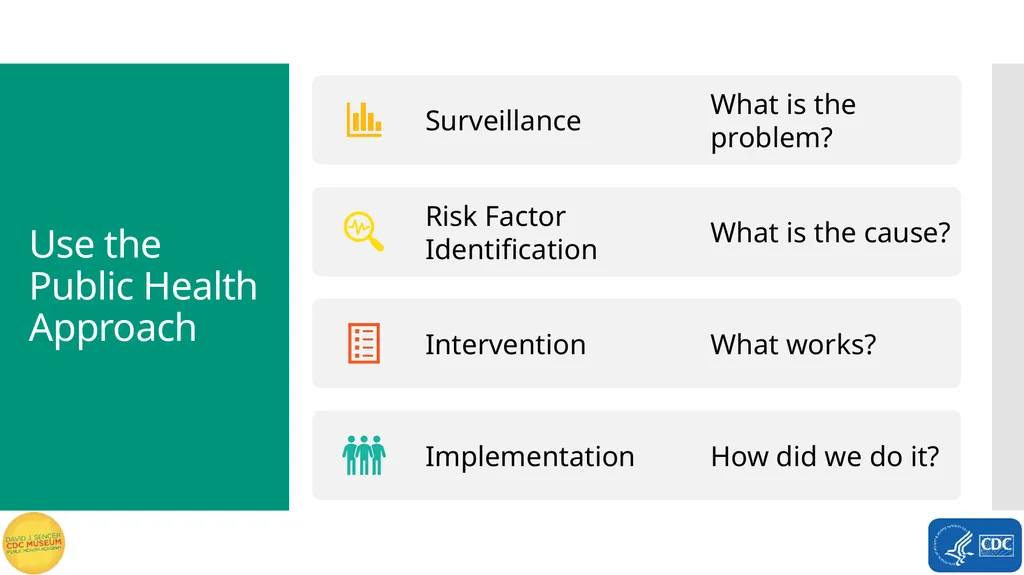
Use the Public Health Approach<br>
13
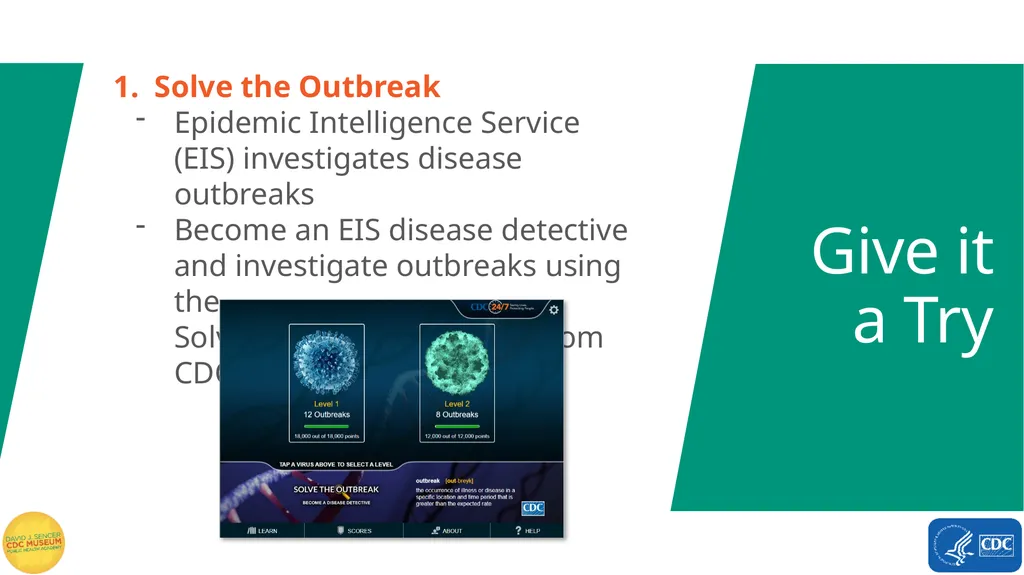
1. Solve the Outbreak Give it a Try Epidemic Intelligence Service (EIS) investigates disease outbreaks
Become an EIS disease detective and investigate outbreaks using the Solve the Outbreak game from CDC<br>
14
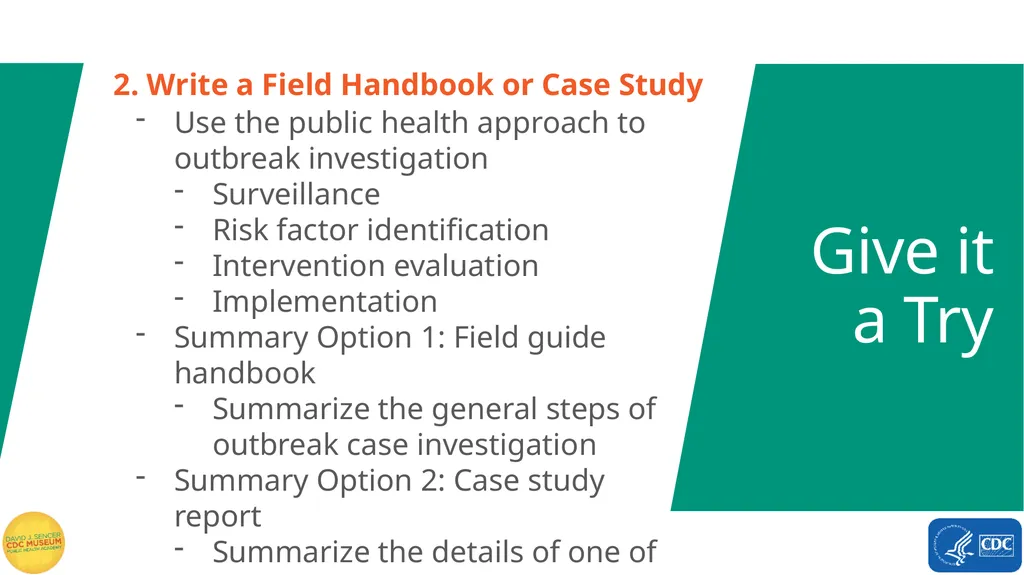
2. Write a Field Handbook or Case Study Give it a Try Use the public health approach to outbreak investigation
Surveillance
Risk factor identification
Intervention evaluation
Implementation
Summary Option 1: Field guide handbook
Summarize the general steps of outbreak case investigation
Summary Option 2: Case study report
Summarize the details of one of the outbreak case<br>
15
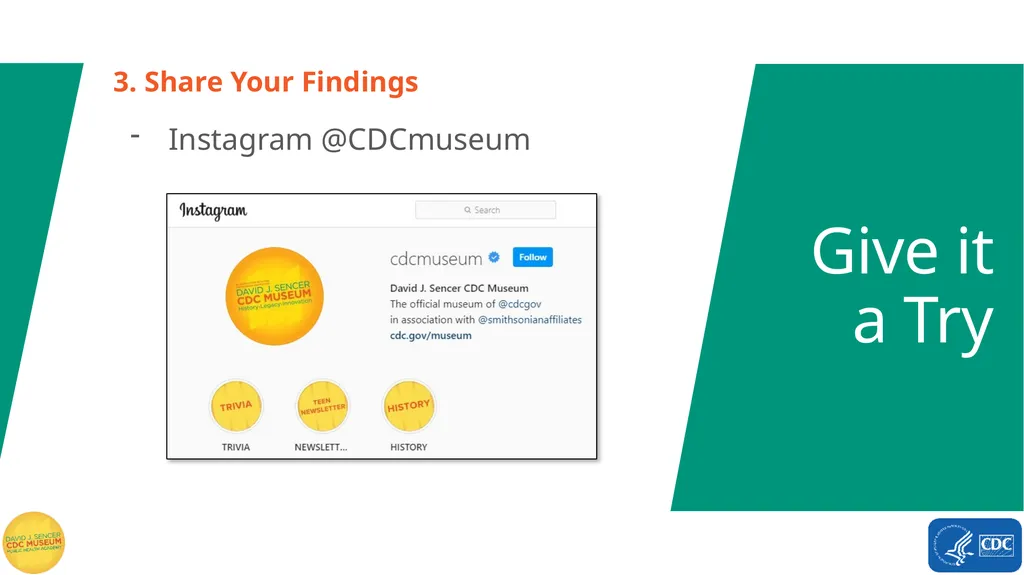
3. Share Your Findings Give it a Try Instagram @CDCmuseum<br>