04
Regulation-Guidance This includes:
• Identifying hazard(s) and risk(s);
• Evaluating and analyzing hazard(s) and risk(s);
• Implementing interventions to reduce hazard(s) and risk(s); and
• Monitoring for effectiveness and modifying interventions when necessary.<br>
05
Regulatory Guidance Resident Smoking
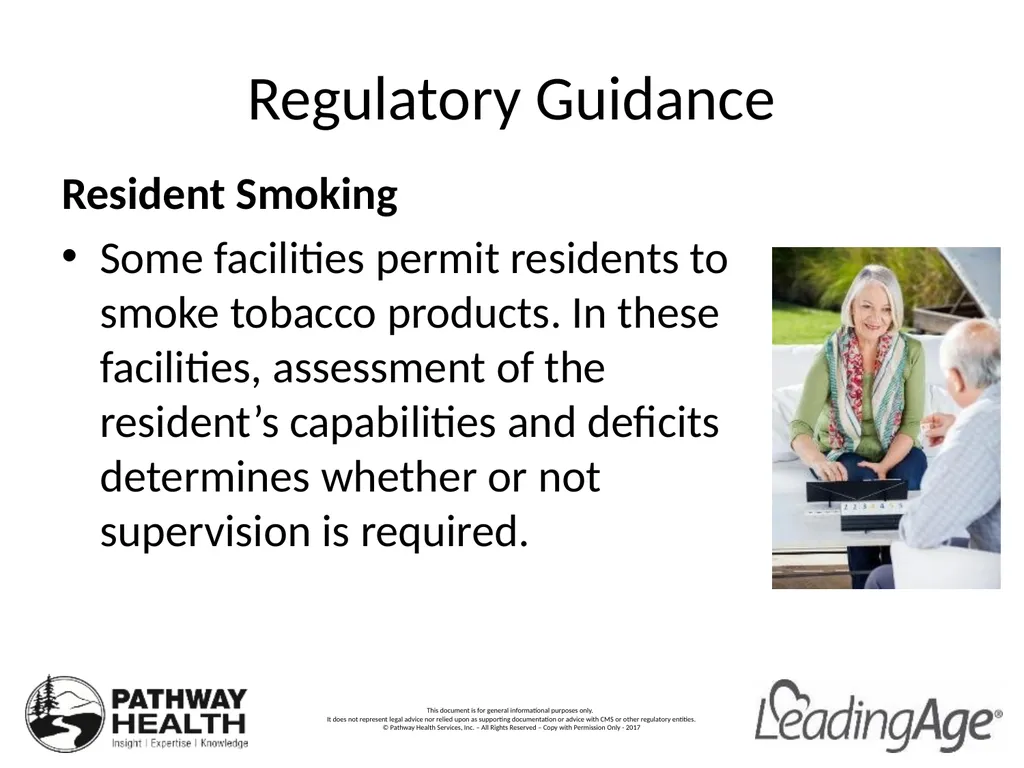
Some facilities permit residents to smoke tobacco products. In these facilities, assessment of the resident’s capabilities and deficits determines whether or not supervision is required.<br>
06
Regulatory Guidance Resident Smoking
If the facility identifies that the resident needs assistance and supervision for smoking, the facility includes this information in the resident’s care plan, and reviews and revises the plan periodically as needed.<br>
07
Regulatory Guidance Resident Smoking
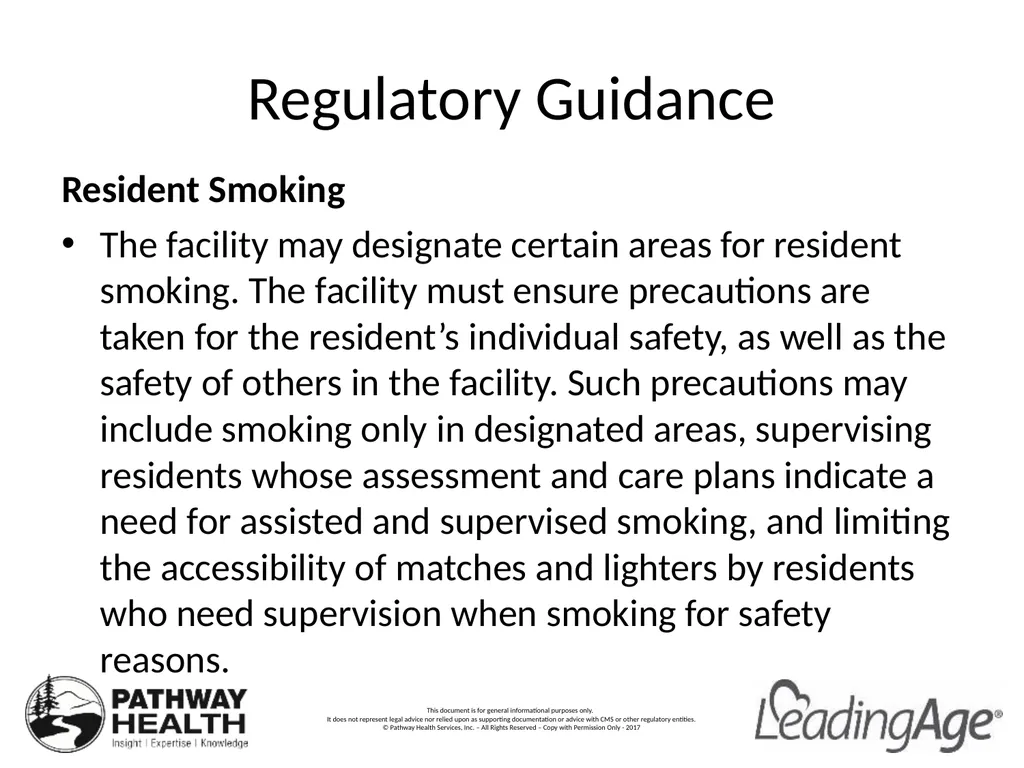
The facility may designate certain areas for resident smoking. The facility must ensure precautions are taken for the resident’s individual safety, as well as the safety of others in the facility. Such precautions may include smoking only in designated areas, supervising residents whose assessment and care plans indicate a need for assisted and supervised smoking, and limiting the accessibility of matches and lighters by residents who need supervision when smoking for safety reasons.<br>
08
Regulatory Guidance Resident Smoking
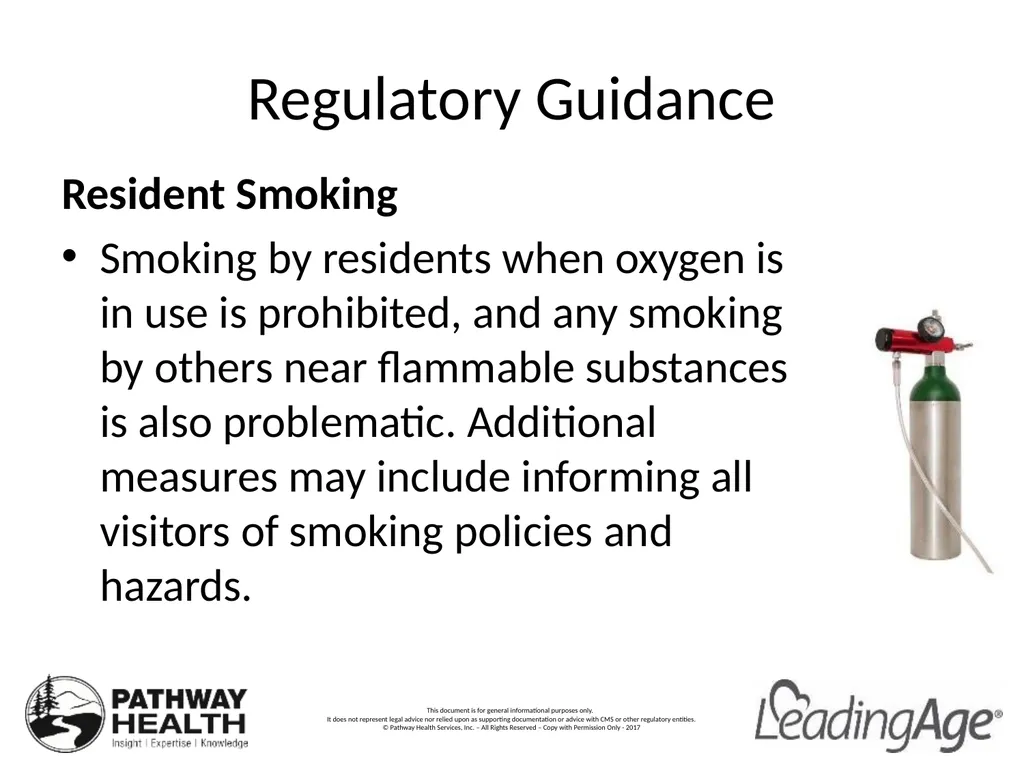
Smoking by residents when oxygen is in use is prohibited, and any smoking by others near flammable substances is also problematic. Additional measures may include informing all visitors of smoking policies and hazards.<br>
09
Regulatory Guidance Resident Smoking
(Insert NFPA 101 Life Safety Code at 19.7.4, requirements for signage, prohibiting smoking by residents classified as not responsible and disposal of smoking materials.)
(Insert State/Local specific regulations related to smoking and smoking materials)<br>
10
POLICY It is the policy that if the resident requests to smoke, the interdisciplinary team will assess the resident’s capabilities and deficits to determine appropriate supervision and assistance. Smoking will only be allowed in designated (outdoor) area(s) in the facility that are not near flammable substances or where oxygen is in use. Visitors will be informed of the facility smoking policy.<br>
11
POLICY OBJECTIVE OF THE SMOKING POLICY
The objective of this policy is to complete an assessment when a resident requests to smoke, to determine the level of supervision, assistance and individualized approaches required for safety. In addition, the Smoking Policy outlines the designated areas, notices, education and requirements for smoking on the facility property to ensure precautions are taken for the resident’s individual safety as well as the safety of others in the facility.<br>
12
PROCEDURE Smoking will only be permitted in the following designated areas: (List). Smoking is prohibited in all other areas.
No residents with oxygen in use are permitted in the designated smoking area(s). No oxygen containers/tanks/materials or other flammable substances are permitted in the designated smoking area(s).<br>
13
PROCEDURE Smoking will only be permitted by (list—i.e. residents, staff, visitors, etc.).
Visitors will be educated on the smoking policy by (list)
Any resident choosing to smoke will be assessed by a member of the Interdisciplinary Team utilizing the Smoking Evaluation Form. This evaluation will be completed upon admission, quarterly and with a change of condition. Individualized approaches and directions for safety and assistance will be documented in the resident plan of care and communicated to frontline caregivers.<br>
14
PROCEDURE Education of the Smoking Policy will be provided to the resident/resident representative.
The designated smoking times include: (facility to designate)<br>
15
PROCEDURE (Insert guidance for signage, prohibiting smoking by residents classified as not responsible and disposal of smoking materials can be found in NFPA 101, the Life Safety Code at 19.7.4.
Insert State specific guidance here.)<br>
16
Electronic Cigarettes Any resident choosing to smoke an electronic cigarette, will be assessed by a member of the interdisciplinary Team utilizing the Smoking Evaluation Form. Documentation will detail situations when the resident is not able to use the electronic cigarette.
If a resident chooses to smoke electronic cigarettes (e-cigarettes, vapes, vaporizers, vape pens, etc.) they must smoke them in designated smoking areas outside.
Charging of the e-cigarette should only be accomplished using power sources approved by the manufacturer to recharge the lithium-ion battery (i.e. those that came with the device).
Do not charge the e-cigarette overnight
Replace the battery/batteries if wet or damaged<br>
17
Assessment Process Smoking Evaluation Tool
Functional Ability
Can the resident hold their cigarette/pipe/cigar?
Can they light it independently?
Cognition
Are they able to verbalize smoking policy after educated?
Safety Awareness and Behavior
Do they observe the designated area requirements?
Do they get distracted and not focus on holding cigarette?
Observations
Burn holes in clothes
Burns on fingers/fingernails<br>
18
Care Plan Process Based on evaluation-examples include:
Type of Assistance
Supervision Requirements
Smoking Apron
Smoking materials secured at the desk
Staff to light cigarette/cigar/pipe
Facility determination that resident is not permitted to smoke
Etc.<br>
19
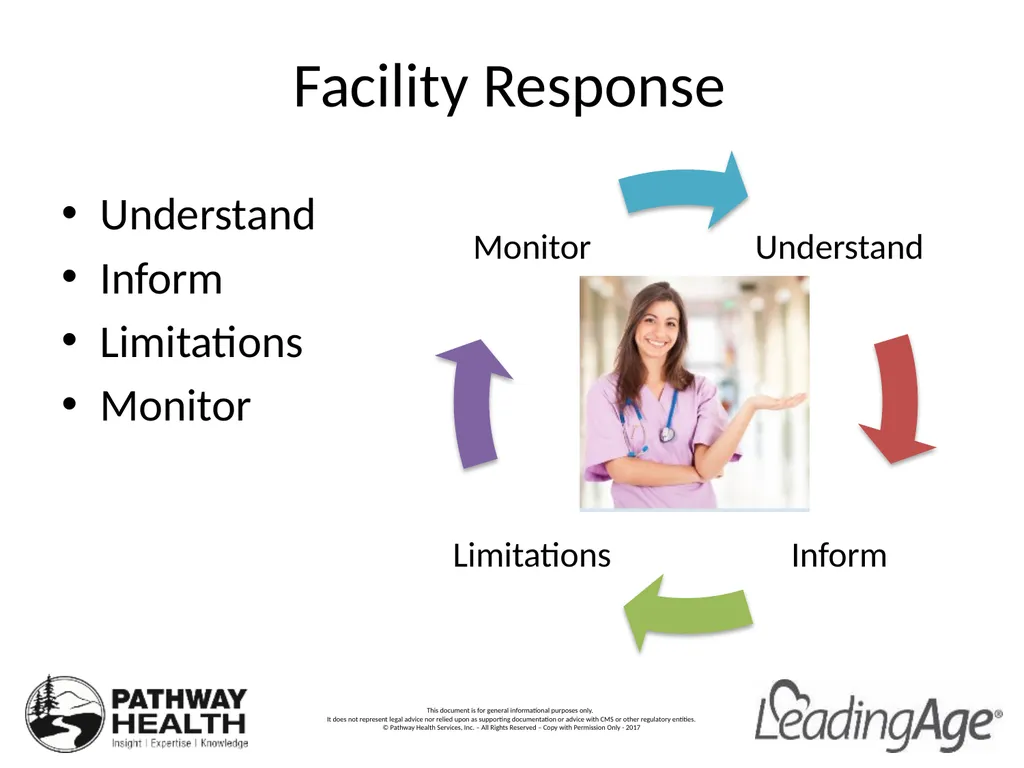
Facility Response Understand
Inform
Limitations
Monitor<br>
20
Understand In order to prevent accidents with smoking and provide a safe environment for residents and others, it is imperative to follow the smoking policy and procedure. Residents must be informed, assessed and individualized approaches care planned for safety<br>
21
INFORM Caregivers will be informed of resident’s assessed needs to ensure adequate supervision and assistance
All staff will need to inform the nurse and the Interdisciplinary Team of any problems with residents or others not complying with the Smoking Policy
If resident identified with unsafe smoking, immediately intervene and when safe, immediately notify the nurse<br>
22
Limitations Knowledge
Resident cognition
Resident adherence to Smoking Policy
Staff following the resident care plan<br>
23
Monitor All caregivers will need to monitor resident for:
Change in cognition
Change in function that could impair their ability to smoke without more assistance
Side-effects of medications that could make resident more drowsy or impair their ability to smoke safely<br>
24
SUMMARY The facility has a policy and procedure that outlines the process for resident smoking
An assessment will be completed to identify resident’s individualized safety needs
Documentation of resident assessment and individualized approaches will be recorded in the medical record and care plan<br>
26
Thank you for participating in this education session!<br>
27
Resource All facilities will need to be familiar with the NFPA 101:
The Life Safety Code at 19.7.4, smoking:
http://www.nfpa.org/codes-and-standards/all-codes-and-standards/list-of-codes-and-standards/detail?code=101<br>
28
REFERENCES CMS: State Operations Manual Appendix PP – Guidance to Surveyors for Long-Term Care Facilities:
https://www.cms.gov/Medicare/Provider-Enrollment-and-Certification/GuidanceforLawsAndRegulations/Downloads/Advance-Appendix-PP-Including-Phase-2-.pdf<br>
29
References and Resources Food and Drug Administration (FDA): Vapes, E-Cigs, Hooka Pens and other Electronic Nicotine Delivery Systems (ENDS): https://www.fda.gov/tobaccoproducts/labeling/productsingredientscomponents/ucm456610.htm#manufacturing
U.S. Fire Administration (FEMA): Electronic Cigarette Fires and Explosions: https://www.usfa.fema.gov/downloads/pdf/publications/electronic_cigarettes.pdf<br>