
Social and Behavioral Analysis in Ebola Epidemics:

Description: Social and Behavioral Analysis in Ebola Epidemics: Aligning Qualitative Realities with Quantitative Analysis 2019 7th Annual IDM Disease Modeling Symposium Wednesday, April 17, 2019 Why do we care about qualitative data? Quantitative data:
Related Topics
Download Presentation
"Social and Behavioral Analysis in Ebola Epidemics:" is the property of its rightful owner. Permission is granted to download and print the materials on this website for personal, non-commercial use only, and to display it on your personal computer provided you do not modify the materials and that you retain all copyright notices contained in the materials. By downloading content from our website, you accept the terms of this agreement.
Presentation Transcript
slide1. Social and Behavioral Analysis in Ebola Epidemics:
Aligning Qualitative Realities with Quantitative Analysis 2019 7th Annual IDM Disease Modeling Symposium
Wednesday, April 17, 2019<br>
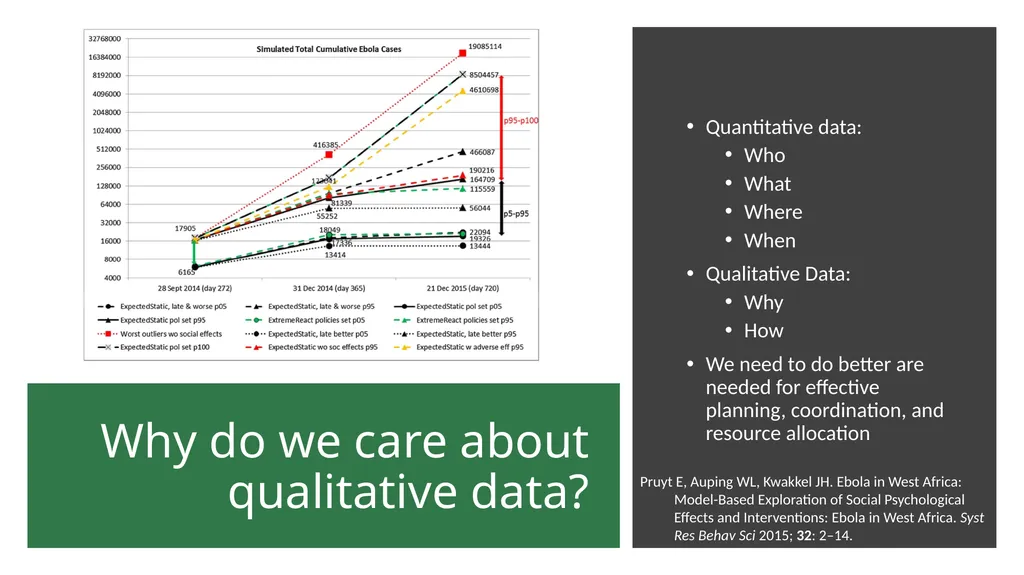
slide2. Why do we care about qualitative data? Quantitative data:
Who
What
Where
When
Qualitative Data:
Why
How
We need to do better are needed for effective planning, coordination, and resource allocation Pruyt E, Auping WL, Kwakkel JH. Ebola in West Africa: Model-Based Exploration of Social Psychological Effects and Interventions: Ebola in West Africa. Syst Res Behav Sci 2015; 32: 2–14.<br>
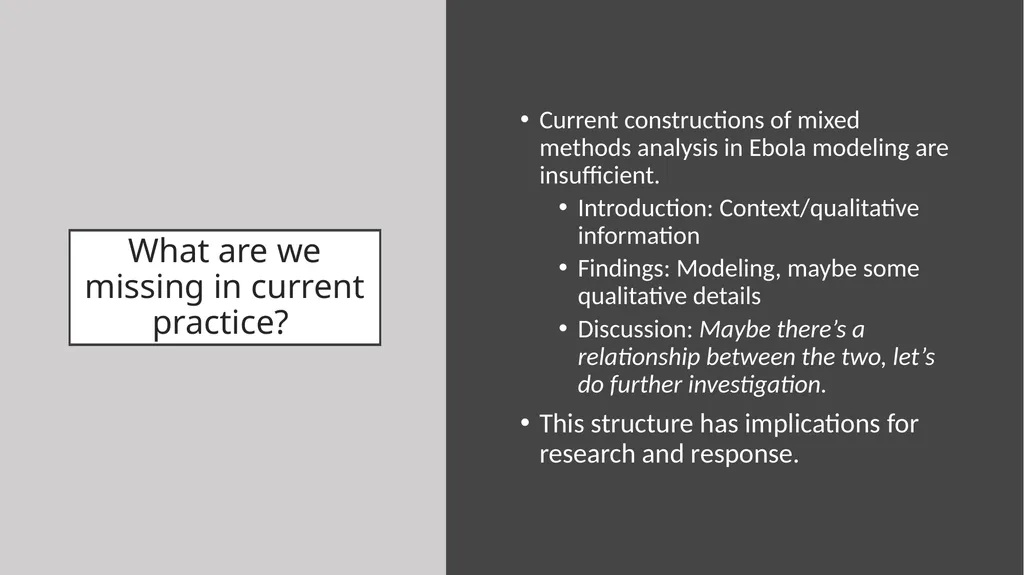
slide3. What are we missing in current practice? Current constructions of mixed methods analysis in Ebola modeling are insufficient.
Introduction: Context/qualitative information
Findings: Modeling, maybe some qualitative details
Discussion: Maybe there’s a relationship between the two, let’s do further investigation.
This structure has implications for research and response.<br>
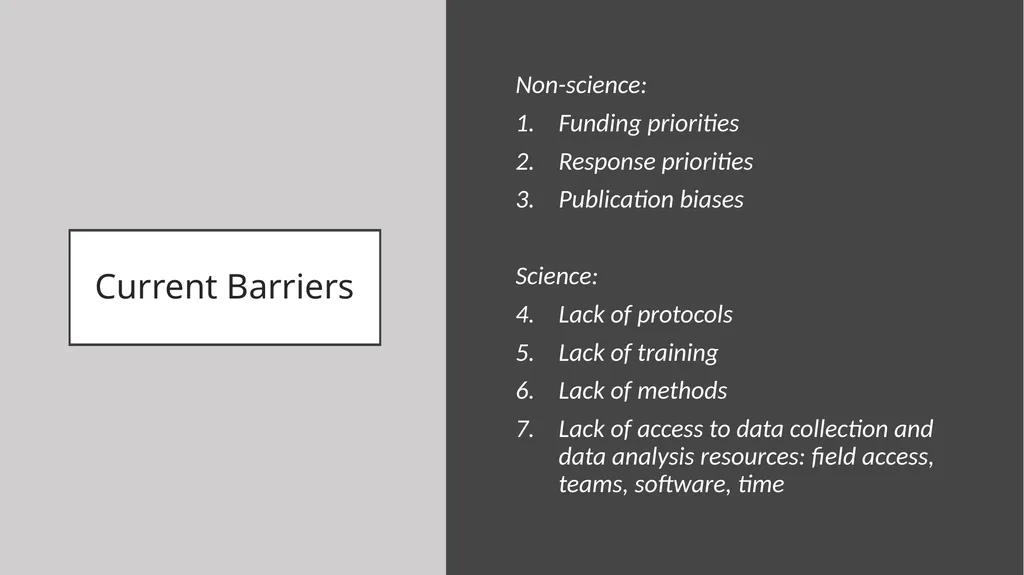
slide4. Current Barriers Non-science:
Funding priorities
Response priorities
Publication biases
Science:
Lack of protocols
Lack of training
Lack of methods
Lack of access to data collection and data analysis resources: field access, teams, software, time<br>
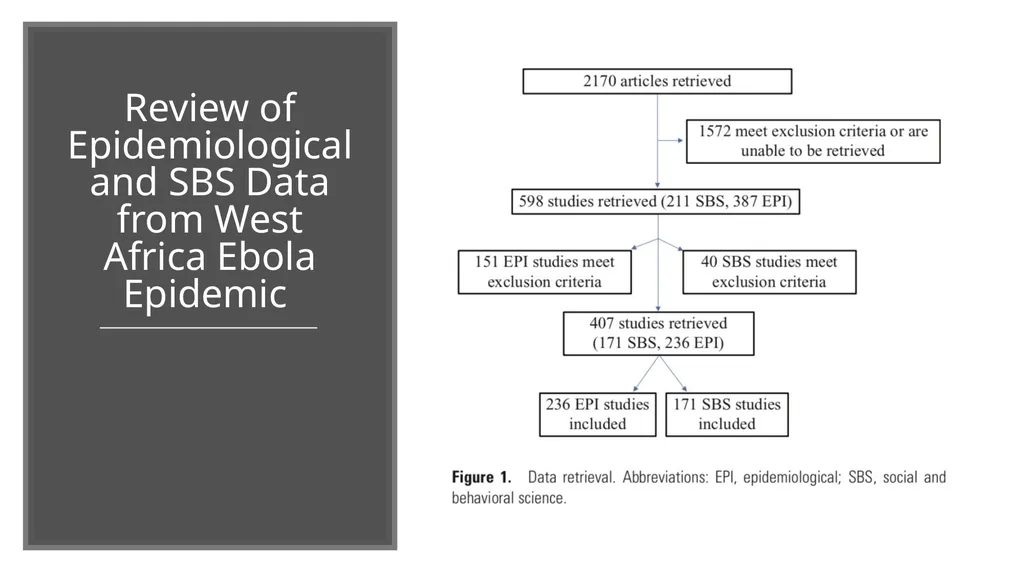
slide5. Review of Epidemiological and SBS Data from West Africa Ebola Epidemic<br>
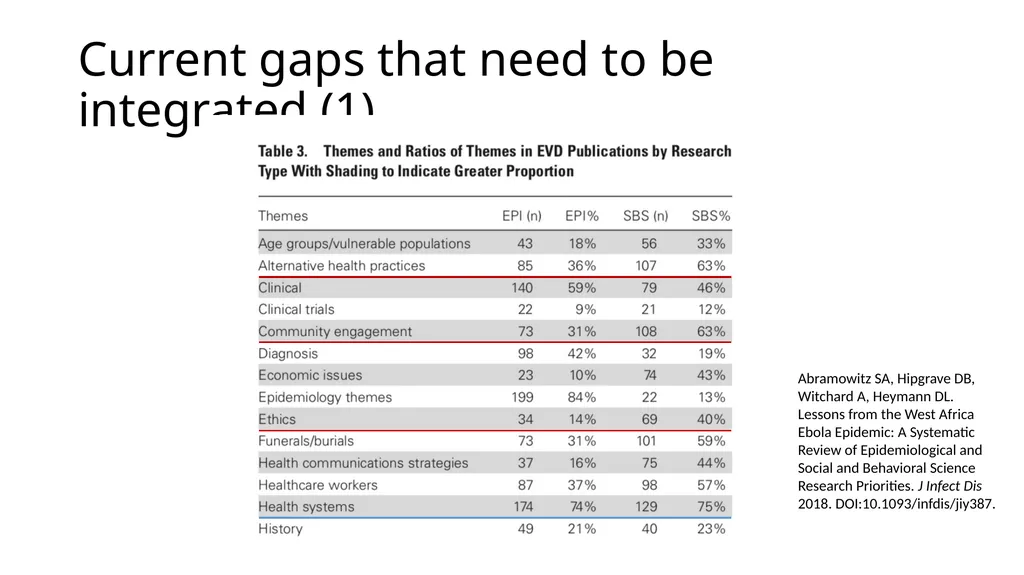
slide6. Current gaps that need to be integrated (1) Abramowitz SA, Hipgrave DB, Witchard A, Heymann DL. Lessons from the West Africa Ebola Epidemic: A Systematic Review of Epidemiological and Social and Behavioral Science Research Priorities. J Infect Dis 2018. DOI:10.1093/infdis/jiy387.<br>
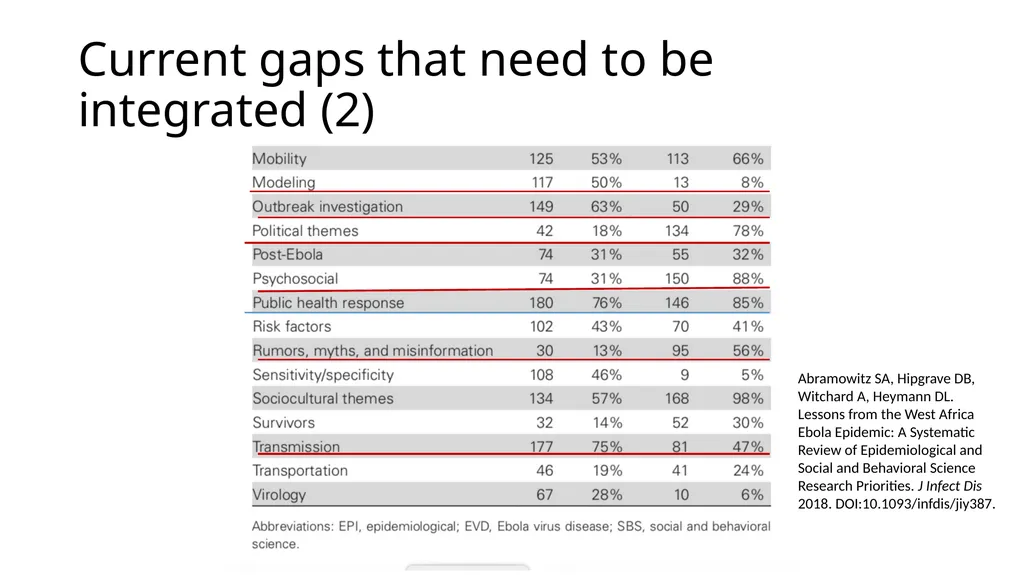
slide7. Current gaps that need to be integrated (2) Abramowitz SA, Hipgrave DB, Witchard A, Heymann DL. Lessons from the West Africa Ebola Epidemic: A Systematic Review of Epidemiological and Social and Behavioral Science Research Priorities. J Infect Dis 2018. DOI:10.1093/infdis/jiy387.<br>
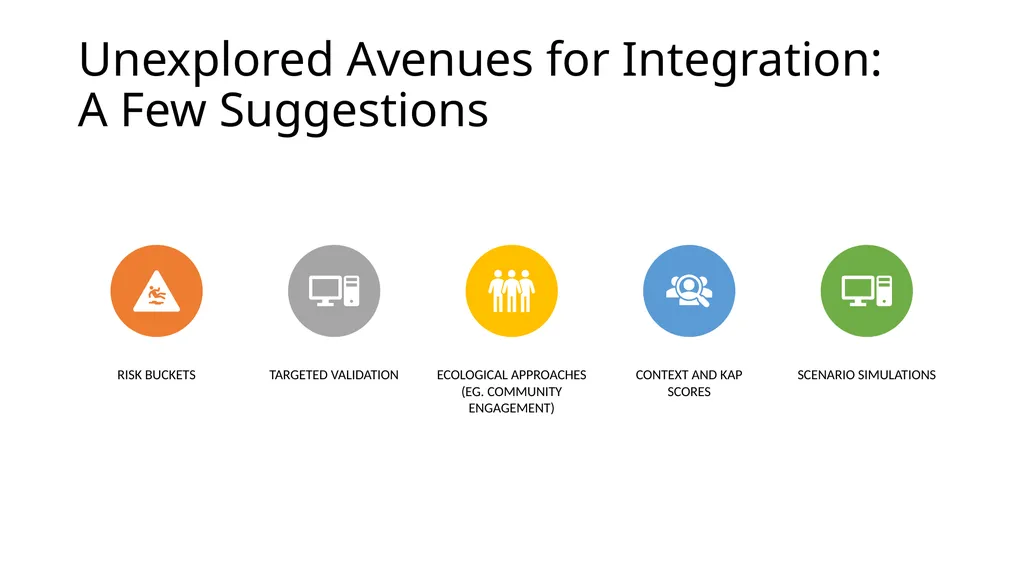
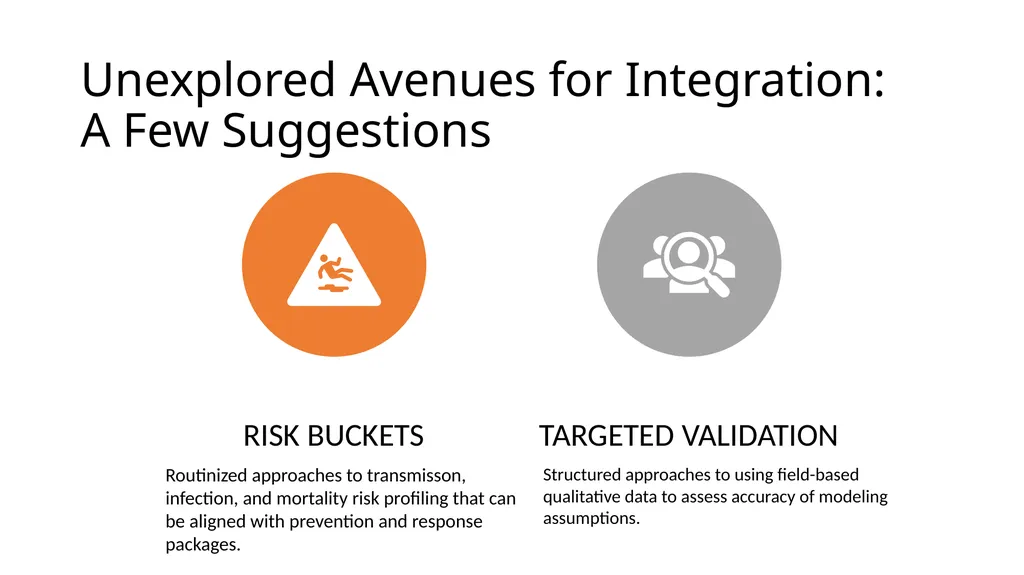
slide8. Unexplored Avenues for Integration: A Few Suggestions<br>
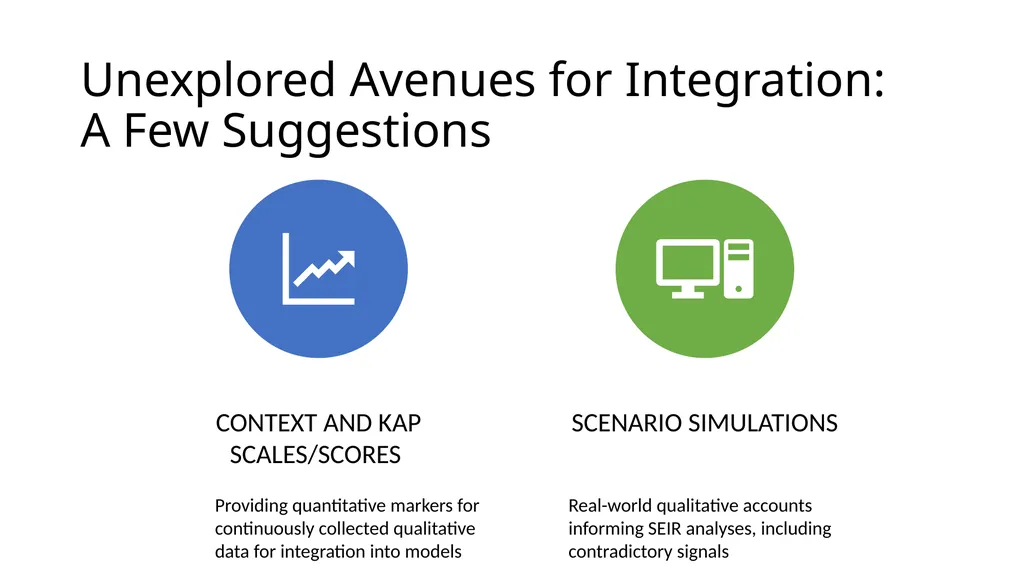
slide9. Unexplored Avenues for Integration: A Few Suggestions<br>
slide10. Unexplored Avenues for Integration: A Few Suggestions Real-world qualitative accounts informing SEIR analyses, including contradictory signals Providing quantitative markers for continuously collected qualitative data for integration into models<br>
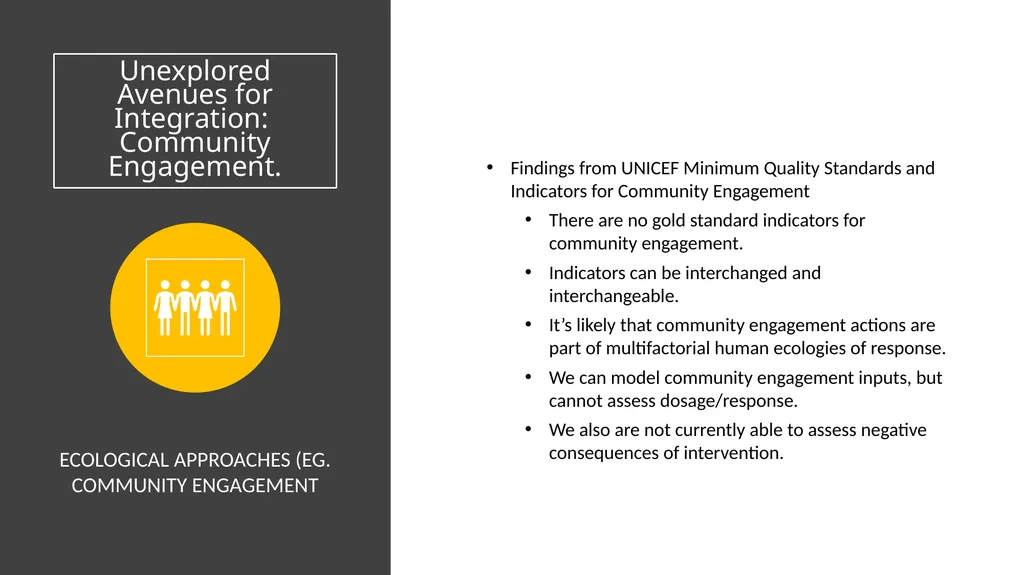
slide11. Unexplored Avenues for Integration: Community Engagement. Findings from UNICEF Minimum Quality Standards and Indicators for Community Engagement
There are no gold standard indicators for community engagement.
Indicators can be interchanged and interchangeable.
It’s likely that community engagement actions are part of multifactorial human ecologies of response.
We can model community engagement inputs, but cannot assess dosage/response.
We also are not currently able to assess negative consequences of intervention.<br>
slide12. Acknowledgements Jamie Bedson David Hipgrave Ketan Chitnis Rafael Obregon Rania Elassawi Contact me at: Sharon Abramowitz, saabramowitz@gmail.com, 617-599-0191 Benjamin Althouse
Laurent Hébert-Dufresne
Laura Skrip<br>
Wednesday, April 17, 2019<br>
slide2. Why do we care about qualitative data? Quantitative data:
Who
What
Where
When
Qualitative Data:
Why
How
We need to do better are needed for effective planning, coordination, and resource allocation Pruyt E, Auping WL, Kwakkel JH. Ebola in West Africa: Model-Based Exploration of Social Psychological Effects and Interventions: Ebola in West Africa. Syst Res Behav Sci 2015; 32: 2–14.<br>
slide3. What are we missing in current practice? Current constructions of mixed methods analysis in Ebola modeling are insufficient.
Introduction: Context/qualitative information
Findings: Modeling, maybe some qualitative details
Discussion: Maybe there’s a relationship between the two, let’s do further investigation.
This structure has implications for research and response.<br>
slide4. Current Barriers Non-science:
Funding priorities
Response priorities
Publication biases
Science:
Lack of protocols
Lack of training
Lack of methods
Lack of access to data collection and data analysis resources: field access, teams, software, time<br>
slide5. Review of Epidemiological and SBS Data from West Africa Ebola Epidemic<br>
slide6. Current gaps that need to be integrated (1) Abramowitz SA, Hipgrave DB, Witchard A, Heymann DL. Lessons from the West Africa Ebola Epidemic: A Systematic Review of Epidemiological and Social and Behavioral Science Research Priorities. J Infect Dis 2018. DOI:10.1093/infdis/jiy387.<br>
slide7. Current gaps that need to be integrated (2) Abramowitz SA, Hipgrave DB, Witchard A, Heymann DL. Lessons from the West Africa Ebola Epidemic: A Systematic Review of Epidemiological and Social and Behavioral Science Research Priorities. J Infect Dis 2018. DOI:10.1093/infdis/jiy387.<br>
slide8. Unexplored Avenues for Integration: A Few Suggestions<br>
slide9. Unexplored Avenues for Integration: A Few Suggestions<br>
slide10. Unexplored Avenues for Integration: A Few Suggestions Real-world qualitative accounts informing SEIR analyses, including contradictory signals Providing quantitative markers for continuously collected qualitative data for integration into models<br>
slide11. Unexplored Avenues for Integration: Community Engagement. Findings from UNICEF Minimum Quality Standards and Indicators for Community Engagement
There are no gold standard indicators for community engagement.
Indicators can be interchanged and interchangeable.
It’s likely that community engagement actions are part of multifactorial human ecologies of response.
We can model community engagement inputs, but cannot assess dosage/response.
We also are not currently able to assess negative consequences of intervention.<br>
slide12. Acknowledgements Jamie Bedson David Hipgrave Ketan Chitnis Rafael Obregon Rania Elassawi Contact me at: Sharon Abramowitz, saabramowitz@gmail.com, 617-599-0191 Benjamin Althouse
Laurent Hébert-Dufresne
Laura Skrip<br>