
Social media Overview Pupils explore the meaning
FD
Published · 17 slides · 0 views

1 / 1
Description
Social media Overview Pupils explore the meaning of wellbeing and social media and evaluate how social media could impact on a young persons wellbeing. They will reflect on actions they can take to look after their wellbeing through a
Related Topics
Share
Embed code
Download this presentation From Below
"Social media Overview Pupils explore the meaning" is the property of its rightful owner. Permission is granted to download and print the materials on this website for personal, non-commercial use only, and to display it on your personal computer provided you do not modify the materials and that you retain all copyright notices contained in the materials. By downloading content from our website, you accept the terms of this agreement.
Presentation Transcript
01
Social
media<br>
02
Overview Pupils explore the meaning of wellbeing and social media and evaluate how social media could impact on a young person’s wellbeing. They will reflect on actions they can take to look
after their wellbeing through a healthy balance of online and
offline activity.
Recommended age group
Education providers for ages 10-11 (Year 6)*
*Please note: This lesson is not suitable for pupils younger than Year 6. It is also important to note that legally, nearly all forms of social media require users to be at least 13 years of age.
Time
45-60 minutes approximately
Preparation
Before delivering the lesson:
consider cross-curricular links and how this could be related to other PSHE content
watch the film on slides 10 and 13 of this PowerPoint
read through the classroom tips on slide 3
Resources
PowerPoint presentation
blank A4 paper, pens and coloured pencils
action plan template (slide 14), optional
Key vocabulary
Social media, online, offline, wellbeing, individual, community, limits (not too much), restrictions, actions, messaging, positive (good), negative (bad)
Follow up
You may wish to extend pupils’ learning with one of the extended learning projects on slide 20.<br>
Recommended age group
Education providers for ages 10-11 (Year 6)*
*Please note: This lesson is not suitable for pupils younger than Year 6. It is also important to note that legally, nearly all forms of social media require users to be at least 13 years of age.
Time
45-60 minutes approximately
Preparation
Before delivering the lesson:
consider cross-curricular links and how this could be related to other PSHE content
watch the film on slides 10 and 13 of this PowerPoint
read through the classroom tips on slide 3
Resources
PowerPoint presentation
blank A4 paper, pens and coloured pencils
action plan template (slide 14), optional
Key vocabulary
Social media, online, offline, wellbeing, individual, community, limits (not too much), restrictions, actions, messaging, positive (good), negative (bad)
Follow up
You may wish to extend pupils’ learning with one of the extended learning projects on slide 20.<br>
03
Classroom tips Climate for learning
Read through Guidance for Learning in a Safe Environment. This includes advice on:
developing and revisiting effective ground rules drawn up with pupils
familiarity with your school’s safeguarding policy and procedures, including Child Protection and other relevant policies
being prepared in case pupils make a disclosure
including and protecting vulnerable pupils
using distancing techniques so that pupils can discuss sensitive issues without being encouraged to make a disclosure
handling sensitive questions
involving pupils with special educational needs and disabilities (SEND) and/or autism
You may also wish to familiarise yourself with any schemes or offers available in your school, organisation or local area to support young people’s mental health. Your local public health team or school nurse should be able to help signpost you to local sources of support.
Anonymous question box
Place a question box or envelope somewhere in the classroom. Pupils write down any questions that occur to them during the lesson and submit them anonymously. You can address these questions in the next lesson.<br>
Read through Guidance for Learning in a Safe Environment. This includes advice on:
developing and revisiting effective ground rules drawn up with pupils
familiarity with your school’s safeguarding policy and procedures, including Child Protection and other relevant policies
being prepared in case pupils make a disclosure
including and protecting vulnerable pupils
using distancing techniques so that pupils can discuss sensitive issues without being encouraged to make a disclosure
handling sensitive questions
involving pupils with special educational needs and disabilities (SEND) and/or autism
You may also wish to familiarise yourself with any schemes or offers available in your school, organisation or local area to support young people’s mental health. Your local public health team or school nurse should be able to help signpost you to local sources of support.
Anonymous question box
Place a question box or envelope somewhere in the classroom. Pupils write down any questions that occur to them during the lesson and submit them anonymously. You can address these questions in the next lesson.<br>
04
Social distancing Preparation
Returning to school and managing the changes that have come about in their lives because of Covid-19 will have posed many different challenges for young people. It will have affected every young person differently and it will be more important than ever before for pupils to have a safe space to explore their feelings and experiences.
Reassure pupils that it’s normal to worry about the impact of Covid-19 and that everyone will have had different responses. For example, some may have experienced loneliness, while others may have enjoyed lockdown – for many, there will have been a mixture of different emotions.
This lesson has a scenario related to Covid-19 and this may be particularly sensitive for any pupils who have experienced significant distress, loss or trauma prior to Covid-19 or during this time. There is clear guidance for teaching sensitive issues in the Guidance for Learning in a Safe Environment document and it is important that this is read before delivering this lesson. Adapting lessons to social distancing
Please refer to the Government guidelines and your own school’s advice.
Where pair or small group discussions aren’t possible, replace with personal reflections or individual contributions to whole class discussions.
Lesson stimulus (Slide 6)
Instead of swapping pictures, pupils could hold their images, play on mini-whiteboard or split the class into two and play a whole class game of Pictionary.
Activity 1b (Slide 9): Understanding social media
Pupils could complete this individually or half the class could complete each side and then feedback as a whole class.
Activity 2 (Slide 13): Take action!
Pupils could work individually to create their own action plans. Encourage Pupils to be creative with them, use colouring pencils and images.<br>
Returning to school and managing the changes that have come about in their lives because of Covid-19 will have posed many different challenges for young people. It will have affected every young person differently and it will be more important than ever before for pupils to have a safe space to explore their feelings and experiences.
Reassure pupils that it’s normal to worry about the impact of Covid-19 and that everyone will have had different responses. For example, some may have experienced loneliness, while others may have enjoyed lockdown – for many, there will have been a mixture of different emotions.
This lesson has a scenario related to Covid-19 and this may be particularly sensitive for any pupils who have experienced significant distress, loss or trauma prior to Covid-19 or during this time. There is clear guidance for teaching sensitive issues in the Guidance for Learning in a Safe Environment document and it is important that this is read before delivering this lesson. Adapting lessons to social distancing
Please refer to the Government guidelines and your own school’s advice.
Where pair or small group discussions aren’t possible, replace with personal reflections or individual contributions to whole class discussions.
Lesson stimulus (Slide 6)
Instead of swapping pictures, pupils could hold their images, play on mini-whiteboard or split the class into two and play a whole class game of Pictionary.
Activity 1b (Slide 9): Understanding social media
Pupils could complete this individually or half the class could complete each side and then feedback as a whole class.
Activity 2 (Slide 13): Take action!
Pupils could work individually to create their own action plans. Encourage Pupils to be creative with them, use colouring pencils and images.<br>
05
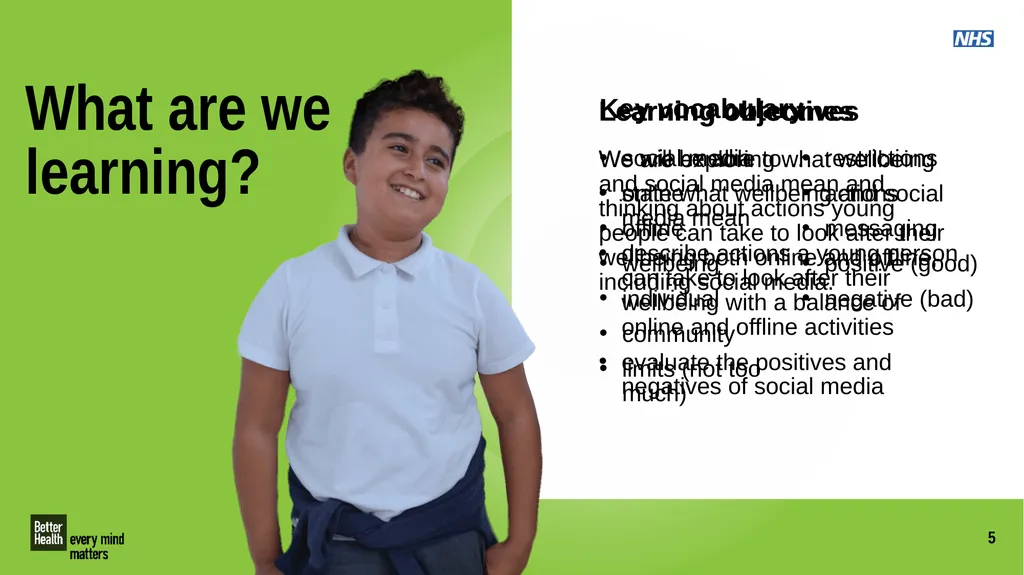
What are we learning? We are exploring what wellbeing
and social media mean and thinking about actions young people can take to look after their wellbeing both online and offline, including social media. Learning objectives We will be able to…
state what wellbeing and social media mean
describe actions a young person can take to look after their wellbeing with a balance of online and offline activities
evaluate the positives and negatives of social media Learning outcomes Key vocabulary social media
online
offline
wellbeing
individual
community
limits (not too much)
restrictions
actions
messaging
positive (good)
negative (bad)<br>
state what wellbeing and social media mean
describe actions a young person can take to look after their wellbeing with a balance of online and offline activities
evaluate the positives and negatives of social media Learning outcomes Key vocabulary social media
online
offline
wellbeing
individual
community
limits (not too much)
restrictions
actions
messaging
positive (good)
negative (bad)<br>
06
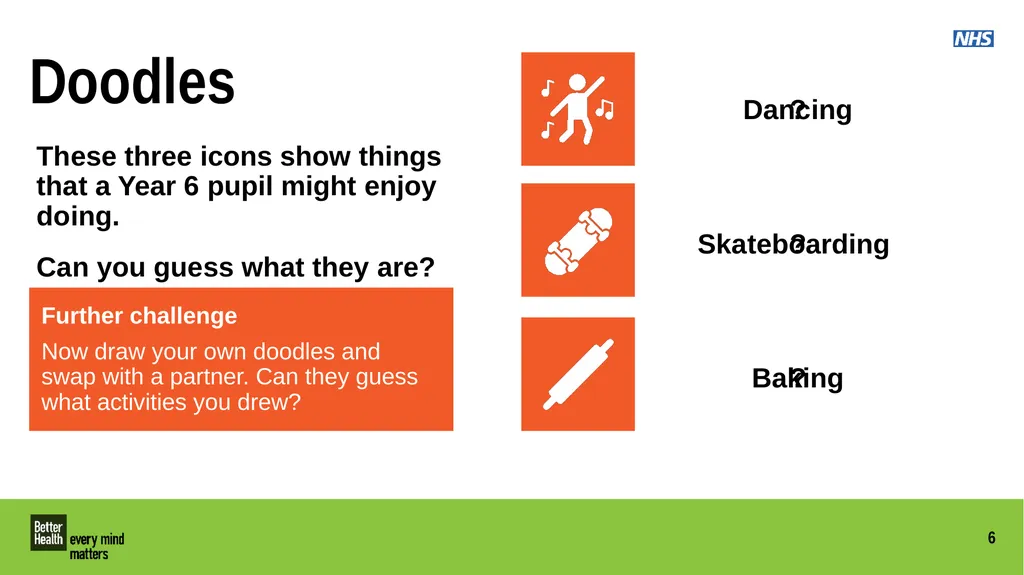
Doodles These three icons show things that a Year 6 pupil might enjoy doing.
Can you guess what they are? Further challenge
Now draw your own doodles and swap with a partner. Can they guess what activities you drew? ? ? ? Dancing Skateboarding Baking<br>
Can you guess what they are? Further challenge
Now draw your own doodles and swap with a partner. Can they guess what activities you drew? ? ? ? Dancing Skateboarding Baking<br>
07
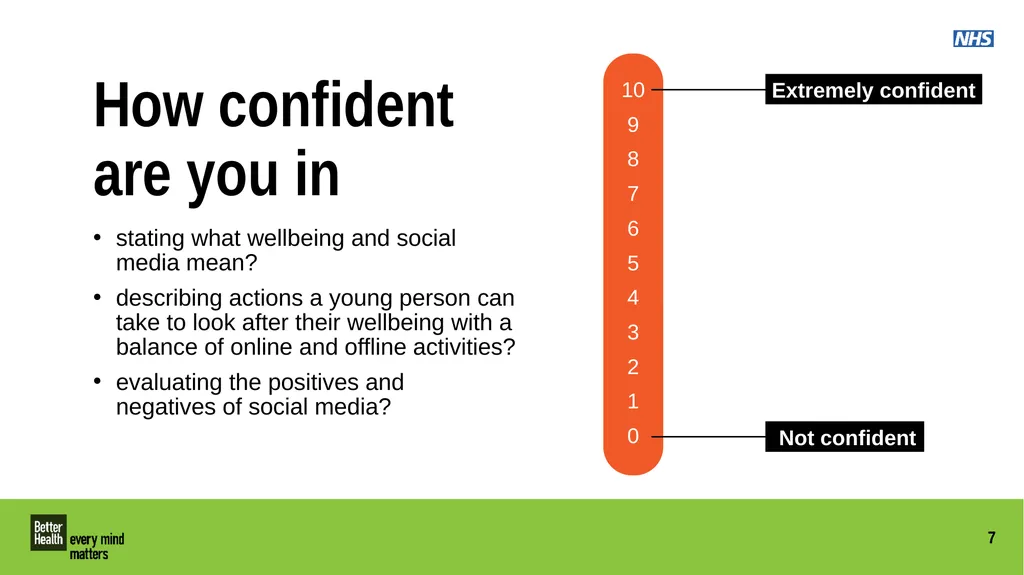
How confident
are you in stating what wellbeing and social media mean?
describing actions a young person can take to look after their wellbeing with a balance of online and offline activities?
evaluating the positives and negatives of social media? Not confident 0 1 2 3 4 5 6 7 8 9 10 Extremely confident 7<br>
describing actions a young person can take to look after their wellbeing with a balance of online and offline activities?
evaluating the positives and negatives of social media? Not confident 0 1 2 3 4 5 6 7 8 9 10 Extremely confident 7<br>
08
What do
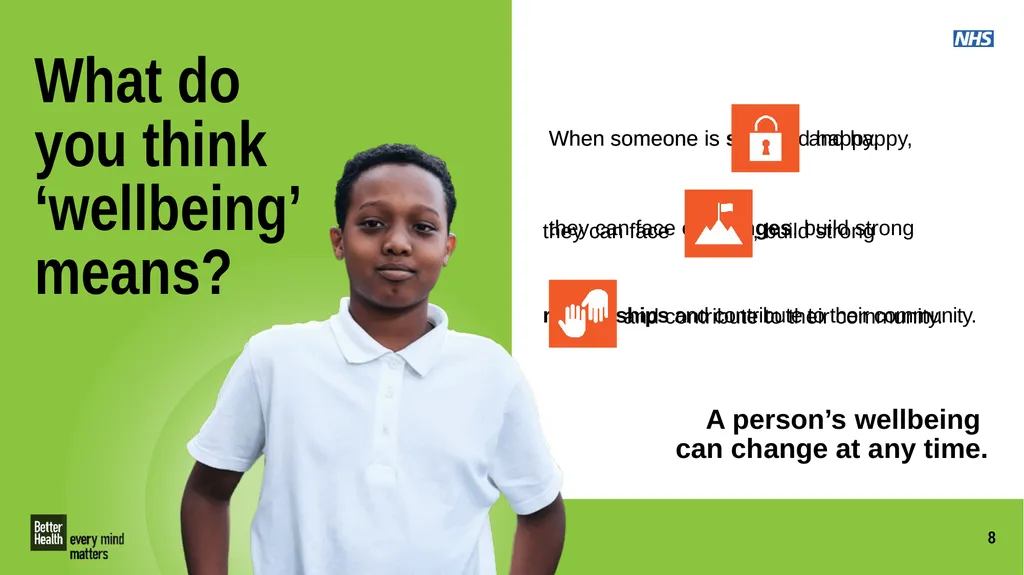
you think ‘wellbeing’ means? When someone is safe and happy, When someone is and happy, they can face challenges, build strong they can face , build strong and contribute to their community. relationships and contribute to their community. A person’s wellbeing can change at any time.<br>
you think ‘wellbeing’ means? When someone is safe and happy, When someone is and happy, they can face challenges, build strong they can face , build strong and contribute to their community. relationships and contribute to their community. A person’s wellbeing can change at any time.<br>
09
What do
you think
‘social media’
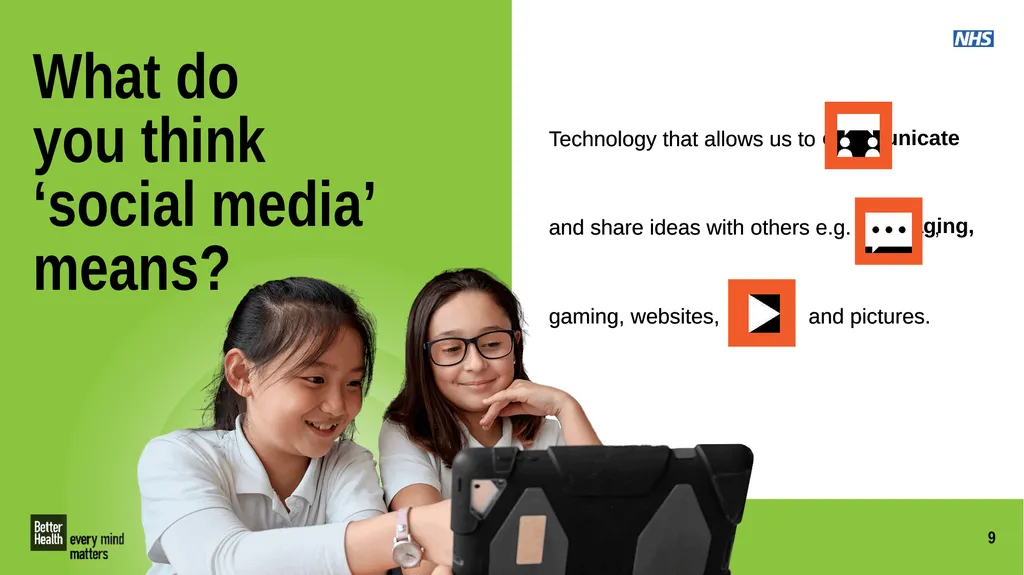
means? Technology that allows us to Technology that allows us to communicate and share ideas with others e.g. , and share ideas with others e.g. messaging, gaming, websites, and pictures. gaming, websites, and pictures. videos<br>
‘social media’
means? Technology that allows us to Technology that allows us to communicate and share ideas with others e.g. , and share ideas with others e.g. messaging, gaming, websites, and pictures. gaming, websites, and pictures. videos<br>
10
Social media
and wellbeing Watch the first
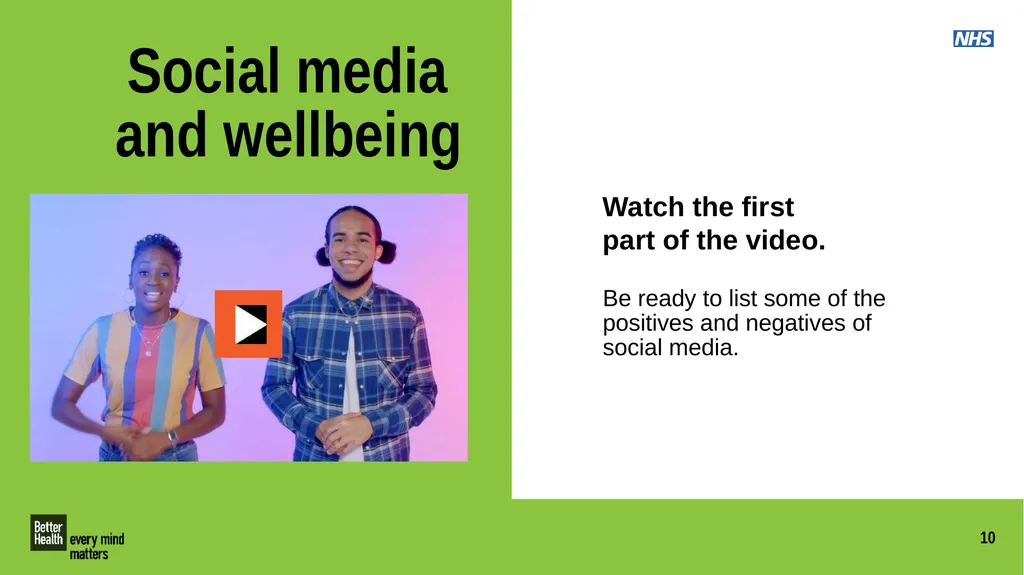
part of the video. Be ready to list some of the positives and negatives of social media.<br>
11
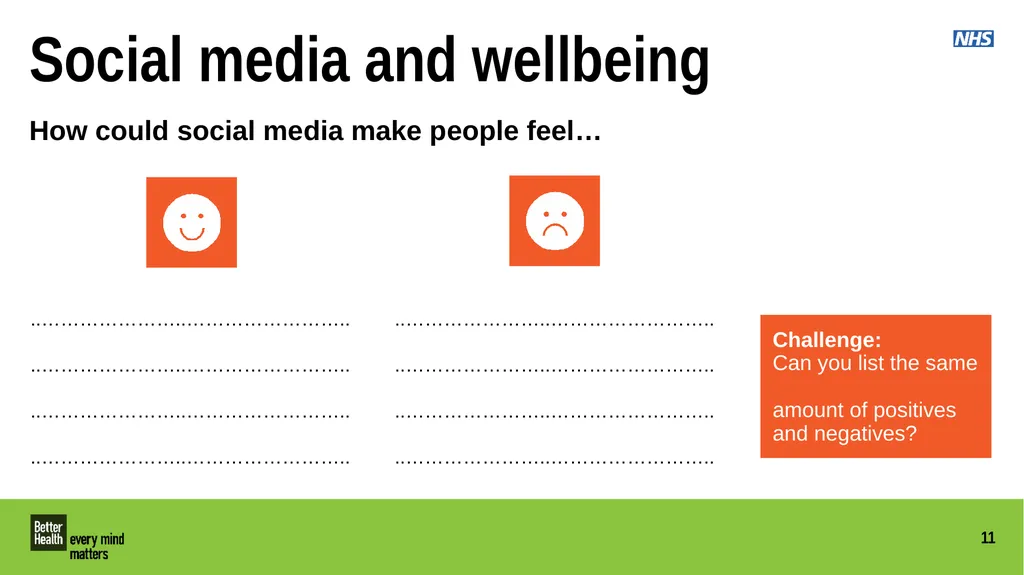
Social media and wellbeing How could social media make people feel… ..…………………..……………………..
..…………………..……………………..
..…………………..……………………..
..…………………..…………………….. ..…………………..……………………..
..…………………..……………………..
..…………………..……………………..
..…………………..…………………….. Challenge:
Can you list the same amount of positives and negatives?<br>
..…………………..……………………..
..…………………..……………………..
..…………………..…………………….. ..…………………..……………………..
..…………………..……………………..
..…………………..……………………..
..…………………..…………………….. Challenge:
Can you list the same amount of positives and negatives?<br>
12
Discussion questions All
Why is it important to balance online and offline activities?
Why do you think there are age restrictions for social media? Challenge
What advice might be given to a person who is upset or uncomfortable about something they have experienced online?<br>
Why is it important to balance online and offline activities?
Why do you think there are age restrictions for social media? Challenge
What advice might be given to a person who is upset or uncomfortable about something they have experienced online?<br>
13
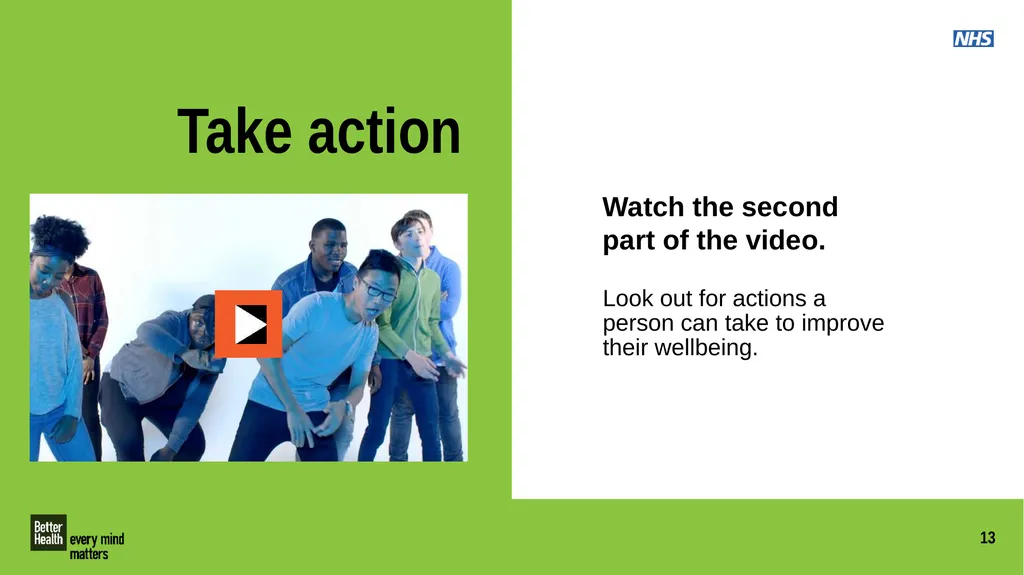
Take action Watch the second
part of the video. Look out for actions a person can take to improve their wellbeing.<br>
14
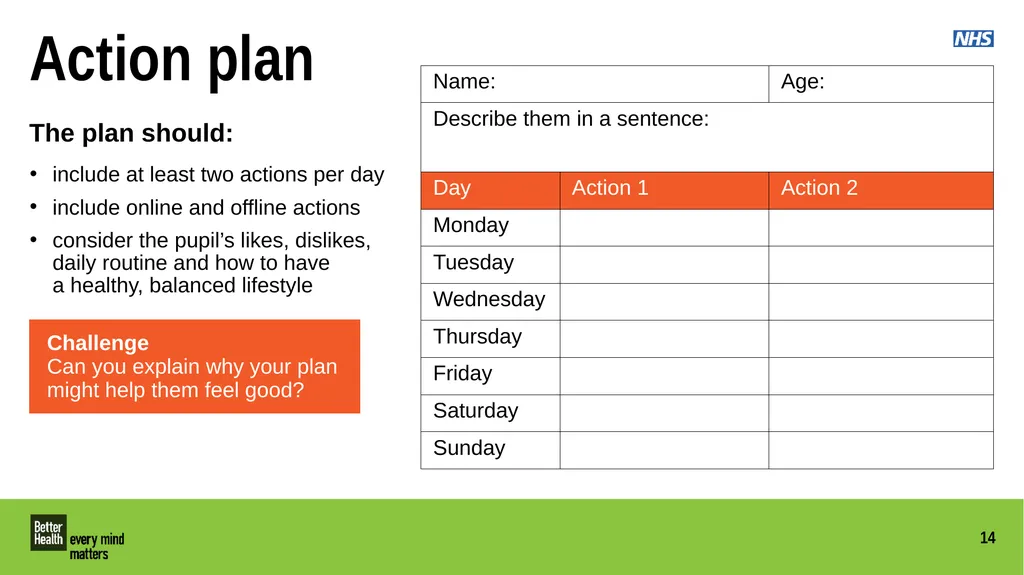
Action plan The plan should: include at least two actions per day
include online and offline actions
consider the pupil’s likes, dislikes, daily routine and how to have a healthy, balanced lifestyle Challenge
Can you explain why your plan might help them feel good?<br>
include online and offline actions
consider the pupil’s likes, dislikes, daily routine and how to have a healthy, balanced lifestyle Challenge
Can you explain why your plan might help them feel good?<br>
15
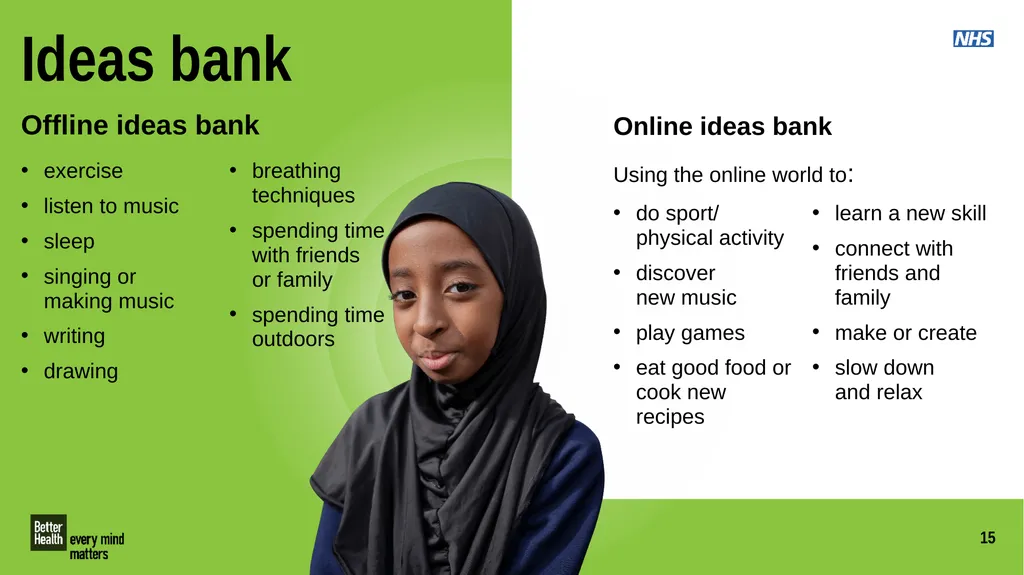
Ideas bank Offline ideas bank exercise
listen to music
sleep
singing or making music
writing
drawing
breathing techniques
spending time with friends or family
spending time outdoors Online ideas bank
Using the online world to: do sport/ physical activity
discover new music
play games
eat good food or cook new recipes
learn a new skill
connect with friends and family
make or create
slow down and relax<br>
listen to music
sleep
singing or making music
writing
drawing
breathing techniques
spending time with friends or family
spending time outdoors Online ideas bank
Using the online world to: do sport/ physical activity
discover new music
play games
eat good food or cook new recipes
learn a new skill
connect with friends and family
make or create
slow down and relax<br>
16
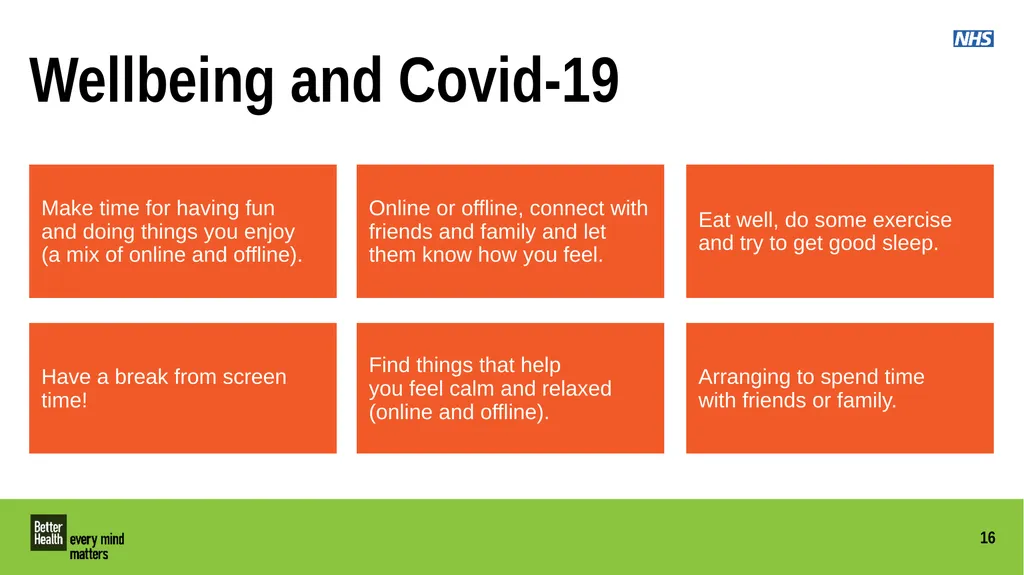
Wellbeing and Covid-19 Make time for having fun
and doing things you enjoy
(a mix of online and offline). Online or offline, connect with friends and family and let them know how you feel. Eat well, do some exercise and try to get good sleep. Have a break from screen time! Find things that help
you feel calm and relaxed
(online and offline). Arranging to spend time
with friends or family.<br>
you feel calm and relaxed
(online and offline). Arranging to spend time
with friends or family.<br>
17
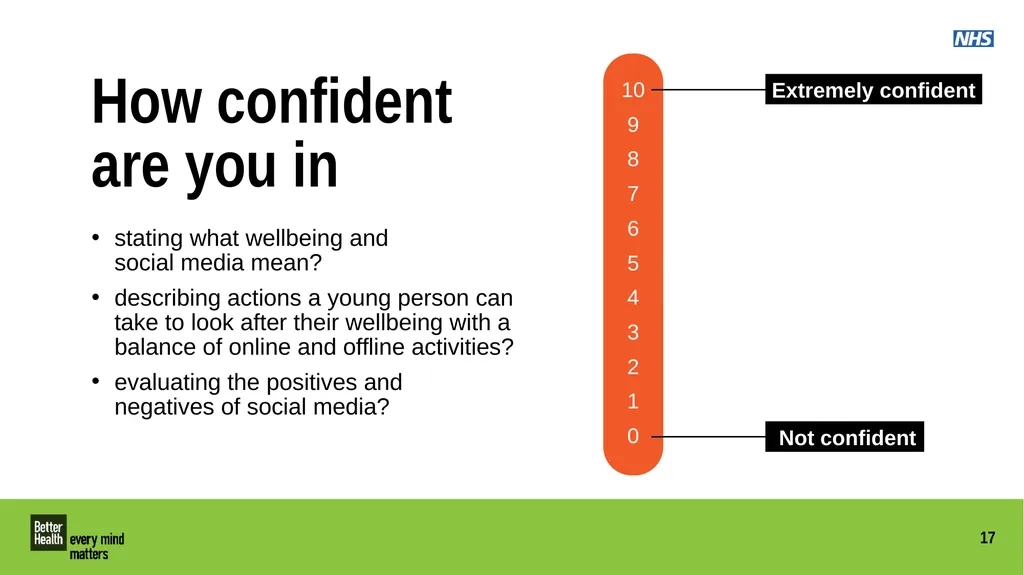
How confident
are you in stating what wellbeing and
social media mean?
describing actions a young person can take to look after their wellbeing with a balance of online and offline activities?
evaluating the positives and negatives of social media? Not confident 0 1 2 3 4 5 6 7 8 9 10 Extremely confident<br>
describing actions a young person can take to look after their wellbeing with a balance of online and offline activities?
evaluating the positives and negatives of social media? Not confident 0 1 2 3 4 5 6 7 8 9 10 Extremely confident<br>
18
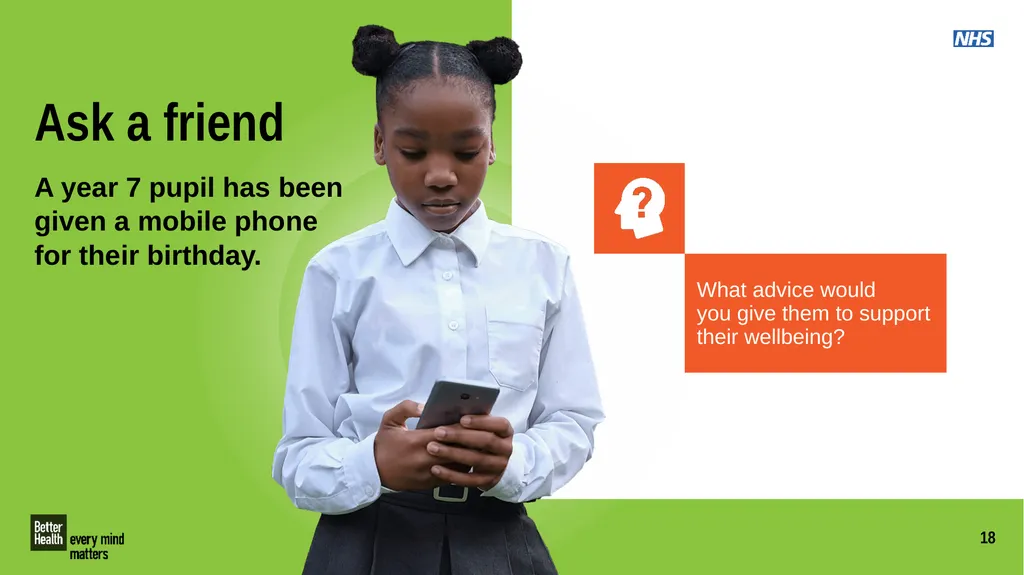
Ask a friend A year 7 pupil has been
given a mobile phone
for their birthday. What advice would
you give them to support their wellbeing?<br>
19
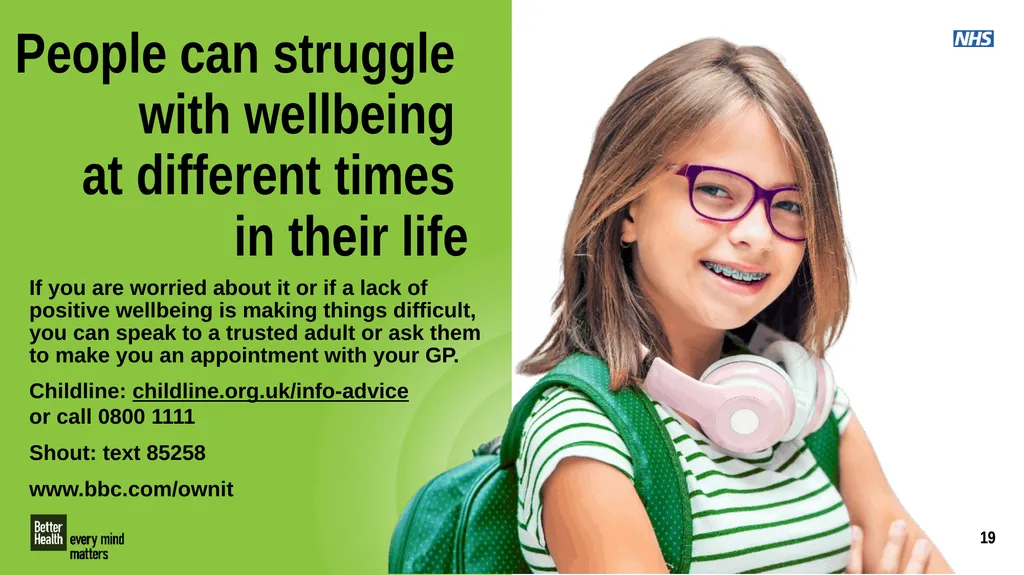
People can struggle
with wellbeing
at different times
in their life If you are worried about it or if a lack of positive wellbeing is making things difficult, you can speak to a trusted adult or ask them to make you an appointment with your GP.
Childline: childline.org.uk/info-advice or call 0800 1111
Shout: text 85258
www.bbc.com/ownit 19<br>
Childline: childline.org.uk/info-advice or call 0800 1111
Shout: text 85258
www.bbc.com/ownit 19<br>
20
Extended learning projects Use the ideas from the lesson to create an individual action plan that could be used over a week.
Pupils can write a diary entry after every action to record how it made them feel. As this is a personal reflection activity, pupils’ ideas should not be
shared publicly with the class.
Come up with a guide to using social media positively for someone when they turn 13. This should include tips for using social media to promote wellbeing, including ideas on how to limit time spent on social media.
Create a class wellbeing tree. On each leaf, a different action to improve wellbeing can be written or drawn.
A ‘term of wellbeing’ class project. As a class, at the beginning of a new term come-up with a list of actions that could promote positive wellbeing. At the beginning of each week, choose one of the actions as a class to focus on trying out that week. At the end of the week, have a period of class feedback to discuss challenges and benefits – this could be written or done verbally or used to create a class display.<br>
Come up with a guide to using social media positively for someone when they turn 13. This should include tips for using social media to promote wellbeing, including ideas on how to limit time spent on social media.
Create a class wellbeing tree. On each leaf, a different action to improve wellbeing can be written or drawn.
A ‘term of wellbeing’ class project. As a class, at the beginning of a new term come-up with a list of actions that could promote positive wellbeing. At the beginning of each week, choose one of the actions as a class to focus on trying out that week. At the end of the week, have a period of class feedback to discuss challenges and benefits – this could be written or done verbally or used to create a class display.<br>