Soil Texture and Agriculture Soil Particles Most soils have a combination of soil particles sizes Sand Silt Clay Particle Sizes Clay: less than 0.002 mm Silt: 0.002-0.005 mm Sand: 0.05-2 mm 0.05-0.24 mm fine 0.25-0.49 mm medium 0.5-0.99 mm
"Soil Texture and Agriculture Soil Particles Most" is the property of its rightful owner. Permission is granted to
download and print the materials on this website for personal, non-commercial use only, and to display it
on your personal computer provided you do not modify the materials and that you retain all copyright
notices contained in the materials. By downloading content from our website, you accept the terms of this
agreement.
Presentation Transcript
01
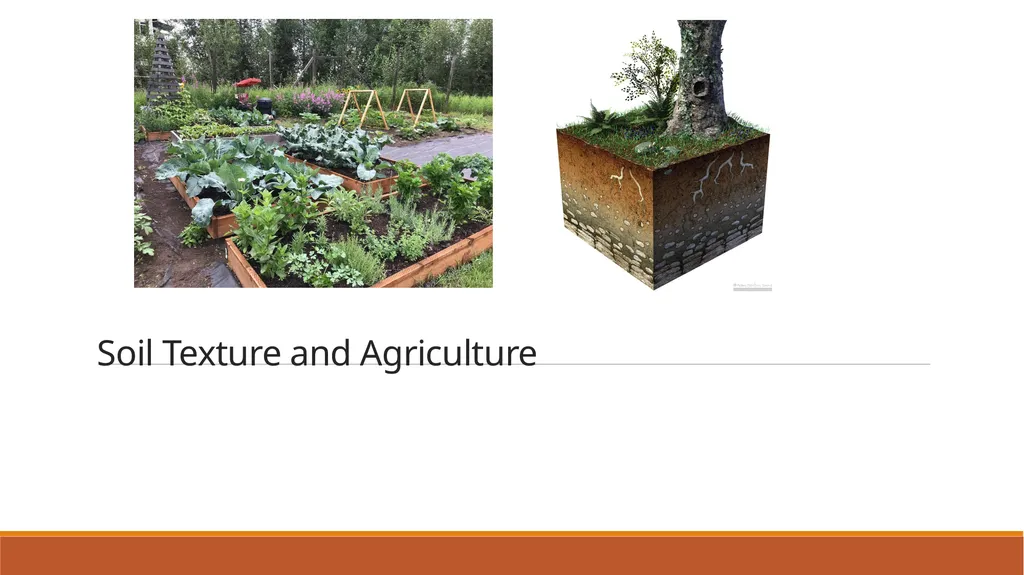
Soil Texture and Agriculture<br>
02
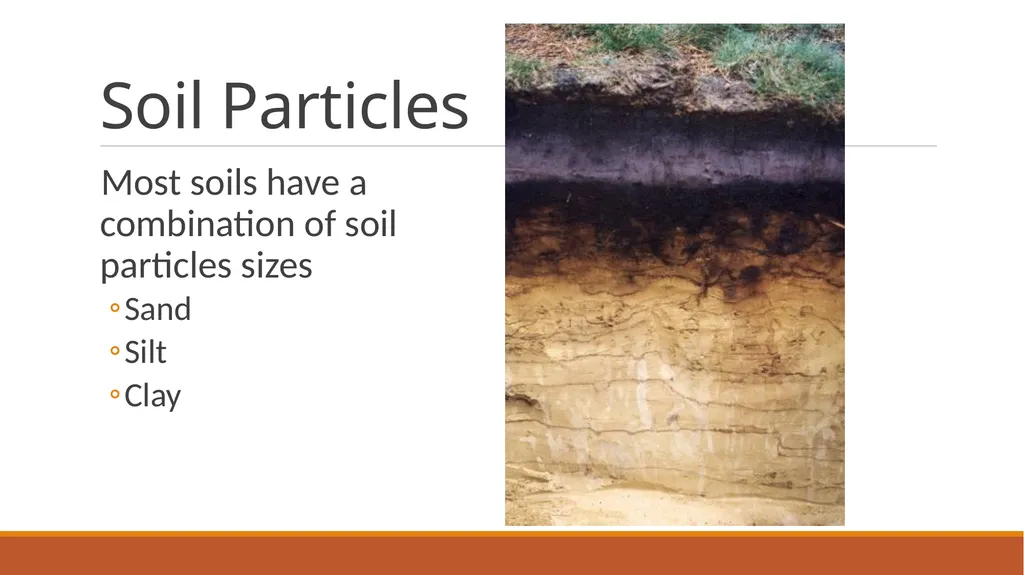
Soil Particles Most soils have a combination of soil particles sizes
Sand
Silt
Clay<br>
03
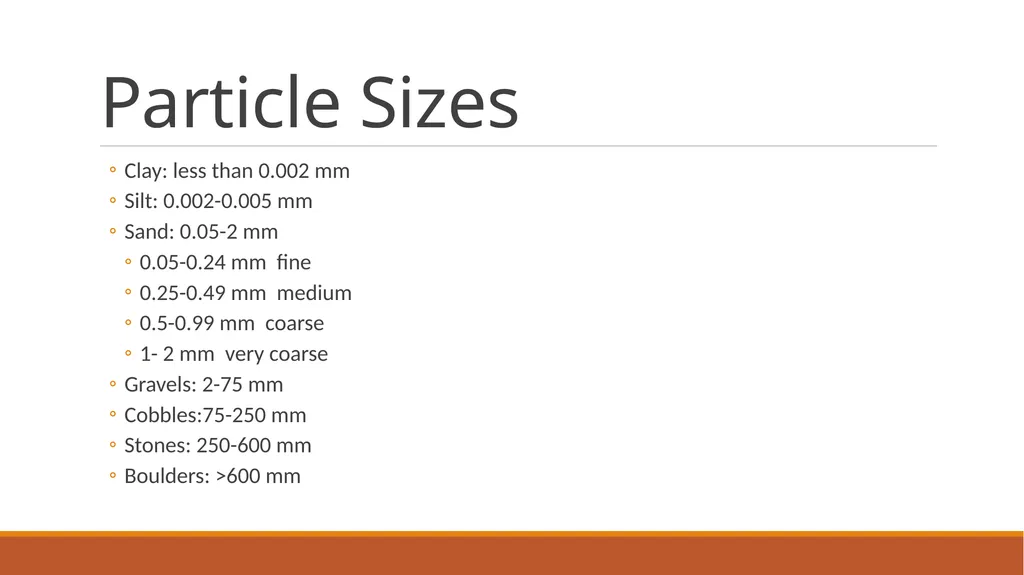
Particle Sizes Clay: less than 0.002 mm
Silt: 0.002-0.005 mm
Sand: 0.05-2 mm
0.05-0.24 mm fine
0.25-0.49 mm medium
0.5-0.99 mm coarse
1- 2 mm very coarse
Gravels: 2-75 mm
Cobbles:75-250 mm
Stones: 250-600 mm
Boulders: >600 mm<br>
04
Sand Gritty feel
Can be seen with the naked eye
Hand sampling:
No residue left on hand<br>
05
Silt Dry: Powdery smooth feel, flour-like
Wet: Creamy slick, slippery feel
No sticky or plastic feel
Can be seen with a hand lens or microscope
Hand sampling:
Coats hand, able to brush off<br>
06
Clay Dry: Hard feel
Wet: Sticky, plastic feel
Can be seen with an electron microscope
Hand Sampling:
Sticks to fingers<br>
07
Influences of Soil Properties Parent Material:
Rock or original source of soil particles
Effects soil quality
Glacial outwash sands tend to be infertile, or hold few minerals and nutrients important for growth
Soils derived from other sources may be relatively rich in minerals and nutrients
Usually a combination of weathered parent materials and organic matter make a soil<br>
08
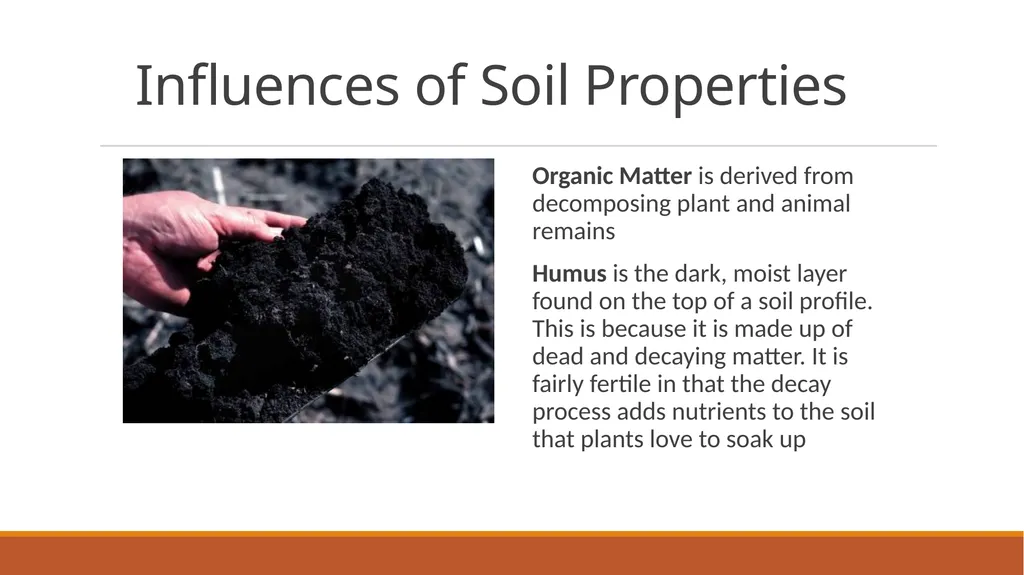
Influences of Soil Properties Organic Matter is derived from decomposing plant and animal remains
Humus is the dark, moist layer found on the top of a soil profile. This is because it is made up of dead and decaying matter. It is fairly fertile in that the decay process adds nutrients to the soil that plants love to soak up<br>
09
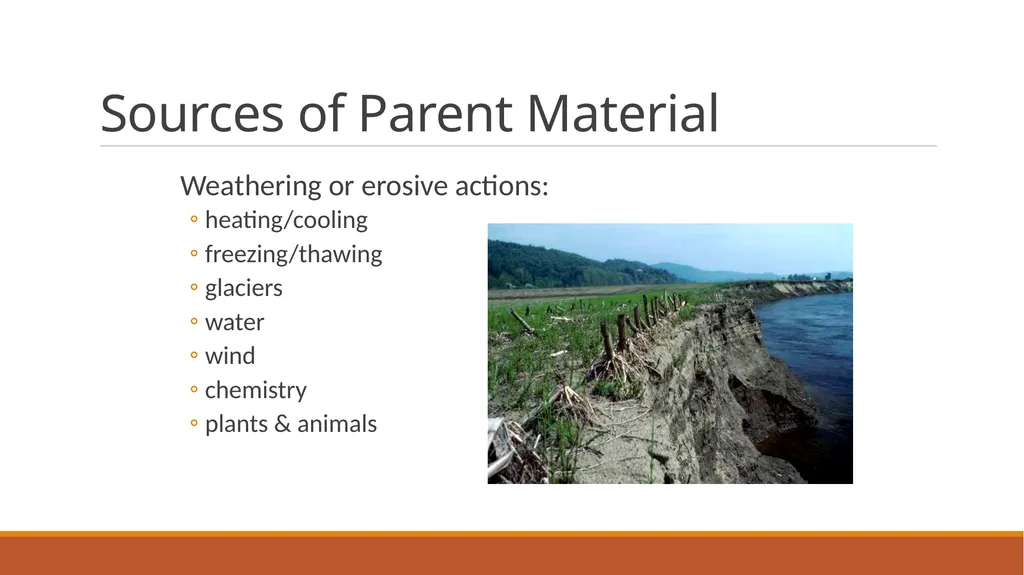
Sources of Parent Material Weathering or erosive actions:
heating/cooling
freezing/thawing
glaciers
water
wind
chemistry
plants & animals<br>
10
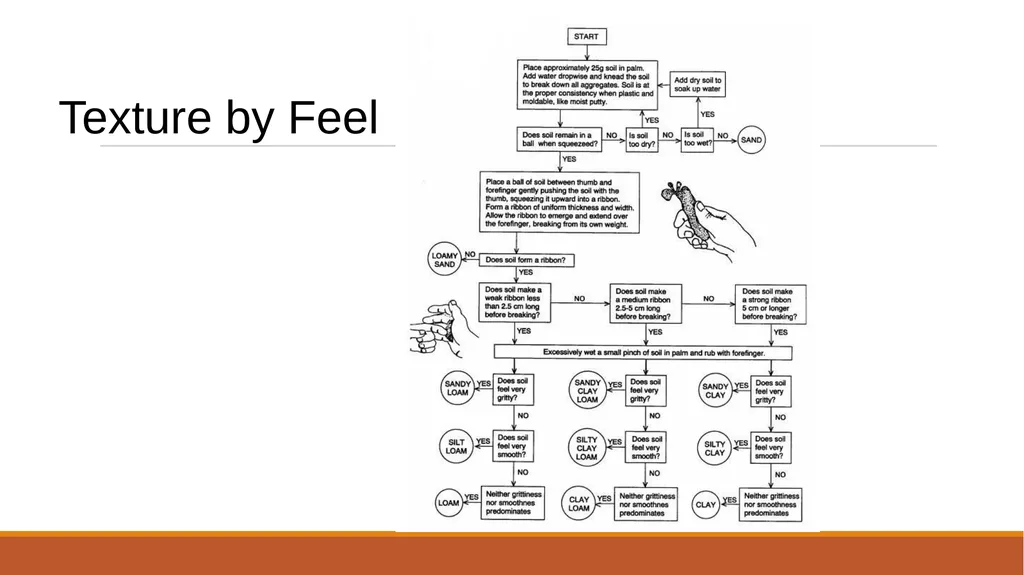
Texture by Feel<br>
11
Soil Texture and Surface Area As particle size decreases, surface area increases
Clay has about 10,000 times as much surface area as sand
Surface area has a big effect on:
Water holding capacity
Chemical reactions
Soil cohesion
Ability to support microorganisms<br>
12
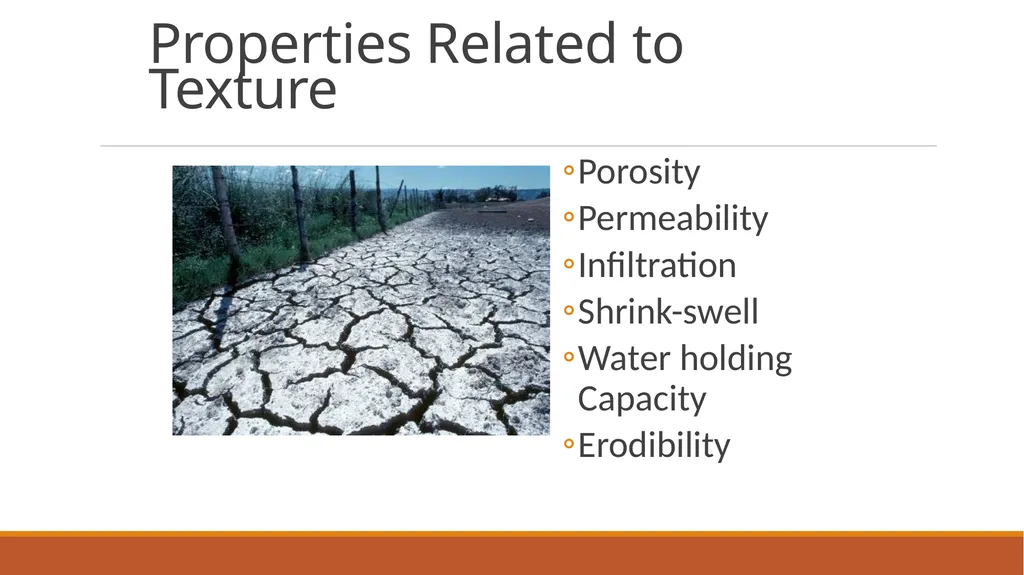
Properties Related to Texture Porosity
Permeability
Infiltration
Shrink-swell
Water holding Capacity
Erodibility<br>
13
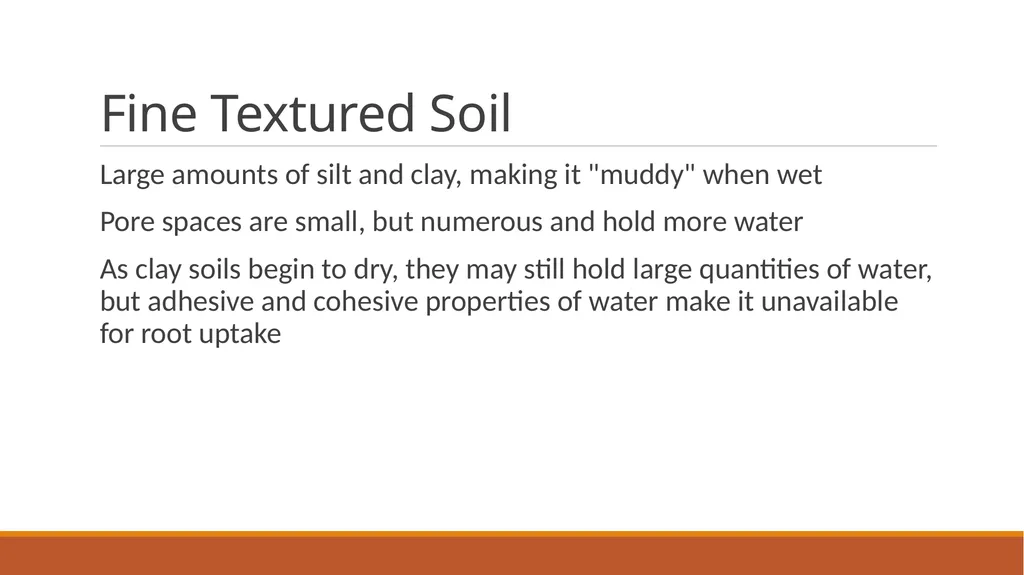
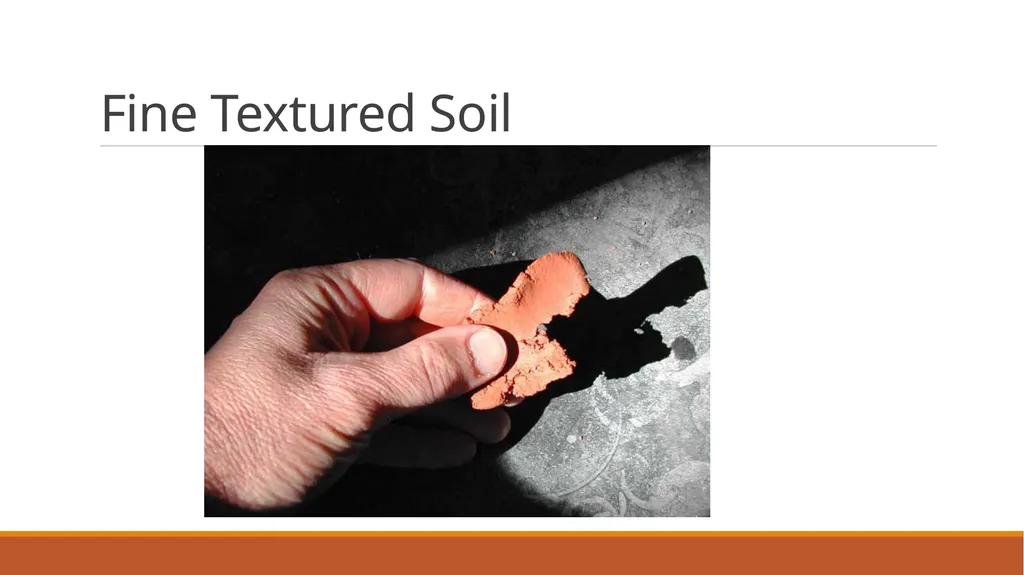
Fine Textured Soil Large amounts of silt and clay, making it "muddy" when wet
Pore spaces are small, but numerous and hold more water
As clay soils begin to dry, they may still hold large quantities of water, but adhesive and cohesive properties of water make it unavailable for root uptake<br>
14
Fine Textured Soil<br>
15
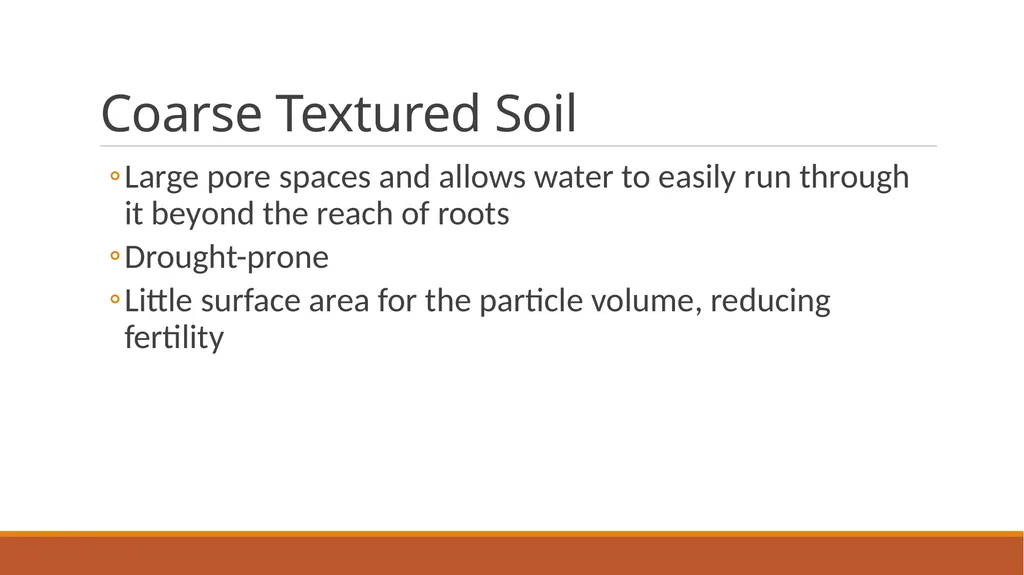
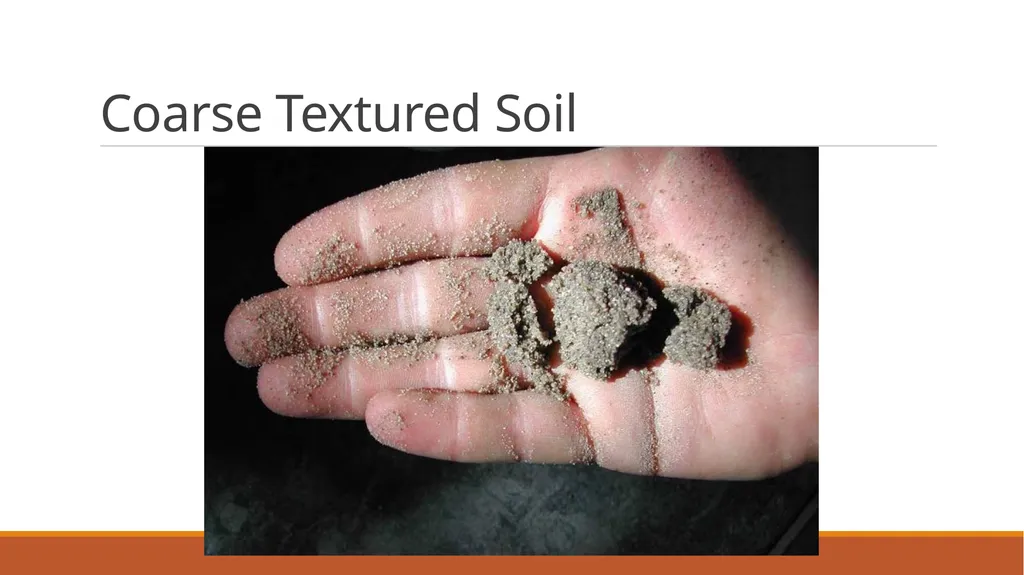
Coarse Textured Soil Large pore spaces and allows water to easily run through it beyond the reach of roots
Drought-prone
Little surface area for the particle volume, reducing fertility<br>
16
Coarse Textured Soil<br>
17
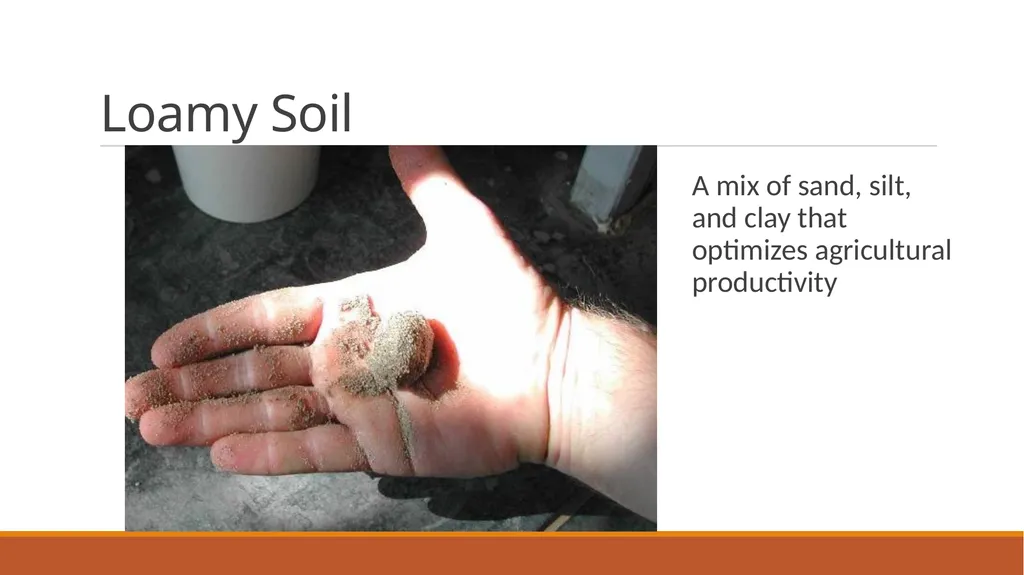
Loamy Soil A mix of sand, silt, and clay that optimizes agricultural productivity<br>