
Solid state physics Lecture (5) -Dielectric- Prof.

Description: Solid state physics Lecture (5) -Dielectric- Prof. Dr. Wisam J. Aziz 1 Introduction Dielectric materials are also called as insulators. In dielectric materials, all the electrons are tightly bound to their parent molecules and there are no
Related Topics
Download Presentation
"Solid state physics Lecture (5) -Dielectric- Prof." is the property of its rightful owner. Permission is granted to download and print the materials on this website for personal, non-commercial use only, and to display it on your personal computer provided you do not modify the materials and that you retain all copyright notices contained in the materials. By downloading content from our website, you accept the terms of this agreement.
Presentation Transcript
slide1. Solid state physics
Lecture (5)
-Dielectric- Prof. Dr. Wisam J. Aziz 1<br>
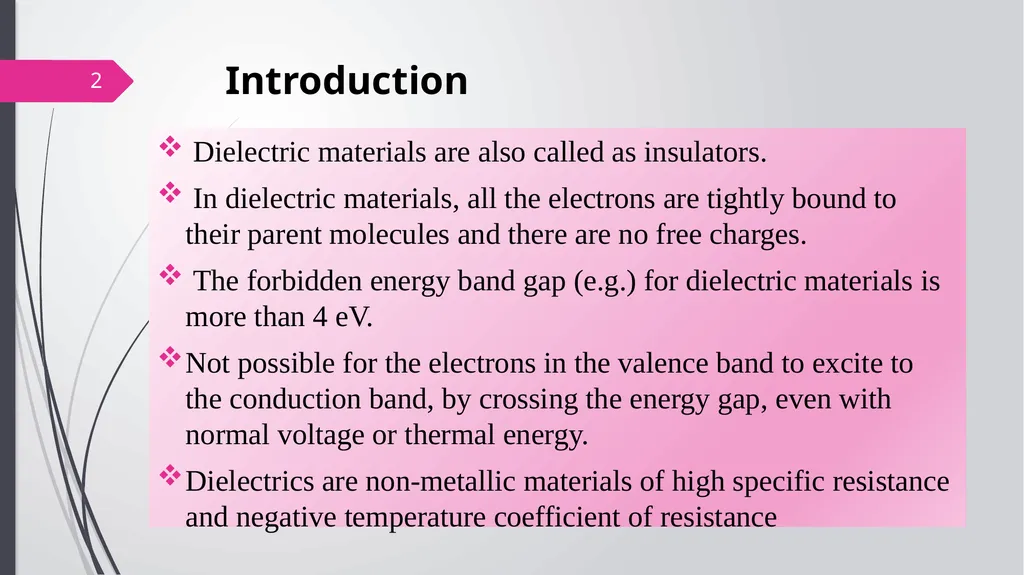
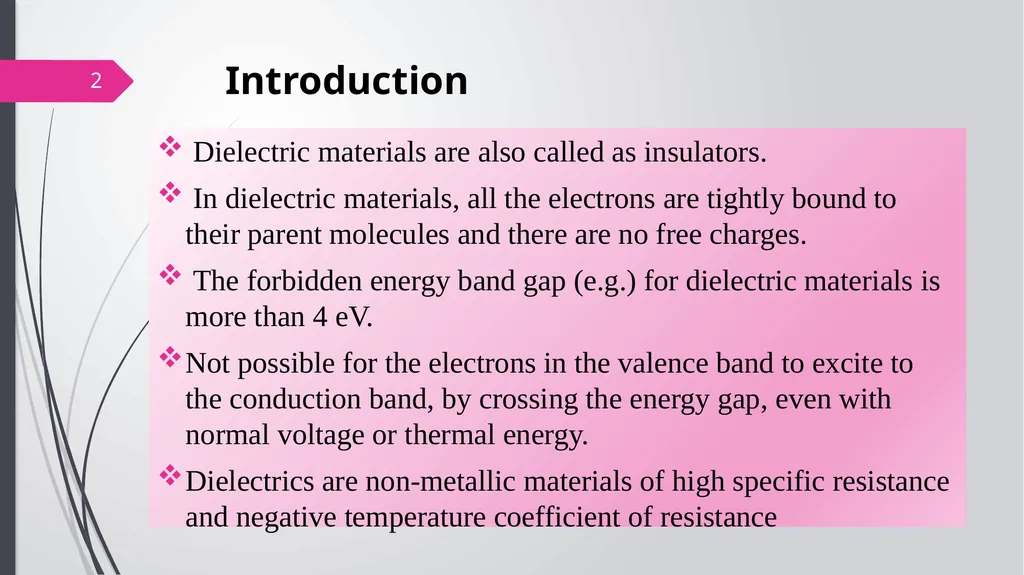
slide2. Introduction Dielectric materials are also called as insulators.
In dielectric materials, all the electrons are tightly bound to their parent molecules and there are no free charges.
The forbidden energy band gap (e.g.) for dielectric materials is more than 4 eV.
Not possible for the electrons in the valence band to excite to the conduction band, by crossing the energy gap, even with normal voltage or thermal energy.
Dielectrics are non-metallic materials of high specific resistance and negative temperature coefficient of resistance 2<br>
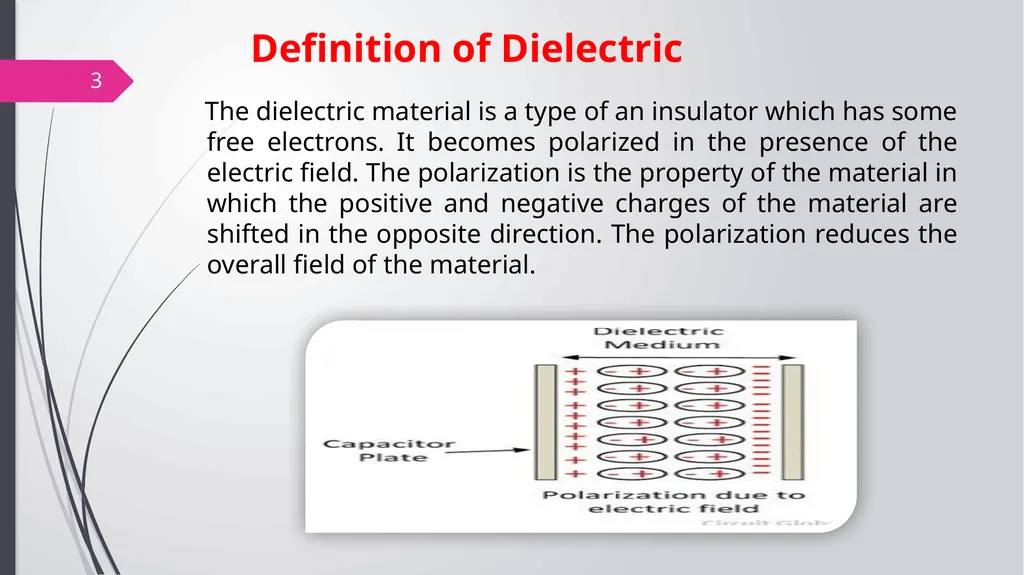
slide3. Definition of Dielectric The dielectric material is a type of an insulator which has some free electrons. It becomes polarized in the presence of the electric field. The polarization is the property of the material in which the positive and negative charges of the material are shifted in the opposite direction. The polarization reduces the overall field of the material. 3<br>
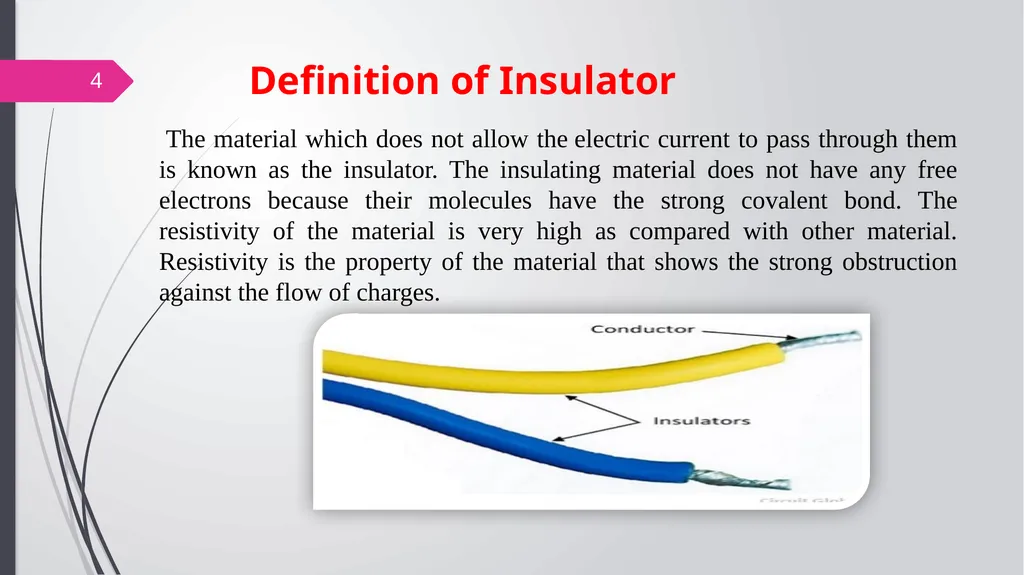
slide4. Definition of Insulator The material which does not allow the electric current to pass through them is known as the insulator. The insulating material does not have any free electrons because their molecules have the strong covalent bond. The resistivity of the material is very high as compared with other material. Resistivity is the property of the material that shows the strong obstruction against the flow of charges. 4<br>
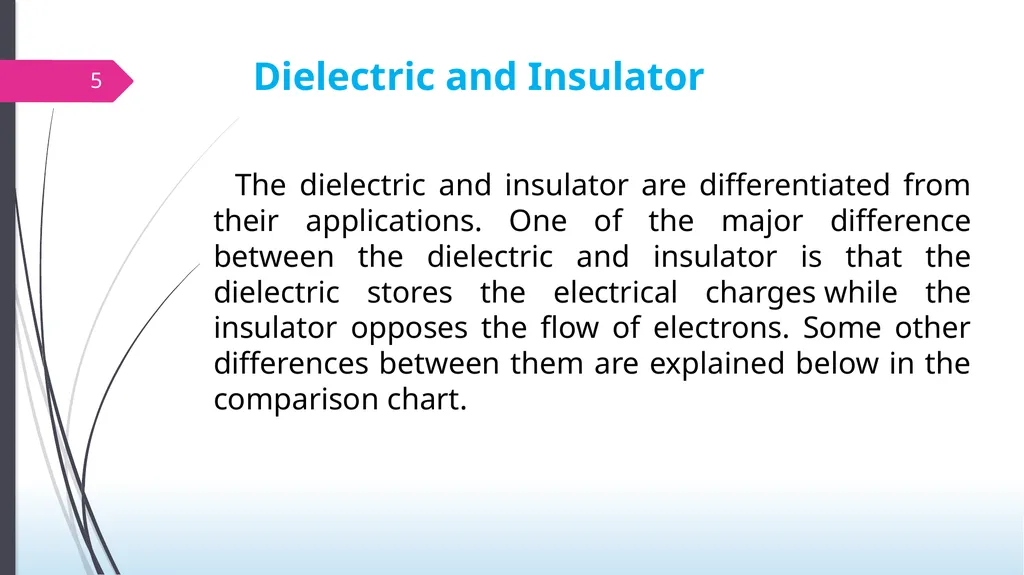
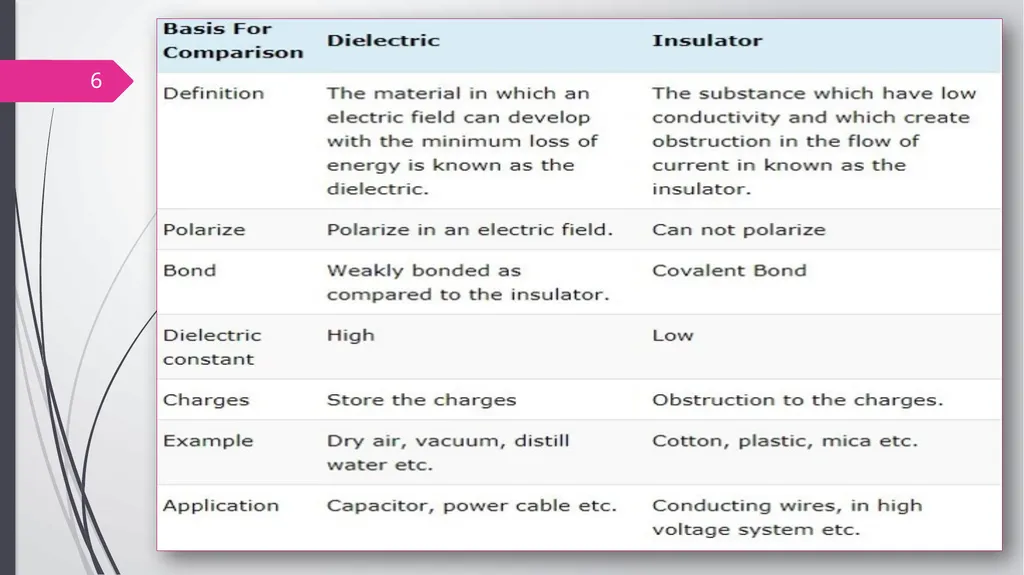
slide5. Dielectric and Insulator The dielectric and insulator are differentiated from their applications. One of the major difference between the dielectric and insulator is that the dielectric stores the electrical charges while the insulator opposes the flow of electrons. Some other differences between them are explained below in the comparison chart. 5<br>
slide6. 6<br>
slide7. Classification of Dielectrics according to electrical energy store The dielectric materials can be classified into
Active dielectric materials
Passive dielectric materials. 7<br>
slide8. Active dielectrics When a dielectrics material is kept in an external electric field, if it actively accepts the electricity, then it is shown as active dielectric material .Thus, active dielectrics are the dielectrics which can easily adapt themselves to store the electrical energy in it.
Examples:- Piezoelectric materials. 8<br>
slide9. Passive dielectrics Passive dielectrics are the dielectrics which restrict the flow of electrical energy in them. So, these dielectrics act as insulators.
Examples: All insulating materials such as glass, mica, rubber. 9<br>
slide10. Classification of Dielectrics according Temperature Dielectric constant, loss tangent and dielectric strength are the three parameters which characterize the dielectric material.
Besides, heat resistance is also one of the important properties, on the basis of which dielectrics have been classified: 10<br>
slide11. (i) Class O (Up to 90 °C) This category comprises of cotton, silk, paper and similar organic materials when neither impregnated nor immersed in liquid dielectric. 11 (ii) Class A (Up to 105 °C)
Like the cotton, silk, paper or similar organic materials when either impregnated or immersed in liquid dielectric. This category also includes molded and laminated materials with cellulose filler, phenolic resins.<br>
slide12. (iii) Class B (Up to 130 °C) Like Mica, asbestos, glass fiber and similar inorganic materials in built-up form with organic binding substances. 12 (iv) Class C (No Temperature Limit)
Mica, porcelain, glass, quartz and similar inorganic materials.<br>
slide13. Properties of Dielectric Material The energy gap in the dielectric materials is very large.
The temperature coefficient of resistance is negative and
the insulation resistance is high.
The dielectric materials have high resistivity.
The attraction between the electrons and the parent nucleus is very strong.
The electrical conductivity of these materials is very low as there are no free electrons to carry current. 13<br>
slide14. Important Properties of Dielectric Permittivity
Electric polarization 14<br>
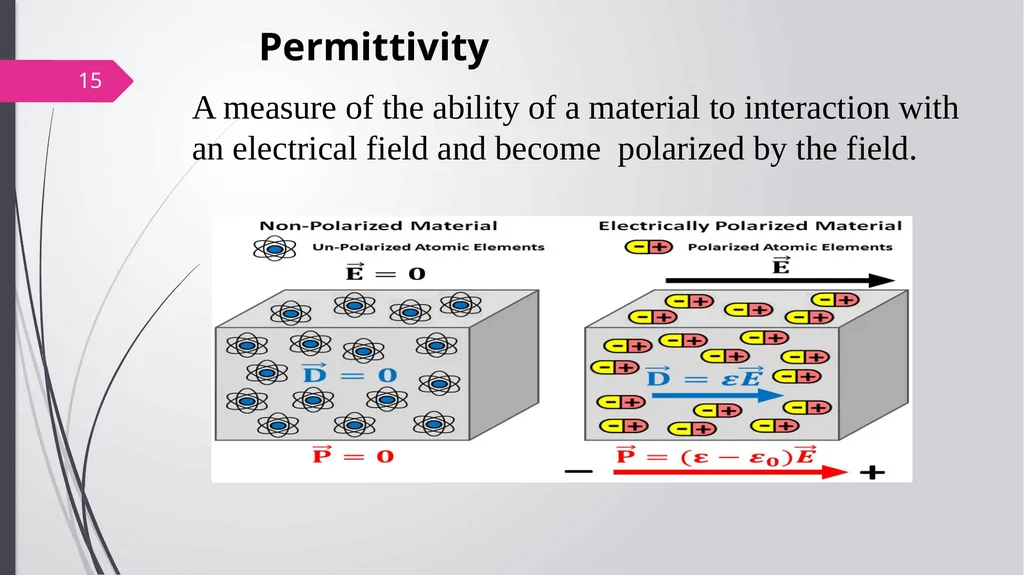
slide15. Permittivity A measure of the ability of a material to interaction with an electrical field and become polarized by the field. 15<br>
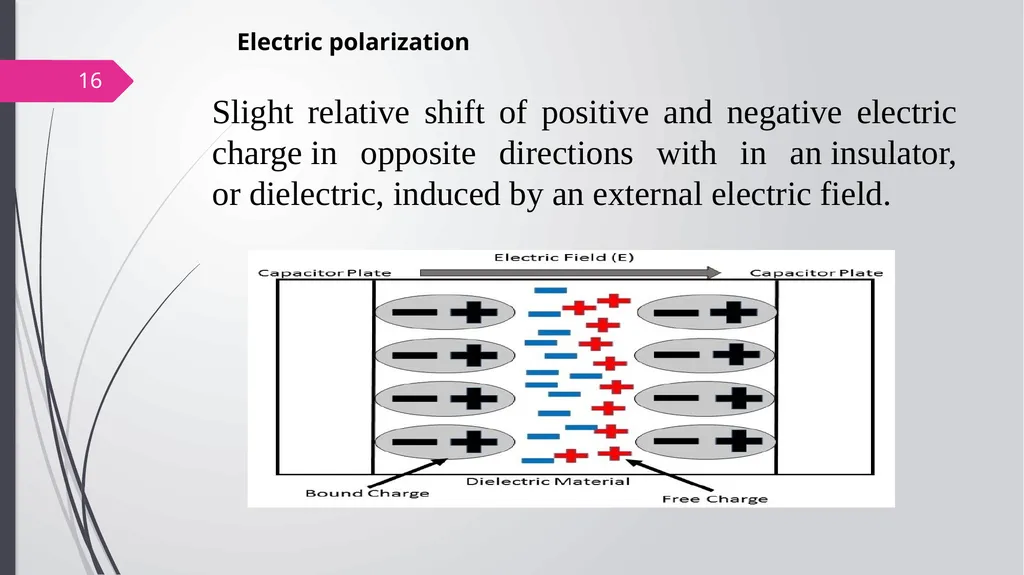
slide16. Electric polarization Slight relative shift of positive and negative electric charge in opposite directions with in an insulator, or dielectric, induced by an external electric field. 16<br>
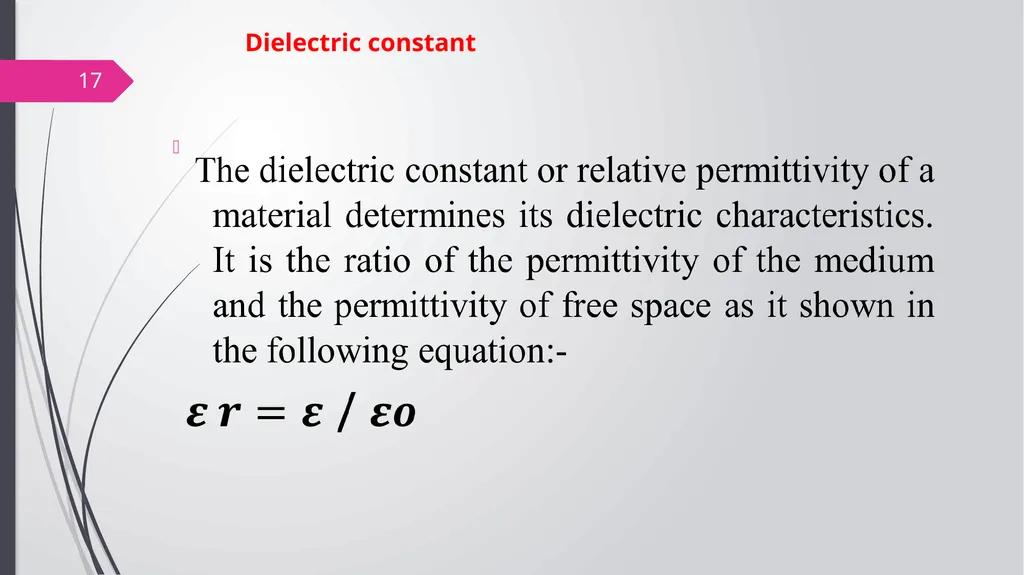
slide17. Dielectric constant 17<br>
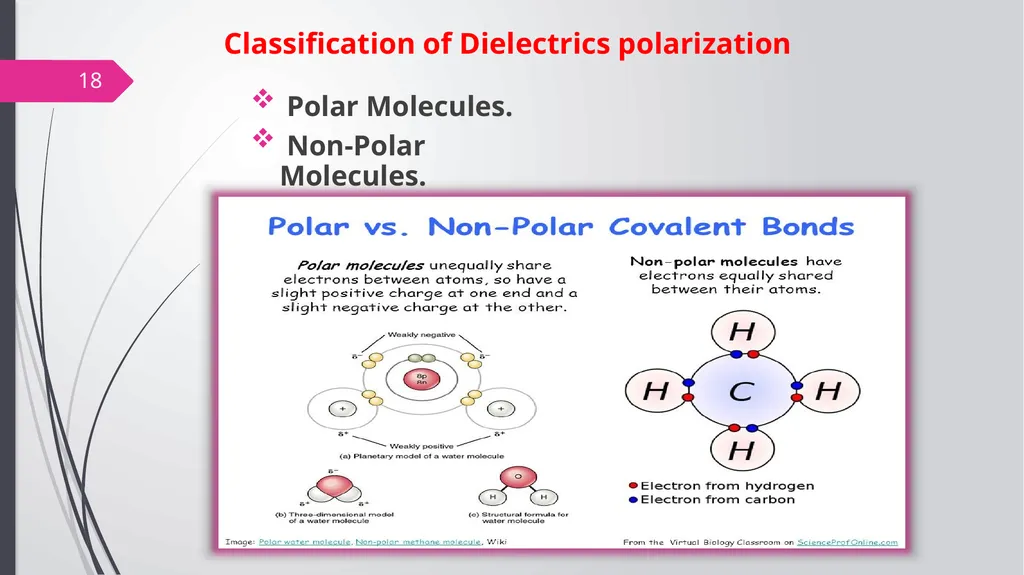
slide18. Classification of Dielectrics polarization Polar Molecules.
Non-Polar Molecules. 18<br>
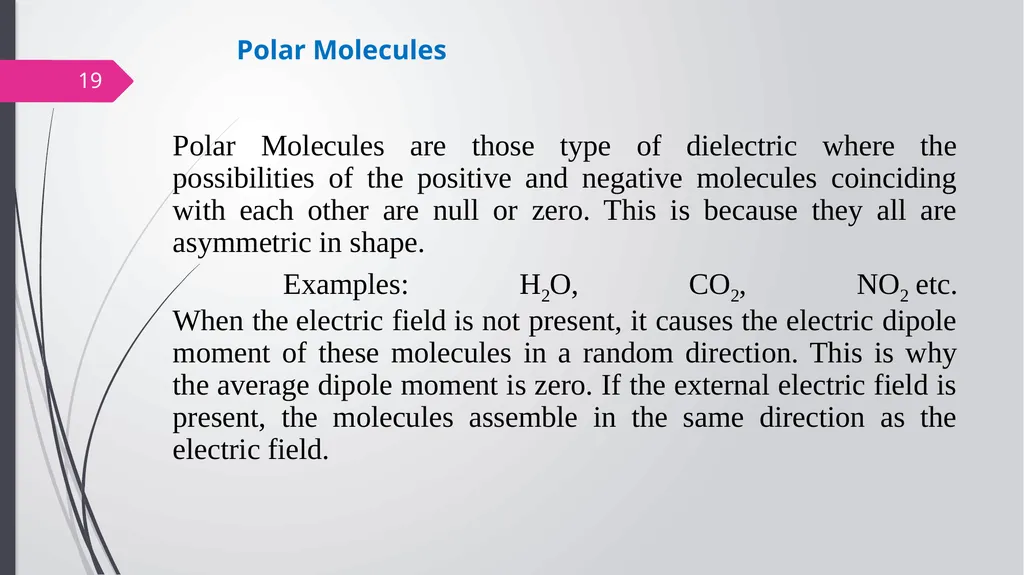
slide19. Polar Molecules Polar Molecules are those type of dielectric where the possibilities of the positive and negative molecules coinciding with each other are null or zero. This is because they all are asymmetric in shape.
Examples: H2O, CO2, NO2 etc. When the electric field is not present, it causes the electric dipole moment of these molecules in a random direction. This is why the average dipole moment is zero. If the external electric field is present, the molecules assemble in the same direction as the electric field. 19<br>
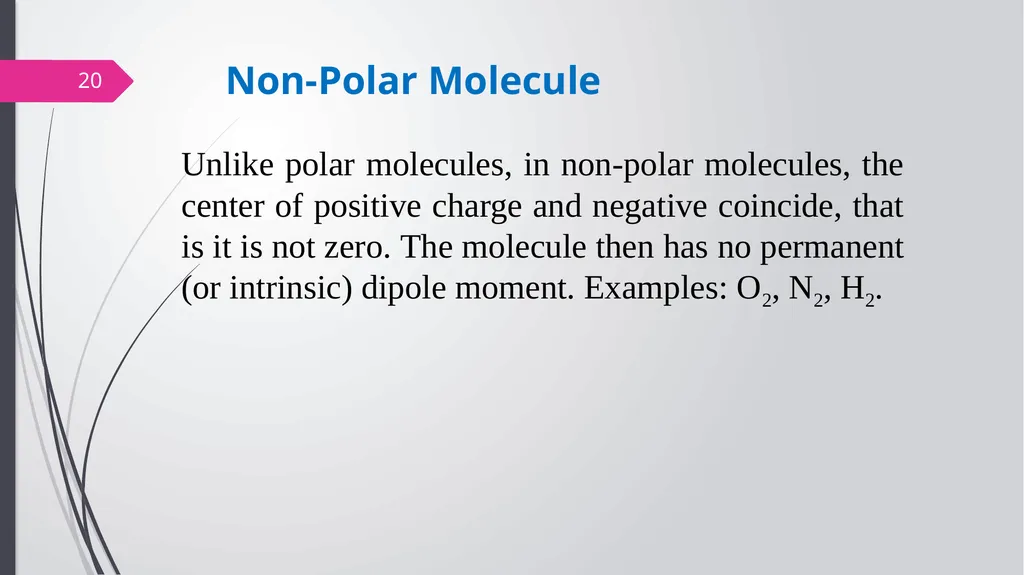
slide20. Non-Polar Molecule Unlike polar molecules, in non-polar molecules, the center of positive charge and negative coincide, that is it is not zero. The molecule then has no permanent (or intrinsic) dipole moment. Examples: O2, N2, H2. 20<br>
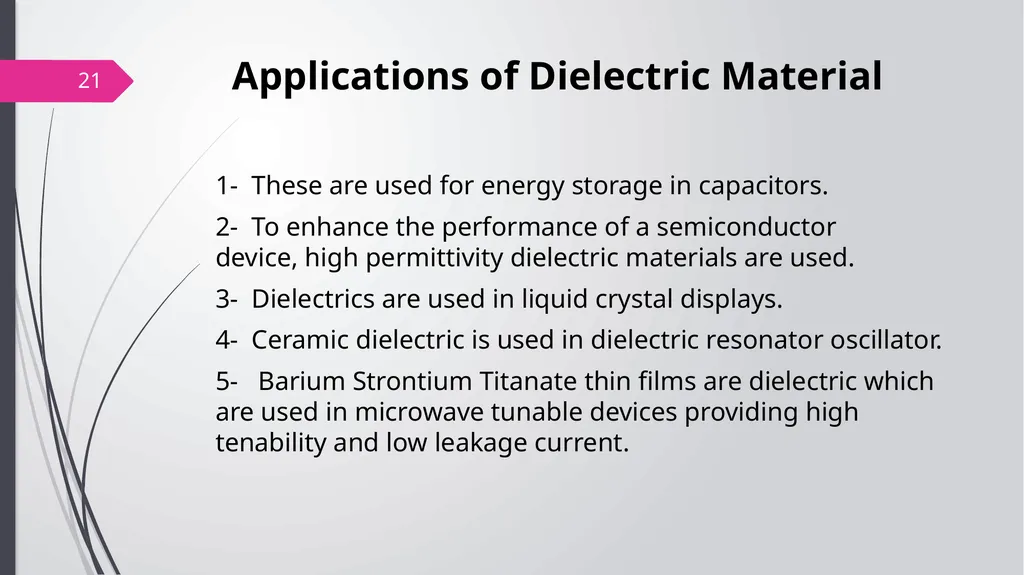
slide21. Applications of Dielectric Material 1- These are used for energy storage in capacitors.
2- To enhance the performance of a semiconductor device, high permittivity dielectric materials are used.
3- Dielectrics are used in liquid crystal displays.
4- Ceramic dielectric is used in dielectric resonator oscillator.
5- Barium Strontium Titanate thin films are dielectric which are used in microwave tunable devices providing high tenability and low leakage current. 21<br>
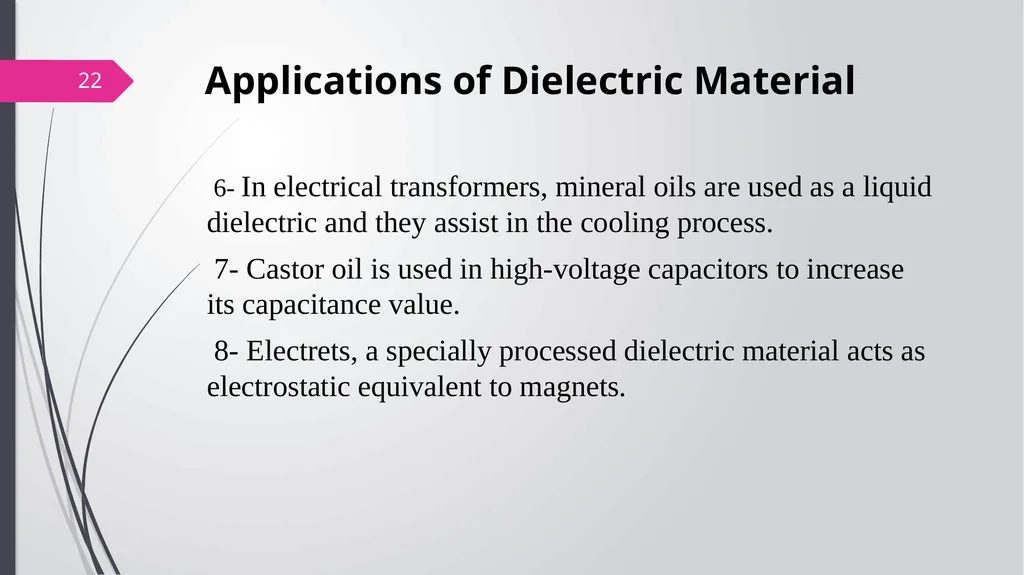
slide22. Applications of Dielectric Material 6- In electrical transformers, mineral oils are used as a liquid dielectric and they assist in the cooling process.
7- Castor oil is used in high-voltage capacitors to increase its capacitance value.
8- Electrets, a specially processed dielectric material acts as electrostatic equivalent to magnets. 22<br>
slide23. 23 THANK YOU FOR YOUR ATTENTION<br>
slide2. Introduction Dielectric materials are also called as insulators.
In dielectric materials, all the electrons are tightly bound to their parent molecules and there are no free charges.
The forbidden energy band gap (e.g.) for dielectric materials is more than 4 eV.
Not possible for the electrons in the valence band to excite to the conduction band, by crossing the energy gap, even with normal voltage or thermal energy.
Dielectrics are non-metallic materials of high specific resistance and negative temperature coefficient of resistance 2<br>
slide3. Definition of Dielectric The dielectric material is a type of an insulator which has some free electrons. It becomes polarized in the presence of the electric field. The polarization is the property of the material in which the positive and negative charges of the material are shifted in the opposite direction. The polarization reduces the overall field of the material. 3<br>
slide4. Definition of Insulator The material which does not allow the electric current to pass through them is known as the insulator. The insulating material does not have any free electrons because their molecules have the strong covalent bond. The resistivity of the material is very high as compared with other material. Resistivity is the property of the material that shows the strong obstruction against the flow of charges. 4<br>
slide5. Dielectric and Insulator The dielectric and insulator are differentiated from their applications. One of the major difference between the dielectric and insulator is that the dielectric stores the electrical charges while the insulator opposes the flow of electrons. Some other differences between them are explained below in the comparison chart. 5<br>
slide6. 6<br>
slide7. Classification of Dielectrics according to electrical energy store The dielectric materials can be classified into
Active dielectric materials
Passive dielectric materials. 7<br>
slide8. Active dielectrics When a dielectrics material is kept in an external electric field, if it actively accepts the electricity, then it is shown as active dielectric material .Thus, active dielectrics are the dielectrics which can easily adapt themselves to store the electrical energy in it.
Examples:- Piezoelectric materials. 8<br>
slide9. Passive dielectrics Passive dielectrics are the dielectrics which restrict the flow of electrical energy in them. So, these dielectrics act as insulators.
Examples: All insulating materials such as glass, mica, rubber. 9<br>
slide10. Classification of Dielectrics according Temperature Dielectric constant, loss tangent and dielectric strength are the three parameters which characterize the dielectric material.
Besides, heat resistance is also one of the important properties, on the basis of which dielectrics have been classified: 10<br>
slide11. (i) Class O (Up to 90 °C) This category comprises of cotton, silk, paper and similar organic materials when neither impregnated nor immersed in liquid dielectric. 11 (ii) Class A (Up to 105 °C)
Like the cotton, silk, paper or similar organic materials when either impregnated or immersed in liquid dielectric. This category also includes molded and laminated materials with cellulose filler, phenolic resins.<br>
slide12. (iii) Class B (Up to 130 °C) Like Mica, asbestos, glass fiber and similar inorganic materials in built-up form with organic binding substances. 12 (iv) Class C (No Temperature Limit)
Mica, porcelain, glass, quartz and similar inorganic materials.<br>
slide13. Properties of Dielectric Material The energy gap in the dielectric materials is very large.
The temperature coefficient of resistance is negative and
the insulation resistance is high.
The dielectric materials have high resistivity.
The attraction between the electrons and the parent nucleus is very strong.
The electrical conductivity of these materials is very low as there are no free electrons to carry current. 13<br>
slide14. Important Properties of Dielectric Permittivity
Electric polarization 14<br>
slide15. Permittivity A measure of the ability of a material to interaction with an electrical field and become polarized by the field. 15<br>
slide16. Electric polarization Slight relative shift of positive and negative electric charge in opposite directions with in an insulator, or dielectric, induced by an external electric field. 16<br>
slide17. Dielectric constant 17<br>
slide18. Classification of Dielectrics polarization Polar Molecules.
Non-Polar Molecules. 18<br>
slide19. Polar Molecules Polar Molecules are those type of dielectric where the possibilities of the positive and negative molecules coinciding with each other are null or zero. This is because they all are asymmetric in shape.
Examples: H2O, CO2, NO2 etc. When the electric field is not present, it causes the electric dipole moment of these molecules in a random direction. This is why the average dipole moment is zero. If the external electric field is present, the molecules assemble in the same direction as the electric field. 19<br>
slide20. Non-Polar Molecule Unlike polar molecules, in non-polar molecules, the center of positive charge and negative coincide, that is it is not zero. The molecule then has no permanent (or intrinsic) dipole moment. Examples: O2, N2, H2. 20<br>
slide21. Applications of Dielectric Material 1- These are used for energy storage in capacitors.
2- To enhance the performance of a semiconductor device, high permittivity dielectric materials are used.
3- Dielectrics are used in liquid crystal displays.
4- Ceramic dielectric is used in dielectric resonator oscillator.
5- Barium Strontium Titanate thin films are dielectric which are used in microwave tunable devices providing high tenability and low leakage current. 21<br>
slide22. Applications of Dielectric Material 6- In electrical transformers, mineral oils are used as a liquid dielectric and they assist in the cooling process.
7- Castor oil is used in high-voltage capacitors to increase its capacitance value.
8- Electrets, a specially processed dielectric material acts as electrostatic equivalent to magnets. 22<br>
slide23. 23 THANK YOU FOR YOUR ATTENTION<br>