04
Limiting factors Density-dependent limiting factors
Effects of these depend on the size of the population
Examples:
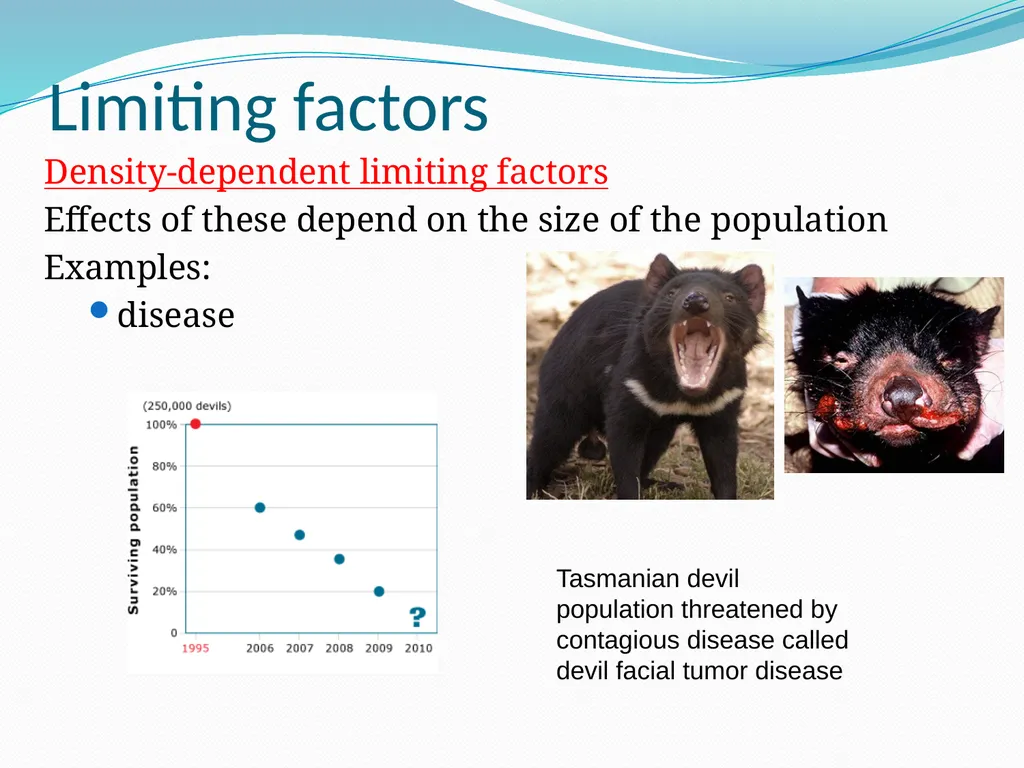
disease Tasmanian devil population threatened by contagious disease called devil facial tumor disease<br>
05
Limiting factors Density-dependent limiting factors
Example:
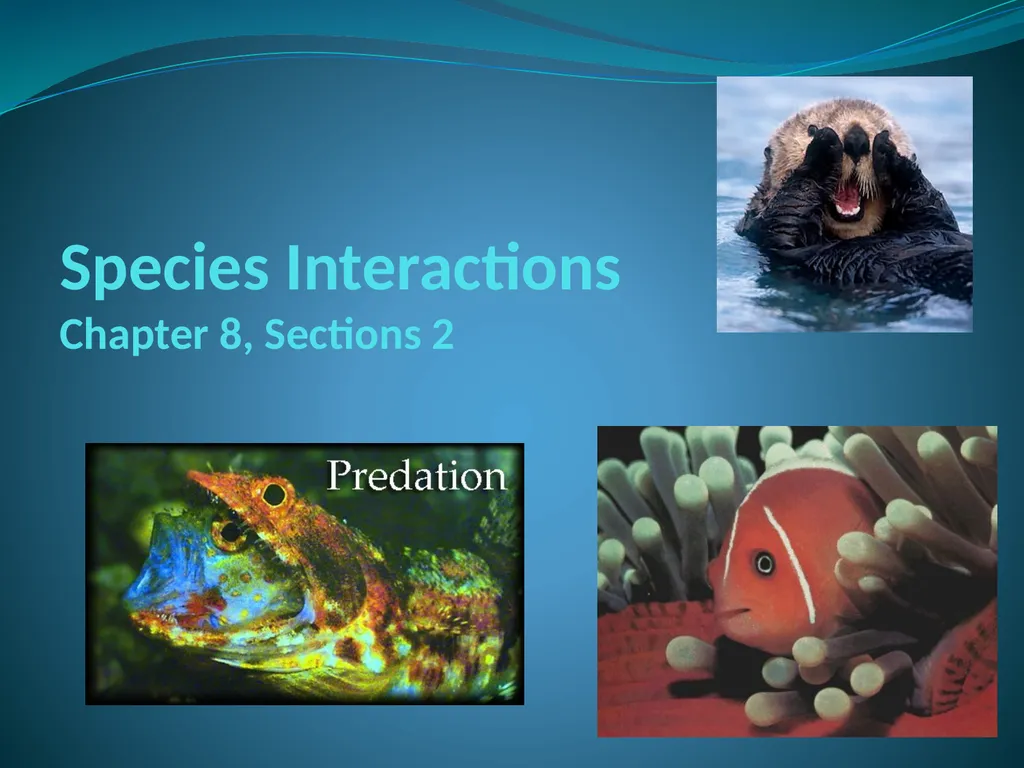
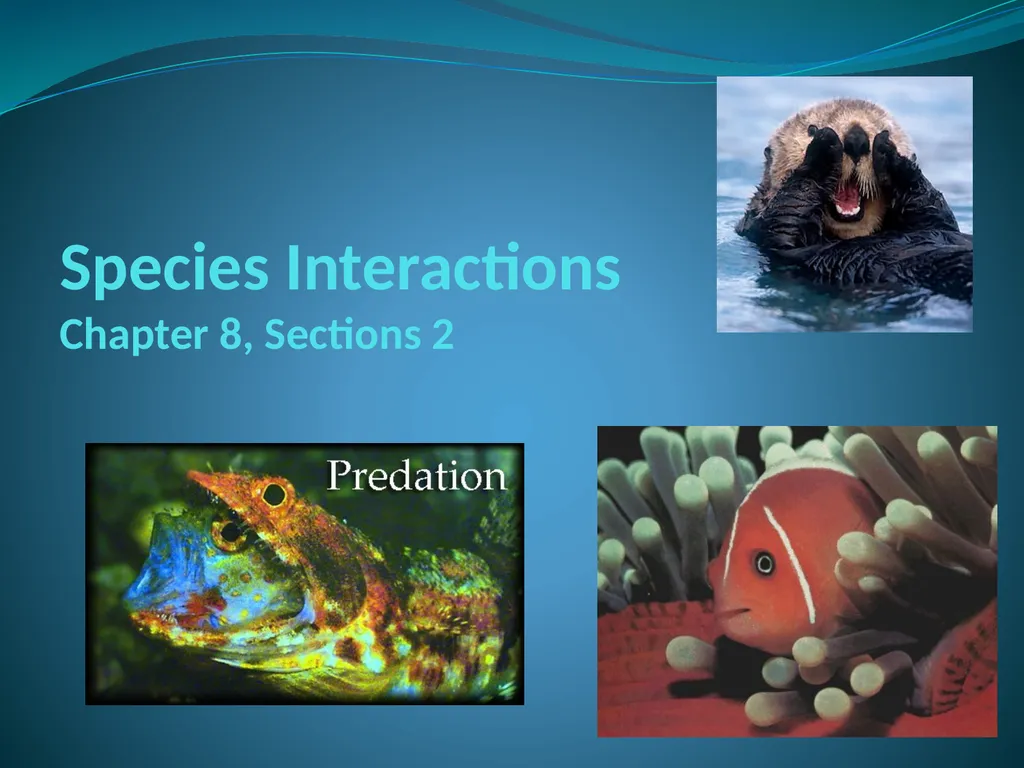
Species Interactions
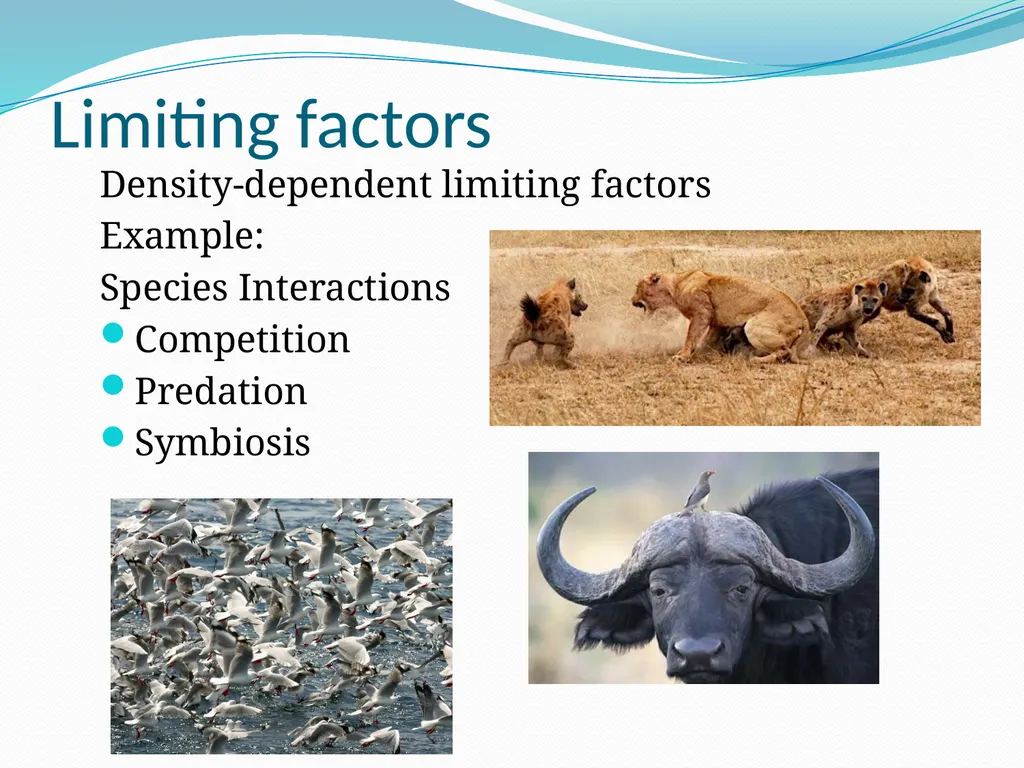
Competition
Predation
Symbiosis<br>
06
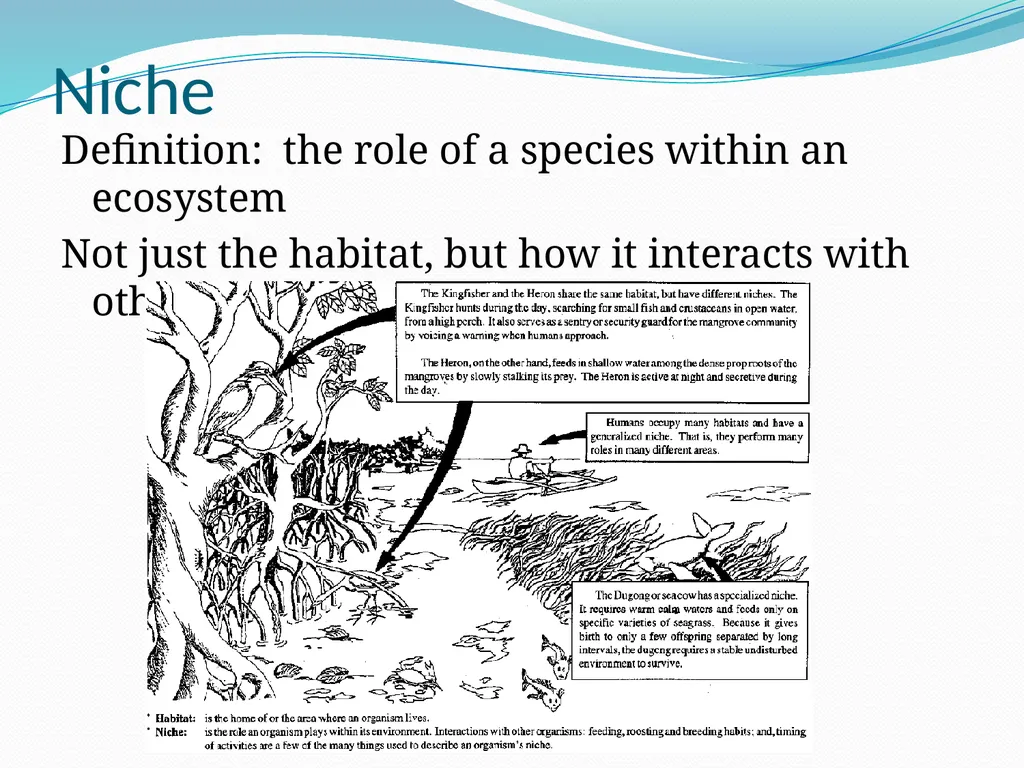
Niche Definition: the role of a species within an ecosystem
Not just the habitat, but how it interacts with other organisms, too<br>
07
Competition Definition: when two or more individuals or populations try to use the same limited resource
Both are negatively affected by the interaction<br>
08
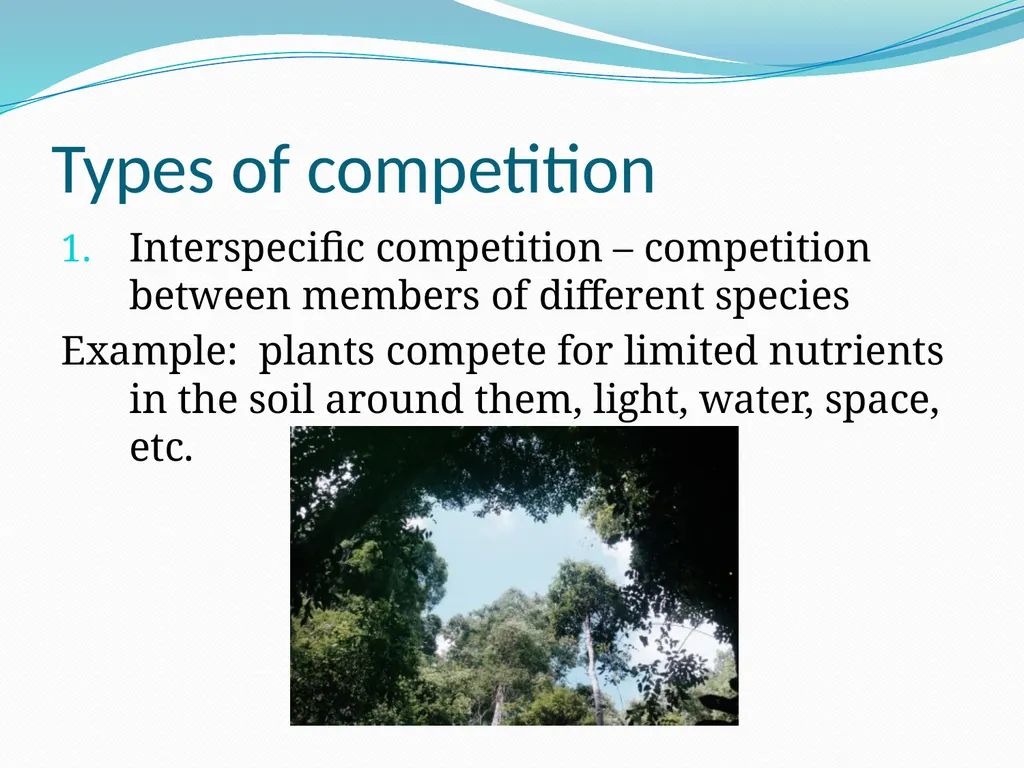
Types of competition Interspecific competition – competition between members of different species
Example: plants compete for limited nutrients in the soil around them, light, water, space, etc.<br>
09
Interspecific competition Organisms have different adaptations to improve competitive edge – a few examples:
produce many offspring
have extensive root systems that are efficient
extremely fast growth rate
allelopathy – when a plant produces a chemical that prevents other plants from growing around it (black walnut, sunflowers, junipers)
aggressive behavior<br>
10
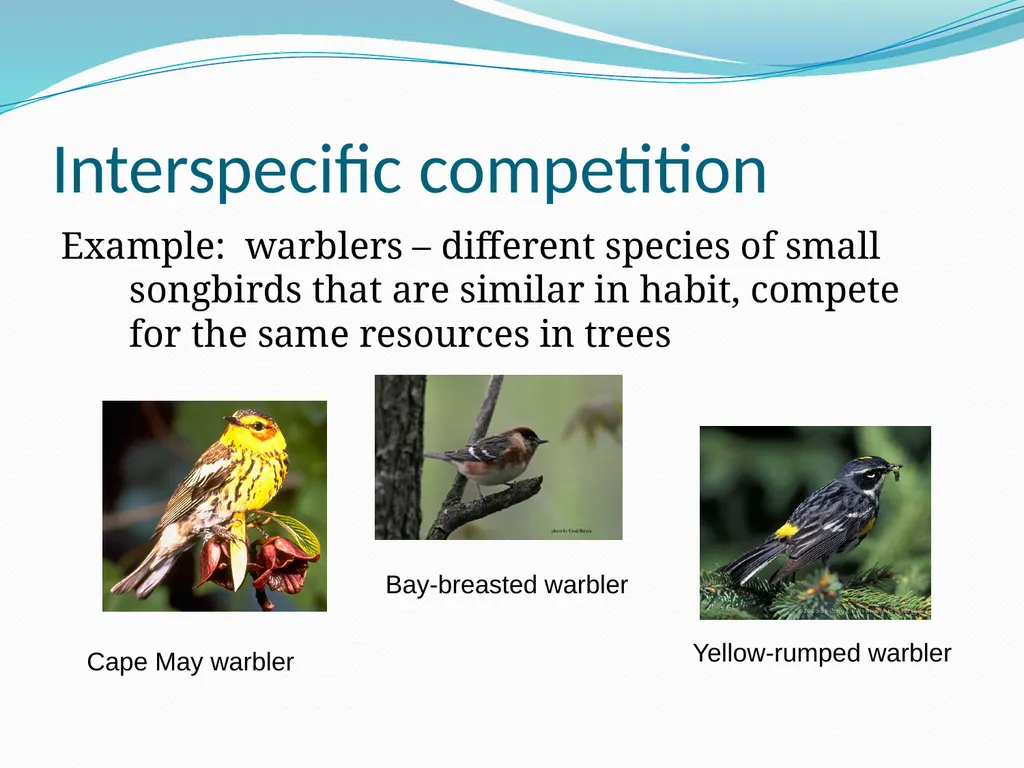
Interspecific competition Example: warblers – different species of small songbirds that are similar in habit, compete for the same resources in trees Cape May warbler Bay-breasted warbler Yellow-rumped warbler<br>
11
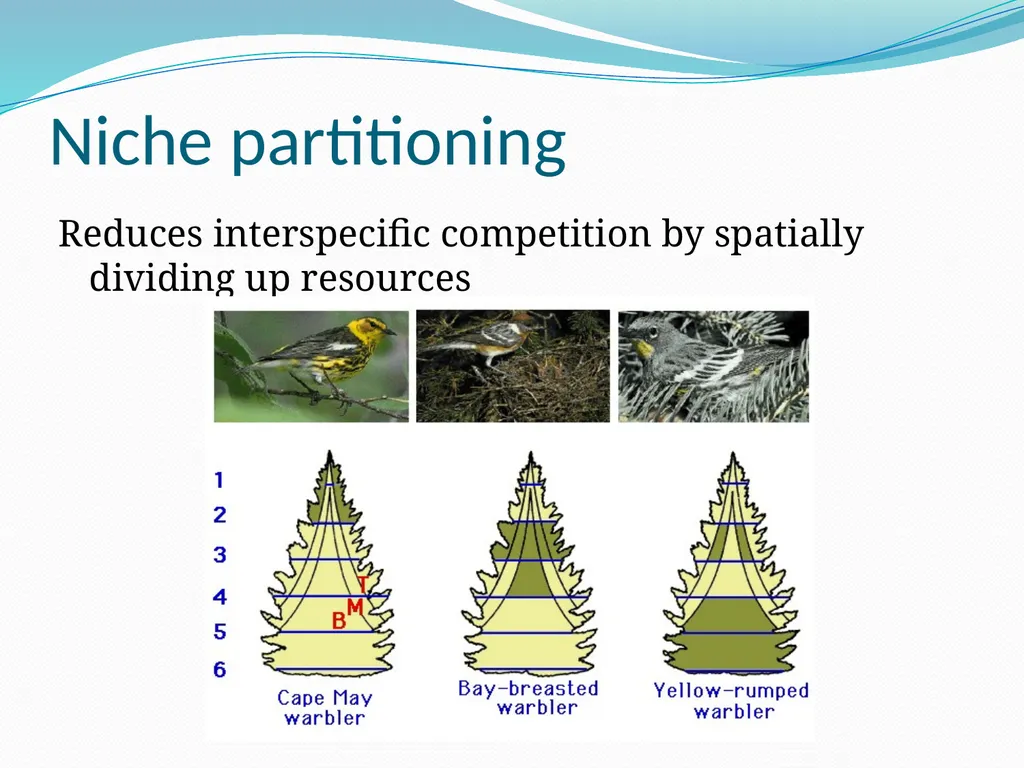
Niche partitioning Reduces interspecific competition by spatially dividing up resources<br>
12
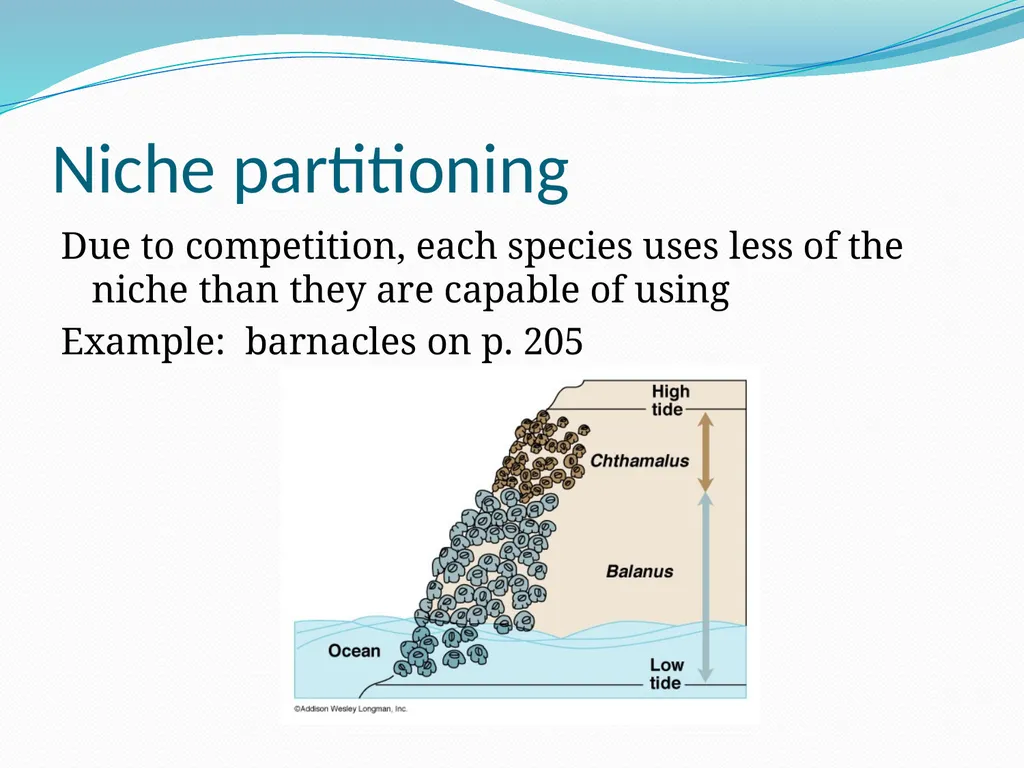
Niche partitioning Due to competition, each species uses less of the niche than they are capable of using
Example: barnacles on p. 205<br>
13
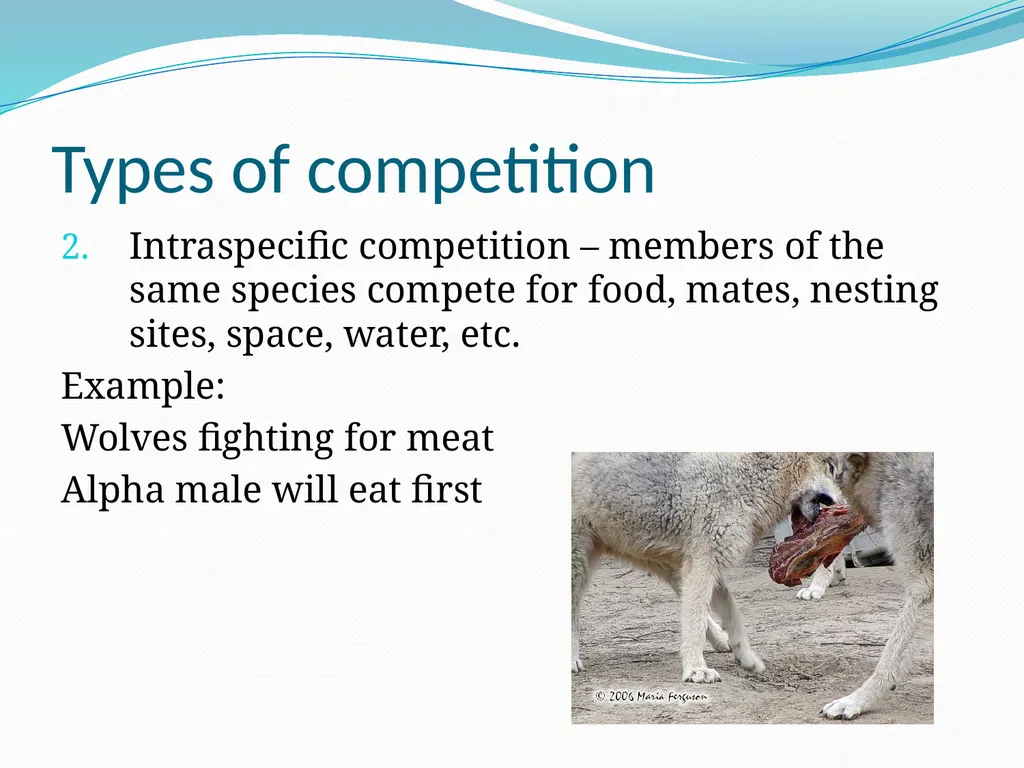
Types of competition Intraspecific competition – members of the same species compete for food, mates, nesting sites, space, water, etc.
Example:
Wolves fighting for meat
Alpha male will eat first<br>
14
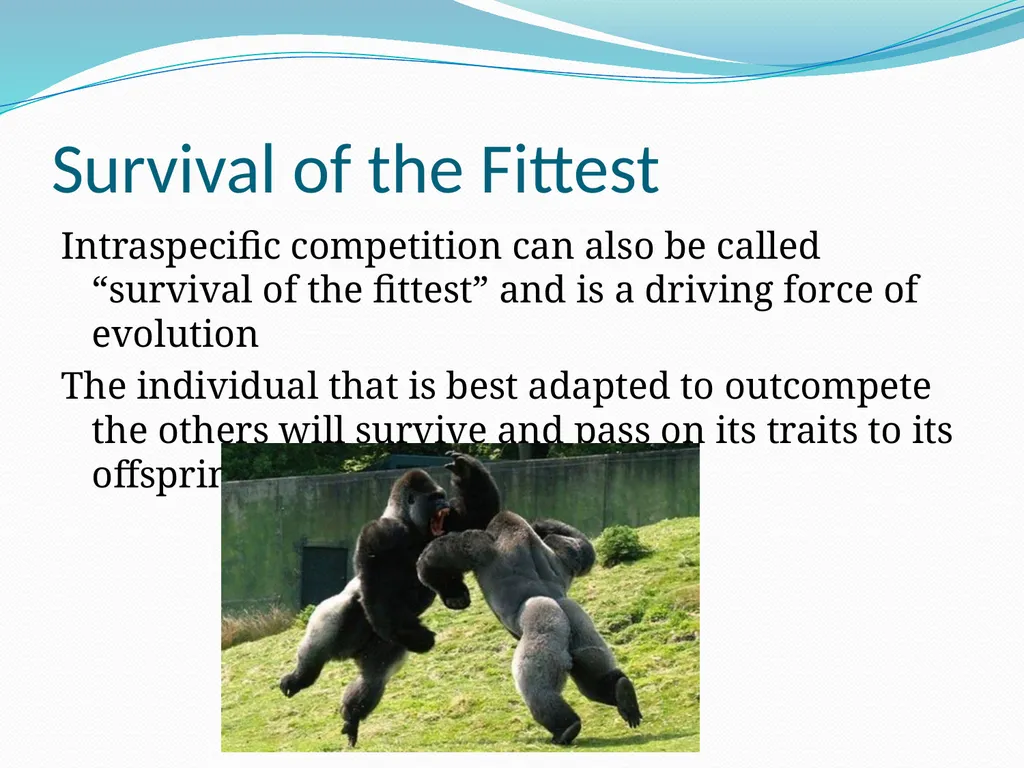
Survival of the Fittest Intraspecific competition can also be called “survival of the fittest” and is a driving force of evolution
The individual that is best adapted to outcompete the others will survive and pass on its traits to its offspring<br>
15
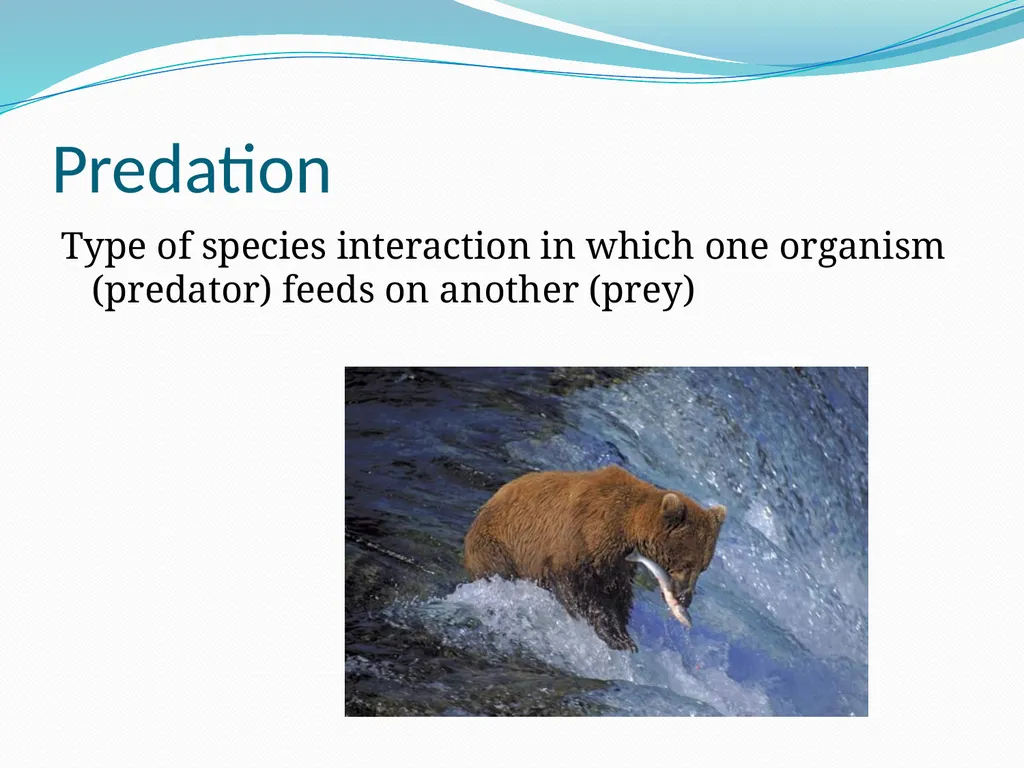
Predation Type of species interaction in which one organism (predator) feeds on another (prey)<br>
16
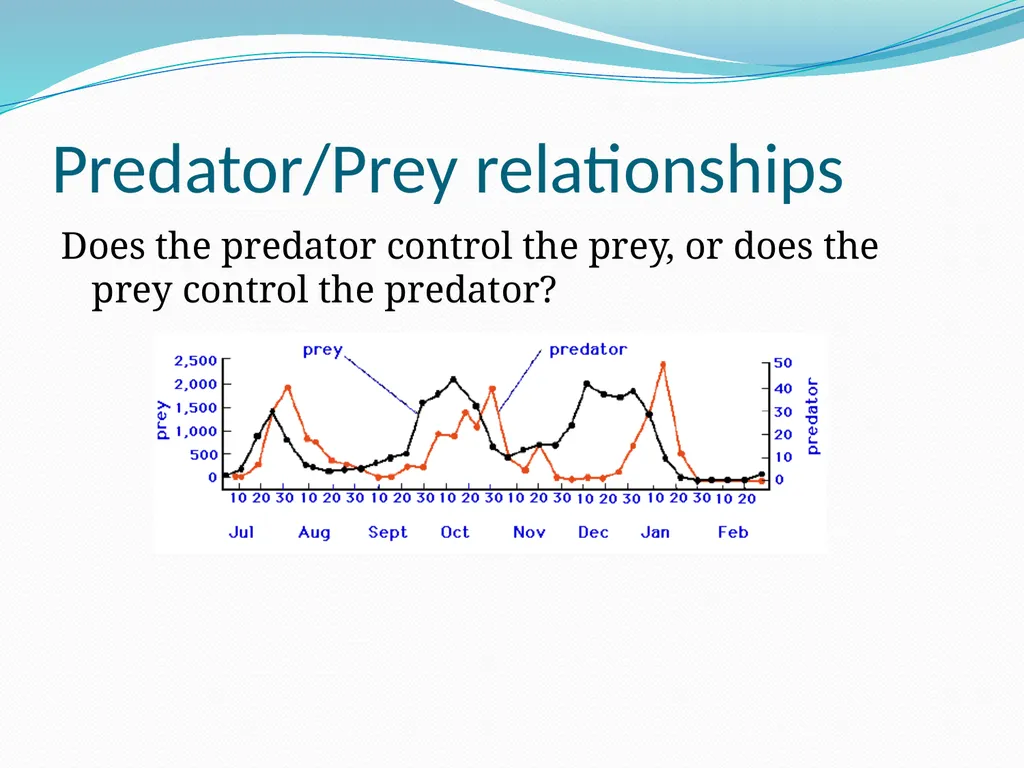
Predator/Prey relationships Does the predator control the prey, or does the prey control the predator?<br>
17
Predator/Prey relationships Many adaptations have evolved due to predator/prey relationships
Examples of adaptations of prey:
camouflage, warning coloration, mimicry, chemical warfare, behavior<br>
18
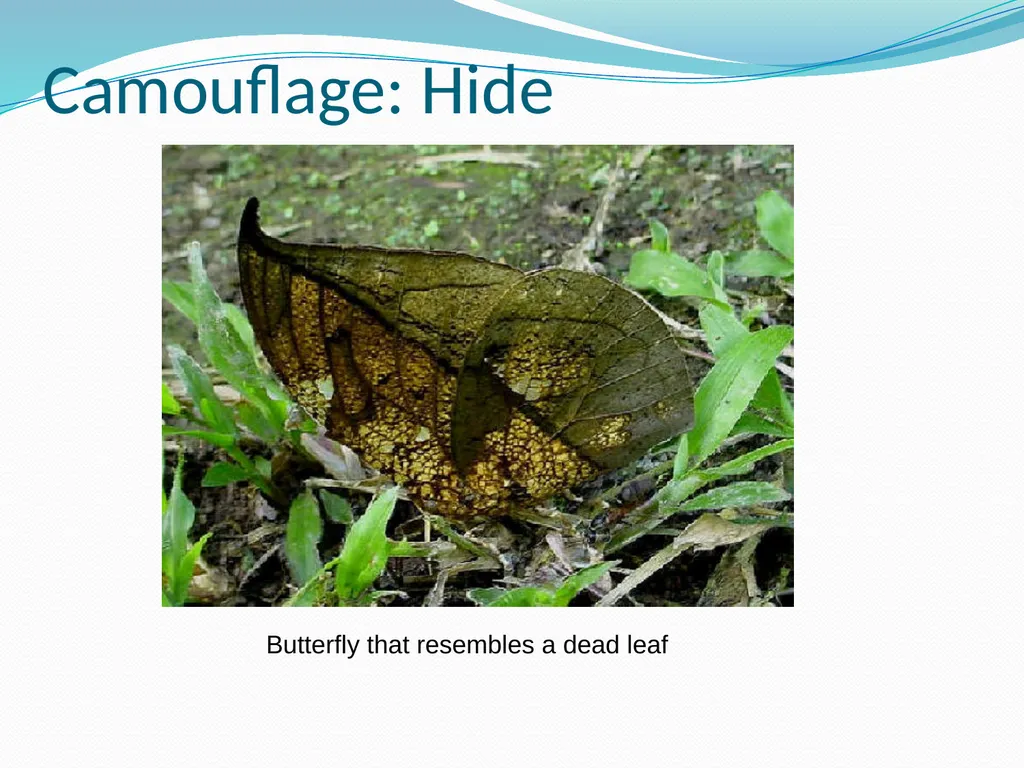
Camouflage: Hide Butterfly that resembles a dead leaf<br>
19
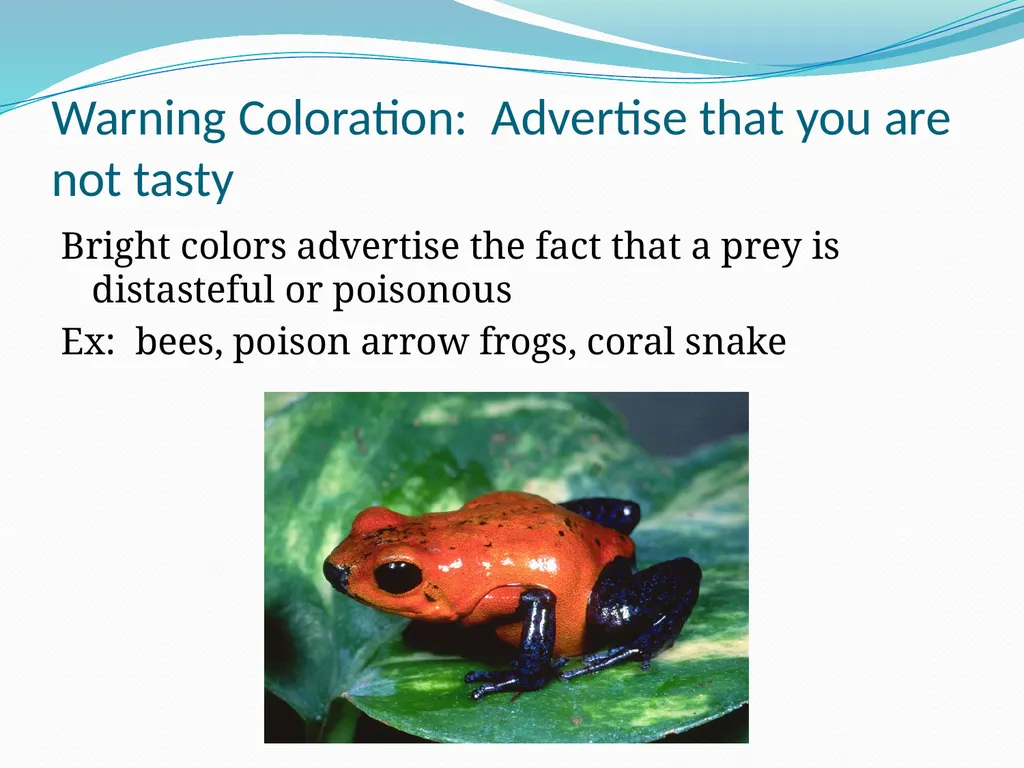
Warning Coloration: Advertise that you are not tasty Bright colors advertise the fact that a prey is distasteful or poisonous
Ex: bees, poison arrow frogs, coral snake<br>
20
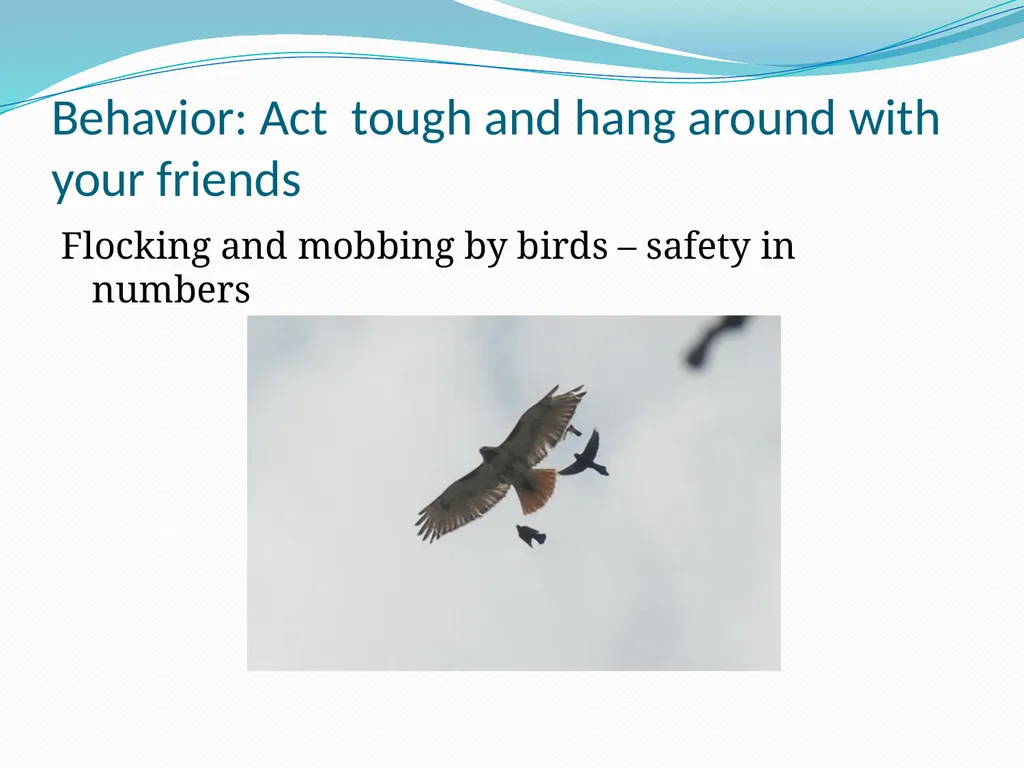
Behavior: Act tough and hang around with your friends Flocking and mobbing by birds – safety in numbers<br>
21
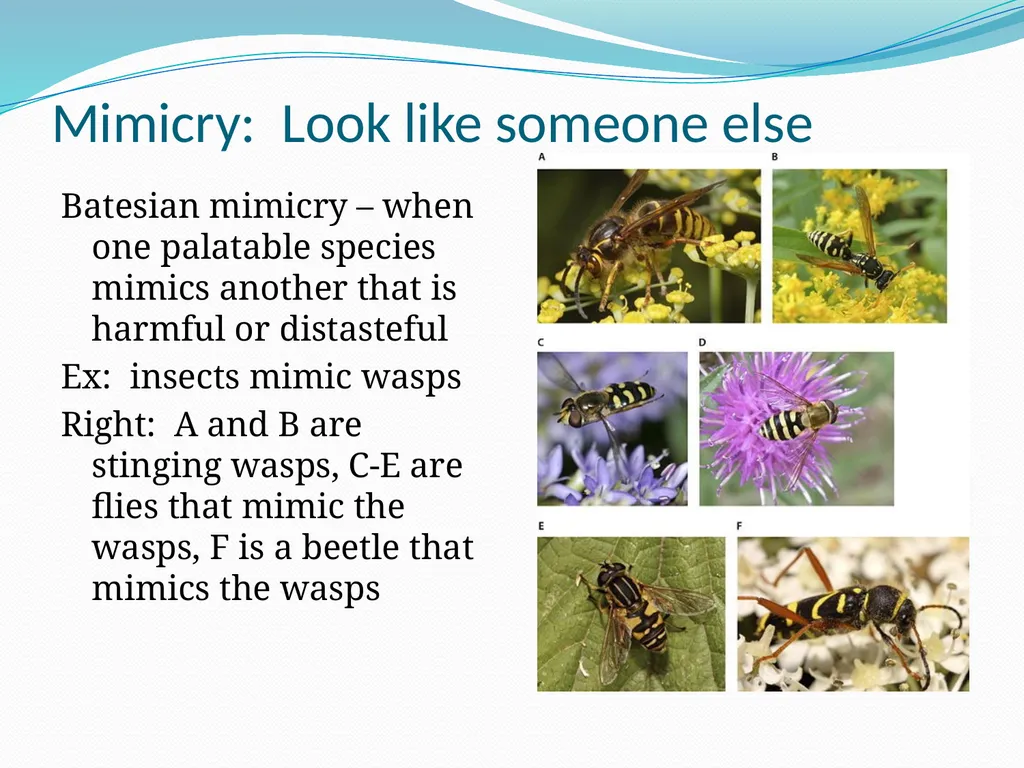
Mimicry: Look like someone else Batesian mimicry – when one palatable species mimics another that is harmful or distasteful
Ex: insects mimic wasps
Right: A and B are stinging wasps, C-E are flies that mimic the wasps, F is a beetle that mimics the wasps<br>
22
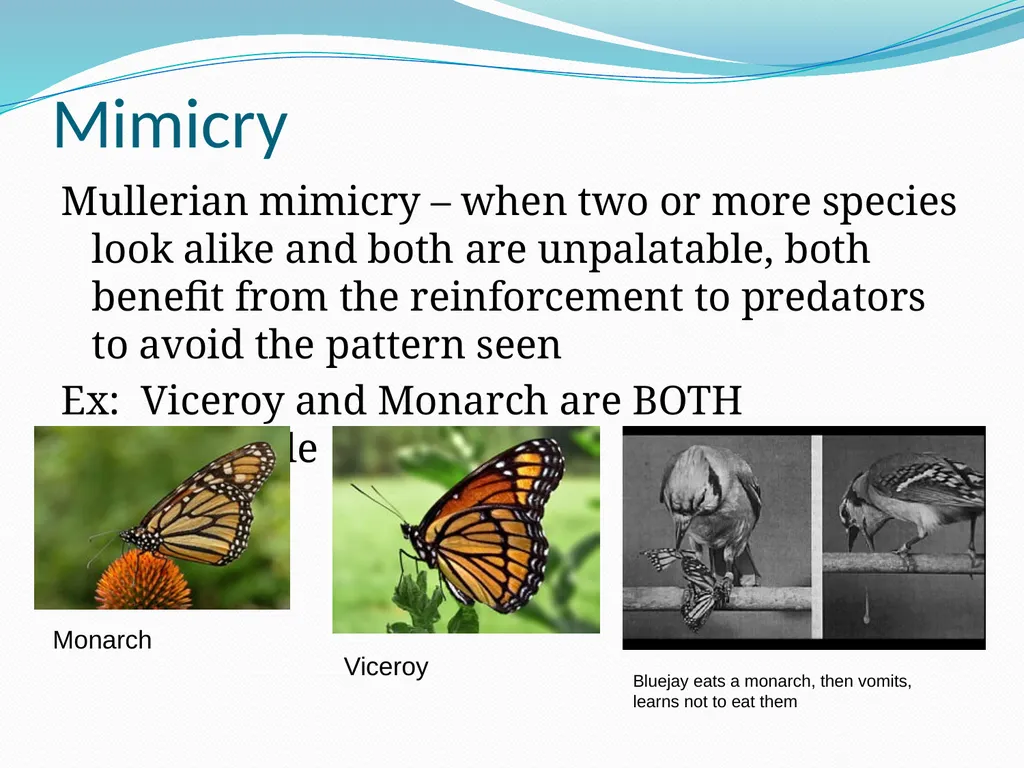
Mimicry Mullerian mimicry – when two or more species look alike and both are unpalatable, both benefit from the reinforcement to predators to avoid the pattern seen
Ex: Viceroy and Monarch are BOTH unpalatable Monarch Viceroy Bluejay eats a monarch, then vomits, learns not to eat them<br>
23
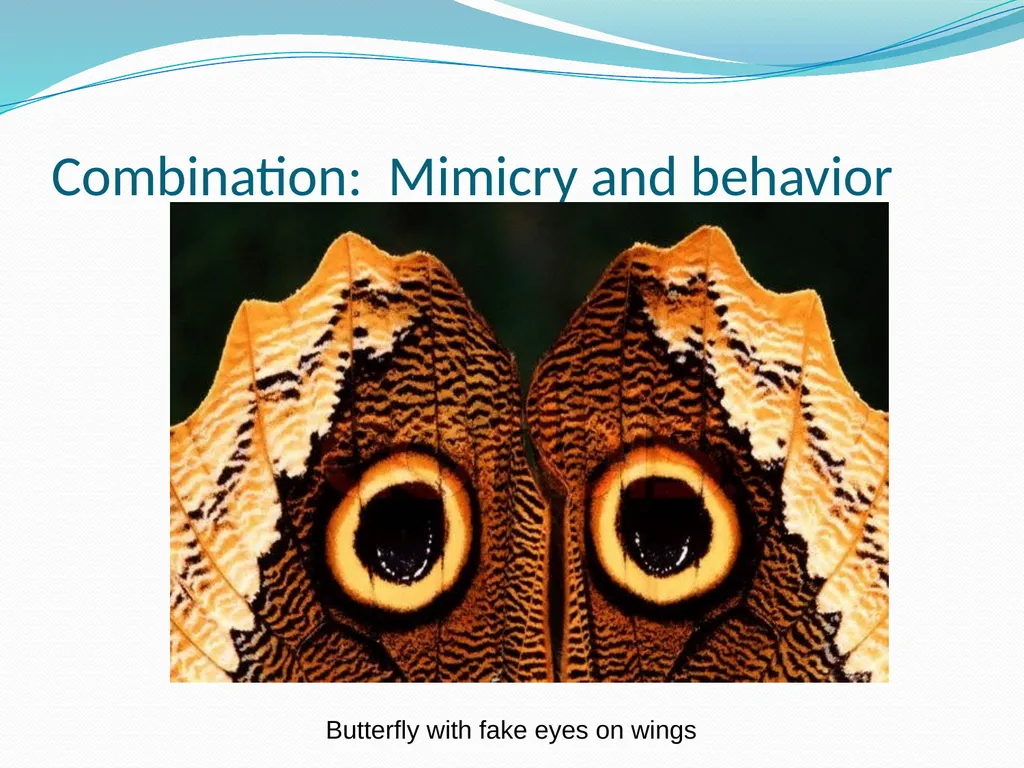
Combination: Mimicry and behavior Butterfly with fake eyes on wings<br>
24
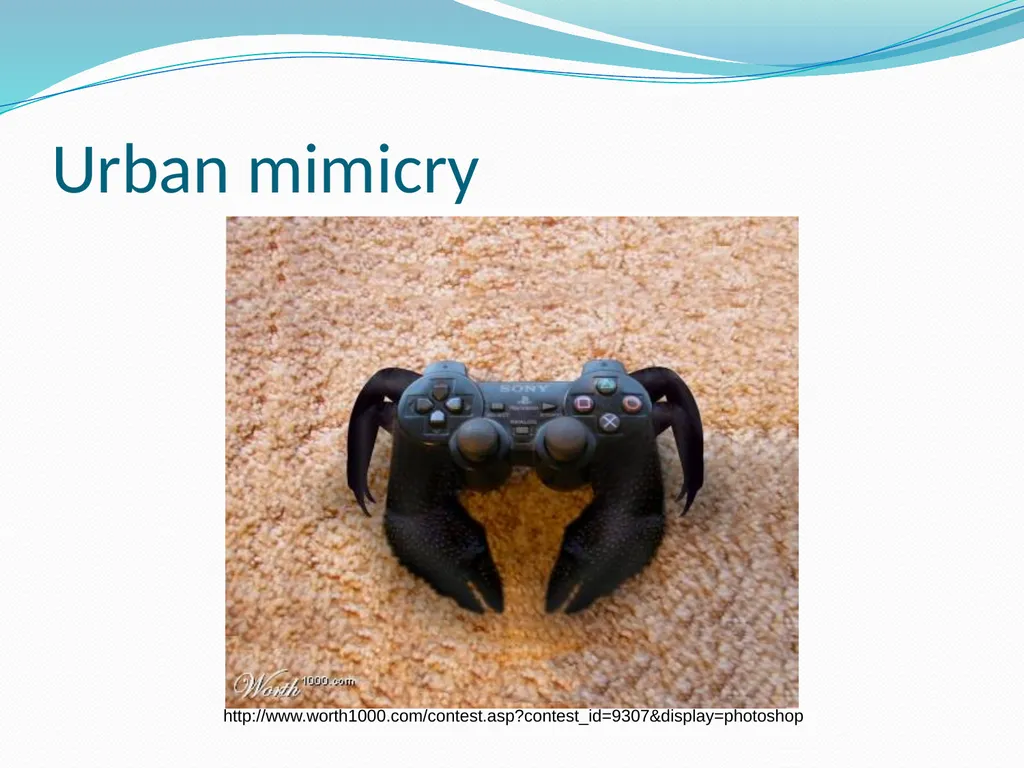
Urban mimicry http://www.worth1000.com/contest.asp?contest_id=9307&display=photoshop<br>
25
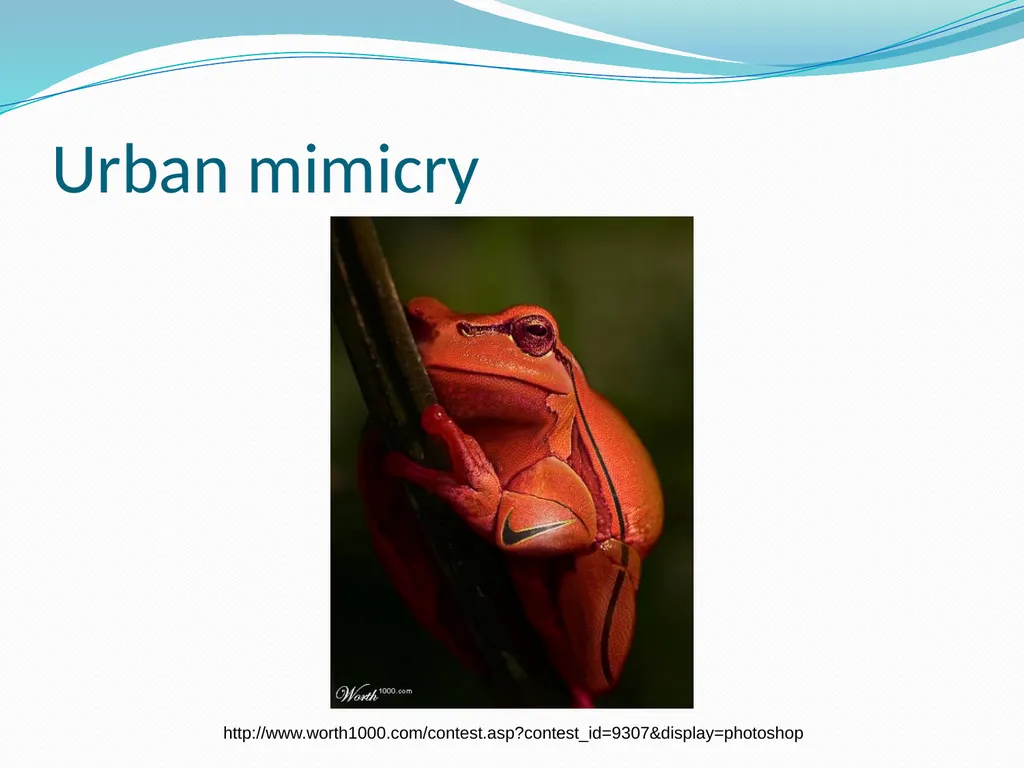
Urban mimicry http://www.worth1000.com/contest.asp?contest_id=9307&display=photoshop<br>
26
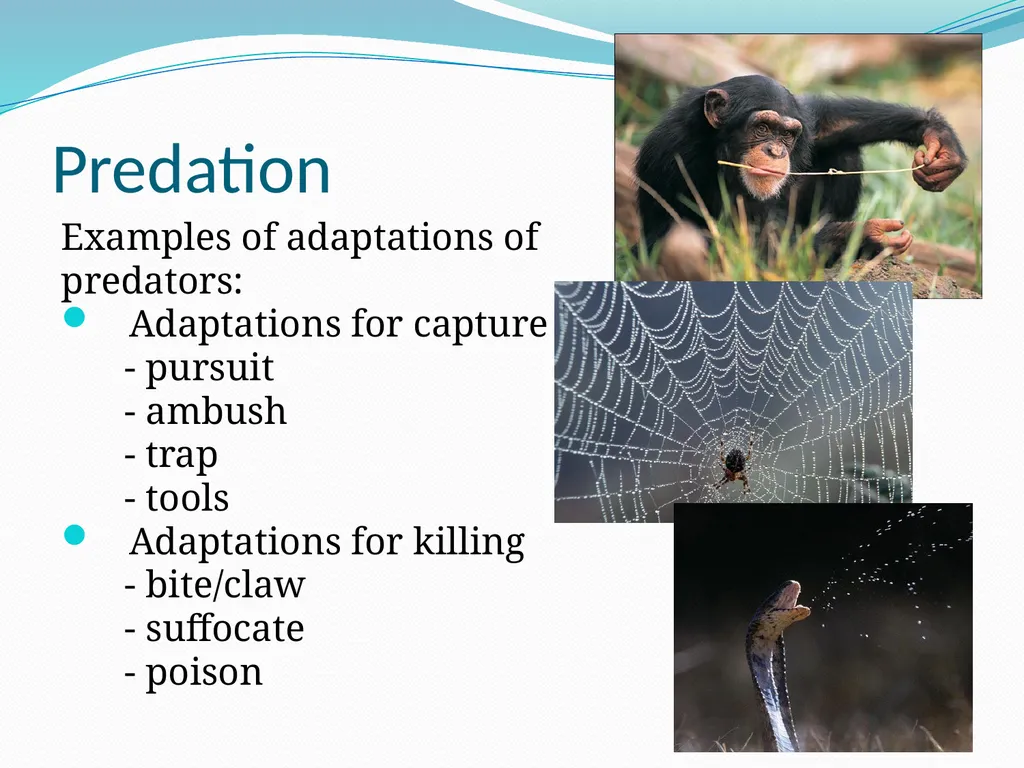
Predation Examples of adaptations of
predators:
Adaptations for capture
- pursuit
- ambush
- trap
- tools
Adaptations for killing
- bite/claw
- suffocate
- poison<br>
27
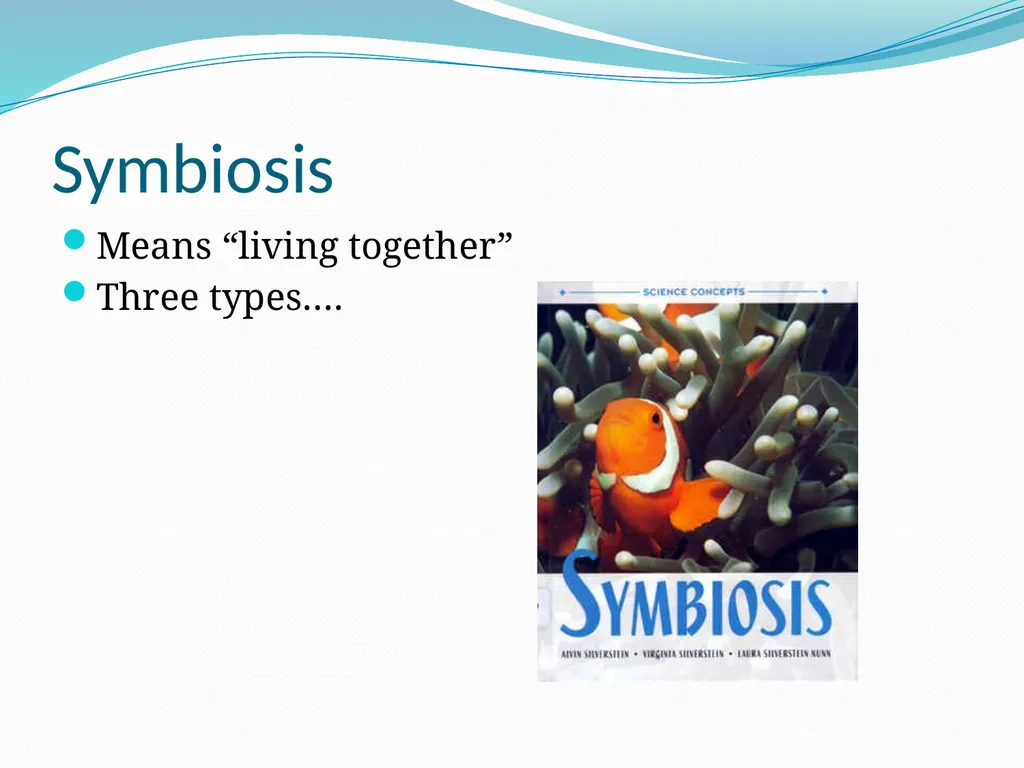
Symbiosis Means “living together”
Three types….<br>
28
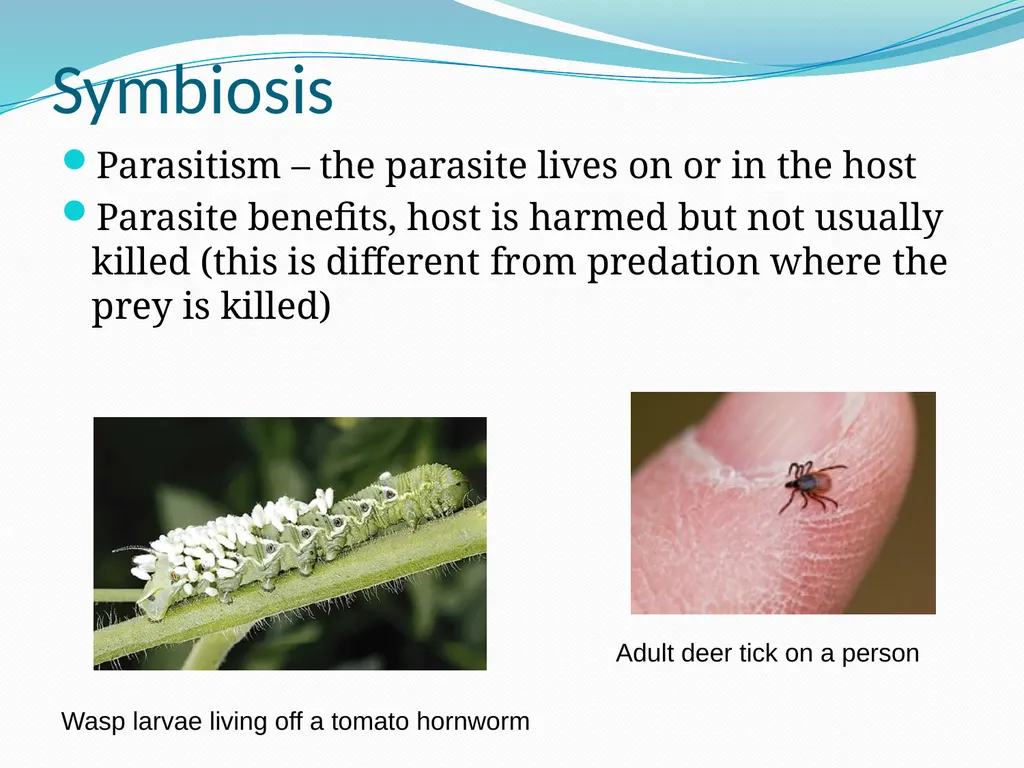
Symbiosis Parasitism – the parasite lives on or in the host
Parasite benefits, host is harmed but not usually killed (this is different from predation where the prey is killed) Wasp larvae living off a tomato hornworm Adult deer tick on a person<br>
29
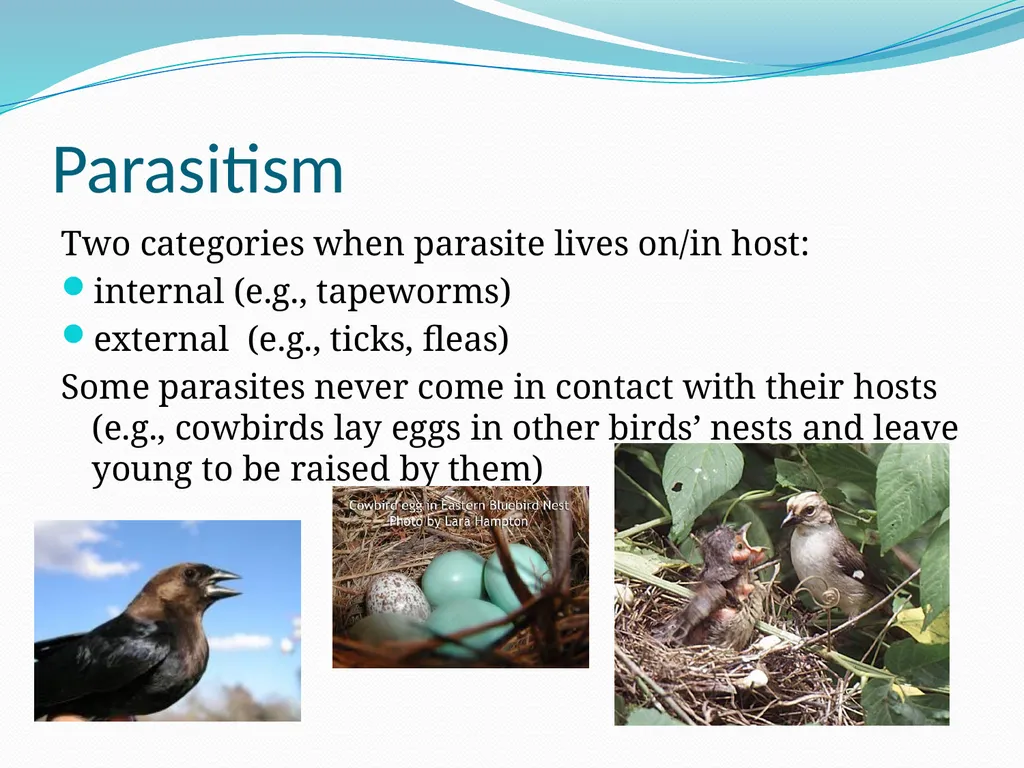
Parasitism Two categories when parasite lives on/in host:
internal (e.g., tapeworms)
external (e.g., ticks, fleas)
Some parasites never come in contact with their hosts (e.g., cowbirds lay eggs in other birds’ nests and leave young to be raised by them)<br>
30
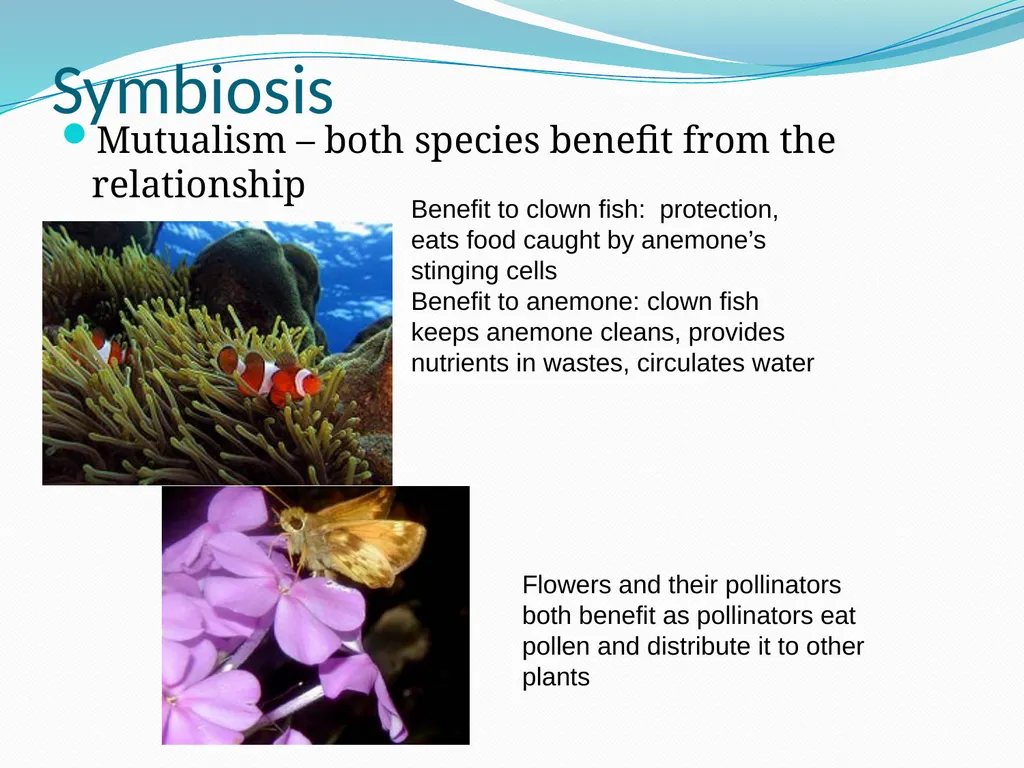
Symbiosis Mutualism – both species benefit from the relationship Benefit to clown fish: protection, eats food caught by anemone’s stinging cells
Benefit to anemone: clown fish keeps anemone cleans, provides nutrients in wastes, circulates water Flowers and their pollinators both benefit as pollinators eat pollen and distribute it to other plants<br>
31
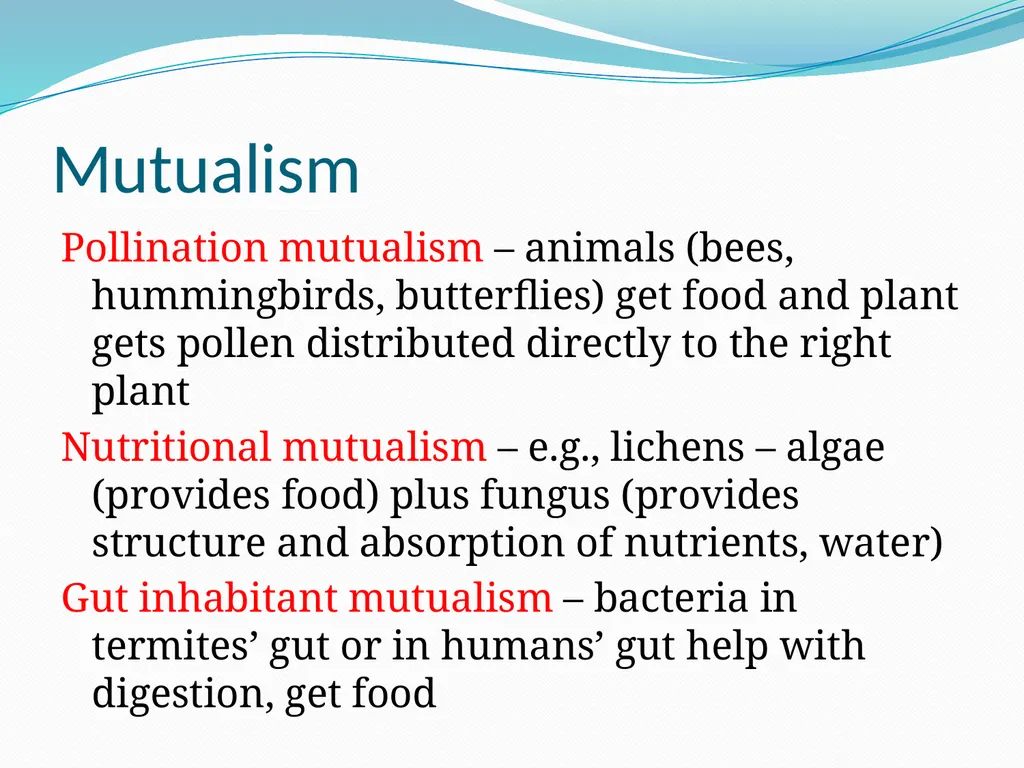
Mutualism Pollination mutualism – animals (bees, hummingbirds, butterflies) get food and plant gets pollen distributed directly to the right plant
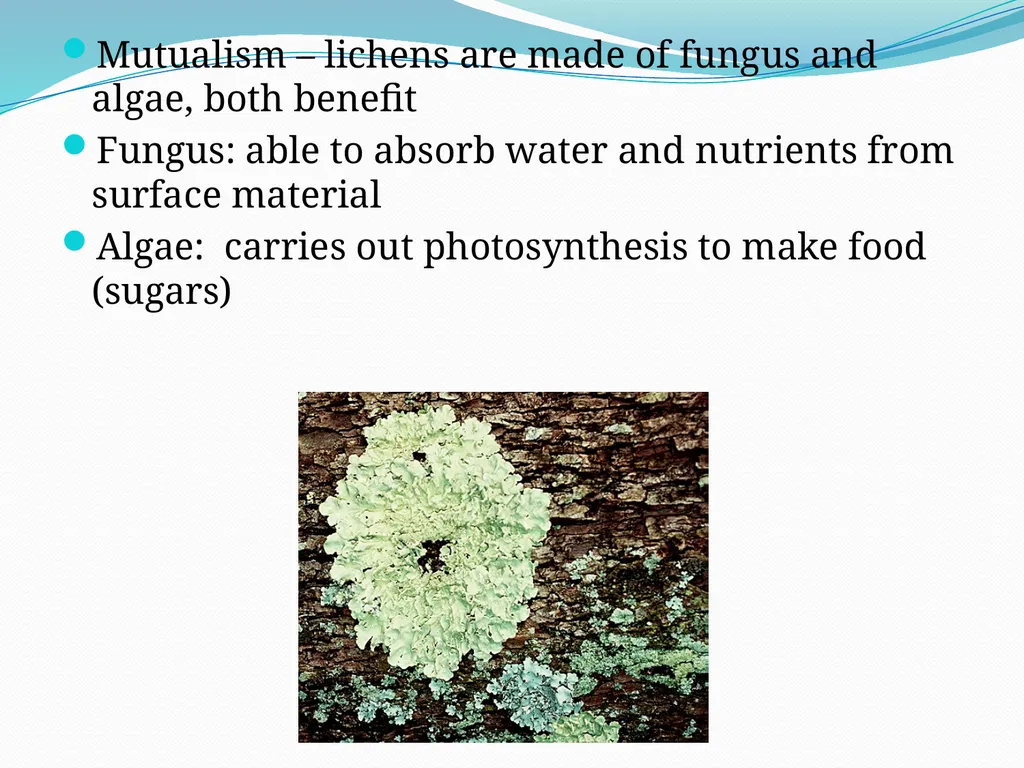
Nutritional mutualism – e.g., lichens – algae (provides food) plus fungus (provides structure and absorption of nutrients, water)
Gut inhabitant mutualism – bacteria in termites’ gut or in humans’ gut help with digestion, get food<br>
32
Mutualism – lichens are made of fungus and algae, both benefit
Fungus: able to absorb water and nutrients from surface material
Algae: carries out photosynthesis to make food (sugars)<br>
33
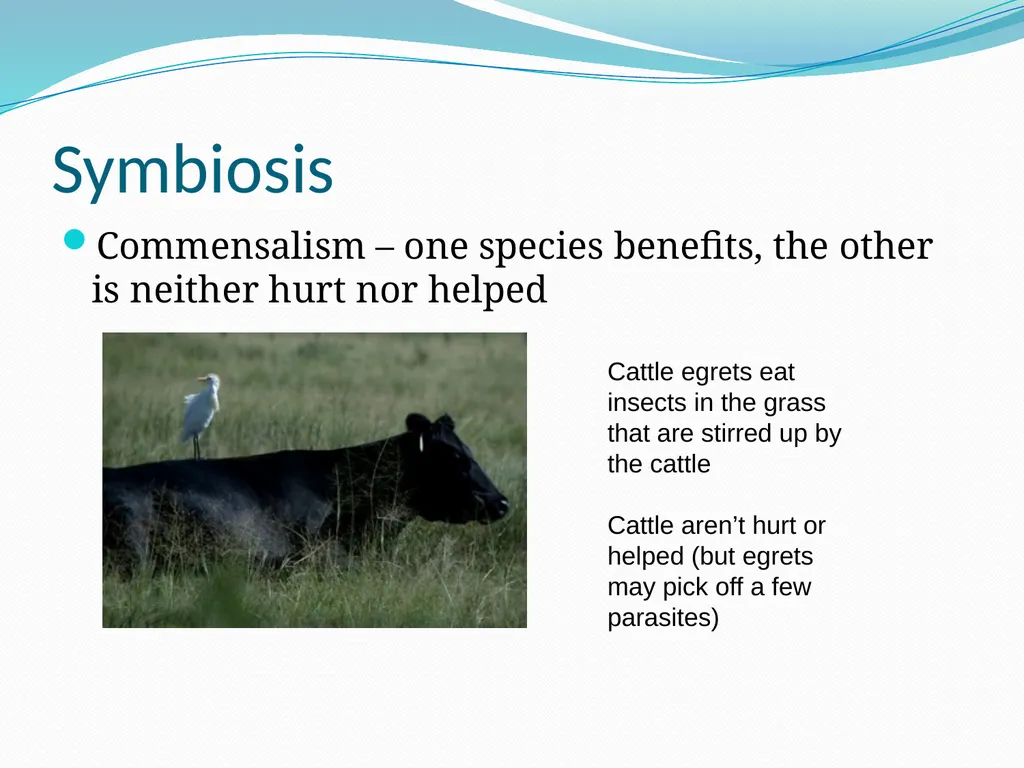
Symbiosis Commensalism – one species benefits, the other is neither hurt nor helped Cattle egrets eat insects in the grass that are stirred up by the cattle
Cattle aren’t hurt or helped (but egrets may pick off a few parasites)<br>
34
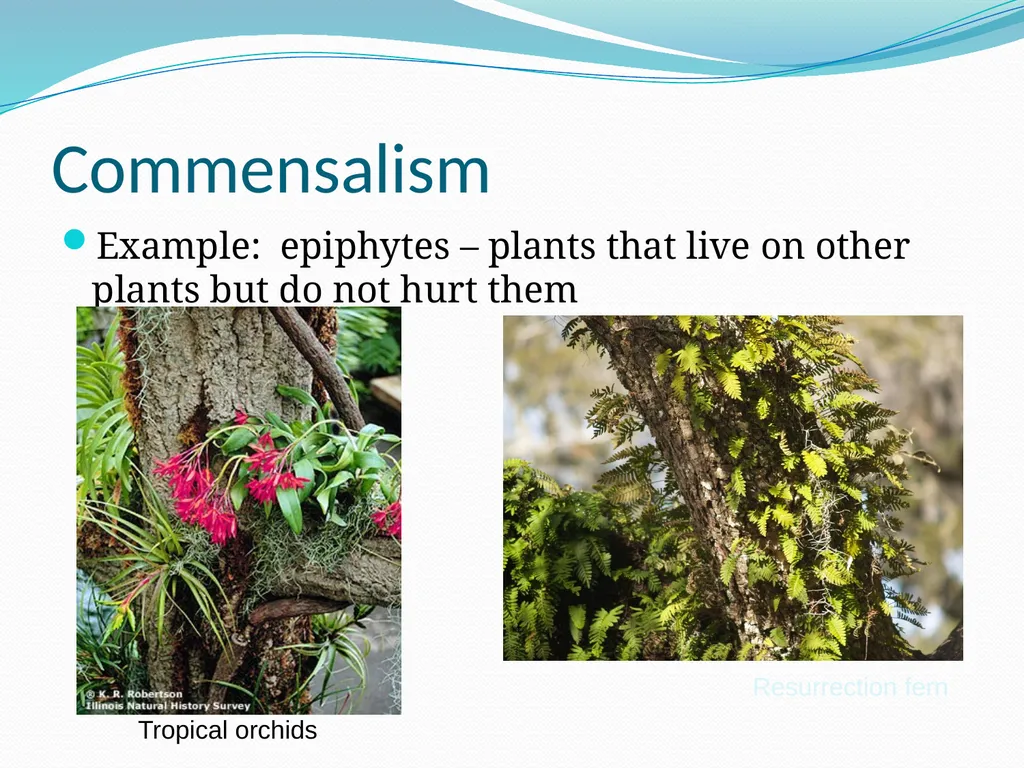
Commensalism Example: epiphytes – plants that live on other plants but do not hurt them Resurrection fern Tropical orchids<br>
35
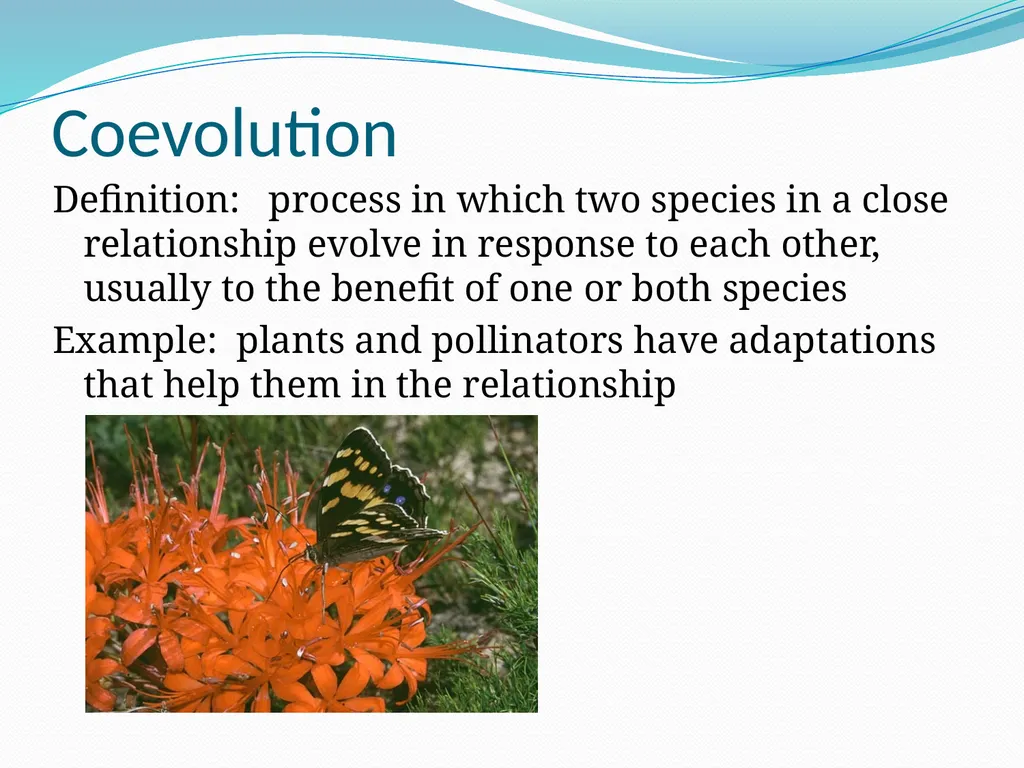
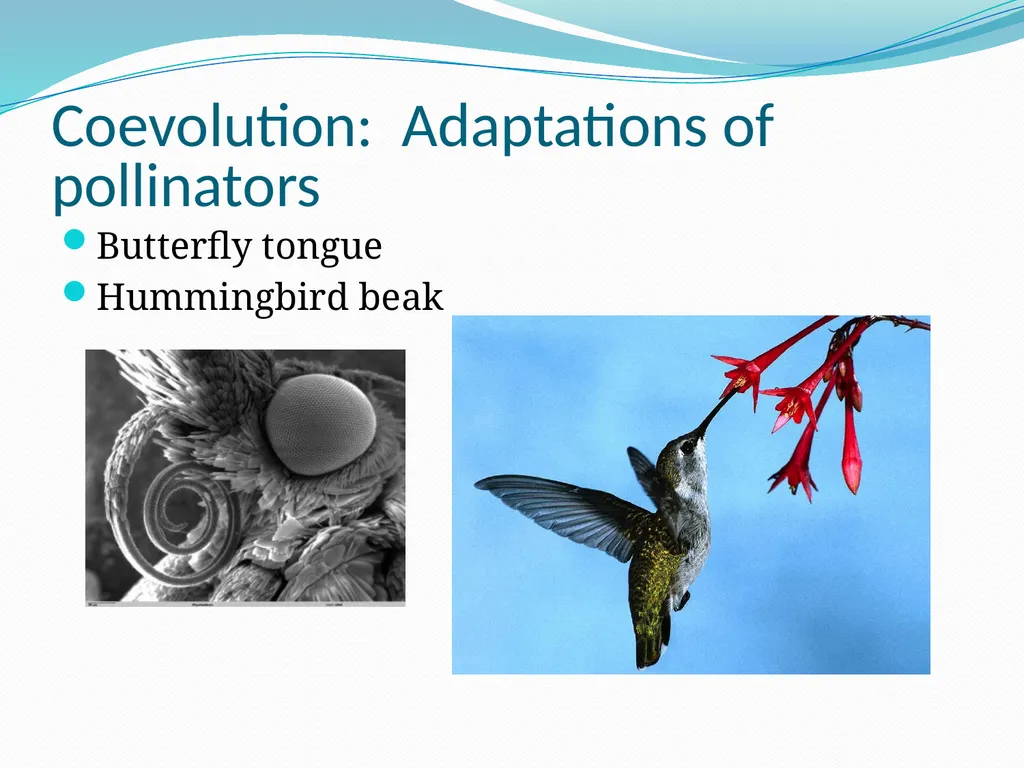
Coevolution Definition: process in which two species in a close relationship evolve in response to each other, usually to the benefit of one or both species
Example: plants and pollinators have adaptations that help them in the relationship<br>
36
Coevolution: Adaptations of pollinators Butterfly tongue
Hummingbird beak<br>
37
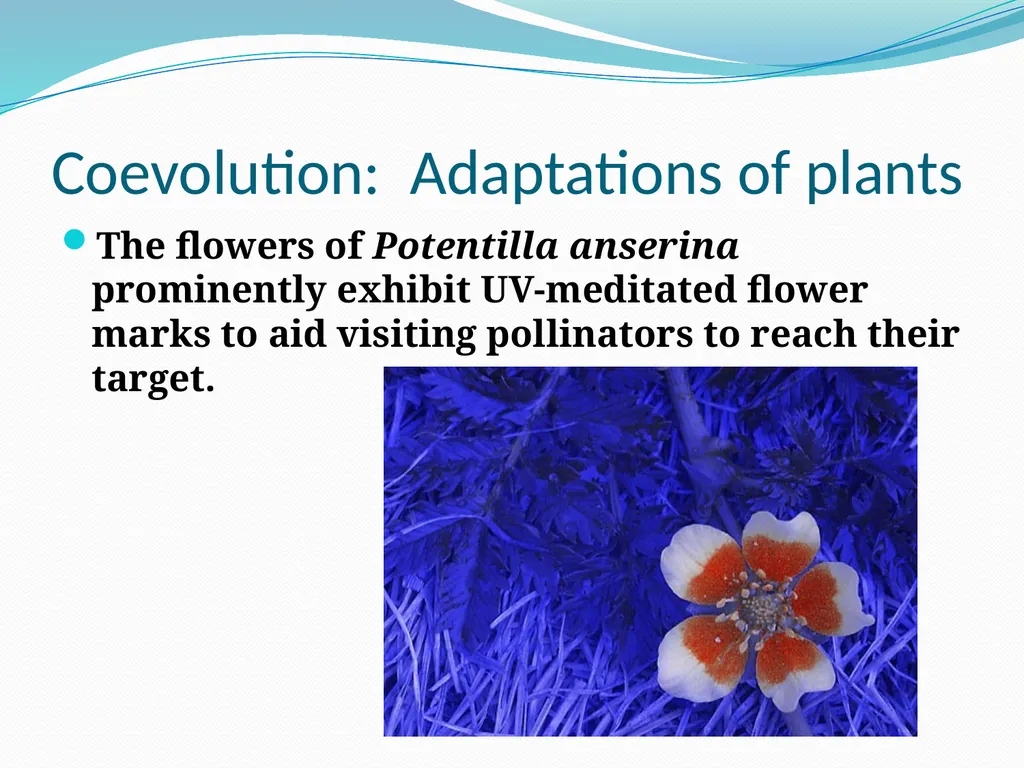
Coevolution: Adaptations of plants The flowers of Potentilla anserina prominently exhibit UV-meditated flower marks to aid visiting pollinators to reach their target.<br>