
Spot a Stroke Stop a Stroke Save a Life A

Description: Spot a Stroke Stop a Stroke Save a Life A Public Health Education Initiative to Reduce Pre-Hospital Delay in your locality What is a Stroke? Ischemic stroke (87): lack of blood supply due to a blockage Hemorrhagic stroke (13): lack of
Related Topics
Download Presentation
"Spot a Stroke Stop a Stroke Save a Life A" is the property of its rightful owner. Permission is granted to download and print the materials on this website for personal, non-commercial use only, and to display it on your personal computer provided you do not modify the materials and that you retain all copyright notices contained in the materials. By downloading content from our website, you accept the terms of this agreement.
Presentation Transcript
slide1. Spot a Stroke
Stop a Stroke
Save a Life
A Public Health Education Initiative to Reduce
Pre-Hospital Delay in “your locality”<br>
slide2. What is a Stroke?
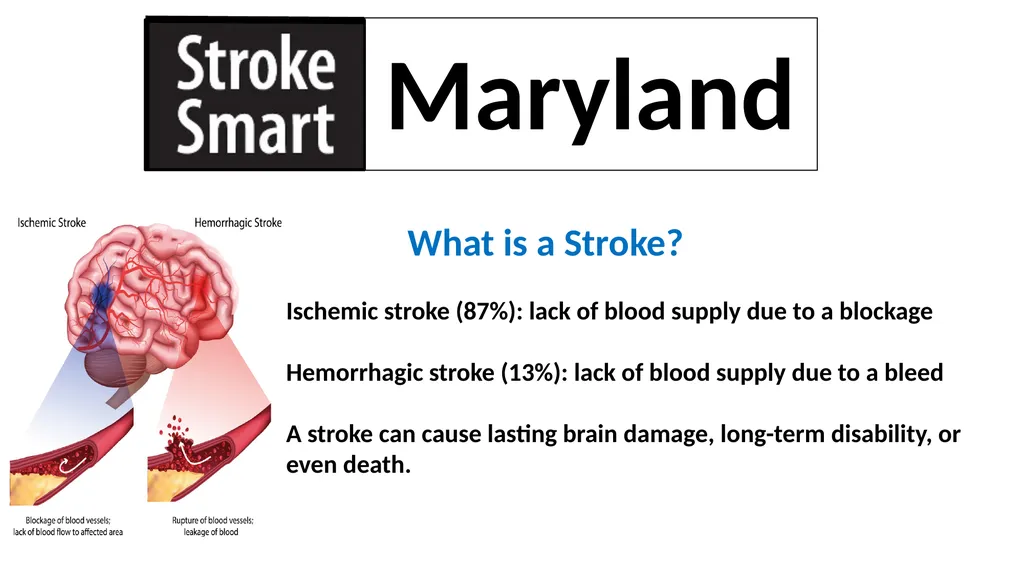
Ischemic stroke (87%): lack of blood supply due to a blockage
Hemorrhagic stroke (13%): lack of blood supply due to a bleed
A stroke can cause lasting brain damage, long-term disability, or even death.<br>
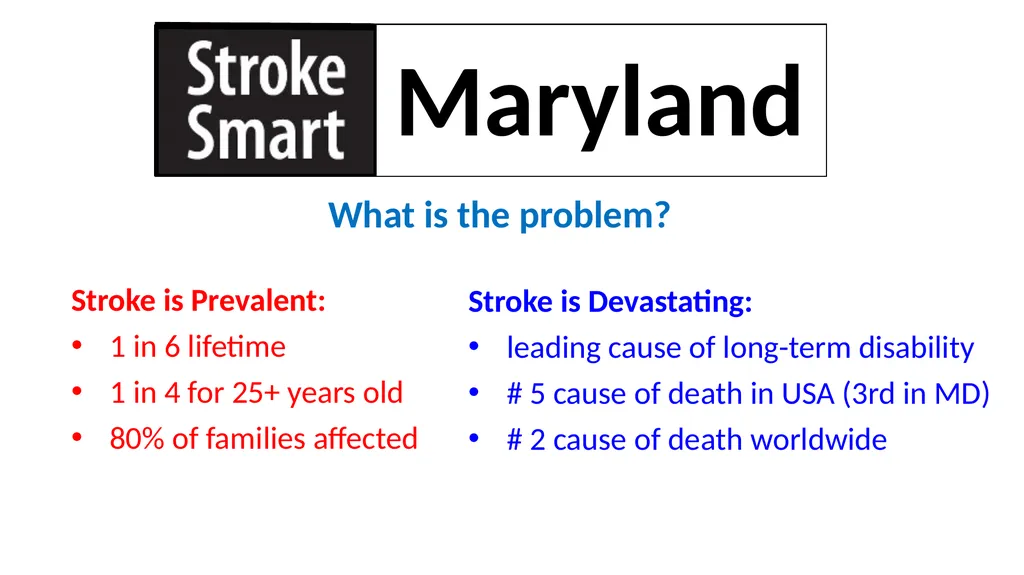
slide3. What is the problem? Stroke is Prevalent:
1 in 6 lifetime
1 in 4 for 25+ years old
80% of families affected Stroke is Devastating:
leading cause of long-term disability
# 5 cause of death in USA (3rd in MD)
# 2 cause of death worldwide<br>
slide4. Good News: Ischemic strokes (~90% of all strokes) can be effectively treated with clot busters or surgery<br>
slide5. While effective treatments are available, under-treatment of stroke patients persists. __% (Insert your hospital’s GWTG statistics) of stroke patients get acute treatment. __% (Insert your hospital’s GWTG statistics) of patient arrive within an acute treatment window.
Much improvement has been made with door-to-needle time in recent years. However, little to no progress has been made with onset-to-911 time for the last 25+ years! The Predicament<br>
slide6. Your local hospital Stroke Statistics
In the last 5 years your local hospital has cared for ?? stroke patients
Only 123/1092 (11%) (replace with your data/graphs) received Alteplase (tPA)
The #1 reason tPA was not offered is due to pre-hospital delay > 4.5 hours<br>
slide7. What is the solution?
Become a Stroke Smart City or County
What does this mean?
Educate the community to:
Be Stroke Smart
Stay Stroke Smart
Be a Stroke Champion<br>
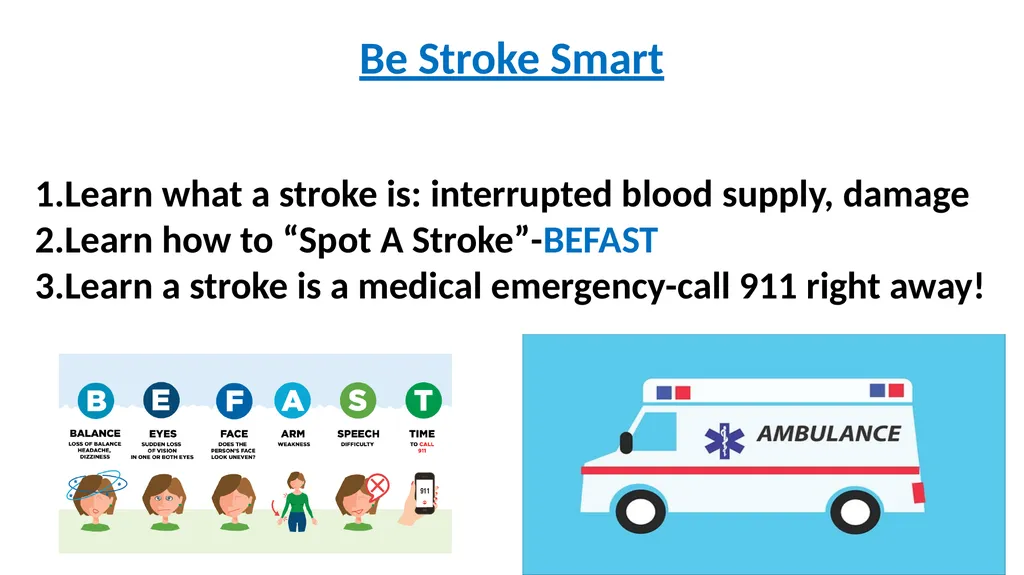
slide8. Be Stroke Smart Learn what a stroke is: interrupted blood supply, damage
Learn how to “Spot A Stroke”-BEFAST
Learn a stroke is a medical emergency-call 911 right away!<br>
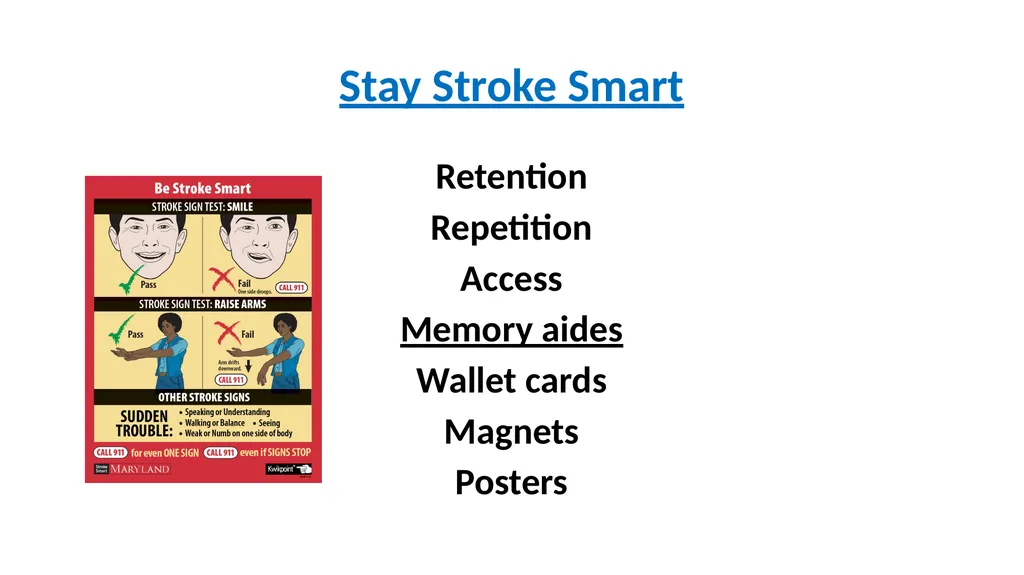
slide9. Stay Stroke Smart Retention
Repetition
Access
Memory aides
Wallet cards
Magnets
Posters<br>
slide10. Be a Stroke Champion Improve stroke literacy
A community effort by active community members
Sharing knowledge
With a goal to educate everyone in your locality
How to “Spot A Stroke”
How to “Stop A Stroke”<br>
slide11. What are the next steps?
Make a proclamation
Introductions to key agencies:
Your local Bureau of Aging and Disabilities
Your local Public School District<br>
slide13. MIEMSS Stroke-Smart-Resources Stroke Smart Resource Center (miemss.org)<br>
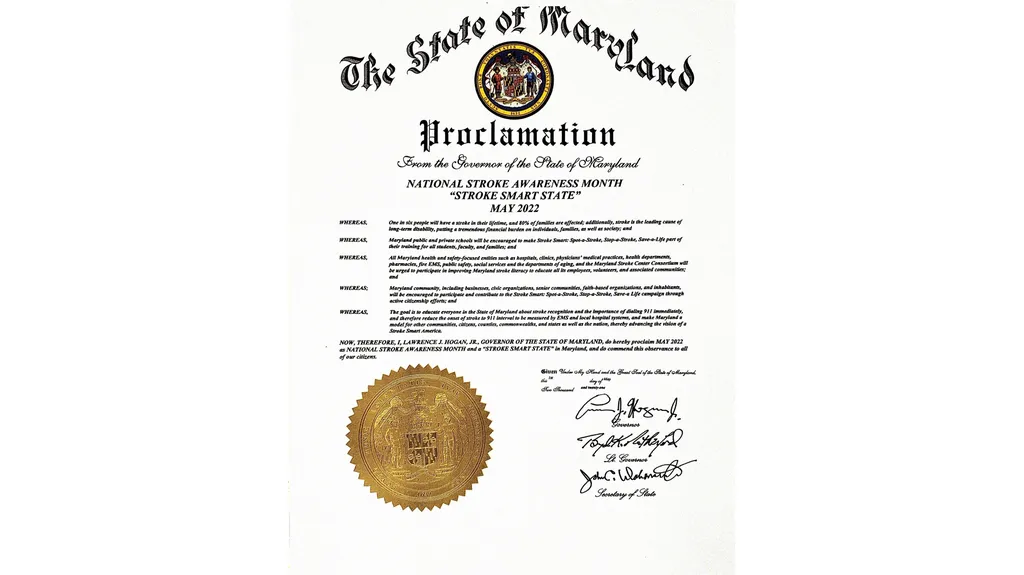
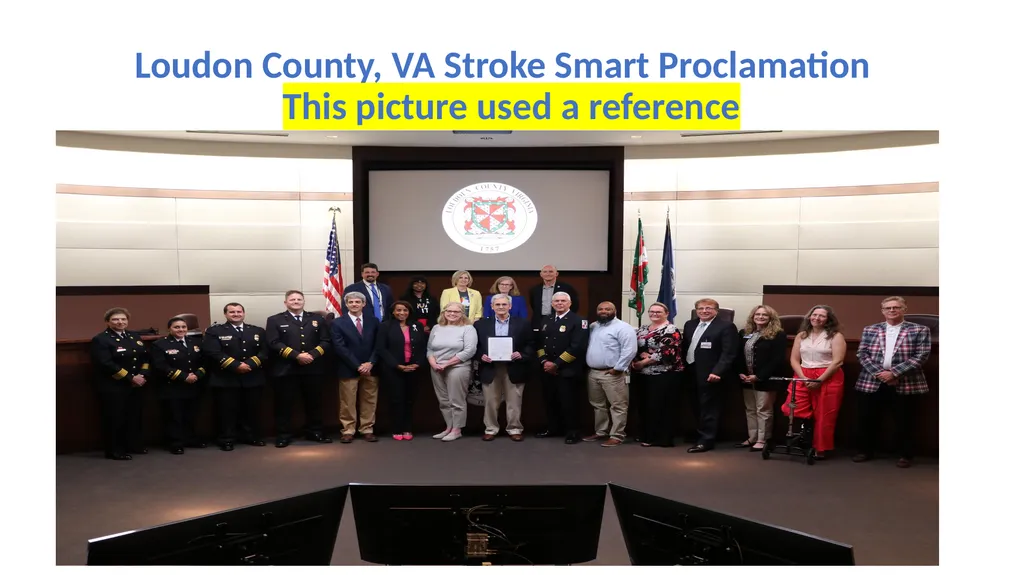
slide14. Loudon County, VA Stroke Smart Proclamation This picture used a reference<br>
slide15. Your contact information Questions?<br>
slide16. References Centers for Disease Control and Prevention, 2022. Stroke Facts | cdc.gov
World Health Organization, 2020. The top 10 causes of death (who.int)<br>
Stop a Stroke
Save a Life
A Public Health Education Initiative to Reduce
Pre-Hospital Delay in “your locality”<br>
slide2. What is a Stroke?
Ischemic stroke (87%): lack of blood supply due to a blockage
Hemorrhagic stroke (13%): lack of blood supply due to a bleed
A stroke can cause lasting brain damage, long-term disability, or even death.<br>
slide3. What is the problem? Stroke is Prevalent:
1 in 6 lifetime
1 in 4 for 25+ years old
80% of families affected Stroke is Devastating:
leading cause of long-term disability
# 5 cause of death in USA (3rd in MD)
# 2 cause of death worldwide<br>
slide4. Good News: Ischemic strokes (~90% of all strokes) can be effectively treated with clot busters or surgery<br>
slide5. While effective treatments are available, under-treatment of stroke patients persists. __% (Insert your hospital’s GWTG statistics) of stroke patients get acute treatment. __% (Insert your hospital’s GWTG statistics) of patient arrive within an acute treatment window.
Much improvement has been made with door-to-needle time in recent years. However, little to no progress has been made with onset-to-911 time for the last 25+ years! The Predicament<br>
slide6. Your local hospital Stroke Statistics
In the last 5 years your local hospital has cared for ?? stroke patients
Only 123/1092 (11%) (replace with your data/graphs) received Alteplase (tPA)
The #1 reason tPA was not offered is due to pre-hospital delay > 4.5 hours<br>
slide7. What is the solution?
Become a Stroke Smart City or County
What does this mean?
Educate the community to:
Be Stroke Smart
Stay Stroke Smart
Be a Stroke Champion<br>
slide8. Be Stroke Smart Learn what a stroke is: interrupted blood supply, damage
Learn how to “Spot A Stroke”-BEFAST
Learn a stroke is a medical emergency-call 911 right away!<br>
slide9. Stay Stroke Smart Retention
Repetition
Access
Memory aides
Wallet cards
Magnets
Posters<br>
slide10. Be a Stroke Champion Improve stroke literacy
A community effort by active community members
Sharing knowledge
With a goal to educate everyone in your locality
How to “Spot A Stroke”
How to “Stop A Stroke”<br>
slide11. What are the next steps?
Make a proclamation
Introductions to key agencies:
Your local Bureau of Aging and Disabilities
Your local Public School District<br>
slide13. MIEMSS Stroke-Smart-Resources Stroke Smart Resource Center (miemss.org)<br>
slide14. Loudon County, VA Stroke Smart Proclamation This picture used a reference<br>
slide15. Your contact information Questions?<br>
slide16. References Centers for Disease Control and Prevention, 2022. Stroke Facts | cdc.gov
World Health Organization, 2020. The top 10 causes of death (who.int)<br>