SSC 2030: Energy Systems Sustainability Introduction to energy systems sustainability 1.1: What is energy? 1.2: What is conventional energy? 1.3: What is sustainable energy? 1.4: What is a system? 1.5: Why is systems thinking
"SSC 2030: Energy Systems & Sustainability" is the property of its rightful owner. Permission is granted to
download and print the materials on this website for personal, non-commercial use only, and to display it
on your personal computer provided you do not modify the materials and that you retain all copyright
notices contained in the materials. By downloading content from our website, you accept the terms of this
agreement.
Presentation Transcript
01
SSC 2030: Energy Systems & Sustainability Introduction to energy systems & sustainability
1.1: What is energy?
1.2: What is ‘conventional’ energy?
1.3: What is ‘sustainable’ energy?
1.4: What is a system?
1.5: Why is systems thinking important?<br>
02
1. Introduction 1.5: Why is system thinking important?<br>
03
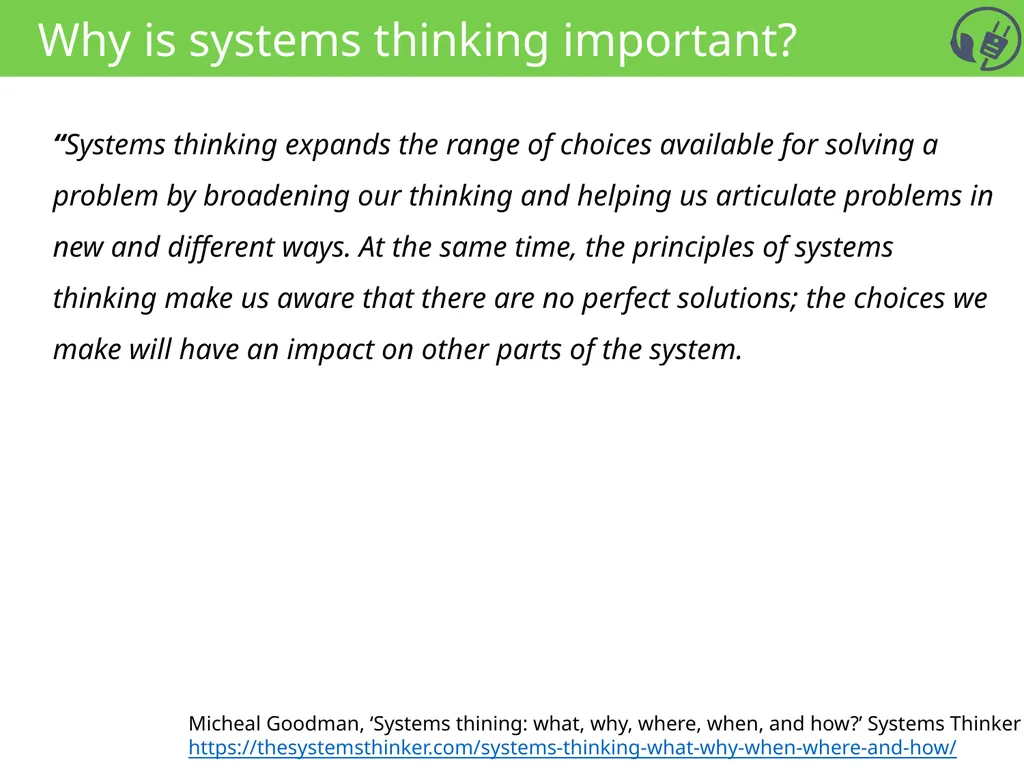
Why is systems thinking important? Micheal Goodman, ‘Systems thining: what, why, where, when, and how?’ Systems Thinker
https://thesystemsthinker.com/systems-thinking-what-why-when-where-and-how/ “Systems thinking expands the range of choices available for solving a problem by broadening our thinking and helping us articulate problems in new and different ways. At the same time, the principles of systems thinking make us aware that there are no perfect solutions; the choices we make will have an impact on other parts of the system. By anticipating the impact of each trade-off, we can minimize its severity or even use it to our own advantage. Systems thinking therefore allows us to make informed choices.”<br>
04
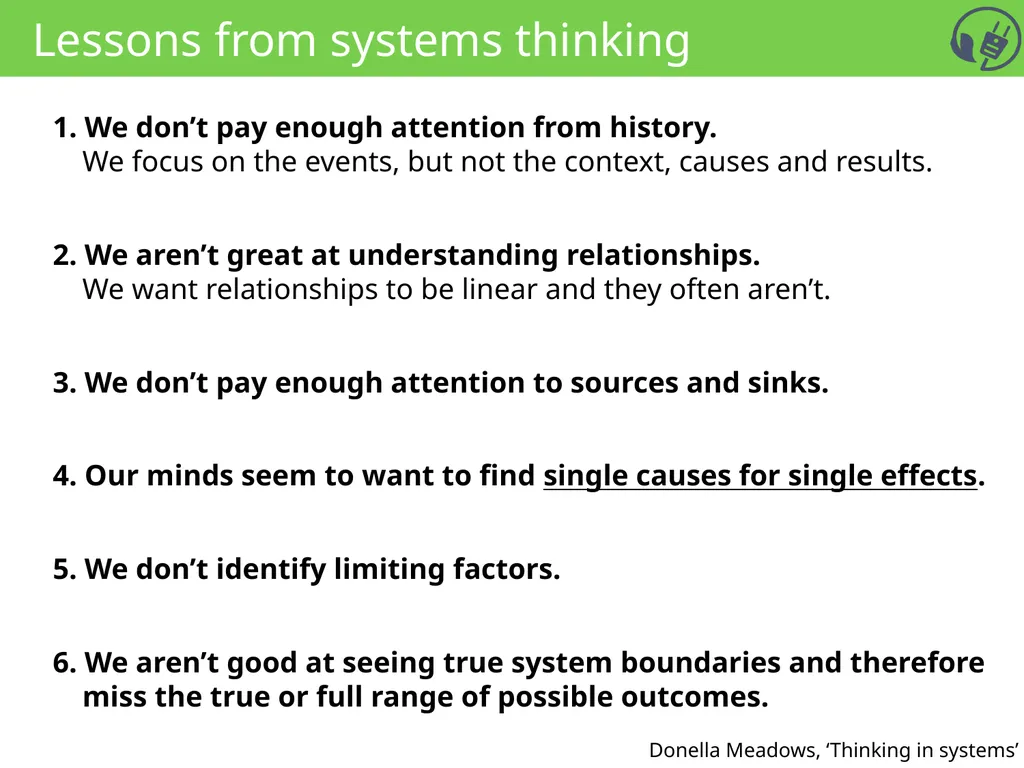
Lessons from systems thinking Donella Meadows, ‘Thinking in systems’ 1. We don’t pay enough attention from history. We focus on the events, but not the context, causes and results. 2. We aren’t great at understanding relationships. We want relationships to be linear and they often aren’t. 3. We don’t pay enough attention to sources and sinks. 4. Our minds seem to want to find single causes for single effects. 5. We don’t identify limiting factors. 6. We aren’t good at seeing true system boundaries and therefore
miss the true or full range of possible outcomes.<br>
05
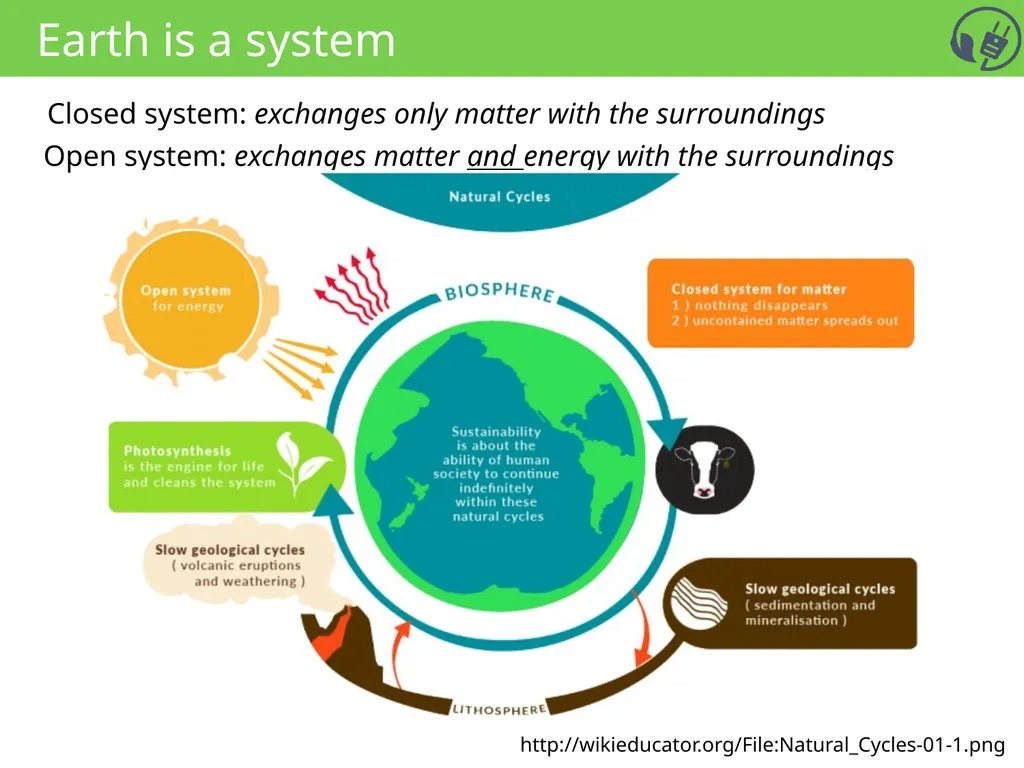
Earth is a system Closed system: exchanges only matter with the surroundings http://wikieducator.org/File:Natural_Cycles-01-1.png Open system: exchanges matter and energy with the surroundings<br>
06
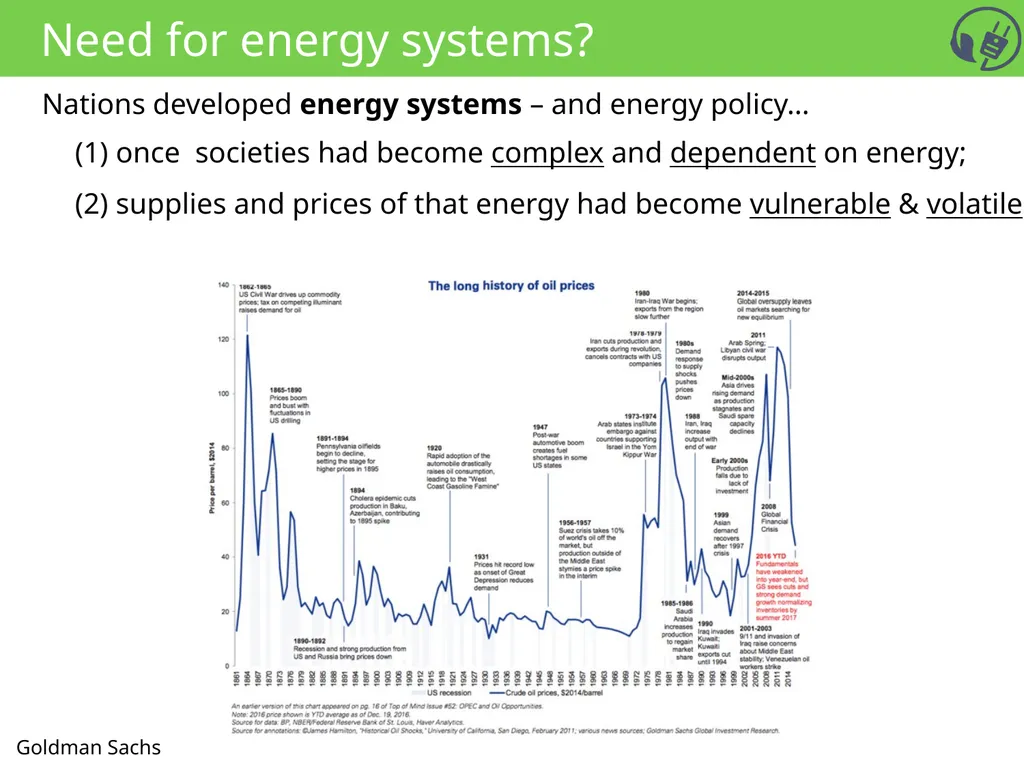
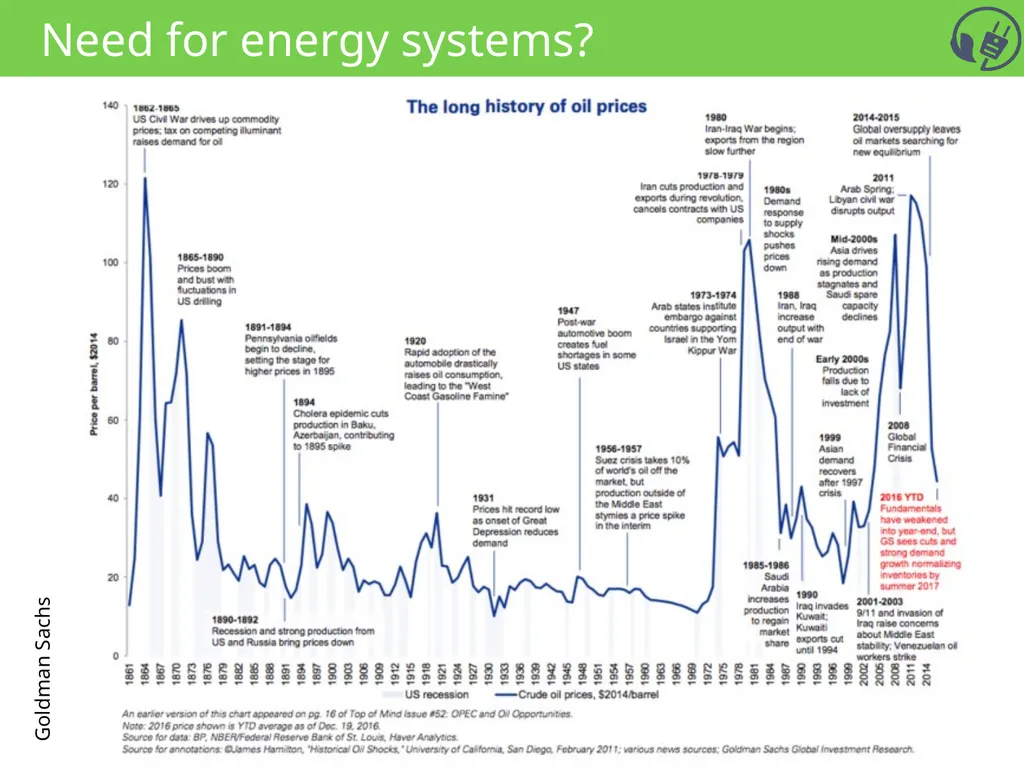
Need for energy systems? Goldman Sachs (1) once societies had become complex and dependent on energy;
(2) supplies and prices of that energy had become vulnerable & volatile. Nations developed energy systems – and energy policy…<br>
07
Need for energy systems? Goldman Sachs<br>
08
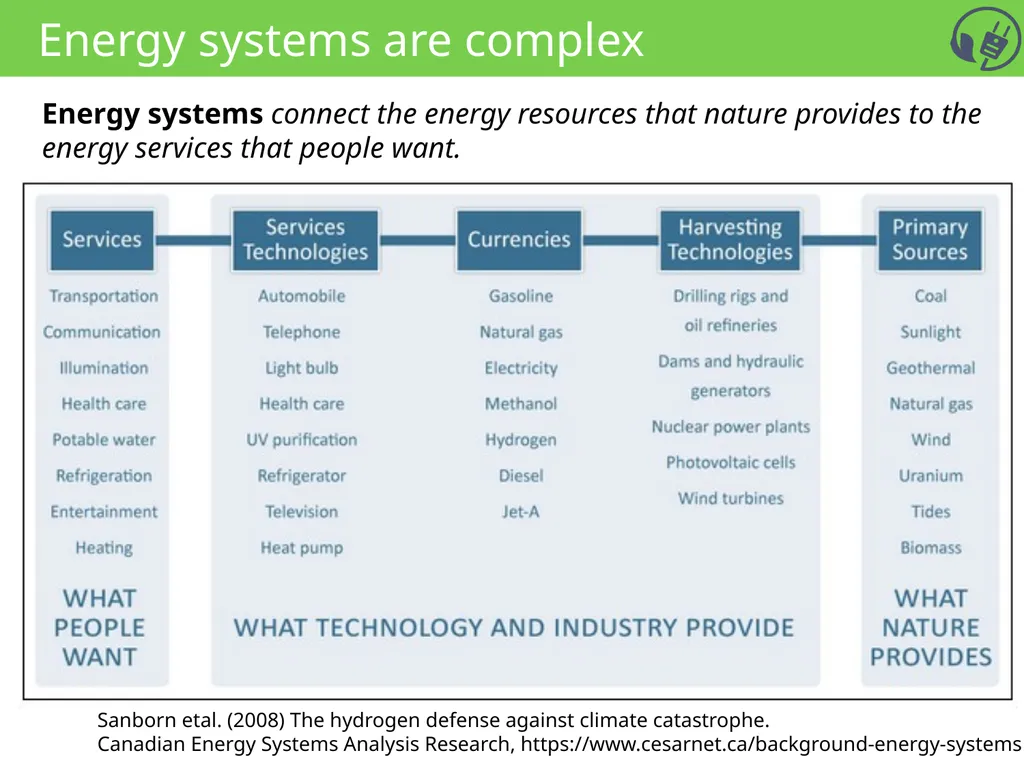
Energy systems are complex Energy systems connect the energy resources that nature provides to the energy services that people want. Sanborn etal. (2008) The hydrogen defense against climate catastrophe.
Canadian Energy Systems Analysis Research, https://www.cesarnet.ca/background-energy-systems<br>
09
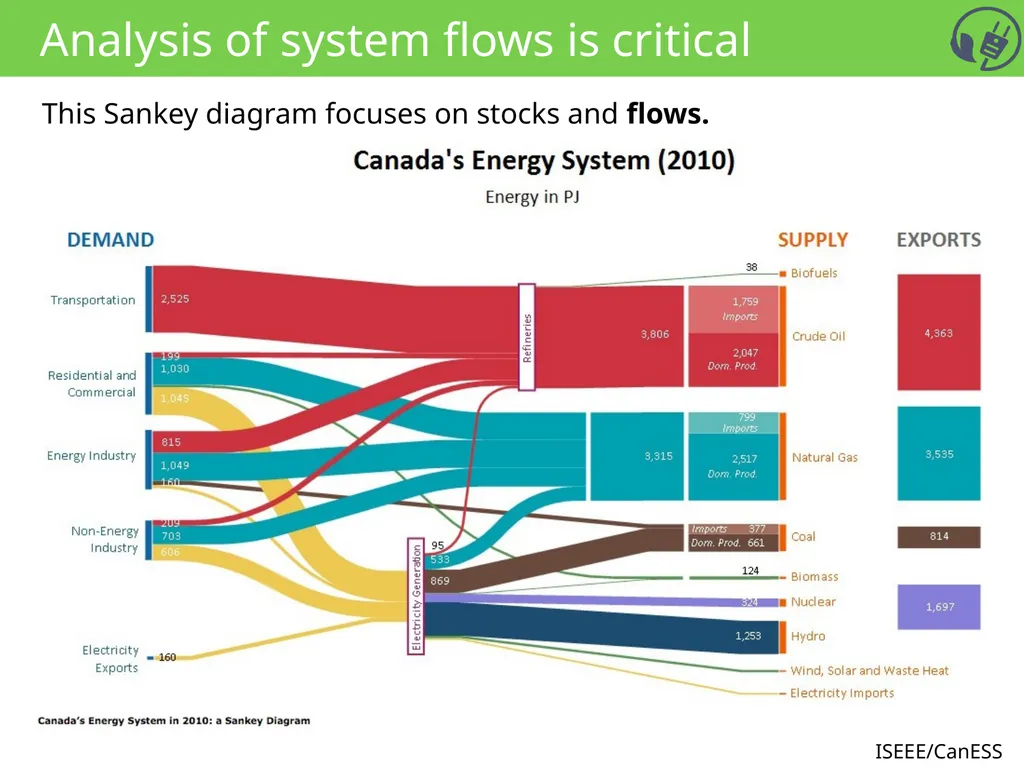
Analysis of system flows is critical This Sankey diagram focuses on stocks and flows. ISEEE/CanESS<br>
10
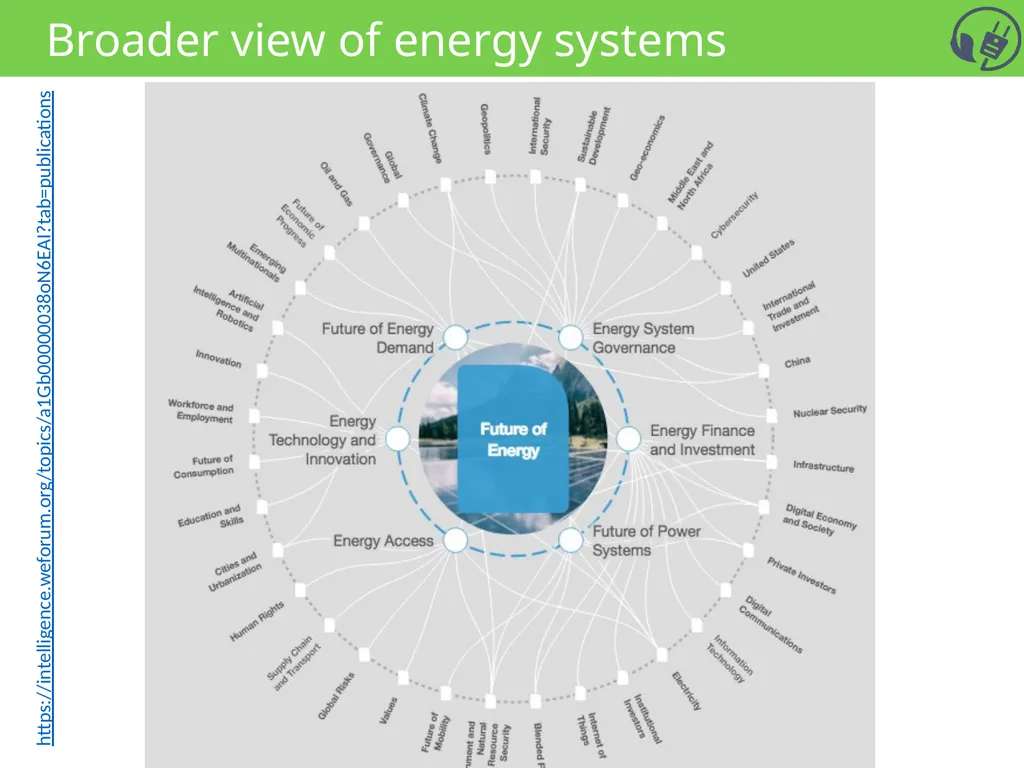
Broader view of energy systems https://intelligence.weforum.org/topics/a1Gb00000038oN6EAI?tab=publications<br>
11
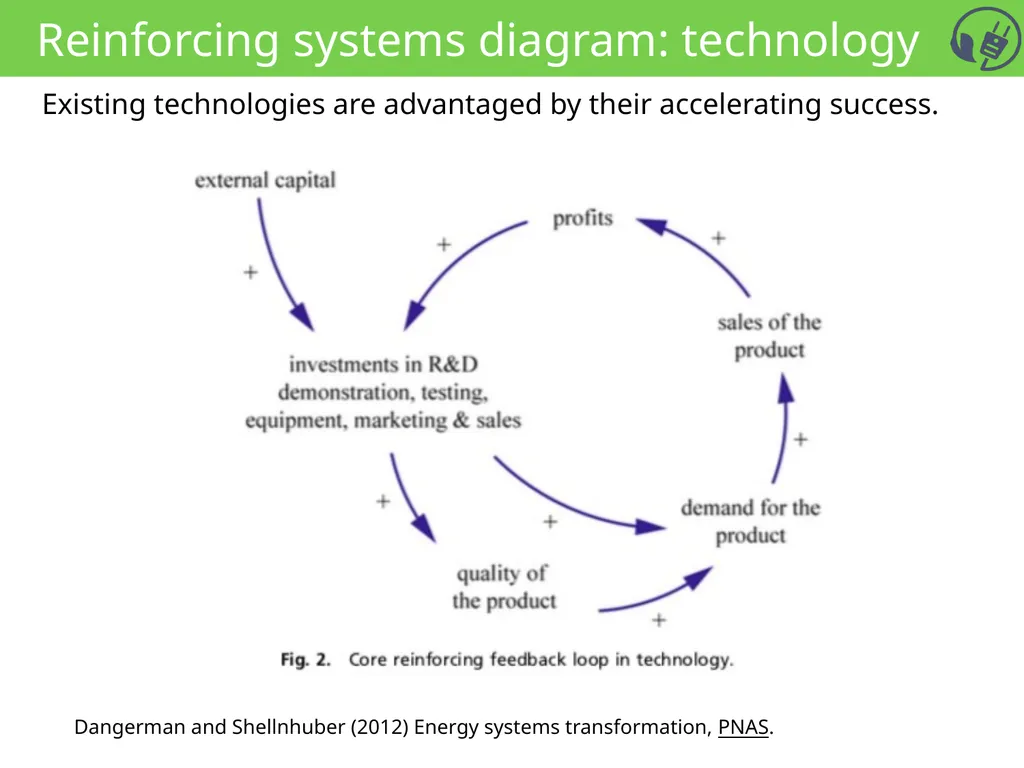
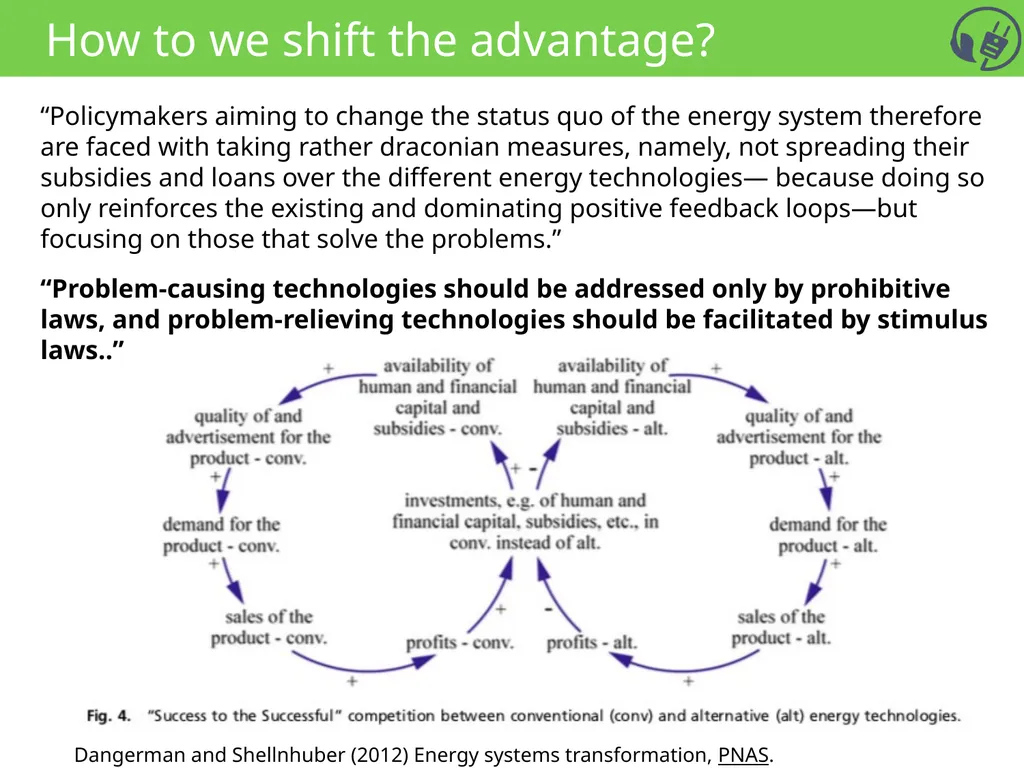
Reinforcing systems diagram: technology Dangerman and Shellnhuber (2012) Energy systems transformation, PNAS. Existing technologies are advantaged by their accelerating success.<br>
12
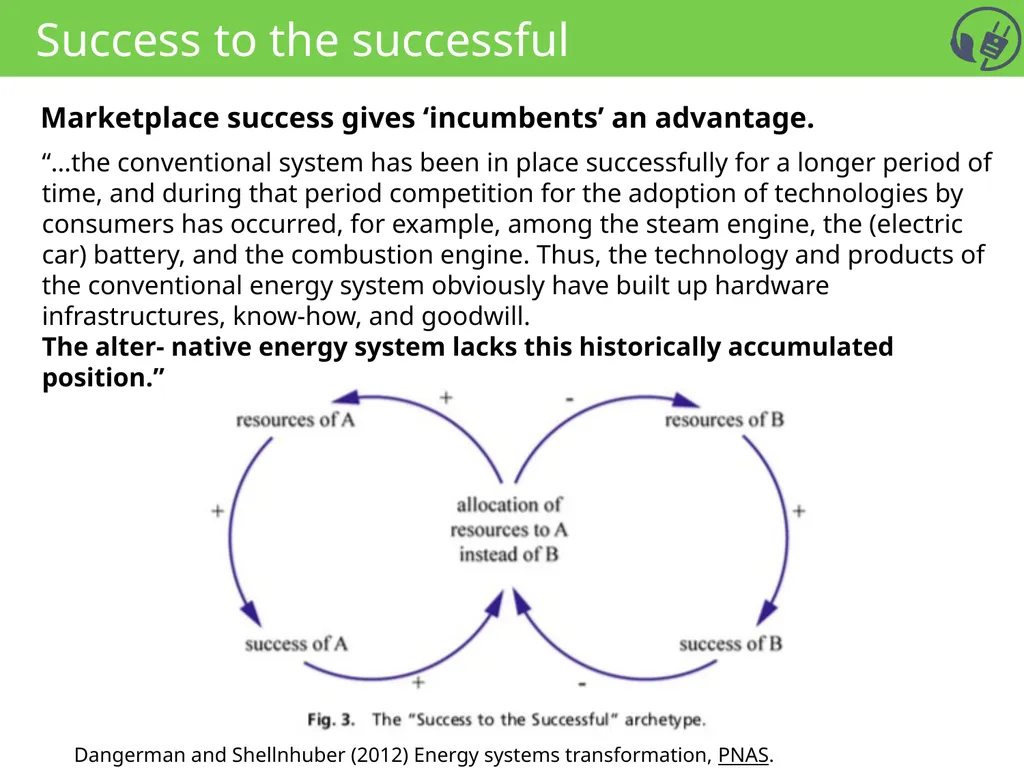
Success to the successful Dangerman and Shellnhuber (2012) Energy systems transformation, PNAS. “…the conventional system has been in place successfully for a longer period of time, and during that period competition for the adoption of technologies by consumers has occurred, for example, among the steam engine, the (electric car) battery, and the combustion engine. Thus, the technology and products of the conventional energy system obviously have built up hardware infrastructures, know-how, and goodwill. The alter- native energy system lacks this historically accumulated position.” Marketplace success gives ‘incumbents’ an advantage.<br>
13
How to we shift the advantage? Dangerman and Shellnhuber (2012) Energy systems transformation, PNAS. “Policymakers aiming to change the status quo of the energy system therefore are faced with taking rather draconian measures, namely, not spreading their subsidies and loans over the different energy technologies— because doing so only reinforces the existing and dominating positive feedback loops—but focusing on those that solve the problems.” “Problem-causing technologies should be addressed only by prohibitive laws, and problem-relieving technologies should be facilitated by stimulus laws..”<br>
14
Energy cycles are business cycles Adapted from Marchetti and Nakicenovic (1979)<br>