stakeholder engagement and gender mainstreaming
Description: stakeholder engagement and gender mainstreaming Expanded Constituency Workshop 2017 this session overview of global commitments GEF policies standards breakout session to share lessons learned, reflect on current practices discuss
Related Topics
Download Presentation
"stakeholder engagement and gender mainstreaming" is the property of its rightful owner. Permission is granted to download and print the materials on this website for personal, non-commercial use only, and to display it on your personal computer provided you do not modify the materials and that you retain all copyright notices contained in the materials. By downloading content from our website, you accept the terms of this agreement.
Presentation Transcript
slide1. stakeholder engagement and gender mainstreaming Expanded Constituency Workshop 2017<br>
slide2. this session overview of global commitments & GEF policies & standards
breakout session to share lessons learned, reflect on current practices & discuss opportunities to strengthen or clarify GEF policy, guidelines or procedures<br>
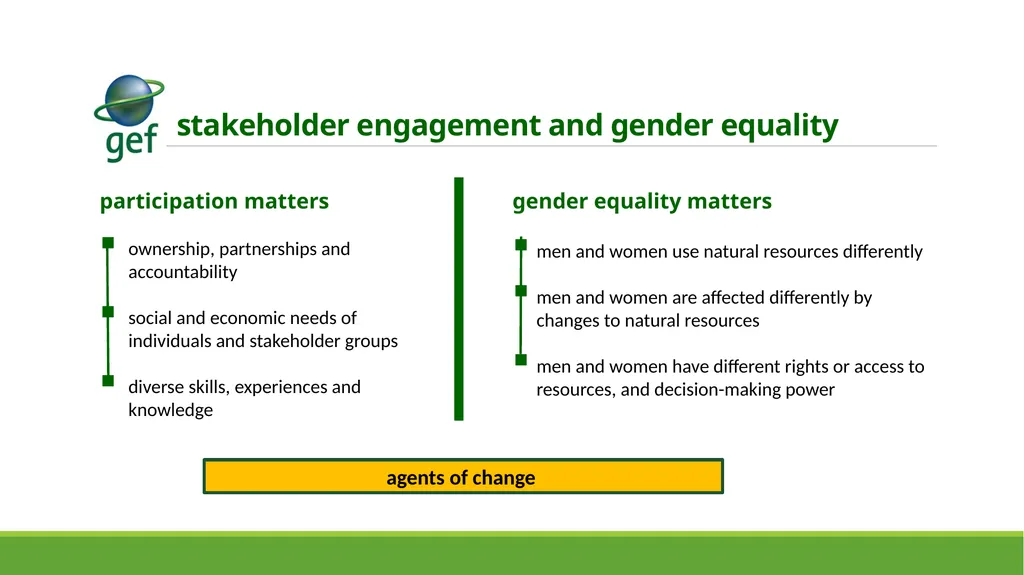
slide3. stakeholder engagement and gender equality participation matters
ownership, partnerships and accountability
social and economic needs of individuals and stakeholder groups
diverse skills, experiences and knowledge gender equality matters
men and women use natural resources differently
men and women are affected differently by changes to natural resources
men and women have different rights or access to resources, and decision-making power agents of change<br>
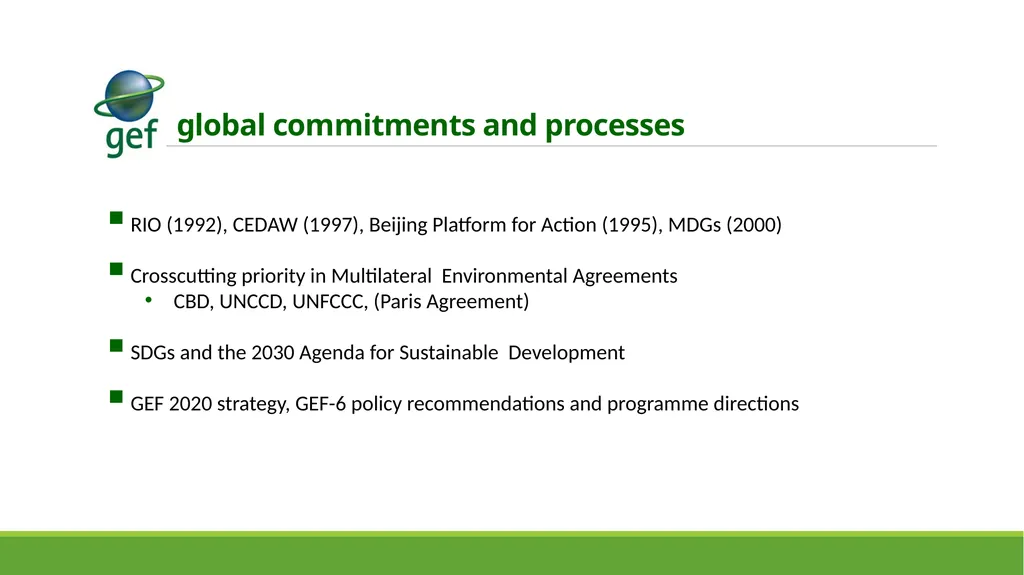
slide4. global commitments and processes RIO (1992), CEDAW (1997), Beijing Platform for Action (1995), MDGs (2000)
Crosscutting priority in Multilateral Environmental Agreements
CBD, UNCCD, UNFCCC, (Paris Agreement)
SDGs and the 2030 Agenda for Sustainable Development
GEF 2020 strategy, GEF-6 policy recommendations and programme directions<br>
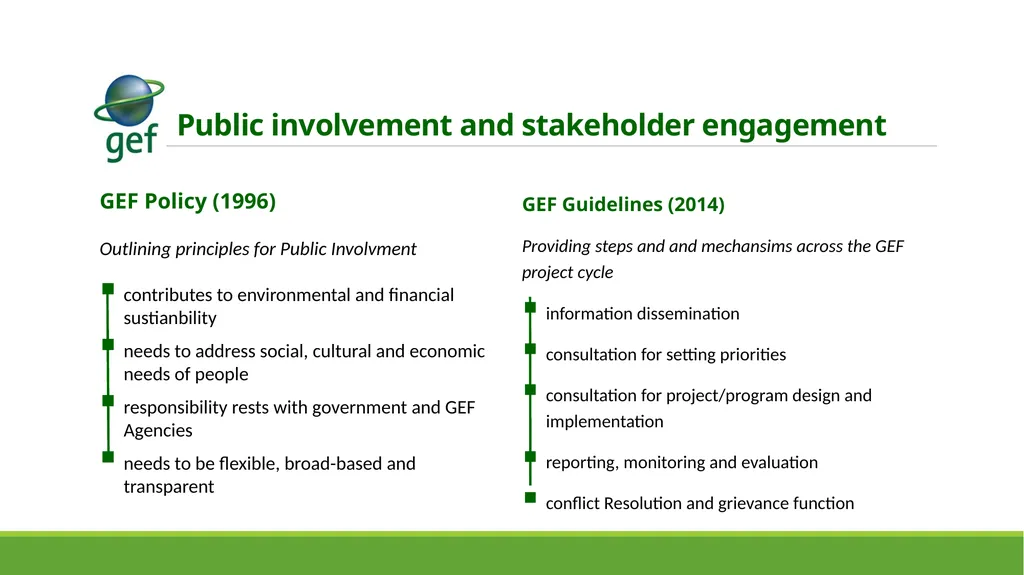
slide5. Public involvement and stakeholder engagement GEF Policy (1996)
Outlining principles for Public Involvment
contributes to environmental and financial sustianbility
needs to address social, cultural and economic needs of people
responsibility rests with government and GEF Agencies
needs to be flexible, broad-based and transparent GEF Guidelines (2014)
Providing steps and and mechansims across the GEF project cycle
information dissemination
consultation for setting priorities
consultation for project/program design and implementation
reporting, monitoring and evaluation
conflict Resolution and grievance function<br>
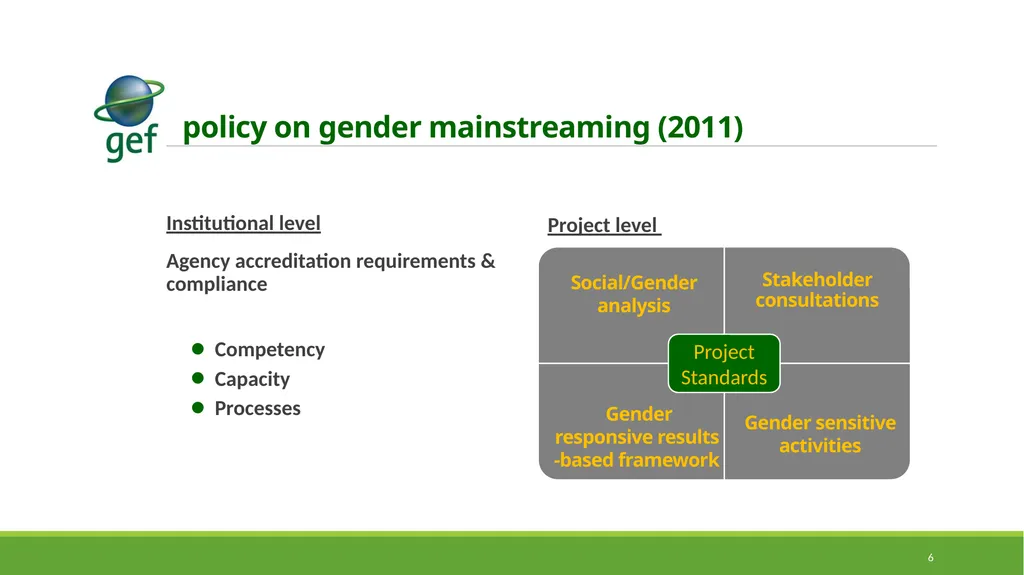
slide6. policy on gender mainstreaming (2011) Institutional level
Agency accreditation requirements & compliance
Competency
Capacity
Processes 6 Project level<br>
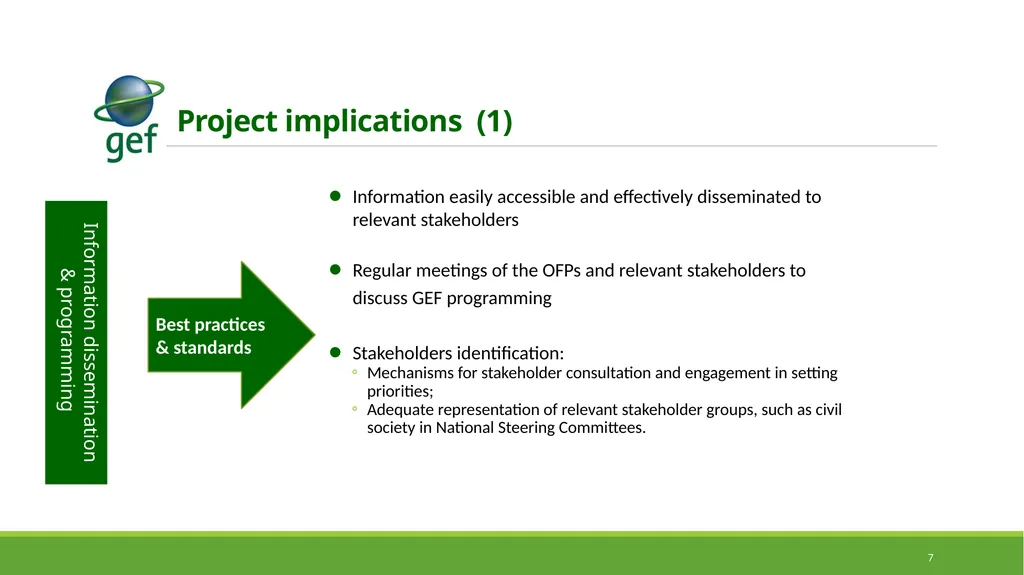
slide7. Project implications (1) Information easily accessible and effectively disseminated to relevant stakeholders
Regular meetings of the OFPs and relevant stakeholders to discuss GEF programming
Stakeholders identification:
Mechanisms for stakeholder consultation and engagement in setting priorities;
Adequate representation of relevant stakeholder groups, such as civil society in National Steering Committees. 7 Information dissemination
& programming Best practices & standards<br>
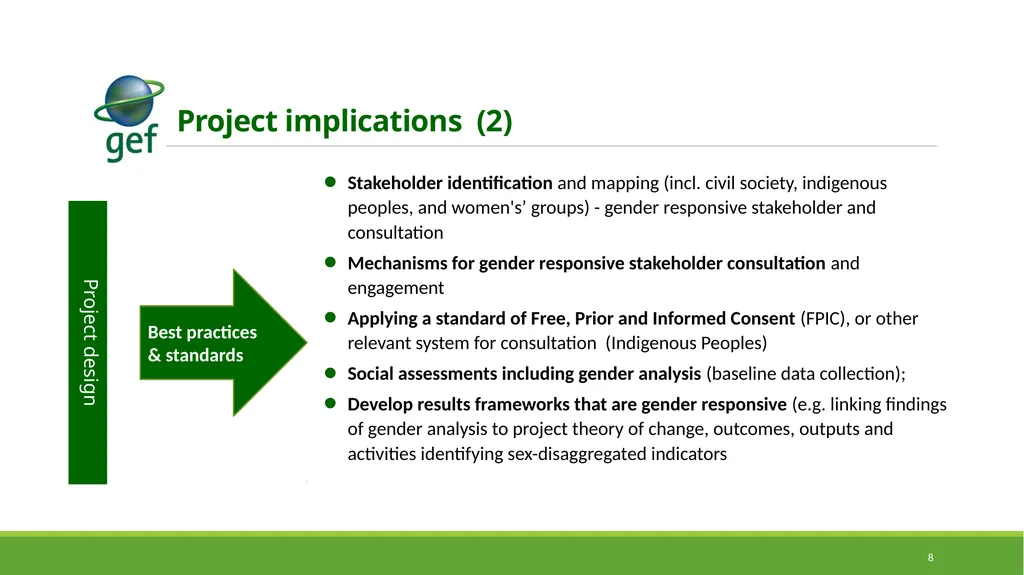
slide8. Project implications (2) Stakeholder identification and mapping (incl. civil society, indigenous peoples, and women's’ groups) - gender responsive stakeholder and consultation
Mechanisms for gender responsive stakeholder consultation and engagement
Applying a standard of Free, Prior and Informed Consent (FPIC), or other relevant system for consultation (Indigenous Peoples)
Social assessments including gender analysis (baseline data collection);
Develop results frameworks that are gender responsive (e.g. linking findings of gender analysis to project theory of change, outcomes, outputs and activities identifying sex-disaggregated indicators
; 8 Project design Best practices & standards<br>
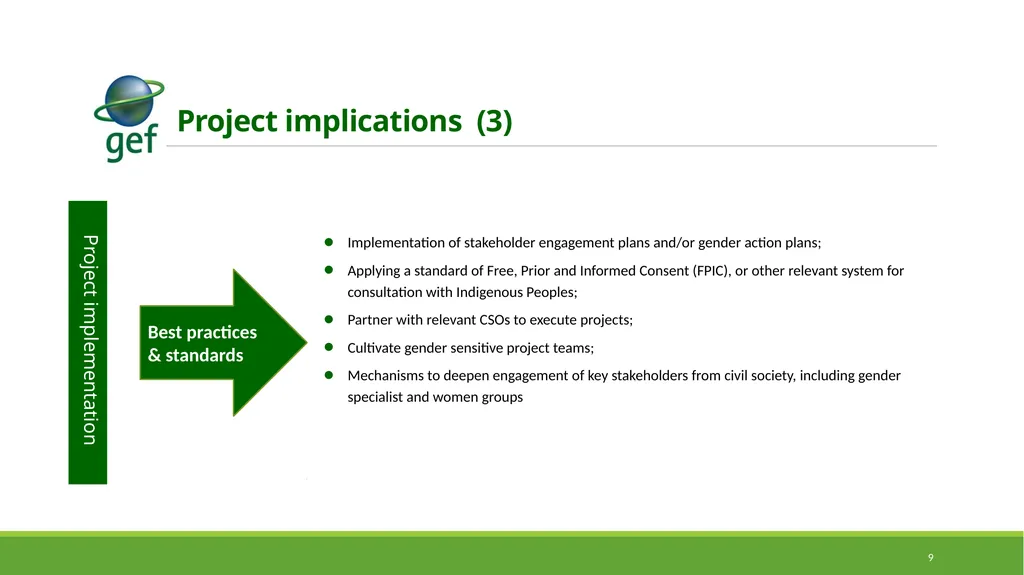
slide9. Project implications (3) Implementation of stakeholder engagement plans and/or gender action plans;
Applying a standard of Free, Prior and Informed Consent (FPIC), or other relevant system for consultation with Indigenous Peoples;
Partner with relevant CSOs to execute projects;
Cultivate gender sensitive project teams;
Mechanisms to deepen engagement of key stakeholders from civil society, including gender specialist and women groups
; 9 Project implementation Best practices & standards<br>
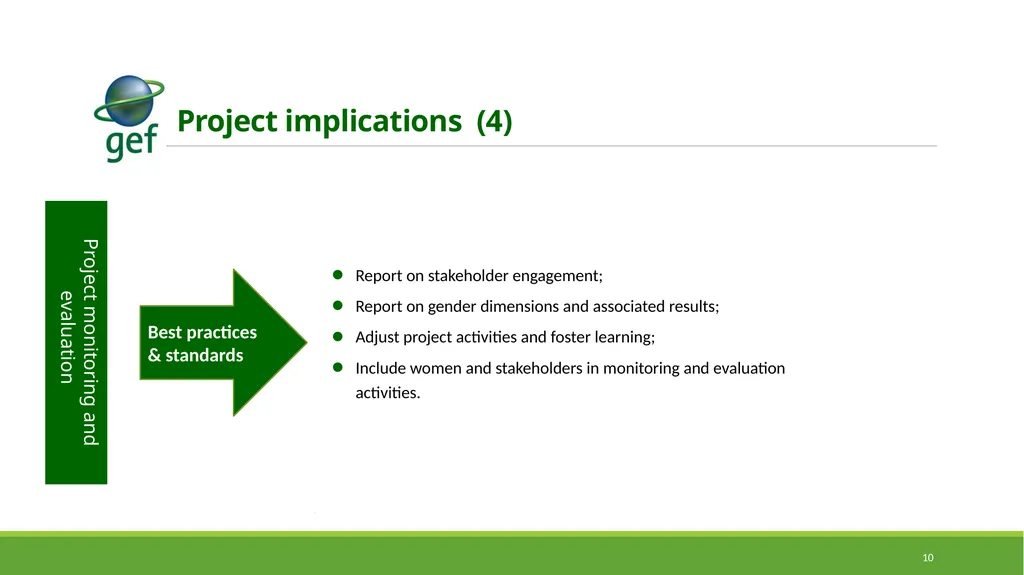
slide10. Project implications (4) Report on stakeholder engagement;
Report on gender dimensions and associated results;
Adjust project activities and foster learning;
Include women and stakeholders in monitoring and evaluation activities.
; 10 Project monitoring and evaluation Best practices & standards<br>
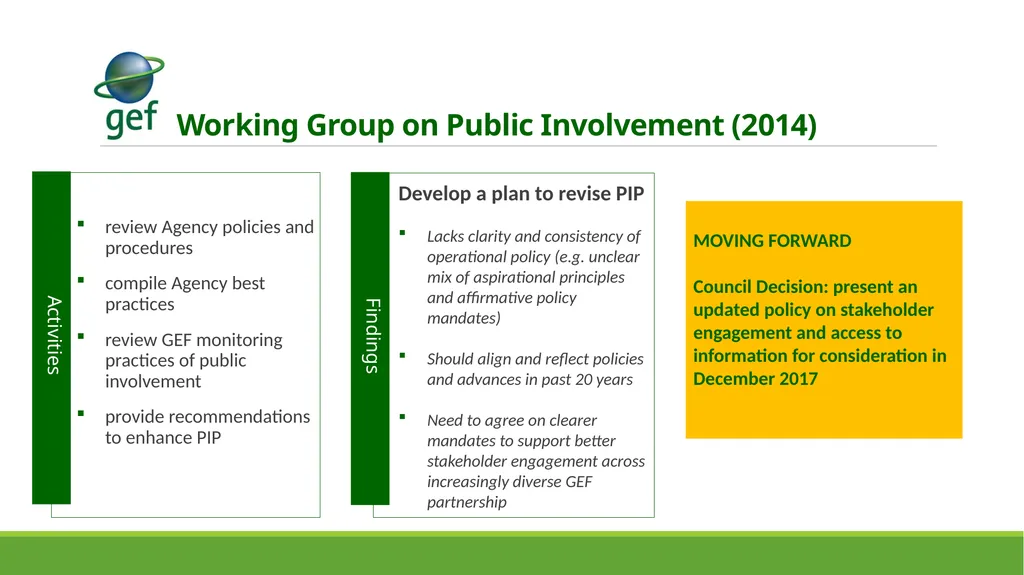
slide11. Working Group on Public Involvement (2014) review Agency policies and procedures
compile Agency best practices
review GEF monitoring practices of public involvement
provide recommendations to enhance PIP Develop a plan to revise PIP
Lacks clarity and consistency of operational policy (e.g. unclear mix of aspirational principles and affirmative policy mandates)
Should align and reflect policies and advances in past 20 years
Need to agree on clearer mandates to support better stakeholder engagement across increasingly diverse GEF partnership Activities Findings MOVING FORWARD
Council Decision: present an updated policy on stakeholder engagement and access to information for consideration in December 2017<br>
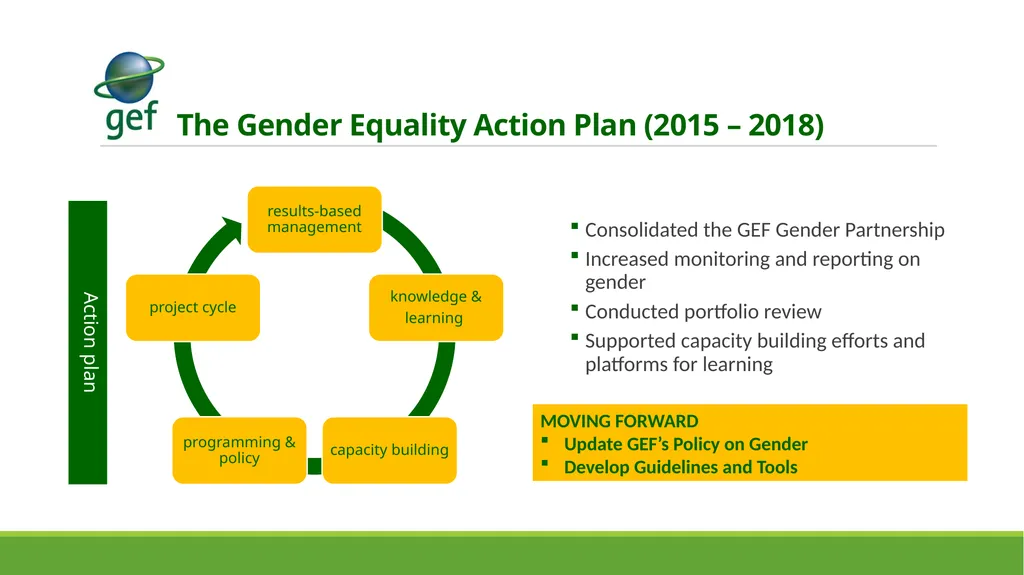
slide12. The Gender Equality Action Plan (2015 – 2018) Consolidated the GEF Gender Partnership
Increased monitoring and reporting on gender
Conducted portfolio review
Supported capacity building efforts and platforms for learning Action plan MOVING FORWARD
Update GEF’s Policy on Gender
Develop Guidelines and Tools<br>
slide13. Thank you
For more information on:
Public involvement please contact pilar barrera rey: pbarrera@thegef.org

Gender equality please contact gabriella richardson temm: grichardsontemm@thegef.org
www.thegef.org<br>
slide2. this session overview of global commitments & GEF policies & standards
breakout session to share lessons learned, reflect on current practices & discuss opportunities to strengthen or clarify GEF policy, guidelines or procedures<br>
slide3. stakeholder engagement and gender equality participation matters
ownership, partnerships and accountability
social and economic needs of individuals and stakeholder groups
diverse skills, experiences and knowledge gender equality matters
men and women use natural resources differently
men and women are affected differently by changes to natural resources
men and women have different rights or access to resources, and decision-making power agents of change<br>
slide4. global commitments and processes RIO (1992), CEDAW (1997), Beijing Platform for Action (1995), MDGs (2000)
Crosscutting priority in Multilateral Environmental Agreements
CBD, UNCCD, UNFCCC, (Paris Agreement)
SDGs and the 2030 Agenda for Sustainable Development
GEF 2020 strategy, GEF-6 policy recommendations and programme directions<br>
slide5. Public involvement and stakeholder engagement GEF Policy (1996)
Outlining principles for Public Involvment
contributes to environmental and financial sustianbility
needs to address social, cultural and economic needs of people
responsibility rests with government and GEF Agencies
needs to be flexible, broad-based and transparent GEF Guidelines (2014)
Providing steps and and mechansims across the GEF project cycle
information dissemination
consultation for setting priorities
consultation for project/program design and implementation
reporting, monitoring and evaluation
conflict Resolution and grievance function<br>
slide6. policy on gender mainstreaming (2011) Institutional level
Agency accreditation requirements & compliance
Competency
Capacity
Processes 6 Project level<br>
slide7. Project implications (1) Information easily accessible and effectively disseminated to relevant stakeholders
Regular meetings of the OFPs and relevant stakeholders to discuss GEF programming
Stakeholders identification:
Mechanisms for stakeholder consultation and engagement in setting priorities;
Adequate representation of relevant stakeholder groups, such as civil society in National Steering Committees. 7 Information dissemination
& programming Best practices & standards<br>
slide8. Project implications (2) Stakeholder identification and mapping (incl. civil society, indigenous peoples, and women's’ groups) - gender responsive stakeholder and consultation
Mechanisms for gender responsive stakeholder consultation and engagement
Applying a standard of Free, Prior and Informed Consent (FPIC), or other relevant system for consultation (Indigenous Peoples)
Social assessments including gender analysis (baseline data collection);
Develop results frameworks that are gender responsive (e.g. linking findings of gender analysis to project theory of change, outcomes, outputs and activities identifying sex-disaggregated indicators
; 8 Project design Best practices & standards<br>
slide9. Project implications (3) Implementation of stakeholder engagement plans and/or gender action plans;
Applying a standard of Free, Prior and Informed Consent (FPIC), or other relevant system for consultation with Indigenous Peoples;
Partner with relevant CSOs to execute projects;
Cultivate gender sensitive project teams;
Mechanisms to deepen engagement of key stakeholders from civil society, including gender specialist and women groups
; 9 Project implementation Best practices & standards<br>
slide10. Project implications (4) Report on stakeholder engagement;
Report on gender dimensions and associated results;
Adjust project activities and foster learning;
Include women and stakeholders in monitoring and evaluation activities.
; 10 Project monitoring and evaluation Best practices & standards<br>
slide11. Working Group on Public Involvement (2014) review Agency policies and procedures
compile Agency best practices
review GEF monitoring practices of public involvement
provide recommendations to enhance PIP Develop a plan to revise PIP
Lacks clarity and consistency of operational policy (e.g. unclear mix of aspirational principles and affirmative policy mandates)
Should align and reflect policies and advances in past 20 years
Need to agree on clearer mandates to support better stakeholder engagement across increasingly diverse GEF partnership Activities Findings MOVING FORWARD
Council Decision: present an updated policy on stakeholder engagement and access to information for consideration in December 2017<br>
slide12. The Gender Equality Action Plan (2015 – 2018) Consolidated the GEF Gender Partnership
Increased monitoring and reporting on gender
Conducted portfolio review
Supported capacity building efforts and platforms for learning Action plan MOVING FORWARD
Update GEF’s Policy on Gender
Develop Guidelines and Tools<br>
slide13. Thank you
For more information on:
Public involvement please contact pilar barrera rey: pbarrera@thegef.org
Gender equality please contact gabriella richardson temm: grichardsontemm@thegef.org
www.thegef.org<br>