
Stakeholders A2 Stakeholders and their influence
Description: Stakeholders A2 Stakeholders and their influence Stakeholders are anyone with an interest in the actions of a business. Draw a spider diagram to show the potential stakeholders of a business. Categorise them as internal or external.
Related Topics
Download Presentation
"Stakeholders A2 Stakeholders and their influence" is the property of its rightful owner. Permission is granted to download and print the materials on this website for personal, non-commercial use only, and to display it on your personal computer provided you do not modify the materials and that you retain all copyright notices contained in the materials. By downloading content from our website, you accept the terms of this agreement.
Presentation Transcript
slide1. Stakeholders A2
Stakeholders and their influence Stakeholders are anyone with an interest in the actions of a business.
Draw a spider diagram to show the potential stakeholders of a business.
Categorise them as internal or external.<br>
slide2. Stakeholders In this topic you will learn about
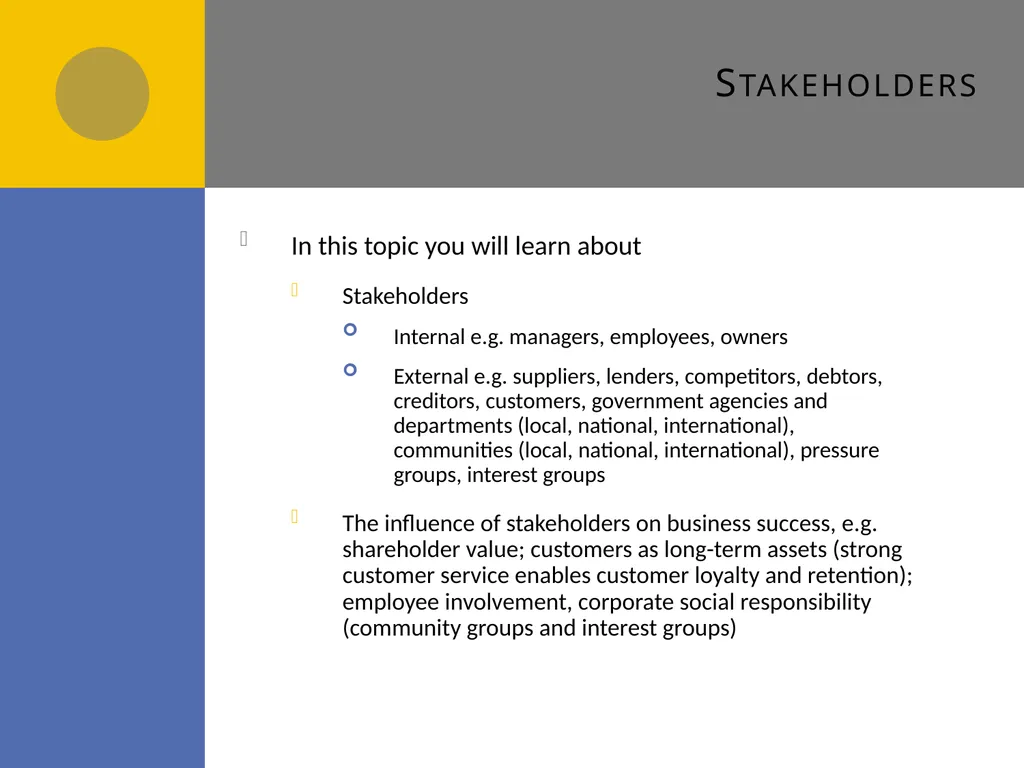
Stakeholders
Internal e.g. managers, employees, owners
External e.g. suppliers, lenders, competitors, debtors, creditors, customers, government agencies and departments (local, national, international), communities (local, national, international), pressure groups, interest groups
The influence of stakeholders on business success, e.g. shareholder value; customers as long-term assets (strong customer service enables customer loyalty and retention); employee involvement, corporate social responsibility (community groups and interest groups)<br>
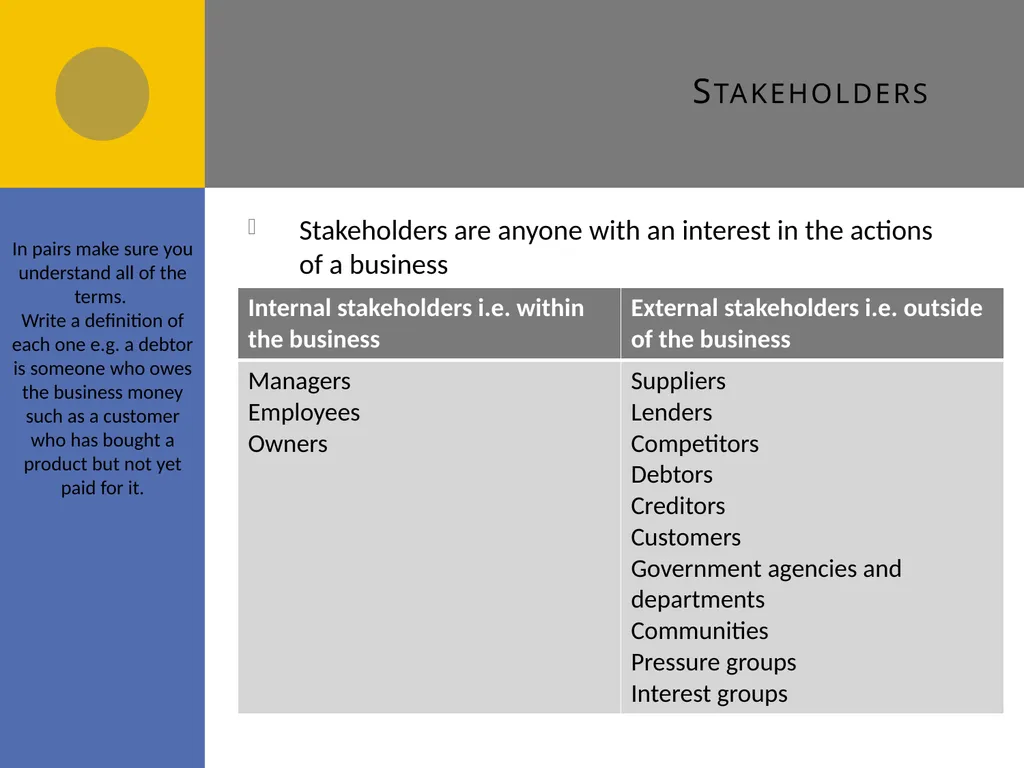
slide3. Stakeholders Stakeholders are anyone with an interest in the actions of a business In pairs make sure you understand all of the terms.
Write a definition of each one e.g. a debtor is someone who owes the business money such as a customer who has bought a product but not yet paid for it.<br>
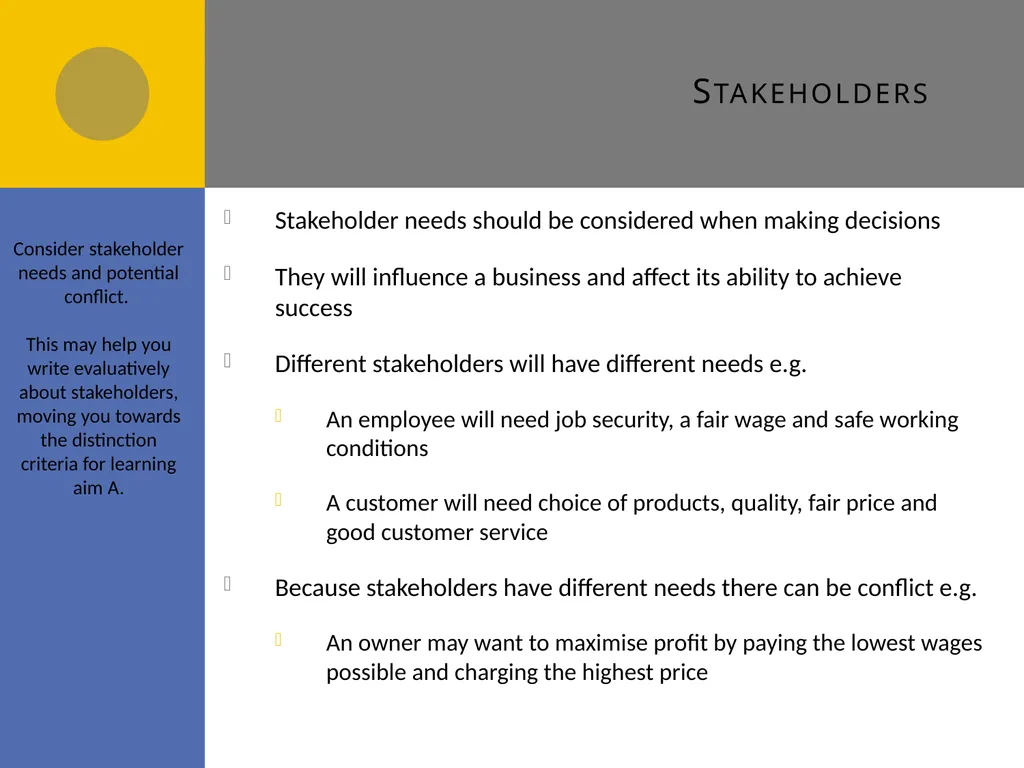
slide4. Stakeholders Stakeholder needs should be considered when making decisions
They will influence a business and affect its ability to achieve success
Different stakeholders will have different needs e.g.
An employee will need job security, a fair wage and safe working conditions
A customer will need choice of products, quality, fair price and good customer service
Because stakeholders have different needs there can be conflict e.g.
An owner may want to maximise profit by paying the lowest wages possible and charging the highest price Consider stakeholder needs and potential conflict.
This may help you write evaluatively about stakeholders, moving you towards the distinction criteria for learning aim A.<br>
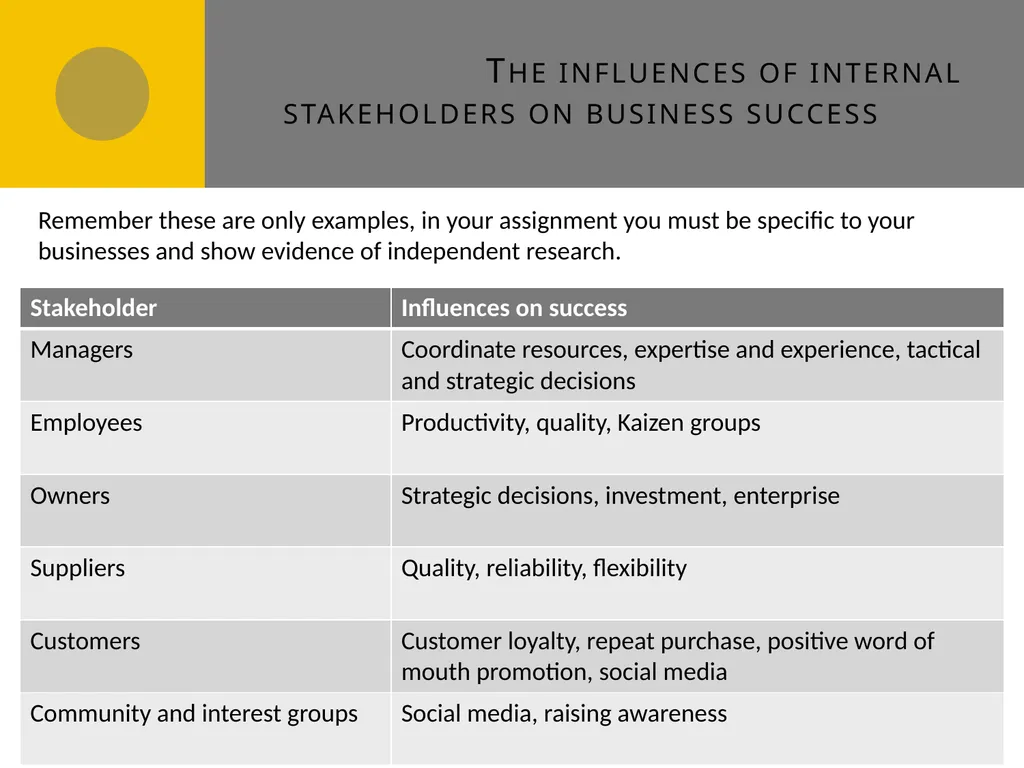
slide5. The influences of internal stakeholders on business success Remember these are only examples, in your assignment you must be specific to your businesses and show evidence of independent research.<br>
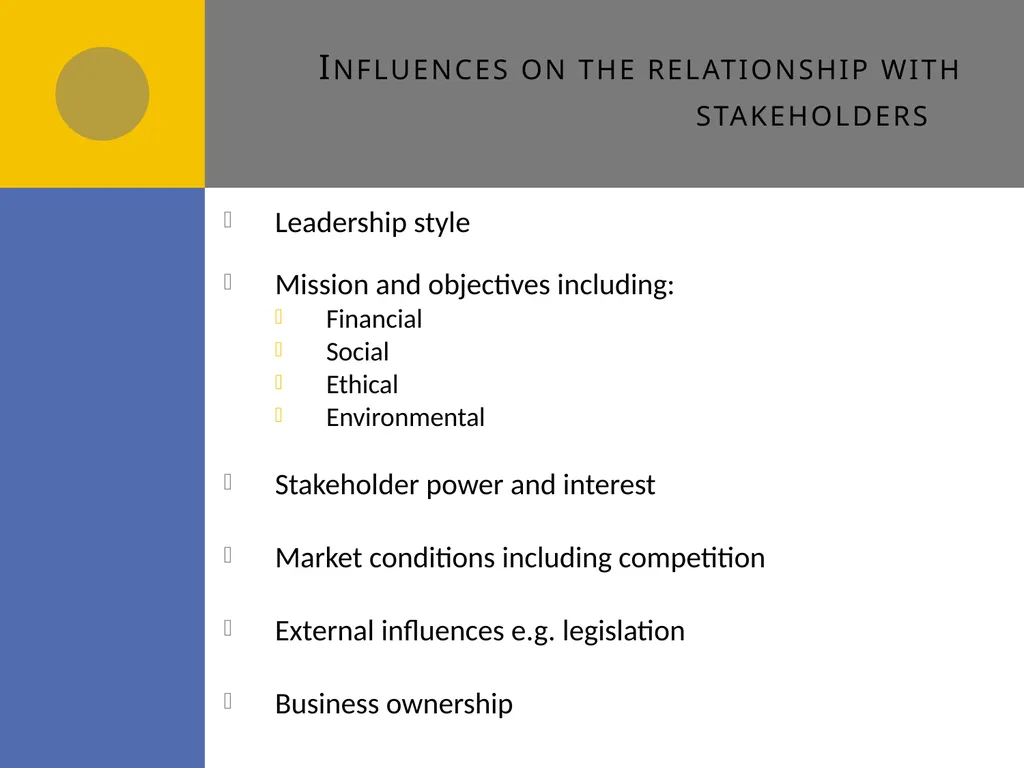
slide6. Influences on the relationship with stakeholders Leadership style
Mission and objectives including:
Financial
Social
Ethical
Environmental
Stakeholder power and interest
Market conditions including competition
External influences e.g. legislation
Business ownership<br>
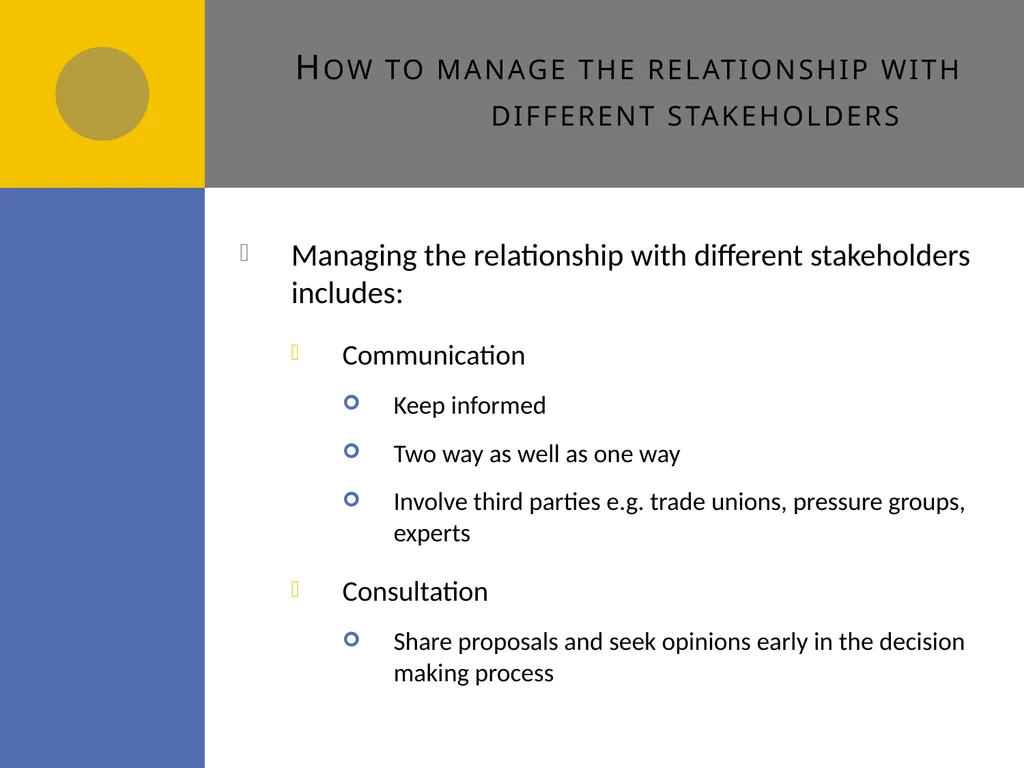
slide7. How to manage the relationship with different stakeholders Managing the relationship with different stakeholders includes:
Communication
Keep informed
Two way as well as one way
Involve third parties e.g. trade unions, pressure groups, experts
Consultation
Share proposals and seek opinions early in the decision making process<br>
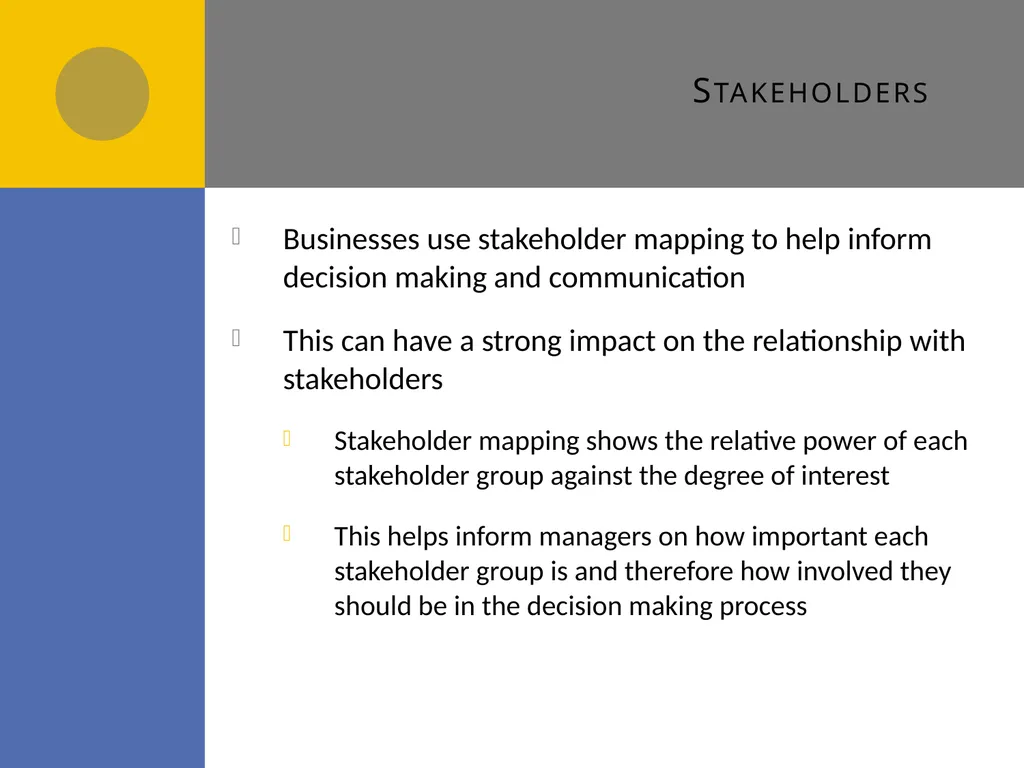
slide8. Stakeholders Businesses use stakeholder mapping to help inform decision making and communication
This can have a strong impact on the relationship with stakeholders
Stakeholder mapping shows the relative power of each stakeholder group against the degree of interest
This helps inform managers on how important each stakeholder group is and therefore how involved they should be in the decision making process<br>
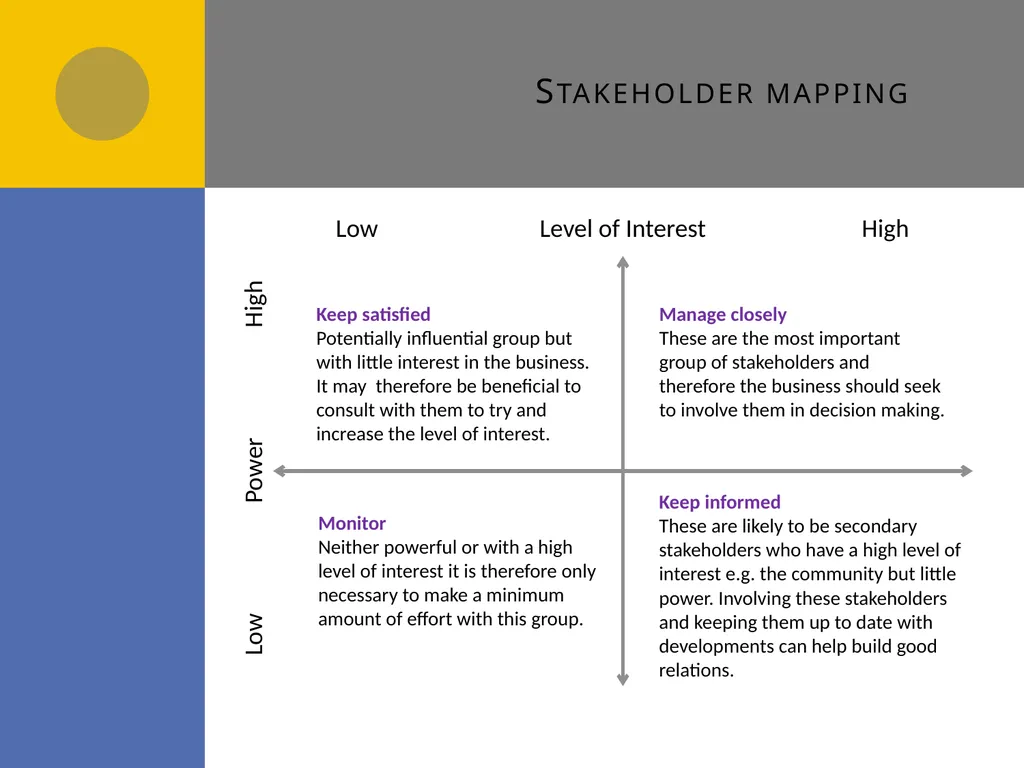
slide9. Stakeholder mapping Low Level of Interest High Low Power High Keep informed
These are likely to be secondary stakeholders who have a high level of interest e.g. the community but little power. Involving these stakeholders and keeping them up to date with developments can help build good relations. Keep satisfied
Potentially influential group but with little interest in the business. It may therefore be beneficial to consult with them to try and increase the level of interest. Manage closely
These are the most important group of stakeholders and therefore the business should seek to involve them in decision making. Monitor
Neither powerful or with a high level of interest it is therefore only necessary to make a minimum amount of effort with this group.<br>
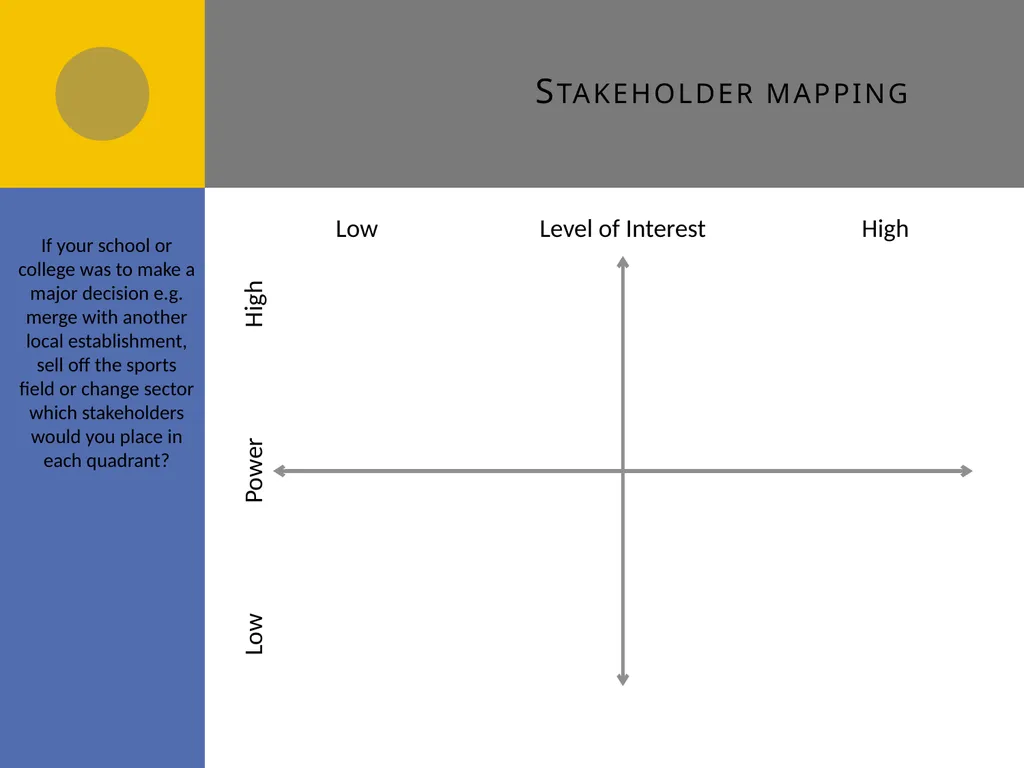
slide10. Stakeholder mapping Low Level of Interest High Low Power High If your school or college was to make a major decision e.g. merge with another local establishment, sell off the sports field or change sector which stakeholders would you place in each quadrant?<br>
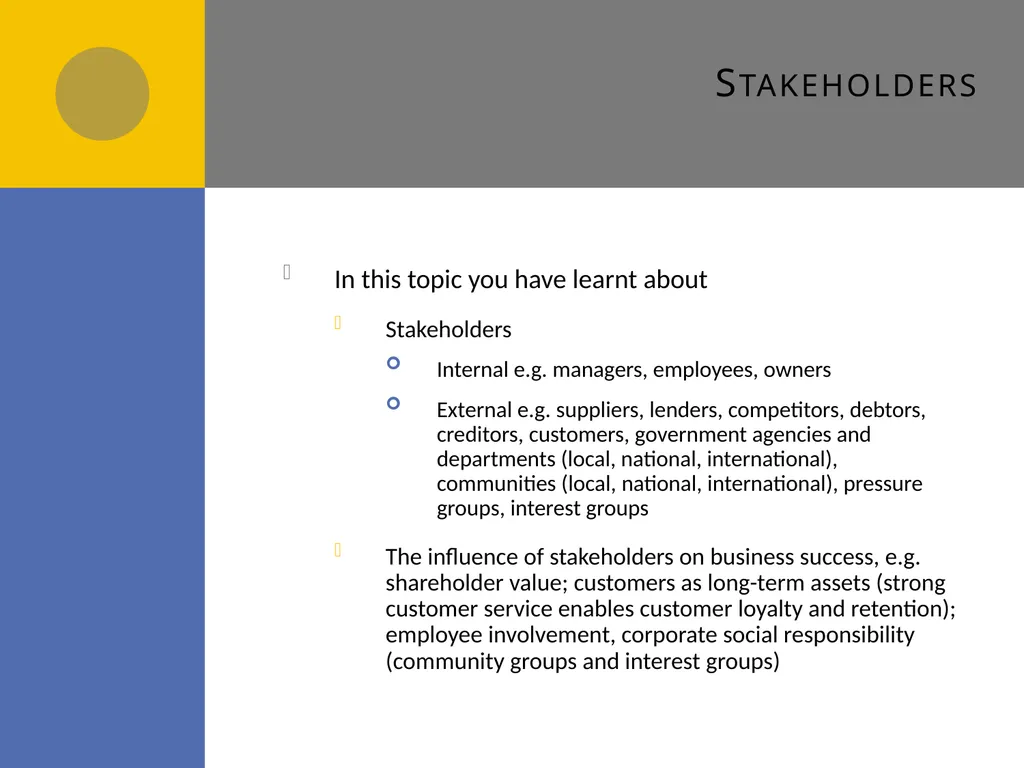
slide11. Stakeholders In this topic you have learnt about
Stakeholders
Internal e.g. managers, employees, owners
External e.g. suppliers, lenders, competitors, debtors, creditors, customers, government agencies and departments (local, national, international), communities (local, national, international), pressure groups, interest groups
The influence of stakeholders on business success, e.g. shareholder value; customers as long-term assets (strong customer service enables customer loyalty and retention); employee involvement, corporate social responsibility (community groups and interest groups)<br>
Stakeholders and their influence Stakeholders are anyone with an interest in the actions of a business.
Draw a spider diagram to show the potential stakeholders of a business.
Categorise them as internal or external.<br>
slide2. Stakeholders In this topic you will learn about
Stakeholders
Internal e.g. managers, employees, owners
External e.g. suppliers, lenders, competitors, debtors, creditors, customers, government agencies and departments (local, national, international), communities (local, national, international), pressure groups, interest groups
The influence of stakeholders on business success, e.g. shareholder value; customers as long-term assets (strong customer service enables customer loyalty and retention); employee involvement, corporate social responsibility (community groups and interest groups)<br>
slide3. Stakeholders Stakeholders are anyone with an interest in the actions of a business In pairs make sure you understand all of the terms.
Write a definition of each one e.g. a debtor is someone who owes the business money such as a customer who has bought a product but not yet paid for it.<br>
slide4. Stakeholders Stakeholder needs should be considered when making decisions
They will influence a business and affect its ability to achieve success
Different stakeholders will have different needs e.g.
An employee will need job security, a fair wage and safe working conditions
A customer will need choice of products, quality, fair price and good customer service
Because stakeholders have different needs there can be conflict e.g.
An owner may want to maximise profit by paying the lowest wages possible and charging the highest price Consider stakeholder needs and potential conflict.
This may help you write evaluatively about stakeholders, moving you towards the distinction criteria for learning aim A.<br>
slide5. The influences of internal stakeholders on business success Remember these are only examples, in your assignment you must be specific to your businesses and show evidence of independent research.<br>
slide6. Influences on the relationship with stakeholders Leadership style
Mission and objectives including:
Financial
Social
Ethical
Environmental
Stakeholder power and interest
Market conditions including competition
External influences e.g. legislation
Business ownership<br>
slide7. How to manage the relationship with different stakeholders Managing the relationship with different stakeholders includes:
Communication
Keep informed
Two way as well as one way
Involve third parties e.g. trade unions, pressure groups, experts
Consultation
Share proposals and seek opinions early in the decision making process<br>
slide8. Stakeholders Businesses use stakeholder mapping to help inform decision making and communication
This can have a strong impact on the relationship with stakeholders
Stakeholder mapping shows the relative power of each stakeholder group against the degree of interest
This helps inform managers on how important each stakeholder group is and therefore how involved they should be in the decision making process<br>
slide9. Stakeholder mapping Low Level of Interest High Low Power High Keep informed
These are likely to be secondary stakeholders who have a high level of interest e.g. the community but little power. Involving these stakeholders and keeping them up to date with developments can help build good relations. Keep satisfied
Potentially influential group but with little interest in the business. It may therefore be beneficial to consult with them to try and increase the level of interest. Manage closely
These are the most important group of stakeholders and therefore the business should seek to involve them in decision making. Monitor
Neither powerful or with a high level of interest it is therefore only necessary to make a minimum amount of effort with this group.<br>
slide10. Stakeholder mapping Low Level of Interest High Low Power High If your school or college was to make a major decision e.g. merge with another local establishment, sell off the sports field or change sector which stakeholders would you place in each quadrant?<br>
slide11. Stakeholders In this topic you have learnt about
Stakeholders
Internal e.g. managers, employees, owners
External e.g. suppliers, lenders, competitors, debtors, creditors, customers, government agencies and departments (local, national, international), communities (local, national, international), pressure groups, interest groups
The influence of stakeholders on business success, e.g. shareholder value; customers as long-term assets (strong customer service enables customer loyalty and retention); employee involvement, corporate social responsibility (community groups and interest groups)<br>