State Interventions on Combating Lead exposure Nia Giuashvili, MD, MPH, PhDc Head of the Environmental and One Health Department National Center for Disease Control and Public Health Ministry of IDPs from Occupied Territories, Labour,
"State Interventions on Combating Lead exposure Nia" is the property of its rightful owner. Permission is granted to
download and print the materials on this website for personal, non-commercial use only, and to display it
on your personal computer provided you do not modify the materials and that you retain all copyright
notices contained in the materials. By downloading content from our website, you accept the terms of this
agreement.
Presentation Transcript
01
State Interventions on Combating Lead exposure Nia Giuashvili, MD, MPH, PhDc
Head of the Environmental and One Health Department
National Center for Disease Control and Public Health
Ministry of IDPs from Occupied Territories, Labour, Health and Social Affairs of Georgia
23 October, 2026<br>
02
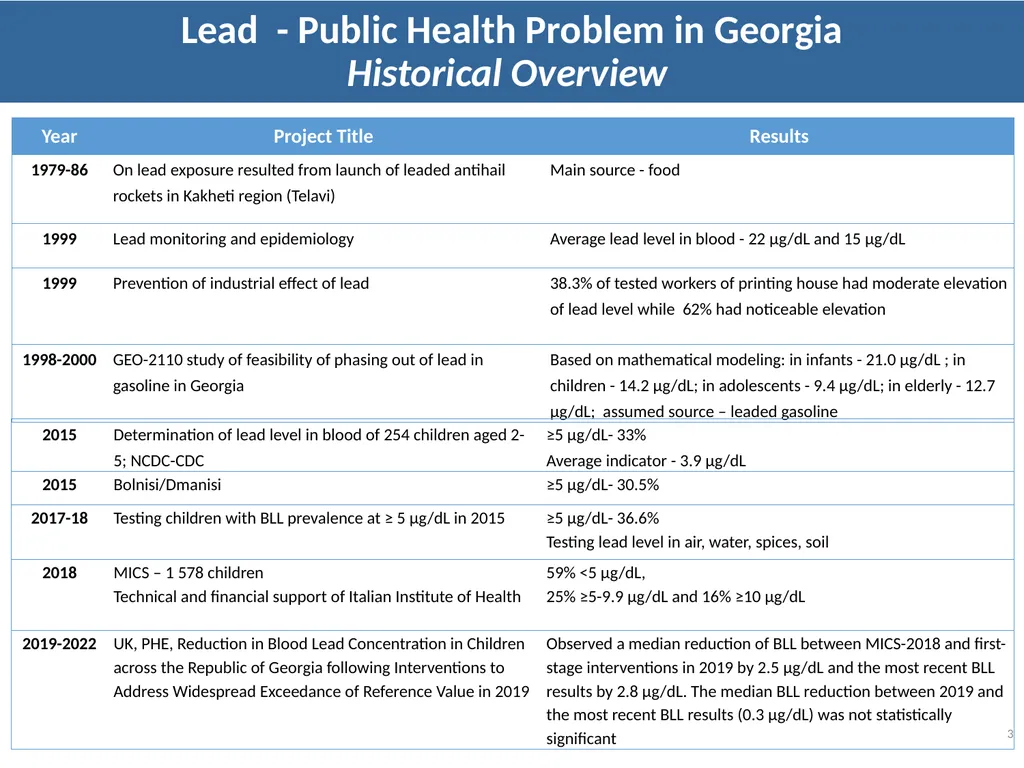
3 Lead - Public Health Problem in Georgia Historical Overview<br>
03
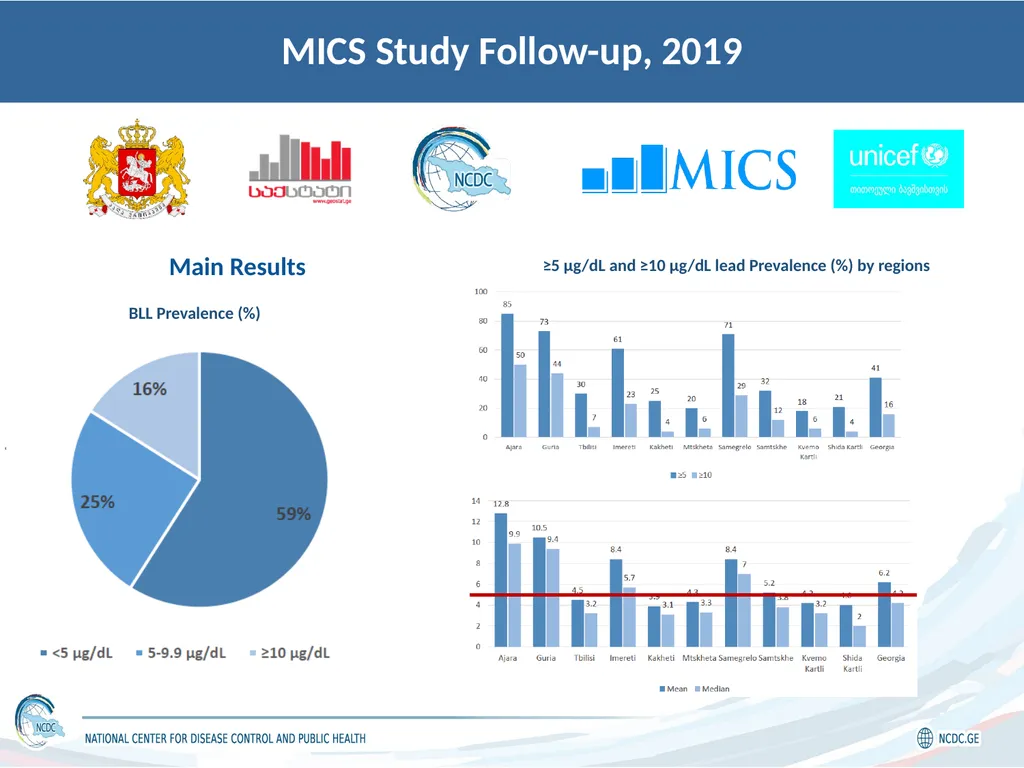
MICS Study Follow-up, 2019 Main Results BLL Prevalence (%) ≥5 μg/dL and ≥10 μg/dL lead Prevalence (%) by regions<br>
04
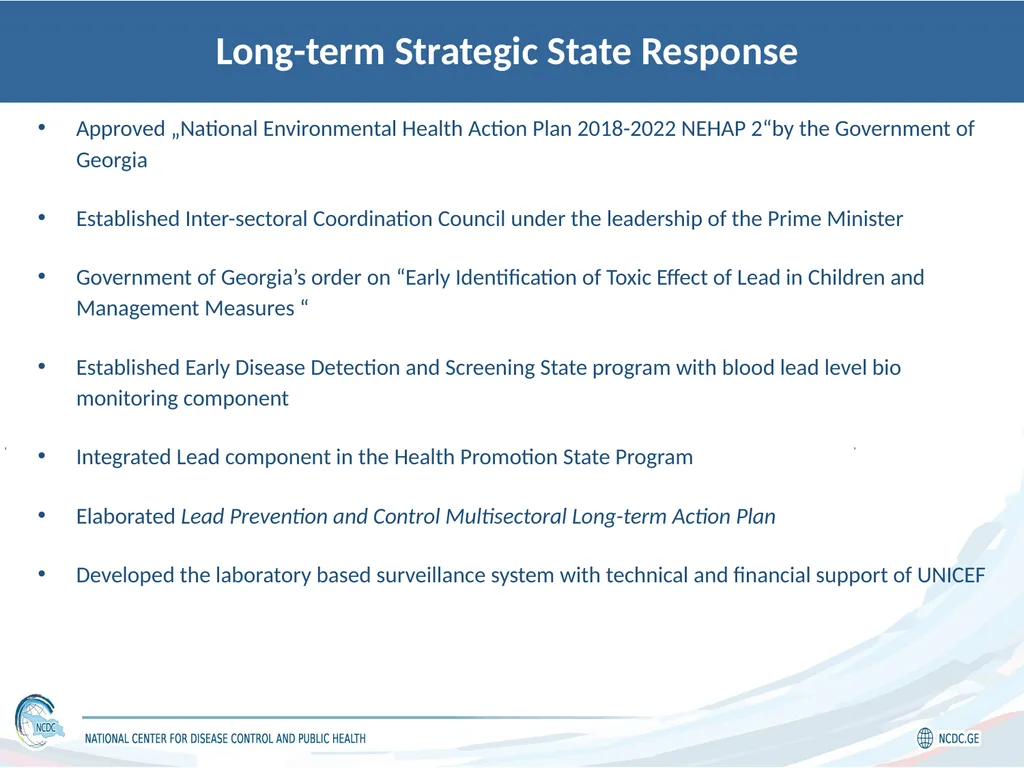
Long-term Strategic State Response Approved „National Environmental Health Action Plan 2018-2022 NEHAP 2“by the Government of Georgia
Established Inter-sectoral Coordination Council under the leadership of the Prime Minister
Government of Georgia’s order on “Early Identification of Toxic Effect of Lead in Children and Management Measures “
Established Early Disease Detection and Screening State program with blood lead level bio monitoring component
Integrated Lead component in the Health Promotion State Program
Elaborated Lead Prevention and Control Multisectoral Long-term Action Plan
Developed the laboratory based surveillance system with technical and financial support of UNICEF<br>
05
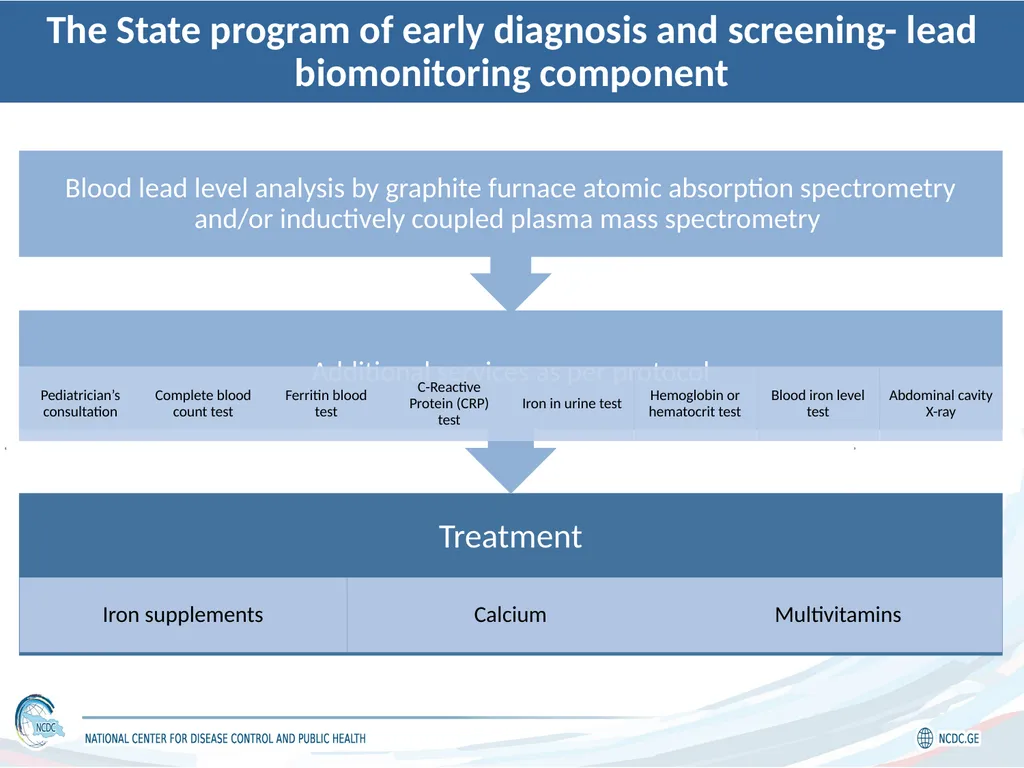
The State program of early diagnosis and screening- lead biomonitoring component<br>
06
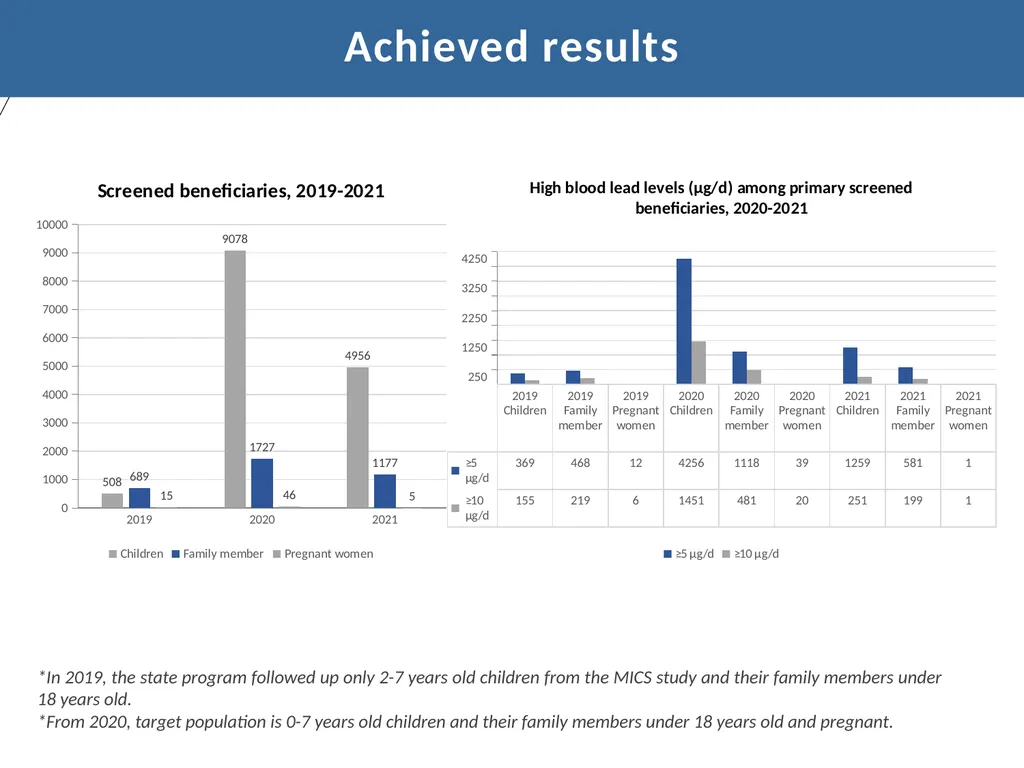
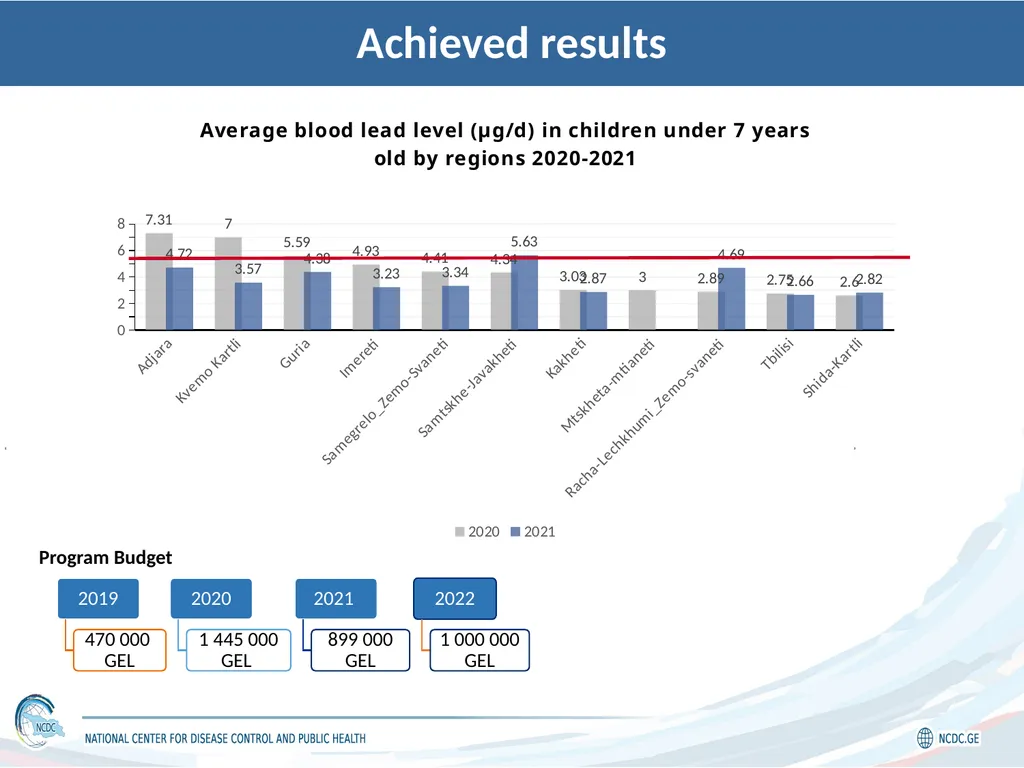
Achieved results *In 2019, the state program followed up only 2-7 years old children from the MICS study and their family members under 18 years old.
*From 2020, target population is 0-7 years old children and their family members under 18 years old and pregnant.<br>
07
Achieved results Program Budget<br>
08
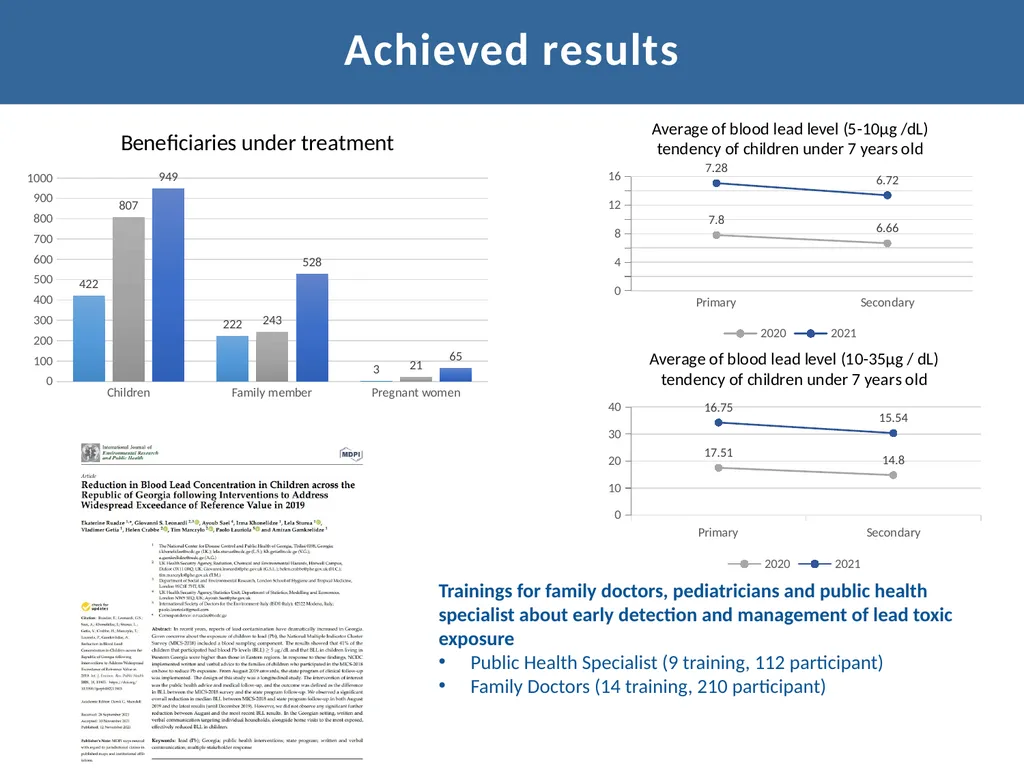
Achieved results Trainings for family doctors, pediatricians and public health specialist about early detection and management of lead toxic exposure
Public Health Specialist (9 training, 112 participant)
Family Doctors (14 training, 210 participant)<br>
09
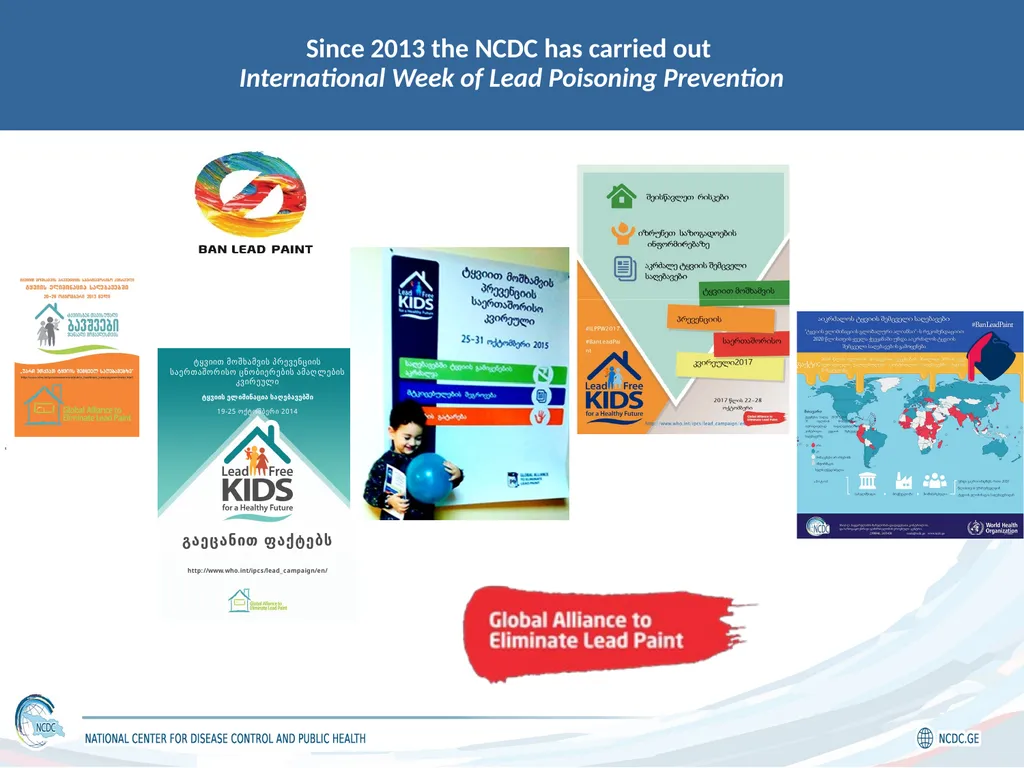
Since 2013 the NCDC has carried out International Week of Lead Poisoning Prevention<br>
10
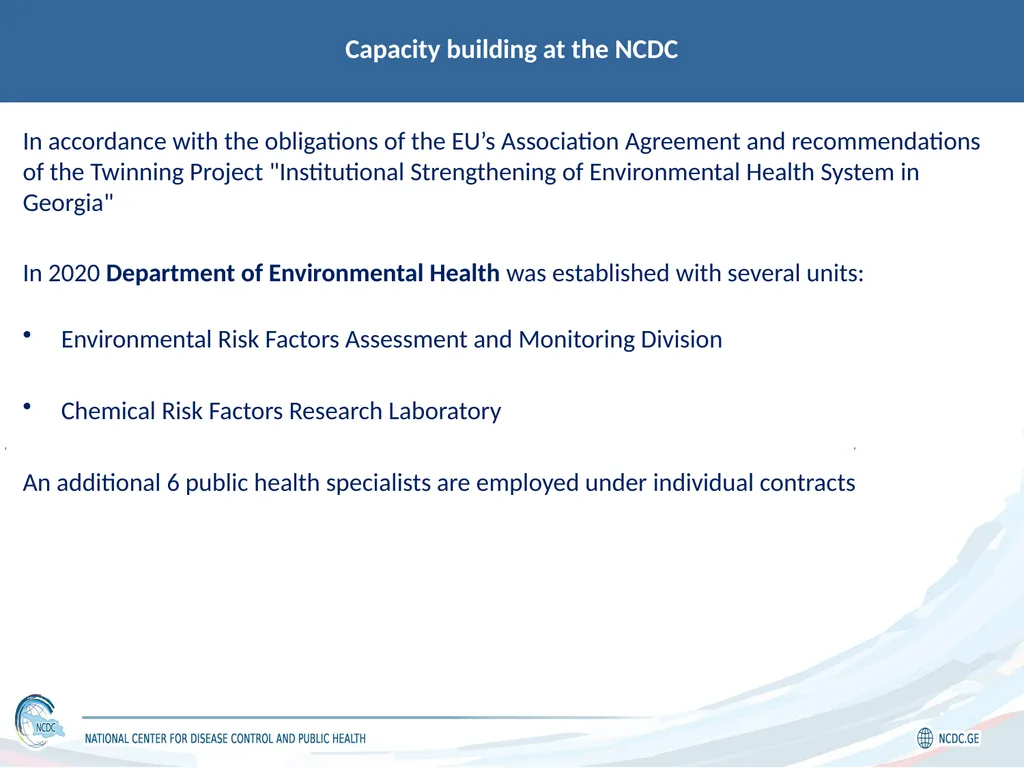
In accordance with the obligations of the EU’s Association Agreement and recommendations of the Twinning Project "Institutional Strengthening of Environmental Health System in Georgia"
In 2020 Department of Environmental Health was established with several units:
Environmental Risk Factors Assessment and Monitoring Division
Chemical Risk Factors Research Laboratory
An additional 6 public health specialists are employed under individual contracts Capacity building at the NCDC<br>
11
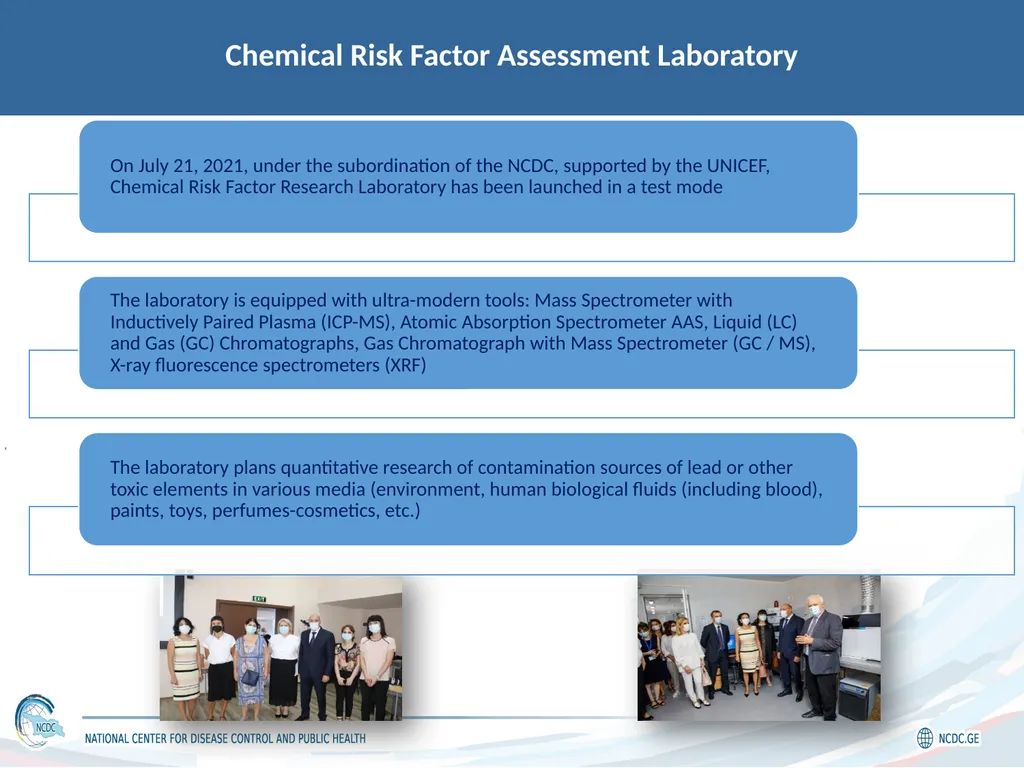
Chemical Risk Factor Assessment Laboratory<br>
12
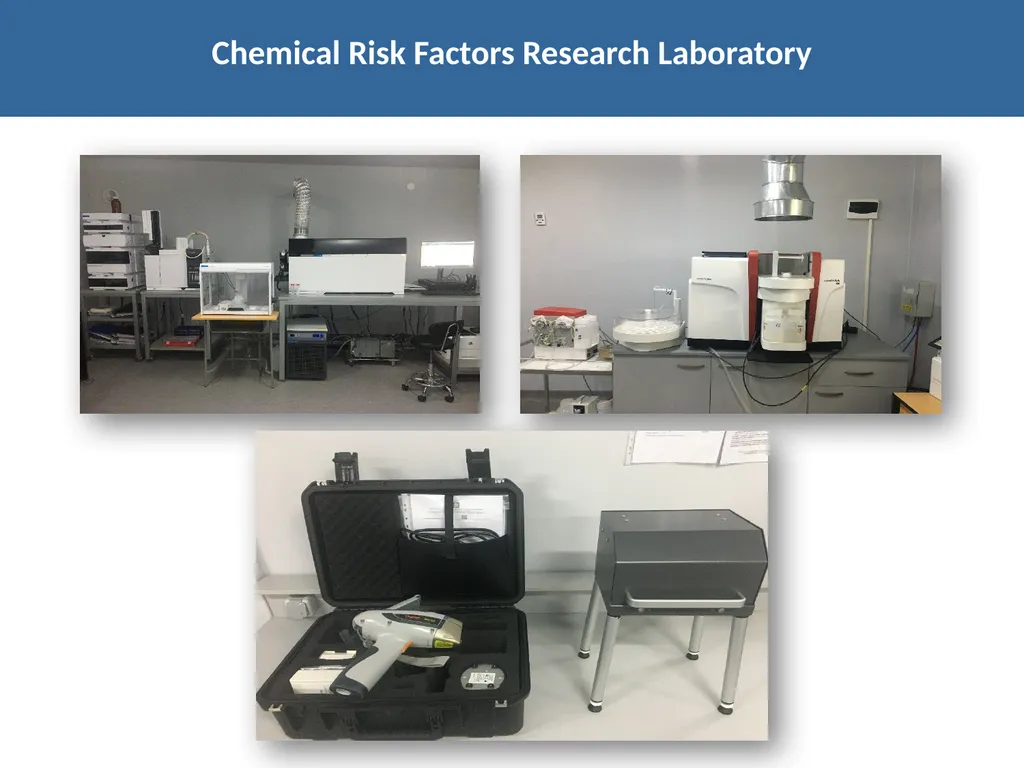
Chemical Risk Factors Research Laboratory<br>
13
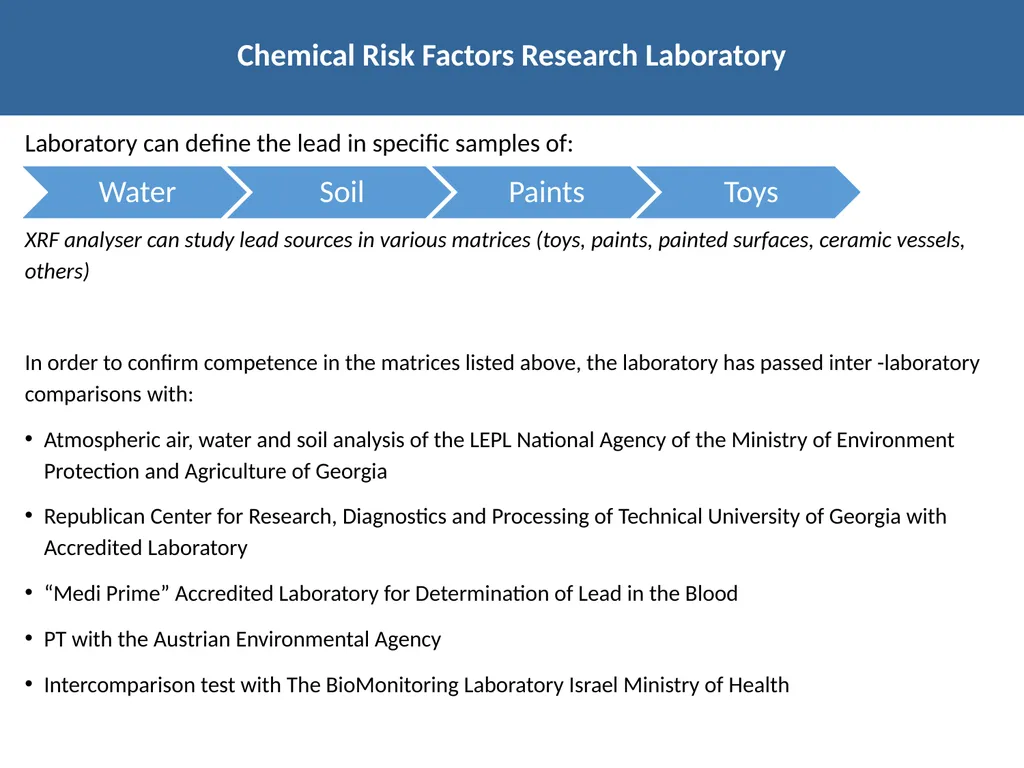
Chemical Risk Factors Research Laboratory Laboratory can define the lead in specific samples of:
XRF analyser can study lead sources in various matrices (toys, paints, painted surfaces, ceramic vessels, others)
In order to confirm competence in the matrices listed above, the laboratory has passed inter -laboratory comparisons with:
Atmospheric air, water and soil analysis of the LEPL National Agency of the Ministry of Environment Protection and Agriculture of Georgia
Republican Center for Research, Diagnostics and Processing of Technical University of Georgia with Accredited Laboratory
“Medi Prime” Accredited Laboratory for Determination of Lead in the Blood
PT with the Austrian Environmental Agency
Intercomparison test with The BioMonitoring Laboratory Israel Ministry of Health<br>
14
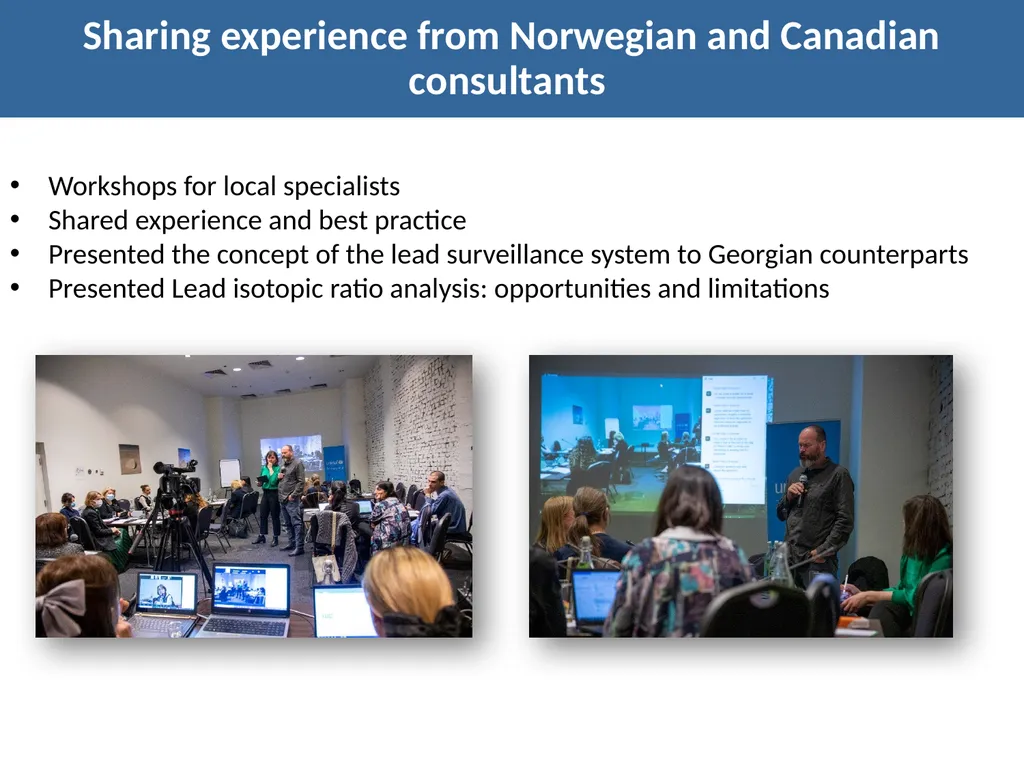
Sharing experience from Norwegian and Canadian consultants Workshops for local specialists
Shared experience and best practice
Presented the concept of the lead surveillance system to Georgian counterparts
Presented Lead isotopic ratio analysis: opportunities and limitations<br>
15
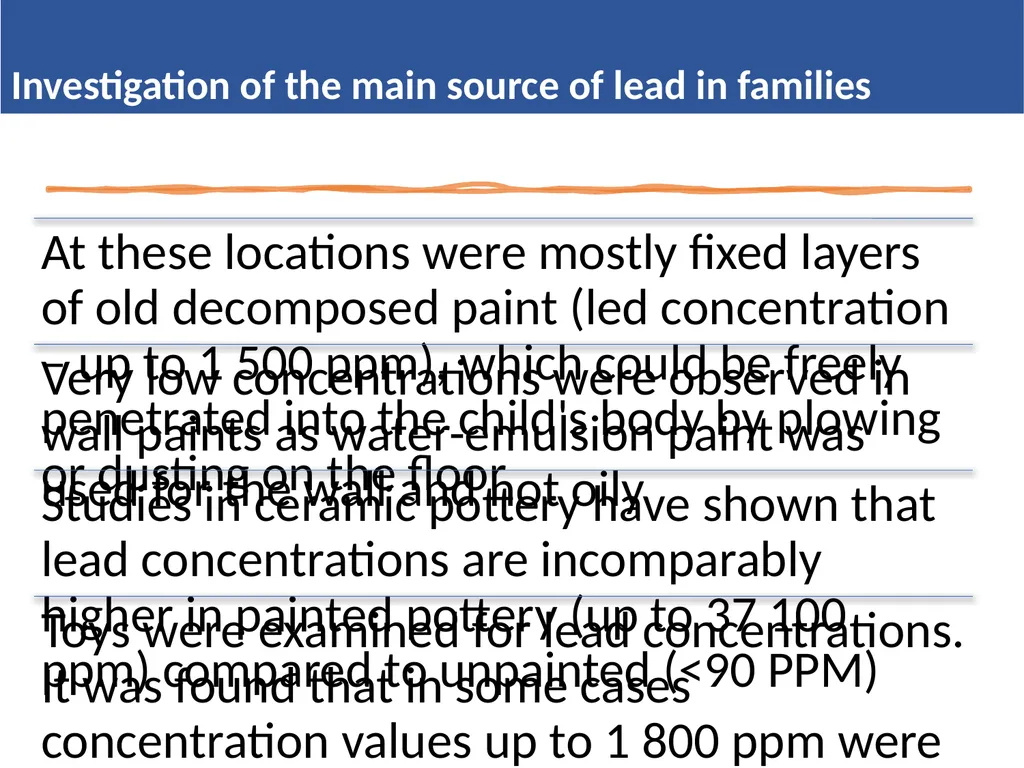
Investigation of the main source of lead in families<br>
16
Sources of lead (Pb) exposure in Georgian children exploratory study Study participants:
National Centre for Disease Control and Public Health
Radiation, Chemical and Environmental Hazards Directorate, UK Health Security Agency
Statistics Unit, UK Health Security Agency .
British Geological Survey
With financial support of UK National Institute of Health Research, Research Unit Health Impact of Environmental Hazards<br>
17
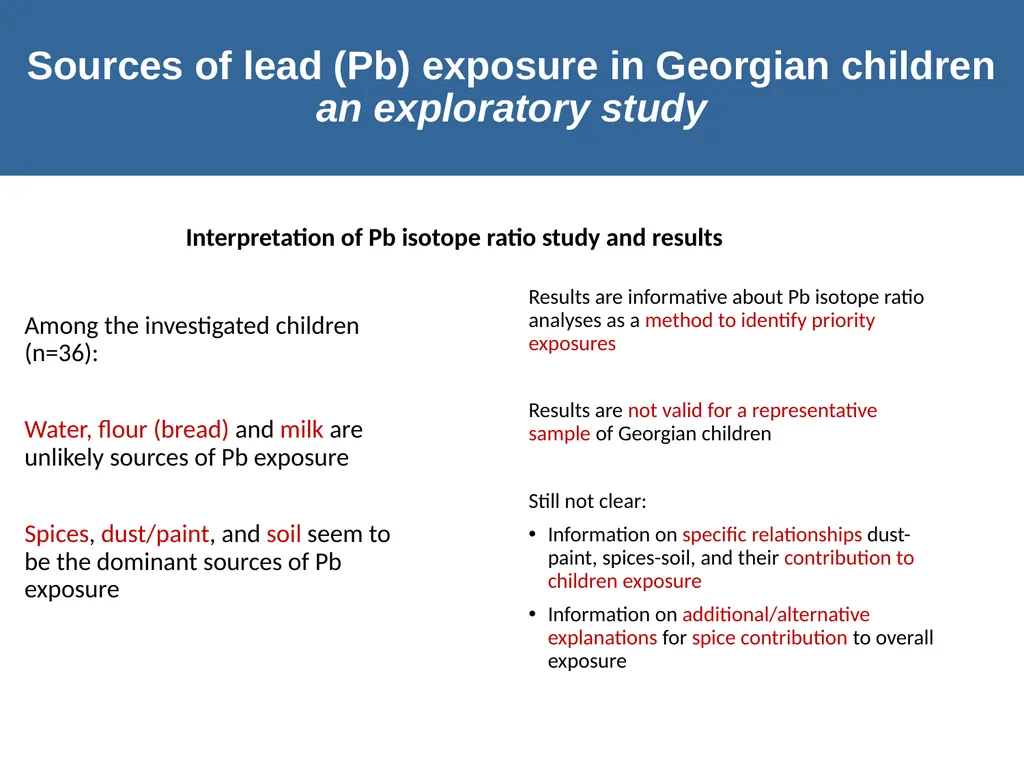
Sources of lead (Pb) exposure in Georgian children an exploratory study Interpretation of Pb isotope ratio study and results Among the investigated children (n=36):
Water, flour (bread) and milk are unlikely sources of Pb exposure
Spices, dust/paint, and soil seem to be the dominant sources of Pb exposure Results are informative about Pb isotope ratio analyses as a method to identify priority exposures
Results are not valid for a representative sample of Georgian children
Still not clear:
Information on specific relationships dust-paint, spices-soil, and their contribution to children exposure
Information on additional/alternative explanations for spice contribution to overall exposure<br>
18
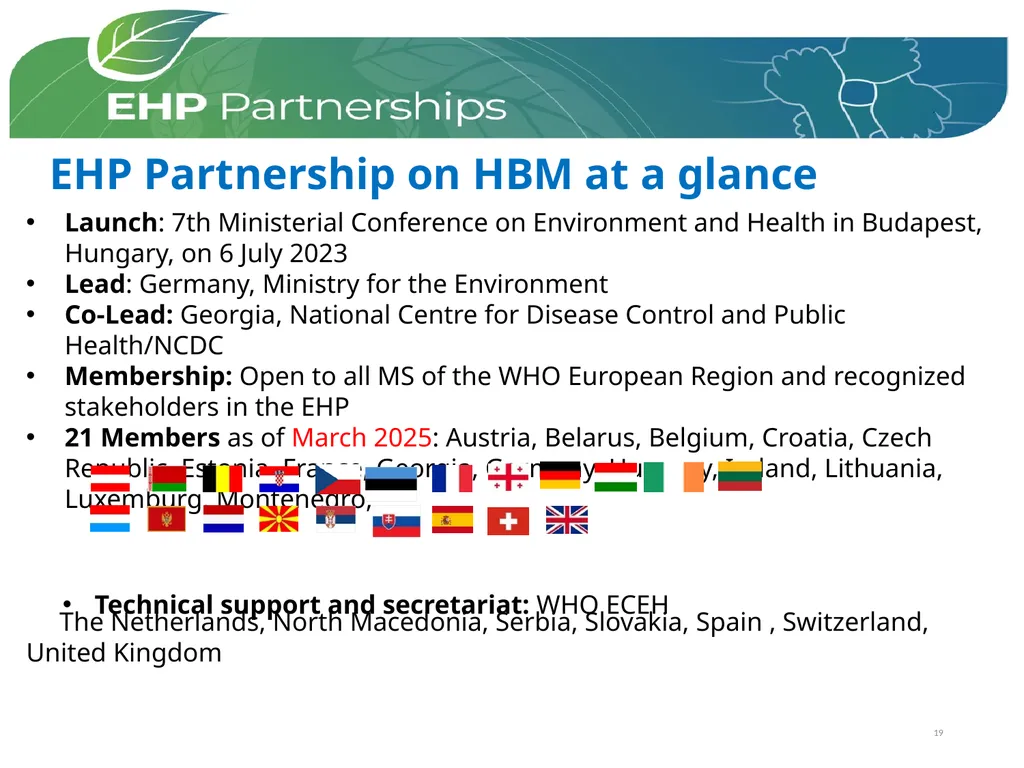
EHP Partnership on HBM at a glance 19 Launch: 7th Ministerial Conference on Environment and Health in Budapest, Hungary, on 6 July 2023
Lead: Germany, Ministry for the Environment
Co-Lead: Georgia, National Centre for Disease Control and Public Health/NCDC
Membership: Open to all MS of the WHO European Region and recognized stakeholders in the EHP
21 Members as of March 2025: Austria, Belarus, Belgium, Croatia, Czech Republic, Estonia, France, Georgia, Germany, Hungary, Ireland, Lithuania, Luxemburg, Montenegro,
The Netherlands, North Macedonia, Serbia, Slovakia, Spain , Switzerland, United Kingdom Technical support and secretariat: WHO ECEH<br>