
STEAL: A Strategy for Analyzing Characters What is


Description: STEAL: A Strategy for Analyzing Characters What is Characterization? Characterization is how an author creates or constructs characters in order to make them come to life. A character that is described well can seem very real. Dynamic v.
Related Topics
Download Presentation
"STEAL: A Strategy for Analyzing Characters What is" is the property of its rightful owner. Permission is granted to download and print the materials on this website for personal, non-commercial use only, and to display it on your personal computer provided you do not modify the materials and that you retain all copyright notices contained in the materials. By downloading content from our website, you accept the terms of this agreement.
Presentation Transcript
slide1. STEAL: A Strategy for Analyzing Characters<br>
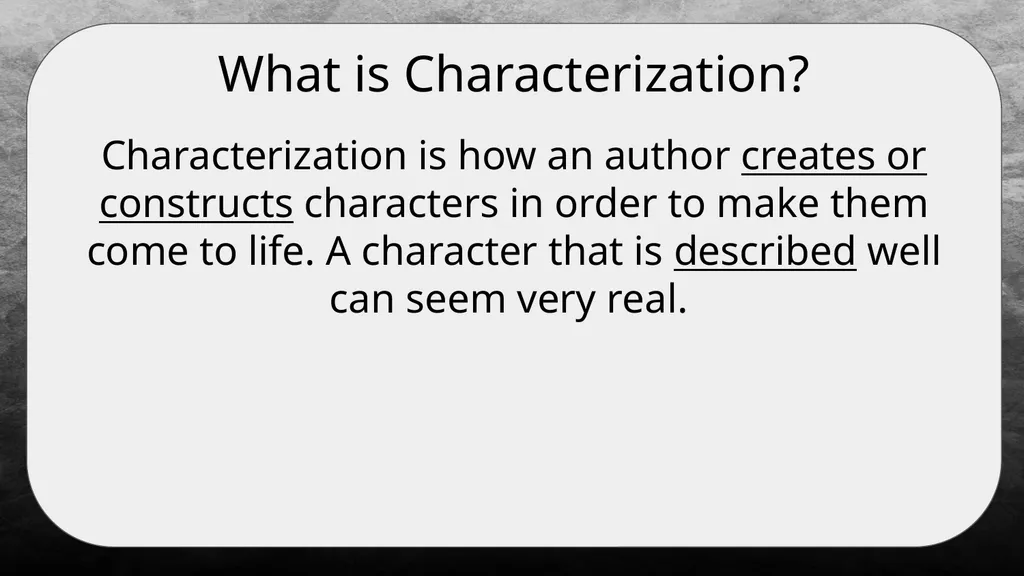
slide2. What is Characterization? Characterization is how an author creates or constructs characters in order to make them come to life. A character that is described well can seem very real.<br>
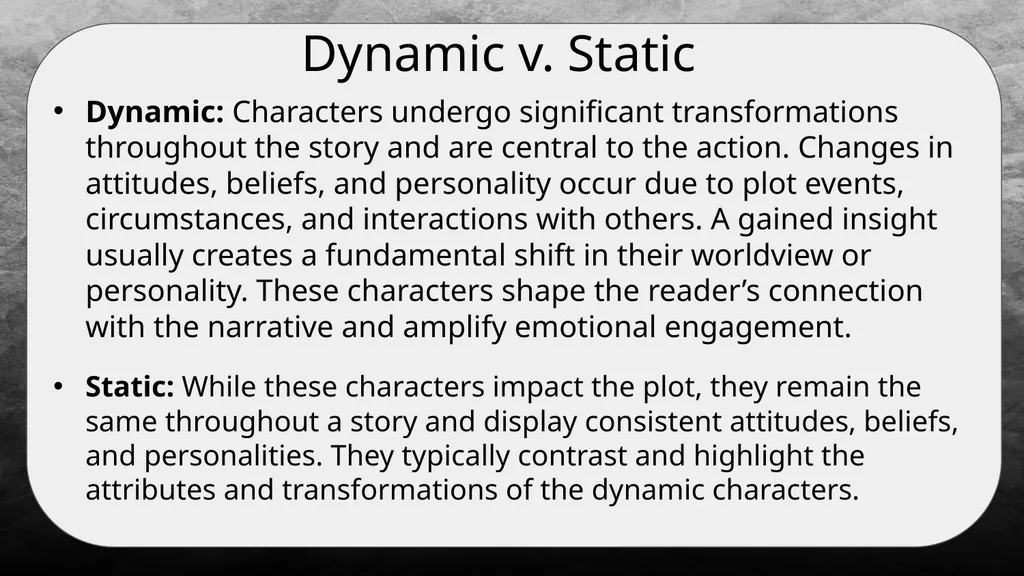
slide3. Dynamic v. Static Dynamic: Characters undergo significant transformations throughout the story and are central to the action. Changes in attitudes, beliefs, and personality occur due to plot events, circumstances, and interactions with others. A gained insight usually creates a fundamental shift in their worldview or personality. These characters shape the reader’s connection with the narrative and amplify emotional engagement.
Static: While these characters impact the plot, they remain the same throughout a story and display consistent attitudes, beliefs, and personalities. They typically contrast and highlight the attributes and transformations of the dynamic characters.<br>
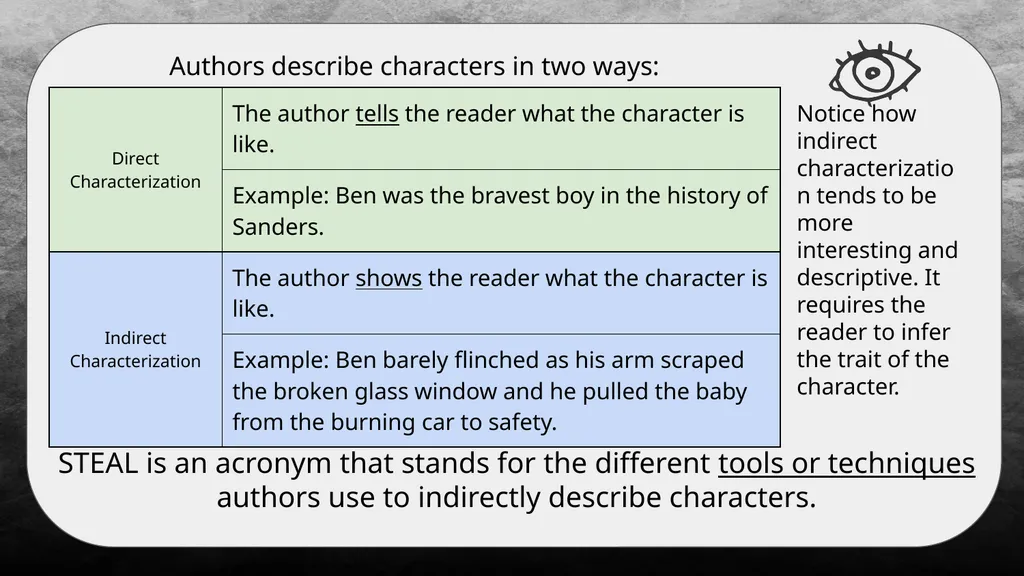
slide4. Authors describe characters in two ways: Notice how indirect characterization tends to be more interesting and descriptive. It requires the reader to infer the trait of the character. STEAL is an acronym that stands for the different tools or techniques authors use to indirectly describe characters.<br>
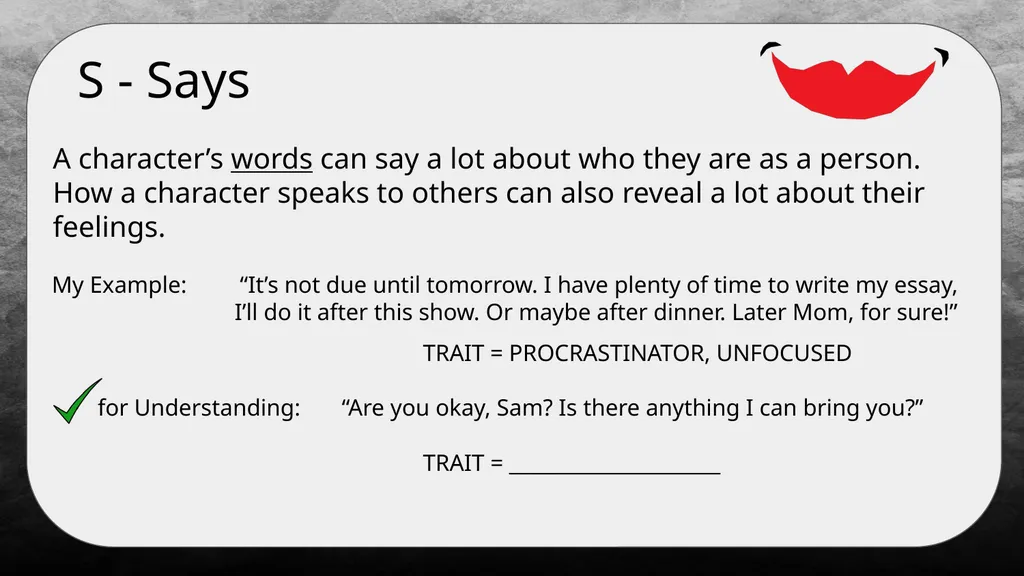
slide5. S - Says A character’s words can say a lot about who they are as a person. How a character speaks to others can also reveal a lot about their feelings. My Example: “It’s not due until tomorrow. I have plenty of time to write my essay,
I’ll do it after this show. Or maybe after dinner. Later Mom, for sure!” for Understanding: “Are you okay, Sam? Is there anything I can bring you?” TRAIT = _____________________ TRAIT = PROCRASTINATOR, UNFOCUSED<br>
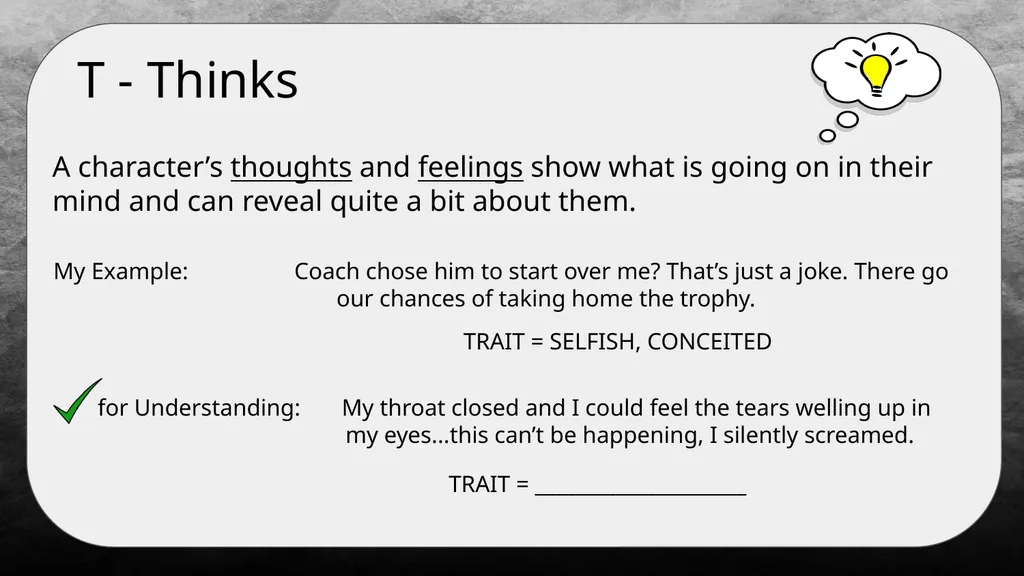
slide6. T - Thinks A character’s thoughts and feelings show what is going on in their mind and can reveal quite a bit about them. My Example: Coach chose him to start over me? That’s just a joke. There go
our chances of taking home the trophy. for Understanding: My throat closed and I could feel the tears welling up in
my eyes...this can’t be happening, I silently screamed. TRAIT = SELFISH, CONCEITED TRAIT = _____________________<br>
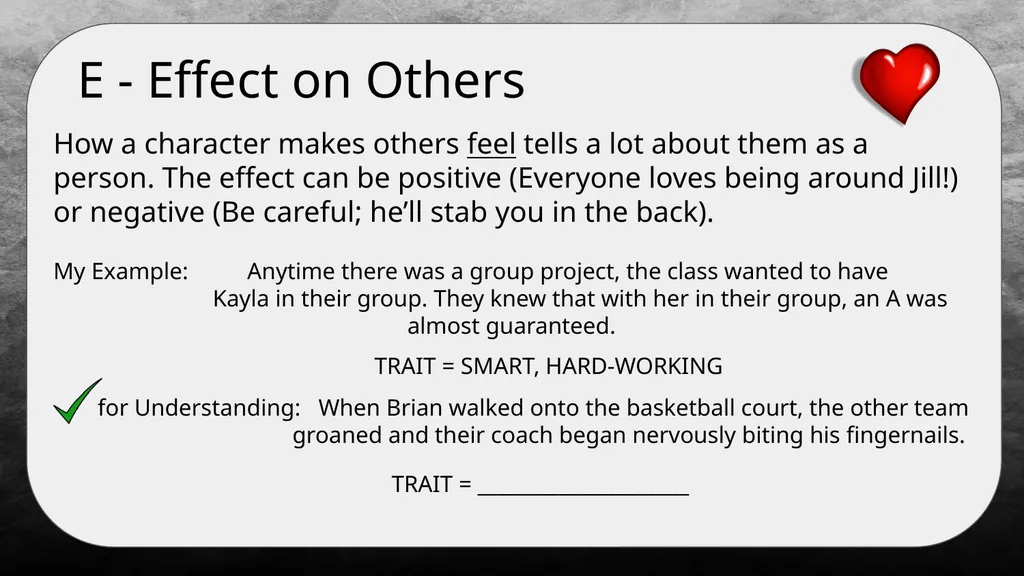
slide7. E - Effect on Others How a character makes others feel tells a lot about them as a person. The effect can be positive (Everyone loves being around Jill!) or negative (Be careful; he’ll stab you in the back). My Example: Anytime there was a group project, the class wanted to have
Kayla in their group. They knew that with her in their group, an A was
almost guaranteed. for Understanding: When Brian walked onto the basketball court, the other team
groaned and their coach began nervously biting his fingernails. TRAIT = SMART, HARD-WORKING TRAIT = _____________________<br>
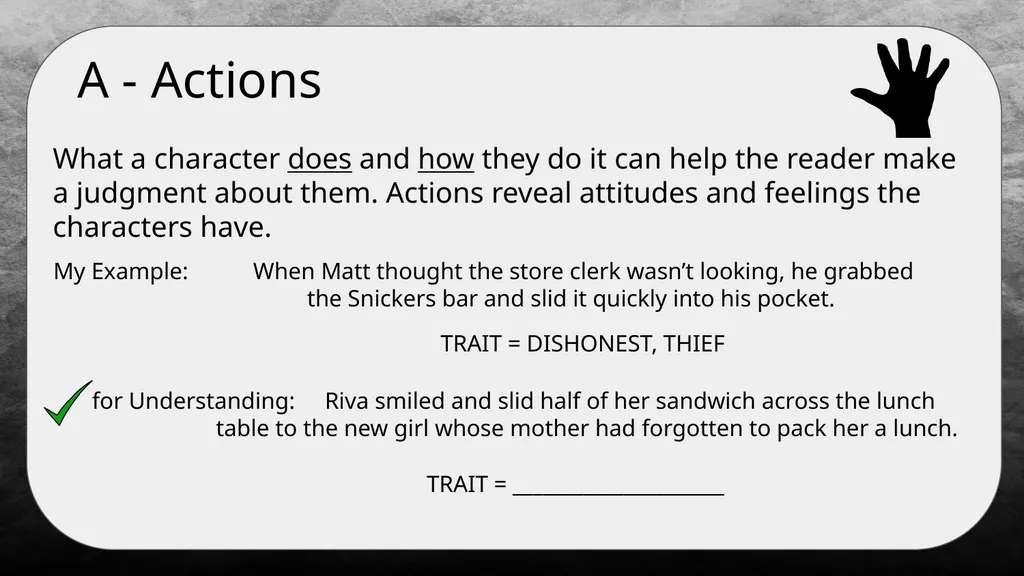
slide8. A - Actions What a character does and how they do it can help the reader make a judgment about them. Actions reveal attitudes and feelings the characters have. My Example: When Matt thought the store clerk wasn’t looking, he grabbed
the Snickers bar and slid it quickly into his pocket. for Understanding: Riva smiled and slid half of her sandwich across the lunch
table to the new girl whose mother had forgotten to pack her a lunch. TRAIT = DISHONEST, THIEF TRAIT = _____________________<br>
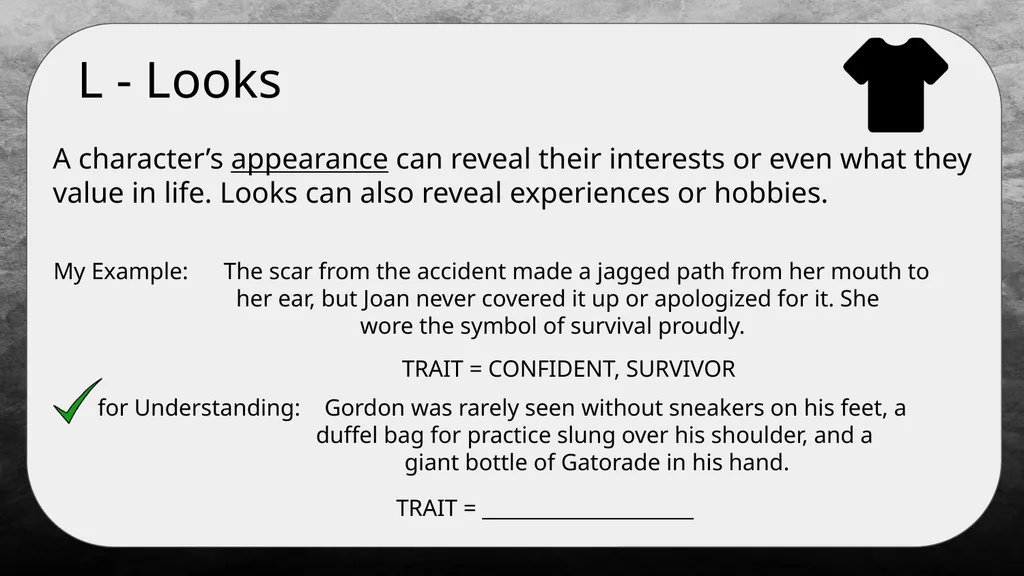
slide9. L - Looks A character’s appearance can reveal their interests or even what they value in life. Looks can also reveal experiences or hobbies. My Example: The scar from the accident made a jagged path from her mouth to
her ear, but Joan never covered it up or apologized for it. She
wore the symbol of survival proudly. for Understanding: Gordon was rarely seen without sneakers on his feet, a
duffel bag for practice slung over his shoulder, and a
giant bottle of Gatorade in his hand. TRAIT = CONFIDENT, SURVIVOR TRAIT = _____________________<br>
slide2. What is Characterization? Characterization is how an author creates or constructs characters in order to make them come to life. A character that is described well can seem very real.<br>
slide3. Dynamic v. Static Dynamic: Characters undergo significant transformations throughout the story and are central to the action. Changes in attitudes, beliefs, and personality occur due to plot events, circumstances, and interactions with others. A gained insight usually creates a fundamental shift in their worldview or personality. These characters shape the reader’s connection with the narrative and amplify emotional engagement.
Static: While these characters impact the plot, they remain the same throughout a story and display consistent attitudes, beliefs, and personalities. They typically contrast and highlight the attributes and transformations of the dynamic characters.<br>
slide4. Authors describe characters in two ways: Notice how indirect characterization tends to be more interesting and descriptive. It requires the reader to infer the trait of the character. STEAL is an acronym that stands for the different tools or techniques authors use to indirectly describe characters.<br>
slide5. S - Says A character’s words can say a lot about who they are as a person. How a character speaks to others can also reveal a lot about their feelings. My Example: “It’s not due until tomorrow. I have plenty of time to write my essay,
I’ll do it after this show. Or maybe after dinner. Later Mom, for sure!” for Understanding: “Are you okay, Sam? Is there anything I can bring you?” TRAIT = _____________________ TRAIT = PROCRASTINATOR, UNFOCUSED<br>
slide6. T - Thinks A character’s thoughts and feelings show what is going on in their mind and can reveal quite a bit about them. My Example: Coach chose him to start over me? That’s just a joke. There go
our chances of taking home the trophy. for Understanding: My throat closed and I could feel the tears welling up in
my eyes...this can’t be happening, I silently screamed. TRAIT = SELFISH, CONCEITED TRAIT = _____________________<br>
slide7. E - Effect on Others How a character makes others feel tells a lot about them as a person. The effect can be positive (Everyone loves being around Jill!) or negative (Be careful; he’ll stab you in the back). My Example: Anytime there was a group project, the class wanted to have
Kayla in their group. They knew that with her in their group, an A was
almost guaranteed. for Understanding: When Brian walked onto the basketball court, the other team
groaned and their coach began nervously biting his fingernails. TRAIT = SMART, HARD-WORKING TRAIT = _____________________<br>
slide8. A - Actions What a character does and how they do it can help the reader make a judgment about them. Actions reveal attitudes and feelings the characters have. My Example: When Matt thought the store clerk wasn’t looking, he grabbed
the Snickers bar and slid it quickly into his pocket. for Understanding: Riva smiled and slid half of her sandwich across the lunch
table to the new girl whose mother had forgotten to pack her a lunch. TRAIT = DISHONEST, THIEF TRAIT = _____________________<br>
slide9. L - Looks A character’s appearance can reveal their interests or even what they value in life. Looks can also reveal experiences or hobbies. My Example: The scar from the accident made a jagged path from her mouth to
her ear, but Joan never covered it up or apologized for it. She
wore the symbol of survival proudly. for Understanding: Gordon was rarely seen without sneakers on his feet, a
duffel bag for practice slung over his shoulder, and a
giant bottle of Gatorade in his hand. TRAIT = CONFIDENT, SURVIVOR TRAIT = _____________________<br>