04
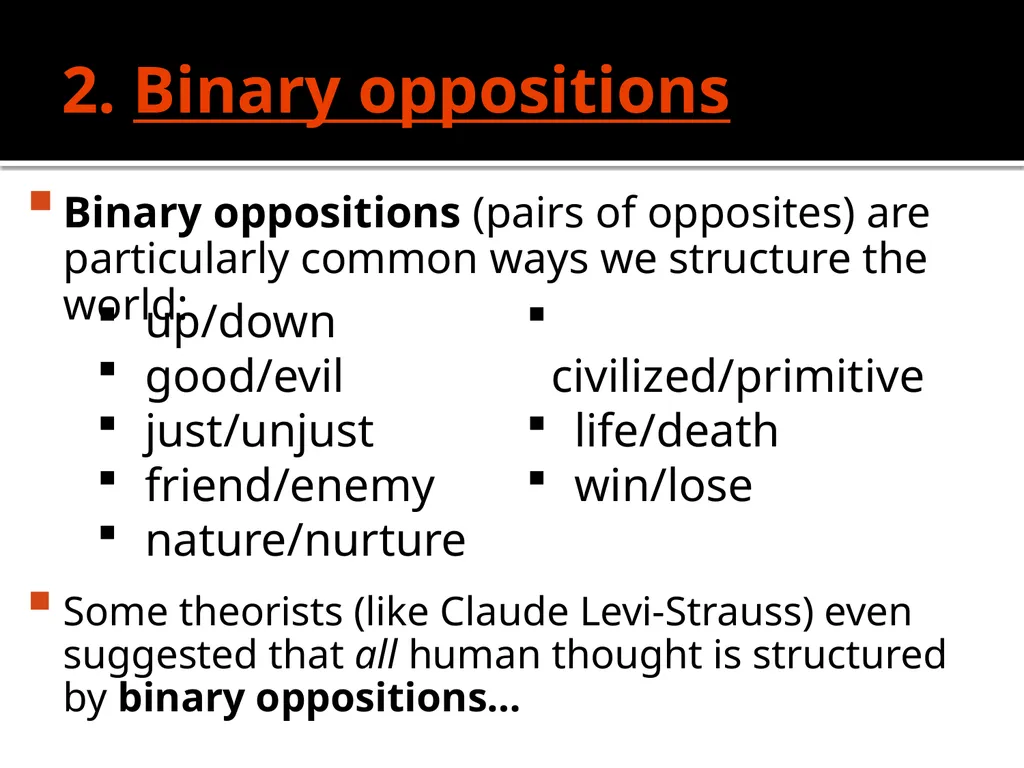
2. Binary oppositions Binary oppositions (pairs of opposites) are particularly common ways we structure the world:
Some theorists (like Claude Levi-Strauss) even suggested that all human thought is structured by binary oppositions… up/down
good/evil
just/unjust
friend/enemy
nature/nurture
civilized/primitive
life/death
win/lose<br>
05
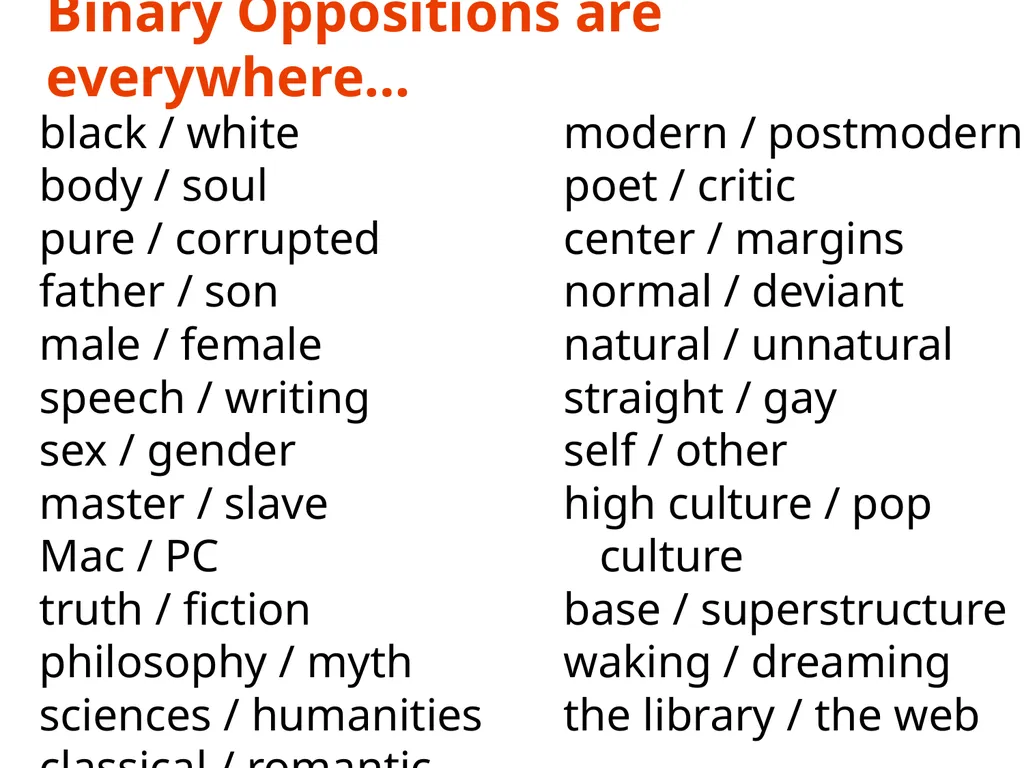
Binary Oppositions are everywhere… black / white
body / soul
pure / corrupted
father / son
male / female
speech / writing
sex / gender
master / slave
Mac / PC
truth / fiction
philosophy / myth
sciences / humanities
classical / romantic
modern / postmodern
poet / critic
center / margins
normal / deviant
natural / unnatural
straight / gay
self / other
high culture / pop culture
base / superstructure
waking / dreaming
the library / the web<br>
06
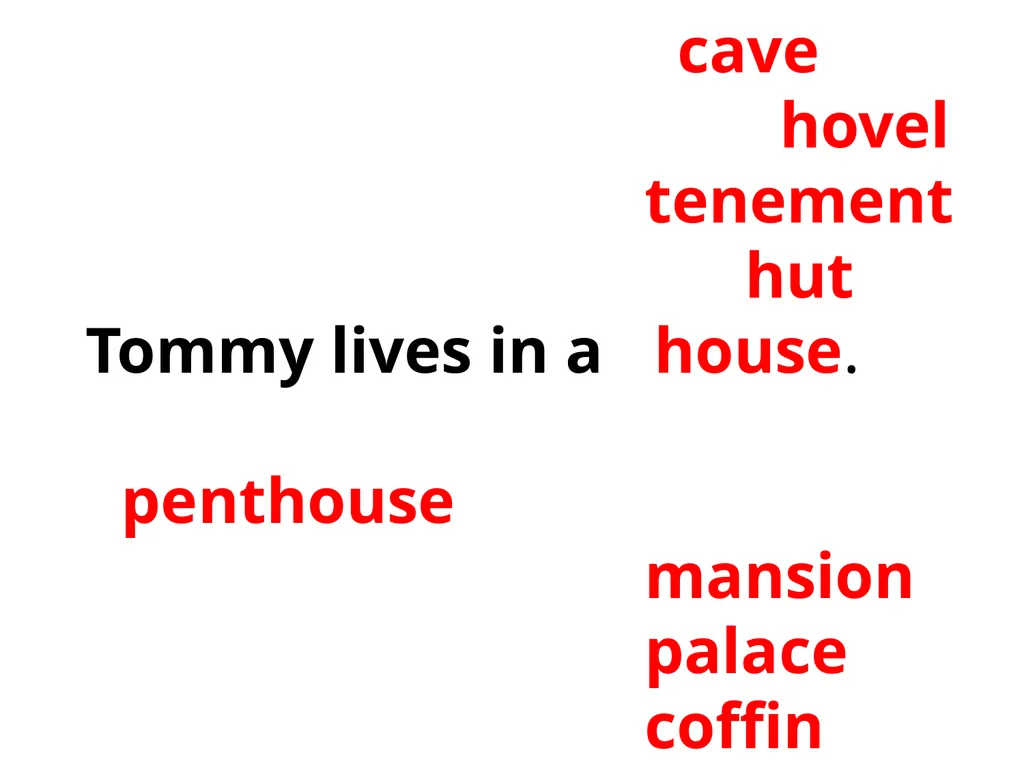
cave
hovel
tenement
hut
Tommy lives in a house.
penthouse
mansion
palace
coffin<br>
07
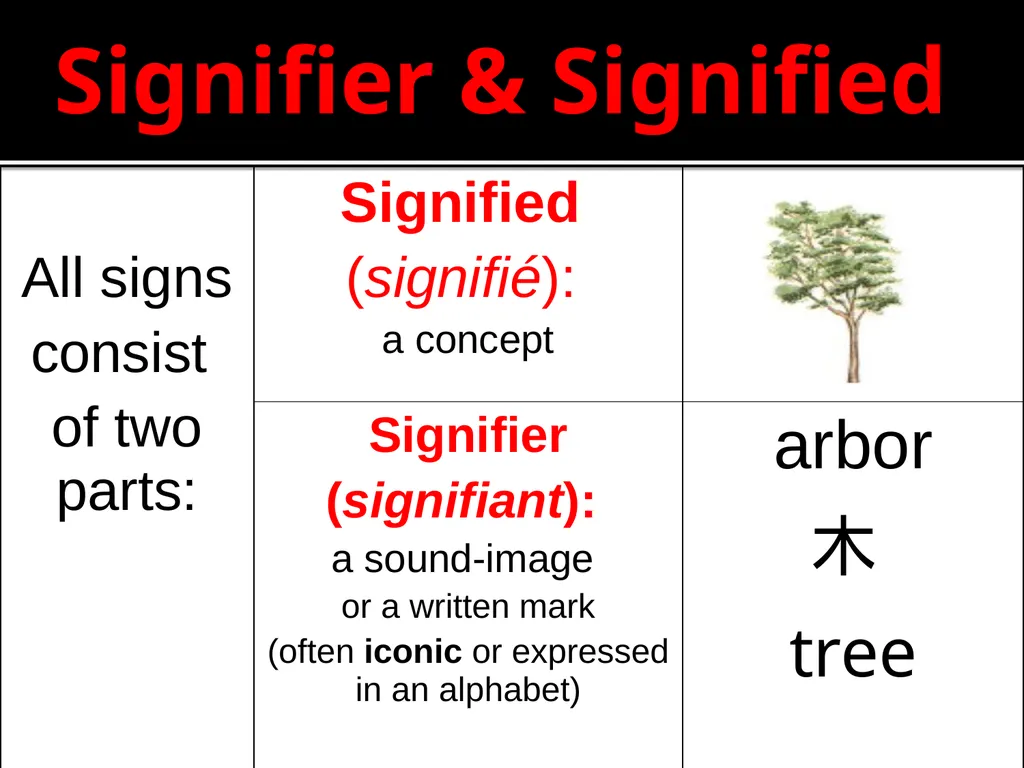
Signifier & Signified<br>
08
3. Some signs are based on contiguity Some signs are related somehow to what they signify:
Onomatopoeia: 쨍그랑, crash, boom, tick-tock
Or depend on their relation to other signs:
“The White House announced yesterday…”
“run the gamut” (not walk the gamut)
But even signs with some connection to reality are arbitrary as soon as we express them:
Why write 쨍 and not jjaeng or Ж◊Ω?<br>
09
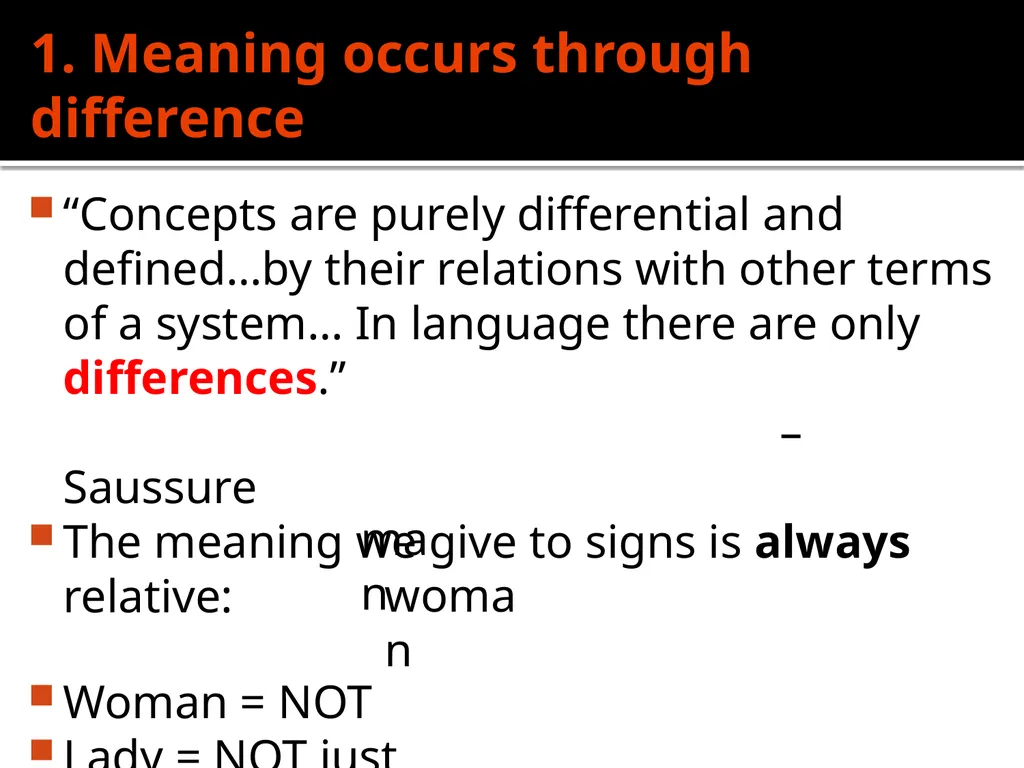
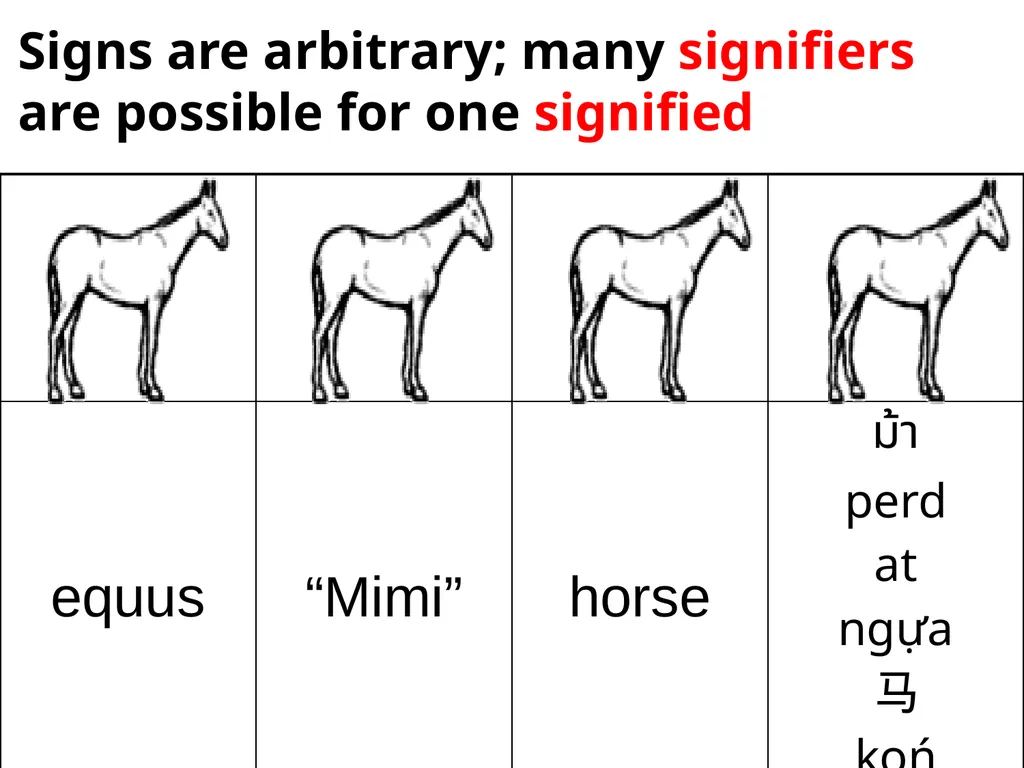
3. Most signs gain meaning by substitution “The bond between the signifier and the signified is arbitrary,” not “motivated” (by natural resemblance). – Saussure
The meaning of signs is arbitrary
Why do ㄷ and D represent similar sounds?
Does that sound actually have any ㄷness? D-ness?
Does a have any treeness?<br>
10
Signs are arbitrary; many signifiers are possible for one signified<br>
11
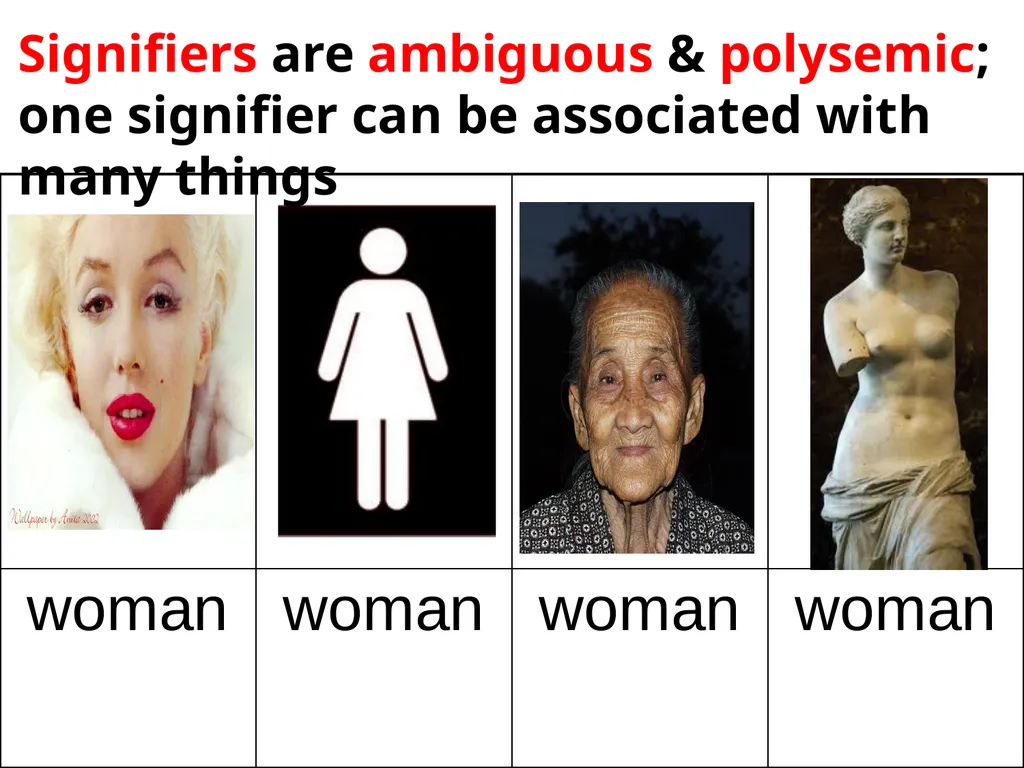
Signifiers are ambiguous & polysemic; one signifier can be associated with many things<br>
12
Signs don’t depend on physical reality “We feel the 8:25 p.m. Geneva-to-Paris Express to be the same train each day, though the locomotive, coaches, and personnel may be different. This is because the 8:25 train is not a substance but a form, defined by its relations to other trains. It remains the 8:25 even though it leaves twenty minutes late, so long as its difference from the 7:25 and the 9:25 is preserved. Although we may be unable to conceive of the train except in its physical manifestations, its identity as a social and psychological fact is independent of those manifestations.” – Saussure<br>
13
Signs All language is signs—all words & letters are signs
Pictures can be signs (“iconic signs”)
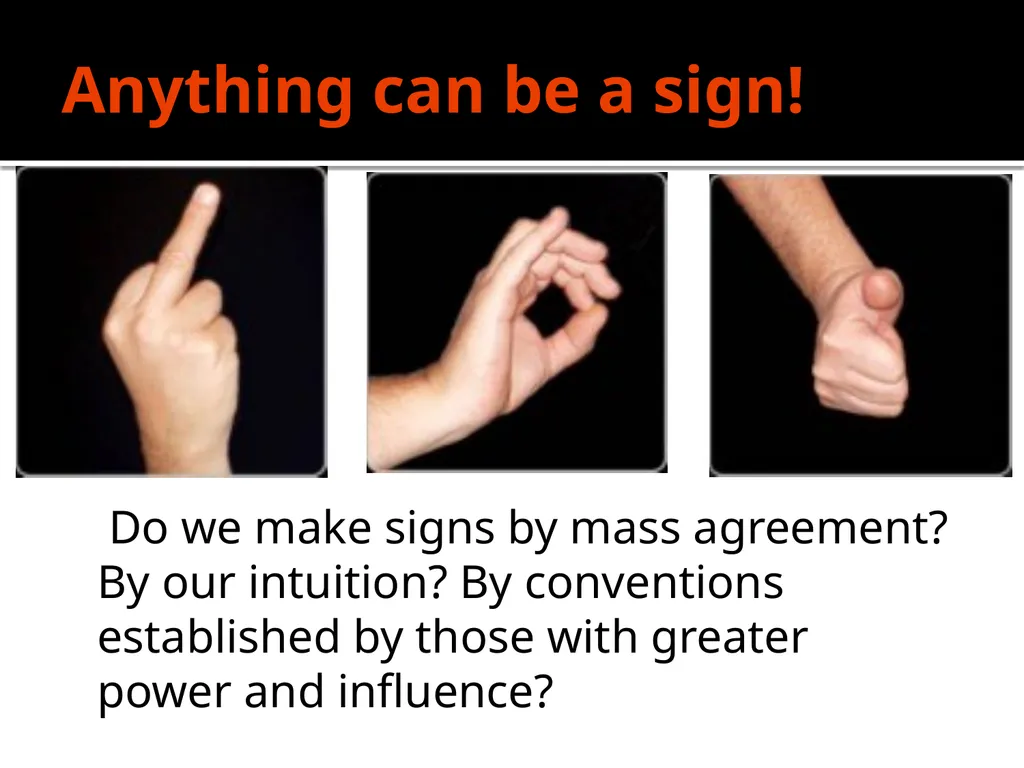
ANYTHING can be a sign!
Signs have no inherent meaning; it can shift:
skinny jeans = cool skinny jeans = stupid
(Remember: cool and stupid only make sense to us because of the usage context & their relation to other signs we know)
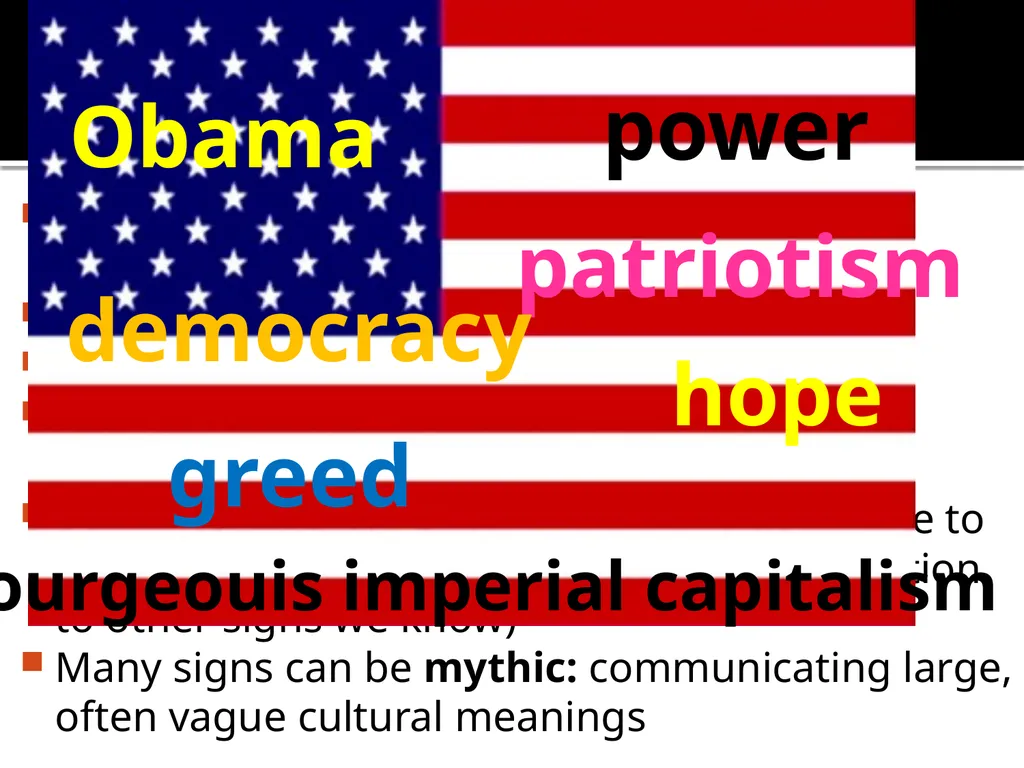
Many signs can be mythic: communicating large, often vague cultural meanings power patriotism Obama democracy greed hope Bourgeouis imperial capitalism<br>
14
Signs & Culture Signs are a product of culture
Meaning is assigned based on context & cultural codes
So the study of texts is actually a study of:
relations between signs
the cultural construction of meaning
Structuralism is the “study of cultural construction or identification of meaning according to the relations of signs that constitute the meaning-spectrum of the culture.” – Gérard Genette<br>
15
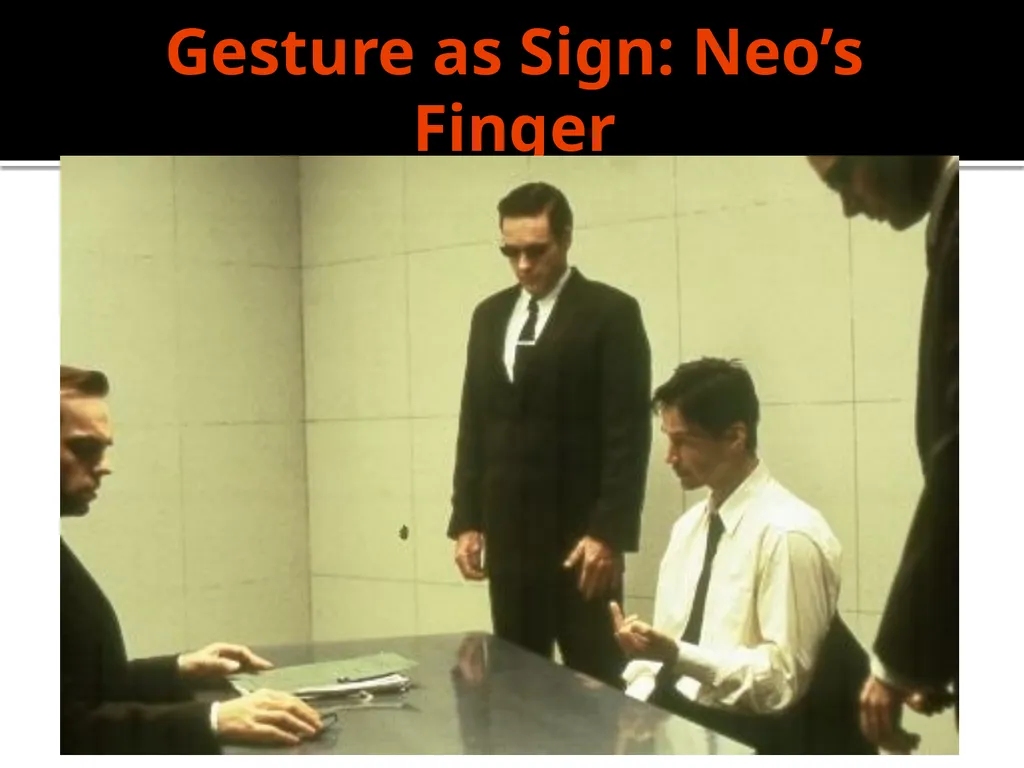
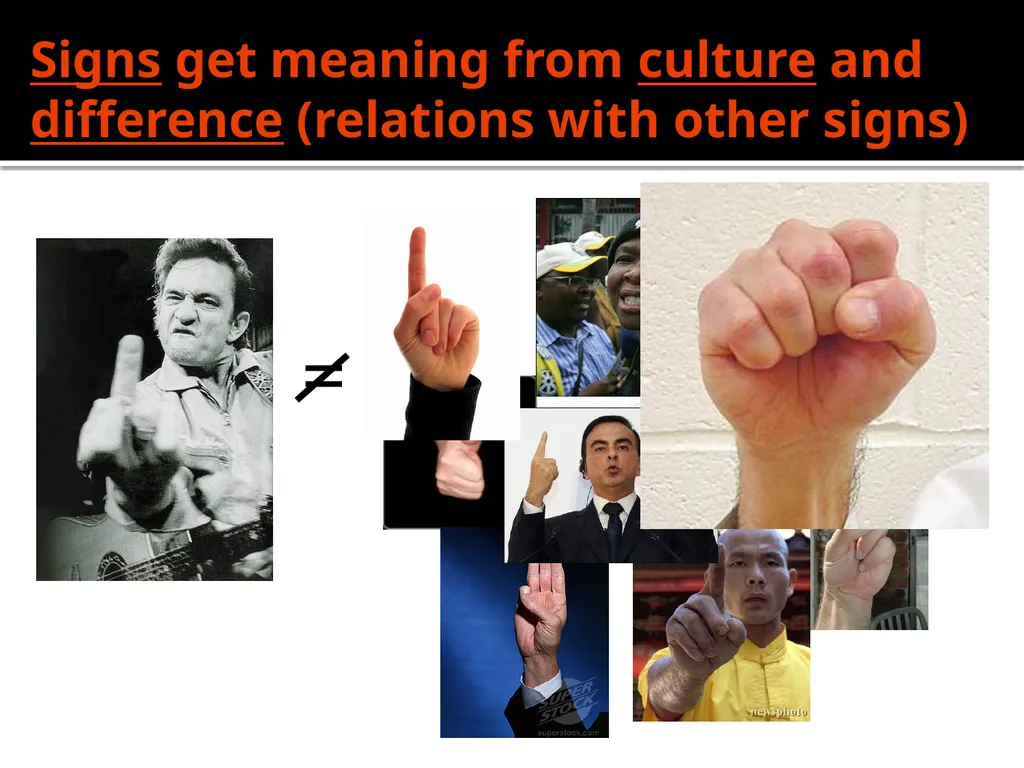
Gesture as Sign: Neo’s Finger<br>
16
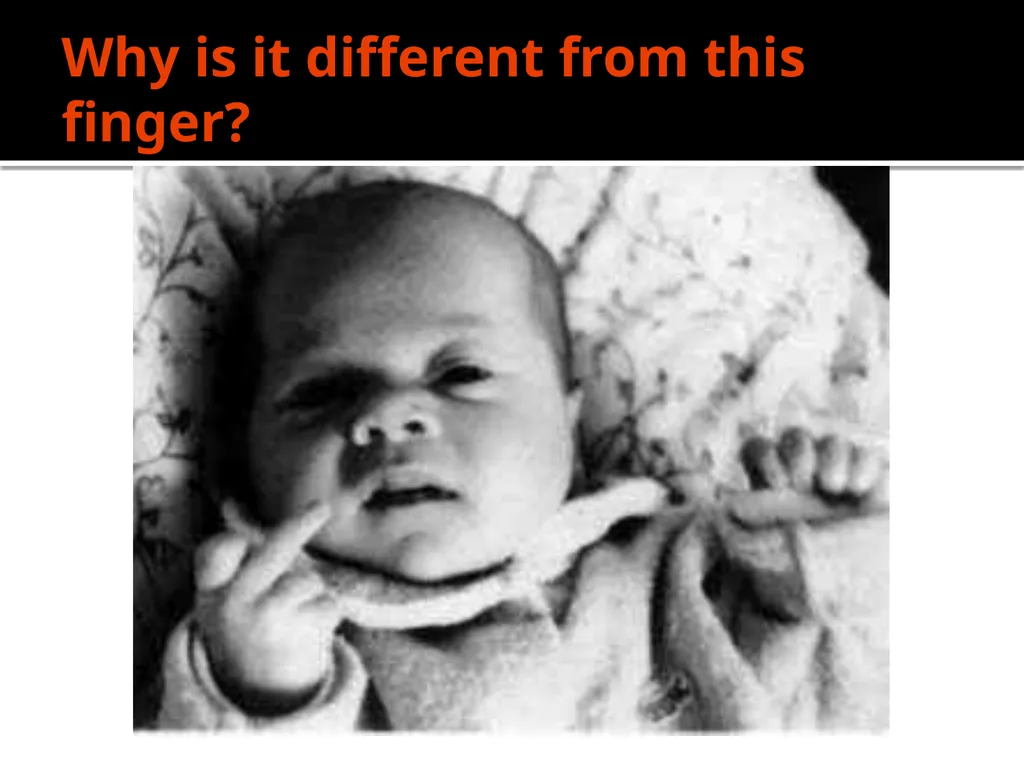
Why is it different from this finger?<br>
17
Anything can be a sign! Do we make signs by mass agreement? By our intuition? By conventions established by those with greater power and influence?<br>
18
Signs get meaning from culture and difference (relations with other signs) =<br>
19
∴ signs construct our reality! The I in “I am” is meaningless except as it relates to other signs.
All of those signs are defined by culture
Our sense of who we are is determined by culture
Even our specific desires are determined by culture<br>
20
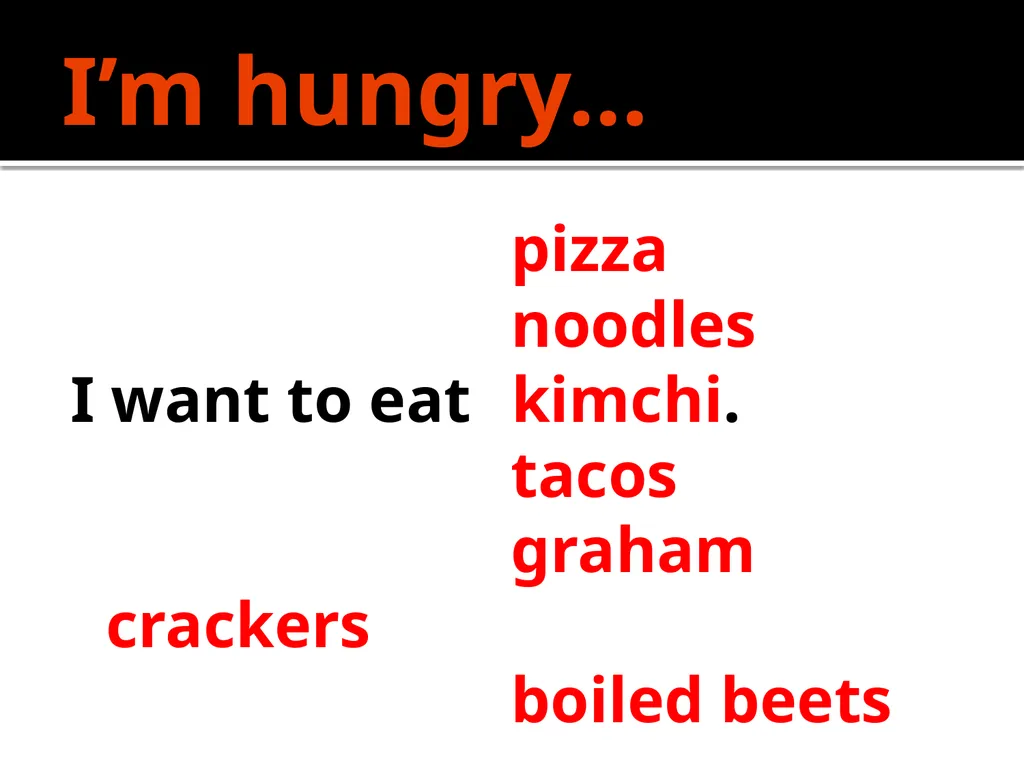
I’m hungry… pizza
noodles
I want to eat kimchi.
tacos
graham crackers
boiled beets<br>
21
Reality Your unconscious isn’t your unconscious—it is just culture (and sub-culture) you’ve internalized
Thus, you are defined and constructed by culture
Reality is constructed by language & by culture:
That cross shape – God? Sign of the Infidels?
That raw fish – Something desirable? Something to be avoided?
That skinny girl – Beautiful? Sick-looking?<br>
22
So Far… We experience reality based on signs
Signs have no meaning by themselves—no neutral, absolute, or objective meaning
Signs gain meaning in:
the context of a culture
relation to other signs (often binary oppositions)
Our sense of ourselves is also based on signs
If everything is made up of signs (books, words, ourselves, reality)…
…everything can be viewed as a text!!<br>
23
So what…? We are surrounded by signs and don’t realize it
We don’t realize how arbitrary our sign systems are
We don’t realize that our sign systems define our reality
We don’t realize that our signs may encode and imprint on us power relations that may be problematic<br>
24
If everything is a text… “Literature” is no longer just a bunch of special, privileged works…
But literary methods can now be used to understand everything!
Examples:
Human lives as narratives with shifting, absurd, undetermined meanings
Religious beliefs and rituals as symbol systems that construct concepts of self<br>
25
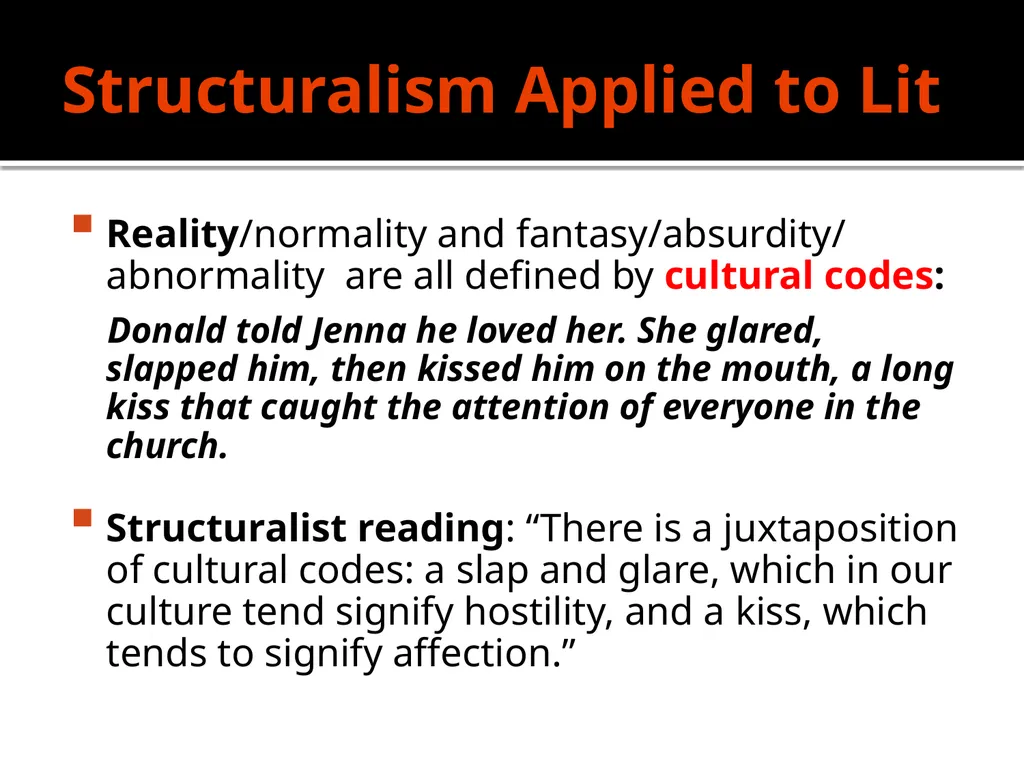
Structuralism Applied to Lit Reality/normality and fantasy/absurdity/�abnormality are all defined by cultural codes:
Donald told Jenna he loved her. She glared, slapped him, then kissed him on the mouth, a long kiss that caught the attention of everyone in the church.
Structuralist reading: “There is a juxtaposition of cultural codes: a slap and glare, which in our culture tend signify hostility, and a kiss, which tends to signify affection.”<br>
26
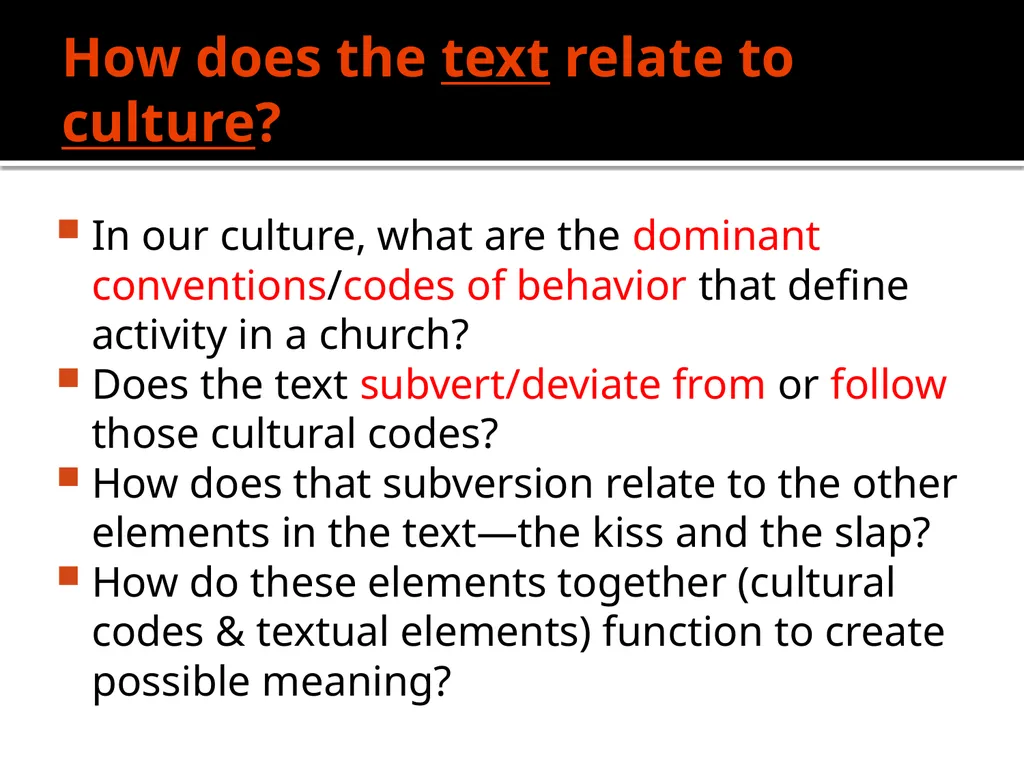
How does the text relate to culture? In our culture, what are the dominant conventions/codes of behavior that define activity in a church?
Does the text subvert/deviate from or follow those cultural codes?
How does that subversion relate to the other elements in the text—the kiss and the slap?
How do these elements together (cultural codes & textual elements) function to create possible meaning?<br>
27
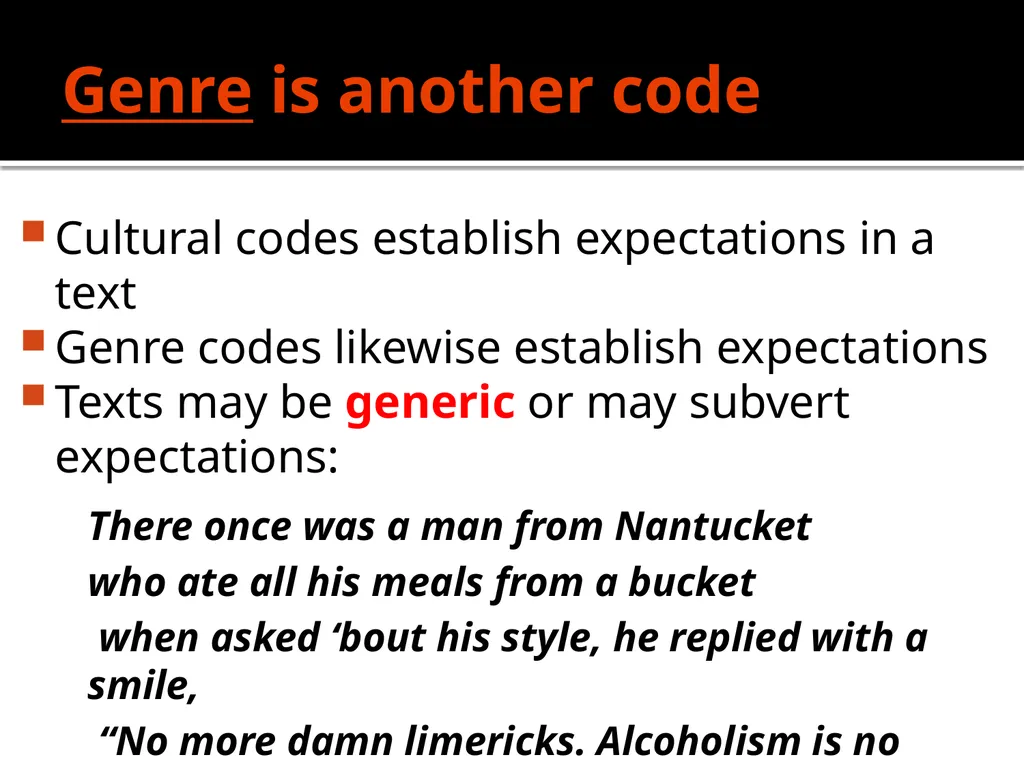
Genre is another code Cultural codes establish expectations in a text
Genre codes likewise establish expectations
Texts may be generic or may subvert expectations:
There once was a man from Nantucket
who ate all his meals from a bucket
when asked ‘bout his style, he replied with a smile,
“No more damn limericks. Alcoholism is no joke.”<br>
28
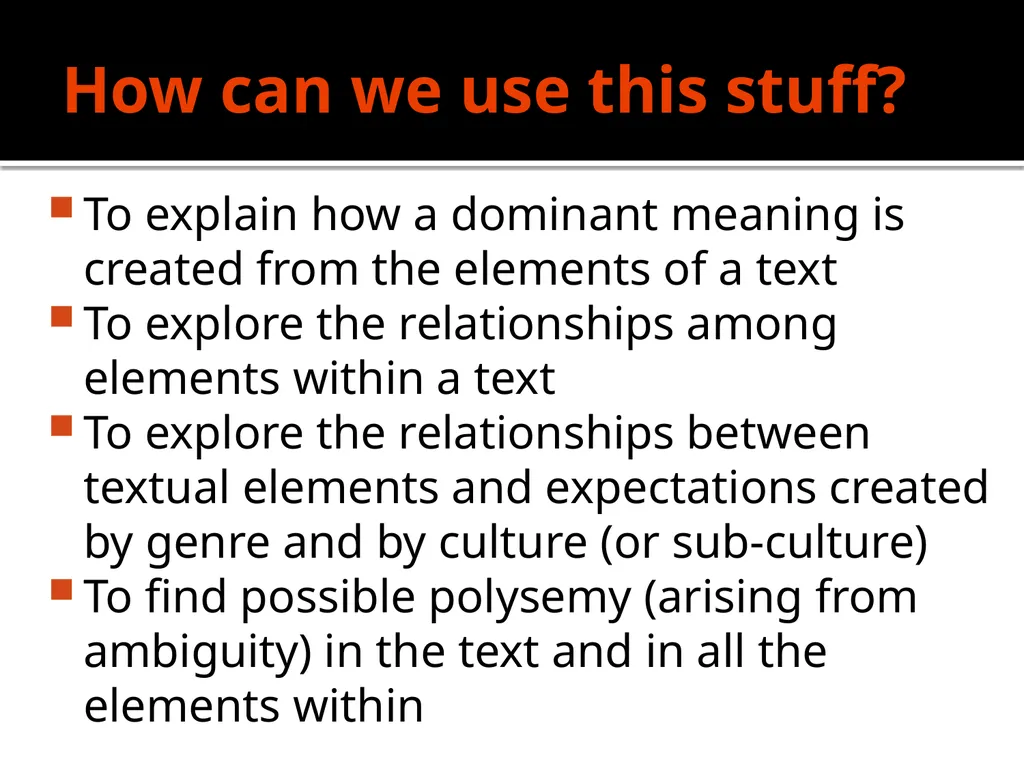
How can we use this stuff? To explain how a dominant meaning is created from the elements of a text
To explore the relationships among elements within a text
To explore the relationships between textual elements and expectations created by genre and by culture (or sub-culture)
To find possible polysemy (arising from ambiguity) in the text and in all the elements within<br>
29
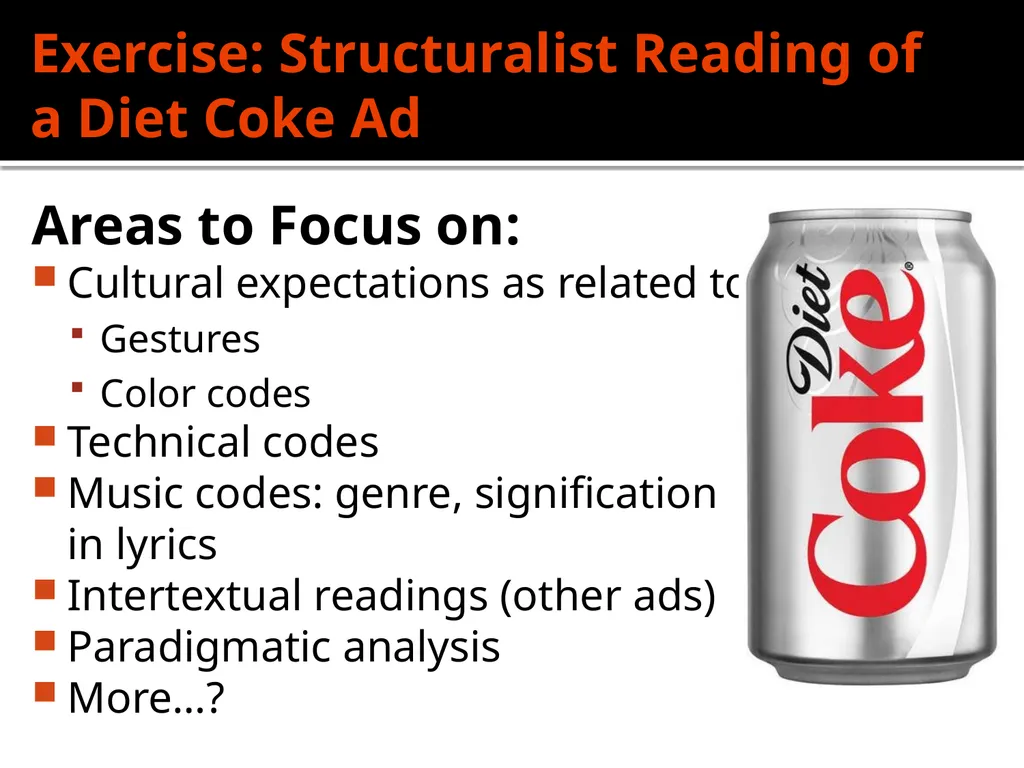
Exercise: Structuralist Reading of a Diet Coke Ad Areas to Focus on:
Cultural expectations as related to:
Gestures
Color codes
Technical codes
Music codes: genre, signification �in lyrics
Intertextual readings (other ads)
Paradigmatic analysis
More…?<br>
30
extras "Structuralism and Literary Criticism“
http://www.brocku.ca/english/courses/4F70/genette.php
Semiotics for Beginners
http://www.aber.ac.uk/media/Documents/S4B/semind.html
Notes on Saussure
http://group249.blogspot.com/2010/10/how-do-you-like-them-apples.html<br>
31
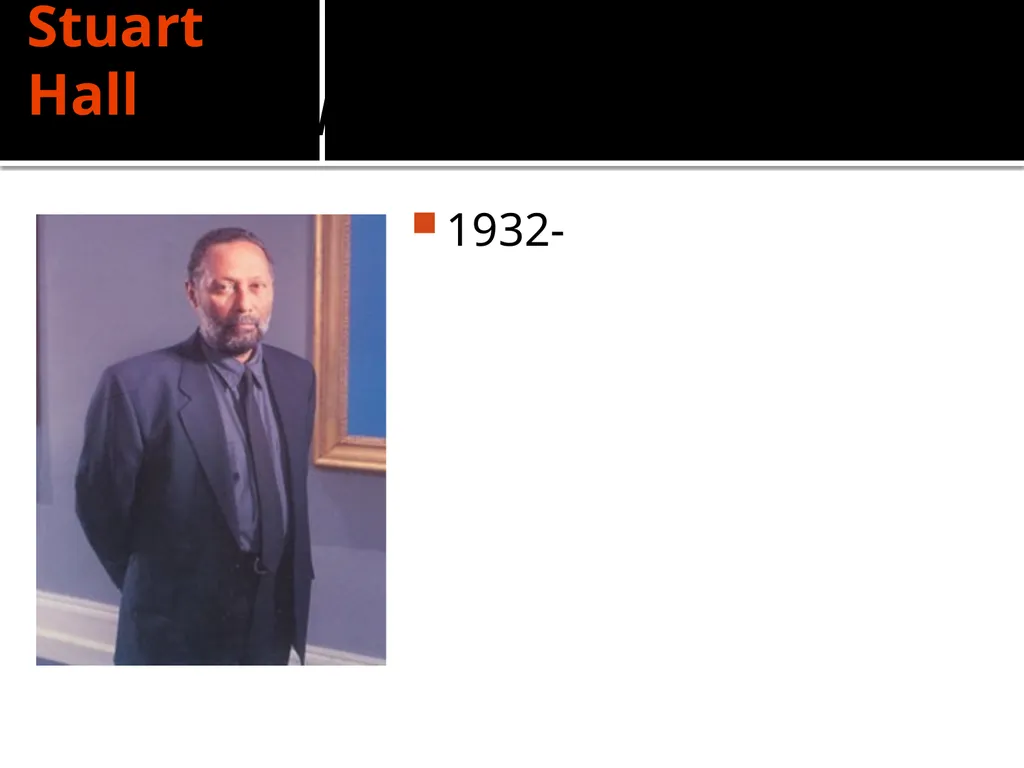
Stuart Hall Stuart Hall 1932-<br>
32
Stuart Hall: Encoding/Decoding A message is encoded with one meaning but may be decoded as another.
Based on Gramsci’s theory of Hegemony.
The reading of a text may be read (decoded) in three different ways: dominant, negotiated, and oppositional.<br>