
Structure and the function of the organization



Description: Structure and the function of the organization Course- Human Resource Management Module -1 Prepared by Dr.Laboni Basu HR departments have a hierarchical structure that consists of various levels such as: HR ManagerChief HR Officer HR
Related Topics
Download Presentation
"Structure and the function of the organization" is the property of its rightful owner. Permission is granted to download and print the materials on this website for personal, non-commercial use only, and to display it on your personal computer provided you do not modify the materials and that you retain all copyright notices contained in the materials. By downloading content from our website, you accept the terms of this agreement.
Presentation Transcript
slide1. Structure and the function of the organization
Course-
Human Resource Management
Module -1 Prepared by Dr.Laboni Basu<br>
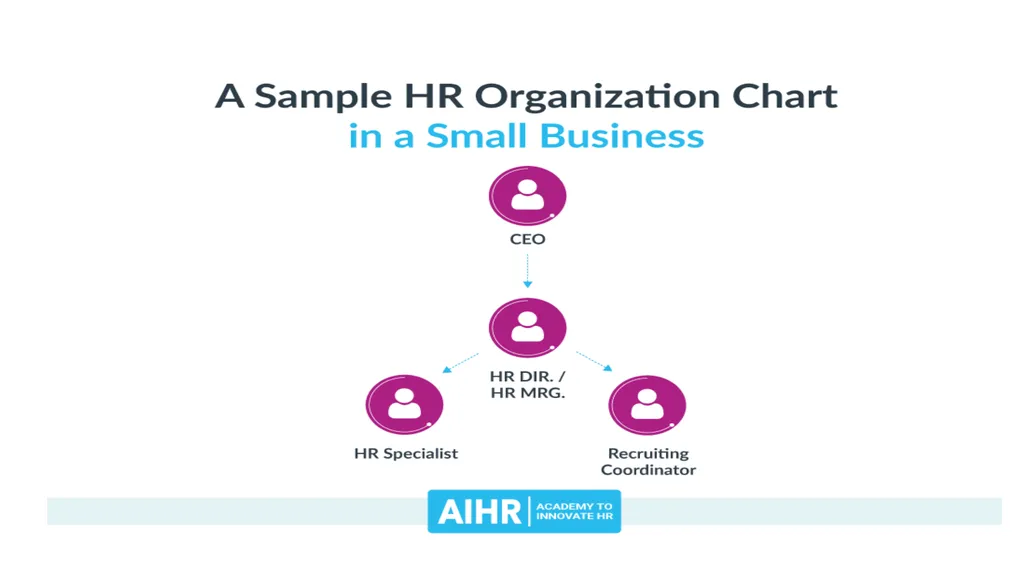
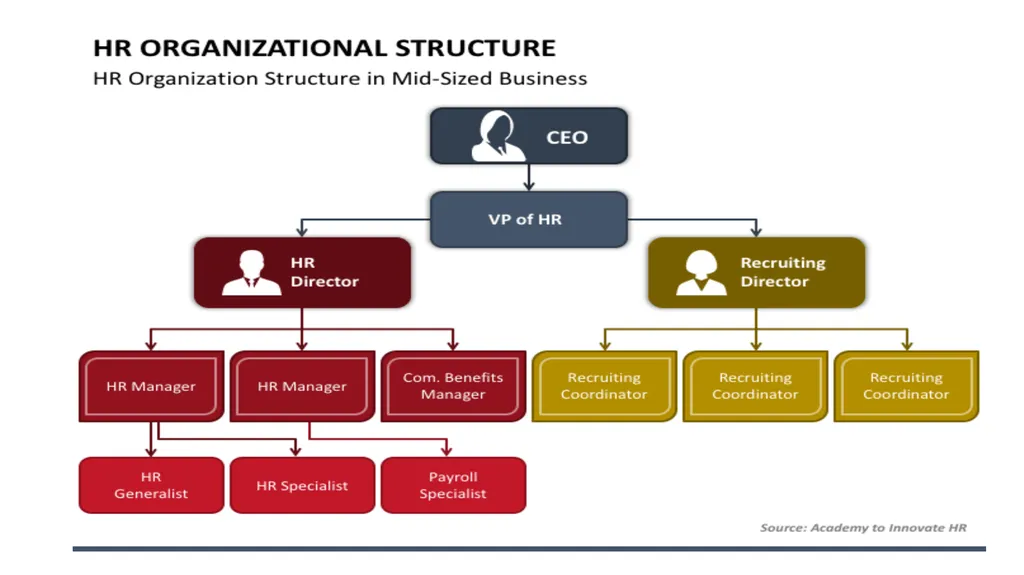
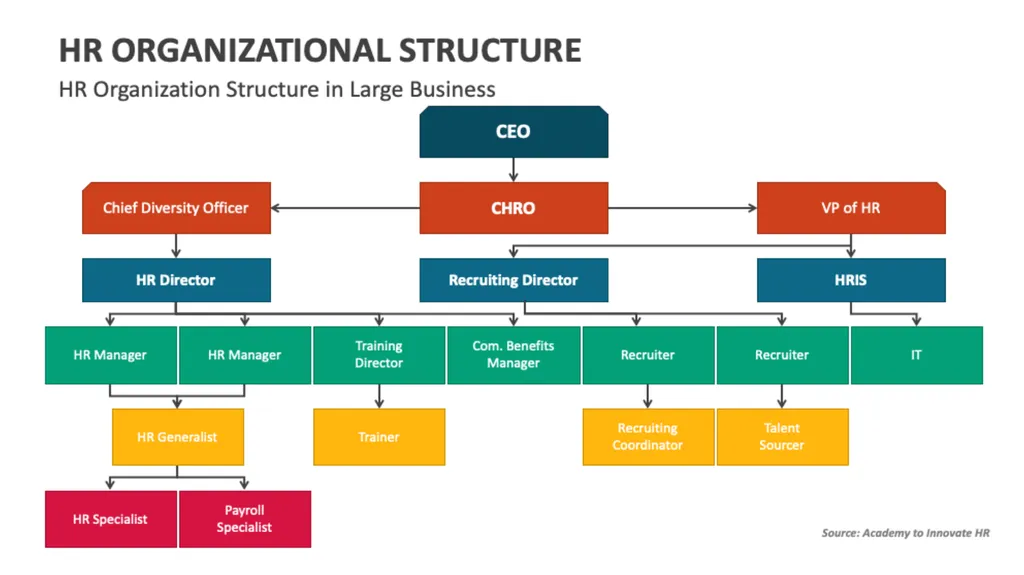
slide2. HR departments have a hierarchical structure that consists of various levels such as: HR Manager/Chief HR Officer
HR Business Partners/Managers
HR Specialists<br>
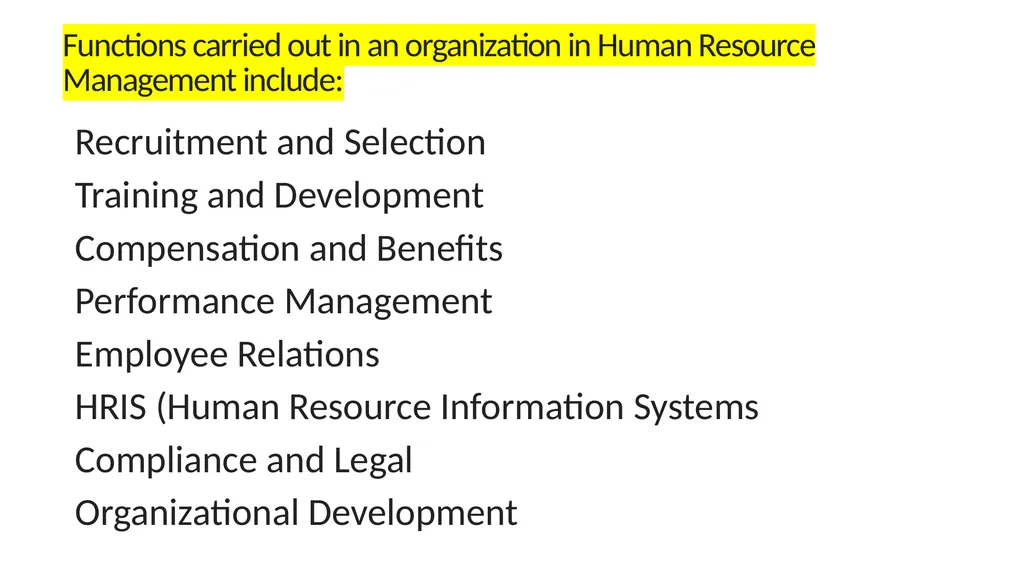
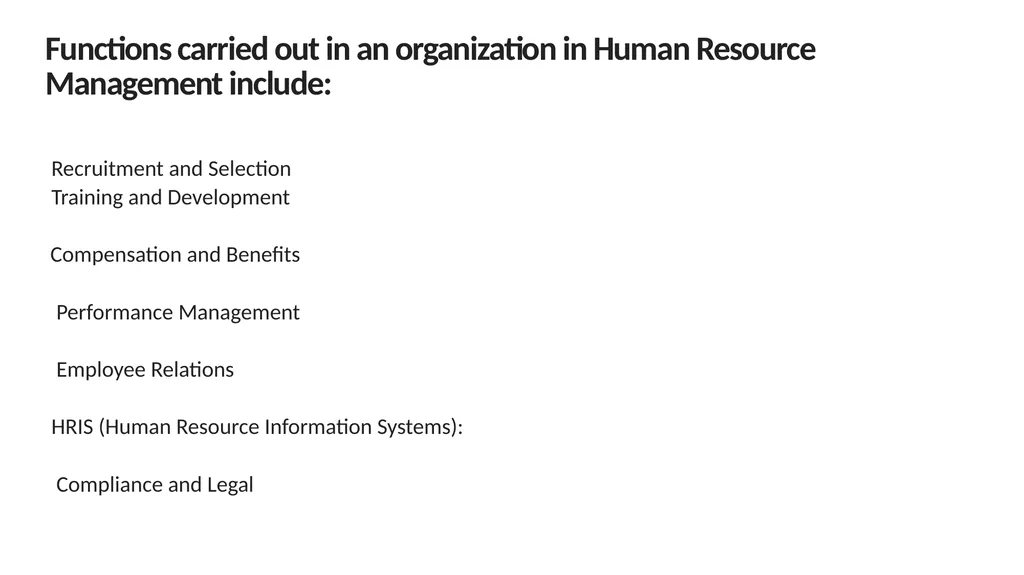
slide3. Functions carried out in an organization in Human Resource Management include: Recruitment and Selection
Training and Development
Compensation and Benefits
Performance Management
Employee Relations
HRIS (Human Resource Information Systems
Compliance and Legal
Organizational Development<br>
slide4. HR departments have a hierarchical structure that consists of various levels such as: 1. HR Manager/Chief HR Officer: The head of the HR department who is responsible for setting the overall strategic direction and policies related to human resources.
2. HR Business Partners/Managers: These individuals work closely with the various business units within the organization to align HR policies and practices with the strategic goals of the organization.
3. HR Specialists: These professionals are responsible for specific HR functions such as recruitment, training and development, compensation and benefits, employee relations, and HRIS (Human Resource Information Systems).<br>
slide8. Functions carried out in an organization in Human Resource Management include: Recruitment and Selection
Training and Development
Compensation and Benefits
Performance Management
Employee Relations
HRIS (Human Resource Information Systems):
Compliance and Legal<br>
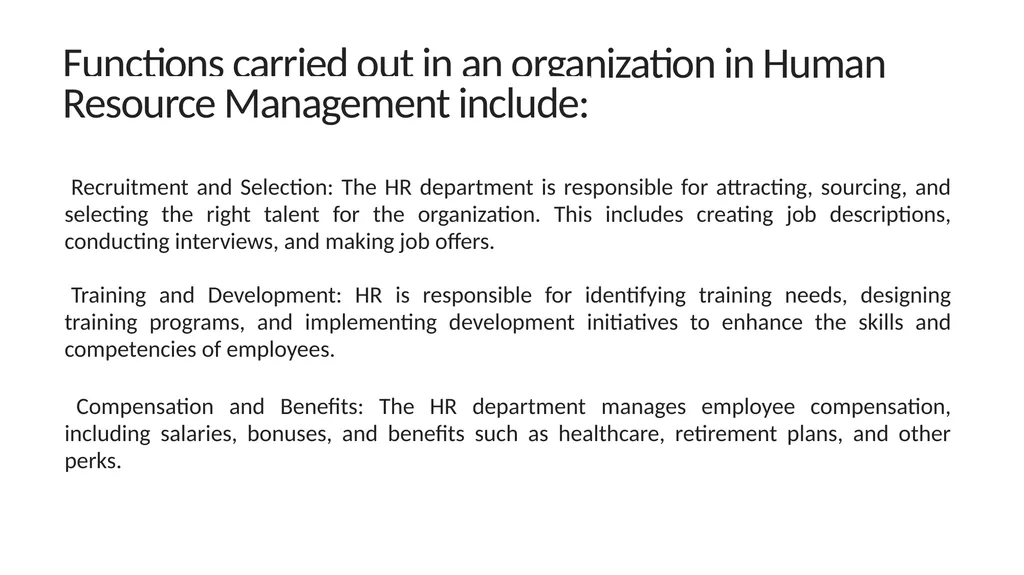
slide9. Functions carried out in an organization in Human Resource Management include: Recruitment and Selection: The HR department is responsible for attracting, sourcing, and selecting the right talent for the organization. This includes creating job descriptions, conducting interviews, and making job offers.
Training and Development: HR is responsible for identifying training needs, designing training programs, and implementing development initiatives to enhance the skills and competencies of employees.
Compensation and Benefits: The HR department manages employee compensation, including salaries, bonuses, and benefits such as healthcare, retirement plans, and other perks.<br>
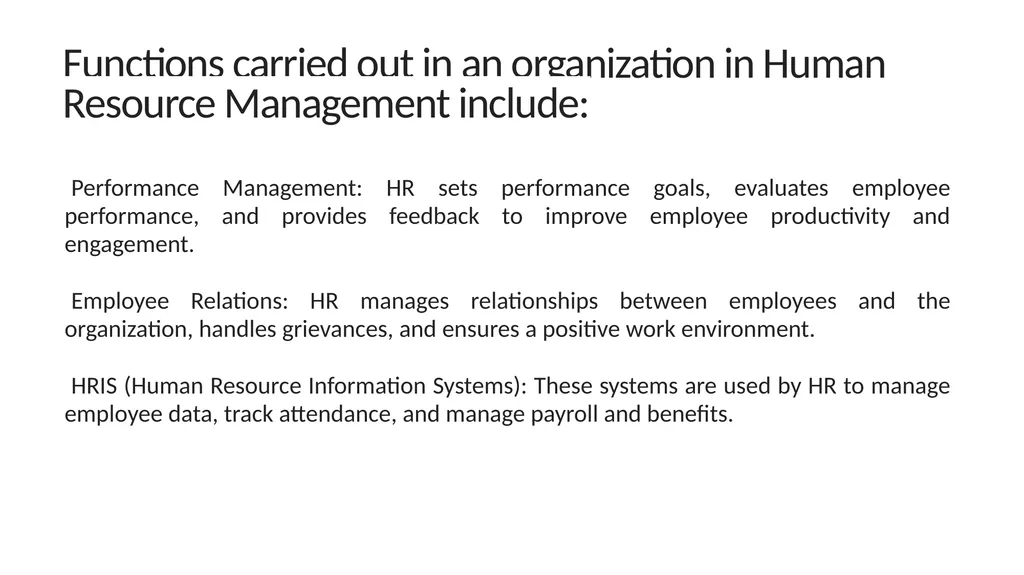
slide10. Functions carried out in an organization in Human Resource Management include: Performance Management: HR sets performance goals, evaluates employee performance, and provides feedback to improve employee productivity and engagement.
Employee Relations: HR manages relationships between employees and the organization, handles grievances, and ensures a positive work environment.
HRIS (Human Resource Information Systems): These systems are used by HR to manage employee data, track attendance, and manage payroll and benefits.<br>
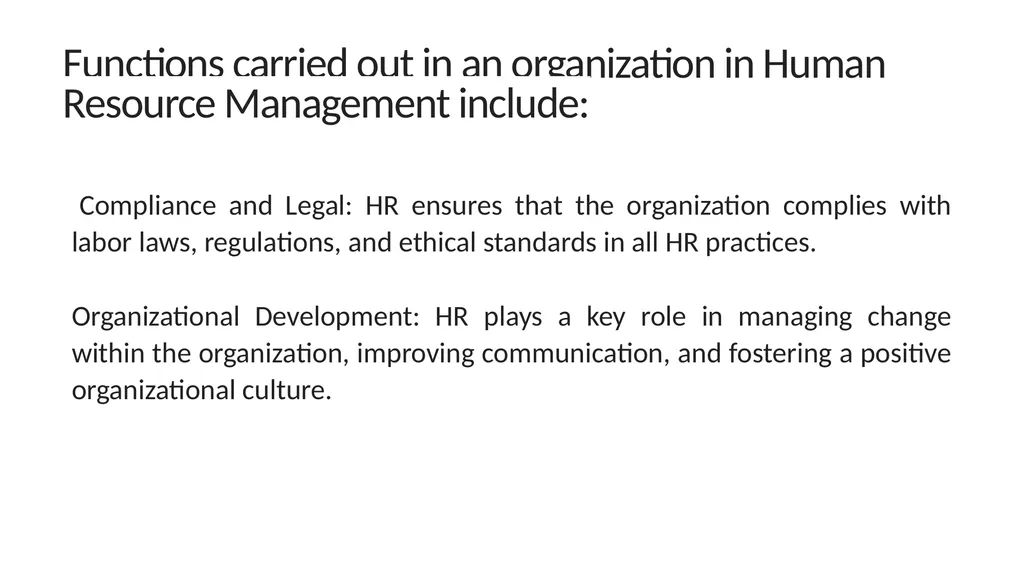
slide11. Functions carried out in an organization in Human Resource Management include: Compliance and Legal: HR ensures that the organization complies with labor laws, regulations, and ethical standards in all HR practices.
Organizational Development: HR plays a key role in managing change within the organization, improving communication, and fostering a positive organizational culture.<br>
slide12. Conclusion and overview Overall, the HR department is responsible for supporting the organization's strategic goals by managing its most important asset - its people.<br>
slide13. Thank you<br>
slide2. HR departments have a hierarchical structure that consists of various levels such as: HR Manager/Chief HR Officer
HR Business Partners/Managers
HR Specialists<br>
slide3. Functions carried out in an organization in Human Resource Management include: Recruitment and Selection
Training and Development
Compensation and Benefits
Performance Management
Employee Relations
HRIS (Human Resource Information Systems
Compliance and Legal
Organizational Development<br>
slide4. HR departments have a hierarchical structure that consists of various levels such as: 1. HR Manager/Chief HR Officer: The head of the HR department who is responsible for setting the overall strategic direction and policies related to human resources.
2. HR Business Partners/Managers: These individuals work closely with the various business units within the organization to align HR policies and practices with the strategic goals of the organization.
3. HR Specialists: These professionals are responsible for specific HR functions such as recruitment, training and development, compensation and benefits, employee relations, and HRIS (Human Resource Information Systems).<br>
slide8. Functions carried out in an organization in Human Resource Management include: Recruitment and Selection
Training and Development
Compensation and Benefits
Performance Management
Employee Relations
HRIS (Human Resource Information Systems):
Compliance and Legal<br>
slide9. Functions carried out in an organization in Human Resource Management include: Recruitment and Selection: The HR department is responsible for attracting, sourcing, and selecting the right talent for the organization. This includes creating job descriptions, conducting interviews, and making job offers.
Training and Development: HR is responsible for identifying training needs, designing training programs, and implementing development initiatives to enhance the skills and competencies of employees.
Compensation and Benefits: The HR department manages employee compensation, including salaries, bonuses, and benefits such as healthcare, retirement plans, and other perks.<br>
slide10. Functions carried out in an organization in Human Resource Management include: Performance Management: HR sets performance goals, evaluates employee performance, and provides feedback to improve employee productivity and engagement.
Employee Relations: HR manages relationships between employees and the organization, handles grievances, and ensures a positive work environment.
HRIS (Human Resource Information Systems): These systems are used by HR to manage employee data, track attendance, and manage payroll and benefits.<br>
slide11. Functions carried out in an organization in Human Resource Management include: Compliance and Legal: HR ensures that the organization complies with labor laws, regulations, and ethical standards in all HR practices.
Organizational Development: HR plays a key role in managing change within the organization, improving communication, and fostering a positive organizational culture.<br>
slide12. Conclusion and overview Overall, the HR department is responsible for supporting the organization's strategic goals by managing its most important asset - its people.<br>
slide13. Thank you<br>