
Subcultural Explanations for Crime & Deviance G674
A
Published · 46 slides · 0 views

1 / 1








Description
Subcultural Explanations for Crime Deviance G674 Subcultural Explanations What is a subculture? In pairs, list as many examples of UK youth subcultures as you can: They can be historic or contemporary. How do each differ from mainstream
Related Topics
Download this presentation From Below
"Subcultural Explanations for Crime & Deviance G674" is the property of its rightful owner. Permission is granted to download and print the materials on this website for personal, non-commercial use only, and to display it on your personal computer provided you do not modify the materials and that you retain all copyright notices contained in the materials. By downloading content from our website, you accept the terms of this agreement.
Share
Embed code
Presentation Transcript
01
Subcultural Explanations for Crime & Deviance G674<br>
02
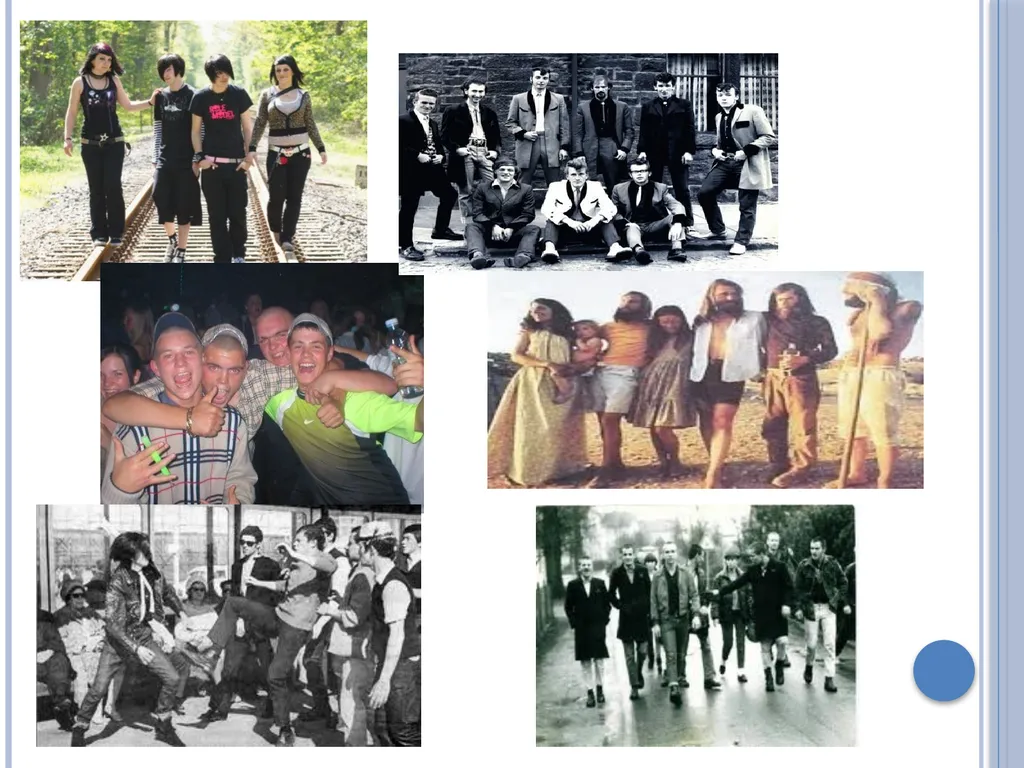
Subcultural Explanations What is a subculture?
In pairs, list as many examples of UK youth subcultures as you can: They can be historic or contemporary.
How do each differ from ‘mainstream’ society?
How many of the subcultures you have listed have been associated with criminal behaviour (e.g. in the media)?<br>
In pairs, list as many examples of UK youth subcultures as you can: They can be historic or contemporary.
How do each differ from ‘mainstream’ society?
How many of the subcultures you have listed have been associated with criminal behaviour (e.g. in the media)?<br>
03
Subcultural Explanations The sorts of subcultures we have mentioned are referred to as spectacular subcultures.
This is because they are easily recognisable (by their style) and distinct from other groups.
Subcultural explanations do not just refer to these types. They refer to any group that assembles within a society, possessing different norms and values to wider society.<br>
This is because they are easily recognisable (by their style) and distinct from other groups.
Subcultural explanations do not just refer to these types. They refer to any group that assembles within a society, possessing different norms and values to wider society.<br>
04
Recap Describe strain theory.
Although not a subcultural theory itself, strain theory was extremely influential on early subcultural explanations for crime.
Describe status frustration.<br>
Although not a subcultural theory itself, strain theory was extremely influential on early subcultural explanations for crime.
Describe status frustration.<br>
05
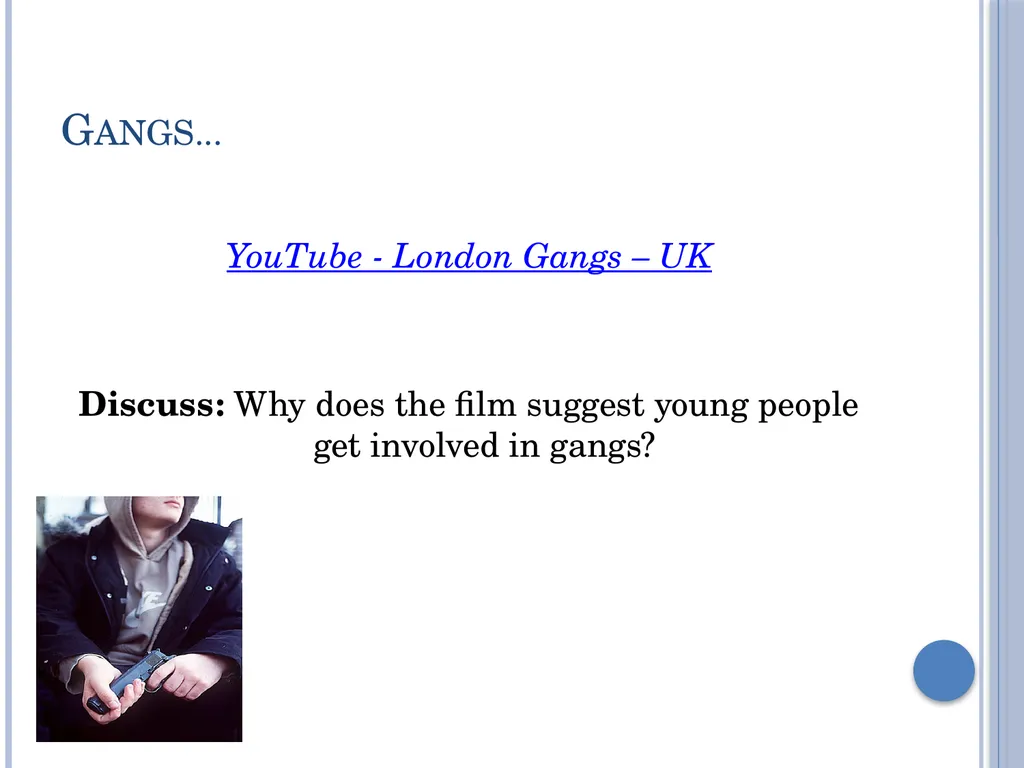
Gangs... YouTube - London Gangs – UK
Discuss: Why does the film suggest young people get involved in gangs?<br>
Discuss: Why does the film suggest young people get involved in gangs?<br>
06
The Illegitimate Opportunity Structure Cloward & Ohlin (1960)<br>
07
Cloward & Ohlin (1960):
The Illegitimate Opportunity Structure They agreed with Merton’s strain theory, but...
...Merton had argued that society does not provide the opportunities for many people to achieve cultural goals...
...Cloward & Ohlin thought that Merton had ignored the existence of an illegitimate opportunity structure. In other words, there are plenty of non-legal opportunities to achieve cultural goals.<br>
...Merton had argued that society does not provide the opportunities for many people to achieve cultural goals...
...Cloward & Ohlin thought that Merton had ignored the existence of an illegitimate opportunity structure. In other words, there are plenty of non-legal opportunities to achieve cultural goals.<br>
08
Discuss Cloward & Ohlin believe that you can attain all the socially desired goals (nice house, car, wealth, relationships, power etc.) through behaving illegally.
How could you do this?<br>
How could you do this?<br>
09
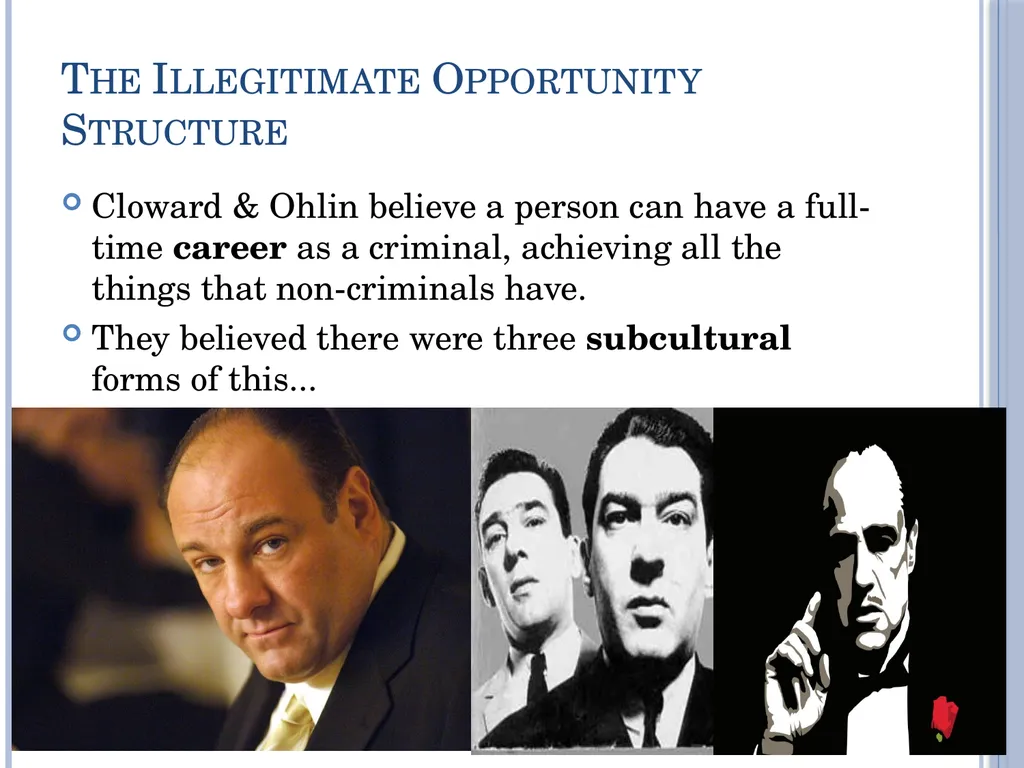
The Illegitimate Opportunity Structure Cloward & Ohlin believe a person can have a full-time career as a criminal, achieving all the things that non-criminals have.
They believed there were three subcultural forms of this...<br>
They believed there were three subcultural forms of this...<br>
10
The Illegitimate Opportunity Structure Criminal Subculture
Conflict Subculture
Retreatist Subculture
For those seeking a criminal career, the type of subculture available will largely depend on where they live, who they know and what other opportunities are available.<br>
Conflict Subculture
Retreatist Subculture
For those seeking a criminal career, the type of subculture available will largely depend on where they live, who they know and what other opportunities are available.<br>
11
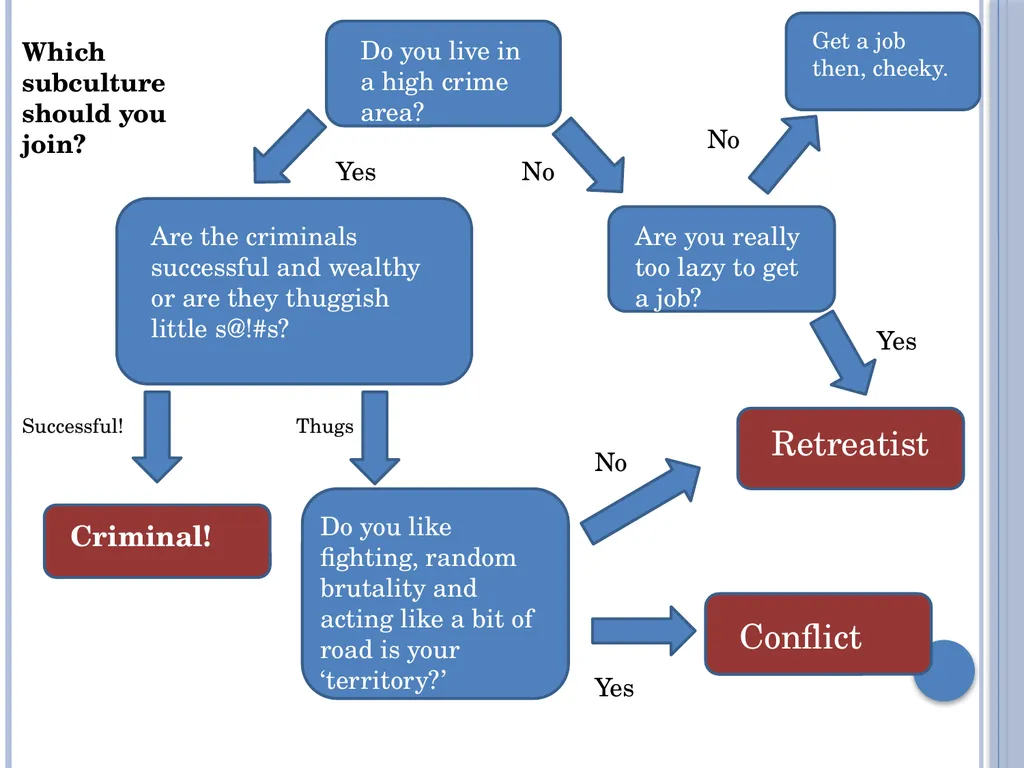
Do you live in a high crime area? Yes No Are you really too lazy to get a job? Yes No Get a job then, cheeky. Retreatist Are the criminals successful and wealthy or are they thuggish little s@!#s? Successful! Thugs Criminal! Do you like fighting, random brutality and acting like a bit of road is your ‘territory?’ Yes No Conflict Which subculture should you join?<br>
12
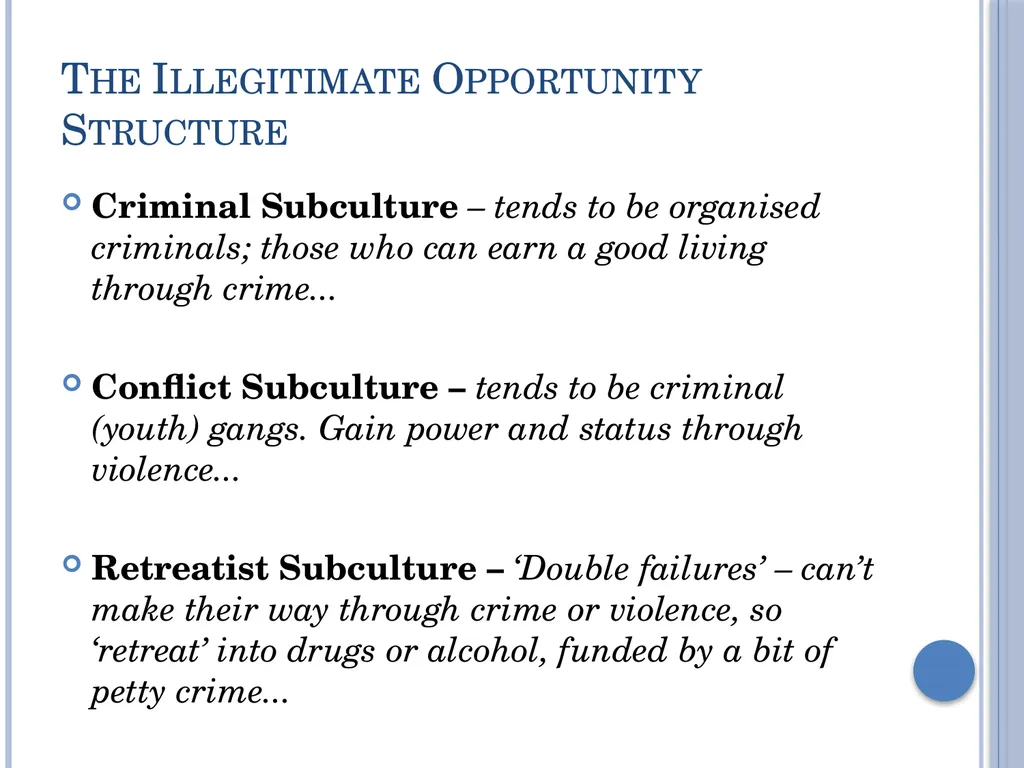
The Illegitimate Opportunity Structure Criminal Subculture – tends to be organised criminals; those who can earn a good living through crime...
Conflict Subculture – tends to be criminal (youth) gangs. Gain power and status through violence...
Retreatist Subculture – ‘Double failures’ – can’t make their way through crime or violence, so ‘retreat’ into drugs or alcohol, funded by a bit of petty crime...<br>
Conflict Subculture – tends to be criminal (youth) gangs. Gain power and status through violence...
Retreatist Subculture – ‘Double failures’ – can’t make their way through crime or violence, so ‘retreat’ into drugs or alcohol, funded by a bit of petty crime...<br>
13
Criticisms In reality, deviant subcultures cannot be slotted so neatly into three categories...
Again, C&O were white, middle-class male Americans. Do their theories translate to the UK (or anywhere else?). Are they in a position to really understand the lives of ‘criminals’?<br>
Again, C&O were white, middle-class male Americans. Do their theories translate to the UK (or anywhere else?). Are they in a position to really understand the lives of ‘criminals’?<br>
14
Status Frustration A.K. Cohen (1955)<br>
15
Recap What have we already discussed about status frustration?
Where does it originate, and what are some criticisms of the theory?<br>
Where does it originate, and what are some criticisms of the theory?<br>
16
Status Frustration Cohen’s work was the first time the concept of subculture was explicitly used.
Again, he was inspired by Merton’s work – but wanted to go further in explaining crimes with no economic reward (e.g. Vandalism).
He identified that subcultures offer inverted values that enable their members to attain status through alternative means.<br>
Again, he was inspired by Merton’s work – but wanted to go further in explaining crimes with no economic reward (e.g. Vandalism).
He identified that subcultures offer inverted values that enable their members to attain status through alternative means.<br>
17
Other Work Inspired by Strain Theory<br>
18
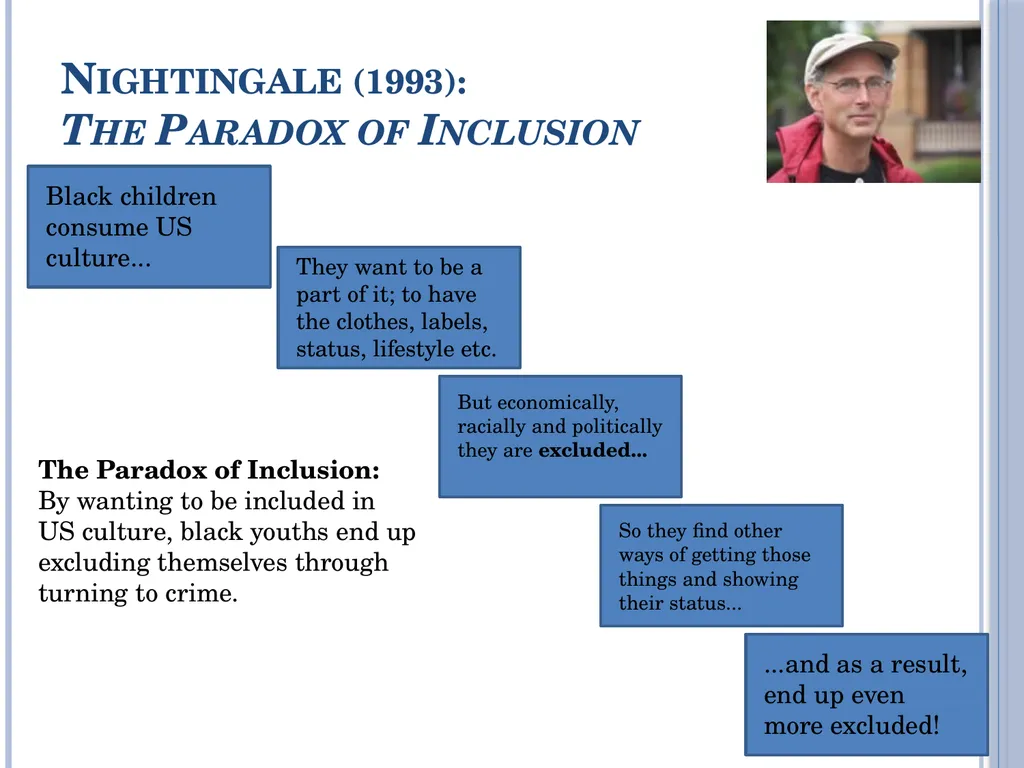
Nightingale (1993):
The Paradox of Inclusion Black children consume US culture... They want to be a part of it; to have the clothes, labels, status, lifestyle etc. But economically, racially and politically they are excluded... So they find other ways of getting those things and showing their status... ...and as a result, end up even more excluded! The Paradox of Inclusion:
By wanting to be included in
US culture, black youths end up
excluding themselves through turning to crime.<br>
By wanting to be included in
US culture, black youths end up
excluding themselves through turning to crime.<br>
19
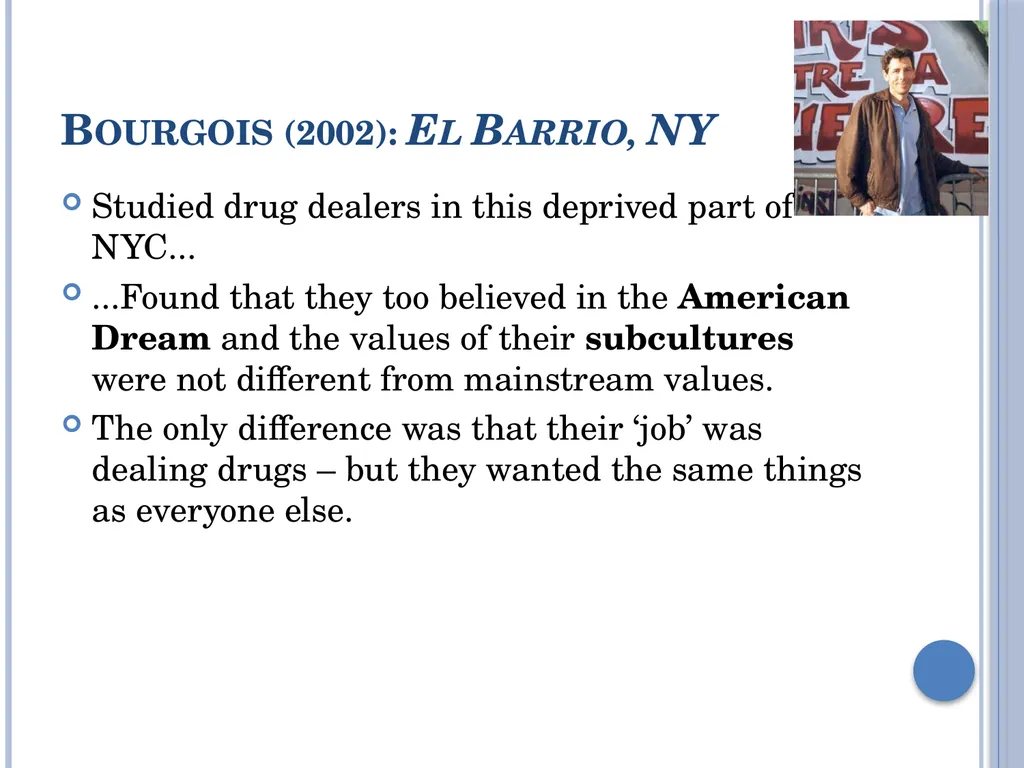
Bourgois (2002): El Barrio, NY Studied drug dealers in this deprived part of NYC...
...Found that they too believed in the American Dream and the values of their subcultures were not different from mainstream values.
The only difference was that their ‘job’ was dealing drugs – but they wanted the same things as everyone else.<br>
...Found that they too believed in the American Dream and the values of their subcultures were not different from mainstream values.
The only difference was that their ‘job’ was dealing drugs – but they wanted the same things as everyone else.<br>
20
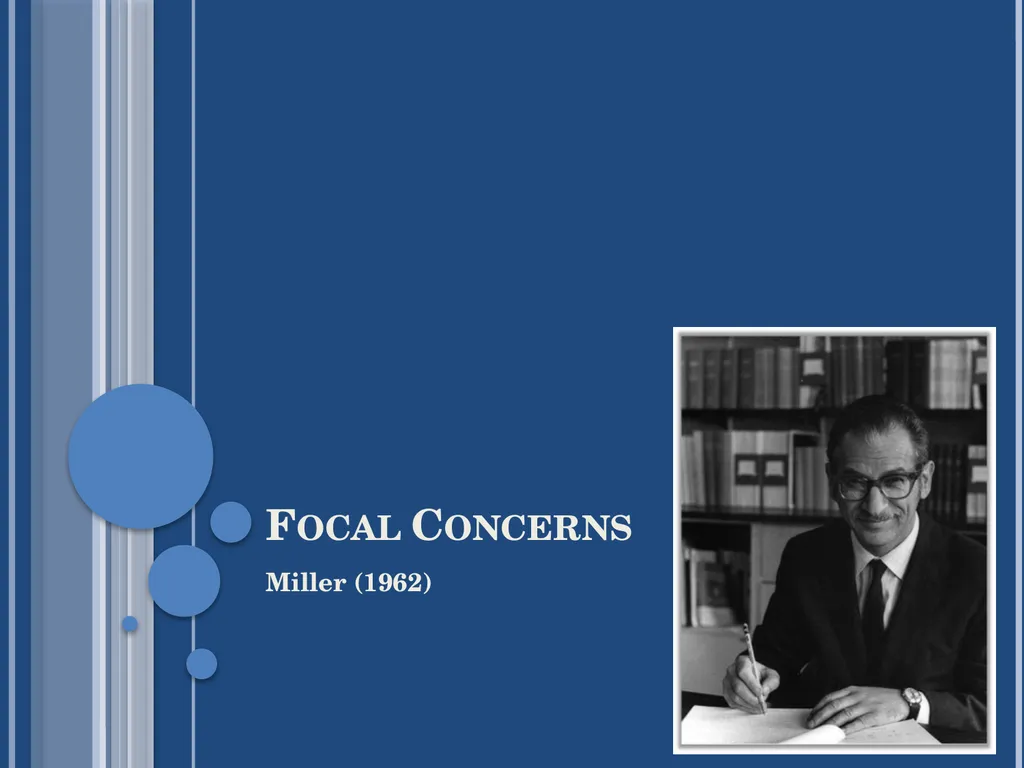
Focal Concerns Miller (1962)<br>
21
Focal Concerns Miller disagreed that there are specific values or ‘inverted’ values that lead to crime.
He suggested that crime and deviance are actually linked to male working class culture.
Recap: What study did we discuss at AS regarding working-class culture?
What features of that culture were identified?<br>
He suggested that crime and deviance are actually linked to male working class culture.
Recap: What study did we discuss at AS regarding working-class culture?
What features of that culture were identified?<br>
22
The ‘Focal Concerns’ of Working-class Culture Smartness
(Looking good and being street-smart and witty)
Trouble
(Not running away from a fight...)
Excitement
(Always on the look-out for a quick thrill)
Toughness
(Demonstrate how strong you are)
Autonomy
(refuse to be pushed around by authority)
Fate
(Accept what will be will be!)<br>
(Looking good and being street-smart and witty)
Trouble
(Not running away from a fight...)
Excitement
(Always on the look-out for a quick thrill)
Toughness
(Demonstrate how strong you are)
Autonomy
(refuse to be pushed around by authority)
Fate
(Accept what will be will be!)<br>
23
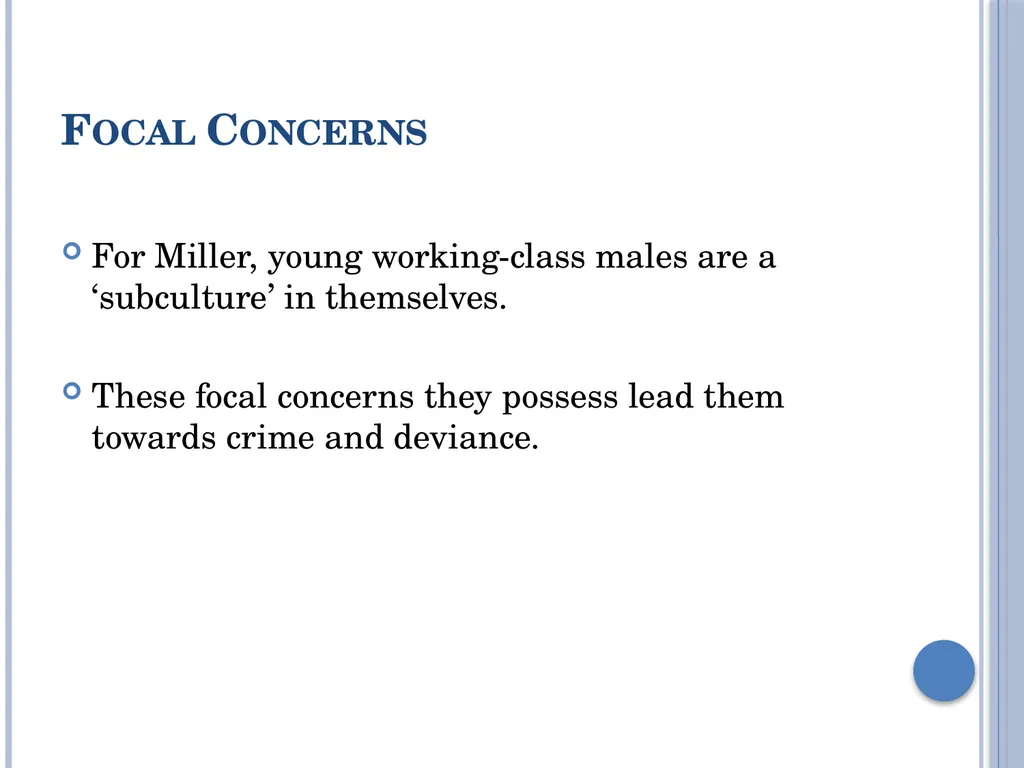
Focal Concerns For Miller, young working-class males are a ‘subculture’ in themselves.
These focal concerns they possess lead them towards crime and deviance.<br>
These focal concerns they possess lead them towards crime and deviance.<br>
24
Activity Examine the two studies on the handout in pairs and answer the questions provided.
Feed back to class.<br>
Feed back to class.<br>
25
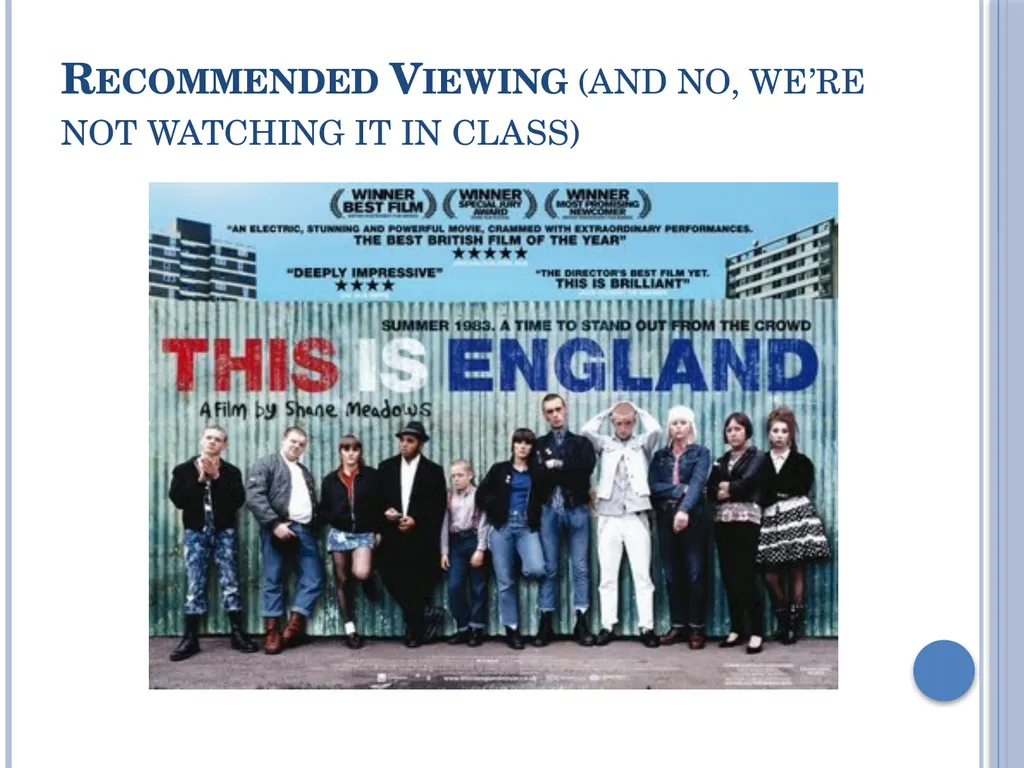
Recommended Viewing (and no, we’re not watching it in class)<br>
26
Matza (1964) Subterranean Values & Drift<br>
27
Matza Disagrees with the notion of organised, subcultural responses.
We all possess some deviant (‘subterranean’) values, but most of the time, we keep them in check.<br>
We all possess some deviant (‘subterranean’) values, but most of the time, we keep them in check.<br>
28
Discuss For Matza, subterranean values refer to the desire to do bad things.
In pairs, list a minimum of FIVE possible subterranean values that most people have…
…For each, identify at least one technique that might be used to control this urge.<br>
In pairs, list a minimum of FIVE possible subterranean values that most people have…
…For each, identify at least one technique that might be used to control this urge.<br>
29
Matza Claimed that young people have a harder time keeping their subterranean values in check that older people.
This can lead to deviant behaviour, although when it does, they use techniques of neutralisation to justify their deviant actions.<br>
This can lead to deviant behaviour, although when it does, they use techniques of neutralisation to justify their deviant actions.<br>
30
Discuss How many people here have done something illegal or immoral over the past few weeks?
Explain: WHY<br>
Explain: WHY<br>
31
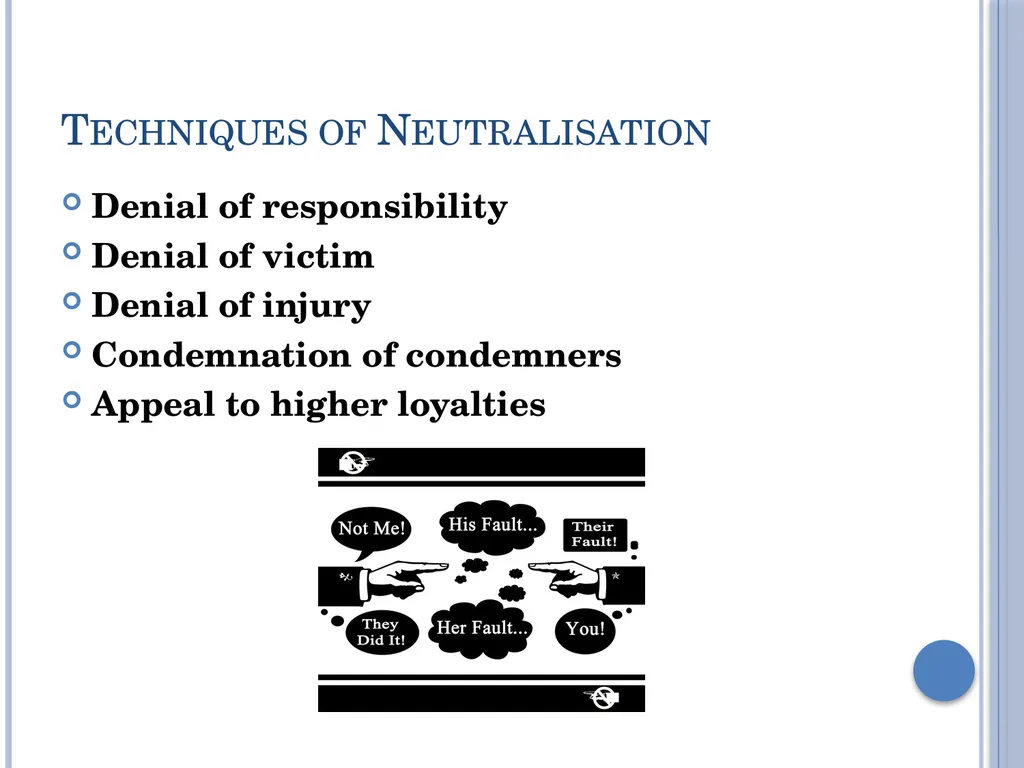
Techniques of Neutralisation Denial of responsibility
Denial of victim
Denial of injury
Condemnation of condemners
Appeal to higher loyalties<br>
Denial of victim
Denial of injury
Condemnation of condemners
Appeal to higher loyalties<br>
32
Techniques of Neutralisation: Match “I was stealing from Tesco; they’re a big company, they can afford it!”
“It wasn’t my fault; I was drunk!”
“They slagged off my family, so I had to do something!”
“It was her own fault; she led me on!”
“The police are far more violent towards people than I was!”
Discuss: What other excuses do young people use for their deviant behaviour?<br>
“It wasn’t my fault; I was drunk!”
“They slagged off my family, so I had to do something!”
“It was her own fault; she led me on!”
“The police are far more violent towards people than I was!”
Discuss: What other excuses do young people use for their deviant behaviour?<br>
33
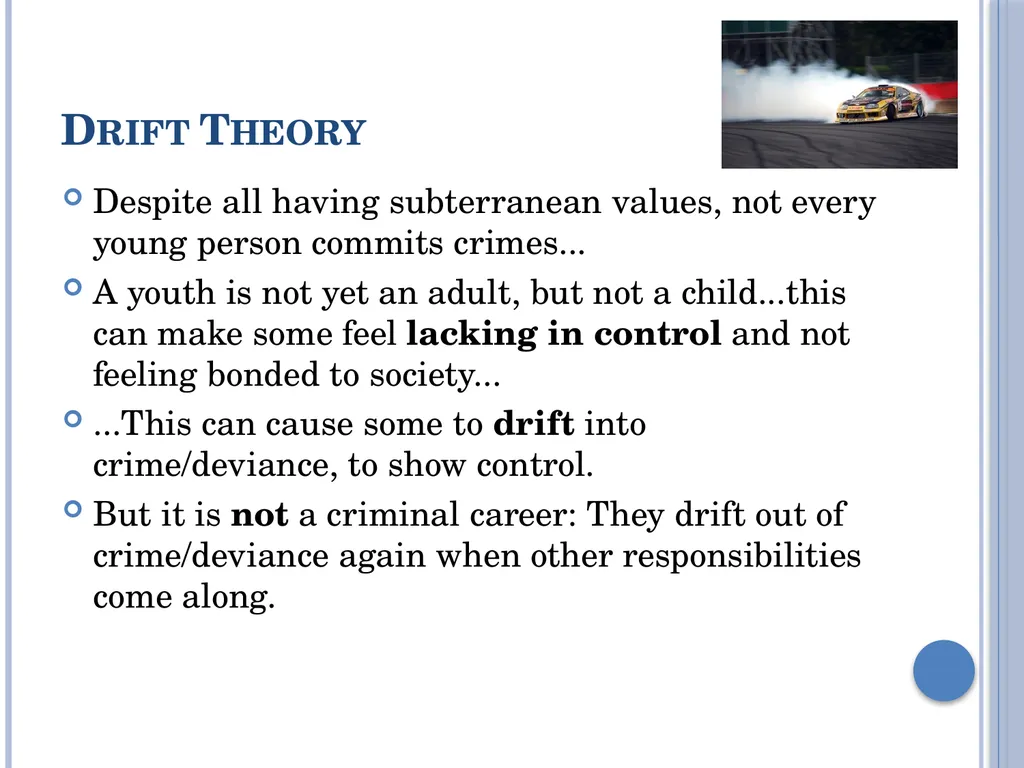
Drift Theory Despite all having subterranean values, not every young person commits crimes...
A youth is not yet an adult, but not a child...this can make some feel lacking in control and not feeling bonded to society...
...This can cause some to drift into crime/deviance, to show control.
But it is not a criminal career: They drift out of crime/deviance again when other responsibilities come along.<br>
A youth is not yet an adult, but not a child...this can make some feel lacking in control and not feeling bonded to society...
...This can cause some to drift into crime/deviance, to show control.
But it is not a criminal career: They drift out of crime/deviance again when other responsibilities come along.<br>
34
Criticisms of Matza Do his theories apply equally to females?
The whole concept of drift is a little vague? Why does committing a criminal/deviant act give young people a sense of control?
Doesn’t take into account economic/social factors that might drive young people to crime.<br>
The whole concept of drift is a little vague? Why does committing a criminal/deviant act give young people a sense of control?
Doesn’t take into account economic/social factors that might drive young people to crime.<br>
35
Marxist Subcultural Theories (You can also use this stuff in a question on Marxism!!!)<br>
36
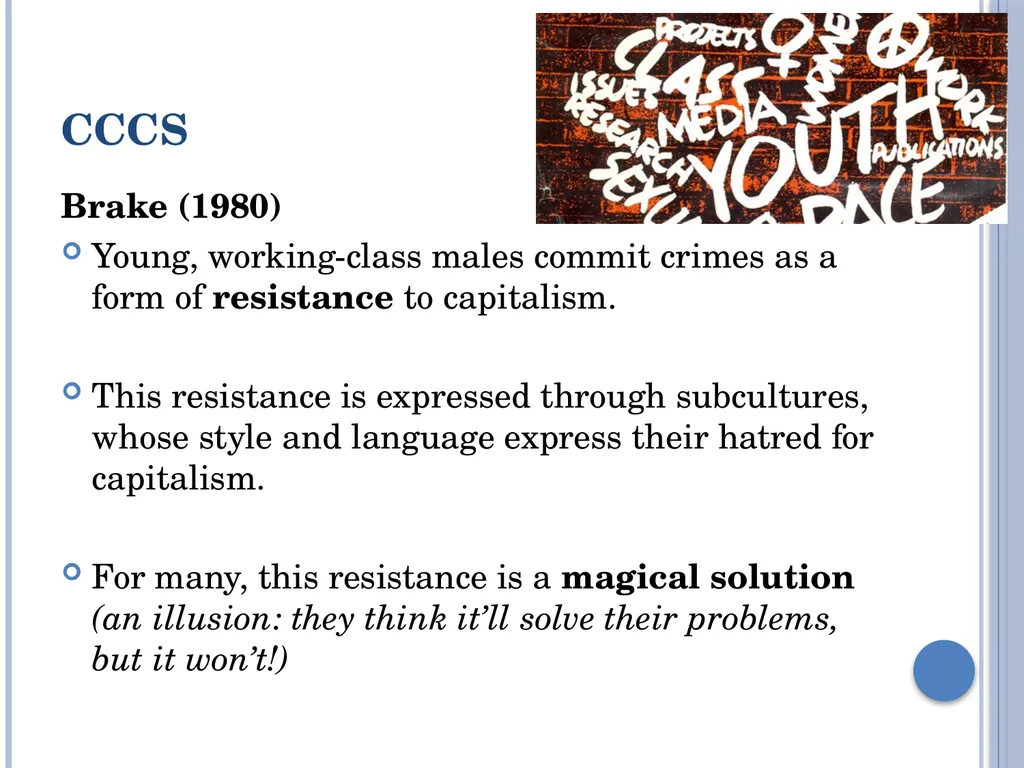
CCCS Brake (1980)
Young, working-class males commit crimes as a form of resistance to capitalism.
This resistance is expressed through subcultures, whose style and language express their hatred for capitalism.
For many, this resistance is a magical solution (an illusion: they think it’ll solve their problems, but it won’t!)<br>
Young, working-class males commit crimes as a form of resistance to capitalism.
This resistance is expressed through subcultures, whose style and language express their hatred for capitalism.
For many, this resistance is a magical solution (an illusion: they think it’ll solve their problems, but it won’t!)<br>
37
Research (small groups) Choose one subculture and research the origins of the subculture and its style.<br>
38
Criticisms of the Marxist approach Stan Cohen (1980) claims the Marxists are biased; they carefully select the evidence to link subcultures to capitalism.
Blackman (1995) claims that the idea that subcultures are linked to class is a media invention: In reality, the origins of subcultures are much more varied.<br>
Blackman (1995) claims that the idea that subcultures are linked to class is a media invention: In reality, the origins of subcultures are much more varied.<br>
39
Interactionist Subcultural theories ...We’ve already covered these, but just to recap...<br>
40
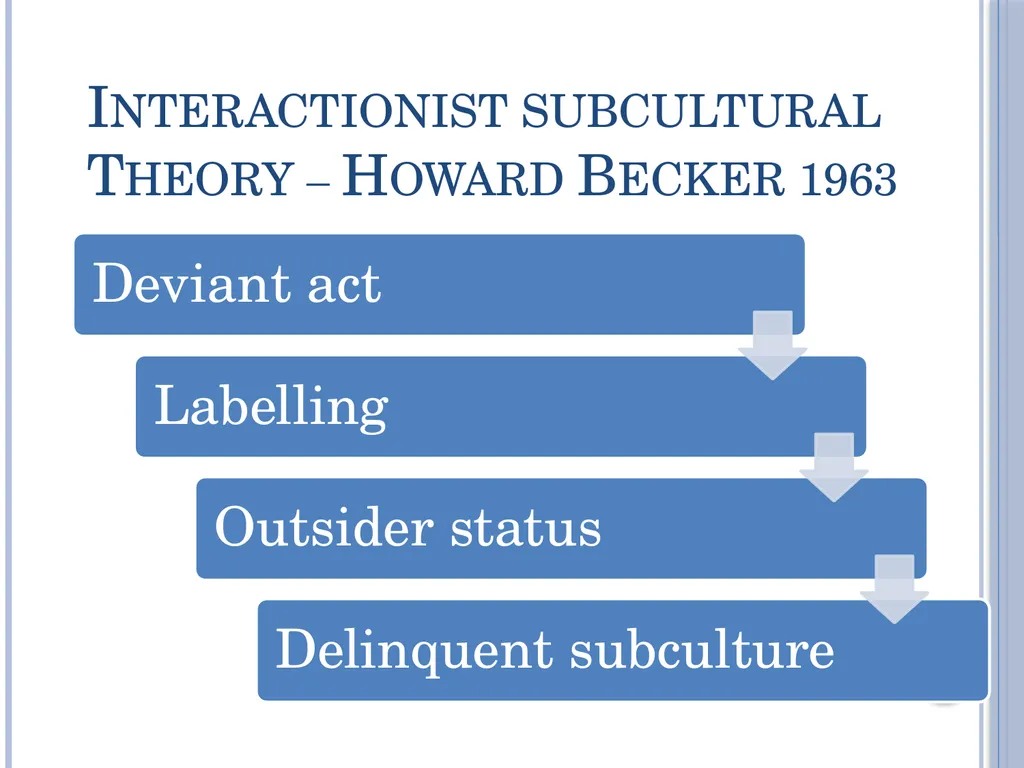
Interactionist subcultural Theory – Howard Becker 1963<br>
41
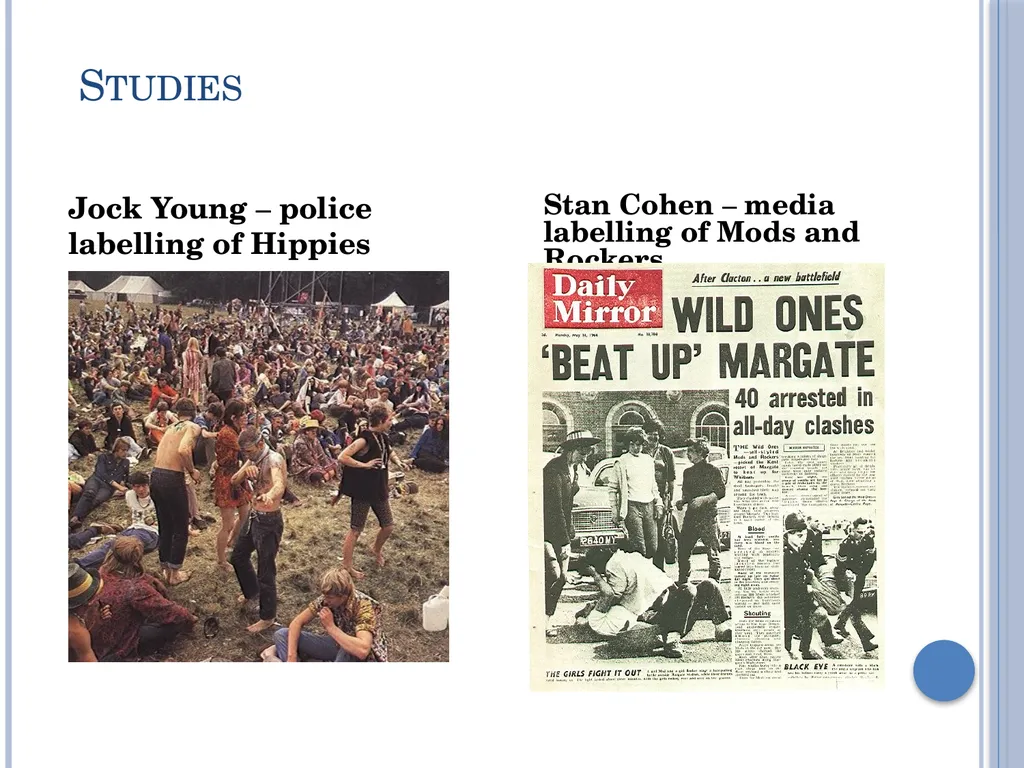
Studies Jock Young – police labelling of Hippies Stan Cohen – media labelling of Mods and Rockers<br>
42
Postmodernist Theories<br>
43
Postmodernist Views Young males do not get drawn into subcultures because of rejection but because it is thrilling.
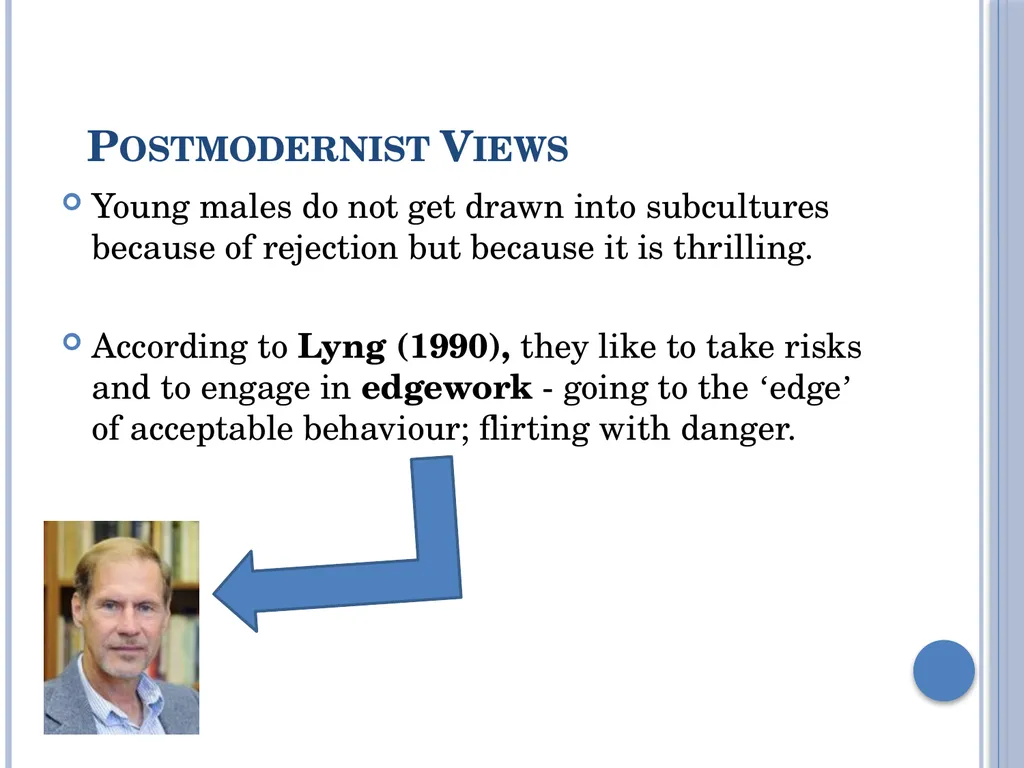
According to Lyng (1990), they like to take risks and to engage in edgework - going to the ‘edge’ of acceptable behaviour; flirting with danger.<br>
According to Lyng (1990), they like to take risks and to engage in edgework - going to the ‘edge’ of acceptable behaviour; flirting with danger.<br>
44
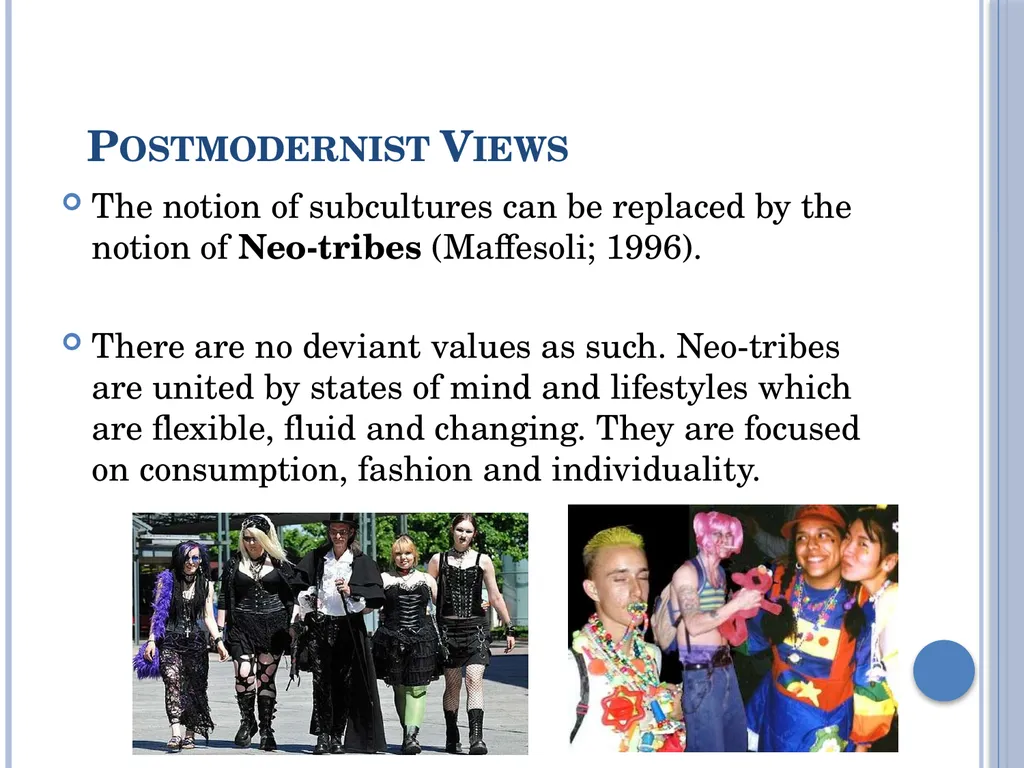
Postmodernist Views The notion of subcultures can be replaced by the notion of Neo-tribes (Maffesoli; 1996).
There are no deviant values as such. Neo-tribes are united by states of mind and lifestyles which are flexible, fluid and changing. They are focused on consumption, fashion and individuality.<br>
There are no deviant values as such. Neo-tribes are united by states of mind and lifestyles which are flexible, fluid and changing. They are focused on consumption, fashion and individuality.<br>
45
Written Task Outline and evaluate subcultural explanations for crime [50]
http://www.bmetv.net/video/2393/this-is-england-full-movie<br>
http://www.bmetv.net/video/2393/this-is-england-full-movie<br>