Subject: Principles Of Human Settlements-I Topic: Mauryan Age Presented by: Fazlur Rahman SOCIAL ORDER DURING MAURYAN AGE POLITICAL UNIFICATION OF INDIA BOOST TO TRADE AND VARIOUS CRAFTS SOCIAL STRUCTURE WAS MULTI-LAYERED AND COMPLEX TAKEN
"Subject: Principles Of Human Settlements-I Topic:" is the property of its rightful owner. Permission is granted to
download and print the materials on this website for personal, non-commercial use only, and to display it
on your personal computer provided you do not modify the materials and that you retain all copyright
notices contained in the materials. By downloading content from our website, you accept the terms of this
agreement.
Presentation Transcript
01
Subject: Principles Of Human Settlements-I
Topic: Mauryan Age
Presented by: Fazlur Rahman<br>
02
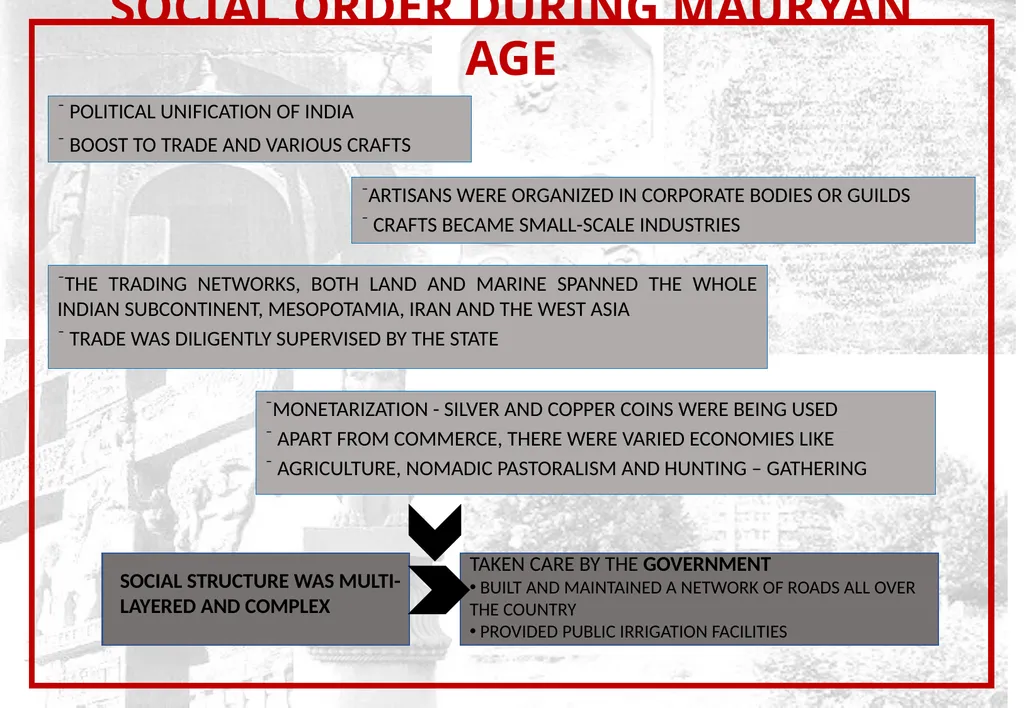
SOCIAL ORDER DURING MAURYAN AGE POLITICAL UNIFICATION OF INDIA
BOOST TO TRADE AND VARIOUS CRAFTS SOCIAL STRUCTURE WAS MULTI-LAYERED AND COMPLEX TAKEN CARE BY THE GOVERNMENT
BUILT AND MAINTAINED A NETWORK OF ROADS ALL OVER THE COUNTRY
PROVIDED PUBLIC IRRIGATION FACILITIES ARTISANS WERE ORGANIZED IN CORPORATE BODIES OR GUILDS
CRAFTS BECAME SMALL-SCALE INDUSTRIES THE TRADING NETWORKS, BOTH LAND AND MARINE SPANNED THE WHOLE INDIAN SUBCONTINENT, MESOPOTAMIA, IRAN AND THE WEST ASIA
TRADE WAS DILIGENTLY SUPERVISED BY THE STATE MONETARIZATION - SILVER AND COPPER COINS WERE BEING USED
APART FROM COMMERCE, THERE WERE VARIED ECONOMIES LIKE
AGRICULTURE, NOMADIC PASTORALISM AND HUNTING – GATHERING<br>
03
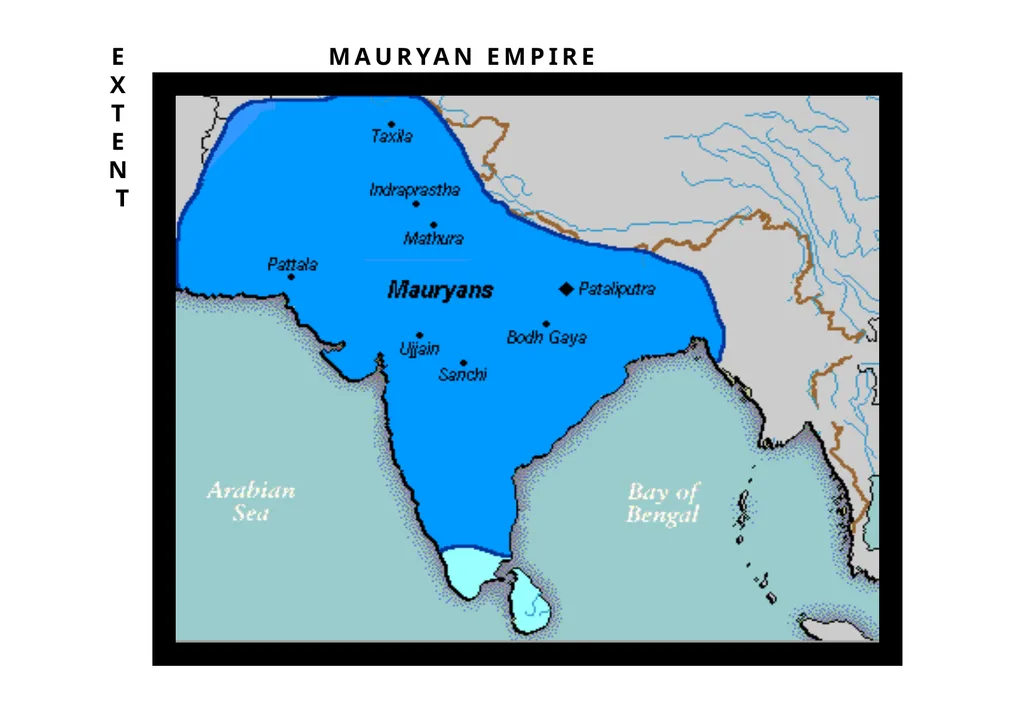
EXTENT MAURYAN EMPIRE<br>
04
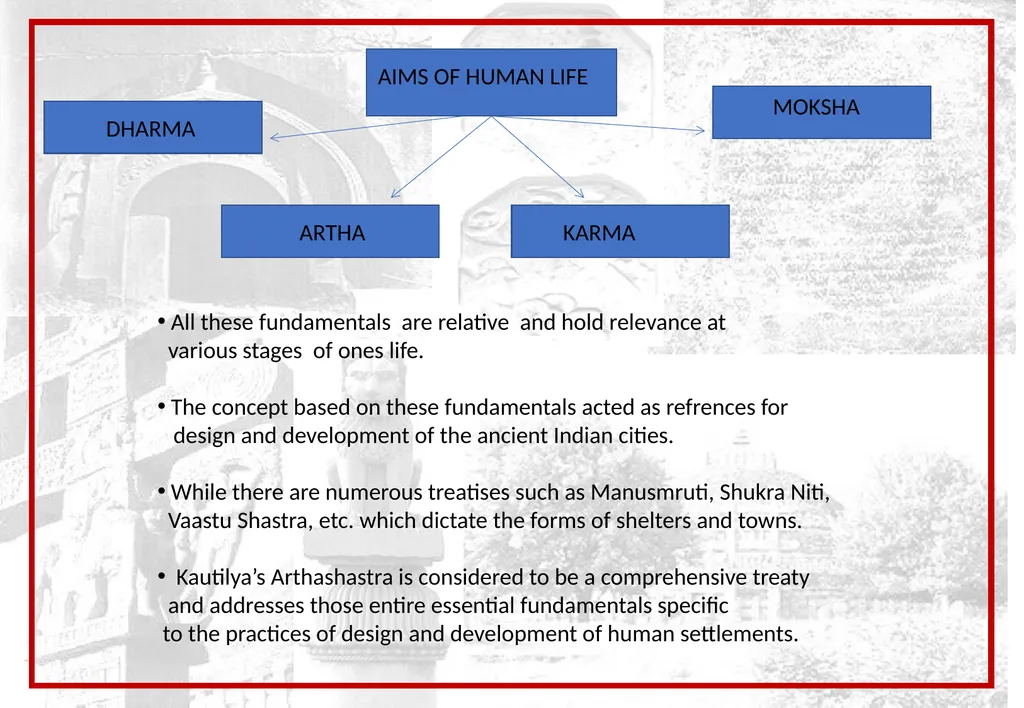
AIMS OF HUMAN LIFE DHARMA ARTHA KARMA MOKSHA All these fundamentals are relative and hold relevance at
various stages of ones life.
The concept based on these fundamentals acted as refrences for
design and development of the ancient Indian cities.
While there are numerous treatises such as Manusmruti, Shukra Niti,
Vaastu Shastra, etc. which dictate the forms of shelters and towns.
Kautilya’s Arthashastra is considered to be a comprehensive treaty
and addresses those entire essential fundamentals specific
to the practices of design and development of human settlements.<br>
05
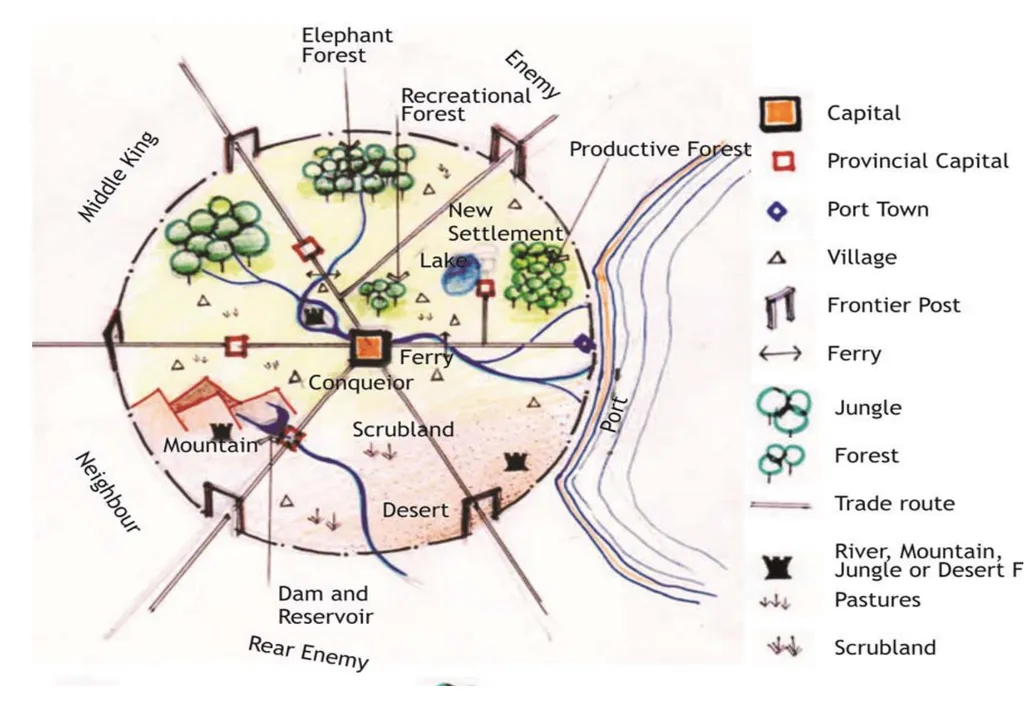
Well defined hierarchy of the urban centers and the administrative divisions.
These divisions were based mainly on the
- size of population and
were influenced by the resources available in the region and
- opportunities for economic development. KAUTILYA’S ARTHASHASTRA<br>
06
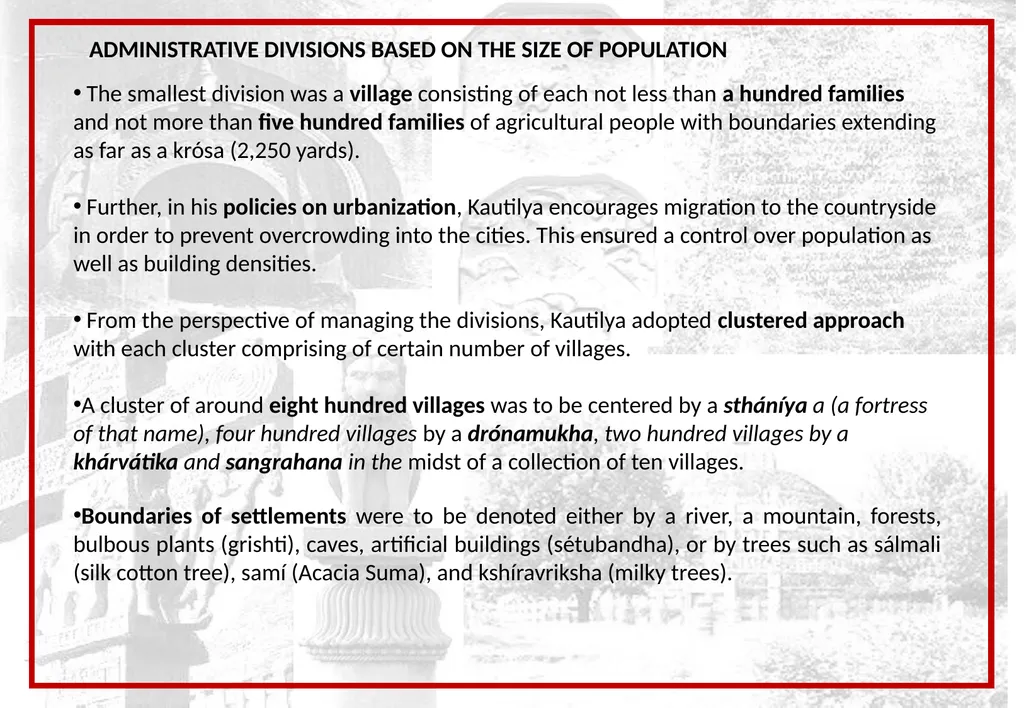
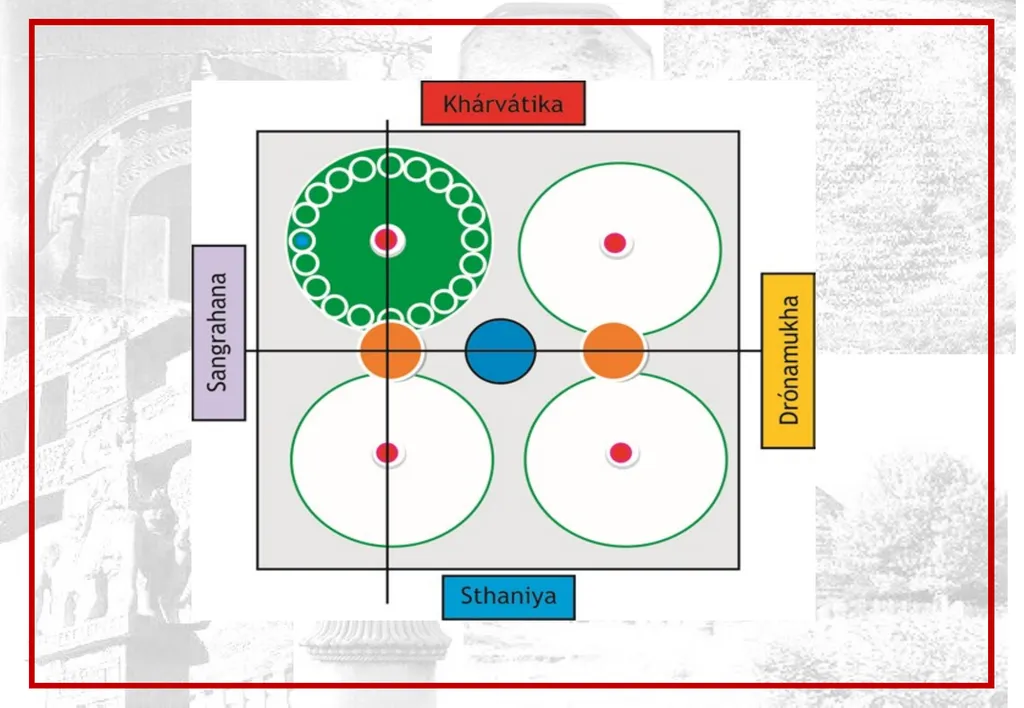
The smallest division was a village consisting of each not less than a hundred families and not more than five hundred families of agricultural people with boundaries extending as far as a krósa (2,250 yards).
Further, in his policies on urbanization, Kautilya encourages migration to the countryside in order to prevent overcrowding into the cities. This ensured a control over population as well as building densities.
From the perspective of managing the divisions, Kautilya adopted clustered approach with each cluster comprising of certain number of villages.
A cluster of around eight hundred villages was to be centered by a stháníya a (a fortress of that name), four hundred villages by a drónamukha, two hundred villages by a khárvátika and sangrahana in the midst of a collection of ten villages. ADMINISTRATIVE DIVISIONS BASED ON THE SIZE OF POPULATION Boundaries of settlements were to be denoted either by a river, a mountain, forests, bulbous plants (grishti), caves, artificial buildings (sétubandha), or by trees such as sálmali (silk cotton tree), samí (Acacia Suma), and kshíravriksha (milky trees).<br>
07
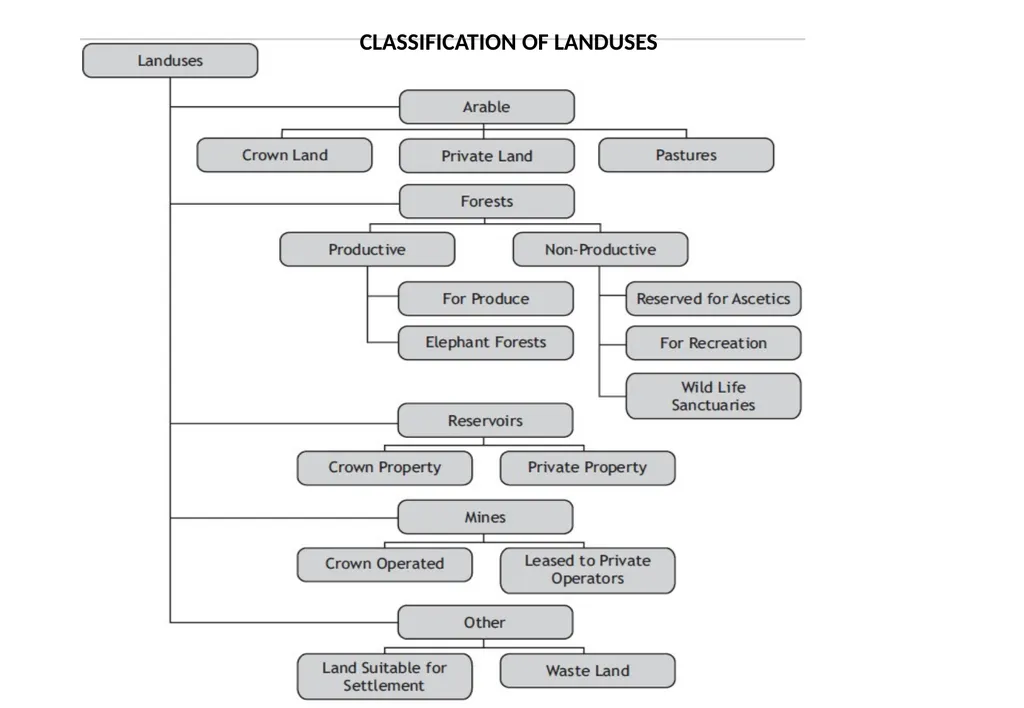
CLASSIFICATION OF LANDUSES<br>
08
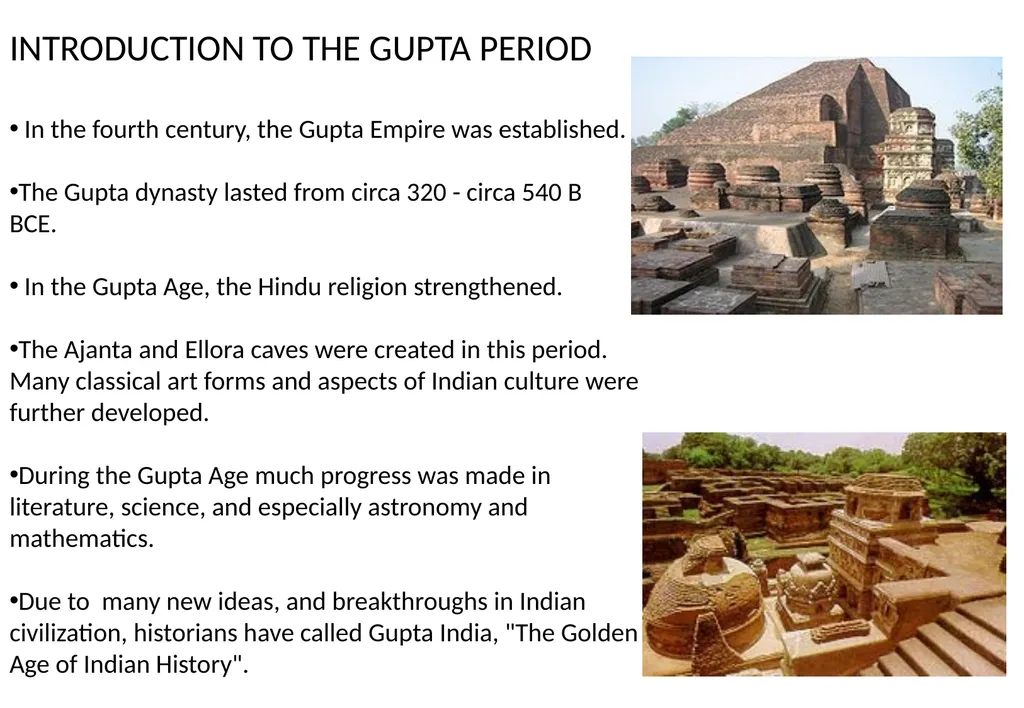
INTRODUCTION TO THE GUPTA PERIOD
In the fourth century, the Gupta Empire was established.
The Gupta dynasty lasted from circa 320 - circa 540 B
BCE.
In the Gupta Age, the Hindu religion strengthened.
The Ajanta and Ellora caves were created in this period. Many classical art forms and aspects of Indian culture were further developed.
During the Gupta Age much progress was made in literature, science, and especially astronomy and mathematics.
Due to many new ideas, and breakthroughs in Indian civilization, historians have called Gupta India, "The Golden Age of Indian History".<br>
09
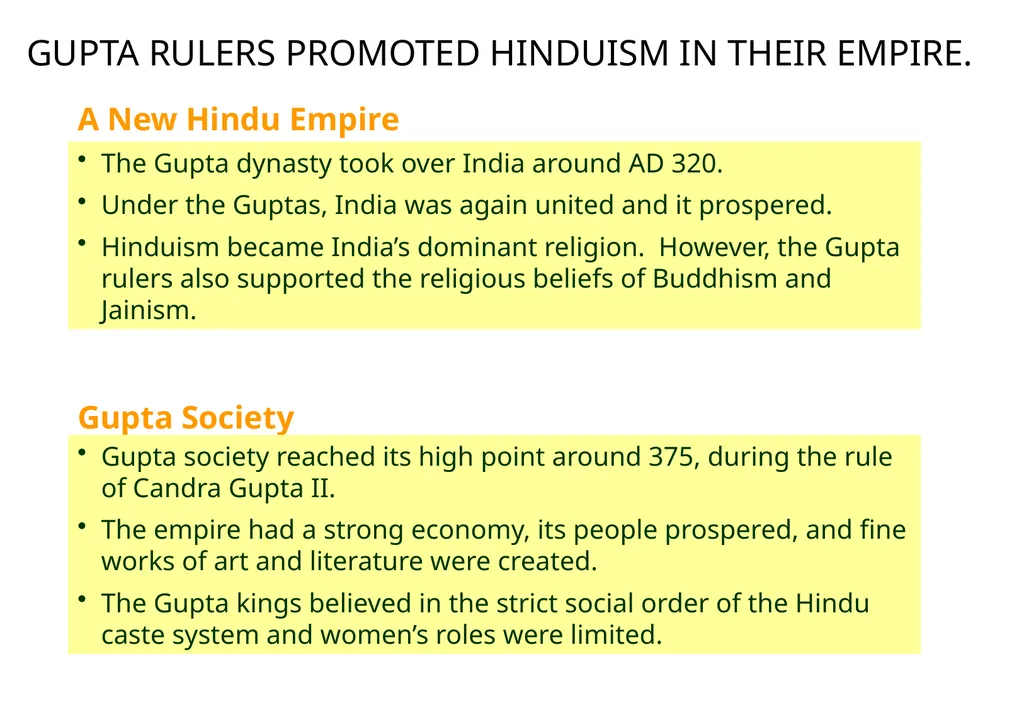
A New Hindu Empire Gupta Society The Gupta dynasty took over India around AD 320.
Under the Guptas, India was again united and it prospered.
Hinduism became India’s dominant religion. However, the Gupta rulers also supported the religious beliefs of Buddhism and Jainism. Gupta society reached its high point around 375, during the rule of Candra Gupta II.
The empire had a strong economy, its people prospered, and fine works of art and literature were created.
The Gupta kings believed in the strict social order of the Hindu caste system and women’s roles were limited. GUPTA RULERS PROMOTED HINDUISM IN THEIR EMPIRE.<br>
10
THE GOLDEN AGE OF INDIA
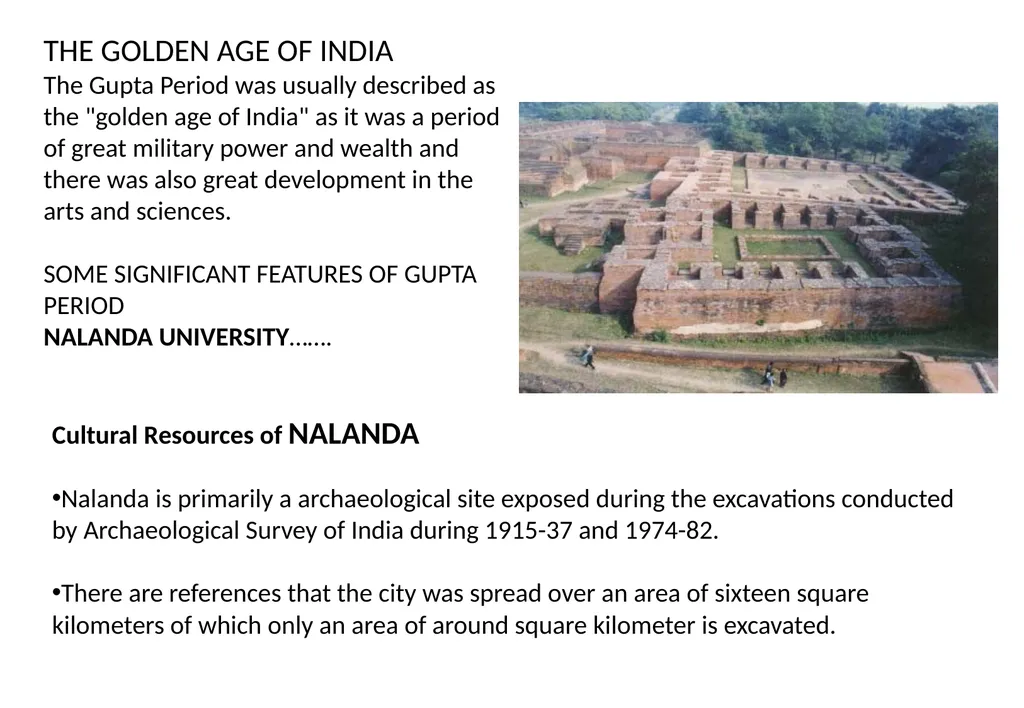
The Gupta Period was usually described as the "golden age of India" as it was a period of great military power and wealth and there was also great development in the arts and sciences.
SOME SIGNIFICANT FEATURES OF GUPTA PERIOD
NALANDA UNIVERSITY……. Cultural Resources of NALANDA
Nalanda is primarily a archaeological site exposed during the excavations conducted by Archaeological Survey of India during 1915-37 and 1974-82.
There are references that the city was spread over an area of sixteen square kilometers of which only an area of around square kilometer is excavated.<br>
11
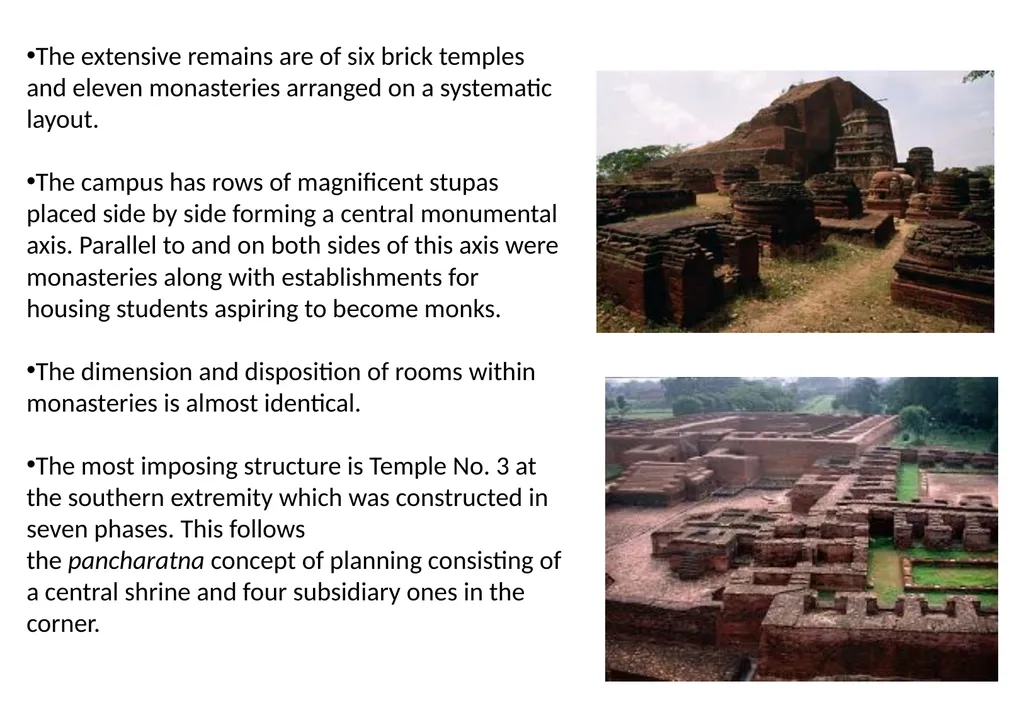
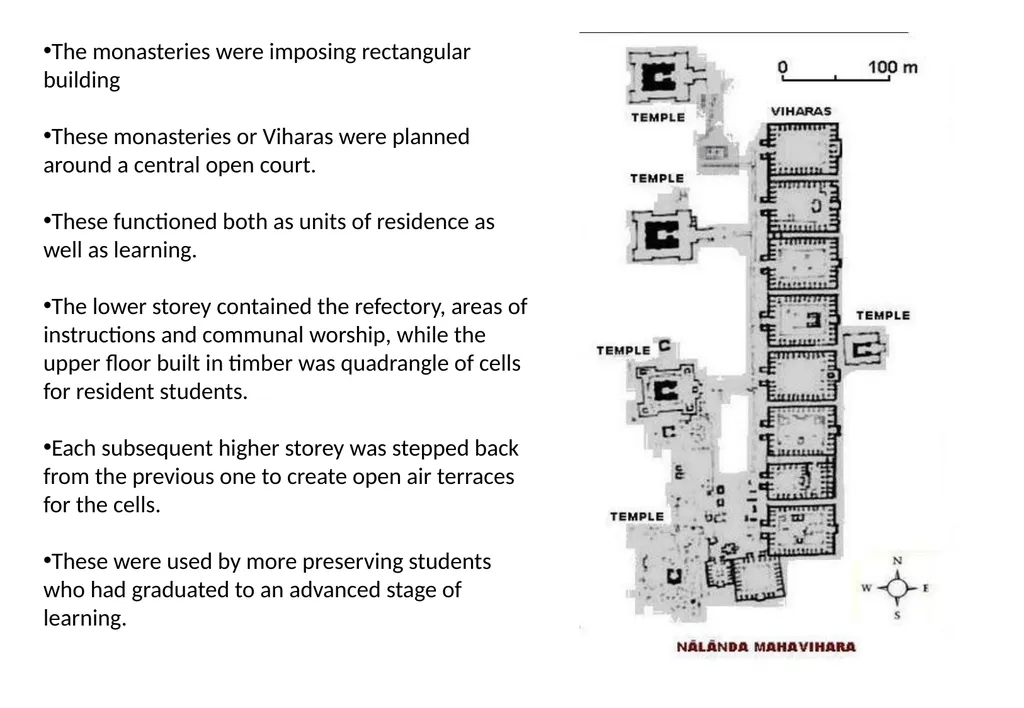
The extensive remains are of six brick temples and eleven monasteries arranged on a systematic layout.
The campus has rows of magnificent stupas placed side by side forming a central monumental axis. Parallel to and on both sides of this axis were monasteries along with establishments for housing students aspiring to become monks.
The dimension and disposition of rooms within monasteries is almost identical.
The most imposing structure is Temple No. 3 at the southern extremity which was constructed in seven phases. This follows the pancharatna concept of planning consisting of a central shrine and four subsidiary ones in the corner.<br>
12
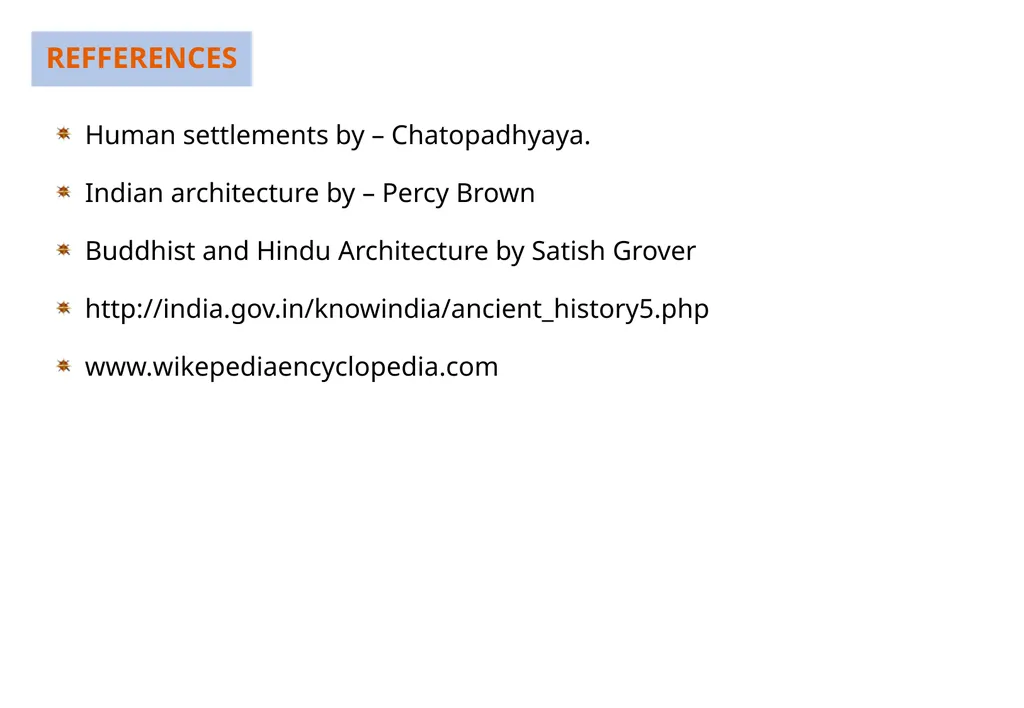
The monasteries were imposing rectangular building
These monasteries or Viharas were planned around a central open court.
These functioned both as units of residence as well as learning.
The lower storey contained the refectory, areas of instructions and communal worship, while the upper floor built in timber was quadrangle of cells for resident students.
Each subsequent higher storey was stepped back from the previous one to create open air terraces for the cells.
These were used by more preserving students who had graduated to an advanced stage of learning.<br>
13
Human settlements by – Chatopadhyaya.
Indian architecture by – Percy Brown
Buddhist and Hindu Architecture by Satish Grover
http://india.gov.in/knowindia/ancient_history5.php
www.wikepediaencyclopedia.com REFFERENCES<br>