
Submarine Types & Construction Sections 10.1-10.2



Description: Submarine Types Construction Sections 10.1-10.2 Submarine History Revolutionary War Turtle: Revolutionary War Submarine History Civil War CSS Hunley: Civil War (human powered) Submarine History First Commissioned US Submarine What
Related Topics
Download Presentation
"Submarine Types & Construction Sections 10.1-10.2" is the property of its rightful owner. Permission is granted to download and print the materials on this website for personal, non-commercial use only, and to display it on your personal computer provided you do not modify the materials and that you retain all copyright notices contained in the materials. By downloading content from our website, you accept the terms of this agreement.
Presentation Transcript
slide1. Submarine Types & Construction Sections 10.1-10.2<br>
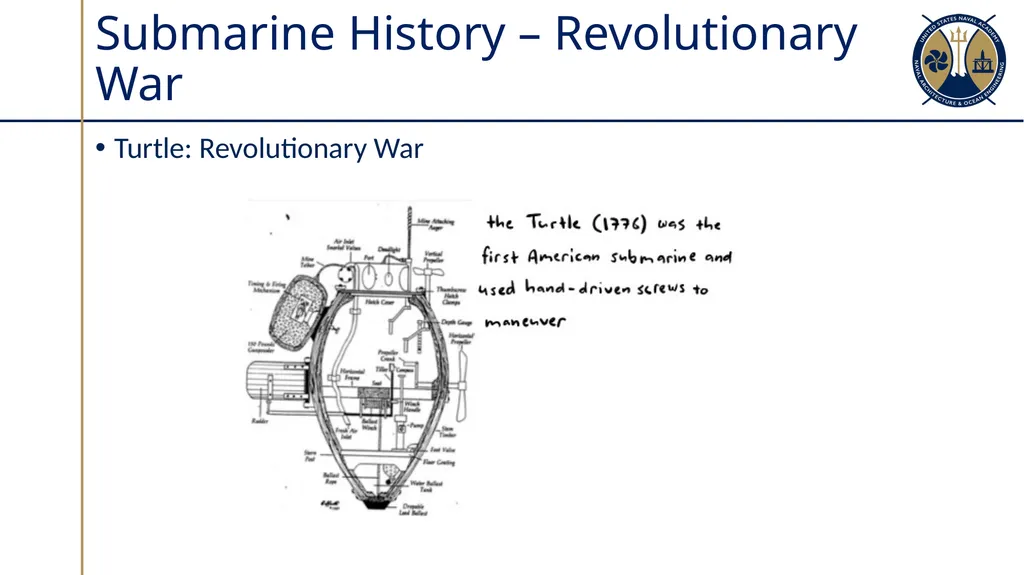
slide2. Submarine History – Revolutionary War Turtle: Revolutionary War<br>
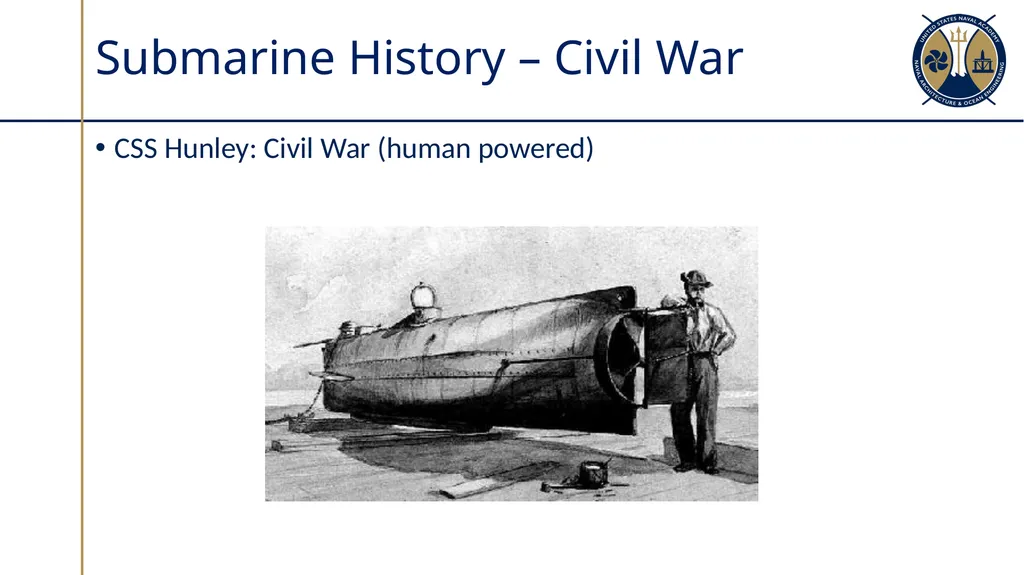
slide3. Submarine History – Civil War CSS Hunley: Civil War (human powered)<br>
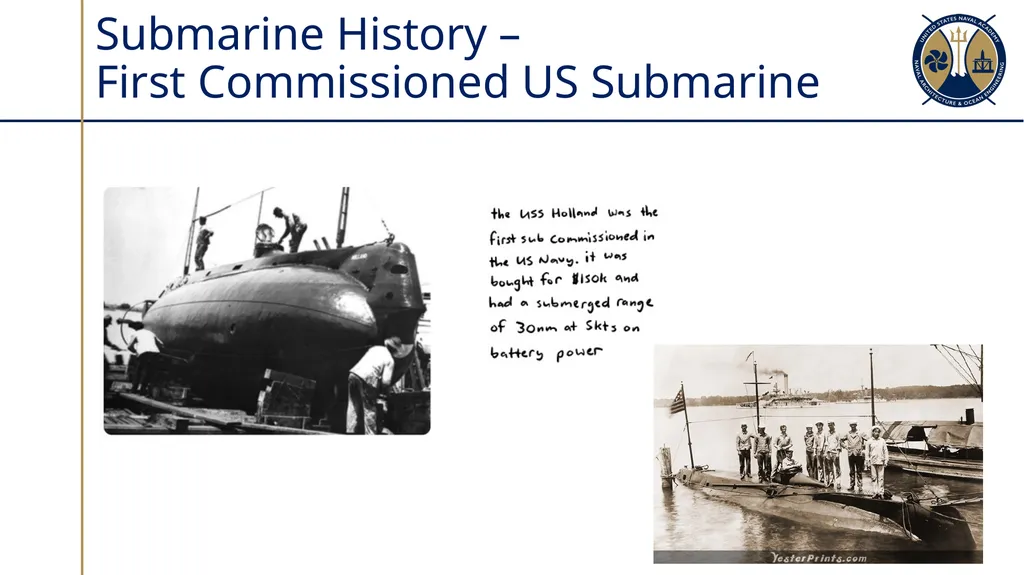
slide4. Submarine History – First Commissioned US Submarine<br>
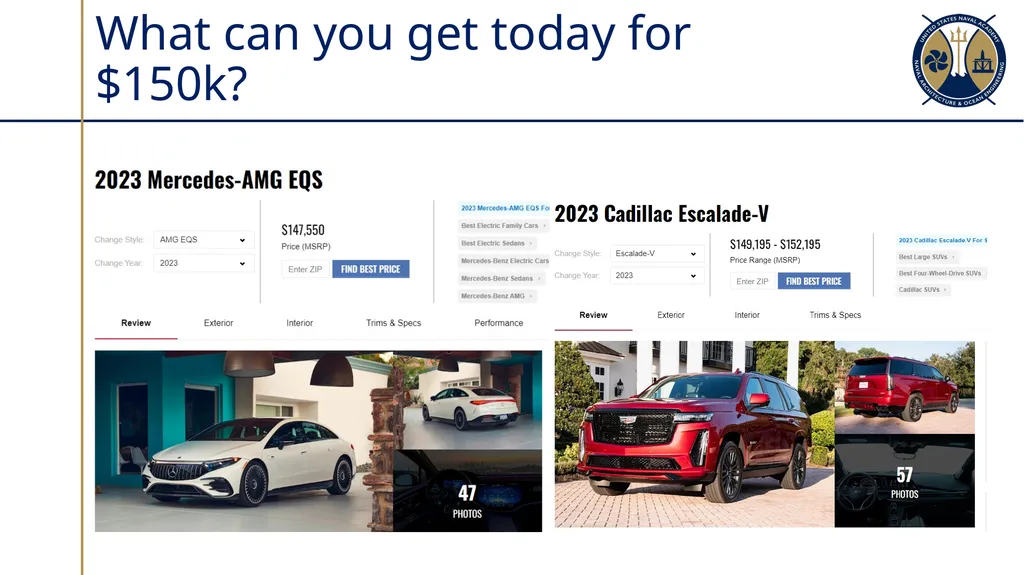
slide5. What can you get today for $150k?<br>
slide6. What is $150,000 in 1900 worth in 2024? $150,000 in 1900 is equivalent in purchasing power to about $5,636,857.14 today, an increase of $5,486,857.14 over 124 years. The dollar had an average inflation rate of 2.97% per year between 1900 and today, producing a cumulative price increase of 3,657.90%.
This means that today's prices are 37.58 times as high as average prices since 1900, according to the Bureau of Labor Statistics consumer price index. A dollar today only buys 2.661% of what it could buy back then.<br>
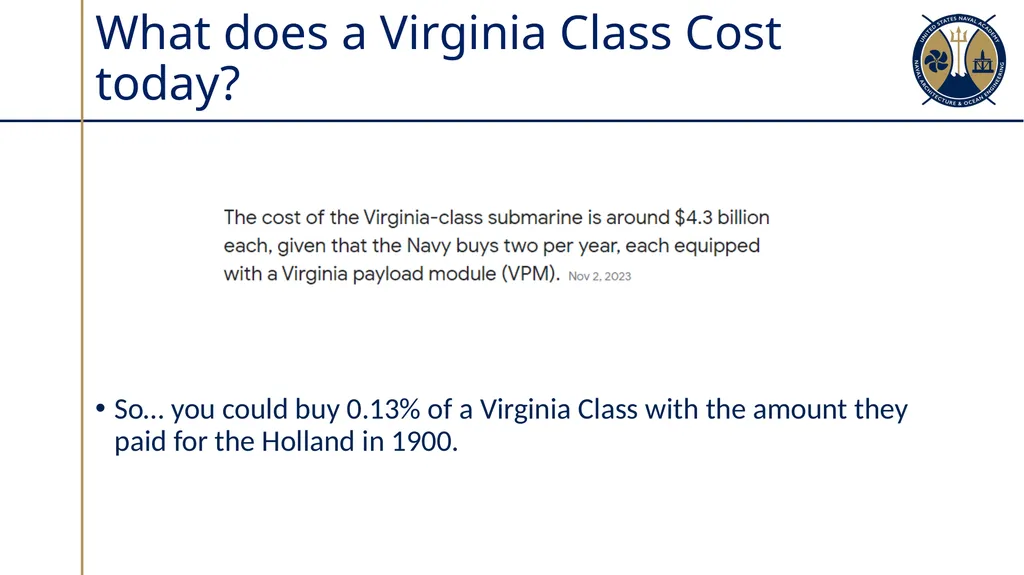
slide7. What does a Virginia Class Cost today? So… you could buy 0.13% of a Virginia Class with the amount they paid for the Holland in 1900.<br>
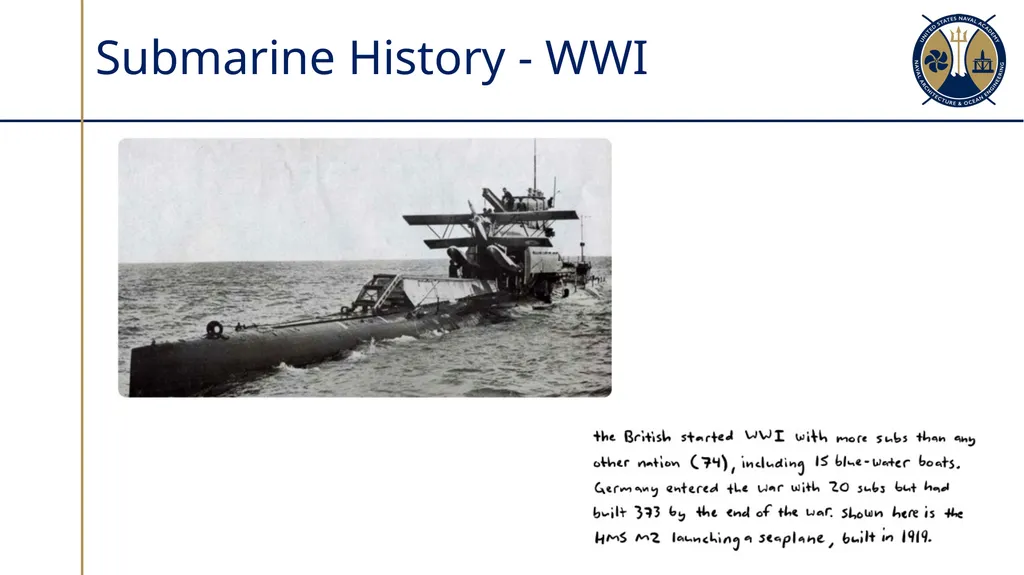
slide8. Submarine History - WWI<br>
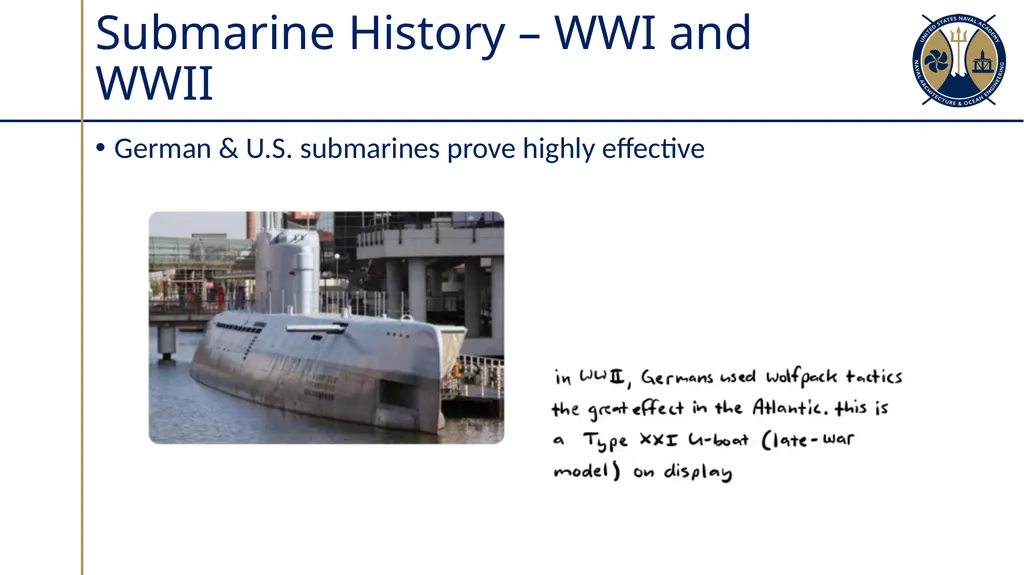
slide9. Submarine History – WWI and WWII German & U.S. submarines prove highly effective<br>
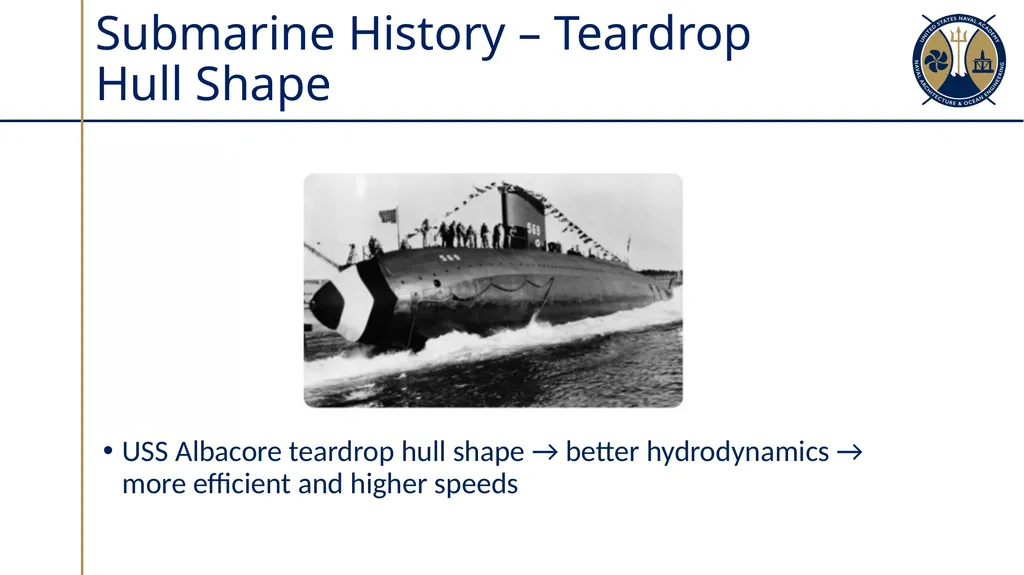
slide10. Submarine History – Teardrop Hull Shape USS Albacore teardrop hull shape → better hydrodynamics → more efficient and higher speeds<br>
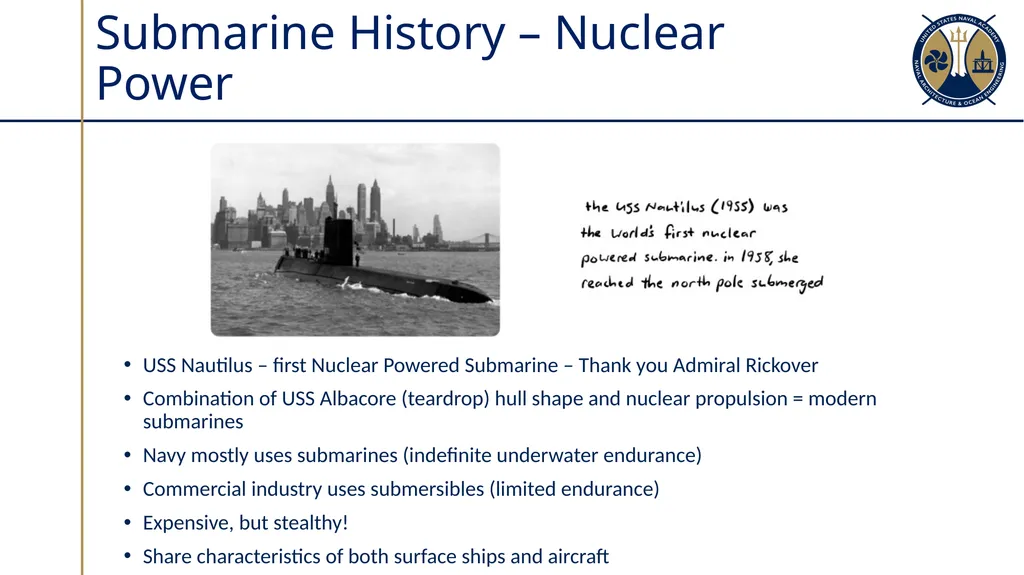
slide11. Submarine History – Nuclear Power USS Nautilus – first Nuclear Powered Submarine – Thank you Admiral Rickover
Combination of USS Albacore (teardrop) hull shape and nuclear propulsion = modern submarines
Navy mostly uses submarines (indefinite underwater endurance)
Commercial industry uses submersibles (limited endurance)
Expensive, but stealthy!
Share characteristics of both surface ships and aircraft<br>
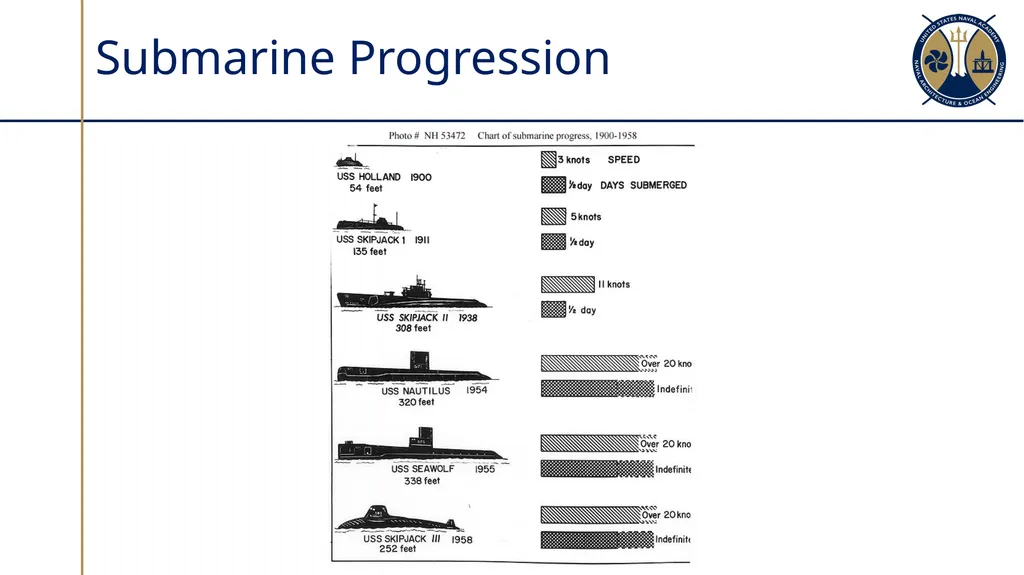
slide12. Submarine Progression<br>
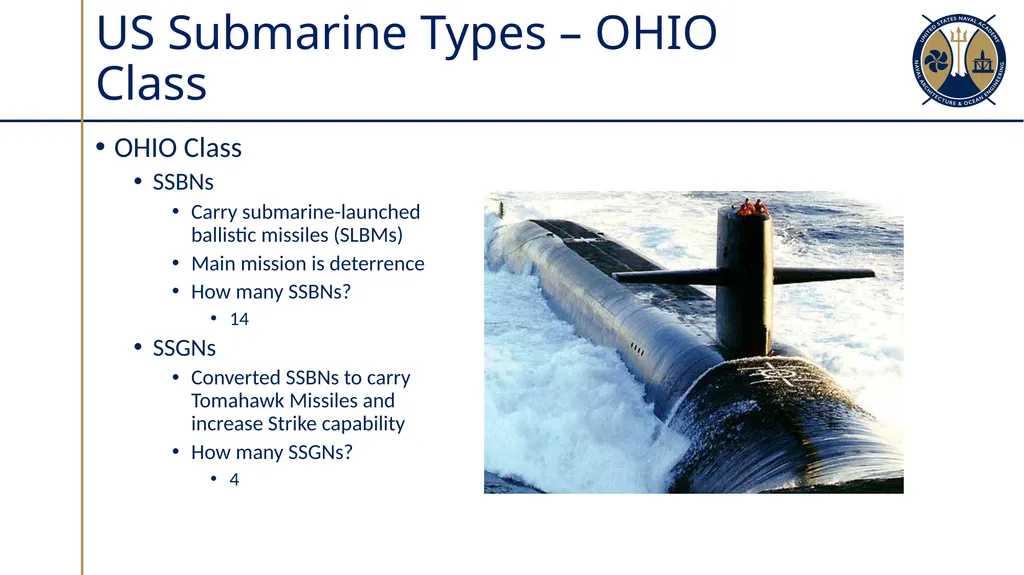
slide13. US Submarine Types – OHIO Class OHIO Class
SSBNs
Carry submarine-launched ballistic missiles (SLBMs)
Main mission is deterrence
How many SSBNs?
14
SSGNs
Converted SSBNs to carry Tomahawk Missiles and increase Strike capability
How many SSGNs?
4<br>
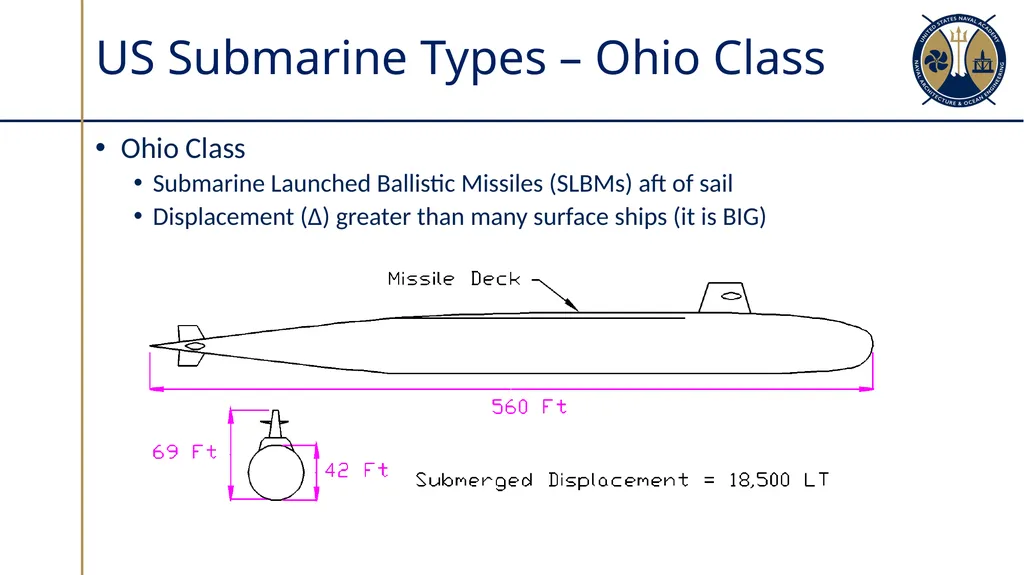
slide14. US Submarine Types – Ohio Class Ohio Class
Submarine Launched Ballistic Missiles (SLBMs) aft of sail
Displacement (Δ) greater than many surface ships (it is BIG)<br>
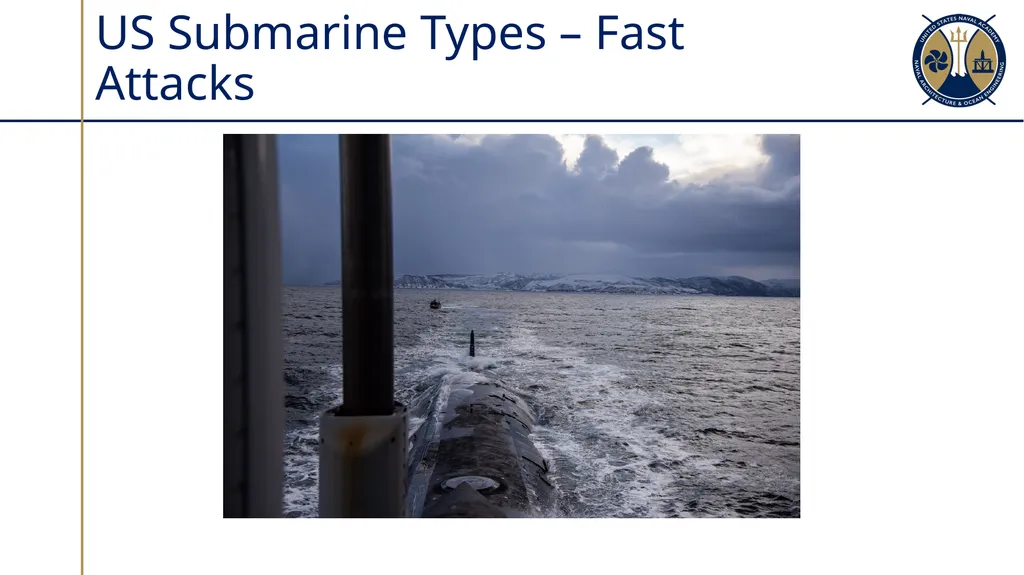
slide15. US Submarine Types – Fast Attacks<br>
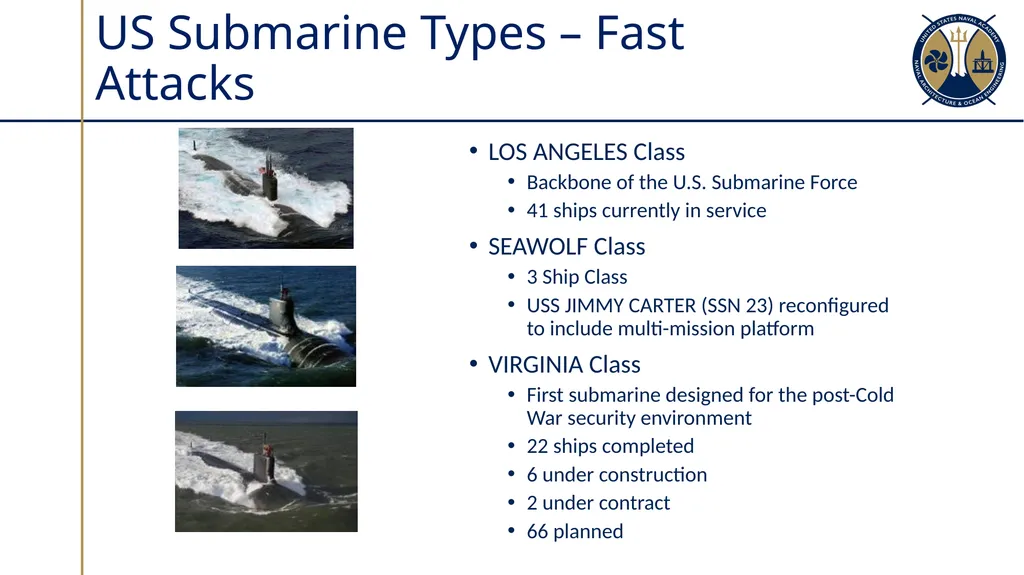
slide16. US Submarine Types – Fast Attacks LOS ANGELES Class
Backbone of the U.S. Submarine Force
41 ships currently in service
SEAWOLF Class
3 Ship Class
USS JIMMY CARTER (SSN 23) reconfigured to include multi-mission platform
VIRGINIA Class
First submarine designed for the post-Cold War security environment
22 ships completed
6 under construction
2 under contract
66 planned<br>
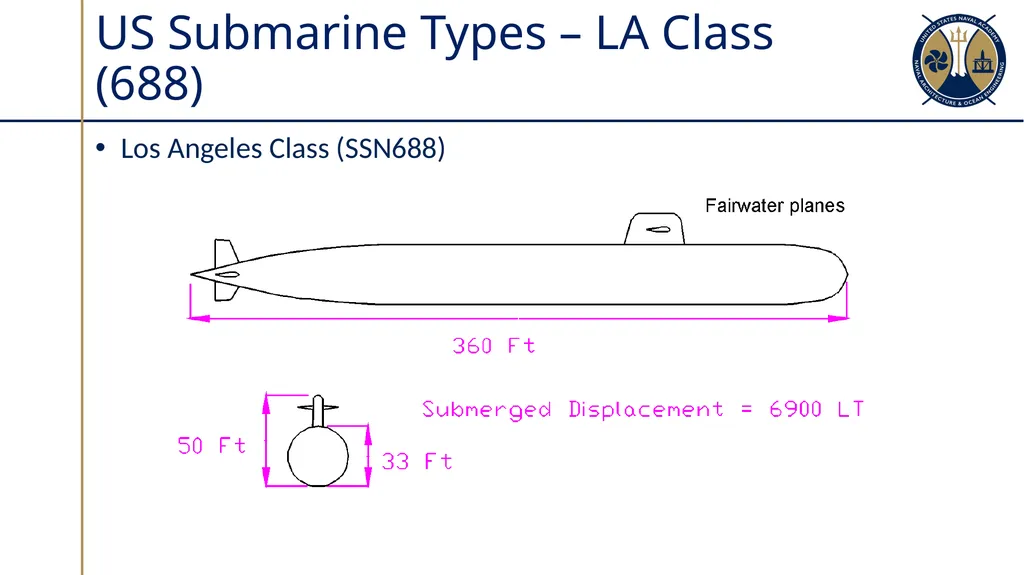
slide17. US Submarine Types – LA Class (688) Los Angeles Class (SSN688)<br>
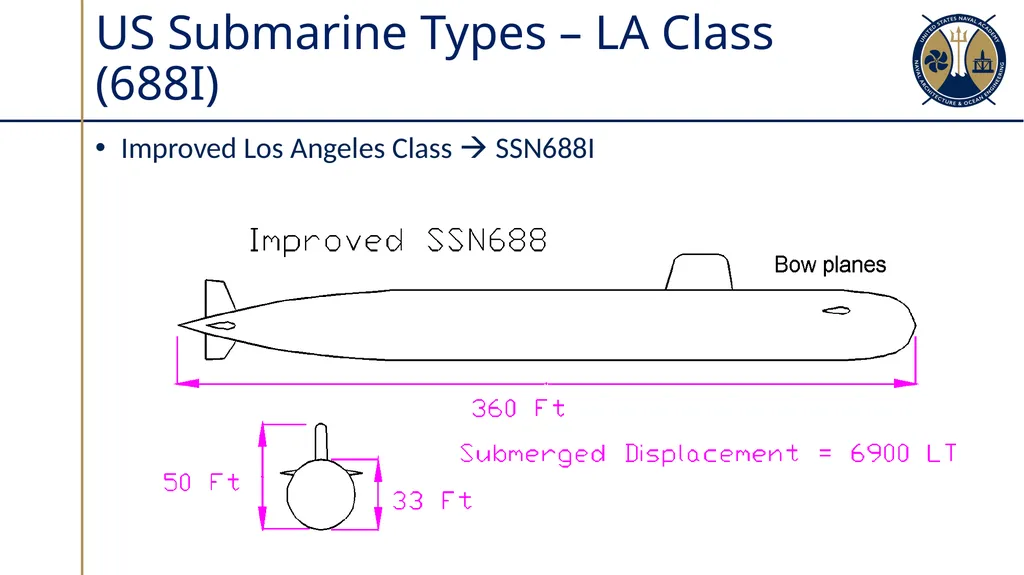
slide18. US Submarine Types – LA Class (688I) Improved Los Angeles Class SSN688I<br>
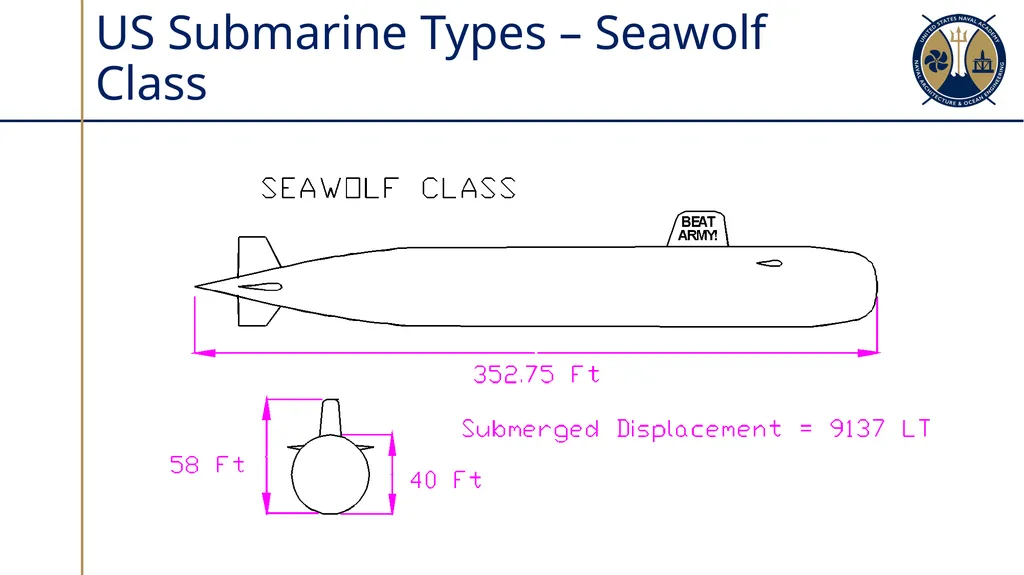
slide19. US Submarine Types – Seawolf Class<br>
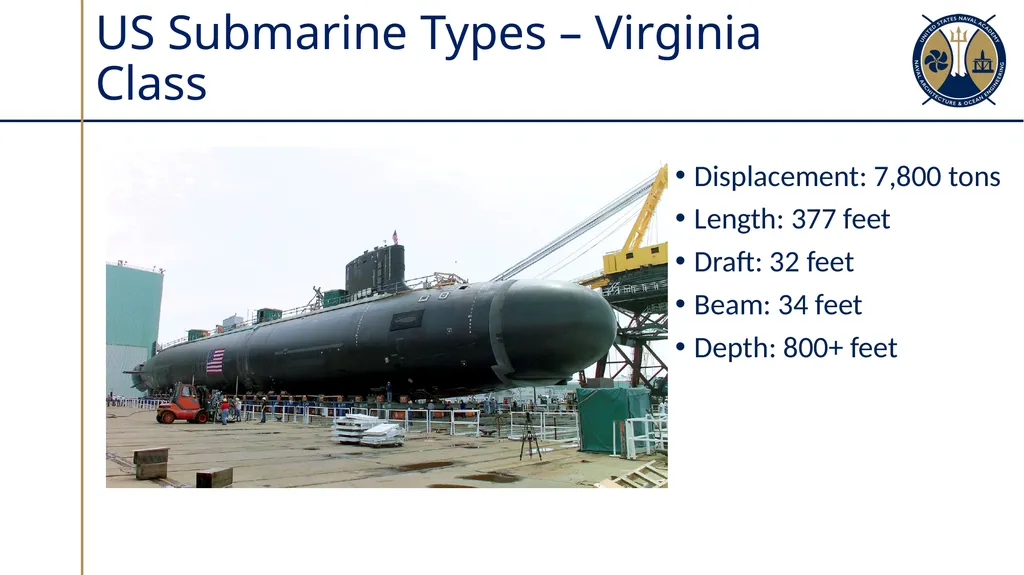
slide20. US Submarine Types – Virginia Class Displacement: 7,800 tons
Length: 377 feet
Draft: 32 feet
Beam: 34 feet
Depth: 800+ feet<br>
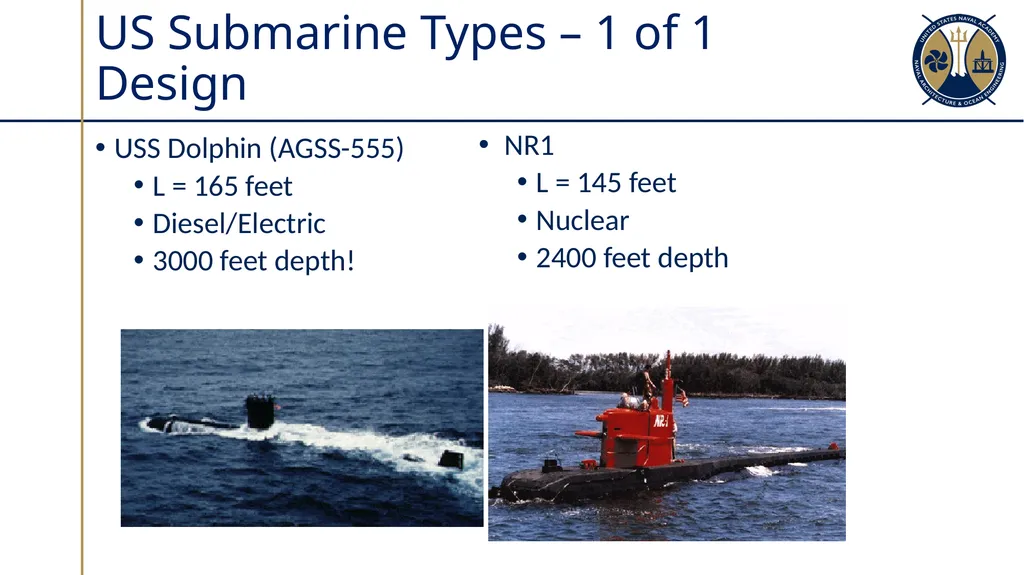
slide21. US Submarine Types – 1 of 1 Design USS Dolphin (AGSS-555)
L = 165 feet
Diesel/Electric
3000 feet depth! NR1
L = 145 feet
Nuclear
2400 feet depth<br>
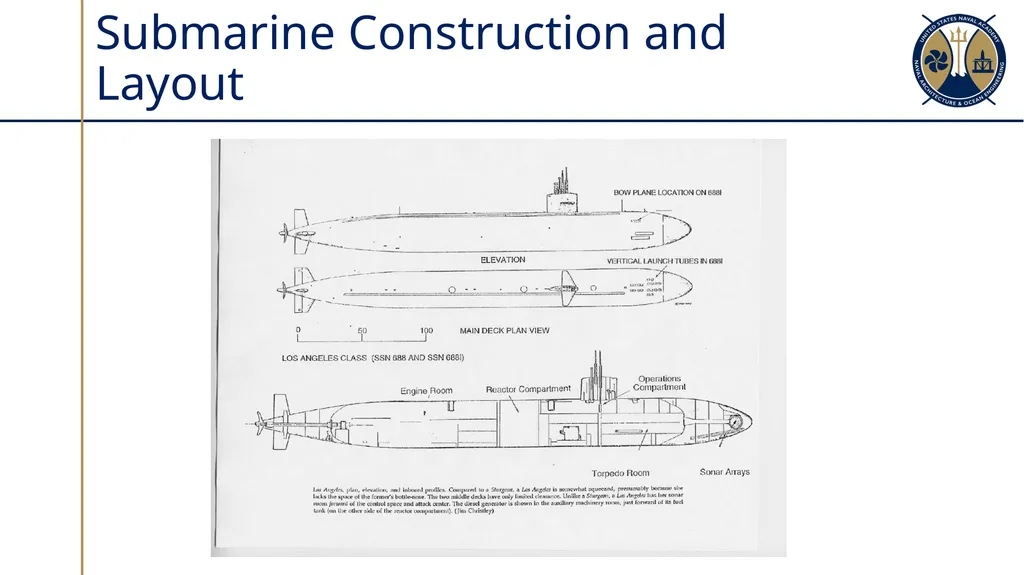
slide22. Submarine Construction and Layout<br>
slide23. Submarine Construction and Layout<br>
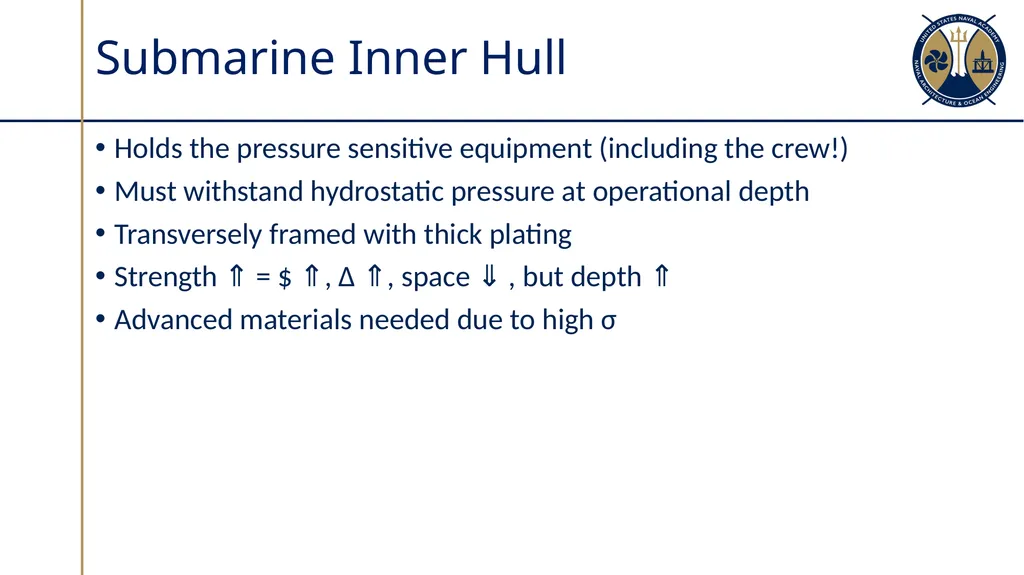
slide24. Submarine Inner Hull Holds the pressure sensitive equipment (including the crew!)
Must withstand hydrostatic pressure at operational depth
Transversely framed with thick plating
Strength ⇑ = $ ⇑, Δ ⇑, space ⇓ , but depth ⇑
Advanced materials needed due to high σ<br>
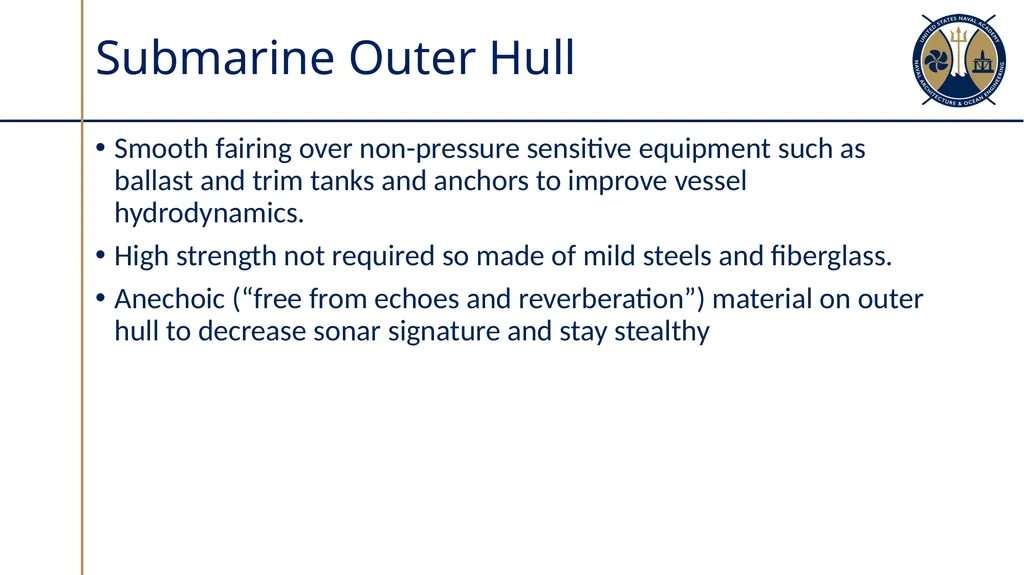
slide25. Submarine Outer Hull Smooth fairing over non-pressure sensitive equipment such as ballast and trim tanks and anchors to improve vessel hydrodynamics.
High strength not required so made of mild steels and fiberglass.
Anechoic (“free from echoes and reverberation”) material on outer hull to decrease sonar signature and stay stealthy<br>
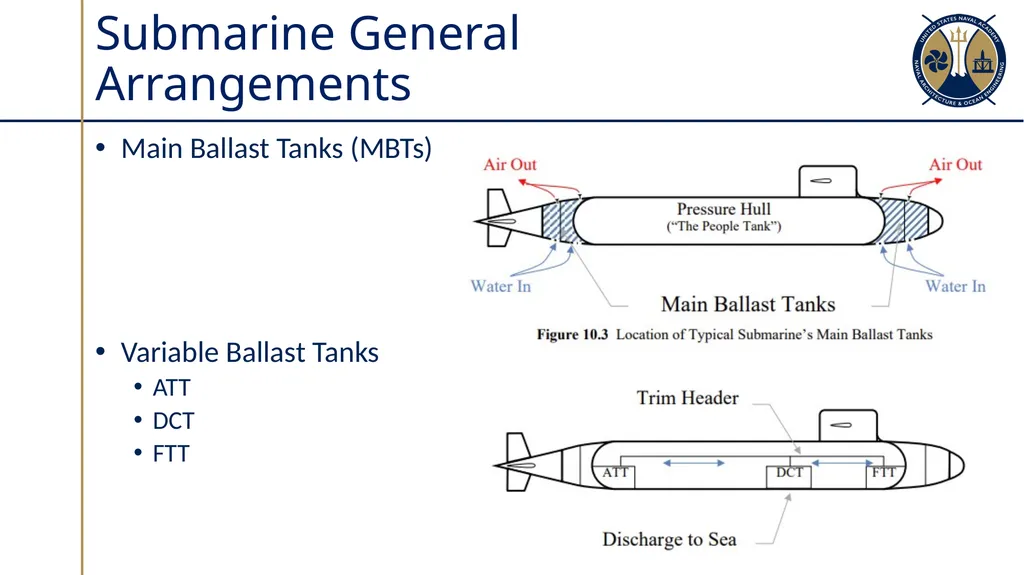
slide26. Submarine General Arrangements Main Ballast Tanks (MBTs)
Variable Ballast Tanks
ATT
DCT
FTT<br>
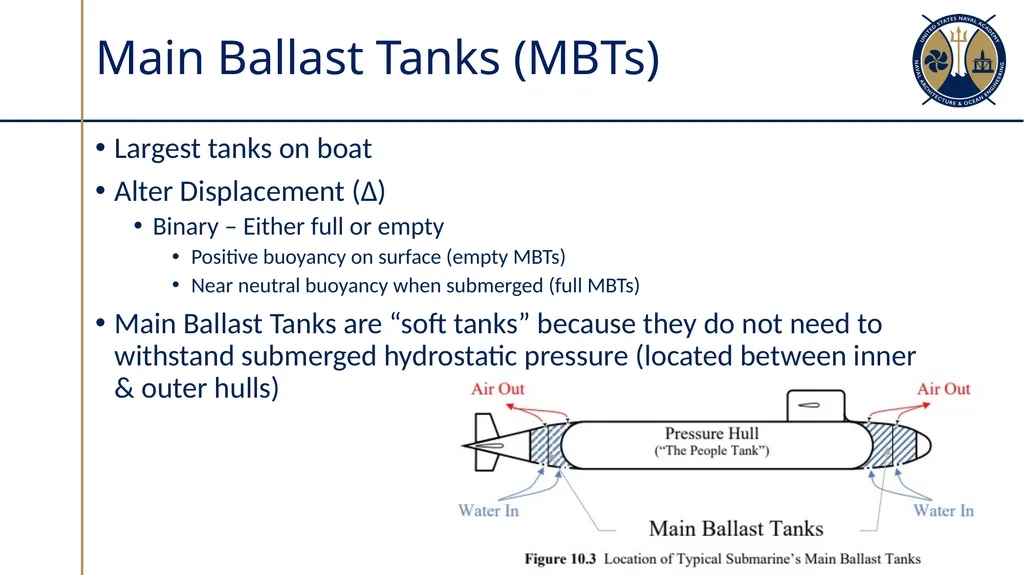
slide27. Main Ballast Tanks (MBTs) Largest tanks on boat
Alter Displacement (Δ)
Binary – Either full or empty
Positive buoyancy on surface (empty MBTs)
Near neutral buoyancy when submerged (full MBTs)
Main Ballast Tanks are “soft tanks” because they do not need to withstand submerged hydrostatic pressure (located between inner & outer hulls)<br>
slide28. Emergency Blow High pressure air into MBTs to get to surface quickly in the event of an emergency<br>
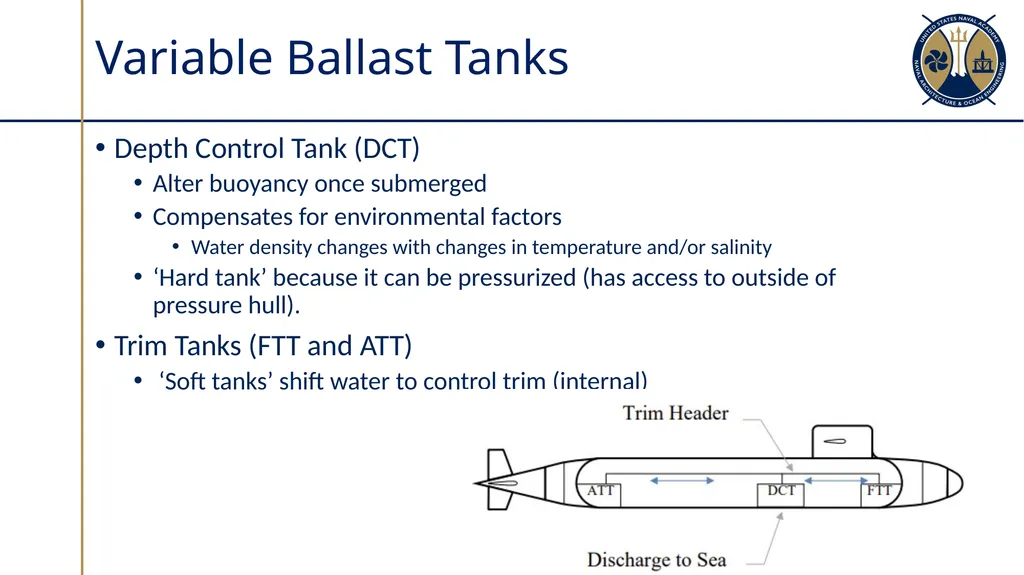
slide29. Variable Ballast Tanks Depth Control Tank (DCT)
Alter buoyancy once submerged
Compensates for environmental factors
Water density changes with changes in temperature and/or salinity
‘Hard tank’ because it can be pressurized (has access to outside of pressure hull).
Trim Tanks (FTT and ATT)
‘Soft tanks’ shift water to control trim (internal)<br>
slide30. Questions?<br>
slide2. Submarine History – Revolutionary War Turtle: Revolutionary War<br>
slide3. Submarine History – Civil War CSS Hunley: Civil War (human powered)<br>
slide4. Submarine History – First Commissioned US Submarine<br>
slide5. What can you get today for $150k?<br>
slide6. What is $150,000 in 1900 worth in 2024? $150,000 in 1900 is equivalent in purchasing power to about $5,636,857.14 today, an increase of $5,486,857.14 over 124 years. The dollar had an average inflation rate of 2.97% per year between 1900 and today, producing a cumulative price increase of 3,657.90%.
This means that today's prices are 37.58 times as high as average prices since 1900, according to the Bureau of Labor Statistics consumer price index. A dollar today only buys 2.661% of what it could buy back then.<br>
slide7. What does a Virginia Class Cost today? So… you could buy 0.13% of a Virginia Class with the amount they paid for the Holland in 1900.<br>
slide8. Submarine History - WWI<br>
slide9. Submarine History – WWI and WWII German & U.S. submarines prove highly effective<br>
slide10. Submarine History – Teardrop Hull Shape USS Albacore teardrop hull shape → better hydrodynamics → more efficient and higher speeds<br>
slide11. Submarine History – Nuclear Power USS Nautilus – first Nuclear Powered Submarine – Thank you Admiral Rickover
Combination of USS Albacore (teardrop) hull shape and nuclear propulsion = modern submarines
Navy mostly uses submarines (indefinite underwater endurance)
Commercial industry uses submersibles (limited endurance)
Expensive, but stealthy!
Share characteristics of both surface ships and aircraft<br>
slide12. Submarine Progression<br>
slide13. US Submarine Types – OHIO Class OHIO Class
SSBNs
Carry submarine-launched ballistic missiles (SLBMs)
Main mission is deterrence
How many SSBNs?
14
SSGNs
Converted SSBNs to carry Tomahawk Missiles and increase Strike capability
How many SSGNs?
4<br>
slide14. US Submarine Types – Ohio Class Ohio Class
Submarine Launched Ballistic Missiles (SLBMs) aft of sail
Displacement (Δ) greater than many surface ships (it is BIG)<br>
slide15. US Submarine Types – Fast Attacks<br>
slide16. US Submarine Types – Fast Attacks LOS ANGELES Class
Backbone of the U.S. Submarine Force
41 ships currently in service
SEAWOLF Class
3 Ship Class
USS JIMMY CARTER (SSN 23) reconfigured to include multi-mission platform
VIRGINIA Class
First submarine designed for the post-Cold War security environment
22 ships completed
6 under construction
2 under contract
66 planned<br>
slide17. US Submarine Types – LA Class (688) Los Angeles Class (SSN688)<br>
slide18. US Submarine Types – LA Class (688I) Improved Los Angeles Class SSN688I<br>
slide19. US Submarine Types – Seawolf Class<br>
slide20. US Submarine Types – Virginia Class Displacement: 7,800 tons
Length: 377 feet
Draft: 32 feet
Beam: 34 feet
Depth: 800+ feet<br>
slide21. US Submarine Types – 1 of 1 Design USS Dolphin (AGSS-555)
L = 165 feet
Diesel/Electric
3000 feet depth! NR1
L = 145 feet
Nuclear
2400 feet depth<br>
slide22. Submarine Construction and Layout<br>
slide23. Submarine Construction and Layout<br>
slide24. Submarine Inner Hull Holds the pressure sensitive equipment (including the crew!)
Must withstand hydrostatic pressure at operational depth
Transversely framed with thick plating
Strength ⇑ = $ ⇑, Δ ⇑, space ⇓ , but depth ⇑
Advanced materials needed due to high σ<br>
slide25. Submarine Outer Hull Smooth fairing over non-pressure sensitive equipment such as ballast and trim tanks and anchors to improve vessel hydrodynamics.
High strength not required so made of mild steels and fiberglass.
Anechoic (“free from echoes and reverberation”) material on outer hull to decrease sonar signature and stay stealthy<br>
slide26. Submarine General Arrangements Main Ballast Tanks (MBTs)
Variable Ballast Tanks
ATT
DCT
FTT<br>
slide27. Main Ballast Tanks (MBTs) Largest tanks on boat
Alter Displacement (Δ)
Binary – Either full or empty
Positive buoyancy on surface (empty MBTs)
Near neutral buoyancy when submerged (full MBTs)
Main Ballast Tanks are “soft tanks” because they do not need to withstand submerged hydrostatic pressure (located between inner & outer hulls)<br>
slide28. Emergency Blow High pressure air into MBTs to get to surface quickly in the event of an emergency<br>
slide29. Variable Ballast Tanks Depth Control Tank (DCT)
Alter buoyancy once submerged
Compensates for environmental factors
Water density changes with changes in temperature and/or salinity
‘Hard tank’ because it can be pressurized (has access to outside of pressure hull).
Trim Tanks (FTT and ATT)
‘Soft tanks’ shift water to control trim (internal)<br>
slide30. Questions?<br>