
Suicide Derived from Latin word sui = oneself ,







Description: Suicide Derived from Latin word sui oneself , cidium a killing Primary emergency for mental health professional Major public health problem Suicides across India rose by 10 to 1.53 lakh in 2020 from 1.39 lakh in 2019, with the suicide
Related Topics
Download Presentation
"Suicide Derived from Latin word sui = oneself ," is the property of its rightful owner. Permission is granted to download and print the materials on this website for personal, non-commercial use only, and to display it on your personal computer provided you do not modify the materials and that you retain all copyright notices contained in the materials. By downloading content from our website, you accept the terms of this agreement.
Presentation Transcript
slide1. Suicide<br>
slide2. Derived from Latin word sui = oneself , cidium = a killing
Primary emergency for mental health professional
Major public health problem
Suicides across India rose by 10% to 1.53 lakh in 2020 from 1.39 lakh in 2019, with the suicide rate (suicides per lakh of population) too showing an increase from 10.4 to 11.3.<br>
slide3. More than 8,00,000 people die by suicide every year globally
Estimated annual mortality is 14·5 deaths per 1,00,000 people
Around one person every 40 seconds
75% of suicides occur in low- and middle-income countries
Tenth leading cause of death worldwide
It is the second leading cause of death in 15-29 year-olds globally<br>
slide4. Who is at Risk for Suicide?
Suicide does not discriminate. People of all genders, ages, and ethnicities can be at risk for suicide. The main risk factors include:
Depression, other mental disorders, or substance abuse disorder
A prior suicide attempt
Family history of a mental disorder or substance abuse
Family history of suicide<br>
slide5. Family violence, including physical or sexual abuse
Having guns or other firearms in the home
imprisonment, being in prison or jail
Being exposed to others' suicidal behavior, such as that of family members, peers, or media figures.
Suicide is not a normal response to stress. It is however, a sign of extreme distress, not a harmless bid for attention.<br>
slide6. SUICIDE - THE WARNING SIGNS
Same signs as depression
Loss of energy
Change in sleep patterns
Withdrawal from usual activities
Radical changes in personality
Outgoing becomes withdrawn
Shy person becomes aggressive
Severe depression - actions
Stops doing things he/ she enjoys
Gives away belongings
Decline in school performance<br>
slide7. Things a person says
“I don’t want to live anymore.”
“They’ll be sorry when I’m gone.”
Suffered a major trauma
Moving to a new place
Losing boyfriend/ girlfriend
Friend/ family member dies
Going through family divorce
Signs can be deceptive
Someone who has been severely depressed suddenly becomes happy and carefree
May think person is better and over the depression
Why might they really be happy?<br>
slide8. HOW TO HELP A SUICIDAL PERSON
Trust your feelings if you believe the person is suicidal
Take seriously a suicidal person’s threats
Tell the suicidal person how concerned you are and how much you care about him/ her
Talk calmly with the suicidal person – show interest and compassion
Find professional help for the suicidal person
Stay with the suicidal person until help arrives<br>
slide9. DO NOT
Dare the suicidal person to go ahead and make the attempt
Judge the suicidal person
Analyze the suicidal person’s motives
Argue or try to convince the suicidal person of reasons why he/ she should not attempt suicide
Keep the suicidal person’s self- destructive thoughts or actions a secret
Leave a suicidal person alone<br>
slide10. 13 Common Causes of Suicide Mental Illness
Traumatic Experience
Bullying
Personality Disorder
Drug Addiction/ Substance Abuse
Eating Disorders
Unemployment 8. Social Isolation/ Loneliness
9. Relationship Problems
10. Genetics/ Family History
11. Terminal Illness
12. Chronic Pain
13. Financial Problems<br>
slide11. Protective Factors
Strong connections to family and community support
Skills in problem solving, conflict resolution, and non-violent handling of disputes
Personal, social, cultural and religious beliefs that discourage suicide and support self-preservation
Restricted access to means of suicide
Seeking help and easy access to quality care for mental and physical illnesses<br>
slide12. For every completed case of suicide there are about 20 non fatal attempts
Repetition – 15-25% within a year
Poor problem solving skills<br>
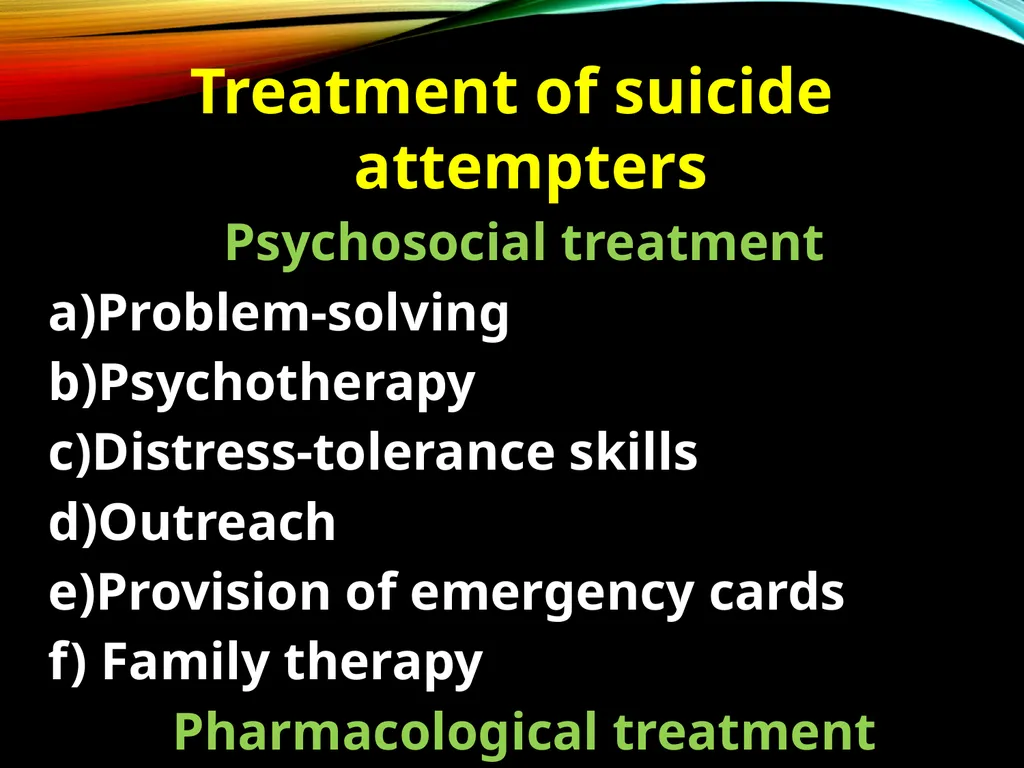
slide13. Treatment of suicide attempters
Psychosocial treatment
a)Problem-solving
b)Psychotherapy
c)Distress-tolerance skills
d)Outreach
e)Provision of emergency cards
f) Family therapy
Pharmacological treatment
a)Antidepressants<br>
slide14. Myths on suicide Someone who is suicidal is determined to die
Suicidal behaviour indicates deep unhappiness, not necessarily a mental health issue. Many people living with mental health issues aren’t suicidal, and not all people who take their own lives have a mental health issue<br>
slide15. Myths on suicide Only people with mental health conditions are suicidal
Suicidal people often feel an overwhelming sense of distress and want this to end. When people are suicidal, they’re usually feeling alone or like they’re a burden to others and are in need of emotional support. Access to support at the right time can prevent suicide.<br>
slide16. Myths on suicide Talking about suicide is a bad idea and might be considered encouragement
Given the widespread stigma around suicide, most people who are thinking about suicide don’t know who to talk to about it. Rather than encouraging suicidal behaviour, talking openly about what is going on can give them other options, or the time to rethink their decision.<br>
slide2. Derived from Latin word sui = oneself , cidium = a killing
Primary emergency for mental health professional
Major public health problem
Suicides across India rose by 10% to 1.53 lakh in 2020 from 1.39 lakh in 2019, with the suicide rate (suicides per lakh of population) too showing an increase from 10.4 to 11.3.<br>
slide3. More than 8,00,000 people die by suicide every year globally
Estimated annual mortality is 14·5 deaths per 1,00,000 people
Around one person every 40 seconds
75% of suicides occur in low- and middle-income countries
Tenth leading cause of death worldwide
It is the second leading cause of death in 15-29 year-olds globally<br>
slide4. Who is at Risk for Suicide?
Suicide does not discriminate. People of all genders, ages, and ethnicities can be at risk for suicide. The main risk factors include:
Depression, other mental disorders, or substance abuse disorder
A prior suicide attempt
Family history of a mental disorder or substance abuse
Family history of suicide<br>
slide5. Family violence, including physical or sexual abuse
Having guns or other firearms in the home
imprisonment, being in prison or jail
Being exposed to others' suicidal behavior, such as that of family members, peers, or media figures.
Suicide is not a normal response to stress. It is however, a sign of extreme distress, not a harmless bid for attention.<br>
slide6. SUICIDE - THE WARNING SIGNS
Same signs as depression
Loss of energy
Change in sleep patterns
Withdrawal from usual activities
Radical changes in personality
Outgoing becomes withdrawn
Shy person becomes aggressive
Severe depression - actions
Stops doing things he/ she enjoys
Gives away belongings
Decline in school performance<br>
slide7. Things a person says
“I don’t want to live anymore.”
“They’ll be sorry when I’m gone.”
Suffered a major trauma
Moving to a new place
Losing boyfriend/ girlfriend
Friend/ family member dies
Going through family divorce
Signs can be deceptive
Someone who has been severely depressed suddenly becomes happy and carefree
May think person is better and over the depression
Why might they really be happy?<br>
slide8. HOW TO HELP A SUICIDAL PERSON
Trust your feelings if you believe the person is suicidal
Take seriously a suicidal person’s threats
Tell the suicidal person how concerned you are and how much you care about him/ her
Talk calmly with the suicidal person – show interest and compassion
Find professional help for the suicidal person
Stay with the suicidal person until help arrives<br>
slide9. DO NOT
Dare the suicidal person to go ahead and make the attempt
Judge the suicidal person
Analyze the suicidal person’s motives
Argue or try to convince the suicidal person of reasons why he/ she should not attempt suicide
Keep the suicidal person’s self- destructive thoughts or actions a secret
Leave a suicidal person alone<br>
slide10. 13 Common Causes of Suicide Mental Illness
Traumatic Experience
Bullying
Personality Disorder
Drug Addiction/ Substance Abuse
Eating Disorders
Unemployment 8. Social Isolation/ Loneliness
9. Relationship Problems
10. Genetics/ Family History
11. Terminal Illness
12. Chronic Pain
13. Financial Problems<br>
slide11. Protective Factors
Strong connections to family and community support
Skills in problem solving, conflict resolution, and non-violent handling of disputes
Personal, social, cultural and religious beliefs that discourage suicide and support self-preservation
Restricted access to means of suicide
Seeking help and easy access to quality care for mental and physical illnesses<br>
slide12. For every completed case of suicide there are about 20 non fatal attempts
Repetition – 15-25% within a year
Poor problem solving skills<br>
slide13. Treatment of suicide attempters
Psychosocial treatment
a)Problem-solving
b)Psychotherapy
c)Distress-tolerance skills
d)Outreach
e)Provision of emergency cards
f) Family therapy
Pharmacological treatment
a)Antidepressants<br>
slide14. Myths on suicide Someone who is suicidal is determined to die
Suicidal behaviour indicates deep unhappiness, not necessarily a mental health issue. Many people living with mental health issues aren’t suicidal, and not all people who take their own lives have a mental health issue<br>
slide15. Myths on suicide Only people with mental health conditions are suicidal
Suicidal people often feel an overwhelming sense of distress and want this to end. When people are suicidal, they’re usually feeling alone or like they’re a burden to others and are in need of emotional support. Access to support at the right time can prevent suicide.<br>
slide16. Myths on suicide Talking about suicide is a bad idea and might be considered encouragement
Given the widespread stigma around suicide, most people who are thinking about suicide don’t know who to talk to about it. Rather than encouraging suicidal behaviour, talking openly about what is going on can give them other options, or the time to rethink their decision.<br>