
Suicide Prevention General Statistics (USA)
Description: Suicide Prevention General Statistics (USA) Suicide is the 10th leading cause of death in the US for all ages. (CDC) Every day, approximately 105 Americans die by suicide. (CDC) There is one death by suicide in the US every 13 minutes.
Related Topics
Download Presentation
"Suicide Prevention General Statistics (USA)" is the property of its rightful owner. Permission is granted to download and print the materials on this website for personal, non-commercial use only, and to display it on your personal computer provided you do not modify the materials and that you retain all copyright notices contained in the materials. By downloading content from our website, you accept the terms of this agreement.
Presentation Transcript
slide1. Suicide Prevention<br>
slide2. General Statistics (USA)
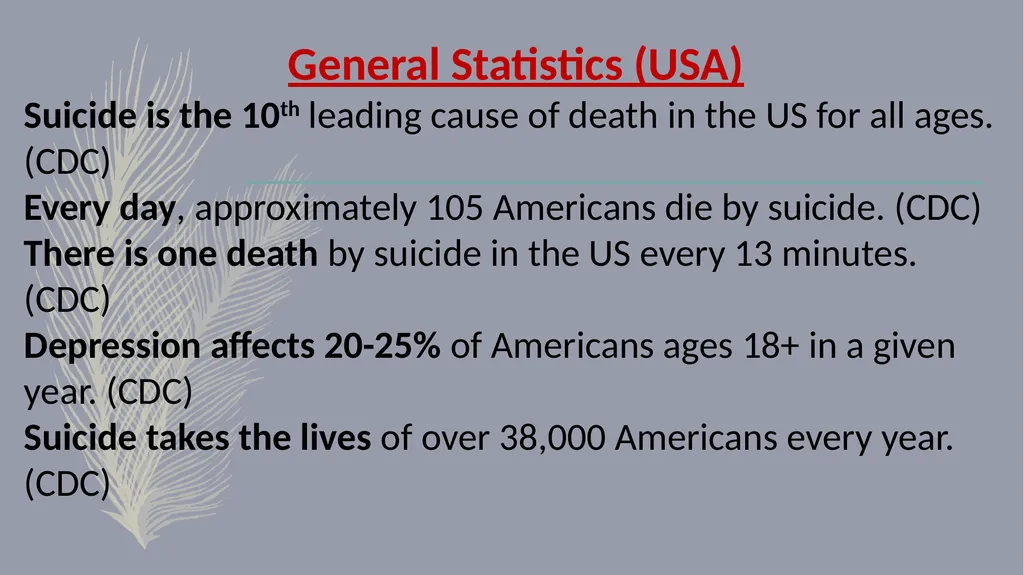
Suicide is the 10th leading cause of death in the US for all ages. (CDC)
Every day, approximately 105 Americans die by suicide. (CDC)
There is one death by suicide in the US every 13 minutes. (CDC)
Depression affects 20-25% of Americans ages 18+ in a given year. (CDC)
Suicide takes the lives of over 38,000 Americans every year. (CDC)<br>
slide3. General Statistics (USA) (con’t)
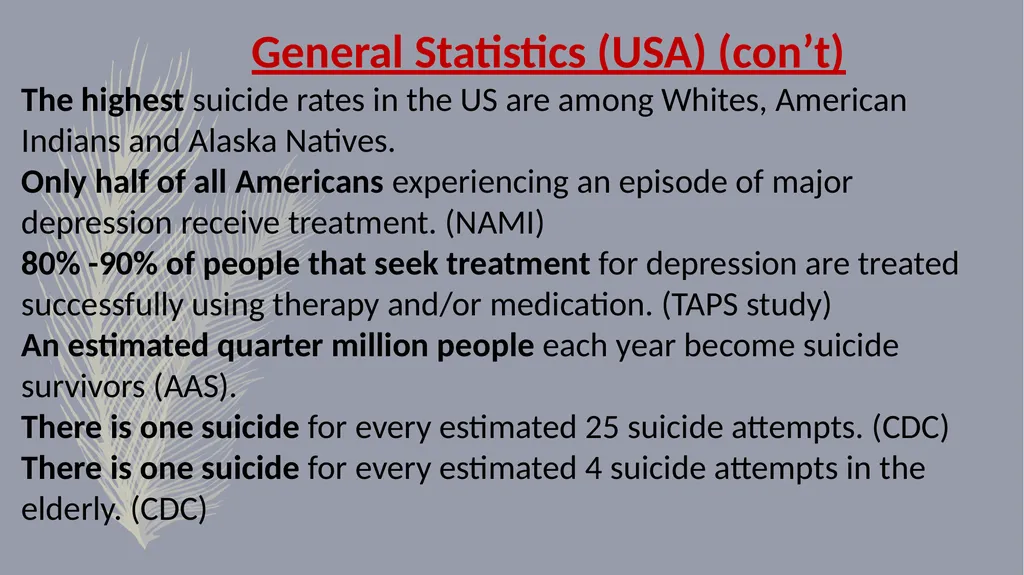
The highest suicide rates in the US are among Whites, American Indians and Alaska Natives.
Only half of all Americans experiencing an episode of major depression receive treatment. (NAMI)
80% -90% of people that seek treatment for depression are treated successfully using therapy and/or medication. (TAPS study)
An estimated quarter million people each year become suicide survivors (AAS).
There is one suicide for every estimated 25 suicide attempts. (CDC)
There is one suicide for every estimated 4 suicide attempts in the elderly. (CDC)<br>
slide4. Warning Signs
Warning signs are indicators that a person may be in acute danger and may urgently need help.
Talking about wanting to die or to kill oneself;
Looking for a way to kill oneself;
Talking about feeling hopeless or having no purpose;
Talking about feeling trapped or being in unbearable pain;
Talking about being a burden to others;<br>
slide5. Warning Signs (con’t.)
Acting anxious, agitated, or reckless;
Sleeping too little or too much;
Increasing the use of alcohol or drugs;
Withdrawing or feeling isolated;
Showing rage or talking about seeking revenge; and
Displaying extreme mood swings.<br>
slide6. REACH OUT
Reaching out is the most important step to start living mentally well again. Never be afraid to reach out. Here are a couple different ways to get help:
Talk with a close friend or family member you trust.
Call a hotline or helpline and talk to a trained helper.<br>
slide7. Reach Out (con’t).
Schedule an appointment with a professional therapist. Try e-counseling if that sounds more appealing.
Read others' stories of hope and recovery. Sometimes reading how others have gotten through a difficult time can help you navigate your own tough situation.
Try a support group<br>
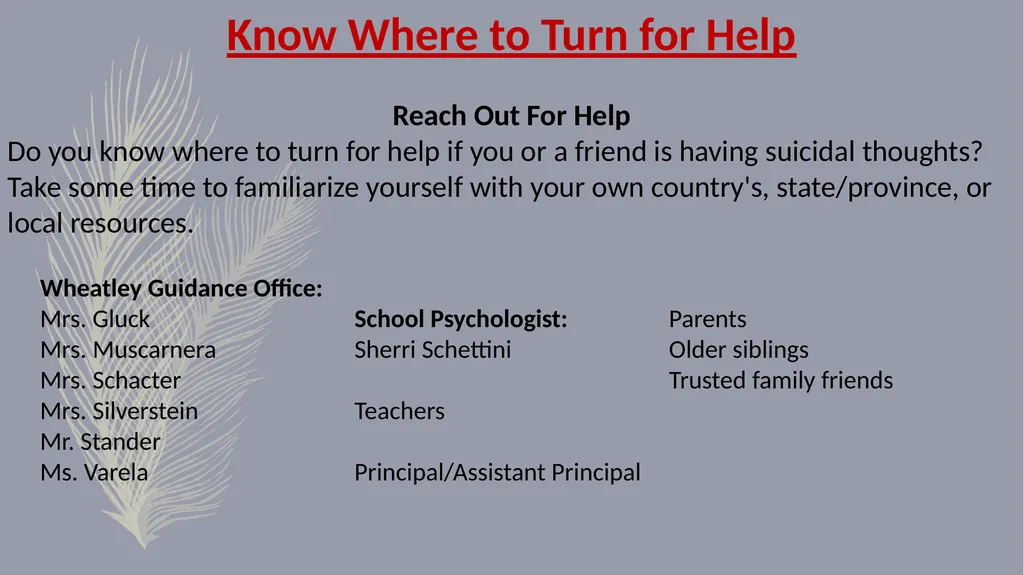
slide8. Know Where to Turn for Help
Reach Out For Help
Do you know where to turn for help if you or a friend is having suicidal thoughts? Take some time to familiarize yourself with your own country's, state/province, or local resources. Wheatley Guidance Office:
Mrs. Gluck
Mrs. Muscarnera
Mrs. Schacter
Mrs. Silverstein
Mr. Stander
Ms. Varela
School Psychologist:
Sherri Schettini
Teachers
Principal/Assistant Principal
Parents
Older siblings
Trusted family friends<br>
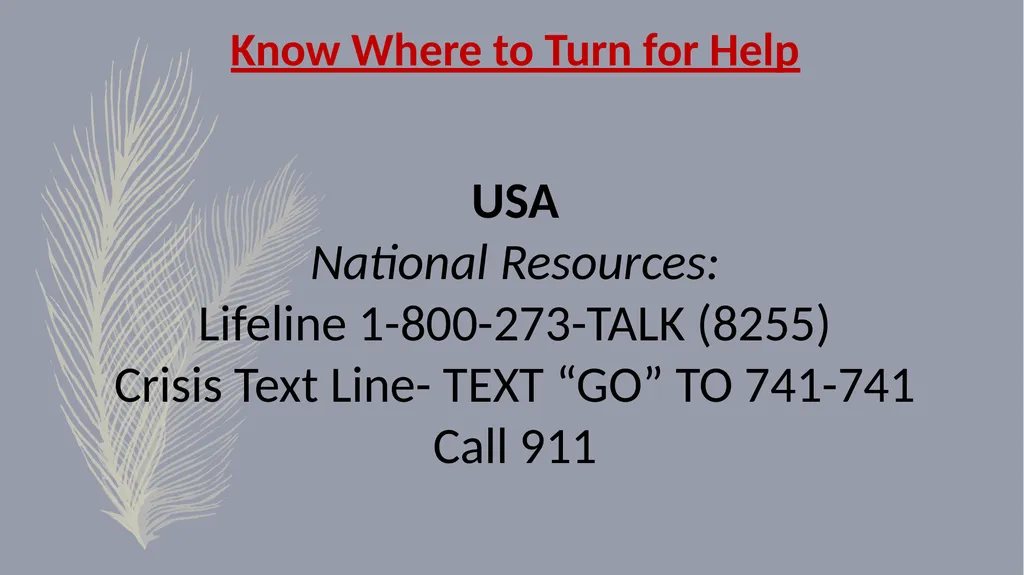
slide9. Know Where to Turn for Help
USA
National Resources:
Lifeline 1-800-273-TALK (8255)
Crisis Text Line- TEXT “GO” TO 741-741
Call 911<br>
slide2. General Statistics (USA)
Suicide is the 10th leading cause of death in the US for all ages. (CDC)
Every day, approximately 105 Americans die by suicide. (CDC)
There is one death by suicide in the US every 13 minutes. (CDC)
Depression affects 20-25% of Americans ages 18+ in a given year. (CDC)
Suicide takes the lives of over 38,000 Americans every year. (CDC)<br>
slide3. General Statistics (USA) (con’t)
The highest suicide rates in the US are among Whites, American Indians and Alaska Natives.
Only half of all Americans experiencing an episode of major depression receive treatment. (NAMI)
80% -90% of people that seek treatment for depression are treated successfully using therapy and/or medication. (TAPS study)
An estimated quarter million people each year become suicide survivors (AAS).
There is one suicide for every estimated 25 suicide attempts. (CDC)
There is one suicide for every estimated 4 suicide attempts in the elderly. (CDC)<br>
slide4. Warning Signs
Warning signs are indicators that a person may be in acute danger and may urgently need help.
Talking about wanting to die or to kill oneself;
Looking for a way to kill oneself;
Talking about feeling hopeless or having no purpose;
Talking about feeling trapped or being in unbearable pain;
Talking about being a burden to others;<br>
slide5. Warning Signs (con’t.)
Acting anxious, agitated, or reckless;
Sleeping too little or too much;
Increasing the use of alcohol or drugs;
Withdrawing or feeling isolated;
Showing rage or talking about seeking revenge; and
Displaying extreme mood swings.<br>
slide6. REACH OUT
Reaching out is the most important step to start living mentally well again. Never be afraid to reach out. Here are a couple different ways to get help:
Talk with a close friend or family member you trust.
Call a hotline or helpline and talk to a trained helper.<br>
slide7. Reach Out (con’t).
Schedule an appointment with a professional therapist. Try e-counseling if that sounds more appealing.
Read others' stories of hope and recovery. Sometimes reading how others have gotten through a difficult time can help you navigate your own tough situation.
Try a support group<br>
slide8. Know Where to Turn for Help
Reach Out For Help
Do you know where to turn for help if you or a friend is having suicidal thoughts? Take some time to familiarize yourself with your own country's, state/province, or local resources. Wheatley Guidance Office:
Mrs. Gluck
Mrs. Muscarnera
Mrs. Schacter
Mrs. Silverstein
Mr. Stander
Ms. Varela
School Psychologist:
Sherri Schettini
Teachers
Principal/Assistant Principal
Parents
Older siblings
Trusted family friends<br>
slide9. Know Where to Turn for Help
USA
National Resources:
Lifeline 1-800-273-TALK (8255)
Crisis Text Line- TEXT “GO” TO 741-741
Call 911<br>