Summer Forecasts for CESEE: Impressive resilience unlikely to last Olga Pindyuk, Economist July 6th 2022 Webinar A review of Q12022 Soaring inflation becomes the main challenge for economies Beyond supply-chain bottlenecks Household
"Summer Forecasts for CESEE: Impressive resilience" is the property of its rightful owner. Permission is granted to
download and print the materials on this website for personal, non-commercial use only, and to display it
on your personal computer provided you do not modify the materials and that you retain all copyright
notices contained in the materials. By downloading content from our website, you accept the terms of this
agreement.
Presentation Transcript
01
Summer Forecasts for CESEE: Impressive resilience unlikely to last Olga Pindyuk, Economist July 6th 2022
Webinar<br>
02
A review of Q1’2022
Soaring inflation becomes the main challenge for economies
Beyond supply-chain bottlenecks
Household incomes strongly affected
Policy response
Outlook for 2022-2024: Negative risks are mounting
First thoughts on the medium term Overview<br>
03
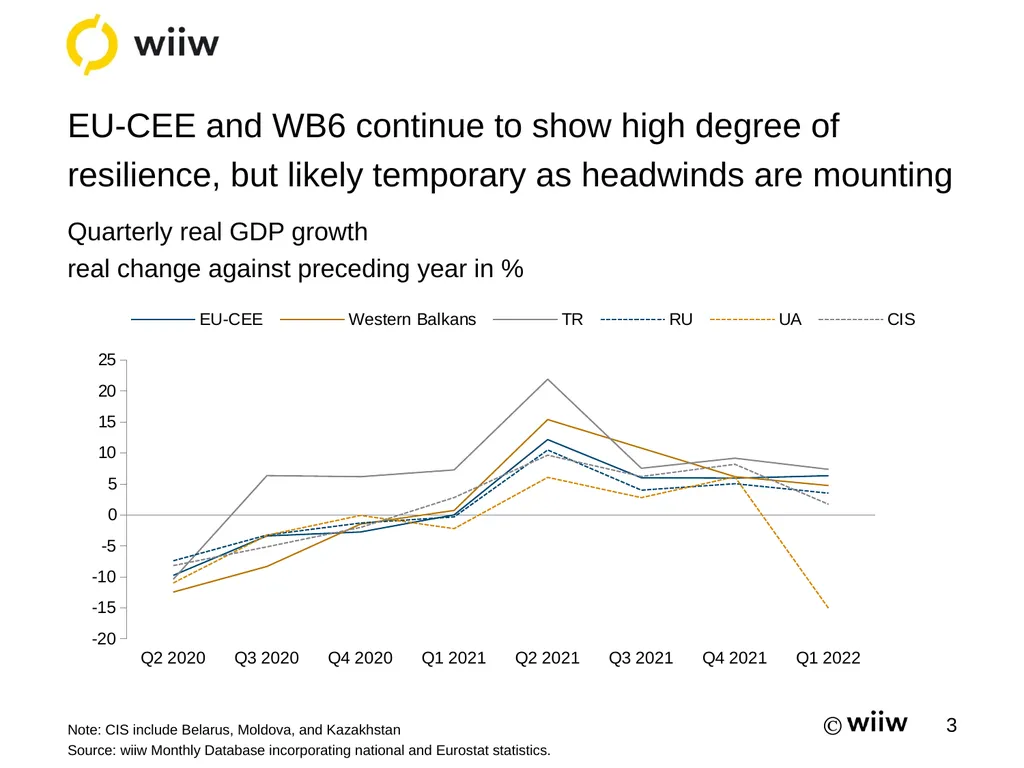
Note: CIS include Belarus, Moldova, and Kazakhstan Source: wiiw Monthly Database incorporating national and Eurostat statistics. Quarterly real GDP growth real change against preceding year in % EU-CEE and WB6 continue to show high degree of resilience, but likely temporary as headwinds are mounting<br>
04
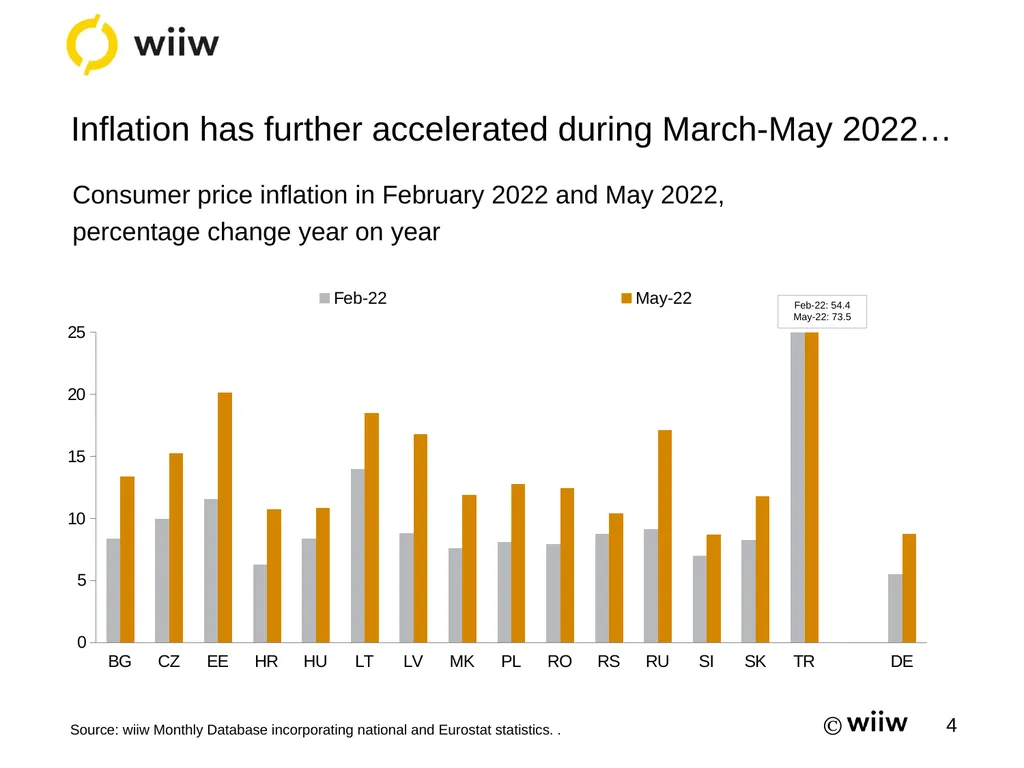
Source: wiiw Monthly Database incorporating national and Eurostat statistics. . Consumer price inflation in February 2022 and May 2022, percentage change year on year Inflation has further accelerated during March-May 2022… Feb-22: 54.4 May-22: 73.5<br>
05
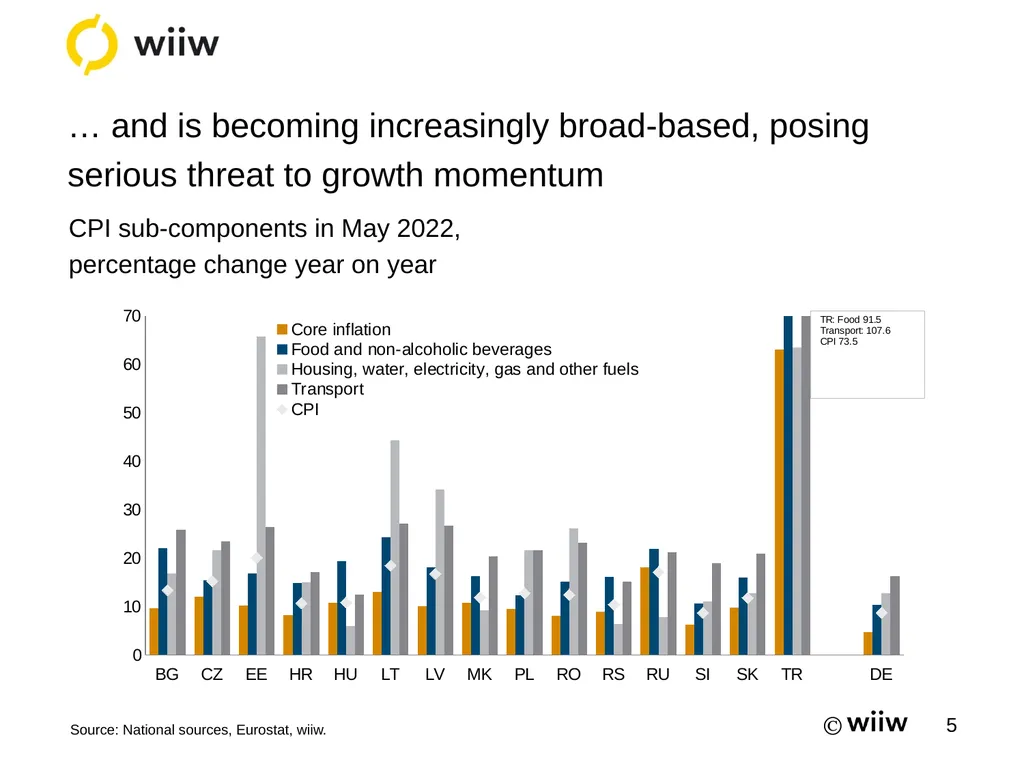
Source: National sources, Eurostat, wiiw. CPI sub-components in May 2022, percentage change year on year … and is becoming increasingly broad-based, posing serious threat to growth momentum<br>
06
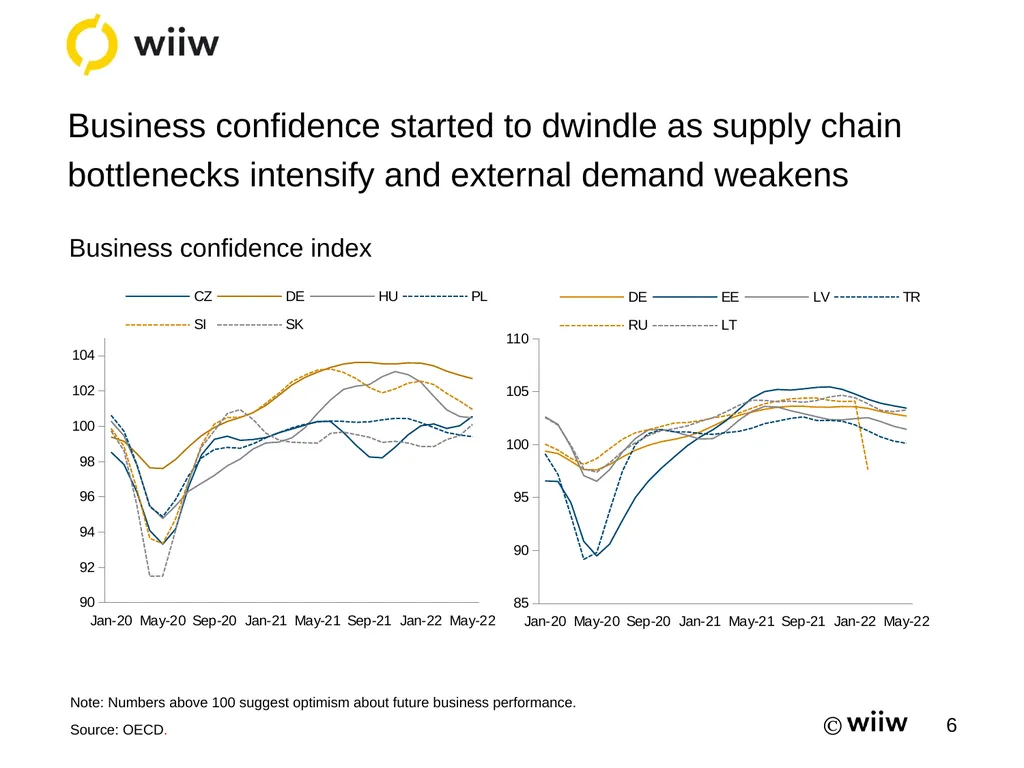
Note: Numbers above 100 suggest optimism about future business performance.
Source: OECD. Business confidence index Business confidence started to dwindle as supply chain bottlenecks intensify and external demand weakens<br>
07
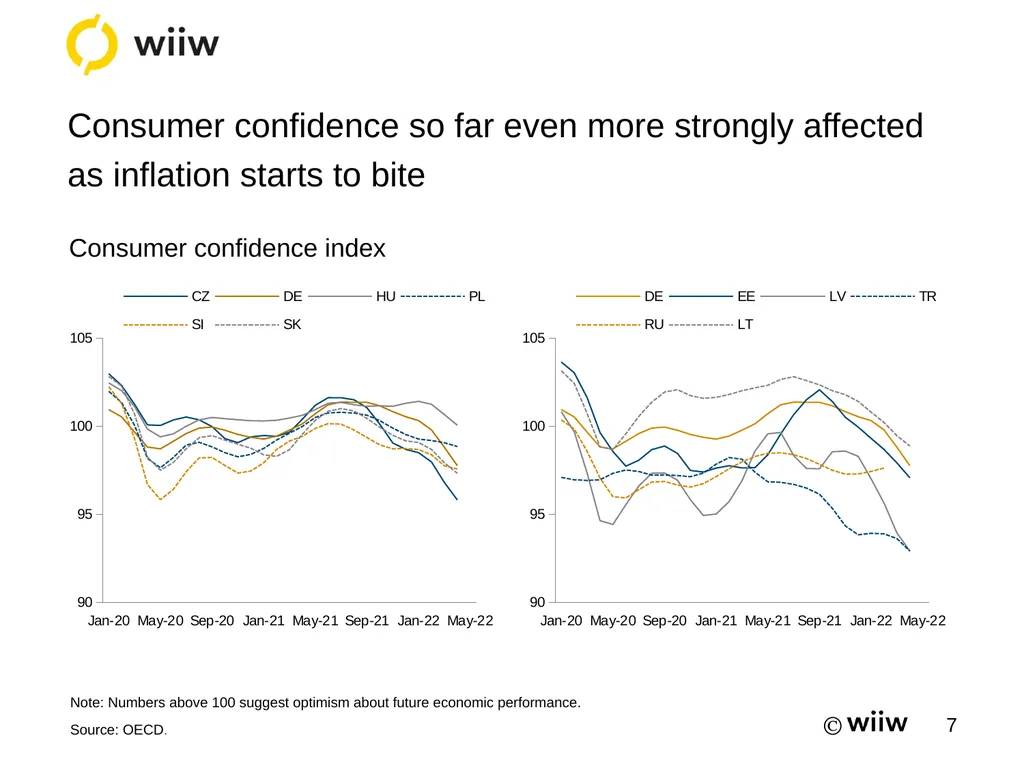
Note: Numbers above 100 suggest optimism about future economic performance.
Source: OECD. Consumer confidence index Consumer confidence so far even more strongly affected as inflation starts to bite<br>
08
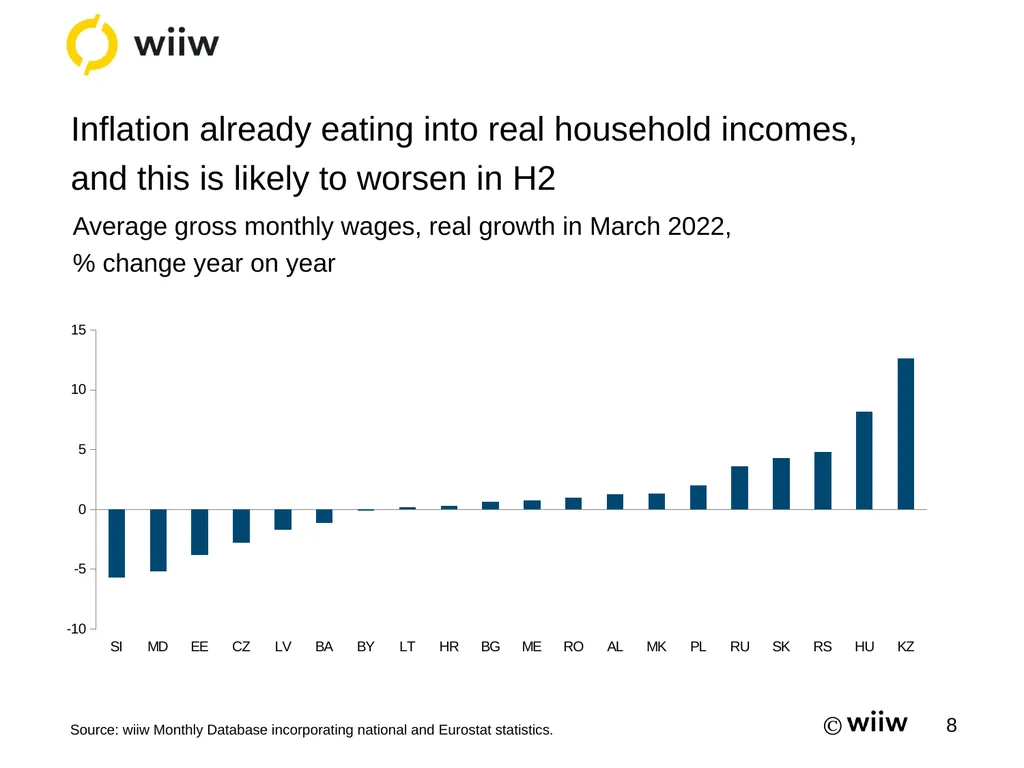
Source: wiiw Monthly Database incorporating national and Eurostat statistics. Average gross monthly wages, real growth in March 2022, % change year on year Inflation already eating into real household incomes, and this is likely to worsen in H2<br>
09
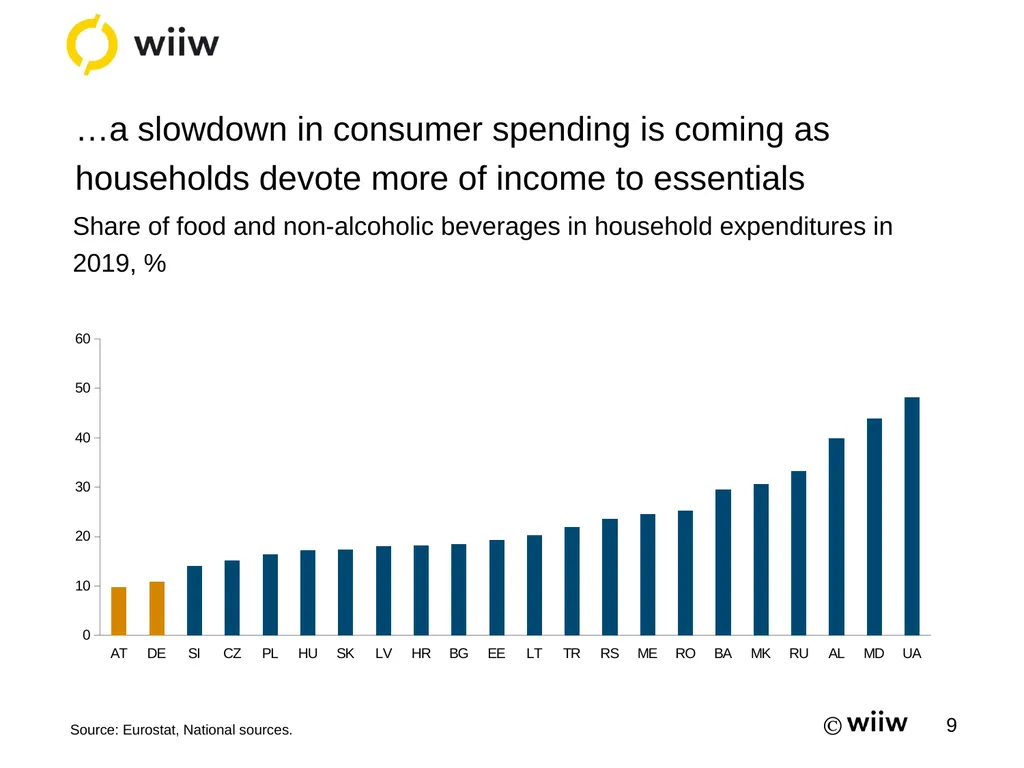
Source: Eurostat, National sources. Share of food and non-alcoholic beverages in household expenditures in 2019, % …a slowdown in consumer spending is coming as households devote more of income to essentials<br>
10
Note: The at-risk-of-poverty rate is the percentage of persons living in households where the equivalised total disposable household income is below the at-risk-of-poverty threshold, defined as 60% of median equivalised disposable income of all households.
Source: Eurostat. At-risk-of-poverty rate by poverty threshold in 2020, % Increasingly more households being pushed into poverty<br>
11
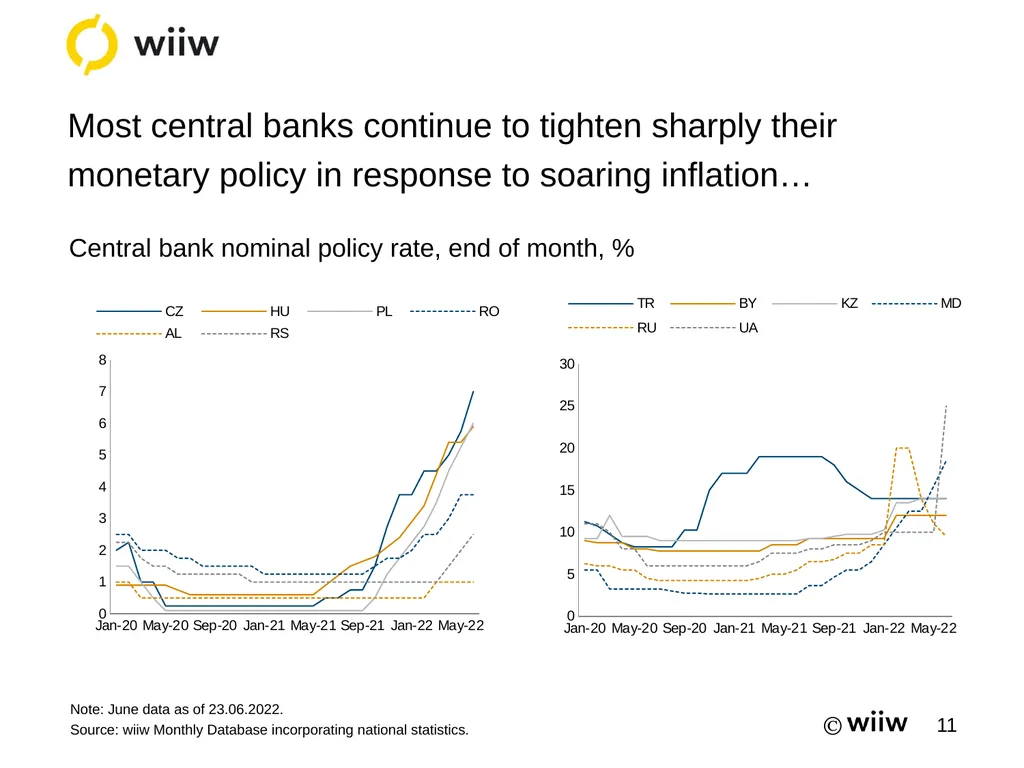
Note: June data as of 23.06.2022. Source: wiiw Monthly Database incorporating national statistics. Central bank nominal policy rate, end of month, % Most central banks continue to tighten sharply their monetary policy in response to soaring inflation…<br>
12
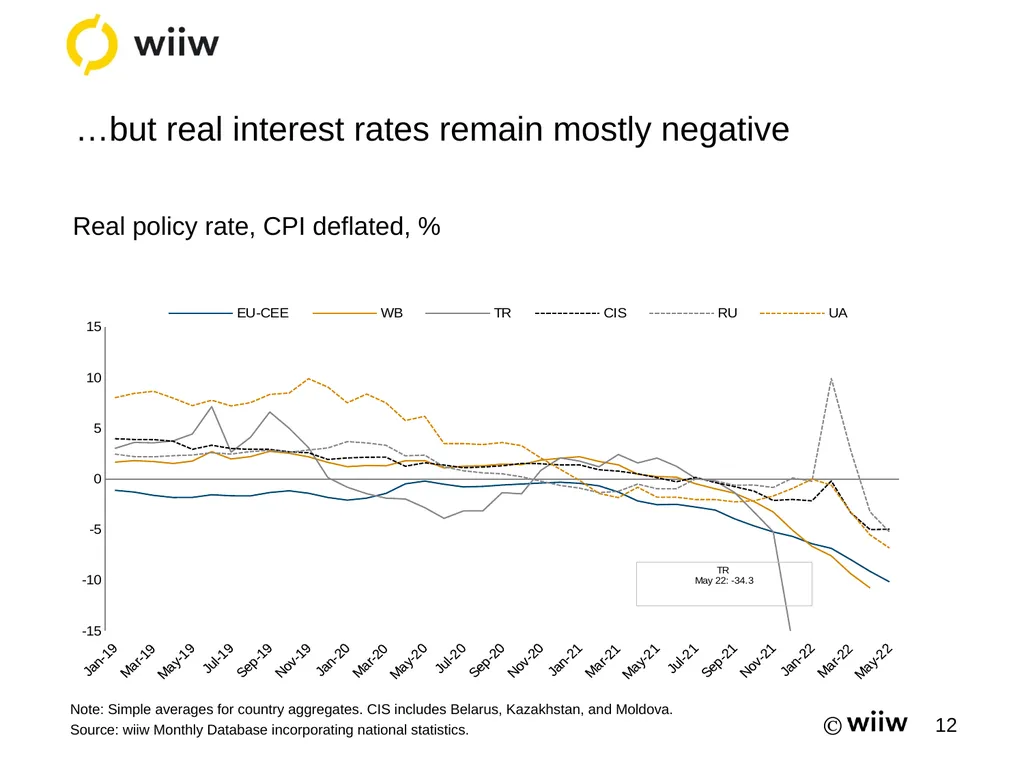
Note: Simple averages for country aggregates. CIS includes Belarus, Kazakhstan, and Moldova. Source: wiiw Monthly Database incorporating national statistics. Real policy rate, CPI deflated, % …but real interest rates remain mostly negative<br>
13
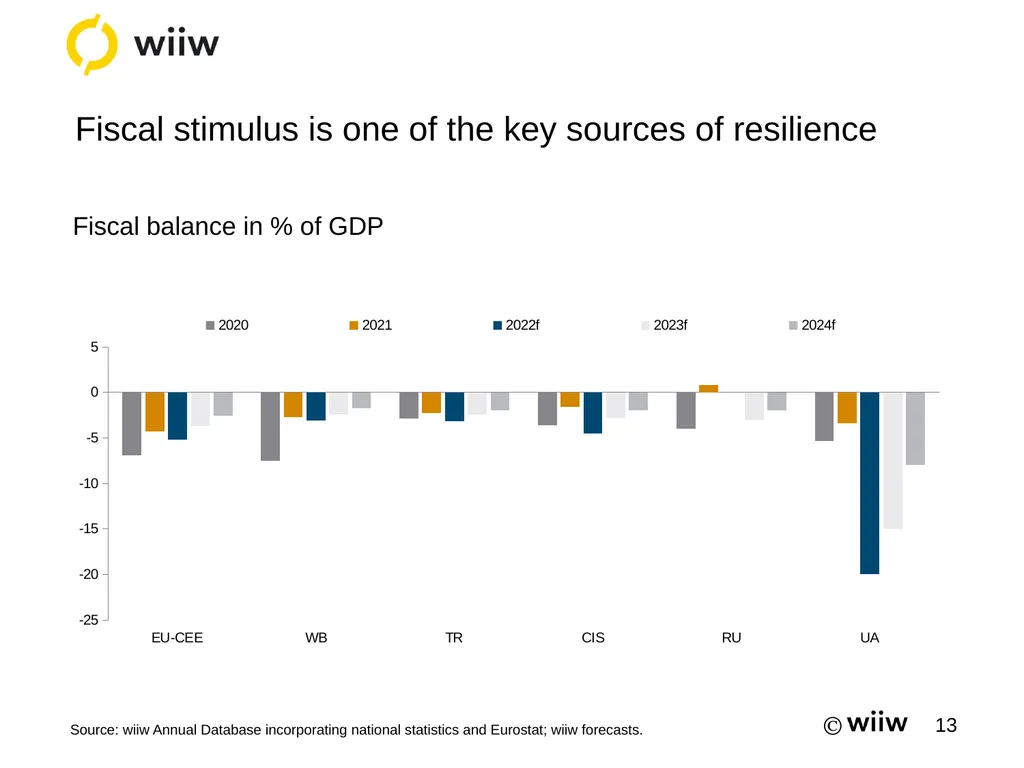
Source: wiiw Annual Database incorporating national statistics and Eurostat; wiiw forecasts. Fiscal balance in % of GDP Fiscal stimulus is one of the key sources of resilience<br>
14
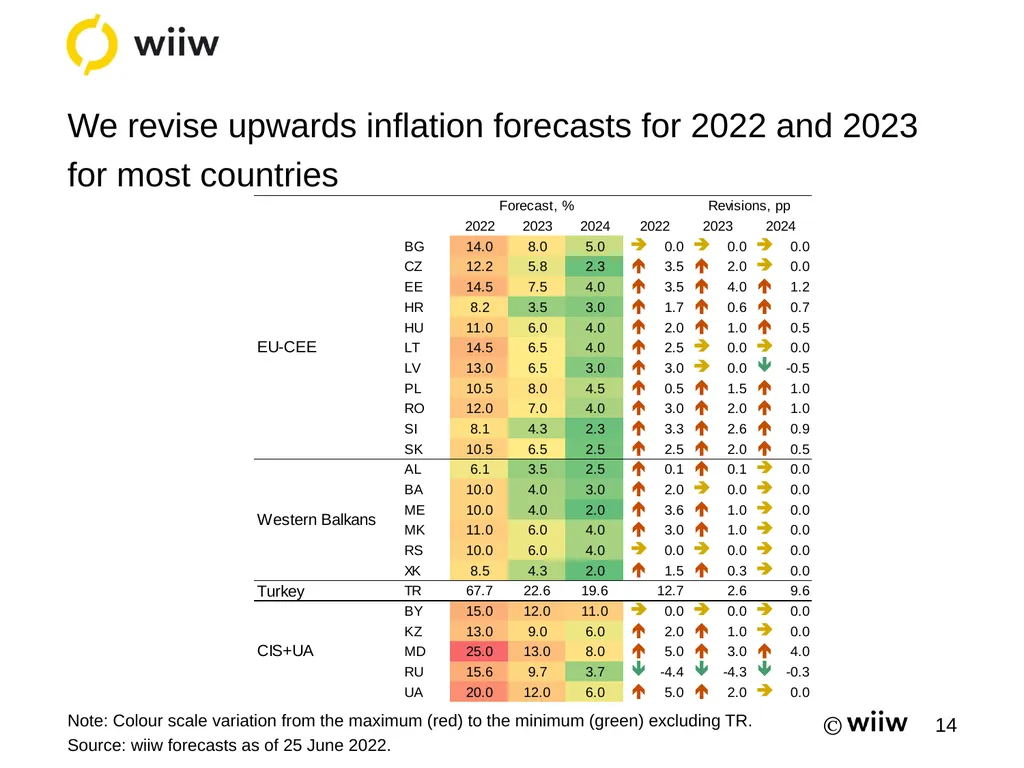
We revise upwards inflation forecasts for 2022 and 2023 for most countries Note: Colour scale variation from the maximum (red) to the minimum (green) excluding TR. Source: wiiw forecasts as of 25 June 2022.<br>
15
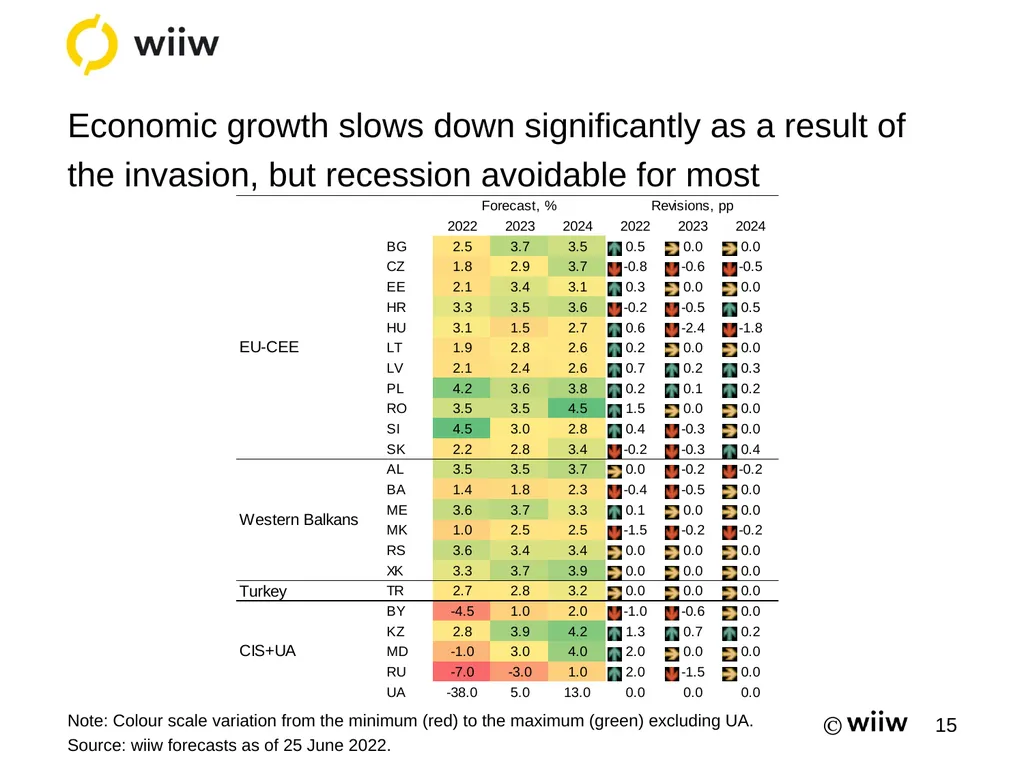
Economic growth slows down significantly as a result of the invasion, but recession avoidable for most Note: Colour scale variation from the minimum (red) to the maximum (green) excluding UA. Source: wiiw forecasts as of 25 June 2022.<br>
16
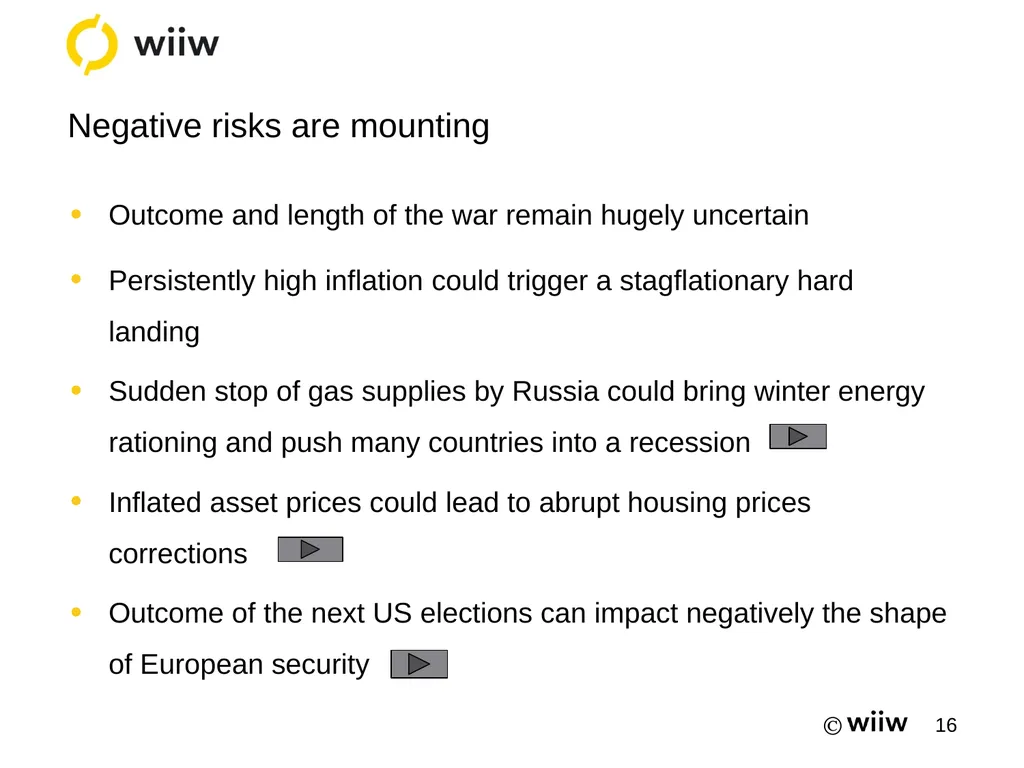
Outcome and length of the war remain hugely uncertain
Persistently high inflation could trigger a stagflationary hard landing
Sudden stop of gas supplies by Russia could bring winter energy rationing and push many countries into a recession
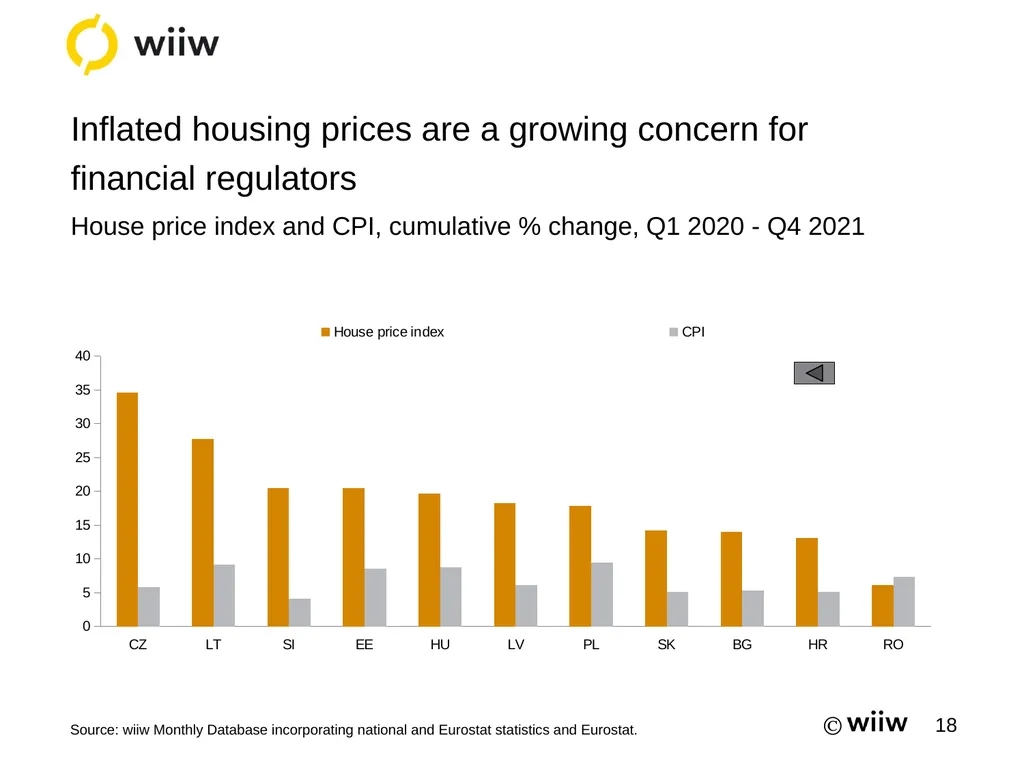
Inflated asset prices could lead to abrupt housing prices corrections
Outcome of the next US elections can impact negatively the shape of European security Negative risks are mounting<br>
17
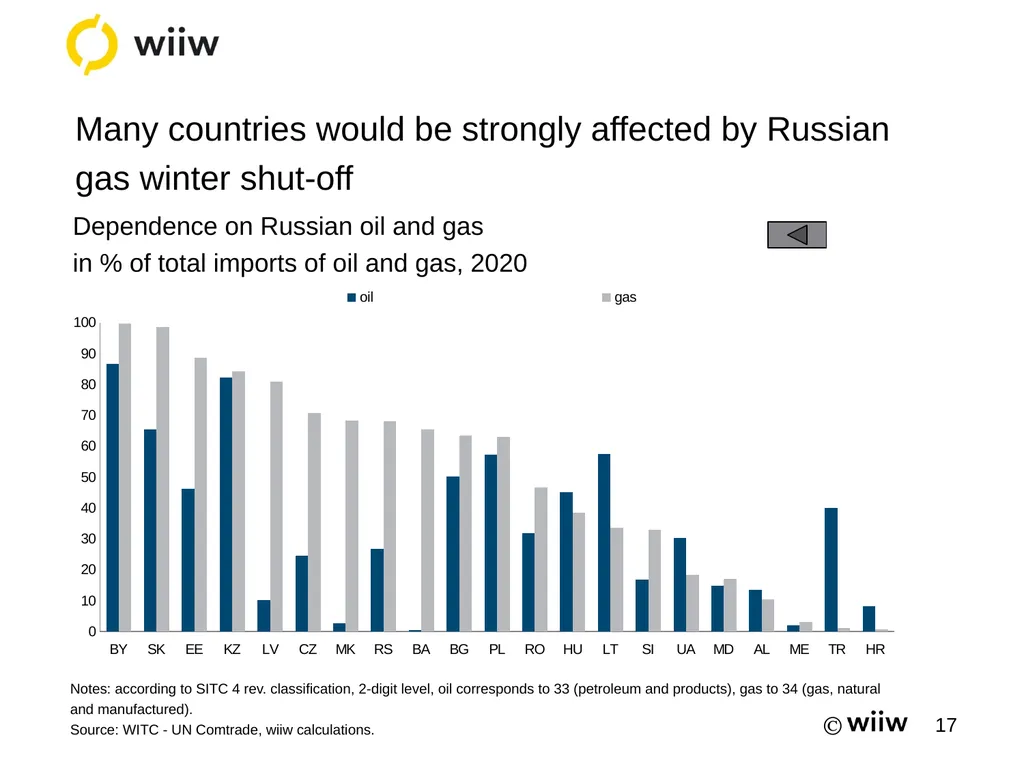
Notes: according to SITC 4 rev. classification, 2-digit level, oil corresponds to 33 (petroleum and products), gas to 34 (gas, natural and manufactured). Source: WITC - UN Comtrade, wiiw calculations. Dependence on Russian oil and gas in % of total imports of oil and gas, 2020 Many countries would be strongly affected by Russian gas winter shut-off<br>
18
Source: wiiw Monthly Database incorporating national and Eurostat statistics and Eurostat. House price index and CPI, cumulative % change, Q1 2020 - Q4 2021 Inflated housing prices are a growing concern for financial regulators<br>
19
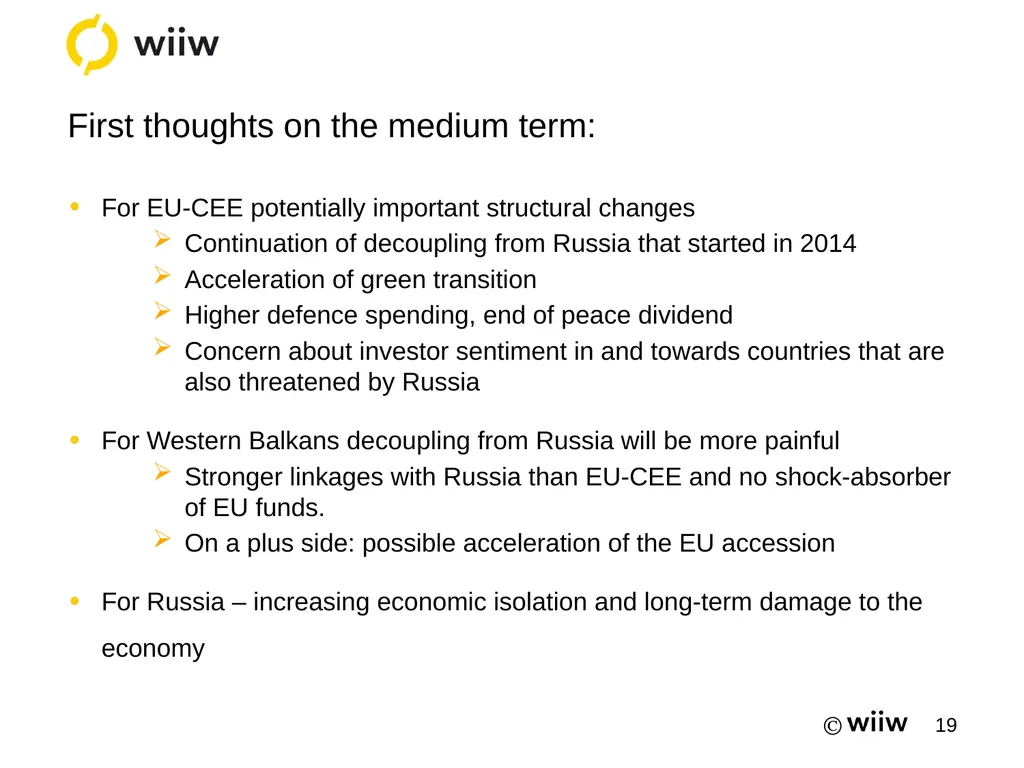
First thoughts on the medium term: For EU-CEE potentially important structural changes
Continuation of decoupling from Russia that started in 2014
Acceleration of green transition
Higher defence spending, end of peace dividend
Concern about investor sentiment in and towards countries that are also threatened by Russia
For Western Balkans decoupling from Russia will be more painful
Stronger linkages with Russia than EU-CEE and no shock-absorber of EU funds.
On a plus side: possible acceleration of the EU accession
For Russia – increasing economic isolation and long-term damage to the economy<br>
20
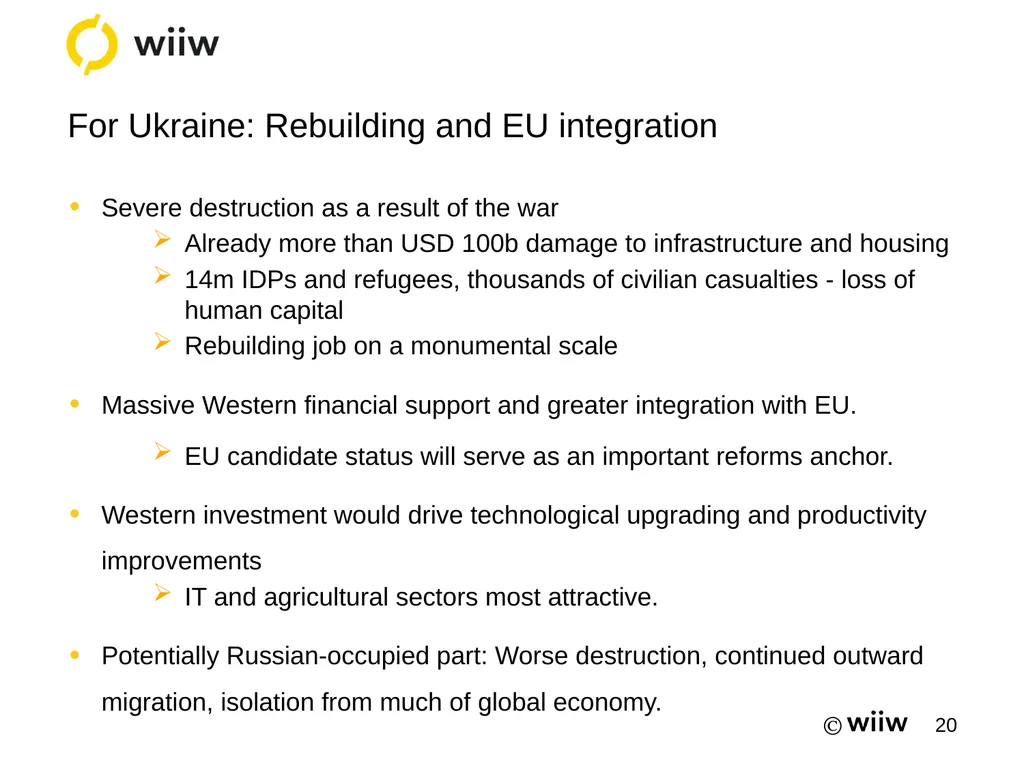
For Ukraine: Rebuilding and EU integration Severe destruction as a result of the war
Already more than USD 100b damage to infrastructure and housing
14m IDPs and refugees, thousands of civilian casualties - loss of human capital
Rebuilding job on a monumental scale
Massive Western financial support and greater integration with EU.
EU candidate status will serve as an important reforms anchor.
Western investment would drive technological upgrading and productivity improvements
IT and agricultural sectors most attractive.
Potentially Russian-occupied part: Worse destruction, continued outward migration, isolation from much of global economy.<br>
21
Thank you for your attention! Follow us at:
wiiw.ac.at<br>