Talk Listen Communicate Closing the Communication Gap Nicola King Speech and Language Therapist Nicola Crowe Education Development Officer 0-8 Margaret MacDuff Quality Improvement Officer Closing the Communication Gap Background Closing the
"Talk Listen Communicate Closing the Communication" is the property of its rightful owner. Permission is granted to
download and print the materials on this website for personal, non-commercial use only, and to display it
on your personal computer provided you do not modify the materials and that you retain all copyright
notices contained in the materials. By downloading content from our website, you accept the terms of this
agreement.
Presentation Transcript
01
Talk Listen Communicate Closing the Communication Gap Nicola King Speech and Language Therapist
Nicola Crowe Education Development Officer 0-8
Margaret MacDuff Quality Improvement Officer<br>
02
Closing the Communication Gap
Background
Closing the attainment gap between the most and least disadvantaged children is a key priority within National Improvement Framework for Scottish Education.
Research tells us that at age three the average vocabulary scores for children from low-income households are significantly below that of children from high-income households and at Primary 1 there is a gap
of 18 months difference.<br>
03
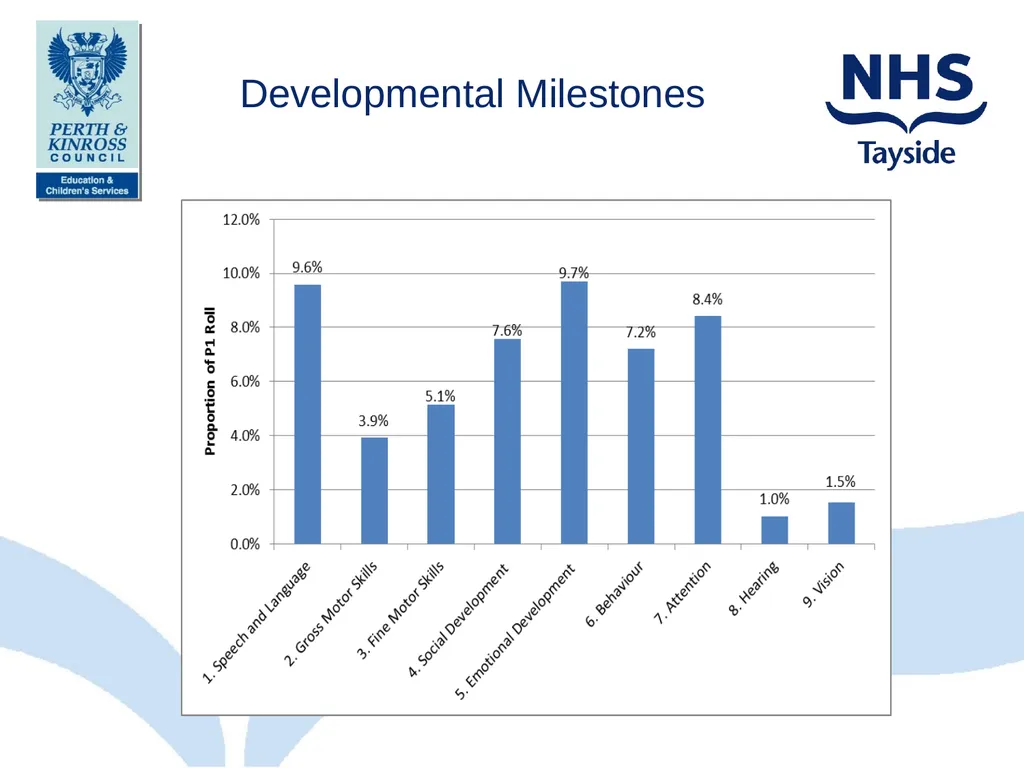
Developmental Milestones<br>
04
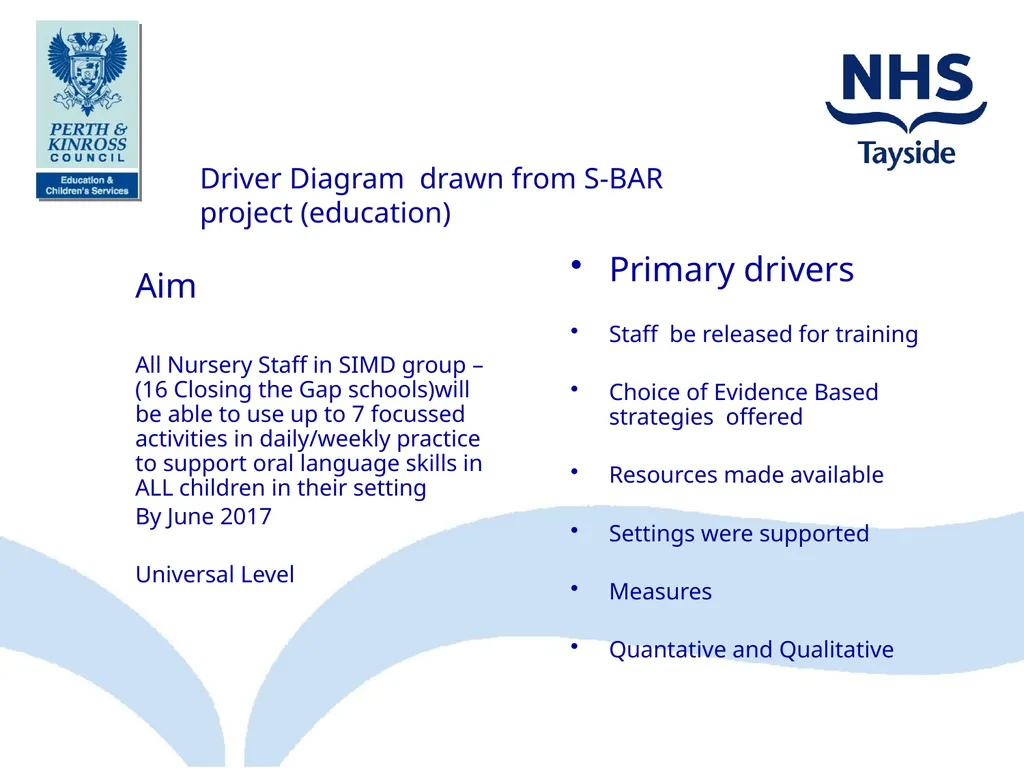
Driver Diagram drawn from S-BAR project (education) Aim
All Nursery Staff in SIMD group –(16 Closing the Gap schools)will be able to use up to 7 focussed activities in daily/weekly practice to support oral language skills in ALL children in their setting
By June 2017
Universal Level Primary drivers
Staff be released for training
Choice of Evidence Based strategies offered
Resources made available
Settings were supported
Measures
Quantative and Qualitative<br>
05
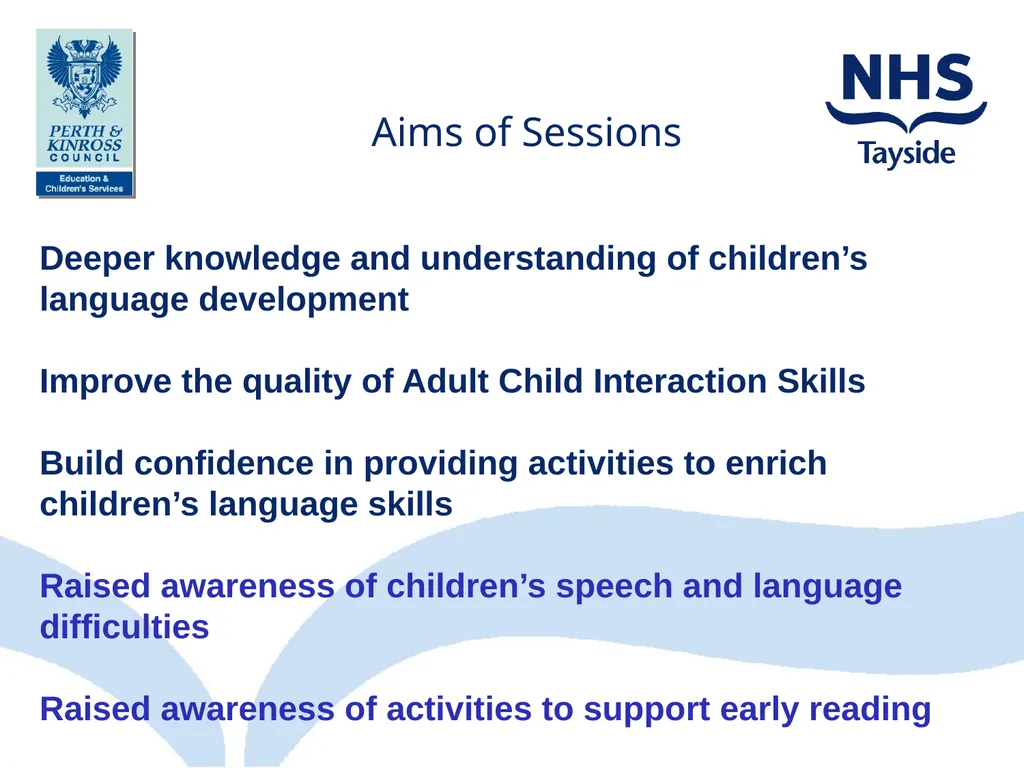
Deeper knowledge and understanding of children’s language development
Improve the quality of Adult Child Interaction Skills
Build confidence in providing activities to enrich children’s language skills
Raised awareness of children’s speech and language difficulties
Raised awareness of activities to support early reading Aims of Sessions1<br>
06
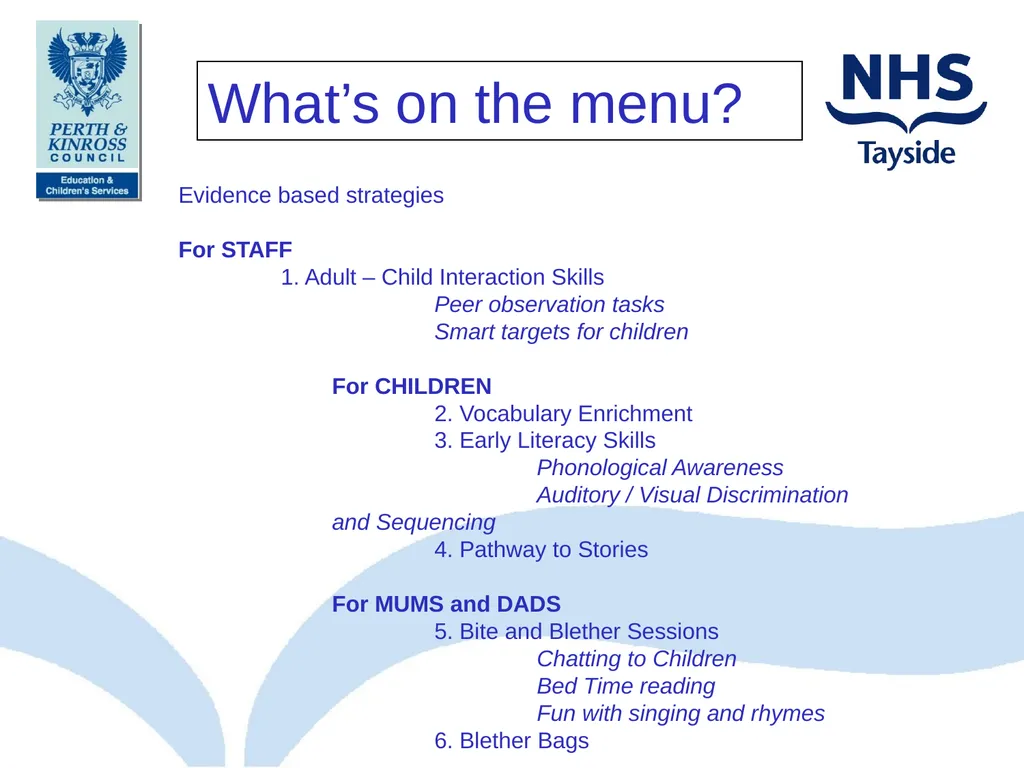
What’s on the menu? Evidence based strategies
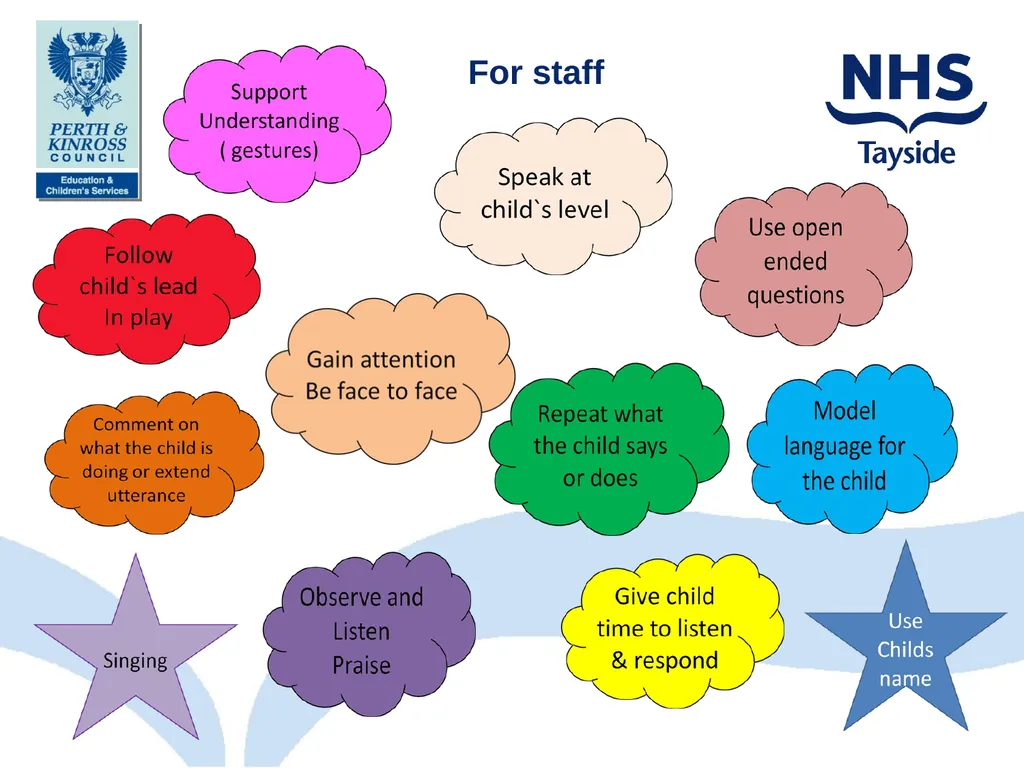
For STAFF
1. Adult – Child Interaction Skills
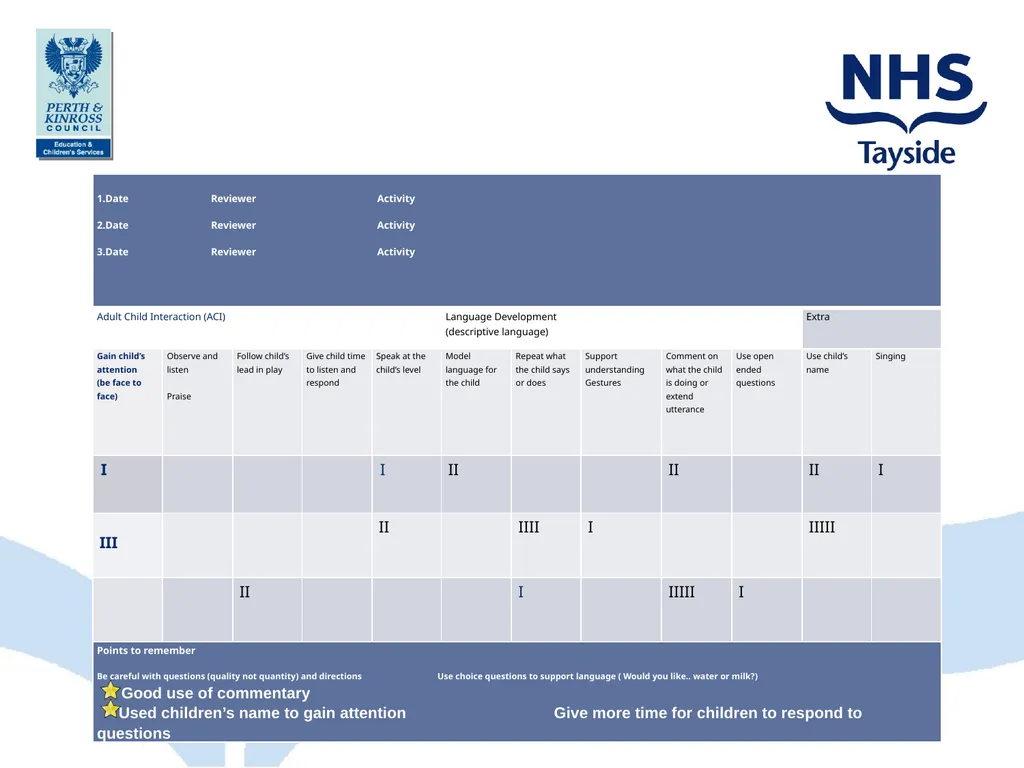
Peer observation tasks
Smart targets for children
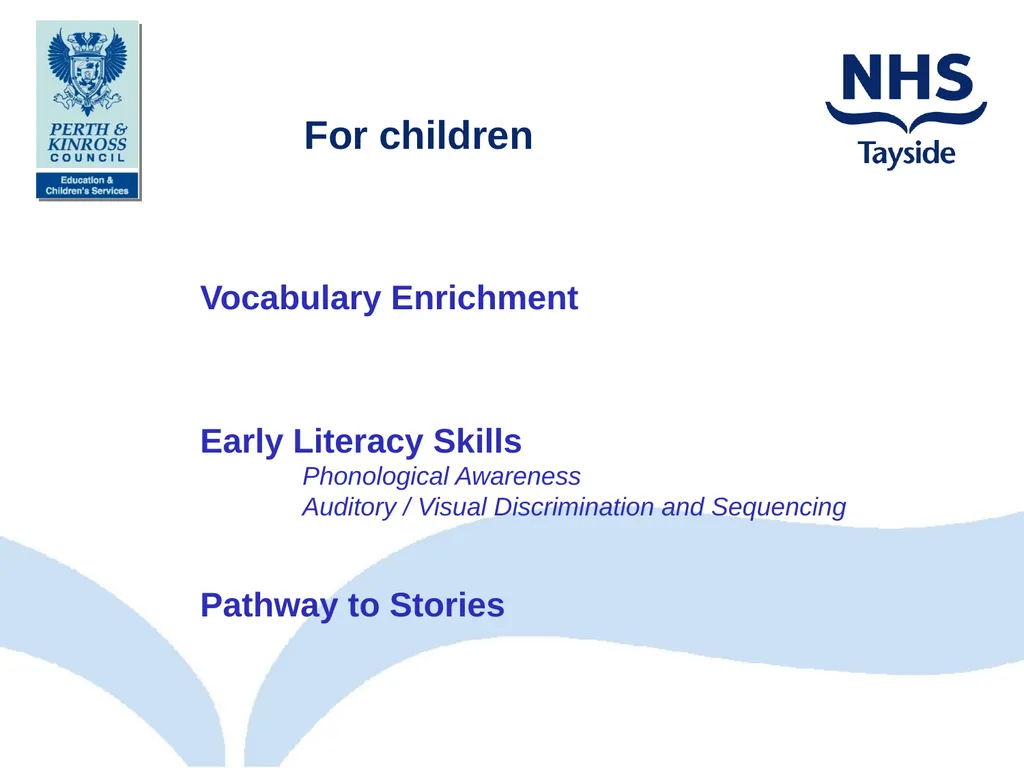
For CHILDREN
2. Vocabulary Enrichment
3. Early Literacy Skills
Phonological Awareness
Auditory / Visual Discrimination and Sequencing
4. Pathway to Stories
For MUMS and DADS
5. Bite and Blether Sessions
Chatting to Children
Bed Time reading
Fun with singing and rhymes
6. Blether Bags<br>
07
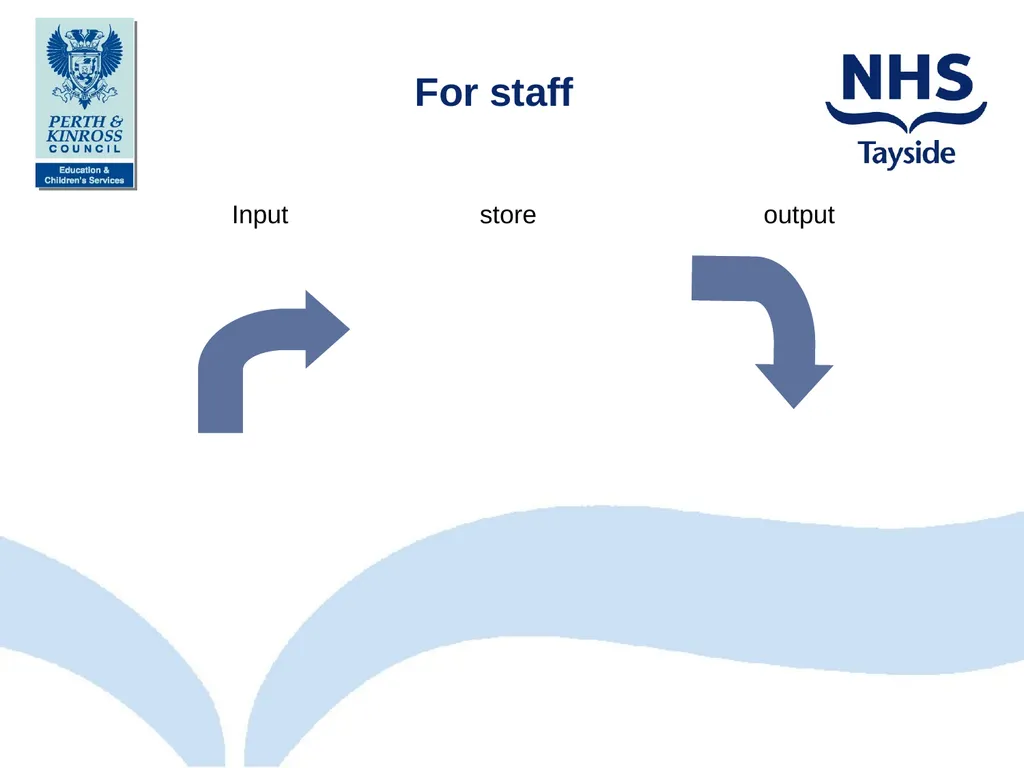
Input store output For staff<br>
08
For staff<br>
09
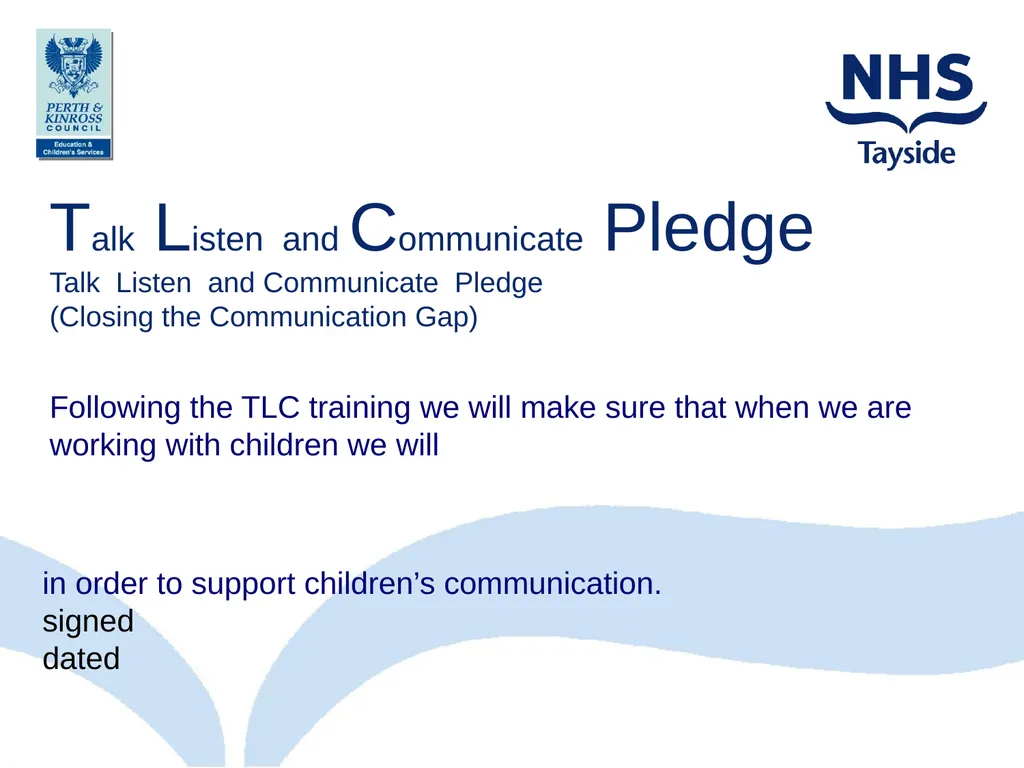
Talk Listen and Communicate Pledge
Talk Listen and Communicate Pledge
(Closing the Communication Gap)
(
Following the TLC training we will make sure that when we are
working with children we will in order to support children’s communication.
signed
dated<br>
10
For children Vocabulary Enrichment
Early Literacy Skills
Phonological Awareness
Auditory / Visual Discrimination and Sequencing
Pathway to Stories<br>
11
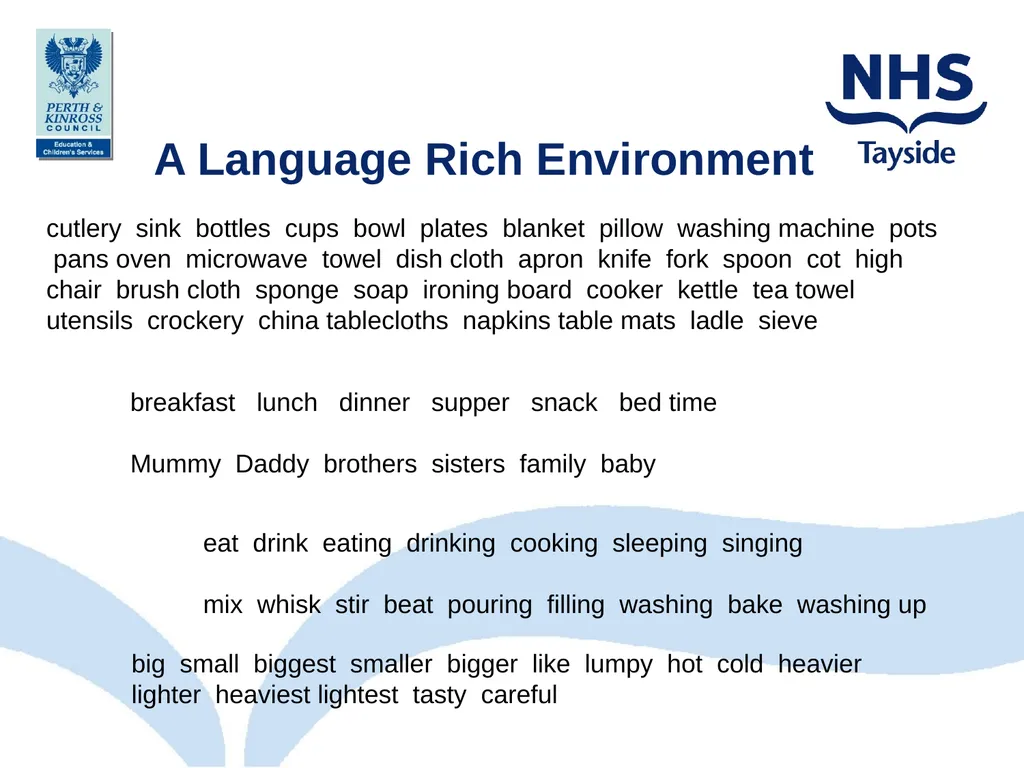
A Language Rich Environment cutlery sink bottles cups bowl plates blanket pillow washing machine pots pans oven microwave towel dish cloth apron knife fork spoon cot high chair brush cloth sponge soap ironing board cooker kettle tea towel utensils crockery china tablecloths napkins table mats ladle sieve breakfast lunch dinner supper snack bed time
mix whisk stir beat pouring filling washing bake washing up big small biggest smaller bigger like lumpy hot cold heavier lighter heaviest lightest tasty careful hard soft safety hot cold<br>
12
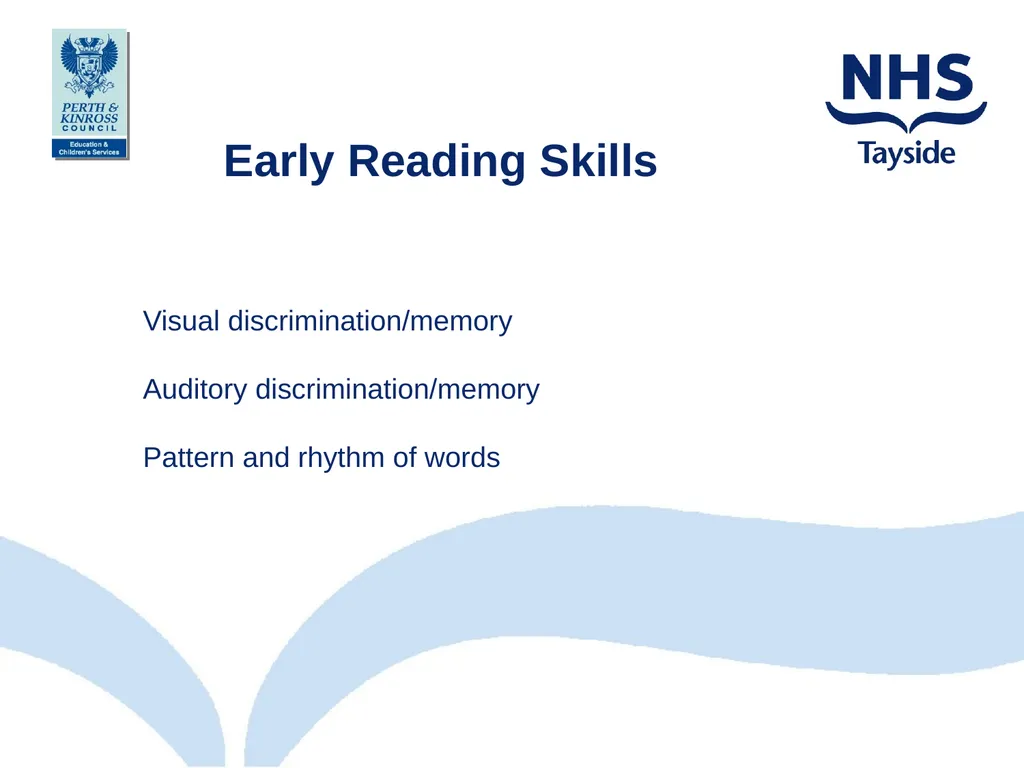
Early Reading Skills Visual discrimination/memory
Auditory discrimination/memory
Pattern and rhythm of words<br>
13
Pathways to stories<br>
14
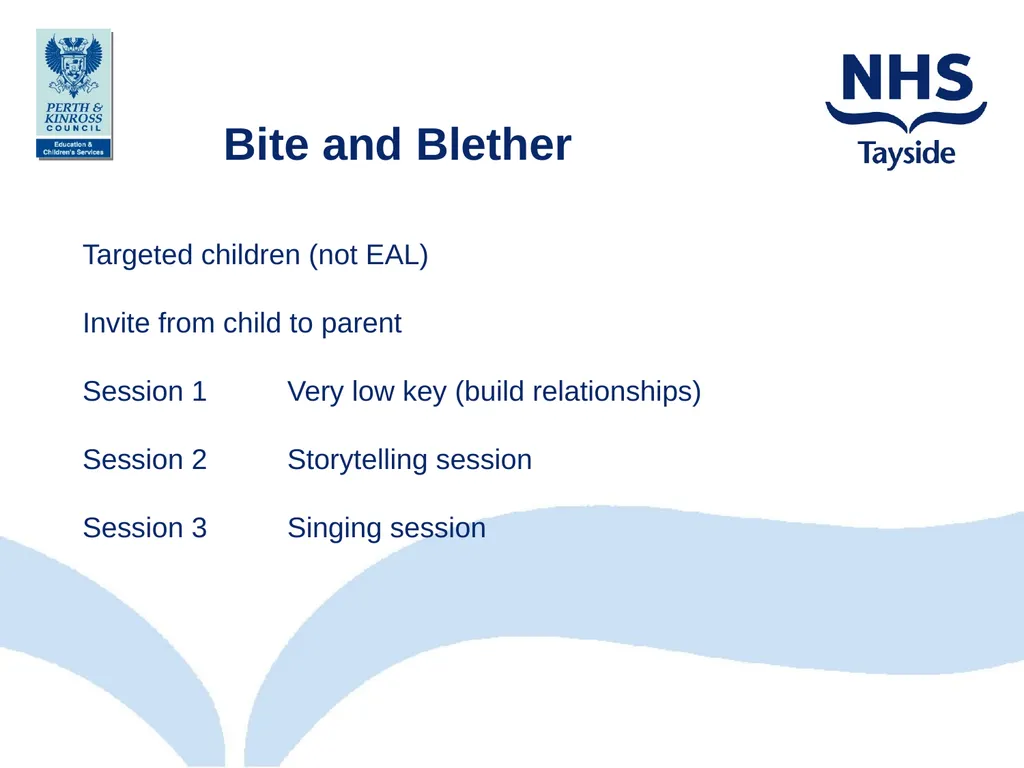
Bite and Blether Targeted children (not EAL)
Invite from child to parent
Session 1 Very low key (build relationships)
Session 2 Storytelling session
Session 3 Singing session<br>
15
Blether Bags Early Education Strategy: Early Intervention
Blether Bag 12
Prompt Card PICK AND MIX PEOPLE
Describe the exciting characters!<br>
16
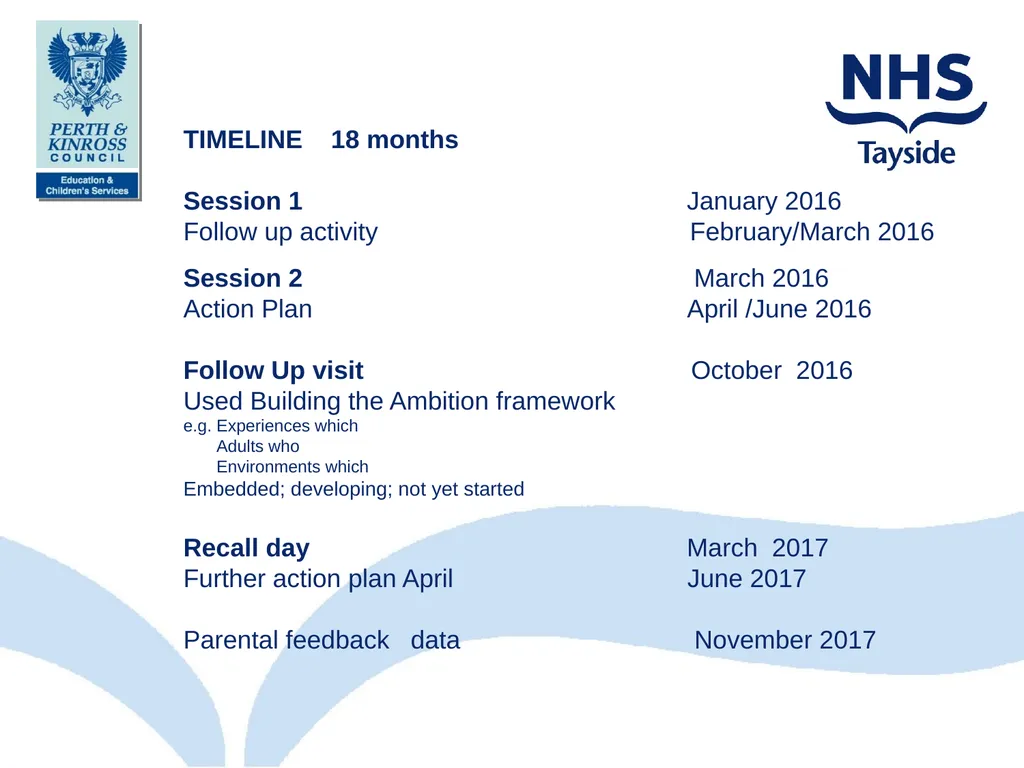
TIMELINE 18 months
Session 1 January 2016
Follow up activity February/March 2016
Session 2 March 2016
Action Plan April /June 2016
Follow Up visit October 2016
Used Building the Ambition framework
e.g. Experiences which
Adults who
Environments which
Embedded; developing; not yet started
Recall day March 2017
Further action plan April June 2017
Parental feedback data November 2017<br>
17
Changes in staff awareness and practice
Quantitive
Qualitative What did we measure?<br>
18
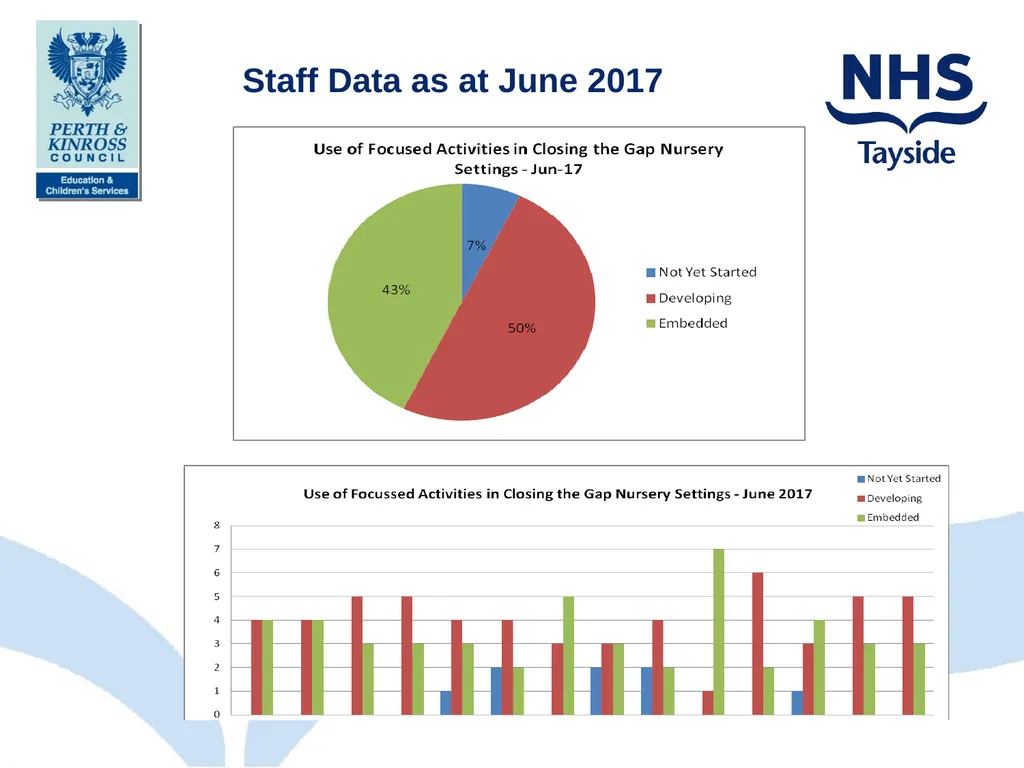
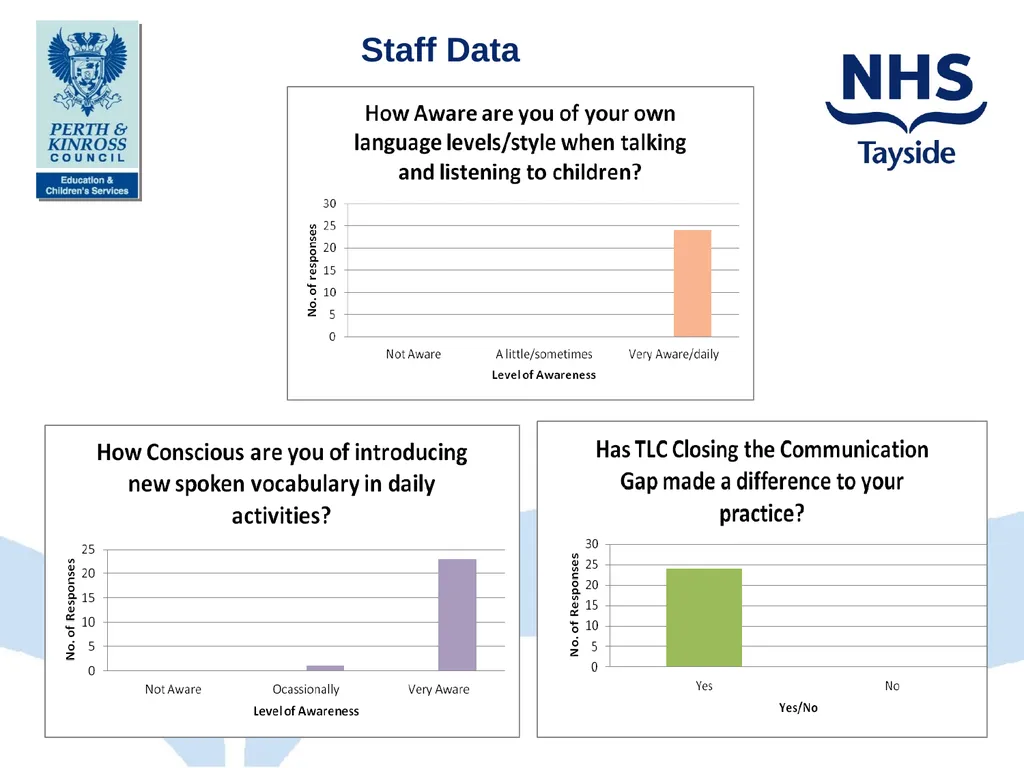
Staff Data as at June 2017<br>
19
Staff Data<br>
20
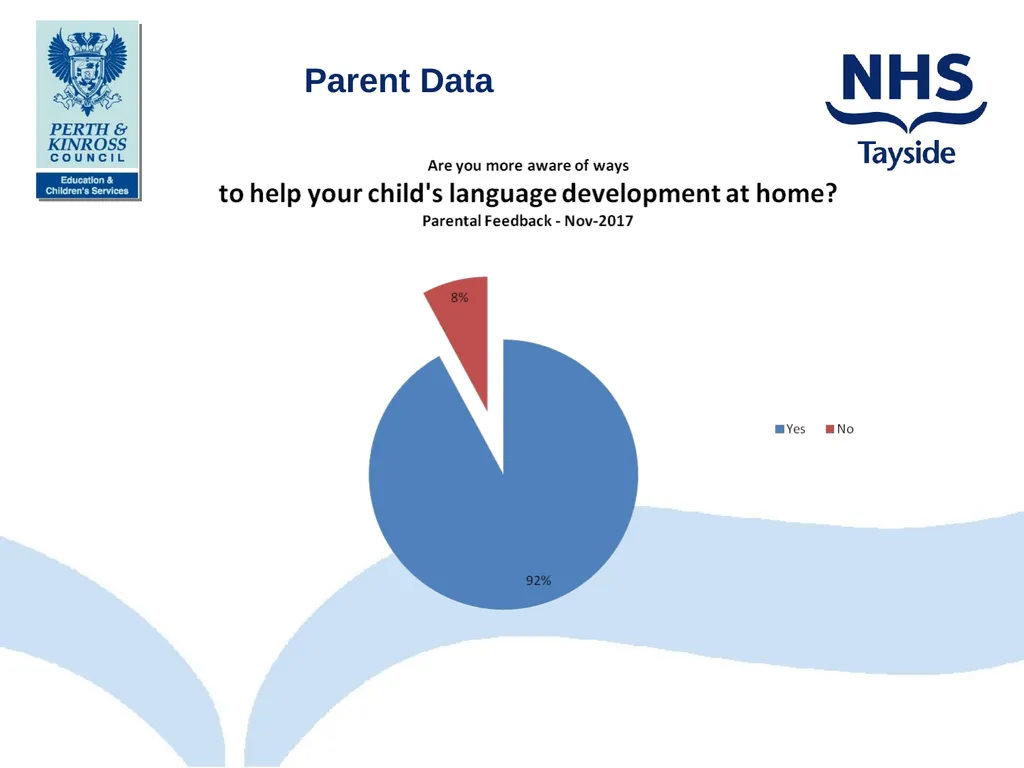
Parent Data<br>
21
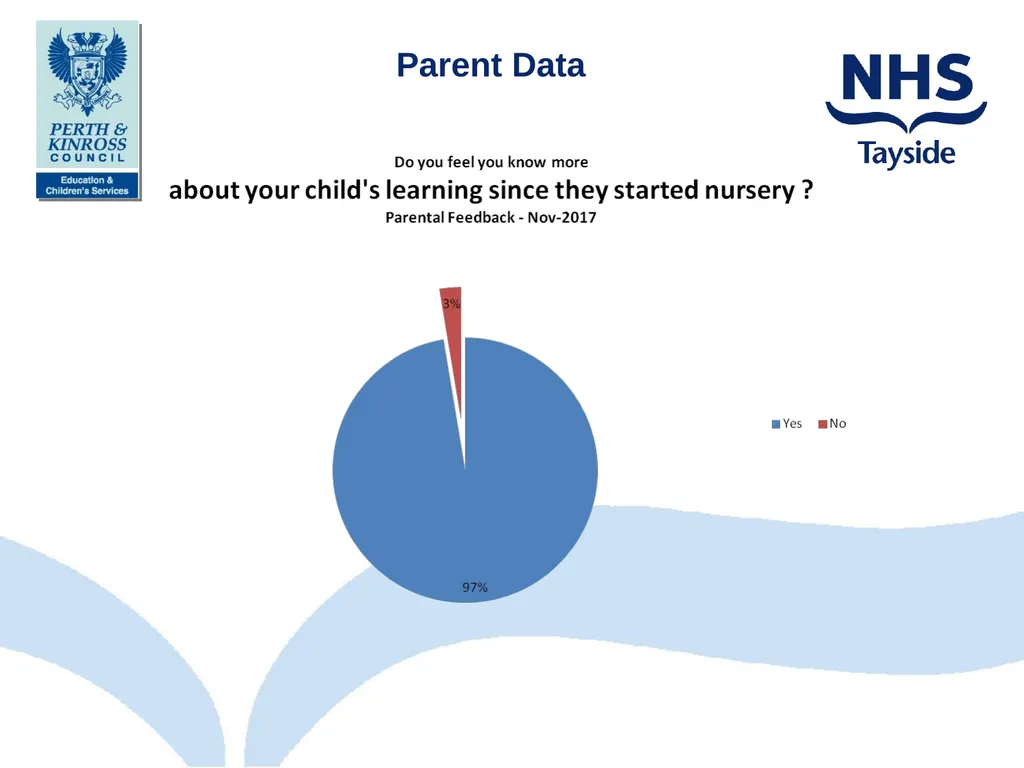
Parent Data<br>
22
Parents said...<br>
23
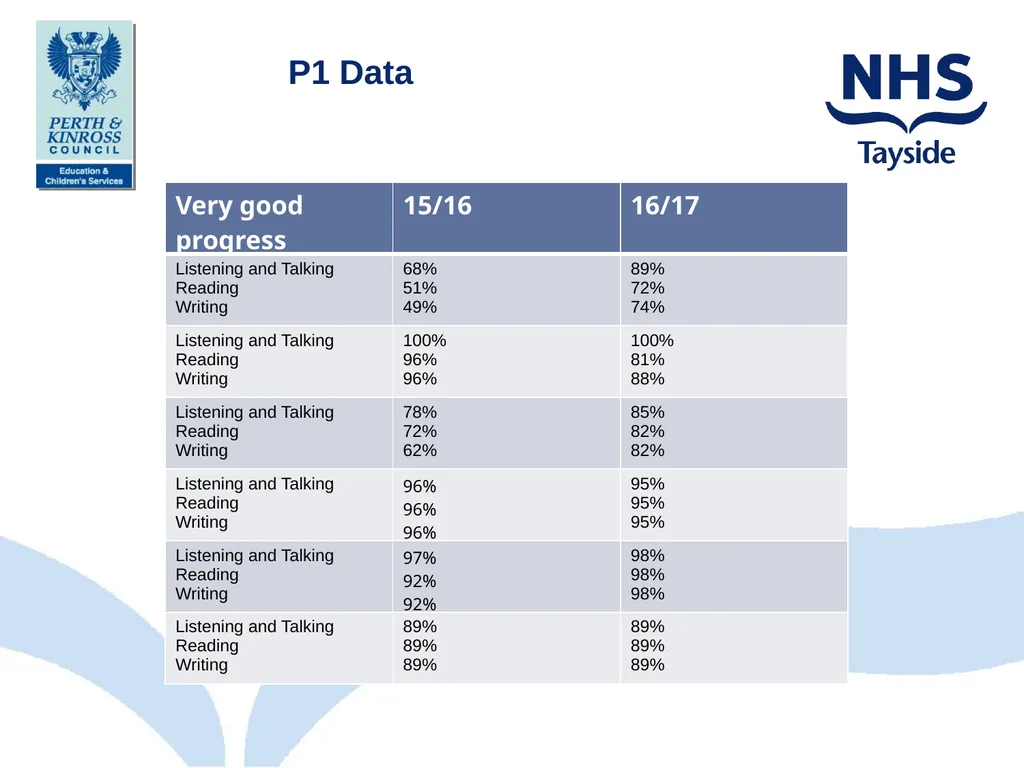
P1 Data<br>
24
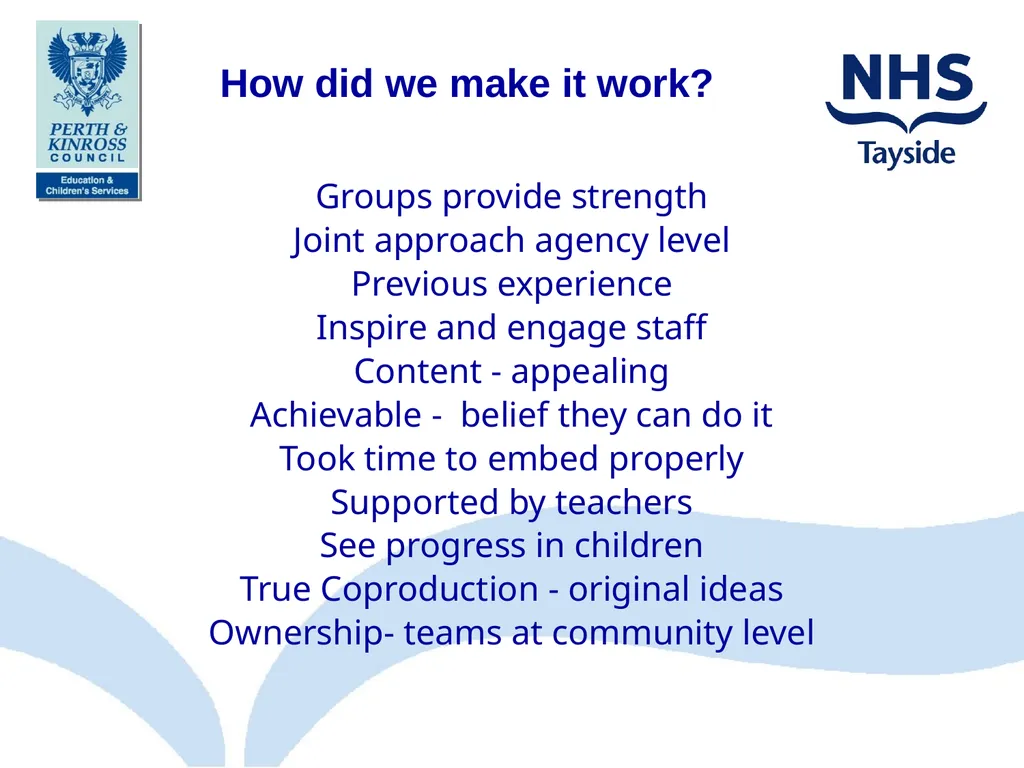
How did we make it work? Groups provide strength
Joint approach agency level
Previous experience
Inspire and engage staff
Content - appealing
Achievable - belief they can do it
Took time to embed properly
Supported by teachers
See progress in children
True Coproduction - original ideas
Ownership- teams at community level<br>
25
What next ?<br>
26
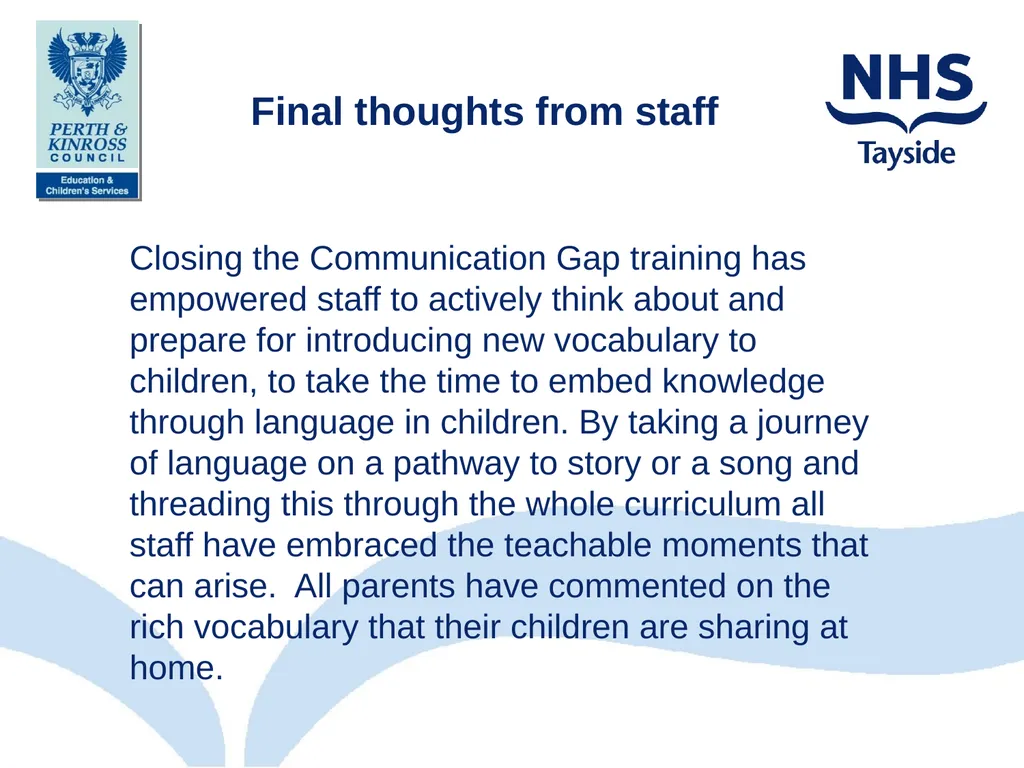
Closing the Communication Gap training has empowered staff to actively think about and prepare for introducing new vocabulary to children, to take the time to embed knowledge through language in children. By taking a journey of language on a pathway to story or a song and threading this through the whole curriculum all staff have embraced the teachable moments that can arise. All parents have commented on the rich vocabulary that their children are sharing at home. Final thoughts from staff<br>
27
We have used a number of focussed interventions since 2016 and up to the present to close the communication gap. Particularly successful have been Brunch and Blether sessions and the blether bags which were created for home-nursery links. The whole staff team have become focussed on having a vocabulary rich environment and a focus upon the spoken words that we use with and teach children. The work is ongoing and elements of pathways to stories are starting to be implemented. Final thoughts from staff<br>