
Task as Reinforcer: A Reactive Alternative to

Description: Task as Reinforcer: A Reactive Alternative to Escape Extinction Steve Ward, MA, BCBA Whole Child Consulting, LLC www.wholechildconsulting.com http:www.facebook.comwholechildconsulting Escape behavior is a problem Escapeavoidance is the
Related Topics
Download Presentation
"Task as Reinforcer: A Reactive Alternative to" is the property of its rightful owner. Permission is granted to download and print the materials on this website for personal, non-commercial use only, and to display it on your personal computer provided you do not modify the materials and that you retain all copyright notices contained in the materials. By downloading content from our website, you accept the terms of this agreement.
Presentation Transcript
slide1. Task as Reinforcer: A Reactive Alternative to Escape Extinction Steve Ward, MA, BCBA
Whole Child Consulting, LLC
www.wholechildconsulting.com
http://www.facebook.com/wholechildconsulting<br>
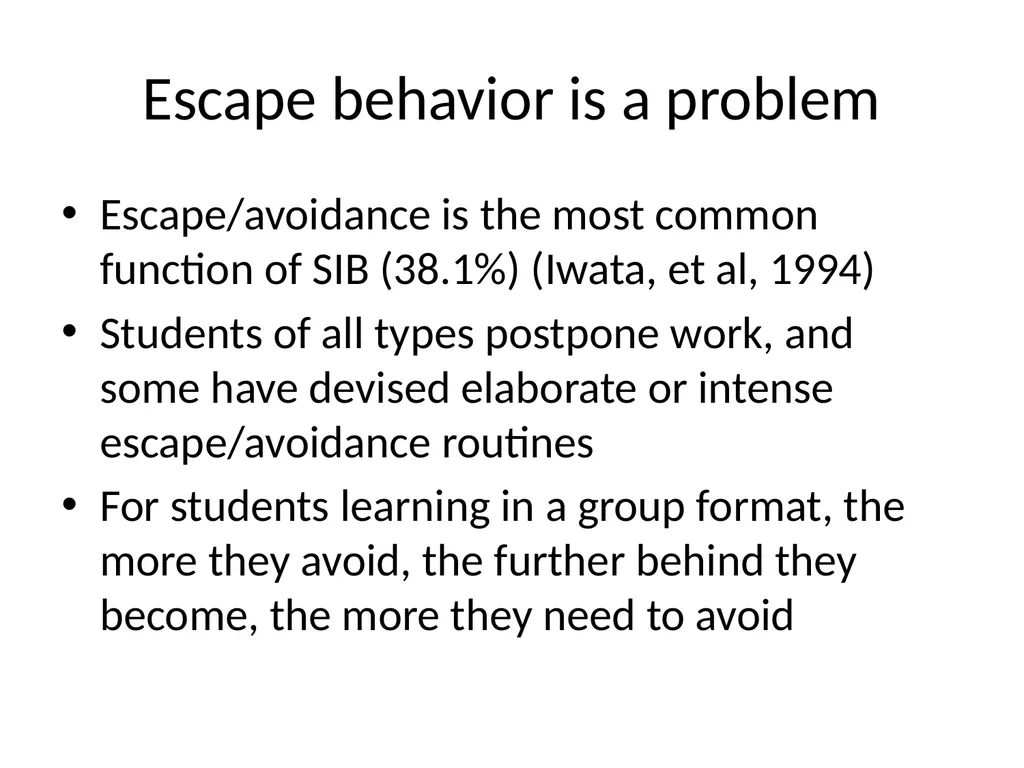
slide2. Escape behavior is a problem Escape/avoidance is the most common function of SIB (38.1%) (Iwata, et al, 1994)
Students of all types postpone work, and some have devised elaborate or intense escape/avoidance routines
For students learning in a group format, the more they avoid, the further behind they become, the more they need to avoid<br>
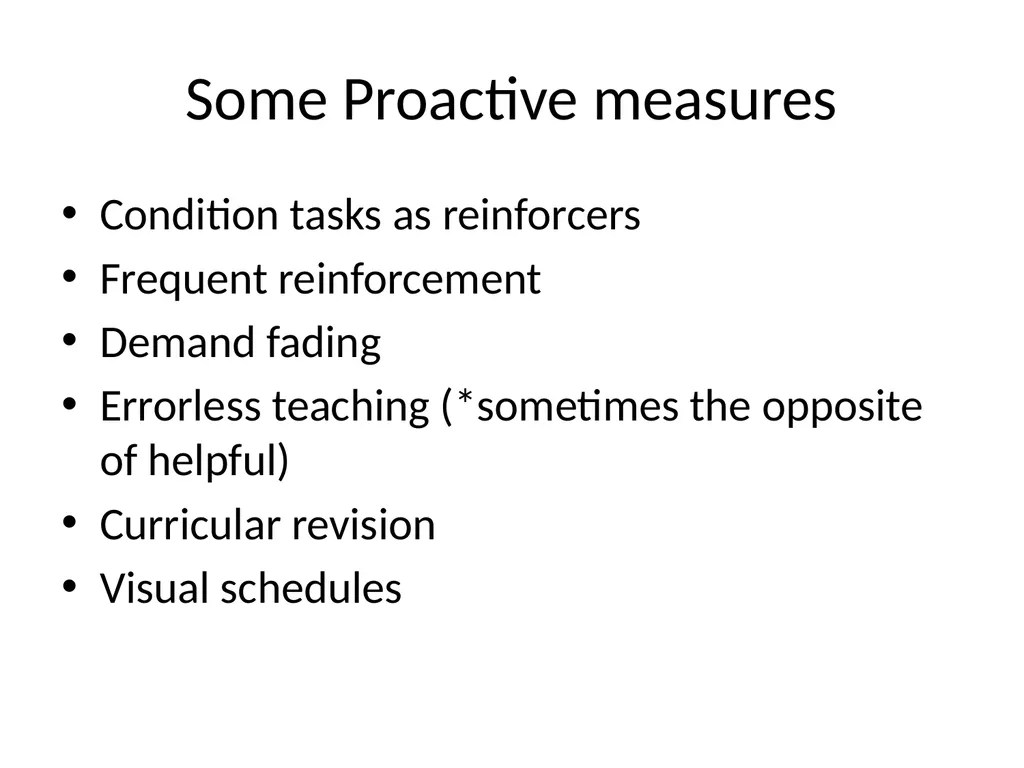
slide3. Some Proactive measures Condition tasks as reinforcers
Frequent reinforcement
Demand fading
Errorless teaching (*sometimes the opposite of helpful)
Curricular revision
Visual schedules<br>
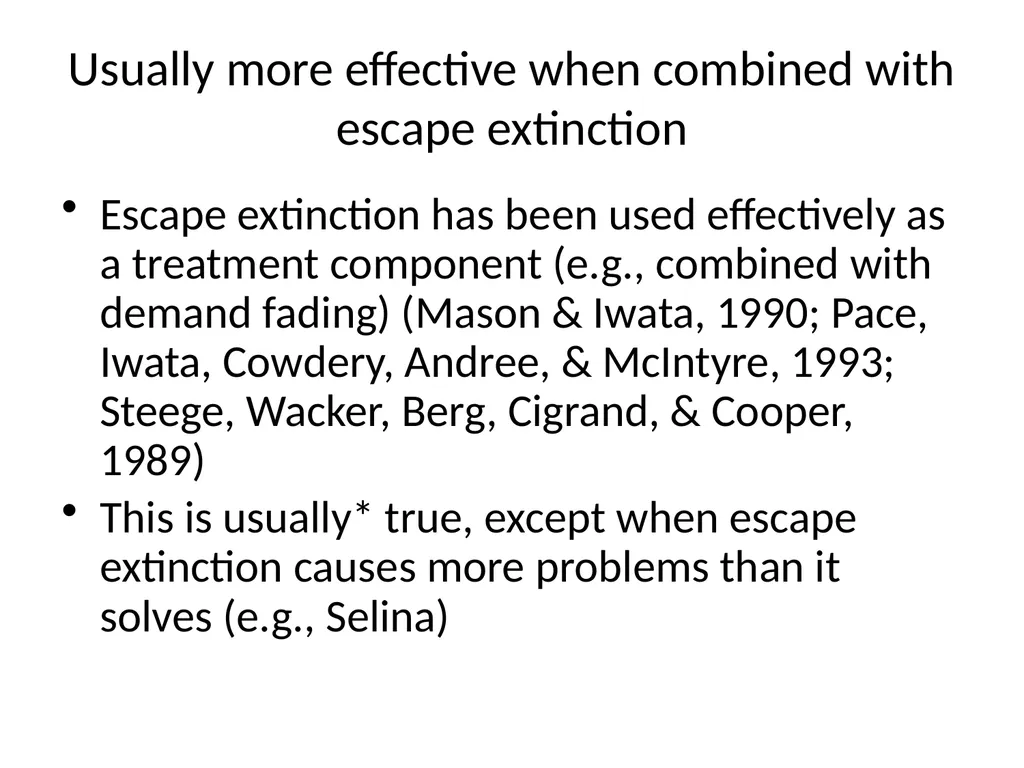
slide4. Usually more effective when combined with escape extinction Escape extinction has been used effectively as a treatment component (e.g., combined with demand fading) (Mason & Iwata, 1990; Pace, Iwata, Cowdery, Andree, & McIntyre, 1993; Steege, Wacker, Berg, Cigrand, & Cooper, 1989)
This is usually* true, except when escape extinction causes more problems than it solves (e.g., Selina)<br>
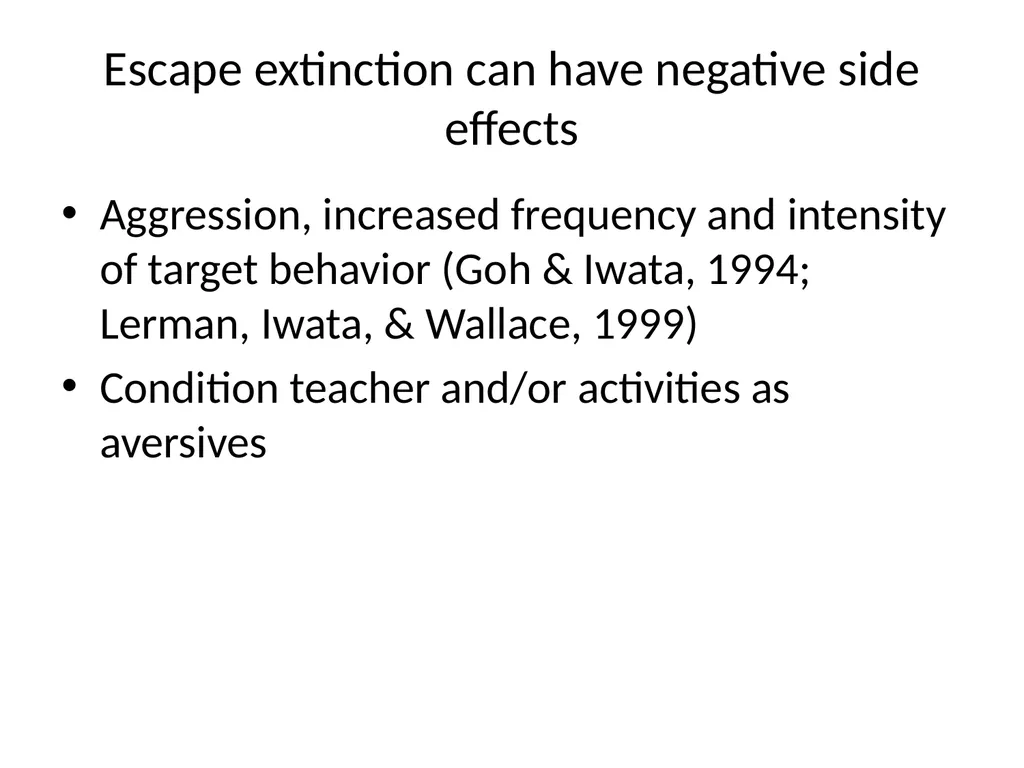
slide5. Escape extinction can have negative side effects Aggression, increased frequency and intensity of target behavior (Goh & Iwata, 1994; Lerman, Iwata, & Wallace, 1999)
Condition teacher and/or activities as aversives<br>
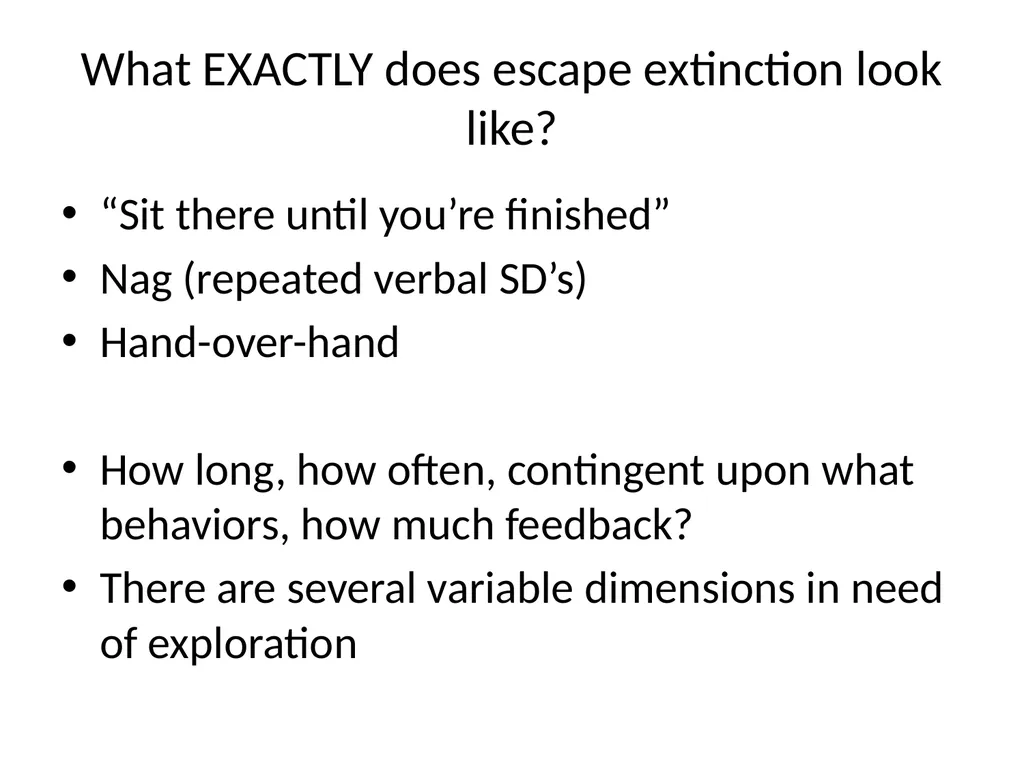
slide6. What EXACTLY does escape extinction look like? “Sit there until you’re finished”
Nag (repeated verbal SD’s)
Hand-over-hand
How long, how often, contingent upon what behaviors, how much feedback?
There are several variable dimensions in need of exploration<br>
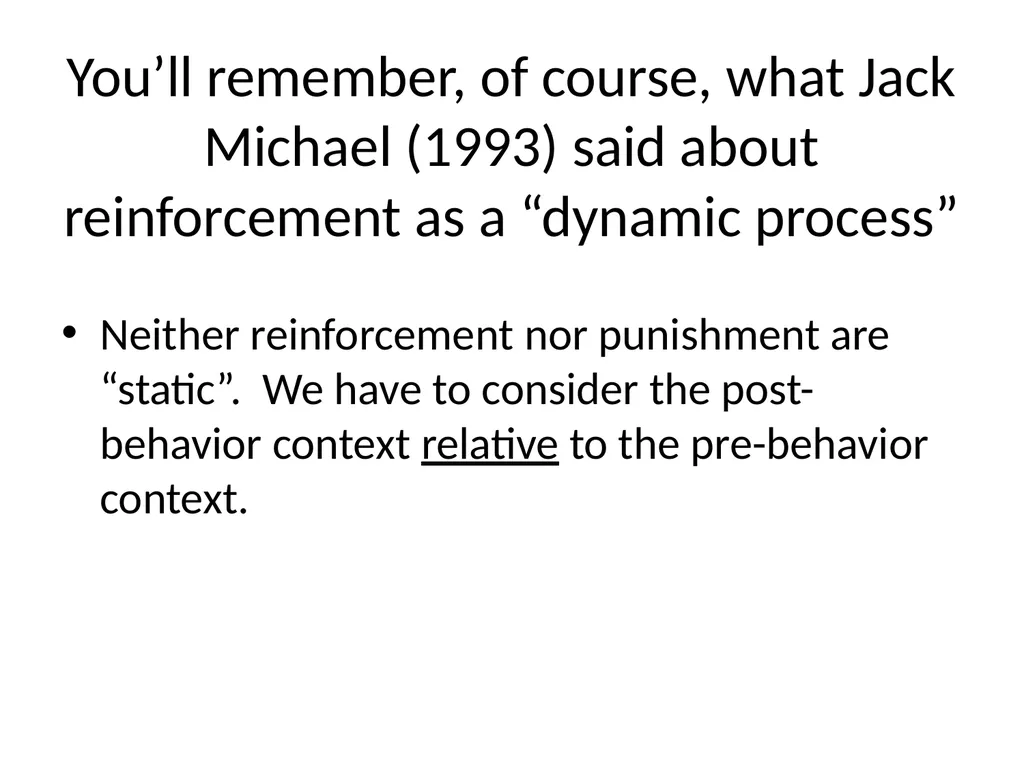
slide7. You’ll remember, of course, what Jack Michael (1993) said about reinforcement as a “dynamic process” Neither reinforcement nor punishment are “static”. We have to consider the post-behavior context relative to the pre-behavior context.<br>
slide8. This suggests at least 2 broad options Make the “post” that much better or make the “pre” that much worse. When things are going pretty well, we focus primarily upon making the world better after cooperation. When the student is non-cooperative, we shouldn’t look for ways to make the world better if he will cooperate or remind him what he “is working for”, but we need to consider what things are contingent upon cooperation.<br>
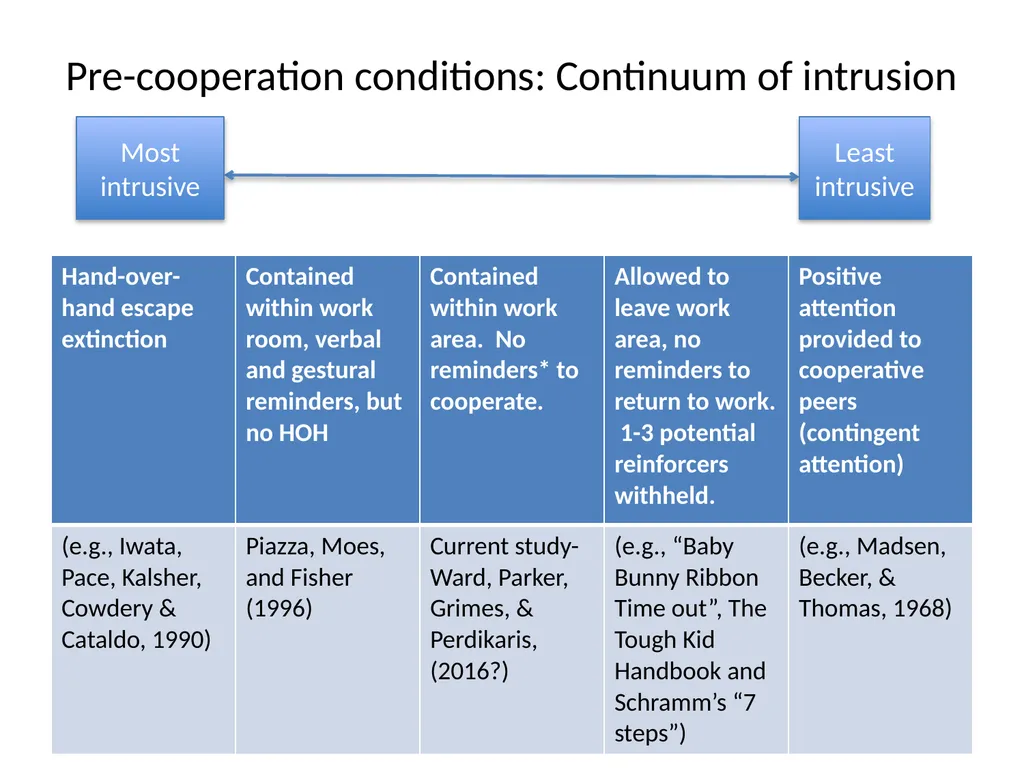
slide9. Pre-cooperation conditions: Continuum of intrusion Most intrusive Least intrusive<br>
slide10. Advantages of wait outs? Wait outs can usually be implemented without physical contact, decreasing the possibility of aggression
It can be difficult to clearly distinguish pure escape/avoidance from behavior also maintained by attention. “Wait outs” make attention* contingent upon readiness.
For those who don’t like attention, the procedure can help to condition attention as a reinforcer, removed from the “nag” context and put into the “moving forward” context.<br>
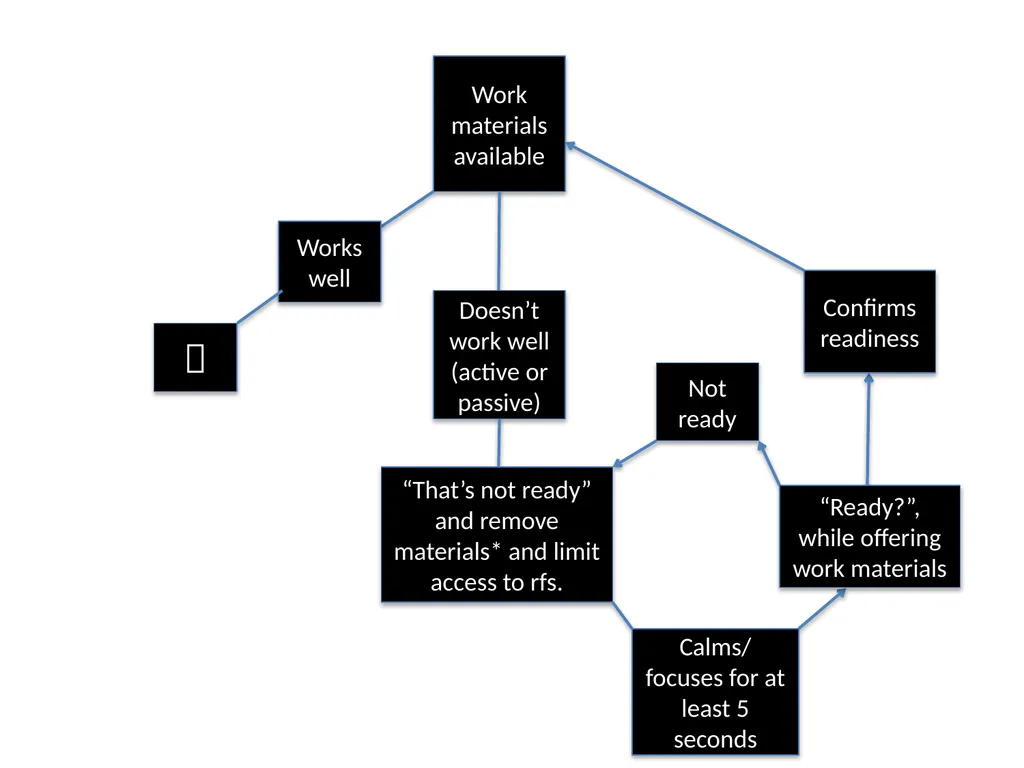
slide11. Work materials available Works well Doesn’t work well (active or passive) “That’s not ready” and remove materials* and limit access to rfs. Calms/focuses for at least 5 seconds “Ready?”, while offering work materials Confirms readiness Not ready<br>
slide12. So, we’re following inappropriate escape behaviors with escape?<br>
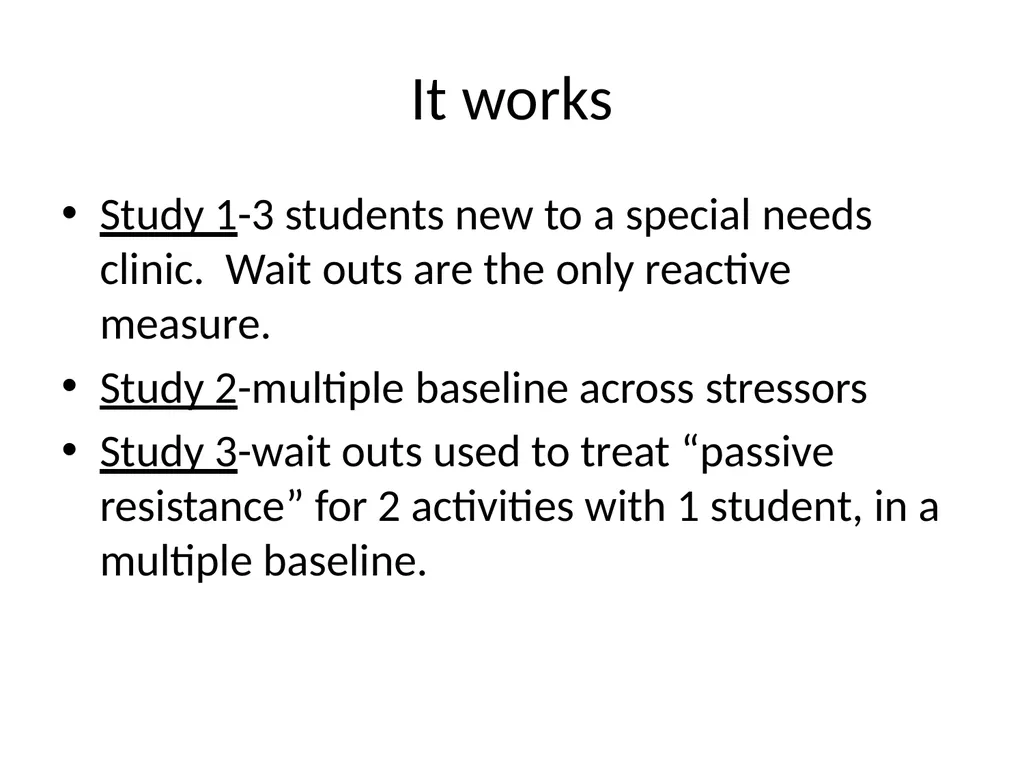
slide13. It works Study 1-3 students new to a special needs clinic. Wait outs are the only reactive measure.
Study 2-multiple baseline across stressors
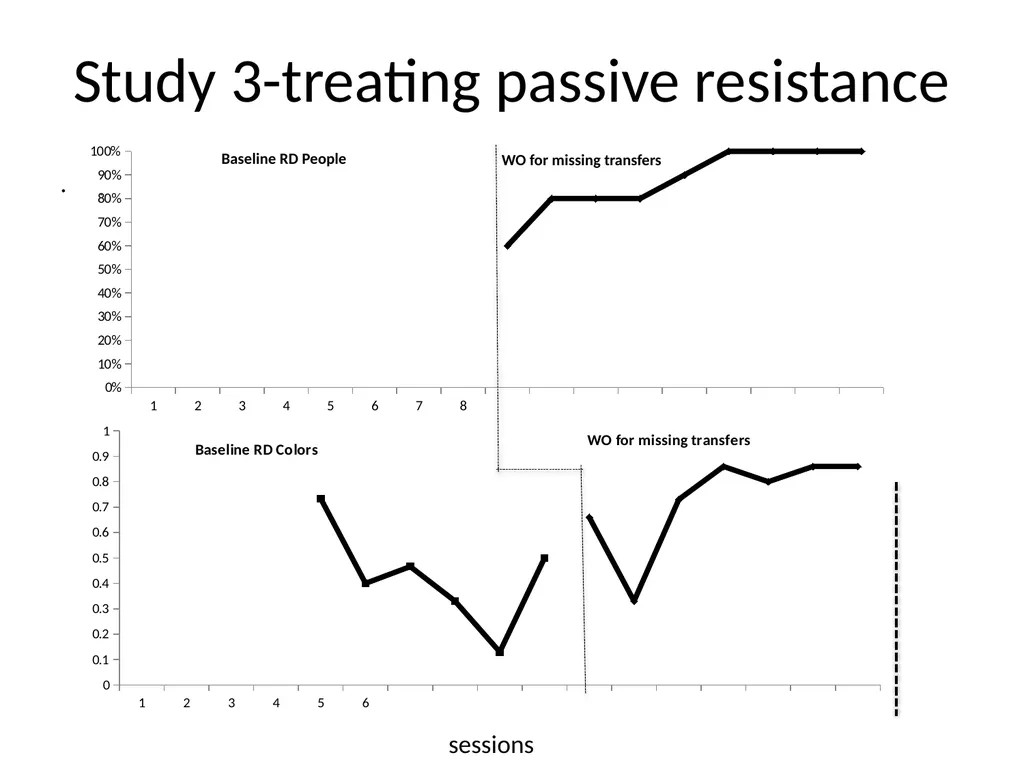
Study 3-wait outs used to treat “passive resistance” for 2 activities with 1 student, in a multiple baseline.<br>
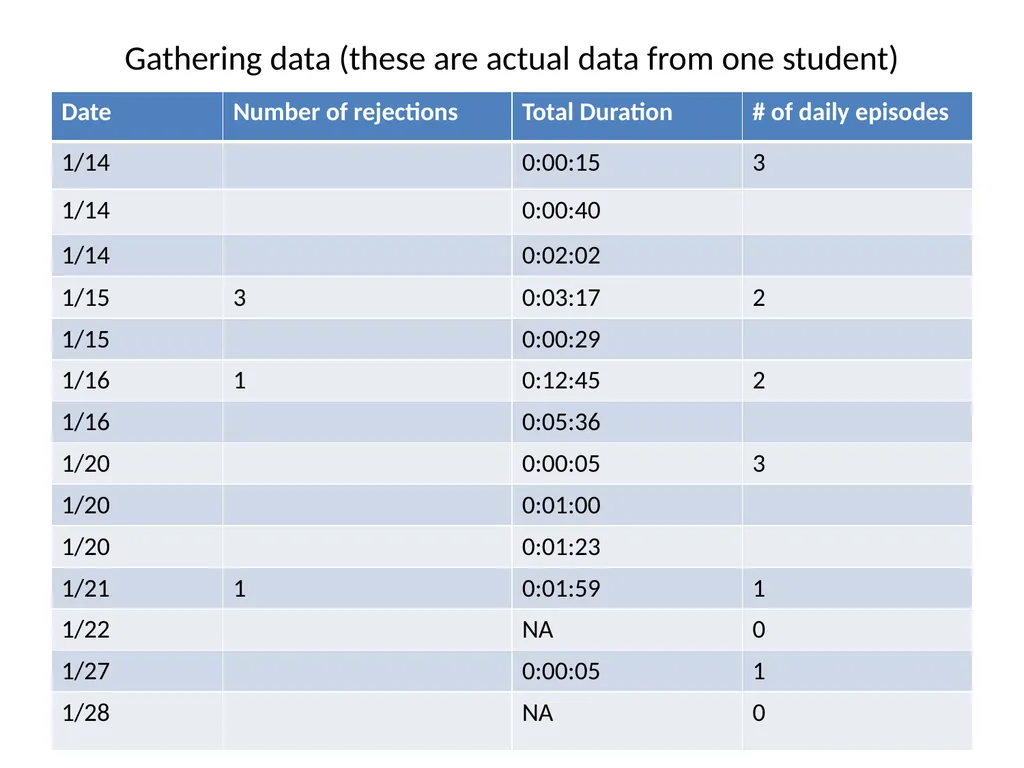
slide14. Gathering data (these are actual data from one student)<br>
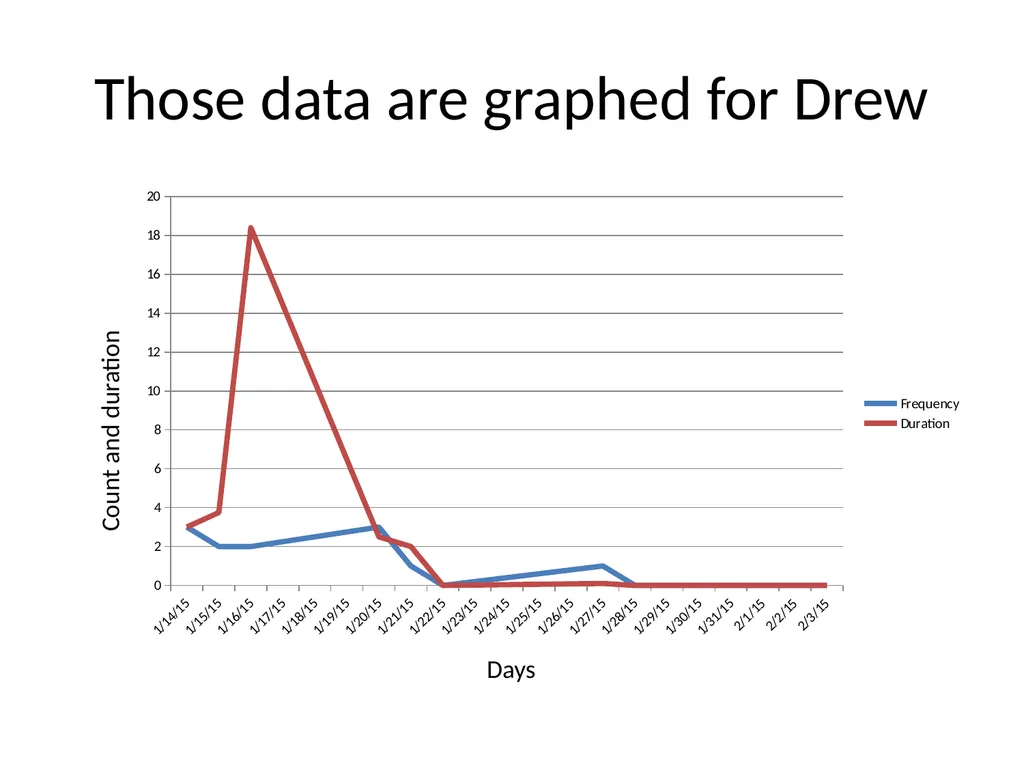
slide15. Those data are graphed for Drew Count and duration Days<br>
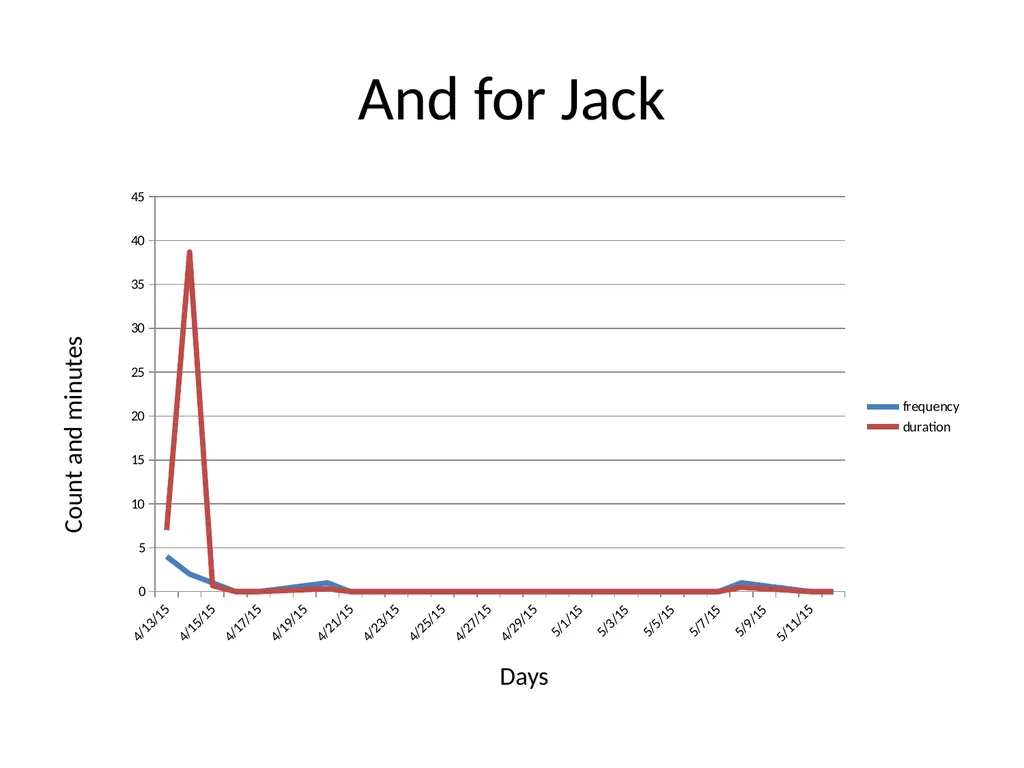
slide16. And for Jack Count and minutes Days<br>
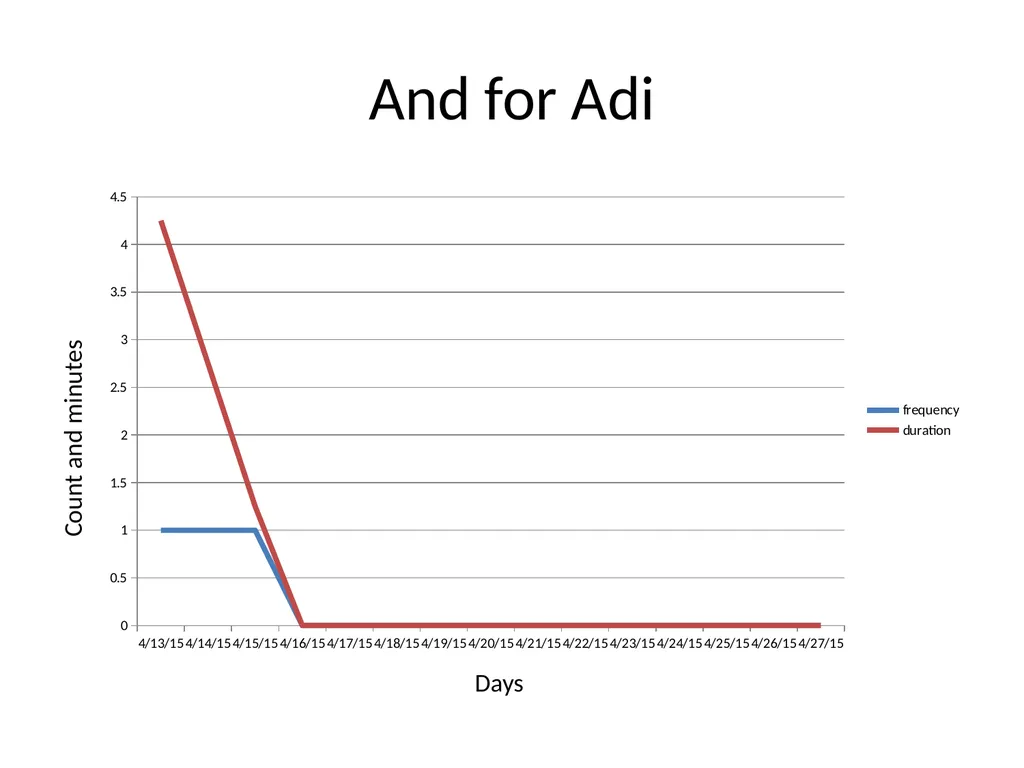
slide17. And for Adi Count and minutes Days<br>
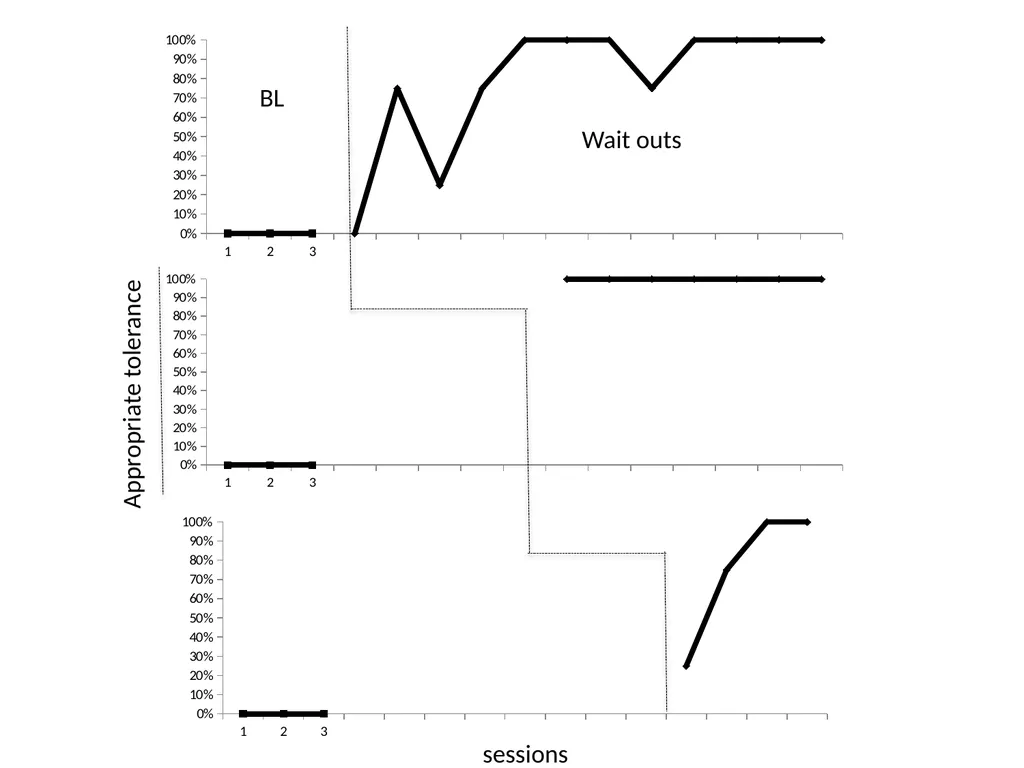
slide18. Appropriate tolerance BL Wait outs sessions<br>
slide19. Study 3-treating passive resistance . sessions<br>
slide20. Potential benefits in comparison to escape extinction Less confrontational
CMO-R becomes conditioned rf (opportunity to move forward). *This is a step towards self-management and the efficacy of delayed consequences.
Especially for less-disruptive students, wait outs are much more practical than escape extinction in classroom environments
Social validity<br>
slide21. Common errors Failing to use positioning to clarify communication
Representing work without asking whether “ready?” (same as “nag” procedure)
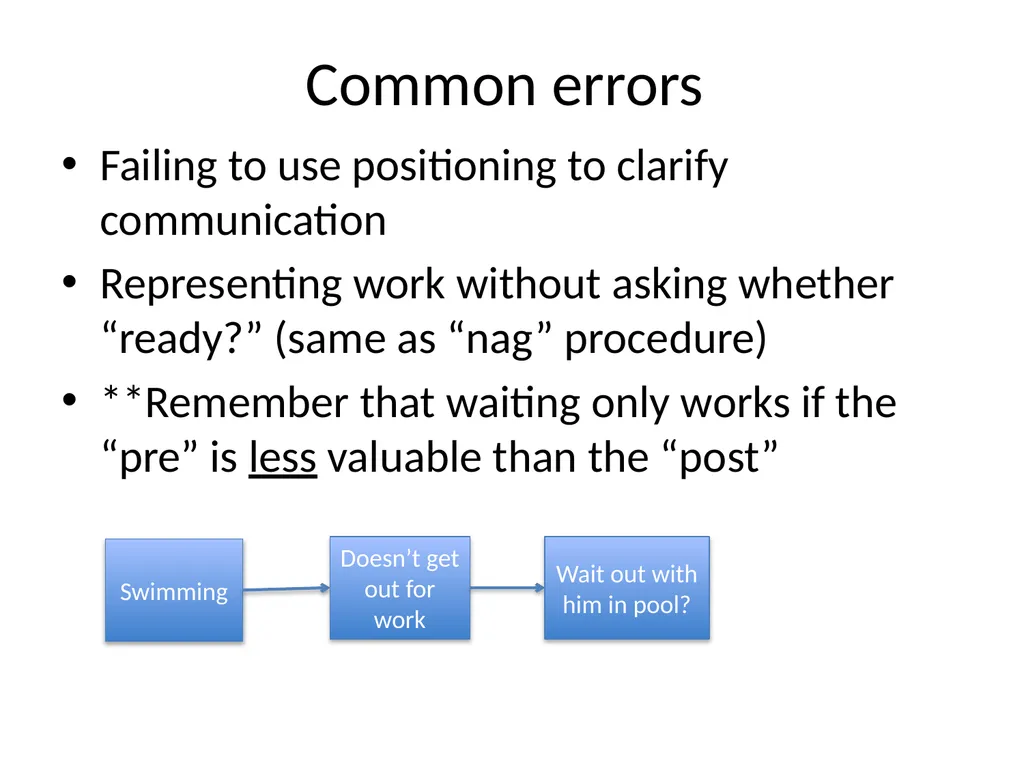
**Remember that waiting only works if the “pre” is less valuable than the “post” Swimming Doesn’t get out for work Wait out with him in pool?<br>
slide22. Limitations The more a student is truly into self-stimulatory behavior, the harder “wait outs” are to use effectively (requires frequent blocking of self-stimulatory behavior)<br>
Whole Child Consulting, LLC
www.wholechildconsulting.com
http://www.facebook.com/wholechildconsulting<br>
slide2. Escape behavior is a problem Escape/avoidance is the most common function of SIB (38.1%) (Iwata, et al, 1994)
Students of all types postpone work, and some have devised elaborate or intense escape/avoidance routines
For students learning in a group format, the more they avoid, the further behind they become, the more they need to avoid<br>
slide3. Some Proactive measures Condition tasks as reinforcers
Frequent reinforcement
Demand fading
Errorless teaching (*sometimes the opposite of helpful)
Curricular revision
Visual schedules<br>
slide4. Usually more effective when combined with escape extinction Escape extinction has been used effectively as a treatment component (e.g., combined with demand fading) (Mason & Iwata, 1990; Pace, Iwata, Cowdery, Andree, & McIntyre, 1993; Steege, Wacker, Berg, Cigrand, & Cooper, 1989)
This is usually* true, except when escape extinction causes more problems than it solves (e.g., Selina)<br>
slide5. Escape extinction can have negative side effects Aggression, increased frequency and intensity of target behavior (Goh & Iwata, 1994; Lerman, Iwata, & Wallace, 1999)
Condition teacher and/or activities as aversives<br>
slide6. What EXACTLY does escape extinction look like? “Sit there until you’re finished”
Nag (repeated verbal SD’s)
Hand-over-hand
How long, how often, contingent upon what behaviors, how much feedback?
There are several variable dimensions in need of exploration<br>
slide7. You’ll remember, of course, what Jack Michael (1993) said about reinforcement as a “dynamic process” Neither reinforcement nor punishment are “static”. We have to consider the post-behavior context relative to the pre-behavior context.<br>
slide8. This suggests at least 2 broad options Make the “post” that much better or make the “pre” that much worse. When things are going pretty well, we focus primarily upon making the world better after cooperation. When the student is non-cooperative, we shouldn’t look for ways to make the world better if he will cooperate or remind him what he “is working for”, but we need to consider what things are contingent upon cooperation.<br>
slide9. Pre-cooperation conditions: Continuum of intrusion Most intrusive Least intrusive<br>
slide10. Advantages of wait outs? Wait outs can usually be implemented without physical contact, decreasing the possibility of aggression
It can be difficult to clearly distinguish pure escape/avoidance from behavior also maintained by attention. “Wait outs” make attention* contingent upon readiness.
For those who don’t like attention, the procedure can help to condition attention as a reinforcer, removed from the “nag” context and put into the “moving forward” context.<br>
slide11. Work materials available Works well Doesn’t work well (active or passive) “That’s not ready” and remove materials* and limit access to rfs. Calms/focuses for at least 5 seconds “Ready?”, while offering work materials Confirms readiness Not ready<br>
slide12. So, we’re following inappropriate escape behaviors with escape?<br>
slide13. It works Study 1-3 students new to a special needs clinic. Wait outs are the only reactive measure.
Study 2-multiple baseline across stressors
Study 3-wait outs used to treat “passive resistance” for 2 activities with 1 student, in a multiple baseline.<br>
slide14. Gathering data (these are actual data from one student)<br>
slide15. Those data are graphed for Drew Count and duration Days<br>
slide16. And for Jack Count and minutes Days<br>
slide17. And for Adi Count and minutes Days<br>
slide18. Appropriate tolerance BL Wait outs sessions<br>
slide19. Study 3-treating passive resistance . sessions<br>
slide20. Potential benefits in comparison to escape extinction Less confrontational
CMO-R becomes conditioned rf (opportunity to move forward). *This is a step towards self-management and the efficacy of delayed consequences.
Especially for less-disruptive students, wait outs are much more practical than escape extinction in classroom environments
Social validity<br>
slide21. Common errors Failing to use positioning to clarify communication
Representing work without asking whether “ready?” (same as “nag” procedure)
**Remember that waiting only works if the “pre” is less valuable than the “post” Swimming Doesn’t get out for work Wait out with him in pool?<br>
slide22. Limitations The more a student is truly into self-stimulatory behavior, the harder “wait outs” are to use effectively (requires frequent blocking of self-stimulatory behavior)<br>