Taste Dr Mohammed Jeelani Specific learning outcomes Outline different types of taste Describe the taste pathway Explain the role in nutrition. Taste (primary taste sensations) Sweet: organic substances (polysaccharides, glycerols,
"Taste Dr Mohammed Jeelani Specific learning" is the property of its rightful owner. Permission is granted to
download and print the materials on this website for personal, non-commercial use only, and to display it
on your personal computer provided you do not modify the materials and that you retain all copyright
notices contained in the materials. By downloading content from our website, you accept the terms of this
agreement.
Presentation Transcript
01
Taste Dr Mohammed Jeelani<br>
02
Specific learning outcomes Outline different types of taste
Describe the taste pathway
Explain the role in nutrition.<br>
03
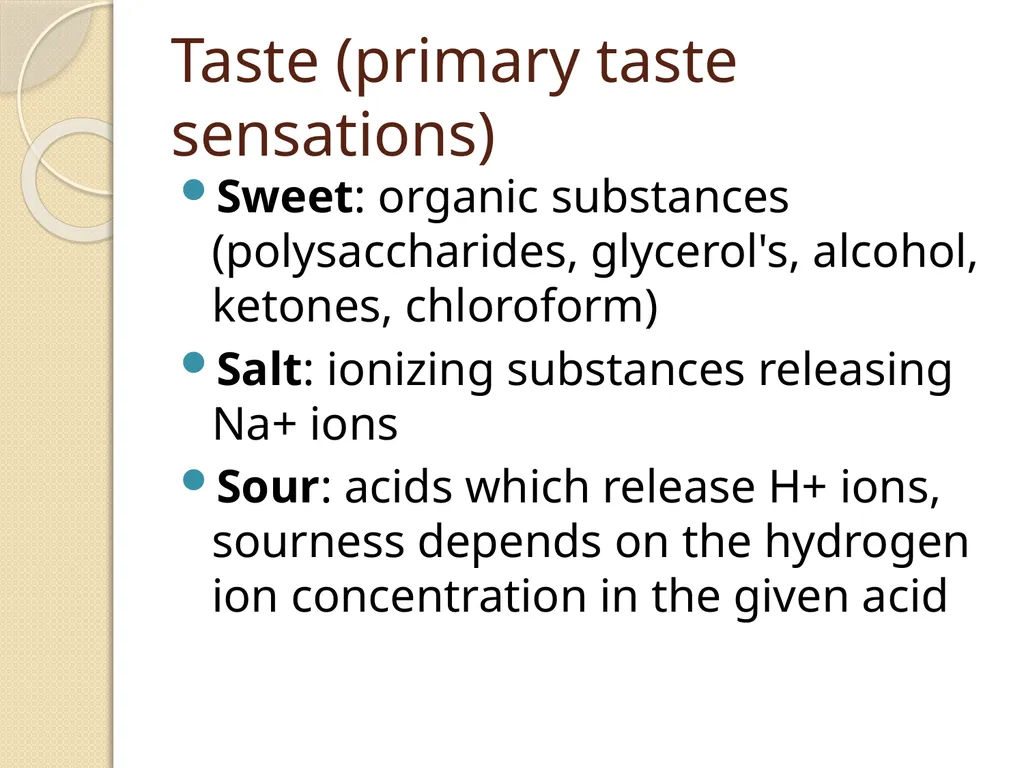
Taste (primary taste sensations) Sweet: organic substances (polysaccharides, glycerol's, alcohol, ketones, chloroform)
Salt: ionizing substances releasing Na+ ions
Sour: acids which release H+ ions, sourness depends on the hydrogen ion concentration in the given acid<br>
04
Bitter: alkaloids like quinine
Organic compounds like morphine, caffeine, urea, inorganic salts of magnisium, ammonia and calcium
Due to cations
Umami: pleasant and sweet taste sensation
Produced by monosodium glutamate (MSG)<br>
05
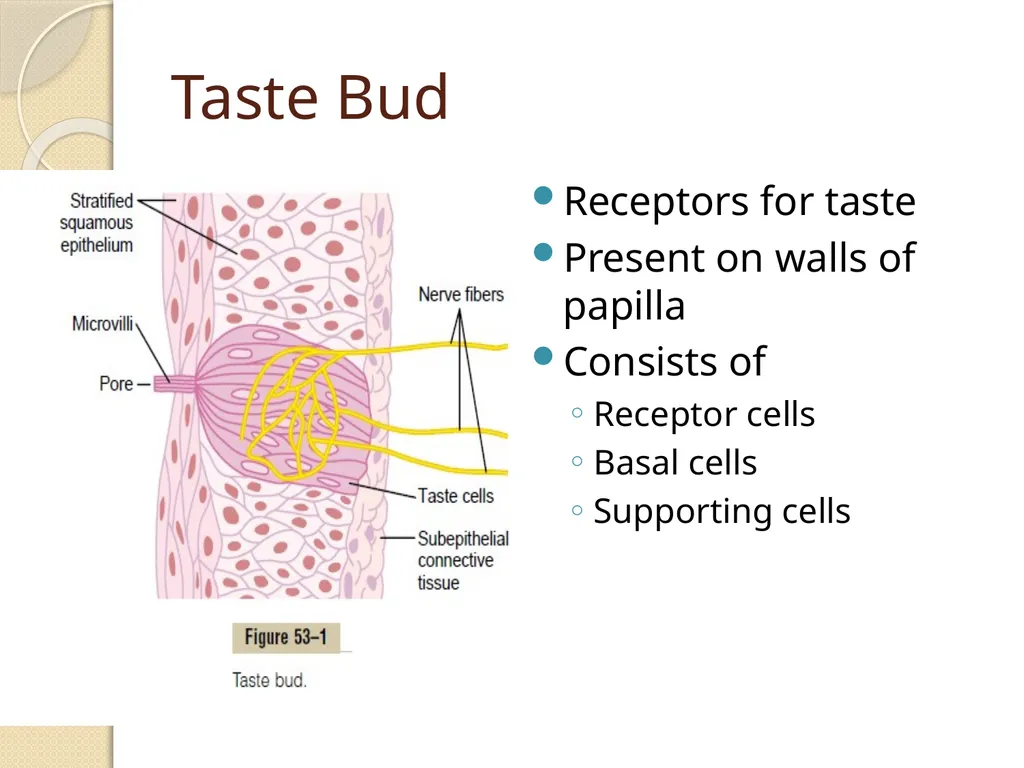
Taste Bud Receptors for taste
Present on walls of papilla
Consists of
Receptor cells
Basal cells
Supporting cells<br>
06
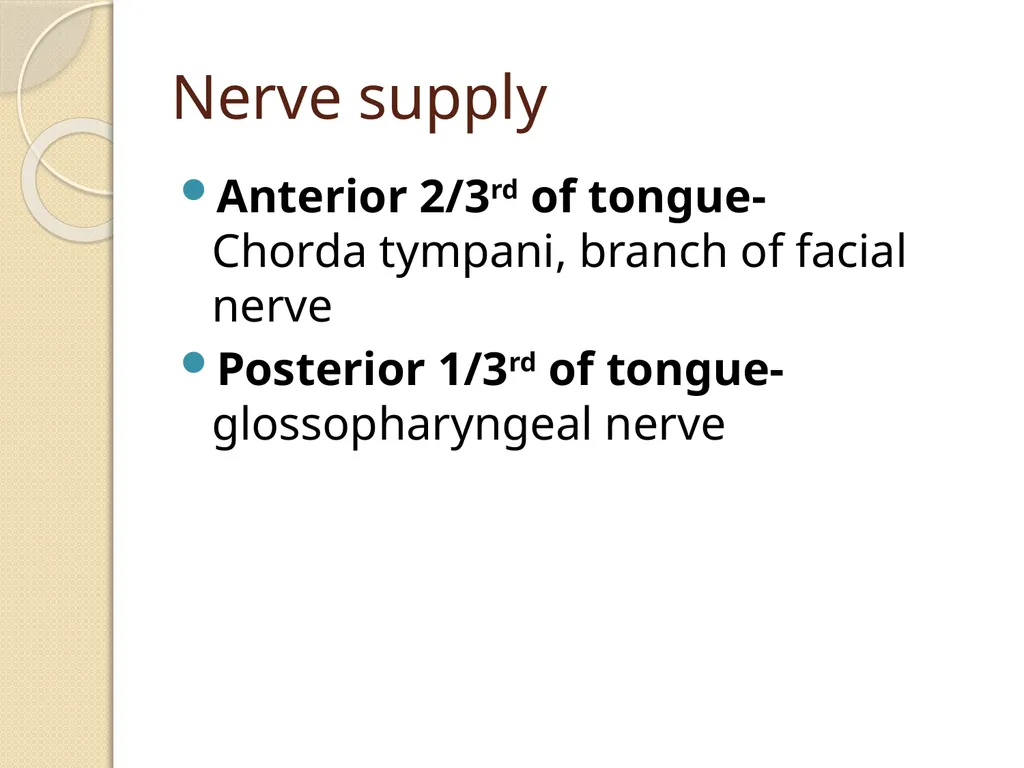
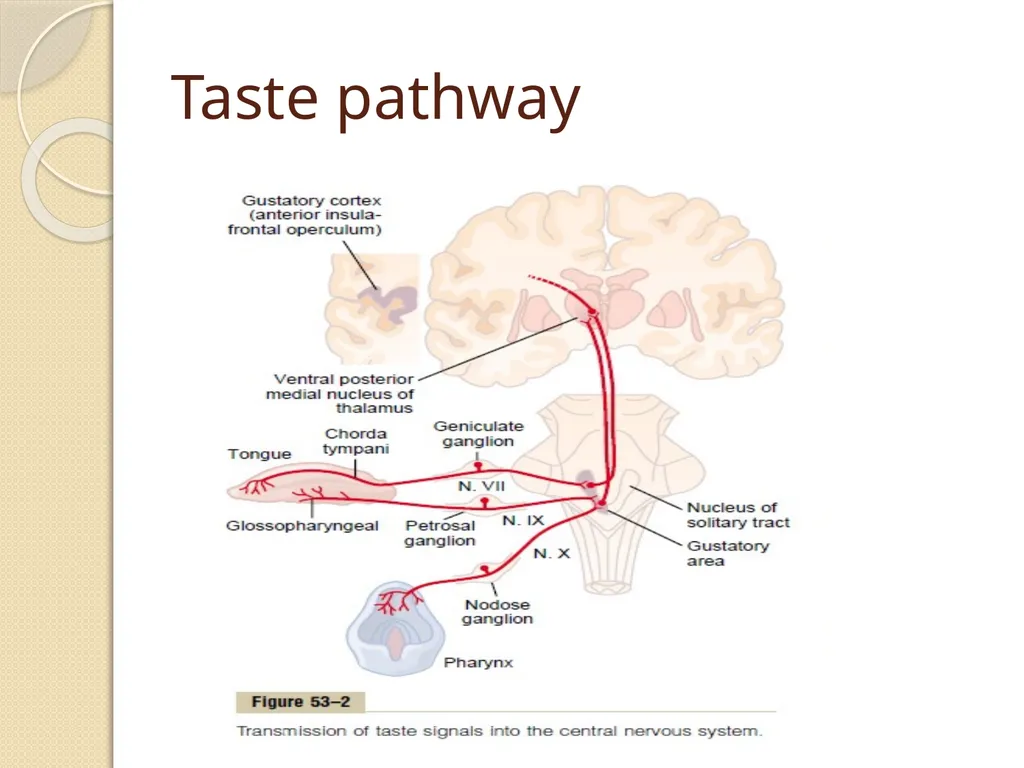
Nerve supply Anterior 2/3rd of tongue- Chorda tympani, branch of facial nerve
Posterior 1/3rd of tongue- glossopharyngeal nerve<br>
07
Taste pathway<br>
08
Mechanism of appreciation of taste Taste producing substance dissolves in saliva and comes in contact with the villi through the taste pores present in the taste bud
This brings changes in receptors cells, resulting in generation of generator potential
Causes release of neurotransmitter at the synapse between receptor cell and sensory nerve<br>
09
Action potential is generated at the sensory neuron
Impulses from receptor cells are carried to foot of postcentral gyrus in parietal lobe of cerebral cortex where different taste sensations are appreciated<br>
10
Applied Ageusia : absence of taste sensation
Hypogeusia : decreased taste sensation
Dysgeusia or Parageusia : unpleasent perception of taste sensation<br>
11
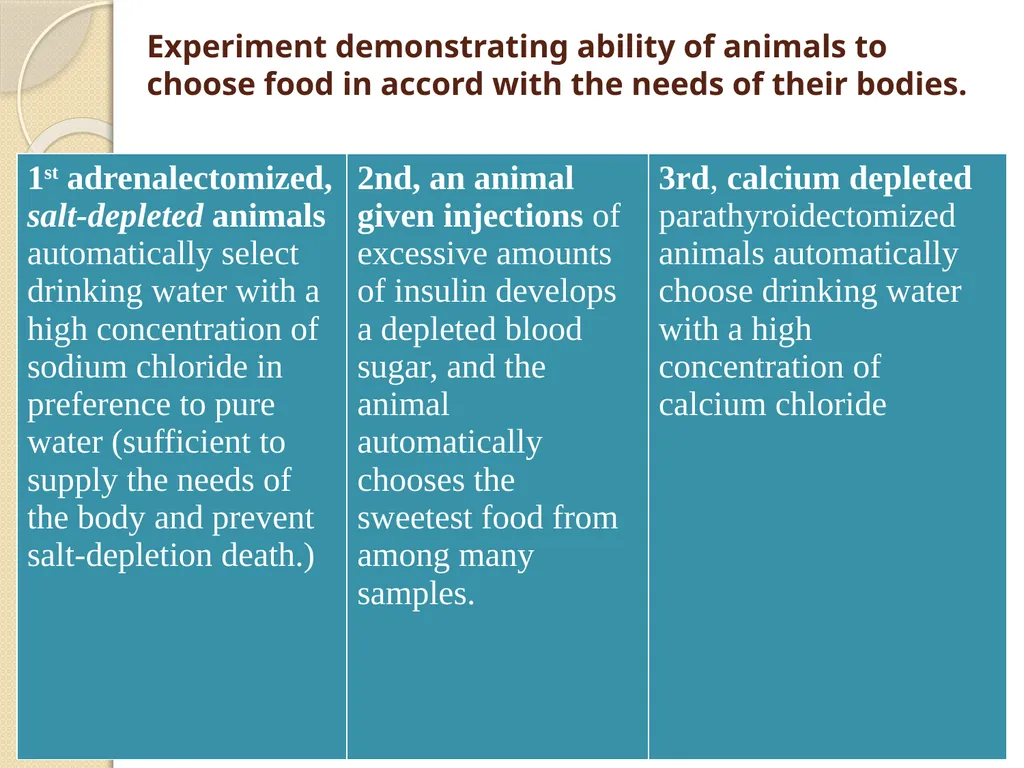
Role in nutrition Taste Preference and Control of the Diet
Choose certain types of food in preference to others
Taste preferences often change in accord with the body’s need for certain specific substances.
.<br>
12
Experiment demonstrating ability of animals to choose food in accord with the needs of their bodies.<br>
13
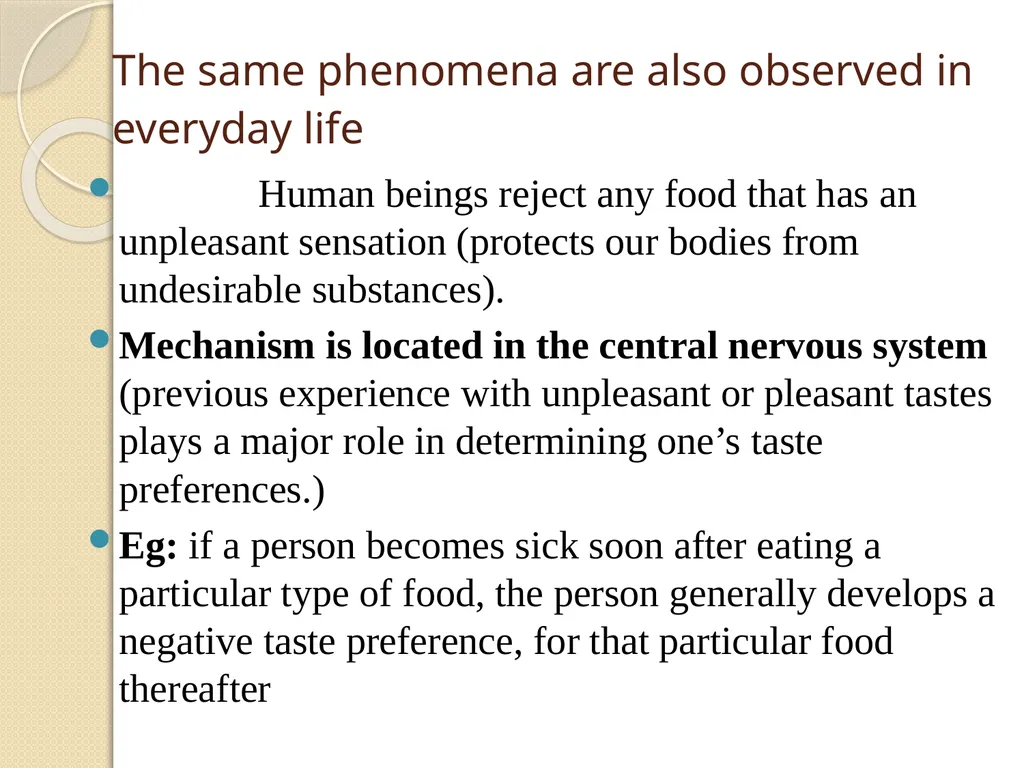
The same phenomena are also observed in everyday life Human beings reject any food that has an unpleasant sensation (protects our bodies from undesirable substances).
Mechanism is located in the central nervous system (previous experience with unpleasant or pleasant tastes plays a major role in determining one’s taste preferences.)
Eg: if a person becomes sick soon after eating a particular type of food, the person generally develops a negative taste preference, for that particular food thereafter<br>
14
References Guyton and Hall Textbook of Medical Physiology 13th Edition (Saunders 2016) Chapter 54, pp. 685-688<br>