
TCA’s Experience in IT Audit IT Audit Group
Description: TCAs Experience in IT Audit IT Audit Group Turkish Court of Accounts - TCA Milestones Establishment of Computer-Assisted Audit Group (1997) First IT audit (2002) Twinning Project for Strengthening Audit Capacity of TCA (2005-2007) IT audit
Related Topics
Download Presentation
"TCA’s Experience in IT Audit IT Audit Group" is the property of its rightful owner. Permission is granted to download and print the materials on this website for personal, non-commercial use only, and to display it on your personal computer provided you do not modify the materials and that you retain all copyright notices contained in the materials. By downloading content from our website, you accept the terms of this agreement.
Presentation Transcript
slide1. TCA’s Experience
in IT Audit IT Audit Group
Turkish Court of Accounts - TCA<br>
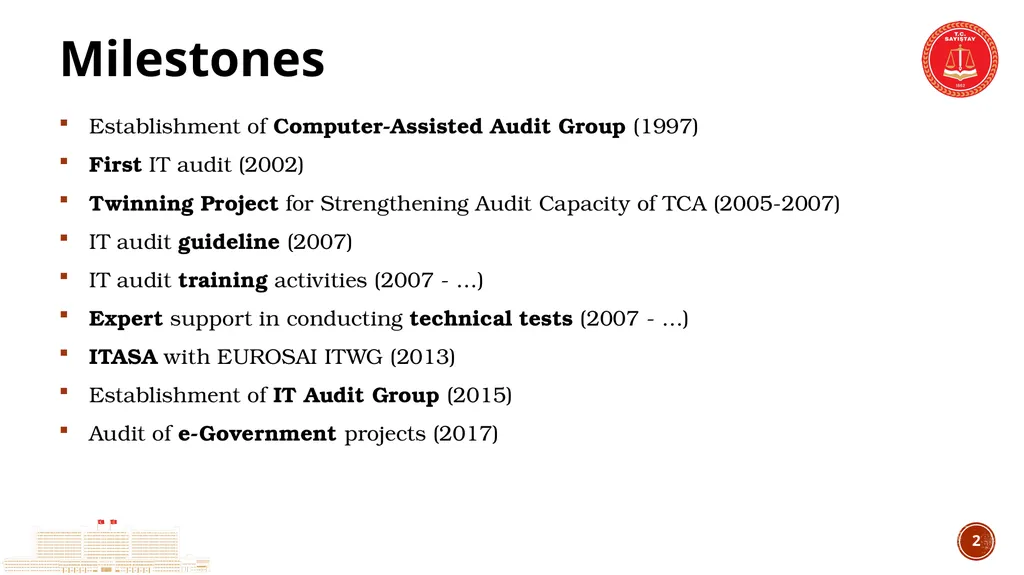
slide2. Milestones Establishment of Computer-Assisted Audit Group (1997)
First IT audit (2002)
Twinning Project for Strengthening Audit Capacity of TCA (2005-2007)
IT audit guideline (2007)
IT audit training activities (2007 - …)
Expert support in conducting technical tests (2007 - …)
ITASA with EUROSAI ITWG (2013)
Establishment of IT Audit Group (2015)
Audit of e-Government projects (2017) 1<br>
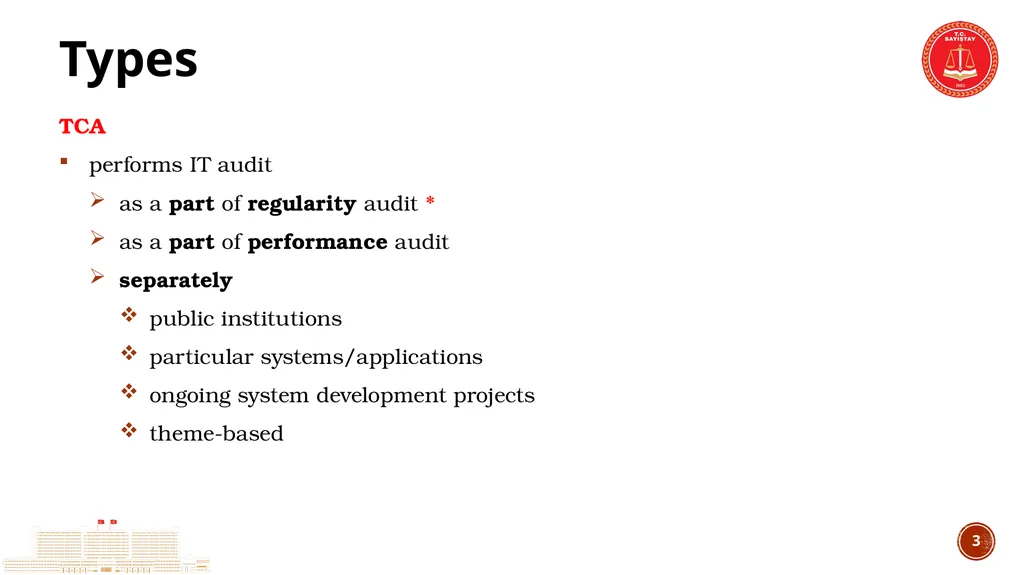
slide3. Types TCA
performs IT audit
as a part of regularity audit *
as a part of performance audit
separately
public institutions
particular systems/applications
ongoing system development projects
theme-based 2<br>
slide4. Levels IT Audit as a part of Regularity Audit
Assessment of basic level IT controls (by generalist auditors)
IT audit (by IT auditors) 3<br>
slide5. Assessment of Basic Level IT Controls No need for in-depth IT audit knowledge - performed by generalist auditors
Conducted in accordance with «Regularity Audit Guideline»
Conducted in every regularity audit
Determine which business workflows are carried out in the IT environment and outputs of which systems affect accounting data and financial statements
Compulsory audit procedures relating to IT controls
IT governance/management, information security, operation and maintenance, business continuity and disaster recovery planning, outsourcing, project management and application controls
Control weaknesses are reported along with recommendations 4<br>
slide6. IT Audit Conducted under the responsibility of «IT Audit Group»
Performed by IT auditors
Conducted in accordance with «IT Audit Guideline»
Separately reported - «Information Systems Audit/Evaluation Report» 5<br>
slide7. Audit Approach Determine the risks concerning the examined information systems
Identify the necessary control mechanisms that can minimize these risks
Check whether these IT controls are established, and if so, whether they are functioning effectively or not
Assess the weaknesses in IT controls
Report the obtained findings according to a certain procedure 6<br>
slide8. Information Criteria
Confidentiality
Integrity
Availability
Reliability
Efficiency
Effectiveness
Compliance 7 Audit Criteria<br>
slide9. Confidentiality >> concerns the protection of sensitive information from unauthorised disclosure
Integrity >> relates to the accuracy and completeness of information as well as to its validity in accordance with business values and expectations
Availability >> relates to information being available when required by the business process now and in the future
Reliability >> relates to the provision of appropriate information for management to operate the entity and exercise its fiduciary and governance responsibilities 8 Audit Criteria<br>
slide10. Efficiency >> concerns the provision of information through the optimal (most productive and economical) use of resources
Effectiveness >> deals with information being relevant and pertinent to the business process as well as being delivered in a timely, correct, consistent and usable manner
Compliance >> deals with complying with the laws, regulations and contractual arrangements to which the business process is subject 9 Audit Criteria<br>
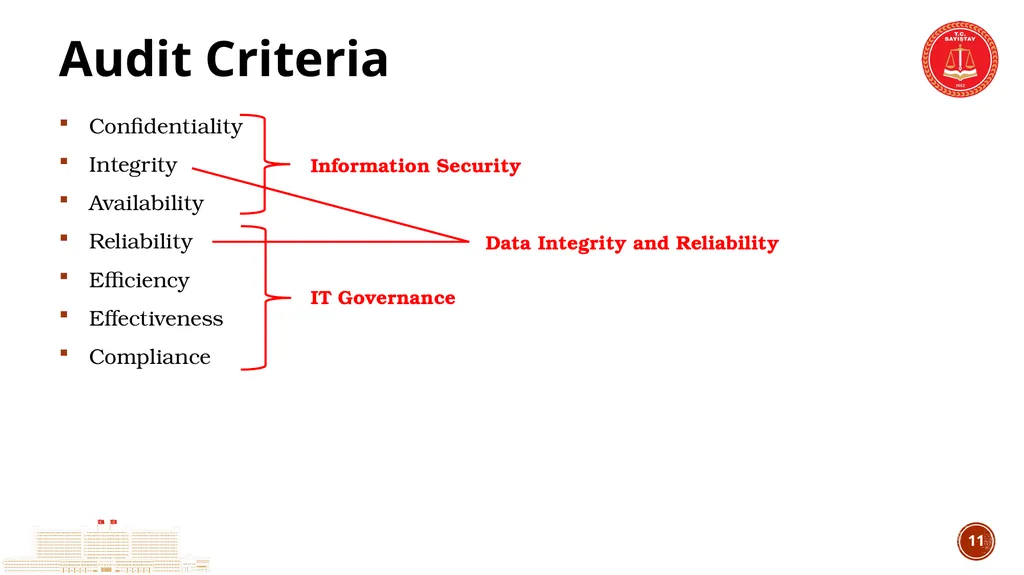
slide11. Confidentiality
Integrity
Availability
Reliability
Efficiency
Effectiveness
Compliance 10 Audit Criteria Information Security IT Governance Data Integrity and Reliability<br>
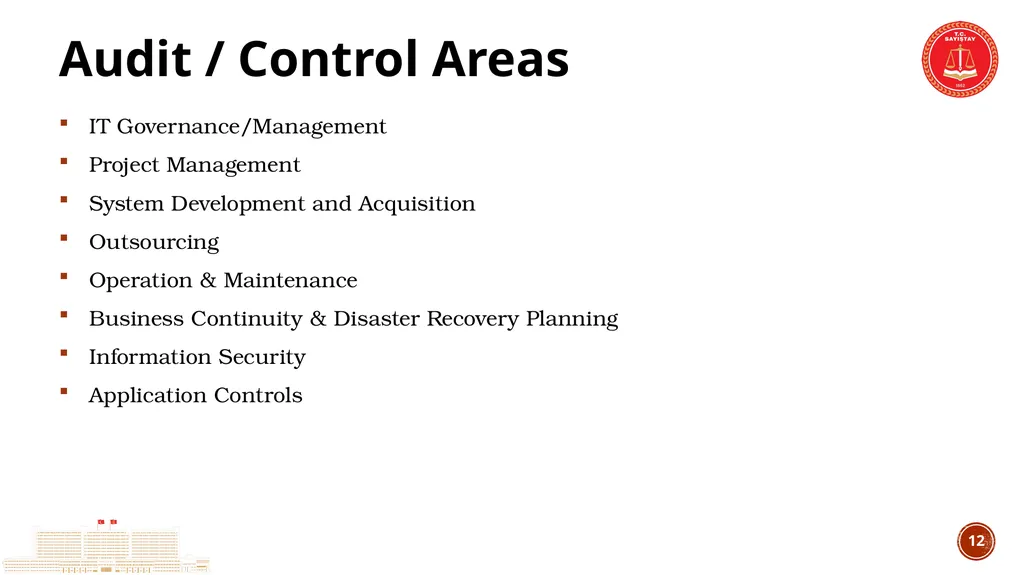
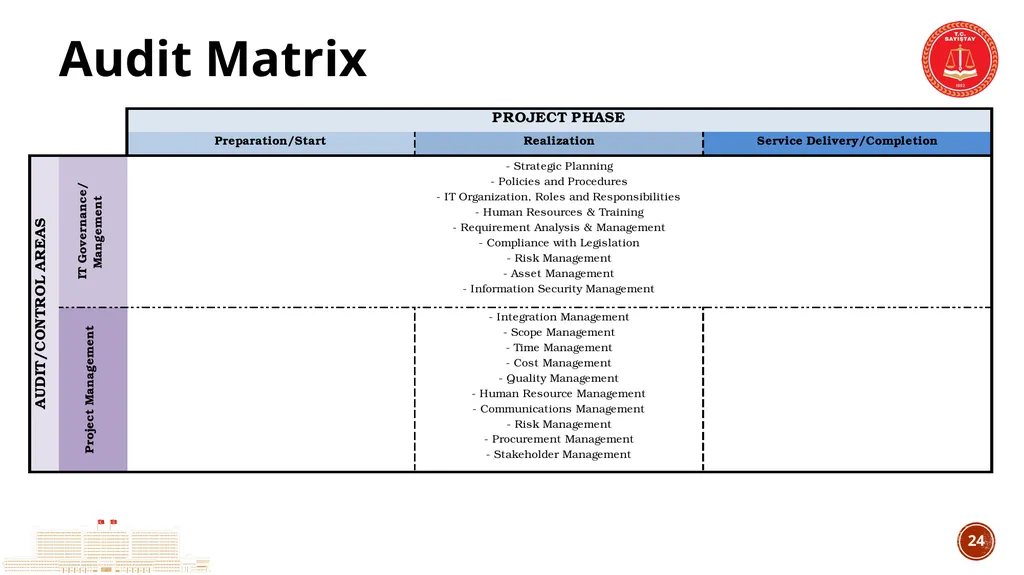
slide12. Audit / Control Areas IT Governance/Management
Project Management
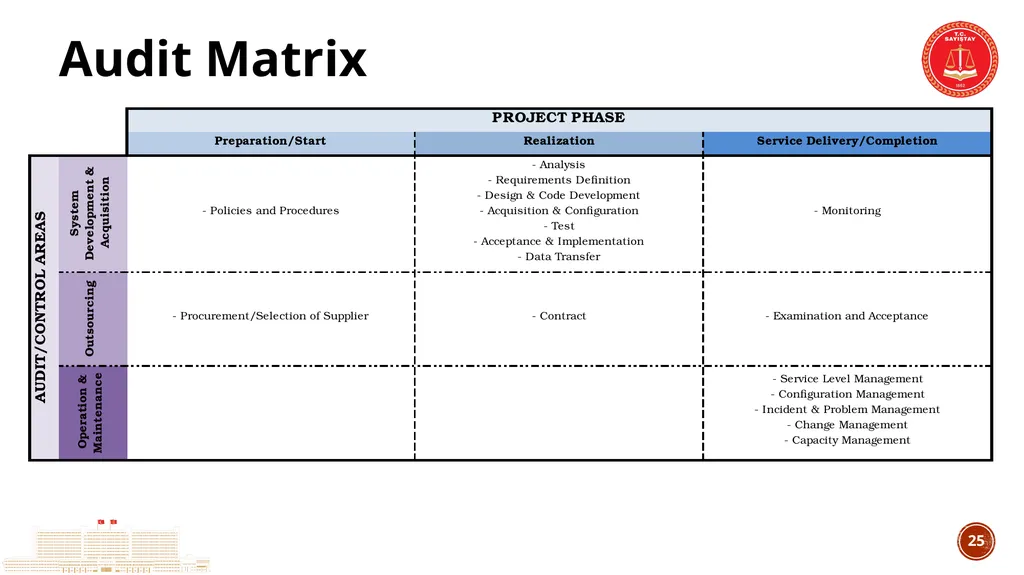
System Development and Acquisition
Outsourcing
Operation & Maintenance
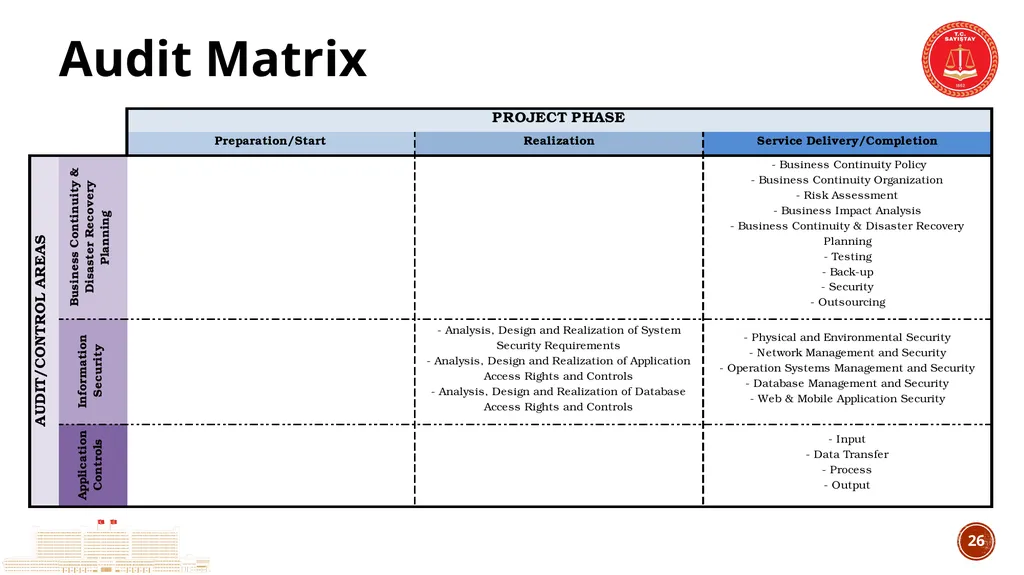
Business Continuity & Disaster Recovery Planning
Information Security
Application Controls 11<br>
slide13. e-Government Projects Current Situation
Transformation of public services to e-Government services by use of ICT
Modernization and/or integration of e-Government services
Growing number of e-Government projects 12<br>
slide14. e-Government Projects Current Situation
Decision making failures
Project requirements not described with sufficient clarity
Poor change management
Poor risk management
Information security requirements neglected
Roles and responsibilities not defined clearly
Lack of qualified staff
Communication failures with stakeholders & suppliers …
Low success rate in e-Government projects 13<br>
slide15. e-Government Projects Current Situation
e-Government projects not audited systematically
IT audits contribute to the success of e-Government projects
Efficient and generalized audit of e-Government projects 14<br>
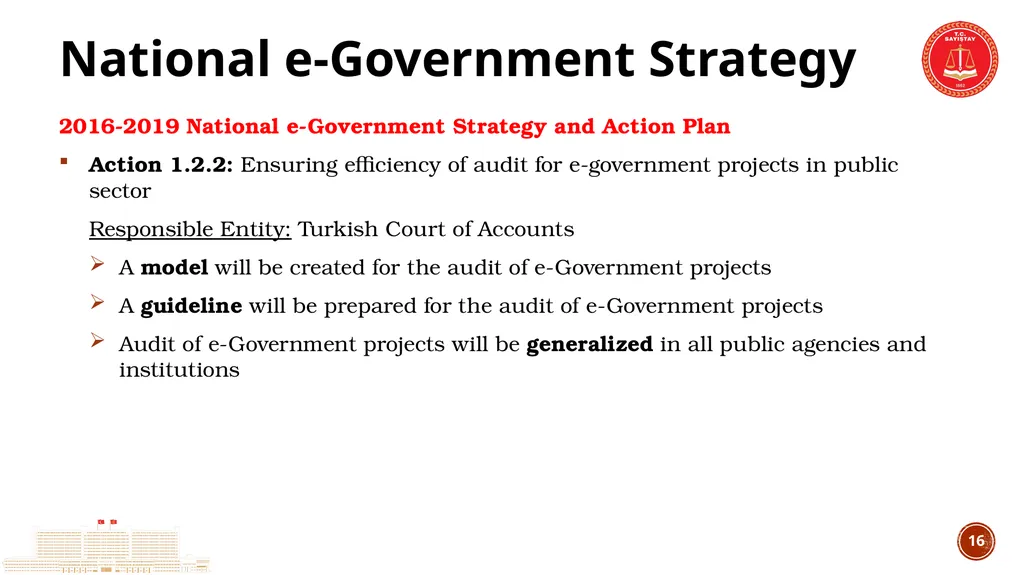
slide16. National e-Government Strategy 2016-2019 National e-Government Strategy and Action Plan
Action 1.2.2: Ensuring efficiency of audit for e-government projects in public sector
Responsible Entity: Turkish Court of Accounts
A model will be created for the audit of e-Government projects
A guideline will be prepared for the audit of e-Government projects
Audit of e-Government projects will be generalized in all public agencies and institutions 15<br>
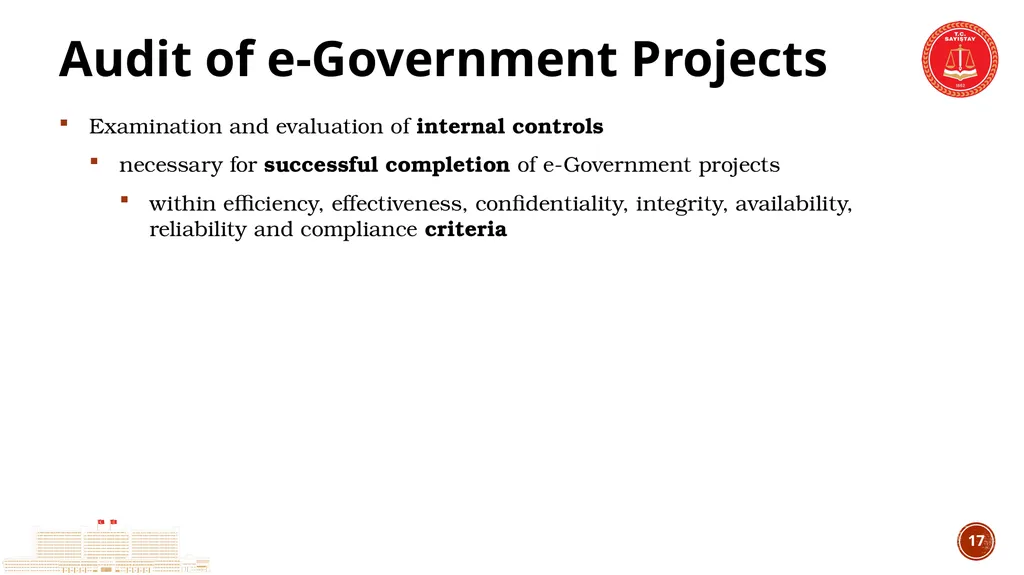
slide17. Audit of e-Government Projects Examination and evaluation of internal controls
necessary for successful completion of e-Government projects
within efficiency, effectiveness, confidentiality, integrity, availability, reliability and compliance criteria 16<br>
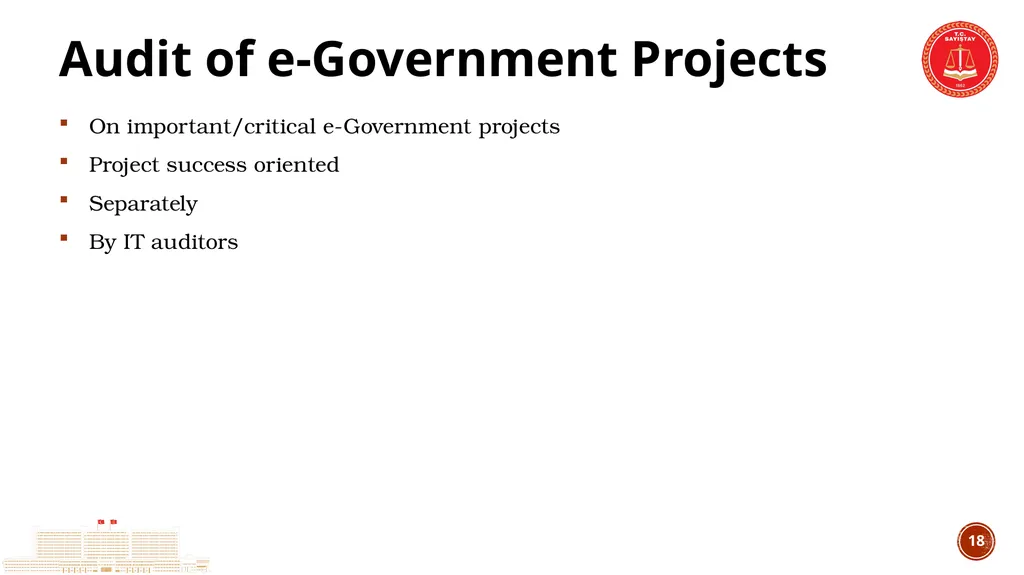
slide18. Audit of e-Government Projects On important/critical e-Government projects
Project success oriented
Separately
By IT auditors 17<br>
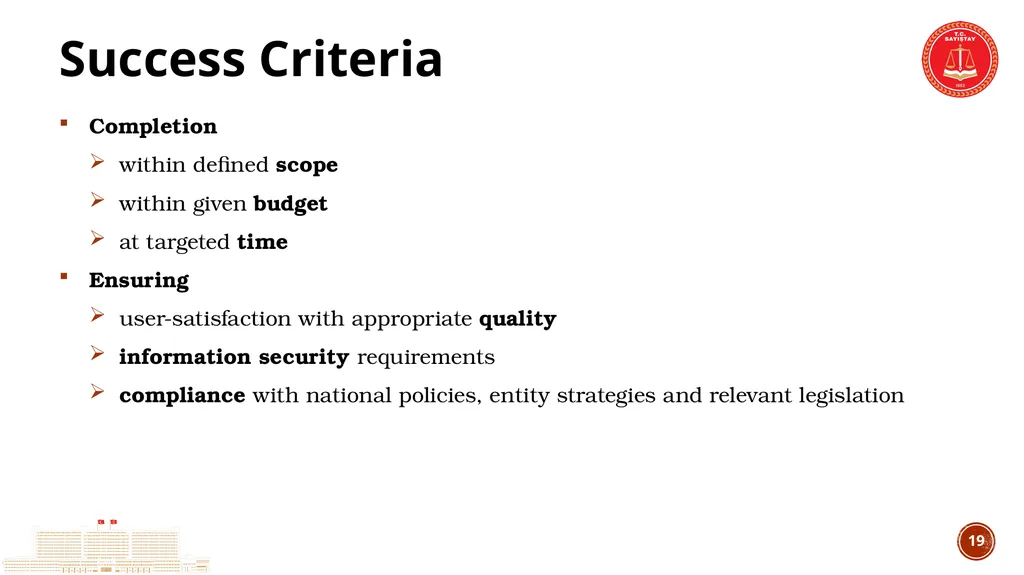
slide19. Success Criteria Completion
within defined scope
within given budget
at targeted time
Ensuring
user-satisfaction with appropriate quality
information security requirements
compliance with national policies, entity strategies and relevant legislation 18<br>
slide20. Audit Criteria Information criteria
Efficiency
Effectiveness
Confidentiality
Integrity
Availability
Reliability
Compliance 19<br>
slide21. Audit Criteria Principles defined in respective regulations on e-Government
Transparency
Accountability
User oriented
Participation
Creating added-value
… 20<br>
slide22. Audit Steps Determine the type and the phase of the project
Identify the audit areas to examine
Determine risks
Identify the necessary controls
Check whether these controls are established, and if so, whether they are functioning effectively or not
Detect and assess control weaknesses
Report material control weaknesses 21<br>
slide23. Project Phases Preparation/start *
Realization *
Analysis
Design
Development
Testing
Integration/deployment
Service delivery/completion * 22<br>
slide24. Audit Matrix 23<br>
slide25. Audit Matrix 24<br>
slide26. Audit Matrix 25<br>
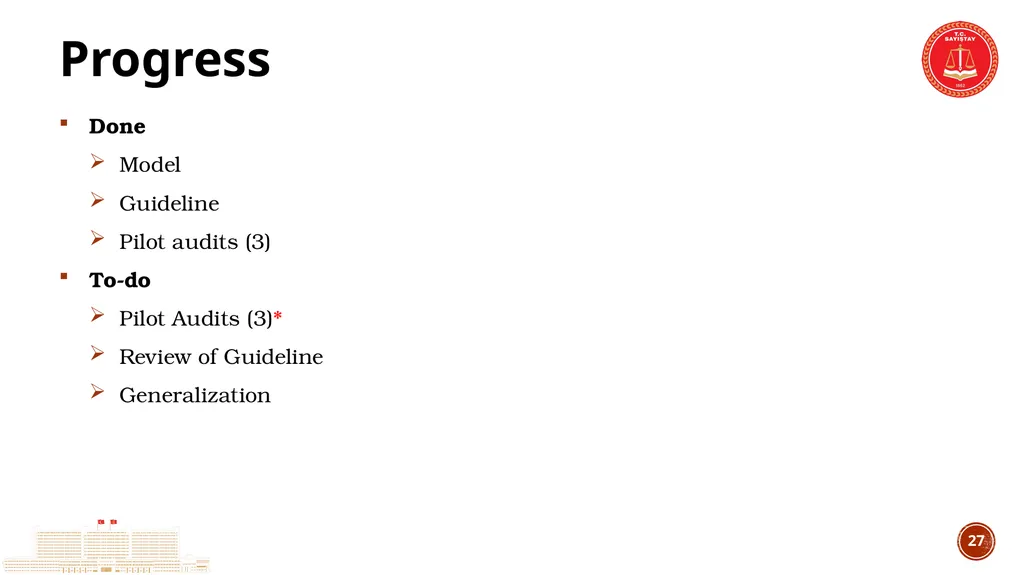
slide27. Progress Done
Model
Guideline
Pilot audits (3)
To-do
Pilot Audits (3)*
Review of Guideline
Generalization 26<br>
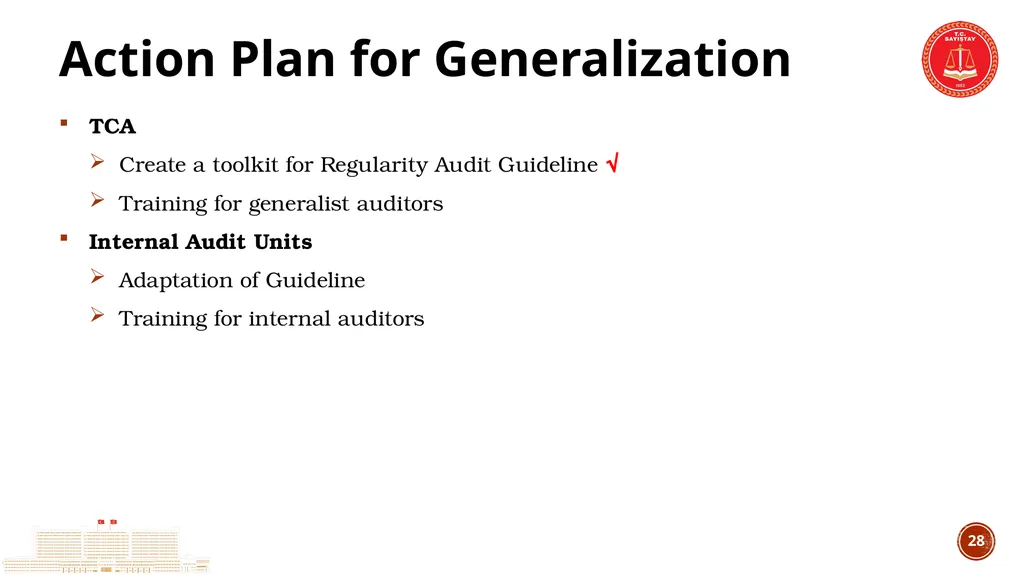
slide28. Action Plan for Generalization TCA
Create a toolkit for Regularity Audit Guideline √
Training for generalist auditors
Internal Audit Units
Adaptation of Guideline
Training for internal auditors 27<br>
slide29. Thank you for your attention… IT Audit Group Turkish Court of Accounts - TCA<br>
slide2. Milestones Establishment of Computer-Assisted Audit Group (1997)
First IT audit (2002)
Twinning Project for Strengthening Audit Capacity of TCA (2005-2007)
IT audit guideline (2007)
IT audit training activities (2007 - …)
Expert support in conducting technical tests (2007 - …)
ITASA with EUROSAI ITWG (2013)
Establishment of IT Audit Group (2015)
Audit of e-Government projects (2017) 1<br>
slide3. Types TCA
performs IT audit
as a part of regularity audit *
as a part of performance audit
separately
public institutions
particular systems/applications
ongoing system development projects
theme-based 2<br>
slide4. Levels IT Audit as a part of Regularity Audit
Assessment of basic level IT controls (by generalist auditors)
IT audit (by IT auditors) 3<br>
slide5. Assessment of Basic Level IT Controls No need for in-depth IT audit knowledge - performed by generalist auditors
Conducted in accordance with «Regularity Audit Guideline»
Conducted in every regularity audit
Determine which business workflows are carried out in the IT environment and outputs of which systems affect accounting data and financial statements
Compulsory audit procedures relating to IT controls
IT governance/management, information security, operation and maintenance, business continuity and disaster recovery planning, outsourcing, project management and application controls
Control weaknesses are reported along with recommendations 4<br>
slide6. IT Audit Conducted under the responsibility of «IT Audit Group»
Performed by IT auditors
Conducted in accordance with «IT Audit Guideline»
Separately reported - «Information Systems Audit/Evaluation Report» 5<br>
slide7. Audit Approach Determine the risks concerning the examined information systems
Identify the necessary control mechanisms that can minimize these risks
Check whether these IT controls are established, and if so, whether they are functioning effectively or not
Assess the weaknesses in IT controls
Report the obtained findings according to a certain procedure 6<br>
slide8. Information Criteria
Confidentiality
Integrity
Availability
Reliability
Efficiency
Effectiveness
Compliance 7 Audit Criteria<br>
slide9. Confidentiality >> concerns the protection of sensitive information from unauthorised disclosure
Integrity >> relates to the accuracy and completeness of information as well as to its validity in accordance with business values and expectations
Availability >> relates to information being available when required by the business process now and in the future
Reliability >> relates to the provision of appropriate information for management to operate the entity and exercise its fiduciary and governance responsibilities 8 Audit Criteria<br>
slide10. Efficiency >> concerns the provision of information through the optimal (most productive and economical) use of resources
Effectiveness >> deals with information being relevant and pertinent to the business process as well as being delivered in a timely, correct, consistent and usable manner
Compliance >> deals with complying with the laws, regulations and contractual arrangements to which the business process is subject 9 Audit Criteria<br>
slide11. Confidentiality
Integrity
Availability
Reliability
Efficiency
Effectiveness
Compliance 10 Audit Criteria Information Security IT Governance Data Integrity and Reliability<br>
slide12. Audit / Control Areas IT Governance/Management
Project Management
System Development and Acquisition
Outsourcing
Operation & Maintenance
Business Continuity & Disaster Recovery Planning
Information Security
Application Controls 11<br>
slide13. e-Government Projects Current Situation
Transformation of public services to e-Government services by use of ICT
Modernization and/or integration of e-Government services
Growing number of e-Government projects 12<br>
slide14. e-Government Projects Current Situation
Decision making failures
Project requirements not described with sufficient clarity
Poor change management
Poor risk management
Information security requirements neglected
Roles and responsibilities not defined clearly
Lack of qualified staff
Communication failures with stakeholders & suppliers …
Low success rate in e-Government projects 13<br>
slide15. e-Government Projects Current Situation
e-Government projects not audited systematically
IT audits contribute to the success of e-Government projects
Efficient and generalized audit of e-Government projects 14<br>
slide16. National e-Government Strategy 2016-2019 National e-Government Strategy and Action Plan
Action 1.2.2: Ensuring efficiency of audit for e-government projects in public sector
Responsible Entity: Turkish Court of Accounts
A model will be created for the audit of e-Government projects
A guideline will be prepared for the audit of e-Government projects
Audit of e-Government projects will be generalized in all public agencies and institutions 15<br>
slide17. Audit of e-Government Projects Examination and evaluation of internal controls
necessary for successful completion of e-Government projects
within efficiency, effectiveness, confidentiality, integrity, availability, reliability and compliance criteria 16<br>
slide18. Audit of e-Government Projects On important/critical e-Government projects
Project success oriented
Separately
By IT auditors 17<br>
slide19. Success Criteria Completion
within defined scope
within given budget
at targeted time
Ensuring
user-satisfaction with appropriate quality
information security requirements
compliance with national policies, entity strategies and relevant legislation 18<br>
slide20. Audit Criteria Information criteria
Efficiency
Effectiveness
Confidentiality
Integrity
Availability
Reliability
Compliance 19<br>
slide21. Audit Criteria Principles defined in respective regulations on e-Government
Transparency
Accountability
User oriented
Participation
Creating added-value
… 20<br>
slide22. Audit Steps Determine the type and the phase of the project
Identify the audit areas to examine
Determine risks
Identify the necessary controls
Check whether these controls are established, and if so, whether they are functioning effectively or not
Detect and assess control weaknesses
Report material control weaknesses 21<br>
slide23. Project Phases Preparation/start *
Realization *
Analysis
Design
Development
Testing
Integration/deployment
Service delivery/completion * 22<br>
slide24. Audit Matrix 23<br>
slide25. Audit Matrix 24<br>
slide26. Audit Matrix 25<br>
slide27. Progress Done
Model
Guideline
Pilot audits (3)
To-do
Pilot Audits (3)*
Review of Guideline
Generalization 26<br>
slide28. Action Plan for Generalization TCA
Create a toolkit for Regularity Audit Guideline √
Training for generalist auditors
Internal Audit Units
Adaptation of Guideline
Training for internal auditors 27<br>
slide29. Thank you for your attention… IT Audit Group Turkish Court of Accounts - TCA<br>