
Teaching Earth's Climate Using a Student Friendly

Published  . 0 views
↓ Download
Teaching Earth's Climate Using a Student Friendly
1 / 1
Teaching Earth's Climate Using a Student Friendly - slide 1 of 16 Teaching Earth's Climate Using a Student Friendly - slide 2 of 16 Teaching Earth's Climate Using a Student Friendly - slide 3 of 16 Teaching Earth's Climate Using a Student Friendly - slide 4 of 16 Teaching Earth's Climate Using a Student Friendly - slide 5 of 16 Teaching Earth's Climate Using a Student Friendly - slide 6 of 16 Teaching Earth's Climate Using a Student Friendly - slide 7 of 16 Teaching Earth's Climate Using a Student Friendly - slide 8 of 16 Teaching Earth's Climate Using a Student Friendly - slide 9 of 16 Teaching Earth's Climate Using a Student Friendly - slide 10 of 16 Teaching Earth's Climate Using a Student Friendly - slide 11 of 16 Teaching Earth's Climate Using a Student Friendly - slide 12 of 16 Teaching Earth's Climate Using a Student Friendly - slide 13 of 16 Teaching Earth's Climate Using a Student Friendly - slide 14 of 16 Teaching Earth's Climate Using a Student Friendly - slide 15 of 16 Teaching Earth's Climate Using a Student Friendly - slide 16 of 16
Description: Teaching Earths Climate Using a Student Friendly Global Climate Model Earth Educators Rendezvous Minneapolis, Minnesota July 11, 2022 Earths Climate GCC unprecedented global challenges Increased by at least 1.1 Celsius (1.9

Related Topics

Download Presentation

"Teaching Earth's Climate Using a Student Friendly" is the property of its rightful owner. Permission is granted to download and print the materials on this website for personal, non-commercial use only, and to display it on your personal computer provided you do not modify the materials and that you retain all copyright notices contained in the materials. By downloading content from our website, you accept the terms of this agreement.

Presentation Transcript

slide1. Teaching Earth's Climate Using a Student Friendly Global Climate Model Earth Educators Rendezvous
Minneapolis, Minnesota
July 11, 2022<br>
slide2. Earth’s Climate GCC = unprecedented global challenges
Increased by at least 1.1° Celsius (1.9° Fahrenheit) since 1880 (NASA's Goddard Institute for Space Studies (GISS))
Empowering citizens through outreach and education
Next Generation Science Standards (NGSS Lead States, 2013) emphasize teaching and learning about Earth's climate, particularly the use of models in secondary science classrooms<br>
slide3. Teaching Earth’s Climate General public do not believe that the scientific foundation is well-established (NSTA,2022)
Earth science is deemphasized from the curriculum, decreasing the opportunities for teaching global climate (Penuel et al., 2015)
Effectiveness of model-based learning in developing student explanations of scientific theories (Bhattacharya at al., 2021)<br>
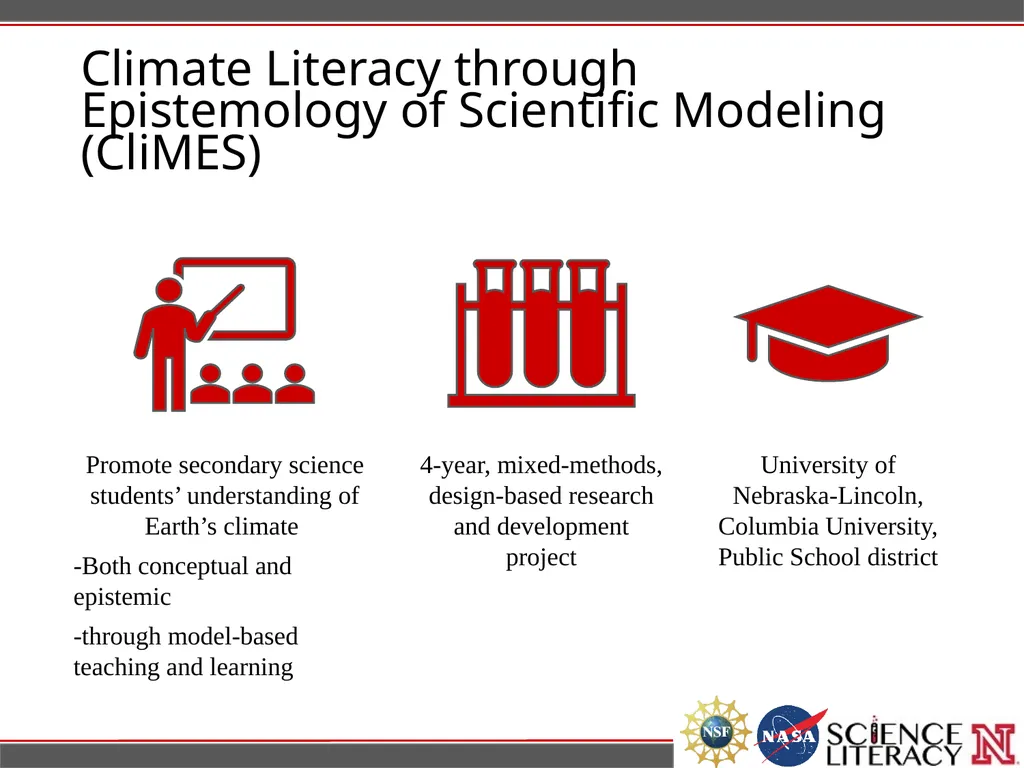
slide4. Climate Literacy through Epistemology of Scientific Modeling (CliMES)<br>
slide5. Research Questions<br>
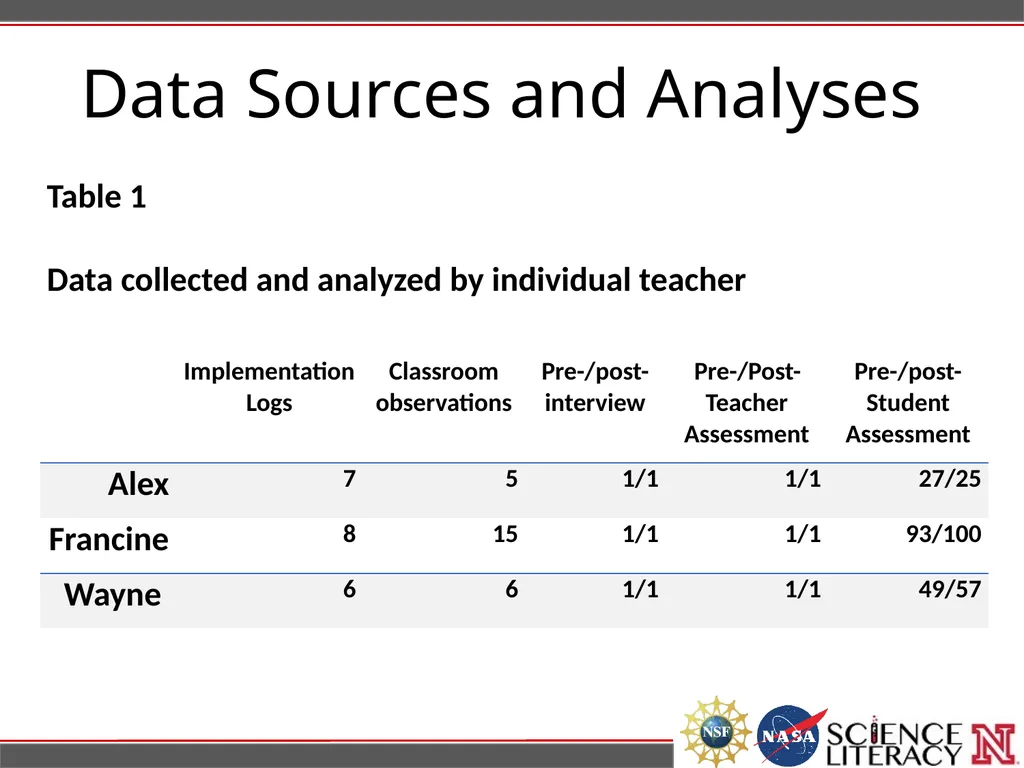
slide6. Data Sources and Analyses<br>
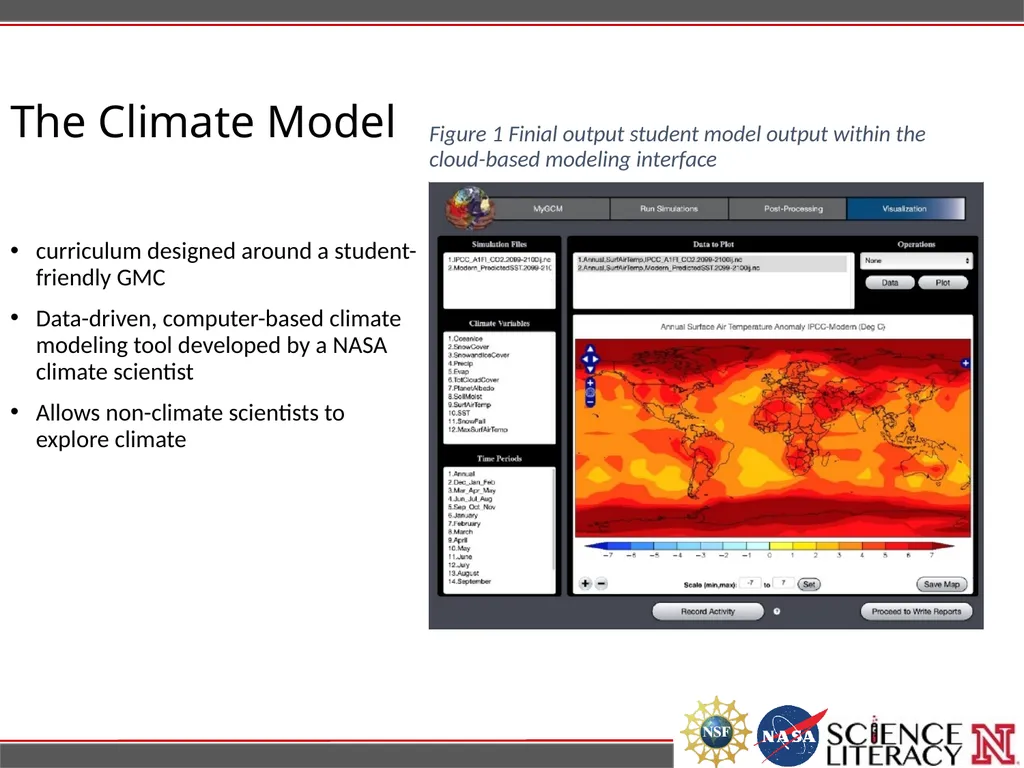
slide7. The Climate Model curriculum designed around a student-friendly GMC
Data-driven, computer-based climate modeling tool developed by a NASA climate scientist
Allows non-climate scientists to explore climate<br>
slide8. RQ1<br>
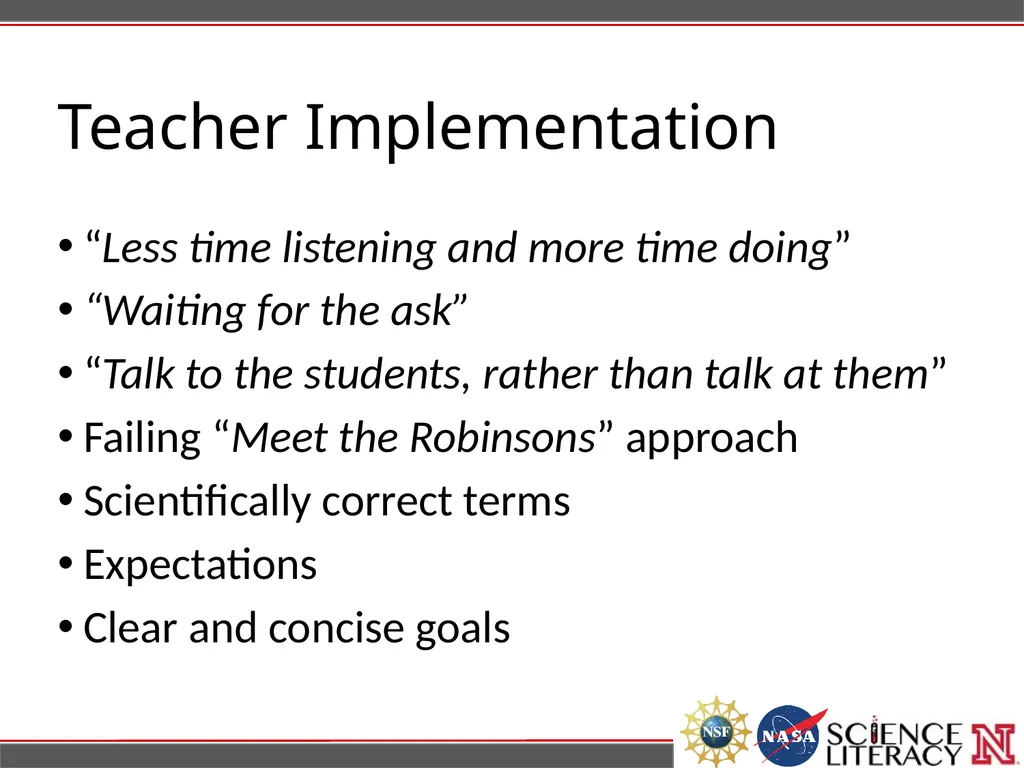
slide9. Teacher Implementation “Less time listening and more time doing”
“Waiting for the ask”
“Talk to the students, rather than talk at them”
Failing “Meet the Robinsons” approach
Scientifically correct terms
Expectations
Clear and concise goals<br>
slide10. All while using the model!<br>
slide11. GSA 2021, Portland 10/13/2021 RQ2<br>
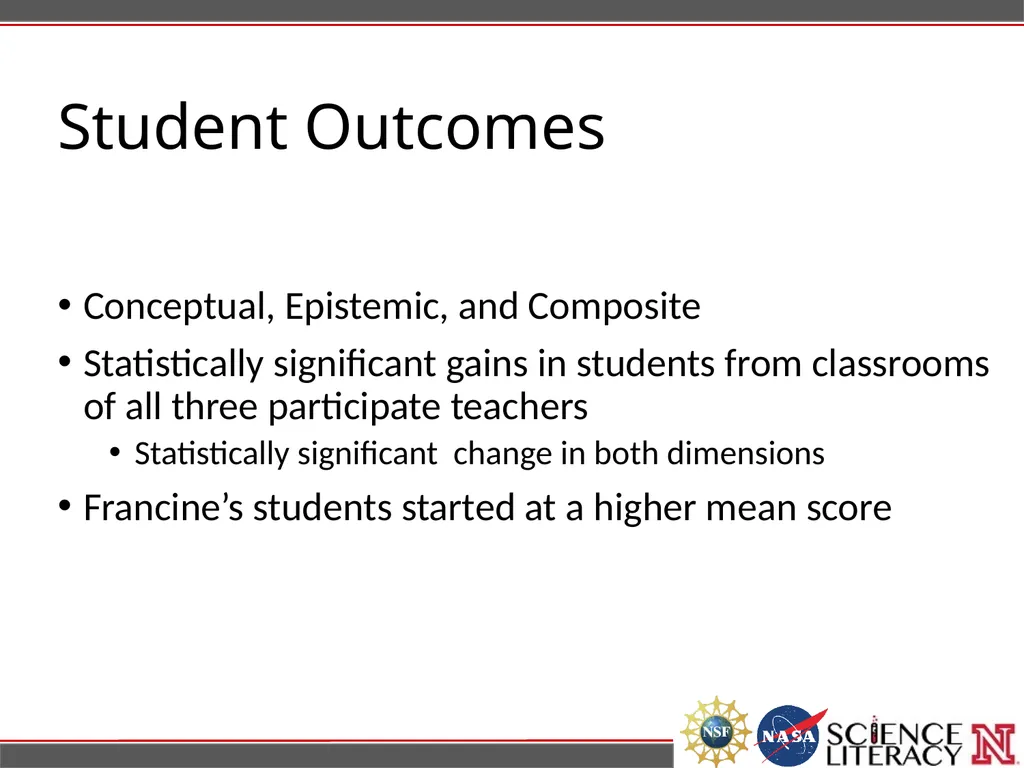
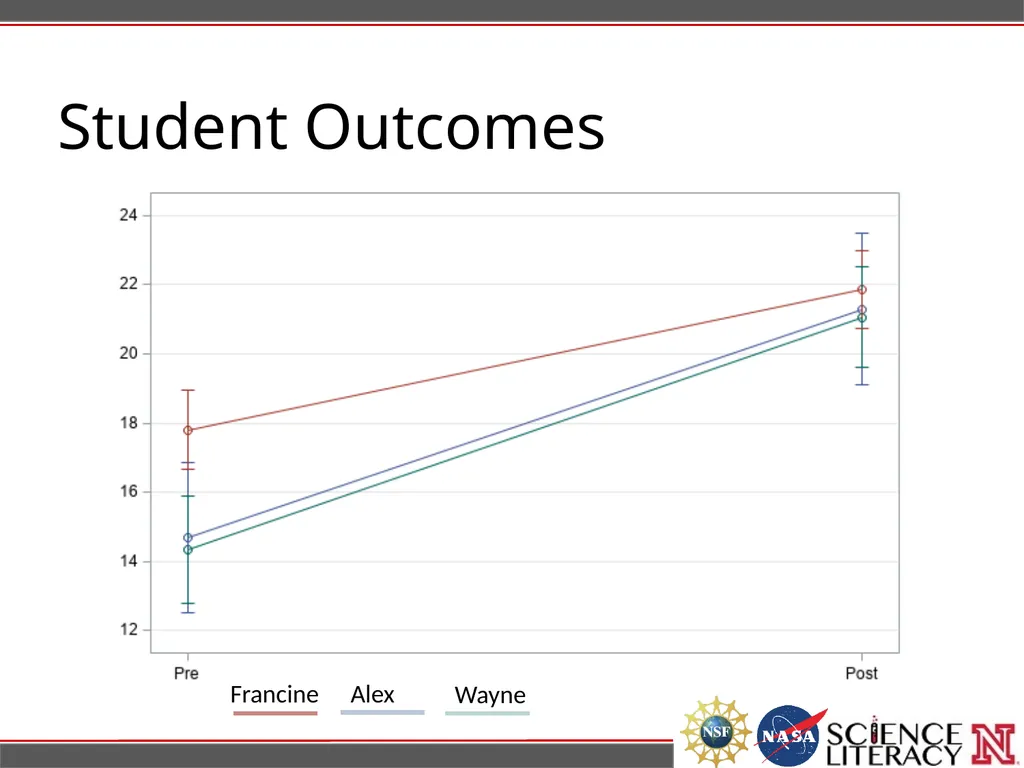
slide12. Student Outcomes Conceptual, Epistemic, and Composite
Statistically significant gains in students from classrooms of all three participate teachers
Statistically significant change in both dimensions
Francine’s students started at a higher mean score<br>
slide13. Student Outcomes Francine Alex Wayne<br>
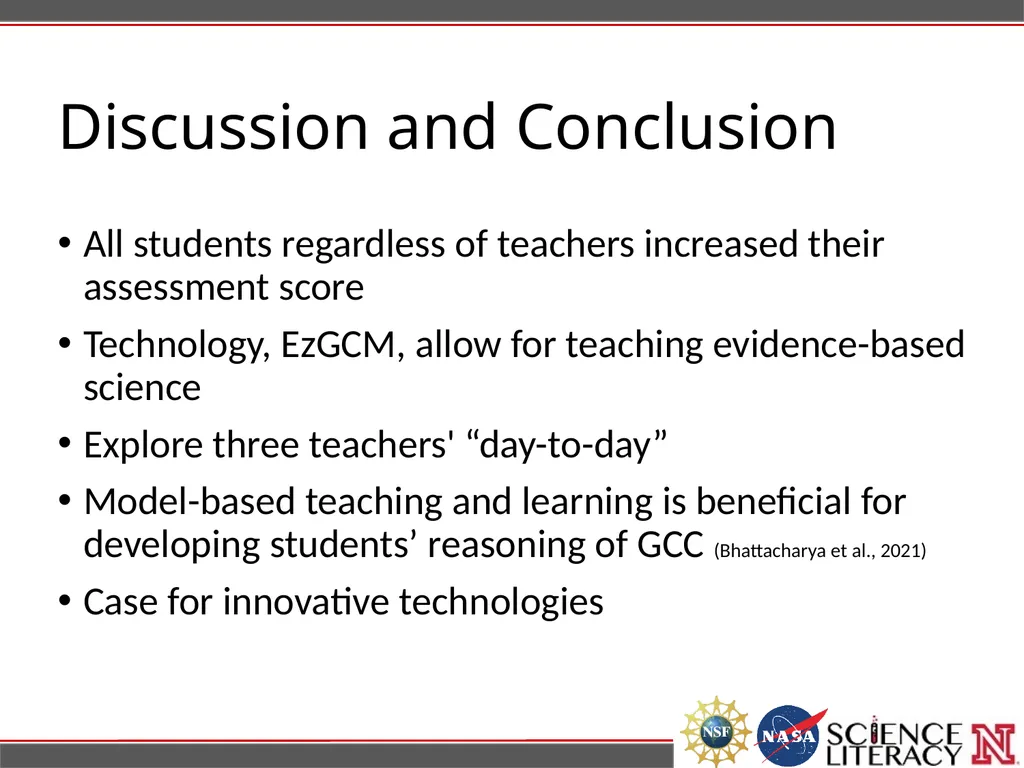
slide14. Discussion and Conclusion All students regardless of teachers increased their assessment score
Technology, EzGCM, allow for teaching evidence-based science
Explore three teachers' “day-to-day”
Model-based teaching and learning is beneficial for developing students’ reasoning of GCC (Bhattacharya et al., 2021)
Case for innovative technologies<br>
slide15. This material is based upon work supported by the National Science Foundation under Grant No. DRL 1720838 and 1719872. Any opinions, findings, and conclusions or recommendations expressed in this material are those of the author(s) and do not necessarily reflect the views of the NSF.<br>
slide16. Thank you Read More:
Carroll Steward, K., Bhattacharya, D., Chandler, M., & Forbes, C.T. (2021) Secondary science teachers’ implementation of a curricular intervention when teaching with global climate models, Journal of Geoscience Education, DOI: 10.1080/10899995.2021.1980706
Bhattacharya, D., Carroll Steward, K., & Forbes, C.T. (2021) Climate education in secondary science: comparison of model-based and non-model-based investigations of Earth’s climate, International Journal of Science Education, 43:13, 2226-2249, DOI: 10.1080/09500693.2021.1958022
Bhattacharya, D., Carroll Steward, K., & Forbes, C.T. (2021) Empirical research on K-16 climate education: A systematic review of the literature, Journal of Geoscience Education, 69:3, 223-247, DOI: 10.1080/10899995.2020.1838848
Bhattacharya, D., Carroll Steward, K., Chandler, M., & Forbes, C. (2020) Using climate models to learn about global climate change. The Science Teacher, 88(1), 58-66.
Bhattacharya, D., Carroll Steward, K., Chandler, M., and Forbes, C. (2020) Investigating the phenomenon of increasing surface air temperatures using a global climate modeling approach. Papers in Natural Resources. 1371.
Forbes, C.T., Chandler, M., Blake, J., Bhattacharya, D., Carroll Steward, K., Johnson, V., DeGrand, T., Mason, W., and Murrow, B. (2020). Fostering climate literacy with global climate models in secondary science classrooms: Insights from a collaborative partnership. In J. Henderson & A. Drewes (Eds.), Teaching Climate Change in the United States. Routledge; New York.
Bhattacharya, D., Forbes, C.T., Chandler, M.A., Carroll Steward, K., & Sutter, A.M. (2018). Climate literacy: insights from research on K-16 climate education, Green School Catalyst Quarterly, V (4), 26-35.<br>