
Teaching Not-Knowing: Cultural Competence and




Description: Teaching Not-Knowing: Cultural Competence and Psychotherapy Training Priya Watson, MD, MSc, FRCPC Conflicts of Interest None to disclose P. Watson, University of Toronto 2 Objectives Review constructs of culture and psychotherapy Describe
Related Topics
Download Presentation
"Teaching Not-Knowing: Cultural Competence and" is the property of its rightful owner. Permission is granted to download and print the materials on this website for personal, non-commercial use only, and to display it on your personal computer provided you do not modify the materials and that you retain all copyright notices contained in the materials. By downloading content from our website, you accept the terms of this agreement.
Presentation Transcript
slide1. Teaching Not-Knowing:
Cultural Competence and Psychotherapy Training Priya Watson, MD, MSc, FRCPC<br>
slide2. Conflicts of Interest None to disclose P. Watson, University of Toronto 2<br>
slide3. Objectives Review constructs of culture and psychotherapy
Describe the “Not-knowing” stance of cultural competence
Translate this stance into concrete changes in psychotherapy training practice P. Watson, University of Toronto 3<br>
slide4. Who’s Here? P. Watson, University of Toronto 4<br>
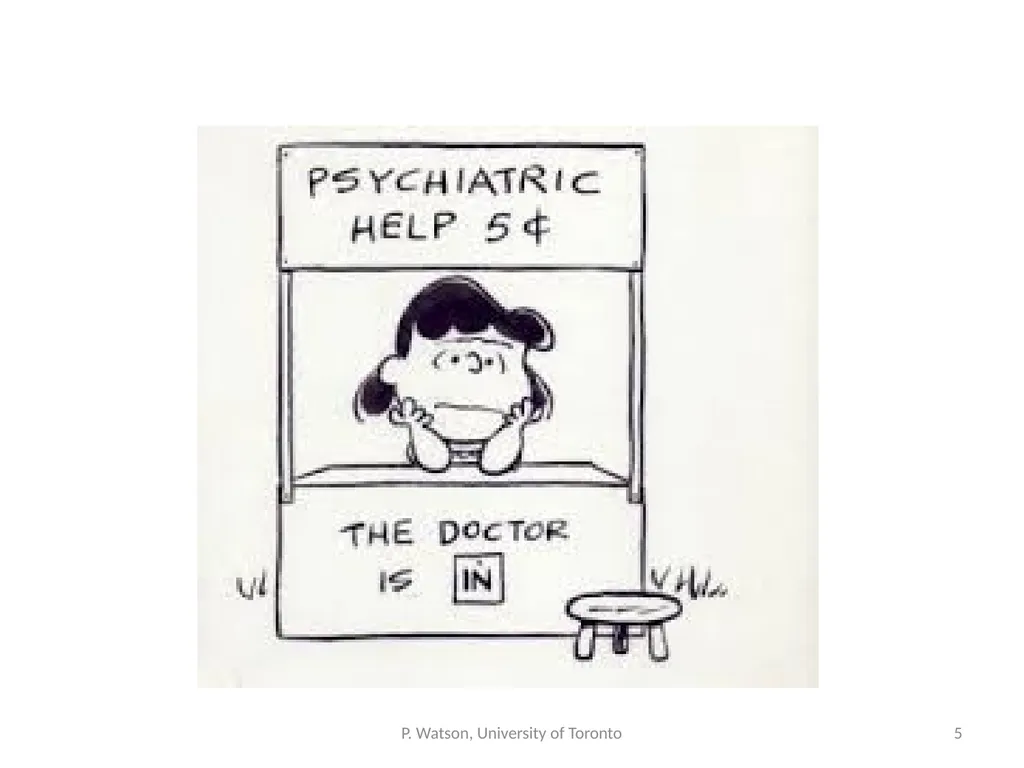
slide5. P. Watson, University of Toronto 5<br>
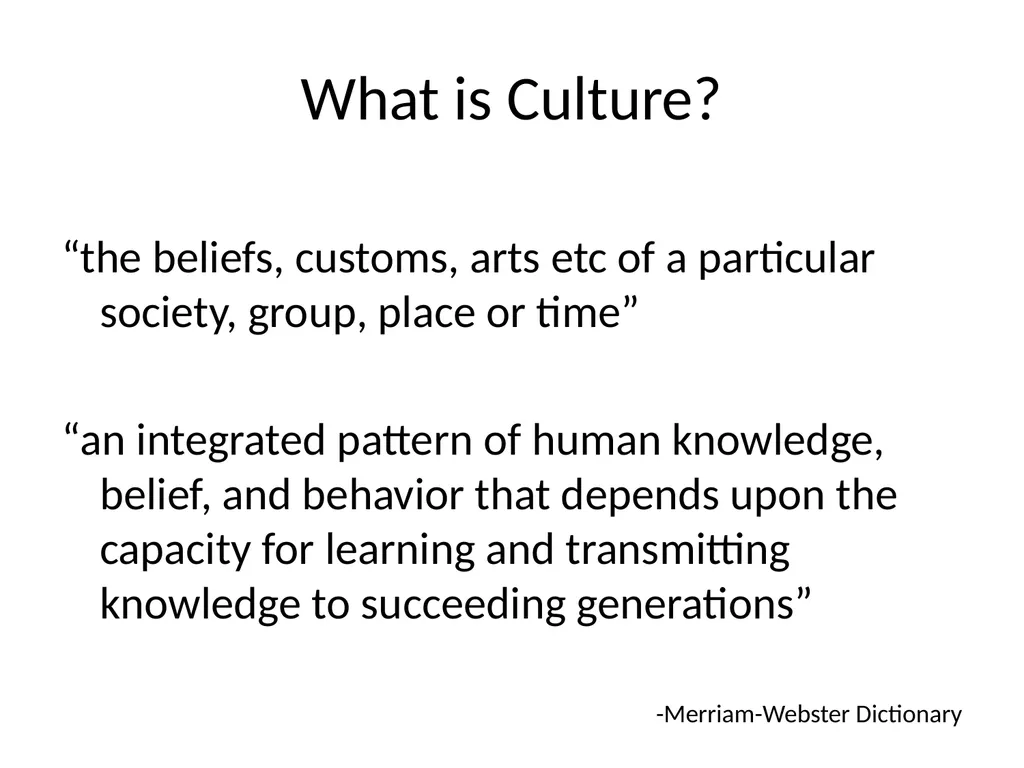
slide6. What is Culture? “the beliefs, customs, arts etc of a particular society, group, place or time”
“an integrated pattern of human knowledge, belief, and behavior that depends upon the capacity for learning and transmitting knowledge to succeeding generations”
-Merriam-Webster Dictionary<br>
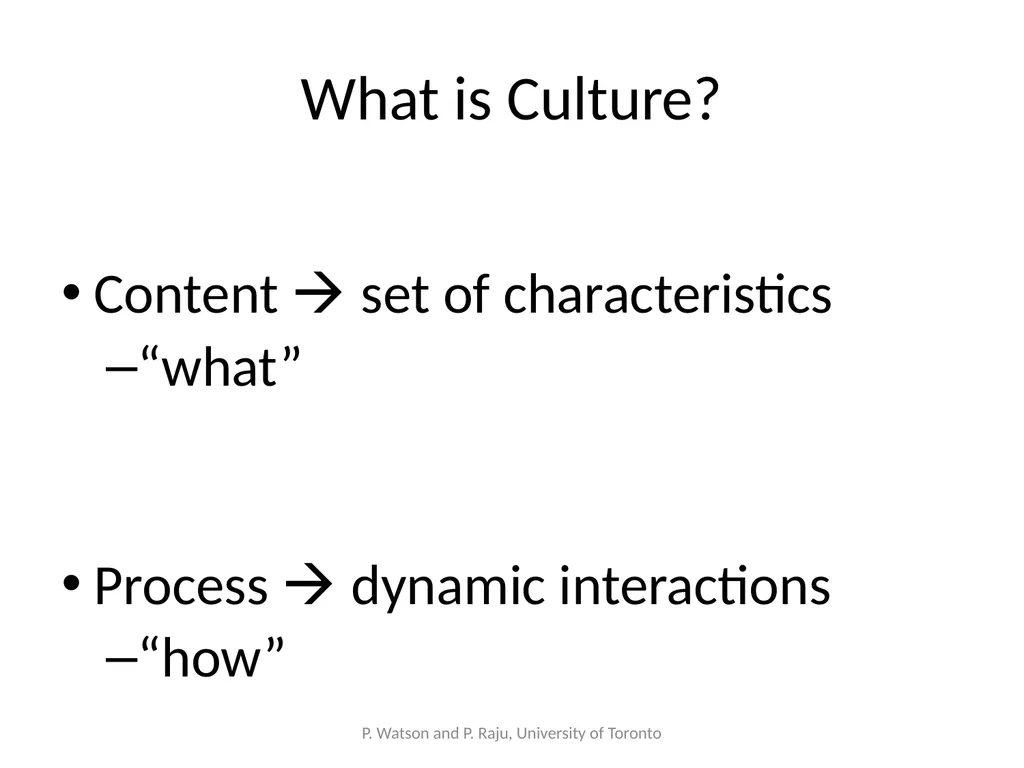
slide7. What is Culture? Content set of characteristics
“what”
Process dynamic interactions
“how” P. Watson and P. Raju, University of Toronto<br>
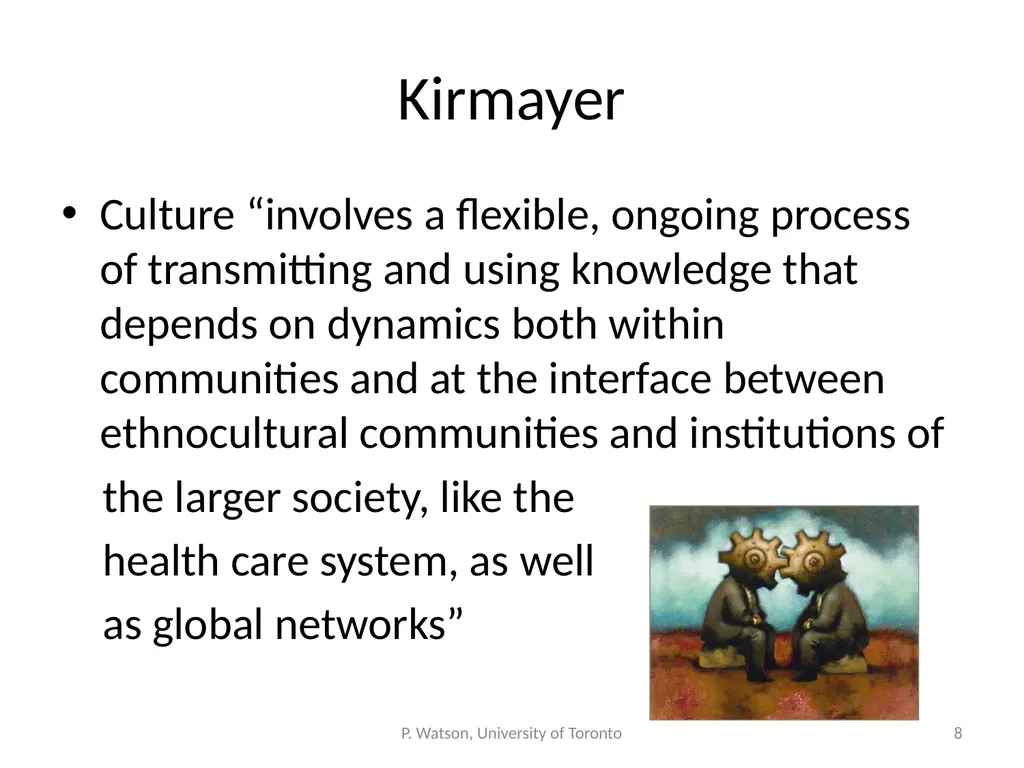
slide8. Kirmayer Culture “involves a flexible, ongoing process of transmitting and using knowledge that depends on dynamics both within communities and at the interface between ethnocultural communities and institutions of
the larger society, like the
health care system, as well
as global networks” P. Watson, University of Toronto 8<br>
slide9. One way to know the culture
is to transgress it.
-Howard Garfinkel<br>
slide10. What are the cultures in play?<br>
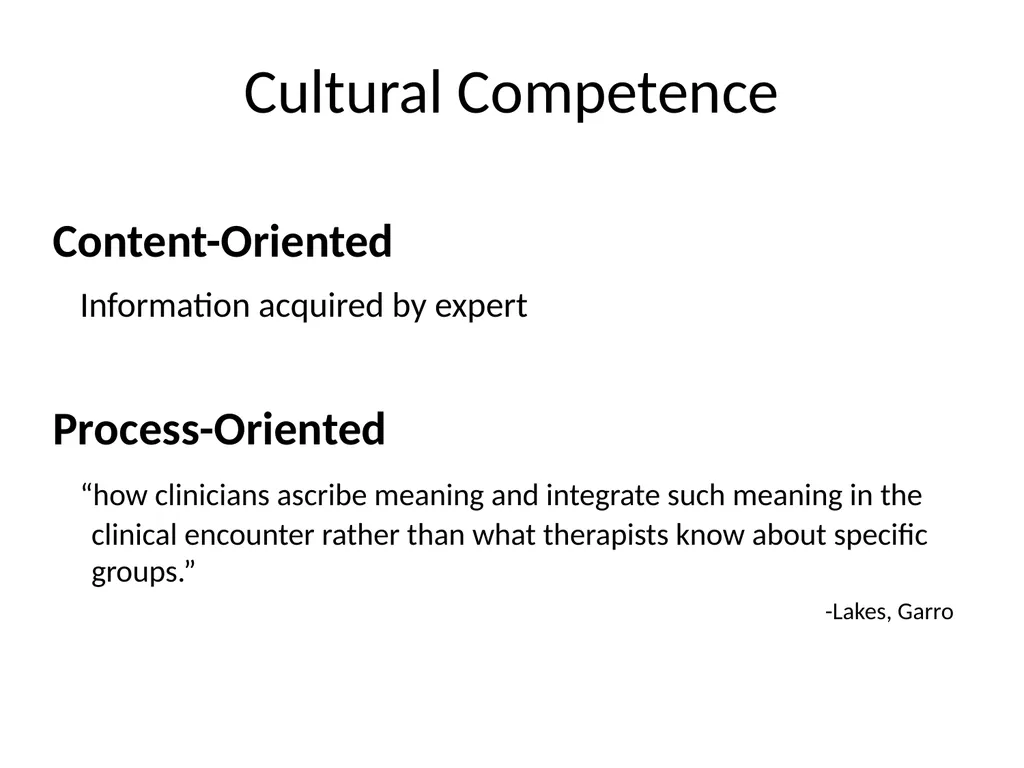
slide11. Cultural Competence Content-Oriented
Information acquired by expert
Process-Oriented
“how clinicians ascribe meaning and integrate such meaning in the clinical encounter rather than what therapists know about specific groups.”
-Lakes, Garro<br>
slide12. Explanatory Models A process to elicit understanding within the patient’s own cultural references<br>
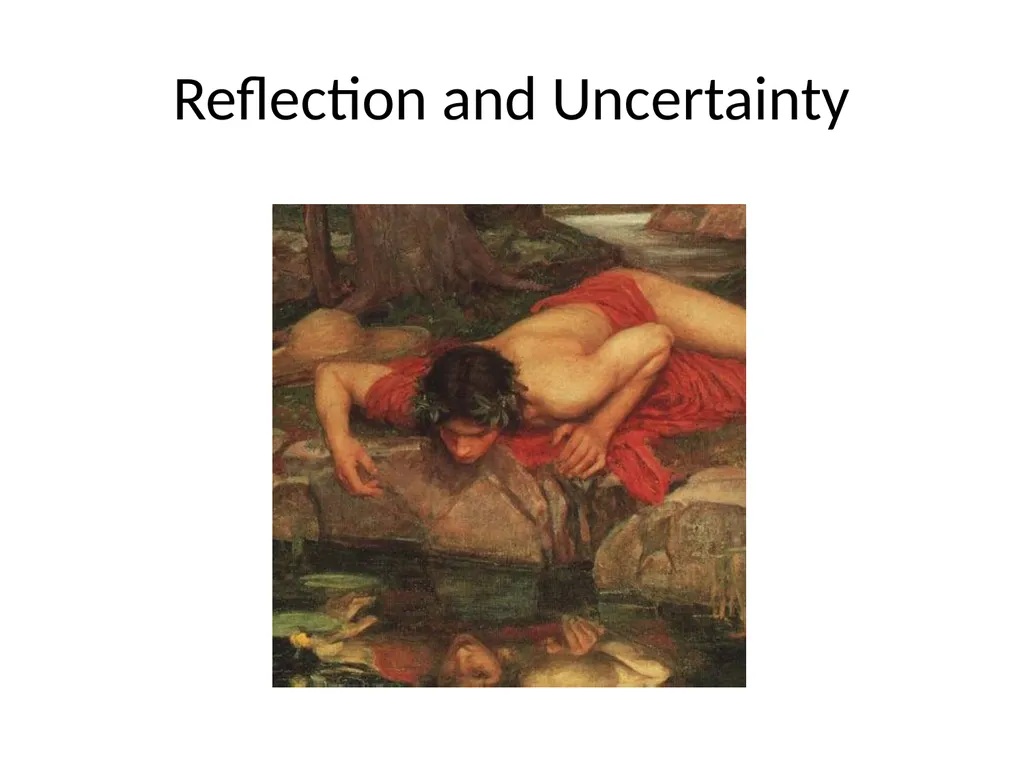
slide13. Reflection and Uncertainty<br>
slide14. The Self “the Western conception of the person as a bounded, unique…dynamic center of awareness, emotion, judgment and action organized into a distinctive whole...is, however incorrigible it may seem to us, a rather peculiar idea within the context of the world’s cultures.”
-Clifford Geertz<br>
slide15. I’m Nobody’s Child Now<br>
slide16. Divergence, Instability and the Push for Resolution<br>
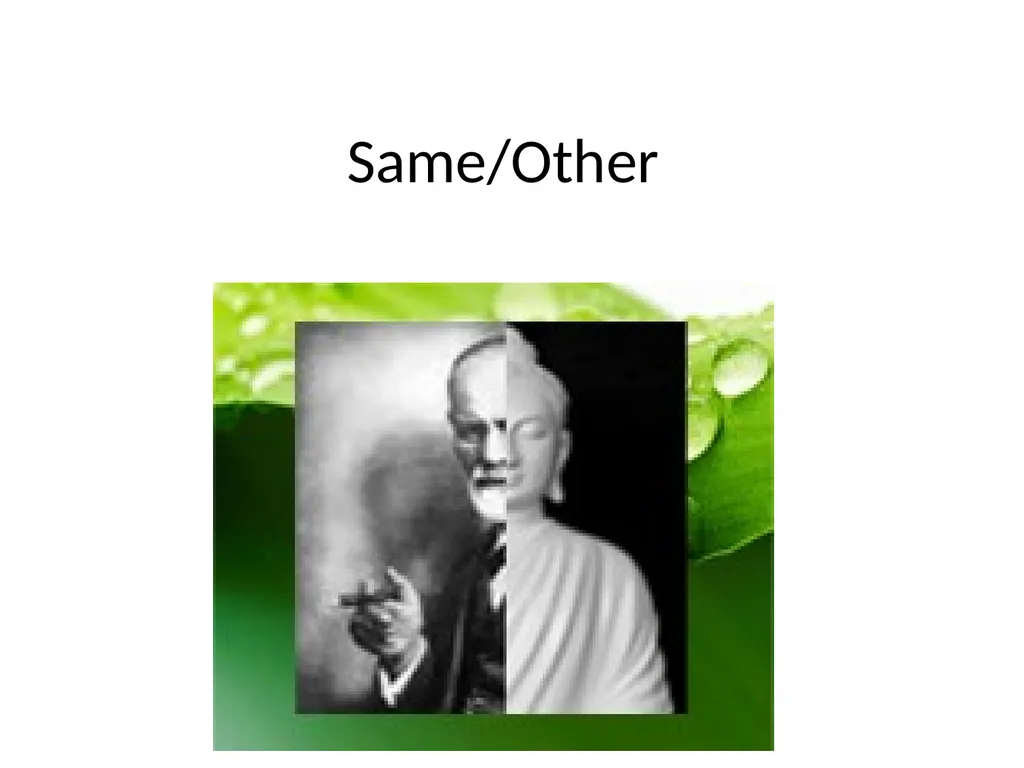
slide17. Same/Other<br>
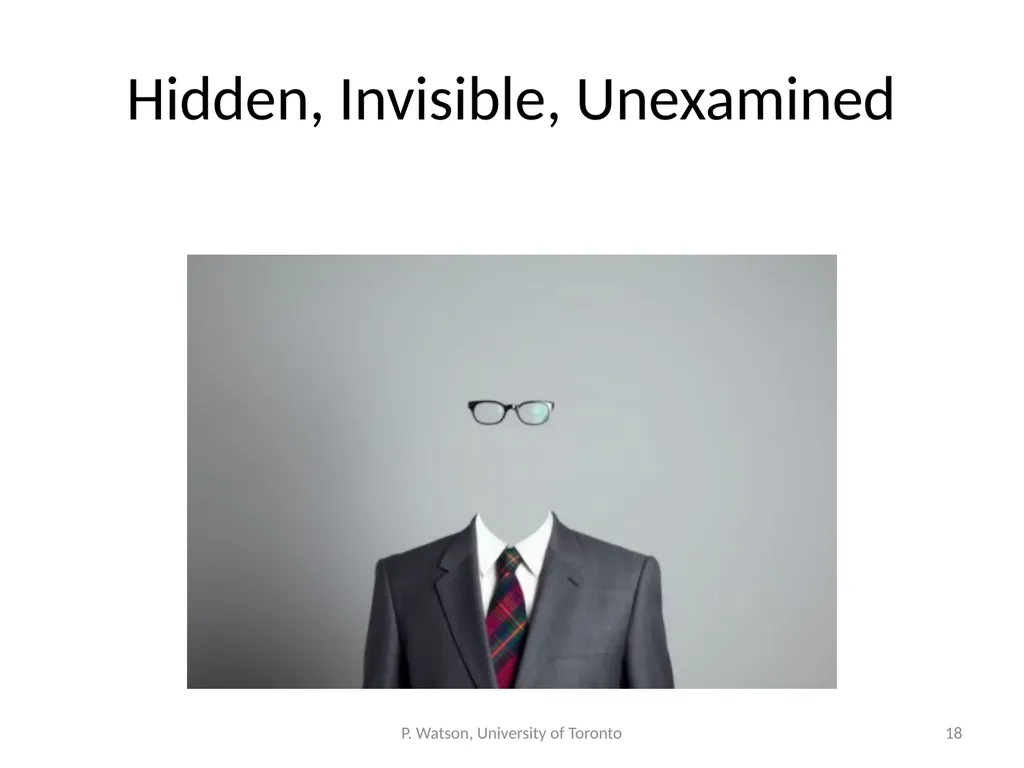
slide18. Hidden, Invisible, Unexamined P. Watson, University of Toronto 18<br>
slide19. Cultural Competence “how clinicians ascribe meaning and integrate such meaning in the clinical encounter rather than what therapists know about specific groups” Lakes and Garro P. Watson, University of Toronto 19<br>
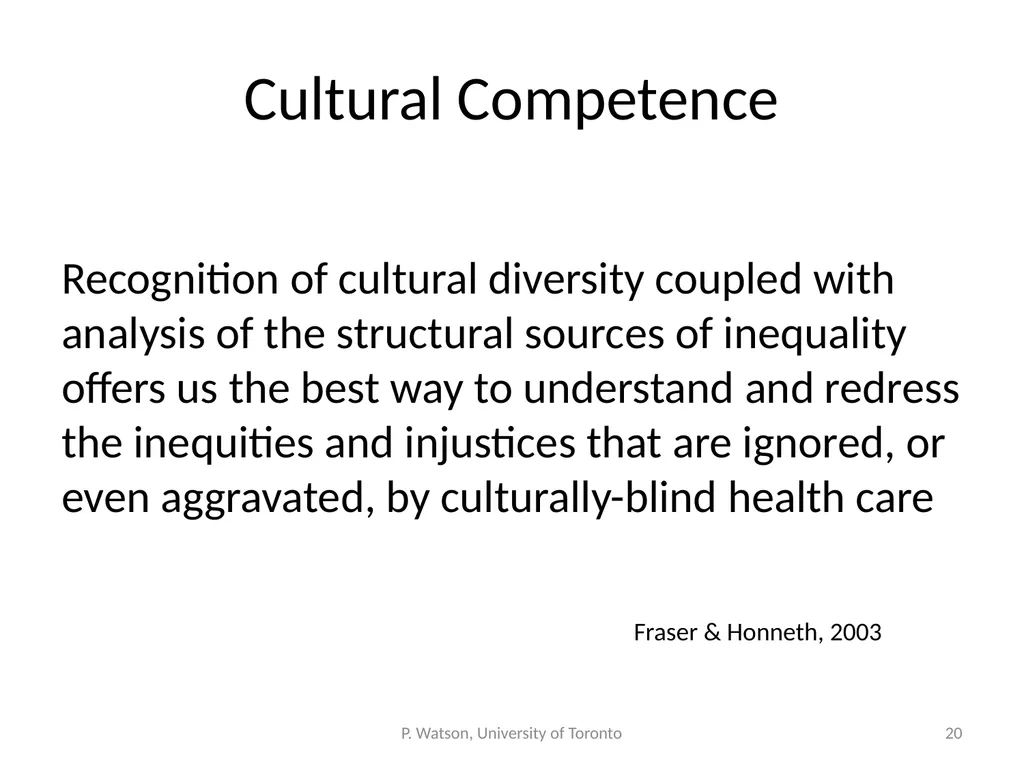
slide20. Cultural Competence Recognition of cultural diversity coupled with analysis of the structural sources of inequality offers us the best way to understand and redress the inequities and injustices that are ignored, or even aggravated, by culturally-blind health care Fraser & Honneth, 2003 P. Watson, University of Toronto 20<br>
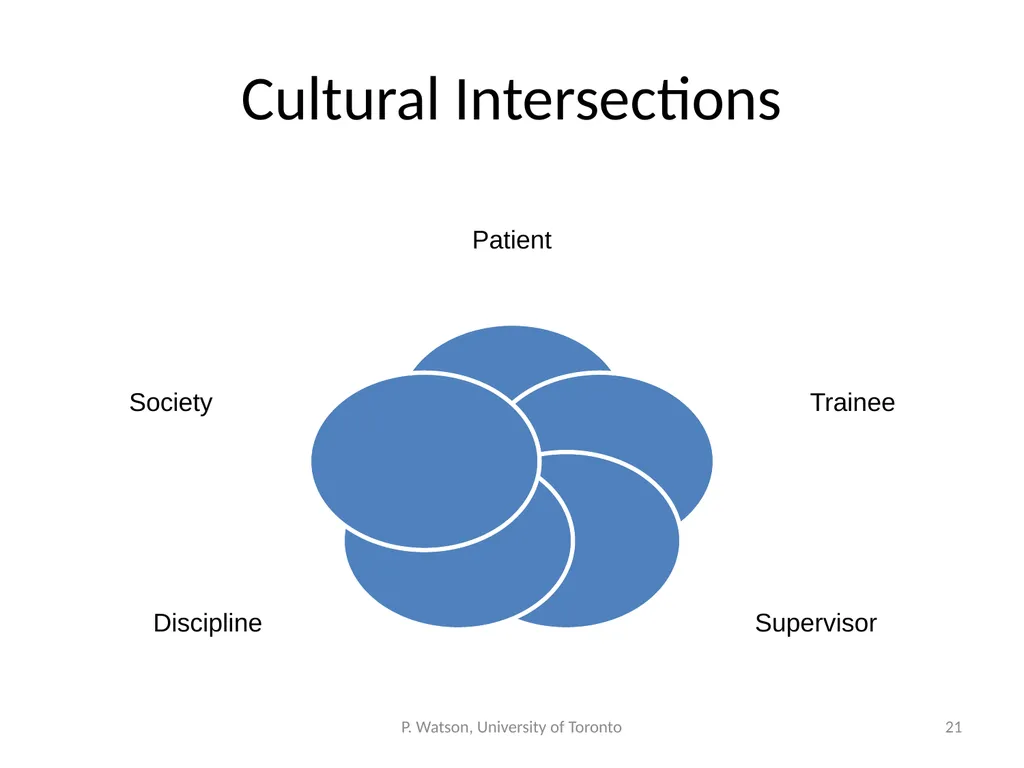
slide21. Cultural Intersections P. Watson, University of Toronto 21<br>
slide22. Cultural Competence Process not Content
Iterative, Evolving, Flexible
The “How” of Cultural Competence:
The “Not Knowing” stance P. Watson, University of Toronto 22<br>
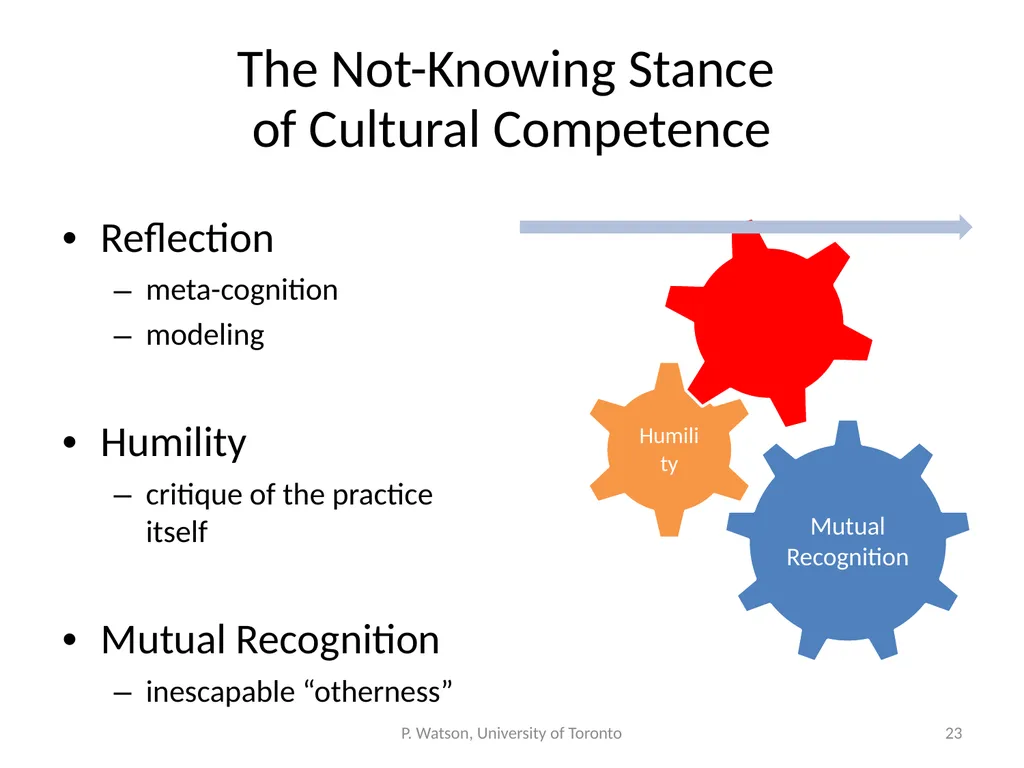
slide23. The Not-Knowing Stance of Cultural Competence Reflection
meta-cognition
modeling
Humility
critique of the practice itself
Mutual Recognition
inescapable “otherness” P. Watson, University of Toronto 23<br>
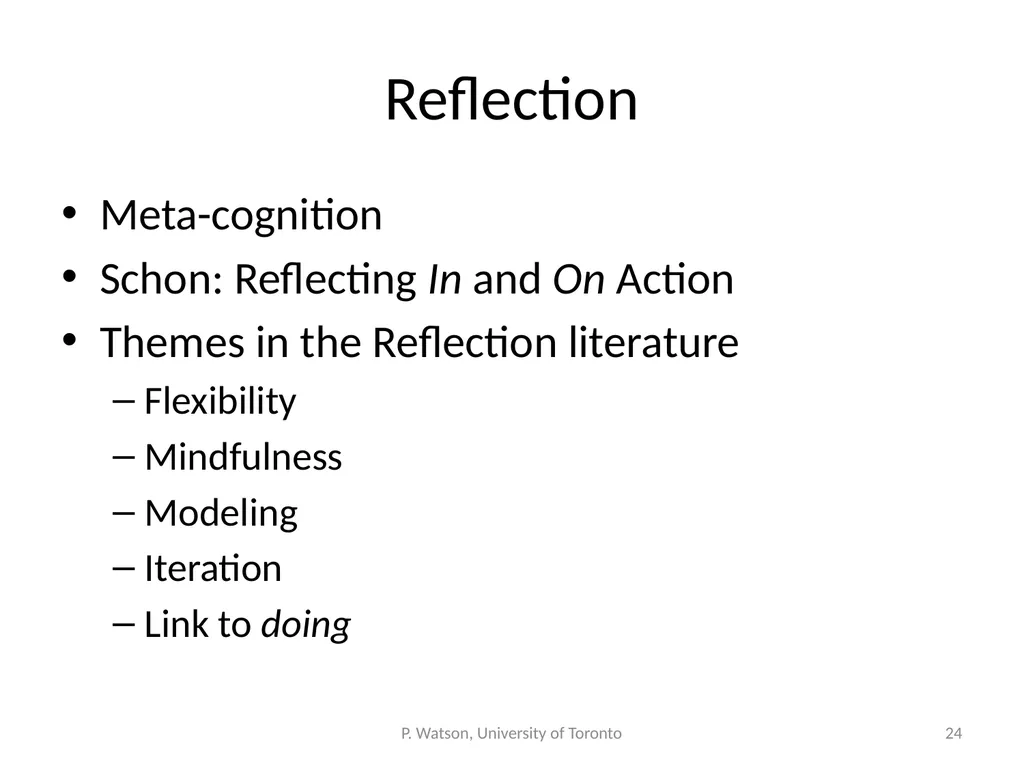
slide24. Reflection Meta-cognition
Schon: Reflecting In and On Action
Themes in the Reflection literature
Flexibility
Mindfulness
Modeling
Iteration
Link to doing P. Watson, University of Toronto 24<br>
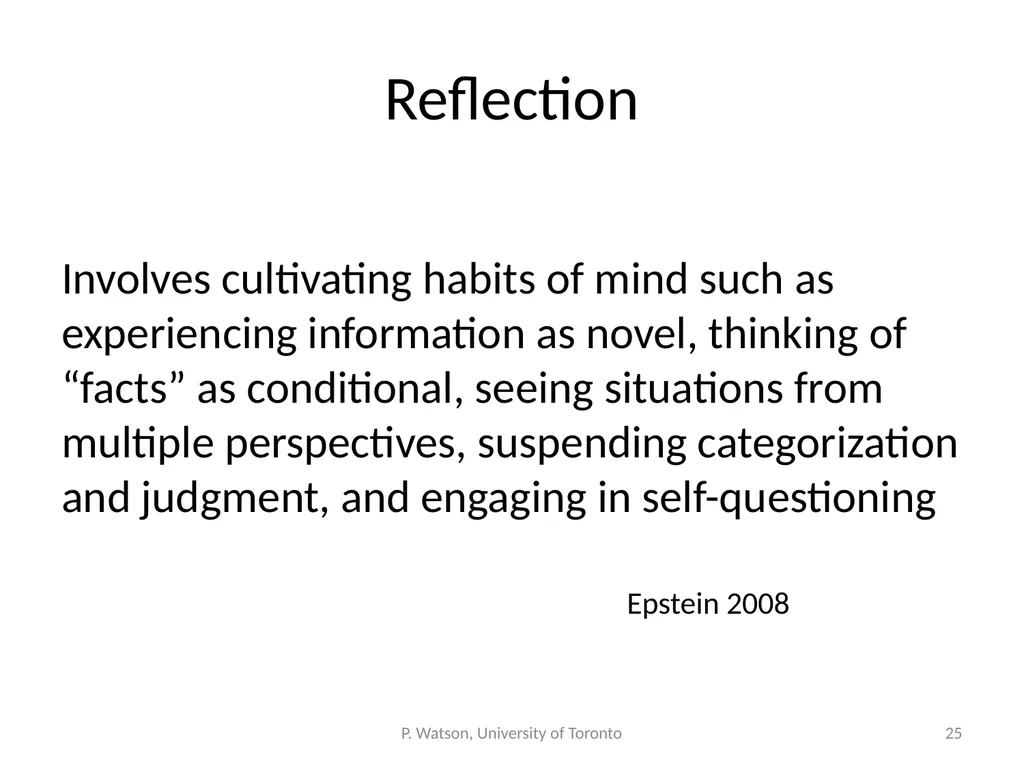
slide25. Reflection Involves cultivating habits of mind such as experiencing information as novel, thinking of “facts” as conditional, seeing situations from multiple perspectives, suspending categorization and judgment, and engaging in self-questioning Epstein 2008 P. Watson, University of Toronto 25<br>
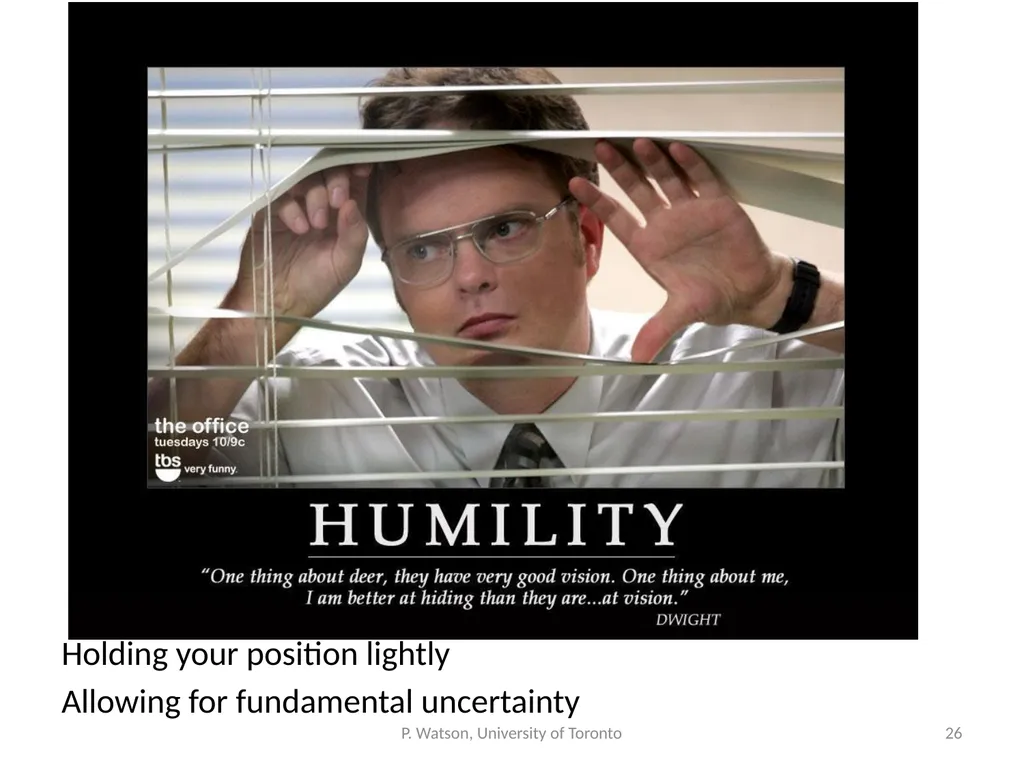
slide26. Holding your position lightly
Allowing for fundamental uncertainty P. Watson, University of Toronto 26<br>
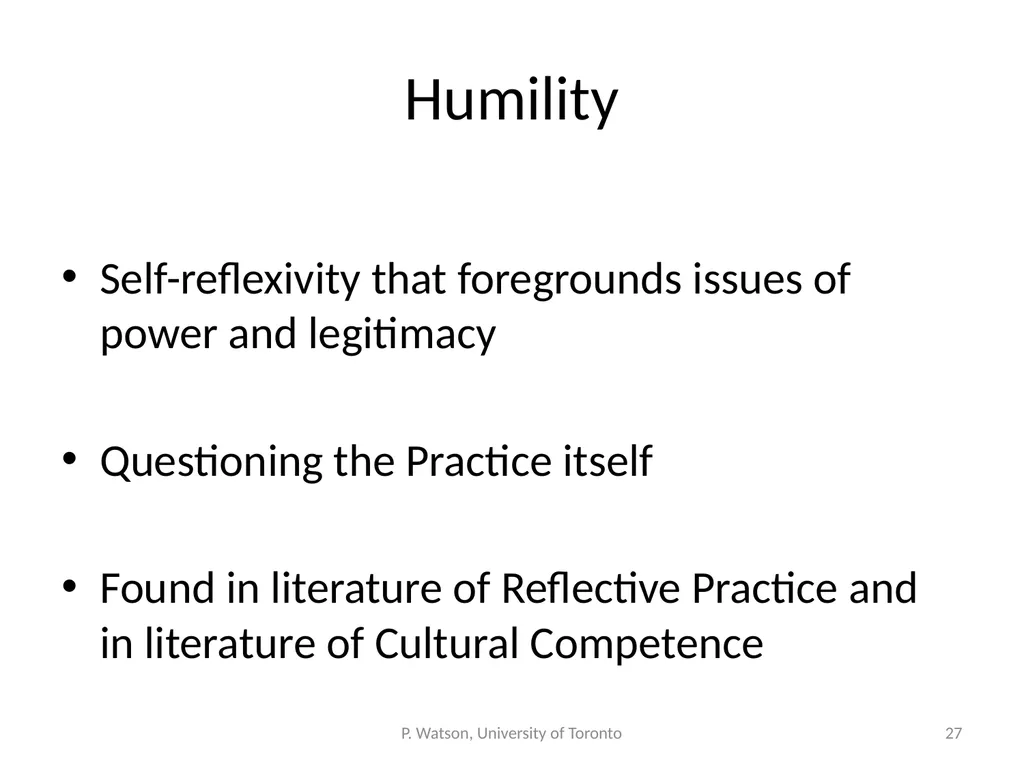
slide27. Humility Self-reflexivity that foregrounds issues of power and legitimacy
Questioning the Practice itself
Found in literature of Reflective Practice and in literature of Cultural Competence P. Watson, University of Toronto 27<br>
slide28. Reflective Practice and Humility The goal of reflection is cultivating habits of mind that allow for informed flexibility, ongoing learning and humility
Wald 2009 P. Watson, University of Toronto 28<br>
slide29. Cultural Humility Cultural humility is…a willingness and ability to listen and learn from patients, but without shying away from the way in which culture and difference are used to stereotype and oppress people or divert attention from various forms of structural violence
Kirmayer 2012 P. Watson, University of Toronto 29<br>
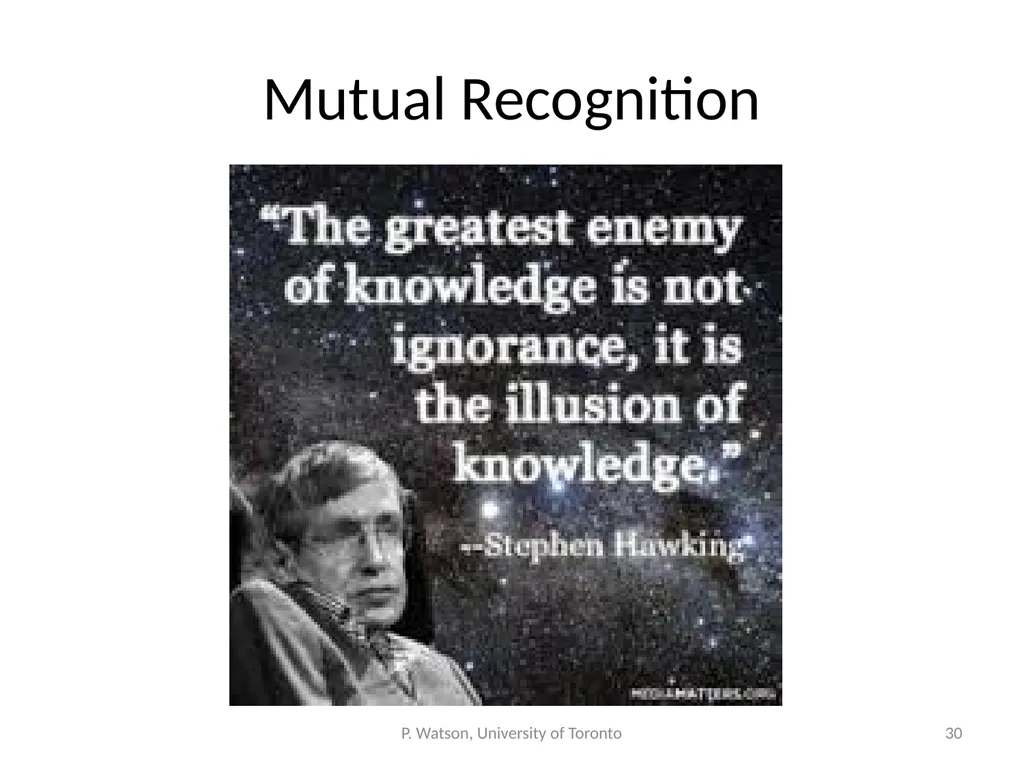
slide30. Mutual Recognition P. Watson, University of Toronto 30<br>
slide31. Mutual Recognition Inescapable “otherness” of the encounter with a client
Exploring the unknown
Acknowledging the unknowable
Convergence/Resolution
vs.
Divergence/Disequilibrium 31<br>
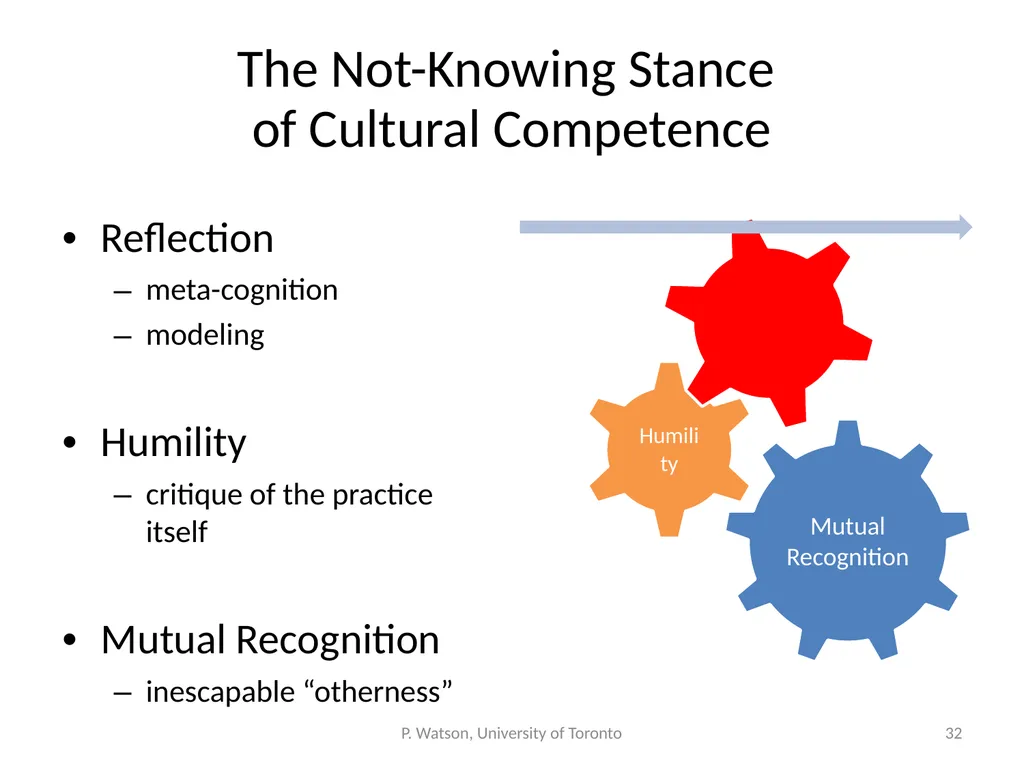
slide32. The Not-Knowing Stance of Cultural Competence Reflection
meta-cognition
modeling
Humility
critique of the practice itself
Mutual Recognition
inescapable “otherness” P. Watson, University of Toronto 32<br>
slide33. Psychotherapy Supervision For supervisors and trainees, how did you (or how could you):
Name and explore your ignorance and hypotheses? [Reflection, Mutual Recognition]
Discuss the cultural limits of the psychotherapy paradigms being taught? [Humility, Reflection]
Explore the presence of the unknowable aspects of the “other” for both trainee and client? Talk about otherness and power? [Mutual Recognition, Humility]
Protect and promote uncertainty? [Reflection, Humility, Mutual Recognition] 33<br>
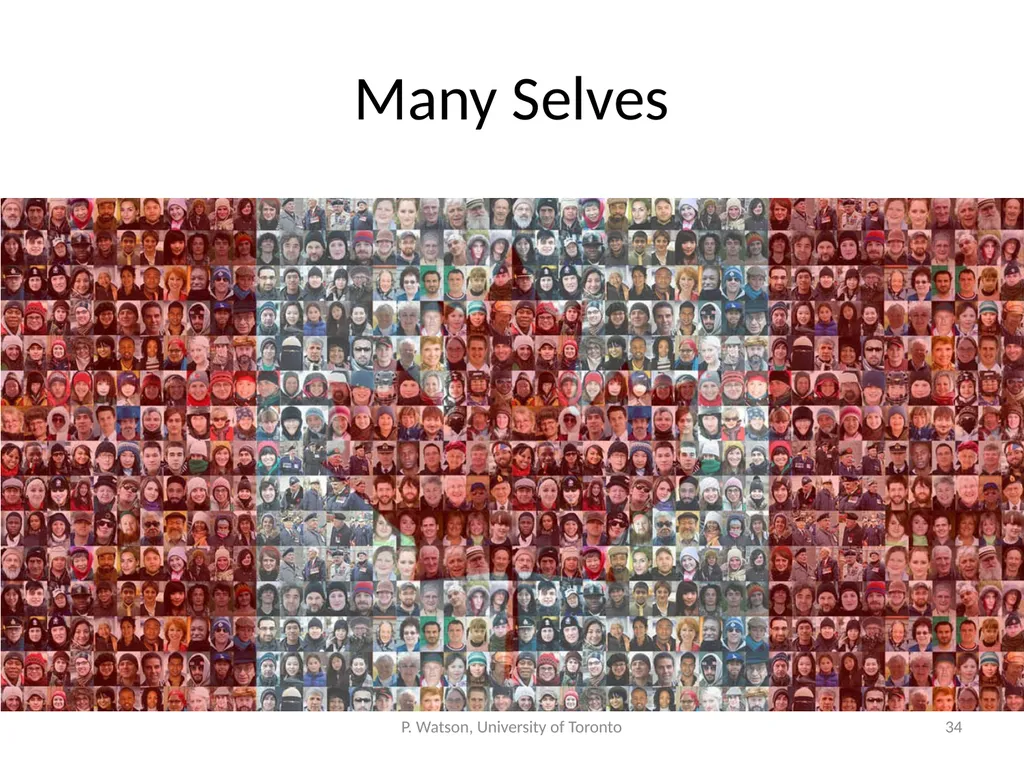
slide34. Many Selves P. Watson, University of Toronto 34<br>
slide2. Conflicts of Interest None to disclose P. Watson, University of Toronto 2<br>
slide3. Objectives Review constructs of culture and psychotherapy
Describe the “Not-knowing” stance of cultural competence
Translate this stance into concrete changes in psychotherapy training practice P. Watson, University of Toronto 3<br>
slide4. Who’s Here? P. Watson, University of Toronto 4<br>
slide5. P. Watson, University of Toronto 5<br>
slide6. What is Culture? “the beliefs, customs, arts etc of a particular society, group, place or time”
“an integrated pattern of human knowledge, belief, and behavior that depends upon the capacity for learning and transmitting knowledge to succeeding generations”
-Merriam-Webster Dictionary<br>
slide7. What is Culture? Content set of characteristics
“what”
Process dynamic interactions
“how” P. Watson and P. Raju, University of Toronto<br>
slide8. Kirmayer Culture “involves a flexible, ongoing process of transmitting and using knowledge that depends on dynamics both within communities and at the interface between ethnocultural communities and institutions of
the larger society, like the
health care system, as well
as global networks” P. Watson, University of Toronto 8<br>
slide9. One way to know the culture
is to transgress it.
-Howard Garfinkel<br>
slide10. What are the cultures in play?<br>
slide11. Cultural Competence Content-Oriented
Information acquired by expert
Process-Oriented
“how clinicians ascribe meaning and integrate such meaning in the clinical encounter rather than what therapists know about specific groups.”
-Lakes, Garro<br>
slide12. Explanatory Models A process to elicit understanding within the patient’s own cultural references<br>
slide13. Reflection and Uncertainty<br>
slide14. The Self “the Western conception of the person as a bounded, unique…dynamic center of awareness, emotion, judgment and action organized into a distinctive whole...is, however incorrigible it may seem to us, a rather peculiar idea within the context of the world’s cultures.”
-Clifford Geertz<br>
slide15. I’m Nobody’s Child Now<br>
slide16. Divergence, Instability and the Push for Resolution<br>
slide17. Same/Other<br>
slide18. Hidden, Invisible, Unexamined P. Watson, University of Toronto 18<br>
slide19. Cultural Competence “how clinicians ascribe meaning and integrate such meaning in the clinical encounter rather than what therapists know about specific groups” Lakes and Garro P. Watson, University of Toronto 19<br>
slide20. Cultural Competence Recognition of cultural diversity coupled with analysis of the structural sources of inequality offers us the best way to understand and redress the inequities and injustices that are ignored, or even aggravated, by culturally-blind health care Fraser & Honneth, 2003 P. Watson, University of Toronto 20<br>
slide21. Cultural Intersections P. Watson, University of Toronto 21<br>
slide22. Cultural Competence Process not Content
Iterative, Evolving, Flexible
The “How” of Cultural Competence:
The “Not Knowing” stance P. Watson, University of Toronto 22<br>
slide23. The Not-Knowing Stance of Cultural Competence Reflection
meta-cognition
modeling
Humility
critique of the practice itself
Mutual Recognition
inescapable “otherness” P. Watson, University of Toronto 23<br>
slide24. Reflection Meta-cognition
Schon: Reflecting In and On Action
Themes in the Reflection literature
Flexibility
Mindfulness
Modeling
Iteration
Link to doing P. Watson, University of Toronto 24<br>
slide25. Reflection Involves cultivating habits of mind such as experiencing information as novel, thinking of “facts” as conditional, seeing situations from multiple perspectives, suspending categorization and judgment, and engaging in self-questioning Epstein 2008 P. Watson, University of Toronto 25<br>
slide26. Holding your position lightly
Allowing for fundamental uncertainty P. Watson, University of Toronto 26<br>
slide27. Humility Self-reflexivity that foregrounds issues of power and legitimacy
Questioning the Practice itself
Found in literature of Reflective Practice and in literature of Cultural Competence P. Watson, University of Toronto 27<br>
slide28. Reflective Practice and Humility The goal of reflection is cultivating habits of mind that allow for informed flexibility, ongoing learning and humility
Wald 2009 P. Watson, University of Toronto 28<br>
slide29. Cultural Humility Cultural humility is…a willingness and ability to listen and learn from patients, but without shying away from the way in which culture and difference are used to stereotype and oppress people or divert attention from various forms of structural violence
Kirmayer 2012 P. Watson, University of Toronto 29<br>
slide30. Mutual Recognition P. Watson, University of Toronto 30<br>
slide31. Mutual Recognition Inescapable “otherness” of the encounter with a client
Exploring the unknown
Acknowledging the unknowable
Convergence/Resolution
vs.
Divergence/Disequilibrium 31<br>
slide32. The Not-Knowing Stance of Cultural Competence Reflection
meta-cognition
modeling
Humility
critique of the practice itself
Mutual Recognition
inescapable “otherness” P. Watson, University of Toronto 32<br>
slide33. Psychotherapy Supervision For supervisors and trainees, how did you (or how could you):
Name and explore your ignorance and hypotheses? [Reflection, Mutual Recognition]
Discuss the cultural limits of the psychotherapy paradigms being taught? [Humility, Reflection]
Explore the presence of the unknowable aspects of the “other” for both trainee and client? Talk about otherness and power? [Mutual Recognition, Humility]
Protect and promote uncertainty? [Reflection, Humility, Mutual Recognition] 33<br>
slide34. Many Selves P. Watson, University of Toronto 34<br>